A vintage-style crochet dog bonnet gets most of its character from three things: the shape around the face, the color combination, and one or two carefully chosen decorative details. A dusty rose bonnet with cream ruffles feels very different from an avocado-and-harvest-gold version, even when both start from a similar pet-hat construction.

Color placement matters especially on a small bonnet. The main shade usually needs enough uninterrupted space to establish the overall look, while the lighter or stronger accent can be saved for a scalloped edge, ties, flower center, ear opening, or narrow finishing border. Using every color everywhere tends to hide the bonnet’s shape.
The tutorials credited below include crochet dog, cat, and general pet hats, bonnets, berets, and head coverings that provide useful construction references. The vintage palettes and decorative treatments are independent adaptation ideas rather than claims about the colors or details used by each creator. Check the original tutorial and your dog’s measurements carefully before adapting any construction.
Quick List
- Dusty Rose and Cream Ruffled Crochet Dog Bonnet
- Powder Blue and Ivory Scalloped Crochet Dog Bonnet
- Butter Yellow and White Daisy Crochet Dog Bonnet
- Sage Green and Oatmeal Picot-Edge Crochet Dog Bonnet
- Peach and Cream Rosette Crochet Dog Bonnet
- Lavender and Ivory Openwork-Style Crochet Dog Bonnet
- Mint Green and Pale Pink Contrast-Tie Crochet Dog Bonnet
- Burgundy and Blush Face-Framing Crochet Dog Bonnet
- Rust and Mustard Floral Crochet Dog Bonnet
- Chocolate Brown and Cream Teddy-Ear Crochet Dog Bonnet
- Teal and Mustard Scalloped Crochet Dog Bonnet
- Olive Green and Terracotta Leaf-Detail Crochet Dog Bonnet
- Coral and Pale Yellow Ruffled Crochet Dog Bonnet
- Plum and Dusty Rose Beret-Inspired Crochet Dog Bonnet
- Denim Blue and Camel Braided-Tie Crochet Dog Bonnet
- Raspberry and Sage Granny-Flower Crochet Dog Bonnet
- Cream and Cocoa Heirloom-Style Crochet Dog Bonnet
- Soft Red and Pink Strawberry-Detail Crochet Dog Bonnet
- Harvest Gold and Avocado Retro-Frill Crochet Dog Bonnet
Let One Vintage Color Control the Dog Bonnet
A tiny crochet bonnet can become visually crowded much faster than a cardigan or blanket. Choose a main shade for the crown or largest bonnet section, then give the supporting color a specific job such as edging, ties, ear-opening borders, or a small decorative motif.
This approach also makes substitutions easier. If dusty rose is unavailable, for example, you do not need an exact commercial match. Look for another muted pink that maintains the same relationship with the cream accent.
Use Contrast Where the Dog Bonnet Needs Definition
The face opening and decorative border are natural places for contrast because they establish the bonnet’s silhouette. A cream edge around burgundy will be much more visible than two similarly dark colors worked together.
Hue alone is not enough. Two colors may look different as yarn balls yet have similar lightness once crocheted. Place the yarns together or view a photo in grayscale before committing to a detailed border.
Keep Cute Crochet Dog Bonnet Details Controlled
Ruffles, flowers, bows, leaves, pompoms, and novelty shapes can provide vintage character, but the dog still needs to move its ears and head comfortably. Keep decorative pieces away from the eyes and avoid arrangements that pull the bonnet sideways.
Any ties, raised embellishments, or attached motifs should be secure, and a dog wearing a handmade head accessory should be supervised. If your dog paws at, chews, freezes in, or repeatedly tries to remove the bonnet, decoration should give way to comfort.
1. Dusty Rose and Cream Ruffled Crochet Dog Bonnet
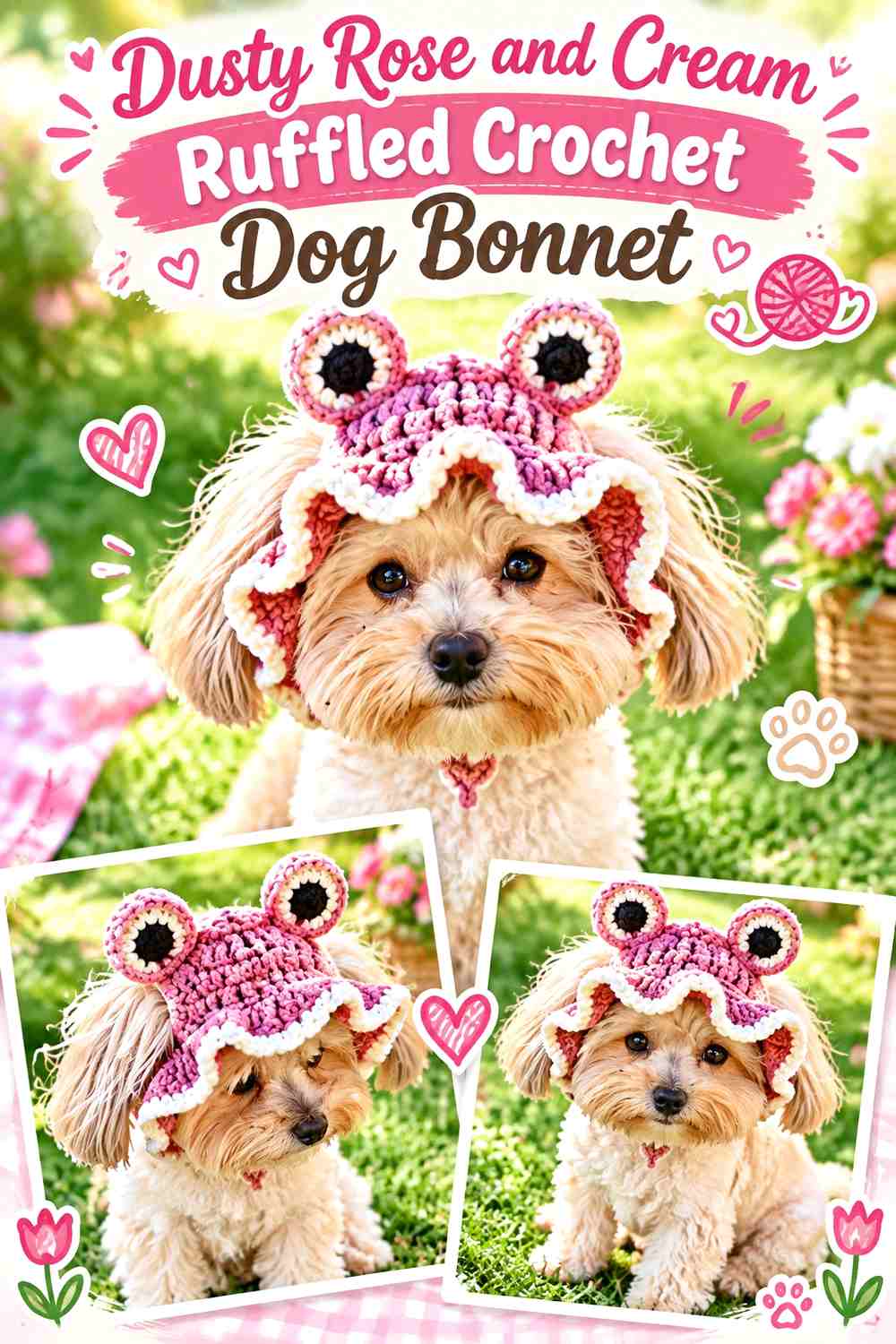
Dusty rose gives this bonnet its romantic vintage identity, while cream keeps the ruffled face edge visible against the darker pink body. Let rose cover the crown and side sections, then concentrate cream around the face and possibly at the ends of the ties. That distribution makes the ruffle look intentional without turning the whole bonnet into alternating stripes.
Dusty Rose Should Cover Most of the Crochet Dog Bonnet
Give dusty rose enough uninterrupted surface to establish the bonnet before adding decorative cream. This is especially important on a small dog, where a wide contrast border can otherwise occupy almost as much visual space as the crown.
If you substitute another pink, keep it softened rather than extremely bright if you want to preserve the vintage direction.
Cream Makes the Dusty Rose Ruffle Easier to Read
Cream is most useful along the face-framing edge because the light-dark difference outlines every curve of the ruffle. You can repeat a smaller amount of cream near the ties so the contrast does not appear only once.
Avoid adding a third strong color to the ruffle unless the bonnet needs another focal point; dusty rose and cream already provide a clear hierarchy.
Creator Credit: Crochet It
2. Powder Blue and Ivory Scalloped Crochet Dog Bonnet
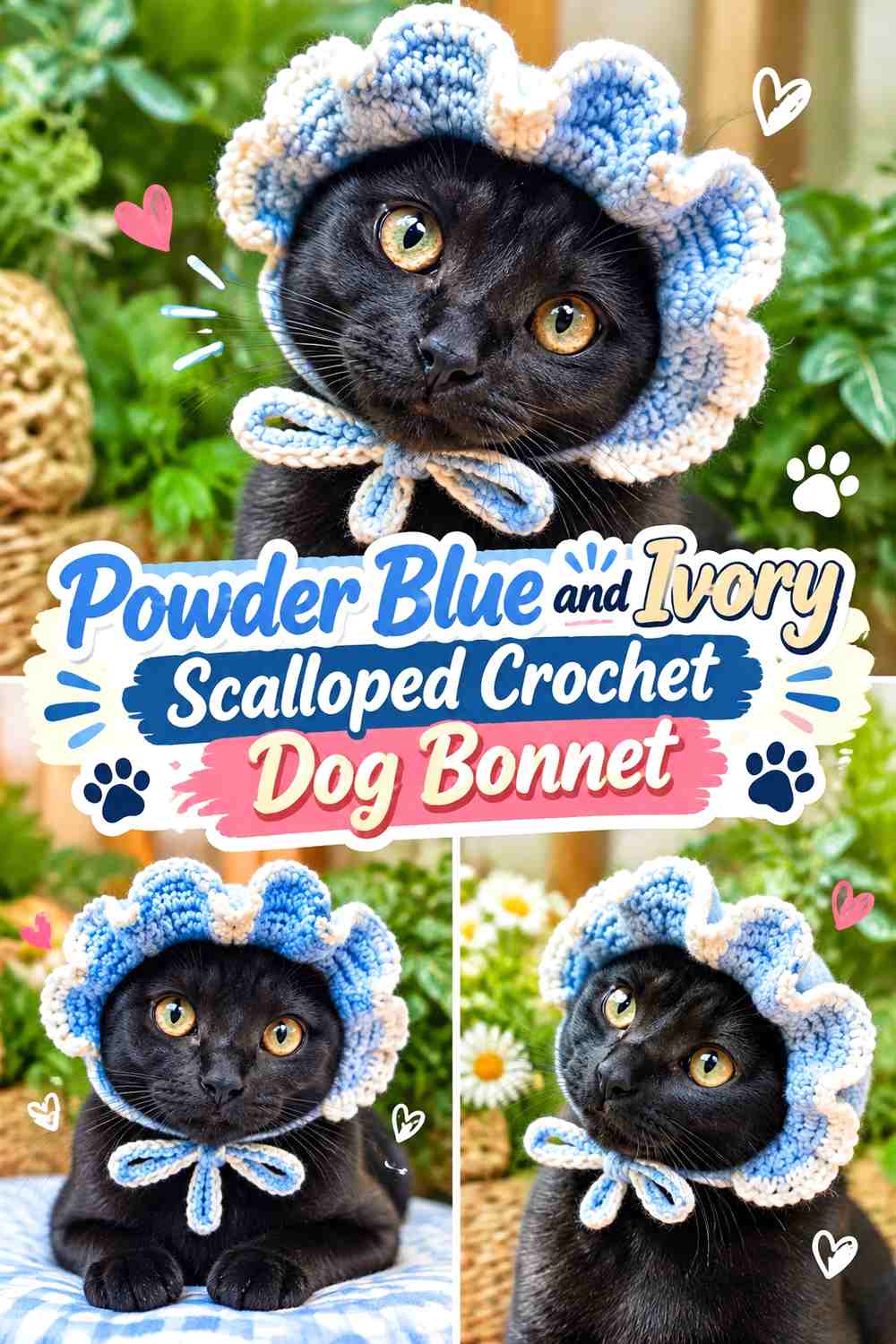
Powder blue creates a soft vintage base without relying on pink, while ivory gives the front edge a lighter frame. The palette suits a bonnet where the decorative interest comes from the border rather than several competing appliqués.
Powder Blue Keeps the Crochet Dog Bonnet Crown Visually Quiet
Use powder blue across the largest head section and around the ear openings. A consistent blue field allows a scalloped or curved ivory border to become the feature instead of fighting with frequent color changes.
A muted blue-gray can replace powder blue as long as it remains visibly darker than the ivory.
Ivory Can Define the Powder Blue Scalloped Edge
Place ivory only where its lightness helps: the face opening, narrow lower edge, or small tie tips. An ivory scallop against powder blue is easier to distinguish than two pale colors with almost identical value.
Check the finished border from a short distance. If the ivory disappears into the blue, choose a slightly deeper blue rather than adding more decorative elements.
Creator Credit: Brunaticality
3. Butter Yellow and White Daisy Crochet Dog Bonnet
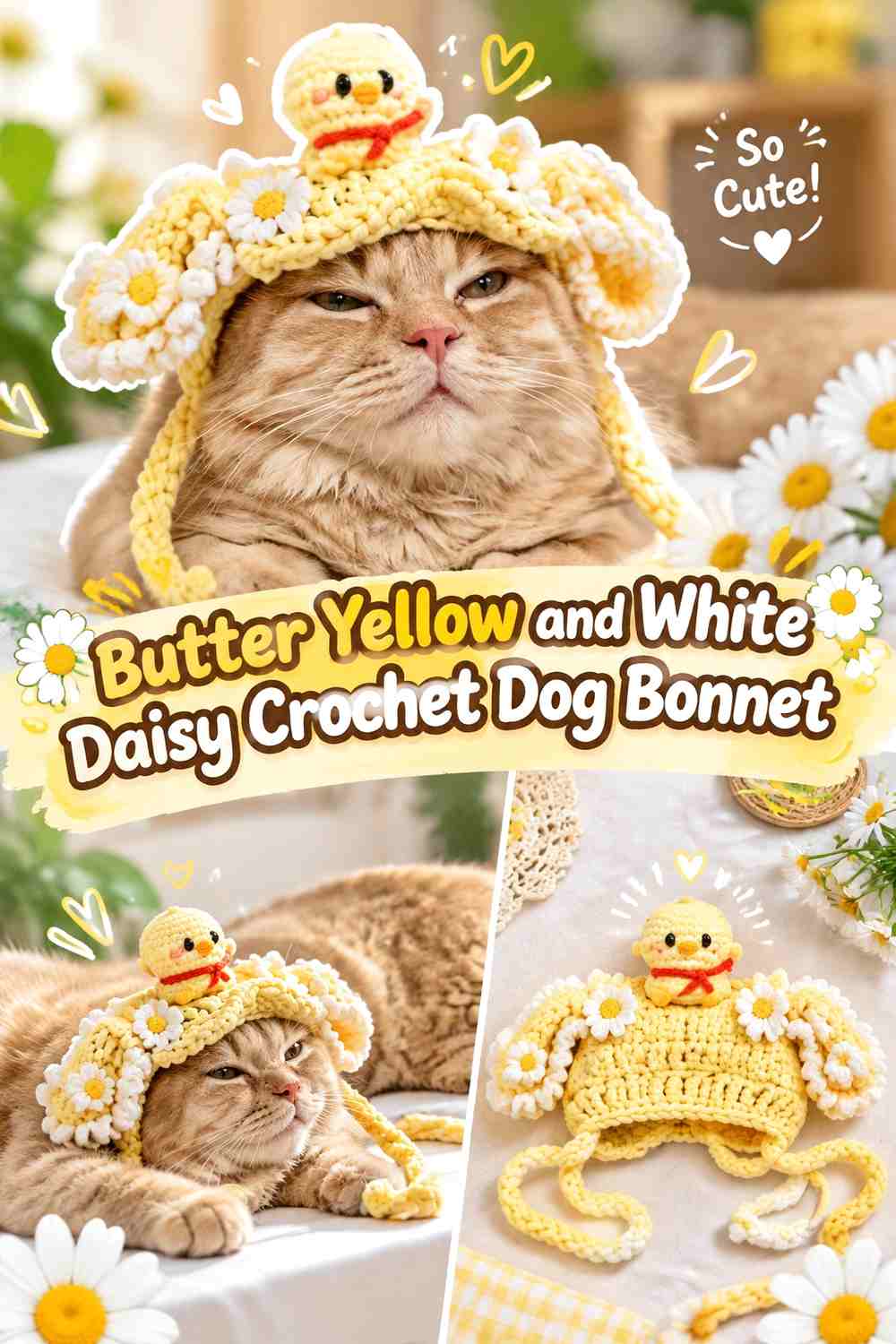
Butter yellow provides a cheerful vintage background, while white can define a small daisy-inspired detail and the face edge. Keep the flower flat and limited in scale so it remains a bonnet accent rather than a bulky object sitting beside the dog’s ear.
Butter Yellow Gives the Crochet Dog Bonnet a Soft Floral Base
Use butter yellow across the crown and side panels instead of alternating it constantly with white. The larger yellow field gives the bonnet a clear identity and leaves room for the flower detail to stand apart.
If the yellow is very pale, check that the white border still remains visible.
White Can Repeat the Butter Yellow Daisy Around the Bonnet Edge
A white flower detail feels more connected when a little white appears elsewhere, such as a narrow front border. That repetition prevents the flower from looking like an unrelated addition.
For a pet accessory, a securely stitched flat crochet or embroidered floral detail is preferable to a loosely hanging decoration that can be pulled or chewed.
Creator Credit: melhz crochet
4. Sage Green and Oatmeal Picot-Edge Crochet Dog Bonnet
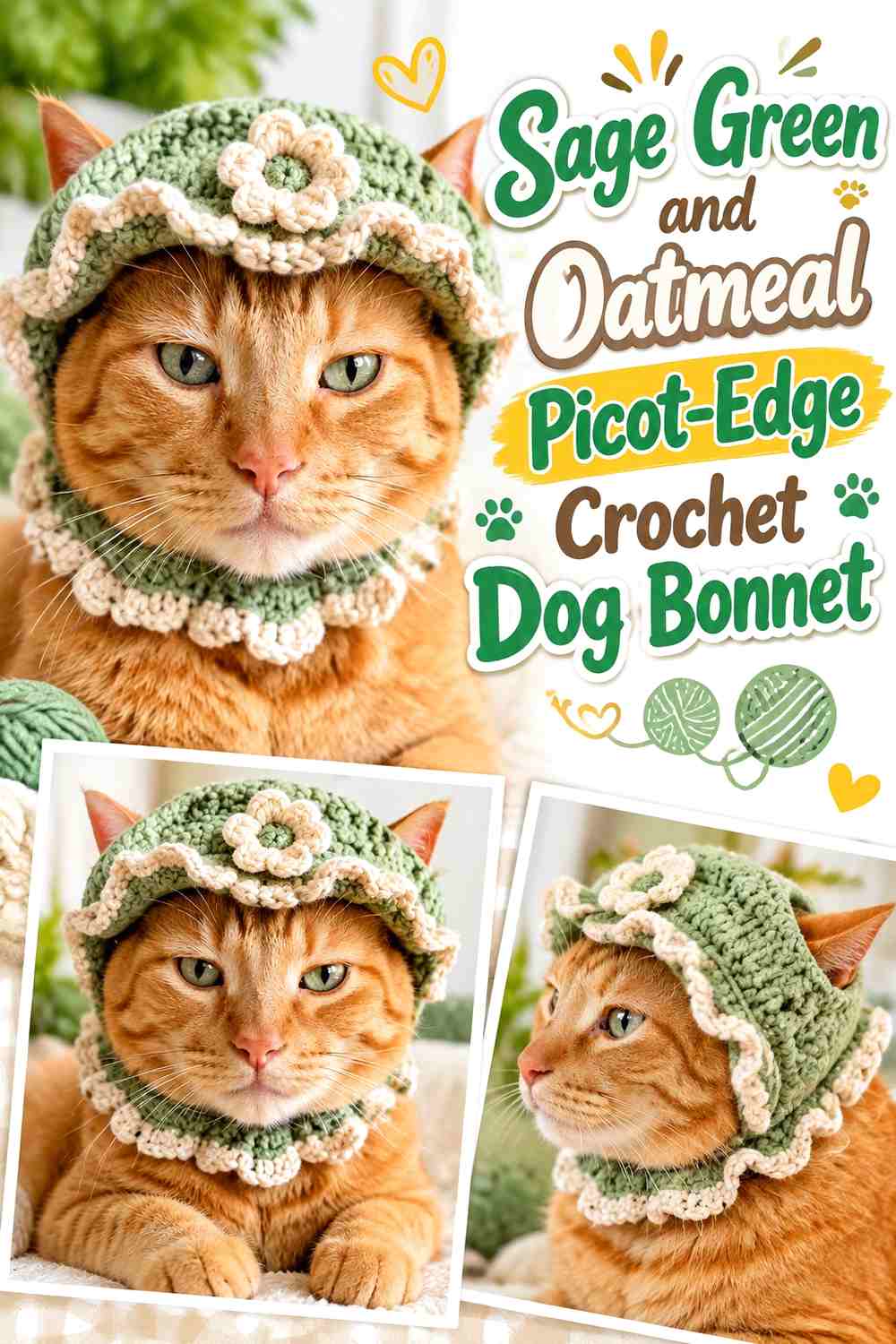
Sage green gives this bonnet an understated cottage-vintage direction. Oatmeal is warmer than bright white, so it can define a small decorative edge without producing a sharp two-tone effect.
Sage Green Works Well Across the Main Crochet Dog Bonnet
Keep sage across the crown, ear sections, and most of the lower edge. Because the color is muted, it gives small decorative points or edging enough space to be visible.
A substitute green should remain softened rather than highly saturated if you want the same restrained look.
Oatmeal Keeps a Sage Green Picot Edge Subtle
Use oatmeal in a narrow face border where small points or textured edging can be distinguished against sage. The neutral can also appear at the tie ends for repetition.
Do not widen the oatmeal border unnecessarily. A narrow detail preserves sage as the dominant color and keeps the bonnet from becoming half green and half neutral.
Creator Credit: Made by Phia
5. Peach and Cream Rosette Crochet Dog Bonnet
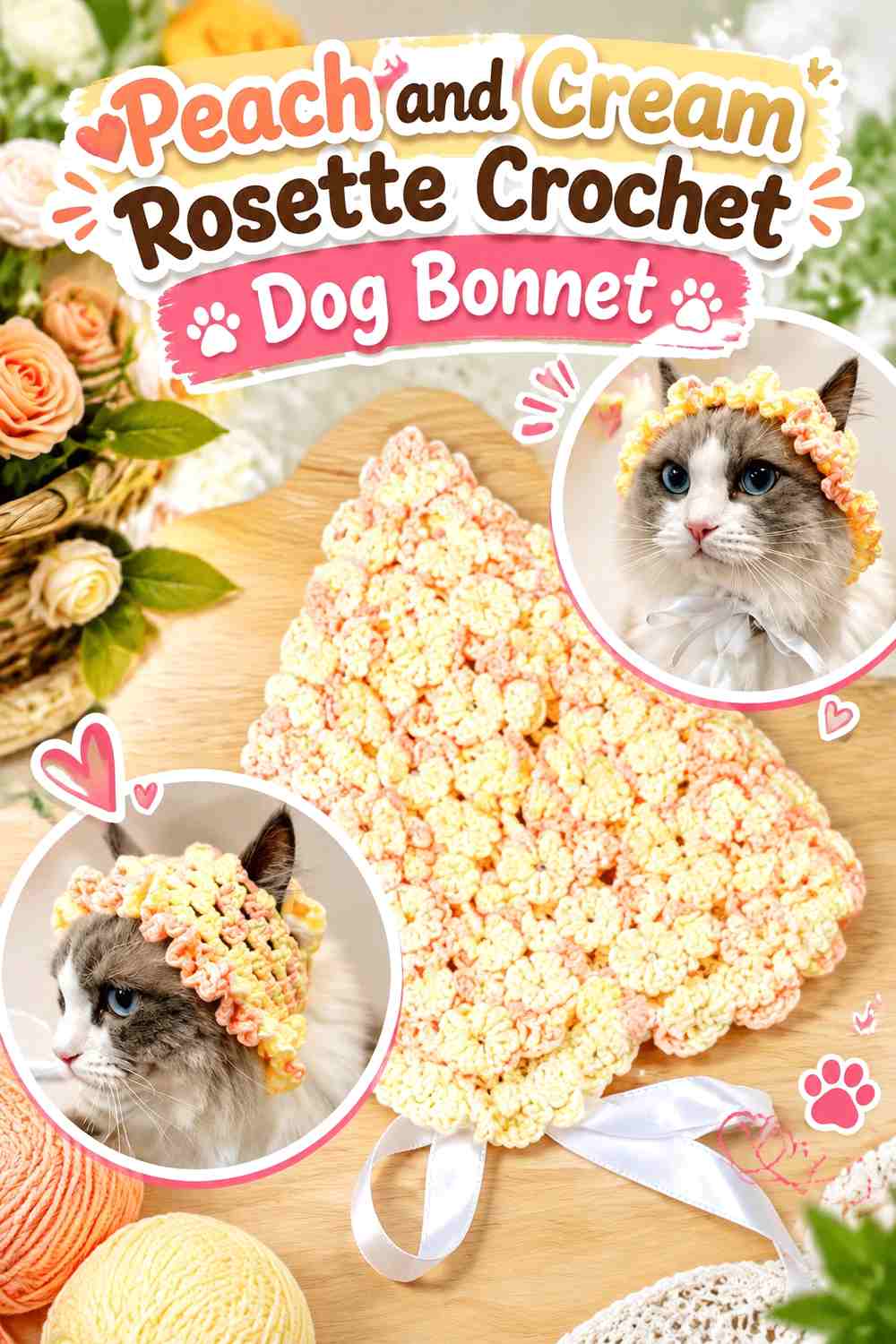
Peach creates a warmer romantic look than dusty rose, while cream can lighten both the face edge and a small rosette-inspired detail. This palette works particularly well when the bonnet body remains simple and the flower becomes the main decorative point.
Peach Can Lead the Crochet Dog Bonnet Without Extra Colors
Use peach for the crown and side coverage so the bonnet reads clearly before the cream detail is added. Too many pastel accents can weaken the vintage simplicity that makes this combination useful.
If your chosen peach is very light, use a slightly deeper cream-to-peach value difference around the border.
Cream Makes a Peach Rosette Feel Connected to the Bonnet
A cream rosette placed to one side can be echoed with a narrow cream face edge. Repeating the color in two locations makes the embellishment look integrated rather than attached as an afterthought.
Keep the rosette compact, securely sewn, and away from the dog’s eye and ear movement.
Creator Credit: 猫のち手編み neko nochi handmade
6. Lavender and Ivory Openwork-Style Crochet Dog Bonnet
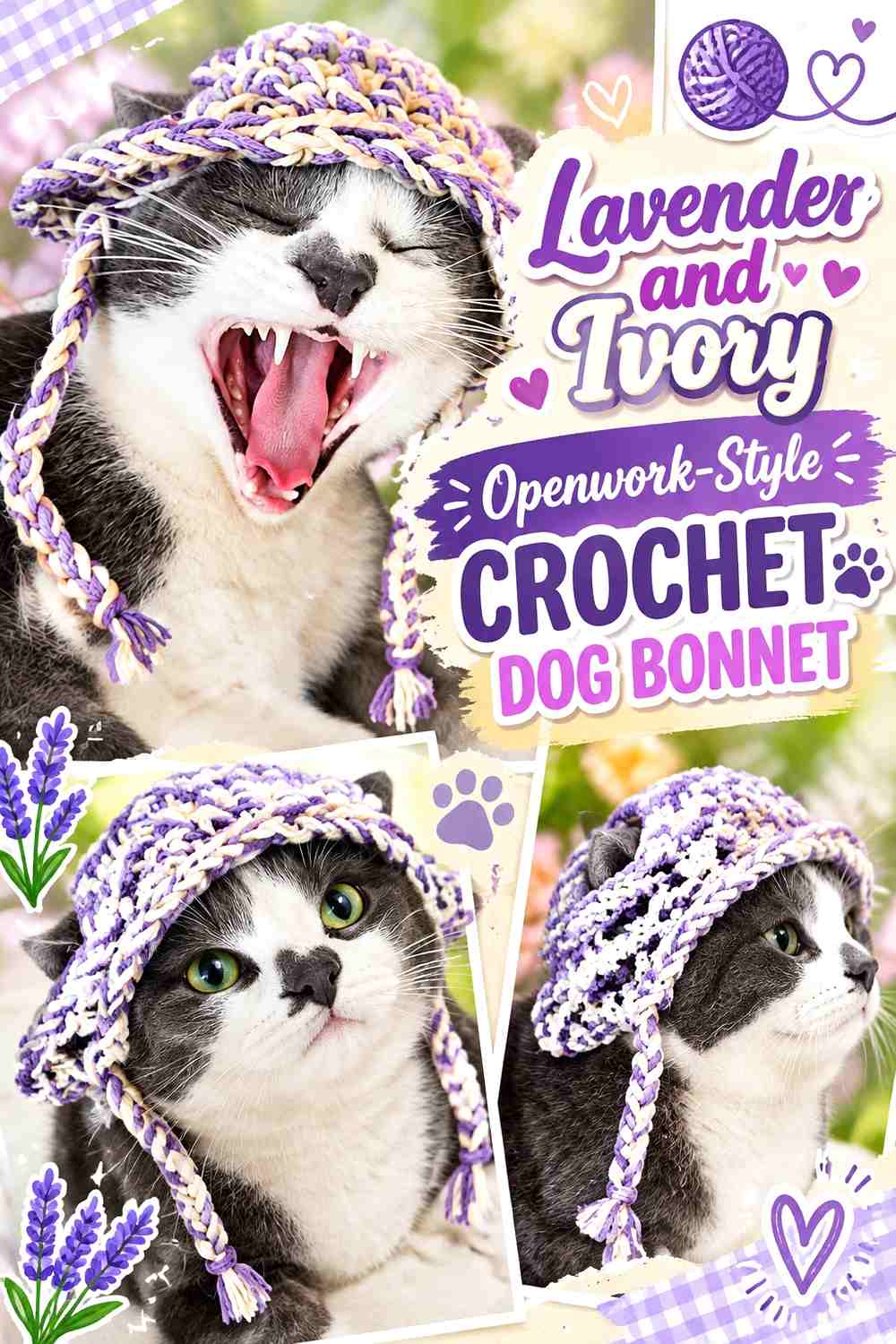
Lavender and ivory give a decorative bonnet a softer antique-inspired direction. Because open or airy crochet already creates visual activity, keep the color distribution restrained: lavender for the main fabric and ivory for only the areas that need definition.
Lavender Should Stay Dominant Across an Open Crochet Dog Bonnet
A single lavender field lets holes, spaces, and crochet texture create the pattern instead of forcing color changes to do the same job. This is useful when the bonnet already has a decorative surface.
Choose another muted purple if needed, but preserve enough depth for ivory edging to remain visible.
Ivory Can Outline Lavender Without Filling Every Open Section
Reserve ivory for the face edge, ties, or a small finishing band. Filling individual open spaces with alternating colors can make a tiny bonnet look much busier than intended.
The calmer color arrangement also makes it easier to evaluate the actual fit around the dog’s ears and forehead.
Creator Credit: marina • art
7. Mint Green and Pale Pink Contrast-Tie Crochet Dog Bonnet
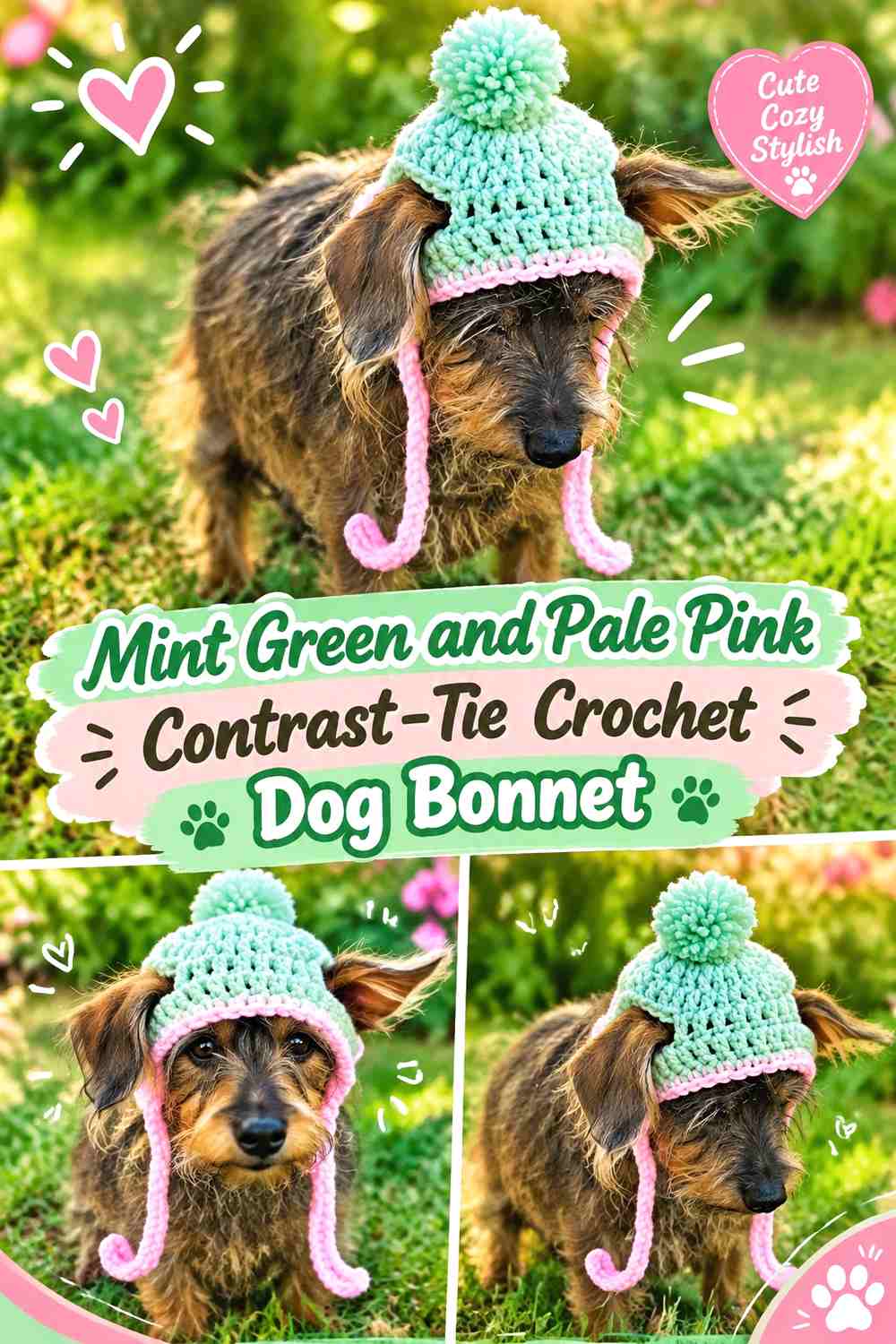
Mint and pale pink create a playful pastel combination with clear vintage associations when both colors are softened. Let mint control the bonnet itself and move pink toward the ties and narrow edging.
Mint Green Keeps the Crochet Dog Bonnet From Becoming Too Sweet
Using mint across most of the crown gives the pink accent a cooler background. If pink covers an equal area, the result changes from a mint bonnet with vintage accents into a balanced two-color design.
Either can work, but decide which color should lead before making the ties.
Pale Pink Can Highlight Mint Green Ties Without Dominating
Pale pink ties create a visible finishing detail below the mint bonnet. A tiny amount can also be repeated around the face opening to connect the ties to the main piece.
Keep tie length and placement practical for the individual dog, and supervise while the bonnet is being worn.
Creator Credit: TwinStarHooks 💫
8. Burgundy and Blush Face-Framing Crochet Dog Bonnet
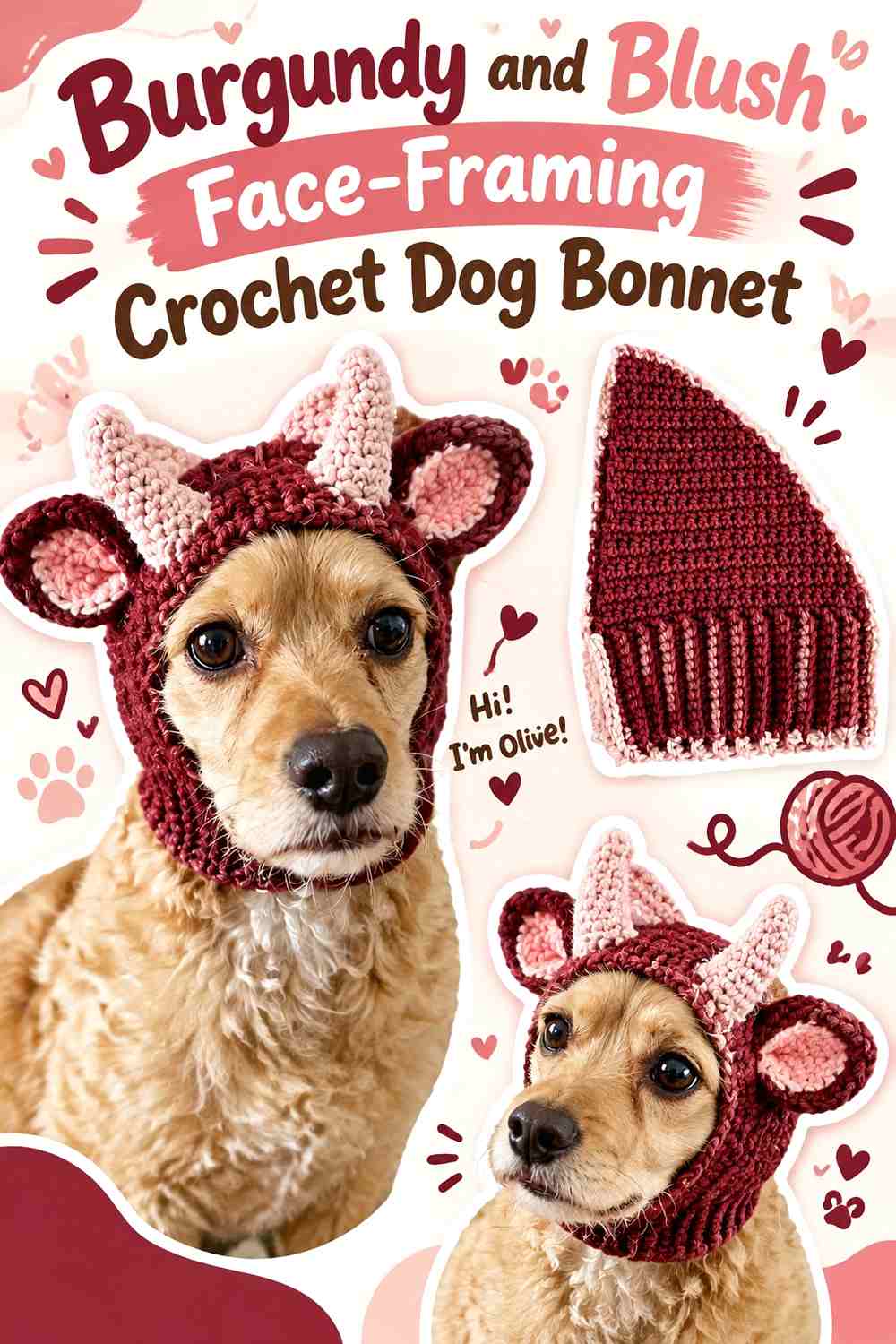
Burgundy creates one of the darkest vintage palettes in the collection, so blush has an important role around the dog’s face. The contrast prevents a small bonnet from turning into one uninterrupted dark shape.
Burgundy Can Give the Crochet Dog Bonnet a Strong Outer Shape
Use burgundy for the crown, back, and larger side sections. Keeping the dark color continuous makes the bonnet silhouette easy to read.
If you want a less dramatic version, substitute a muted wine or softened berry while retaining the darker-than-blush relationship.
Blush Opens Up the Burgundy Face Edge
A blush border around the face creates a lighter transition between the dark bonnet and the dog. Repeat blush sparingly on the lower edge or tie ends if the front border otherwise looks isolated.
Avoid covering large sections in blush if the original goal is a burgundy-led vintage bonnet.
Creator Credit: olliehollycrochet
9. Rust and Mustard Floral Crochet Dog Bonnet
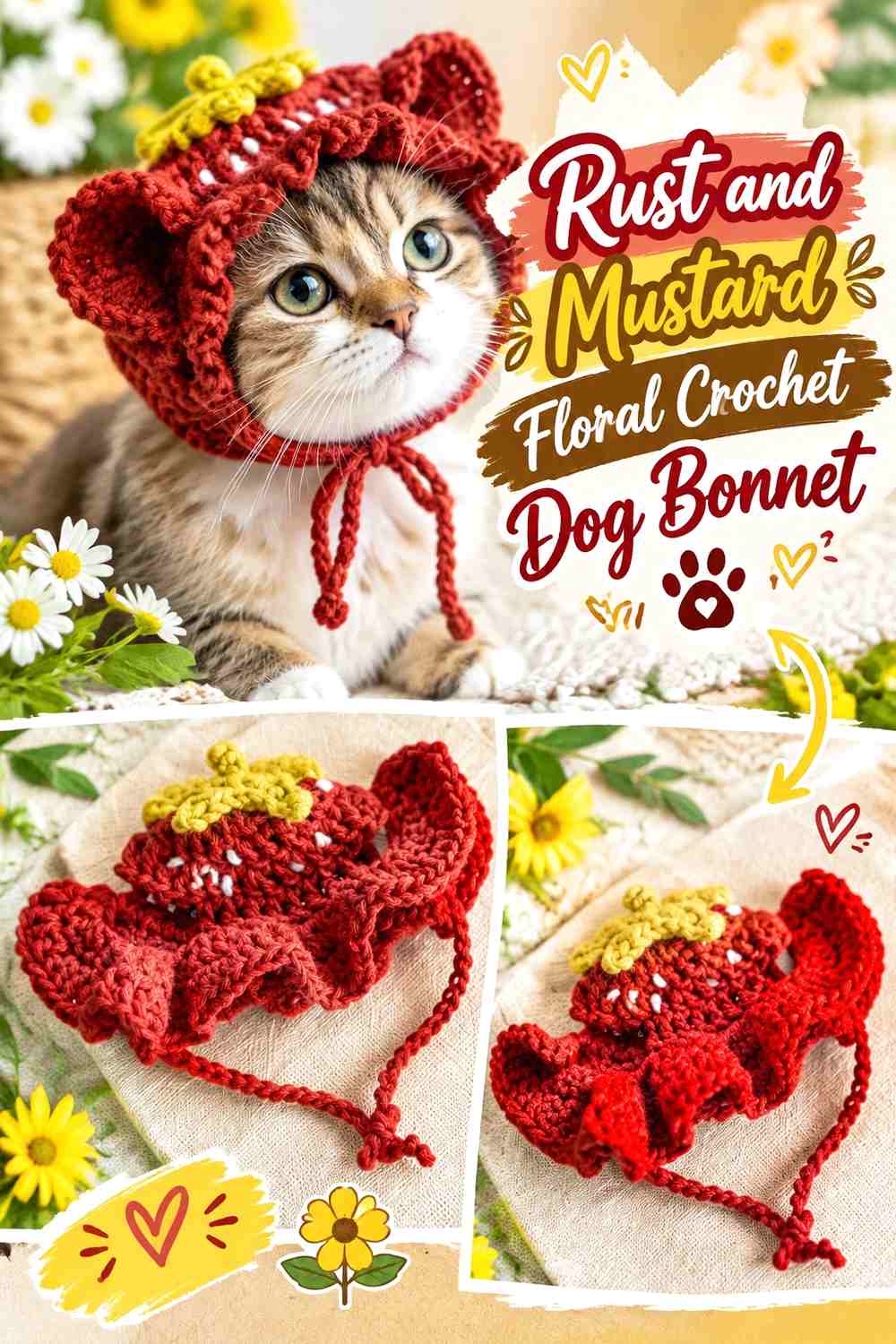
Rust and mustard move the vintage look toward warm 1970s color. Because both shades have strong personalities, assign them unequal roles: rust can cover the bonnet while mustard appears in a flat flower or narrow edge.
Rust Can Ground the Main Crochet Dog Bonnet
Use rust across the crown and around the ears so there is enough continuous color to anchor the design. This also gives mustard a darker field against which to stand out.
If your rust is very close to mustard in value, consider deepening the rust rather than adding a third color.
Mustard Makes a Stronger Rust Accent in Small Amounts
A mustard flower center, small appliqué, or narrow face trim is enough to influence the entire bonnet. Repeating mustard too broadly can remove rust’s dominant role.
Keep floral decoration securely attached and relatively flat if the bonnet is intended to be worn rather than displayed.
Creator Credit: Kukkacrochet By Putri
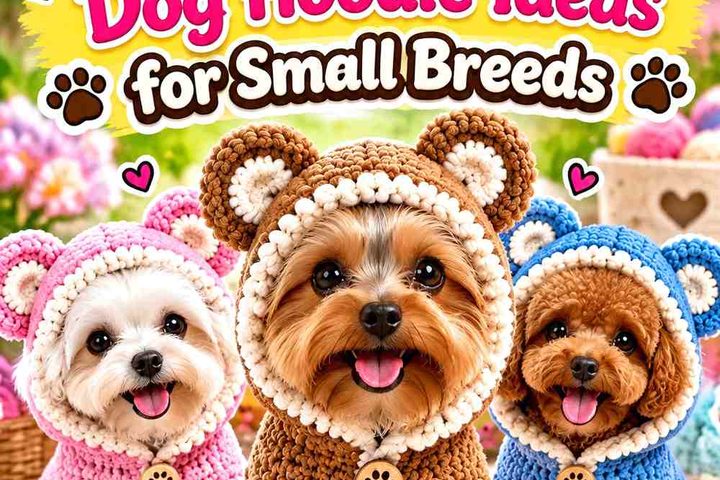
10. Chocolate Brown and Cream Teddy-Ear Crochet Dog Bonnet
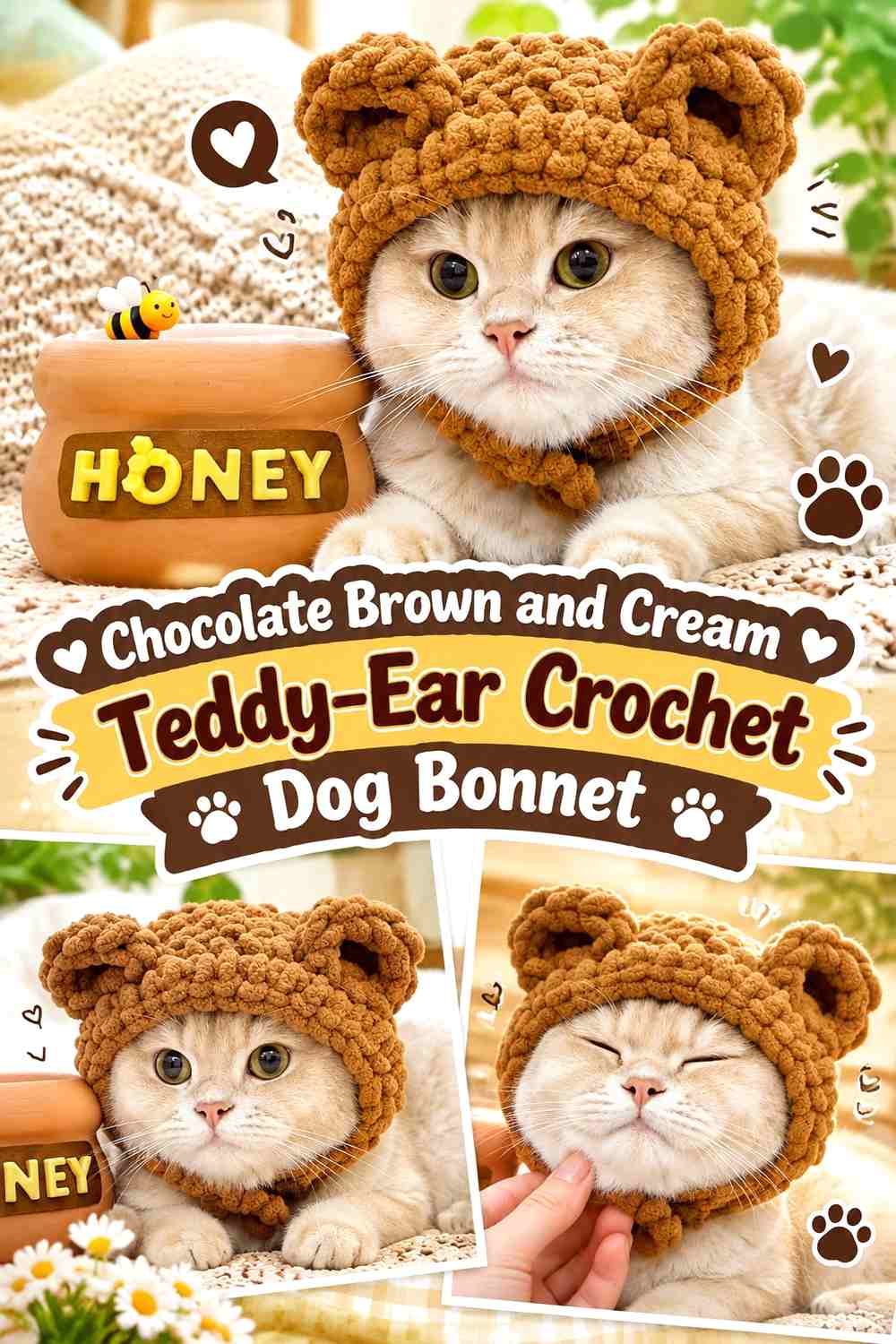
Chocolate and cream create a warm neutral bonnet where shape and novelty details do more of the visual work. Small teddy-ear-inspired additions can give the bonnet character without requiring several accent colors.
Chocolate Brown Can Anchor the Crochet Dog Bonnet Crown
Use chocolate across the main bonnet so the cream details appear crisp. A dark crown also creates a clear outline around small rounded ear decorations.
For a softer version, move toward cocoa while keeping it distinctly deeper than cream.
Cream Can Define Chocolate Brown Teddy-Ear Details
Cream can appear inside small rounded decorative ears or around the front border. Using the same light color in both places connects the novelty detail to the bonnet itself.
Raised ears should be stitched down securely, and they should not interfere with the dog’s own ears or encourage persistent pawing at the bonnet.
Creator Credit: Kirby.Happymeow
11. Teal and Mustard Scalloped Crochet Dog Bonnet
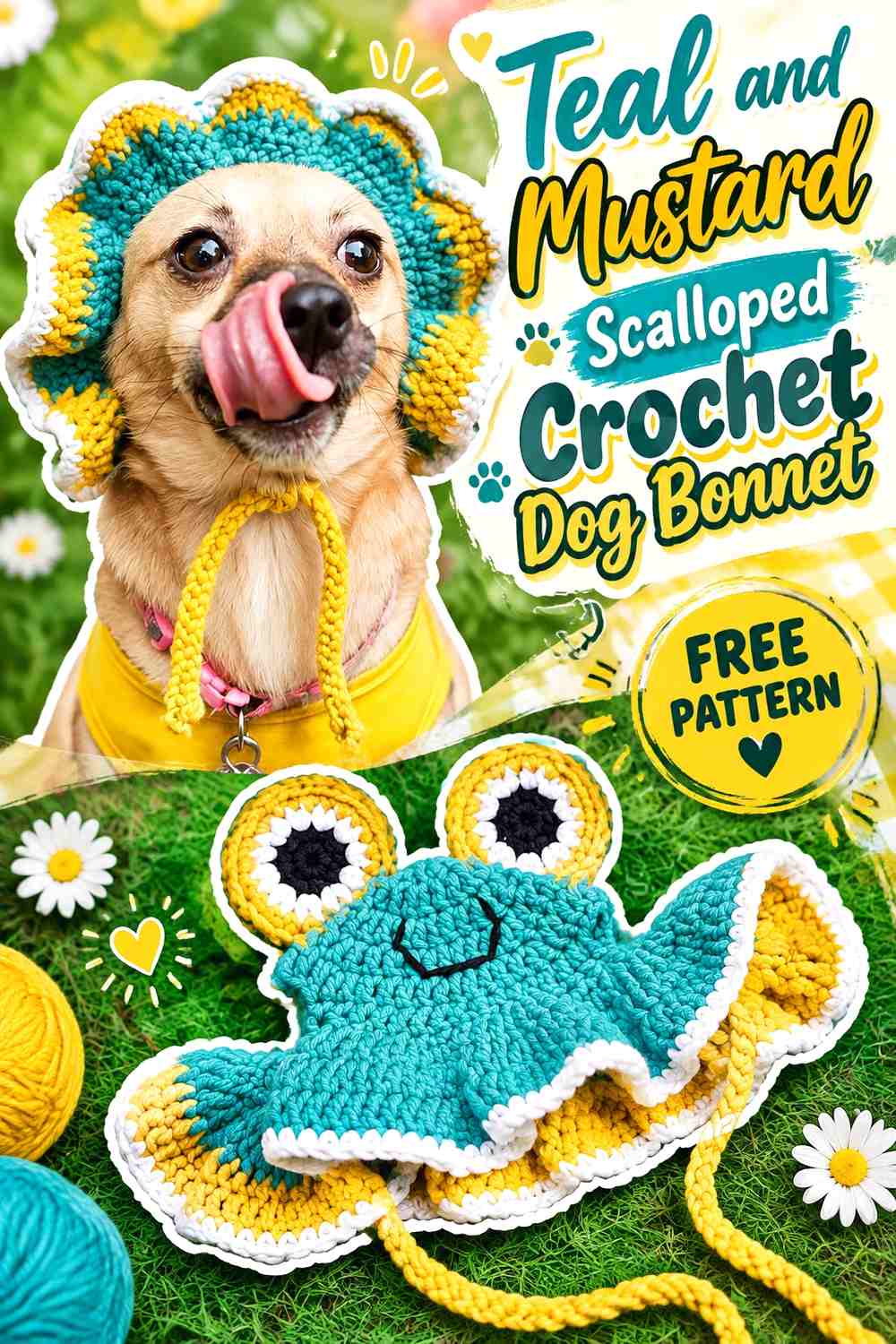
Teal gives mustard a cooler, darker background and creates a bolder vintage combination than pastel palettes. The bonnet can stay mostly teal while mustard traces a scalloped face edge.
Teal Gives the Crochet Dog Bonnet Strong Visual Depth
Use teal for most of the crown and side coverage. Its depth provides enough visual weight that a relatively narrow mustard edge can still become noticeable.
If your teal is especially saturated, avoid introducing several other bright colors that compete with the scallops.
Mustard Makes the Teal Scalloped Border a Focal Point
Mustard naturally attracts attention against deeper teal, so it does not need to occupy much space. Use it along the face edge and perhaps once more near the tie ends.
The repeated accent creates continuity while leaving teal in control of the bonnet.
Creator Credit: keepstylinlady
12. Olive Green and Terracotta Leaf-Detail Crochet Dog Bonnet
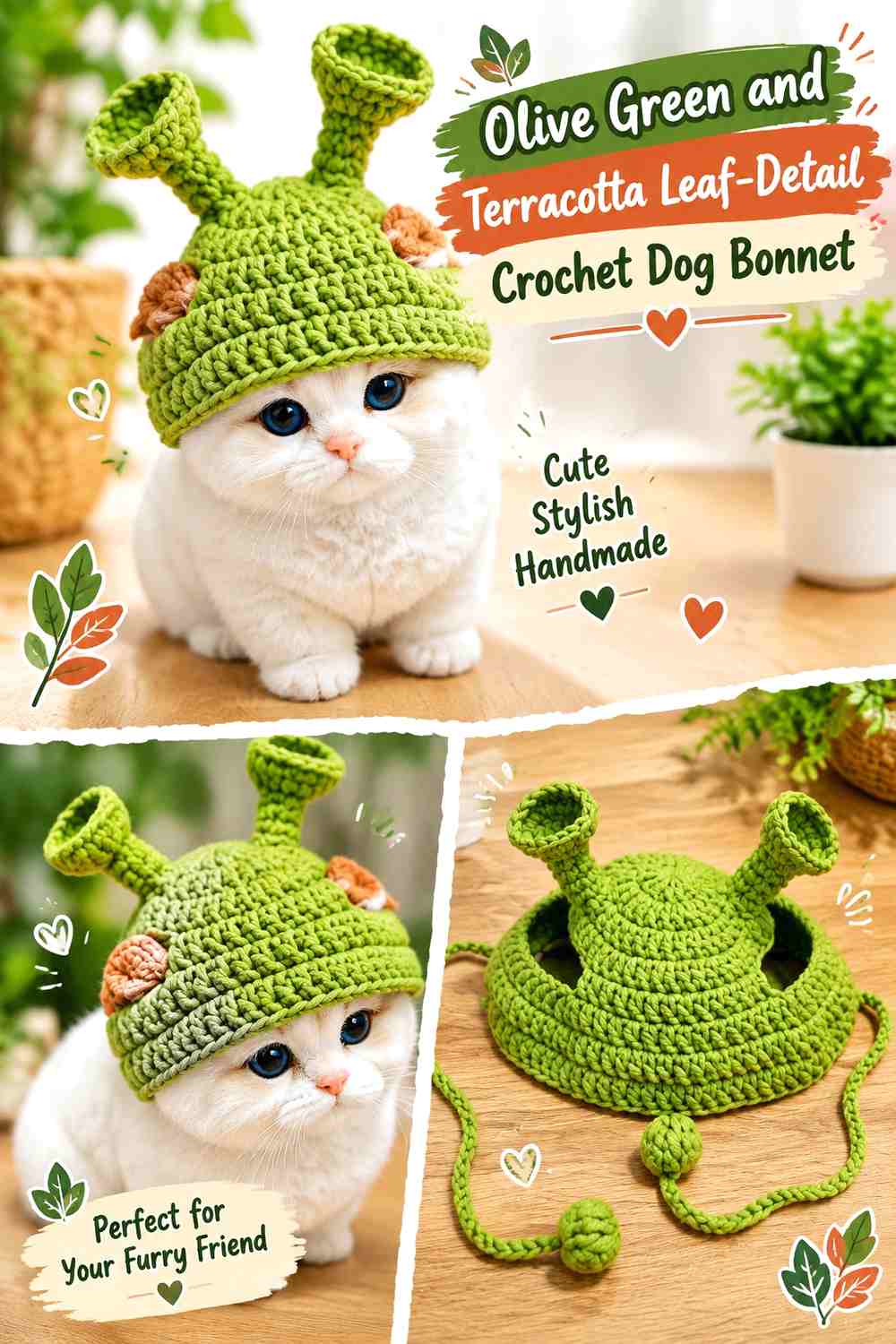
Olive and terracotta produce an earthy vintage palette that can support a small botanical detail without looking overly floral. Olive should provide the quiet background, with terracotta saved for one or two accents.
Olive Green Works Across the Main Crochet Dog Bonnet Surface
Use olive for the bonnet crown, sides, and most of the face edge. This creates a consistent base for the warmer terracotta detail.
A mossy or muted medium green can substitute for olive if it maintains the earthy relationship.
Terracotta Can Add a Flat Leaf Detail to Olive Green
A small terracotta leaf or botanical motif can sit toward one side of the bonnet, away from the eye. Repeating terracotta in a tiny border section or tie detail helps it feel integrated.
Keep the motif flat and firmly attached rather than letting leaf points or stems dangle from the pet accessory.
Creator Credit: fengLing Crochet
13. Coral and Pale Yellow Ruffled Crochet Dog Bonnet
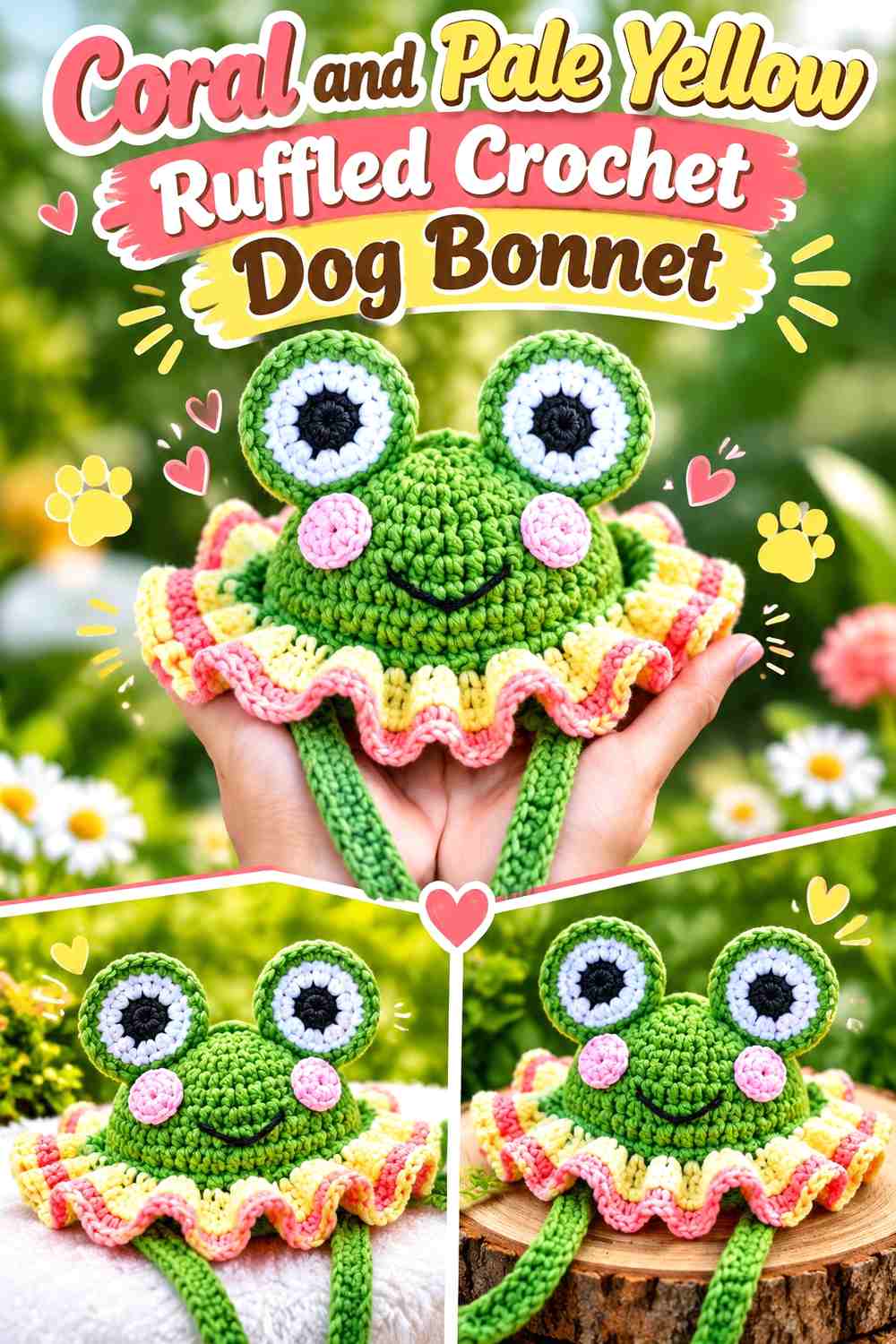
Coral and pale yellow create a brighter vintage palette that still feels softer than red and primary yellow. Because both colors are lively, keep one clearly dominant and use the other primarily in the ruffle.
Coral Can Carry the Main Crochet Dog Bonnet Shape
Use coral across the crown and side sections so the bonnet reads as a coral accessory before the yellow edge appears. This limits the visual competition between two warm colors.
A softened coral will give the combination a more vintage direction than an intensely neon orange-pink.
Pale Yellow Can Lighten the Coral Ruffle
Use pale yellow on the outermost ruffled edge where the lighter value can separate each curve from the coral body. A very small repeat at the ties can complete the palette.
If the ruffle is already large, keep the color arrangement simple rather than adding another decorative flower.
Creator Credit: Beidi Crochet
14. Plum and Dusty Rose Beret-Inspired Crochet Dog Bonnet
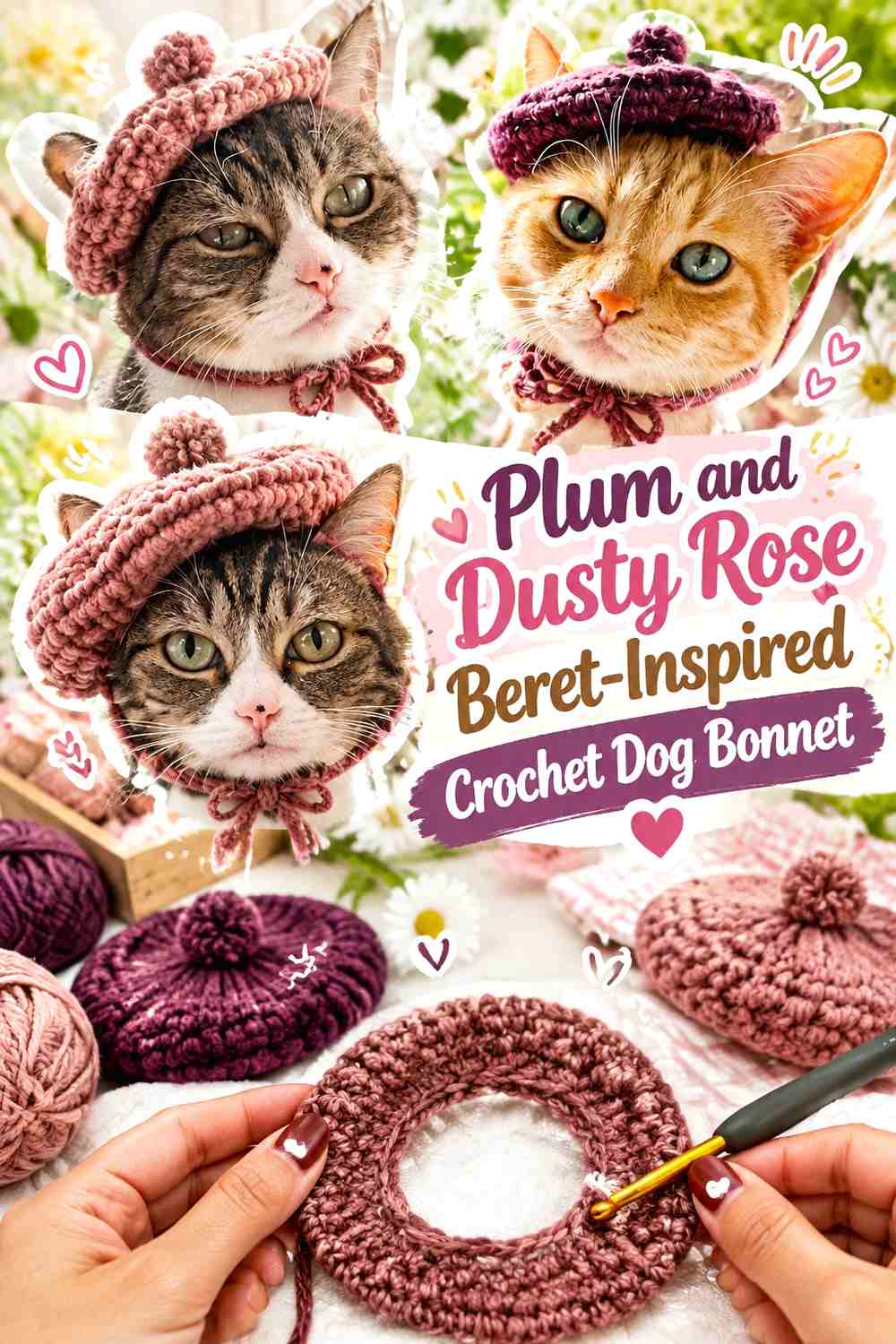
Plum and dusty rose suit a bonnet with a slightly rounded, beret-like top. Plum provides depth across the crown while dusty rose softens the face edge and prevents the garment from looking too heavy.
Plum Can Emphasize the Rounded Crochet Dog Bonnet Crown
Keep plum across the broadest upper area so the rounded silhouette becomes the main feature. A consistent crown is more effective here than alternating stripes.
Deep berry can substitute for plum if it remains noticeably darker than dusty rose.
Dusty Rose Softens the Plum Crochet Dog Bonnet Edge
Use dusty rose around the face or lower band to create a gentler transition from the deep crown. It can also be repeated in a small top detail if that addition does not interfere with fit.
Avoid using equal amounts of plum and rose if you want the rounded crown to remain visually dominant.
Creator Credit: Riceball & Meatball
15. Denim Blue and Camel Braided-Tie Crochet Dog Bonnet
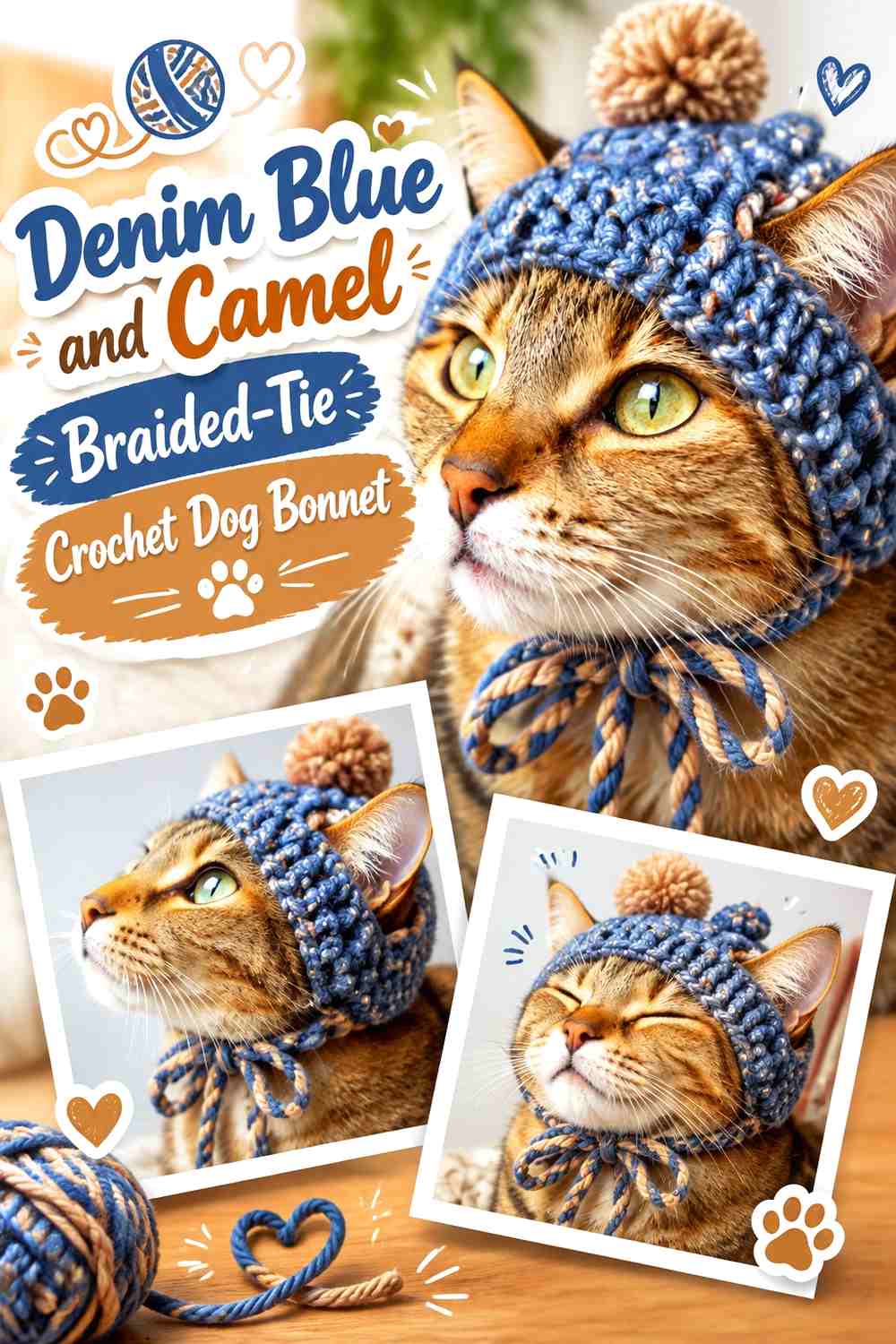
Denim blue and camel create a quieter vintage palette that lets braided or textured ties become the cute detail. Blue can cover most of the bonnet, while camel highlights the lower edges and tie structure.
Denim Blue Gives the Crochet Dog Bonnet an Everyday Vintage Base
Use denim blue from crown to ear area without frequent color changes. Its muted quality allows the bonnet to remain decorative without looking overly costume-like.
A dusty medium blue can perform the same role if the exact denim shade is unavailable.
Camel Can Make Denim Blue Braided Ties More Noticeable
Camel works well in a narrow border and in the tie area because its warmth contrasts with the cooler blue. If you braid multiple strands, keep the finished tie flexible rather than bulky.
Check tie placement and length on the individual dog and supervise whenever the bonnet is worn.
Creator Credit: Catventurous Crochet
16. Raspberry and Sage Granny-Flower Crochet Dog Bonnet
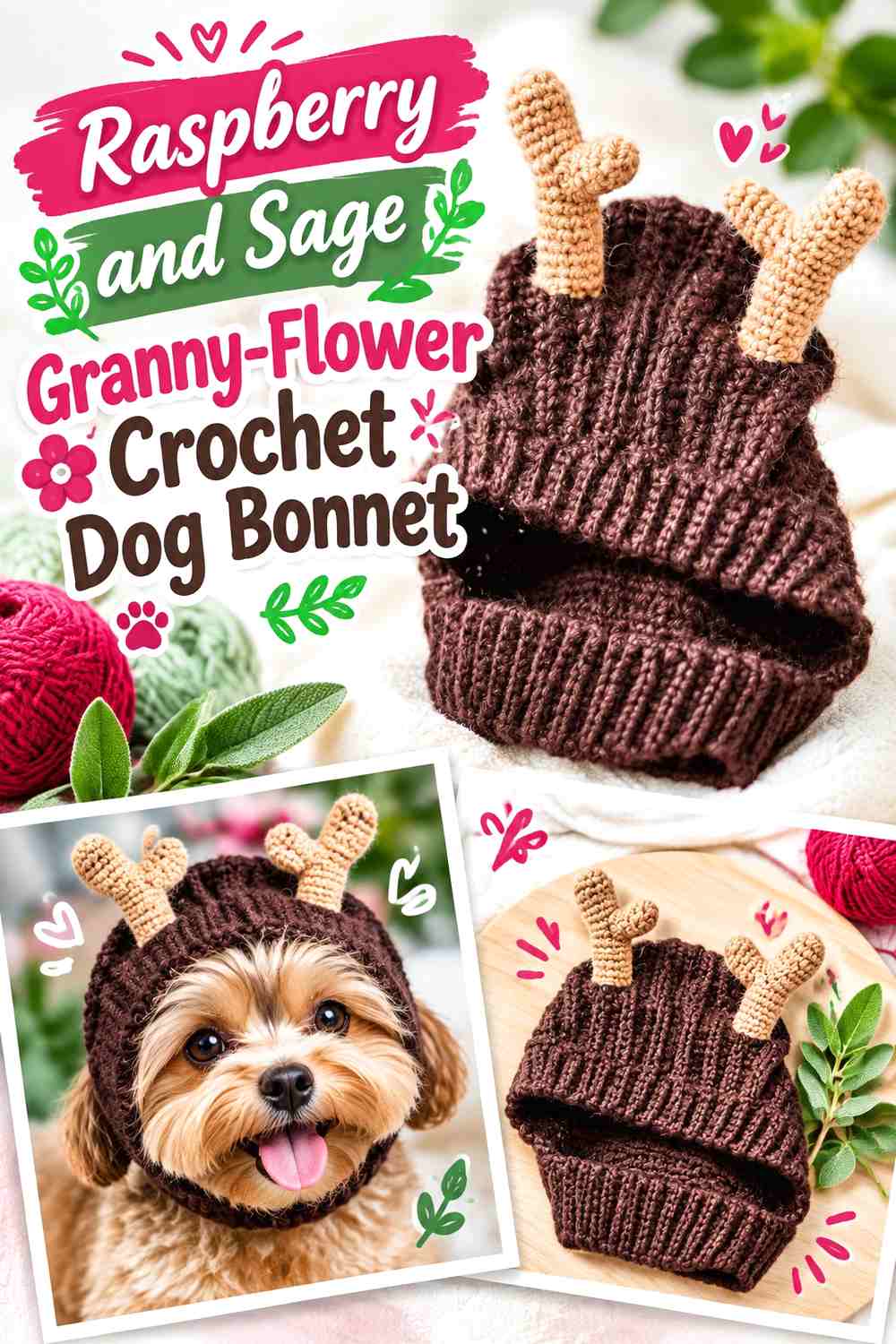
Raspberry and sage combine a stronger berry shade with a quiet green. A small granny-style flower or flat floral medallion can bring the two colors together without covering the bonnet in separate motifs.
Sage Green Can Calm the Raspberry Crochet Dog Bonnet
Let sage occupy the crown and sides so raspberry remains the accent readers notice first. The muted green also gives the floral detail enough open visual space.
If sage and raspberry are both dark, introduce a small light center rather than increasing the raspberry area.
Raspberry Can Define a Sage Green Granny-Flower Detail
Use raspberry around the flower petals or center, then repeat a small amount along the face edge. This connects the decoration to the rest of the bonnet.
Keep the flower compact and firmly secured instead of adding multiple dimensional flowers across the dog’s head.
Creator Credit: by_drozds
17. Cream and Cocoa Heirloom-Style Crochet Dog Bonnet
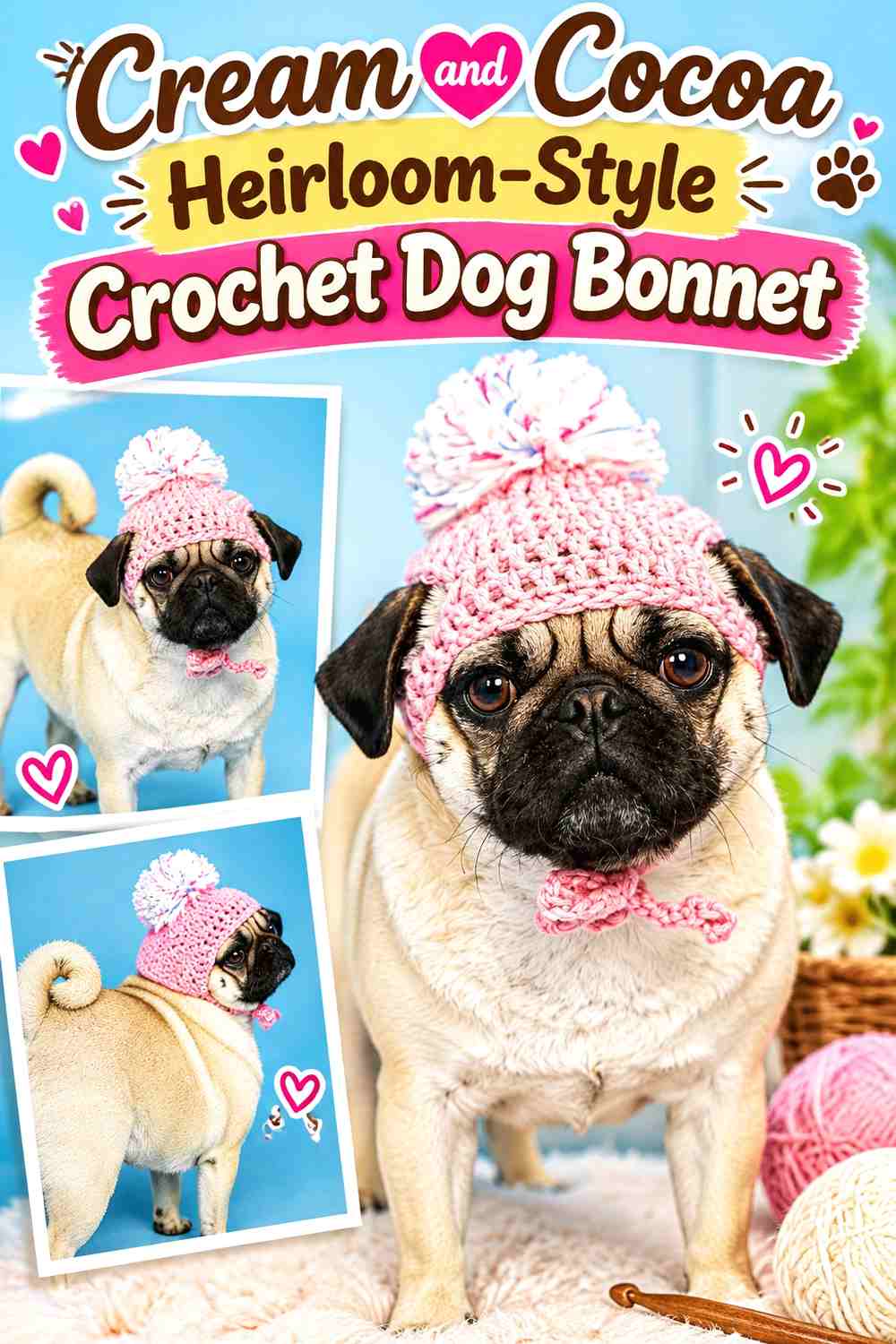
Cream and cocoa create a restrained vintage combination suited to a bonnet where crochet texture is more important than bright color. Cream can dominate, with cocoa providing narrow definition around the face and lower edge.
Cream Lets Crochet Dog Bonnet Texture Become the Main Detail
Using cream across the crown makes stitch texture and shaping more noticeable because frequent color changes are not competing with them. This works well when you want an old-fashioned handmade look without floral colors.
Cocoa Gives the Cream Crochet Dog Bonnet a Defined Frame
A cocoa edge around the face, ears, or ties prevents the cream bonnet from visually disappearing against a light-coated dog. Keep the dark shade narrow so the overall accessory remains cream-led.
You can substitute a medium brown if it still creates enough separation from the cream.
Creator Credit: Andrea Quinteros
18. Soft Red and Pink Strawberry-Detail Crochet Dog Bonnet

Soft red and pink create a playful vintage fruit palette without needing bright green across the entire bonnet. Red can establish the strawberry reference, while pink lightens the edging and reduces the intensity of an all-red accessory.
Soft Red Can Lead the Strawberry Crochet Dog Bonnet
Use softened red across the main bonnet rather than mixing several equally bright fruit colors. The larger red surface makes the theme recognizable even if the decorative motif remains small.
Pink Can Soften the Red Strawberry Crochet Dog Bonnet Edge
Pink edging, ties, or a small inner detail can break up the red without removing the fruit-inspired direction. If you include a strawberry motif, keep it securely attached and avoid dangling fruit shapes.
A muted rose can replace pink when you want the result to feel more vintage and less candy-colored.
Creator Credit: CutecrochetbyAlly
19. Harvest Gold and Avocado Retro-Frill Crochet Dog Bonnet
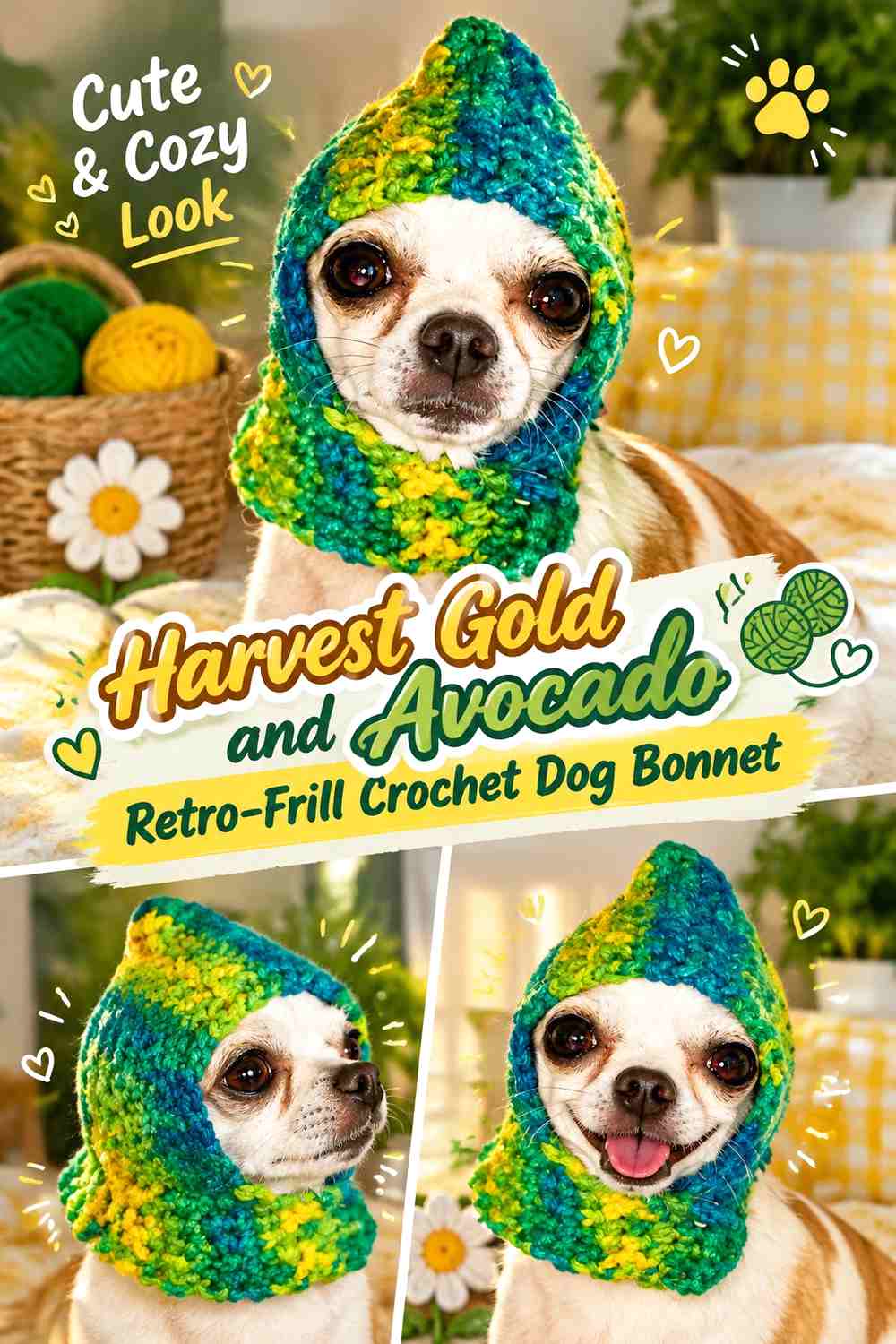
Harvest gold and avocado provide the strongest explicitly retro palette in this list. Avocado can control the bonnet body, while harvest gold appears along a frilled front edge and smaller finishing details.
Avocado Can Anchor the Retro Crochet Dog Bonnet
Use avocado across the crown and around the ears so the garment has a consistent earthy base. The green is distinctive enough to create vintage character without needing several additional colors.
Harvest Gold Can Turn the Avocado Edge Into a Retro Frill
Place harvest gold around the face where the warmer color can highlight every curve in the frill. A small repeat at the lower edge or tie ends keeps the gold connected to the rest of the bonnet.
If the two yarns look too similar in grayscale, choose a lighter gold or deeper avocado so the decorative edge stays visible.
Creator Credit: All My Good Ideas Were Taken
Which Vintage Crochet Dog Bonnet Style Should You Choose?
For a romantic vintage look, dusty rose and cream, peach and cream, lavender and ivory, or plum and dusty rose keep the colors softened while allowing ruffles, flowers, and face-framing borders to provide the detail.
For cottage-inspired styling, sage and oatmeal, butter yellow and white, olive and terracotta, or raspberry and sage work well with small floral or botanical accents.
If you prefer stronger retro color, teal and mustard, rust and mustard, or harvest gold and avocado create more contrast. The cream-and-cocoa and denim-and-camel versions are quieter alternatives when you want the crochet texture and bonnet silhouette to do more of the work.
The important decision is not how many cute elements you can add. It is which single detail should lead: a ruffled face edge, a scalloped border, a flower, unusual ties, a rounded crown, or a small novelty motif.
Conclusion
A vintage-style crochet dog bonnet can feel distinctive with only two well-planned colors and one decorative detail. Dusty rose with cream emphasizes romantic ruffles, sage with oatmeal makes small edging details quieter, and avocado with harvest gold gives the accessory a much stronger retro identity.
Before committing to embellishments, get the basic bonnet shape and ear placement right for the individual dog. Then add contrast where it contributes something useful—around the face, along a border, or in one small focal motif.
Keep attached details secure and supervised, and use the credited original tutorials for their exact construction methods rather than trying to recreate those instructions from an inspiration article.
Frequently Asked Questions
What colors make a crochet dog bonnet look vintage?
Muted pinks, cream, powder blue, sage, butter yellow, rust, mustard, avocado, harvest gold, chocolate, camel, plum, and similar softened shades can all support a vintage direction. The combination and placement matter more than using a particular required color.
How many colors should I use in a vintage crochet dog bonnet?
Two colors are often enough because a dog bonnet has limited surface area. One can cover the crown while the second defines the ruffle, scalloped edge, ties, or flower. A third shade is most useful when it has a specific small role rather than equal coverage.
Should the ruffle on a crochet dog bonnet be lighter than the main color?
It does not have to be, but a lighter ruffle can make the face edge easier to see. Cream against dusty rose or pale yellow against coral creates more definition than two shades with very similar lightness.
Where should I put crochet flowers on a dog bonnet?
A small, securely attached flower can sit toward one side of the bonnet where it does not interfere with the dog’s eyes or natural ear movement. Flat details are generally easier to control than several bulky or dangling embellishments.
Can I adapt a crochet cat-hat tutorial into a dog bonnet?
A pet-hat construction can provide useful inspiration, but do not assume the original dimensions will fit a dog. Dogs vary considerably in head shape, ear placement, and size, so check the dog’s measurements and the tutorial’s construction before adapting it.
How do I know whether two bonnet colors have enough contrast?
Place the yarns directly beside one another and look at them from a distance. A grayscale photo can also help reveal whether their light-dark values are too similar. Increase value contrast when a scallop, flower, border, or other small detail disappears.
What should I check before my dog wears a crochet bonnet?
Make sure the bonnet does not restrict the eyes, ears, head movement, or comfortable breathing. Check that attached decorations and yarn ends are secure, monitor ties carefully, and supervise the dog while the accessory is being worn. Remove it if the dog repeatedly tries to paw, chew, or shake it off.