A crochet cat cave shaped like a mushroom house gives color a structural job. The cap can carry the strongest shade, the stem-like cave body can stay lighter, and spots, doorway trim, or a cushion can repeat smaller accent colors. That separation helps the finished piece read as a mushroom even when the silhouette is fairly simple.

The main challenge is keeping decoration from overwhelming the bed itself. A large mushroom cap already creates a strong focal area, so spots usually need less visual space than the cap, while the doorway benefits from enough contrast to remain clearly defined. Color planning also needs to account for how the cave looks with a cat inside it; a dark doorway against a dark interior can visually disappear.
The tutorials credited throughout this article include enclosed crochet cat houses, caves, pet igloos, baskets, and bed foundations. The mushroom-house palettes and decorative treatments below are independent adaptations, not claims that every creator made a mushroom-shaped project or used these exact colors.
Quick List
- Red, Cream, and White Crochet Mushroom House Cat Cave Bed
- Rust, Oatmeal, and Mustard Crochet Mushroom House Cat Cave Bed
- Sage Green, Cream, and Terracotta Crochet Mushroom House Cat Cave Bed
- Dusty Rose, Mushroom Beige, and Burgundy Crochet Mushroom House Cat Cave Bed
- Forest Green, Oatmeal, and Mustard Crochet Mushroom House Cat Cave Bed
- Plum, Mauve, and Cream Crochet Mushroom House Cat Cave Bed
- Mustard, Cocoa, and Ivory Crochet Mushroom House Cat Cave Bed
- Dusty Blue, Oatmeal, and Rust Crochet Mushroom House Cat Cave Bed
- Teal, Camel, and Cream Crochet Mushroom House Cat Cave Bed
- Burnt Orange, Moss Green, and Cream Crochet Mushroom House Cat Cave Bed
- Burgundy, Blush, and Oatmeal Crochet Mushroom House Cat Cave Bed
- Chocolate Brown, Mint, and Cream Crochet Mushroom House Cat Cave Bed
- Lavender, Sage, and Ivory Crochet Mushroom House Cat Cave Bed
Give the Crochet Mushroom Cap and Stem Different Color Roles
The easiest way to preserve a mushroom-house silhouette is to make the cap and lower cave body visibly different. A darker or more saturated cap over a lighter neutral stem immediately separates the two sections, even before spots or edging are added.
The relationship does not have to be high contrast. A rust cap with oatmeal body creates a stronger break than a dusty rose cap with mushroom beige, but both can work if the cap edge remains easy to see.
Use Mushroom Spots as Accents Instead of Equal Color Blocks
Spots should usually support the cap rather than compete with it. On a red cap, cream spots can be highly visible with relatively little yarn. On a mustard or dusty blue cap, a softer ivory or rust accent creates a quieter effect.
Repeat the spot color somewhere else when useful—perhaps around the doorway or on a removable cushion—so it does not look disconnected from the rest of the cat cave.
Check the Crochet Cat Cave Doorway Before Adding Mushroom Details
The entrance remains the functional center of the project. Make sure it is appropriate for the intended cat before adding decorative edging that visually or physically reduces the opening.
Keep attached mushroom spots and other embellishments firmly secured and inspect them regularly. Avoid loose decorations where a cat can easily pull, chew, or catch claws in them.
1. Red, Cream, and White Crochet Mushroom House Cat Cave Bed
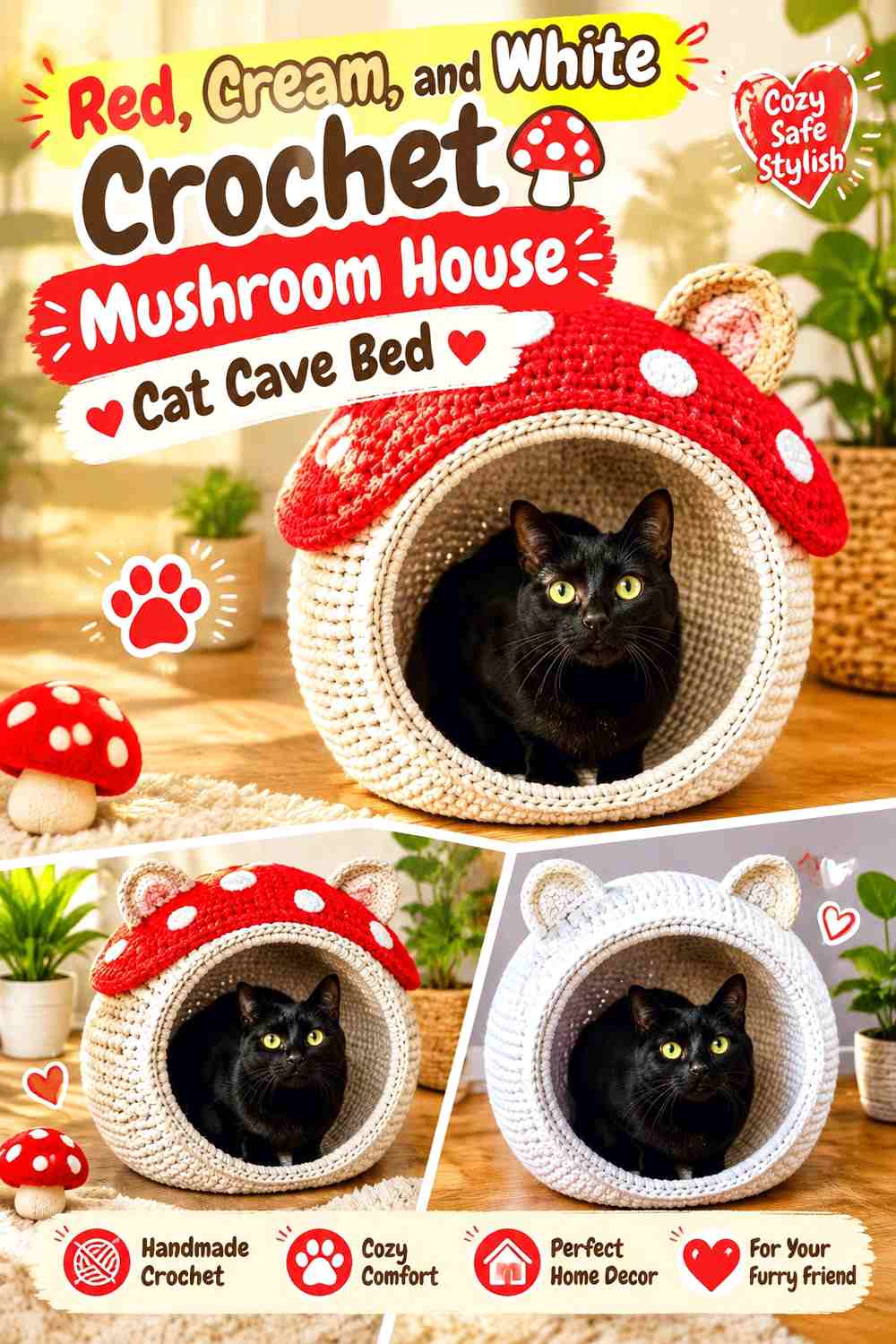
Red, cream, and white create the clearest classic toadstool direction. Use red across the cap, cream for the lower mushroom stem and cave walls, and white in smaller spots. Keeping the main sections simple makes the silhouette recognizable before any decorative details are added.
Red Should Dominate the Crochet Mushroom House Cap
Give red the full visual weight of the cap rather than breaking it into frequent cream stripes. A mostly uninterrupted red surface makes white spots easier to recognize and creates a strong boundary above the cream cave body.
If the cap edge extends visually beyond the lower body, keeping that edge red reinforces the mushroom shape.
Cream and White Need Separate Jobs on the Red Cat Cave
Cream works well for the larger stem-like body, while brighter or cleaner white can be reserved for spots if you want those details to remain distinct. If cream and white are too similar for the effect you want, use one light neutral for both instead of forcing an unnecessary difference.
A small repeat of the spot color around the doorway can connect the red cap to the lower half without covering the cream body.
Creator Credit: Crocheted by Julia
2. Rust, Oatmeal, and Mustard Crochet Mushroom House Cat Cave Bed
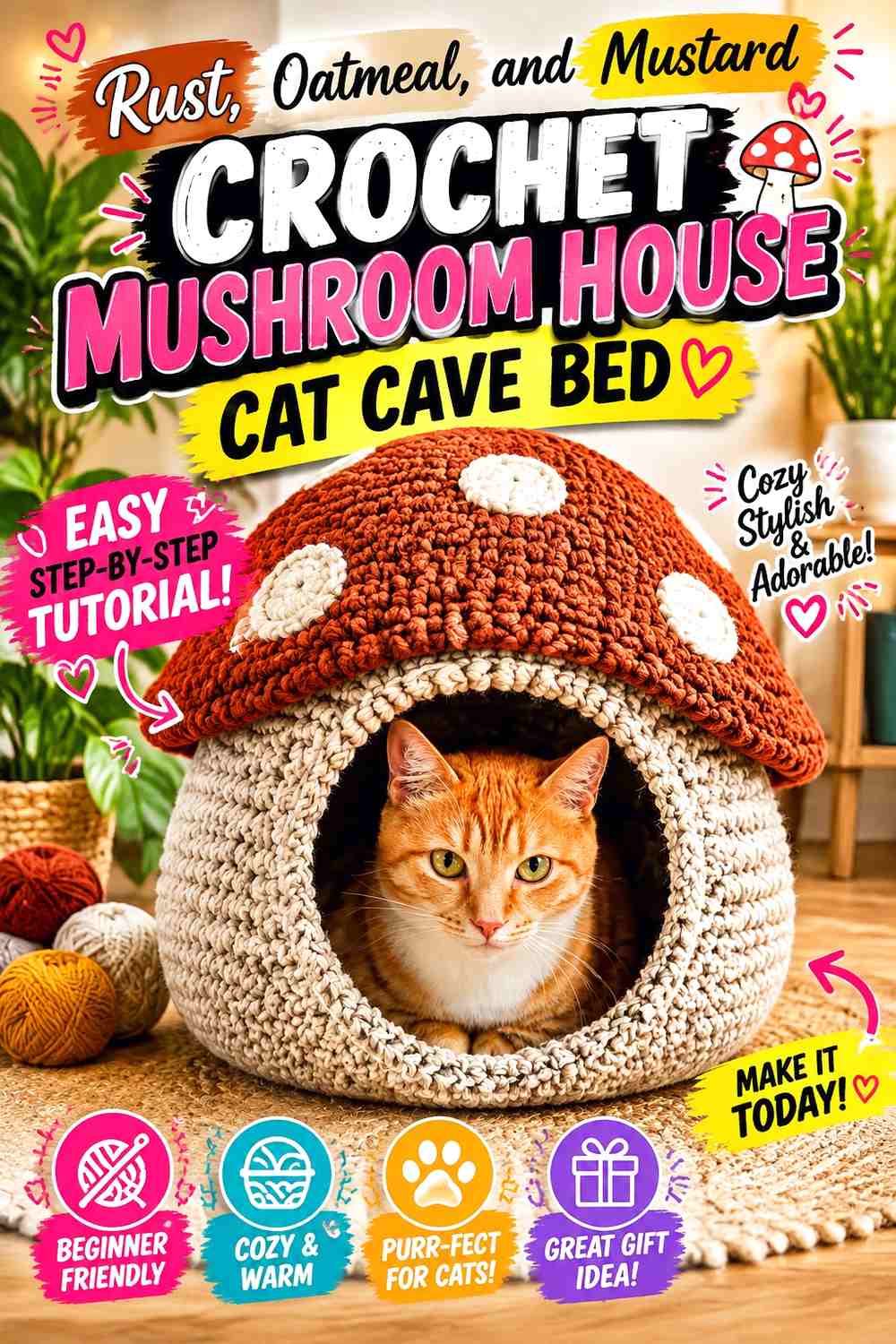
Rust produces a softer woodland cap than bright red, while oatmeal creates a warm stem and mustard supplies small sunny accents. This combination works best when rust occupies the largest colorful area and mustard remains secondary.
Rust Gives the Crochet Mushroom Cap an Earthier Shape
Use rust over the complete cap or most of it so the mushroom roof reads as one warm section. Because rust is less visually sharp than bright red, a defined oatmeal edge underneath can help separate the cap from the cave body.
Avoid dividing the rust cap into numerous small bands if you also plan to add spots.
Mustard Can Highlight the Oatmeal Mushroom House Without Competing
Use mustard for scattered cap details, a narrow doorway edge, or a small interior accent. It needs less coverage than rust because its warmer yellow direction attracts attention quickly.
If rust and mustard look too close in value, let oatmeal sit between them where clear separation matters.
Creator Credit: HodgePodge Crochet
3. Sage Green, Cream, and Terracotta Crochet Mushroom House Cat Cave Bed
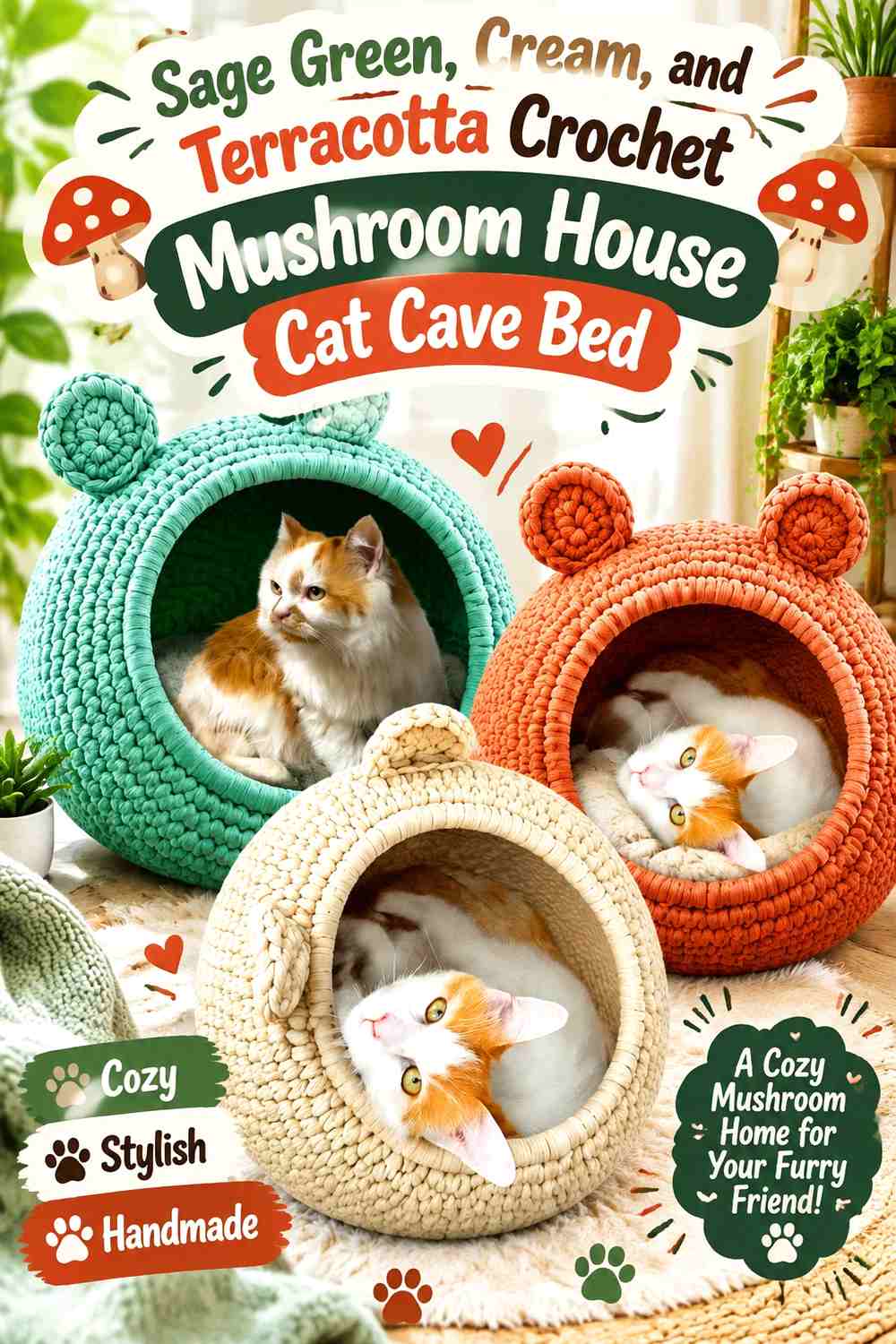
Sage gives the mushroom cap a softer botanical direction, while cream keeps the stem light and terracotta provides the warm contrast normally supplied by red. This is a useful palette when you want a mushroom theme without the expected red cap.
Sage Green Can Cover the Main Crochet Mushroom Cap
Keep sage continuous enough that the cap remains visually calm. A muted green cap also gives terracotta spots more room to stand out without requiring high saturation.
A cream underside or narrow cap edge can make the change from roof to stem more obvious.
Terracotta Can Warm Up the Sage Green Cat Cave Doorway
Repeat terracotta in a few cap spots and around only part of the doorway if you want the accent to travel through the whole structure. This makes the color feel intentional rather than confined to decorative circles on top.
Keep cream dominant on the cave body so sage and terracotta do not divide the lower section into too many competing areas.
Creator Credit: Candy-Yarn
4. Dusty Rose, Mushroom Beige, and Burgundy Crochet Mushroom House Cat Cave Bed

Dusty rose and mushroom beige create a quieter storybook palette, while burgundy provides enough depth for smaller details. This combination depends more on tonal balance than strong light-dark contrast.
Dusty Rose Keeps the Crochet Mushroom House Cap Soft
Use dusty rose across the cap and let mushroom beige cover the lower cave. The two colors can sit relatively close visually, so a clearly defined cap edge becomes important.
If your dusty rose is extremely pale, choose a beige that remains lighter or more neutral rather than allowing the whole mushroom to blend into one value.
Burgundy Can Give the Dusty Rose Mushroom Spots More Definition
Burgundy works well in small spots, a narrow roof edge, or limited doorway trim. Because it is considerably darker than dusty rose, even small burgundy areas can influence the entire bed.
Avoid using burgundy for a large cave interior if you want the lower half to remain light and open-looking.
Creator Credit: 메바제이 Meba.J
5. Forest Green, Oatmeal, and Mustard Crochet Mushroom House Cat Cave Bed

Forest green creates a darker woodland mushroom, oatmeal gives the stem enough contrast, and mustard adds small vintage-looking highlights. The deep cap makes this palette especially dependent on a lighter lower body.
Forest Green Needs Oatmeal Separation on the Crochet Mushroom House
Keep forest green on the roof and oatmeal on the stem instead of allowing the dark green to continue far down the cave walls. The light body prevents the structure from becoming visually top-to-bottom dark.
An oatmeal cap underside can reinforce that transition if the construction provides a visible edge.
Mustard Works Best in Small Forest Green Mushroom Details
Use mustard sparingly for spots or a narrow doorway accent. It contrasts strongly enough with forest green that large amounts are unnecessary.
If mustard also appears on a cushion, keep the exterior doorway trim quieter so the bed does not develop several unrelated yellow focal points.
Creator Credit: Cocoosh Crochet كروشيه كوكوش
6. Plum, Mauve, and Cream Crochet Mushroom House Cat Cave Bed
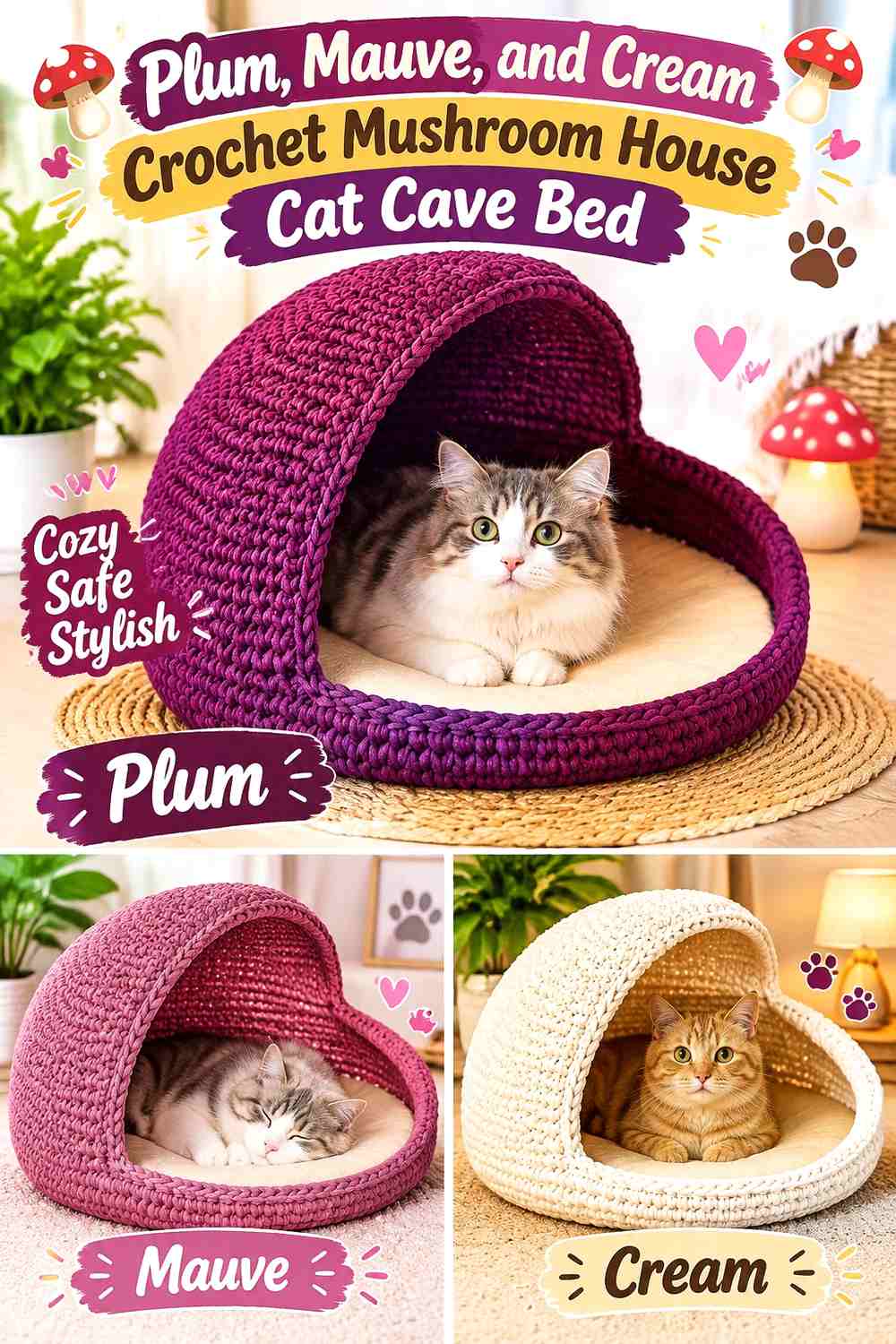
Plum and mauve create a tonal purple mushroom cap, while cream prevents the lower cave from becoming too dark. Rather than using plum and mauve equally, let plum establish the cap and use mauve as the softer transition color.
Plum Can Anchor the Crochet Mushroom Cap Without Filling the Cave
A plum roof gives the mushroom house its darkest visual area. Keeping that depth above the doorway naturally draws attention toward the cap shape.
Use cream through most of the lower body so the entrance remains easy to distinguish.
Mauve Can Soften the Plum Crochet Mushroom Spots
Mauve spots create subtler contrast than cream spots and make this palette noticeably different from a classic toadstool. You can repeat mauve in a narrow doorway edge if it remains visible against cream.
If plum and mauve merge from a distance, use cream for a few smaller spots rather than adding another dark purple.
Creator Credit: Made by Lunda
7. Mustard, Cocoa, and Ivory Crochet Mushroom House Cat Cave Bed
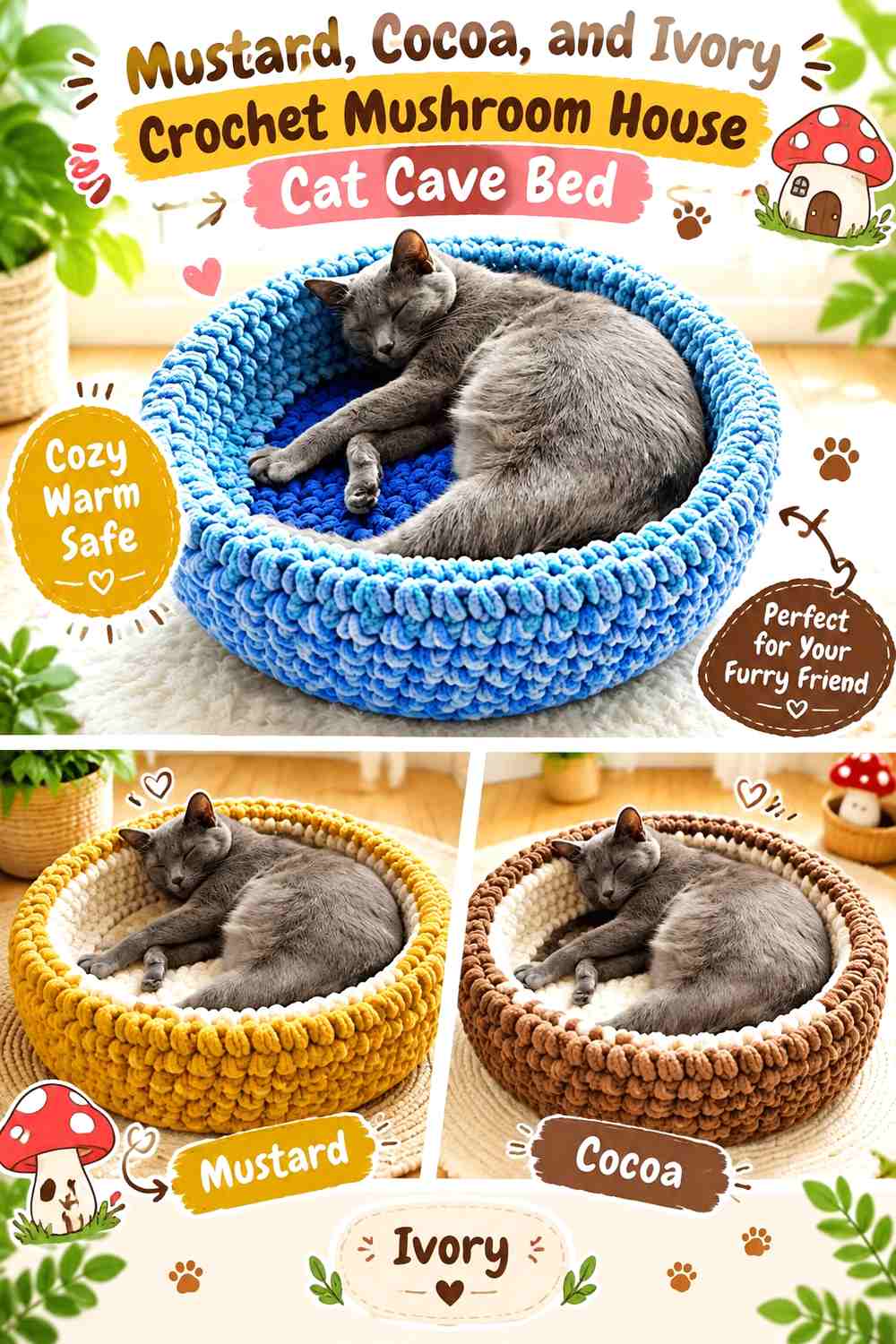
Mustard creates a warm retro mushroom cap, cocoa defines structural edges, and ivory provides a light stem. This palette works particularly well when cocoa is treated as a framing shade rather than a second dominant color.
Mustard Can Lead the Crochet Mushroom House Roof
Give mustard most of the cap and avoid covering it with oversized cocoa spots. The cap needs enough uninterrupted yellow-gold surface to remain the defining element.
Ivory beneath the cap will also make mustard appear more distinct than placing it directly over a medium brown body.
Cocoa Can Define the Ivory Cat Cave Doorway
Use cocoa around the opening or in a thin cap edge where a darker outline improves definition. This can visually frame the entrance without turning the whole stem brown.
A few cocoa cap spots can repeat the doorway color and keep the three-shade palette connected.
Creator Credit: Katia Creates
8. Dusty Blue, Oatmeal, and Rust Crochet Mushroom House Cat Cave Bed
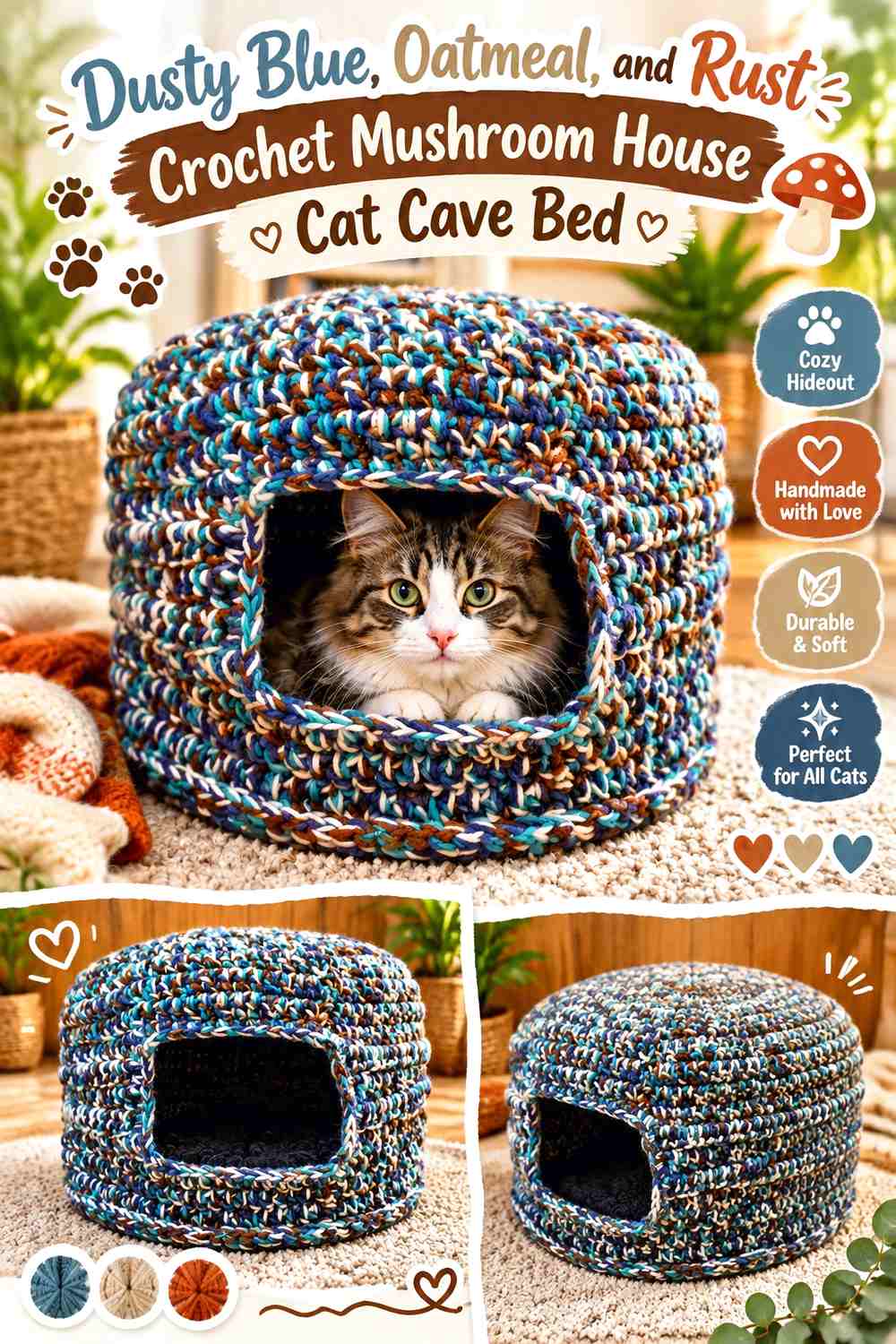
Dusty blue offers one of the coolest mushroom-cap directions in the list. Oatmeal keeps the body warm enough for a cottage-like look, while rust supplies small earthy details that prevent the palette from becoming entirely cool.
Dusty Blue Can Make the Crochet Mushroom Cap the Quietest Feature
Use dusty blue across a broad roof surface with relatively few color interruptions. A muted cap lets the unusual color choice carry the design instead of relying on dozens of decorative spots.
Oatmeal underneath gives the blue a clear structural break.
Rust Gives Dusty Blue Mushroom Spots a Warmer Focal Point
Rust spots create hue contrast without needing bright orange. Repeat a very small amount of rust at the doorway or cushion if you want the cap accent to connect with the lower half.
If the rust starts to dominate, reduce the number or size of the accents rather than weakening the blue field.
Creator Credit: Bag-O-Day Crochet
9. Teal, Camel, and Cream Crochet Mushroom House Cat Cave Bed
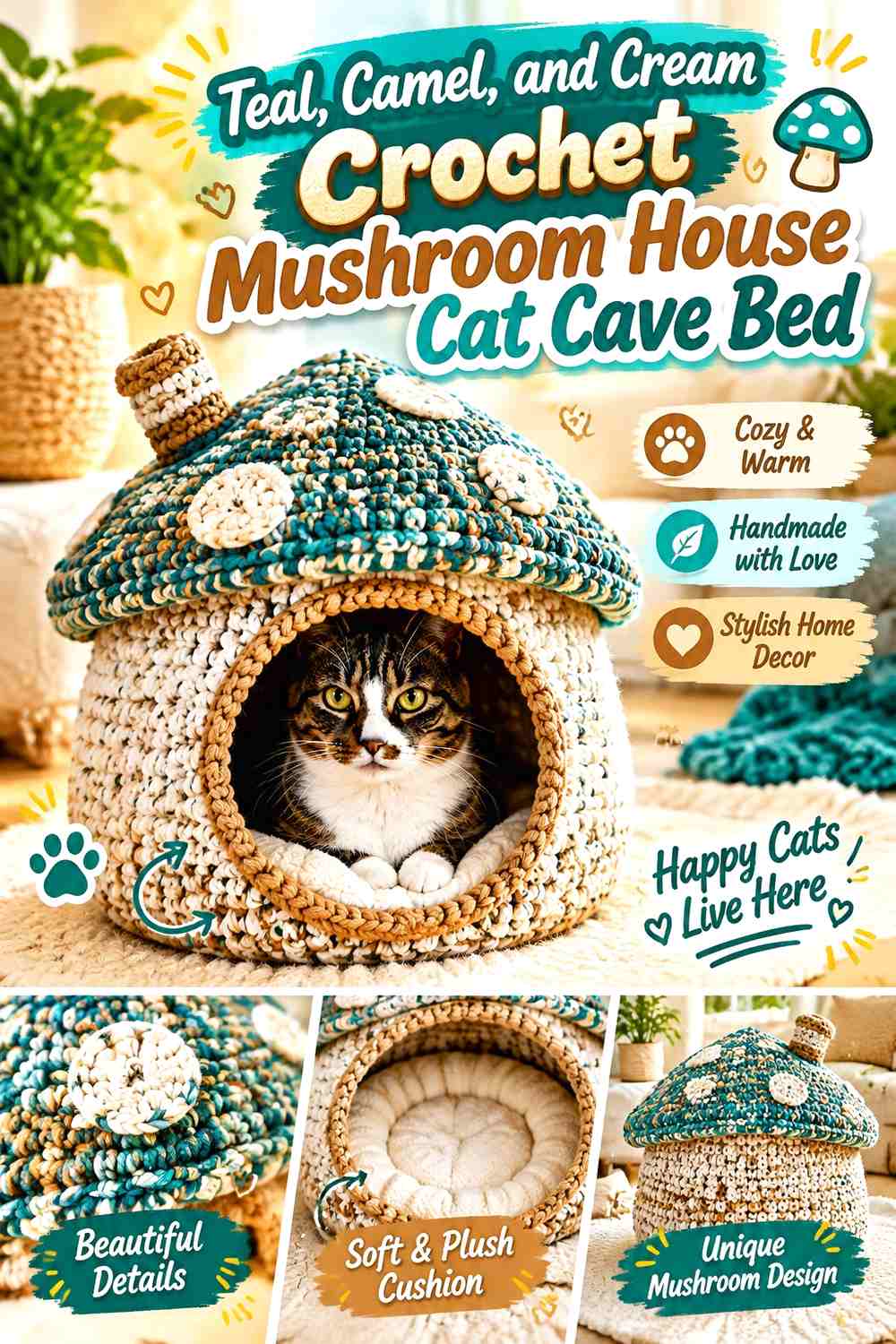
Teal creates a richer cap, camel adds warmth to the stem, and cream can be reserved for the highest-contrast details. The result feels more saturated than dusty blue but softer than teal paired with bright white everywhere.
Teal Should Carry the Crochet Mushroom Cap’s Visual Weight
Use teal as a solid or mostly solid roof color so the cap remains easy to separate from the camel body. Because teal is already strong, small cream spots will be highly visible.
Avoid repeating teal over large parts of the stem unless you deliberately want the mushroom division to feel less obvious.
Cream Can Separate Teal From Camel Around the Cat Cave Entrance
A narrow cream doorway edge is useful when camel and a dark cave interior lack enough contrast. Cream can also appear as cap spots, linking the top and lower sections.
Keep cream narrow on the body so camel still reads as the main stem shade.
Creator Credit: The Crochet Crowd
10. Burnt Orange, Moss Green, and Cream Crochet Mushroom House Cat Cave Bed

Burnt orange and moss green create an autumn woodland palette, while cream prevents the combination from becoming uniformly medium-dark. Let orange control the cap and moss appear in selected details rather than splitting the roof evenly.
Burnt Orange Can Dominate the Crochet Mushroom House Cap
A broad burnt-orange cap gives the structure a recognizable warm roof while maintaining a softer look than bright red. Cream underneath is especially useful for keeping the cap line visible.
Moss Green Can Add Woodland Detail Without Hiding Burnt Orange
Use moss for a limited number of spots, a narrow cap edge, or small exterior accents. If moss covers too much of the roof, the cap can lose the clear orange-led hierarchy.
Cream can separate moss from orange where those two earthy colors appear too close in value.
Creator Credit: Ninja Bunny Crochet
11. Burgundy, Blush, and Oatmeal Crochet Mushroom House Cat Cave Bed
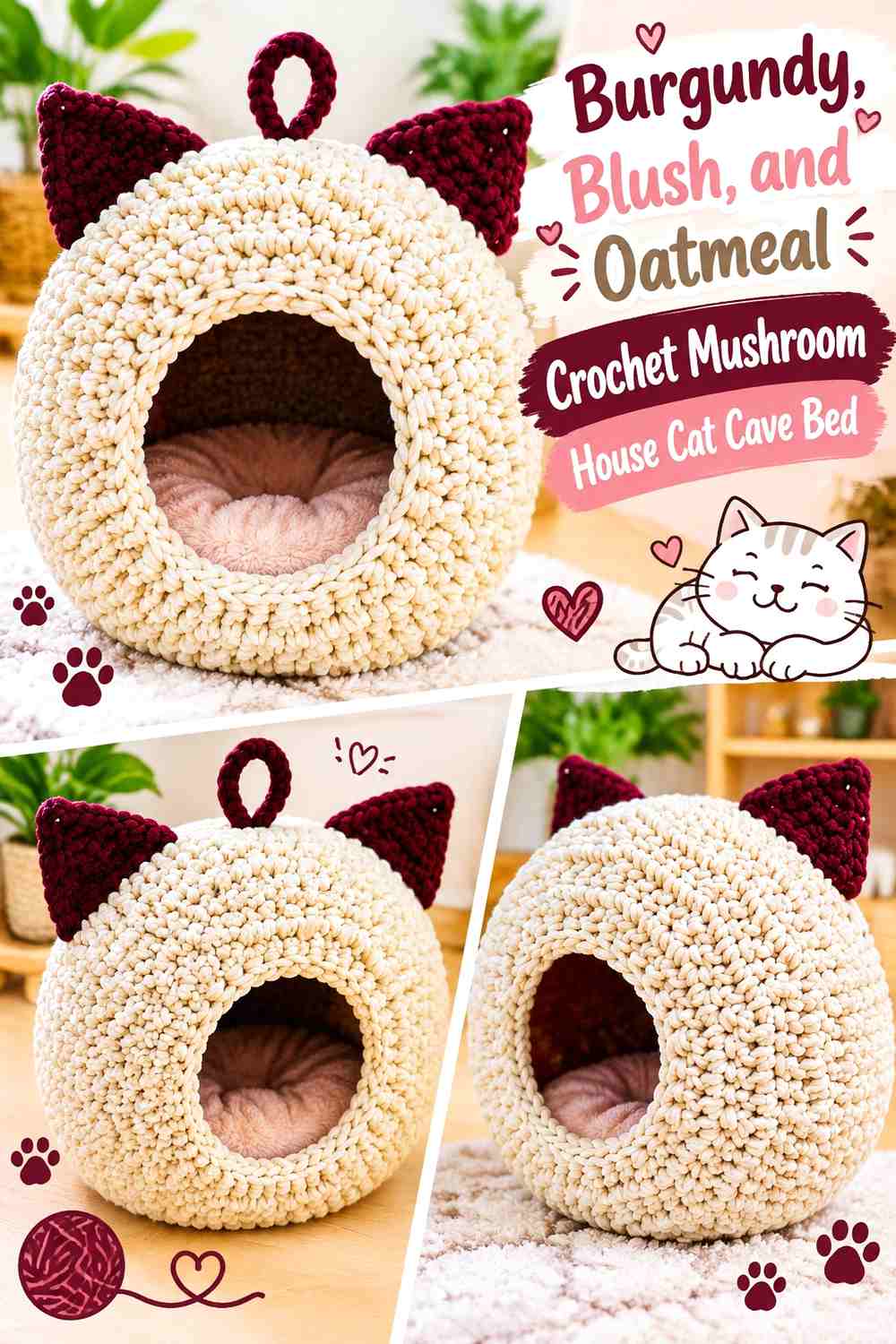
Burgundy creates a deep mushroom cap, blush provides softer decorative contrast, and oatmeal keeps the lower cat cave from becoming visually heavy. This palette works best when burgundy is concentrated above the doorway.
Burgundy Needs an Oatmeal Crochet Mushroom Stem for Balance
Let oatmeal cover most of the lower cave so the rich burgundy roof remains distinct. Extending burgundy too far down the sides can make the mushroom feel more like a dark dome than a cap-and-stem house.
Blush Can Lighten Burgundy Crochet Mushroom Spots
Blush spots produce gentler contrast than cream while still remaining visible on a deep cap. Repeat blush subtly around the doorway if the accent otherwise appears isolated.
If your blush is too close to oatmeal, keep oatmeal on the large stem surface and use blush only against burgundy.
Creator Credit: NATESSA | Sacred Crochet Art
12. Chocolate Brown, Mint, and Cream Crochet Mushroom House Cat Cave Bed
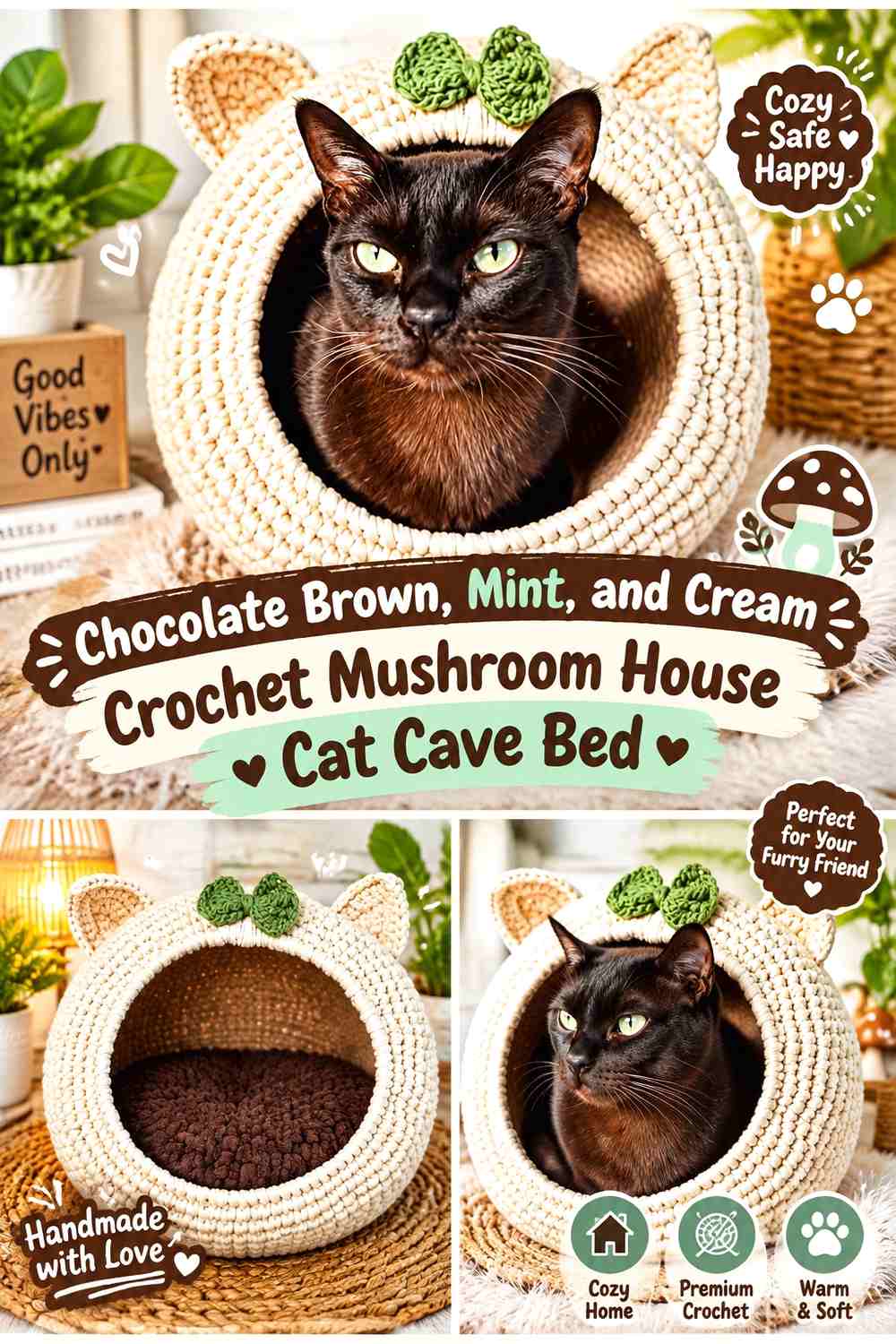
Chocolate brown gives this mushroom house a deep neutral cap, mint introduces an unexpected cool accent, and cream forms the lighter stem. Because the cap is so dark, mint needs only modest coverage to become noticeable.
Chocolate Brown Can Give the Crochet Mushroom Cap a Strong Outline
Keep chocolate across the roof and let the cream stem begin clearly beneath it. A dark cap edge emphasizes the mushroom silhouette even when the actual roof shaping is subtle.
Mint Can Brighten the Chocolate Brown Mushroom House Details
Use mint for small spots or a narrow interior accent rather than covering large parts of the cream body. That limited placement makes mint feel deliberate.
If you want a quieter result, substitute a grayer mint while keeping enough contrast against chocolate.
Creator Credit: GoodIdea
13. Lavender, Sage, and Ivory Crochet Mushroom House Cat Cave Bed
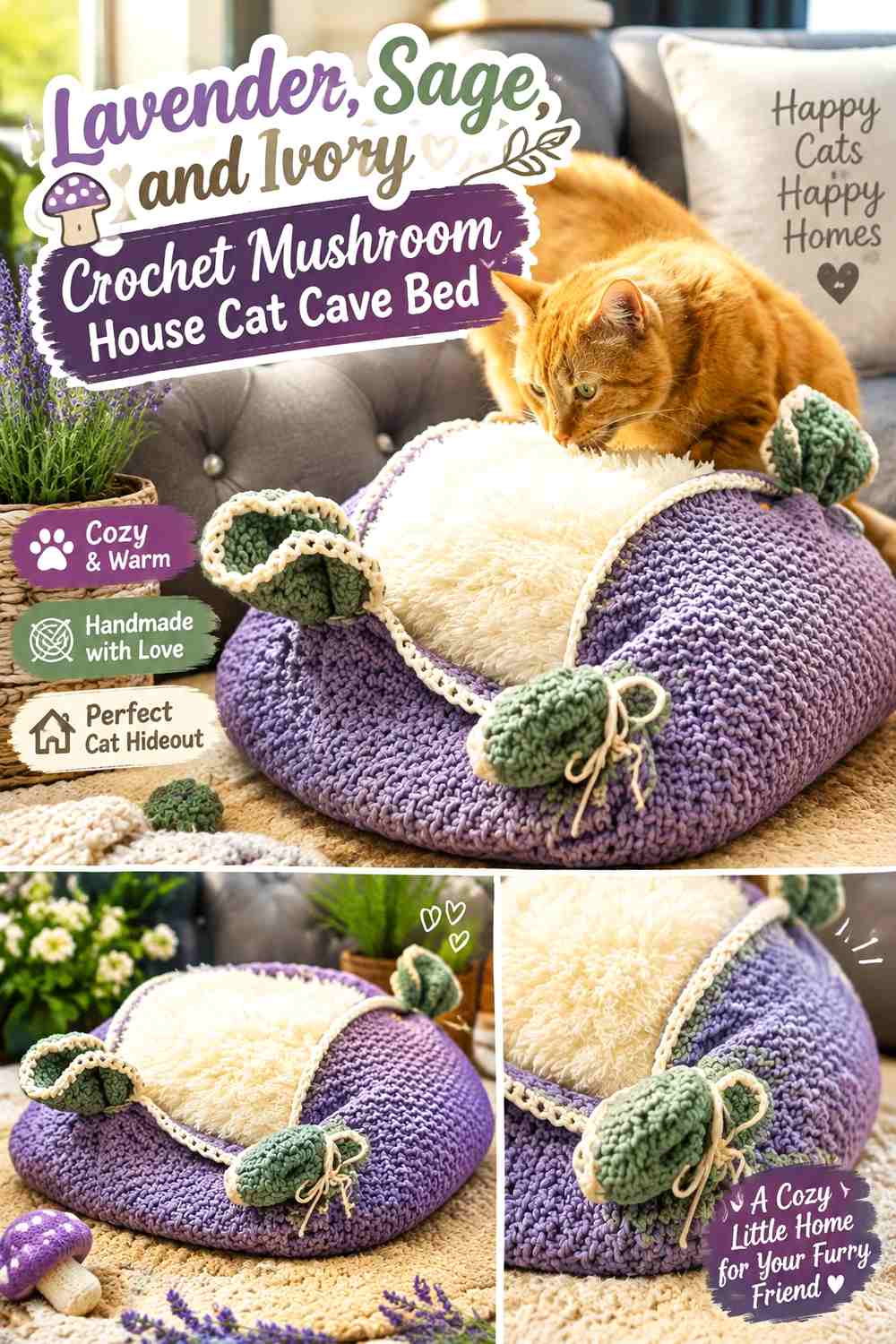
Lavender, sage, and ivory create the lightest fantasy-woodland palette in the collection. Lavender can lead the cap, ivory can form the stem, and sage works as the supporting accent that connects the mushroom house to a botanical color direction.
Lavender Can Keep the Crochet Mushroom Cap Light Without Losing Shape
Use lavender over most of the roof and keep ivory below it. If both colors are pale, compare them before starting to make sure the cap edge will still remain visible.
A slightly deeper lavender often gives the shape more definition than increasing the number of decorative spots.
Sage Can Give Lavender Crochet Mushroom Details a Botanical Contrast
Use sage in a few spots, a cap border, or a small doorway detail. Its cooler muted character works particularly well when ivory is kept as the neutral background.
Avoid spreading sage evenly over the entire cave body; the mushroom shape stays clearer when ivory remains dominant below the cap.
Creator Credit: Noor’s Knits
Which Crochet Mushroom House Cat Cave Palette Should You Choose?
For the most recognizable toadstool look, red, cream, and white creates the clearest traditional cap-and-spot contrast. Rust with oatmeal or burnt orange with moss gives the same mushroom concept a softer woodland direction.
For a less expected color scheme, dusty blue with rust, teal with camel, or lavender with sage moves the mushroom away from classic red while keeping clear cap, stem, and accent roles.
If you want a darker hideaway, forest green, plum, burgundy, or chocolate can provide the cap color. Pairing those shades with oatmeal, cream, or ivory prevents the lower cave and doorway from becoming visually heavy.
Conclusion
A crochet cat cave bed reads most clearly as a mushroom house when the cap, stem, doorway, and spots each have distinct visual jobs. The cap can carry the strongest shade, the lower body can use a lighter or quieter supporting color, and the smallest accent should be reserved for spots, trim, or one repeated interior detail.
Choose red and cream for a classic toadstool, rust or forest green for an earthy woodland version, dusty blue or teal for a cooler interpretation, or lavender and sage for a softer fantasy palette. Whatever colors you choose, test them together before committing to the whole cave so the cap edge and doorway remain visible.
Use the credited tutorials for their actual cat-house, cave, igloo, basket, or bed construction details. Mushroom shaping and color adaptations should be planned around the finished structure rather than replacing the creator’s instructions.
Frequently Asked Questions
What Colors Work Best for a Crochet Mushroom House Cat Cave?
Classic red, cream, and white gives the strongest traditional mushroom effect, but rust, mustard, sage, plum, dusty blue, teal, burgundy, chocolate, and lavender can all work. The more important decision is keeping the cap visually distinct from the lower stem.
Should the Crochet Mushroom Cap Be Darker Than the Cat Cave Body?
It does not have to be, but a darker or more saturated cap usually makes the mushroom silhouette easier to read. If both sections are pale, make sure there is still enough contrast along the cap edge.
How Many Colors Should I Use on a Crochet Mushroom Cat Bed?
Two or three colors are usually enough. One can dominate the cap, one can cover the stem and cave body, and a third can handle spots or doorway trim. More colors can work, but they need clear roles to avoid making the structure look busy.
Should Crochet Mushroom Spots Match the Cat Cave Doorway?
They can. Repeating the spot color around the doorway is an effective way to connect the upper and lower sections. Keep the doorway trim narrow if that accent is already strong on the cap.
How Can I Make Crochet Mushroom Spots Stand Out More?
Check light-dark value as well as hue. Cream spots will show strongly against forest green or burgundy, while sage spots on dusty blue may look much softer. A grayscale photo can help reveal whether the spots have enough separation.
Can I Adapt a Regular Crochet Cat Cave Into a Mushroom House?
A cat-cave or pet-house tutorial can provide the construction foundation, but mushroom styling should remain an adaptation rather than an assumption that every structure will convert identically. Keep the original source’s sizing, structural method, and opening guidance intact while planning the cap and colors around it.
Are Raised Crochet Spots Appropriate on a Cat Cave Bed?
Keep exterior decorations firmly secured and inspect them for looseness or snagging. Flat or low-profile details are easier to manage than loose dangling embellishments, particularly if the cat scratches, kneads, or chews the bed.