Poetcore accessories work best when they look collected rather than overly coordinated. A rounded collar, narrow lace scarf, flower brooch, softly ruffled bonnet, or delicate bookmark can suggest the same literary-romantic mood without requiring an entire outfit built around one motif. The tutorials gathered here range from wearable pieces to small bookish accessories, so you can choose according to where you want the detail to appear: around the face, at the neckline, on the hands, or tucked beside a favorite book.
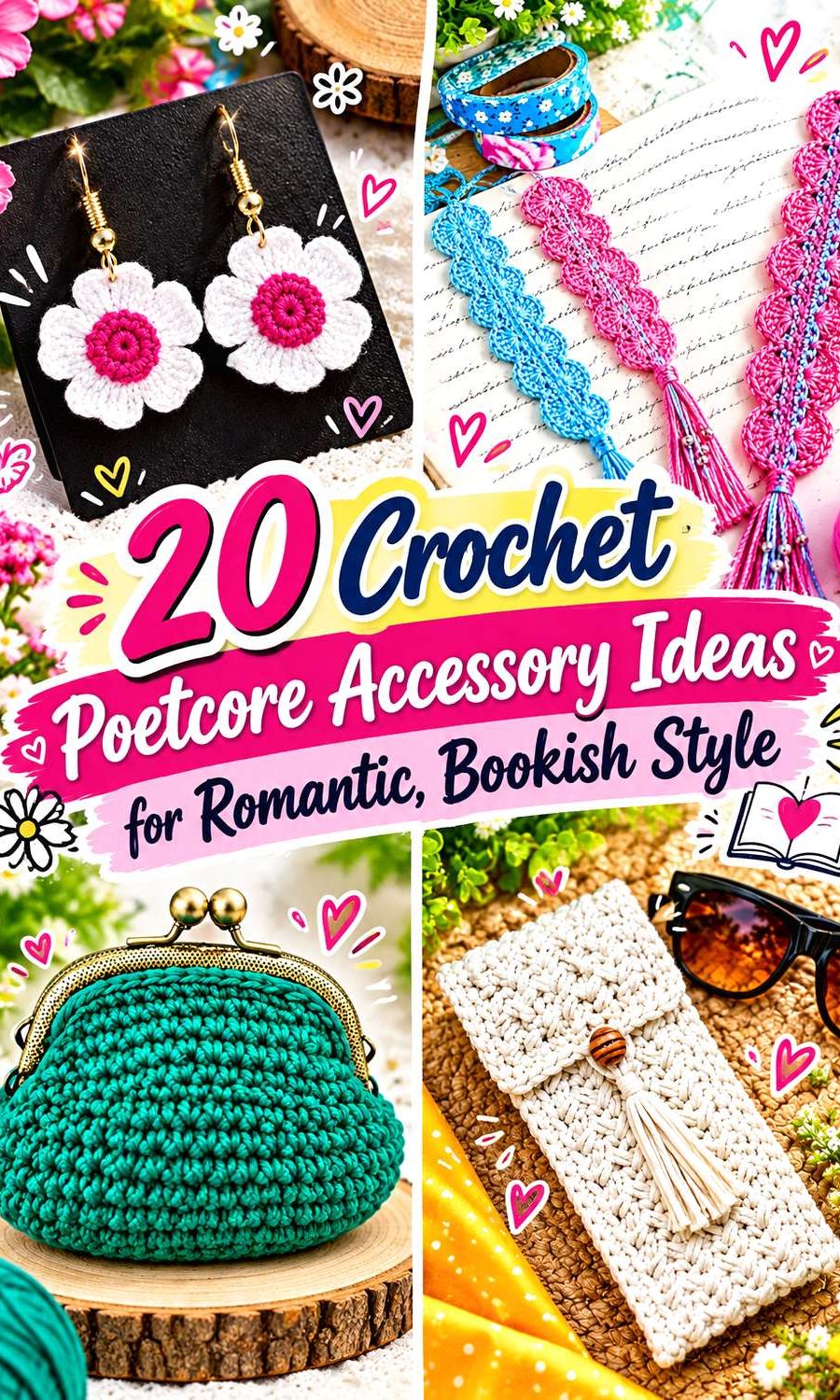
The tutorial creators do not necessarily describe their projects as “poetcore.” That is the editorial styling lens used for this collection. Each source teaches the accessory credited here; the poetcore connection comes from features such as lace, scallops, bows, flowers, narrow ties, traditional collars, and small-scale decorative details. That distinction makes it easier to borrow the aesthetic without pretending the original designs were created for a trend label.
Quick List
- Crochet Rounded Peter Pan Collar
- Crochet Lace Blouse Cuffs
- Crochet Scalloped Fingerless Gloves
- Crochet Ruffled Bonnet
- Crochet Lace Bandana
- Crochet Bow Hair Clip
- Crochet Plumeria Flower Hair Clip
- Crochet Ruffle Scrunchie
- Crochet Lace Tie Headband
- Crochet Rose Choker Necklace
- Crochet Beaded Bracelet
- Crochet Flower Brooch
- Crochet Skinny Scarf
- Crochet Lace Shawl
- Crochet Book Sleeve
- Crochet Woven-Texture Glasses Case
- Crochet Drawstring Pouch
- Crochet Metal-Frame Coin Purse
- Crochet Thread Bookmark
- Crochet Flower Earrings
What Makes a Crochet Accessory Feel Poetcore?
The strongest connection usually comes from form rather than color. Rounded collars, ruffles, narrow scarves, tiny florals, open lace, gathered ties, and ornamental jewelry can all suggest vintage literary dressing even when worked in a simple neutral palette. A muted cream or faded floral color scheme may strengthen the effect, but changing color alone does not turn two otherwise identical projects into meaningfully different ideas.
Scale matters too. Poetcore styling often benefits from one detail that looks deliberately chosen: a small brooch against a cardigan, a lace cuff emerging from a sleeve, or a narrow scarf falling from an uncomplicated neckline. Combining every romantic detail at once can make it harder to notice the individual crochet. When planning several projects from this list, think about how they occupy different areas of an outfit or everyday carry rather than trying to make every piece match.
Choose Placement Before Decorative Detail
Start with what you want the accessory to change. A bonnet, bandana, headband, hair clip, and scrunchie all decorate the hair, but they cover very different amounts of it. A collar, choker, skinny scarf, and shawl sit close together visually, yet each creates a different line around the neckline and shoulders. Choosing by placement first prevents you from making several pieces that compete for the same space.
Fit deserves a similar check. Wearable accessories around the neck, head, wrist, and hands should follow the creator’s sizing or adjustment guidance rather than assumed measurements. Cases, sleeves, and pouches need a different kind of planning: compare their intended contents with the finished opening and shape. Decorative additions can come afterward. This is especially useful with book sleeves, glasses cases, and framed purses, where changing proportions may also affect a closure or piece of hardware.
1. Crochet Rounded Peter Pan Collar
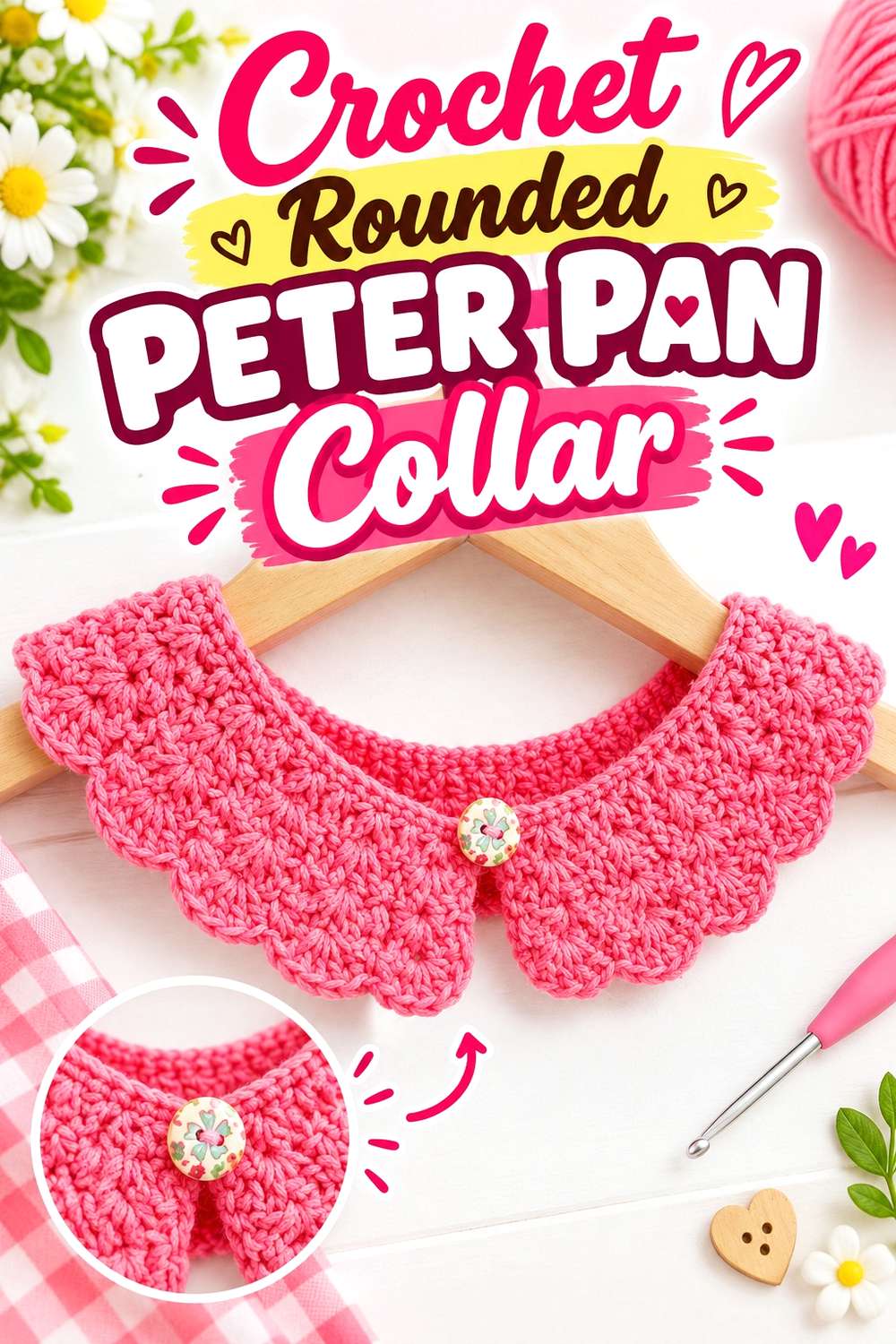
A separate Peter Pan collar is one of the clearest ways to introduce poetcore detail without changing an entire garment. Its rounded neckline creates a softer outline over a plain blouse, knit top, or sweater, allowing the crochet edge to become the focal point. The source tutorial presents the collar as a step-by-step, all-sizes accessory that can be worn with sweaters, blouses, and T-shirts.
This idea is particularly useful if your wardrobe already contains simple tops. Instead of searching for a blouse with permanent lace or embroidery, the removable-looking accessory gives you a decorative layer that can be styled with different necklines. The important visual choice is proportion: the collar should be clearly visible without swallowing the garment beneath it. If you plan to use it over several tops, compare those necklines before settling on how you want the finished collar to sit.
Match the Collar to the Garment Neckline
A collar that looks balanced over a crew neck may behave differently over a wider blouse opening. Lay a similarly shaped paper or fabric curve over the clothes you expect to wear most often and look at how much of the garment neckline remains visible. This simple comparison helps you decide which top will give the crochet enough contrast instead of hiding part of the rounded edge.
Let the Rounded Edge Be the Main Detail
The collar already supplies a strong visual frame around the face, so it does not need many competing additions nearby. If you also want to wear a brooch, scarf, or necklace from this collection, compare them together before committing to the combination. Leaving a little visual space around the collar often makes its distinctive outline easier to appreciate.
Creator: Ahuyama Crochet
2. Crochet Lace Blouse Cuffs
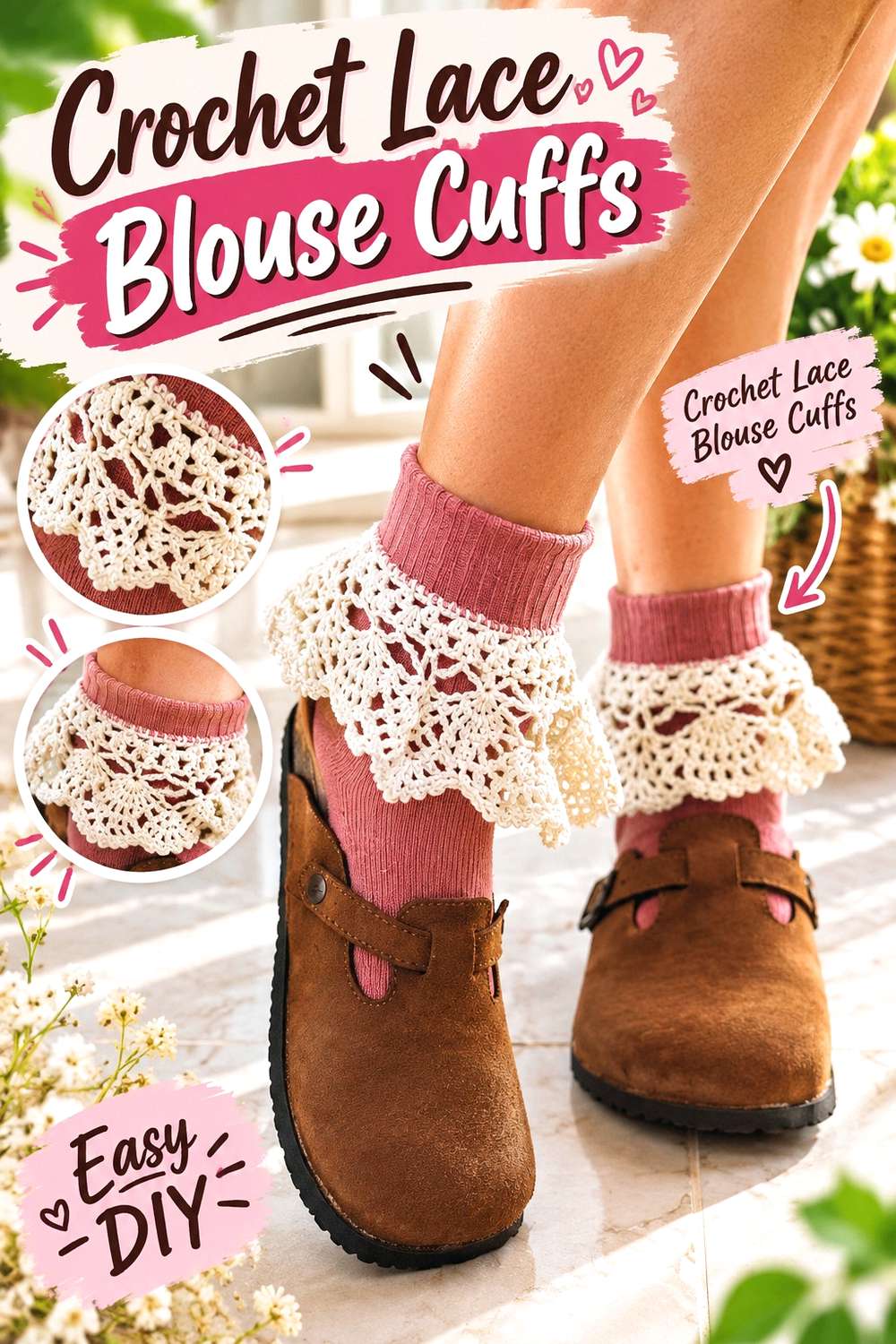
Lace cuffs bring poetcore detail to the edge of a sleeve, where they can appear and disappear naturally as the hands move. Sirin’s Crochet teaches a crocheted lace cuff that can be used with mittens, socks, and even blouses, making the blouse interpretation especially suitable for this collection. The source is therefore about the lace edging itself rather than a complete poetcore blouse.
That distinction creates an interesting styling choice. A cuff can extend an existing sleeve visually without requiring you to crochet an entire garment, and the repeated lace edge gives a plain sleeve a more ornamental finish. For a poetcore wardrobe, this works particularly well when the cuff is treated as trim rather than as a large standalone statement. Before attaching or adapting one to clothing, consider how wide the sleeve opening is and whether the fabric underneath has enough structure to display the crochet instead of folding it inward.
Decide Whether the Cuff Is Trim or a Separate Accent
The tutorial allows the cuff form to serve several purposes, so decide where yours belongs before planning the rest of the outfit. On a blouse, the crochet becomes part of the sleeve silhouette. That calls for attention to how the blouse cuff, button placket, or gathered fabric already behaves. Adding lace to an already elaborate sleeve may obscure both details.
Leave Enough Room for the Lace to Show
A lace cuff loses much of its effect if it is constantly pushed beneath a cardigan or jacket sleeve. If you expect to layer the blouse, try the outer garment on first and check how much of the wrist area remains exposed. That tells you whether the cuff will function as a visible poetcore accent or whether another project would suit the outfit better.
Creator: Sirin’s Crochet
3. Crochet Scalloped Fingerless Gloves
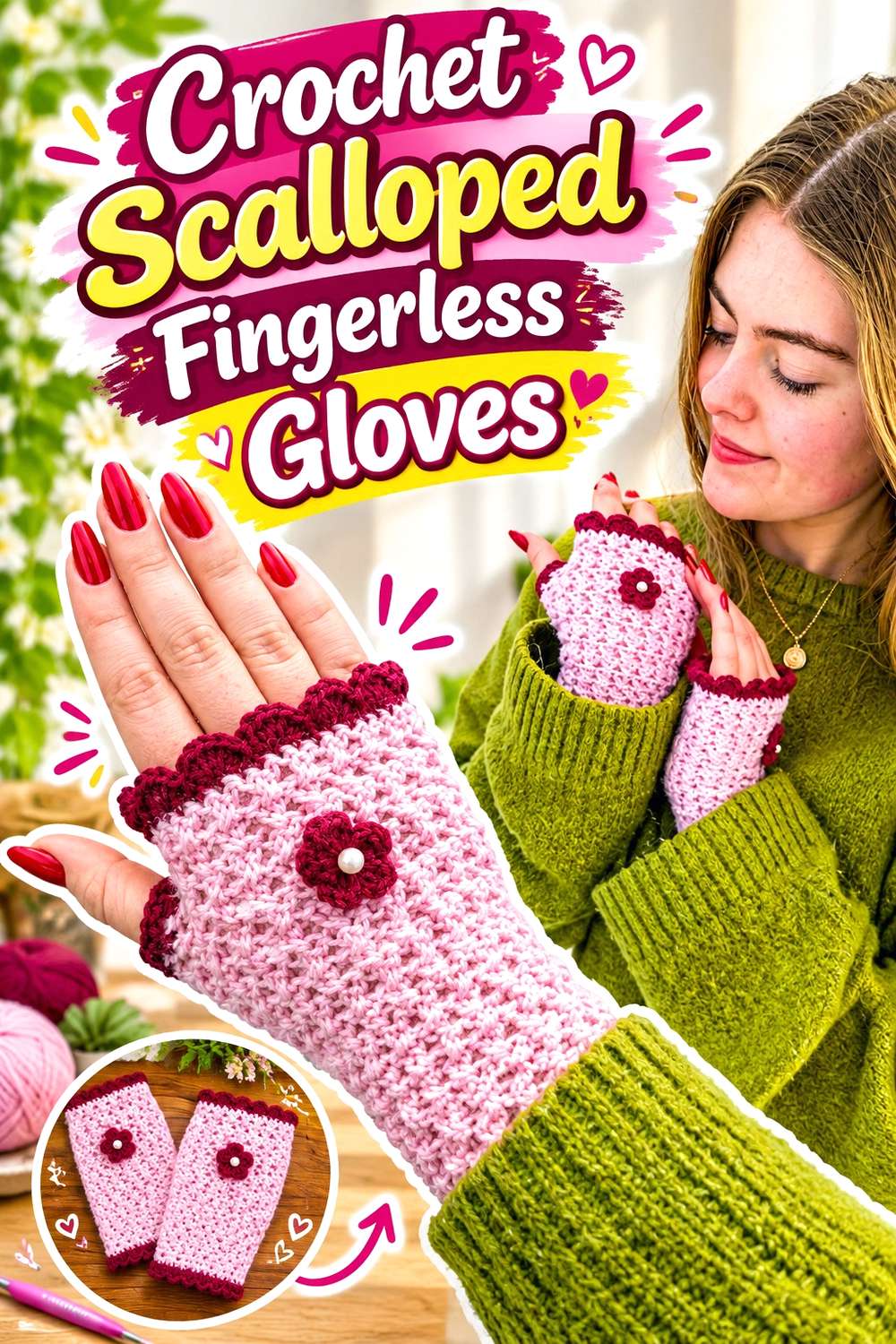
Fingerless gloves bring texture directly to the hands while leaving the fingers uncovered, which makes them visually lighter than full mittens. Crochet with Linni’s Blossom Scalloped Fingerless Gloves combine lacy texture, a scalloped border, and a small decorative flower. The supporting pattern information also describes them as made-to-measure and worked in the round.
Those features give this project a more ornamental character than a plain wrist warmer. For poetcore styling, the flower and scalloped finish can echo a floral blouse or vintage-inspired sleeve without requiring another large accessory. Because the gloves sit in a high-movement area, fit should take priority over adding still more decoration. A pretty edge is useful only if the finished piece sits where you want it on the hand. Follow the creator’s fitting approach and use the flower as a finishing focal point rather than assuming a fixed measurement will suit every wearer.
Fit the Hand Before Chasing Extra Length
Fingerless gloves have to negotiate both the wrist and the broader part of the hand. If you are tempted to extend the piece higher on the arm for a dramatic cuff effect, remember that a proportion change can alter where the scalloped edge and floral detail land. Establish the creator’s intended fit first, then evaluate whether any optional change still preserves comfortable movement.
Keep the Flower as the Focal Detail
A small flower already gives the gloves a recognizable romantic accent. Pairing that detail with heavily embellished rings, lace cuffs, and bracelets can make the hand area visually crowded. If these gloves are your poetcore centerpiece, simpler surrounding accessories allow the scalloped border and floral motif to remain legible rather than disappearing into several competing textures.
Creator: Crochet with Linni
4. Crochet Ruffled Bonnet
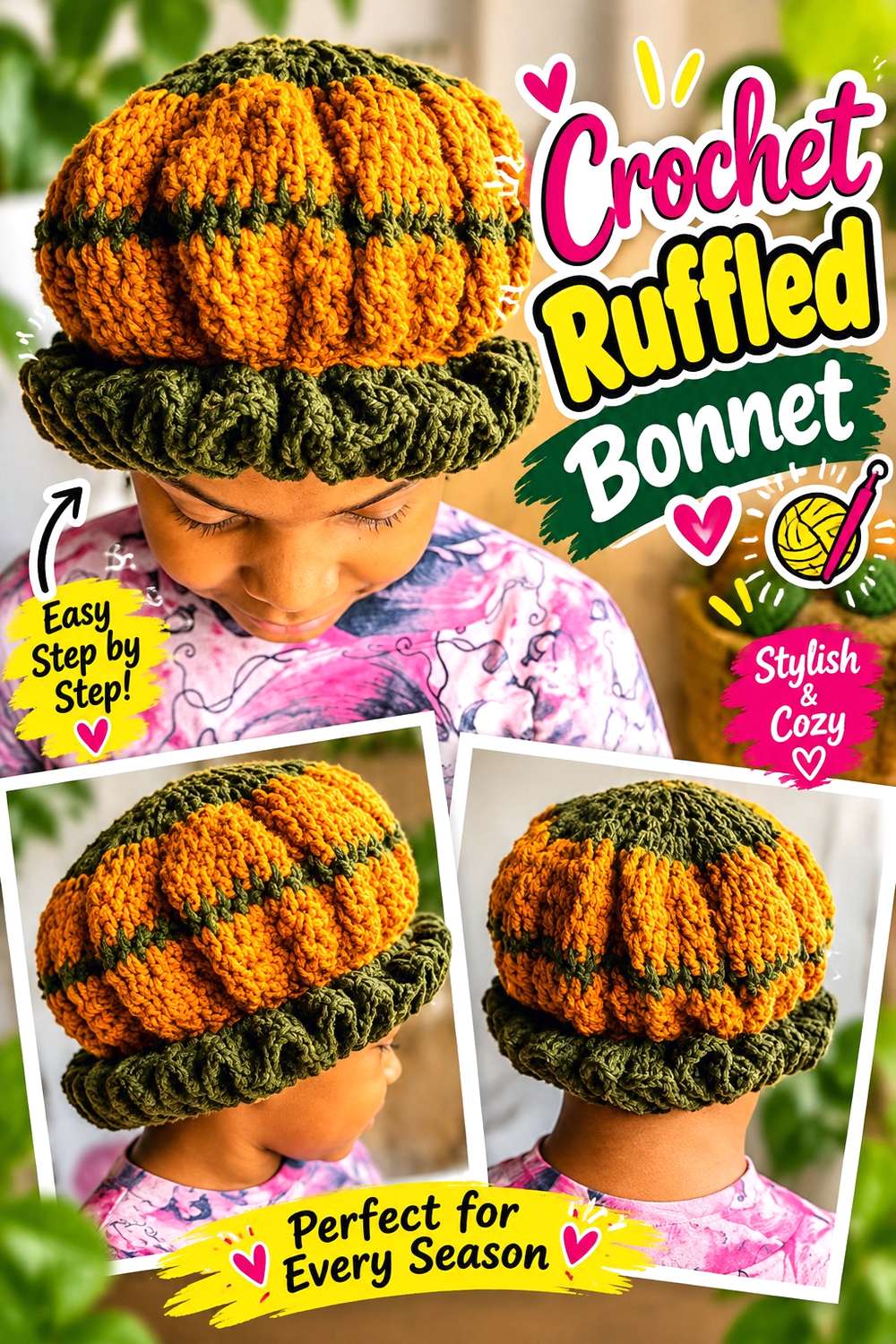
A crochet bonnet changes the entire outline around the face, making it a larger style decision than a clip or narrow headband. Princess handmade’s tutorial specifically teaches a ruffle bonnet step by step, including the shaping and the ruffled effect. That gathered border gives the piece the kind of soft, old-fashioned framing that translates naturally into a poetcore wardrobe.
Because a bonnet occupies more visual space, it works best when you decide what role you want it to play before adding other hair accessories. The ruffle can be the main decorative edge, while the rest of the outfit stays quieter. Hair placement matters as well: loose hair creates a different silhouette from a low braid or tucked style. Rather than assuming one presentation is required, try the completed shape with the hairstyles you actually wear and choose the arrangement that keeps the bonnet outline visible.
Consider the Ruffle From the Front
A ruffle may look modest when the bonnet is lying flat yet appear much fuller once it surrounds the face. Check it from the front and side rather than judging only from the worktable. This is especially useful if you wear glasses, prominent earrings, or a high neckline, because all of those details occupy nearby visual space.
Give the Bonnet Room to Define the Hairstyle
A bonnet already establishes a clear head shape. Adding a large bow, flower clip, and ruffled scrunchie at the same time may hide that structure. If you want a second crochet accent, consider placing it elsewhere in the outfit. A small brooch or book accessory can echo the mood without making the hair area feel overloaded.
Creator: Princess handmade
5. Crochet Lace Bandana
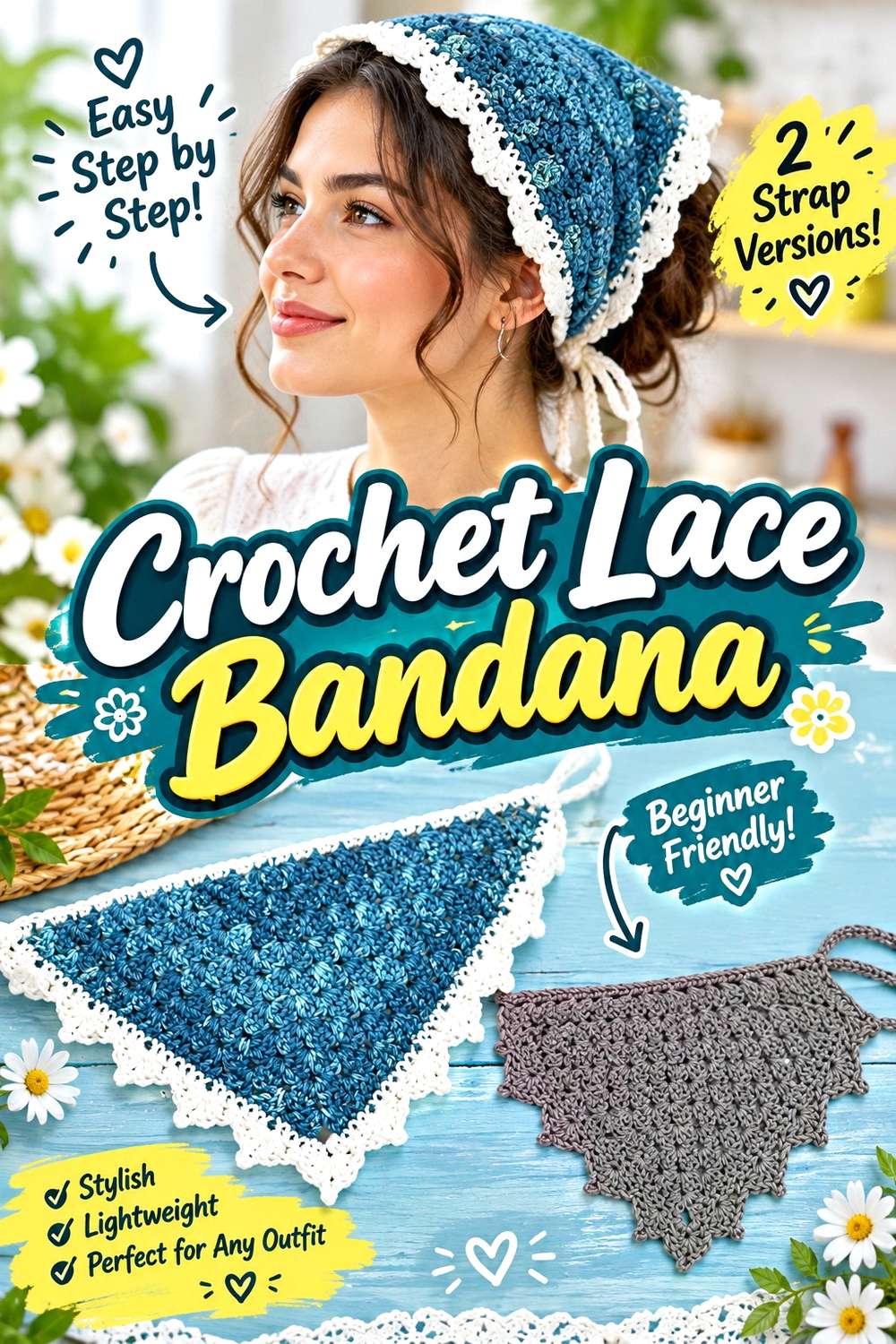
A lace bandana offers more hair coverage than a headband while keeping a lighter silhouette than a bonnet. Ashten Stitches teaches a crochet bandana with a lacy edge and includes finishing choices for thicker or thinner straps, so the tie treatment can be selected according to the look you want. That practical difference makes the design especially useful for comparing subtle and more visible headwear.
For poetcore styling, the triangular shape can sit comfortably between rustic and romantic. Openwork gives the surface detail without turning the entire head covering into a dense block of crochet. The strap choice then changes how much of that detail extends beyond the main triangle. If you usually wear your hair loose, a slimmer tie may disappear more easily into it; a wider strap can become part of the silhouette. The tutorial provides both directions, so this is a real construction choice rather than a styling feature added only for this article.
Choose the Strap Treatment Deliberately
The strap is easy to overlook while focusing on the lace, yet it affects how the bandana looks from the side and back. Think about whether you want the ties to remain visible after they are knotted. A thinner treatment keeps attention on the triangular fabric, while a more substantial strap can give the fastening itself more presence.
Balance Coverage With the Openwork
A bandana covers enough of the crown that its stitch pattern becomes noticeable. If you want a very delicate effect, let the open areas and decorative edge provide the interest instead of adding extra appliqués throughout the surface. This keeps the finished piece visually lighter and makes it easier to combine with earrings, glasses, or a detailed blouse collar.
Creator: Ashten Stitches
6. Crochet Bow Hair Clip
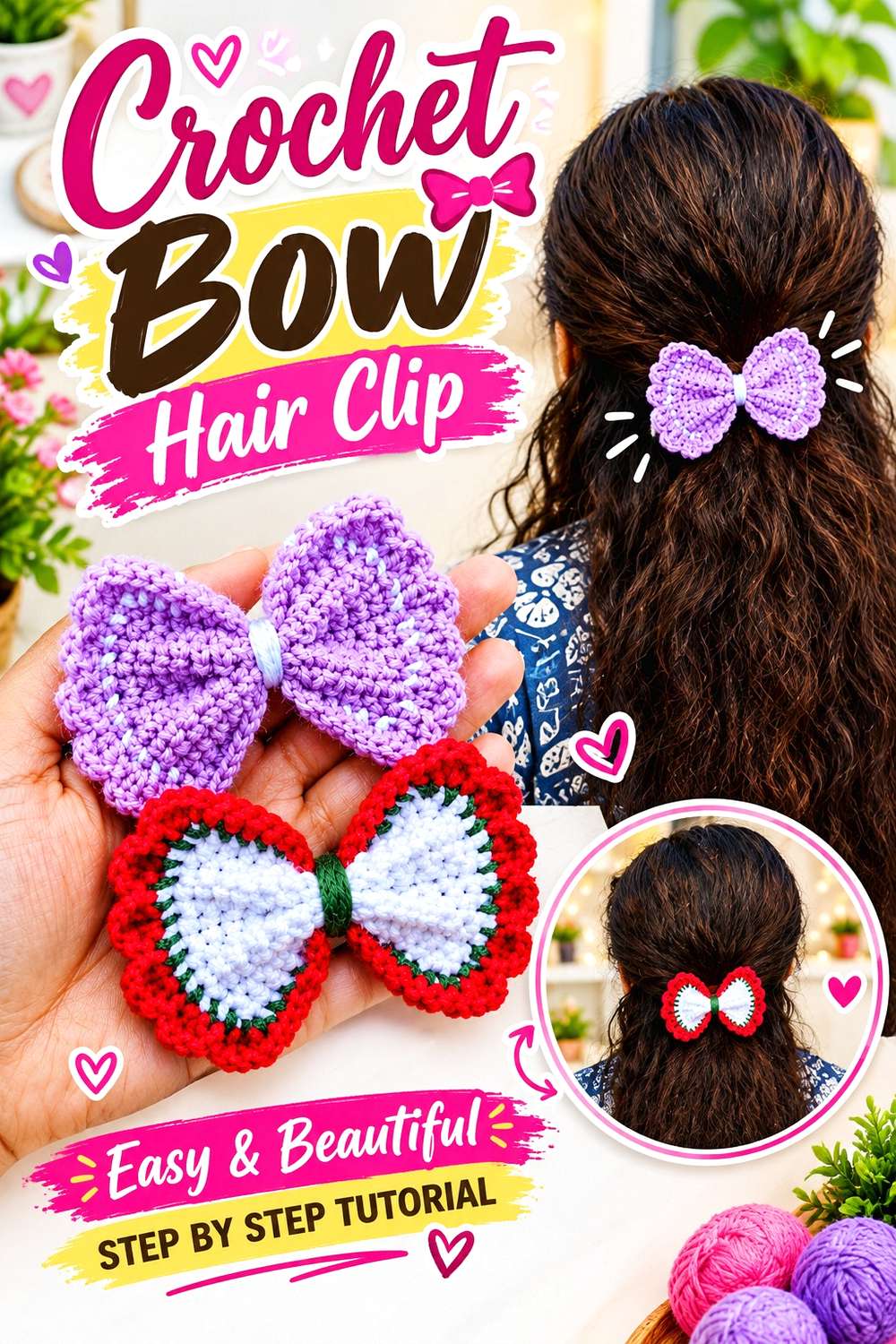
A small bow clip is an efficient poetcore accent because it introduces a recognizable romantic shape without covering much of the hair. Pakhi Kar’s tutorial demonstrates making a crochet bow and finishing it as a hair accessory, including attachment to a clip or hair tie. That makes it a flexible choice for anyone who wants the bow itself to be the centerpiece.
Placement changes this accessory more than color does. A bow above a low ponytail reads differently from one clipped at the side of loose hair, even when the crochet is identical. Before attaching the hardware permanently, hold the bow at several angles and note which orientation keeps both loops visible. This is also a useful project for balancing a poetcore outfit: when the neckline already has a collar or scarf, a single small bow can repeat the romantic mood without adding another broad piece of lace.
Decide Where the Clip Will Sit First
Hair clips are viewed at an angle once worn, so the bow should be oriented for its intended position rather than judged only while lying horizontally on a table. Try the clip location before final attachment. A side placement may need a slightly different orientation from a bow meant to sit above a ponytail or at the back of the head.
Use the Bow as a Small Repeated Motif
If your outfit already includes rounded collars, ribbons, or gathered details, the crochet bow can echo those shapes without duplicating them exactly. Keep the rest of the hair styling relatively simple when you want the bow to be noticeable. Its advantage is precision: one compact motif can establish the mood without requiring a full crocheted head covering.
Creator: Pakhi Kar
7. Crochet Plumeria Flower Hair Clip
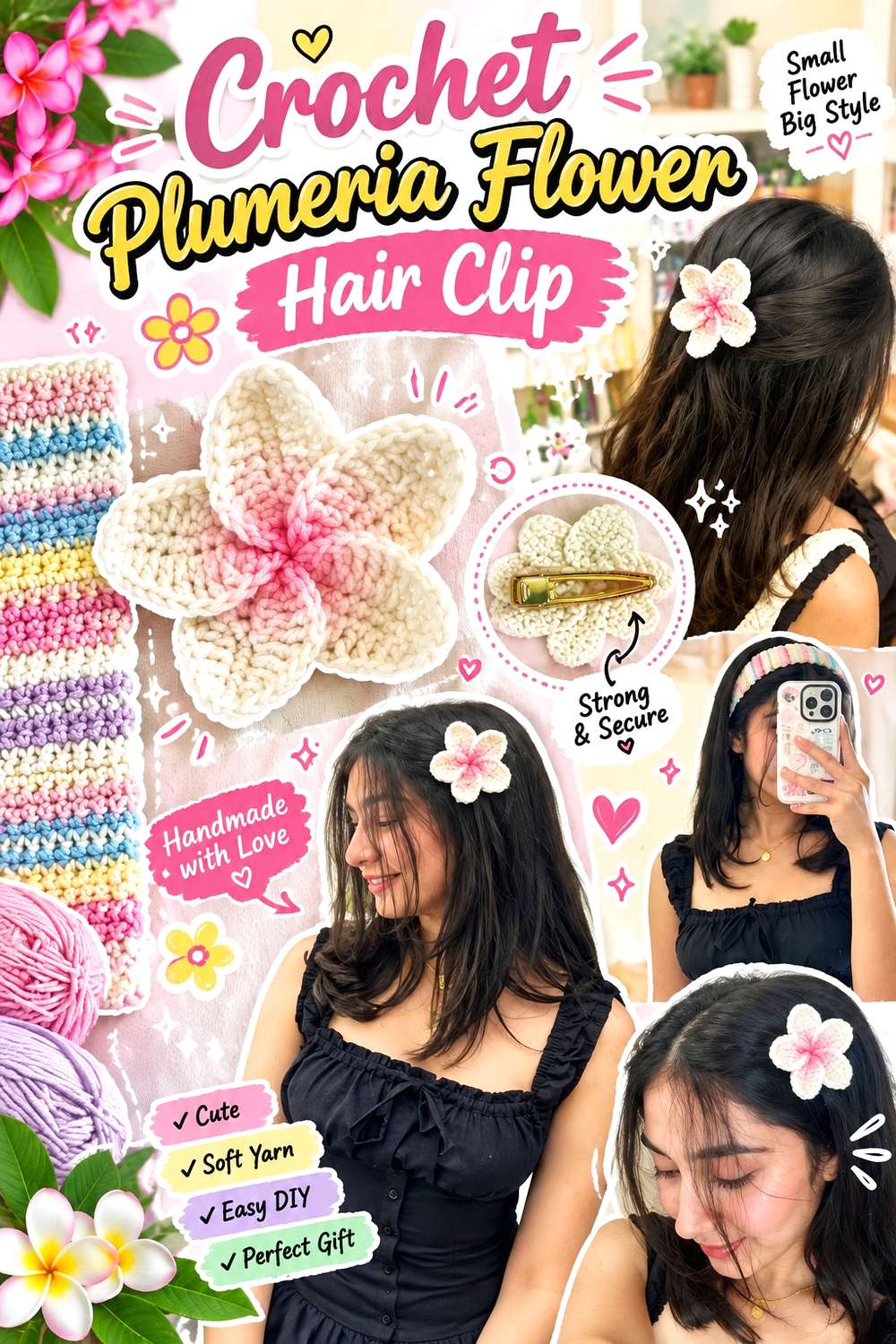
A single crocheted flower brings botanical detail into the hair without the volume of a floral crown or large cluster. The tutorial from mahum 🎀 includes the construction of plumeria-style flower petals and shows the flower being turned into a hair clip. It therefore works as a complete floral accessory rather than merely providing a loose motif to adapt later.
This option is especially useful if you want poetcore to feel botanical rather than heavily lacy. The petals create a recognizable focal shape, while the clip format lets you move it among hairstyles. Because a flower has an obvious face, its orientation deserves more thought than a simple barrette. Before securing the clip, consider where the flower will be viewed from and which direction the petals should face. A flower positioned near the temple also has a different visual weight from one placed beside a bun or braid.
Let Petal Scale Determine the Placement
A floral clip can appear larger once it is worn beside the face than it does in the hand. Test the finished flower in several positions before deciding on the final placement. A more prominent bloom may feel balanced beside a bun, while a smaller visual footprint can work closer to the temple without competing as strongly with earrings or glasses.
Keep the Botanical Detail Distinct
If you plan to wear the flower clip with another floral crochet piece, such as the rose choker or brooch below, consider separating them spatially. Repeating flowers at the hair, neck, and chest can turn individual details into a single busy cluster. One strong flower near the face often communicates the theme more clearly than several adjacent motifs.
Creator: mahum 🎀
8. Crochet Ruffle Scrunchie
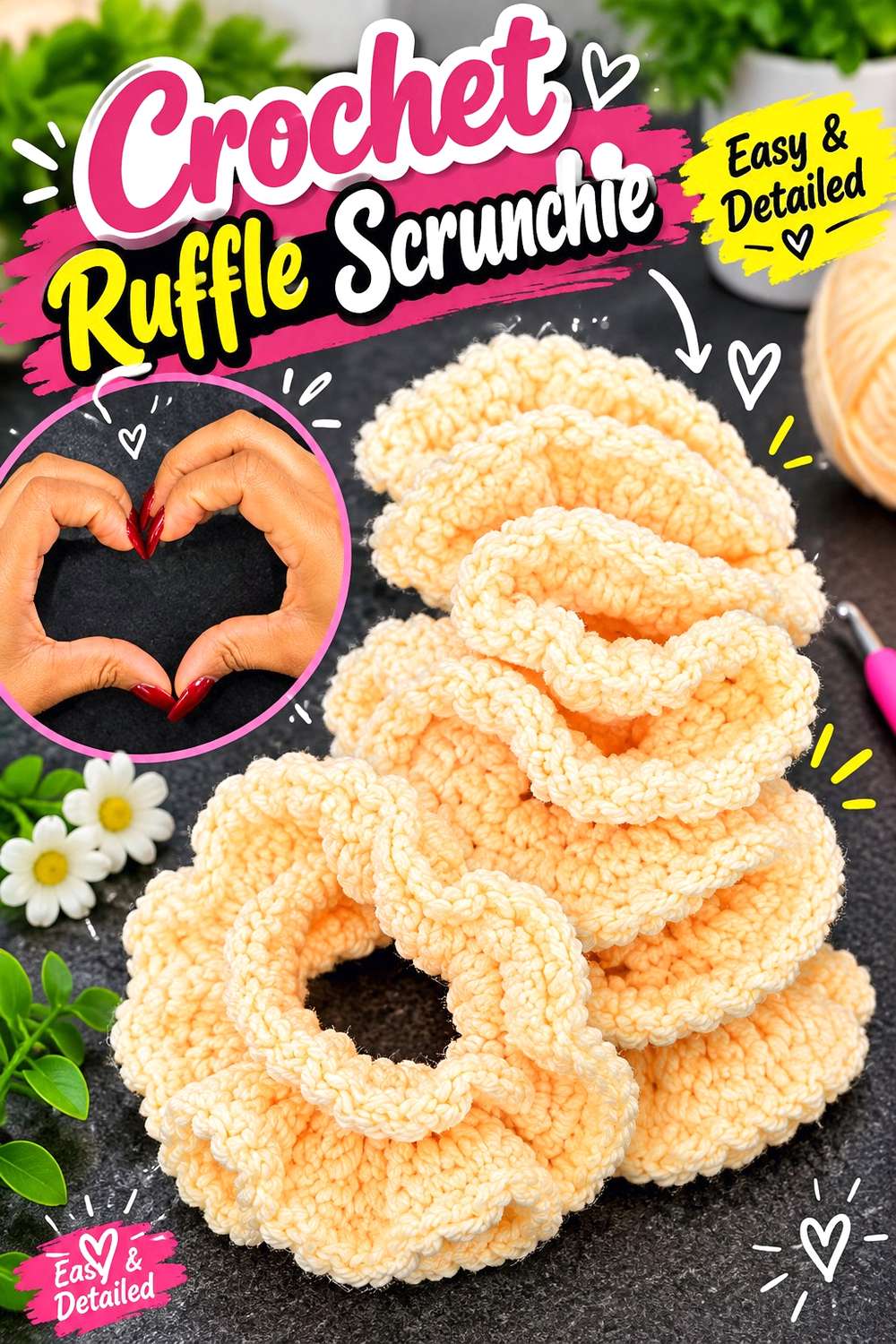
A ruffle scrunchie keeps the familiar practicality of a hair elastic while adding a visible ring of crochet around it. AccessibleNeatsbyShammy’s tutorial works crochet around a scrunchie base and then develops the ruffled layer, providing a detailed construction for the finished hair accessory. The circular ruffle gives it a softer, fuller outline than a plain crocheted elastic cover.
This project suits poetcore styling when you want texture concentrated at the back of the hairstyle. It can finish a low ponytail or gathered style without introducing another tie that hangs down the neck. The ruffle already provides considerable movement, so the most useful decision is how much surrounding decoration you want. A large bow or flower beside it may obscure the circular shape. Worn on its own, the scrunchie can echo ruffled cuffs, collars, or a bonnet while keeping those elements in different parts of the outfit.
Think About the Ruffle as Volume
Ruffles occupy more space than the base they are worked around. Judge the accessory after the crochet is spread naturally rather than only while compressed in the hand. This helps you decide whether it suits a small gathered section of hair or whether you prefer it around a fuller ponytail where the ruffle has more room to be seen.
Pair It With Simpler Hair Details
The advantage of a ruffle scrunchie is that the texture appears automatically around the gathering point. You do not need another prominent hair accessory to make it visible. If you want to combine poetcore elements, move the second detail to the neckline or hands instead. That distributes the decorative work rather than clustering every motif around one hairstyle.
Creator: AccessibleNeatsbyShammy
9. Crochet Lace Tie Headband
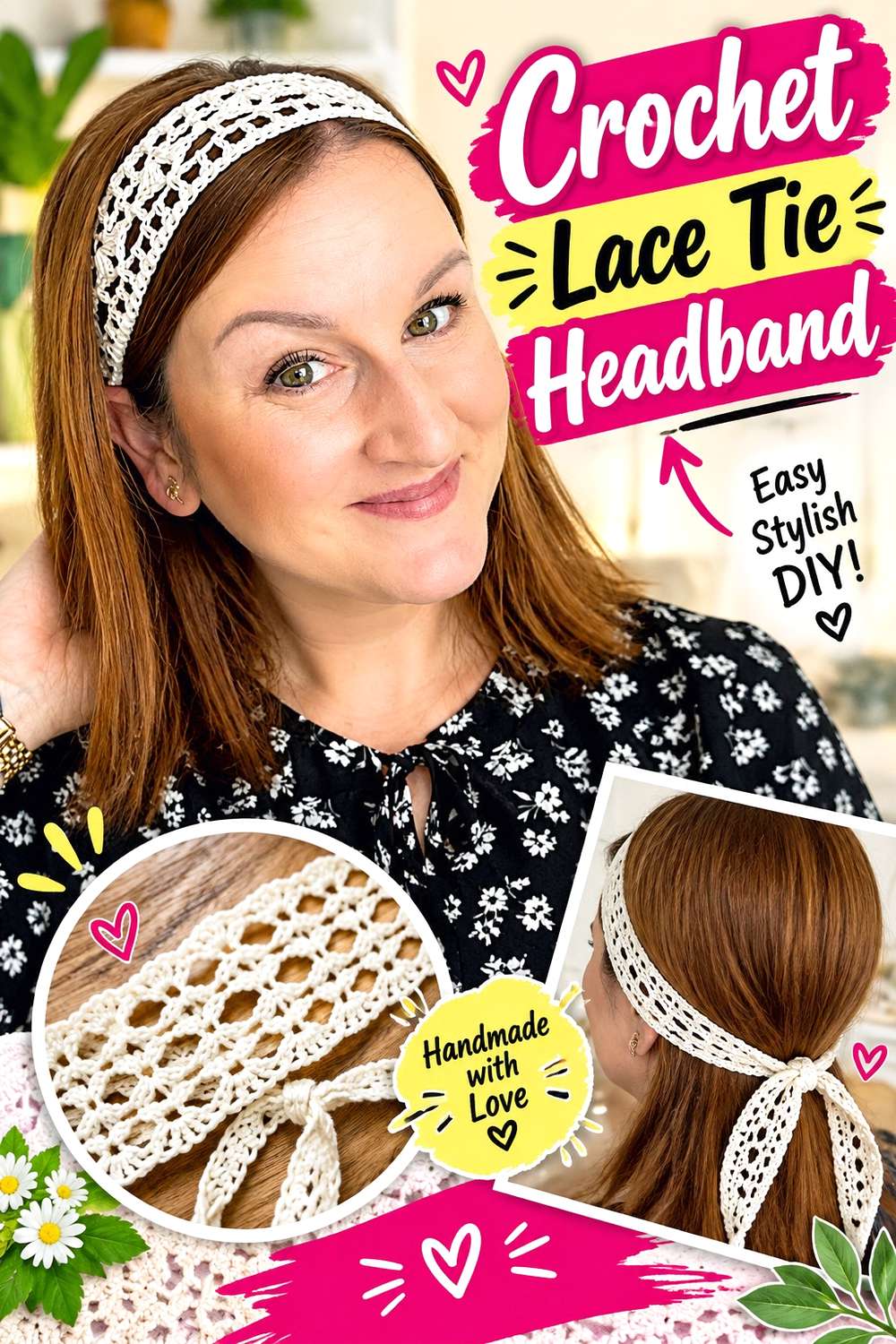
This lace headband is narrower and more linear than a bandana, leaving most of the hair visible while adding a delicate strip of crochet across it. Blue Star Crochet | Veronika Cromwell’s project uses a lace body worked lengthwise, with shaped ends and chain ties used to fasten the headband. The tied construction is particularly compatible with a soft, ribbon-like poetcore look.
Because the headband does not rely on a broad triangle or bonnet shape, the fastening becomes an important part of its character. You can allow the ties to remain visible behind the hair or position them more discreetly. The narrow lace also makes this one of the easier pieces to combine with a detailed blouse or scarf, since it does not occupy much visual space around the face. Before settling on placement, check where the side edges sit in relation to your ears and hairline.
Pay Attention to Where the Ties Fall
The chain ties are functional, but they also become part of the accessory’s outline when they remain visible. Try tying the headband with your usual hairstyle before deciding how you want the ends arranged. If the ties sit close to earrings or a high collar, adjusting their placement may give each detail more visual room.
Use the Narrow Shape to Your Advantage
A slender headband is useful when you like decorative crochet but do not want to cover the crown. It can sit behind the hairline, closer to the forehead, or with some hair pulled over it, depending on the fit taught by the creator. Compare those positions with your intended outfit rather than assuming the most obvious placement is the only one.
Creator: Blue Star Crochet | Veronika Cromwell
10. Crochet Rose Choker Necklace
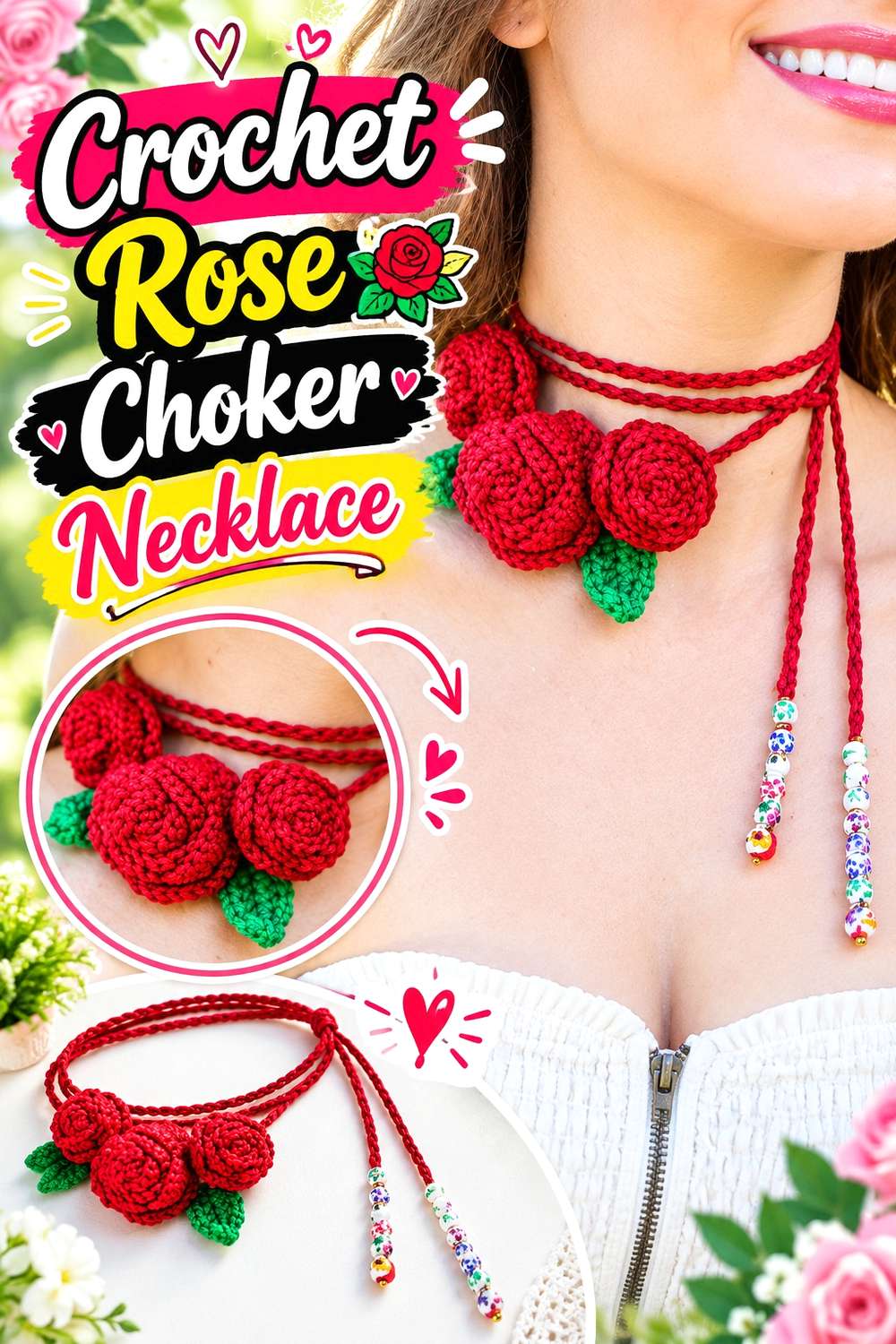
A rose choker concentrates the poetcore theme directly at the neckline through recognizable floral forms. Nicki’s Homemade Crafts teaches a rose choker composed of three roses, accompanying leaves, and a crocheted neck section, with beads presented as an optional addition. The creator’s supporting project page describes the choker and provides the step-by-step video for it.
Unlike a plain chain necklace, this design has a defined visual center. That makes placement especially important: the roses should be considered in relation to the neckline of the blouse or dress beneath them. A simple open neckline leaves more room for the flowers, while a Peter Pan collar may put two strong decorative shapes in almost the same place. The optional bead detail creates another choice. It can add a second texture, but the roses already carry enough information to make the necklace distinctive without it.
Check the Floral Center Against Your Neckline
Before deciding which top to pair with the choker, look at where its central flowers sit. A neckline that ends immediately beneath the roses may frame them neatly, while a busy collar can compete with the same space. This is one project where styling the finished accessory with clothing before adding more jewelry can prevent an overcrowded result.
Treat Beads as an Optional Layer of Detail
The source includes bead use as an option rather than a requirement. If you prefer a softer textile-focused look, the crocheted roses and leaves can remain the main visual language. If you do add beads, consider whether they support the floral arrangement or merely create another focal point. The decision is aesthetic rather than necessary to make the choker recognizable.
Creator: Nicki’s Homemade Crafts
11. Crochet Beaded Bracelet
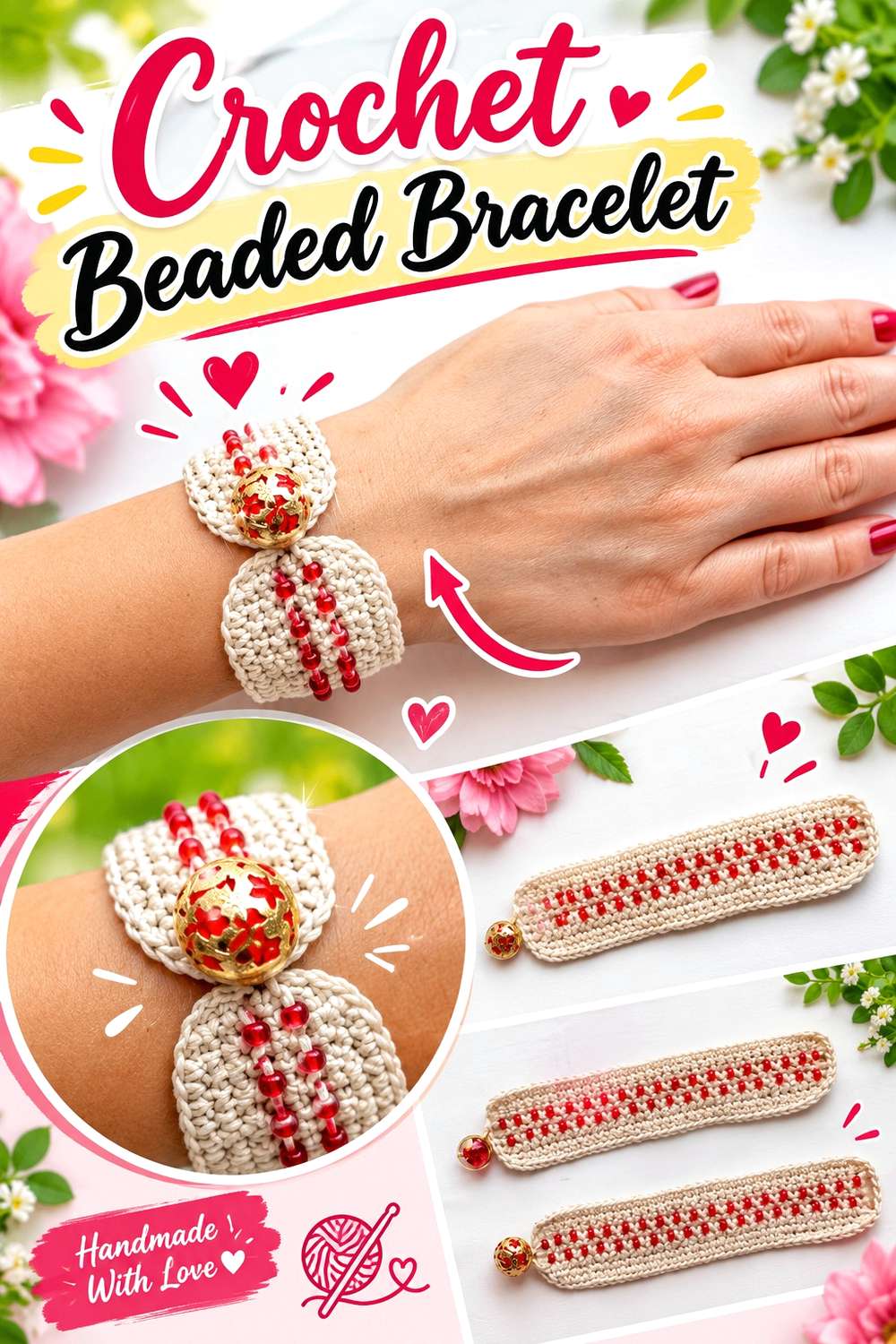
A beaded crochet bracelet introduces finer detail at the wrist without the fabric volume of cuffs or fingerless gloves. Crochet&Copy’s tutorial demonstrates a beaded bracelet step by step, combining crochet thread, beads, and a clasp-style finishing arrangement. The result suits the quieter side of poetcore, where a small handmade object can support the outfit rather than dominate it.
This is a useful option when other pieces already occupy the neckline or hair. The bracelet stays visually separate, and its repeated beads create a more regular surface than floral or ruffled crochet. Because bead placement is part of the structure, consistency matters more here than adding additional ornament afterward. Follow the creator’s construction closely and check how the bracelet closes before changing its length. A fit adjustment can affect where the final beads and closure meet, so the entire circumference should be considered as one design.
Look at Bead Spacing as a Pattern
Beads create points of light and texture, so uneven spacing can be more noticeable than it would be in plain crochet. As you work, periodically lay the bracelet in a relaxed curve and look at the rhythm of the embellishment. This is a visual check rather than a replacement for the creator’s stitch instructions, but it helps you notice the overall arrangement.
Check the Closure With the Finished Fit
Bracelet length and closure placement are connected. Before making any personal sizing change, study how the tutorial completes the fastening and consider where that closure will land on the wrist. Extending only one part of the design may shift the decorative sequence. Following the source construction first gives you a clearer basis for any later adaptation.
Creator: Crochet&Copy
12. Crochet Flower Brooch
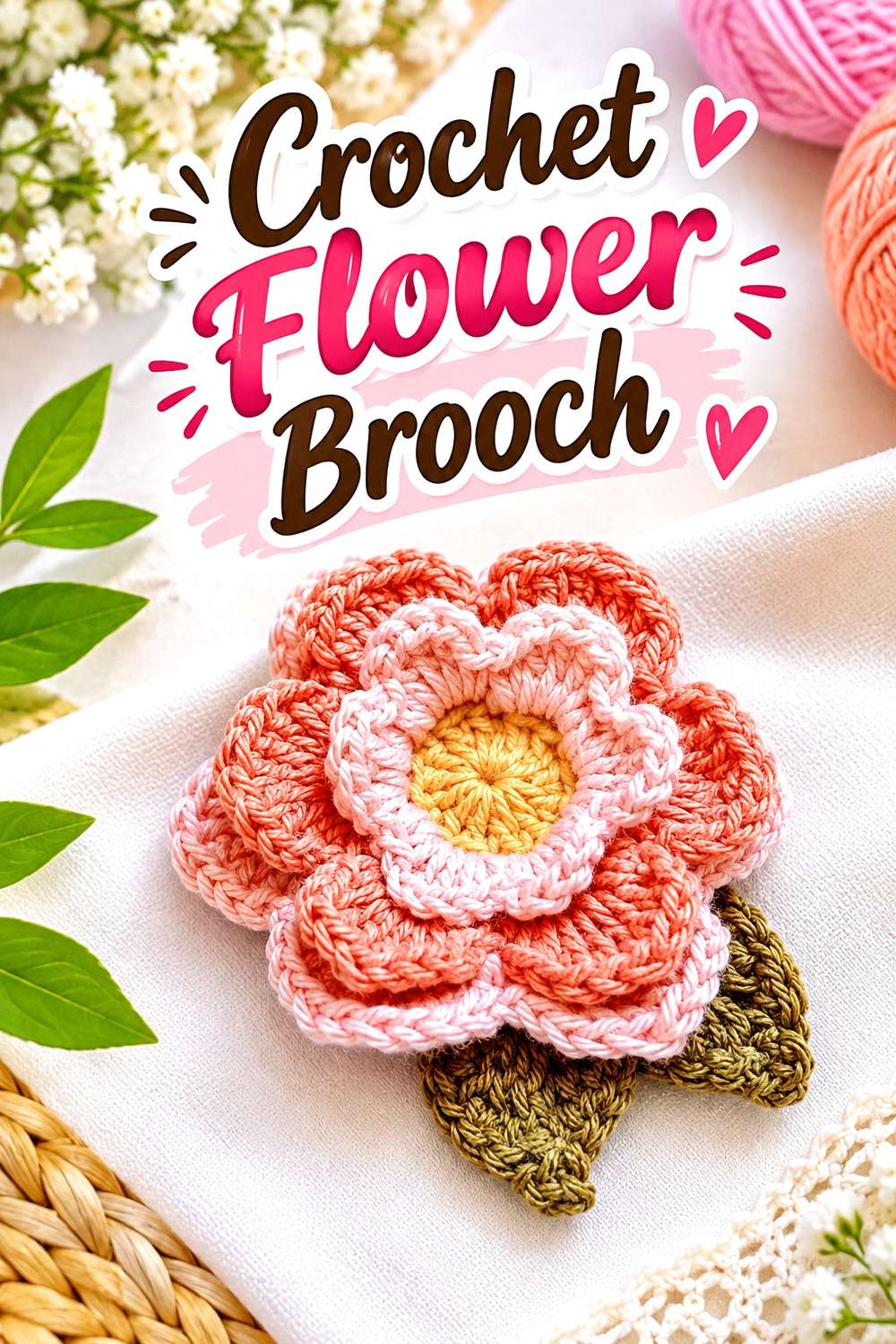
A crochet flower brooch is one of the most movable accessories in this collection. Mi’s Handmade Hobbies provides a dedicated flower brooch tutorial, turning the crocheted floral form into a pin-on accessory rather than leaving it as a loose appliqué. That portability makes the idea useful if you want a poetcore detail that can travel between outfits.
The same brooch can occupy very different visual roles depending on placement. On a cardigan lapel it becomes part of the neckline; on a scarf it can act as a floral focal point; on a bag it reads more like decoration. What should not be assumed is that every fabric will support a pin equally well. Before using the brooch on delicate clothing, inspect how the backing interacts with the material. A loosely structured or very fine fabric may respond differently from a sturdier crocheted or woven surface.
Choose the Supporting Fabric Carefully
The brooch has its own weight and backing, so the surface beneath it matters. Try the pin on an inconspicuous area or a comparable fabric before placing it on a favorite garment. The goal is to see whether the material holds the flower where you want it without obvious pulling. This is particularly relevant if you move the brooch between clothing and bags.
Rotate the Flower Before Fixing Its Position
Floral motifs can look surprisingly different when turned. Before pinning the brooch for the day, rotate it through several orientations and view it from normal wearing distance. One arrangement may make the petals appear more balanced beside a collar or scarf. This tiny adjustment can make more difference than adding another decorative element alongside it.
Creator: Mi’s Handmade Hobbies
13. Crochet Skinny Scarf
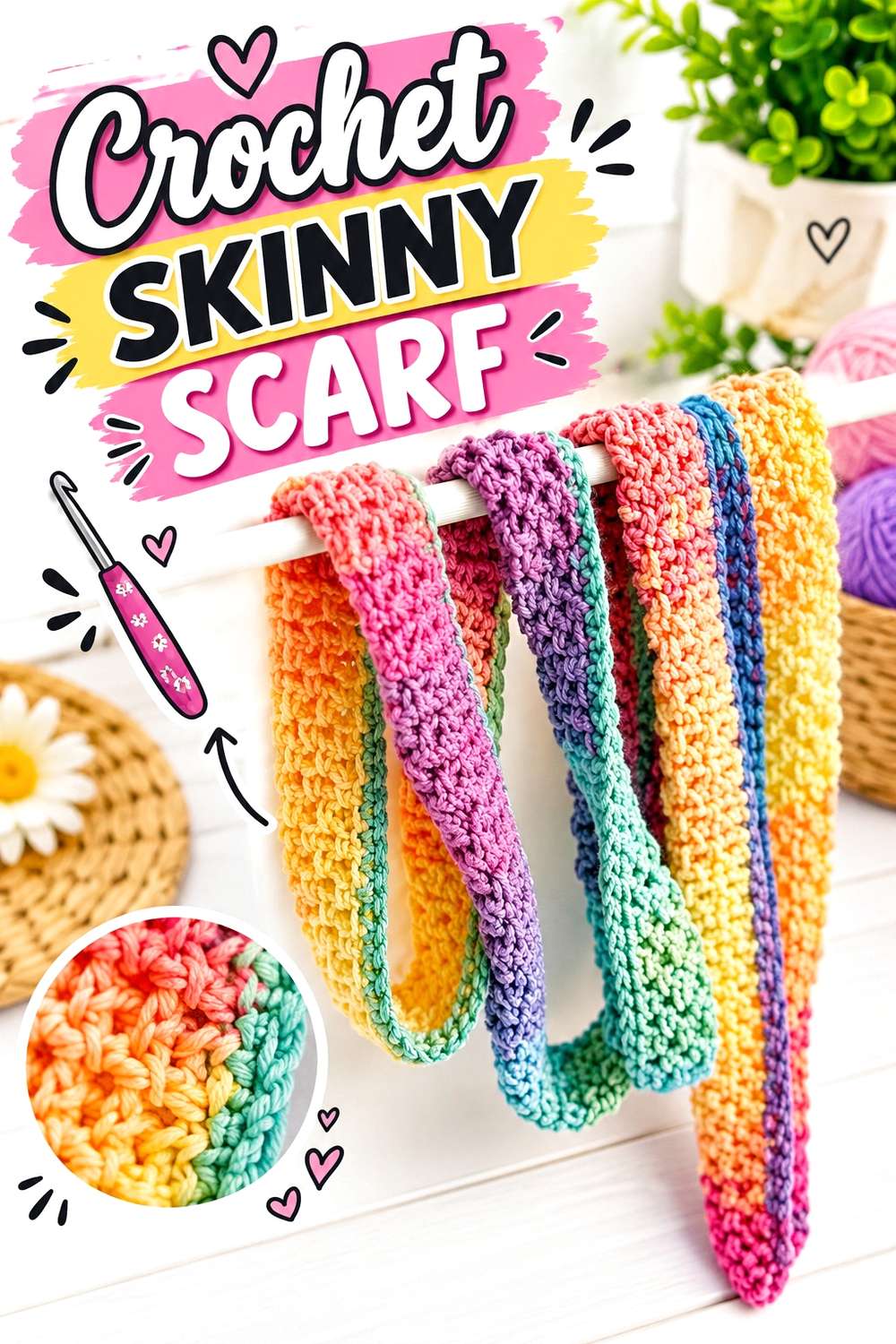
A skinny scarf gives poetcore styling a long, trailing line instead of a broad block of fabric around the neck. Krampolinka Crochet Designer and Free Patterns teaches a narrow crochet scarf, with the sample described as approximately 4 cm wide and 210 cm long and intended for loose tying or wrapping. The creator also notes an option for joining pieces to create a wider version.
The narrow format is what makes this project distinct from the lace shawl later in the list. Rather than providing broad shoulder coverage, it works more like a textile ribbon at the neckline. That creates several styling choices without requiring additional construction changes: a simple knot emphasizes the long ends, while a wrap brings more of the scarf close to the neck. If the poetcore quality you like is slightly disheveled and literary rather than formal, this relaxed narrow shape can provide that effect with very little visual bulk.
Decide Between a Knot and a Long Drop
How you tie a skinny scarf can change the proportions of an outfit. A small knot brings attention upward toward the face, while long loose ends create vertical lines over a blouse or dress. Try both arrangements before deciding whether you actually want a longer or wider version. Styling may solve the proportion question without altering the crochet.
Remember That a Narrow Scarf Can Twist
A slender strip of fabric naturally has less surface area keeping it oriented. When you wear it, look at both sides of the scarf and consider how the stitch pattern appears when the strip turns. If one side has a clearly different appearance, arrange the knot or wrap so the occasional twist feels intentional rather than constantly needing correction.
Creator: Krampolinka Crochet Designer and Free Patterns
14. Crochet Lace Shawl
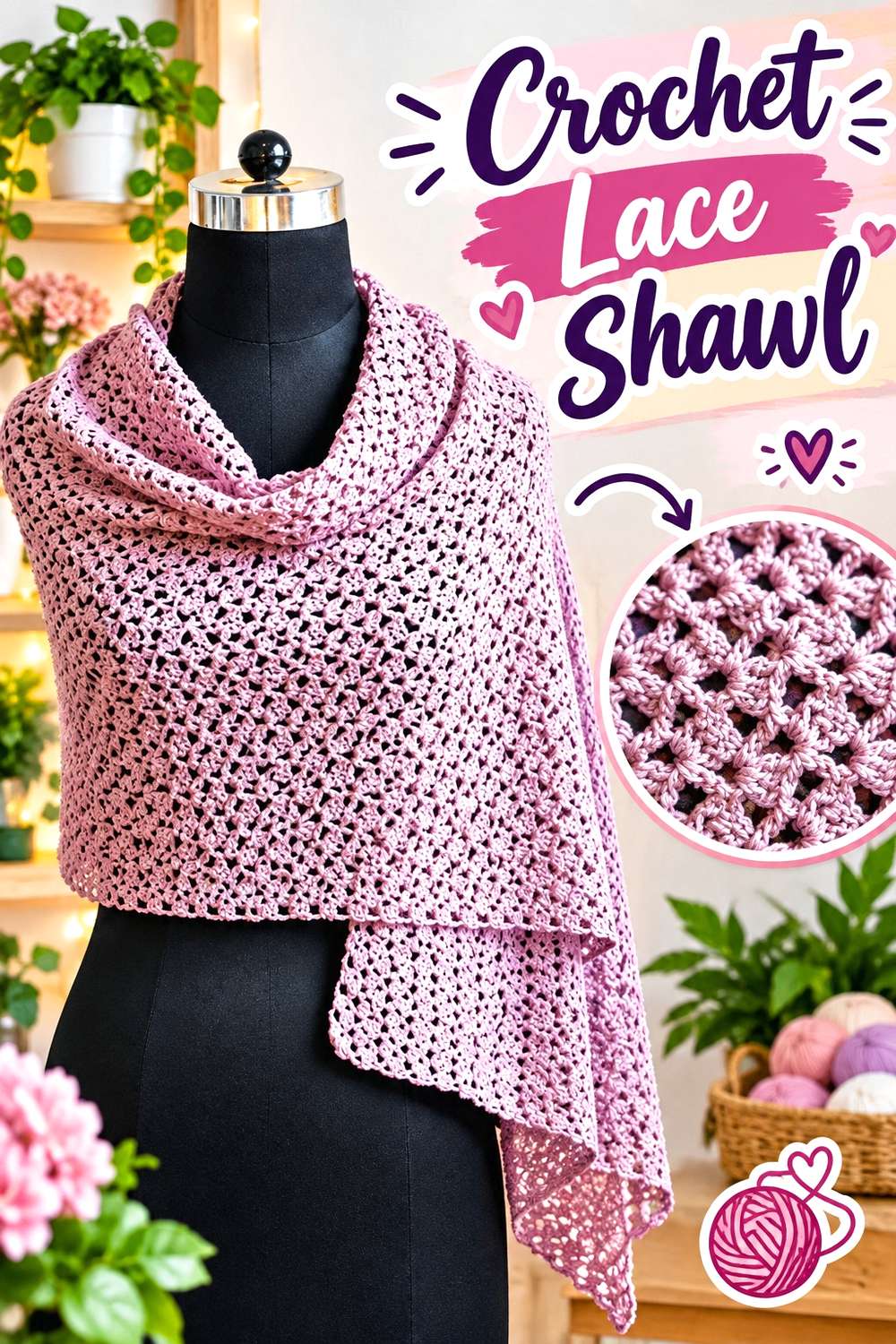
A lace shawl offers the broadest shoulder coverage in this collection, making it a good choice when you want the crochet itself to become a substantial part of the outfit. Handmade by Appy’s tutorial teaches a lace shawl with a repeating construction, edging, and finishing; the source lists the sample at about 24 inches across and 70 inches long.
That scale creates a very different poetcore effect from the skinny scarf. The lace can spread across the shoulders, drape down the back, or be gathered more closely around the neck. Because the stitch pattern already covers a large area, the shawl usually does not need numerous attached motifs to feel decorative. Your main decision is how much of your clothing you want the crochet to cover. If a dress or blouse has embroidery, a distinctive collar, or detailed sleeves, try the shawl with it before deciding which element should remain visually dominant.
Think in Terms of Shoulder Coverage
Length is only part of the shawl’s presence. Width determines how much of the shoulders and upper back become crochet-covered, which changes the relationship with sleeves and collars underneath. Use the creator’s finished information as your starting point and compare that general scale with a wrap you already own if you are deciding whether this type of accessory suits your wardrobe.
Let the Lace Provide the Ornament
A large openwork surface already creates plenty of visual texture. Instead of adding many brooches, tassels, or floral pieces immediately, wear the completed shawl first and see how the lace reads at full scale. A single small accessory can always be introduced later, but removing visual competition is often the clearer way to show the stitch pattern.
Creator: Handmade by Appy
15. Crochet Book Sleeve
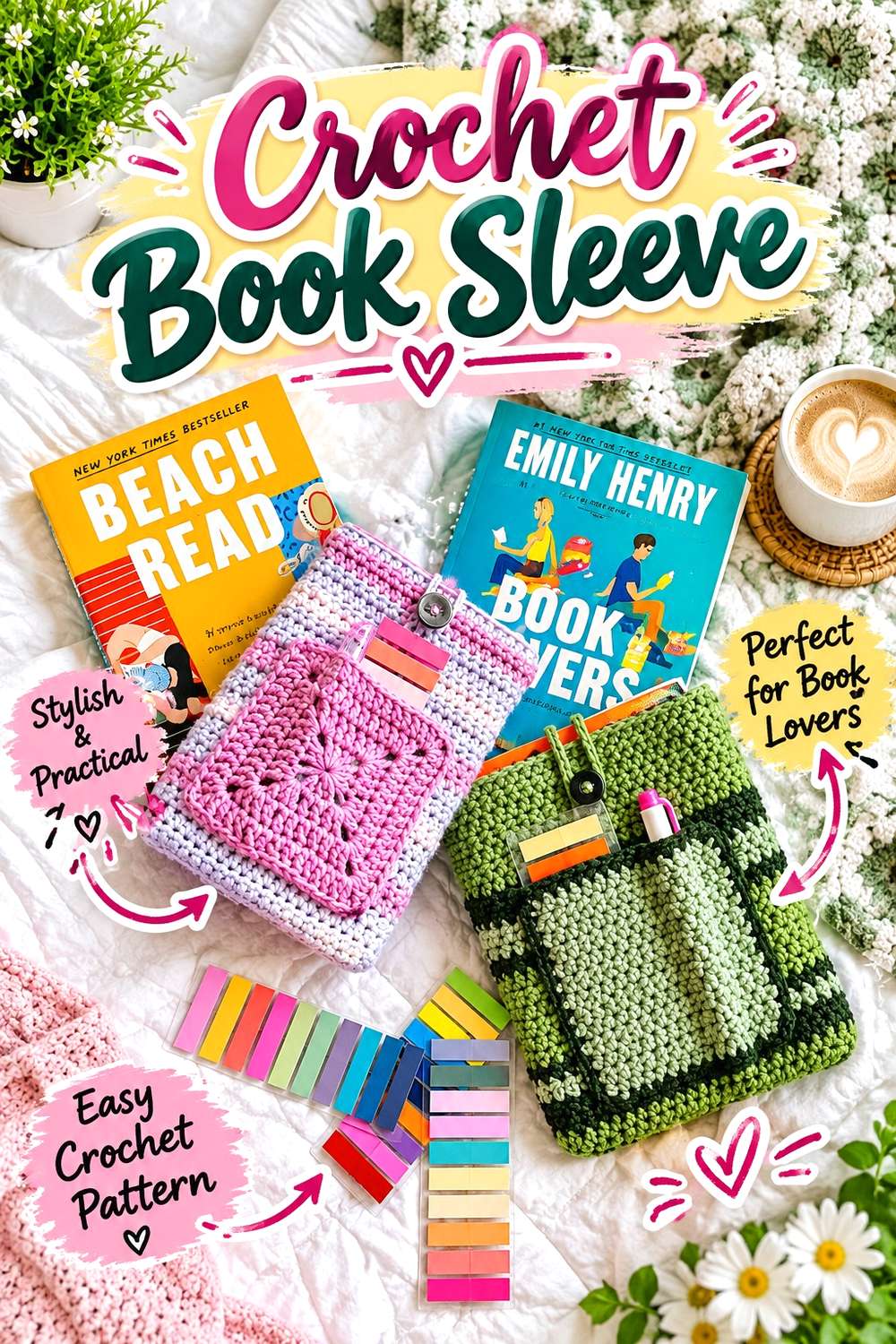
A book sleeve takes poetcore away from clothing and puts it directly into the reading part of the aesthetic. Strong Earth Creations teaches a customizable crochet book sleeve, including measuring for width, a button-loop closure, and an optional pocket treatment using a solid granny square. That gives the project more practical variation than a purely decorative book accessory.
The useful choice here is not simply which color looks literary. Start with the book or journal you actually expect to carry. A compact paperback and a thick notebook place different demands on the sleeve opening and overall proportions. Follow the creator’s measuring method rather than borrowing an arbitrary size. The optional pocket is another real decision: it adds an extra storage area, but it also changes the exterior profile. If you prefer a flatter, simpler sleeve, the source includes a path without that feature.
Measure the Book You Actually Carry
A book sleeve is most useful when planned around a real object rather than a generic idea of a book. Choose the paperback, journal, or volume you reach for most often and use the creator’s measuring approach with that item. If you regularly switch between very different formats, decide whether you want a close-fitting sleeve or a roomier general-purpose option before crocheting.
Decide Whether the Pocket Earns Its Bulk
The optional pocket can make sense if you want an exterior place for a small flat item, but it also changes the clean outline of the sleeve. Consider what you would genuinely put there. If the answer is nothing specific, the simpler version may fit the poetcore aesthetic just as well while keeping the book itself as the central purpose.
Creator: Strong Earth Creations
16. Crochet Woven-Texture Glasses Case

A handmade glasses case is a quieter poetcore accessory, useful for bringing crochet into the everyday objects that might sit beside a notebook or novel. Day’s Crochet – Modern Crochet Patterns teaches a sunglass case using a woven twill-style crochet texture and a bead or button-style closure. The source describes the sample at roughly 7 by 3.75 inches when empty and flat.
The dense-looking woven texture distinguishes this from the lacier pieces in the collection. It gives the case a more tailored surface while still keeping the handmade character visible. Size deserves attention because glasses vary widely in width and frame thickness. Compare the creator’s sample information with the pair you plan to store rather than assuming all frames will fit similarly. Also keep expectations realistic: a soft crocheted case can organize and cover glasses, but it should not be treated as equivalent to a rigid crush-resistant shell.
Compare the Case With Your Frames
Measure or physically compare your folded glasses with a similarly sized object before committing to a particular case proportion. Wide frames and bulky hinges can need more room than slim reading glasses. The source dimensions provide useful context, but the item you own is the better final reference when deciding whether this project suits its intended contents.
Treat the Closure as Part of the Silhouette
The visible bead or button-style closure is not merely functional; it becomes a small decorative point on an otherwise textured surface. When choosing how to style the case, avoid covering that feature with unnecessary appliqués. The contrast between an orderly woven texture and one small closure detail is already enough to give the project a distinctive finish.
Creator: Day’s Crochet – Modern Crochet Patterns
17. Crochet Drawstring Pouch
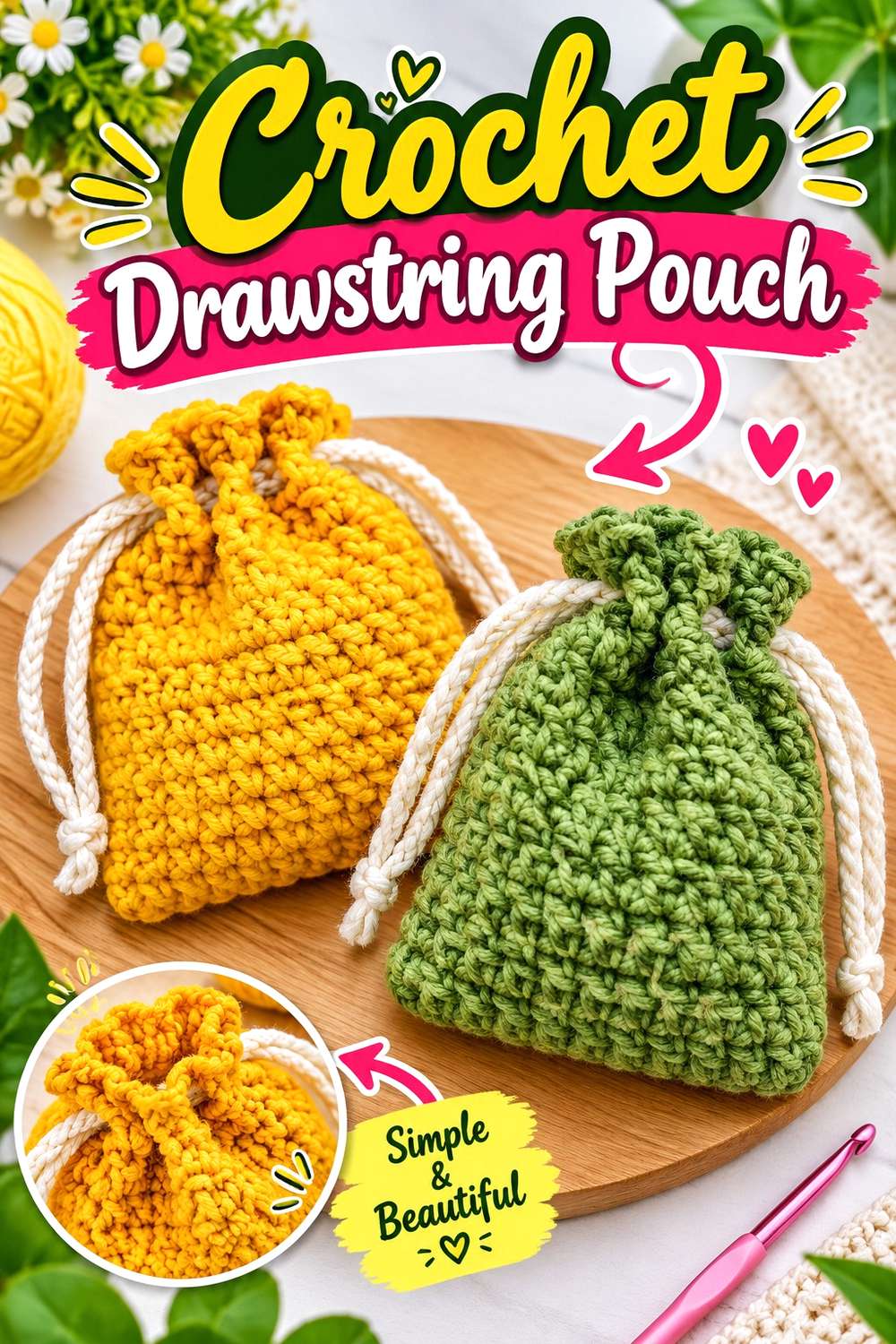
A drawstring pouch introduces a gathered, softly closing shape that fits naturally with poetcore’s preference for ties and textile details. VivCrochets teaches a basic crochet pouch with a drawstring closure, covering the pouch body and the cords used to gather the opening. The tutorial itself is for the complete pouch, so no separate motif or bag construction needs to be combined with it.
Compared with the framed purse in the next idea, this design has a flexible opening and a less rigid outline. That can be appealing for small everyday items, but the intended contents should influence how you evaluate the fabric. If you want to carry tiny loose objects, inspect how open the crocheted surface becomes when stretched. A lining could be considered as a separate adaptation, but it should not be assumed to be included in the tutorial, and it would add its own finishing work.
Check the Fabric Against the Smallest Contents
Before deciding what the pouch will carry, hold the finished or developing fabric up to the kinds of items you have in mind. Very small jewelry pieces or narrow objects may require more containment than larger keepsakes. This check helps you decide whether the basic crocheted pouch is appropriate as taught or whether a separately planned lining would be worthwhile.
Remember That Drawstrings Change Access
A gathered opening looks soft and decorative, but it also means the pouch must be loosened before you can reach inside. That makes it different from an open glasses case or a hinged coin purse. If you expect to reach for the contents repeatedly throughout the day, consider whether you enjoy that opening style rather than choosing it only for the appearance.
Creator: VivCrochets
18. Crochet Metal-Frame Coin Purse
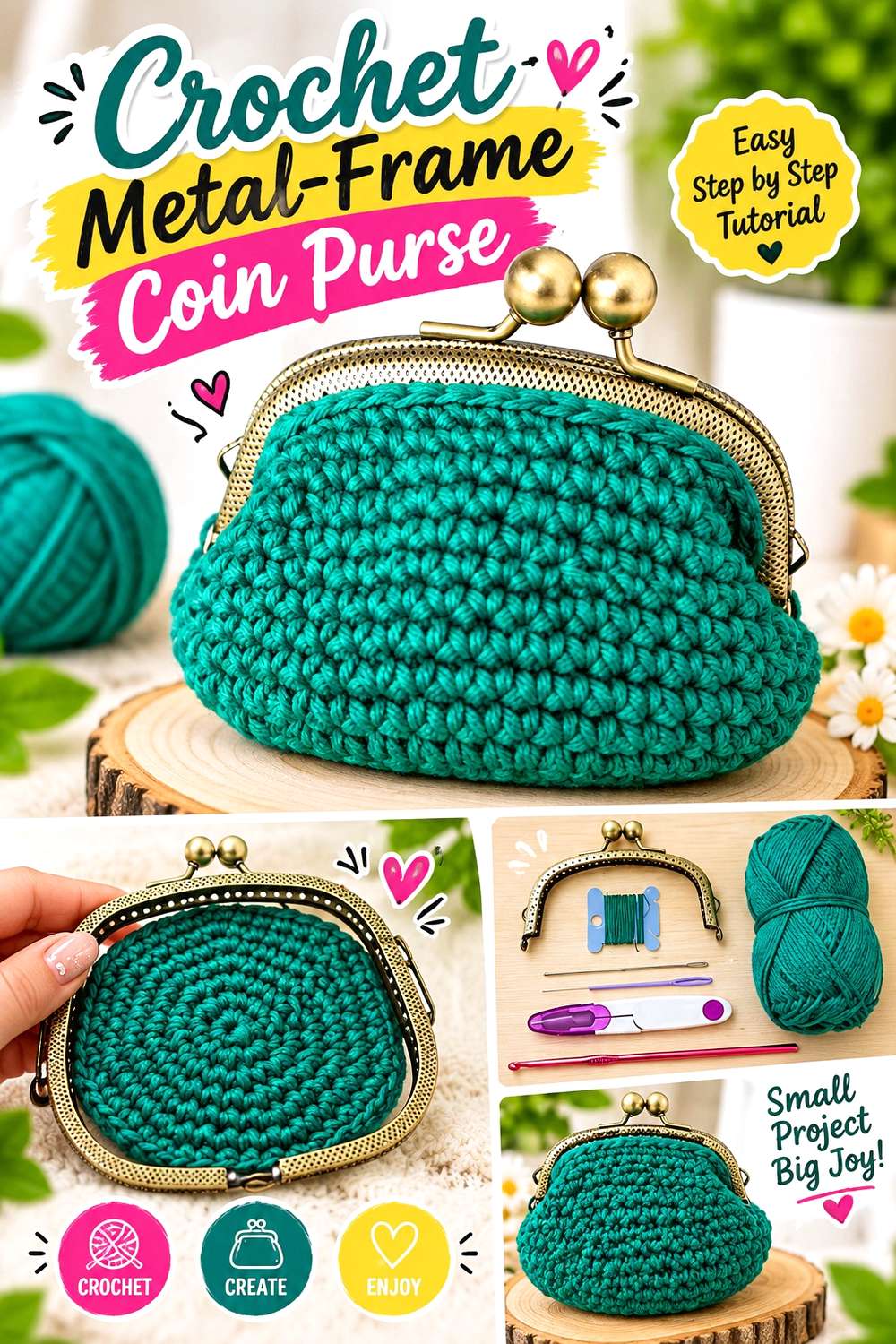
A metal-frame purse pairs soft crochet with a distinctly structured opening. Melanie Ham’s tutorial teaches a crochet coin purse worked to meet a metal purse clasp, with the crocheted body attached to the frame by hand sewing. The supporting project page specifies a 4-inch clasp for the demonstrated version.
The frame is what separates this idea from a drawstring pouch. Instead of gathering the crochet closed, the hardware defines the mouth and gives it a more vintage purse-like profile. That makes the project particularly compatible with poetcore styling, but it also means the crochet and hardware cannot be planned independently. If you substitute a different frame, do not assume the demonstrated dimensions will transfer automatically. Compare the frame opening carefully and treat any proportion changes as a structural adaptation rather than a cosmetic one.
Fit the Crochet to the Actual Frame
A purse frame is a fixed piece of hardware, so it becomes the reference point for the opening. Have the exact clasp available while working rather than relying on a remembered size. If your hardware differs from the creator’s, study how the demonstrated body meets the frame before changing anything; a different opening can require more than simply adding a few stitches.
Keep the Attachment Even Around the Mouth
The hand-sewn connection is visually important because it sits right at the structured top edge. When attaching the crochet, work methodically so the fabric is distributed in the way the tutorial demonstrates rather than allowing excess to accumulate at one side. An evenly seated mouth helps the metal frame remain the clear feature that distinguishes this purse from softer pouch designs.
Creator: Melanie Ham
19. Crochet Thread Bookmark
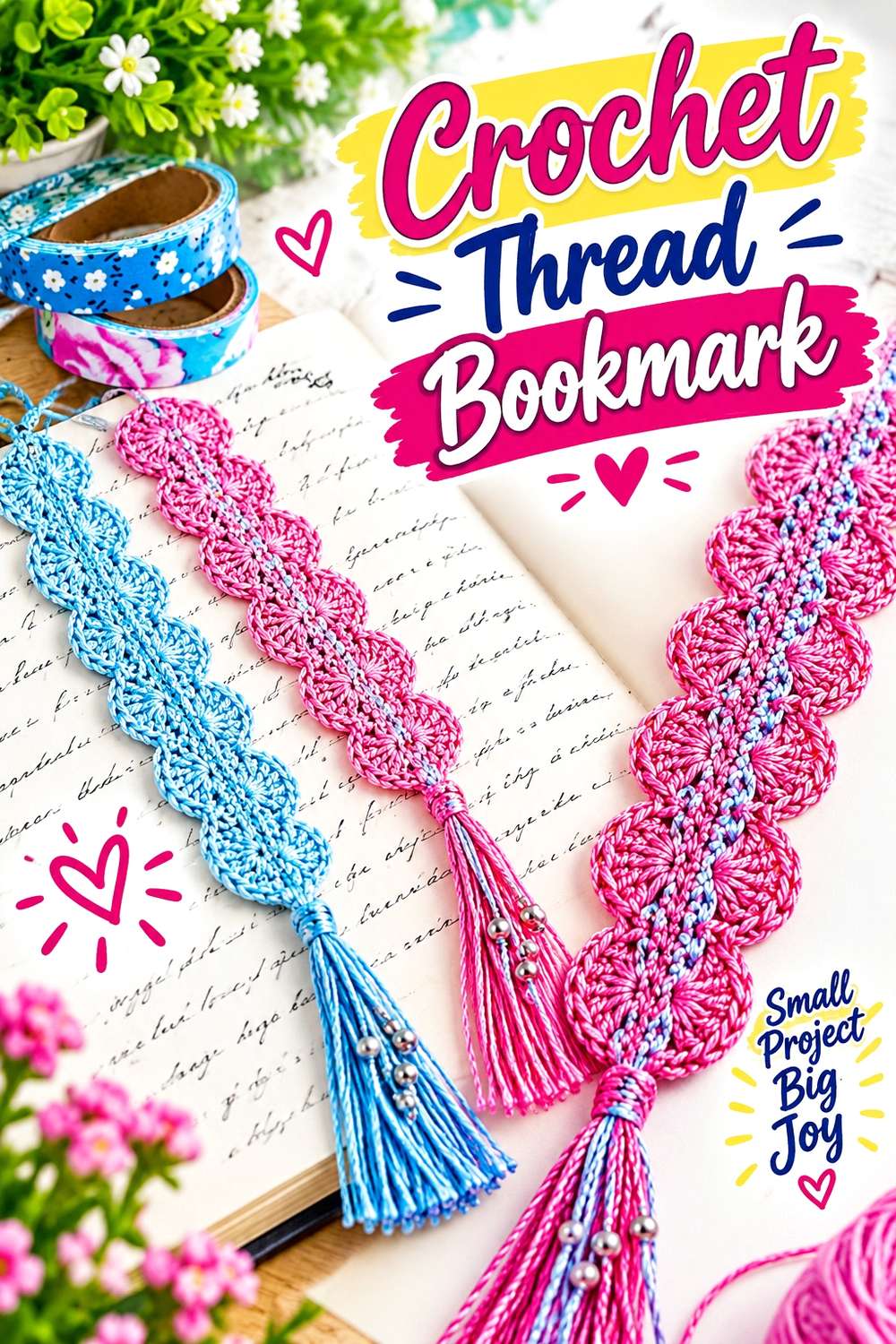
A narrow crochet bookmark may be the most directly literary accessory in the collection. LovelyMiracle’s tutorial teaches a crochet bookmark using fine crochet materials and presents beads as an optional addition. The source also identifies its stitch terminology as US terms. Because the project is designed specifically as a bookmark, it does not rely on adapting a bracelet or strip of trim for use between pages.
The restrained format suits poetcore especially well: you see a small piece of handwork each time you return to a book, rather than wearing the motif as part of an outfit. Thinness deserves more consideration than excessive ornament. Any optional bead or larger decorative end is better positioned outside the closed pages rather than where it would add bulk between them. This is a project where keeping the central section simple can be more useful than filling every available space with decoration.
Keep the Main Section Page-Friendly
When you evaluate the finished bookmark, close it inside an ordinary book and see how the central portion sits between pages. The goal is not to certify a particular thickness, but to notice whether decorative elements interrupt the way the book closes. Reserve bulkier optional details for the ends when possible so the working section remains unobtrusive.
Choose Length Around the Books You Read
A bookmark for compact paperbacks may feel unnecessarily long in your everyday use if you mostly read smaller formats, while a very short marker can disappear inside larger books. Follow the creator’s construction, but consider your usual reading stack when judging the final proportions. The visible end should be easy for you to find without needing elaborate additional decoration.
Creator: LovelyMiracle
20. Crochet Flower Earrings

Crochet flower earrings bring the collection down to its smallest wearable scale. Sure It’s tutorial teaches flower-shaped crochet earrings and includes the jewelry findings and finishing materials used to turn the crocheted pieces into earrings. The flowers therefore function as complete jewelry components rather than loose motifs suggested for later adaptation.
At this size, consistency between the two pieces becomes especially visible. Slight differences that might disappear in a brooch can stand out when matching earrings hang on opposite sides of the face. Work both flowers before attaching the final findings so you can compare their orientation and overall shape as a pair. The earrings also make sense when you want floral poetcore detail without adding fabric around the neck. They can accompany a simple blouse or narrow scarf while leaving the center of the neckline relatively open.
Compare the Pair Before Adding the Hooks
Place both crocheted flowers beside each other in the same orientation before finishing the jewelry assembly. Look at the way the petals face and where you want the top of each flower to be. Making that decision as a pair helps the earrings mirror one another intentionally instead of discovering an awkward rotation only after the findings are attached.
Let Small-Scale Shape Do the Work
Earrings sit close to the face, so even a small floral outline can be noticeable. You do not need to combine them automatically with the rose choker, flower clip, and brooch. If you want the earrings to register clearly, give them visual breathing room. Their miniature scale is part of their appeal and provides a subtle alternative to the larger floral pieces above.
Creator: Sure It
Conclusion
The most useful way to choose among these 20 crochet poetcore accessories is to decide where you want the handmade detail to live. For face-framing texture, compare the Ruffled Bonnet, Lace Bandana, Lace Tie Headband, and smaller hair accessories. The Rounded Peter Pan Collar, Rose Choker, Skinny Scarf, and Lace Shawl offer very different amounts of neckline coverage, while the Scalloped Fingerless Gloves and Beaded Bracelet move the focus to the hands.
For a quieter literary touch, the Book Sleeve, Thread Bookmark, Glasses Case, Drawstring Pouch, and Metal-Frame Coin Purse bring crochet into everyday objects instead. Pick one project whose form solves the styling or practical choice you actually have, then use the original tutorial for its exact construction details.
Frequently Asked Questions
Do the tutorial creators call these projects poetcore?
Not necessarily. “Poetcore” is the editorial theme connecting this collection, not a label being attributed to every creator. The selected tutorials teach collars, lace accessories, florals, bows, reading accessories, and other finished forms that can be styled within a romantic, literary-inspired wardrobe. Keeping that distinction clear also gives you more freedom: you can use the same projects outside poetcore styling without changing what the creators actually teach.
Which projects give the most subtle poetcore effect?
Start with accessories that occupy relatively little visual space. The Lace Tie Headband, Flower Brooch, Beaded Bracelet, Thread Bookmark, Bow Hair Clip, and Flower Earrings can each add one recognizable handmade detail without changing the whole silhouette. A Skinny Scarf can also be understated when loosely tied. Larger pieces such as the bonnet, shawl, and broad collar naturally have more influence over the overall outfit.
Which accessories need the most careful fit checking?
Anything that sits closely around the head, neck, hands, or wrists deserves particular attention. That includes the bonnet, bandana, headband, collar, choker, fingerless gloves, and bracelet. Use the individual creator’s sizing or adjustment instructions instead of assuming a standard measurement. Cases and sleeves need a different check: compare them with the exact book, glasses, or hardware you intend to use.
Can I substitute a different yarn to make the accessories look more vintage?
A different fiber, yarn construction, or thickness can change scale, drape, stretch, and stitch definition, so a visual preference alone is not enough to predict the result. Start with the tutorial’s material guidance when it matters to the construction. If you substitute, make a small test and compare the resulting fabric with the qualities the project needs rather than assuming that any yarn in a “vintage” color will behave the same way.
Can I add ribbons, beads, or extra flowers to these projects?
You can consider additional decoration, but first separate cosmetic changes from structural ones. An extra flower on a plain surface may be a modest styling change, while embellishment around a closure, purse frame, headband tie, or fitted neckline can affect how the accessory works or sits. Complete the important fit and closure decisions first, then assess whether another decorative element improves the piece or simply competes with details already present.