Moss green and rust can take a crochet pumpkin basket in two very different directions. Rust naturally reinforces the pumpkin theme, while moss green can either become a quieter supporting color or take over the entire pumpkin body for a more botanical fall palette.
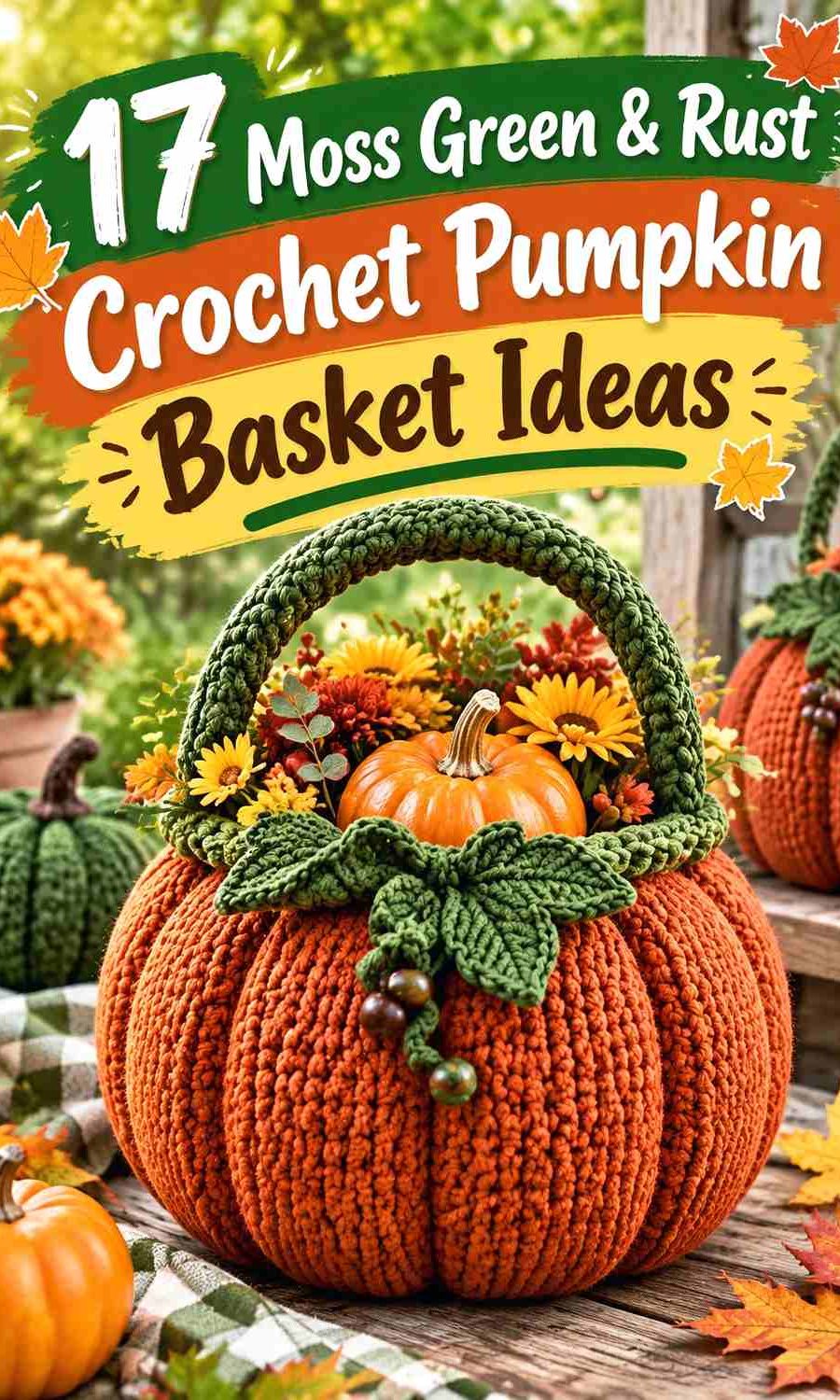
The strongest versions give the two colors separate jobs. Rust can define ribs, central panels, handles, or small pumpkin motifs. Moss green can cover the basket body, frame the rim, carry the stem-and-leaf details, or form the darker spaces between rust sections. Adding cream, oatmeal, camel, espresso, or mustard can change the contrast without replacing the moss-green-and-rust identity.
Because a pumpkin basket has a rounded body, visible rim, and often a handle, stem, leaf, or gathered top, color placement can reinforce the construction instead of simply decorating it. The ideas below focus on where each shade belongs and how to keep the pumpkin form readable.
Quick List
- Moss Green Body And Rust Rib Crochet Pumpkin Basket
- Rust Body And Moss Green Rim Crochet Pumpkin Basket
- Moss Green Rust And Cream Segmented Crochet Pumpkin Basket
- Moss Green And Rust Tonal Stripe Crochet Pumpkin Basket
- Rust Pumpkin Basket With Moss Green Handle And Stem
- Moss Green Pumpkin Basket With Rust Center Panels
- Moss Green Rust And Oatmeal Drawstring Crochet Pumpkin Basket
- Rust And Moss Green Wide Rib Crochet Pumpkin Basket
- Moss Green Rust And Espresso Crochet Pumpkin Basket
- Moss Green And Rust Granny Square Pumpkin Basket
- Rust Basket With Moss Green Pumpkin Motifs
- Moss Green Basket With Rust Raised Pumpkin Texture
- Moss Green Rust And Mustard Crochet Pumpkin Basket
- Rust And Moss Green Mini Treat Crochet Pumpkin Basket
- Moss Green And Rust Vine Top Crochet Pumpkin Basket
- Moss Green Rust And Camel Crochet Pumpkin Basket
- Deep Moss Green And Burnished Rust Crochet Pumpkin Basket
Decide Whether Moss Green or Rust Owns the Pumpkin Body
The largest color area determines how the basket reads from across the room. A mostly rust body gives an immediate traditional fall-pumpkin impression, while a moss-green body makes the basket less literal and puts more emphasis on botanical color.
Avoid automatically splitting the body into equal halves. A clearer hierarchy usually comes from allowing one color to dominate the rounded surface while the other identifies ribs, rim details, handles, or decorative pumpkin features.
If both yarns are fairly dark, add a lighter separator only where necessary. A narrow cream or oatmeal line between moss green and rust can make individual pumpkin sections easier to distinguish without turning the basket into a neutral-led project.
Use Moss Green and Rust to Clarify Pumpkin Ribs
Pumpkin ribs already create repeated vertical movement, making them natural places for deliberate color changes. Rust ribs against moss green emphasize the pumpkin reference, while moss-green ribs across a rust body create a darker framework.
Keep the rib treatment regular. If one rib is rust, another moss green, and several others randomly introduce different neutrals, the basket can lose the repeated rhythm that makes the pumpkin shape recognizable.
For a subtler result, keep all ribs in the dominant color and place the second shade only around the rim, stem, or handle.
Keep Moss Green and Rust Balanced Around the Basket Opening
The top of a pumpkin basket often contains several visual elements at once: the rim, handle, stem, leaves, vines, or a drawstring. Too many competing colors here can make the upper section look heavier than the rounded body below it.
Repeat a body color at the top before introducing additional accents. If rust dominates the basket, moss green can handle the stem and leaf details. If moss green dominates, a rust rim or handle provides enough contrast without requiring several extra fall shades.
1. Moss Green Body And Rust Rib Crochet Pumpkin Basket
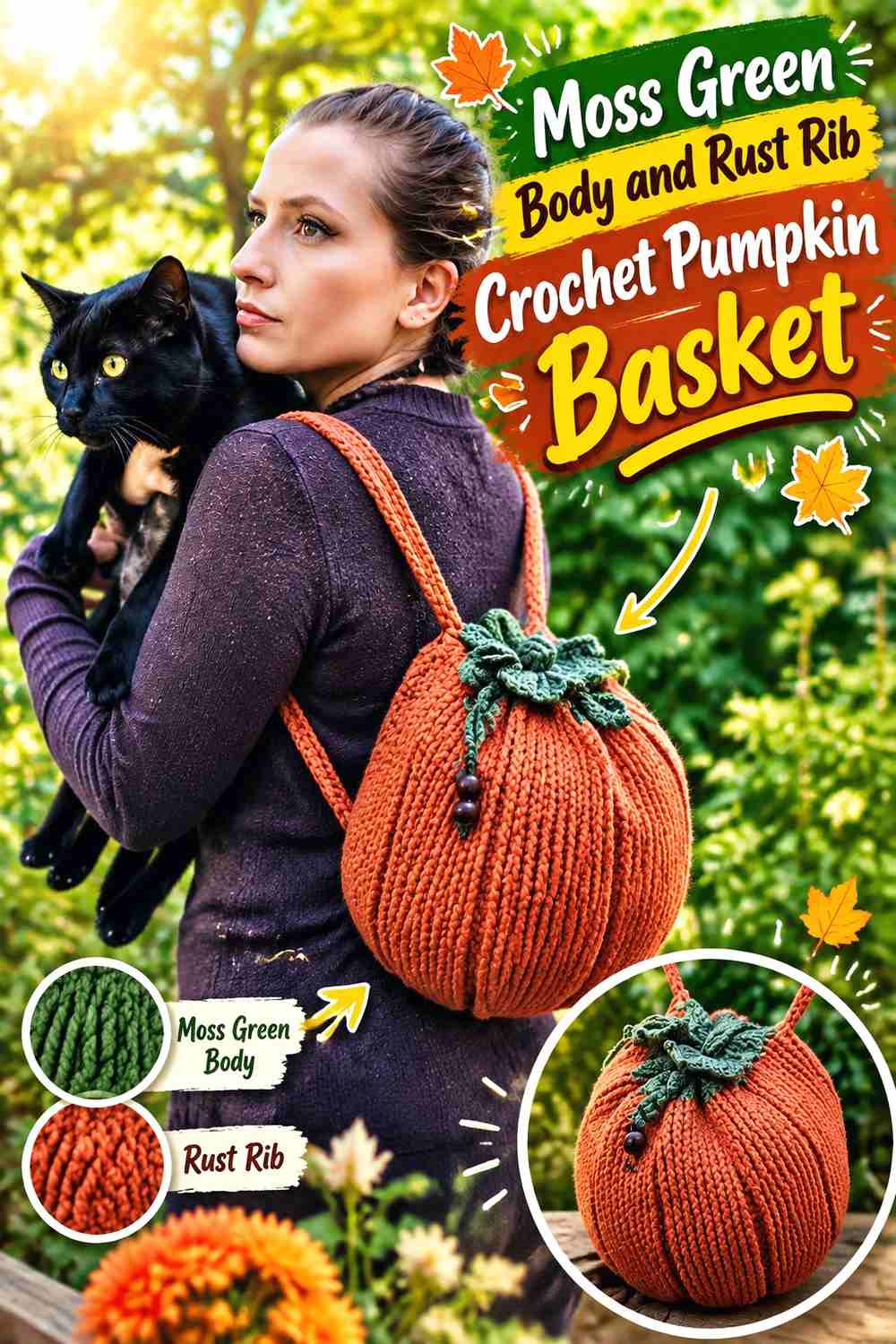
A moss-green body gives the pumpkin basket an earthy botanical direction, while rust ribs preserve a clear autumn connection. Keep moss green across most of the rounded surface and let rust appear in repeated vertical sections or raised rib details. This approach works best when the rust repeats evenly rather than appearing as isolated patches.
Let Moss Green Cover Most of the Pumpkin Basket
Moss green should occupy the broad spaces between the ribs so the basket reads as green first. A continuous field also keeps the rounded form from being broken into too many competing sections.
If you want additional rust near the top, repeat it in a narrow rim rather than expanding every rib until the two colors occupy equal area.
Repeat Rust Consistently Along the Moss Green Ribs
Rust becomes most useful when it establishes a predictable rhythm. Place it on equivalent rib positions around the basket so each repetition supports the pumpkin shaping.
If your moss green and rust are close in value, examine them from a distance before committing. Slightly wider rust ribs may be more legible than many narrow rust lines.
Creator Credit: Basicstitchcolorado — YouTube tutorial
2. Rust Body And Moss Green Rim Crochet Pumpkin Basket
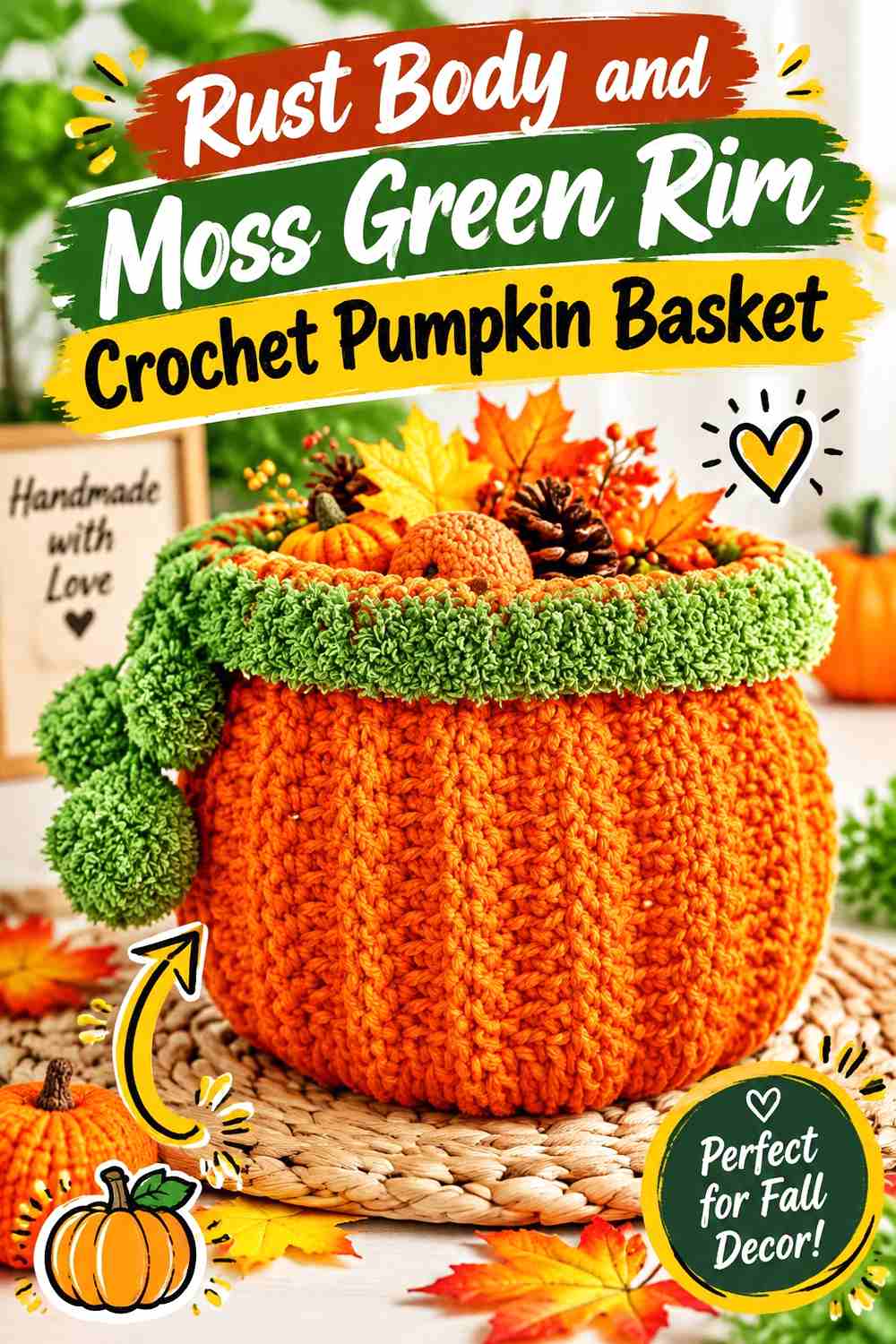
This reverses the first palette. Rust becomes the broad pumpkin color, while moss green defines the opening and gives the upper edge a more botanical finish. A moss-green rim works particularly well when the basket also includes a stem, vine, or leaf because the same shade can repeat at the top without introducing another green.
Let Rust Stay Continuous Across the Pumpkin Body
Use rust across the large rounded sections so the basket keeps a clear pumpkin identity. If the stitch texture already creates strong ribs, the rust surface does not need frequent additional color changes.
A broad uninterrupted rust area also makes smaller moss-green features more noticeable.
Carry Moss Green From the Rim Into the Pumpkin Details
Repeat moss green in the rim, stem, leaves, or handle attachment area. That creates a clear relationship between the practical opening and the botanical decoration above it.
Avoid scattering small green details across the lower rust body unless the design intentionally calls for a motif. Keeping green concentrated near the top creates a cleaner division.
Creator Credit: Katy Handmade — YouTube tutorial
3. Moss Green Rust And Cream Segmented Crochet Pumpkin Basket
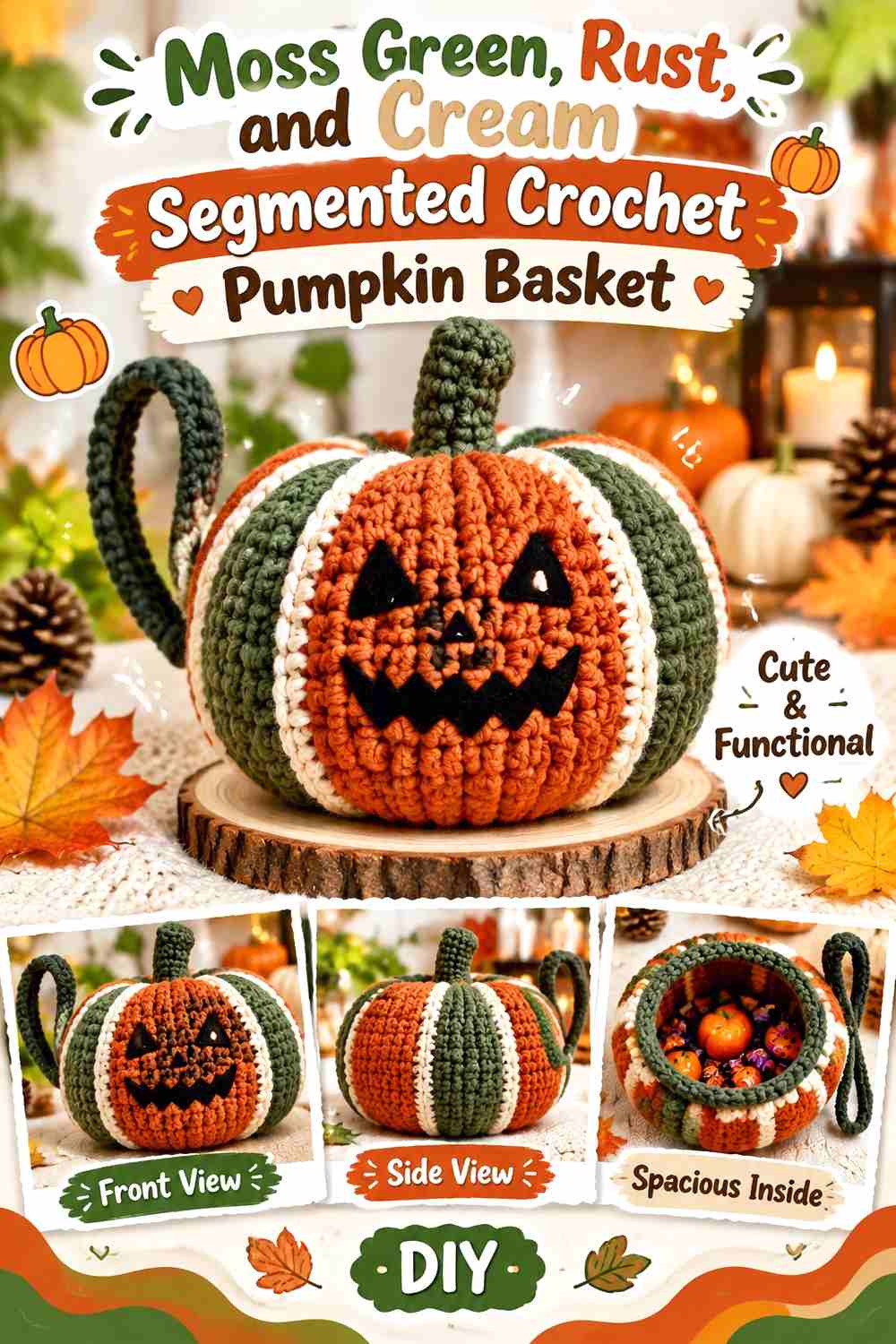
Cream gives moss green and rust a clear value break. Use moss green and rust for the major pumpkin sections and place cream only between selected segments or around the rim. The lighter color should function as separation rather than becoming a third equal body color.
Use Cream Between Moss Green and Rust Pumpkin Sections
A narrow cream divider can prevent adjacent moss-green and rust segments from visually merging, especially when both yarns are muted.
Keep that divider consistent in width. Irregular cream sections can attract more attention than the two main fall colors.
Keep Moss Green and Rust Larger Than the Cream Areas
Let the green and rust segments do most of the visual work. Cream should remain a supporting shade around boundaries, a handle edge, or a narrow upper band.
If the finished basket begins to look primarily cream, reduce the neutral before changing either main shade.
Creator Credit: Kane Crochet — YouTube tutorial
4. Moss Green And Rust Tonal Stripe Crochet Pumpkin Basket
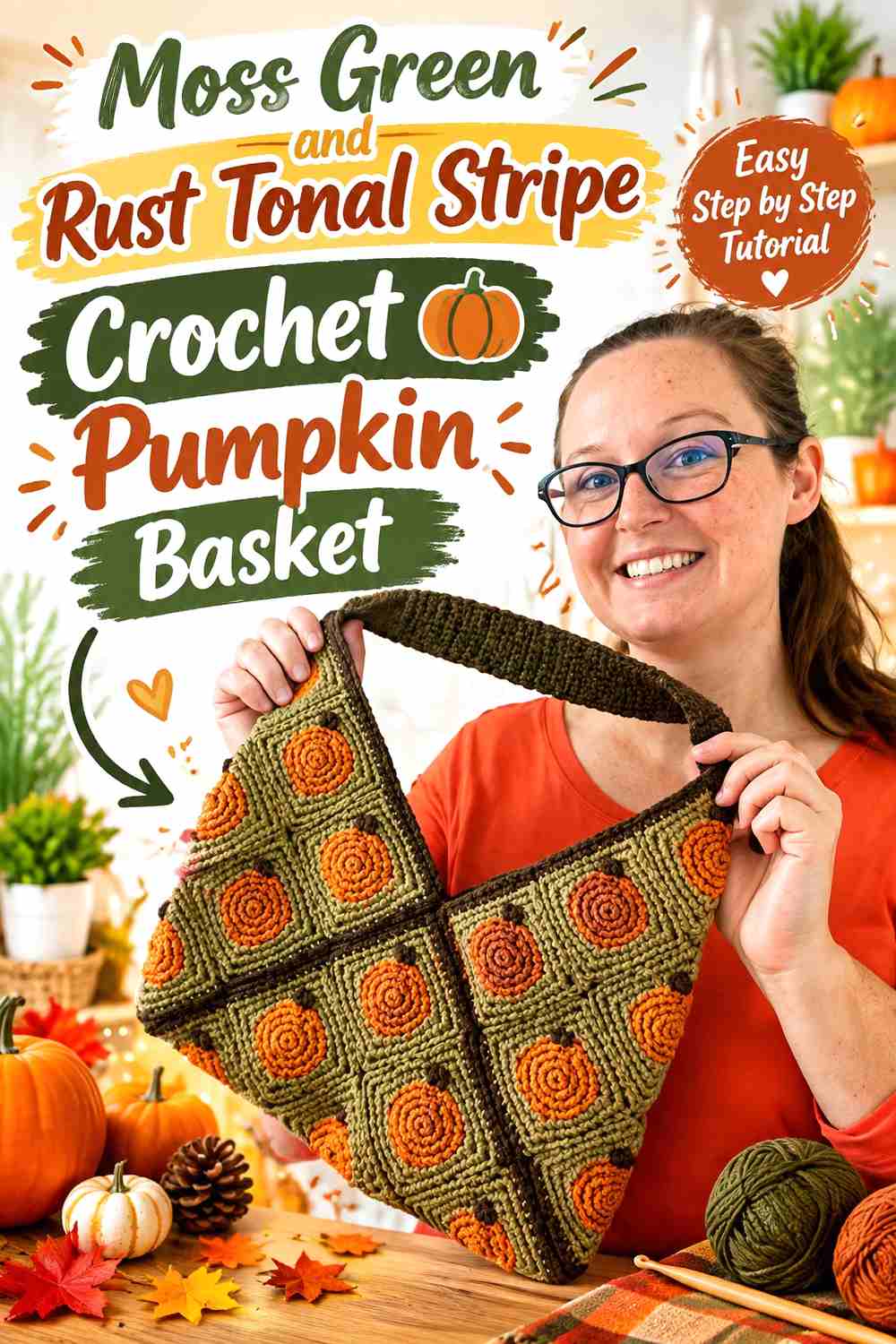
Instead of assigning one shade only to ribs, let moss green and rust alternate in broad vertical bands. The result is more graphic than a single-color pumpkin but still controlled because the palette remains limited to two earthy hues.
Make Moss Green and Rust Stripes Wide Enough to Read
Very narrow stripes can make a rounded basket appear visually busy, particularly once the sides curve away from the viewer. Broader moss-green and rust panels allow each color to remain identifiable.
Plan the repeat around the full circumference rather than judging only the front-facing section.
Keep the Moss Green and Rust Rim Simpler Than the Body
When the pumpkin body already contains repeated striping, use one solid color at the top. A moss-green rim can connect to a stem or leaf, while a rust rim makes the pumpkin body feel more continuous.
Adding another alternating stripe sequence around the opening may create unnecessary competition.
Creator Credit: Samantha Lopez — YouTube tutorial
5. Rust Pumpkin Basket With Moss Green Handle And Stem
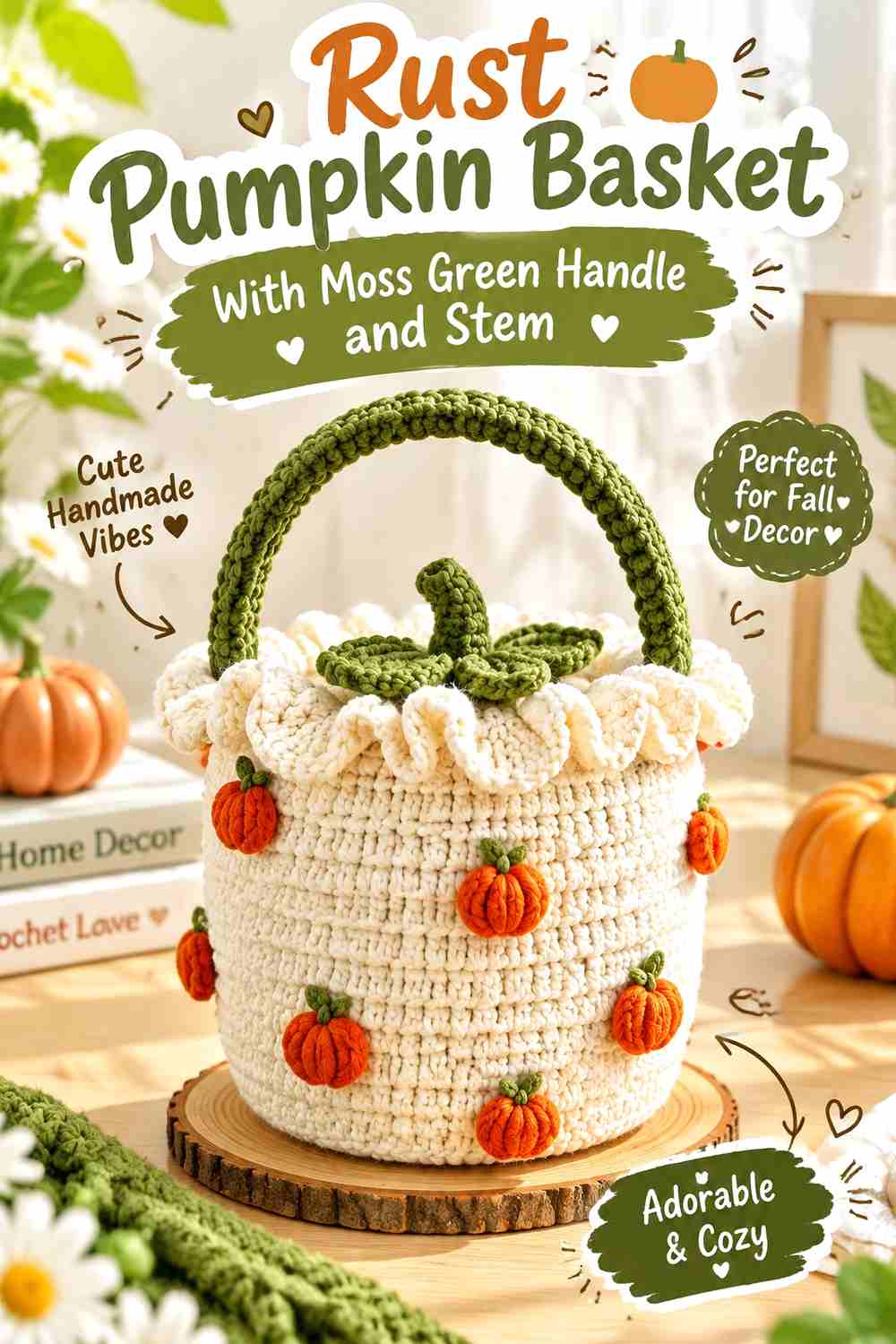
This is one of the most literal fall combinations: rust handles the pumpkin itself, while moss green marks the plant-related parts. It is particularly effective when the basket has a visible carrying handle because that handle gives the green more visual area than a tiny stem alone.
Let Rust Define the Rounded Pumpkin Basket
Keep the entire main basket body in rust if the construction already provides pronounced pumpkin shaping. The color and silhouette then reinforce each other without extra patterning.
If you want variation, use a slightly darker rust at the lower edge rather than introducing another unrelated hue.
Use Moss Green for Both the Handle and Pumpkin Stem
Repeating moss green in two upper elements makes the shade look intentional. The handle can provide the larger green area while a stem or leaf repeats it at the center.
Check that the green handle does not visually outweigh the rust basket. On a small container, an extremely thick contrasting handle can become the dominant feature.
Creator Credit: Vivi Crochet 🌷 — YouTube tutorial
6. Moss Green Pumpkin Basket With Rust Center Panels
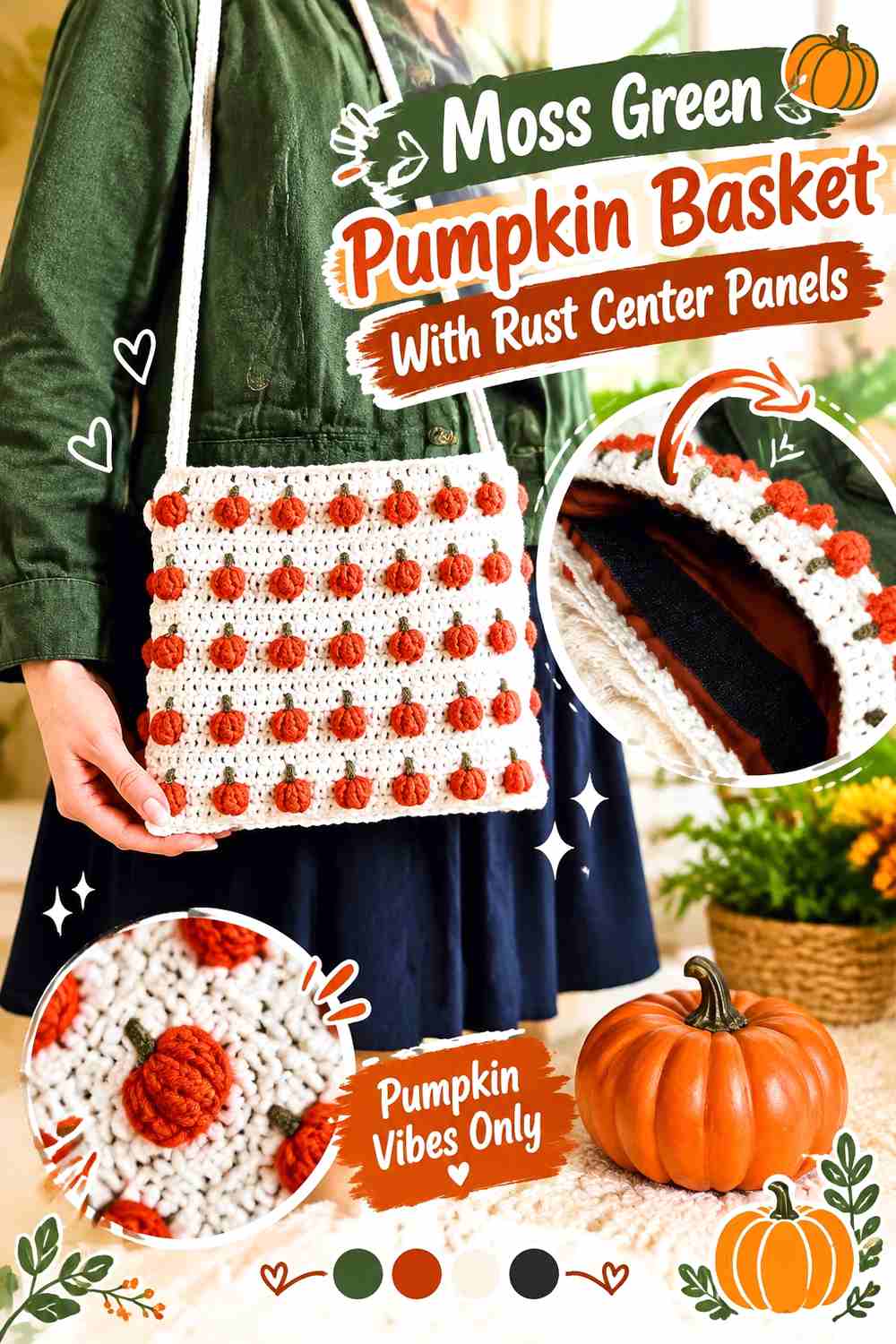
Here the basket reads as moss green overall, but broad rust sections create a stronger color-blocked pumpkin effect than narrow ribs. Place rust in a few major panels and let moss green continue around the sides, lower edge, and upper rim.
Keep Moss Green Connected Around the Rust Panels
Moss green should form an uninterrupted framework so the rust sections appear contained inside the basket rather than splitting it apart.
This is especially useful on a rounded container because the side panels can disappear from view as the basket turns. The continuous green keeps the silhouette coherent.
Make Rust Pumpkin Panels Broad Rather Than Scattered
Choose a small number of substantial rust areas. Several tiny rust patches can look accidental on a pumpkin basket unless they form a deliberate motif.
Broad rust panels also give the warm color enough area to balance a moss-green dominant body.
Creator Credit: Yarn Symphony — YouTube tutorial
7. Moss Green Rust And Oatmeal Drawstring Crochet Pumpkin Basket
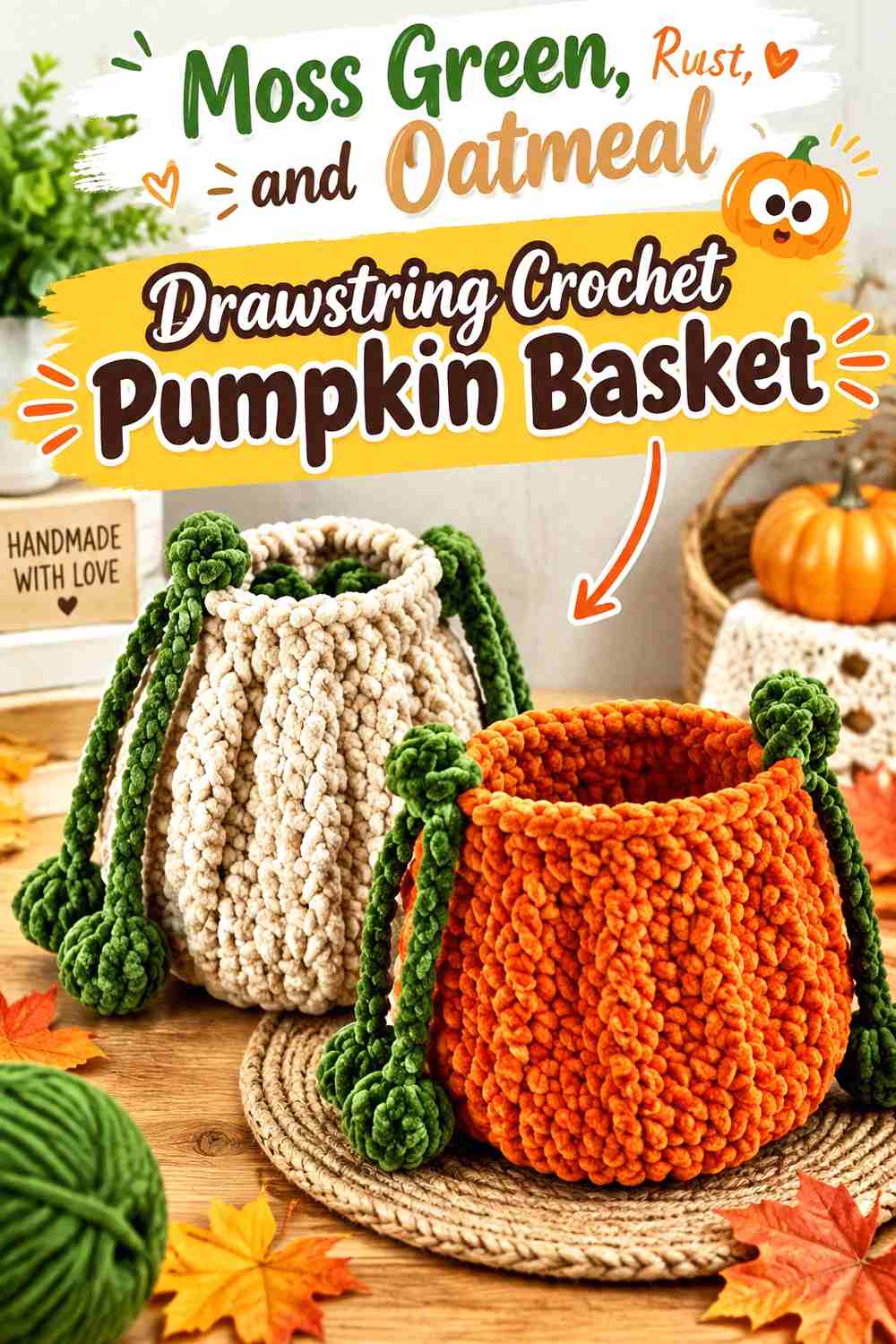
A gathered top already creates a strong pumpkin reference. Let rust carry the main body, moss green handle the upper leaf-and-stem zone, and use oatmeal sparingly around the drawstring or rim when additional separation is needed.
Keep Rust Below the Moss Green Drawstring Area
A broad rust lower section gives the gathered basket a visual base. Move most of the color change toward the top so the center remains uncomplicated.
Moss green can then mark the point where the basket narrows, helping the upper shape read as a pumpkin top.
Use Oatmeal Sparingly Between Rust and Moss Green
A narrow oatmeal line can clarify the rim when rust and moss green have similar darkness. It is particularly useful where several cords or gathered stitches create visual density.
Avoid using oatmeal for the full handle, rim, and body accents at once. It should remain a separator rather than the new dominant shade.
Creator Credit: Handwork diy — YouTube tutorial
8. Rust And Moss Green Wide Rib Crochet Pumpkin Basket
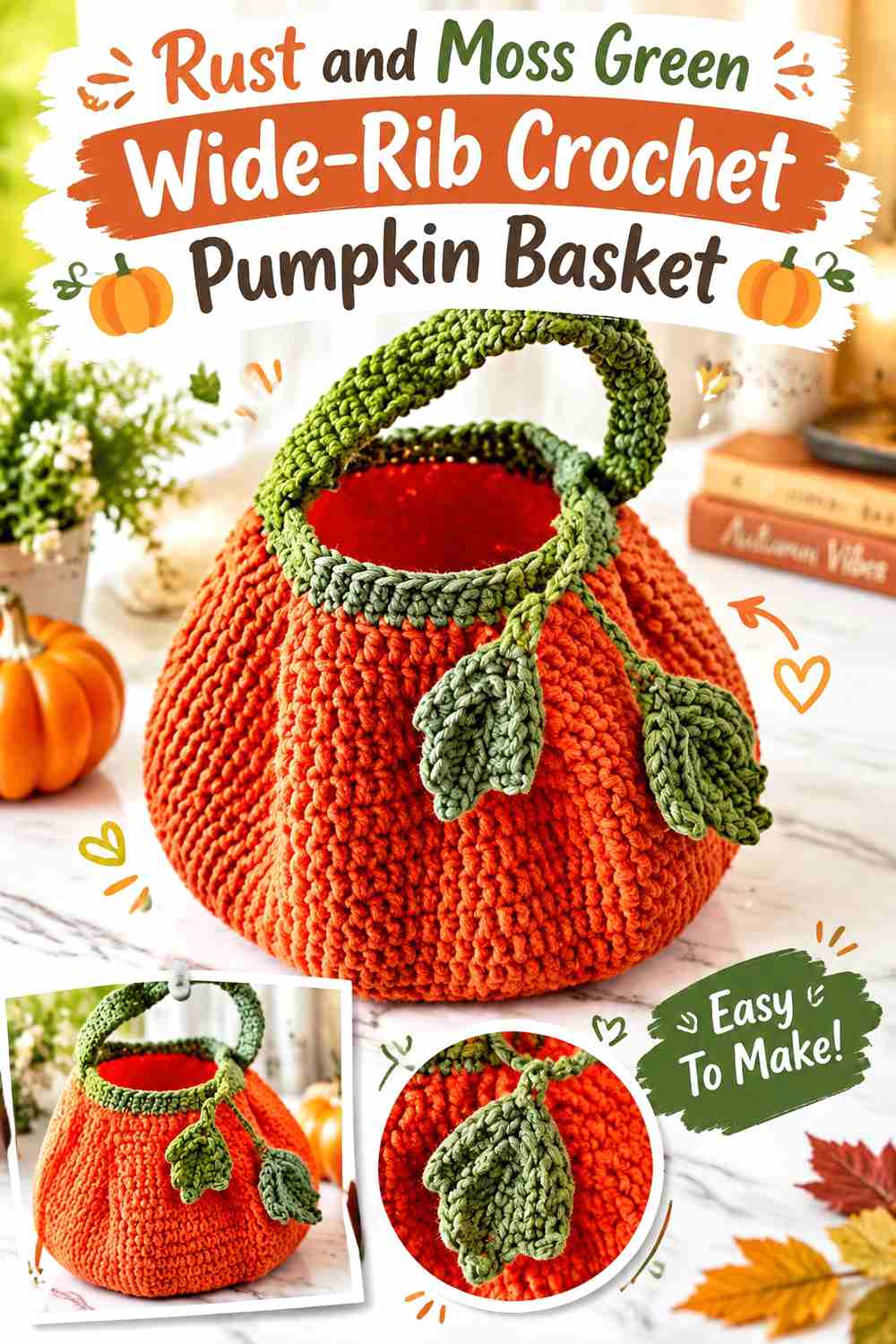
This version makes the rib structure the color story. Use wide rust pumpkin sections and narrower moss-green valleys, or reverse that relationship when you want a darker overall basket.
Let Rust Carry the Wider Pumpkin Ribs
Rust can occupy the outward-facing rib sections where the curved basket catches more attention. This keeps the pumpkin reference immediately visible even when moss green is used generously.
The wide rust areas should repeat at predictable intervals to preserve the rounded symmetry.
Put Moss Green in the Valleys Between Rust Ribs
Darker moss green can visually deepen the spaces between rust sections. That color placement emphasizes the sculpted pumpkin effect without requiring every rib to be physically more pronounced.
If your green is lighter than the rust, the effect will reverse, so judge the actual yarns rather than assuming moss green is always the darker value.
Creator Credit: TLH Patterns — YouTube tutorial
9. Moss Green Rust And Espresso Crochet Pumpkin Basket

Espresso supplies a deeper outline for readers who want more definition than moss green and rust provide alone. Use moss green and rust for the pumpkin surface and reserve espresso for the base, rim, or a narrow handle accent.
Keep Moss Green and Rust Dominant Over Espresso
The dark brown should not cover the same amount of area as either main color. Its purpose is to give selected edges more definition.
A narrow espresso base can visually ground the rounded basket without making the bottom look detached from the pumpkin body.
Use Espresso Where Rust and Moss Green Need an Edge
Place espresso at a rim or border where the two main colors otherwise meet without enough separation. It can also define a small handle attachment or stem.
If espresso looks almost identical to your moss green in ordinary room light, use moss green instead rather than adding an indistinguishable third dark shade.
Creator Credit: The Crochet Crowd — YouTube tutorial
10. Moss Green And Rust Granny Square Pumpkin Basket
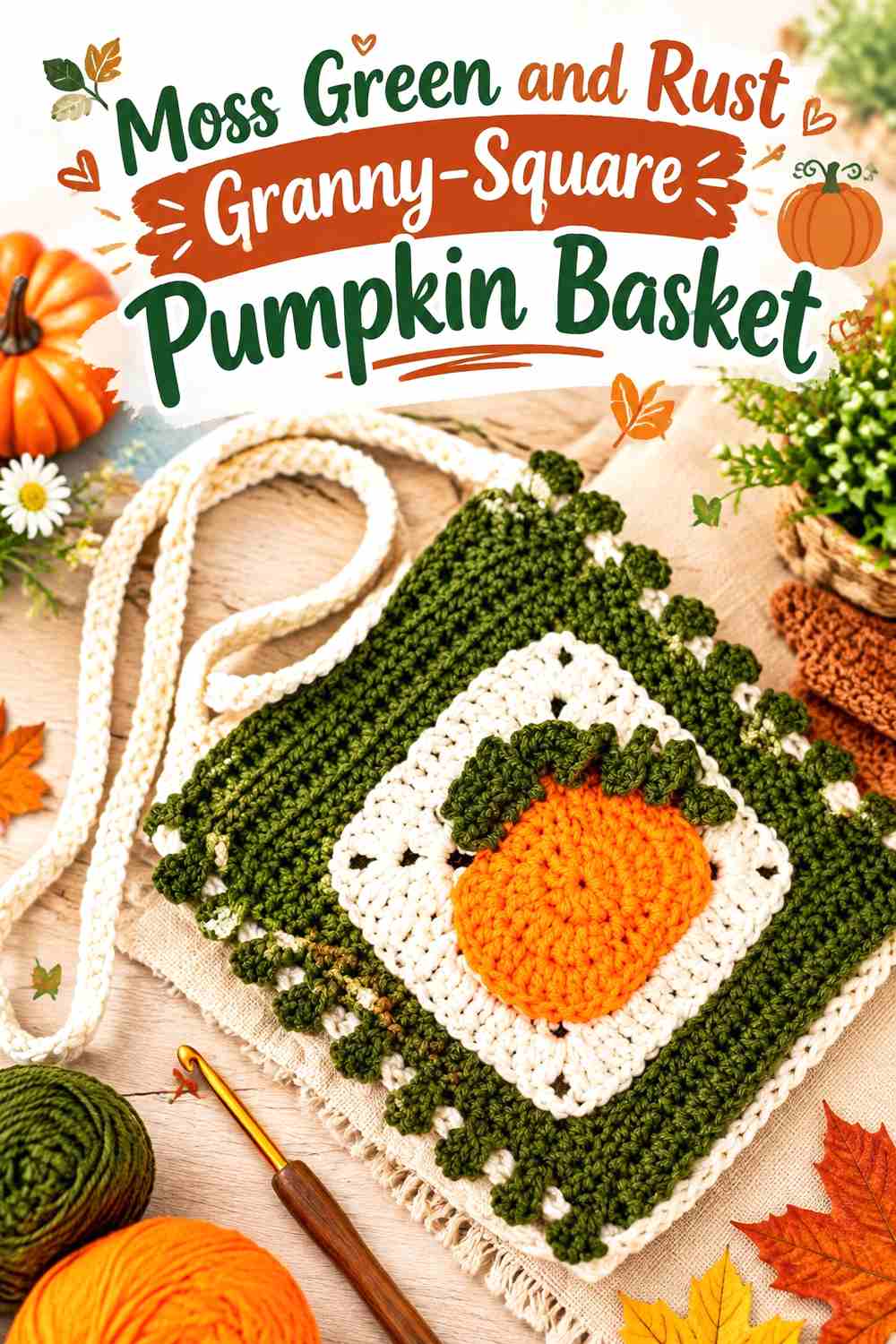
A motif-based basket gives moss green and rust several repeated roles. One square can use a rust pumpkin motif against moss green, while another can reverse the balance. Keep the outer edges consistent so the individual pieces still form one basket.
Use Rust Pumpkin Motifs Against Moss Green Squares
Rust centers establish the pumpkin theme clearly, while moss-green outer sections create a cohesive field around them.
Before joining, arrange the motifs as a complete basket panel and check whether rust becomes concentrated in one area.
Keep Moss Green Consistent Around the Rust Motifs
A repeated moss-green outer round or joining zone can make separate motifs feel related. It also allows the rust pumpkins to remain the focal elements.
If the joins are rust as well, they may start competing with the motif centers, so decide whether you want the grid or the pumpkins to receive more emphasis.
Creator Credit: Custom Comfy Crochet By Dawn Marie — YouTube tutorial
11. Rust Basket With Moss Green Pumpkin Motifs
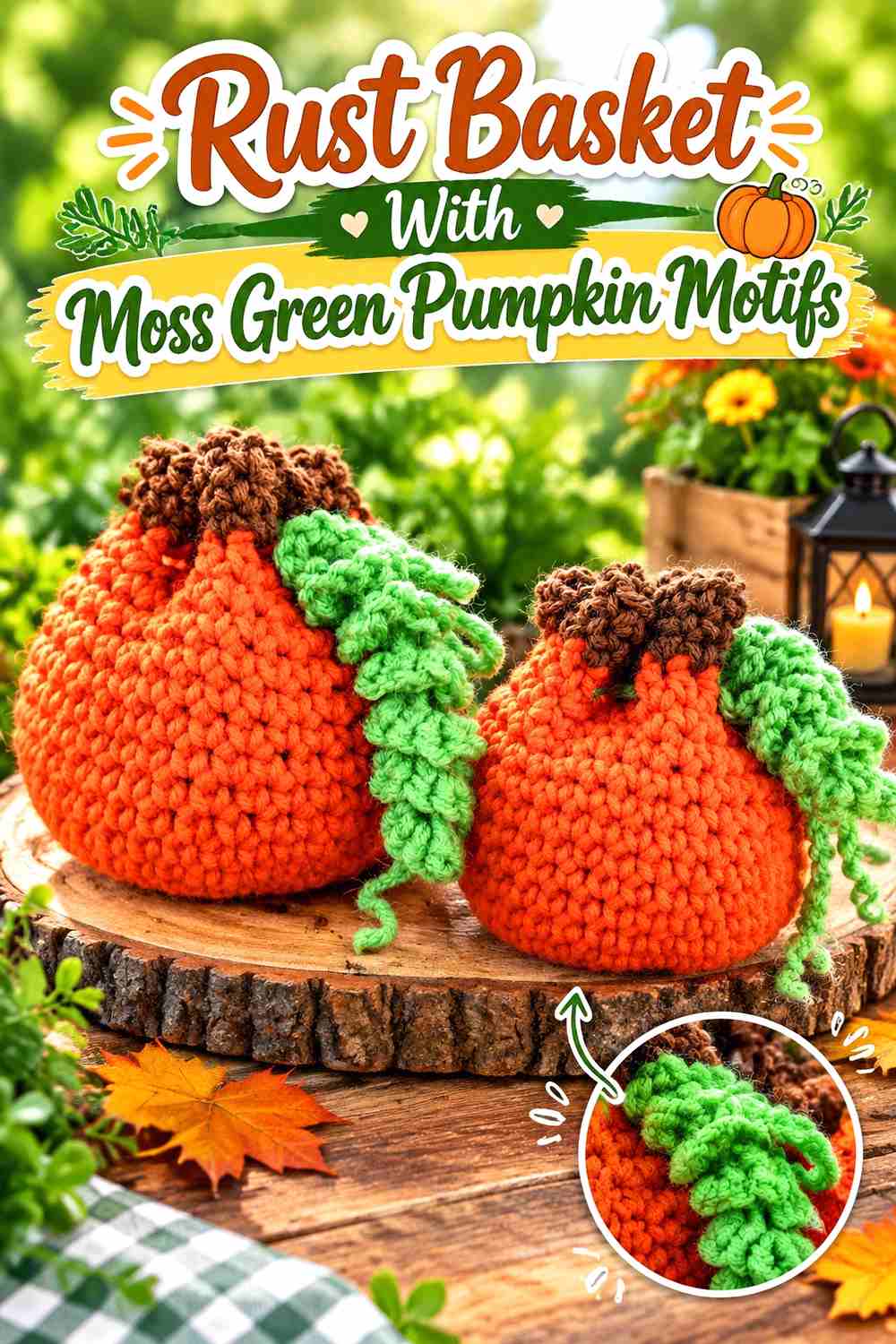
Instead of shaping the whole color scheme around ribs, keep the basket mainly rust and place moss-green pumpkin or leaf motifs across selected sections. The unusual green pumpkin details make this option more decorative without requiring another bright fall color.
Let Rust Remain the Background Behind Moss Green Motifs
A continuous rust body gives the motifs a stable visual field. Avoid adding several other stripe colors behind them because the raised or graphic pumpkin shapes already contribute enough detail.
The uninterrupted rust also keeps the basket recognizable as a fall container.
Repeat Moss Green Motifs Without Covering the Rust Body
Space green details so the rust still clearly dominates. A few repeated motifs can connect the palette without turning the surface into equal green-and-rust patchwork.
If the motifs are raised, check their visibility from the side as well as from the front because basket curvature can change how the texture reads.
Creator Credit: Jayda InStitches — YouTube tutorial
12. Moss Green Basket With Rust Raised Pumpkin Texture
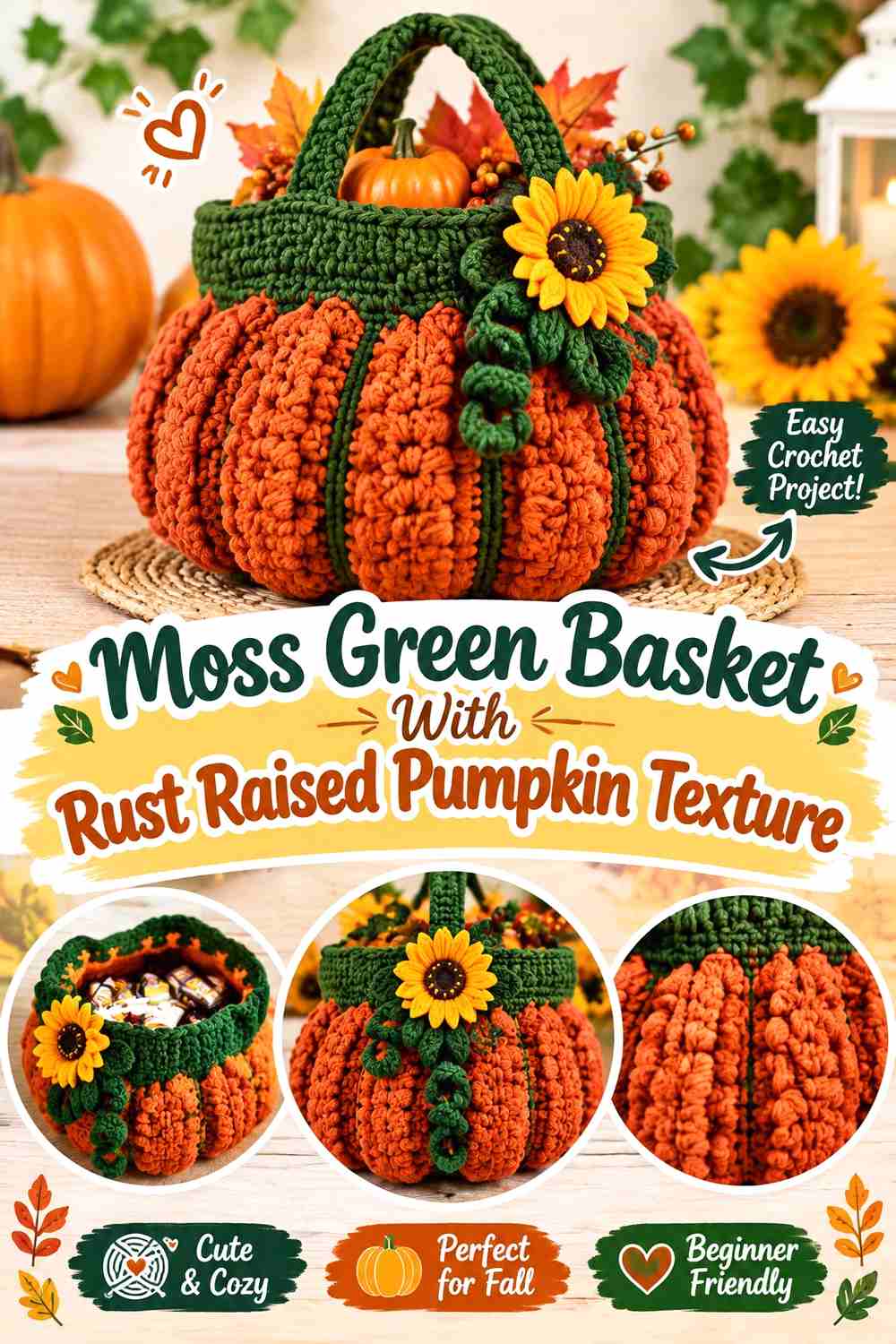
This reverses the previous relationship. Moss green forms the basket field, while rust appears in raised pumpkin details or pronounced textured sections. It is a useful direction when you want rust to become the feature color rather than the overall background.
Keep Moss Green Quiet Behind the Rust Texture
Use solid moss green around raised rust elements so the color change and texture reinforce the same focal area.
Additional stripes or contrasting joins can weaken the effect by creating too many competing visual signals on a small basket surface.
Make Rust Texture the Main Pumpkin Accent
Rust works especially well on repeated raised sections because its warmth immediately separates it from the moss-green field.
If the texture already projects strongly from the surface, the rust does not need to cover a large area to become noticeable.
Creator Credit: Nana’s Crafty Home | Tonya Bush — YouTube tutorial
13. Moss Green Rust And Mustard Crochet Pumpkin Basket

Mustard introduces a brighter warm note between earthy green and deep rust. Use it in very small amounts—such as a narrow rim repeat, pumpkin center, or leaf vein—so moss green and rust remain the defining pair.
Keep Moss Green and Rust Larger Than Mustard
Assign the two main colors to body sections, ribs, and rim areas first. Add mustard only after the main hierarchy already works.
Because mustard can be visually assertive, even a modest accent may be enough to change the character of the basket.
Place Mustard Near Rust Rather Than Replacing Moss Green
Mustard and rust can form a warm fall transition, while moss green provides the cooler earthy counterpoint.
If mustard starts spreading across multiple large body panels, reduce it before reducing the green. The article’s main palette should still read clearly as moss green and rust.
Creator Credit: Vicky Crochet — YouTube tutorial
14. Rust And Moss Green Mini Treat Crochet Pumpkin Basket
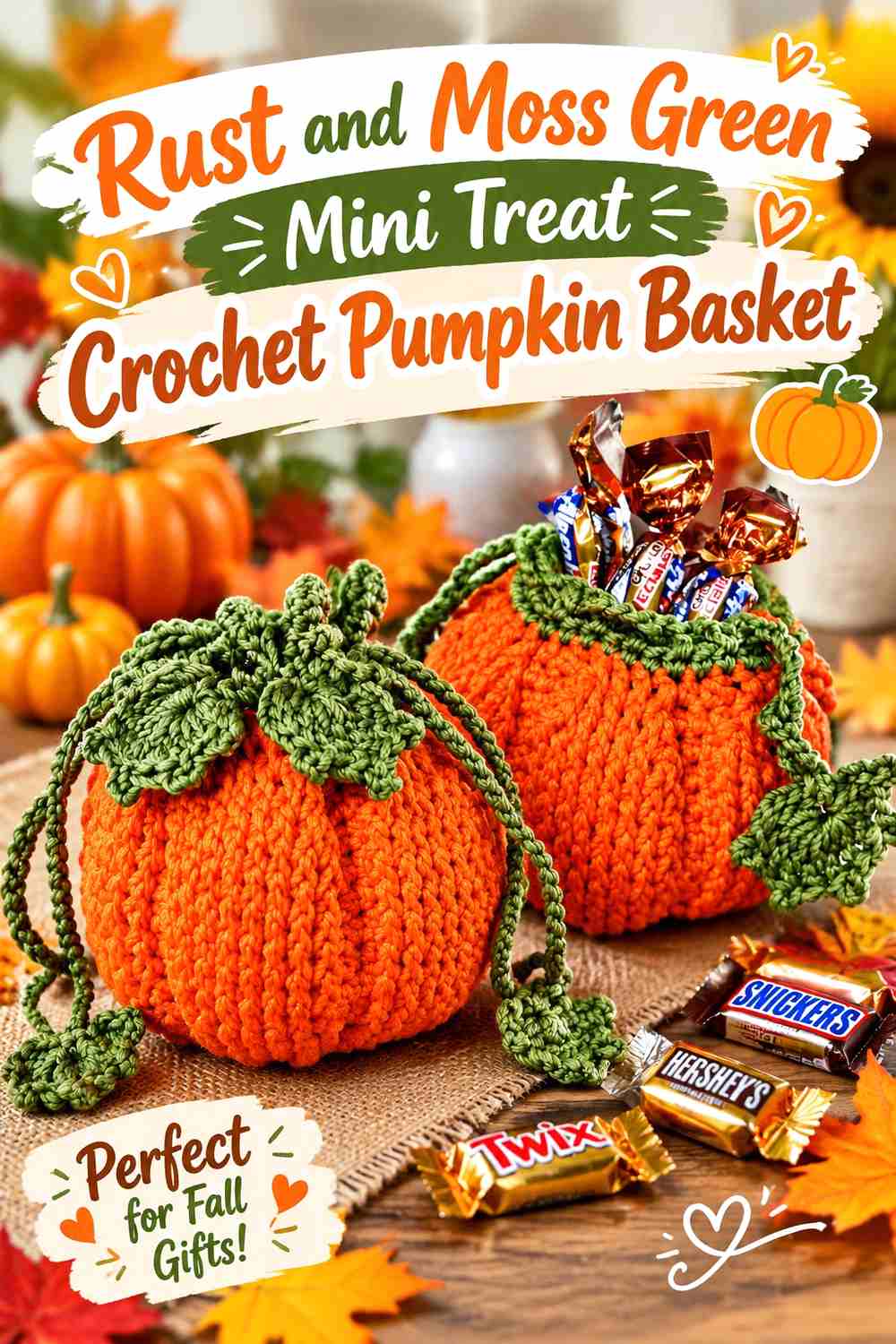
A miniature pumpkin basket has less surface area for complicated color distribution. Keep the body mainly rust and use moss green only at the top, or reverse the entire scheme with a moss-green body and one compact rust band.
Let Rust Cover Most of a Small Pumpkin Basket
On a miniature container, one clear dominant color usually reads more cleanly than several equally sized sections. Rust immediately establishes the fall theme.
Use the small scale to your advantage by allowing texture and shape to supply most of the variation.
Keep Moss Green Details Proportional to the Rust Basket
A small stem, leaf, rim, or handle may provide enough green. Oversized moss-green decoration can obscure the opening or visually overpower the compact rust body.
Check the basket in its closed or filled state before deciding that it needs more contrast.
Creator Credit: Febe Andrian Crochet — YouTube tutorial
15. Moss Green And Rust Vine Top Crochet Pumpkin Basket
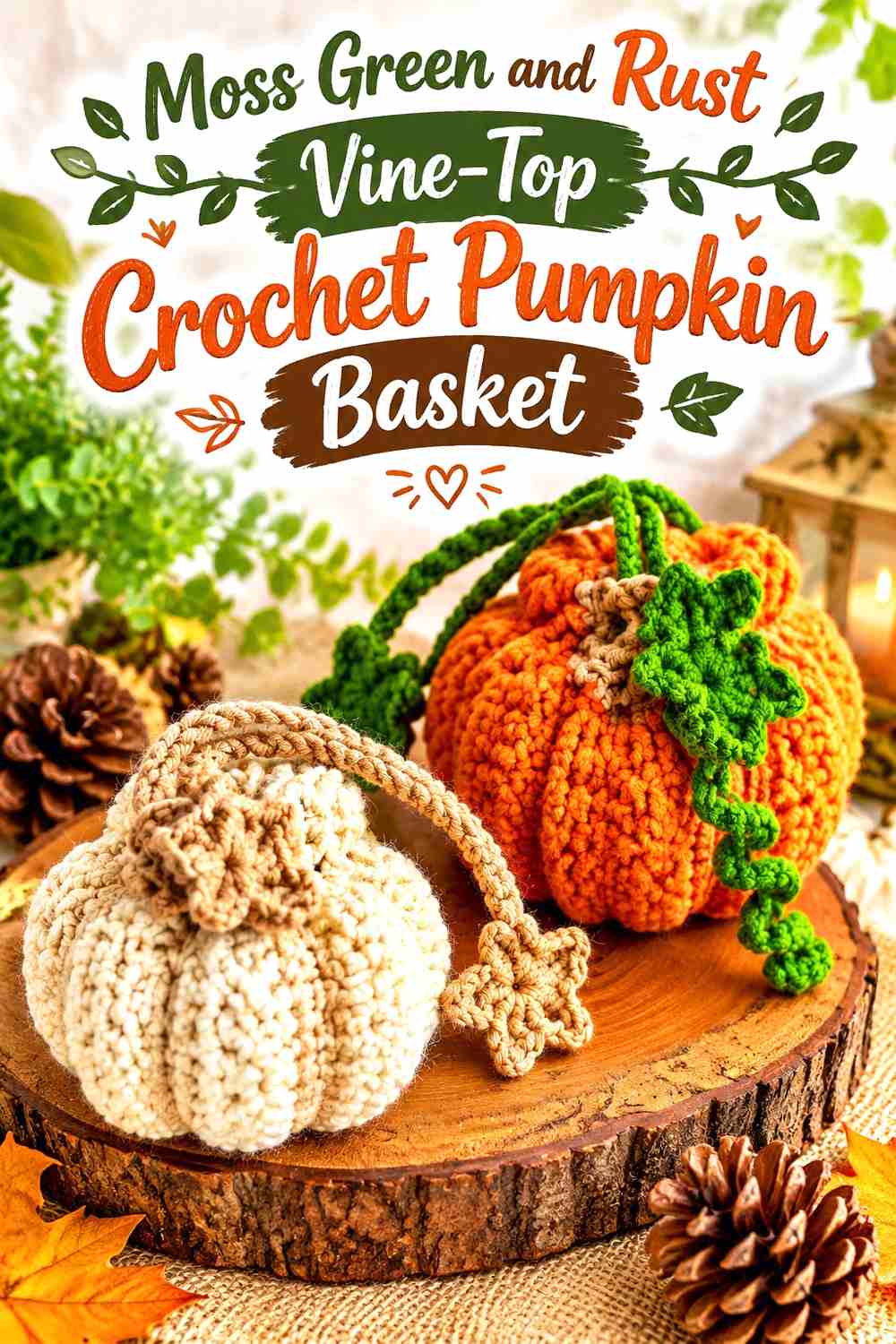
Vines and curled details give moss green a natural place beyond a simple stem. Use rust for the pumpkin body and moss green for the vine, leaf, rim, and perhaps a narrow handle detail.
Keep Rust Solid Beneath the Moss Green Vine
A mostly solid rust body allows a curling moss-green detail to remain easy to see instead of disappearing into several other colored elements.
This also prevents the decorative top from competing with patterned body panels.
Repeat Moss Green From the Vine Into the Pumpkin Rim
Carry a small amount of moss green into the rim or upper border so the vine does not feel like an isolated attachment.
Keep the vine itself clear of the basket opening or handle path so its decorative role does not interfere with access.
Creator Credit: Kukkacrochet By Putri — YouTube tutorial
16. Moss Green Rust And Camel Crochet Pumpkin Basket
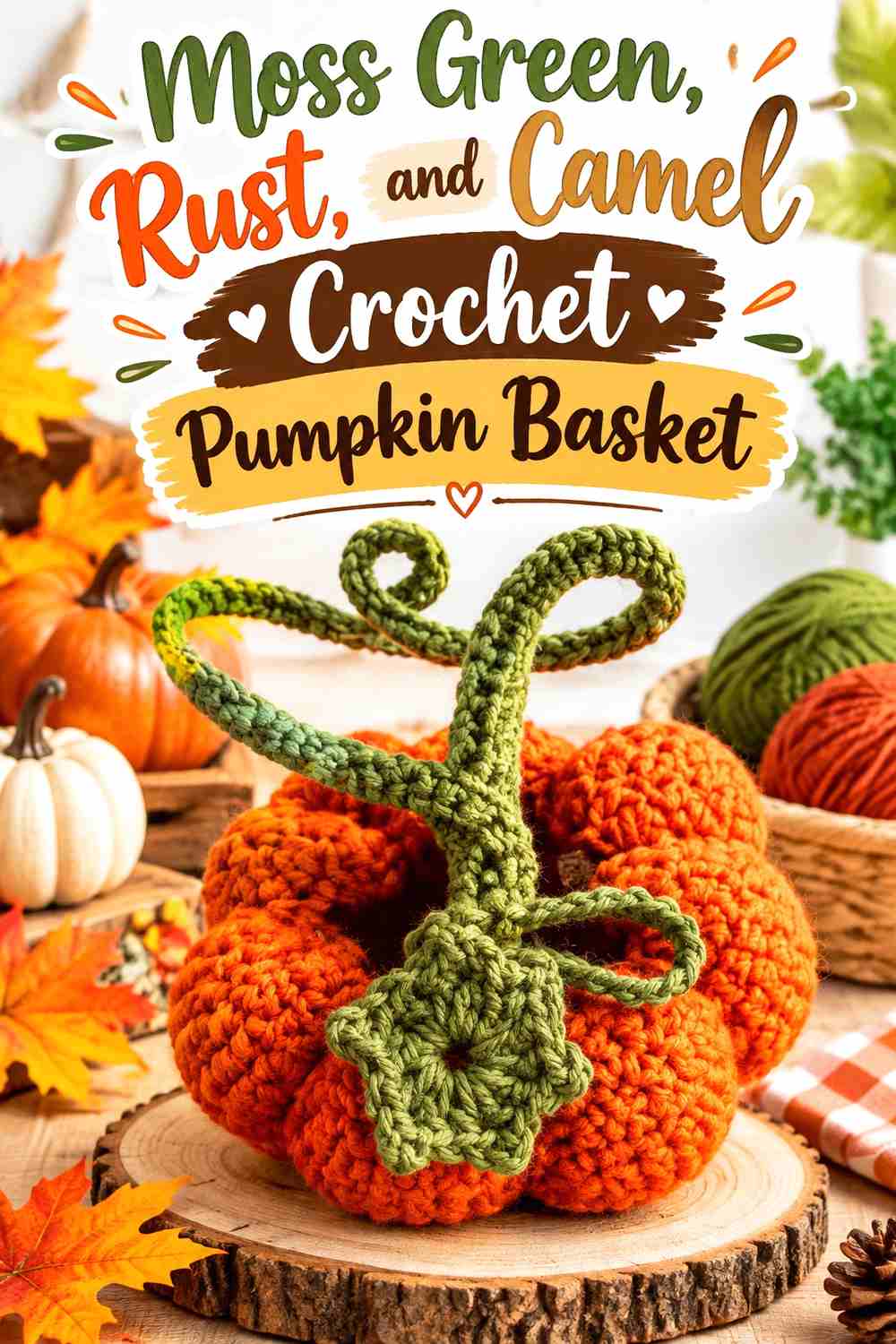
Camel gives this palette a warmer neutral than cream. Use moss green as the darkest structural shade, rust as the main pumpkin color, and camel on the handle or selected upper trim.
Let Rust Sit Between Moss Green and Camel
Rust can act as the middle visual bridge between the earthy green and lighter warm camel. Keep it across the largest body sections so the pumpkin identity stays clear.
Moss green can then define the lower edge or stem while camel lightens the upper details.
Keep Camel Secondary to Moss Green and Rust
Use camel on a handle, narrow rim, or a few repeated highlights. It should not spread across most of the body if the goal is a moss-green-and-rust pumpkin basket.
If camel becomes too visually dominant, reduce its area rather than darkening the rust.
Creator Credit: Crochetartcraft – Crochet Tutorial — YouTube tutorial
17. Deep Moss Green And Burnished Rust Crochet Pumpkin Basket

The final scheme uses the darkest version of the pairing. Deep moss green can frame the base, rim, and handle, while a burnished rust tone fills broad pumpkin ribs. With no light neutral present, the success of the design depends heavily on the two yarns having enough value separation.
Use Deep Moss Green to Frame the Rust Pumpkin
Place moss green around the outer structural areas rather than mixing it randomly throughout every rust rib. A darker rim and base can contain the warmer body visually.
Repeating the same green at the stem or handle keeps the frame connected from top to bottom.
Check Burnished Rust Against Deep Moss Green Before Crocheting
Two deep autumn colors can look distinct in bright light but merge in softer indoor conditions. Put the yarns beside each other and view them from several distances before committing to small details.
If they are too close in value, enlarge the color blocks or introduce a very narrow lighter separator rather than adding numerous new shades.
Creator Credit: Patrones Valhalla ENG — YouTube tutorial
Comparing the Moss Green and Rust Pumpkin Basket Directions
Choose a rust-dominant basket when you want the pumpkin reference to be immediate. Ideas 2, 5, 8, 11, 14, and 15 all keep the warm pumpkin color visually prominent while using moss green for structure or botanical details.
Choose a moss-green dominant version when you want a less literal fall container. Ideas 1, 6, and 12 let green cover the largest areas, with rust becoming the warmer accent.
Cream and oatmeal create the clearest light separation between the main shades. Espresso deepens the palette, camel softens it with another warm earthy color, and mustard provides the strongest additional accent.
For motif-heavy or highly textured baskets, keep the color plan simpler. When the crochet surface already contains raised pumpkins, repeated squares, or pronounced ribs, the structure itself provides enough visual variation without requiring every feature to receive a different shade.
Conclusion
Moss green and rust work especially well on a crochet pumpkin basket when each shade is assigned a specific part of the design.
Rust can make the pumpkin body immediately recognizable, while moss green naturally suits stems, leaves, vines, rims, handles, and darker rib valleys. Reversing those roles creates a more unusual green pumpkin, with rust providing enough warmth to keep the finished piece connected to autumn.
If the two yarns look similar in value, use larger color blocks or a restrained neutral separator rather than continually adding more shades. The clearest baskets are usually the ones where the body, ribs, rim, and top details each have an intentional color role.
Frequently Asked Questions
Should moss green or rust dominate a crochet pumpkin basket?
Rust is the more literal choice for a traditional pumpkin-colored body, while moss green creates a more botanical or muted fall direction. Either can dominate as long as the other has a clear supporting role on ribs, rims, handles, stems, or motifs.
Where should moss green go on a rust crochet pumpkin basket?
Moss green works naturally around the stem, leaves, vine, rim, and handle. It can also be used in darker rib valleys or along the basket base when you want more green without dividing the rust body into many small sections.
How can I use rust on a moss green pumpkin basket?
Rust can define raised ribs, broad body panels, motif centers, or a contrasting rim. On a moss-green dominant basket, use rust in repeated locations so it looks like an intentional warm accent rather than an isolated patch.
Do moss green and rust always have enough contrast?
No. Their contrast depends on the actual yarn shades. A muted medium moss green and medium rust can be similar in lightness even though their hues are different. Compare them side by side or view a grayscale photo before using them for small details.
What neutral can separate moss green and rust?
Cream creates the strongest light break, while oatmeal gives a softer transition. Camel adds warmth but may not provide as much value contrast. Espresso works in the opposite direction by creating a darker outline.
Should the pumpkin basket handle match moss green or rust?
Match the handle to moss green when you want it to connect visually with a stem or leaf. Use rust when you want the handle to blend into a rust pumpkin body. A contrasting handle becomes more noticeable, so check its visual weight against the size of the basket.
How do I keep a moss green and rust pumpkin basket from looking too busy?
Choose one dominant color first. Use the second shade for only a few repeated functions—such as ribs and rim, or stem and handle—and keep any third color restricted to separation or a small accent. The pumpkin’s shape and crochet texture already add substantial visual detail.