Mustard and terracotta are especially effective for crochet sunburst wall art because both colors reinforce the radiating shape without needing a large palette. Mustard can create a lighter central glow or narrow rays, while terracotta adds enough depth to distinguish outer sections and give the piece a warmer, earthier edge.

The most useful decision is not simply which of the two colors you prefer. Decide which one should lead, how much neutral or contrasting color should sit between them, and whether the strongest contrast belongs in the center, rays, outer frame, or mounting hoop. Crochet texture adds its own shadows, so even closely related warm colors can remain distinct when their placement is planned carefully.
The tutorials linked below support sun motifs, sunburst granny squares, circular mandalas, and hoop-mounted crochet wall decor. The mustard-and-terracotta palettes are editorial adaptations; the creators are not being credited with these specific color combinations.
Quick List
- Mustard, Terracotta, and Cream Radiating Crochet Sunburst Wall Art
- Terracotta, Mustard, and Olive Framed Crochet Sunburst Wall Art
- Mustard, Terracotta, and Dusty Teal Crochet Sun Wall Art
- Terracotta, Mustard, and Oatmeal Layered Crochet Sunburst Wall Art
- Mustard, Terracotta, and Chocolate Crochet Sunburst Wall Art
- Terracotta, Mustard, and Sage Crochet Sunburst Wall Art
- Mustard, Terracotta, and Charcoal Graphic Crochet Sunburst Wall Art
- Terracotta, Mustard, and Dusty Rose Sunset Crochet Sunburst Wall Art
- Mustard, Terracotta, and Flax Hoop Crochet Sunburst Wall Art
- Terracotta, Mustard, and Deep Teal Crochet Sunburst Wall Art
- Mustard, Terracotta, and Warm White Geometric Crochet Sunburst Wall Art
- Terracotta, Mustard, and Rust Tonal Crochet Sunburst Wall Art
- Mustard, Terracotta, and Clay Crochet Sunburst Wall Art
- Terracotta, Mustard, and Navy Crochet Sunburst Wall Art
- Mustard, Terracotta, and Beige Multi-Panel Crochet Sunburst Wall Art
- Terracotta, Mustard, and Moss Gallery Crochet Sunburst Wall Art
- Mustard, Terracotta, and Espresso Bold Crochet Sunburst Wall Art
Decide Whether Mustard or Terracotta Should Lead the Sunburst
Mustard usually appears lighter than terracotta, so it naturally attracts attention when placed at the center or on pointed rays. If you want the crochet piece to feel lighter, let mustard occupy the center and a substantial share of the radiating stitches, then use terracotta farther out.
Reversing those roles produces a denser look. A terracotta center creates more visual weight, while mustard around the outer rays can make the edges appear brighter. Neither layout is automatically better; the important point is to establish a clear hierarchy instead of dividing the two colors mechanically into equal sections.
Keep Mustard and Terracotta Rays Easy to Read
Mustard and terracotta are different hues, but particular yarn choices can still be fairly close in light/dark value. When the sunburst contains puff stitches, clusters, raised posts, or narrow points, similar values can make neighboring sections merge.
Cream, warm white, oatmeal, deep teal, charcoal, navy, or chocolate can help when more separation is needed. You do not have to outline every ray. A contrasting center ring or outer border may be enough to make the entire motif clearer.
Use the Wall-Art Border to Control Mustard and Terracotta
The outer treatment changes how the warm center reads. Cream and flax make mustard and terracotta feel lighter, while teal, charcoal, navy, and espresso give the warm colors stronger definition.
For hoop-mounted wall art, the hoop can act as the quiet boundary. For a squared sun motif, the final background color becomes equally important because it determines whether the rays visually stop at the sun or blend into the surrounding panel.
1. Mustard, Terracotta, and Cream Radiating Crochet Sunburst Wall Art
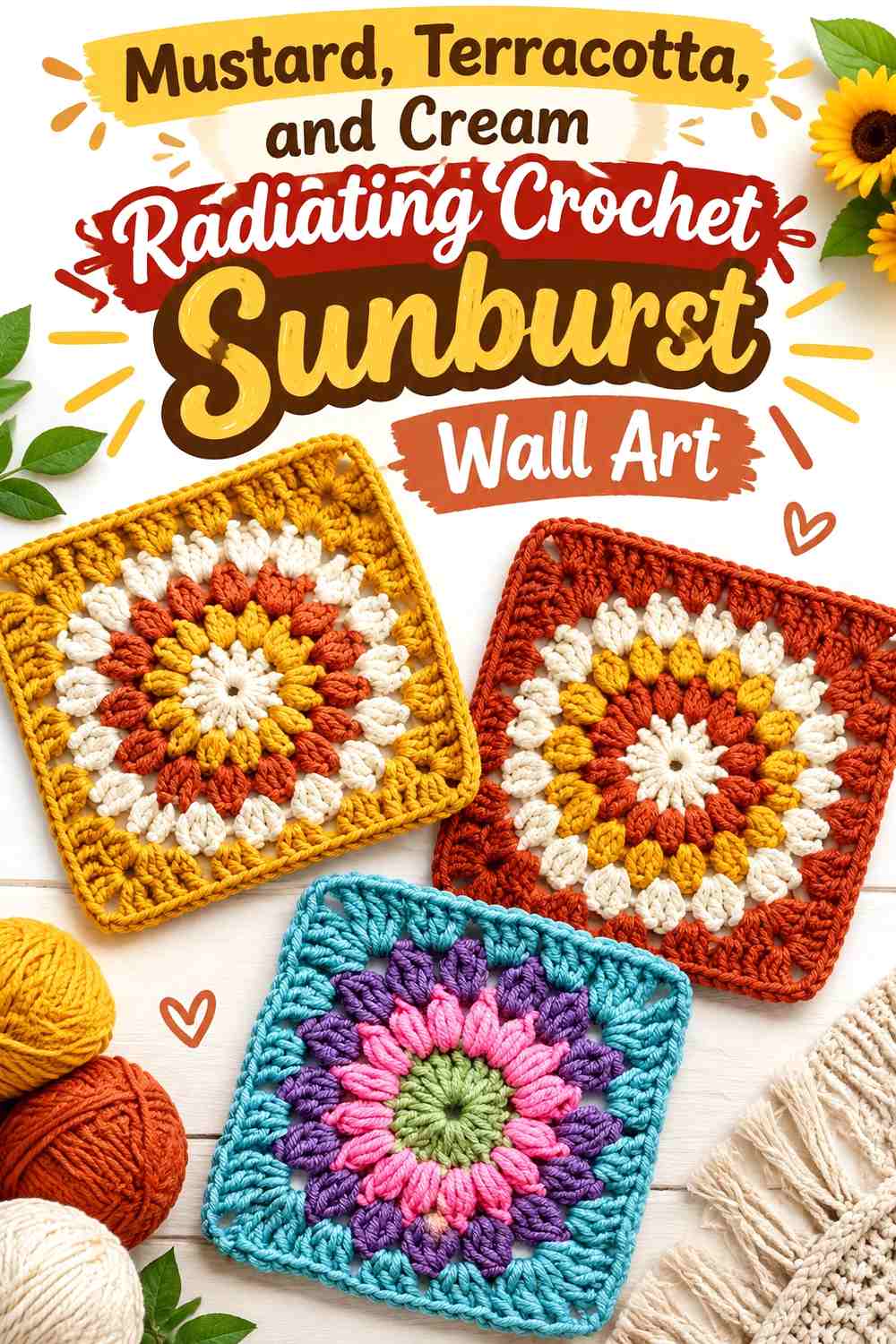
Mustard should lead this classic three-color version, beginning at the center and returning through selected rays. Terracotta can occupy the deeper sections between those rays, while cream controls the outside edge. This arrangement gives the warm colors plenty of space but stops them from forming one continuous orange-yellow field.
Let Mustard Form the Brightest Crochet Sunburst Center
Keep the central rounds predominantly mustard so the eye has a clear starting point. As the motif expands, repeat mustard in selected rays rather than changing every section to terracotta.
This repetition connects the center to the outer shape and keeps mustard from looking like an isolated circle.
Use Cream to Separate Mustard From Terracotta Rays
Cream works best where the radiating texture begins to feel crowded. A narrow cream transition or wider outer section can provide enough value contrast to reveal individual terracotta and mustard shapes.
If the sunburst is mounted in a hoop, cream can also be reserved near the perimeter so the edge remains visually light.
Creator Credit: Adore Crea Crochet
2. Terracotta, Mustard, and Olive Framed Crochet Sunburst Wall Art
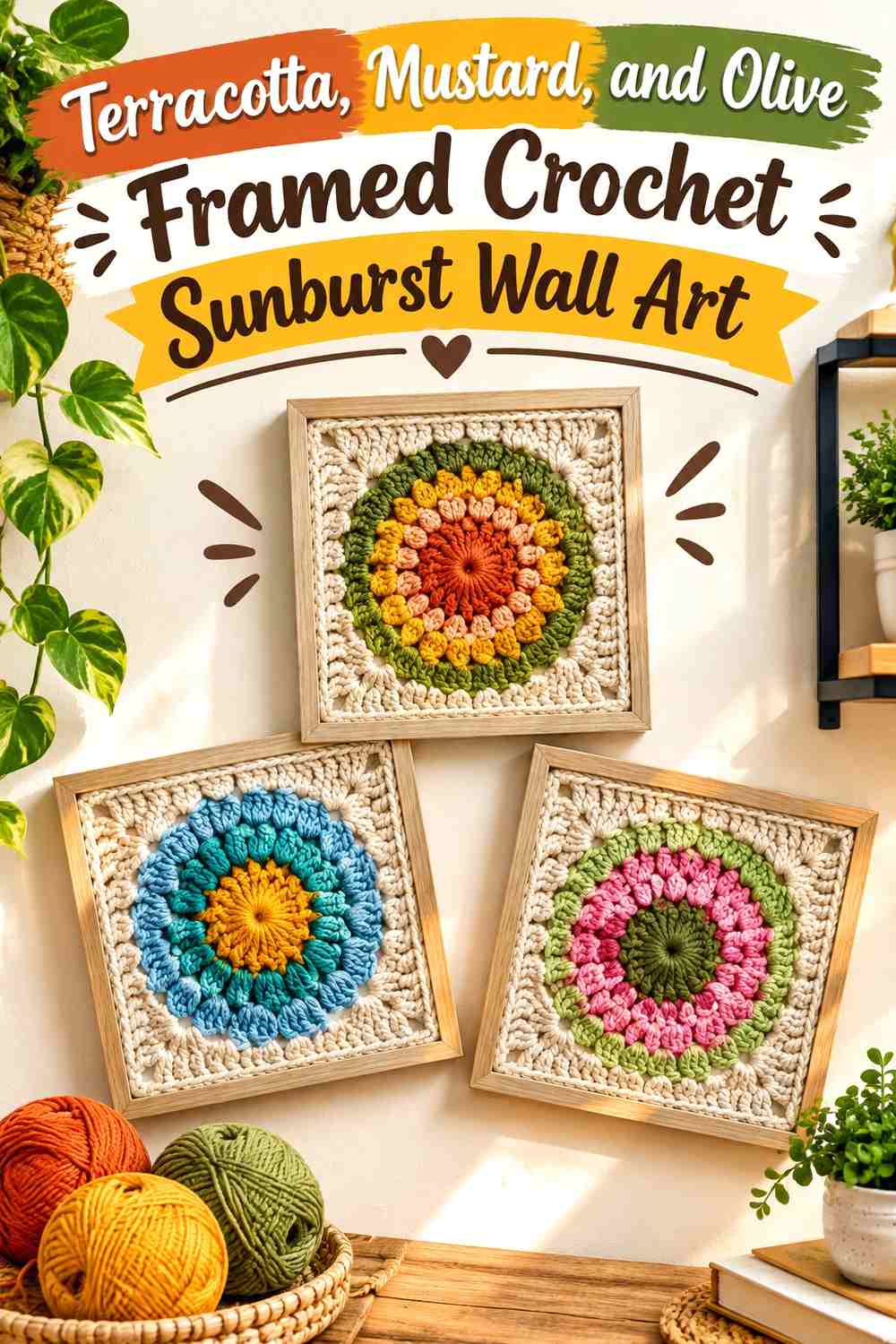
Terracotta takes the dominant role here, with mustard concentrated in the textured sunburst ring and olive used as the surrounding frame. Olive is especially useful because it contrasts in hue with both warm colors without requiring a very dark border.
Let Terracotta Carry More of the Crochet Sunburst Surface
Use terracotta through the center or larger circular sections so the piece reads as terracotta-led from across the room. Mustard can then appear in raised or radiating details where a lighter color benefits the texture.
Avoid dividing every round evenly between the two colors; broader terracotta areas make the mustard accents more noticeable.
Frame Mustard and Terracotta With Olive Green
Olive works well outside the warm sun rather than between every individual ray. That gives the motif a clear boundary while maintaining an earthy palette.
For a square wall panel, keep the olive corners quieter than the center so they frame the sunburst instead of competing with it.
Creator Credit: Meema Makes
3. Mustard, Terracotta, and Dusty Teal Crochet Sun Wall Art

Dusty teal creates one of the clearest hue contrasts with mustard and terracotta. Use it around the outside rather than throughout the sun itself, allowing mustard to form the rays and terracotta to provide a warmer center or secondary ray layer.
Make Mustard Rays Stand Out Against Dusty Teal
Mustard can handle the most pointed or clearly radiating sections because teal provides a distinct background behind them. Keeping teal outside the main sun shape makes the silhouette easier to read.
If the rays are narrow, check that the mustard remains noticeably lighter than the teal.
Use Terracotta Between Mustard and Dusty Teal
Terracotta can form an intermediate ring between the bright mustard sun and cool teal frame. This creates a gradual shift from warm center to contrasting outer area rather than forcing mustard directly against teal everywhere.
Creator Credit: Creggy’s Crochet
4. Terracotta, Mustard, and Oatmeal Layered Crochet Sunburst Wall Art
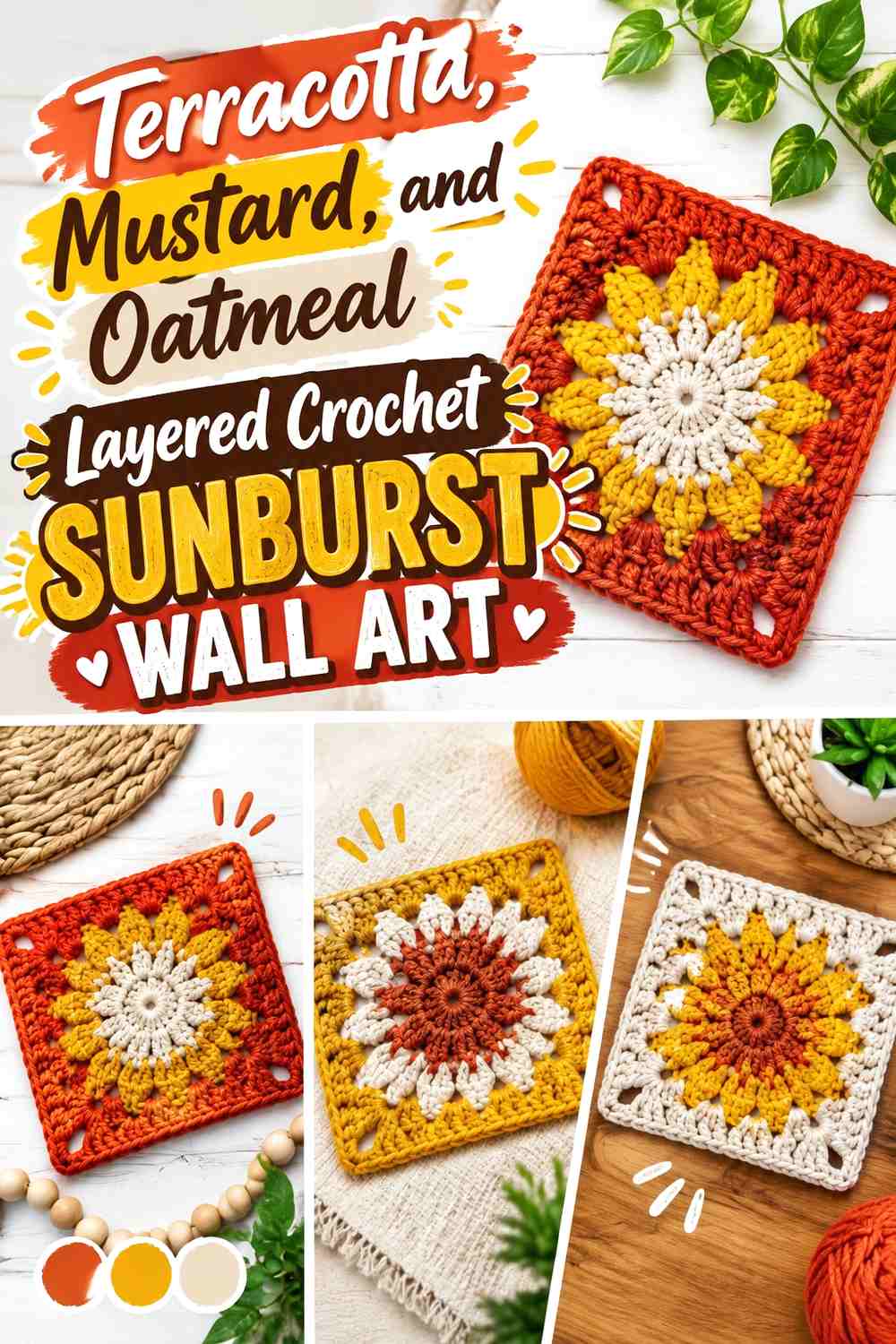
Oatmeal makes a useful neutral when you want a warm wall hanging without the sharper contrast of bright white. Let terracotta carry the broadest sections, mustard emphasize raised rays, and oatmeal separate the center from the outer mounting area.
Give Terracotta Broad Space Around Mustard Texture
Terracotta works well behind or beside textured mustard stitches because its deeper value can reveal their edges. Avoid switching colors so frequently that the stitch texture becomes secondary to the color pattern.
Let Oatmeal Quiet the Mustard and Terracotta Outer Edge
An oatmeal perimeter creates a softer boundary than cream or white. It is particularly effective if the wall behind the piece is darker, because the neutral outer ring can make the complete circular silhouette easier to see.
Creator Credit: Diving Ducks Crochet
5. Mustard, Terracotta, and Chocolate Crochet Sunburst Wall Art

Chocolate creates the strongest earthy shadow in this palette. Keep it controlled around the center, outer border, or narrow outlines while mustard and terracotta occupy most of the visible sun.
Use Chocolate to Define Mustard Sunburst Details
A small chocolate center gives mustard rays a clear point of origin. You can also repeat chocolate at the perimeter, but avoid outlining every section if the crochet texture already produces strong shadows.
Keep Terracotta More Prominent Than Chocolate Around Mustard
Terracotta should remain the main deep warm shade. If chocolate occupies too much of the motif, the piece can shift from mustard-and-terracotta wall art into a dark brown-led composition.
Let terracotta cover larger intermediate sections and reserve chocolate for definition.
Creator Credit: Crochet Mili
6. Terracotta, Mustard, and Sage Crochet Sunburst Wall Art
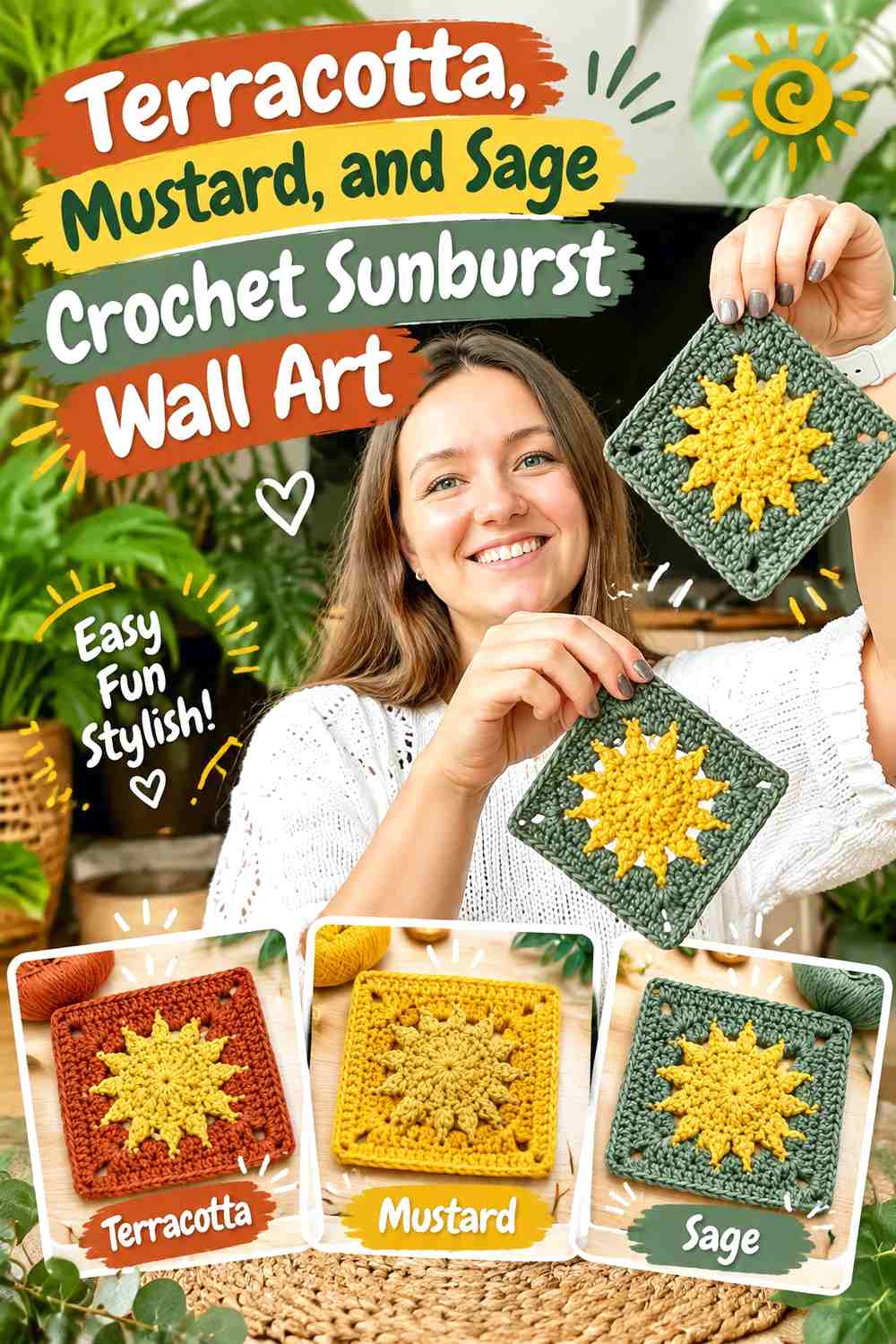
Sage softens the warm palette and works especially well when the sunburst is part of a bedroom, reading nook, or other room using botanical colors. Terracotta can lead the center, mustard can radiate outward, and sage can occupy the square or circular background.
Place Mustard Rays Against Sage for Clear Separation
Sage gives mustard a noticeable hue change without creating a harsh dark edge. Use it outside the sun so the ray silhouette remains easy to follow.
Repeat Terracotta Inside the Mustard Sunburst
A terracotta center plus a second terracotta ring can help connect the warm palette when mustard occupies many of the rays. Keeping both colors inside the sun avoids letting sage become too dominant.
Creator Credit: by Kristine
7. Mustard, Terracotta, and Charcoal Graphic Crochet Sunburst Wall Art

Charcoal shifts the project toward a more graphic style. It can make both warm colors appear more defined, but it carries enough visual weight that relatively little is needed.
Keep Mustard Central Against Charcoal Crochet Framing
A mustard center or ray ring is particularly clear against charcoal. If the charcoal forms the full outer background, let mustard occupy enough area that it does not become a tiny point surrounded by darkness.
Use Terracotta to Bridge Mustard and Charcoal
Terracotta can sit between the light mustard and deep charcoal, reducing the abrupt value jump. This works well in concentric sunburst designs where each round is visually distinct.
Creator Credit: Lucy Kate Crochet
8. Terracotta, Mustard, and Dusty Rose Sunset Crochet Sunburst Wall Art
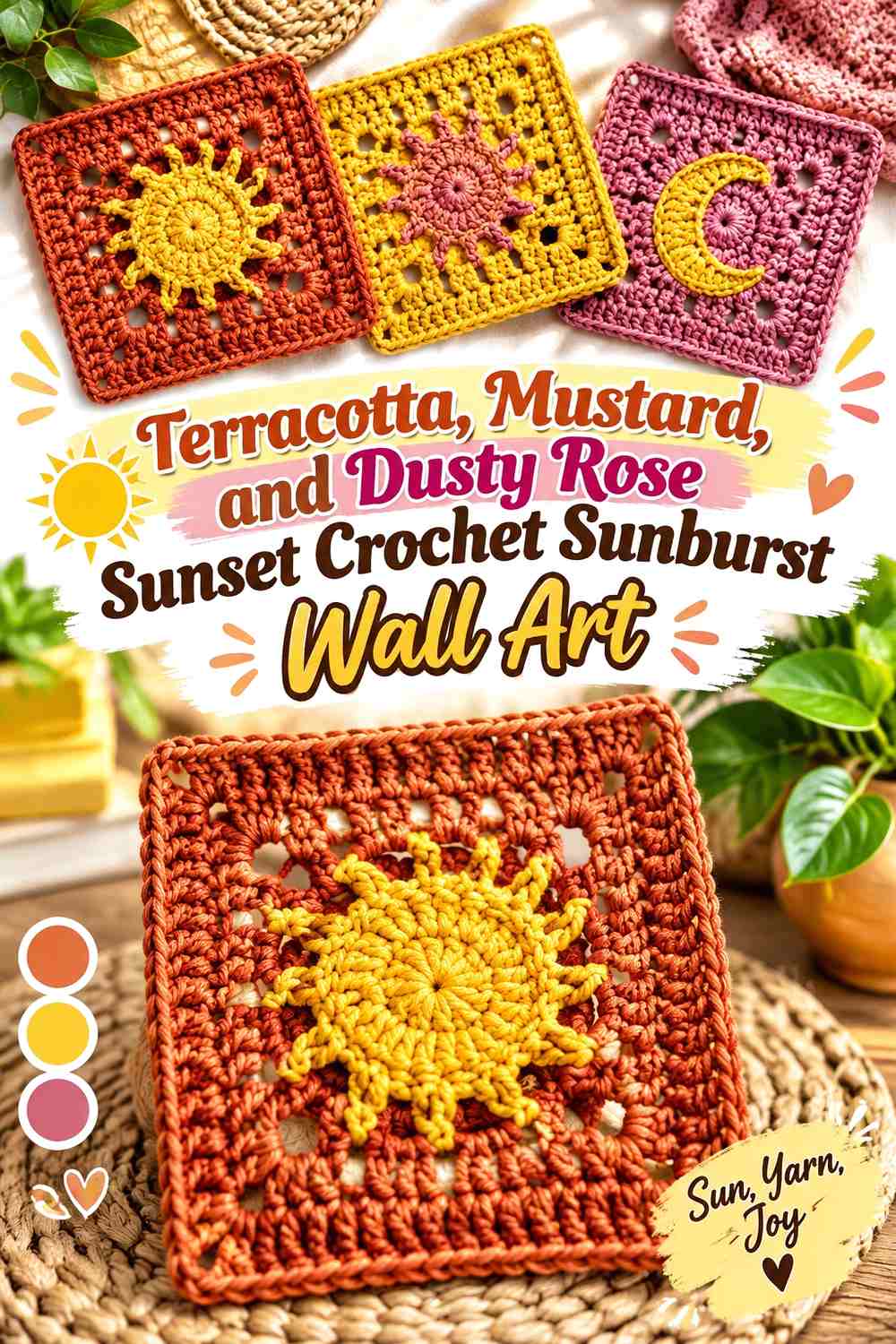
Dusty rose brings a muted sunset effect without adding another strong orange. Because rose and terracotta can be close in value, mustard should provide the lightest and clearest structural highlights.
Use Mustard to Separate Terracotta From Dusty Rose
Place mustard between selected terracotta and rose sections where their boundaries disappear. It does not need to surround every section; repeated mustard rays can provide enough separation across the whole motif.
Keep Terracotta Darker Than the Dusty Rose Sunburst Areas
When choosing yarn, compare the two shades side by side. Preserving some value difference between terracotta and dusty rose makes concentric sections or alternating rays more readable.
Creator Credit: Örgü İşleri
9. Mustard, Terracotta, and Flax Hoop Crochet Sunburst Wall Art
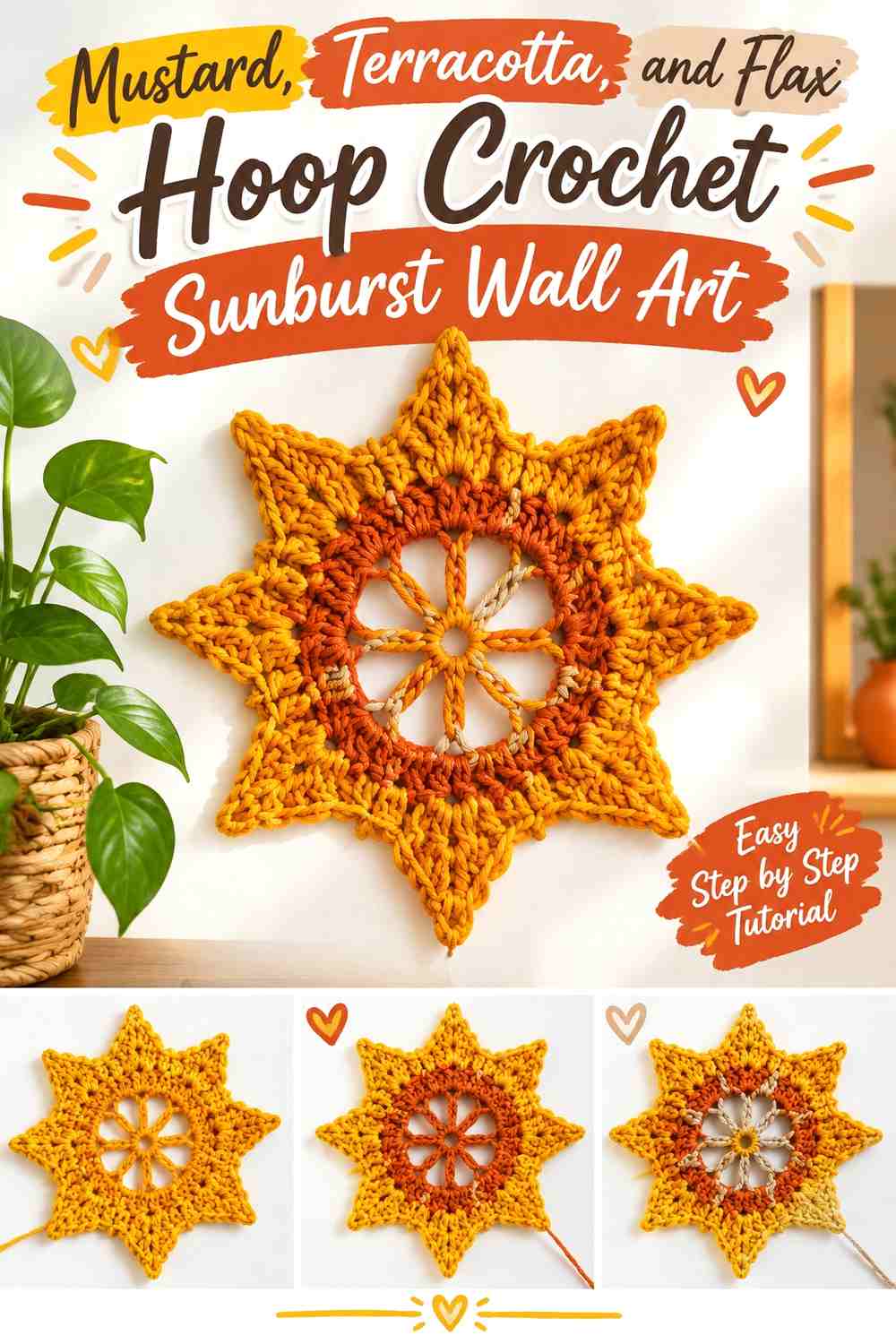
This version uses a natural-looking flax shade to make the mounting area part of the palette. Mustard can dominate the center and rays, terracotta can form selected secondary sections, and flax can remain visible at the perimeter.
Let Mustard and Terracotta Stop Before the Flax Hoop Edge
Leaving some neutral space between the strongest crochet color and the outer frame can make the wall art look less crowded. The flax section becomes an intentional pause rather than unused space.
Repeat Terracotta Around the Mustard Sunburst Center
Instead of placing terracotta only once, repeat it in at least one inner and one outer area. That distributes its warmer depth across the radial motif.
Creator Credit: The Yarnist
10. Terracotta, Mustard, and Deep Teal Crochet Sunburst Wall Art
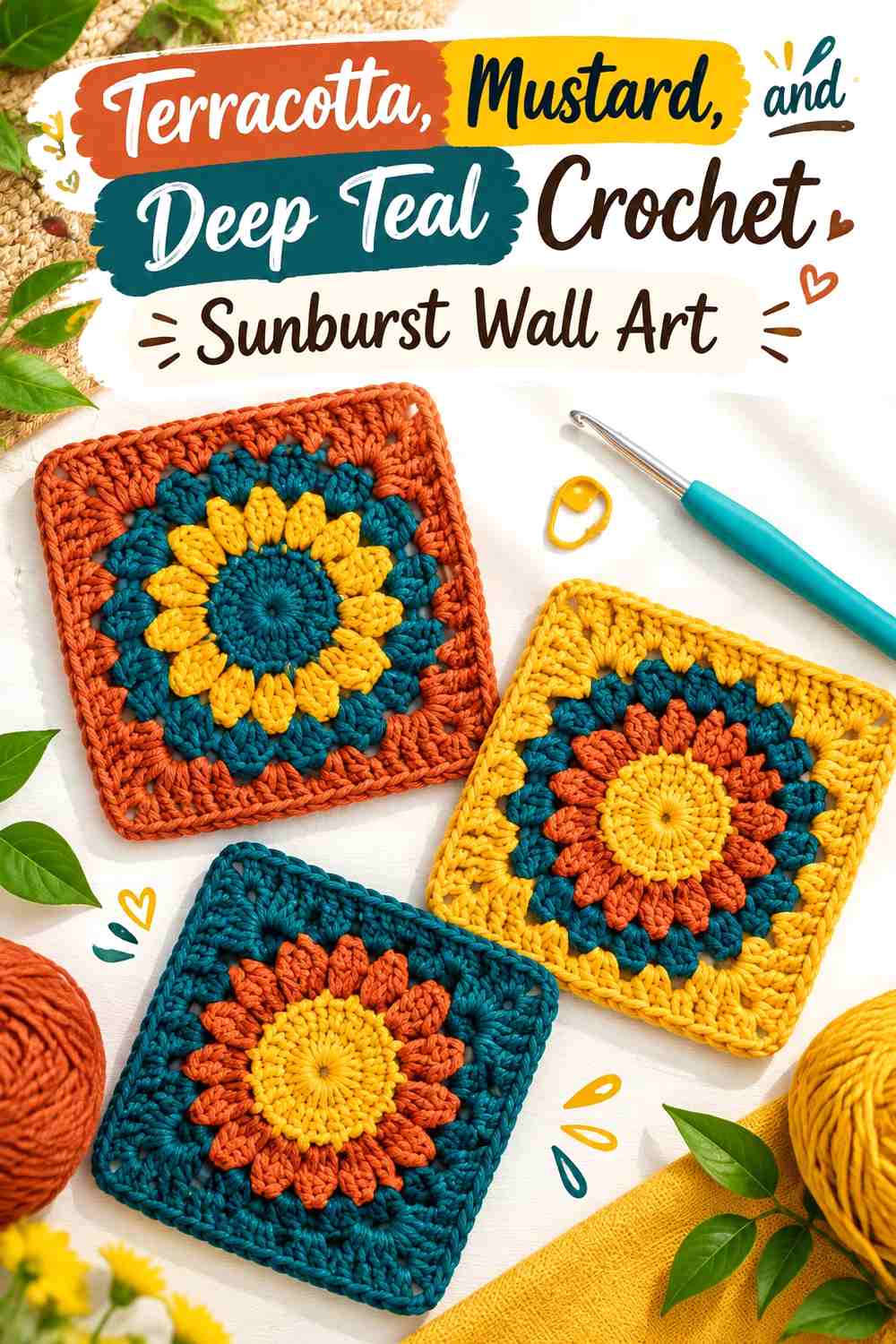
Deep teal gives mustard and terracotta a stronger background than dusty teal. Because it is dark, use it around the sun rather than allowing it to occupy every inner round.
Put Mustard Rays Against Deep Teal for Maximum Definition
The lighter mustard can become the main radiating feature. If your sunburst has narrow pointed details, deep teal behind them makes their shape easier to distinguish.
Keep Terracotta Between the Mustard Center and Deep Teal Edge
Terracotta can create a wider intermediate region before the dark outer background begins. This preserves the importance of the article’s two main colors instead of allowing teal to become the dominant impression.
Creator Credit: Querido Tejido
11. Mustard, Terracotta, and Warm White Geometric Crochet Sunburst Wall Art

Warm white is useful when you want a crisp geometric sun without the cooler effect of pure white. Mustard can form the center, terracotta can emphasize selected rays, and warm white can square or frame the motif.
Keep Mustard Continuous Through the Crochet Sun Center
A continuous mustard center gives the motif a clear visual core. Start introducing terracotta after the center is established rather than alternating the two colors immediately.
Use Warm White Around Terracotta Ray Tips
Warm white is especially effective at the transition where the radiating sun becomes a square or larger wall panel. It isolates the terracotta ray tips so they do not visually merge into the outer shape.
Creator Credit: nav • crochet 🧶
12. Terracotta, Mustard, and Rust Tonal Crochet Sunburst Wall Art
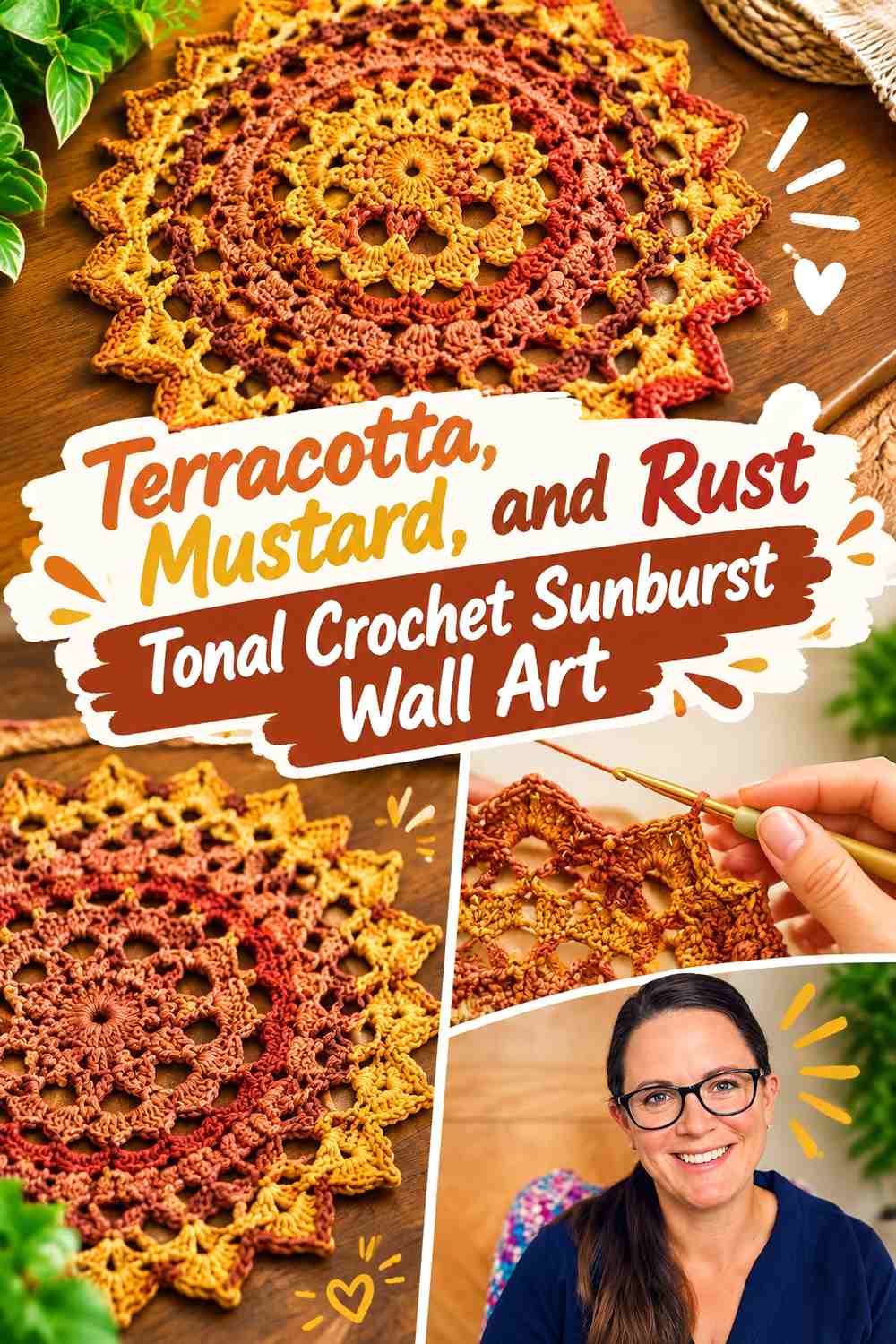
This is the closest tonal palette in the collection. Terracotta and rust create a narrow warm range, so mustard becomes essential for keeping the sunburst from becoming visually flat.
Use Mustard Between Terracotta and Rust Crochet Rings
Because terracotta and rust may have similar values, a mustard round can create a recognizable break between them. This is more useful than adding many additional warm colors.
Let Terracotta Lead More Than Rust Around the Mustard Center
Keep terracotta as the larger supporting shade and rust as the smaller deep accent. If both occupy equal areas, the overall piece may lose the clear terracotta identity promised by the palette.
Creator Credit: Kate Made It
13. Mustard, Terracotta, and Clay Crochet Sunburst Wall Art

Clay creates a softer transition than chocolate or charcoal. Use mustard for the sun’s brightest areas, terracotta for the main warm body, and clay where you need a muted outer section.
Keep Mustard Brightest Inside the Terracotta Sunburst
Because all three colors are warm, differences in lightness become more important. Make sure the mustard stays noticeably lighter than both terracotta and clay if it is intended to define the rays.
Put Clay Outside the Mustard and Terracotta Focal Area
Using clay primarily around the perimeter keeps the central sun readable. Bringing too much clay into every round can make the three related warm shades difficult to distinguish.
The hoop format is particularly useful for this quieter palette because the circular support provides definition without another strong color.
Creator Credit: Fuad Azmat / YARNutopia by Nadia
14. Terracotta, Mustard, and Navy Crochet Sunburst Wall Art

Navy provides strong cool-dark contrast and gives this palette a more dramatic direction than cream or oatmeal. Let the warm sun occupy most of the crocheted center, then allow navy to frame rather than invade it.
Let Terracotta Fill the Main Sun Against Navy
Terracotta can take more surface area because navy already provides plenty of contrast. Mustard can be saved for the center or alternating rays, where its lighter value becomes particularly visible.
Keep Mustard Between Terracotta and Navy Where Rays Are Narrow
If a narrow terracotta ray disappears against navy, place mustard on selected neighboring rays instead of outlining everything. Alternation can keep the radial rhythm clear without producing a heavy border.
Creator Credit: Arte em Croche
15. Mustard, Terracotta, and Beige Multi-Panel Crochet Sunburst Wall Art
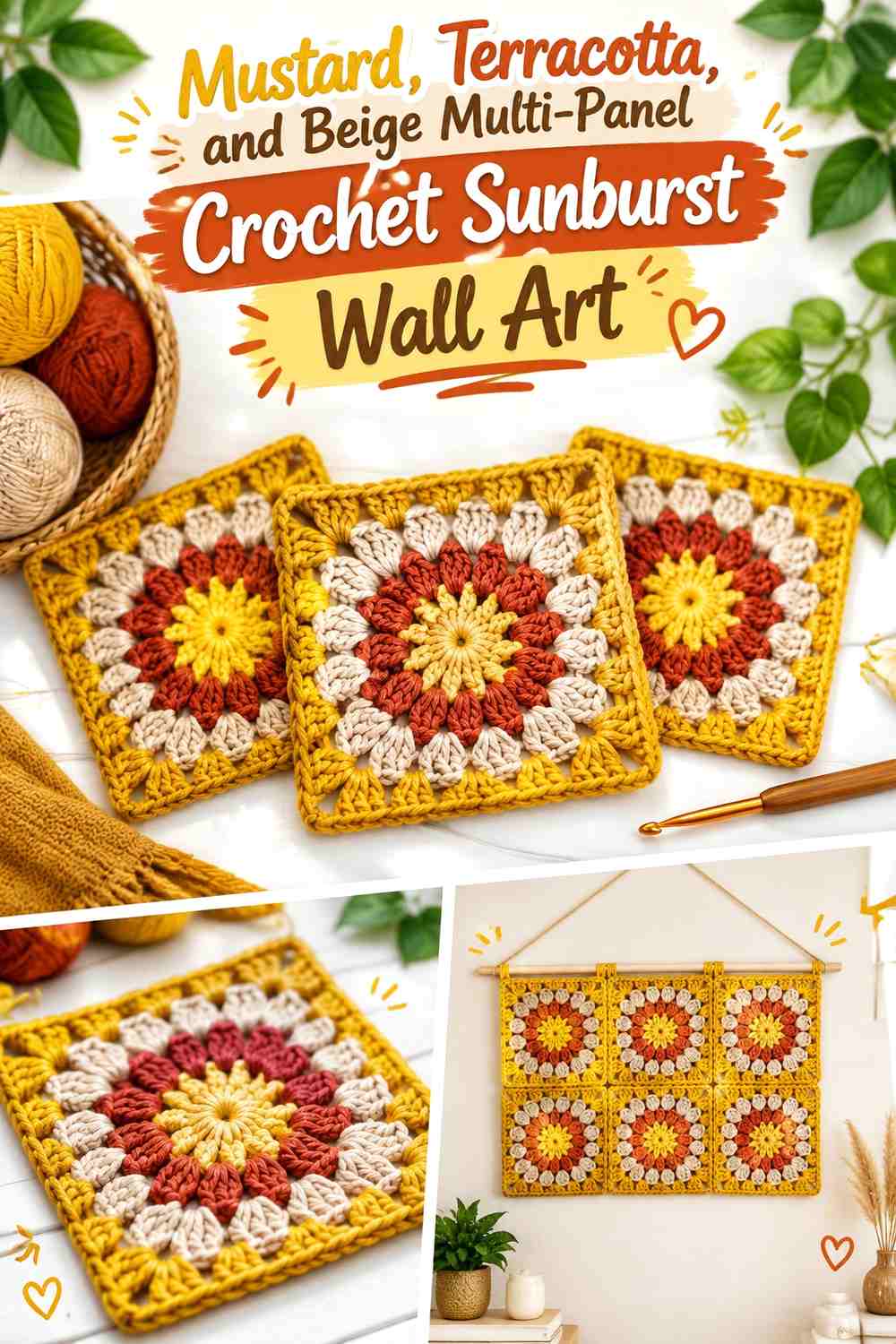
Instead of one large sun, this idea uses several smaller sunburst motifs arranged together as wall art. Keep mustard and terracotta consistent across all motifs, while beige becomes the common border that ties the group together.
Repeat Mustard Centers Across Every Terracotta Sunburst Panel
Using the same mustard center creates continuity even if the amount of terracotta changes from one motif to another. This is useful for a gallery arrangement because the individual pieces still look related.
Use Beige Around Mustard and Terracotta to Unify Multiple Motifs
A repeated beige border or joining color gives the eye a consistent neutral reference. Avoid giving every panel a different third color; the repeated neutral is what keeps the wall arrangement cohesive.
Creator Credit: Jo to the World Creations
16. Terracotta, Mustard, and Moss Gallery Crochet Sunburst Wall Art
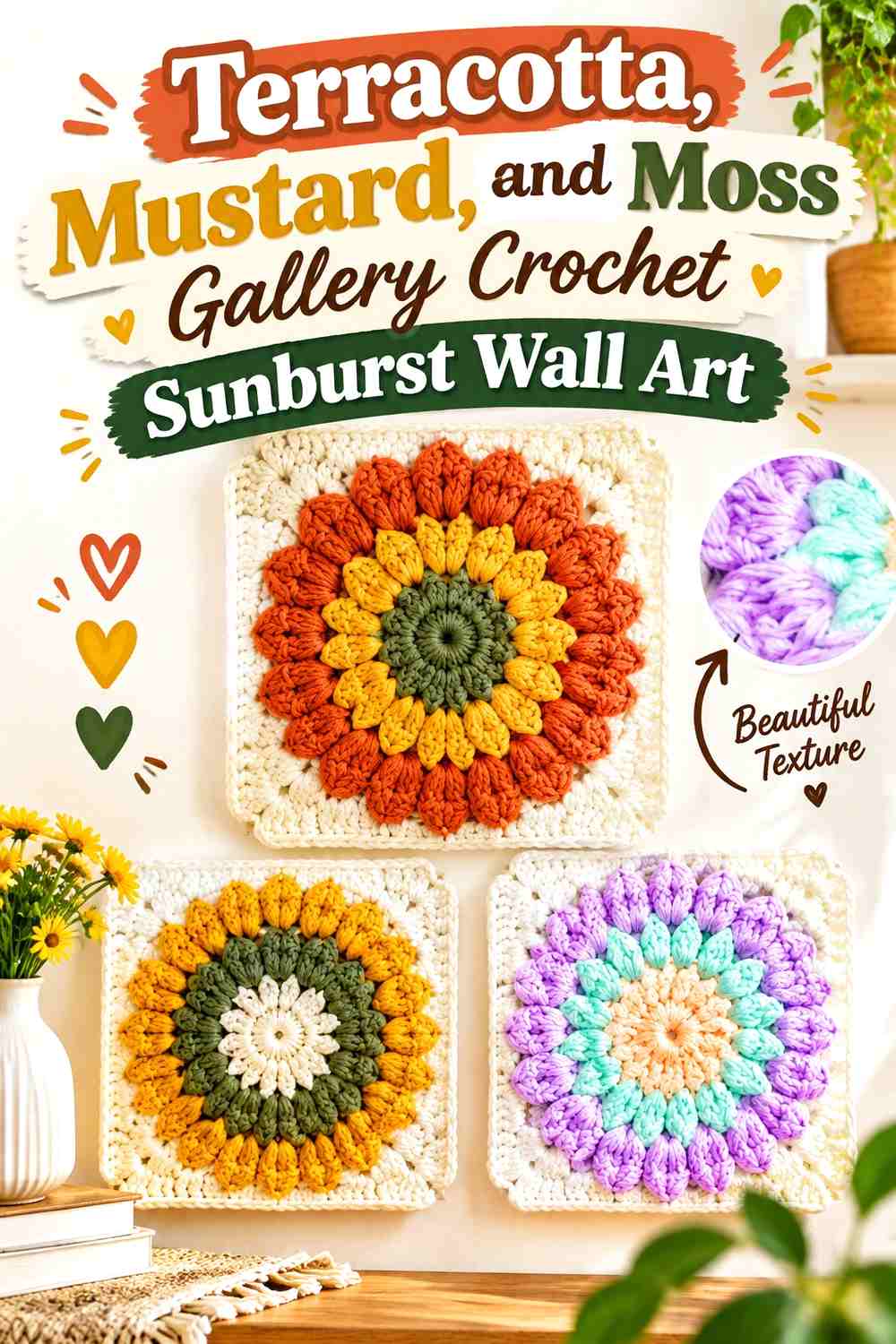
Moss provides a deeper botanical green than sage and works well when you want several sunburst motifs displayed together. Terracotta can dominate some motifs while mustard dominates others, with moss repeated around every piece.
Alternate Terracotta and Mustard Dominance Across the Wall Art
One motif can use a terracotta center with mustard rays, while the next reverses those roles. Keeping the same three colors allows variation without making the gallery look unrelated.
Repeat Moss Around Every Mustard and Terracotta Sunburst
Moss is the connecting color. Use it consistently at the perimeter, in square corners, or as a narrow framing round so every sunburst belongs to the same collection.
Creator Credit: Bella Coco
17. Mustard, Terracotta, and Espresso Bold Crochet Sunburst Wall Art

Espresso creates the deepest boundary of all 17 ideas. Keep mustard and terracotta dominant through the sun itself, then use espresso to define the center, outer edge, or both.
Let Mustard Stay Visible Between Terracotta and Espresso
Mustard provides the necessary light break when deep espresso sits beside terracotta. A ring of mustard or repeated mustard rays prevents the darker colors from merging into a heavy outer mass.
Reserve Espresso for the Terracotta Sunburst Boundary
Avoid spreading espresso through every round. An outer espresso line can frame the sun strongly without changing the entire palette into brown-led wall art.
For a square sun motif, espresso can also occupy only the outer corners, leaving mustard and terracotta responsible for the central visual impact.
Creator Credit: Crochet Bits
Which Mustard and Terracotta Crochet Sunburst Palette Should You Choose?
For a light wall, mustard, terracotta, and cream is the clearest starting point. Oatmeal, flax, beige, clay, and warm white keep the same warm direction while changing how much contrast surrounds the sun.
Choose olive, sage, or moss when you want an earthy botanical connection. Dusty teal creates stronger hue contrast while remaining muted, and deep teal or navy gives mustard and terracotta a much more dramatic frame.
Charcoal, chocolate, and espresso work when you want the rays or perimeter sharply defined. Use those darkest shades in smaller amounts unless a strongly graphic sunburst is the goal. For the most blended treatment, the terracotta, mustard, and rust combination keeps nearly the entire piece in one warm tonal family.
Conclusion
Mustard and terracotta can create 17 noticeably different crochet sunburst wall-art directions without abandoning the core palette. The difference comes from hierarchy and placement: mustard can glow from the center, terracotta can deepen the outer rays, or those roles can be reversed for a darker focal point.
Choose cream, oatmeal, flax, or beige if the crochet texture should remain the main attraction. Sage, olive, moss, and teal introduce stronger color relationships, while charcoal, navy, chocolate, and espresso provide more definition.
Before making the full wall piece, compare the yarns together and decide where the strongest light/dark contrast belongs. Then use the linked creator tutorial for the sun, sunburst, granny-square, mandala, or hoop technique it demonstrates and apply your mustard-and-terracotta color plan separately.
Frequently Asked Questions
Should Mustard or Terracotta Be the Center of Crochet Sunburst Wall Art?
Mustard works well when you want the center to appear lighter and more immediately visible. Terracotta creates a deeper center and lets mustard become the brighter ray color. Choose according to where you want the eye to land first rather than following a fixed rule.
How Can I Keep Mustard and Terracotta Crochet Rays From Blending Together?
Compare their light/dark values before starting. If they are too similar, introduce cream, oatmeal, teal, charcoal, navy, or another clearly contrasting shade at selected transitions. You can also give the colors larger separate areas instead of alternating them in very narrow rays.
Does Cream Work Better Than White With Mustard and Terracotta?
Cream usually creates a softer transition, while a lighter white can produce stronger definition. Either can work. The better choice depends on whether you want the neutral to blend gently with the warm palette or create a clearer boundary around it.
Can Mustard and Terracotta Sunbursts Be Mounted in Crochet Hoops?
Yes. A circular sun or mandala-style crochet piece can suit a hoop display when the particular construction allows it. Decide whether the hoop should remain visible as a neutral boundary or be visually incorporated with yarn that repeats mustard, terracotta, or a supporting shade.
Which Green Works Best With Mustard and Terracotta Crochet Wall Art?
Sage creates the softest combination, olive gives a more muted earthy effect, and moss adds deeper contrast. The most useful choice depends on whether the green should behave as a quiet background or a clearly visible third color.
Can I Use Mustard and Terracotta for Every Round of a Crochet Sunburst?
You can, but constant one-for-one alternation may make the palette repetitive. Consider grouping two or more sections in one color, changing the widths of the color areas, or reserving one shade for the center and the other for the strongest rays.
What Dark Color Gives Mustard and Terracotta the Strongest Definition?
Charcoal, deep navy, chocolate, and espresso can all provide strong contrast. Charcoal and navy move the piece away from an entirely earthy palette, while chocolate and espresso maintain a warmer direction. Use the darkest shade selectively if mustard and terracotta are meant to remain the main colors.