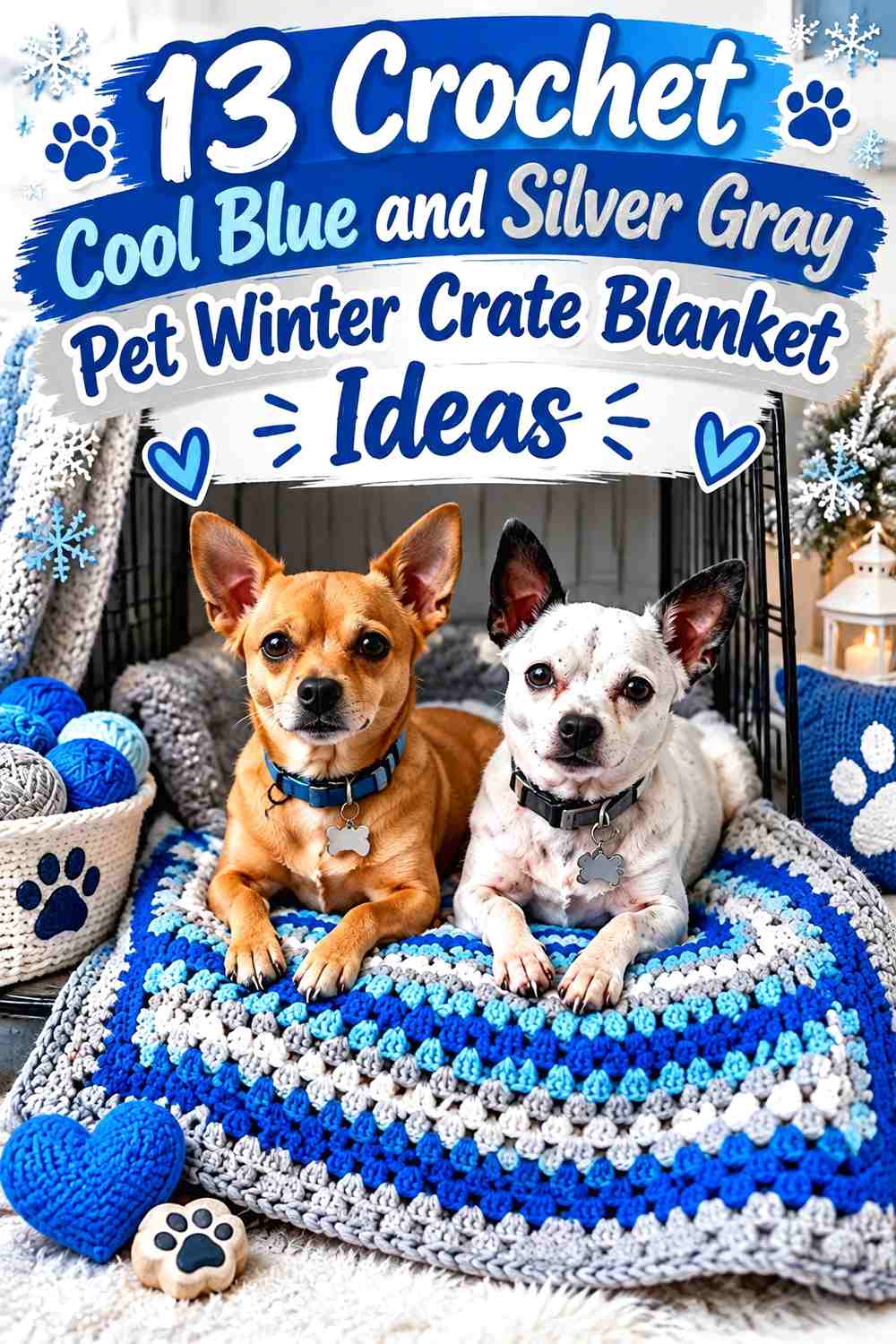
Cool blue and silver gray create a restrained winter palette that works especially well on a crochet pet crate blanket. Cool blue can cover the main resting surface, while silver gray defines borders, textured bands, corners, or a second side. Reverse the balance and the blanket becomes quieter and more neutral, with blue acting as the winter accent instead of the dominant field.
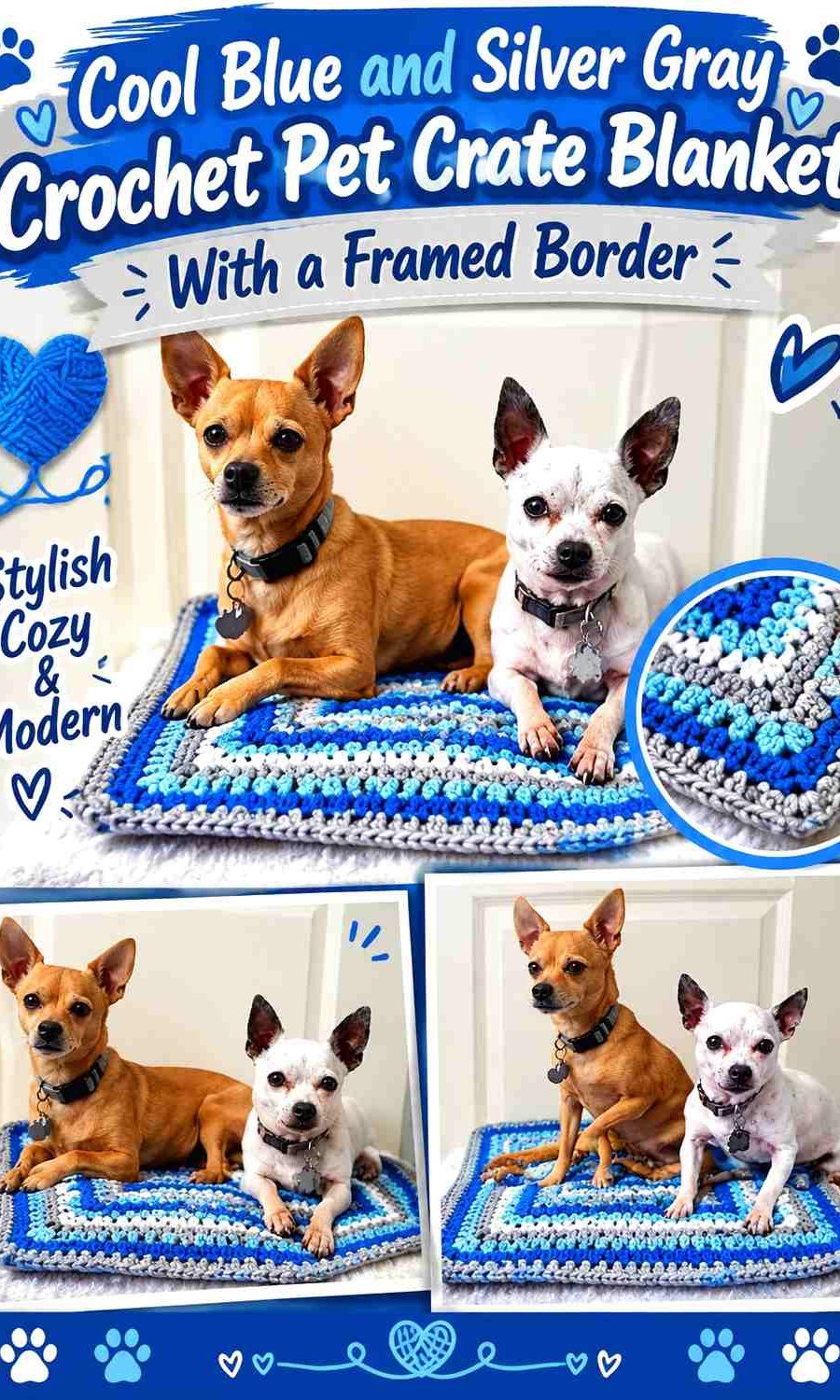
A crate blanket also needs a different color strategy from a large decorative throw. Most of the design is viewed across a compact rectangle, often with part of the blanket covered by the pet. Broad color fields, controlled stripes, and clearly framed edges generally remain more visible than many tiny color changes.
The tutorials below include a true pet blanket suitable for crate adaptation along with complete blanket tutorials that demonstrate useful textures, stripes, blocks, and borders. Resize household blanket constructions to the actual crate floor rather than assuming their original dimensions are appropriate. The cool blue and silver gray palettes are independent editorial adaptations and are not presented as colors used by the credited creators.
Quick List
- Cool Blue and Silver Gray Crochet Pet Crate Blanket With a Framed Border
- Cool Blue and Silver Gray Crochet Pet Crate Blanket With a Blue Frame
- Cool Blue and Silver Gray Waffle-Texture Crochet Pet Crate Blanket
- Cool Blue and Silver Gray Granny-Stripe Crochet Pet Crate Blanket
- Cool Blue and Silver Gray Chevron Crochet Pet Crate Blanket
- Cool Blue and Silver Gray Modern Granny-Stripe Crochet Pet Crate Blanket
- Cool Blue and Silver Gray Chunky-Texture Crochet Pet Crate Blanket
- Cool Blue and Silver Gray Simple Crochet Pet Crate Blanket
- Cool Blue and Silver Gray Color-Block Crochet Pet Crate Blanket
- Cool Blue and Silver Gray Wide-Band Crochet Pet Crate Blanket
- Cool Blue and Silver Gray Midwinter-Texture Crochet Pet Crate Blanket
- Cool Blue and Silver Gray Entrelac-Block Crochet Pet Crate Blanket
- Cool Blue and Silver Gray Gingham-Style Crochet Pet Crate Blanket
Give Cool Blue and Silver Gray Different Jobs on a Crate Blanket
Start by deciding which color owns the surface the pet will lie on. A broad cool blue center with silver gray edging creates a clearly blue blanket, while a gray field with blue borders makes the palette feel more neutral.
The supporting color does not need to appear everywhere. Repeating silver gray on two opposite ends can be enough to connect a cool blue center, and a narrow blue frame can give a gray blanket plenty of winter color without dividing the resting surface.
Use Cool Blue and Silver Gray Where Texture Can Still Be Seen
Two yarns can be different hues yet very similar in lightness. If cool blue and silver gray merge when viewed from a distance, subtle stripes or textured blocks may disappear.
Compare the actual yarns side by side and, if useful, view them in grayscale. Use the shade with stronger light-dark separation around borders or important texture changes instead of simply making those areas larger.
Keep a Cool Blue and Silver Gray Crochet Crate Blanket Practical
Measure the usable crate floor rather than relying on a general small, medium, or large label. The blanket should sit comfortably within the supported floor area without excessive fabric bunching near the door or reducing usable space.
Inspect the crochet surface for loose ends, large openings, fringe, tassels, or loops that could catch claws or invite chewing. A decorative throw tutorial can provide an excellent stitch or construction reference, but choose a finished fabric and edge treatment that suit the individual animal before using the adaptation in a crate.
1. Cool Blue and Silver Gray Crochet Pet Crate Blanket With a Framed Border
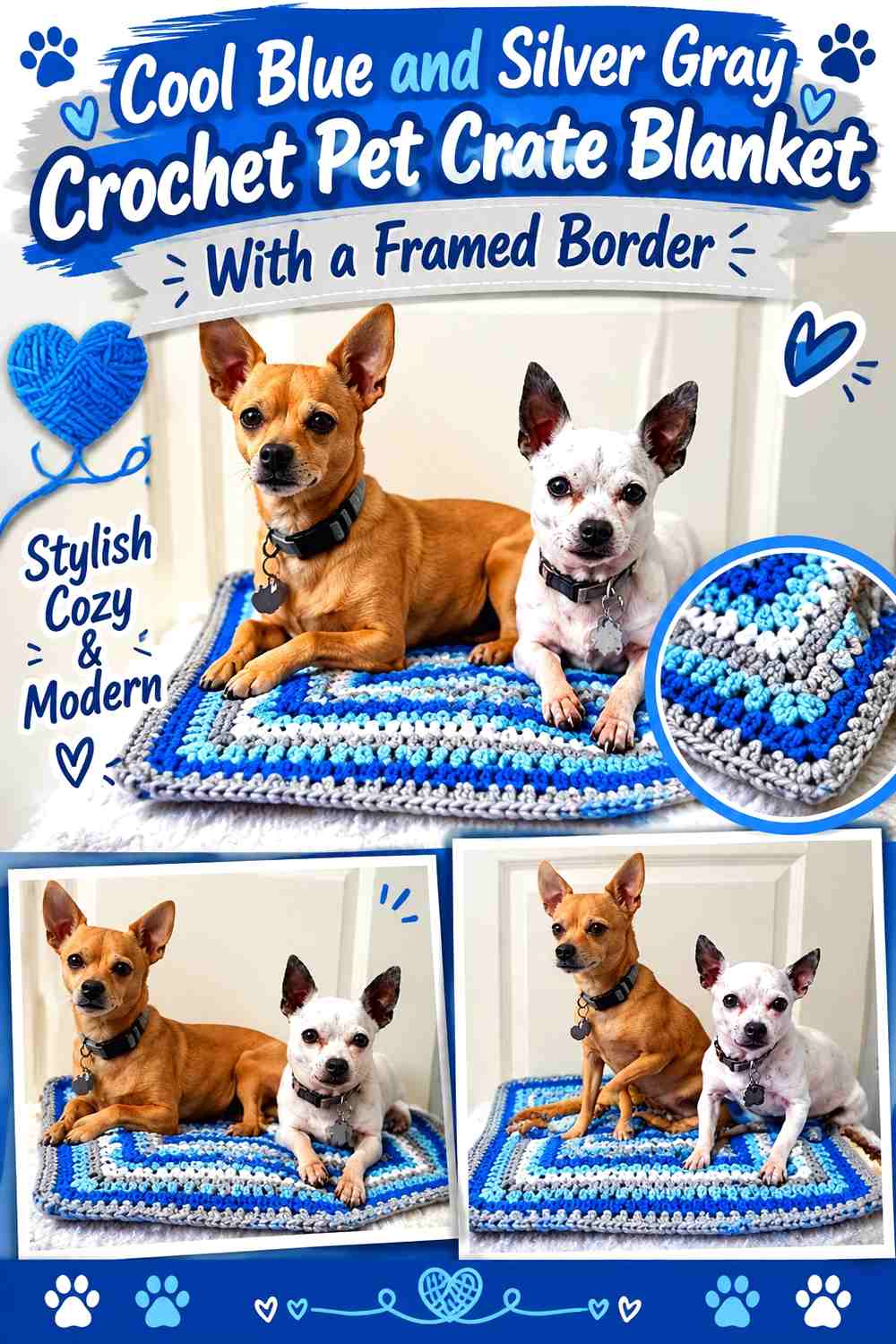
Cool blue covers nearly the entire resting surface in this version, while silver gray creates a defined perimeter. Keeping the center solid makes the compact crate blanket visually calm and lets the border clarify its rectangular shape.
Cool Blue Should Dominate the Crochet Crate Blanket Center
Use cool blue continuously through the broad middle rather than breaking it into several gray patches. The uninterrupted field gives the pet’s resting area one clear color and allows stitch texture to contribute without competing with frequent color changes.
If you want additional variation, change the texture within the blue field instead of automatically introducing another shade.
Silver Gray Can Frame the Cool Blue Crate Surface
Use silver gray around the outer edge or on two opposite ends. Because the gray surrounds a larger blue area, even a relatively restrained border can connect the whole piece.
If the blanket sits in a gray crate tray, make sure the border still remains visible enough to distinguish the blanket edge.
Creator Credit: Sara Sach Crochet Designs
2. Cool Blue and Silver Gray Crochet Pet Crate Blanket With a Blue Frame
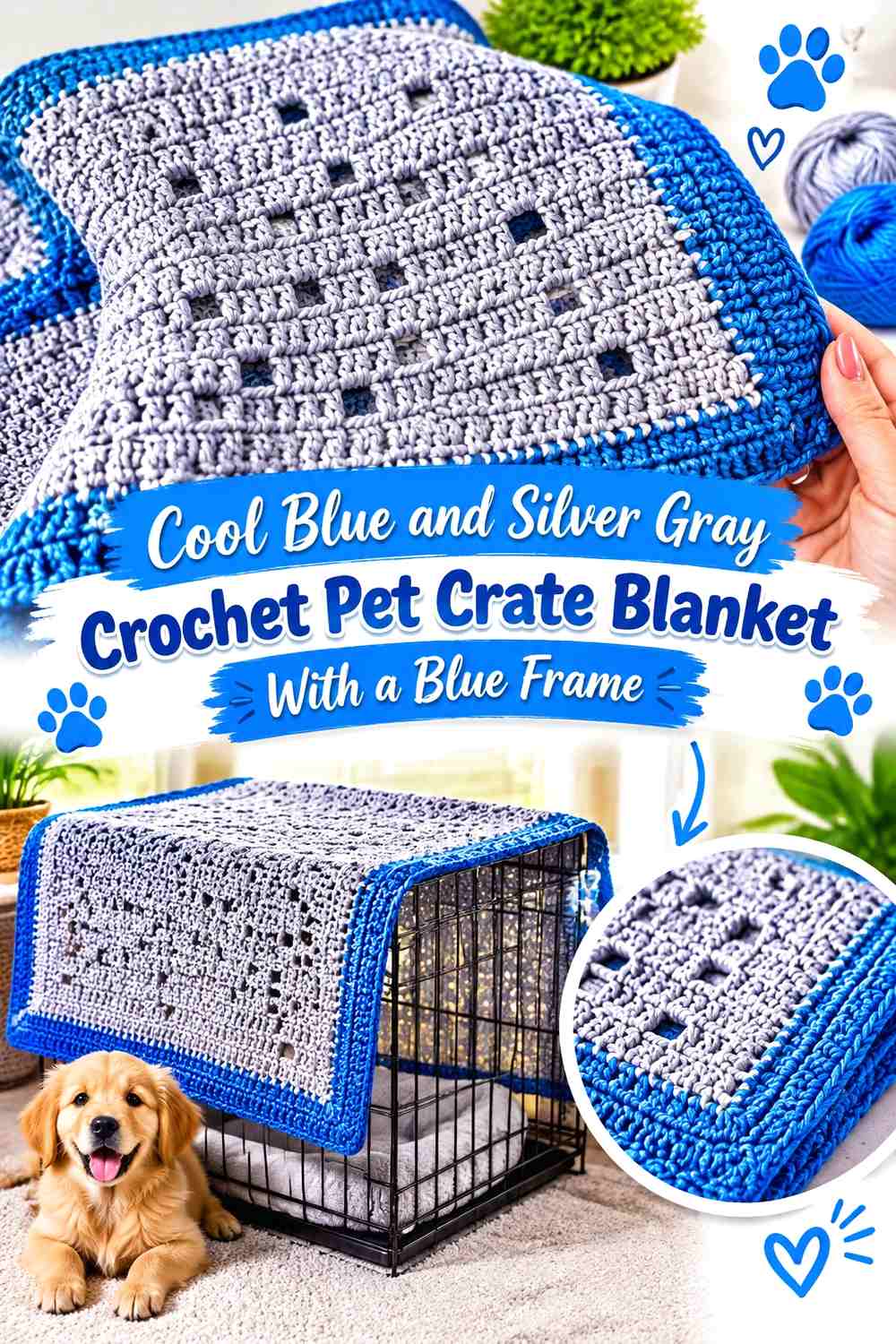
This arrangement reverses the first idea. Silver gray carries the main center, while cool blue outlines the perimeter. The larger gray field creates a quieter base and lets a relatively small amount of blue become the recognizable winter accent.
Silver Gray Should Stay Continuous Inside the Cool Blue Border
Keep the resting surface predominantly gray so the blue frame has a clear structural role. A solid center is especially useful when the crochet stitch already creates raised lines or other noticeable texture.
Avoid scattering small blue motifs through the gray unless they add something the border cannot already provide.
Cool Blue Should Clearly Outline the Silver Gray Crate Blanket
Use blue around the edge where it can define the blanket against the crate floor. A medium-value blue can create more useful separation than a very pale one if the silver gray is already light.
Check the edge after placing the blanket inside the crate rather than judging it only on a table.
Creator Credit: Sirin’s Crochet
3. Cool Blue and Silver Gray Waffle-Texture Crochet Pet Crate Blanket
A waffle-style surface already creates a strong grid of raised and recessed areas, so this palette works best when cool blue owns most of that texture. Silver gray can finish the outside edge without interrupting every textured block.
Cool Blue Lets the Crochet Waffle Texture Stay Cohesive
Keep the waffle field blue from side to side. Changing colors in every raised section would place a second grid over an already structured surface.
A solid blue field also makes it easier to judge whether the dimensional stitch remains suitable for the individual pet.
Silver Gray Should Border Cool Blue Instead of Filling Every Waffle Block
Use gray on a restrained finishing edge or one broad end band. The lighter or darker perimeter can define the rectangle while leaving the central waffle structure visually intact.
Inspect the finished texture for snagging concerns before placing it in regular pet use.
Creator Credit: Littlejohn’s Yarn
4. Cool Blue and Silver Gray Granny-Stripe Crochet Pet Crate Blanket
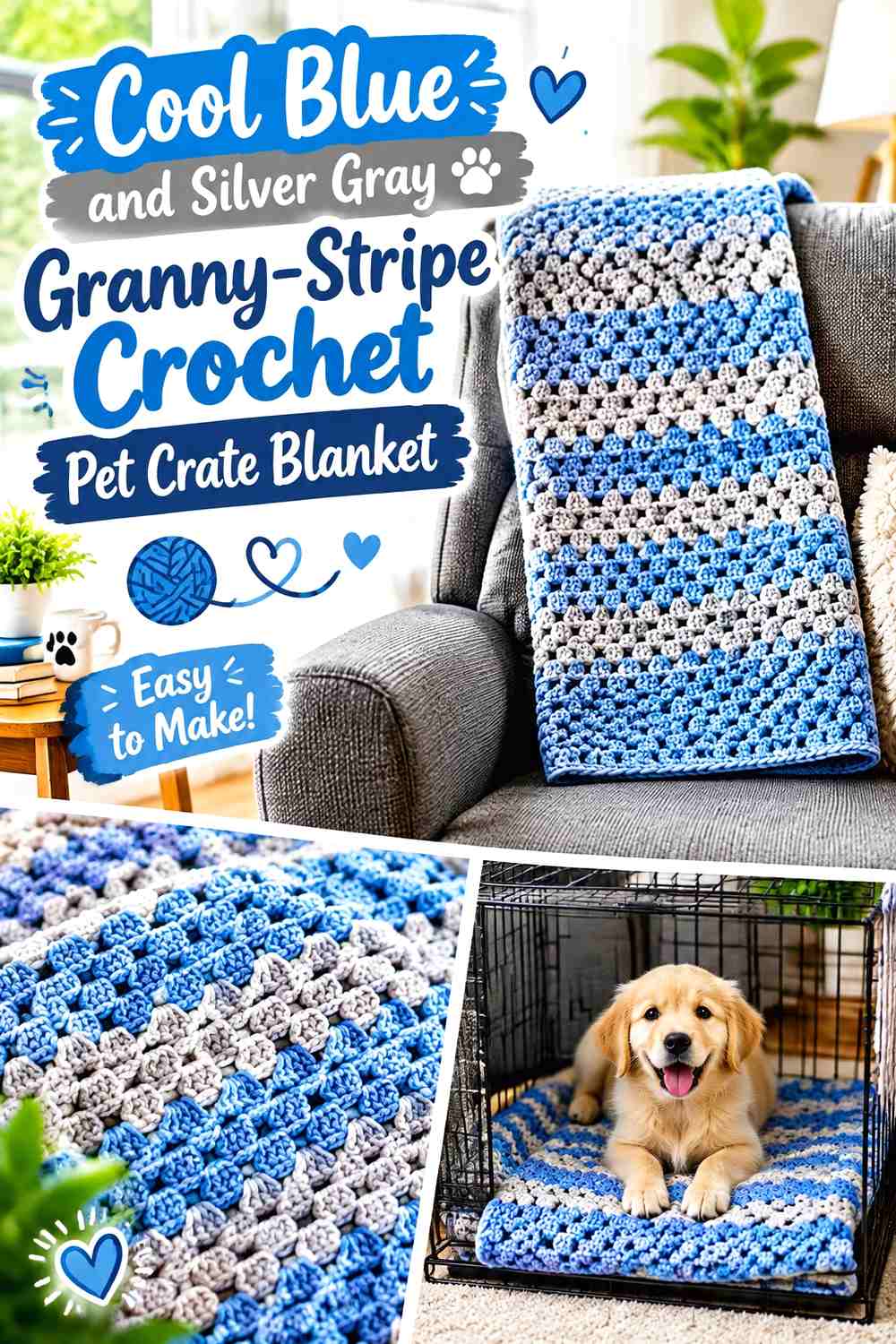
Granny stripes create a more open-looking color rhythm than a solid textured field. For a crate adaptation, use broad cool blue sections and fewer silver gray repeats so the blanket does not become a dense sequence of alternating lines.
Cool Blue Should Separate the Silver Gray Granny Stripes
Give the blue areas enough width to remain the dominant color. When every row switches between blue and gray, the two shades can compete equally and make a small crate blanket look busier than necessary.
Wider blue sections also make the gray repeats easier to follow.
Silver Gray Stripes Need a Simple Cool Blue Border
If the surface already contains repeated gray bands, finish the edge mostly in cool blue. Another striped border can compete with the granny pattern.
Because granny-style fabrics may contain more visible openings than denser stitches, inspect the finished surface carefully for the intended pet.
Creator Credit: The Loopy Lamb
5. Cool Blue and Silver Gray Chevron Crochet Pet Crate Blanket
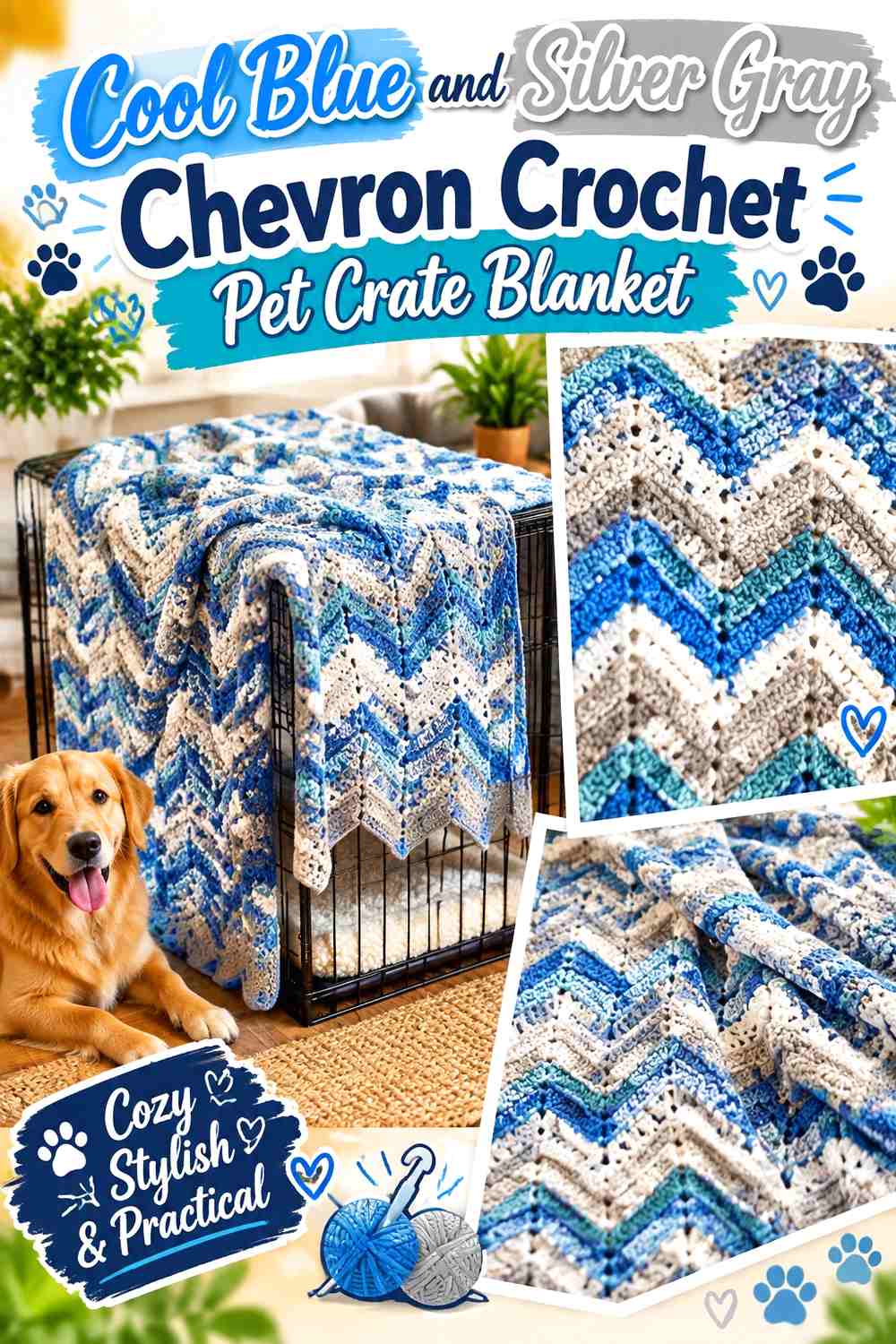
Chevron shaping gives the two-color palette a strong directional pattern. Cool blue can form the broader peaks and valleys, while silver gray appears in narrower repeating bands. This keeps the zigzag visible without giving both colors identical visual weight.
Cool Blue Should Form the Broadest Crochet Chevron Sections
Use blue across more rows so the zigzag remains easy to recognize even when part of the blanket is covered by the pet.
On a small crate blanket, fewer larger chevrons can often read more clearly than many compressed repeats.
Silver Gray Should Emphasize the Cool Blue Chevron Rhythm
Place gray at regular intervals rather than changing stripe width randomly from one repeat to another.
If the chevron surface already attracts plenty of attention, keep the outer edge in one existing color instead of adding another border treatment.
Creator Credit: Crochet.With.Coffee
6. Cool Blue and Silver Gray Modern Granny-Stripe Crochet Pet Crate Blanket
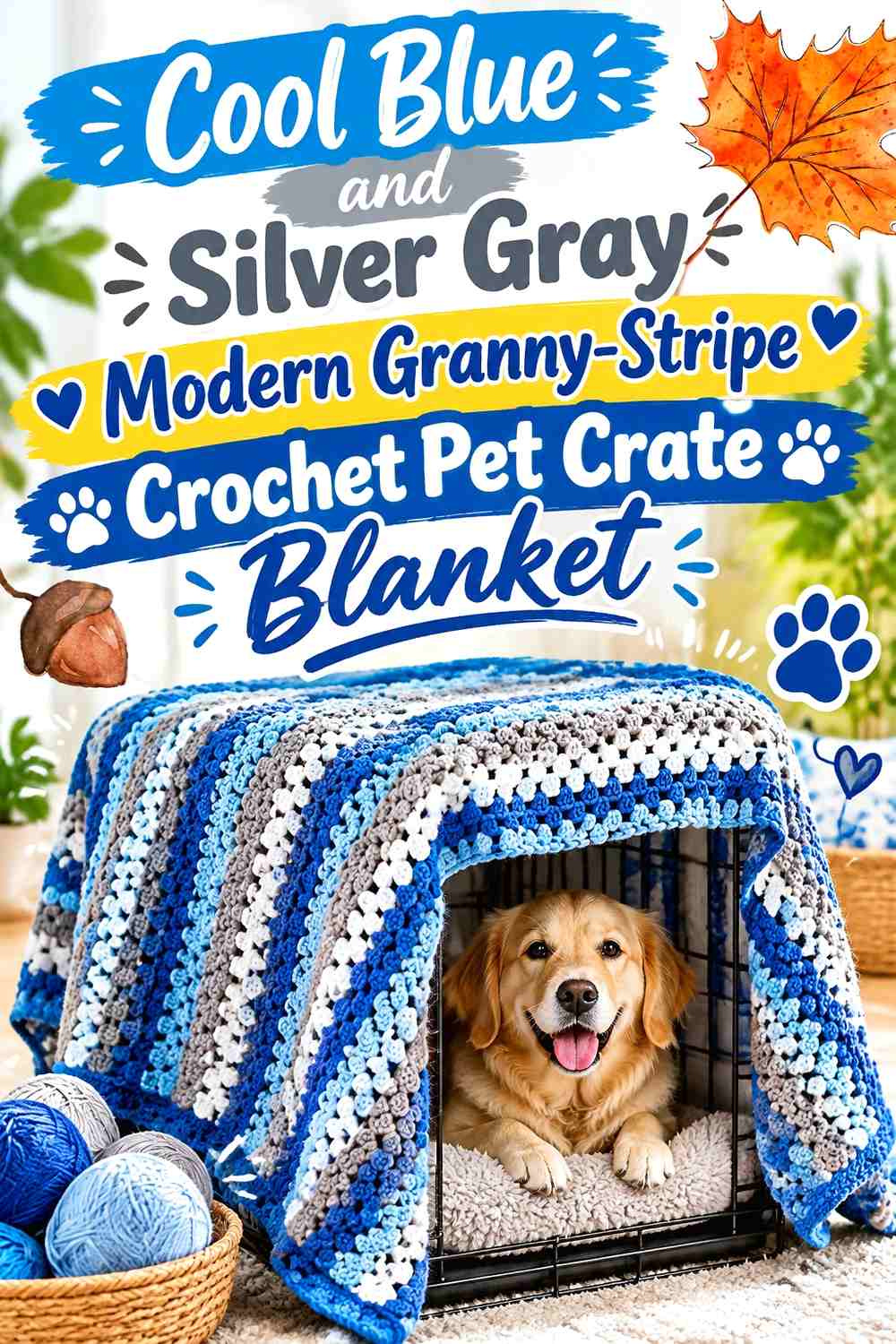
This version makes silver gray the larger field and lets cool blue appear as controlled stripe accents. The gray gives the compact blanket a neutral foundation, while the blue bands establish the winter color direction.
Silver Gray Should Carry More Surface Than Cool Blue
Use silver gray through the broader stripe sections and keep the blue repeats narrower or less frequent. This makes the project clearly different from the blue-dominant granny-stripe option.
The calmer gray sections can also prevent a multistripe surface from becoming visually crowded.
Cool Blue Should Repeat Predictably Across Silver Gray
Keep the blue accents in a recognizable rhythm. One isolated blue stripe near the center can look accidental if no related detail appears elsewhere.
Repeating blue at both ends or at evenly considered intervals makes the color feel deliberately integrated.
Creator Credit: Crafting In The Night
7. Cool Blue and Silver Gray Chunky-Texture Crochet Pet Crate Blanket
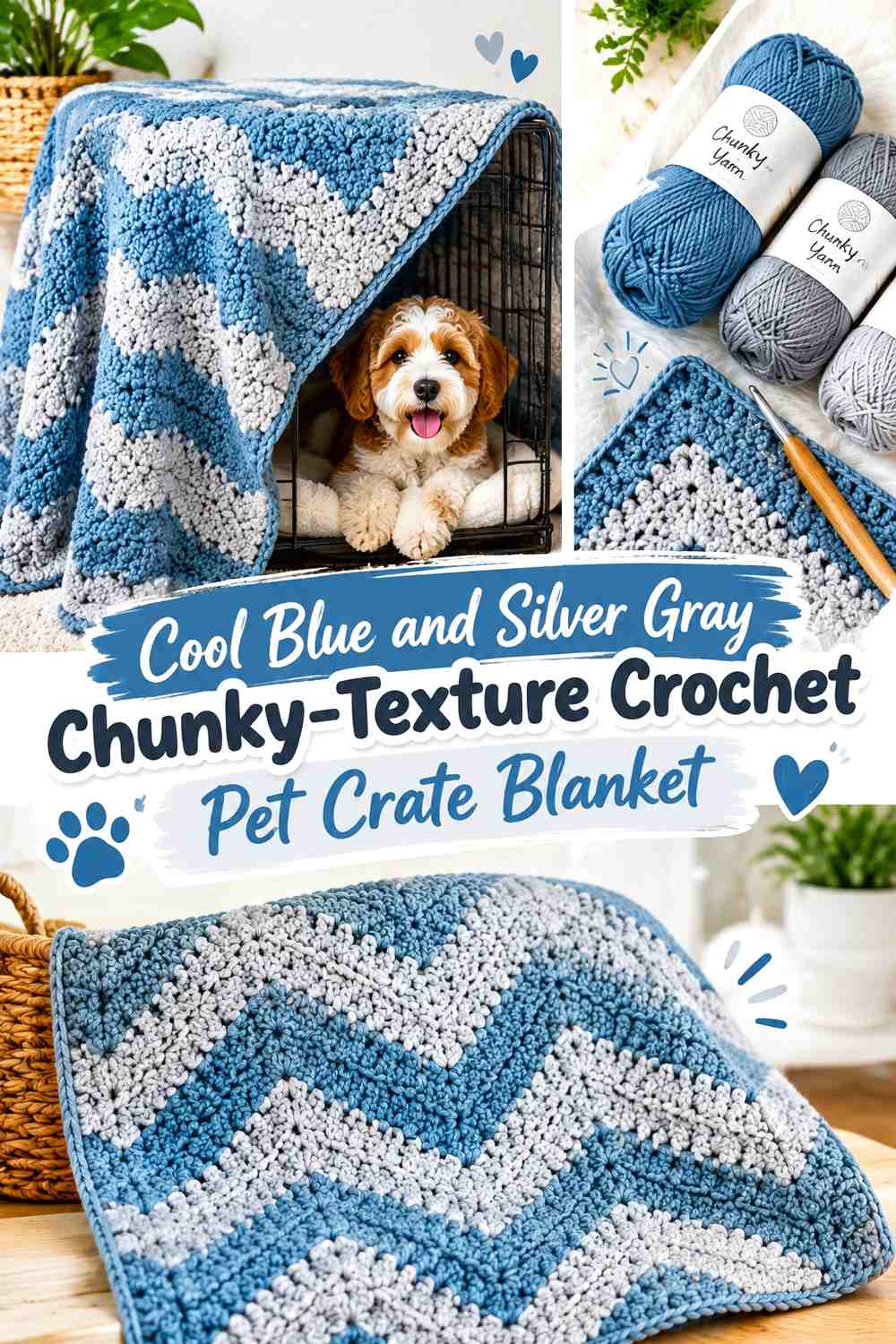
A bold textured blanket can use color more sparingly because the stitch surface already provides substantial visual interest. Let cool blue cover most of the center, then put silver gray at the ends rather than through multiple narrow interior bands.
Cool Blue Should Give the Crochet Texture a Large Uninterrupted Field
Use blue across the broad center so the texture can be read without frequent transitions. This is especially useful when the stitch creates pronounced ridges or surface changes.
Check the resulting thickness against the usable crate space instead of assuming a bulky-looking blanket is automatically preferable for winter.
Silver Gray End Bands Can Contain the Cool Blue Center
Place gray at the short ends to create clear visual stops without surrounding every side.
If you want to fold the blanket, consider where those gray bands will land once folded so the color layout still looks intentional inside the crate.
Creator Credit: TL Yarn Crafts
8. Cool Blue and Silver Gray Simple Crochet Pet Crate Blanket
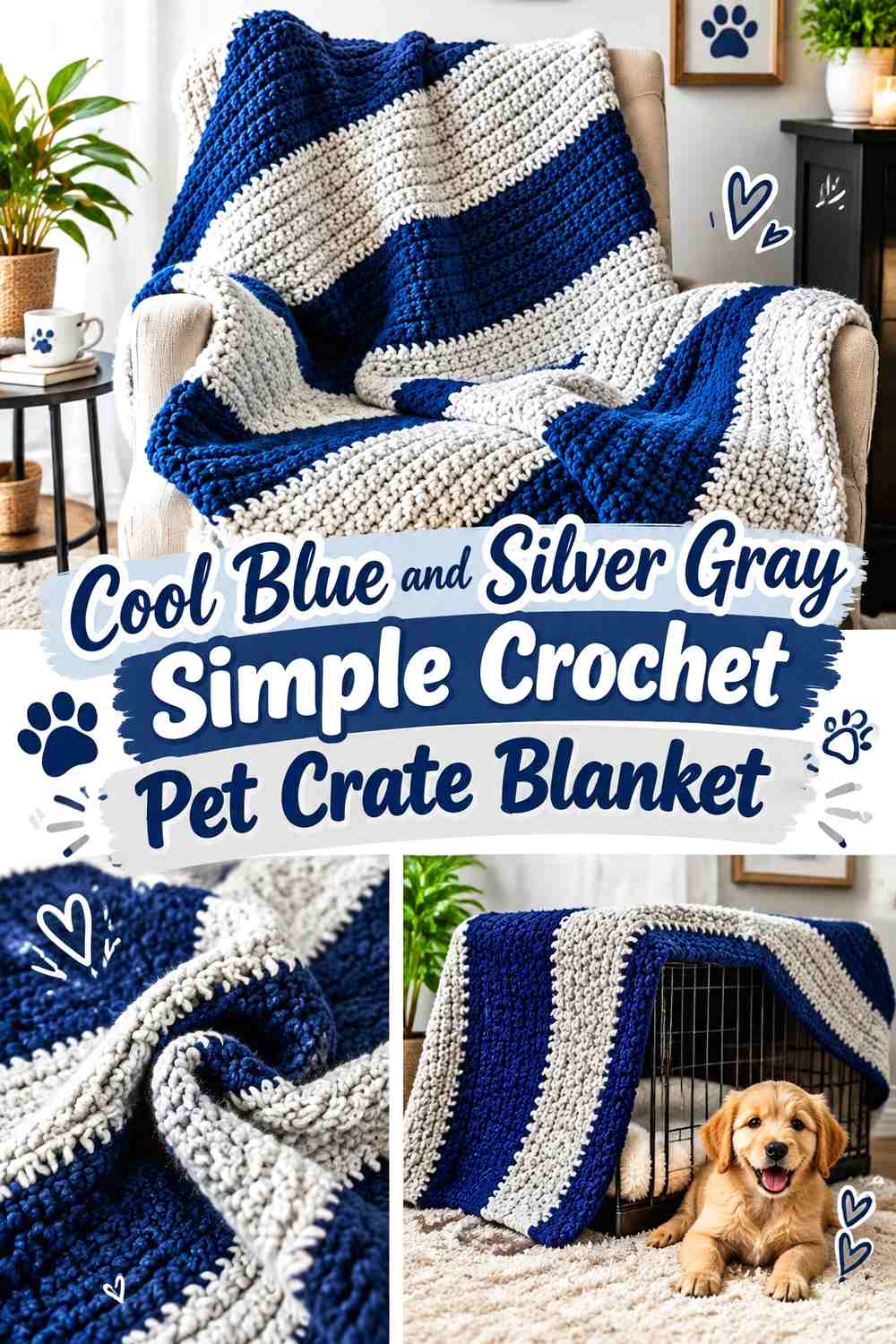
A straightforward rectangular blanket can rely almost entirely on proportion. Silver gray can cover the body while cool blue forms one clean outer border, giving the compact pet blanket enough contrast without adding complex surface pattern.
Silver Gray Can Keep the Crochet Crate Blanket Visually Quiet
Let gray run through most of the center and use the stitch repetition as the main source of texture.
This works particularly well when the crate area already contains patterned bedding or other colorful pet accessories.
Cool Blue Should Add One Clear Boundary Around Silver Gray
Use blue on the perimeter or along two selected sides. The accent becomes easier to read when it is structurally consistent.
If the blue and gray are nearly equal in value, choose a stronger blue-gray difference rather than increasing border width until it dominates.
Creator Credit: B.Hooked Crochet
9. Cool Blue and Silver Gray Color-Block Crochet Pet Crate Blanket
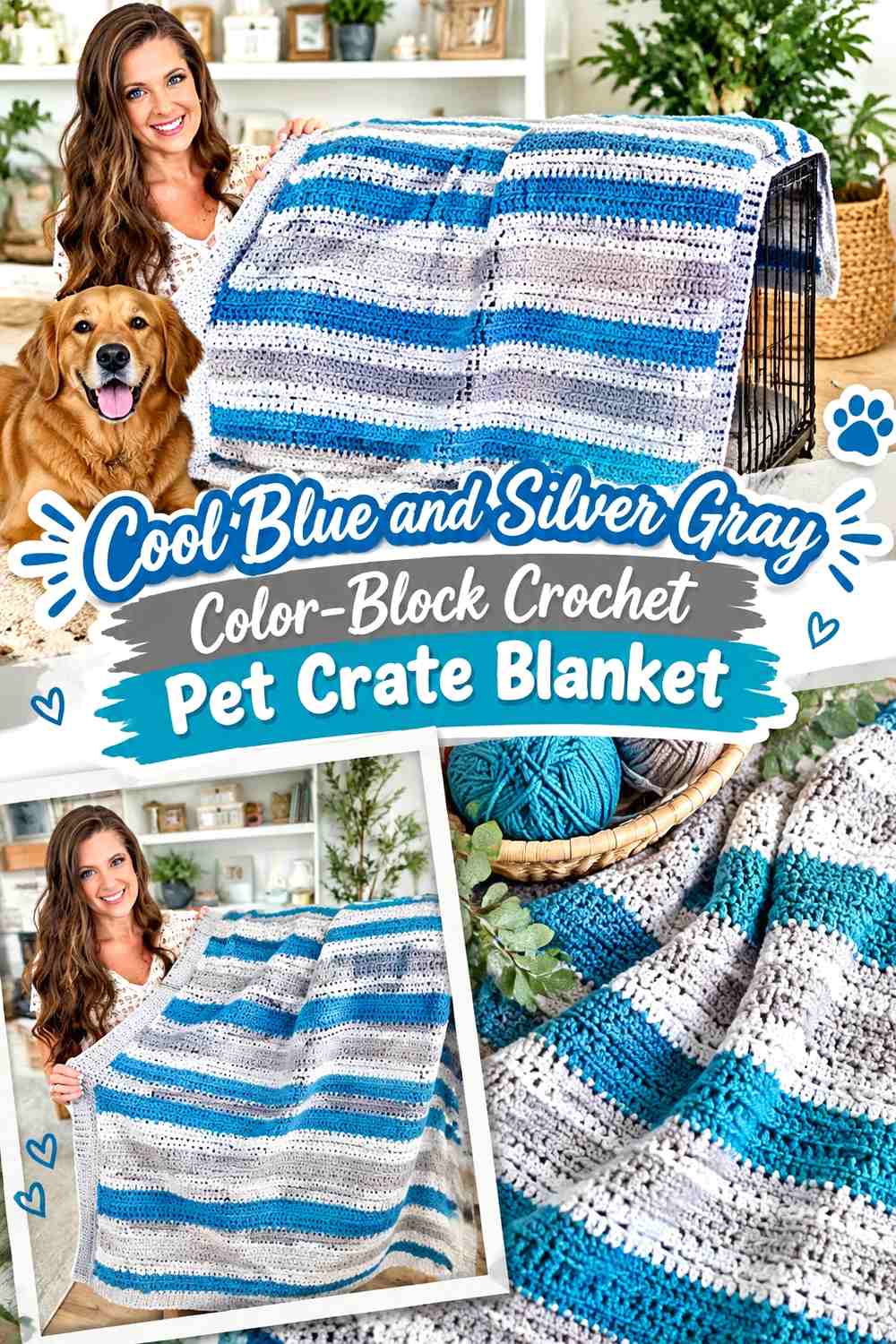
Large color blocks offer more variety than a border without creating many narrow stripes. Divide the blanket into a broad cool blue center or end section and a smaller silver gray zone, then use the existing colors for the finish.
Cool Blue Blocks Should Stay Large Enough for the Crate Blanket to Look Calm
One or two broad blue areas work better than numerous small rectangles on a compact blanket. Large blocks also leave more surface for crochet texture to remain visible.
Keep the strongest blue area where it will still be visible when the blanket is placed inside the crate.
Silver Gray Should Balance Cool Blue Instead of Splitting the Blanket Exactly in Half
An exact 50/50 division can make the blanket look like two unrelated pieces. Let one shade occupy slightly more surface or repeat the smaller shade in the border.
This produces a clearer dominant-and-supporting relationship.
Creator Credit: MJ’s Off The Hook Designs
10. Cool Blue and Silver Gray Wide-Band Crochet Pet Crate Blanket
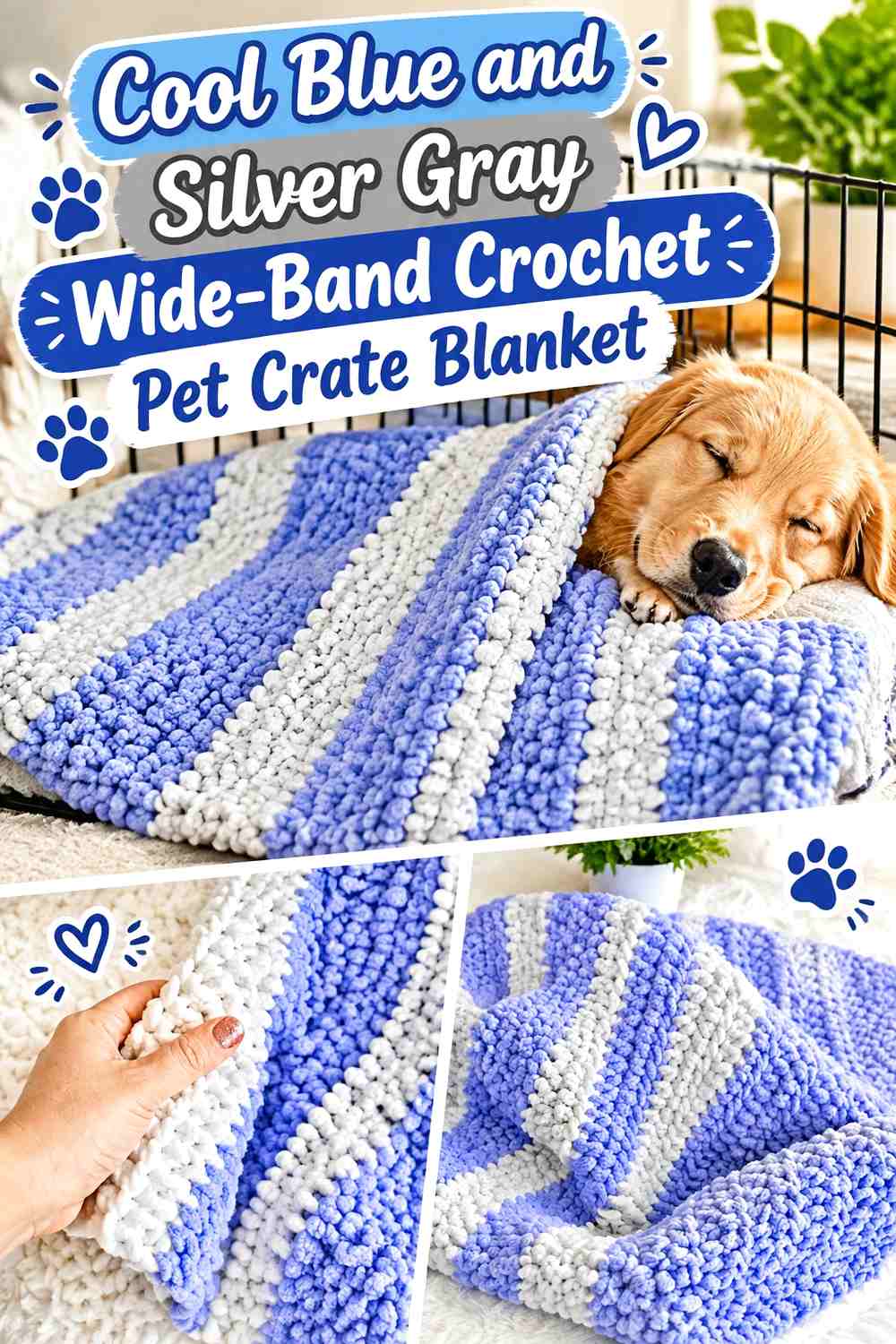
Wide horizontal bands give the blanket a strong winter stripe treatment while avoiding the visual busyness of micro-stripes. Cool blue should occupy the larger bands, with silver gray providing controlled breaks.
Cool Blue Bands Need More Width Than Silver Gray
Make blue the repeated dominant field so the blanket continues to read as cool blue even when several gray stripes are visible.
If the crate blanket is short, use fewer wide sections rather than compressing the stripe pattern.
Silver Gray Should Break Up Cool Blue Without Taking Over the Border
Use gray between blue bands, then finish the outer edge in one dominant color. Repeating the striped sequence around the entire perimeter can make the blanket overly patterned.
A solid edge also gives the stripe layout a clean visual endpoint.
Creator Credit: Bella Coco
11. Cool Blue and Silver Gray Midwinter-Texture Crochet Pet Crate Blanket
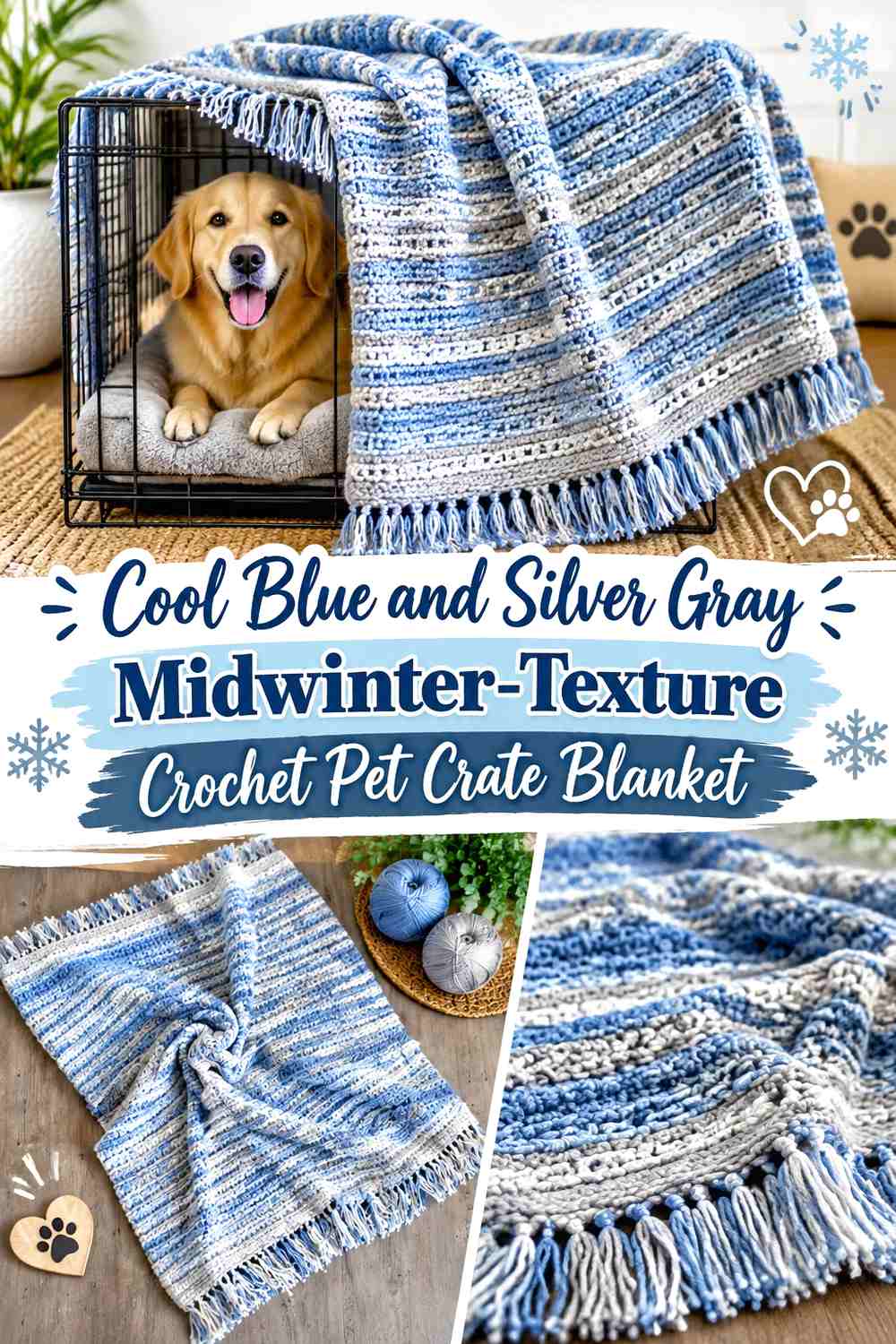
A strongly textured winter-style blanket does not need elaborate color placement. Cool blue can cover the textured center while silver gray appears on a broad border or one quieter section that lets the raised surface remain the focus.
Cool Blue Should Carry the Main Crochet Midwinter Texture
Keep the most dimensional stitch area in blue. A single hue allows shadows and raised sections to create their own visual variation.
If the chosen stitch forms pronounced ridges, inspect the finished fabric from both sides and decide which surface is more appropriate for the pet.
Silver Gray Can Calm the Edge of a Cool Blue Textured Blanket
Use gray on a comparatively simple border. The change in both color and surface can make the perimeter easier to distinguish from the center.
Avoid adding fringe or tassels just because a household throw tutorial uses them; a crate blanket generally benefits from cleaner edges.
Creator Credit: Rich Textures Crochet
12. Cool Blue and Silver Gray Entrelac-Block Crochet Pet Crate Blanket
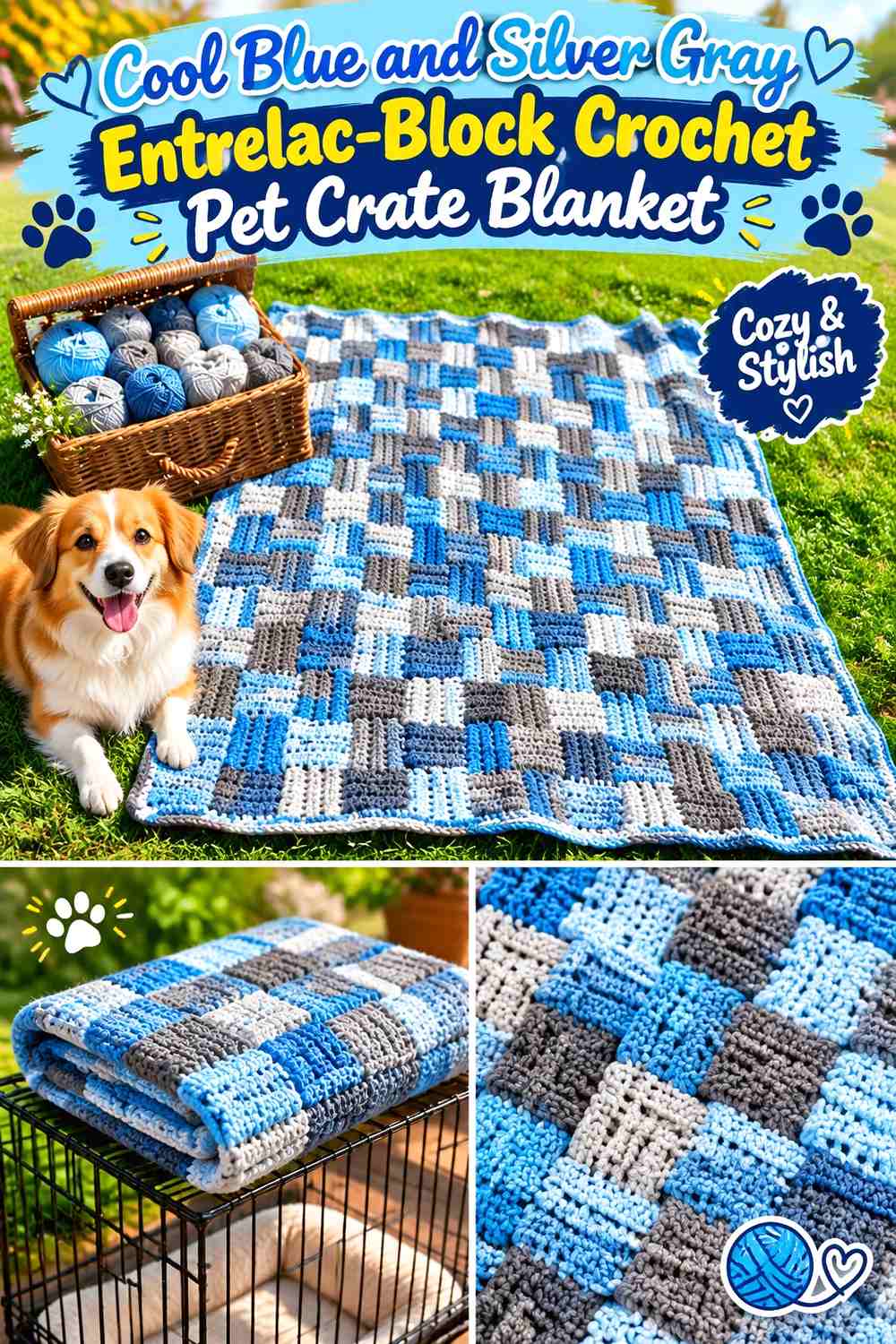
Entrelac-style blocks give the two colors a patchwork appearance without introducing additional hues. Alternate cool blue and silver gray in a controlled layout, then choose one shade to dominate the border.
Cool Blue Blocks Need a Clear Pattern Beside Silver Gray
Repeat blue in a consistent diagonal, alternating, or grouped arrangement rather than distributing it randomly.
A predictable layout helps the blocks remain connected even when part of the blanket is covered during use.
Silver Gray Should Not Make Every Cool Blue Block Look Isolated
If gray completely surrounds every blue section, the blanket can look like separate blue tiles on a gray field. Repeat adjacent blue blocks occasionally or use blue around the outer border to reconnect the palette.
Inspect any block joins carefully so the finished surface remains secure for pet use.
Creator Credit: Ophelia Talks Crochet
13. Cool Blue and Silver Gray Gingham-Style Crochet Pet Crate Blanket
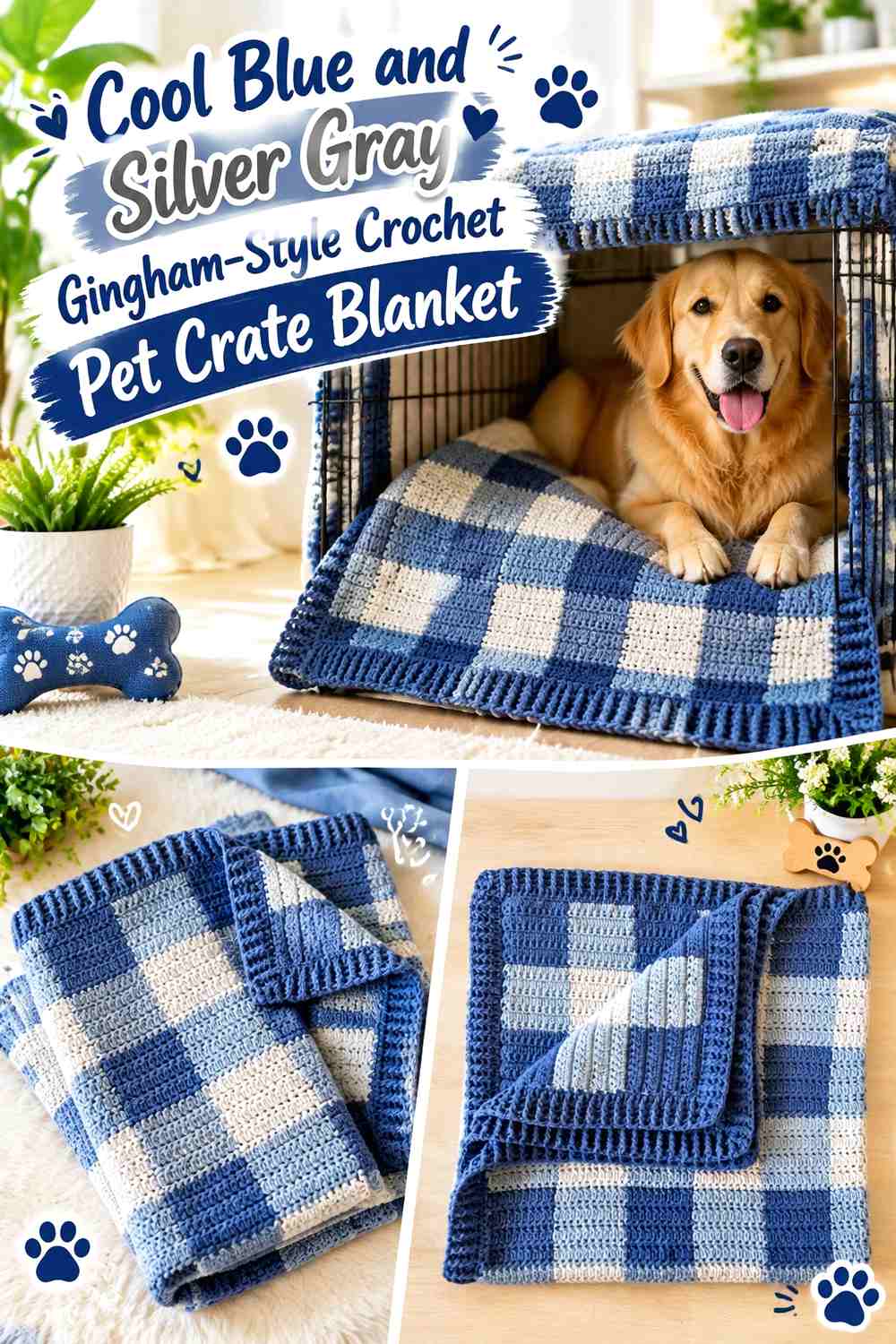
A gingham-style layout gives the final idea the strongest two-color grid. Cool blue and silver gray can alternate through large checks while one shade repeats consistently at the border to keep the compact blanket organized.
Cool Blue Checks Should Remain Large Beside Silver Gray
Use blocks large enough to be recognizable when the blanket is inside the crate. Tiny checks can turn into visual noise once the pet covers part of the surface.
Cool blue can also repeat around the border if you want it to remain the dominant shade overall.
Silver Gray Needs Consistent Value Contrast Against Cool Blue Checks
Gingham depends on the distinction between neighboring blocks, so test the two colors before committing to the layout.
If silver gray and cool blue merge in grayscale, adjust one shade lighter or darker. Stronger separation is more useful here than adding a third color solely to rescue the pattern.
Creator Credit: Daisy Farm Crafts
Which Cool Blue and Silver Gray Pet Crate Blanket Should You Choose?
For the simplest crate-friendly color plan, choose a solid cool blue center with silver gray edging or reverse the arrangement. These options keep the resting surface visually quiet and make it easy to resize the rectangle without disrupting a complicated pattern.
For more visible texture, the waffle, chunky, or Midwinter-style ideas let the stitches provide most of the interest while color stays controlled. Granny stripes and wide bands create stronger linear movement, while chevrons, entrelac blocks, and gingham make the two colors interact much more frequently.
If your pet tends to catch claws in open crochet, prioritize the denser-looking construction options and inspect the finished surface carefully rather than choosing solely by appearance.
Conclusion
Cool blue and silver gray suit a crochet winter crate blanket because both colors can create a restrained cold-season look while still giving the center, border, and texture distinct visual roles.
Let cool blue dominate when you want a clearer color statement, or use silver gray across most of the center for a more neutral crate setup. For patterned options, use broad stripes, blocks, or clearly spaced repeats instead of forcing many small color changes into a compact rectangle.
Fit the finished blanket to the actual crate floor and the individual pet. Check for bunching, loose ends, openings, raised loops, and decorative edging before regular use. Follow each credited tutorial for the blanket construction or stitch treatment it demonstrates, then make the cool blue and silver gray crate adaptation separately.
Frequently Asked Questions
Should cool blue or silver gray dominate a crochet pet crate blanket?
Either can lead. Cool blue creates a more obvious winter-color blanket, while silver gray makes the overall surface quieter and lets blue work as the accent. Choose the dominant shade based on whether you want the center or border to carry more color.
How much contrast should cool blue and silver gray have?
Enough that the important stripes, blocks, or border remain visible from normal viewing distance. If the yarns look almost identical in grayscale, choose a lighter or darker version of one shade before starting detailed colorwork.
Are stripes useful on a cool blue and silver gray crate blanket?
Yes, especially broad stripes. Wide bands usually remain clearer on a compact rectangle than many very narrow changes. Give one shade wider or more frequent bands if you want a definite dominant color.
What crochet textures work with cool blue and silver gray?
Waffle-style texture, simple repeated stitches, dense ribbing, granny stripes, geometric blocks, and other blanket constructions can all support the palette. For pet use, the important checkpoint is the finished fabric: inspect openings, raised loops, joins, and loose ends for the individual animal.
Should a crate blanket have fringe in cool blue or silver gray?
Fringe is unnecessary for the color scheme and can create loose strands inside a crate. A clean crocheted border gives you a safer-looking place to repeat the second color without adding dangling decoration.
How should I size a crochet pet crate blanket?
Measure the usable interior floor or tray of the actual crate and plan the blanket around that space. Avoid relying only on general crate-size labels, and account for how the crochet fabric will sit once the pet moves, turns, or lies on it.
Can I adapt a regular crochet blanket tutorial into a pet crate blanket?
Yes, when the stitch and finished fabric are suitable for the individual pet. Use the tutorial for its construction concept, then resize the rectangle, simplify decorative edges where necessary, and inspect the finished surface before putting it into regular crate use.