A crochet bunny hideaway mat combines two useful visual areas: an open floor mat for stretching out and a covered section where a rabbit can retreat. That makes color placement more interesting than on a plain pet mat. The flat surface can carry the dominant shade, while a tunnel, flap, pocket, entrance edge, or border introduces a second natural color without making the whole piece look striped.
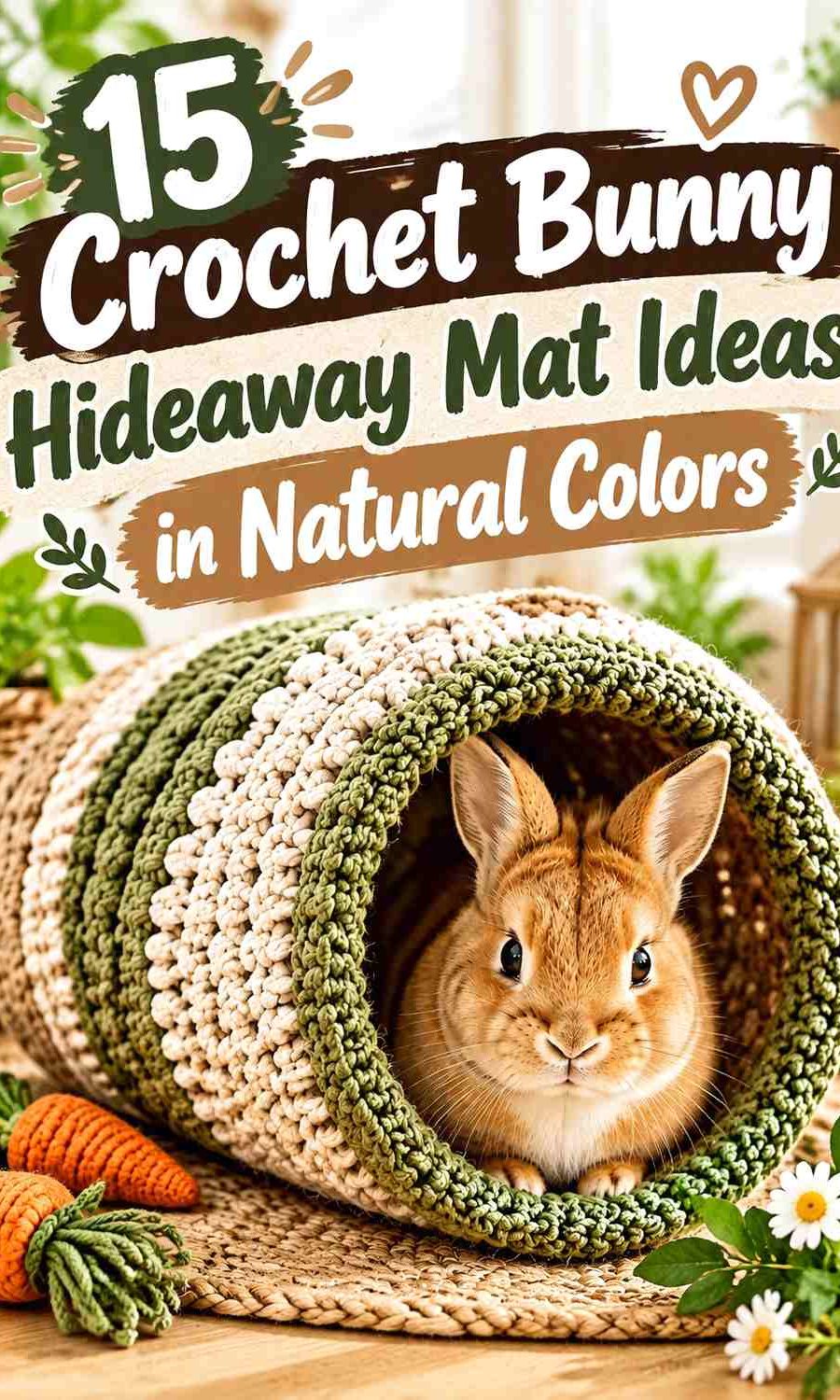
Earth-inspired palettes suit this format particularly well. Oatmeal and moss can create a light mat with a deeper shelter, mushroom and cocoa can emphasize the entrance, while clay and cream can make crochet texture easier to distinguish. The goal is not simply to collect beige and green yarns, but to decide which shade belongs on the exposed resting surface and which should define the hideaway.
Exact crochet rabbit hideaway-mat tutorials are limited, so the credited sources include pet mats, cat caves, pet beds, and related enclosed crochet constructions that provide useful foundations for the concept. The rabbit-specific hideaway layouts and natural palettes below are independent adaptations rather than claims about each creator’s finished project.
Quick List
- Oatmeal and Moss Crochet Bunny Hideaway Mat
- Mushroom Beige and Cocoa Crochet Bunny Hideaway Mat
- Sage Green and Cream Crochet Bunny Hideaway Mat
- Clay and Oatmeal Crochet Bunny Hideaway Mat
- Flax and Olive Crochet Bunny Hideaway Mat
- Sand and Chestnut Crochet Bunny Hideaway Mat
- Stone Gray and Warm Beige Crochet Bunny Hideaway Mat
- Taupe and Ivory Crochet Bunny Hideaway Mat
- Bark Brown and Moss Crochet Bunny Hideaway Mat
- Natural Cream and Terracotta Crochet Bunny Hideaway Mat
- Wheat and Forest Green Crochet Bunny Hideaway Mat
- Pebble Gray and Oatmeal Crochet Bunny Hideaway Mat
- Camel and Sage Crochet Bunny Hideaway Mat
- Cocoa and Dusty Clay Crochet Bunny Hideaway Mat
- Linen and Woodland Green Crochet Bunny Hideaway Mat
Let the Mat and Hideaway Use Different Natural Color Roles
The flat mat usually occupies more visible area than the covered section, so it is a logical place for the dominant color. A quieter oatmeal, flax, sand, or mushroom shade can cover that surface while moss, cocoa, olive, or forest green defines the shelter.
Reversing the balance creates a different effect. A deep moss mat with an oatmeal hideaway makes the covered section lighter and more obvious. Decide which part you want to emphasize before introducing narrow borders and secondary accents.
Keep Crochet Bunny Hideaway Entrances Easy to See
Similar earthy shades can merge once they are worked into textured crochet. Mushroom beige and taupe may look different in skeins but provide little light-dark contrast at the edge of a small opening.
Compare the colors together before making the full piece. If the entrance needs more definition, reserve the lightest or darkest shade for its edge rather than adding an unrelated third color.
Keep Natural-Color Bunny Mats Simple Around Chewing and Claws
Decorative color does not require tassels, loose fringe, buttons, or dangling appliqués. For a rabbit-use mat, flat color changes and securely finished borders provide plenty of visual detail without introducing unnecessary pieces to pull.
Inspect crochet regularly if your rabbit digs, chews, or catches nails in the fabric. If yarn is being pulled loose or eaten, remove the mat rather than assuming a crocheted fiber item is suitable for continued chewing.
1. Oatmeal and Moss Crochet Bunny Hideaway Mat
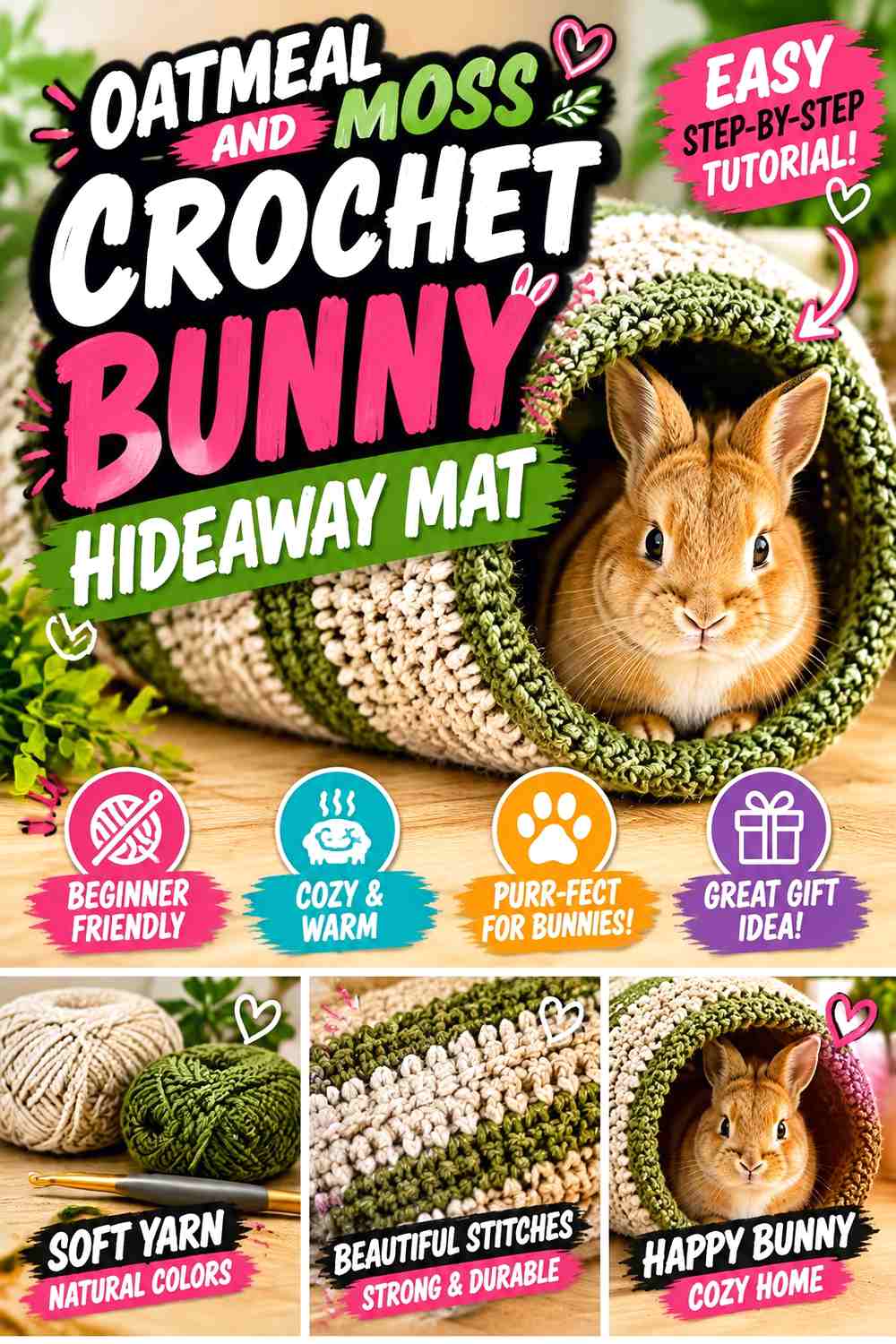
Oatmeal makes a practical visual base for the broad resting surface, while moss creates a darker covered section that immediately identifies the hideaway. Keep most of the open mat oatmeal and allow moss to cover the tunnel or flap, then repeat only a narrow moss line around the outer edge if the two sections need stronger coordination.
Oatmeal Keeps the Crochet Bunny Mat Surface Light and Uncluttered
Use oatmeal across the largest uninterrupted resting area so crochet texture can remain visible without frequent color changes. This is particularly useful when the mat itself has a pronounced stitch surface.
If you substitute another neutral, preserve oatmeal’s light warm role so moss still provides an obvious change at the sheltered section.
Moss Can Define the Oatmeal Crochet Bunny Hideaway Entrance
A moss-covered pocket or tunnel creates a clear visual destination on the lighter mat. Keeping the entrance edge moss as well prevents the hideaway from looking like a separate piece placed randomly on top.
If the moss shade is extremely dark, a narrow oatmeal repeat just inside the entrance can reconnect it to the mat.
Creator Credit: HodgePodge Crochet Tutorial
2. Mushroom Beige and Cocoa Crochet Bunny Hideaway Mat

Mushroom beige and cocoa create a tonal woodland palette without introducing green. Mushroom can cover the open mat, while cocoa gives the hideaway roof and entrance enough depth to remain clearly defined.
Mushroom Beige Can Lead Across the Crochet Bunny Hideaway Mat
Give mushroom beige most of the floor surface rather than alternating it repeatedly with brown. The larger neutral field makes the mat feel calm and also leaves enough visual room for the covered section to become the focal point.
A slightly grayer beige can substitute if it remains noticeably lighter than cocoa.
Cocoa Can Frame the Mushroom Beige Crochet Bunny Hideaway
Use cocoa across the covered section and around its opening. Because the shade is considerably deeper, it needs little additional decoration.
If you want cocoa repeated elsewhere, a narrow outer mat border is more cohesive than adding several isolated brown stripes across the resting surface.
Creator Credit: Ninja Bunny Crochet Tutorial
3. Sage Green and Cream Crochet Bunny Hideaway Mat
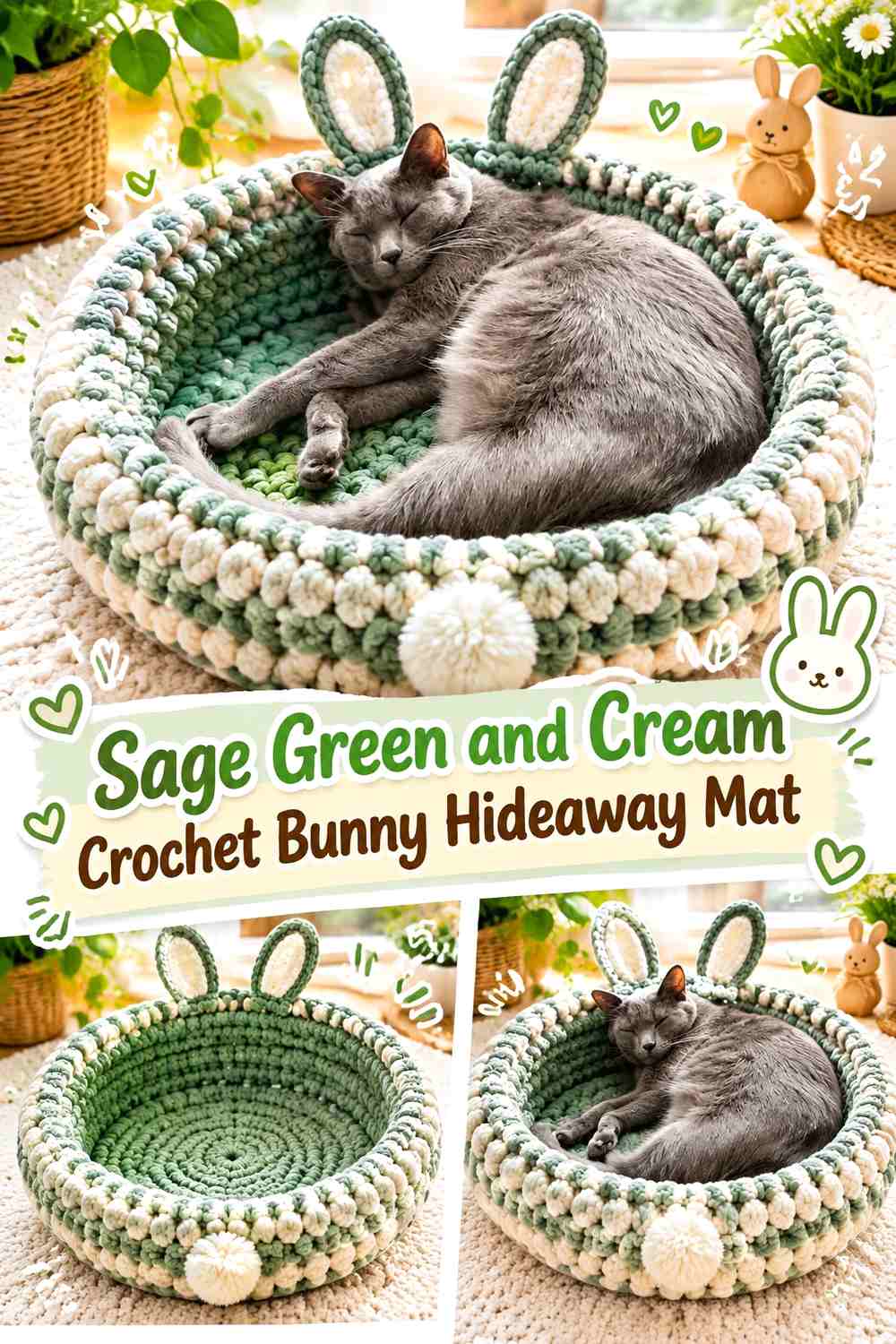
Sage gives the mat a muted botanical direction, while cream can lighten the shelter and entrance. This palette reverses the usual light-mat/dark-hideaway arrangement and makes the covered area easier to notice.
Sage Green Can Cover the Main Crochet Bunny Mat Surface
Let sage extend across most of the exposed mat so the green reads as one continuous natural field. A solid area also keeps the mat from looking too decorative for a rabbit enclosure.
If your sage is extremely pale, choose a cream with enough visible separation to keep the hideaway distinct.
Cream Can Make the Sage Green Crochet Bunny Shelter Feel Lighter
Use cream for the covered pocket or roof and repeat sage only around its entrance. That small green outline reconnects the lighter shelter to the mat beneath it.
Avoid scattering cream through multiple narrow mat stripes if the goal is a sage-led natural palette.
Creator Credit: Katia Creates Tutorial
4. Clay and Oatmeal Crochet Bunny Hideaway Mat

Clay brings earthy warmth without becoming bright orange, while oatmeal prevents the hideaway mat from becoming visually heavy. Clay can lead across the mat and oatmeal can mark the covered area, or the colors can be reversed for a darker shelter.
Clay Can Give the Crochet Bunny Mat a Warm Earth-Tone Base
Use clay across the open resting section where its muted warmth has enough area to register. Keep the surface largely solid if the crochet already has visible texture.
A muted terracotta can substitute, provided it remains earthy rather than intensely saturated.
Oatmeal Can Separate the Clay Crochet Bunny Hideaway From the Mat
An oatmeal roof or flap immediately distinguishes the covered portion. Repeat a narrow clay edge around its entrance so the shelter does not appear disconnected from the surface beneath it.
This is also a good palette for avoiding extra accent colors; the light-dark relationship already supplies enough definition.
Creator Credit: History in Stitches Tutorial
5. Flax and Olive Crochet Bunny Hideaway Mat

Flax provides a straw-like neutral direction visually, while olive gives the covered shelter a deeper botanical tone. The two colors work best when olive stays concentrated instead of spreading evenly across the whole mat.
Flax Can Dominate the Crochet Bunny Hideaway Mat Surface
Use flax over the flat resting area and allow its lighter value to show the stitch pattern. A broad neutral surface can also make the hideaway appear more substantial without changing its construction.
Olive Can Give the Flax Crochet Bunny Hideaway a Clear Boundary
Use olive on the roof, pocket, or tunnel and around the opening. A small olive outer border can repeat the shade without interrupting the main flax field.
If the selected olive and flax look too similar in grayscale, deepen the olive rather than introducing a third color.
Creator Credit: Esperanza y Ana Celia Rosas (Tejiendo Perú) Tutorial
6. Sand and Chestnut Crochet Bunny Hideaway Mat

Sand and chestnut create a warmer high-contrast neutral palette. Sand works well on the exposed mat where it keeps the overall piece light, while chestnut can turn the covered shelter into a clearly defined retreat.
Sand Keeps the Crochet Bunny Mat From Becoming Too Dark
Give sand the majority of the horizontal surface. Since a bunny hideaway often already creates shadows underneath its cover, a lighter floor prevents the entire sheltered area from visually collapsing into one dark shape.
Chestnut Can Anchor the Sand Crochet Bunny Hideaway Roof
Cover the tunnel or flap in chestnut and use the same brown around its opening. The darker shade creates enough definition that extra stripes are unnecessary.
If you repeat chestnut around the mat border, keep it narrow so sand remains the dominant color.
Creator Credit: Bag-O-Day Crochet Tutorial
7. Stone Gray and Warm Beige Crochet Bunny Hideaway Mat
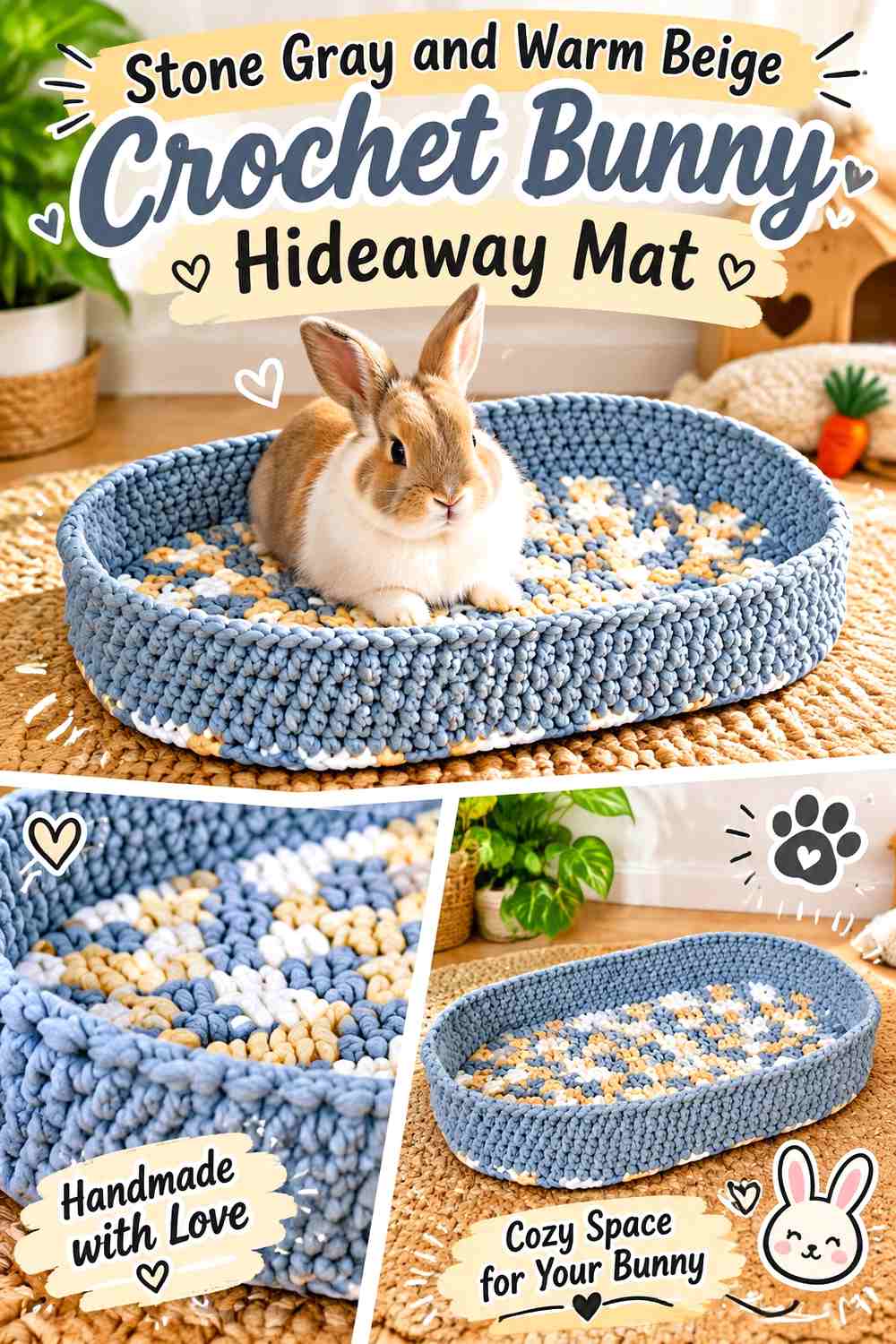
Stone gray and warm beige combine cool and warm neutrals without relying on strong color. Use gray across the mat and beige for the shelter if you want the covered area to feel warmer, or reverse them for a deeper, stone-like hideaway.
Stone Gray Can Create a Quiet Crochet Bunny Mat Background
A broad gray mat works particularly well when the stitch pattern already supplies surface interest. Keeping it mostly one shade avoids turning a small rabbit resting space into a busy patchwork.
Warm Beige Can Soften the Stone Gray Crochet Bunny Hideaway
Use beige for the shelter roof and entrance edging. The change in temperature provides distinction even when the two colors are not extremely far apart in value.
Check them together before committing; if both are middle-value shades, a slightly lighter beige will make the hideaway outline clearer.
Creator Credit: MummaJ Crochet Tutorial
8. Taupe and Ivory Crochet Bunny Hideaway Mat
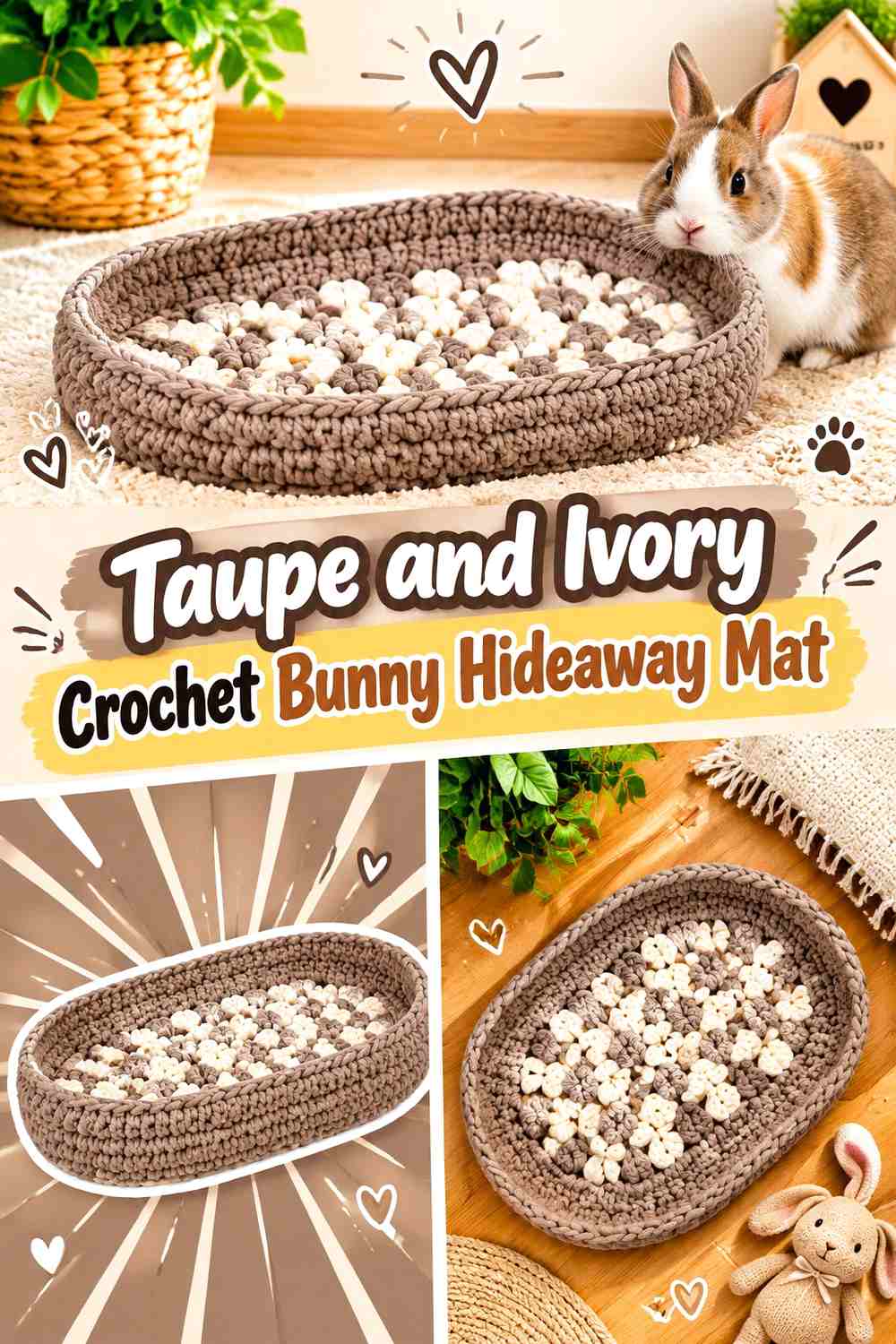
Taupe gives the mat a deeper neutral surface while ivory turns the hideaway into the lighter feature. This palette works especially well when the opening edge is intentionally outlined in taupe.
Taupe Can Ground the Crochet Bunny Hideaway Mat
Use taupe across the mat surface and perhaps along the underside edge. Its medium depth gives ivory enough contrast without creating the heavier appearance of dark brown.
Ivory Can Make the Taupe Crochet Bunny Hideaway Easy to Identify
Let ivory cover the sheltered section and finish its entrance with a narrow taupe border. That repeated darker edge visually connects the two sections and helps preserve the opening shape.
Avoid ivory fringe or dangling trim; the color contrast can be achieved with a flat crocheted border.
Creator Credit: The Crochet Crowd Tutorial
9. Bark Brown and Moss Crochet Bunny Hideaway Mat
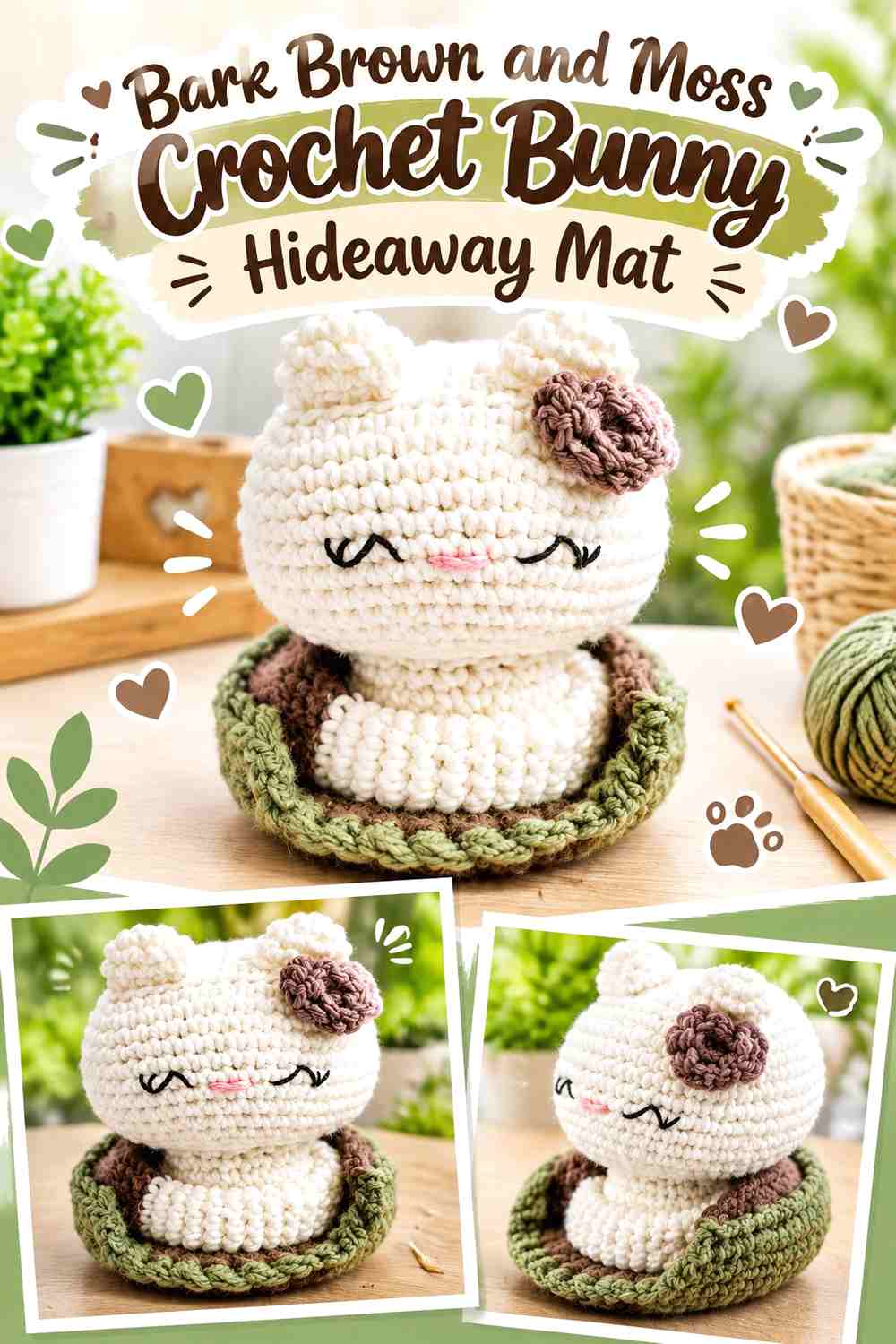
Bark brown and moss produce the darkest woodland palette in the collection. Because both shades can carry similar visual weight, placement matters more than simply alternating them.
Bark Brown Can Anchor the Crochet Bunny Mat Surface
Use bark brown as the main field and keep it uninterrupted across most of the mat. This makes the piece read as one resting surface rather than several small blocks.
If the brown is very deep, consider placing the lighter of your two shades at the entrance so the hideaway does not disappear.
Moss Needs Clear Placement Against the Bark Brown Crochet Hideaway
Use moss across the covered section but consider repeating bark brown around the opening. That boundary preserves the distinction between roof and entrance.
If brown and moss merge in grayscale, select a lighter moss rather than adding numerous light decorative stripes.
Creator Credit: Yarn Society Tutorial
10. Natural Cream and Terracotta Crochet Bunny Hideaway Mat
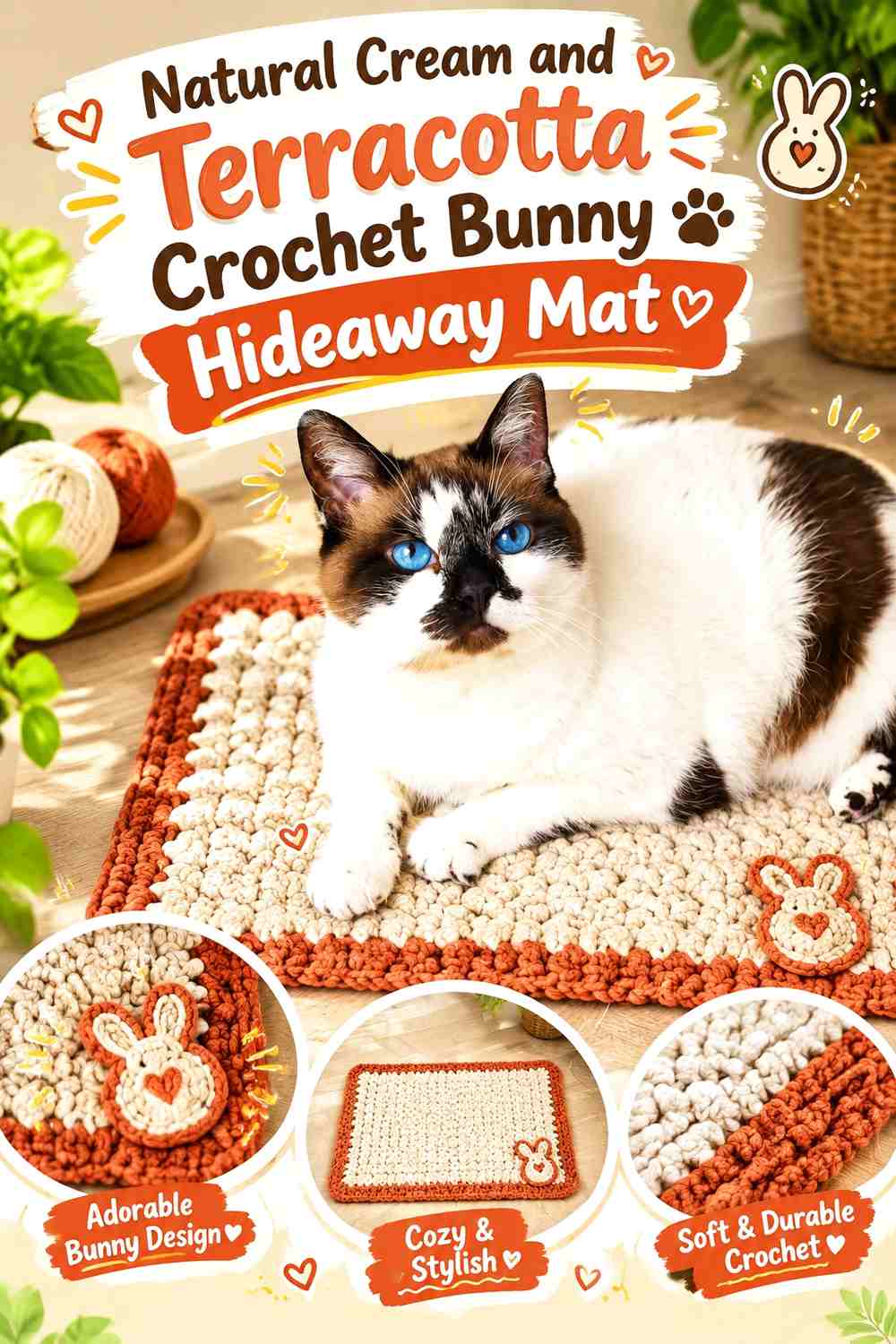
Natural cream and terracotta provide one of the strongest warm contrasts in the list. Cream can cover the mat while terracotta marks the hideaway, creating a clear earthy focal point without requiring a third shade.
Natural Cream Gives the Crochet Bunny Mat Plenty of Visual Space
Use natural cream across the open mat and let stitch texture provide most of the detail. Because the surface is light, a terracotta shelter will stand out even if it covers only a relatively small portion.
Terracotta Can Turn the Natural Cream Crochet Bunny Hideaway Into the Focal Area
Use terracotta on the tunnel or flap and around the opening. A thin terracotta outer border can repeat the accent on the mat without disrupting its neutral field.
If you want a softer version, choose a muted clay-red rather than reducing the contrast with several extra beige stripes.
Creator Credit: First The Coffee Crochet Tutorial
11. Wheat and Forest Green Crochet Bunny Hideaway Mat
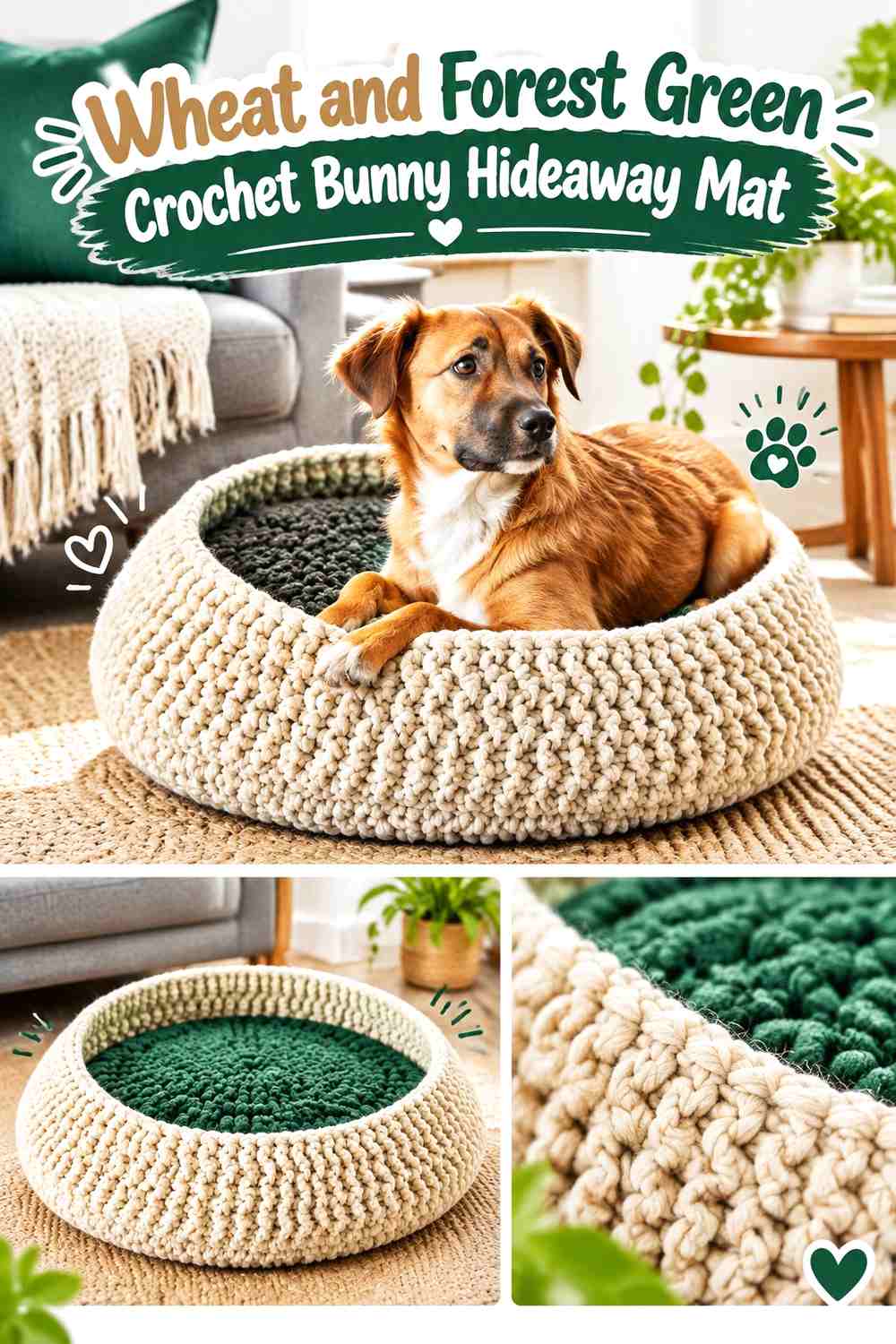
Wheat creates a light golden-neutral mat while forest green gives the shelter considerably more visual depth. This palette has enough contrast that the covered section can stay simple.
Wheat Can Keep the Crochet Bunny Mat Surface Warm and Light
Use wheat through most of the flat mat, especially if you want a warmer alternative to cream or gray. The broad field also prevents forest green from taking over the complete project.
Forest Green Can Define the Wheat Crochet Bunny Hideaway With Minimal Trim
A forest-green roof and matching entrance edge provide plenty of contrast. Rather than adding several green stripes to the mat, repeat the shade only once around the outer perimeter if stronger coordination is needed.
The result keeps the mat readable as wheat-led while still giving the shelter a distinct woodland identity.
Creator Credit: Yarnspirations Tutorial
12. Pebble Gray and Oatmeal Crochet Bunny Hideaway Mat

Pebble gray and oatmeal produce a soft stone-and-grain palette with moderate contrast. Use gray on the exposed surface and oatmeal on the covered portion for a lighter shelter, or reverse them when you want the hideaway to recede.
Pebble Gray Can Keep the Crochet Bunny Mat Neutral Without Looking Flat
Choose a gray with enough depth to distinguish it from oatmeal and give it the largest surface area. A solid gray mat also makes any raised crochet texture easier to notice than a multistripe layout.
Oatmeal Can Lighten the Pebble Gray Crochet Bunny Hideaway Entrance
Use oatmeal on the covered section and repeat pebble gray around the entrance. That darker outline helps the opening remain visible while keeping the overall palette quiet.
Creator Credit: Jayda InStitches Tutorial
13. Camel and Sage Crochet Bunny Hideaway Mat

Camel and sage give equal warmth and botanical color without either becoming very dark. The combination benefits from a clear assignment: camel for the mat and sage for the shelter rather than constant alternation.
Camel Can Carry the Main Crochet Bunny Hideaway Mat
Use camel across the open resting area and preserve a broad uninterrupted field. Its warm neutral quality gives sage a natural-looking background without requiring cream as a separator.
Sage Can Distinguish the Camel Crochet Bunny Hideaway Cover
Use sage over the covered area and repeat it once along the mat border or entrance transition. If the two shades have similar lightness, select a somewhat deeper sage so the shelter outline remains obvious.
Creator Credit: Crocheted by Julia Tutorial
14. Cocoa and Dusty Clay Crochet Bunny Hideaway Mat
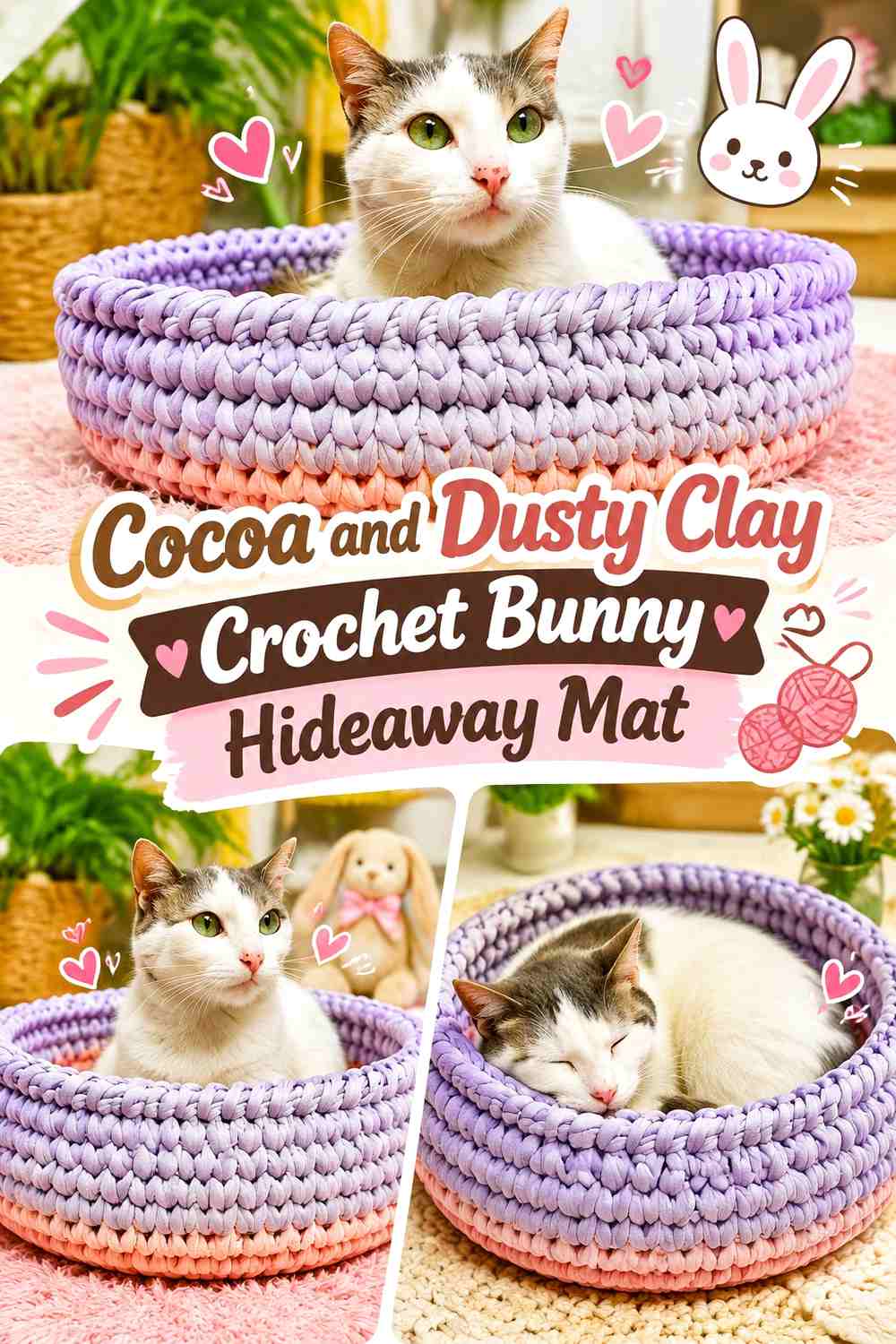
Cocoa and dusty clay create a richer earth palette without a pale neutral. Cocoa can anchor the mat, while dusty clay gives the covered section enough warmth to remain separate.
Cocoa Can Give the Crochet Bunny Mat a Deep Natural Base
Use cocoa over the largest flat section and keep the color distribution simple. Because this is already a dark main field, avoid widening the border unnecessarily.
Dusty Clay Can Warm the Cocoa Crochet Bunny Hideaway
A dusty-clay cover creates hue contrast even if its light-dark value is not dramatically different from cocoa. Use cocoa around the entrance to reconnect the two areas.
Check the pair from a distance before making the full shelter. If the opening becomes difficult to see, choose a lighter clay rather than introducing a bright accent unrelated to the natural palette.
Creator Credit: Agua Y Panela Tutorial
15. Linen and Woodland Green Crochet Bunny Hideaway Mat
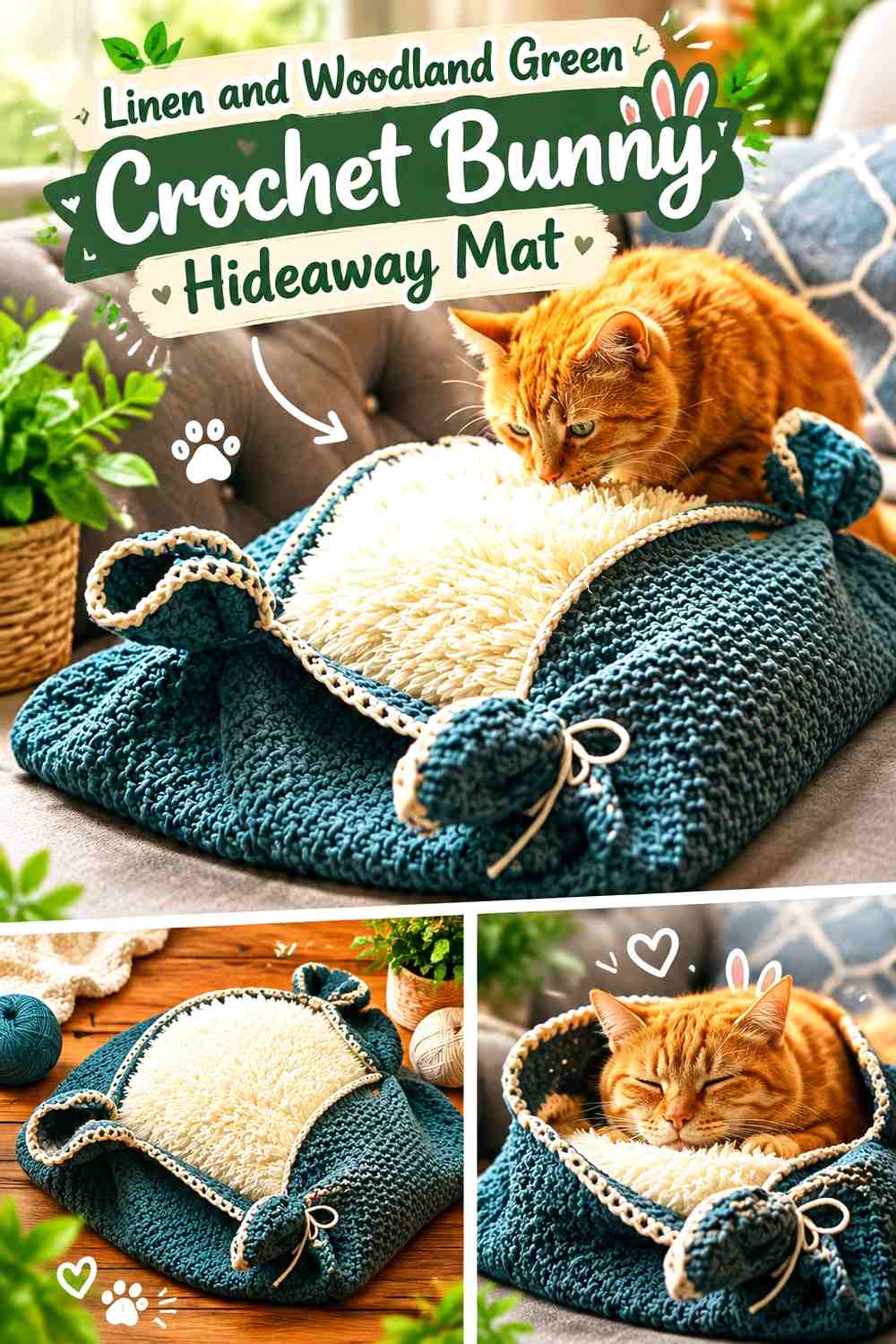
Linen and woodland green create a light-and-dark natural palette with a strong botanical direction. Linen works particularly well for a broad rectangular mat, while the green can define the tunnel, pocket, or raised shelter.
Linen Can Keep the Crochet Bunny Hideaway Mat Visually Open
Use linen across most of the resting surface so the mat remains light and easy to distinguish from its cover. If the stitch pattern has pronounced texture, limiting color changes also keeps that texture readable.
Woodland Green Can Give the Linen Crochet Bunny Hideaway a Clear Entrance
Use woodland green across the sheltered section and around its opening. A narrow green mat border can complete the color relationship without reducing linen’s dominant role.
If you substitute the green, preserve a noticeable light-dark difference from linen so the hideaway remains visually separate.
Creator Credit: Noor’s Knits Tutorial
Which Natural Crochet Bunny Hideaway Mat Palette Should You Choose?
For the lightest overall look, oatmeal and moss, sage and cream, taupe and ivory, or linen and woodland green give the resting surface or shelter plenty of light neutral space. These palettes also make a contrasting entrance easier to define.
For a warmer earth-tone direction, clay and oatmeal, sand and chestnut, natural cream and terracotta, camel and sage, or cocoa and dusty clay introduce brown, orange, and muted green without becoming highly saturated.
Mushroom and cocoa, stone gray and beige, or pebble gray and oatmeal are quieter choices when you want the crochet texture and shelter shape to matter more than the color contrast. Bark brown and moss provides the deepest woodland effect, but checking the values carefully will help keep the entrance visible.
Conclusion
A crochet bunny hideaway mat benefits from a simple color hierarchy. Give the broad mat surface one dominant natural shade, use a second color to distinguish the covered retreat, and repeat that supporting shade only where it helps connect the border or entrance.
Oatmeal, linen, wheat, cream, and flax create lighter resting surfaces. Moss, olive, forest green, cocoa, chestnut, and bark brown are useful when you want the hideaway itself to carry more visual weight. Clay, terracotta, camel, and mushroom provide middle-ground options for softer earthy contrast.
Use the credited tutorials for their actual pet-mat, pet-bed, or cave construction concepts rather than treating them as rabbit-specific patterns. Fit the final idea to the space your rabbit actually uses, keep loose embellishments out of the design, and inspect crocheted surfaces regularly for pulled or chewed yarn.
Frequently Asked Questions
What Natural Colors Work Well for a Crochet Bunny Hideaway Mat?
Oatmeal, cream, flax, linen, mushroom beige, taupe, camel, cocoa, clay, sage, moss, olive, forest green, and stone gray all fit an earthy palette. Two well-separated shades are usually more useful than several similar neutrals competing across a small mat.
Should the Crochet Bunny Hideaway Be Darker Than the Mat?
It can be. A moss, cocoa, or forest-green hideaway on an oatmeal or linen mat creates an obvious sheltered zone. Reversing the relationship works too; a cream shelter over a sage or taupe mat produces a lighter focal point.
How Many Colors Should I Use on a Crochet Bunny Hideaway Mat?
Two colors are often enough. One can cover the main mat while the second defines the tunnel, pocket, roof, entrance, or border. A third shade is most useful when it has one clear job instead of being added simply for variety.
How Can I Make the Crochet Bunny Hideaway Entrance More Visible?
Increase the light-dark difference at the opening. A cocoa edge against mushroom beige, forest green against wheat, or oatmeal against moss will usually create more definition than two colors with similar value. Comparing the yarns in grayscale can help before you crochet the full piece.
Can I Add Tassels or Fringe to a Natural Crochet Bunny Mat?
For a rabbit-use item, flat color changes are the simpler choice. Loose fringe and dangling decorations can be pulled or chewed, so the natural palette is better expressed through borders, panels, and entrance edging.
Can I Adapt a Crochet Cat Mat or Pet Cave Tutorial for a Bunny Hideaway?
A pet mat, bed, or cave can provide a useful construction reference, but the finished proportions should be planned for the individual rabbit and its space. Do not assume dimensions intended for another animal automatically transfer to a bunny setup.
What Should I Check Before Letting My Rabbit Use a Crochet Hideaway Mat?
Check that the mat lies securely, the covered section does not obstruct comfortable entry and exit, and there are no loose yarn ends or decorations. Inspect the crochet regularly after use; if the rabbit is pulling out or ingesting fibers, remove the item rather than allowing continued access.