Crochet dog pajamas offer more places for color planning than a simple vest because the body, neckline, leg openings, sleeves, belly section, and lower edging can all carry different visual roles. For a winter look, the clearest outfits usually let one deeper or muted shade cover most of the torso while a lighter supporting color defines cuffs and other smaller areas.
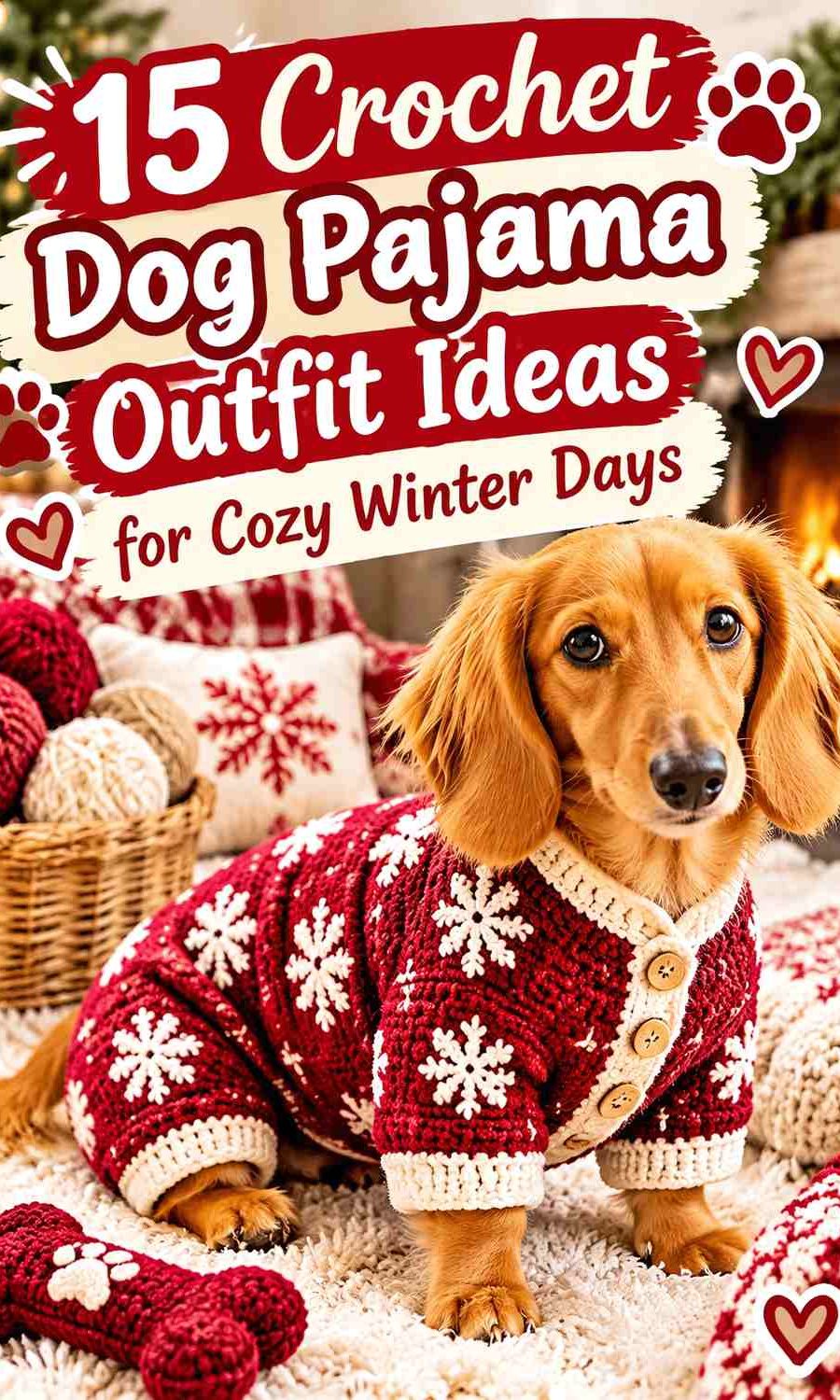
Color placement also affects how easily you can read the garment shape. A cream cuff against cranberry makes the sleeve boundary obvious, while plum and mauve create a softer tonal transition. Neither approach is automatically better; the useful choice depends on whether you want defined pajama-style trim or a more blended one-color appearance.
The tutorials credited below support crochet dog sweaters, coats, long-sleeve garments, and related pet-wear construction. Not every source is literally a four-legged pajama tutorial, so the pajama styling and color placement are editorial adaptations rather than descriptions of the creator’s finished project. Fit should always be checked on the individual dog before extending sleeves or body coverage.
Quick List
- Cranberry and Cream Crochet Dog Pajama Outfit
- Forest Green and Oatmeal Crochet Dog Pajama Outfit
- Dusty Blue and Ivory Crochet Dog Pajama Outfit
- Cocoa Brown and Caramel Crochet Dog Pajama Outfit
- Burgundy and Blush Crochet Dog Pajama Outfit
- Sage Green and Cream Crochet Dog Pajama Outfit
- Navy and Camel Crochet Dog Pajama Outfit
- Plum and Mauve Crochet Dog Pajama Outfit
- Rust and Mustard Crochet Dog Pajama Outfit
- Charcoal and Brick Red Crochet Dog Pajama Outfit
- Teal and Warm Beige Crochet Dog Pajama Outfit
- Lavender and Soft Gray Crochet Dog Pajama Outfit
- Chestnut and Buttercream Crochet Dog Pajama Outfit
- Moss Green and Terracotta Crochet Dog Pajama Outfit
- Espresso and Soft Peach Crochet Dog Pajama Outfit
Plan Cozy Dog Pajama Colors Around the Body and Sleeves
The torso usually creates the largest visible color block, so decide on that shade first. Then assign a supporting color to areas where it actually helps: the neckline, sleeve cuffs, leg openings, lower edge, or a limited stripe across the back.
For longer pajama-style sleeves, repeated cuff color can make all four leg sections feel connected. That does not mean every sleeve needs several stripes. A solid body shade with one consistent contrast cuff often reads more clearly than multiple small bands on every leg.
Keep Winter Crochet Texture Visible With Light and Dark Contrast
Color and stitch texture can compete. If a dog pajama outfit uses raised stitches, ribbing, or another noticeably textured surface, frequent stripes may make that texture harder to see.
Compare the proposed yarn colors side by side before committing. Two different hues can have very similar light-dark value. A grayscale photo is a simple way to check whether a cuff, stripe, or neckline will remain distinct once the yarn becomes textured crochet fabric.
Check Dog Pajama Fit Before Extending Sleeves or Adding Trim
Pajama styling should not require restrictive coverage. Check the neck, chest, shoulders, front-leg movement, belly area, back length, and any rear-leg sections against the individual dog rather than assuming a generic size will fit.
Keep crochet away from paw pads, make sure cuffs do not bunch into joints, and leave appropriate clearance around toileting areas. If a garment twists, slides, restricts movement, or prompts persistent chewing or scratching, reassess the fit before adding decorative color details.
1. Cranberry and Cream Crochet Dog Pajama Outfit
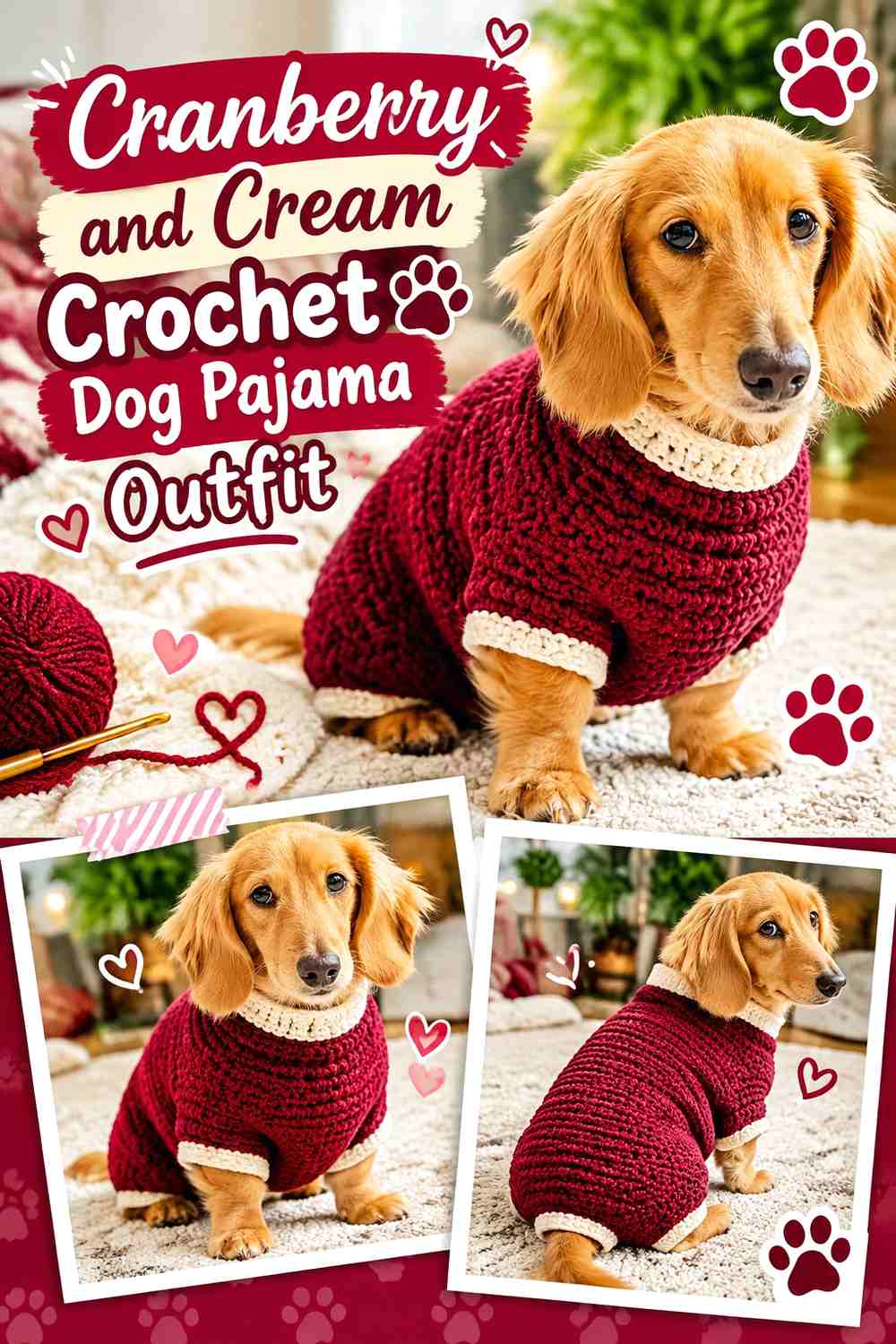
Cranberry creates a rich winter main color, while cream gives the pajama edges enough lightness to stay clearly visible. Let cranberry cover most of the torso and upper sleeves, then repeat cream at the neckline and cuffs. This creates a connected pajama look without breaking the body into many narrow stripes.
Cranberry Can Lead Across the Crochet Dog Pajama Body
Use cranberry through the broad back and side sections so the outfit has one continuous visual foundation. On a small dog especially, too many cream body stripes can make the torso appear divided into several tiny sections.
If you want more variation, one wider cream band near the upper body will usually have more impact than numerous narrow bands.
Cream Can Define Cranberry Crochet Dog Pajama Cuffs
Cream is most useful where the silhouette changes: sleeve ends, neckline, and perhaps the lower body edge. Repeating it at these boundaries makes the pajama construction easier to read.
Keep lower leg trim well above the paws and check that a contrast cuff does not migrate downward during walking.
Creator Credit: Crochet with Tiffany
2. Forest Green and Oatmeal Crochet Dog Pajama Outfit
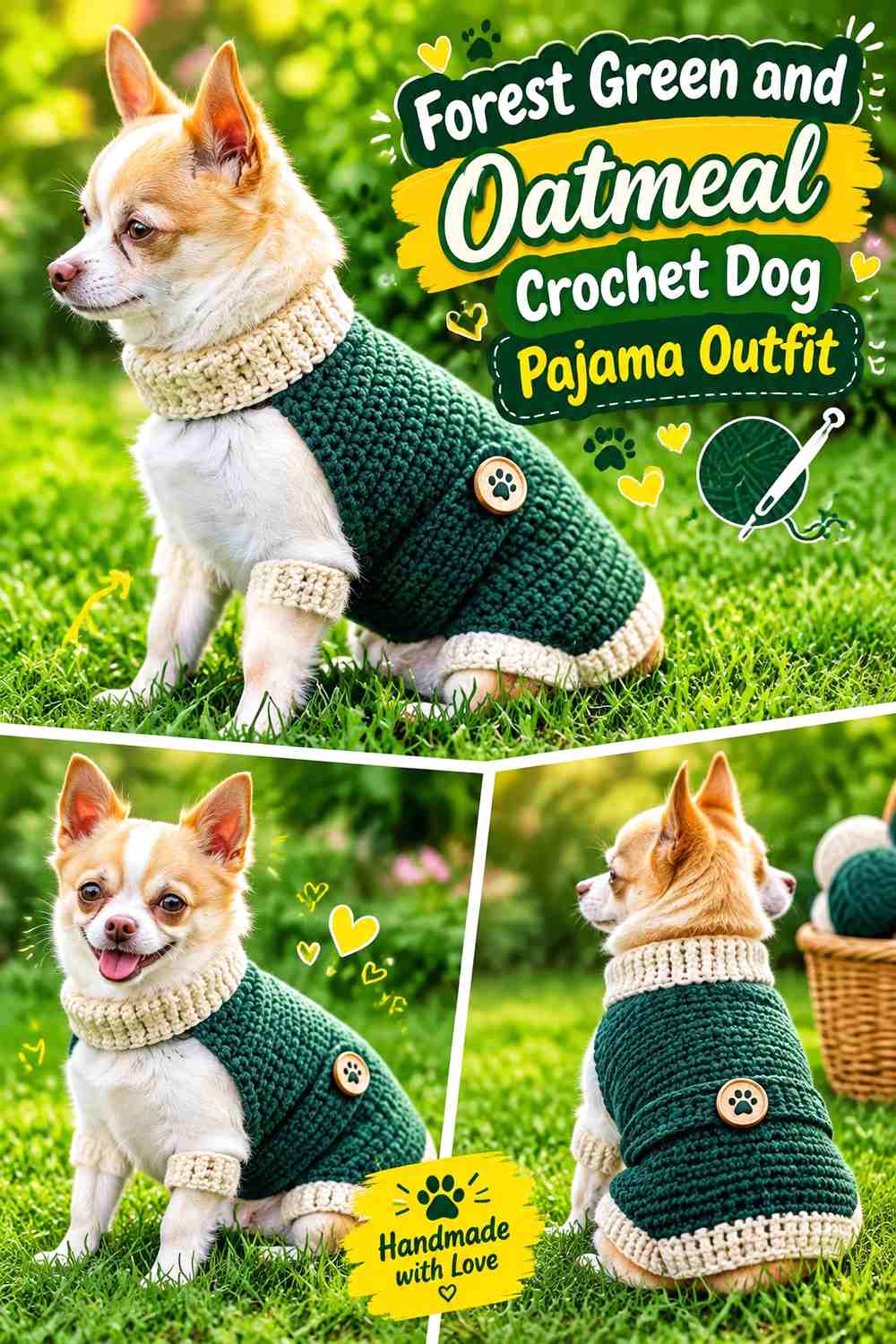
Forest green creates a deep winter base, while oatmeal softens the contrast compared with bright white. Use green across the main body and longer sleeve sections, then place oatmeal where it can outline the neck, cuffs, and possibly one broad back stripe.
Forest Green Can Anchor the Crochet Dog Pajama Torso
Keeping forest green continuous across the back gives the outfit more visual depth and leaves enough open space for stitch texture. If every few rows change to oatmeal, the garment can become stripe-led instead of pajama-shape-led.
Oatmeal Keeps Forest Green Crochet Sleeves Easy to Read
An oatmeal cuff provides enough value separation to mark the end of a dark green sleeve. Repeat oatmeal at the neck so the lighter shade has a clear relationship across the garment.
If your oatmeal and green are unusually close in value, choose a lighter neutral rather than adding a third color.
Creator Credit: Last Minute Laura
3. Dusty Blue and Ivory Crochet Dog Pajama Outfit
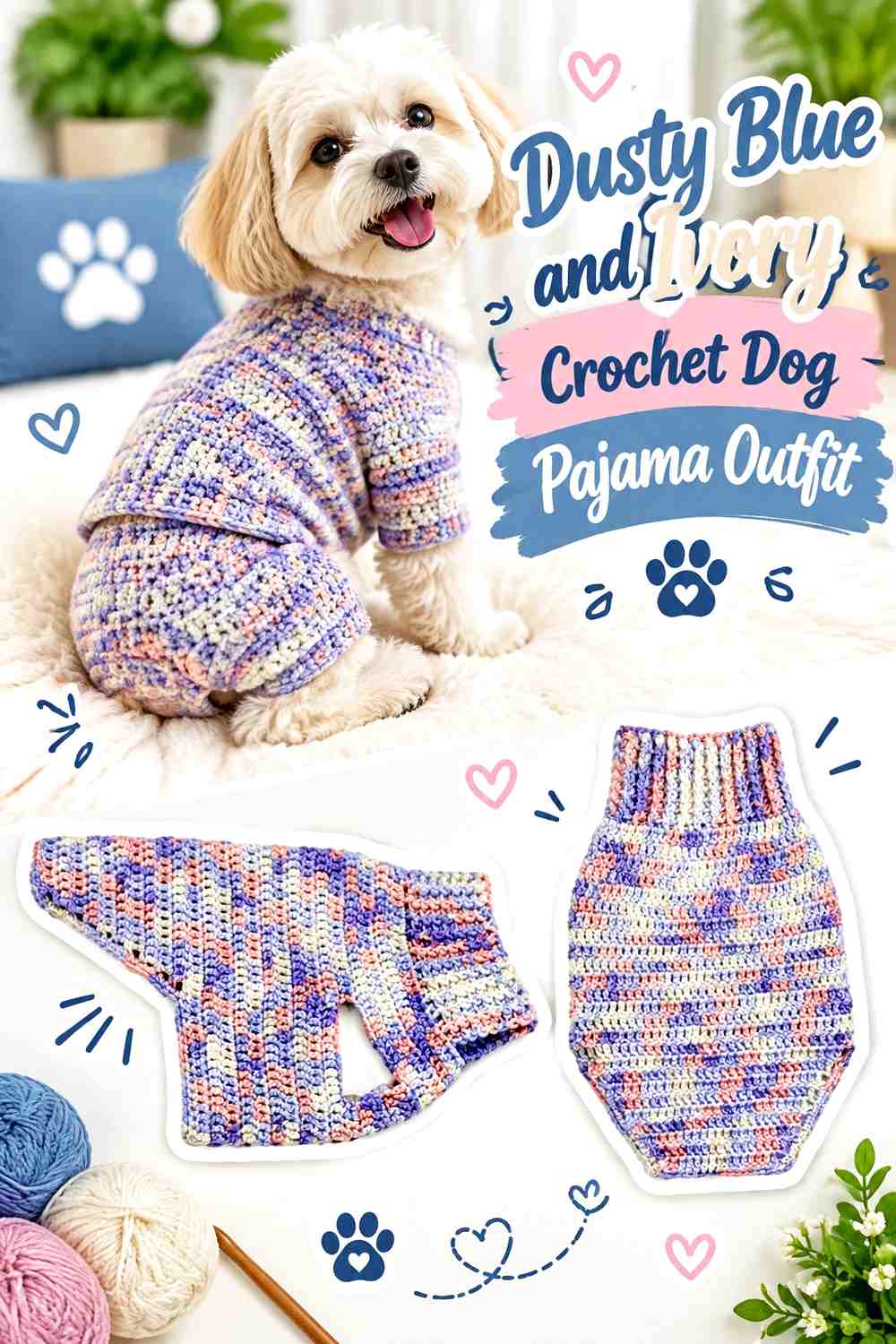
Dusty blue and ivory create a quieter winter palette with softer contrast than navy and cream. Blue can dominate the pajama body, while ivory handles the neckline, cuffs, and small finishing details.
Dusty Blue Lets the Crochet Dog Pajama Texture Stay Visible
Use dusty blue across larger uninterrupted areas when the garment has ribbing or another pronounced surface. The muted field gives texture room to show without frequent color changes cutting across it.
A softened blue-gray can fill the same role if you want an even quieter look.
Ivory Can Lighten Dusty Blue Crochet Pajama Leg Openings
Ivory works particularly well around smaller openings because it defines the edges without taking over the body. Repeat the same ivory at two or more cuffs to connect the sleeves visually.
On very short sleeves, keep the ivory bands narrow enough that dusty blue remains dominant.
Creator Credit: Crochet It
4. Cocoa Brown and Caramel Crochet Dog Pajama Outfit
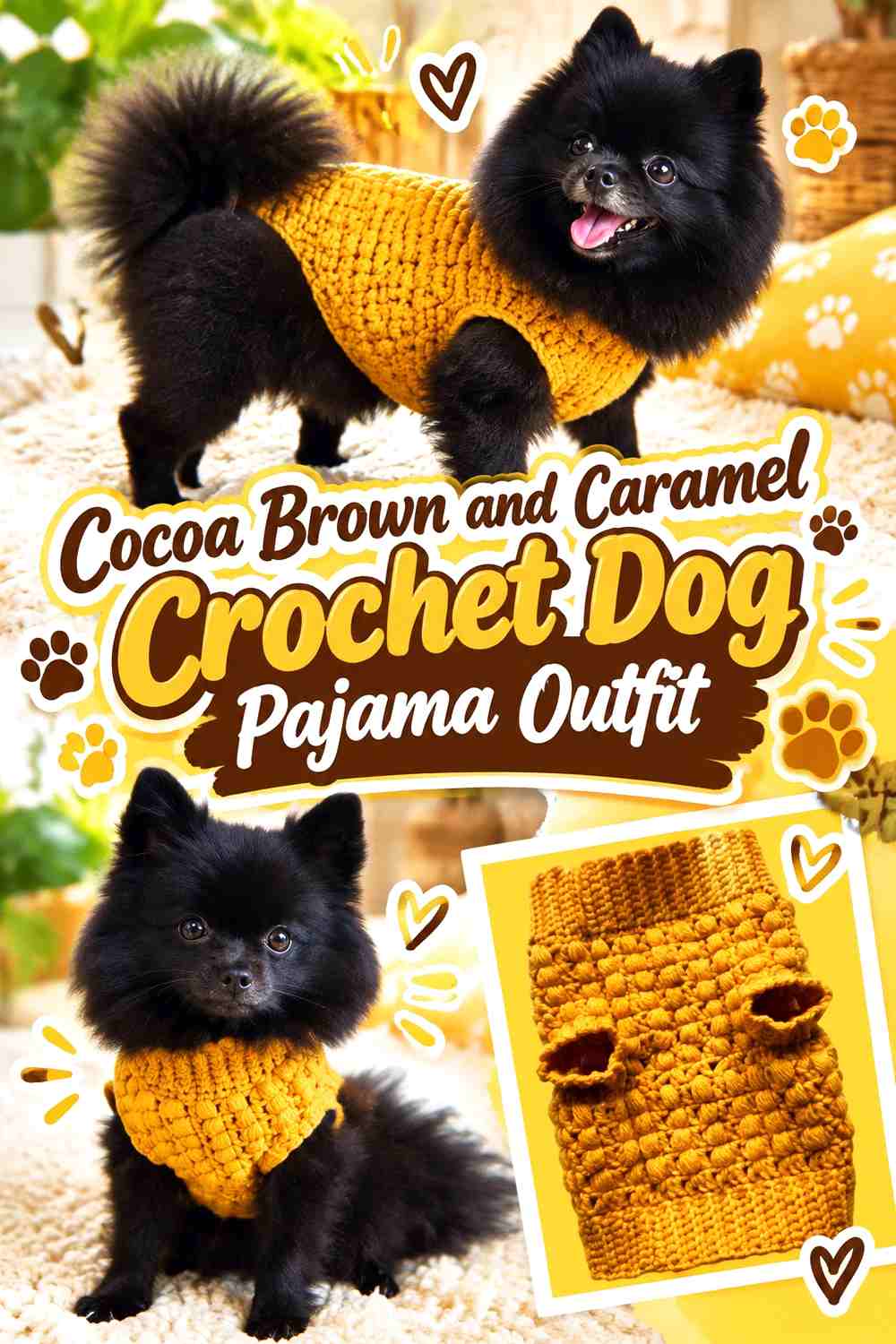
Cocoa and caramel create a tonal neutral outfit where the contrast is warm and restrained. Cocoa should cover the largest area, while caramel can emphasize ribbed necklines, sleeve ends, or one central back band.
Cocoa Brown Can Ground the Crochet Dog Pajama Body
Use cocoa through the torso and upper portions of the sleeves to give the pajama set a consistent dark base. This is especially useful when the garment already includes visible shaping around the chest and legs.
Caramel Can Separate Cocoa Brown Crochet Pajama Cuffs
Caramel creates enough contrast to mark a cuff without producing the sharp edge of a much lighter cream. Use it consistently at the sleeve ends so the tonal palette feels planned.
If cocoa and caramel merge visually, choose a lighter caramel rather than simply making the cuff wider.
Creator Credit: SheiLa Teré
5. Burgundy and Blush Crochet Dog Pajama Outfit
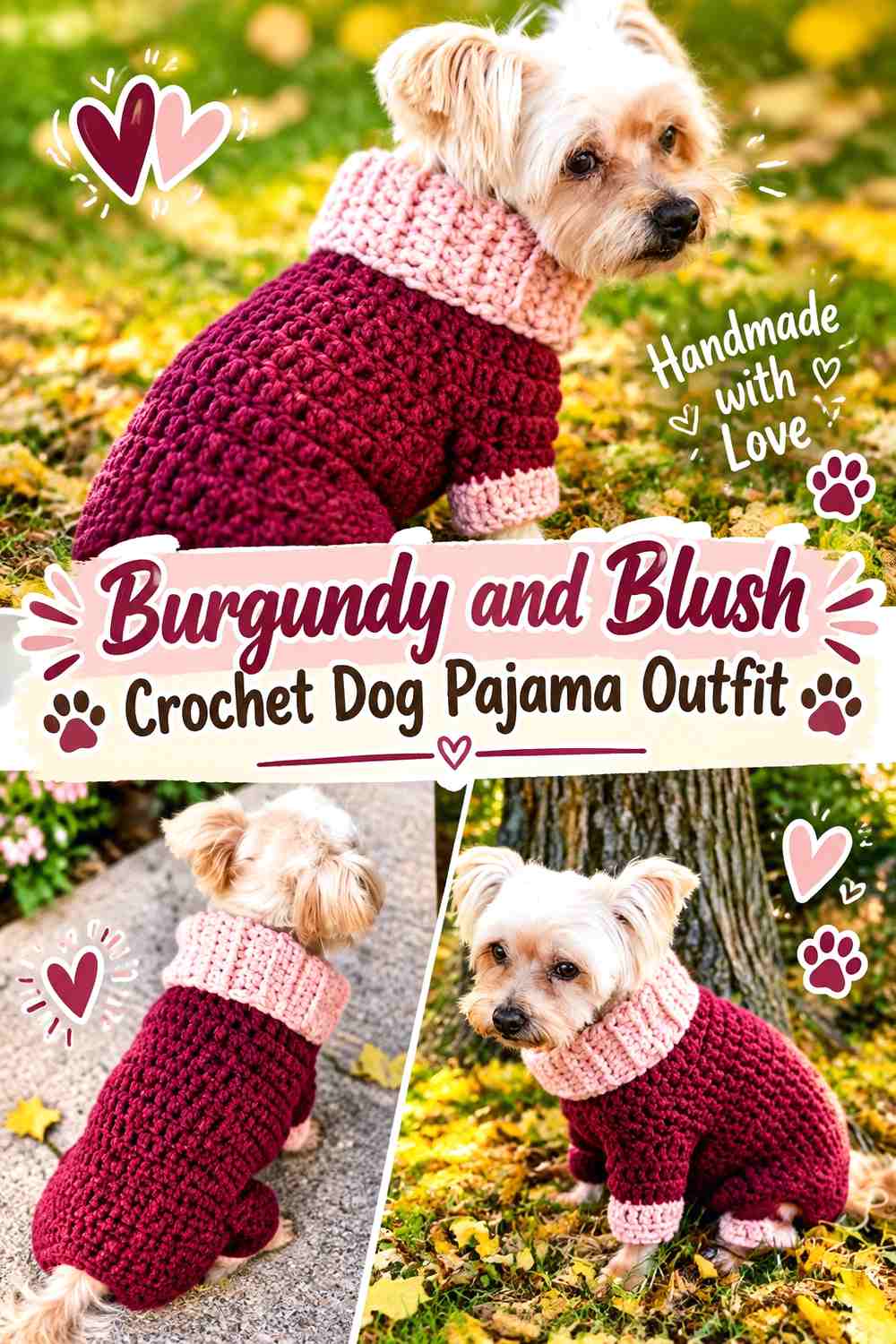
Burgundy gives the pajama body a deep berry base, while blush adds a softer light accent. The combination works particularly well when blush stays around structural edges rather than covering equal portions of the torso.
Burgundy Should Carry Most of the Crochet Dog Pajama Back
Use burgundy through the main body and upper sleeve areas to preserve a clear visual hierarchy. A largely solid back also makes the lighter neckline and cuffs look more deliberate.
Blush Can Soften Burgundy Crochet Pajama Sleeves
Blush cuffs create a gentler transition than cream while still remaining visible against burgundy. A matching blush neckband connects the front and lower leg details without requiring more stripes.
If the chosen blush is extremely pale, check that it remains practical for the intended use as well as visually balanced.
Creator Credit: Vibes with Dani
6. Sage Green and Cream Crochet Dog Pajama Outfit
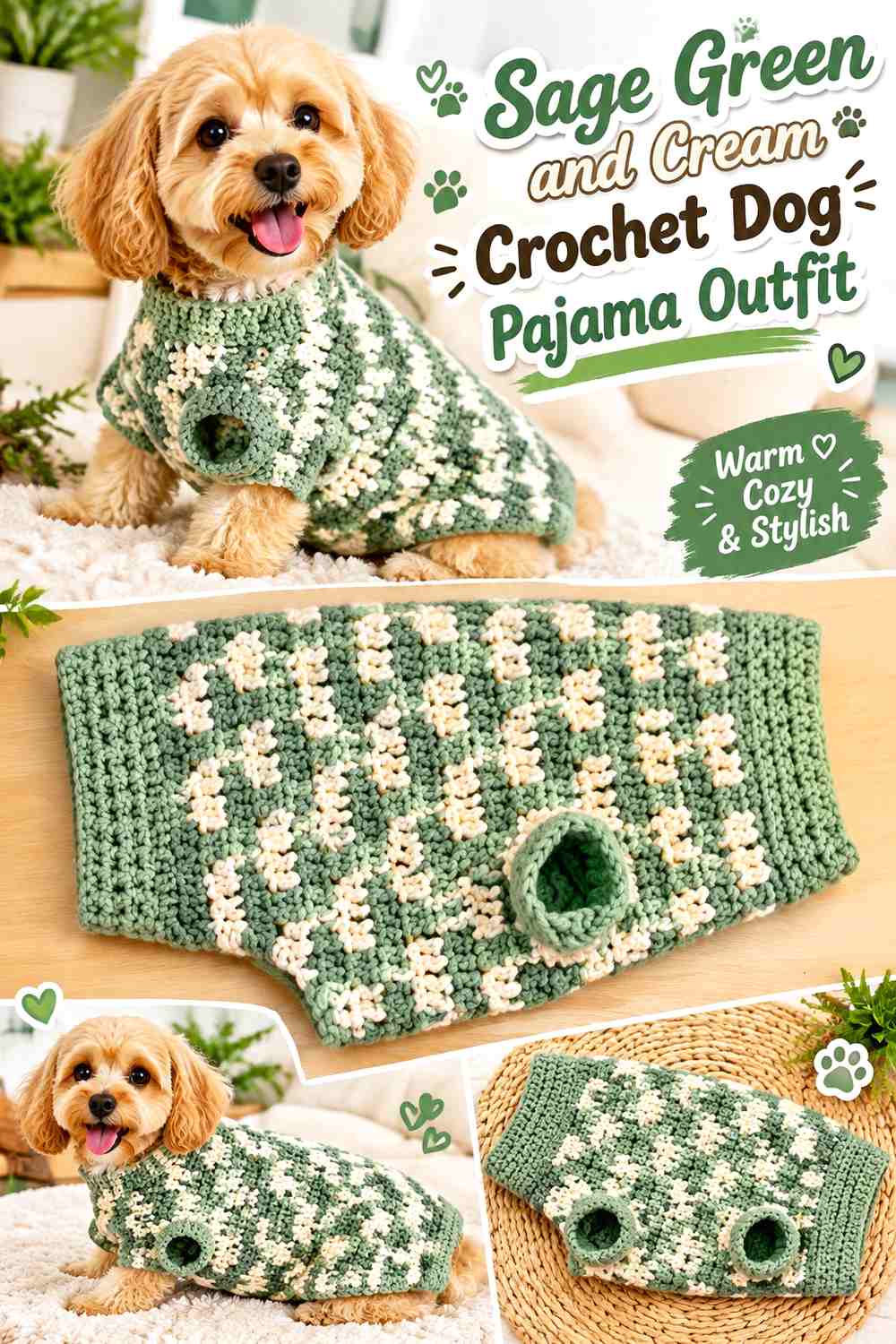
Sage and cream create a light, muted winter outfit where the color contrast stays secondary to the garment shape. Let sage cover the torso and sleeves, using cream to outline areas where extra definition is useful.
Sage Green Can Keep the Crochet Dog Pajama Body Visually Calm
A large sage field works particularly well when you want the garment to feel coordinated without strong striping. Keep cream away from the center of every section so the soft green still controls the finished look.
Cream Can Frame Sage Green Crochet Pajama Openings
Use cream at the neck, leg cuffs, or lower edge. Because these areas repeat around the garment, even a modest amount of cream can connect the entire pajama outfit.
If the sleeves are short, a single cream edge may be enough; the color does not need several repeats on each leg.
Creator Credit: TwinStarHooks 💫
7. Navy and Camel Crochet Dog Pajama Outfit
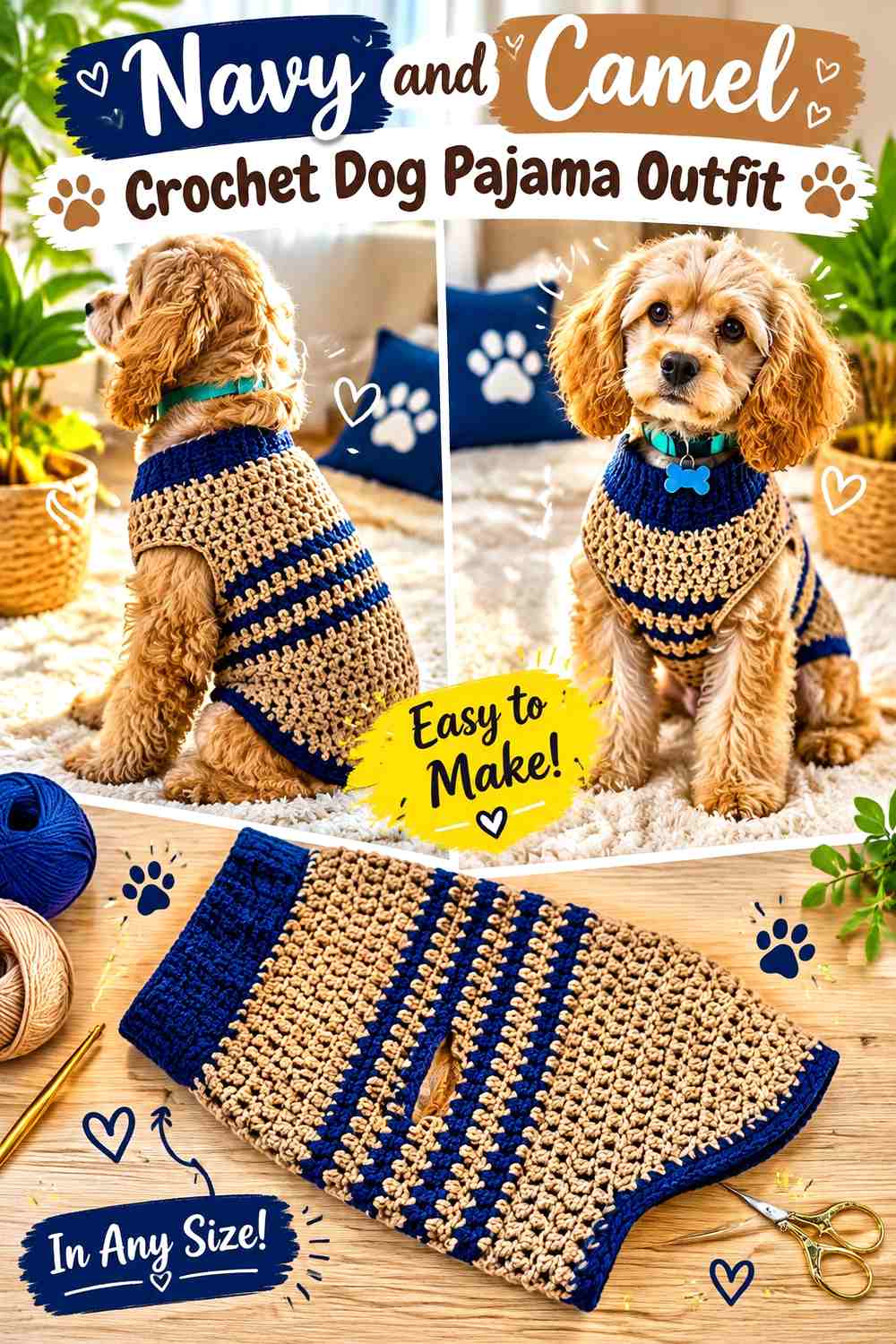
Navy and camel create a stronger dark-warm-neutral contrast. Navy can cover the body and sleeves, while camel works as a visible but less stark alternative to cream around the neck and cuffs.
Navy Can Give the Crochet Dog Pajama Outfit a Defined Base
Keep navy continuous over the back and sides so the pajama silhouette remains easy to follow. This deep main color also provides a clear background for limited camel details.
Camel Can Warm Up Navy Crochet Pajama Cuffs
Use camel at sleeve ends, the neckline, or one narrow torso band. Because camel contrasts clearly with navy, it does not need to occupy much space.
For a four-sleeve pajama design, repeating the same camel cuff on every leg can provide enough coordination without additional striping.
Creator Credit: it’s erin b.
8. Plum and Mauve Crochet Dog Pajama Outfit

Plum and mauve create a tonal pajama palette with a much softer transition than plum and white. Let dark plum anchor the body while mauve provides lighter boundaries around the neck and sleeves.
Plum Can Create Depth Across the Crochet Dog Pajama Body
Use plum across the torso so the outfit remains visually grounded. A solid or mostly solid plum back also prevents the closely related mauve from blending into an indistinct striped field.
Mauve Needs Enough Contrast Around Plum Crochet Pajama Cuffs
Choose a mauve that is visibly lighter than plum if the cuffs are meant to be noticeable. If both yarns appear almost identical in grayscale, the finished transition will be very subtle.
That blended look can still work, but it should be intentional rather than a surprise after all four cuffs are complete.
Creator Credit: The Crochet Crowd
9. Rust and Mustard Crochet Dog Pajama Outfit
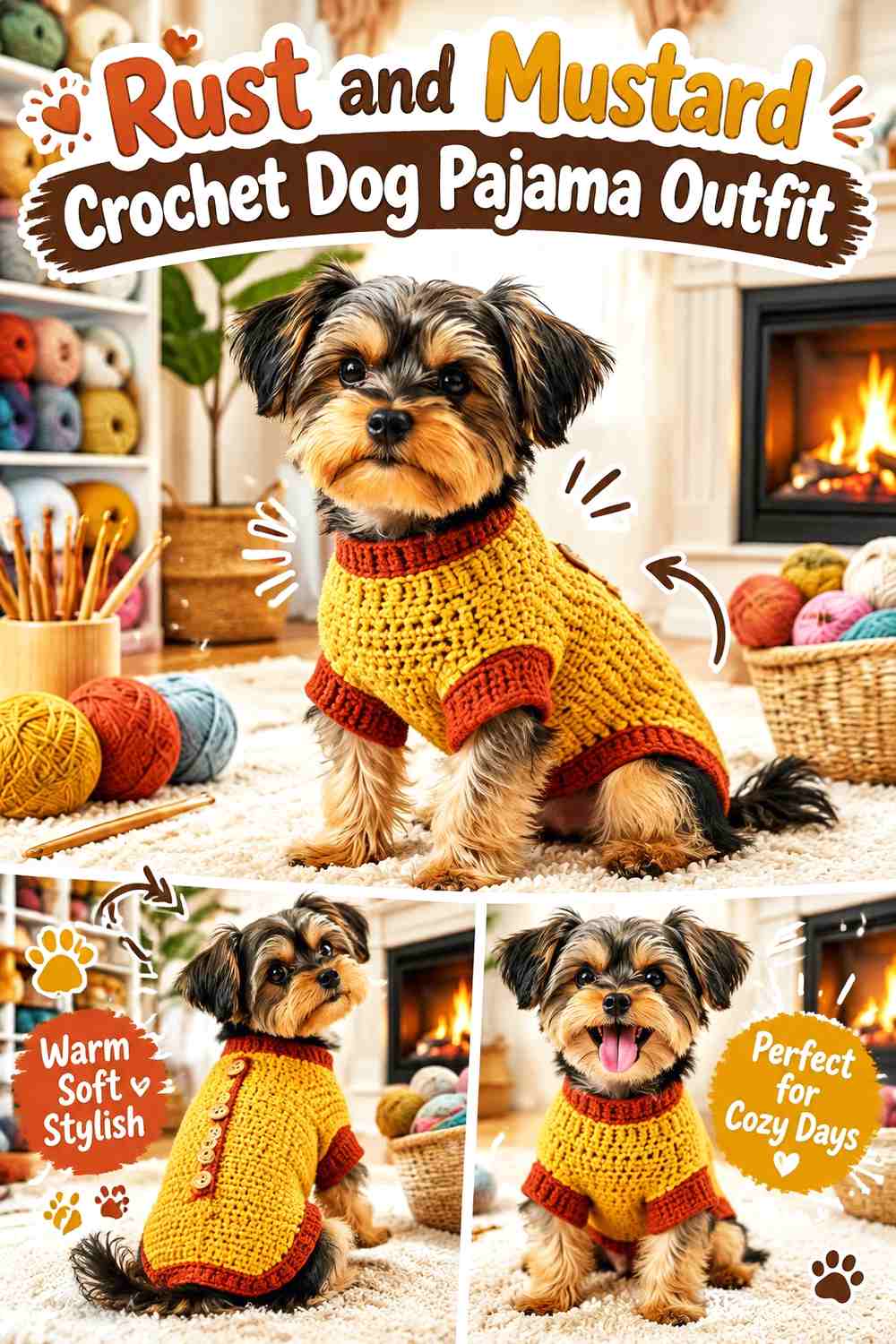
Rust and mustard create a warm retro-winter palette without relying on a neutral. Because both shades are visually assertive, give them unequal roles: rust for the larger body and mustard for controlled edging or bands.
Rust Should Lead the Crochet Dog Pajama Torso
Use rust over most of the back and sides so the sweater-pajama body reads as one coherent section. This also prevents mustard from becoming overwhelming on a small garment.
Mustard Can Highlight Rust Crochet Pajama Necklines and Cuffs
Mustard works well in small repeated areas because it attracts attention even without large coverage. A mustard neckband and matching sleeve cuffs are enough to establish a two-color outfit.
If rust and mustard are similar in lightness, keep the border shapes simple so color placement remains easy to read.
Creator Credit: Alextitia Tuto Crochet
10. Charcoal and Brick Red Crochet Dog Pajama Outfit
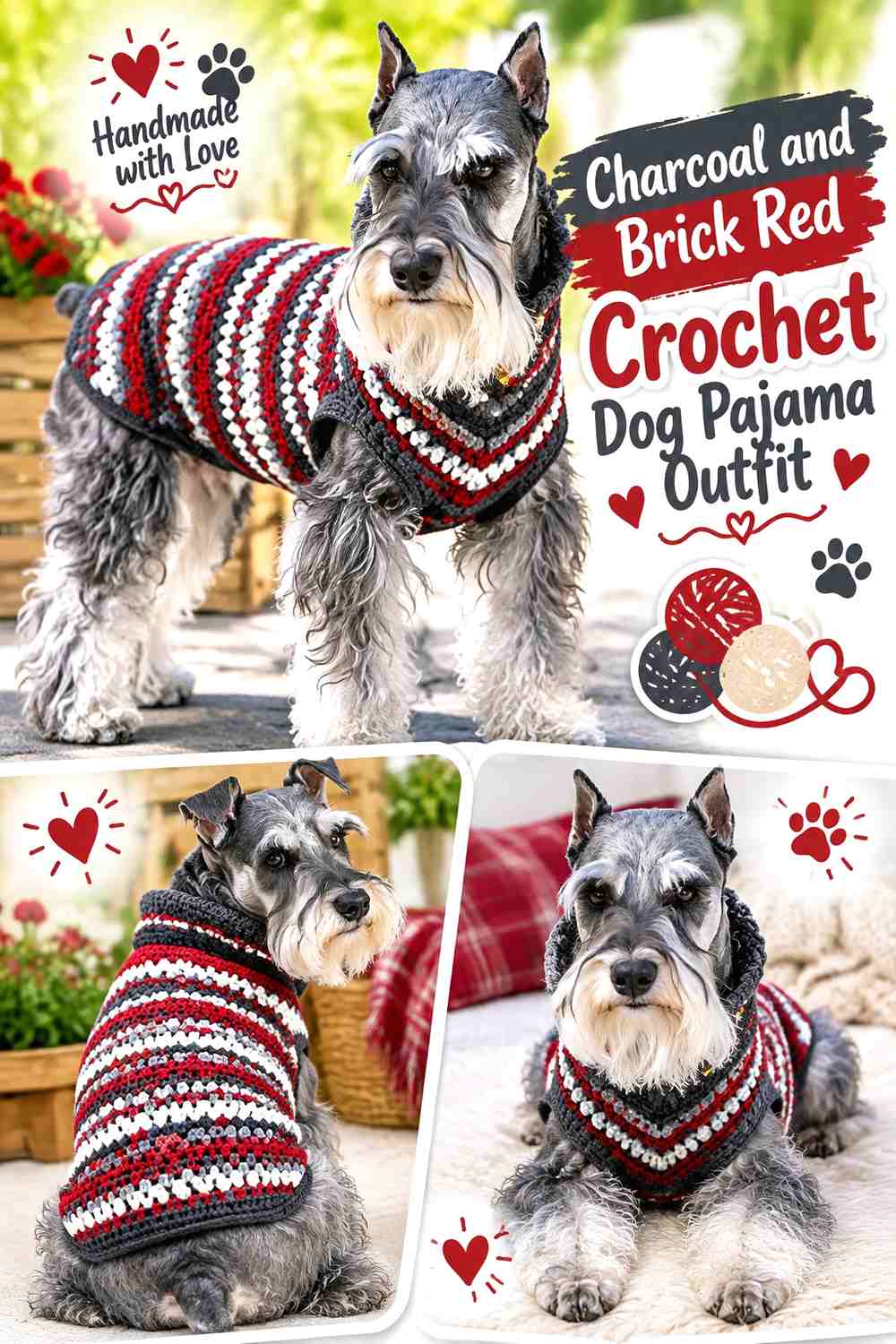
Charcoal provides a dark neutral framework while brick red supplies the warmer winter accent. This is a useful direction when you want colorful cuffs without making the entire pajama outfit red.
Charcoal Can Control the Crochet Dog Pajama Body
Keep charcoal across the torso and upper sleeves to give the outfit one stable base. The neutral field makes brick red details easy to see without needing a third shade.
Brick Red Can Define Charcoal Crochet Pajama Sleeves
Use brick red at the cuff and neckline, or introduce one wider red band across the back. Avoid scattering small red stripes everywhere; a few larger accents create a clearer hierarchy.
Creator Credit: Left Hand Crochet & Knit Tutorials
11. Teal and Warm Beige Crochet Dog Pajama Outfit
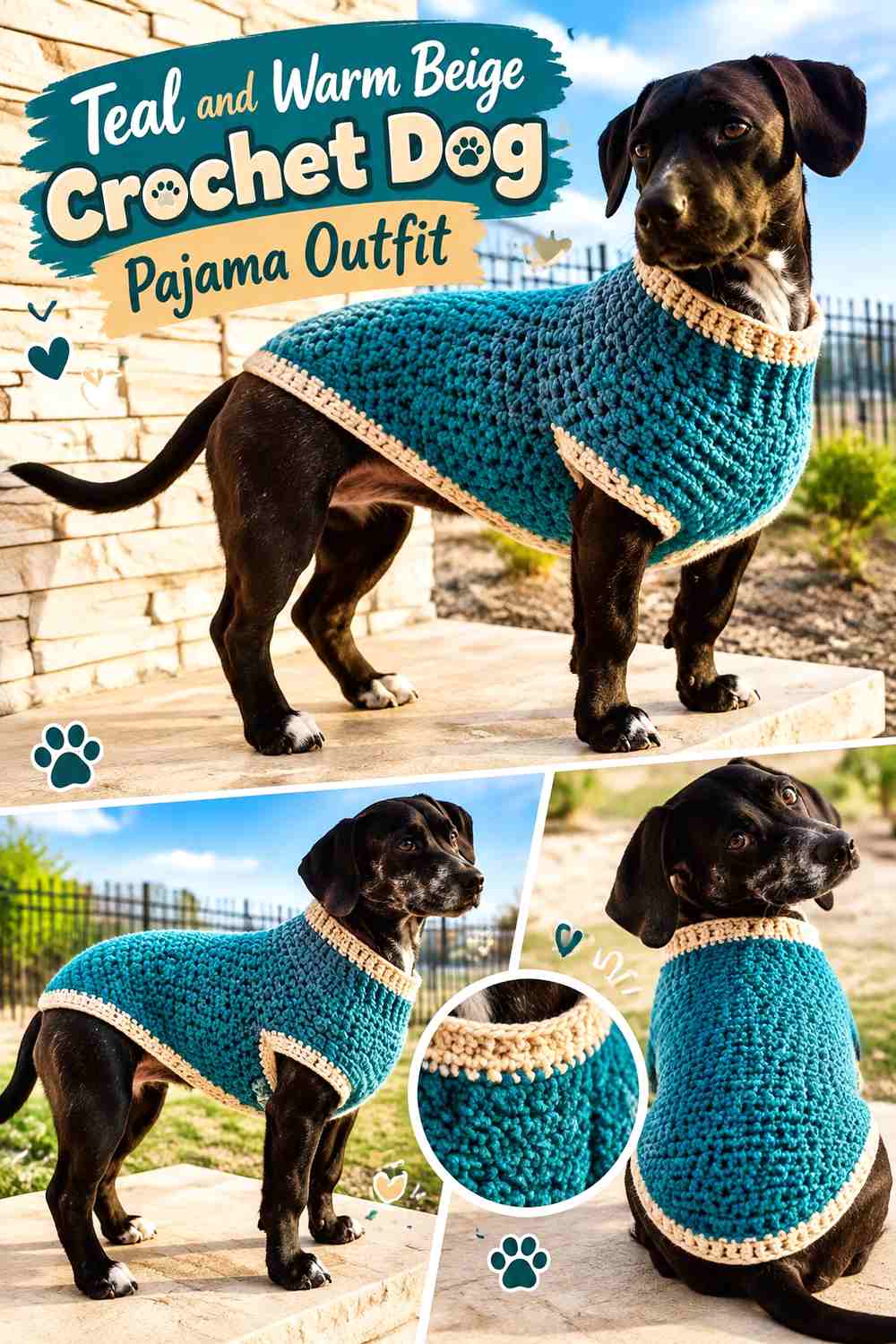
Teal and warm beige balance a strong cool shade with a softer neutral. Teal can lead throughout the pajama body, while beige makes neckline and leg edges easier to distinguish.
Teal Can Showcase the Main Crochet Dog Pajama Silhouette
Use teal continuously across the back and chest areas so the garment’s shaping stays visible. This approach is especially useful if the pajama design already has multiple leg openings and edge transitions.
Warm Beige Can Keep Teal Crochet Pajama Cuffs From Looking Harsh
Warm beige creates softer contrast than white while still separating clearly from teal. Place it at the cuffs and neck rather than dividing every sleeve into several beige bands.
A camel-toned neutral can substitute if it stays visibly lighter than teal.
Creator Credit: Heart Hook Home
12. Lavender and Soft Gray Crochet Dog Pajama Outfit
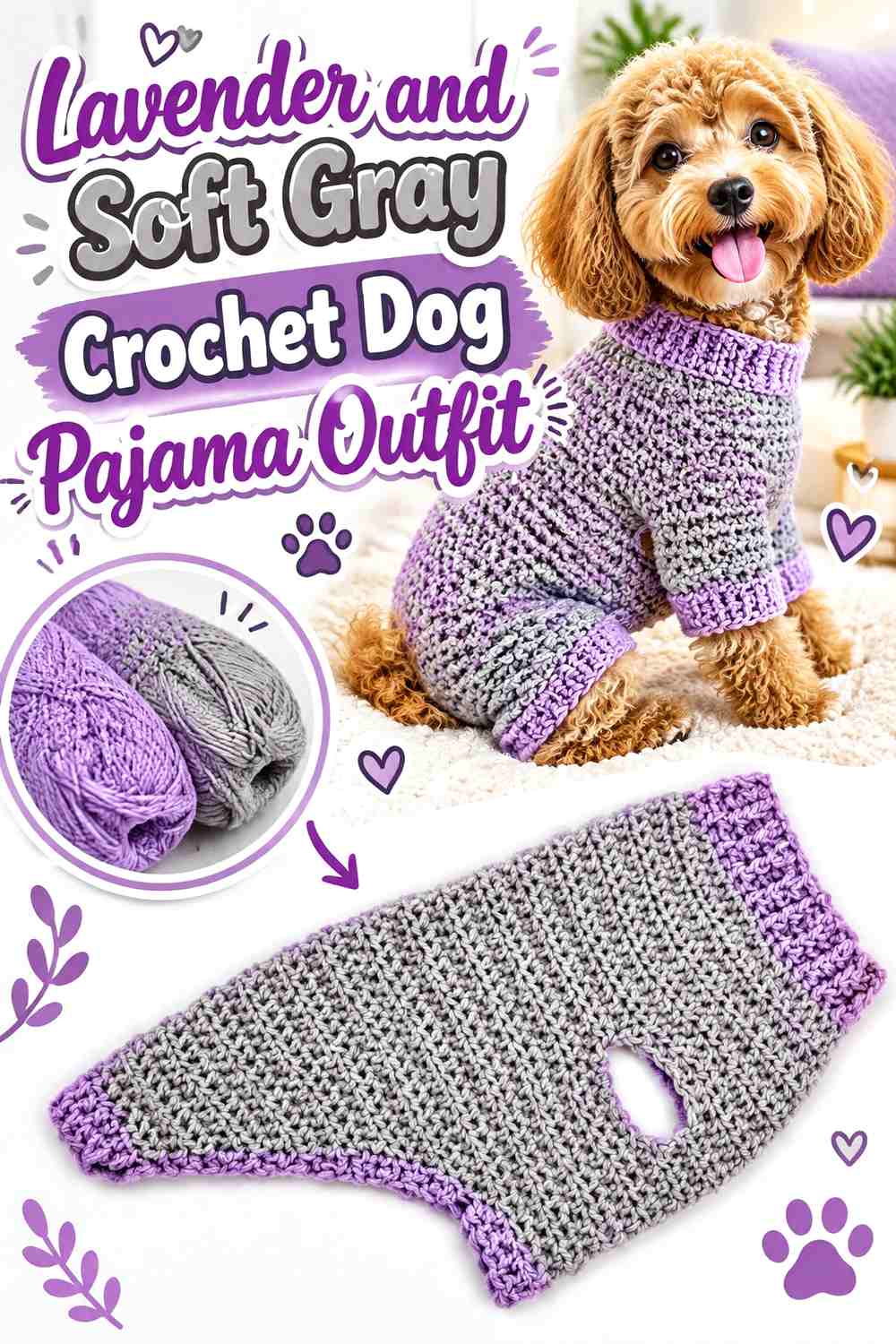
Lavender and soft gray create a cool, muted set where neither color needs to look especially dark. Use lavender as the recognizable main shade and gray for trim that supports rather than competes.
Lavender Can Lead the Crochet Dog Pajama Body Without Strong Stripes
Keep lavender across the back, sides, and upper sleeves. This gives the garment a consistent color field and lets gray remain a true supporting neutral.
Soft Gray Can Outline Lavender Crochet Pajama Cuffs
Gray around the sleeve ends and neckline adds definition without introducing another hue. If lavender and gray are close in value, use a slightly deeper gray or lighter lavender so the trim remains intentional.
Creator Credit: Loops Only Crochet
13. Chestnut and Buttercream Crochet Dog Pajama Outfit
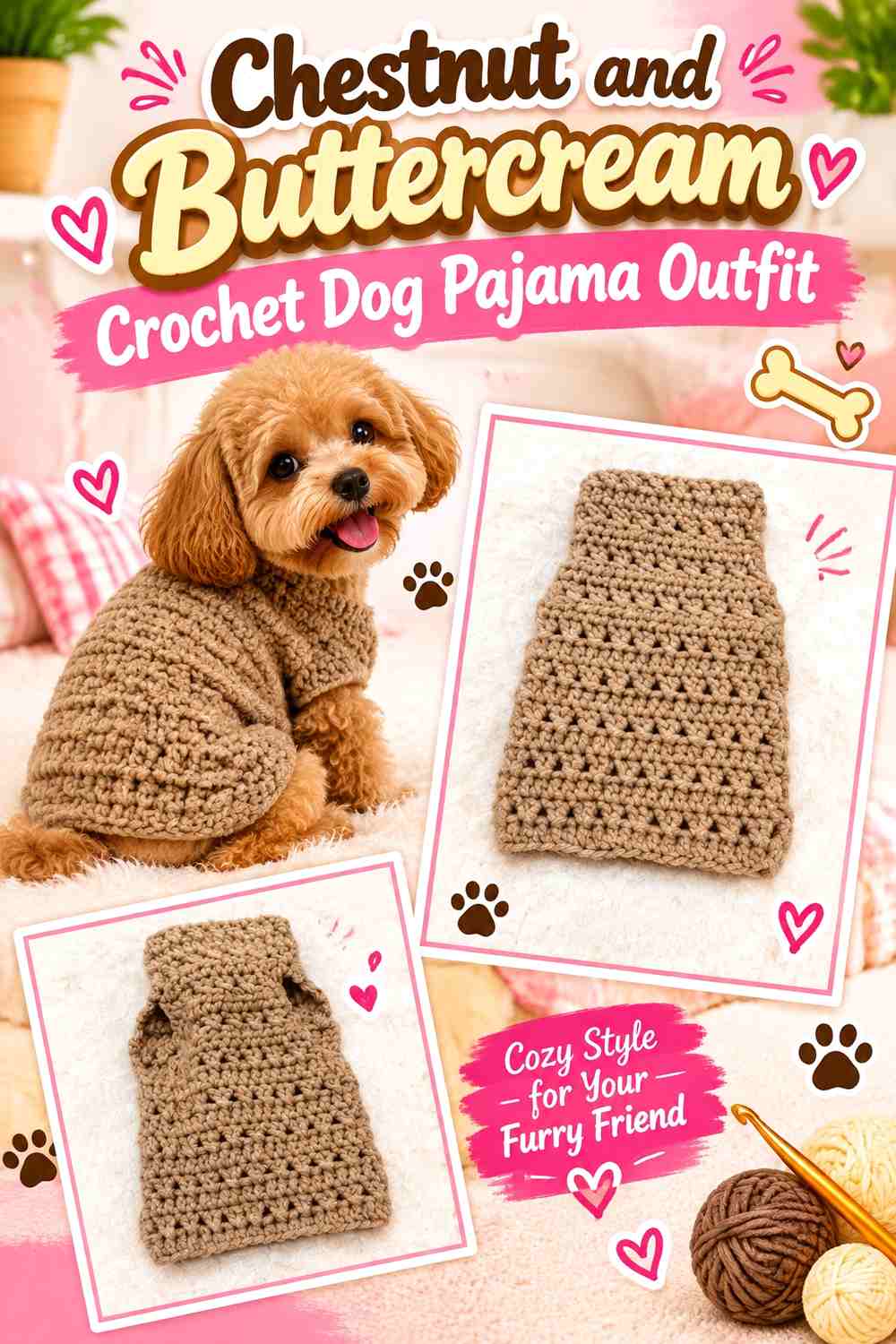
Chestnut creates a warm brown body, while buttercream adds the lightest contrast in the collection without the crispness of pure white. This palette works particularly well when cuff and collar details are meant to be prominent.
Chestnut Can Anchor the Crochet Dog Pajama Torso
Use chestnut over the majority of the garment and keep its broad sections relatively uninterrupted. That continuous darker area gives the light trim enough room to become meaningful.
Buttercream Can Brighten Chestnut Crochet Pajama Cuffs
Buttercream around the leg openings clearly marks where the sleeves end. Repeating it at the neckline visually links the front of the outfit to the legs.
Because the contrast is strong, keep the trim proportional to the small garment rather than widening every border.
Creator Credit: LittleGemsCreations1
14. Moss Green and Terracotta Crochet Dog Pajama Outfit
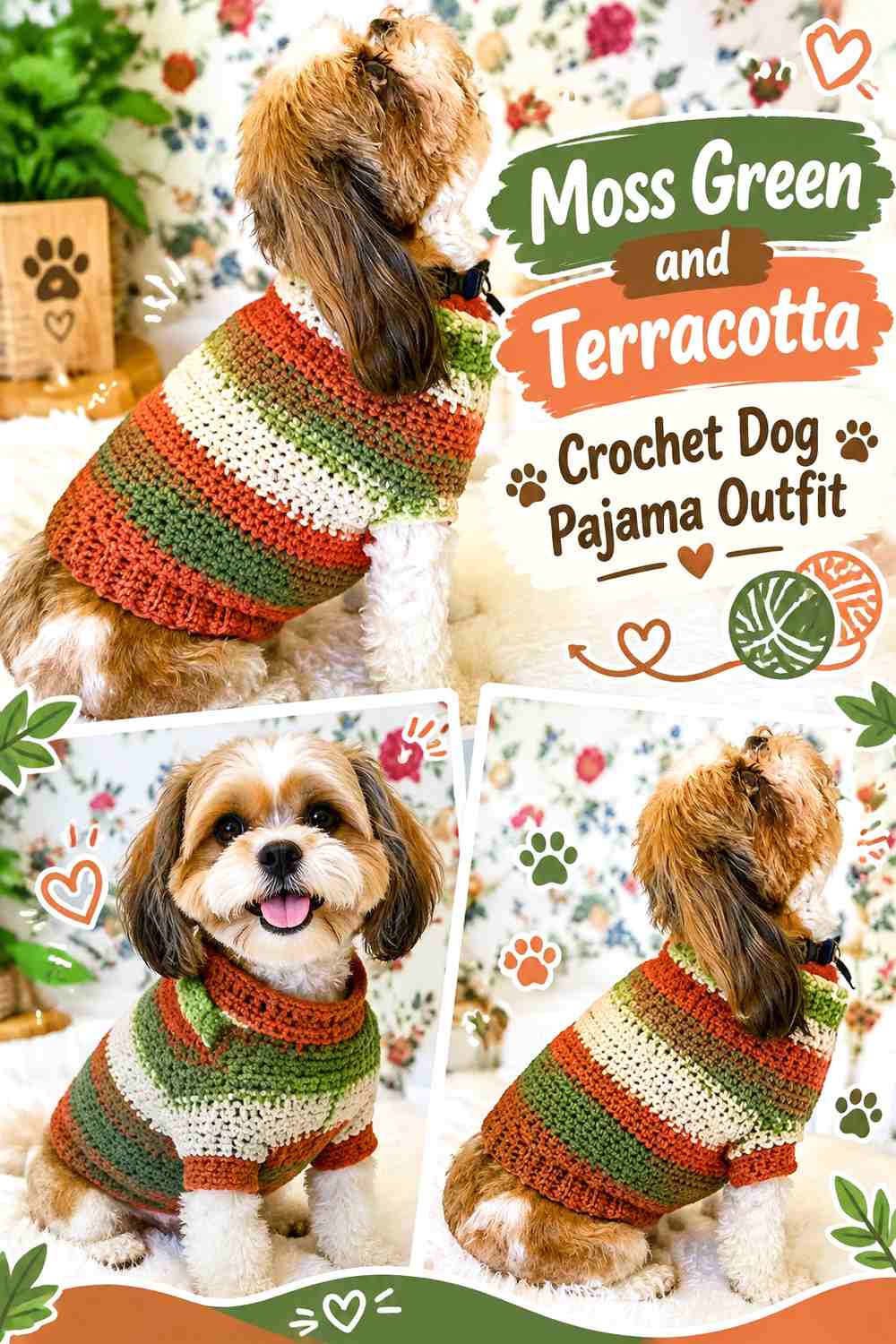
Moss and terracotta create an earthy two-color outfit with a softer contrast relationship. Moss should dominate the body, while terracotta can provide warm bands or cuff details.
Moss Green Can Ground the Crochet Dog Pajama Body
Use moss across the main torso and upper sleeves. Its muted character supports a cozy winter visual direction without requiring a neutral background.
Terracotta Can Warm the Moss Green Crochet Pajama Edges
Terracotta works best in limited areas such as the neckline and cuffs. If you use it for a back stripe as well, keep that stripe broad enough to look intentional rather than like an accidental color interruption.
Check the two yarns in grayscale if motif or cuff visibility matters, because earthy green and orange can sit relatively close in value.
Creator Credit: Ninja Bunny Crochet
15. Espresso and Soft Peach Crochet Dog Pajama Outfit
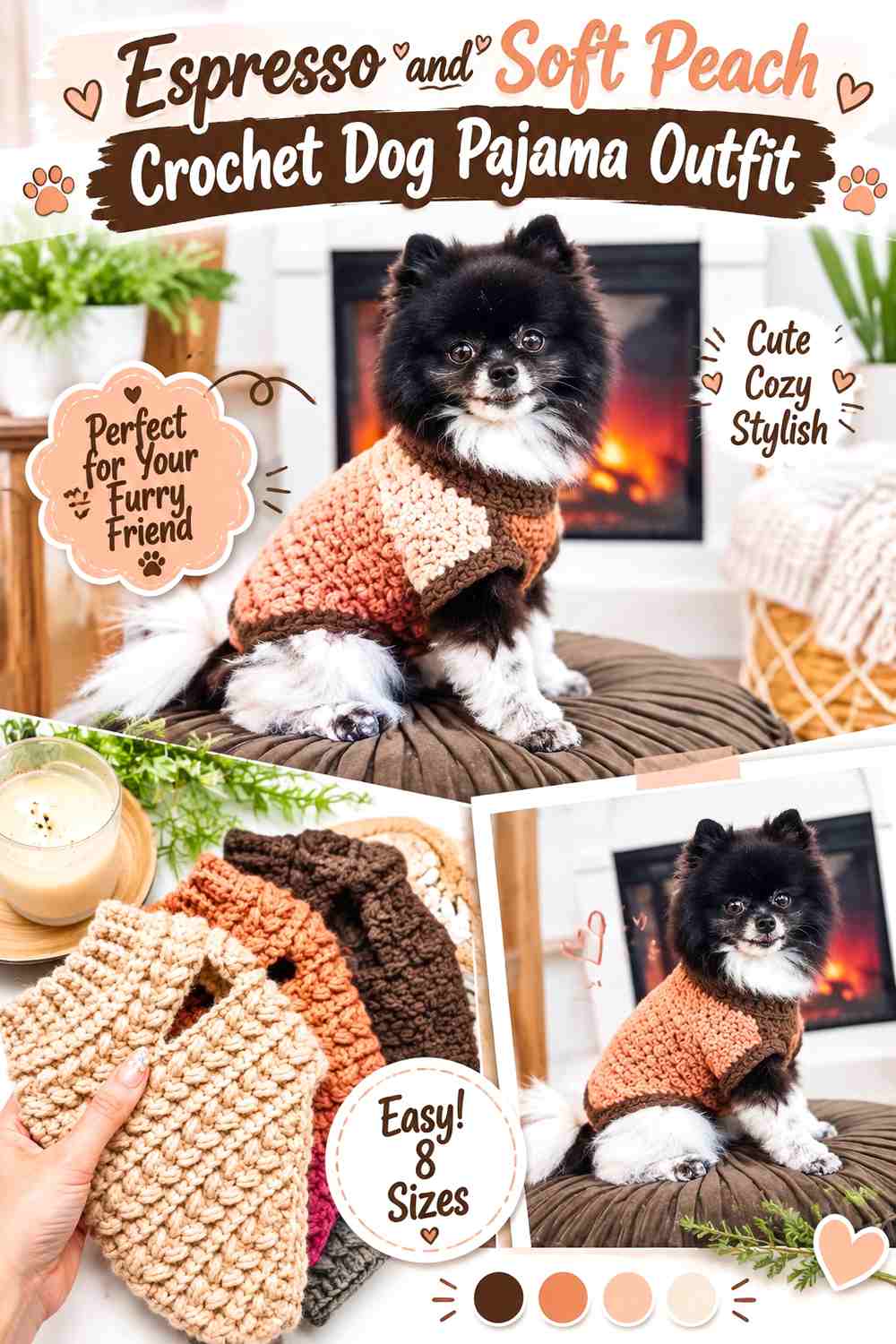
Espresso and soft peach create the strongest dark-soft contrast in this group. Espresso can define the body and provide visual weight, while peach adds warmth around smaller trim areas without turning the whole outfit pastel.
Espresso Can Keep the Crochet Dog Pajama Body Visually Cohesive
Let espresso cover the back, sides, and most of the sleeves. The dark uninterrupted field is useful when the pajama construction includes several shaped openings that already create visual breaks.
Soft Peach Can Lift Espresso Crochet Pajama Cuffs
Use soft peach at the neckline and sleeve ends where its lighter value will be most visible. A small peach stripe across the back can connect those details if the outfit needs one more accent.
If the peach is very pale, keep it away from excessively large surface areas so espresso remains the clear dominant shade.
Creator Credit: Briana K Designs
Which Cozy Crochet Dog Pajama Palette Should You Choose?
For strong winter contrast, cranberry and cream, forest green and oatmeal, navy and camel, charcoal and brick red, or chestnut and buttercream make cuffs and garment edges easy to distinguish.
If you prefer softer transitions, dusty blue and ivory, sage and cream, plum and mauve, lavender and gray, or cocoa and caramel keep the palette quieter. These are especially useful when stitch texture rather than striping should provide most of the visual detail.
Rust and mustard, moss and terracotta, teal and beige, or espresso and peach add warmer accents without relying on the classic red-and-white winter combination.
Conclusion
A crochet dog pajama outfit looks most coordinated when the colors have clear jobs. Let one shade cover the largest body area, use the second where it clarifies cuffs, necklines, sleeves, or borders, and avoid multiplying stripes simply because the garment has more surface area than a basic dog sweater.
Choose cranberry, forest green, or navy when you want stronger contrast with lighter trim. Plum, lavender, dusty blue, and sage create softer winter palettes, while rust, chestnut, moss, and cocoa move toward earthy warmth.
Construction matters more than decoration. Use the original credited tutorials for their actual sweater or coat methods, measure the individual dog before extending coverage, and make sure any pajama-style sleeves remain clear of paws and comfortable around moving joints.
Frequently Asked Questions
How Many Colors Should I Use in a Crochet Dog Pajama Outfit?
Two colors are enough for many pajama designs. One can dominate the torso and sleeves while the second defines the neckband, cuffs, leg openings, or one larger stripe. More colors can work, but each should have a clear visual role.
Should Crochet Dog Pajama Cuffs Be Lighter Than the Body?
They do not have to be, but a lighter cuff can make sleeve boundaries easier to see. Cream against cranberry or oatmeal against forest green creates stronger definition than plum against mauve, which produces a more blended look.
Should All Four Crochet Dog Pajama Sleeves Use the Same Color?
Using the same sleeve color or cuff treatment creates the clearest coordination. You can vary front and rear sleeves when the construction calls for it, but repeating at least one color detail helps the outfit remain visually connected.
How Can I Make Crochet Dog Pajama Stripes Look Less Busy?
Give one color most of the body and reduce the number of accent bands. One broad stripe usually creates a clearer focal point than several thin stripes scattered across the torso and every sleeve.
How Do I Check Whether Two Cozy Winter Colors Have Enough Contrast?
Compare both hue and light-dark value. Place the yarns together and view them from a distance, or take a grayscale photo. If the neckline or cuff disappears, choose a lighter or darker supporting shade rather than automatically adding a third color.
Can I Turn a Crochet Dog Sweater Tutorial Into Pajama-Style Coverage?
A sweater or coat tutorial can provide a useful construction base, but added sleeve or body coverage needs to be fitted to the individual dog rather than assumed from the source. Preserve comfortable movement around the shoulders and legs and keep added crochet clear of paws and toileting areas.
What Should I Check Before My Dog Wears Crochet Pajamas?
Check the neckline, chest, leg openings, belly, back length, cuffs, and any rear-leg coverage while the dog is standing and walking. The garment should not bunch at joints, cover paw pads, restrict normal movement, or slide into areas where it interferes with toileting.