A crochet dog bandana is a small project, but cottagecore color schemes can give it much more character than a single-color triangle. Muted greens, faded pinks, cream, lavender, butter yellow, earthy browns, and soft blues all work especially well when the palette gives the flowers, leaves, border, and main bandana clear visual roles.

The triangular shape is important when planning floral details. One large flower near the point creates a very different result from several small blossoms along the border, while flower granny motifs can make the entire surface part of the floral design. Because the finished piece is worn at a dog’s neck, decorative elements should remain lightweight, securely attached, and positioned so they do not create unnecessary bulk.
Several tutorials below are specifically for crochet dog or pet bandanas. Others demonstrate floral, granny-square, or triangular bandana constructions that can serve as adaptation references; those should be resized and fitted for the individual dog rather than treated as ready-made pet sizing. The cottagecore palettes described here are editorial adaptations and are not presented as colors used by the credited creators.
Quick List
- Sage Green, Cream, and Butter Yellow Daisy Crochet Dog Bandana
- Dusty Rose, Ivory, and Moss Green Wildflower Crochet Dog Bandana
- Lavender, Cream, and Sage Crochet Floral Dog Bandana
- Oatmeal, Chamomile Yellow, and Leaf Green Crochet Dog Bandana
- Cornflower Blue, Cream, and Soft Green Daisy Crochet Dog Bandana
- Peach, Ivory, and Sage Blossom Crochet Dog Bandana
- Mushroom Taupe, Blush Pink, and Cream Floral Crochet Dog Bandana
- Mustard, Ivory, and Olive Green Flower Crochet Dog Bandana
- Powder Blue, Blush, and Cream Cottage Garden Crochet Dog Bandana
- Burgundy, Dusty Rose, and Oatmeal Floral Crochet Dog Bandana
- Mint Green, White, and Pale Yellow Daisy Crochet Dog Bandana
- Forest Green, Cream, and Rust Wildflower Crochet Dog Bandana
- Mauve, Sage Green, and Cream Floral Crochet Dog Bandana
- Cream, Butter Yellow, and Meadow Green Chamomile Crochet Dog Bandana
- Dusty Coral, Olive Green, and Oatmeal Blossom Crochet Dog Bandana
- Plum, Lilac, and Sage Flower Crochet Dog Bandana
- Cocoa Brown, Cream, and Muted Pink Floral Crochet Dog Bandana
- Pale Pink, Butter Yellow, and Mint Green Daisy Crochet Dog Bandana
- Denim Blue, Cream, and Dusty Rose Wildflower Crochet Dog Bandana
Give Cottagecore Crochet Flowers a Clear Color Hierarchy
A small dog bandana rarely has enough surface area for five or six colors to compete equally. Start by deciding which shade owns the triangle. That dominant shade can cover most of the fabric while flower petals, centers, leaves, ties, or edging carry smaller amounts of supporting color.
For a classic cottage-garden effect, a muted green can work as the background while cream and yellow form daisies. For a softer romantic direction, dusty rose or lavender can lead while sage supplies the foliage color. The exact hues can change, but preserving the dominant-supporting-accent relationship keeps the floral details readable.
Use Crochet Floral Details Where They Will Stay Visible
The lower point of a triangular bandana is a natural location for one focal flower because it remains visible when the piece hangs from the neck. A floral border creates a busier effect and needs more careful spacing, while flower granny motifs make the flowers part of the bandana structure itself.
If you add appliqués to an existing bandana construction, check their placement while the bandana is actually positioned on the dog. A flower that looks centered when the piece lies flat may shift once the fabric curves around the neck.
Keep Cottagecore Dog Bandana Decorations Practical
A crochet dog bandana is decorative, not a restraint. It should not replace a collar or harness used for walking or identification.
Make sure the finished neck area fits comfortably, and avoid long dangling ties, tassels, beads, buttons, or loosely attached floral pieces where they could be chewed or caught. Secure appliqués carefully and supervise dogs that tend to mouth clothing or accessories. Floral embellishment should add visual detail without adding excessive weight around the neck.
1. Sage Green, Cream, and Butter Yellow Daisy Crochet Dog Bandana
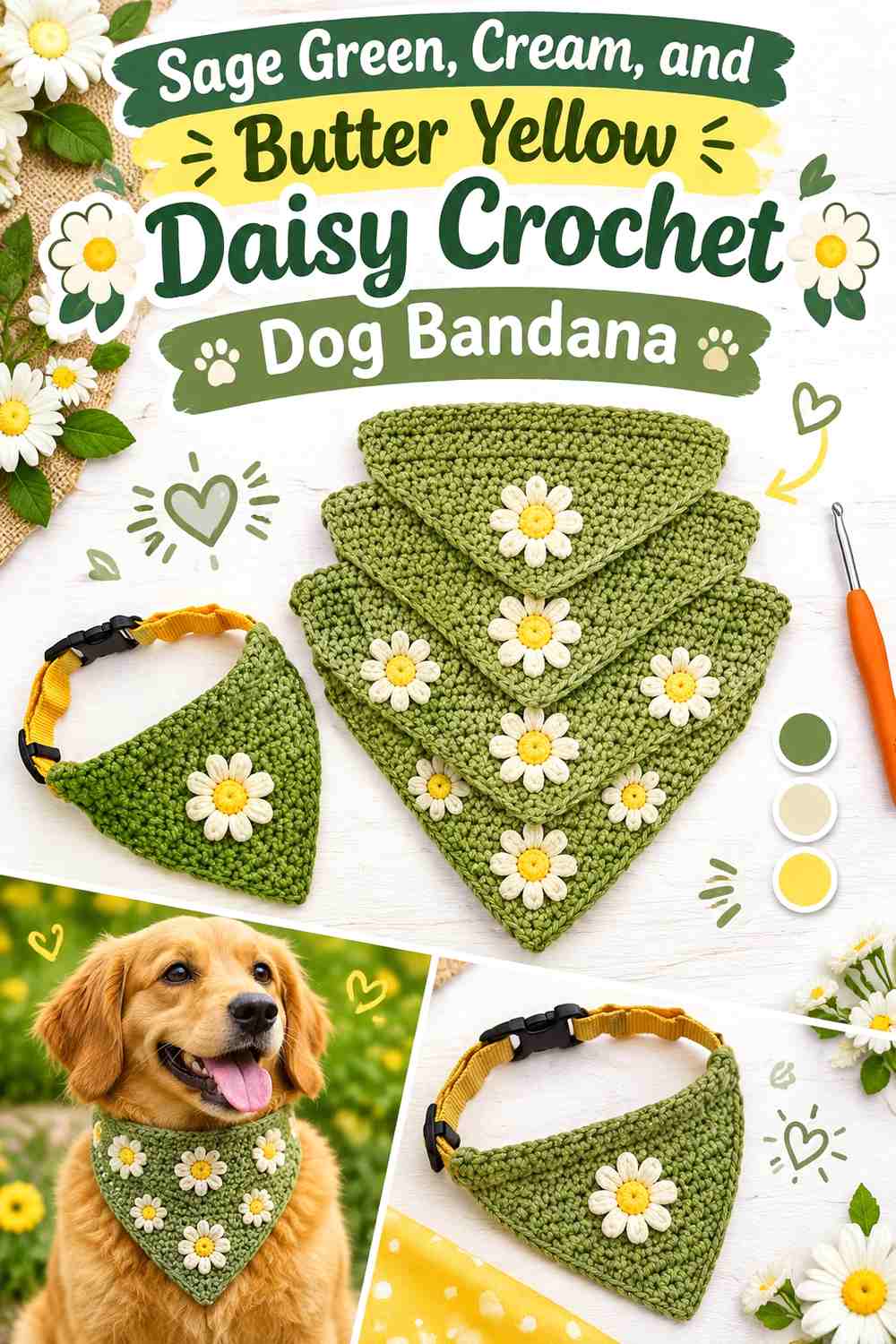
Sage green makes a natural cottagecore background because it can cover most of the triangular bandana without competing with the floral details. Cream petals and butter-yellow centers create clear daisies, while the green background already provides the foliage color. This is a useful scheme when you want the flowers to be visible without turning the entire bandana into a high-contrast design.
Sage Green Should Cover Most of the Crochet Dog Bandana
Keep sage across the main triangle so the bandana reads as one continuous piece. A muted green background gives cream flowers plenty of separation and allows the yellow centers to remain small accents.
If you also crochet leaves, consider using the same sage rather than introducing another green. The change in shape can provide enough distinction without adding another color.
Cream and Butter Yellow Keep Sage Green Daisies Easy to Read
Cream can form the petal area while butter yellow is reserved for compact flower centers. Using much less yellow than cream preserves the daisy effect and stops the center color from spreading across the bandana.
If cream and yellow look too similar in lightness, choose a slightly deeper yellow rather than making the flowers larger.
Creator Credit: GoodKnitKisses
2. Dusty Rose, Ivory, and Moss Green Wildflower Crochet Dog Bandana
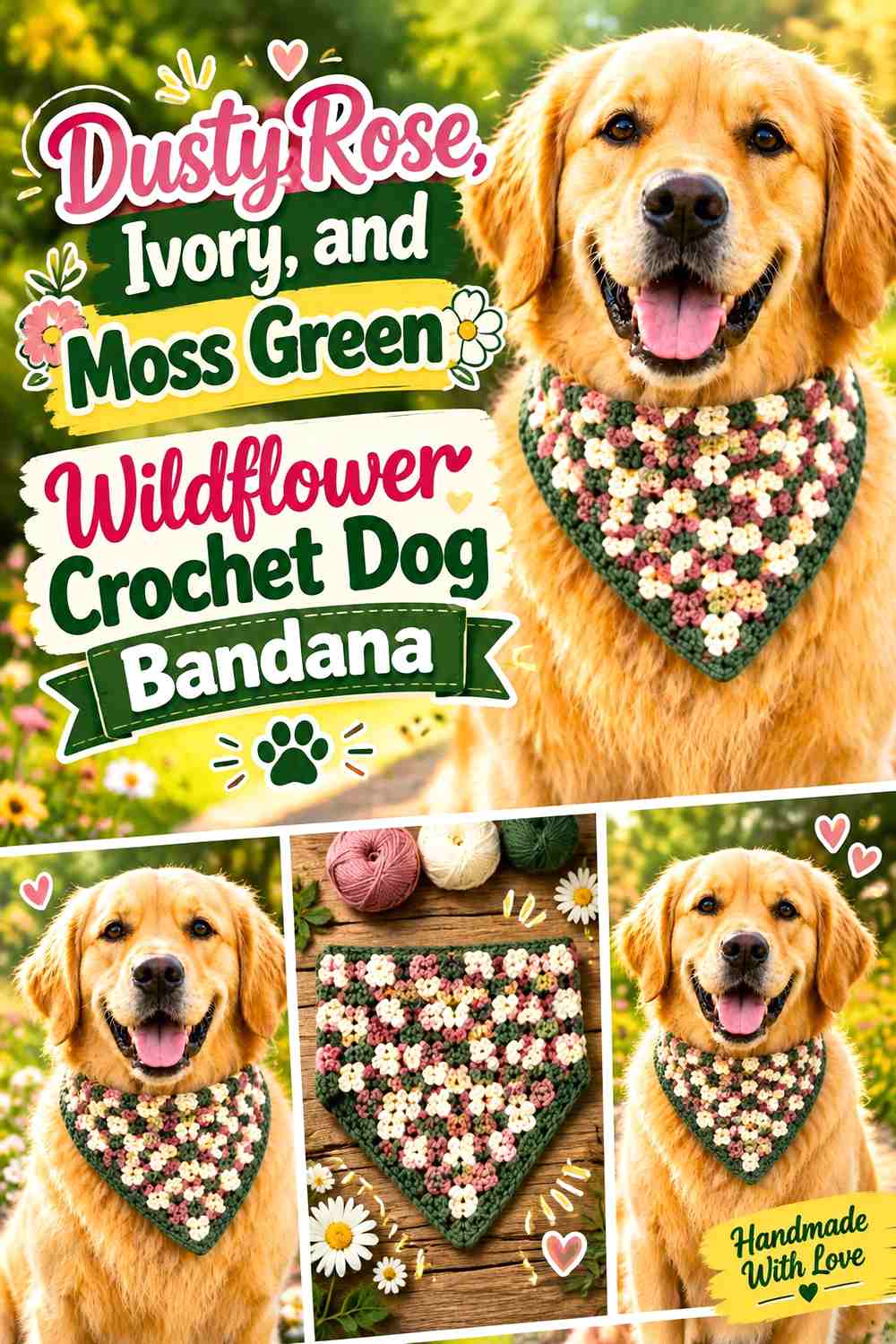
Dusty rose gives this cottagecore bandana a romantic base, while moss green can represent stems, leaves, or a narrow border. Ivory prevents the pink-and-green combination from becoming too dense and works especially well for small wildflower petals.
Dusty Rose Can Lead the Crochet Bandana Without Covering Every Floral Detail
Use dusty rose across most of the triangle and keep the flowers lighter. This lets the floral work appear layered over the bandana instead of disappearing into it.
Dusty rose can also continue through the top edge or neck section so the body remains visually connected.
Ivory Flowers Need Moss Green Repetition Against Dusty Rose
Ivory petals will show clearly against dusty rose, but moss green should appear in more than one isolated leaf if you want it to feel intentional. Repeat green in a small border detail, flower leaf, or another controlled area.
Keep the moss accents smaller than the dusty rose surface so the palette remains flower-led rather than evenly color-blocked.
Creator Credit: Diving Ducks Crochet
3. Lavender, Cream, and Sage Crochet Floral Dog Bandana

Lavender offers a cool floral background that still feels soft enough for a cottagecore palette. Cream can define petals and edging, while sage adds a botanical contrast around the flowers without introducing a very dark color.
Lavender Works Well as the Main Crochet Dog Bandana Field
Cover the triangle predominantly in lavender, particularly if you plan to add several small flowers. A consistent background gives those floral elements a shared visual field.
If the lavender is extremely pale, compare it directly with cream before starting because the flower edges may otherwise disappear.
Sage Can Separate Cream Flowers From a Pale Lavender Bandana
Small sage leaves or green flower centers can give cream petals an extra boundary against lavender. This is particularly useful if the main purple and cream are close in value.
Avoid outlining every petal in green. A few repeated leaf or stem details usually provide enough botanical contrast.
Creator Credit: Heart Hook Home
4. Oatmeal, Chamomile Yellow, and Leaf Green Crochet Dog Bandana

Oatmeal makes this scheme lighter and more neutral than a green-led cottagecore bandana. Chamomile yellow can form the floral centers or small blossoms, while leaf green provides enough contrast to keep the flowers from blending into the warm neutral background.
Oatmeal Lets Chamomile Yellow Crochet Flowers Stay Soft
Use oatmeal across most of the triangle rather than bright white. The warmer neutral creates a smaller light-dark jump against yellow and supports a faded cottage-garden direction.
Because the background is already light, yellow flowers need help from a darker center, leaf, or border if their outlines become difficult to see.
Leaf Green Gives Oatmeal and Chamomile Yellow More Definition
Leaf green can appear around flower leaves, along a narrow edge, or in several repeated small details. Its role is to create separation rather than cover a large portion of the bandana.
Check the three colors together before crocheting the flowers. If yellow and oatmeal merge, deepen the yellow rather than increasing the amount of green everywhere.
Creator Credit: CrochetbyRoze
5. Cornflower Blue, Cream, and Soft Green Daisy Crochet Dog Bandana
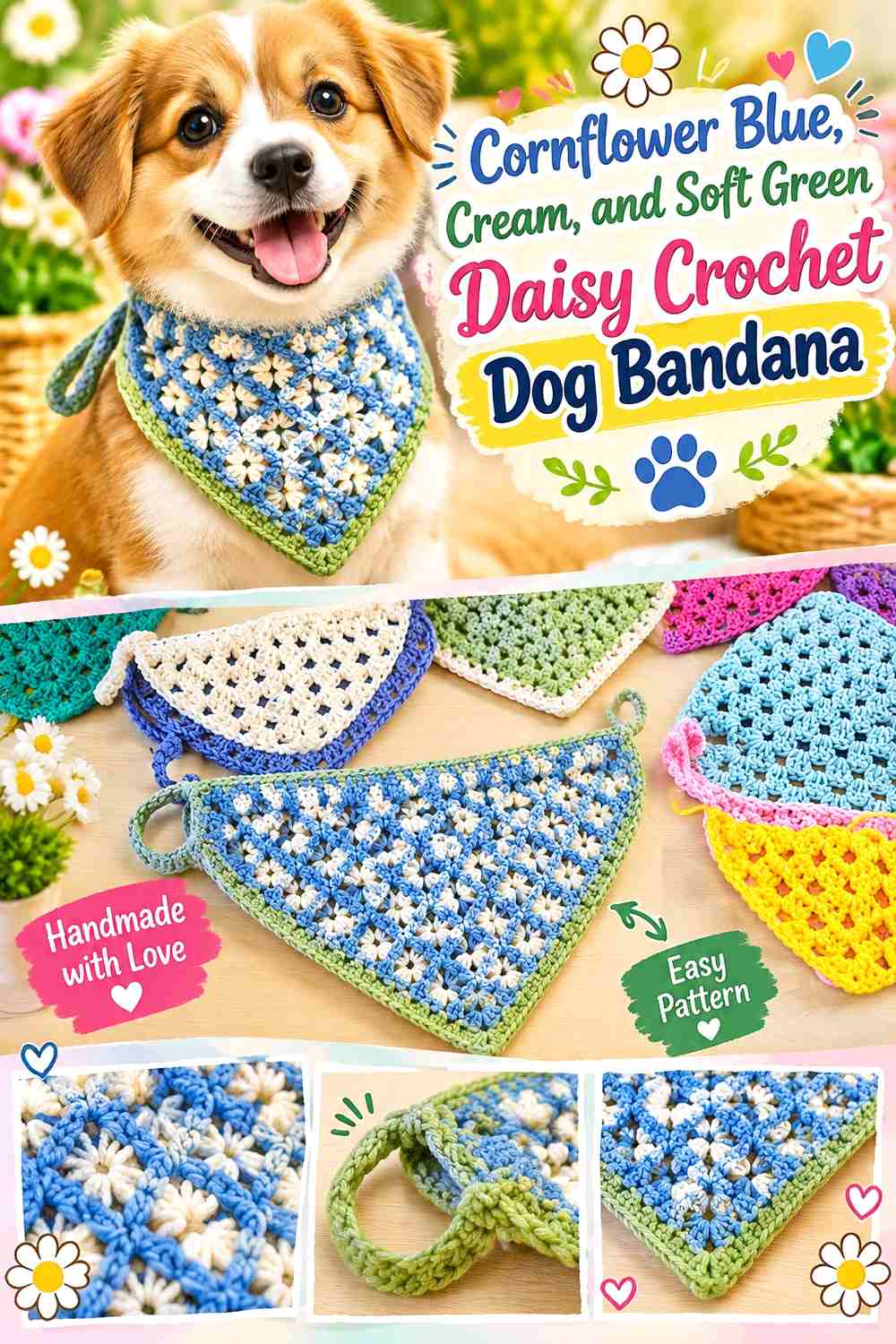
Cornflower blue creates a cottage-garden palette that feels different from the more common pink and green combinations. Cream daisies provide clear floral contrast, and soft green can be used for leaves or restrained edging.
Cornflower Blue Should Remain Visible Between the Crochet Flowers
Let the blue cover enough open area that the bandana still reads as cornflower blue after the floral details are added. Too many large cream motifs can reduce the blue to a narrow background.
For a small dog bandana, one focal daisy or several modest flowers may provide more balance than covering the whole triangle.
Cream Daisies Need Soft Green Details Against Cornflower Blue
Cream petals stand out well against blue, while green leaves connect the flowers to the cottagecore theme. Keep the green muted so it does not compete with cornflower blue for dominance.
If using a scalloped edge, consider continuing the blue or cream there instead of automatically introducing more green.
Creator Credit: Ninja Bunny Crochet
6. Peach, Ivory, and Sage Blossom Crochet Dog Bandana

Peach provides a warmer floral direction without becoming as strong as orange or rust. Ivory keeps the palette light, and sage can define leaves, stems, or a border around the triangular point.
Peach Makes a Gentle Main Color for a Crochet Floral Dog Bandana
Use peach across the primary fabric and reserve ivory for the flower petals or edging. The two colors can sit close together, so their value difference matters more than their names.
If your peach yarn is very pale, choose ivory only if it remains distinguishable once crocheted.
Sage Gives Peach and Ivory Crochet Blossoms a Botanical Anchor
A few sage leaves can give pale flowers more structure. Green can also be repeated once near the upper edge so the foliage does not appear as a disconnected detail at the bottom point.
Avoid making the ties green unless you want them to become a strong visible part of the palette.
Creator Credit: Stitches n Scraps
7. Mushroom Taupe, Blush Pink, and Cream Floral Crochet Dog Bandana
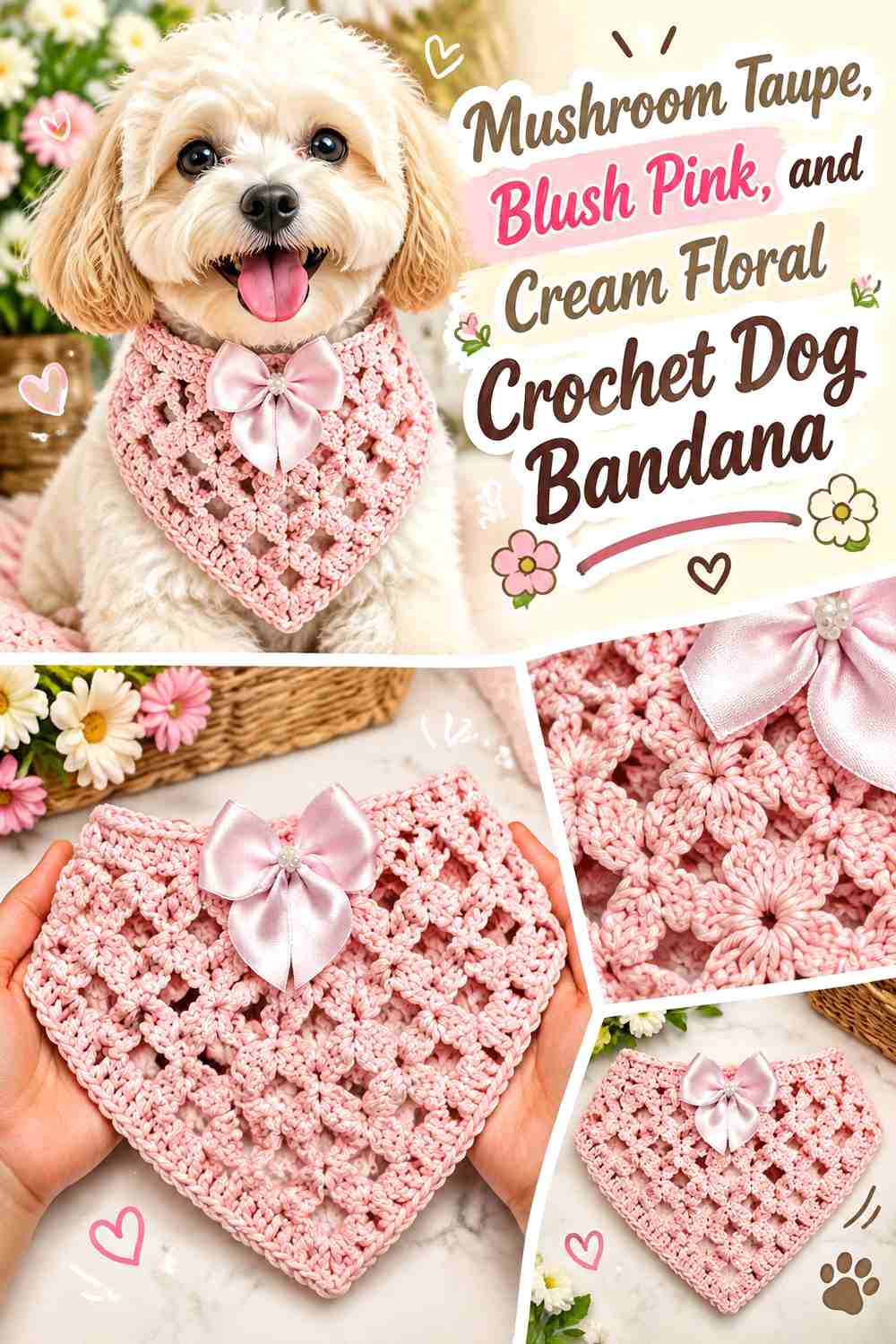
Mushroom taupe produces a neutral cottagecore background that leaves more room for floral color. Blush pink can supply the blossoms, while cream creates lighter centers, petal highlights, or edging.
Mushroom Taupe Keeps Blush Pink Crochet Flowers From Feeling Too Sweet
Use taupe on most of the triangle and let blush occupy smaller areas. The neutral background grounds pink flowers and makes the finished dog bandana easier to coordinate with a brown, beige, gray, or neutral collar.
Taupe also works well when you want visible crochet texture without frequent color changes.
Cream Can Separate Blush Pink Flowers From Mushroom Taupe
If blush and taupe have similar values, a cream center or petal border can clarify the flower shape.
Do not use cream on every structural edge unless you want a stronger framed look. Keeping it near the floral details creates a softer result.
Creator Credit: Feito a Mão Por Mari Trevisan
8. Mustard, Ivory, and Olive Green Flower Crochet Dog Bandana

Mustard gives this bandana a vintage cottage feel, while olive green keeps the palette earthy. Ivory is the lightest shade and can be used to stop those two muted colors from blending together.
Mustard Can Lead the Crochet Dog Bandana Without Dominating the Flowers
Use mustard across the main triangle, then reduce it around any flower you want to emphasize. An ivory flower against mustard creates a clearer focal point than a second equally saturated color would.
If the border is also mustard, the whole bandana stays visually unified.
Olive Green and Ivory Need Different Roles Against Mustard
Use olive primarily for foliage and ivory primarily for petals or highlights. Giving each supporting color a specific function keeps the bandana readable at a small scale.
If olive and mustard merge in grayscale, place ivory between them around the most detailed floral areas.
Creator Credit: Teenie Crochets
9. Powder Blue, Blush, and Cream Cottage Garden Crochet Dog Bandana
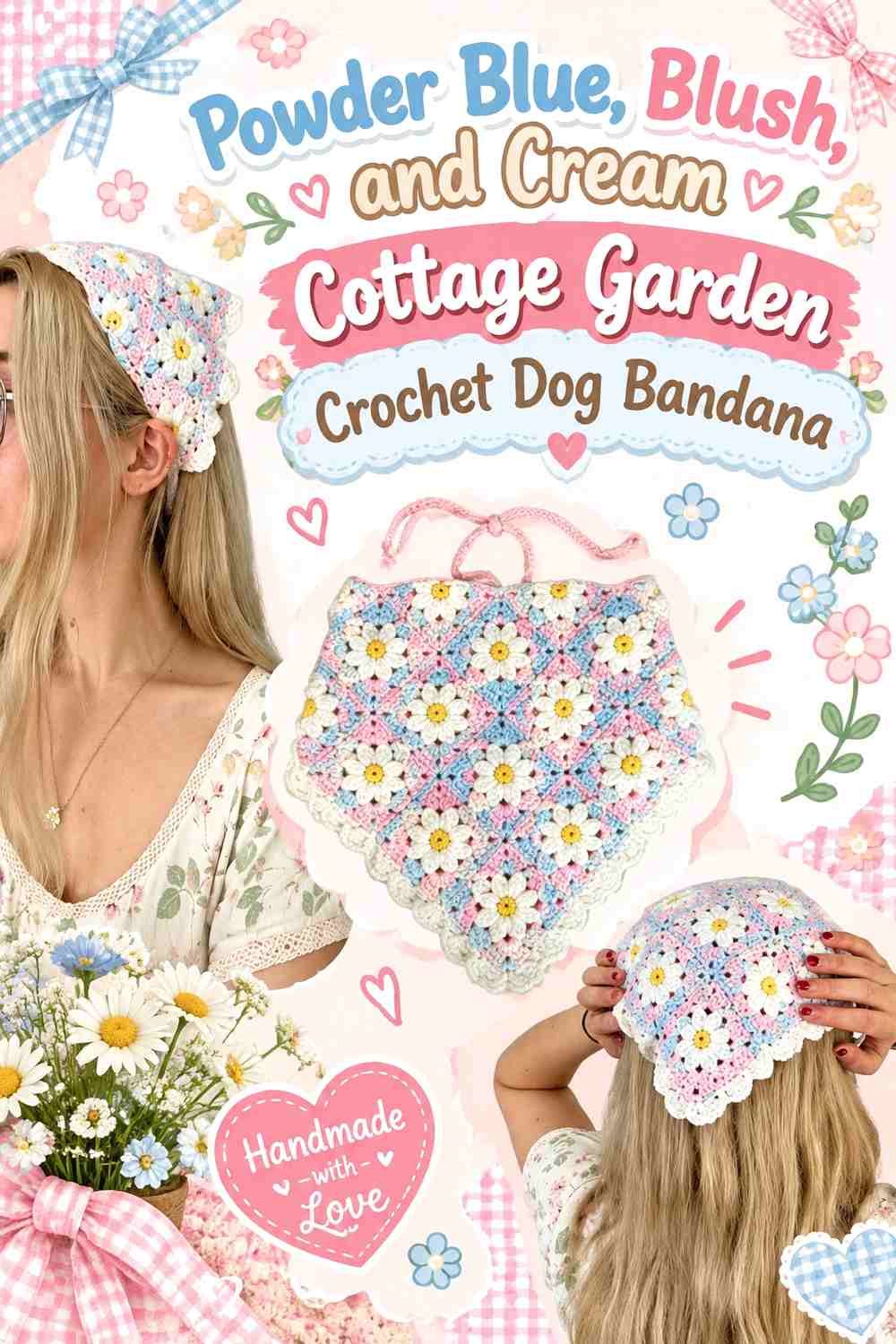
Powder blue and blush create a soft mixed-flower effect, while cream keeps the palette from becoming entirely pastel. This combination suits a scattered cottage-garden layout better than one large high-contrast flower.
Powder Blue Can Hold the Crochet Bandana Together Behind Blush Flowers
Keep powder blue across most of the fabric and place blush flowers at deliberate intervals rather than distributing pink evenly across every row.
The blue background gives the eye a consistent area to return to between floral details.
Cream Should Clarify Blush Flowers on a Powder Blue Bandana
Cream centers, petals, or small border details can keep pale pink from disappearing against pale blue.
Check all three yarns in grayscale. If they appear almost identical, darken either the blue or blush instead of relying on subtle hue differences alone.
Creator Credit: cosybearcrochet
10. Burgundy, Dusty Rose, and Oatmeal Floral Crochet Dog Bandana

Burgundy gives cottagecore florals a richer, darker base. Dusty rose forms a natural middle value, while oatmeal can supply the lightest petals, centers, or edging.
Burgundy Should Anchor the Crochet Dog Bandana Behind Lighter Flowers
Let burgundy cover the main triangle so the bandana has a clear dark foundation. The darker background can make small dusty rose or oatmeal flowers easier to see without requiring oversized appliqués.
Keep burgundy visible between motifs rather than filling the whole surface with floral pieces.
Dusty Rose Bridges Burgundy and Oatmeal Crochet Flowers
Use dusty rose where you want a softer transition between dark burgundy and pale oatmeal. It can form petals while oatmeal becomes the flower center, or the roles can be reversed.
If the finished piece starts looking too busy, reduce oatmeal first because the lightest shade will attract the most attention against burgundy.
Creator Credit: Muchacha Ganchillo
11. Mint Green, White, and Pale Yellow Daisy Crochet Dog Bandana
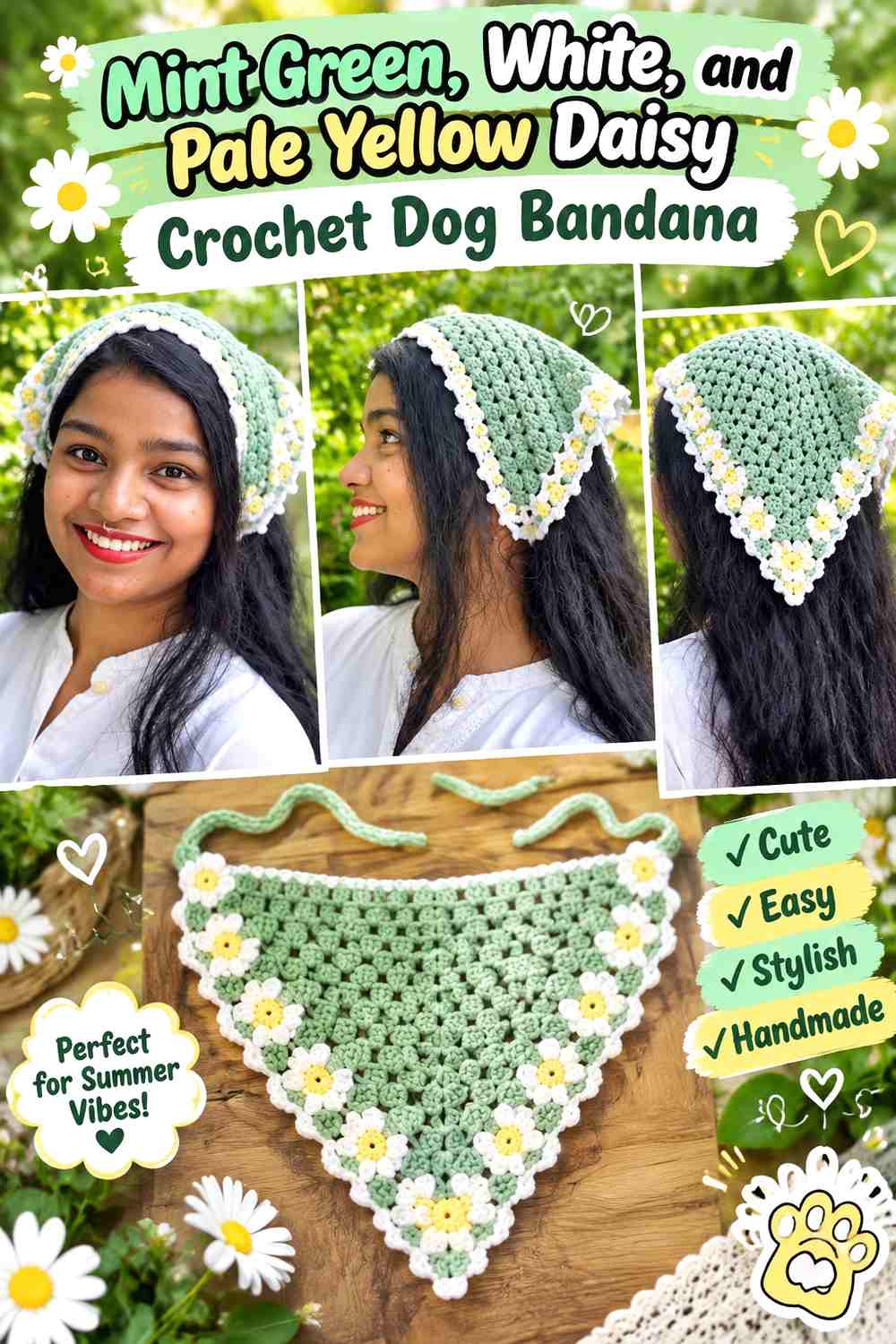
Mint green gives this palette a fresh garden background, while white and pale yellow create a classic daisy treatment. Because all three shades can be light, value contrast deserves extra attention.
Mint Green Needs Enough Depth Behind White Crochet Daisies
Choose a mint that is visibly darker than white so the petal edges stay clear. An extremely pale mint may look attractive in the skein but provide little separation once the stitches are worked together.
Let mint dominate the triangle and keep white mostly within the floral motifs.
Pale Yellow Should Stay Concentrated Inside White and Mint Daisies
Pale yellow works best as a small center accent because its lightness can be similar to white. Increasing the saturation slightly can help without abandoning the gentle palette.
Avoid spreading pale yellow across the border if you want the daisies to remain the main source of yellow.
Creator Credit: Crochet by Amrita
12. Forest Green, Cream, and Rust Wildflower Crochet Dog Bandana
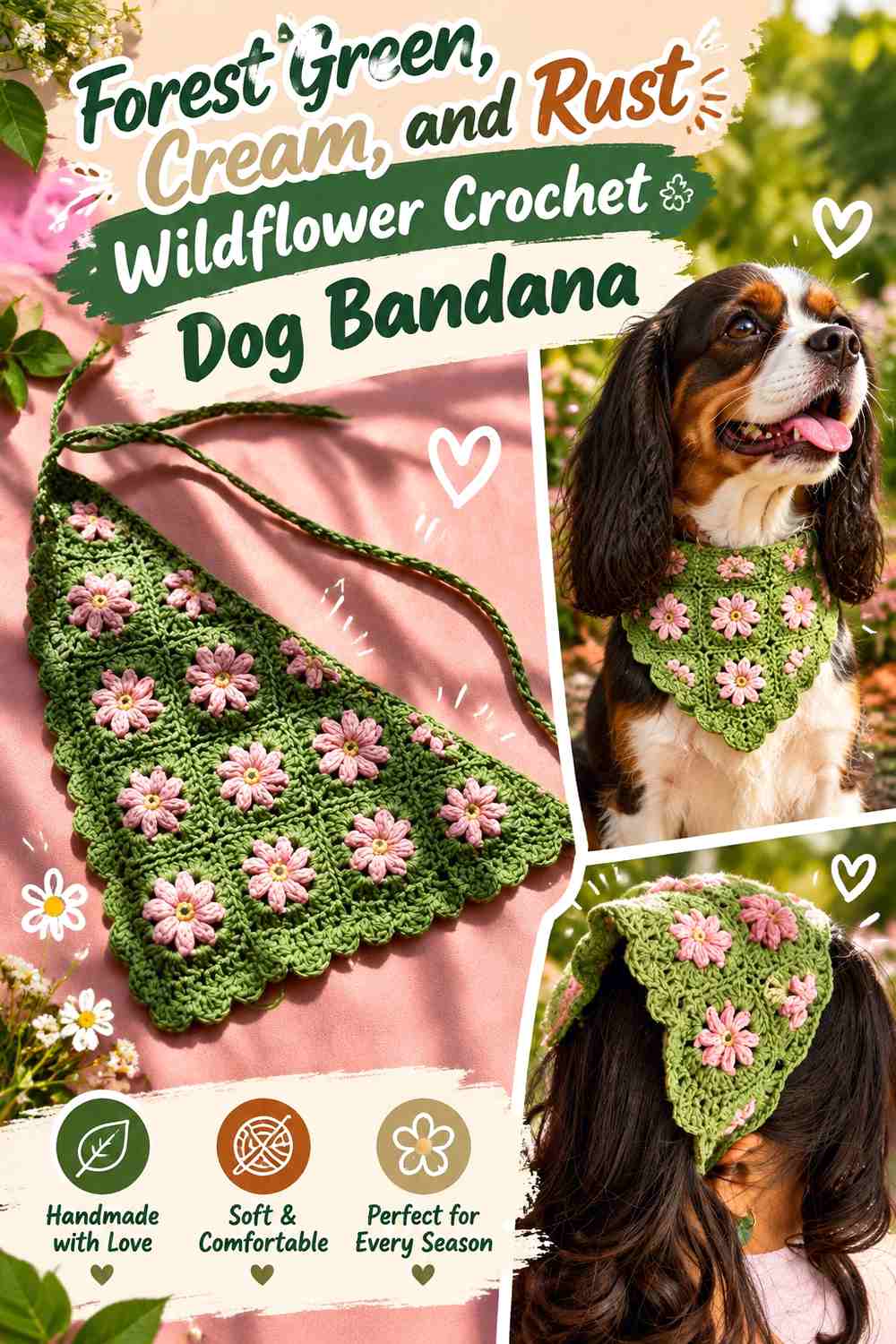
Forest green creates a deeper woodland version of cottagecore. Cream keeps the surface from becoming too dark, while rust can mimic autumn wildflowers or small warm accents.
Forest Green Gives the Crochet Dog Bandana a Strong Woodland Base
Cover most of the triangle in forest green and keep the floral areas relatively open. The dark background provides enough visual weight that the bandana does not need a heavy contrasting border.
Cream flowers will already create substantial separation.
Rust Should Accent Cream Flowers Instead of Competing With Forest Green
Use rust for small petals, flower centers, or a few scattered blossoms. If rust covers the same amount of surface as forest green, the woodland effect becomes much busier.
Cream can sit between the two darker colors where small floral details need more definition.
Creator Credit: Kylie Katsuit
13. Mauve, Sage Green, and Cream Floral Crochet Dog Bandana

Mauve combines the softness of pink with a slightly grayer appearance, which works well with sage. Cream provides the lightest accent and can keep the two muted shades from looking muddy together.
Mauve Can Carry Most of the Crochet Bandana Surface
Use mauve across the main triangle and place sage around leaves, stems, or a narrow border. This keeps the floral palette soft while maintaining a clear dominant color.
A solid mauve background also leaves room for texture to show between the flower motifs.
Cream Gives Mauve and Sage Crochet Flowers Necessary Separation
Cream can define flower petals or centers where mauve and sage sit too close in value. It is particularly useful around small motifs that would otherwise disappear from a distance.
Keep the cream concentrated around those floral details instead of outlining every edge.
Creator Credit: Selina Veronique Crochet
14. Cream, Butter Yellow, and Meadow Green Chamomile Crochet Dog Bandana
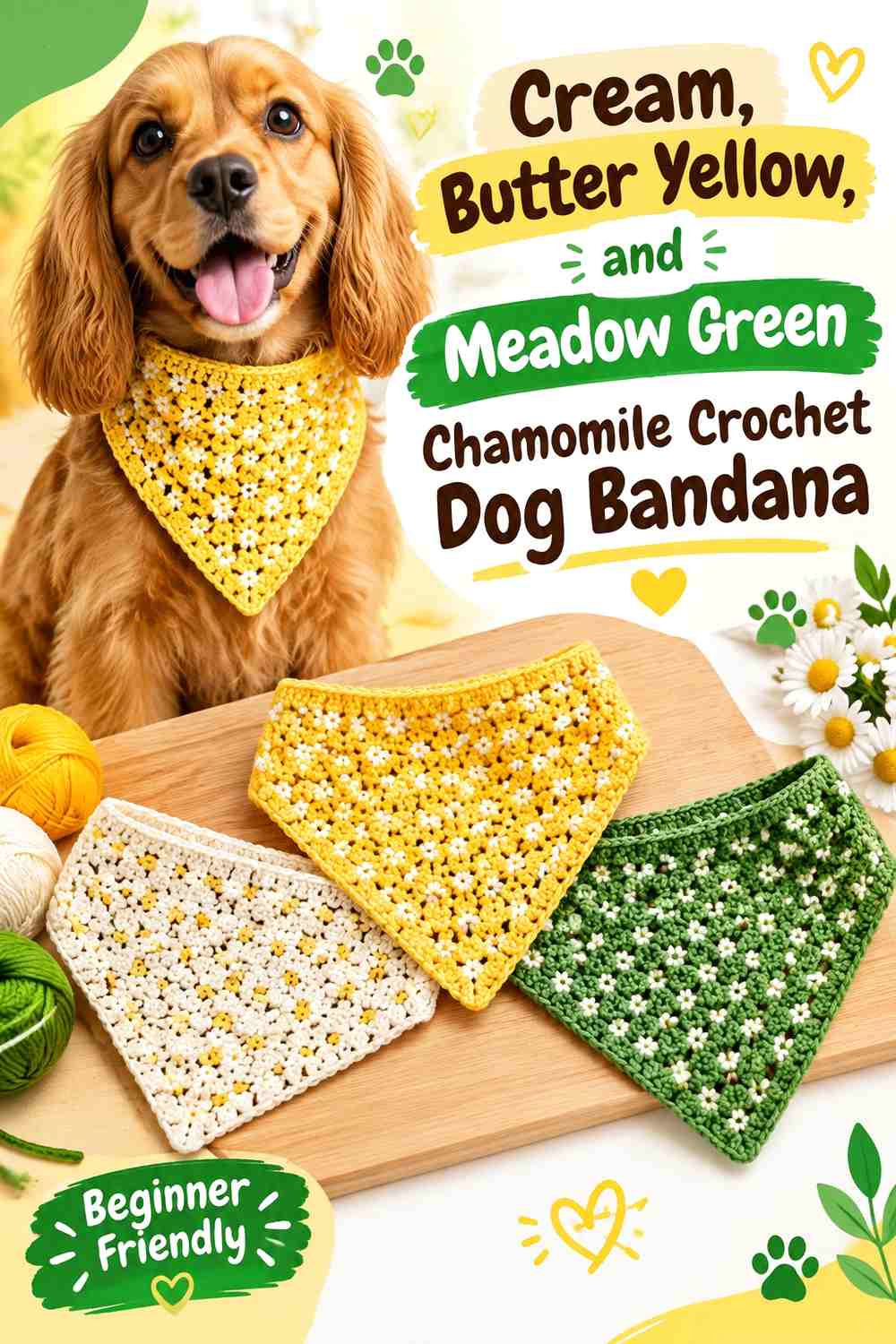
Cream takes the dominant role in this light cottagecore scheme. Butter yellow provides chamomile-style centers, while meadow green supplies leaves and enough darker contrast to keep the pale background from looking flat.
Cream Can Lead the Crochet Dog Bandana When Meadow Green Defines the Details
Use cream across most of the triangle, but plan green placement before beginning the flowers. A pale background needs darker botanical details to prevent the motifs from disappearing.
A narrow meadow-green edge can also frame the light triangle if the finished piece needs more definition.
Butter Yellow Chamomile Centers Should Stay Small Against Cream
Yellow flower centers are most effective when they occupy less space than the cream petals or background.
If the yellow is too pale to show, choose a warmer or slightly deeper yellow rather than enlarging every center.
Creator Credit: Jess Crafting
15. Dusty Coral, Olive Green, and Oatmeal Blossom Crochet Dog Bandana

Dusty coral introduces warmth without the brightness of a clear orange. Olive keeps the palette earthy, while oatmeal can separate the warm flower color from the green foliage.
Dusty Coral Should Remain the Main Crochet Bandana Color
Use dusty coral across the triangle and allow olive to appear mainly as leaves or a smaller border detail. This prevents the dog bandana from becoming equally divided between orange and green.
For a softer cottagecore effect, choose a coral that looks slightly muted rather than highly saturated.
Oatmeal Can Buffer Dusty Coral and Olive Crochet Blossoms
Where coral flowers meet olive leaves, oatmeal can appear as a center or small surrounding detail.
This light neutral is especially useful if coral and olive have similar value. It creates separation without adding another strong hue.
Creator Credit: VivCrochets
16. Plum, Lilac, and Sage Flower Crochet Dog Bandana
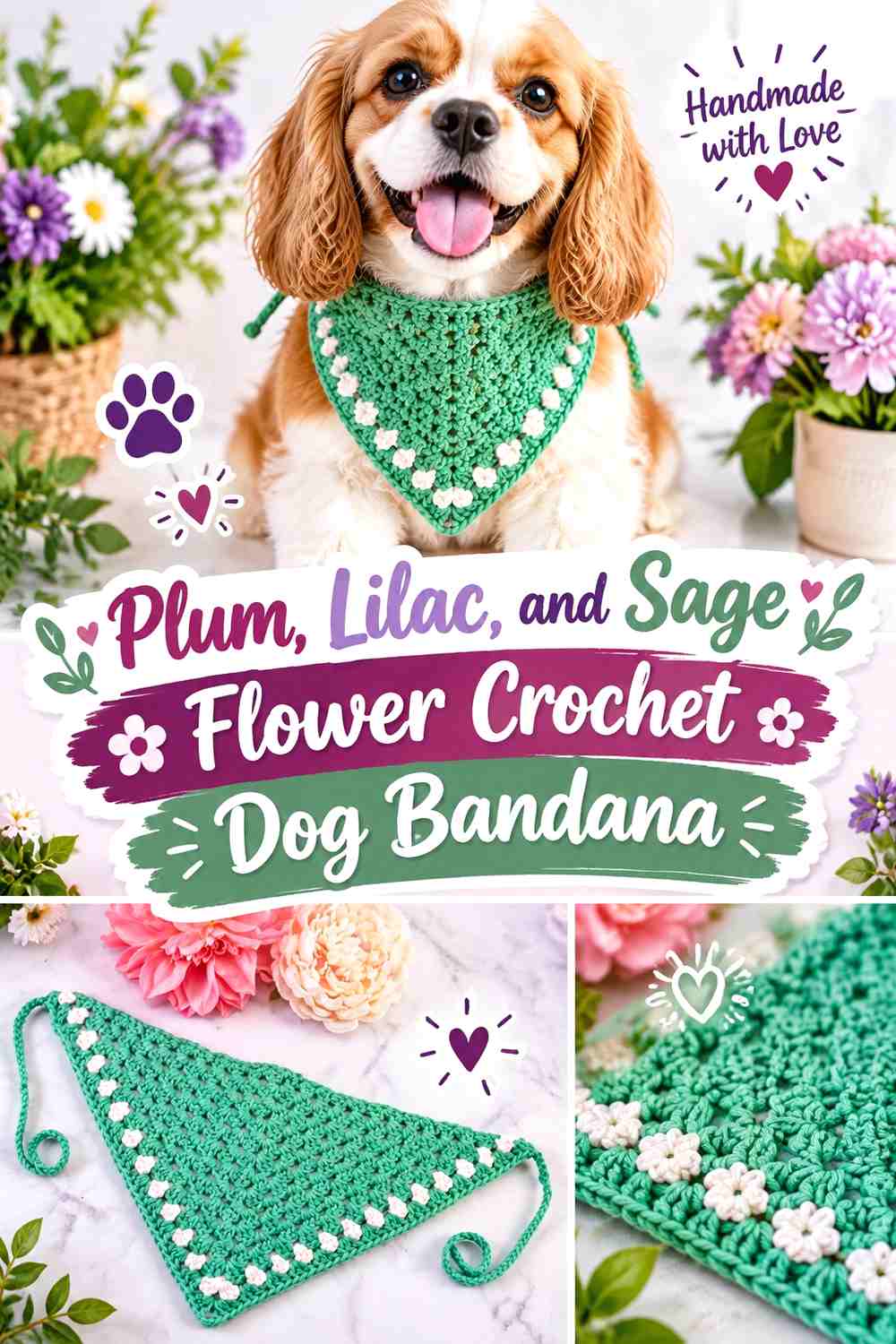
Plum gives the bandana a darker floral base, lilac supplies a lighter related shade, and sage introduces foliage contrast. This is useful when you want a floral cottagecore palette without relying on cream or white.
Plum Gives Lilac Crochet Flowers a Darker Background
Let plum own most of the triangle. Lilac flowers can then stay relatively small while remaining easy to identify against the deeper purple.
A solid plum field can also make a few flowers look more deliberate than a surface covered in many different motifs.
Sage Should Stay Secondary to Plum and Lilac Floral Details
Use sage for leaves, a small stem effect, or a restrained edge. Because sage introduces a completely different hue family, even a modest amount can be noticeable.
If the palette feels too divided, reduce sage before reducing lilac; the two purples create the strongest internal connection.
Creator Credit: Treasurie
17. Cocoa Brown, Cream, and Muted Pink Floral Crochet Dog Bandana

Cocoa brown gives this cottagecore dog bandana an earthy soil-and-flowers direction. Cream lightens the floral shapes, while muted pink provides a restrained romantic accent.
Cocoa Brown Can Ground the Crochet Bandana Without Hiding Its Texture
Use cocoa over most of the triangle and let the crochet texture remain part of the design. The dark neutral gives both cream and pink enough visual separation that the flowers do not need to cover much area.
Keep the ties cocoa if you want the neck section to recede visually.
Cream and Muted Pink Should Share Different Floral Roles Against Cocoa
One useful approach is to let cream form the lighter petals while muted pink appears as centers or a second flower type. The exact placement can change, but avoid mixing both colors randomly within every motif.
Repeating the same floral color logic across the triangle makes the cottage-garden effect feel organized.
Creator Credit: Hopeful Turns
18. Pale Pink, Butter Yellow, and Mint Green Daisy Crochet Dog Bandana
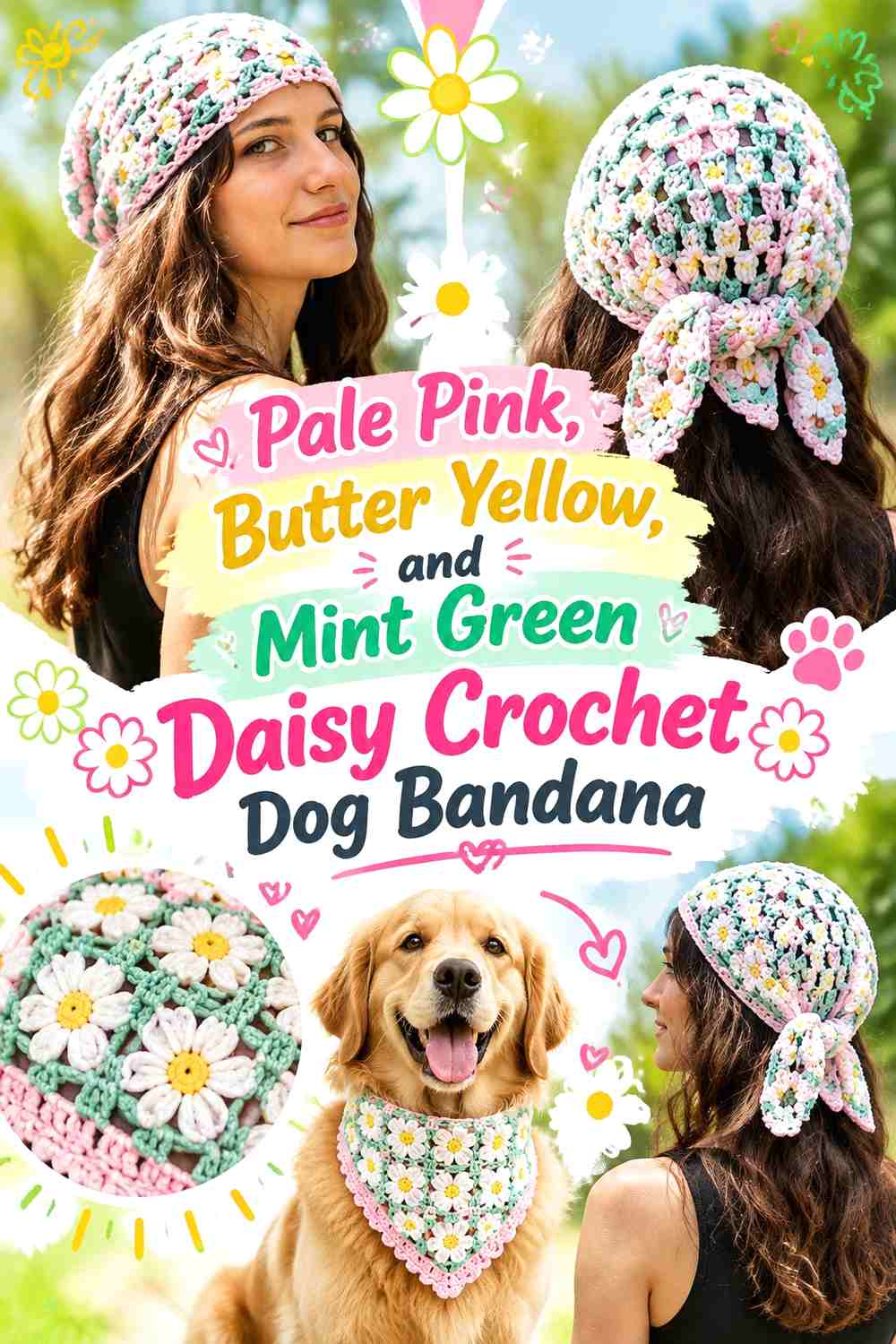
This is one of the lightest palettes in the collection. Pale pink provides the main triangle, butter yellow gives the flowers warmth, and mint supplies the cool botanical contrast needed to keep the design from becoming an all-pastel blur.
Pale Pink Needs Mint Green Contrast Around Crochet Floral Details
Use pale pink broadly, then position mint in leaves, small stems, or a controlled border. The green gives the floral shapes structure without requiring a very dark color.
If both pink and mint are extremely pale, compare them in grayscale before committing.
Butter Yellow Can Warm Pale Pink and Mint Daisy Centers
Keep butter yellow concentrated in the floral centers or a few tiny accents. Its warm character is enough to distinguish it from mint even when both are light.
If the flowers lose definition, deepen the yellow slightly instead of adding a fourth color.
Creator Credit: Calluna Crochet
19. Denim Blue, Cream, and Dusty Rose Wildflower Crochet Dog Bandana

Denim blue gives the final bandana a faded, everyday cottagecore base rather than a pastel one. Cream adds clear light contrast, while dusty rose provides the floral color without feeling overly bright.
Denim Blue Can Make the Crochet Dog Bandana Feel More Grounded
Use denim blue across most of the triangle and keep the wildflowers concentrated near the point or lower edges. The blue gives the floral details a stable backdrop and prevents pink from covering the entire design.
A slightly muted blue works particularly well if you want the colors to appear softened rather than crisp and graphic.
Dusty Rose and Cream Flowers Need Different Jobs Against Denim Blue
Let dusty rose carry the main petal color and use cream for centers, secondary blossoms, or selected edging. This keeps both lighter shades visible without making them compete equally.
If the cream border becomes too prominent, return the outer edge to denim blue and keep cream inside the floral design.
Creator Credit: it’s erin b.
Which Cottagecore Floral Dog Bandana Palette Should You Choose?
For a botanical, garden-heavy look, sage and butter yellow, forest green and rust, or oatmeal with chamomile yellow emphasize greens and natural flower colors. These palettes work especially well when the floral motifs include visible leaves.
For softer romantic cottagecore, dusty rose, lavender, mauve, peach, blush, lilac, or pale pink can carry more of the surface. Pairing these shades with sage, moss, olive, or mint keeps the flowers connected to a garden-inspired palette instead of creating an all-pink accessory.
If you prefer a darker base, burgundy, plum, cocoa, forest green, or denim blue can make cream and muted floral shades especially clear. Dark backgrounds are also useful when you want only one or two flowers to become focal points.
Conclusion
The strongest cottagecore dog bandanas do more than combine several pretty yarn colors. The background, flowers, centers, leaves, edging, and ties should have clear visual roles.
Choose sage, oatmeal, cream, mushroom, cocoa, or denim when you want the triangle itself to act as a quiet foundation. Dusty rose, lavender, peach, mauve, coral, or lilac can make the bandana more floral even before an appliqué is added. Butter yellow, rust, cream, or pale pink then work well in smaller quantities where the actual blossoms need emphasis.
Most importantly, keep the floral details appropriate for the size and behavior of the individual dog. Use the credited tutorial for its demonstrated construction, adjust the dimensions to your pet where necessary, and keep embellishments secure and lightweight.
Frequently Asked Questions
Where should I place crochet flowers on a cottagecore dog bandana?
The lower point is useful for one focal flower because it remains visible when the bandana hangs naturally. Smaller flowers can also follow the lower edges or appear as repeated motifs across the triangle. Check placement while the bandana is positioned on the dog because the fabric will curve differently than it does when lying flat.
How many colors work well in a floral crochet dog bandana?
Three colors are enough for many cottagecore schemes: one dominant background, one flower color, and one foliage or accent color. A fourth shade can work for flower centers or edging, but it should have a clear purpose. Too many equally strong colors can make a small bandana look visually crowded.
How do I keep cream crochet flowers visible on a pale cottagecore bandana?
Compare the cream with the background in terms of light and dark value. If lavender, blush, oatmeal, or mint is nearly as light as the cream, add a darker center, leaf, or outline color or choose a slightly deeper background shade. Different hues alone do not guarantee visible contrast.
Should the crochet border match the flowers or the dog bandana background?
Either can work. Matching the background creates a quieter frame and lets floral motifs remain the focal point. Repeating the flower or foliage color in the border creates a stronger decorative edge. On a small bandana, avoid introducing a completely new border color unless it also appears somewhere else in the design.
Can I add flower appliqués to any crochet dog bandana?
A simple bandana can often be adapted with appropriately sized appliqués, but consider the fabric weight and final placement first. A thick flower can pull on a very open or lightweight triangle. Secure the piece carefully and make sure it does not create uncomfortable bulk near the dog’s throat or neck.
Are flower granny squares suitable for a crochet dog bandana?
They can provide a strong floral effect, particularly when arranged into a triangular shape, but human bandana constructions need to be resized and adapted rather than assumed to fit a dog. Check the finished neck width, triangle depth, closure method, and overall weight for the individual pet.
What makes a crochet dog bandana look cottagecore?
The effect usually comes from the combination of a handmade crochet surface, softened garden-inspired colors, and restrained botanical details. Sage, cream, dusty rose, lavender, butter yellow, faded blue, oatmeal, olive, and earthy brown are useful starting points, but the placement matters as much as the color names. A simple three-color bandana with one well-defined flower can communicate the style more clearly than a crowded design with many unrelated shades.