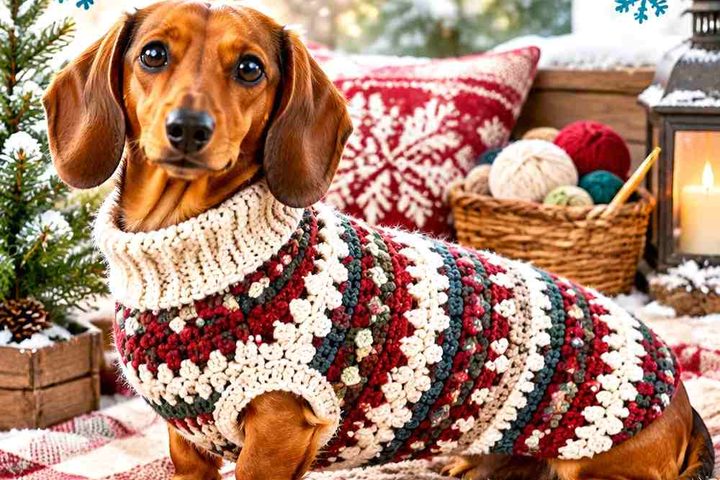
Rust orange and oatmeal make a useful two-color palette for crochet dog outfits because they create an autumn look without requiring several competing shades. Rust orange brings the stronger visual weight, while oatmeal can lighten collars, leg openings, borders, chest panels, and textured sections.
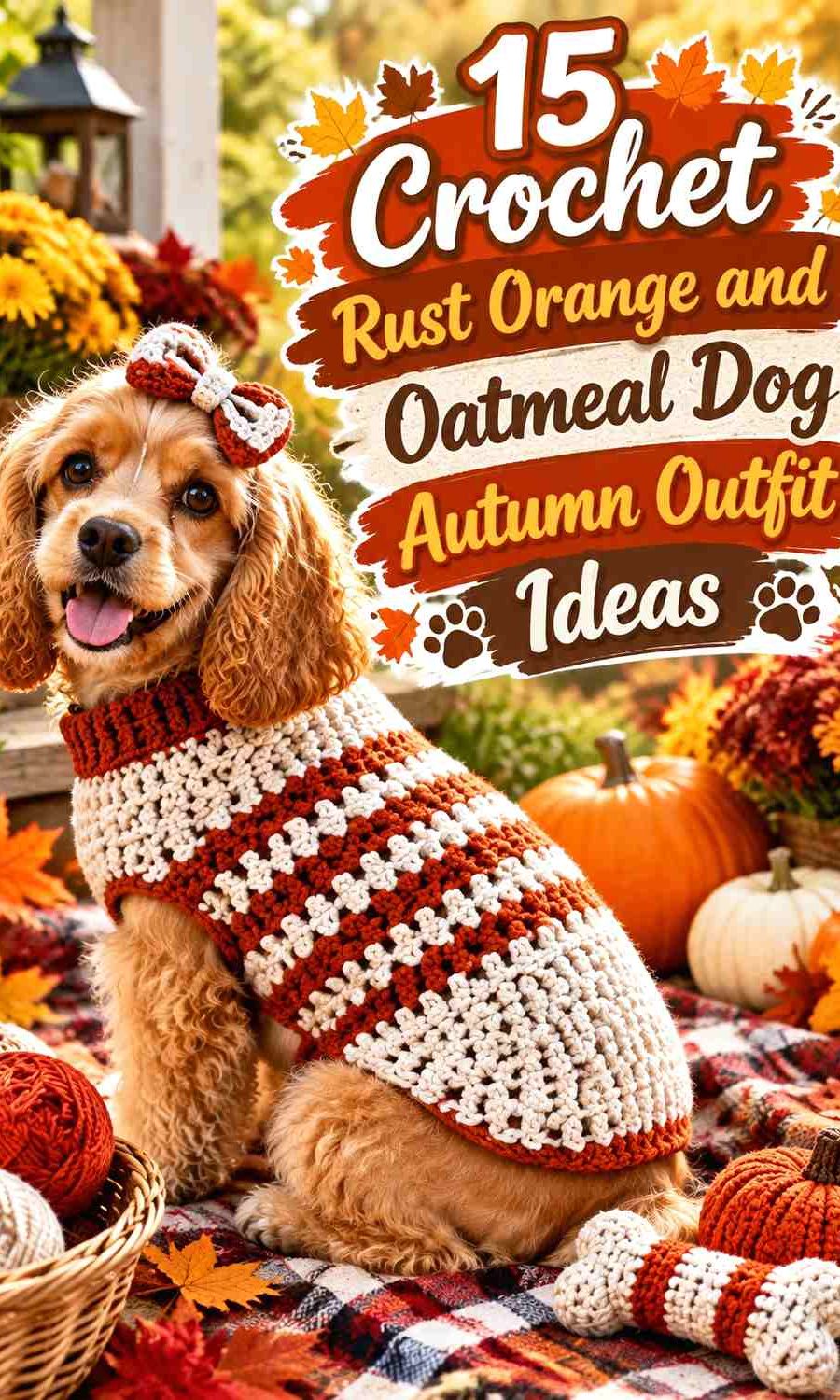
The balance between the two colors can change the entire garment. A rust-orange sweater with narrow oatmeal edging reads as warm and saturated, while an oatmeal sweater with a rust-orange collar feels lighter and puts more emphasis on the garment’s structure. Wide stripes give both shades similar importance, while a contrasting neckline or hem creates a more restrained two-color result.
The tutorials supporting these ideas include dog sweaters, coats, and a poncho construction. The Rust Orange and Oatmeal palettes and placements below are independent editorial adaptations rather than claims about the colors used by the creators.
Quick List
- Rust Orange Body and Oatmeal Collar Crochet Dog Autumn Sweater Outfit
- Rust Orange and Oatmeal Broad-Stripe Crochet Dog Autumn Sweater Outfit
- Oatmeal Body and Rust Orange Border Crochet Dog Autumn Sweater Outfit
- Rust Orange and Oatmeal Narrow-Stripe Crochet Small Dog Autumn Outfit
- Oatmeal Coat With Rust Orange Front Edging Crochet Dog Autumn Outfit
- Rust Orange One-Piece Sweater With Oatmeal Trim Crochet Dog Autumn Outfit
- Rust Orange Ribbed Neck and Oatmeal Body Crochet Dog Autumn Outfit
- Oatmeal Pullover With Rust Orange Bands Crochet Dog Autumn Outfit
- Rust Orange Textured Body and Oatmeal Collar Crochet Dog Autumn Outfit
- Rust Orange and Oatmeal Crochet Dog Autumn Poncho Outfit
- Oatmeal Dog Coat With Rust Orange Side Panels Crochet Autumn Outfit
- Oatmeal Body and Rust Orange Color-Block Crochet Small Dog Autumn Outfit
Decide Whether Rust Orange or Oatmeal Should Lead the Dog Outfit
Rust orange naturally carries more visual weight than oatmeal. If it covers the back, shoulders, and chest, the outfit will remain clearly orange even when oatmeal appears on several smaller finishing areas. This is useful when you want a distinctly autumnal look without introducing brown, olive, or mustard.
An oatmeal-dominant garment creates a quieter result. Rust orange can then be concentrated around a collar, hem, front panel, or sleeves, where a smaller amount of the darker color is enough to define the construction.
Use Oatmeal to Separate Rust Orange Crochet Texture
Rust orange can make a textured crochet surface look rich and dense, but smaller raised details may not always stand out under low light. An oatmeal border, collar, or adjacent panel can give the eye a lighter reference point.
That does not mean every textured section needs to be oatmeal. If the stitch pattern itself is the focal feature, keep the color changes limited so stripes and trim do not compete with the crochet surface.
Place Rust Orange and Oatmeal Around the Dog’s Actual Fit
Collars, chest panels, leg openings, and hems are useful color zones because they correspond to real garment structure. They are also the areas where fit problems become most noticeable.
Check the neck, chest, front-leg openings, belly clearance, and back length before using high contrast to emphasize those areas. A striking Rust Orange and Oatmeal border will draw attention to an edge, so that edge should sit comfortably and allow normal movement.
1. Rust Orange Body and Oatmeal Collar Crochet Dog Autumn Sweater Outfit
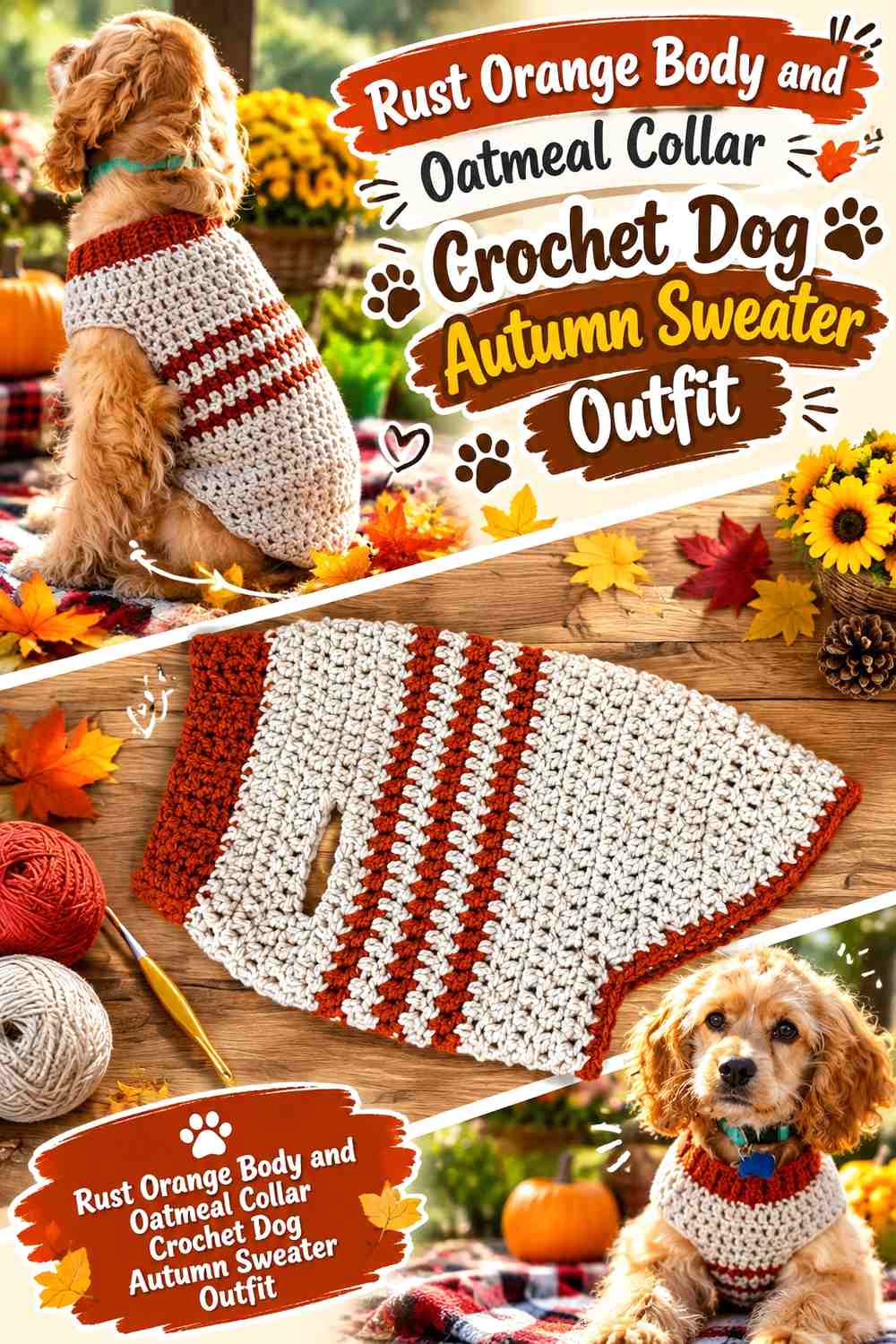
Rust orange can cover the main torso while oatmeal is concentrated at the neckline. This creates a clear autumn color direction without interrupting the back with extra stripes. The light collar also separates the upper garment from the dog’s coat and gives the neckline a deliberate finish.
Oatmeal Gives the Rust Orange Crochet Dog Sweater a Lighter Neckline
Use oatmeal across the neckband rather than scattering it through several small upper-body details. One continuous pale section creates stronger visual structure and keeps the color plan easy to read.
Rust Orange Should Stay Broad Below the Oatmeal Collar
Continue Rust Orange across the shoulders, sides, and visible back before repeating oatmeal elsewhere. A large uninterrupted field makes the collar look like an intentional supporting detail rather than the beginning of a striped garment.
Creator Credit: it’s erin b.
2. Rust Orange and Oatmeal Broad-Stripe Crochet Dog Autumn Sweater Outfit
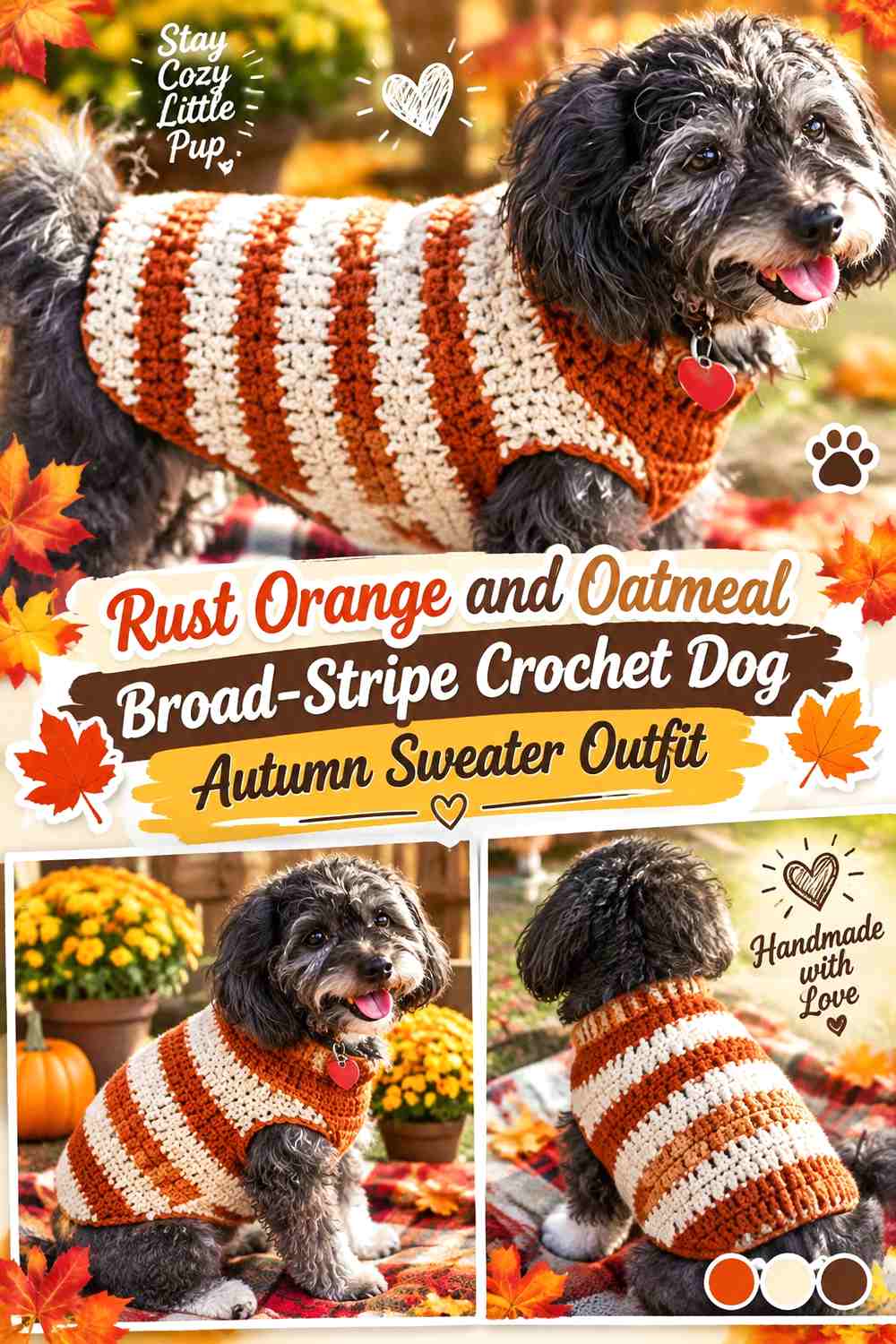
Broad stripes give Rust Orange and Oatmeal more equal importance than a contrasting collar or border. This arrangement suits a dog sweater with enough back length for a few substantial bands rather than many narrow changes.
Oatmeal Stripes Need Enough Width Beside Rust Orange
Very narrow oatmeal rows function more like separators. If you want an unmistakably striped sweater, give the pale sections enough depth to be visible across the dog’s back when viewed from the side.
Rust Orange Can Anchor the Oatmeal Autumn Stripe Sequence
Use Rust Orange near the neckline or at the final visible body section so the stronger autumn shade anchors the palette. Equal-width stripes can work, but a little more Rust Orange keeps the sweater from becoming primarily cream-colored.
Creator Credit: The Crochet Crowd
3. Oatmeal Body and Rust Orange Border Crochet Dog Autumn Sweater Outfit
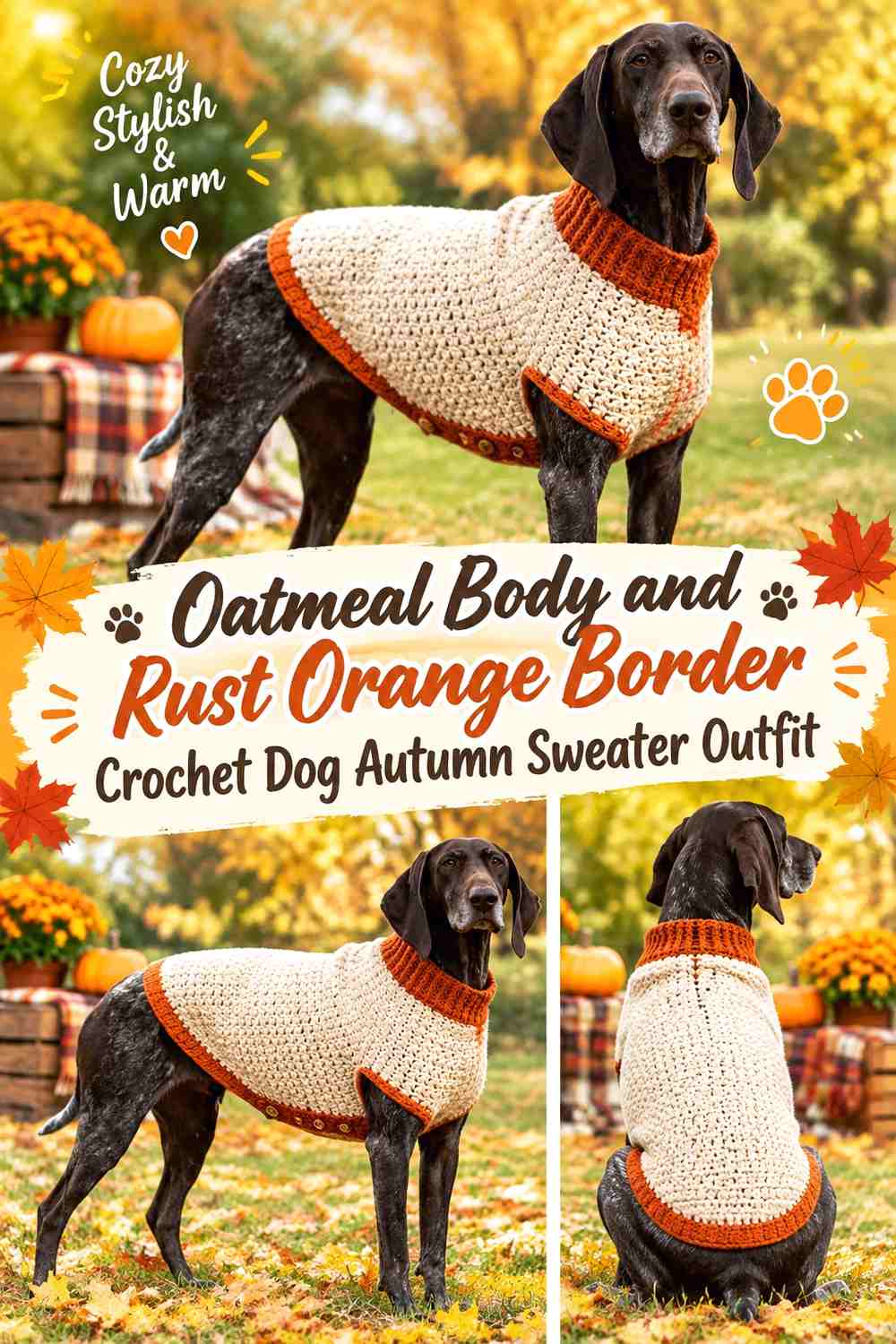
An oatmeal body gives this sweater a lighter overall appearance while Rust Orange traces the garment’s structure. A rust border can define the neckline and lower edge without requiring large orange sections through the middle.
Rust Orange Can Frame an Oatmeal Crochet Dog Sweater
Use Rust Orange around one or two connected edges, such as the neck and lower back. Because the orange is substantially stronger than oatmeal, a relatively narrow border can still influence the whole garment.
Oatmeal Needs a Broad Center Inside the Rust Orange Border
Keep most of the back oatmeal so the border remains a frame rather than taking over the sweater. The larger pale field can also make pronounced stitch texture easier to see.
Creator Credit: Heart Hook Home
4. Rust Orange and Oatmeal Narrow-Stripe Crochet Small Dog Autumn Outfit
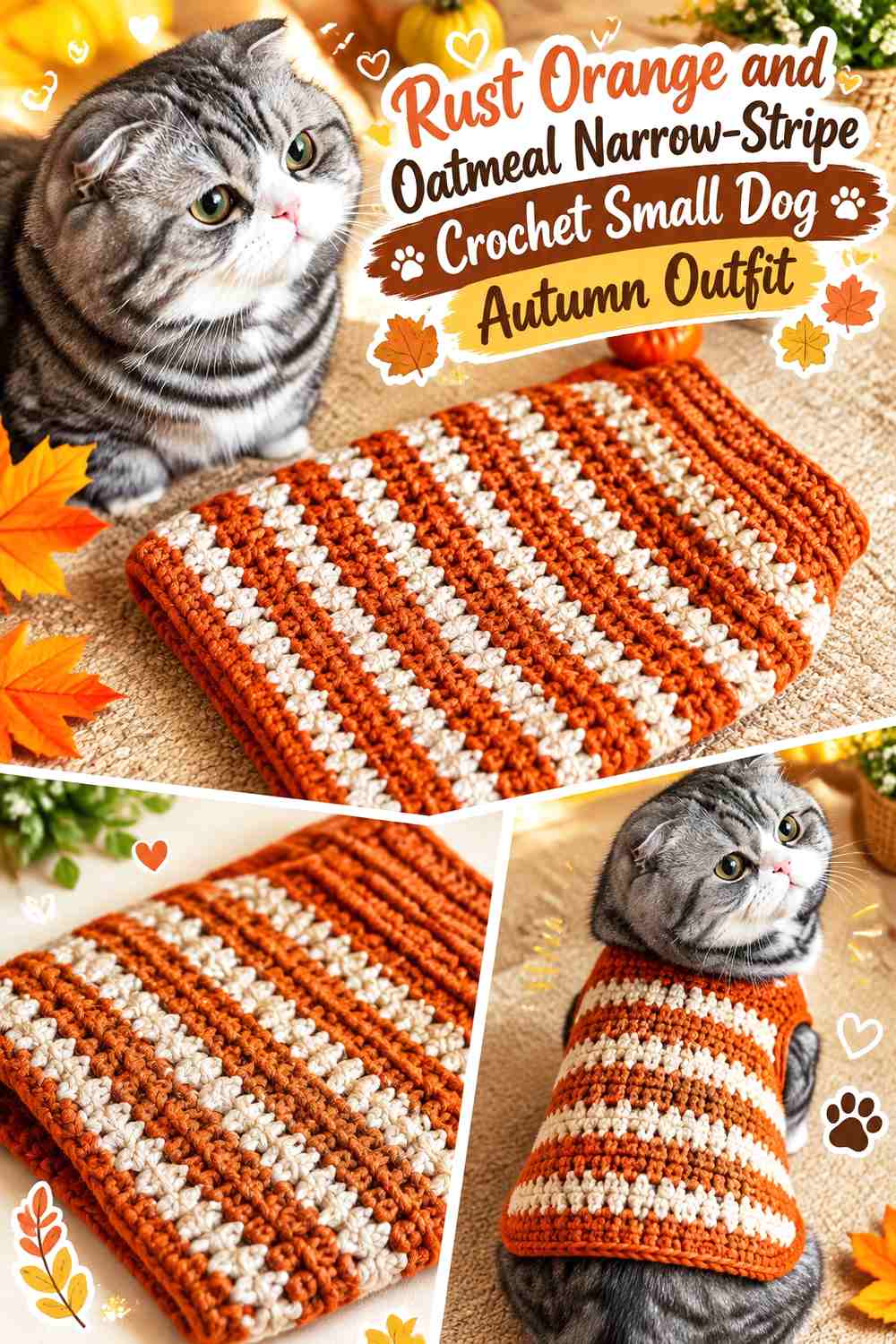
Narrow stripes create more frequent repetition than idea 2 and work particularly well on a compact dog garment. Because the color changes occur more often, keep the collar and leg-opening trim simple instead of introducing another stripe pattern there.
Oatmeal Should Break Up Rust Orange Without Taking Over the Small Sweater
Use oatmeal as the lighter interruption between Rust Orange bands. On a small back, even a few pale stripes can occupy substantial visual space, so check the full sequence before adding more.
Rust Orange Needs Repetition Between Every Oatmeal Accent
Return consistently to Rust Orange rather than adding a third neutral between stripes. The repeated warm shade ties the narrow bands together and keeps the two-color autumn identity intact.
Creator Credit: LittleGemsCreations – Fibre Artist
5. Oatmeal Coat With Rust Orange Front Edging Crochet Dog Autumn Outfit
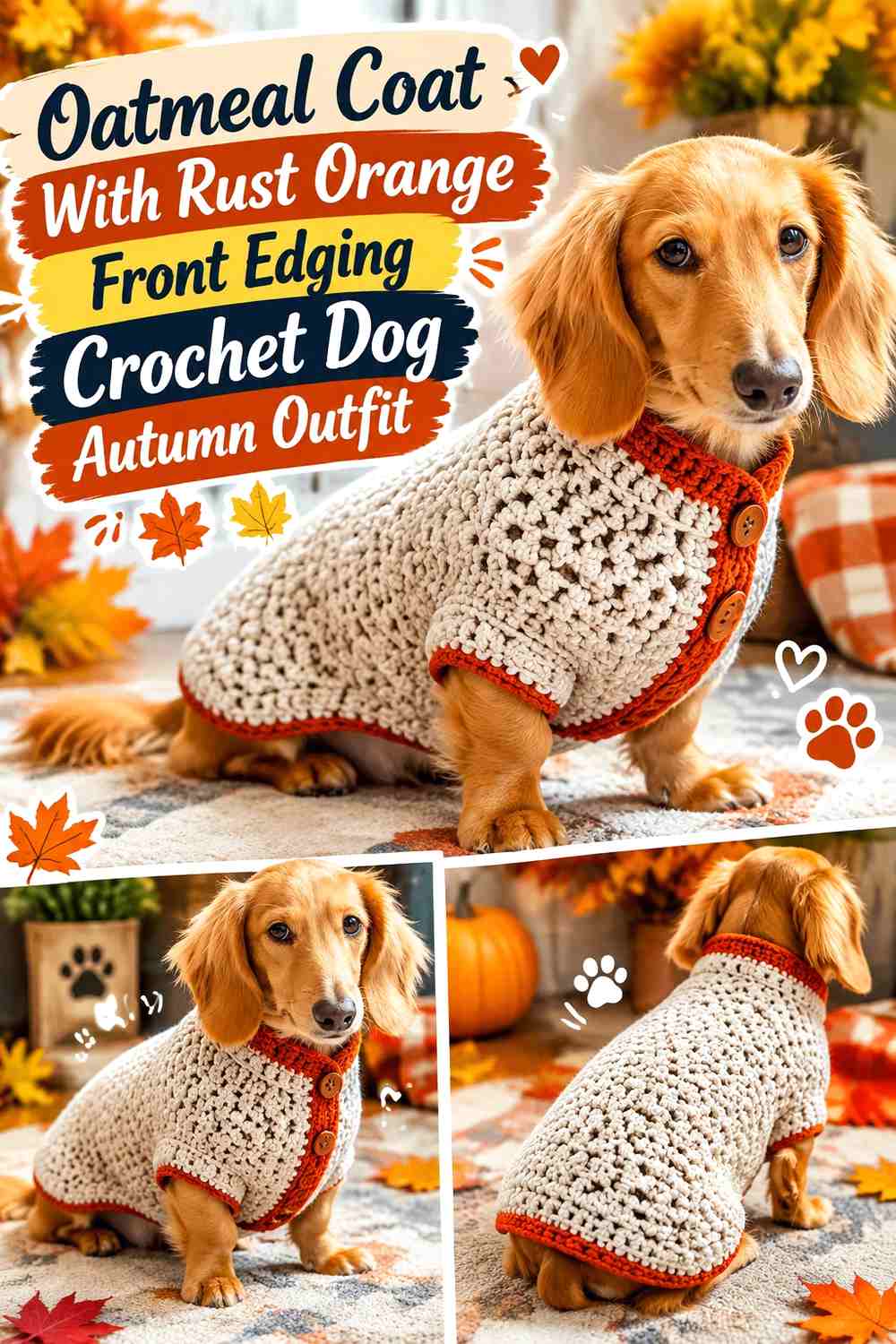
An oatmeal crochet coat can use Rust Orange along its front or outer structural edges. This places the autumn color where the coat shape changes rather than covering the main back surface.
Rust Orange Gives the Oatmeal Dog Coat a Defined Opening
If the chosen coat construction has a visible front, chest, or fastening edge, concentrate Rust Orange there. The deeper shade makes that structural line easy to identify without introducing unnecessary back stripes.
Oatmeal Should Remain Continuous Beside the Rust Orange Coat Edge
Keep the large panels oatmeal so the contrast stays focused on construction. Broad Rust Orange blocks next to the edge would reduce the clean framing effect.
Creator Credit: Crochet with Tiffany
6. Rust Orange One-Piece Sweater With Oatmeal Trim Crochet Dog Autumn Outfit
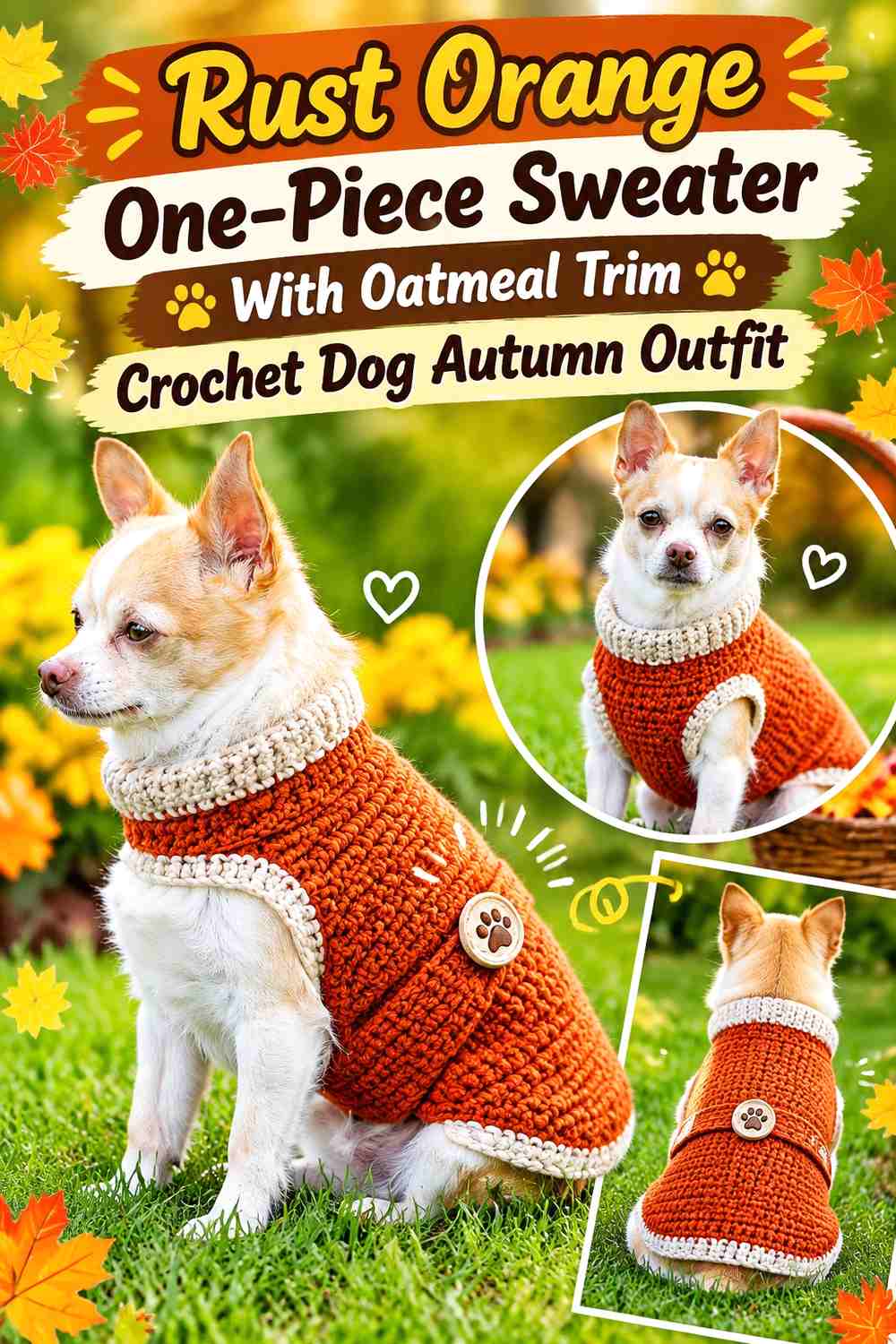
A one-piece sweater concept benefits from a simple palette because the garment already has a continuous construction. Rust Orange can cover most of that uninterrupted surface while oatmeal is limited to the outer finishing.
Oatmeal Can Finish a Rust Orange One-Piece Dog Sweater Cleanly
Use oatmeal at the neckline, lower edge, or another natural finishing point. A restrained light trim signals where the garment ends without dividing the central Rust Orange fabric.
Rust Orange Should Connect the Oatmeal Trim Through One Continuous Body
Avoid inserting several broad oatmeal sections through the torso if the goal is to emphasize the one-piece look. Let Rust Orange visually connect the neck, shoulders, and back.
Creator Credit: Last Minute Laura
10. Rust Orange Ribbed Neck and Oatmeal Body Crochet Dog Autumn Outfit
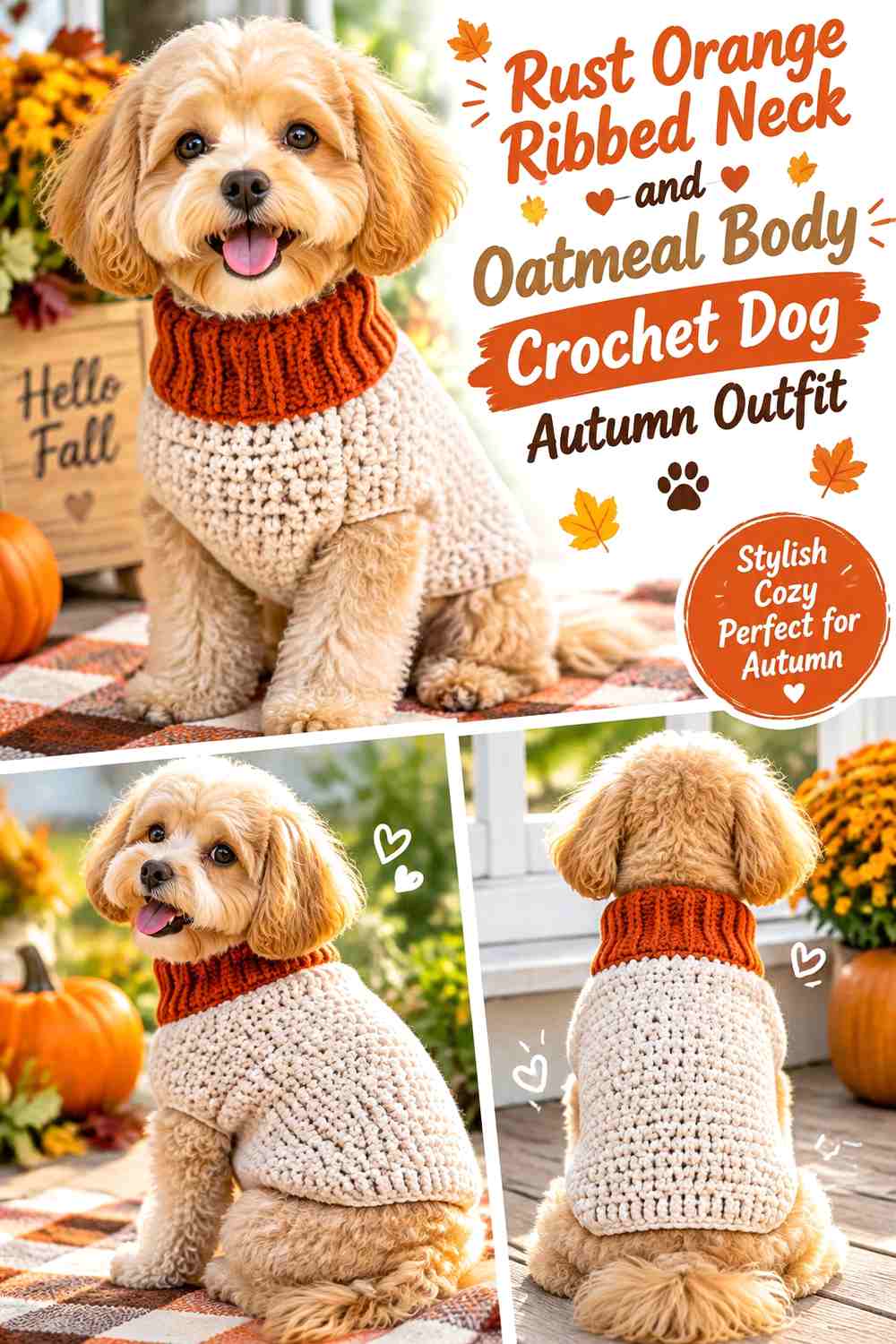
A Rust Orange ribbed neckline gives a pale oatmeal body both color contrast and a stronger textural anchor. Because ribbing already creates visual lines, it can carry the darker color without additional striping.
Rust Orange Ribbing Can Anchor an Oatmeal Dog Sweater
Keep the full ribbed section Rust Orange if you want a clean transition from neckline to body. Alternating oatmeal through the ribbing can weaken the collar’s role as the main accent.
Oatmeal Should Stay Broad Beneath the Rust Orange Ribbed Neck
Let oatmeal cover most of the chest and back. The pale field keeps the textured Rust Orange collar prominent without allowing the darker shade to dominate the full garment.
Creator Credit: Loops Only Crochet
11. Oatmeal Pullover With Rust Orange Bands Crochet Dog Autumn Outfit
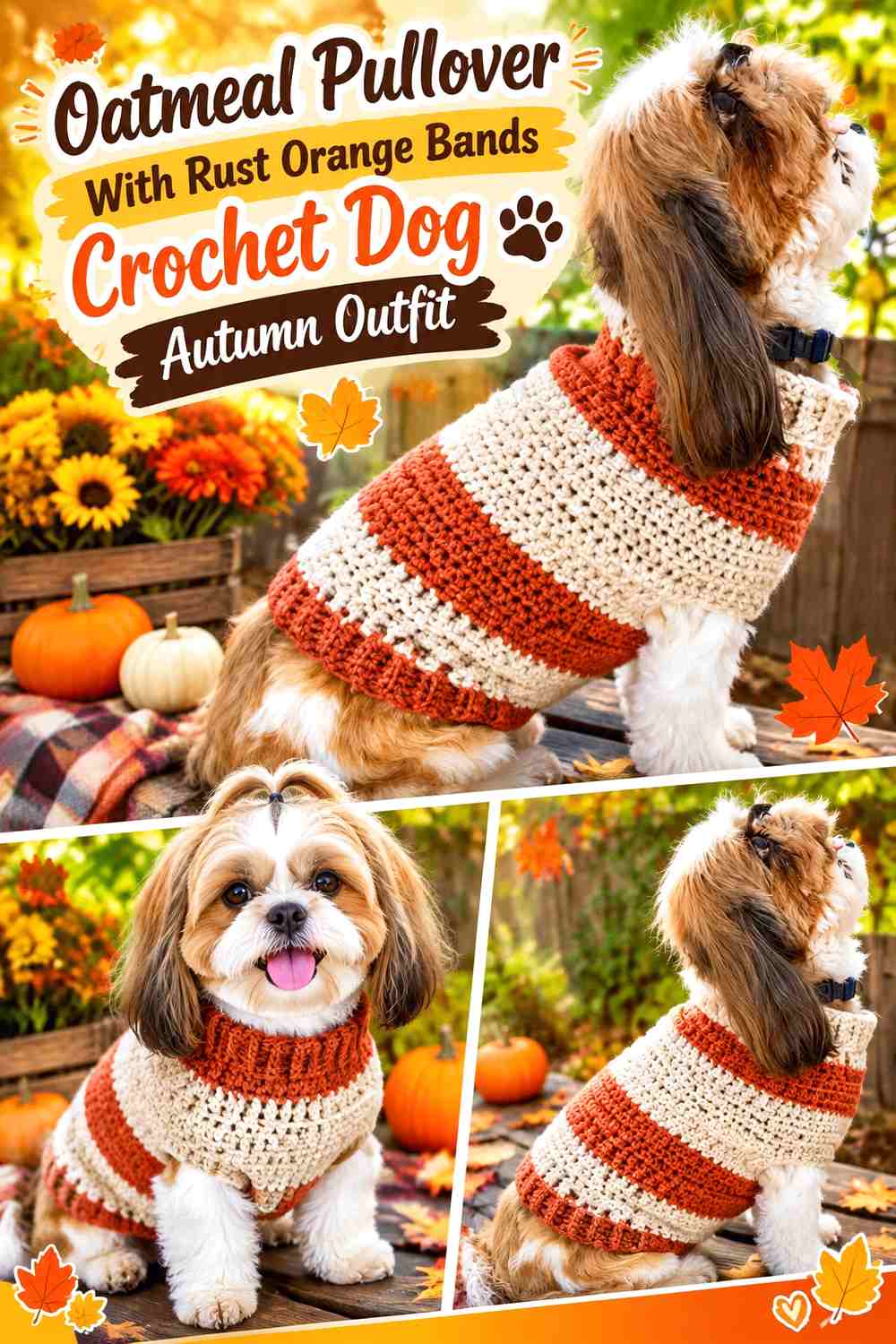
An oatmeal pullover can carry a few deliberate Rust Orange body bands for a warm seasonal reference. The difference from the narrow-striped idea is restraint: use fewer, broader orange sections with more oatmeal space between them.
Rust Orange Bands Need Clear Spacing Across the Oatmeal Pullover
Leave enough oatmeal between each Rust Orange section that the dark bands do not visually merge. The pale intervals help each autumn accent remain distinct.
Oatmeal Should Occupy More Area Than Rust Orange on This Pullover
Keep the collar, much of the back, or the lower body oatmeal so the project remains light overall. Equal amounts would shift it toward a balanced striped sweater instead.
Creator Credit: Ninja Bunny Crochet
12. Rust Orange Textured Body and Oatmeal Collar Crochet Dog Autumn Outfit
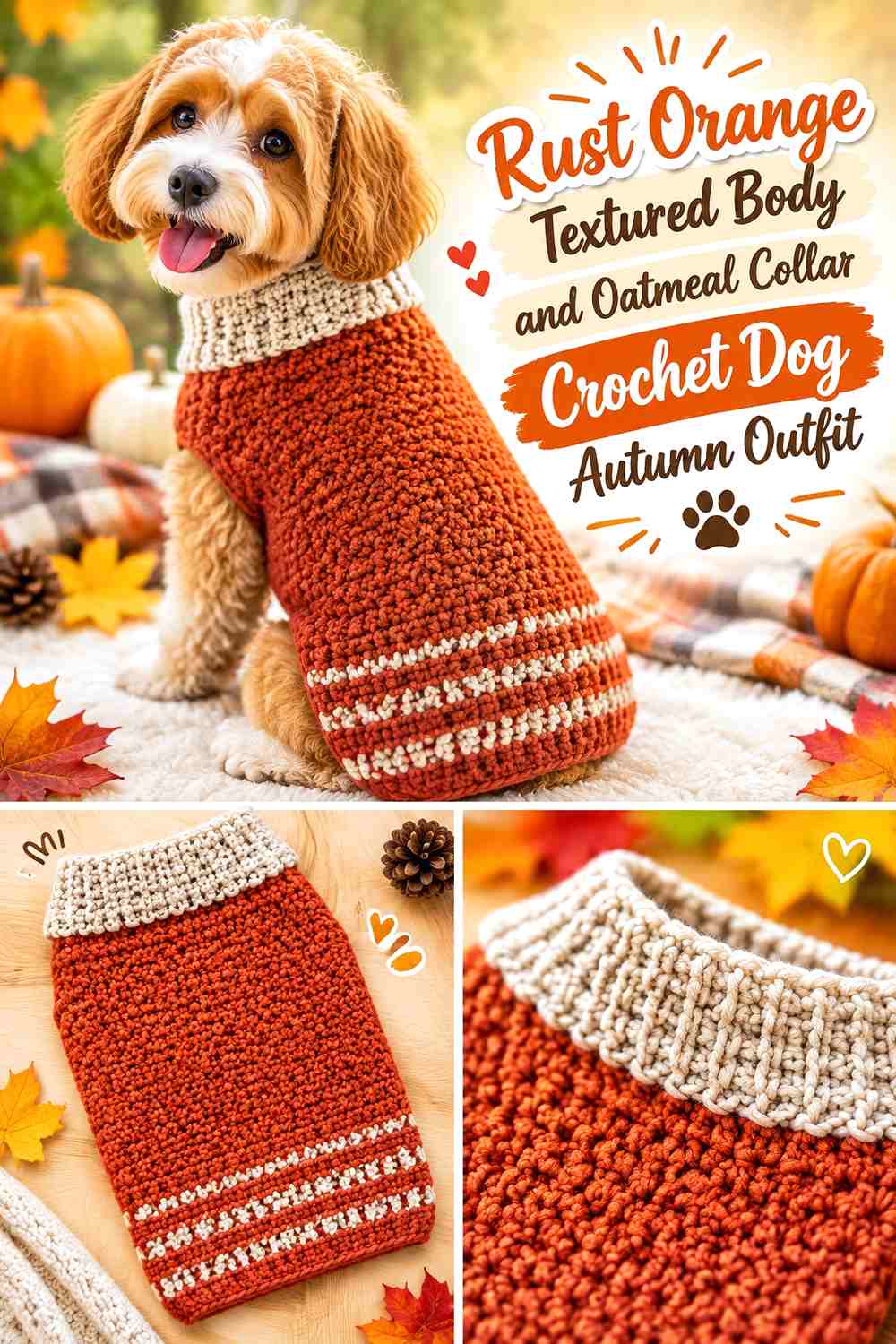
This idea keeps the autumn color across a textured main body and uses oatmeal only near the neckline. It works when you want the crochet surface to remain the dominant feature rather than a complicated two-color layout.
Oatmeal Gives the Rust Orange Textured Body a Clear Starting Point
A light neckline provides an obvious transition into the deeper body color. Keep the change clean instead of inserting several alternating rows between the two sections.
Rust Orange Texture Should Stay Unbroken Below the Oatmeal Collar
Once the body begins, give the textured orange field enough uninterrupted room to be appreciated. Frequent oatmeal bands can compete with the shadows and raised lines produced by the stitches.
Creator Credit: Woolpedia
13. Rust Orange and Oatmeal Crochet Dog Autumn Poncho Outfit
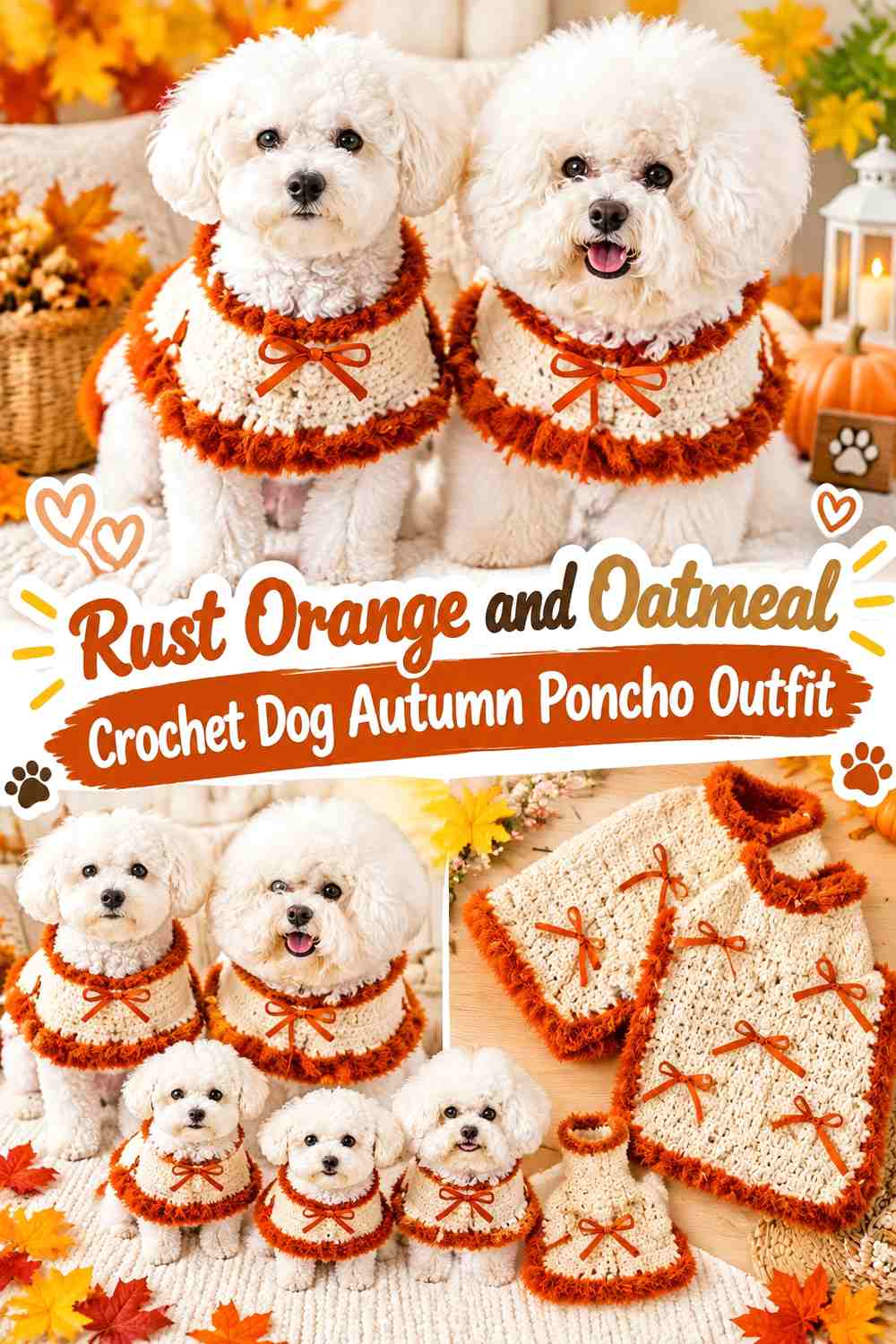
A poncho offers different color zones from a fitted sweater. Rust Orange can cover the shoulder cape while oatmeal outlines the expanding edge, making the flare of the garment easier to see.
Oatmeal Can Trace the Rust Orange Dog Poncho Flare
Place oatmeal around the side and lower perimeter rather than across the entire center. The lighter border emphasizes where the poncho widens away from the neckline.
Rust Orange Should Stay Broad Inside the Oatmeal Poncho Edge
Preserve a large Rust Orange shoulder and back area. If oatmeal moves too far inward, the cape changes from orange-led to an evenly balanced two-color design.
Creator Credit: 숩니공방 soobni’s knitting
14. Oatmeal Dog Coat With Rust Orange Side Panels Crochet Autumn Outfit
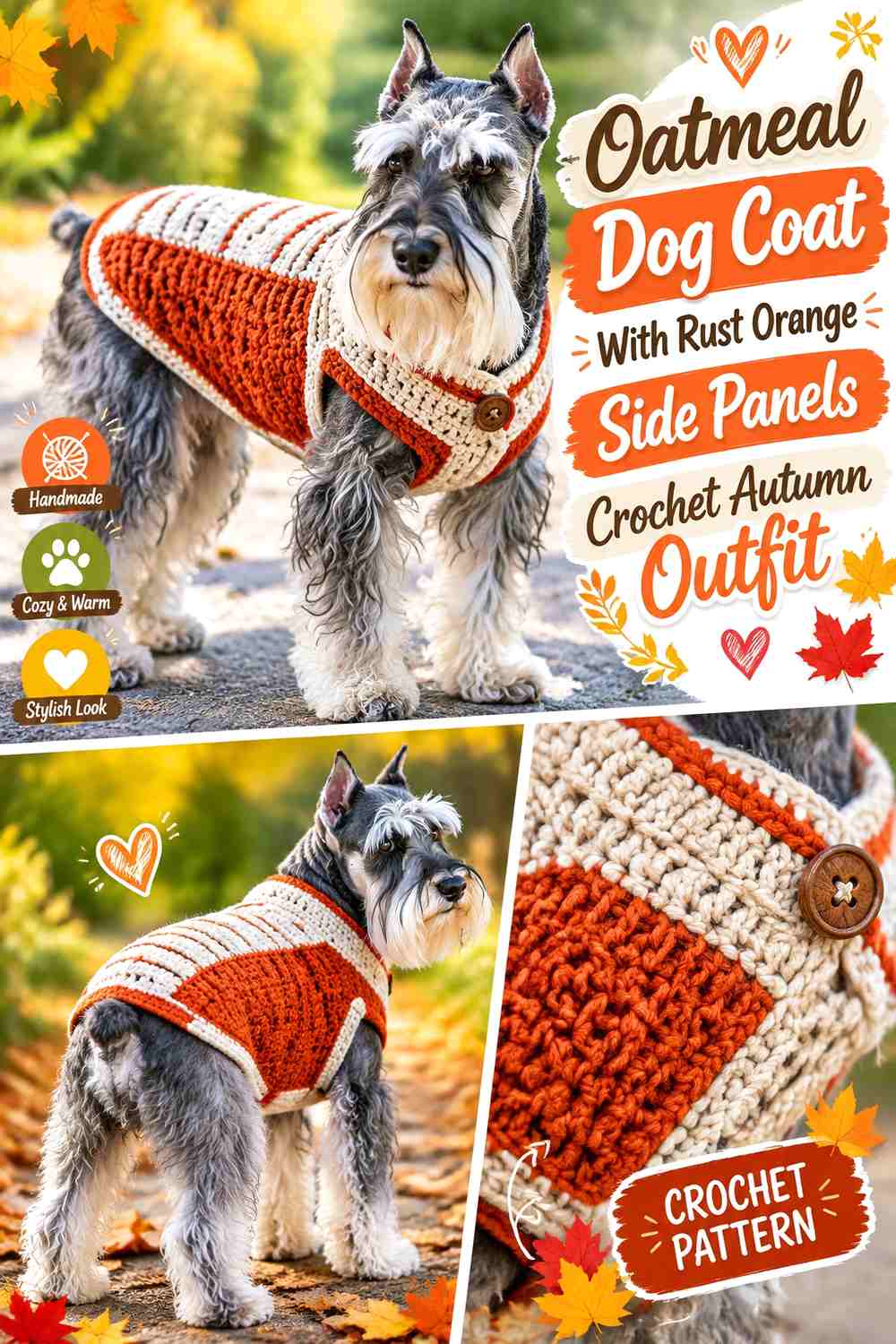
An oatmeal coat can use Rust Orange down the sides rather than at the neckline or hem. This puts the stronger shade along the transition from the visible back to the lower body and gives the coat a more panel-based appearance.
Rust Orange Side Panels Can Define an Oatmeal Dog Coat
Keep the orange areas purposeful and similar in visual weight where the construction permits. Uneven color blocks may make the garment look off-center even when the coat itself fits correctly.
Oatmeal Should Stay Continuous Between the Rust Orange Panels
Protect a broad oatmeal back panel so the side sections function as framing rather than taking over the garment. This also keeps the outfit distinctly lighter than the orange-dominant ideas.
Creator Credit: Left Hand Crochet & Knit Tutorials
15. Oatmeal Body and Rust Orange Color-Block Crochet Small Dog Autumn Outfit
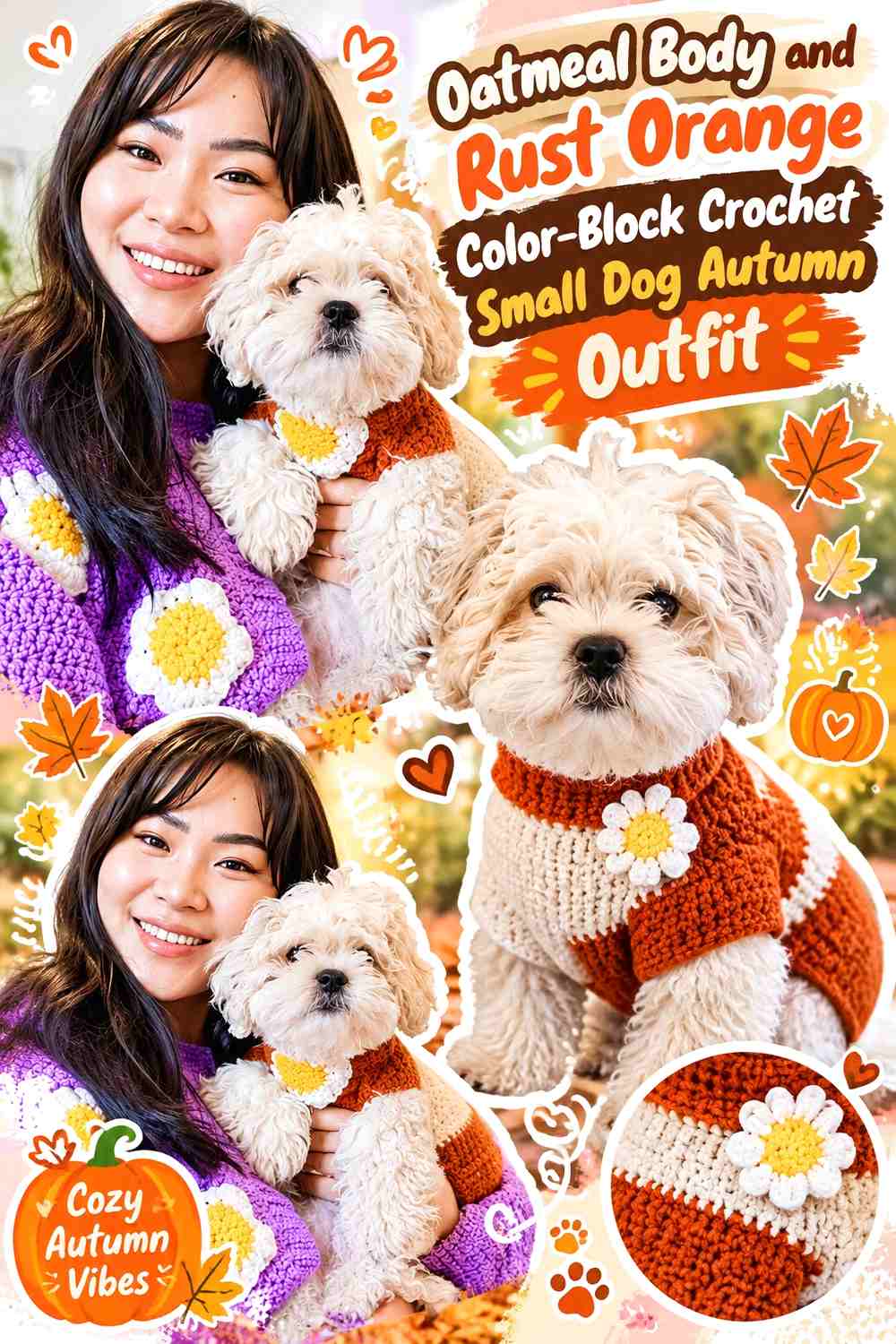
The final idea uses larger color blocks instead of trim or stripes. Oatmeal can cover the main torso while one substantial Rust Orange section appears across the upper back, lower body, or another clear structural area.
Rust Orange Needs One Clear Color Block Against Oatmeal
Choose a deliberate area for the orange rather than scattering several unrelated patches. One substantial block gives the small garment stronger organization and keeps the autumn accent readable.
Oatmeal Should Surround the Rust Orange Block With Enough Space
Leave enough pale surface that the orange remains an accent rather than becoming half the sweater. The contrast is already strong, so the Rust Orange section does not need to be oversized.
Creator Credit: Cass Wong
Which Rust Orange and Oatmeal Dog Autumn Outfit Should You Choose?
For the strongest autumn color direction, start with a Rust Orange body and use oatmeal only at the collar, border, cuffs, or poncho edge. Ideas 1, 6, 8, 12, and 13 keep the warm shade across most of the visible garment.
For a lighter outfit, make oatmeal dominant and use Rust Orange to identify garment structure. A dark hem, ribbed neck, side panels, border, or single color block can create plenty of definition without covering the dog in orange.
If you want both shades to carry similar visual weight, broad or narrow stripes provide the clearest two-color treatment. Broad stripes look slower and more graphic, while narrow bands create more repetition and need simpler edging.
Conclusion
Rust Orange and Oatmeal can create a full collection of autumn dog outfits without relying on extra fall colors. What changes each garment is where the darker and lighter shades meet.
Choose Rust Orange as the dominant color when you want a strong seasonal sweater, textured pullover, long-sleeve outfit, or poncho. Use oatmeal for the neckline, cuffs, and borders to break up the deeper color. Reverse the balance for a softer coat or sweater, allowing Rust Orange to define structural areas such as the hem, side panels, ribbed neck, or color-block section.
Follow the credited tutorial for the construction it actually demonstrates and treat the Rust Orange and Oatmeal placement as a separate adaptation. Check the neck, chest, front-leg openings, belly clearance, and back length while the dog is standing and moving before treating the outfit as finished.
Frequently Asked Questions
Should Rust Orange or Oatmeal dominate a crochet dog autumn outfit?
Either can lead. Rust Orange creates the stronger autumn statement, while oatmeal produces a lighter garment and lets an orange collar, hem, or panel become the focal point. Decide which color should cover the largest body area before placing smaller accents.
Where does Oatmeal work best on a Rust Orange crochet dog sweater?
Oatmeal is particularly useful at the collar, cuffs, leg openings, lower edge, or outer border. These locations let the lighter shade define the garment without interrupting a broad Rust Orange back.
How can Rust Orange stand out on an Oatmeal dog outfit?
Use it in one continuous structural section. A Rust Orange ribbed neck, lower band, side panel, or large color block will usually look more intentional than many tiny orange accents scattered across an oatmeal body.
Do Rust Orange and Oatmeal work well for crochet stripes?
Yes. Broad stripes give both colors substantial visual weight, while narrow stripes create more repetition. On a small dog garment, avoid so many color changes that the collar, leg openings, and body all compete for attention.
How can I tell whether my Rust Orange and Oatmeal yarns have enough contrast?
Compare the actual yarns side by side rather than relying on the shade names. A grayscale photo can help reveal their light-dark difference. If they remain clearly different in grayscale, borders and stripes will generally have stronger visual separation.
Can Rust Orange and Oatmeal be used with textured crochet stitches?
Yes. For pronounced texture, consider keeping most of the textured field in one color and using the second shade around the edges. Frequent color changes can compete with puff stitches, ribbing, raised lines, or other surface details.
What should I check before my dog wears a crochet autumn outfit?
Check the neck, chest, front-leg openings, belly area, sleeve or cuff length when present, and the lower back edge. The dog should be able to stand, walk, and turn normally, and loose decorative additions should be avoided where they could be chewed, snagged, or pulled.