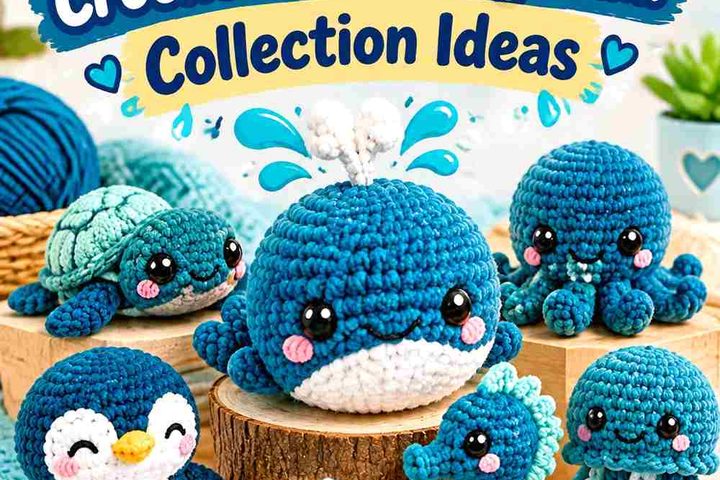
Crochet blind bags turn small amigurumi into a collection rather than a single project. The surprise can come from the character, color combination, accessory, or rarity, while the crochet itself ranges from compact round animals to long-bodied sea creatures, food minis, and designs with distinctive shells, tails, ears, or caps.

The 18 ideas below deliberately use different silhouettes so opening several mystery bags still feels interesting. Some are especially compact and simple, while others rely on color changes, attached features, or more defined shaping. The linked tutorials teach the individual amigurumi; the blind-bag collection concept, grouping, and adaptation decisions are separate ideas you can plan around them.
Quick List
- Crochet Pocket Frog Surprise
- Crochet Tiny Whale Mystery Pull
- Crochet No-Sew Teddy Bear Capsule
- Crochet Two-Tone Mini Cat Collectible
- Crochet Palm-Size Bunny Surprise
- Crochet Toadstool Mushroom Mystery Mini
- Crochet Striped Bee Pocket Collectible
- Crochet Baby Turtle Shell Surprise
- Crochet Mini Octopus Ocean Pull
- Crochet Duckling Keychain Surprise
- Crochet Mini Cow Farm Collectible
- Crochet Curly-Tail Pig Mystery Mini
- Crochet Mini Penguin Pocket Pal
- Crochet Tiny Chick Surprise
- Crochet Strawberry Foodie Collectible
- Crochet Goldfish Keychain Mystery Pull
- Crochet Mini Axolotl Fantasy Pull
- Crochet Mini Dinosaur Surprise
Plan the Collection Before You Crochet All 18
A blind-bag series works better when a silhouette is recognizable before the tiny details are inspected. That is why a mushroom, turtle, whale, bee, bunny, and dinosaur create a stronger mixed collection than eighteen similarly shaped animals distinguished mainly by color.
Decide which differences will identify each character. The turtle can depend on its shell, the bee on striping and wings, the mushroom on the cap-to-stem shape, and the axolotl on its side gills. Color can create variants within those designs, but it should not be the only reason two collectibles exist.
You can also create perceived rarity without designing another pattern. A regular character and a special-color version can share the same construction while differing in palette, embroidered expression, or another securely attached decorative detail.
Keep Blind-Bag Scale Consistent Without Forcing One Yarn
The tutorials below do not all use the same yarn, hook, gauge, or finished dimensions, so following every supply list exactly would not automatically create a perfectly matched series. If consistent scale matters, make a sample before producing multiples and compare its finished height, width, and visual weight with the other characters.
Changing yarn thickness and hook choice can change finished size, but it can also change stitch definition and the proportions of small features. A mushroom made in fuzzy chenille, for example, will read differently from the same basic idea in smooth cotton.
For a coordinated collection, prioritize comparable visual scale rather than demanding identical measurements. A horizontally shaped whale may naturally be wider than an upright chick while still looking as though both belong in the same blind-bag assortment.
Think About Small Parts Before Packing a Mystery Gift
Blind bags encourage handling, exchanging, carrying, and sometimes gifting to children, so finishing deserves extra attention. Plastic eyes, beads, keychain hardware, detachable accessories, and other small components can become hazards if they loosen. Embroidered facial details are worth considering when small rigid pieces are inappropriate for the intended recipient.
Mystery packaging needs thought too. A finished collectible might be soft, but plastic bags, ties, cords, tags, and other packaging components are separate items with their own risks. Do not assume a crochet toy is automatically suitable for babies, young children, or pets because it is handmade.
When adapting somebody else’s tutorial, also verify that your yarn substitution still produces dense enough fabric to contain the stuffing securely.
Crochet Pocket Frog Surprise
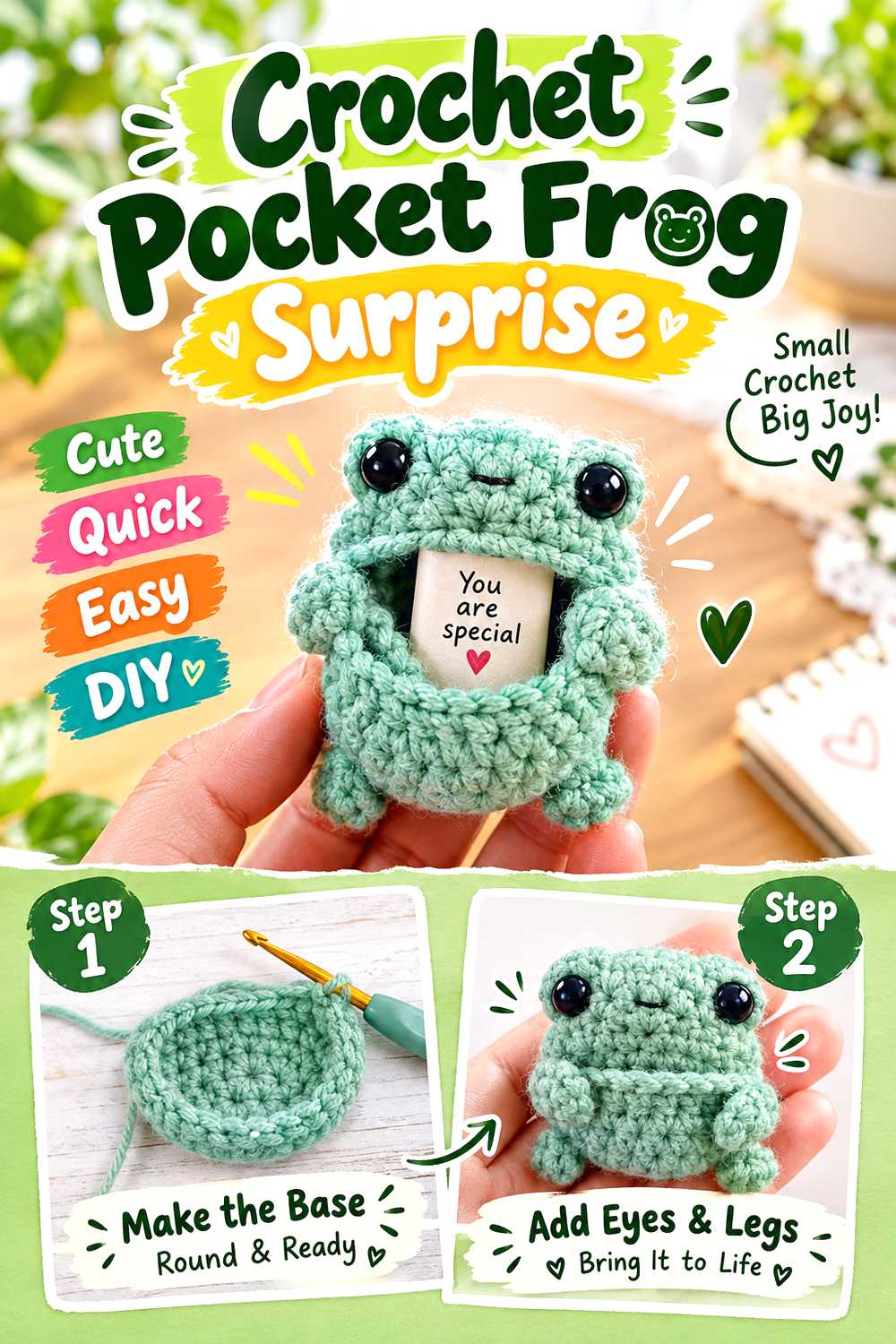
A tiny frog gives the collection an immediately recognizable animal without requiring a long body, oversized accessory, or elaborate outfit. The raised eye area creates most of its personality, so it can remain visually distinctive even when placed beside other round-bodied collectibles.
For a blind-bag series, this is also a useful character for controlled variation. Several frog colors can share the same overall form while embroidered expressions or contrasting facial details distinguish individual versions. Just keep the silhouette consistent enough that the character still reads clearly as part of one family.
Let the Eye Shape Do the Character Work
When the body is extremely compact, adding many decorative features can make the surface feel crowded. The frog already has a strong defining feature around the eyes, so consider keeping the rest of the design visually simple.
Before making a batch, examine your first finished frog from the front and side. If the facial area disappears into a fuzzy yarn texture, a smoother yarn or clearer contrast may preserve the expression more effectively.
A No-Sew-Style Shape Is Useful for Repeated Pulls
Collections often require several copies of the same character, so reduced assembly can be valuable when the basic form already has enough personality. The source tutorial presents its miniature frog as a no-sew-style amigurumi design, making construction approach one of the reasons it fits this collection.
Original Tutorial and Creator Credit
Creator: Móhu Makes
Crochet Tiny Whale Mystery Pull

The whale changes the collection’s proportions immediately because its body reads horizontally instead of upright. A tail and side fins distinguish it from the rounder land animals, while the smooth main body keeps the design from becoming visually overloaded.
This is a good mystery-pull choice when you want an ocean character that can still fit comfortably among small collectibles. For variants, body color provides plenty of room for change without altering the recognizable whale outline. A coordinated ocean subset could later use related colors while preserving different silhouettes.
Protect the Tail Silhouette
A whale can become an anonymous oval if its tail loses definition. After stuffing, look at the character from above as well as from the side and check that the tail remains visually separate from the body.
That checkpoint becomes more important if you substitute a very fluffy yarn. A thicker halo may soften the edge of small fins and tail shapes, so compare the finished sample with the crispness you want before making multiples.
Use Width as Part of the Collection Rhythm
Not every blind-bag collectible needs the same height. The whale’s wider orientation can break up a shelf display or collector tray filled with upright bears, cats, chicks, and mushrooms.
Aim for comparable visual presence rather than forcing every character into the same bounding box. A low, wide whale and a taller mushroom can still look coordinated when their yarn texture, facial scale, and overall finishing quality feel intentional.
Original Tutorial and Creator Credit
Creator: HoneyCookie Crochet
Crochet No Sew Teddy Bear Capsule

A teddy bear gives the mystery assortment a classic plush character, but the miniature proportions keep it from feeling like a scaled-down conventional stuffed toy. Rounded ears and a simple face establish the bear quickly, which means it can sit comfortably beside more unusual pulls such as an axolotl or mushroom.
This design can also serve as a “core character” in a larger collectible series. Neutral bears might be common pulls, while selected colors or tiny embroidered details become special variants without requiring an entirely different base construction.
Keep Both Ears Visually Balanced
Small ear placement can change the expression more than expected. One ear sitting noticeably higher or farther back can make a tiny bear appear tilted even when the body itself is symmetrical.
Before finishing the facial details, view the bear straight on and check both ear positions relative to the centerline of the face. With miniature amigurumi, correcting placement early is usually cleaner than trying to compensate later with the eyes or mouth.
Dense Stuffing Is Not the Same as Overstuffing
A blind-bag bear needs enough filling to maintain its shape, but packing more stuffing into every available space can stretch the crochet fabric and make gaps easier to see.
Aim for a form that feels filled and defined without distorting the stitches. If a yarn substitution produces visible gaps, changing hook-to-yarn compatibility may be more effective than trying to solve the problem with firmer stuffing.
Give Bear Variants a Clear System
If you make several bear pulls, decide what makes a variant special before production. A planned palette works better than random scraps when collectors are meant to recognize families or rarity.
For example, the base silhouette could remain identical while selected bears receive a coordinated scarf color or embroidered facial variation. Any extra component should be attached appropriately for the intended use and recipient.
Original Tutorial and Creator Credit
Creator: Amigurumis Atina
Crochet Two Tone Mini Cat Collectible
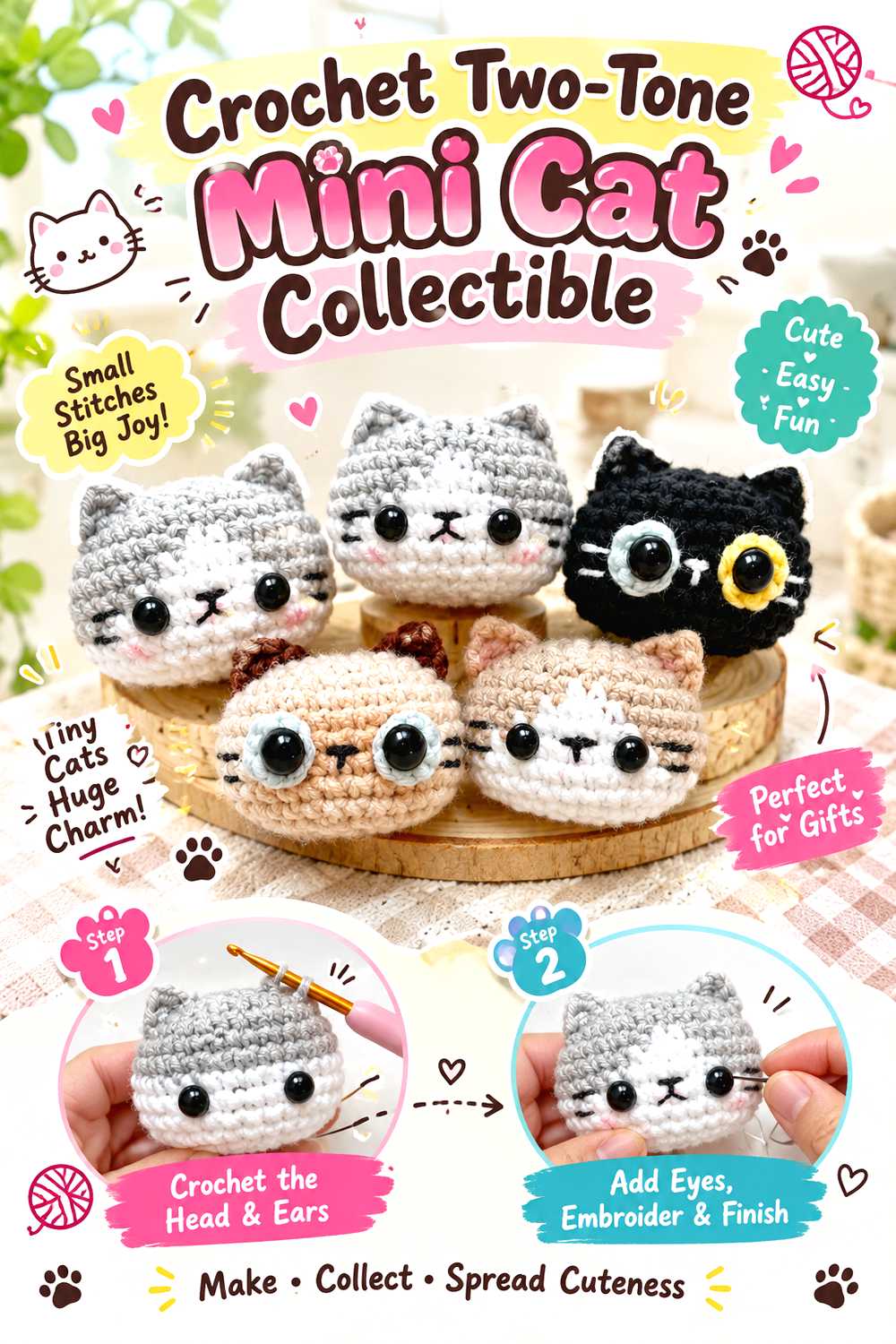
A cat adds useful variation because ear shape changes the outline even before markings are considered. This tutorial also supports one-color and two-color versions, giving the concept a natural route to common and alternate pulls without needing eighteen completely different constructions.
For a blind-bag assortment, avoid making every cat merely a new random color. Decide whether markings represent named variants, coordinated series, or a smaller set of intentional combinations. Clear visual rules make several cats feel collectible rather than accidental.
Treat Markings as Designed Placement
Two-color cats look most convincing when contrasting areas appear intentional. Before starting multiples, photograph the first successful version and use it as a visual reference for where the main color relationship sits.
The objective is not to duplicate every stitch placement from one finished piece but to keep the overall distribution recognizable. This matters especially in a blind-bag set where two versions may eventually be displayed side by side.
Pointed Ears Help Separate the Cat From Round Characters
The collection already contains several compact bodies, so silhouette details have to do real work. Preserve the ears rather than allowing stuffing, yarn fuzz, or finishing tension to pull them into an indistinct round top.
If the ears look too soft in the yarn you selected, compare another fiber or yarn construction before producing the full batch. Stitch clarity can matter more than maximum softness for miniature features.
Facial Style Can Become the Variant Instead of Color
You do not need another yarn combination every time you want a different pull. Carefully planned embroidered expressions can create variation while leaving the main body consistent.
Keep the differences simple enough that they remain readable at miniature scale. Tiny details that only show up under close inspection usually contribute less to the collection than one clear change in expression, marking, or accessory.
Original Tutorial and Creator Credit
Creator: ETM’s Studio
Crochet Palm Size Bunny Surprise
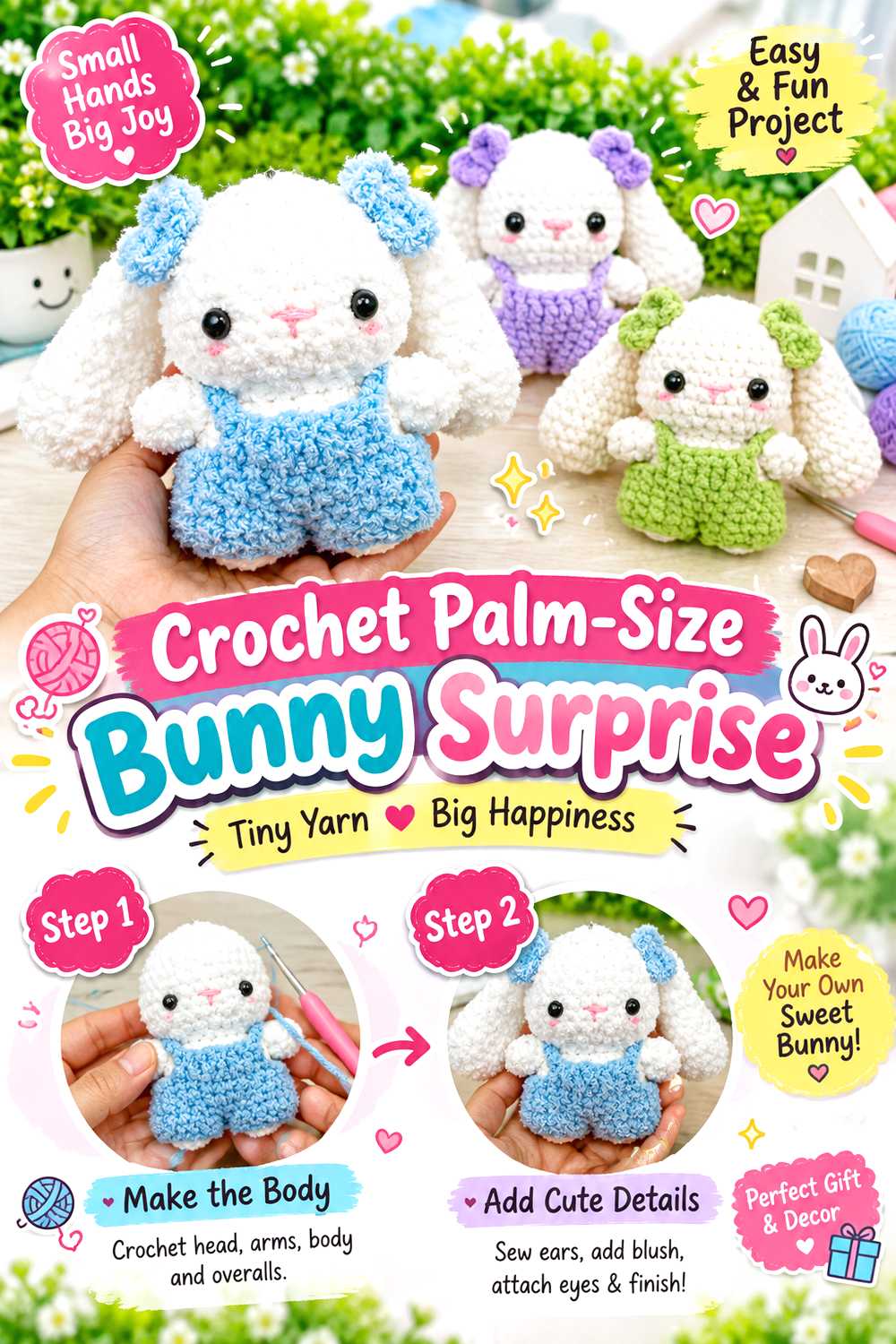
Long ears give the bunny a taller profile than many of the compact minis in this collection, making it useful for breaking up repeated ball-like shapes. The tutorial’s finished bunny is presented as a small palm-size amigurumi suited to keychains, gifts, or desk display.
In mystery packaging, the ears may also become the first feature a recipient feels through a soft wrapper, so package choice matters if hiding the identity is important. A box, opaque paper pouch, or other appropriately sized container conceals the shape better than thin flexible wrapping.
Watch How the Ears Change the Apparent Size
Two collectibles can have similar bodies and still look dramatically different if one has long ears. When checking collection scale, compare overall height as well as body mass.
If your bunny visually towers over the other characters, reducing the yarn scale may produce a more cohesive set. Do not shorten or rewrite the creator’s pattern instructions just to force a measurement; instead, make material choices carefully and evaluate a finished sample.
The Tail Needs to Read From the Back
Blind-bag collectibles should have something interesting beyond the front face. A bunny’s rear silhouette offers that opportunity through the tail and ear shape.
When finishing, look at the character from behind and three-quarter angles. If a small tail or other feature disappears completely into fuzzy yarn, consider whether greater stitch definition would improve the collectible quality without adding unnecessary embellishment.
Keep Accessories Secondary to the Rabbit Shape
A rare bunny might gain a bow, flower, or other accent, but the accessory should not overwhelm the ears and body that identify the character.
This is especially important at small scale, where one oversized decoration can change the center of gravity or make packaging awkward. If accessories are detachable or contain small components, suitability for the recipient must be considered separately.
Original Tutorial and Creator Credit
Creator: Crochet with Mai
Crochet Toadstool Mushroom Mystery Mini
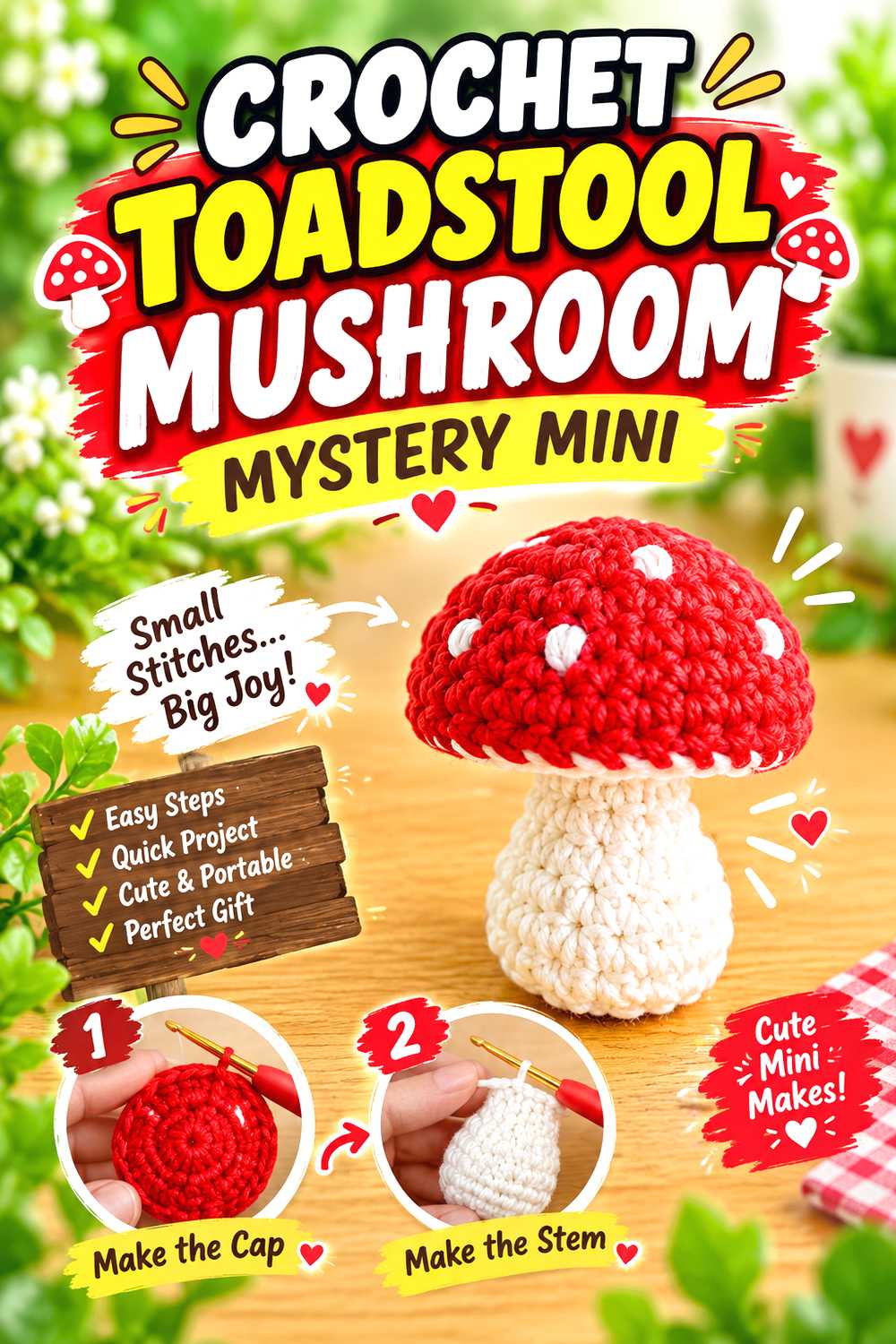
The mushroom is one of the strongest non-animal additions because its cap-and-stem construction creates an entirely different visual category. It gives the collection a woodland direction without relying on another face-first animal shape.
Color changes can generate believable variants, but retain enough contrast between cap and stem for the mushroom silhouette to remain easy to read. You could also build a small woodland subset around the mushroom, frog, and bear while keeping their construction and visual identities separate.
Cap Proportion Controls the Whole Look
The cap is the dominant shape, so its relationship to the narrower stem matters more than adding many tiny surface decorations. Once stuffed and assembled, set the mushroom upright and check whether the cap feels centered rather than visibly leaning.
A heavy or overstuffed cap can also affect how the mini sits for display. Evaluate stability before producing several versions for the same blind-bag series.
Smooth Yarn Makes Small Color Details Easier to Read
The original tutorial uses cotton yarn, which suits the clear, compact visual character of the project. If you change to a fuzzy plush fiber, expect surface details and edges to soften.
That is not automatically a problem, but it changes the design language. Make one sample first and decide whether your series should look crisp and miniature or plush and rounded rather than mixing those effects accidentally.
Original Tutorial and Creator Credit
Creator: MummaJ Crochet
Crochet Striped Bee Pocket Collectible
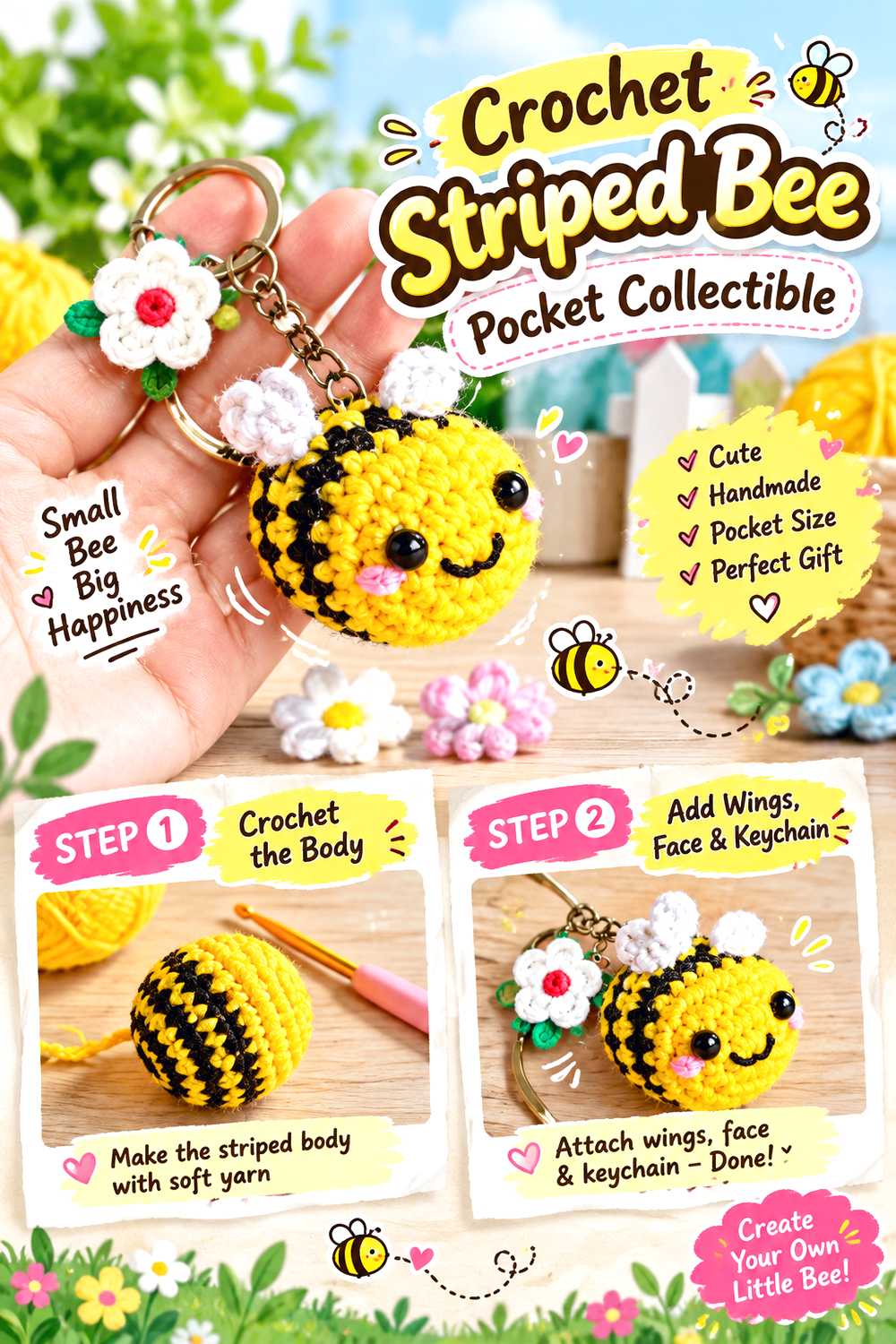
A bee introduces both striping and wings, two features not shared by most of the collection. The repeated body bands make it recognizable even before the face is added, which is valuable when working at a small scale where complicated details can disappear.
For a surprise series, you can change accent colors while preserving the banded structure. The wings should remain visually lighter than the main body so the bee does not turn into a generic striped capsule when viewed from above or from the side.
Keep the Stripe Sequence Visually Clean
Color changes are part of the bee’s identity, so inconsistent joins may attract more attention here than on a single-color animal. Evaluate where the transitions fall and whether the finished piece has an obvious “best” viewing side.
For a display-oriented blind-bag collection, position the face and wings so the strongest side becomes naturally clear instead of trying to hide every transition with added decorations.
Wings Need Definition Without Excess Bulk
Tiny wings can flatten against the body or disappear into similarly colored yarn. Contrast, stitch definition, and careful placement help preserve their outline.
Avoid assuming that larger wings automatically solve the problem. Increasing a small appendage can change proportions quickly. Make the tutorial version first, then judge any adaptation against the finished body rather than modifying dimensions from guesswork.
Original Tutorial and Creator Credit
Creator: Cute Crochet
Crochet Baby Turtle Shell Surprise
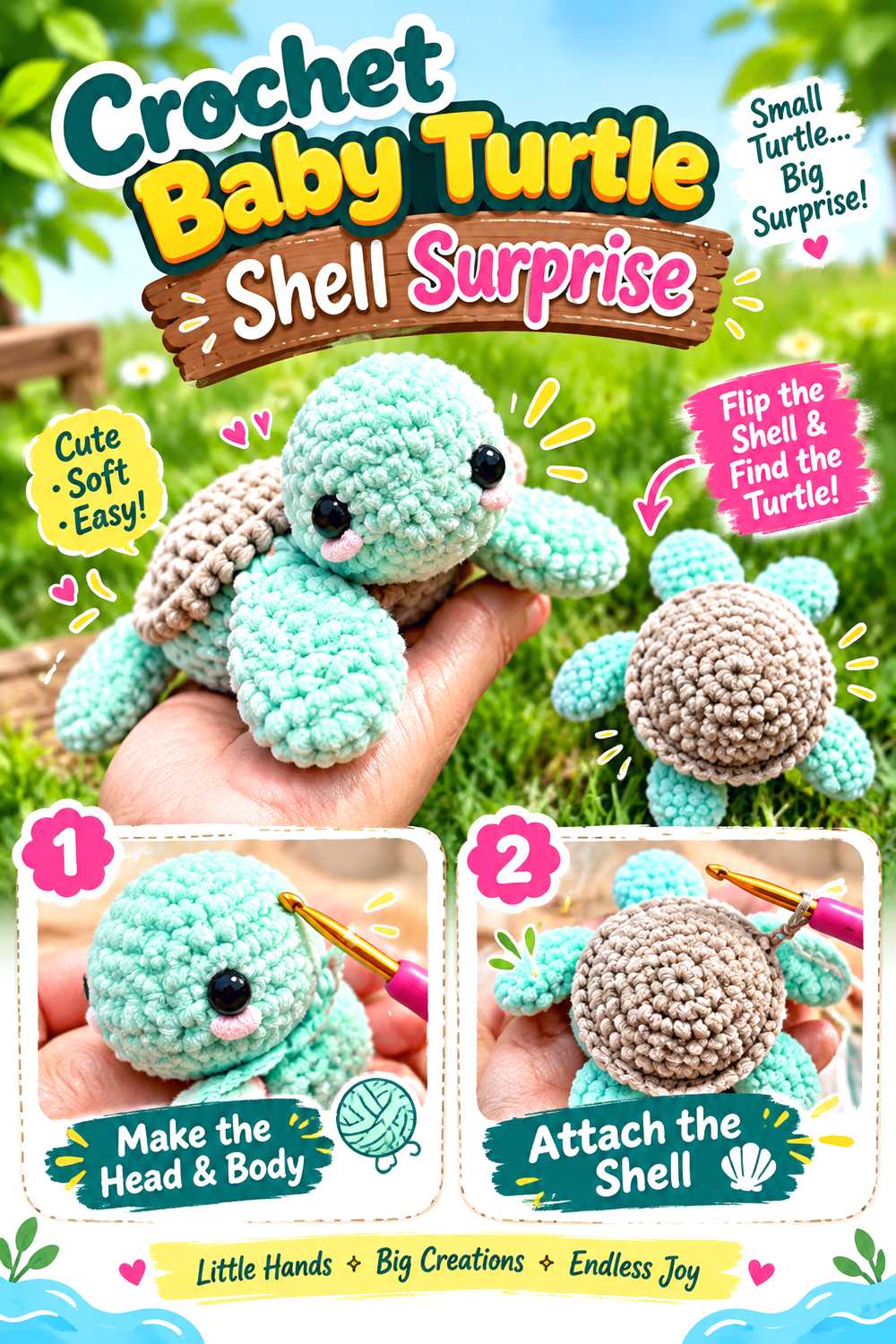
A turtle earns its place because the shell creates a strong top view, while the head and flippers make the side silhouette different from the whale or octopus. That helps a blind-bag collection feel varied even when several characters share similar yarn colors.
The shell is also an obvious place for special-edition color treatment. Rather than changing every part of the turtle, keeping the body consistent and varying the shell can make the series easier to recognize and compare.
The Shell Should Stay Visually Centered
A tilted shell can make a tiny turtle appear uneven from above. Before final finishing, check the relationship between the shell, head, and flippers rather than judging the character only from the front.
This checkpoint is especially useful for a collectible because viewers are likely to pick it up and rotate it. Good three-dimensional balance matters more here than adding another small decorative feature.
Flippers Create the Horizontal Footprint
The turtle may occupy more shelf width than a bear or chick because its limbs extend outward. Account for that when choosing blind-bag packaging or small display compartments.
The goal does not need to be identical dimensions across every character. Instead, establish a maximum practical footprint so one turtle does not need noticeably different packaging from the rest of the series.
Shell Colors Can Carry the Rare Variants
The shell naturally provides a contained accent area. That makes it easier to design regular and special versions without changing the turtle’s body or construction.
A muted body with several planned shell palettes can create stronger collection logic than assigning random colors to every limb. If you use metallic, fuzzy, or novelty yarn as a special version, test whether it still works cleanly at the shell’s small scale.
Original Tutorial and Creator Credit
Creator: CrochetByGenna
Crochet Mini Octopus Ocean Pull
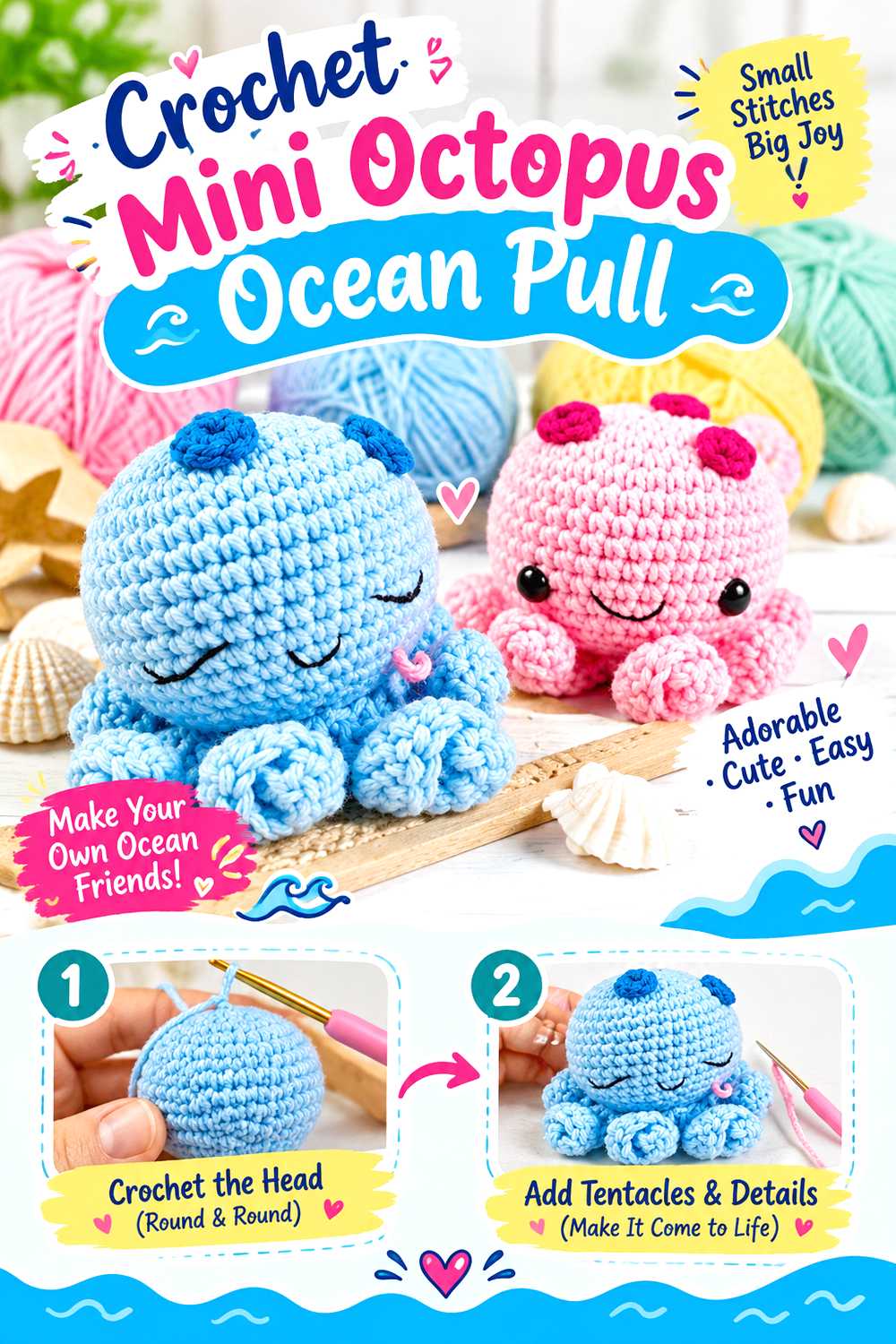
The octopus supplies movement that the round-bodied animals lack. Its lower edge is defined by multiple arms, so the finished collectible can look lively even when sitting still on a desk or display shelf.
That silhouette also makes it a useful “special pull” among simpler shapes. Instead of adding hats or other accessories, let the arms provide the decorative interest. Multiple color versions can still belong to the same sea-creature family while remaining immediately different from the whale and goldfish.
Keep the Arms From Becoming One Dense Fringe
At small scale, several appendages can visually merge if the yarn is very thick or fuzzy. Inspect the finished octopus from below and from the side to see whether individual arms still contribute to the silhouette.
If they disappear into a single fuzzy edge, material choice may need reconsideration before you make a full batch. Clear shape usually matters more than maximum plushness for this particular mini.
Give the Octopus Enough Package Space
A soft collectible can be compressed temporarily, but repeatedly crushing decorative arms into a package that is too small may affect presentation when the bag is opened.
Test the actual finished object in your intended wrapper or box. The reveal feels more polished when the character comes out recognizable rather than needing extensive reshaping before its defining features can be seen.
Original Tutorial and Creator Credit
Creator: Bonito día Crochet
Crochet Duckling Keychain Surprise
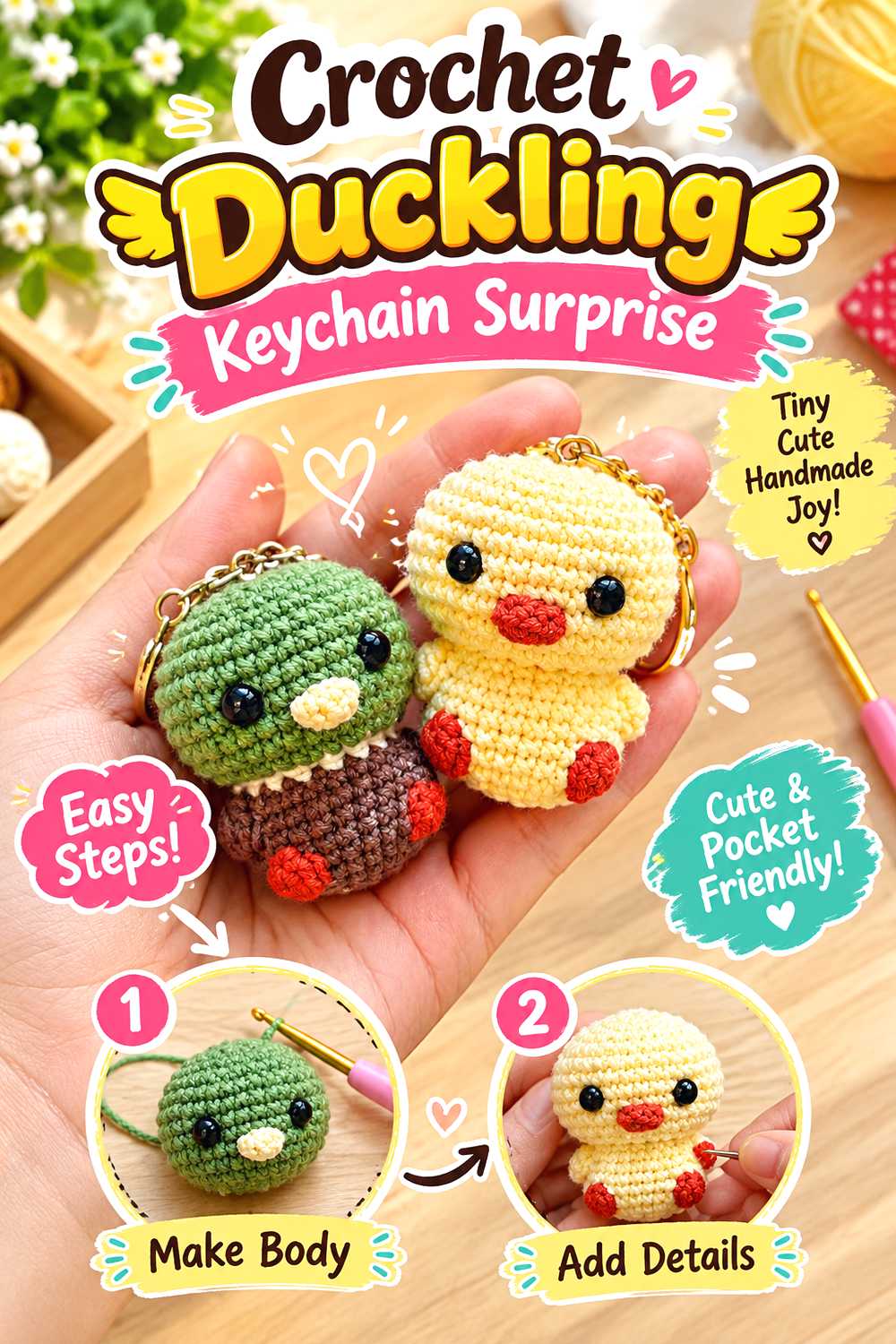
A duck adds a bird shape without relying on the upright proportions of the penguin. The visible beak and compact body immediately separate it from the chick as well, especially when the collection is displayed rather than hidden in packaging.
The referenced tutorial presents a keychain-size duck/chick construction with a mostly integrated body and head. For blind-bag use, you can make the character as a plain collectible or decide separately whether hardware belongs in your final series.
The Beak Is the Small Feature That Cannot Disappear
Because several collectibles have rounded heads, the beak does important identification work. Check its alignment from the front before considering the face complete.
When substituting yarn, make sure the beak still contrasts enough with the body. A nearly identical value or an extremely fuzzy surface can make the detail recede and leave the duck looking more like an unspecified yellow mini.
Decide Whether Hardware Belongs in the Whole Series
Keychain hardware can make a blind-bag character functional, but consistency matters. A mixture of some plushies with metal loops and others without them may make the collection feel less unified unless that difference is deliberate.
If you decide every character will become a bag charm, test attachment points independently. Hardware adds pulling forces that a shelf-only collectible never experiences, so finishing needs to suit the intended use.
Duck and Chick Should Not Depend Only on Color
Because the collection also includes a chick, preserve the visual cues that distinguish the two. Compare the finished profiles before producing multiples.
If two bird designs become too similar after yarn substitutions, separate them through their defining shape or presentation rather than simply labeling one “duck” and the other “chick.” A collectible should communicate its identity visually.
Original Tutorial and Creator Credit
Creator: Fancy Lama
Crochet Mini Cow Farm Collectible
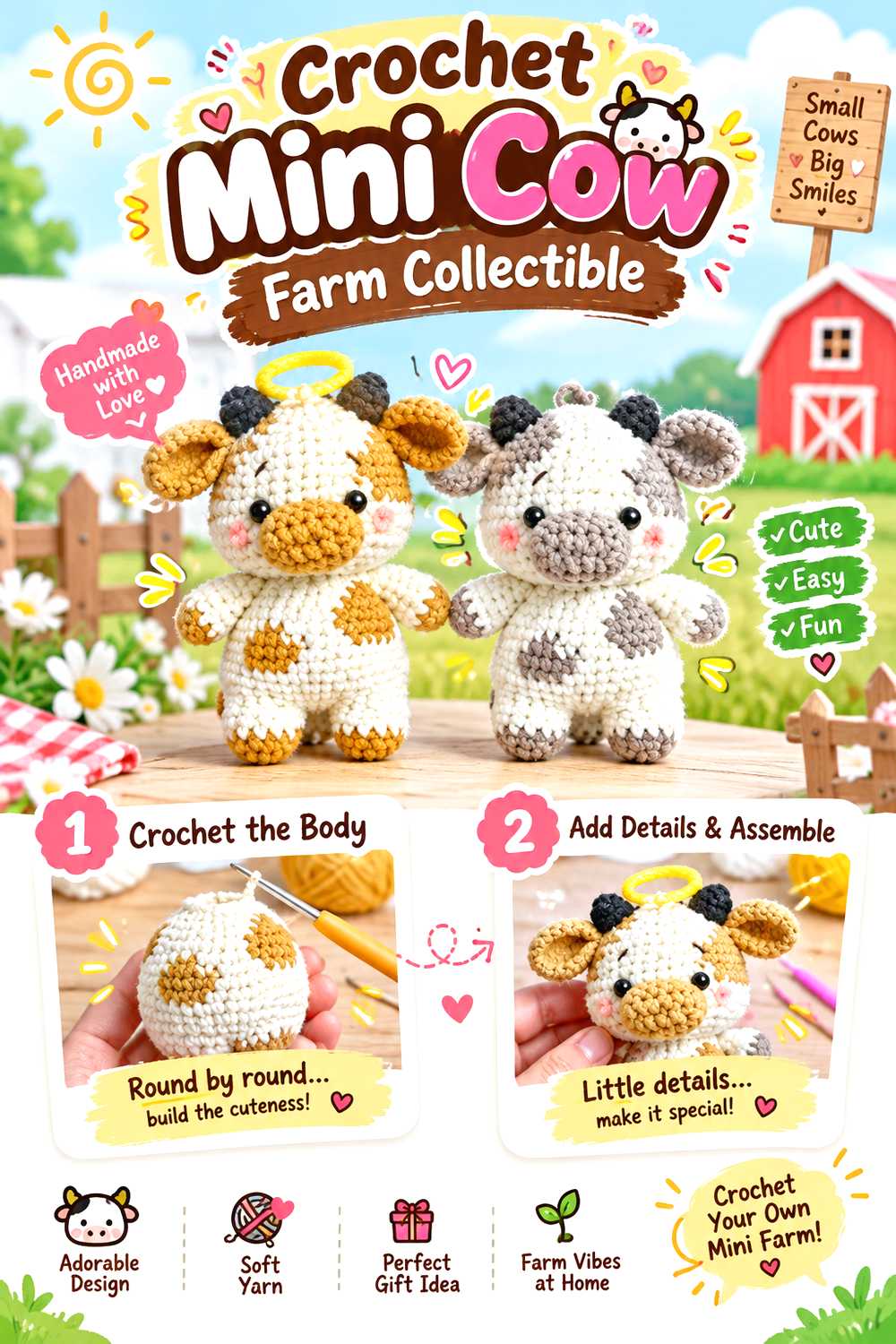
The cow brings stronger surface patterning into the set. Its muzzle, ears, horns, and contrasting markings give you several recognizable features, so it feels substantially different from a bear with a different color palette.
For mystery variants, spots are an obvious design opportunity. Keep the cow’s core face and proportions consistent while planning a limited number of marking layouts or body colors. The result can feel like a real collectible family without creating a separate construction for every version.
Spot Placement Looks Better When It Feels Intentional
Random does not have to mean careless. If each cow receives different markings, step back periodically and check the overall distribution rather than concentrating only on the area currently being worked.
One strong patch and a few smaller areas may read more clearly than many tiny competing details. At blind-bag scale, large graphic differences tend to survive viewing distance better than fussy surface decoration.
Protect the Muzzle as the Face’s Focal Point
The muzzle helps prevent the cow from reading as another generic four-legged animal. Its placement should work with the eyes and ears as a single facial composition.
Before securing every detail, view the face straight on. If the muzzle sits visibly off-center, additional horns or spots will not correct the underlying imbalance. Miniature characters reward careful placement because there is little unused space around the features.
Horns and Small Parts Need Extra Consideration
Small horns and ears make the silhouette appealing, but projecting components also experience more handling in a mystery collectible. Attachment quality therefore matters, particularly if the finished piece will live on a backpack rather than a shelf.
For recipients where small attached components are inappropriate, consider whether the project should remain display-only or whether another character with simpler finishing would be a better choice.
Original Tutorial and Creator Credit
Creator: Crochet with Maika
Crochet Curly Tail Pig Mystery Mini
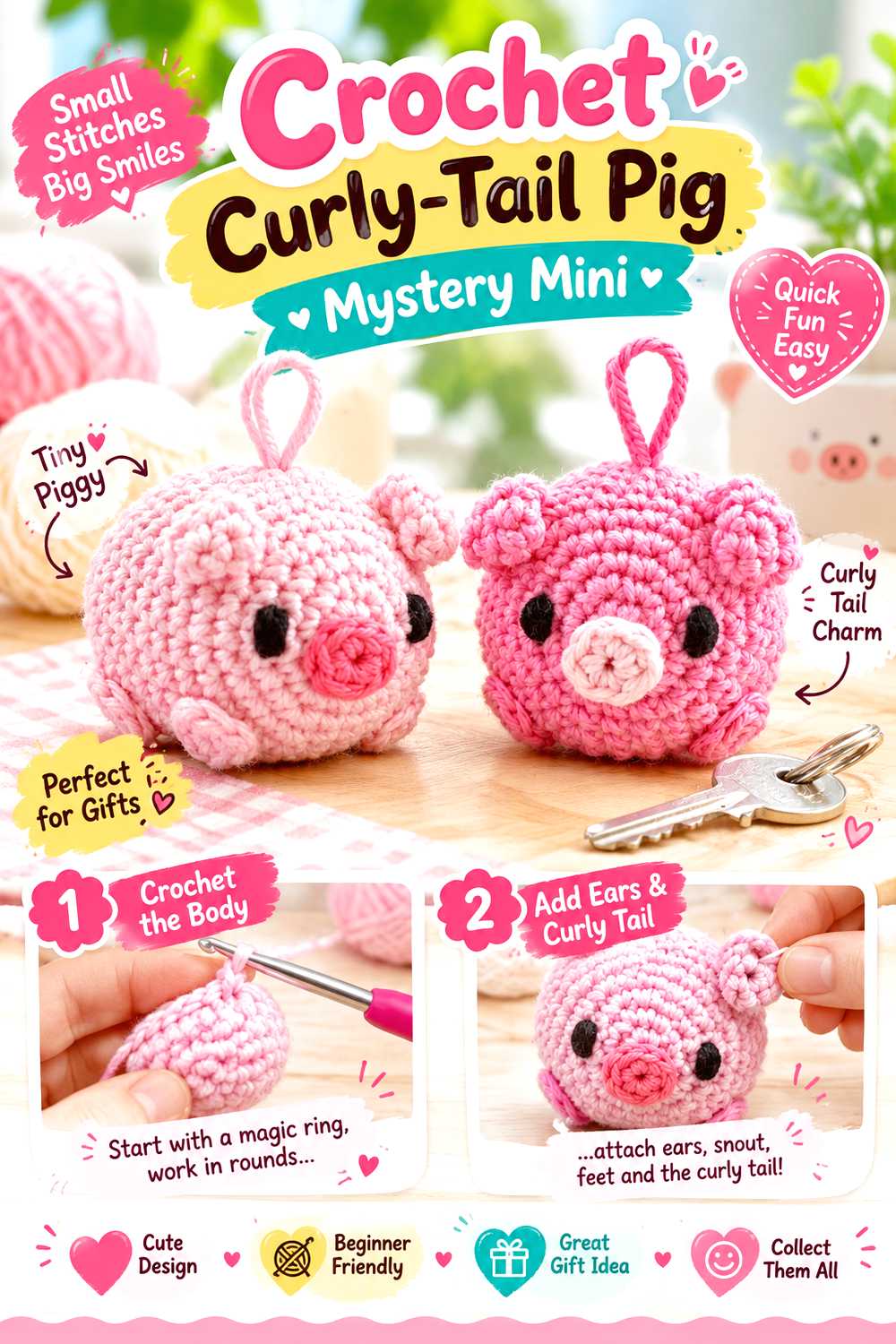
A pig adds a rounded farm character, but the snout, ears, small legs, and curled tail keep it distinct from the cow. Its compact form also makes a useful counterpoint to longer characters such as the whale, goldfish, axolotl, and dinosaur.
The referenced design is specifically presented as an amigurumi toy keychain, so it already fits the small-object direction of a blind-bag collection. You can omit the collector-series hardware concept if your aim is a shelf mini rather than an accessory.
The Snout Should Lead the Identification
Pink color alone does not make the design read as a pig. The snout and ear relationship is far more important, particularly if you decide to create unusual-colored editions.
Check the face in neutral lighting before adding optional decorative touches. If the character is recognizable without depending on the body color, your variant system will have far more flexibility.
Keep the Tail Visible From a Three-Quarter View
The curled tail is a charming detail, but placing it completely flat against the back can make it disappear during display. After assembly, rotate the pig and identify the angle where the tail contributes most clearly.
That does not mean changing the creator’s construction. It simply means paying attention to final presentation and making sure the characteristic feature has not been hidden unintentionally during finishing.
A Flat Display Surface Reveals Leg Imbalance
Small legs may not need to carry much functional load, but uneven placement can cause a miniature animal to rock or lean. Place the finished pig on the surface where it will normally be displayed and check its posture.
If a whole batch needs to sit in collector compartments, this practical checkpoint is more useful than judging each piece only while holding it in your hand.
Original Tutorial and Creator Credit
Creator: DIY Fluffies
Crochet Mini Penguin Pocket Pal
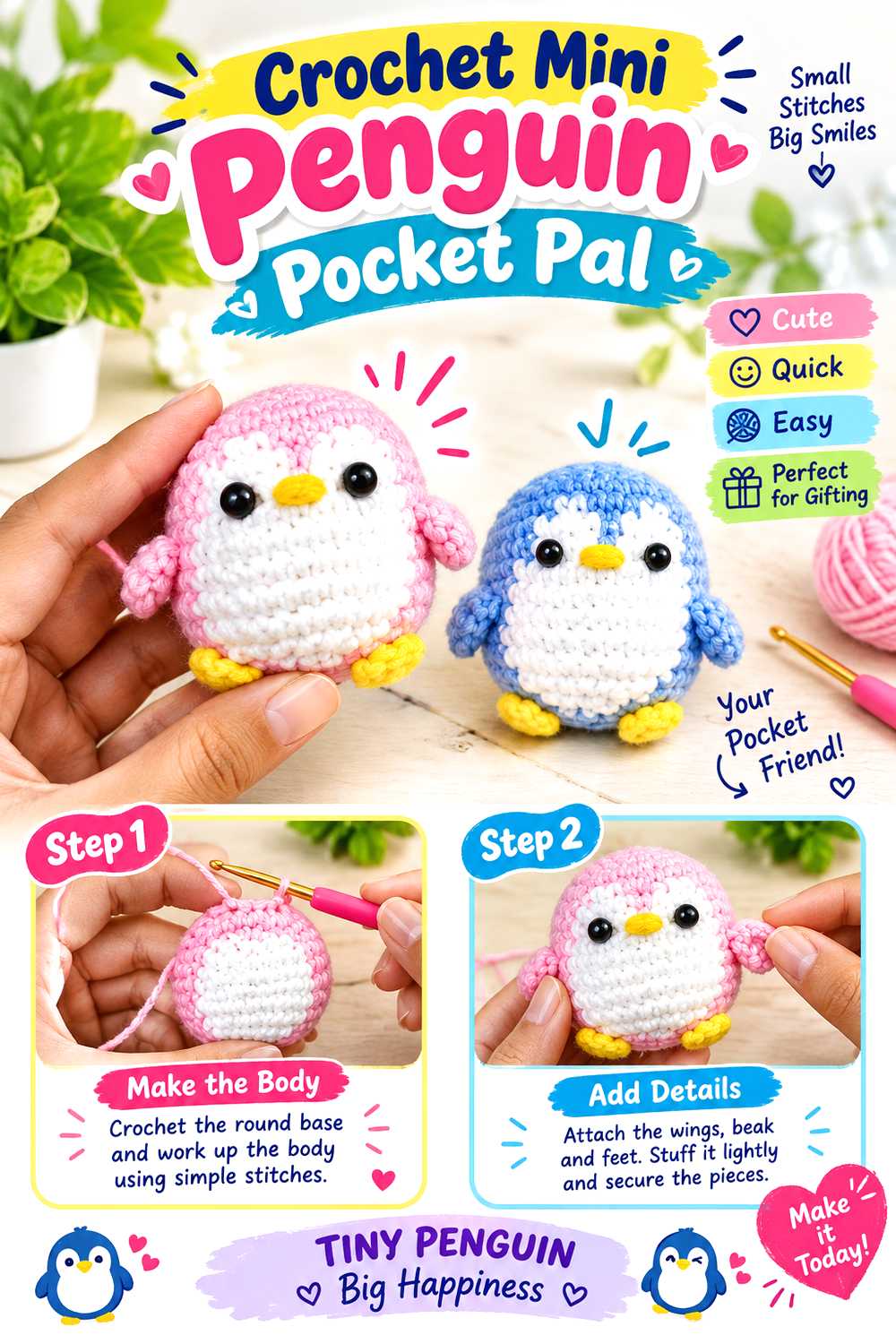
The penguin introduces bold natural color blocking. A dark outer body, contrasting belly area, and small beak make the character readable through large shapes rather than many tiny decorations.
That makes it useful in a collection that already contains spotted, striped, and single-color options. Seasonal accessories could turn selected penguins into special pulls, but the basic version is strong enough to work without them. Keeping the main silhouette simple also helps the penguin remain distinct beside the smaller chick and duck.
Color Boundaries Carry More Weight Than Extra Decoration
Because a penguin is strongly associated with contrasting body areas, uneven color placement can affect the finished impression more than a missing accessory.
When following or adapting a tutorial, slow down around transitions and examine the result from the front. If you use novelty yarn, test whether the texture still allows the light and dark areas to remain visually separate.
Keep Seasonal Variants Removable Only With Care
A scarf or hat can turn a regular penguin into a winter special, but detachable miniature items are easy to lose and may be inappropriate for some recipients.
A permanently secured accent may suit a display collectible better, while a plain penguin keeps the silhouette simplest. Choose the approach based on intended handling rather than adding accessories solely to create rarity.
Original Tutorial and Creator Credit
Creator: Crochet with Hema
Crochet Tiny Chick Surprise
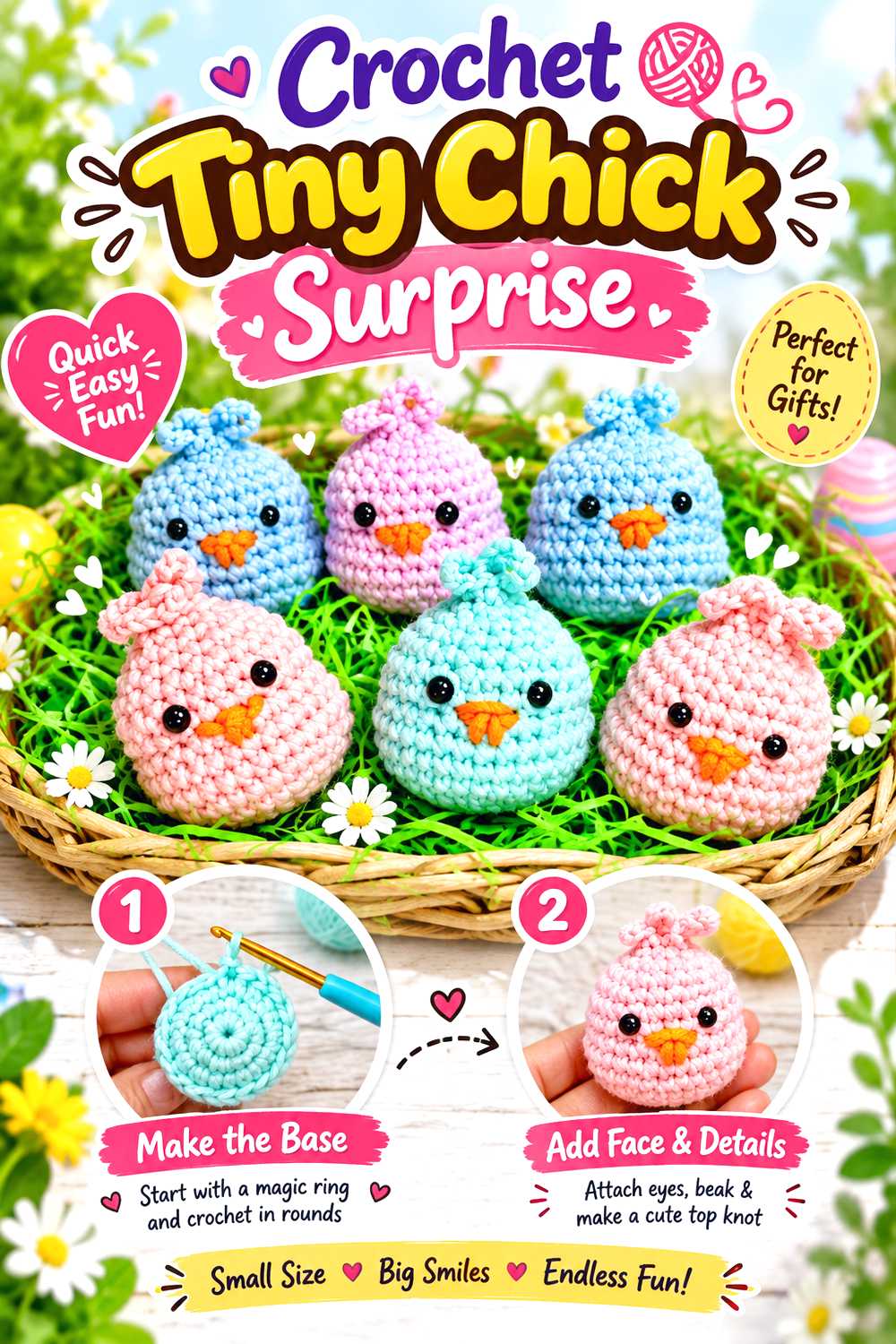
The chick offers one of the simplest visual ideas in the series: a compact yellow body, a tiny beak, and a face. That simplicity is useful. Not every blind-bag pull needs multiple sewn pieces or complicated texture, particularly when more detailed cows, turtles, cats, and dinosaurs are already included.
A chick can also become a strong color-variant character. Pastel editions or coordinated seasonal colors can work as long as the beak and bird silhouette remain easy to recognize.
Minimal Detail Makes Proportion More Noticeable
When there are only a few features, their positioning becomes more important. The face should feel centered on the body rather than drifting toward one side.
Before closing or finishing the collectible, check the eye and beak relationship from normal viewing distance. Tiny discrepancies that seem insignificant while crocheting can become the first thing visible on an otherwise simple character.
Use the Chick as a Visual Rest Point
Collections benefit from changes in complexity. A straightforward chick can sit between a spotted cow and a multi-armed octopus without competing for attention.
That makes it a useful “common” style of pull if you choose to create rarity tiers. The simpler shape does not need artificial embellishment to justify its place; its role is partly to keep the assortment visually balanced.
Original Tutorial and Creator Credit
Creator: Yarn Creation Ideas
Crochet Strawberry Foodie Collectible

A strawberry is an effective surprise because it moves the collection away from animals without losing the rounded amigurumi appeal. The tapered fruit body, leafy top, and seed details provide three different identification cues.
It can also support a food-themed subseries later if you want to add other fruit or snack characters. For the current assortment, the strawberry provides a bright visual break between the chick and goldfish while remaining compact enough to fit the same general packaging concept.
Seeds Should Support the Shape, Not Cover It
Tiny seed details can quickly make a miniature fruit look busy. Space them with the overall silhouette in mind and stop before the decoration overpowers the smooth strawberry form.
If you plan several versions, use the same general seed-density approach so one piece does not look unfinished beside another simply because the embroidery differs dramatically.
The Leaf Top Is the Strawberry’s Strongest Outline Detail
From a distance, the pointed lower body may not be enough to distinguish a strawberry from another red amigurumi food. The green top completes the identity.
Check that the leaves remain visible when the collectible is sitting upright or lying in its package. A top that folds completely against the body may disappear until the mini is handled.
Original Tutorial and Creator Credit
Creator: Isa Monteiro Amigurumi
Crochet Goldfish Keychain Mystery Pull
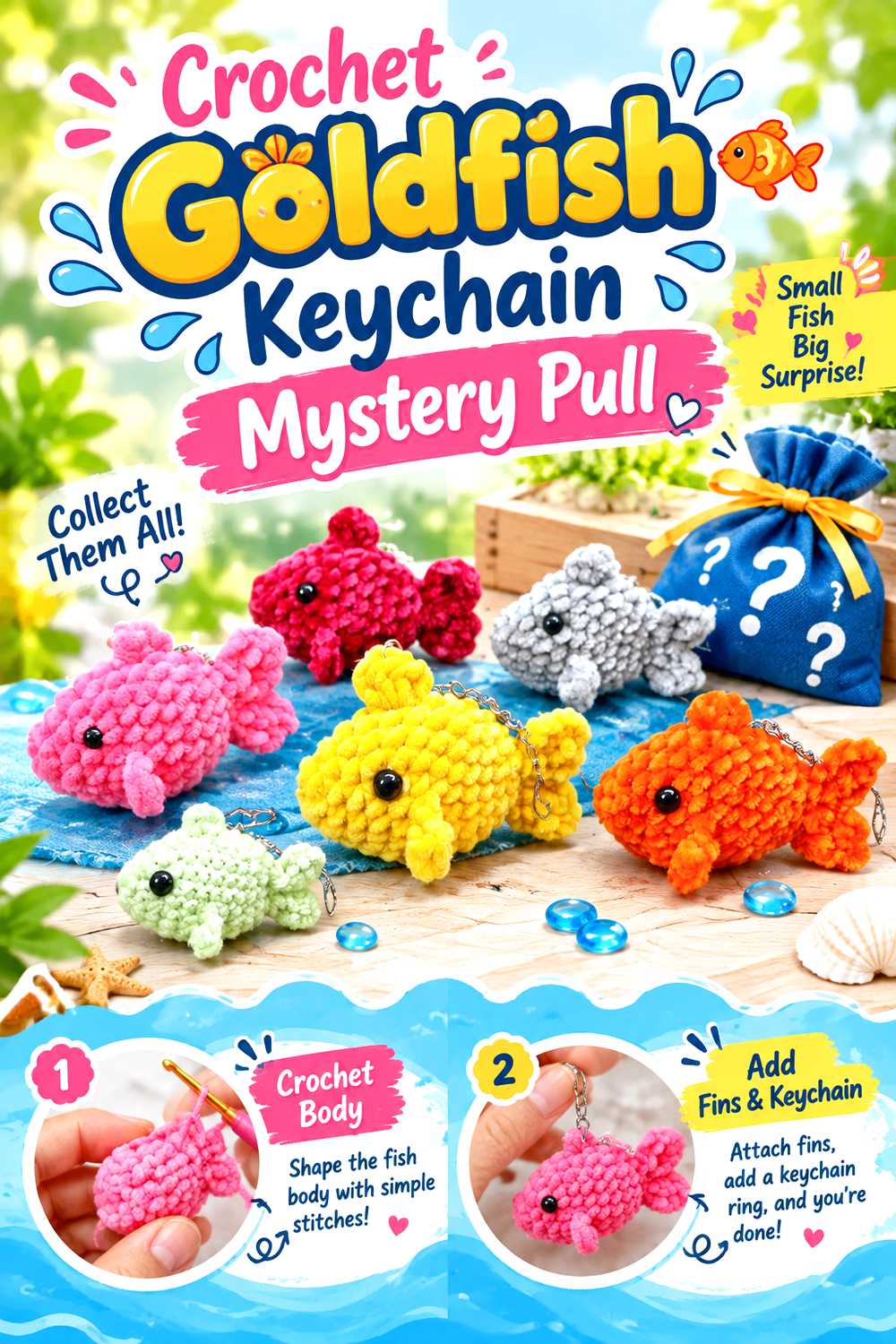
The goldfish creates a very different profile from the whale because the tail and fins can become the dominant feature rather than a small finishing detail. It also introduces another no-sew-style option for makers who want visual complexity without a large assembly burden.
For collectible versions, body and fin colors can be planned as coordinated combinations. A small school of goldfish could include warm, cool, or contrasting variants while maintaining the same recognizable shape.
Do Not Let Stuffing Flatten the Fish Profile
A fish benefits from a defined body rather than an over-expanded sphere. After stuffing, check the side profile and make sure the tail still looks proportionate to the body.
If changing yarn types makes the body considerably bulkier, assess the whole finished object before committing to a large batch. The balance between body volume and fin visibility matters more than hitting an invented universal size.
Keychain Use Changes the Stress Point
The source tutorial is specifically framed as a goldfish keychain, which means the character may be used differently from a shelf-only amigurumi.
If you adapt your entire blind-bag set into charms, pay attention to where pulling force reaches the crochet fabric. A secure decorative object and a secure functional keychain are not automatically the same thing, particularly with frequent bag or backpack use.
Original Tutorial and Creator Credit
Creator: Fame art with Poonam
Crochet Mini Axolotl Fantasy Pull
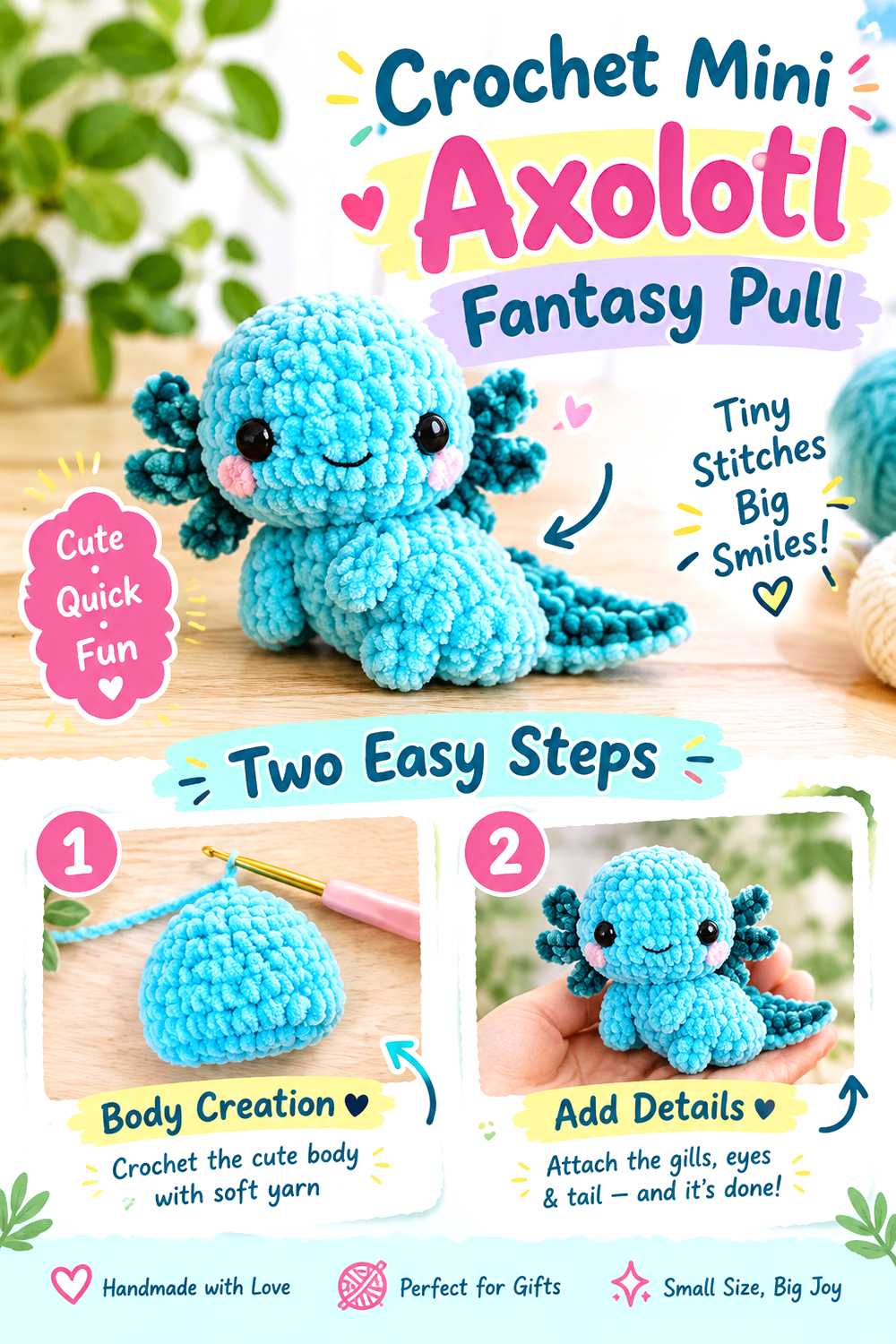
The axolotl is one of the most distinctive silhouettes here. Side gills, an elongated body, and a tail separate it from both the fish and the four-legged land animals, making it a strong candidate for a rarer or more unusual mystery pull.
Pastel colors suit the whimsical collectible concept, but recognizable anatomy should still come before novelty yarn. If the gills disappear into an extremely fluffy fiber, much of what makes the character special may be lost.
Side Gills Need Enough Contrast to Stay Visible
The gills are the first feature that separates this character from a generic long plush. Contrast can come from color, texture, or simply clear stitch definition.
Check the finished axolotl from above as well as from the side. A blind-bag collectible is handled in multiple orientations, so the signature details should not be visible from only one carefully staged angle.
The Long Body Needs Different Scale Checks
Height is not very informative for an axolotl. Compare overall length and body thickness with other horizontal characters such as the whale and goldfish.
If all three occupy nearly identical shapes after yarn substitution, adjust your material plan before making multiples. Their defining features should remain strong enough that the ocean or aquatic subset still feels varied.
Reserve Unusual Palettes for Special Editions
Because axolotls already have a whimsical appearance, they can support imaginative color variants without requiring hats or added accessories.
A consistent main edition plus one or two deliberately unusual palettes can create a convincing chase-character effect. Keeping the construction unchanged also avoids turning a rare version into a completely different project.
Original Tutorial and Creator Credit
Creator: Phoenix TV
Crochet Mini Dinosaur Surprise
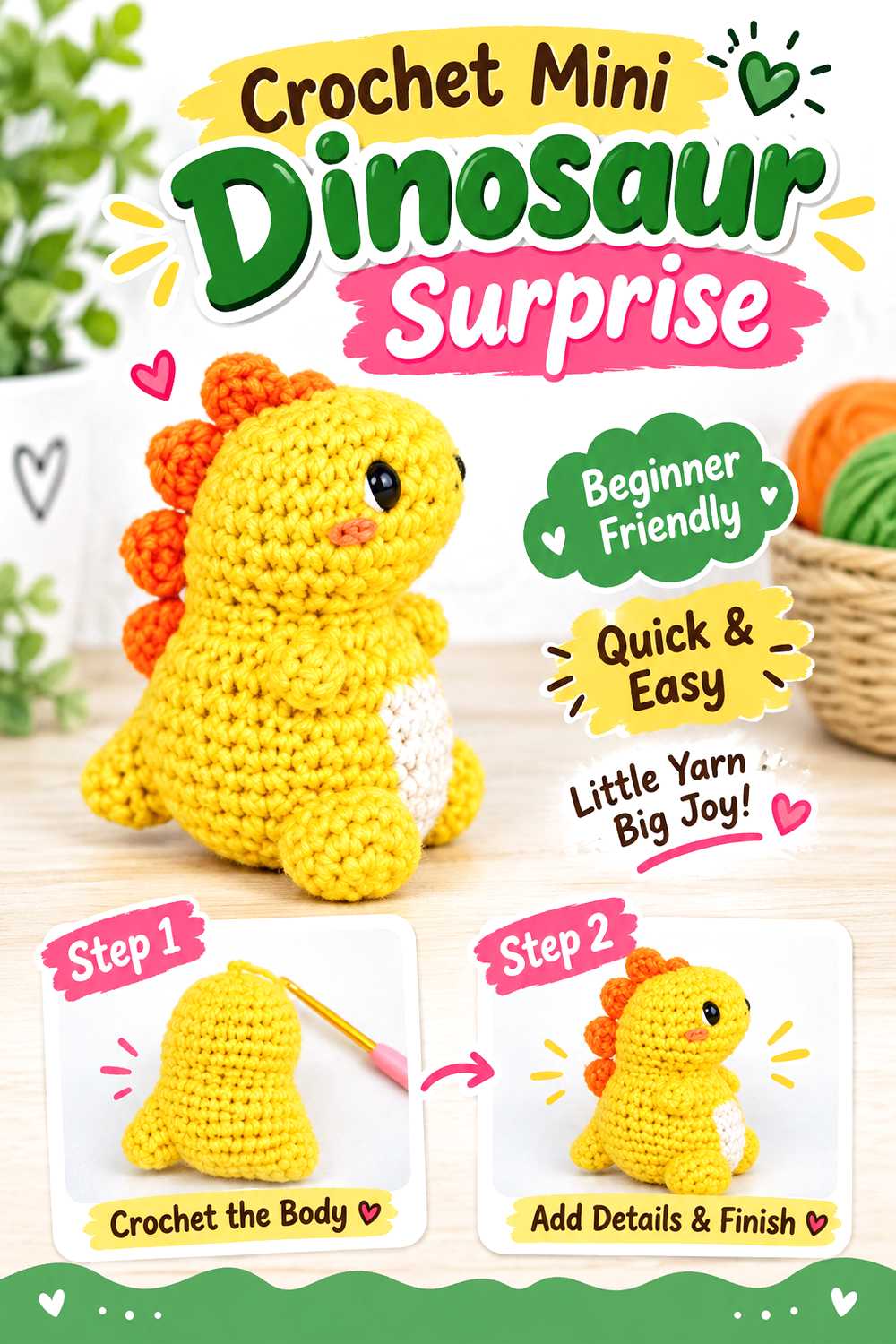
A dinosaur closes the collection with a shape that can feel more substantial even while remaining miniature. Its longer body, tail, legs, and back profile contrast with the round bear and chick, while the prehistoric theme gives the assortment another category beyond farm, woodland, ocean, and food characters.
This could easily become a “chase” pull because the silhouette is more elaborate. Alternatively, use several dinosaur colors as a small subgroup while keeping one carefully chosen version in the main 18-character set.
The Tail Should Balance the Front of the Body
A dinosaur with a long rear section can look visually heavy on one side if the body and head do not balance the profile. Judge the finished piece from the side before deciding that its proportions work with the rest of your minis.
Display stability matters too. If it continually tips or rolls in the collector tray, investigate stuffing distribution and finishing before adding more decorative details.
Preserve the Back Profile
Depending on the dinosaur style, back details can do much of the identification work. Fuzzy yarn that hides every edge may reduce a detailed dinosaur to a long oval with legs.
Make your first version in the intended collection materials and photograph the silhouette against a plain background. If the shape is recognizable without facial details, it is much more likely to work as a strong blind-bag collectible.
Let This Be a Statement Pull
The dinosaur does not need a hat, bow, keychain, or additional charm to feel special. Its unusual silhouette already gives it greater visual complexity than many of the common-style characters.
That makes it a useful reminder when designing rarity: “special” does not always mean adding more pieces. Sometimes the base form itself supplies enough contrast.
Original Tutorial and Creator Credit
Creator: Suzan’s crochet
Which Crochet Blind Bag Ideas Work Best Together?
For maximum contrast, combine characters with different dominant features rather than selecting only by theme. The mushroom is defined by its cap, the turtle by its shell, the bee by stripes and wings, the cat and bunny by ears, and the octopus by multiple arms. Those differences make each reveal feel more substantial.
The whale, goldfish, axolotl, and dinosaur form a useful second group because all have longer silhouettes but remain easy to distinguish through tails, fins, gills, or body structure. The frog, bear, pig, chick, and penguin give the collection compact anchor shapes.
If you want a smaller first release, choose across those shape families instead of simply crocheting the first several ideas in the list.
Conclusion
A successful crochet blind bag collection needs more than a stack of tiny amigurumi in different colors. Shape variation is what makes the frog, mushroom, turtle, cow, strawberry, goldfish, axolotl, and dinosaur feel like genuinely different pulls, while planned color or embroidery changes can create alternate versions without multiplying the construction work.
For a first assortment, prioritize characters whose defining features remain clear in your chosen yarn and whose finished scale works with one practical packaging system. Then decide which designs are regular pulls and which deserve special variants. Use the original tutorials linked above for each creator’s exact construction details, materials, and finishing method.
Frequently Asked Questions
How can I make crochet blind bag amigurumi from different tutorials look like one collection?
Start with visual consistency rather than trying to force every pattern to the same exact measurement. Use a coordinated yarn palette, comparable stitch definition, similar facial scale, and a consistent finishing style. Then make samples and compare their overall visual mass. A horizontal whale does not need to equal an upright mushroom in height; they simply need to look appropriately scaled when displayed together.
Can I use the same yarn for all 18 blind bag projects?
Possibly, but do not assume one substitution will behave equally well in every design. Smooth yarn can preserve tiny ears, fins, spots, and embroidered details, while plush yarn creates a softer look but may obscure smaller features. Make a sample when changing the yarn used by a tutorial. Also choose a hook-and-yarn combination that keeps amigurumi fabric dense enough to contain stuffing.
How do I stop people from feeling which crochet character is inside?
Thin flexible packaging may reveal long ears, a mushroom cap, a turtle shell, or another distinctive outline before the package is opened. If the surprise itself matters, use opaque packaging with enough structure to mask the shape rather than simply wrapping each amigurumi tightly. Whatever packaging you choose should also be appropriate for the intended recipient and kept separate from assumptions about the safety of the crochet item itself.
Are plastic safety eyes suitable for crochet blind bags for children?
Small rigid components can become choking hazards if they detach, so do not assume plastic “safety” eyes make a miniature suitable for every age. For babies, very young children, or other situations where detachable pieces are inappropriate, embroidered facial features may be a better design route. Packaging pieces, keychain hardware, beads, buttons, and removable accessories also need their own safety consideration.
How can I create common and rare crochet blind bag characters?
You can make rarity visible without changing the underlying pattern. Keep a standard version of a character, then create a limited alternate palette, embroidered expression, or securely attached accent. A turtle might receive a special shell color, for example, while a cat could have a planned two-color marking variation. Use a consistent system so a rare version looks deliberate rather than like a random leftover-yarn substitution.
Should all of the blind bag amigurumi be the same finished size?
No universal size is required. Similar visual presence is usually more useful than identical dimensions because the projects have fundamentally different shapes. Compare height, width, length, and overall bulk before producing multiples. The important practical question is whether all characters feel related and work with your planned packaging or display system without distorting their defining features.
Can I sell finished crochet blind bags made from these YouTube tutorials?
Do not assume one rule applies to every tutorial. Designers can set different terms for selling finished objects, using their pattern commercially, crediting the designer, modifying the design, or using it for larger-scale production. Check each creator’s current pattern or video terms individually before selling. A tutorial being publicly viewable does not by itself grant unrestricted commercial rights to the underlying design.