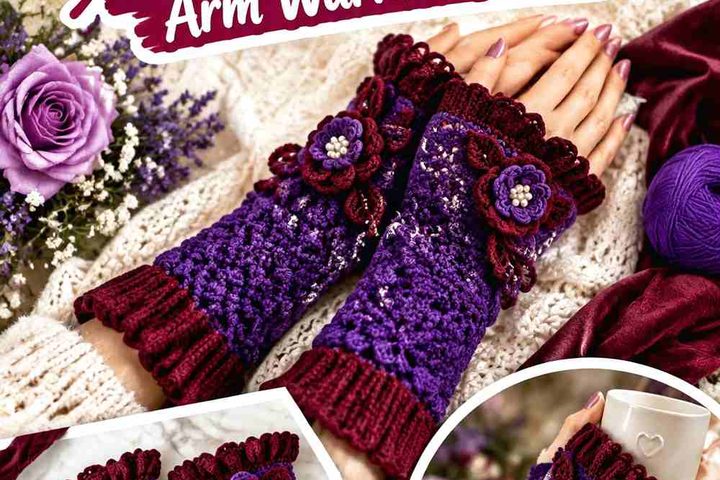
Orchid Mist gives a crochet ruffle scrunchie a softened purple foundation that works particularly well with gathered texture. The folds naturally create highlights and shadows, so even a single-color Orchid Mist scrunchie can show more depth than the same shade on a flat crochet surface.

Adding a second color changes where the eye lands. A pale edge can separate overlapping ruffles, a darker final round can make the outer wave more visible, and a closely related purple can create depth without turning the scrunchie into a strongly striped accessory.
Because the elastic sits at the center of the construction, color placement should also account for stretching. An accent that looks dominant when the scrunchie is relaxed may become more scattered once it is wrapped around the hair. Plan the palette around the complete ruffled surface rather than judging only a small section near the join.
The tutorials below demonstrate ruffled, lace, mesh, velvet, petal-style, and other crochet scrunchie constructions. The Orchid Mist palettes are independent color adaptations and should not be interpreted as the colors used by the creators.
Quick List
- Orchid Mist And Pearl Ivory Crochet Four Round Ruffle Scrunchie
- Orchid Mist And Deep Plum Crochet Petal Ruffle Scrunchie
- Orchid Mist And Sage Crochet Lacy Ruffle Scrunchie
- Orchid Mist And Charcoal Crochet Full Ruffle Scrunchie
- Orchid Mist And Dusty Rose Crochet Velvet Ruffle Scrunchie
- Orchid Mist And Champagne Gold Crochet Contrast Edge Ruffle Scrunchie
- Orchid Mist And Sea Glass Crochet Mesh Ruffle Scrunchie
- Orchid Mist And Soft Black Crochet Dramatic Ruffle Scrunchie
- Orchid Mist And Oatmeal Crochet Soft Ruffle Scrunchie
- Orchid Mist And Powder Blue Crochet Lace Ruffle Scrunchie
- Orchid Mist And Mauve Crochet Tonal Ruffle Scrunchie
- Orchid Mist And Cranberry Crochet Frilled Ruffle Scrunchie
Let Orchid Mist Control the Main Ruffle
If Orchid Mist is the defining color, give it enough of the ruffled surface to remain obvious after the scrunchie gathers. One practical approach is to work the inner portion and main ruffle in Orchid Mist, then reserve the supporting shade for the final edge.
This is especially useful with high-contrast colors. A small dark border can look much larger once it travels around every fold, so the accent does not need to occupy many rounds to influence the finished scrunchie.
Check Orchid Mist Contrast Across Overlapping Ruffles
Ruffles overlap and cast shadows, which can reduce the visibility of subtle color changes. Two colors that look clearly different in separate skeins may blend when narrow rounds sit on top of one another.
Compare the yarns together and, if needed, look at them in grayscale. Use close-value colors for broad tonal transitions and stronger light-dark differences for narrow outer edging that needs to remain visible.
Keep Orchid Mist Visible Around the Hair Elastic
When the scrunchie stretches, the innermost crochet can become more visible. Keeping Orchid Mist around the elastic creates continuity even when the outer ruffle uses a contrasting edge.
If you use a second color in the inner round, make sure it contributes to the overall palette rather than appearing only when the elastic stretches. Repeating that shade at the outer edge can make the color placement feel deliberate.
1. Orchid Mist And Pearl Ivory Crochet Four Round Ruffle Scrunchie

Pearl Ivory gives Orchid Mist a light outer contrast that can make several ruffle levels easier to distinguish. Keep Orchid Mist through most of the inner and middle surface, then use ivory where the outermost wave needs clearer definition. This keeps the scrunchie purple-led even when the pale edge becomes visible across many folds.
Orchid Mist Should Fill Most of the Four-Round Ruffle
Use Orchid Mist across the broad central ruffle area rather than alternating ivory through every round. A continuous main color helps the gathered layers read as one full scrunchie instead of separate concentric stripes.
If you want ivory repeated twice, keep the second appearance very narrow so Orchid Mist still controls the visible volume.
Orchid Mist Gains Clearer Fold Definition From Pearl Ivory
Pearl Ivory can make the tips of overlapping Orchid Mist waves easier to see, particularly when the ruffle is dense.
Place the light shade near the exterior rather than close to the elastic if the goal is to emphasize movement. The outer folds remain visible even when the scrunchie is wrapped around the hair.
Creator Credit: Secret Yarnery
2. Orchid Mist And Deep Plum Crochet Petal Ruffle Scrunchie

Deep Plum creates a richer tonal contrast that can emphasize a petal-like ruffle without introducing a completely different hue family. Orchid Mist should cover the broader petal surface, while plum can define the outer tips or innermost shadowed area.
Orchid Mist Should Stay Lighter Than Deep Plum Across the Petals
The two-purple palette depends on visible depth. If your Orchid Mist yarn is unusually dark, Deep Plum may disappear where narrow petal sections overlap.
Compare the shades before finishing the complete edge and reserve plum for a wider area if the value difference is subtle.
Orchid Mist Needs Deep Plum on Selected Petal Edges
A plum edge around every visible wave can add definition without replacing Orchid Mist as the primary color, provided the border remains narrow.
Avoid using Deep Plum for both a broad inner section and a wide outer edge unless you want the lighter Orchid Mist reduced to a middle stripe.
Creator Credit: Aprenda Croche com Geci
3. Orchid Mist And Sage Crochet Lacy Ruffle Scrunchie

Sage introduces a muted botanical contrast while keeping the overall palette soft. Use Orchid Mist through the lace body and reserve Sage for the outer shell-like edge or another sufficiently broad section where the green can remain visible between folds.
Orchid Mist Should Carry the Main Lacy Ruffle
Open stitches already create variation through negative space. Keeping them Orchid Mist prevents color changes from competing with the lace structure.
Sage can then appear at the perimeter, where a different hue helps the final edge stand apart without interrupting the openwork.
Orchid Mist Needs Sage in More Than a Tiny Lace Detail
Muted Sage and Orchid Mist may have similar lightness. A very narrow green line can disappear among the ruffles, especially once the scrunchie is gathered.
Use Sage on a broader final section when the colors are close, or choose a deeper muted green if you want the edge to be more obvious.
Creator Credit: Selina Veronique Crochet
4. Orchid Mist And Charcoal Crochet Full Ruffle Scrunchie

Charcoal gives Orchid Mist a dark outline that can make a full ruffle appear more graphic. Because charcoal has considerable visual weight, it works best as a controlled edging or small inner repeat rather than an equal second color.
Orchid Mist Should Dominate the Full Ruffle Above Charcoal
Keep most of the ruffled volume Orchid Mist. The dark shade only needs a narrow exterior position to trace the repeated waves.
If charcoal covers an entire large round, the scrunchie may begin to read as a dark accessory with a purple center instead of an Orchid Mist design.
Orchid Mist Needs Charcoal Where the Outer Wave Requires Definition
Use charcoal at the last visible edge when Orchid Mist folds are difficult to distinguish against dark hair or clothing.
If the scrunchie will usually be worn against very dark hair, test whether the charcoal edge disappears into the background. In that situation, a lighter accent may define the silhouette more effectively.
Creator Credit: Diving Ducks Crochet
5. Orchid Mist And Dusty Rose Crochet Velvet Ruffle Scrunchie
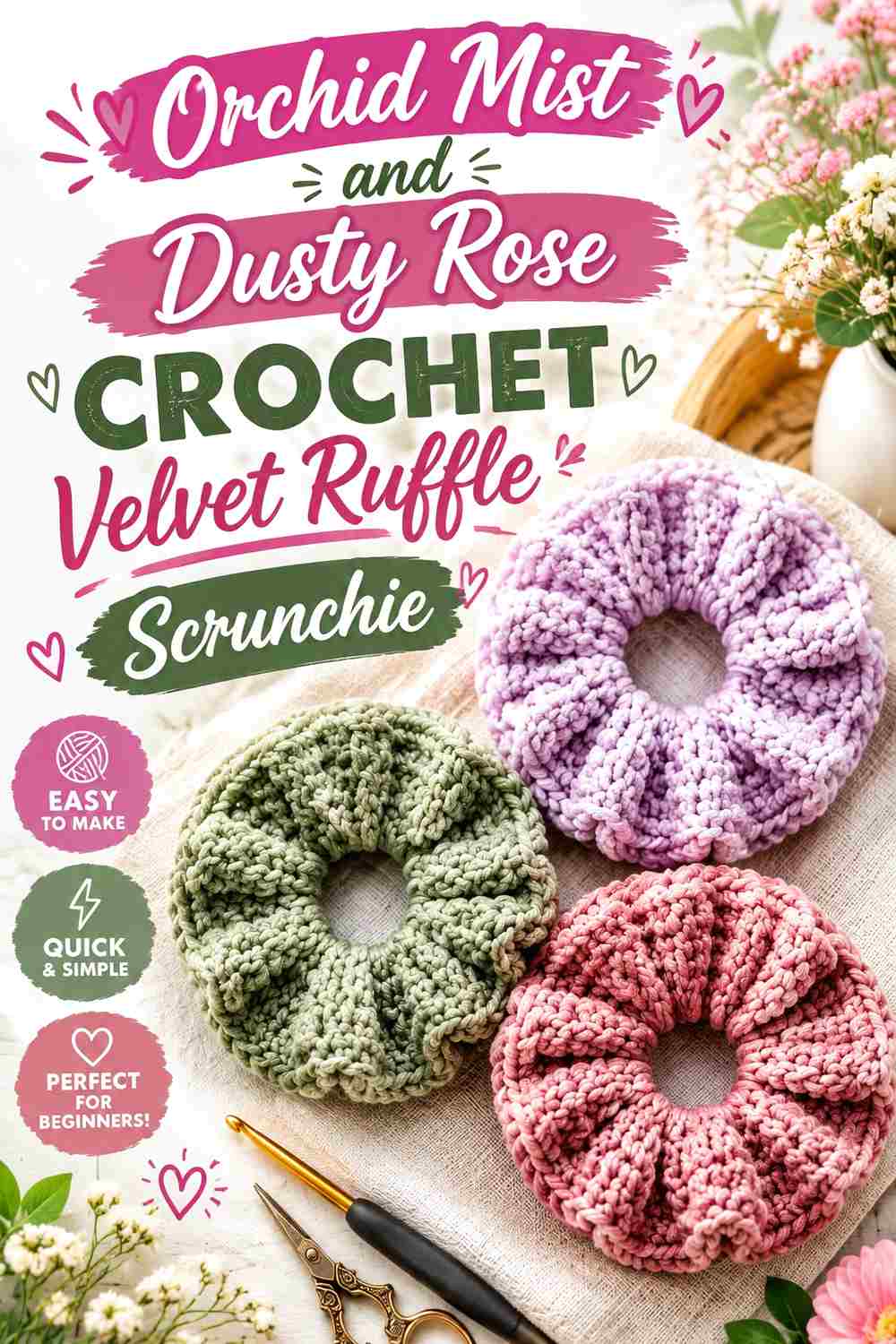
Dusty Rose creates a close warm-purple relationship with Orchid Mist. On a plush-looking scrunchie surface, broader color sections are more useful than fine edging because soft texture can blur subtle transitions.
Orchid Mist Should Cover the Main Velvet Ruffle Surface
Keep the largest visible gathered area Orchid Mist and place Dusty Rose near the exterior or around a smaller secondary section.
The similar softness of the two colors allows the texture to remain prominent without forcing a strong striped effect.
Orchid Mist Needs Dusty Rose in a Wide Enough Ruffle Band
If the colors are similar in value, a tiny Dusty Rose border may disappear among plush folds. Give the rose enough width for its warmer hue to register.
Avoid alternating the two shades repeatedly, which can make a thick scrunchie visually busier than necessary.
Creator Credit: Darling Jadore
6. Orchid Mist And Champagne Gold Crochet Contrast Edge Ruffle Scrunchie

Champagne Gold warms Orchid Mist while maintaining a softened palette. It is particularly useful on a contrast-edged scrunchie because only a small amount is needed to influence the full outer circumference.
Orchid Mist Should Reach the Edge Before Champagne Gold Begins
Keep the main ruffle Orchid Mist all the way toward the outer section, then introduce Champagne Gold only for the finishing border.
This creates a clear progression from dominant purple to warm accent instead of breaking the body into several gold-and-lilac bands.
Orchid Mist Needs Champagne Gold Checked for Value Contrast
Pale gold and Orchid Mist can be closer in lightness than their hues suggest. If the final edge is hard to see, use a slightly deeper warm gold direction or widen the accent.
Do not add another contrasting shade solely to fix weak separation; first adjust the relationship between the two existing colors.
Creator Credit: Crochet Motif Tutorial
7. Orchid Mist And Sea Glass Crochet Mesh Ruffle Scrunchie

Sea Glass gives Orchid Mist a cooler blue-green partner. On a mesh-style scrunchie, use Orchid Mist through the airy surface and let Sea Glass appear in a border or secondary ruffle where a broader color section can remain visible.
Orchid Mist Should Keep the Mesh Ruffle Visually Continuous
Mesh already divides the surface into yarn and open space. Keeping the central mesh Orchid Mist prevents additional color changes from fragmenting the texture.
Use Sea Glass on an outer section where the color shift does not interrupt the basic mesh pattern.
Orchid Mist Needs Sea Glass Tested Across Open Spaces
The background showing through the mesh can change how both yarn colors appear. Against dark hair, Sea Glass may look stronger; against pale hair or fabric, Orchid Mist may become more prominent.
Check the finished pairing against the likely background before deciding how wide the Sea Glass accent should be.
Creator Credit: Happi Crochet
8. Orchid Mist And Soft Black Crochet Dramatic Ruffle Scrunchie
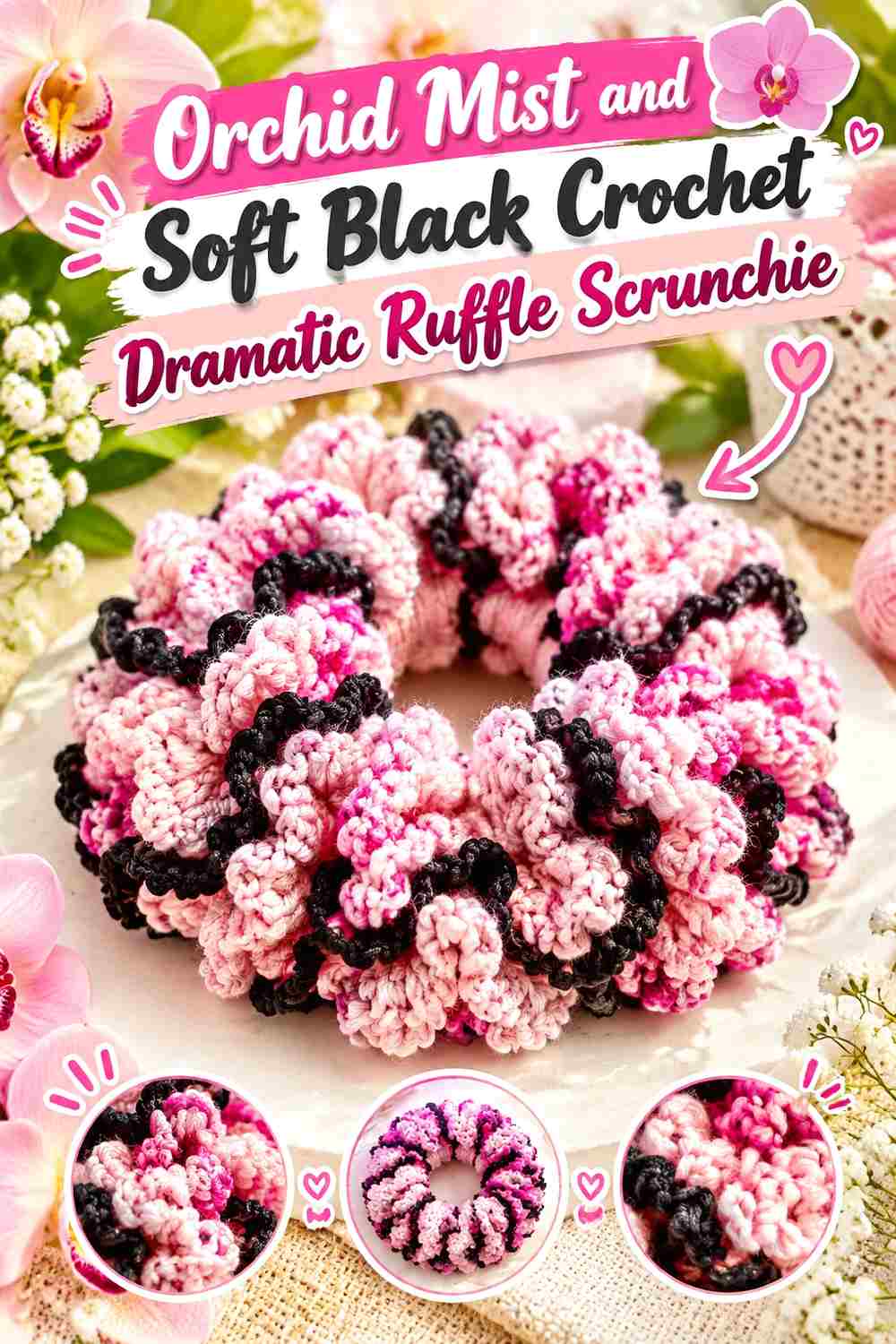
Soft Black creates the strongest contrast in this collection. It can make the outer edge of an Orchid Mist ruffle exceptionally clear, but the dark shade needs restraint because every fold multiplies its visual presence.
Orchid Mist Should Fill Nearly the Entire Ruffle Above Soft Black
Use Soft Black only at the perimeter or in one small supporting round. The broad gathered surface should remain Orchid Mist if that color is meant to lead.
A narrow black edge can look substantial after it travels around dozens of waves, so assess the full scrunchie before adding more dark yarn.
Orchid Mist Needs Soft Black Away From the Elastic When Possible
Keeping the innermost section Orchid Mist maintains color continuity when the elastic stretches.
Place black near the exterior where it can define the silhouette instead of creating a dark ring around the center that appears only when the scrunchie is pulled open.
Creator Credit: Nikki’s_Crochet_Corner
9. Orchid Mist And Oatmeal Crochet Soft Ruffle Scrunchie
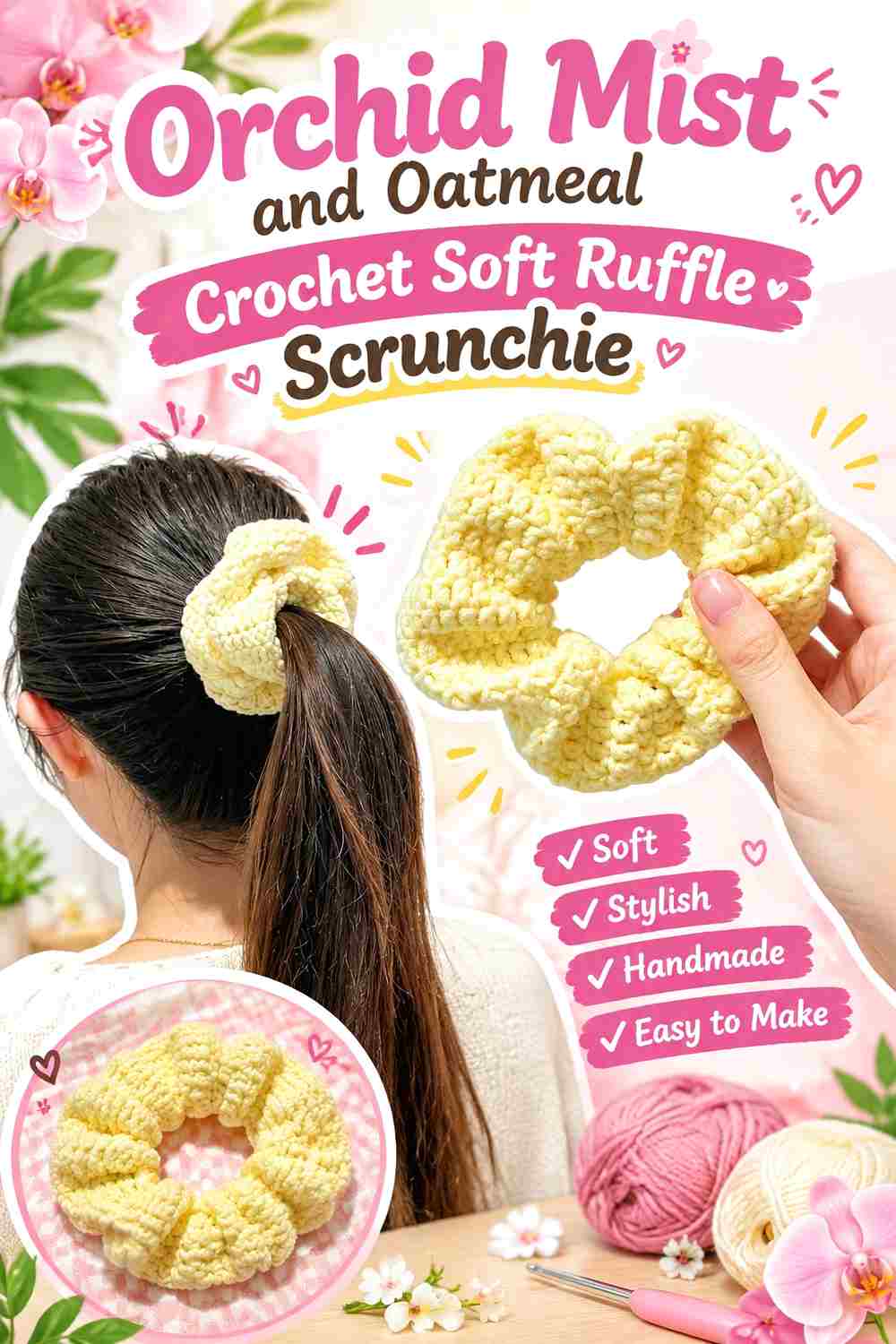
Oatmeal gives Orchid Mist a warm neutral contrast that is gentler than bright white. This combination works well when you want the gathered shape to remain the main feature rather than a highly graphic color border.
Orchid Mist Should Stay Central to the Oatmeal Ruffle
Keep Orchid Mist through the main gathered area and use Oatmeal at the edge or in one smaller secondary round.
If oatmeal occupies too much of the exterior, the scrunchie can begin to look neutral-first because the pale folds catch more light.
Orchid Mist Gains Softer Ruffle Separation From Oatmeal
Oatmeal can reveal the edge of each Orchid Mist wave without producing the sharp line created by black or white.
This is useful when you want individual folds to be visible while preserving a quiet, muted palette.
Creator Credit: lilthings ♡
10. Orchid Mist And Powder Blue Crochet Lace Ruffle Scrunchie

Powder Blue keeps the palette cool and airy. Because both shades can be pale and muted, let Orchid Mist dominate the lace and use blue over a larger finishing section instead of tiny scattered details.
Orchid Mist Should Carry the Main Lace Above Powder Blue
A single Orchid Mist lace field gives the eye a continuous texture to follow around the elastic.
Powder Blue can then define the last visible wave, where its cooler hue is easier to recognize than it would be in small stitches near the crowded center.
Orchid Mist Needs Powder Blue With Enough Light-Dark Difference
If the two colors become nearly identical in grayscale, expect a blended result. That can work well for a soft tonal scrunchie, but it will not create a sharply defined blue edge.
Choose a slightly deeper Powder Blue when the outer ruffle needs stronger separation.
Creator Credit: Hearts in the Home
11. Orchid Mist And Mauve Crochet Tonal Ruffle Scrunchie
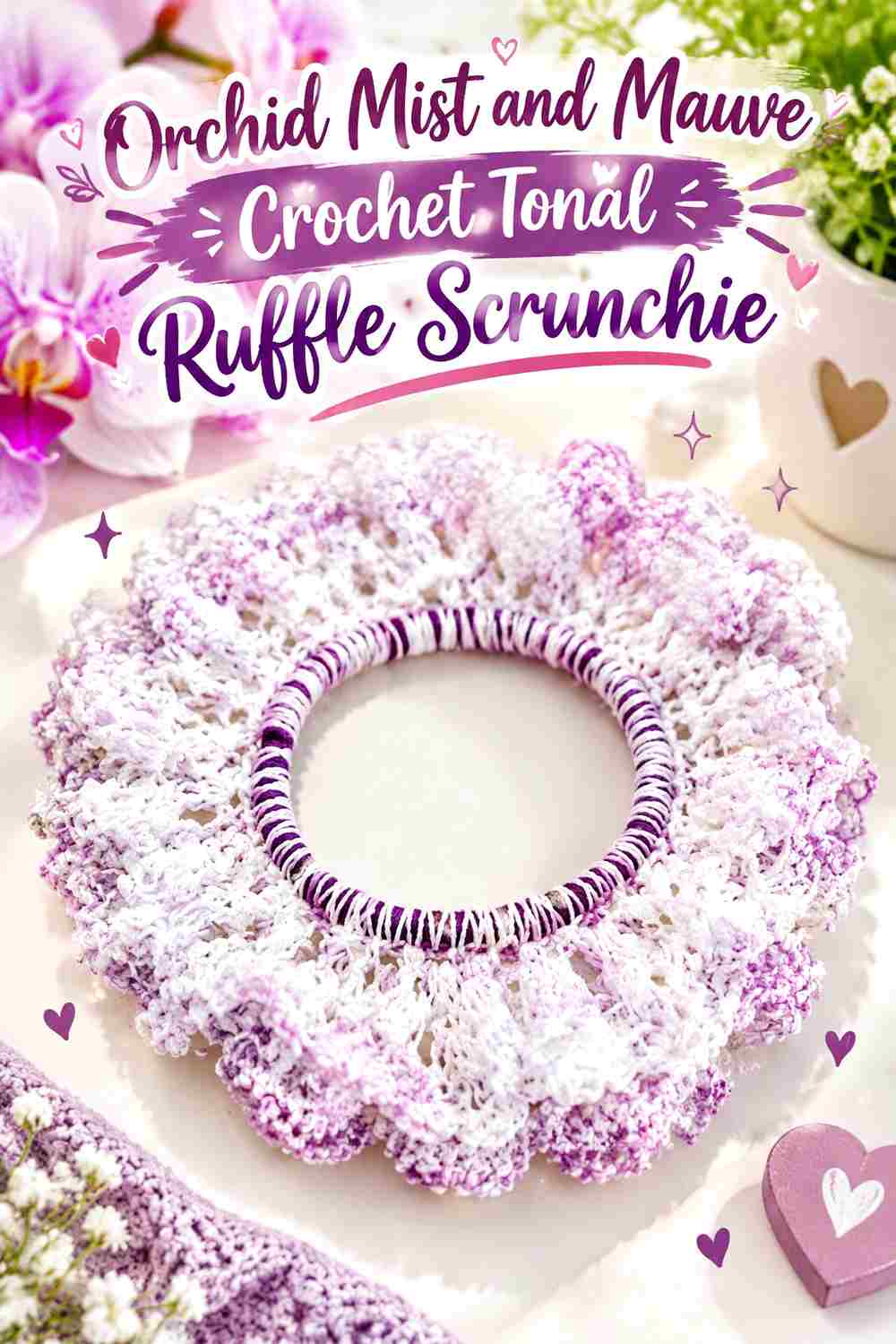
Mauve gives Orchid Mist a closely related purple-pink partner. The purpose here is not strong contrast but a gradual shift in warmth across the ruffles.
Orchid Mist Should Remain the Cooler Main Ruffle Beside Mauve
Choose a Mauve that is visibly warmer or pinker than Orchid Mist so the two sections have a meaningful tonal difference.
Keep Orchid Mist across the larger portion of the scrunchie and move into Mauve closer to the exterior if you want the warm shift to become more noticeable toward the edge.
Orchid Mist Needs Mauve in Broad Ruffle Sections
Very narrow Mauve stripes may disappear because the two shades are related. A wider outer round creates a more readable tonal transition without requiring another accent color.
This palette works best when the gathered texture, rather than sharp color contrast, is intended to provide most of the visual detail.
Creator Credit: ニコ編み Smiley Crochet
12. Orchid Mist And Cranberry Crochet Frilled Ruffle Scrunchie

Cranberry gives Orchid Mist a deeper warm accent that can define a frilled edge or inner shadow. The stronger color should remain controlled so it does not overpower the lighter purple surface.
Orchid Mist Should Outweigh Cranberry Across the Frilled Surface
Keep Orchid Mist across most of the gathered area and introduce Cranberry in one finishing round or compact inner section.
A little cranberry repeated around the full circumference already creates considerable visual impact, so equal color coverage is unnecessary.
Orchid Mist Needs Cranberry Repeated Only When the Ruffle Feels Unbalanced
If a cranberry outer edge is enough to establish the palette, leave the center Orchid Mist. If the dark accent feels isolated, repeat a very small amount around the inner elastic coverage.
Avoid adding multiple cranberry bands, which can turn the scrunchie into a striped design and reduce the continuous Orchid Mist field.
Creator Credit: Noor’s Knits
Choosing Between These Orchid Mist Ruffle Scrunchie Palettes
For the lightest combinations, pair Orchid Mist with Pearl Ivory, Oatmeal, or Powder Blue. These colors define the folds without making the outer edge dramatically darker than the main ruffle.
Dusty Rose and Mauve create the closest tonal relationships. They work best when the supporting shade occupies a broad enough section to remain visible rather than being reduced to very fine edging.
Sage and Sea Glass introduce cooler botanical or blue-green contrast, while Champagne Gold adds warmth. Deep Plum, Cranberry, Charcoal, and Soft Black provide stronger definition and are particularly useful when you want the final ruffle edge to be easy to see.
The amount of accent color matters as much as the shade itself. A border that looks narrow while crocheting can become visually prominent once it repeats around the complete gathered circumference.
Conclusion
Orchid Mist works especially well on crochet ruffle scrunchies because the folds give the muted purple natural variation without requiring many colors. Light neutrals soften and separate the waves, related mauves create tonal depth, green and blue accents cool the palette, and deeper plum, cranberry, charcoal, or black can make the outer edge more graphic.
Keep Orchid Mist across the largest ruffled area, then decide what the second color needs to accomplish. It can define the final wave, separate lace, warm the outer edge, or add depth near the elastic. One deliberate accent usually gives a small scrunchie more cohesion than several unrelated color changes.
Use each credited creator’s tutorial for the construction demonstrated in that source, then apply the Orchid Mist palette independently.
Frequently Asked Questions
What colors pair well with Orchid Mist for a crochet ruffle scrunchie?
Pearl Ivory, Oatmeal, Powder Blue, Dusty Rose, Mauve, Sage, Sea Glass, Champagne Gold, Deep Plum, Cranberry, Charcoal, and Soft Black can all work. Choose according to whether you want a light, tonal, cool, warm, or high-contrast ruffle.
Should Orchid Mist cover most of a crochet ruffle scrunchie?
If Orchid Mist is the defining color, yes. Keeping it across the inner section and most of the ruffle gives the strongest dominant-color effect, while a supporting shade can be reserved for the outer edge or one secondary round.
What color edge works with an Orchid Mist ruffle scrunchie?
Ivory and oatmeal create softer definition, while charcoal and black make the edge more graphic. Plum and cranberry deepen the palette, and Sage, Sea Glass, or Champagne Gold introduce a contrasting hue without requiring a large color section.
How can I tell if two yarn colors have enough contrast with Orchid Mist?
Place the yarns beside each other and look at them from a short distance. A grayscale photo can also show whether their light-dark values differ. If they merge, use the second shade in a broader section rather than a narrow outer line.
Why does an accent color look stronger after the Orchid Mist scrunchie is finished?
The edge repeats around many folds, so even a narrow contrasting round appears numerous times across the finished surface. Judge the accent by the complete gathered scrunchie rather than by one flat section while crocheting.
Should the crochet around the elastic also be Orchid Mist?
It can be, and doing so creates continuity when the scrunchie stretches. A contrasting inner color can also work when it is repeated somewhere else, such as the outer edge, so it feels connected to the complete palette.
Can Orchid Mist work with another purple on the same ruffle scrunchie?
Yes. Deep Plum creates stronger tonal depth, while Mauve gives a softer warm-purple transition. Make sure the shades differ enough in lightness, depth, or undertone for the intended color sections to remain visible.