Plum Noir and Burgundy give a crochet shawl a dark tonal palette without reducing the entire piece to one flat shade. Treat Plum Noir as the deepest visual anchor and Burgundy as the warmer supporting color, then decide whether the contrast belongs in the shawl body, the scalloped edge, repeated lace sections, or a concentrated border.
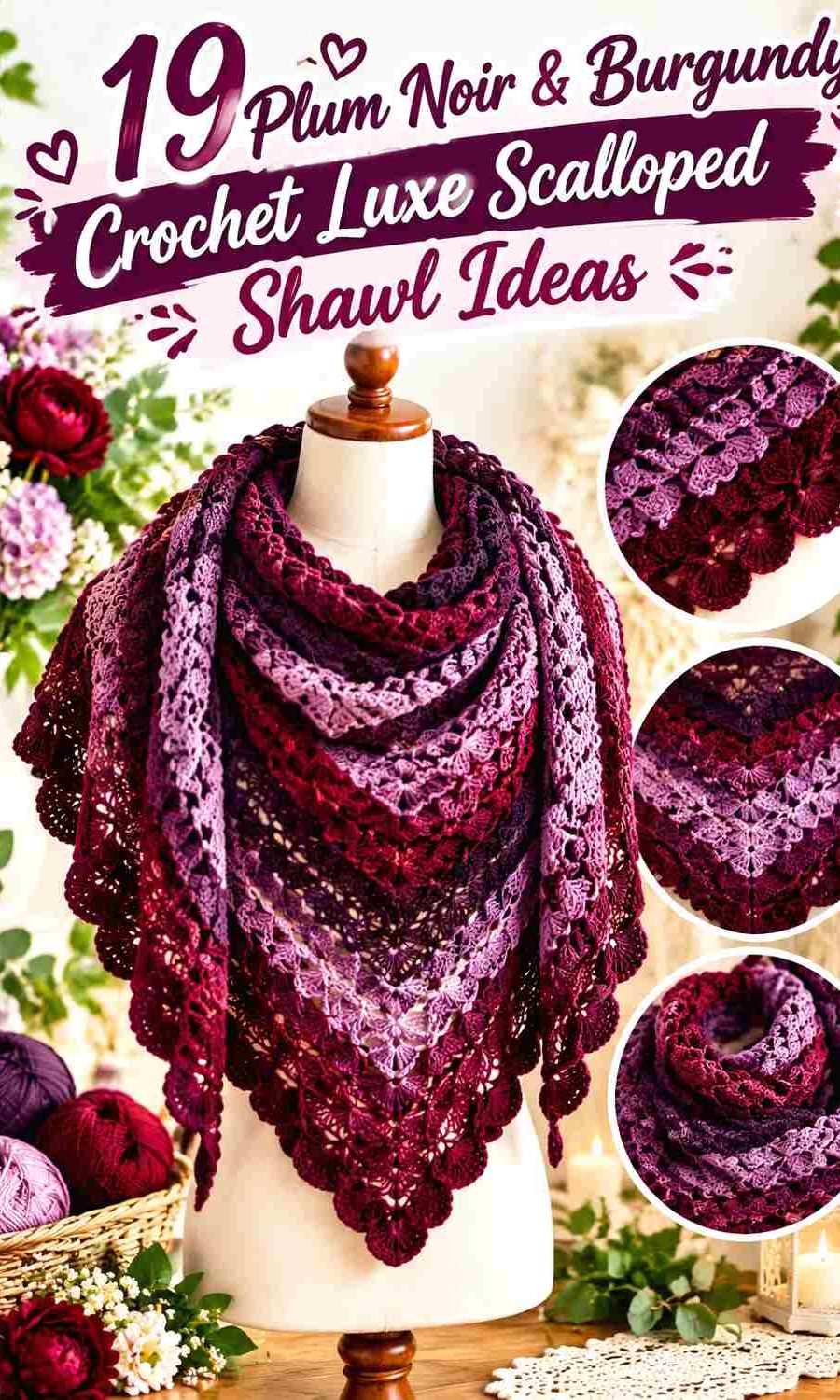
That placement matters especially on an openwork or shell-textured shawl. When both shades are dark and similar in value, delicate scallops can disappear from a distance. A lighter interpretation of Burgundy, a more concentrated Plum Noir border, or wider blocks of each color can preserve the lace pattern without introducing a completely unrelated hue.
These 19 ideas keep Plum Noir and Burgundy at the center while changing their dominance, repetition, edge treatment, tonal spacing, and relationship to the shawl’s texture. The linked tutorials support the shawl construction concepts; the Plum Noir and Burgundy color arrangements are independent palette adaptations.
Quick List
- Plum Noir Crochet Fantail Shawl With Burgundy Scallops
- Burgundy Crochet Virus Shawl With Plum Noir Fans
- Plum Noir And Burgundy Alternating Fan Crochet Shawl
- Burgundy Crochet Lace Shawl With A Plum Noir Statement Border
- Plum Noir Crochet Wrap With Burgundy Pocket And Scallop Accents
- Burgundy Shell Crochet Shawl With Plum Noir Outer Scallops
- Plum Noir Crochet Triangle Shawl With A Burgundy Gradient Edge
- Burgundy Lace Crochet Shawl With Plum Noir Framing
- Plum Noir Crochet Shawl With Narrow Burgundy Scalloped Bands
- Burgundy Shell Crochet Shawl With Plum Noir Shell Tips
- Plum Noir And Burgundy Picot Scallop Crochet Shawl
- Burgundy Crochet Lace Shawl With A Plum Noir Edging
- Plum Noir Crochet Triangle Shawl With Burgundy Corner Scallops
- Burgundy Crochet Lace Edge Shawl With Plum Noir Body Panels
- Plum Noir Crochet Triangle Shawl With Burgundy Openwork Scallops
- Burgundy Moss Stitch Crochet Shawl With Plum Noir Scalloped Trim
- Plum Noir Spider Stitch Crochet Shawl With Burgundy Edge Fans
- Burgundy Crescent Crochet Shawl With Plum Noir Curved Scallops
- Plum Noir Rectangular Crochet Shawl With Burgundy Luxe Border
Decide Whether Plum Noir or Burgundy Should Control the Shawl
The most useful first choice is dominance. If Plum Noir covers most of the shawl, the result stays dark and dramatic while Burgundy becomes the warmer point of contrast. If Burgundy leads, the piece carries more visible wine-red color and Plum Noir can be reserved for a deep outline.
Do not assume a 50/50 split is necessary. On a scalloped shawl, even a relatively small amount of the darker shade can have a strong effect when it runs continuously along the full lower edge.
Keep Plum Noir and Burgundy Scallops Visible
Scallops depend on silhouette as much as color. If Plum Noir and Burgundy are close in value, alternating them inside tiny fans can make the colorwork difficult to read. Larger blocks, one-color fans against another-color body, or a clearly darker final round usually produce stronger definition.
Compare the two yarns together before committing to the full shawl. A grayscale photo is useful when you want to know whether the colors differ enough in lightness for small shells, picots, or lace repeats to remain clear.
Use Plum Noir and Burgundy Where the Shawl Naturally Changes Texture
Color changes look especially intentional when they coincide with a visible structural shift: dense fabric into lace, body into border, straight rows into shell edging, or the beginning of a decorative lower section.
This approach also keeps the palette from becoming busy. Instead of switching Plum Noir and Burgundy simply because another row has begun, use the color change to show the reader where one visual part of the shawl ends and another begins.
1. Plum Noir Crochet Fantail Shawl With Burgundy Scallops
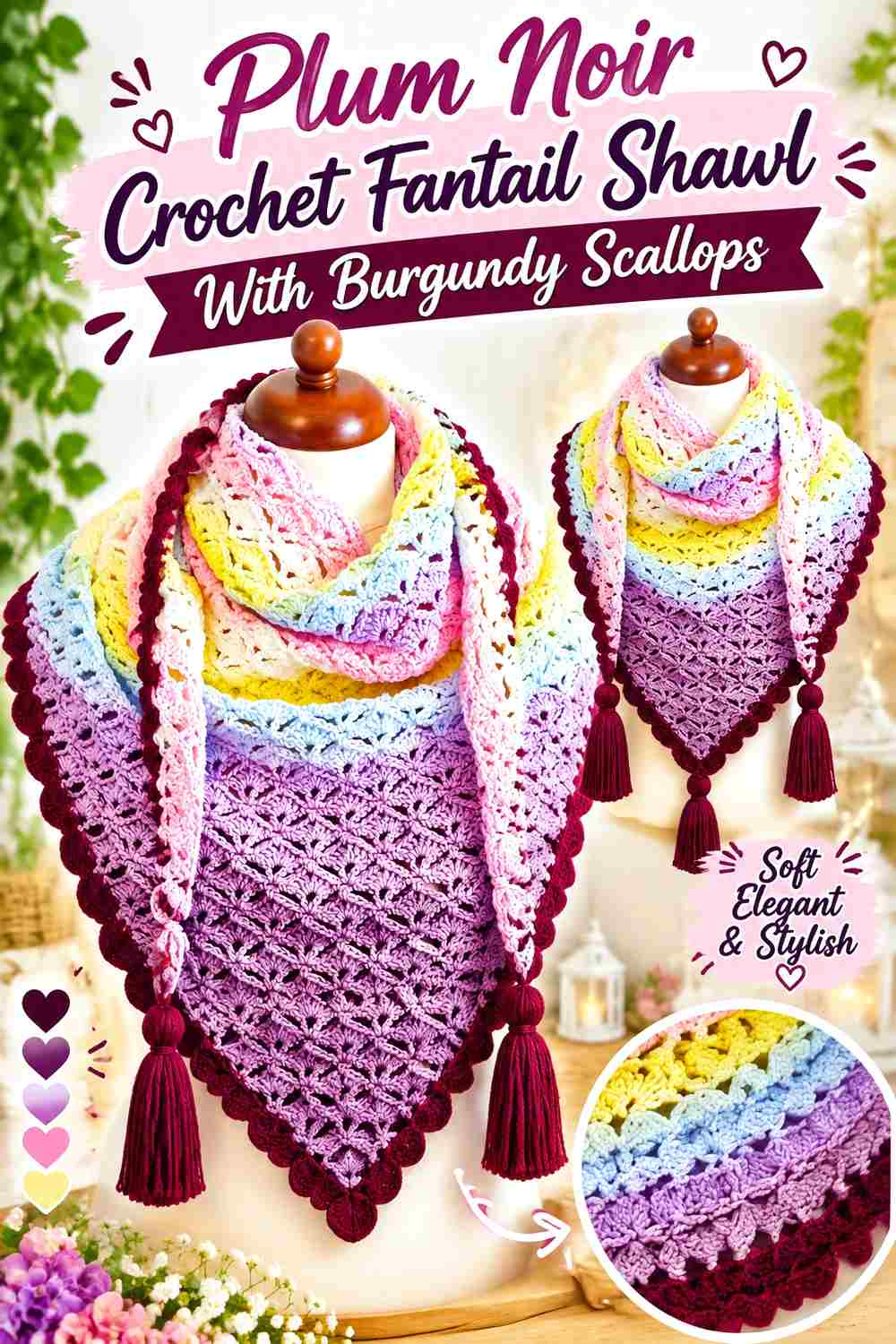
Let Plum Noir cover most of a fantail-style triangle shawl and reserve Burgundy for the expanding shell sections near the lower edge. The dark body keeps the shawl visually grounded, while Burgundy gives the curved fans enough color separation to become the finishing feature rather than disappearing into one continuous dark surface.
Plum Noir Gives the Crochet Fantail Shawl a Deep Main Field
Keeping Plum Noir through the upper and central sections allows the repeated lace structure to build without constant color interruption. This is particularly useful on a shawl with strong fan texture because the stitch pattern already provides plenty of movement.
Burgundy Can Make the Plum Noir Scalloped Edge More Visible
Shift into Burgundy where the lower fans become most prominent. If the two shades are close in value, choose a Burgundy that is visibly lighter than the Plum Noir so the individual shell curves remain readable along the hem.
Creator Credit: Hooked by Robin
2. Burgundy Crochet Virus Shawl With Plum Noir Fans
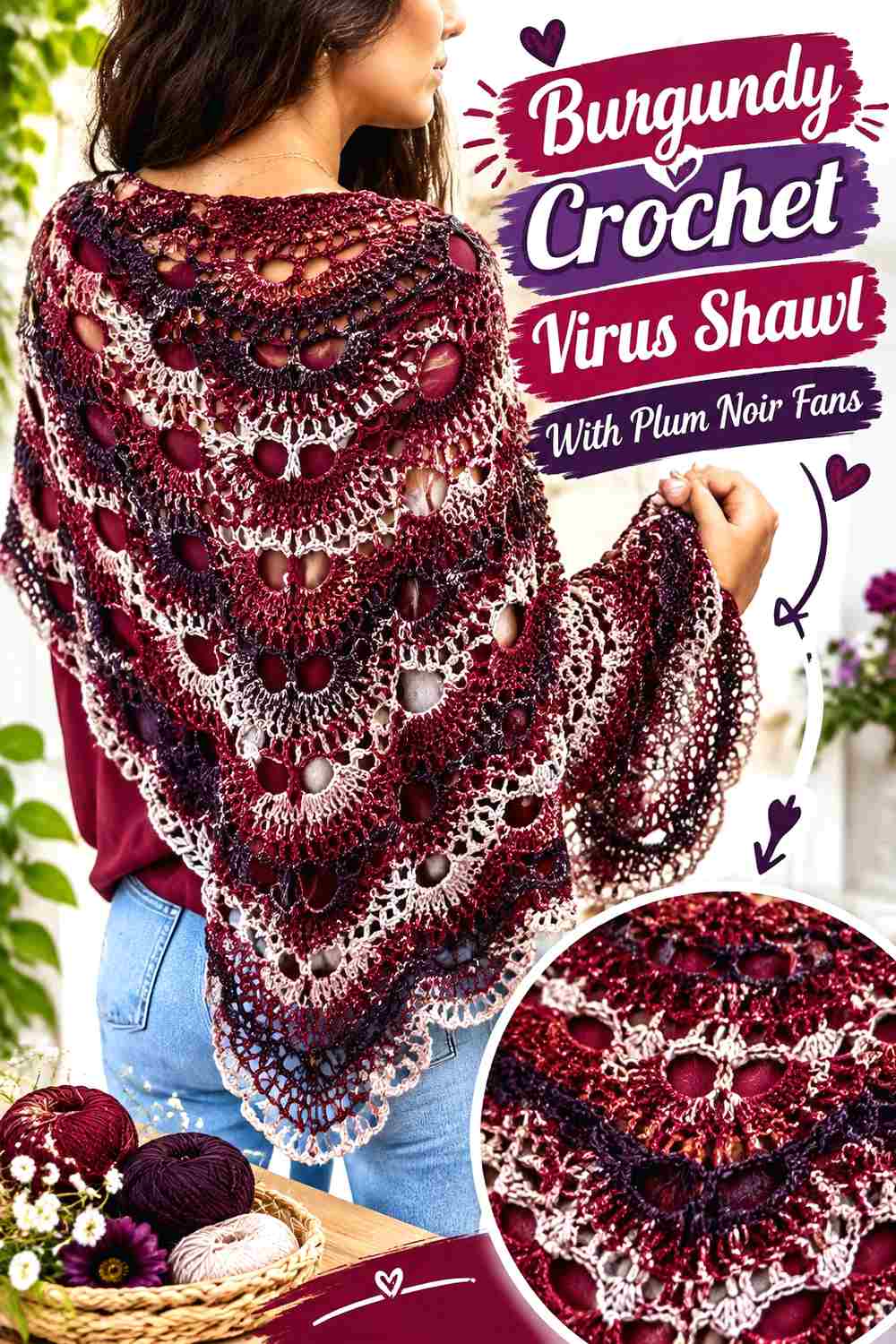
Use Burgundy as the broad background shade and introduce Plum Noir in selected outer fan sections. This reverses the expected dark-edge treatment: the warmer Burgundy remains visible across the largest area, while near-black plum creates depth exactly where the expanding fan pattern becomes more dramatic.
Burgundy Keeps the Crochet Virus Shawl Warmer Across the Main Body
A Burgundy-led shawl gives the openwork a strong wine-toned field without requiring a third color to create variation. Keep several major pattern sections together in Burgundy so the central triangle does not become visually fragmented.
Plum Noir Can Define the Burgundy Crochet Fans Near the Hem
Reserve Plum Noir for the later, larger fan sections or the final scalloped area. Because the darkest shade sits low on the shawl, it acts like an outline around the Burgundy body instead of competing with every openwork repeat.
Creator Credit: The Snugglery
3. Plum Noir And Burgundy Alternating Fan Crochet Shawl
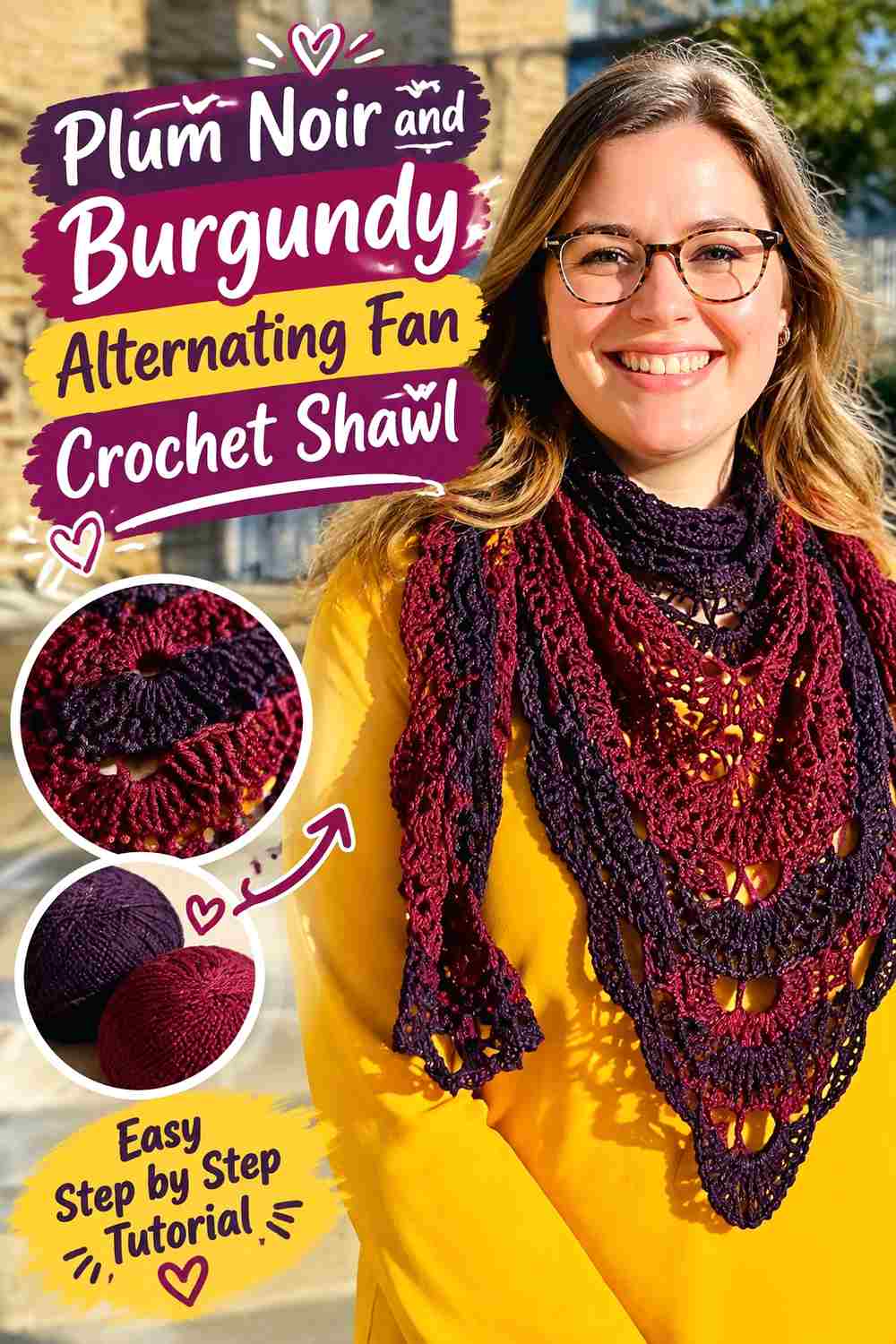
For a more graphic version, alternate wider Plum Noir and Burgundy sections rather than changing color every small row. Broad tonal bands allow both shades to register independently and give the expanding fans a layered appearance.
Plum Noir Bands Need Enough Width to Anchor the Burgundy Fans
A very thin Plum Noir stripe can disappear inside busy lace. Give the darkest sections enough depth to form deliberate bands, especially near the lower half where the shawl becomes wider and individual color sections occupy more visual space.
Burgundy Fans Should Repeat Consistently Against Plum Noir
Keep Burgundy returns predictable rather than scattering them at random intervals. Repetition allows the eye to follow the fan structure from the center toward the scalloped edge and prevents the two dark colors from looking patchy.
Creator Credit: Hobbii
4. Burgundy Crochet Lace Shawl With A Plum Noir Statement Border
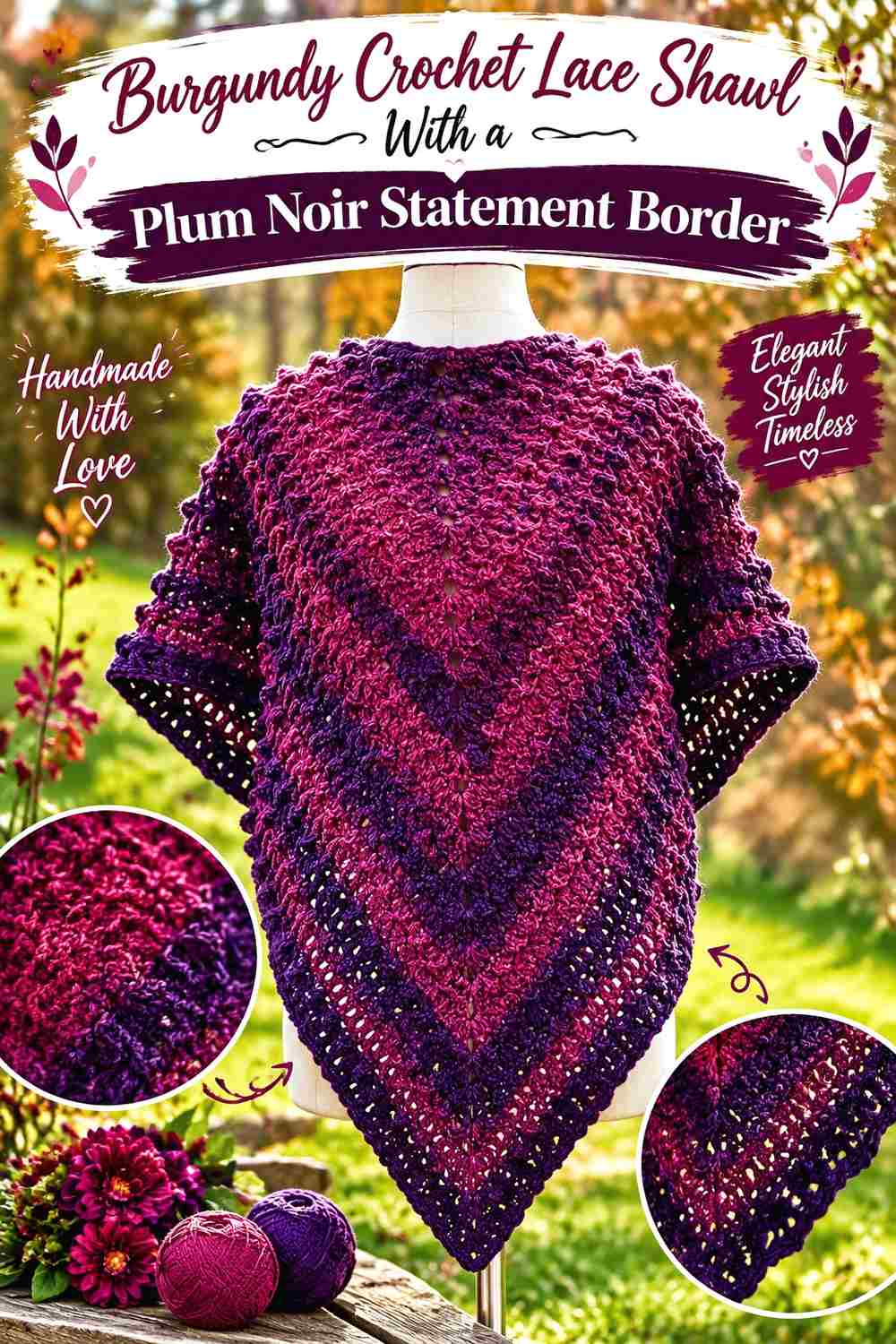
Work the body almost entirely in Burgundy and let one substantial Plum Noir border provide the contrast. This is a useful direction when the lace fabric already contains enough detail and you want the color plan to stay restrained.
Burgundy Lets the Crochet Lace Pattern Stay Continuous
Keeping Burgundy across the body prevents the open spaces from being divided into many dark horizontal bands. The eye can follow the stitch texture first, with the Plum Noir saved for a strong finishing point.
Plum Noir Can Turn the Burgundy Shawl Edge Into a Clear Frame
Use Plum Noir through the scalloped or decorative lower edging rather than as a tiny last row. A slightly deeper border creates enough visual weight to frame the full Burgundy span, especially on a wide wrap.
Creator Credit: Bag-O-Day Crochet
5. Plum Noir Crochet Wrap With Burgundy Pocket And Scallop Accents
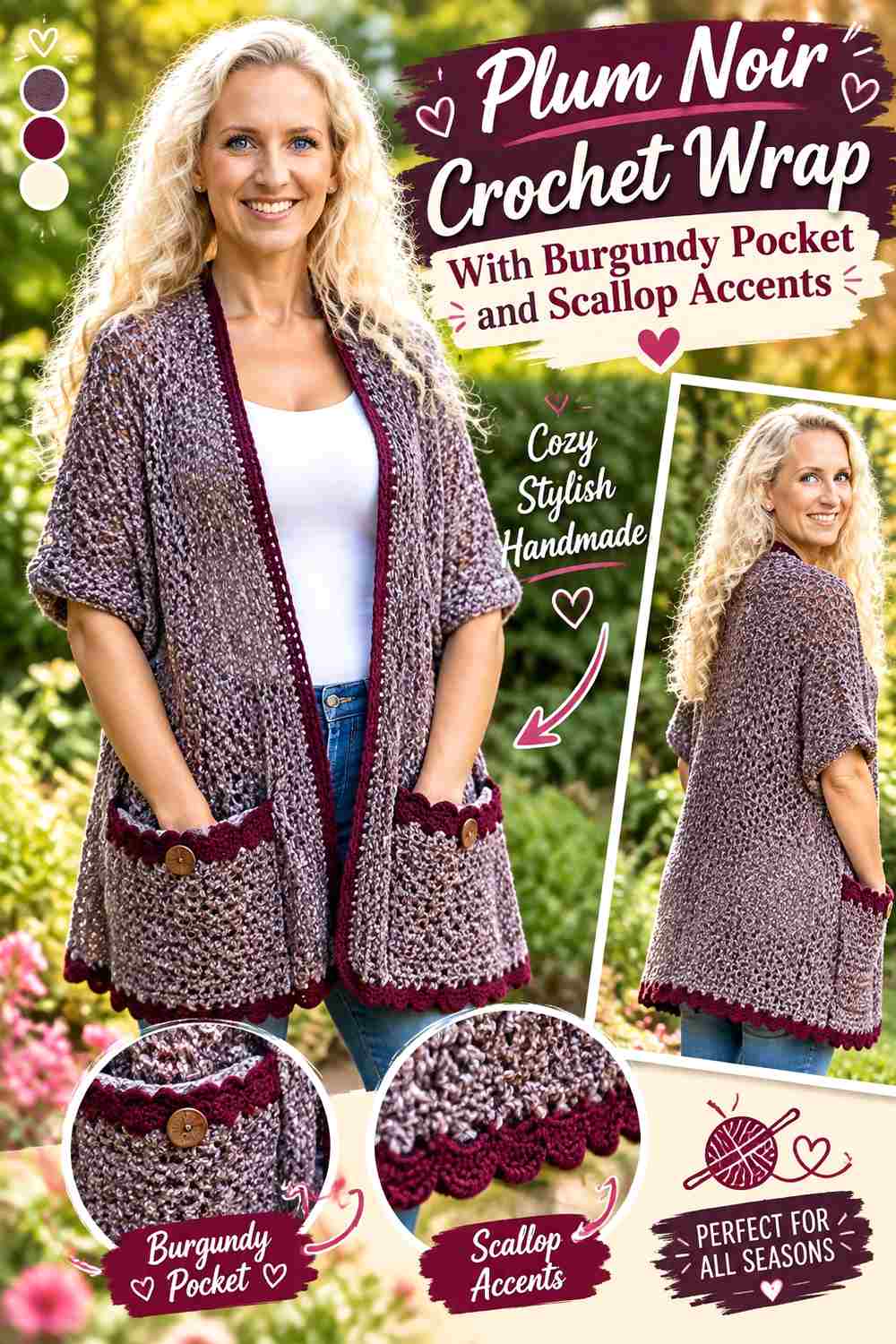
A rectangular or pocket-shawl structure offers different color zones from a triangle. Use Plum Noir along the long main panel and place Burgundy at the ends, around pockets, or through a decorative scalloped finish so the warmer shade appears near the areas most visible when the wrap hangs down.
Plum Noir Keeps the Long Crochet Shawl Panel Cohesive
One dark main field suits a long wrap because constant striping can visually shorten the panel. Plum Noir can carry the center uninterrupted while Burgundy is concentrated at the ends where it has more impact.
Burgundy Can Link the Plum Noir Pockets to the Scalloped Ends
If the shawl includes pockets or strong end sections, repeat Burgundy at both the pocket edge and outer scallops. This connects functional areas with the decorative border and avoids introducing Burgundy only once.
Creator Credit: naztazia
6. Burgundy Shell Crochet Shawl With Plum Noir Outer Scallops
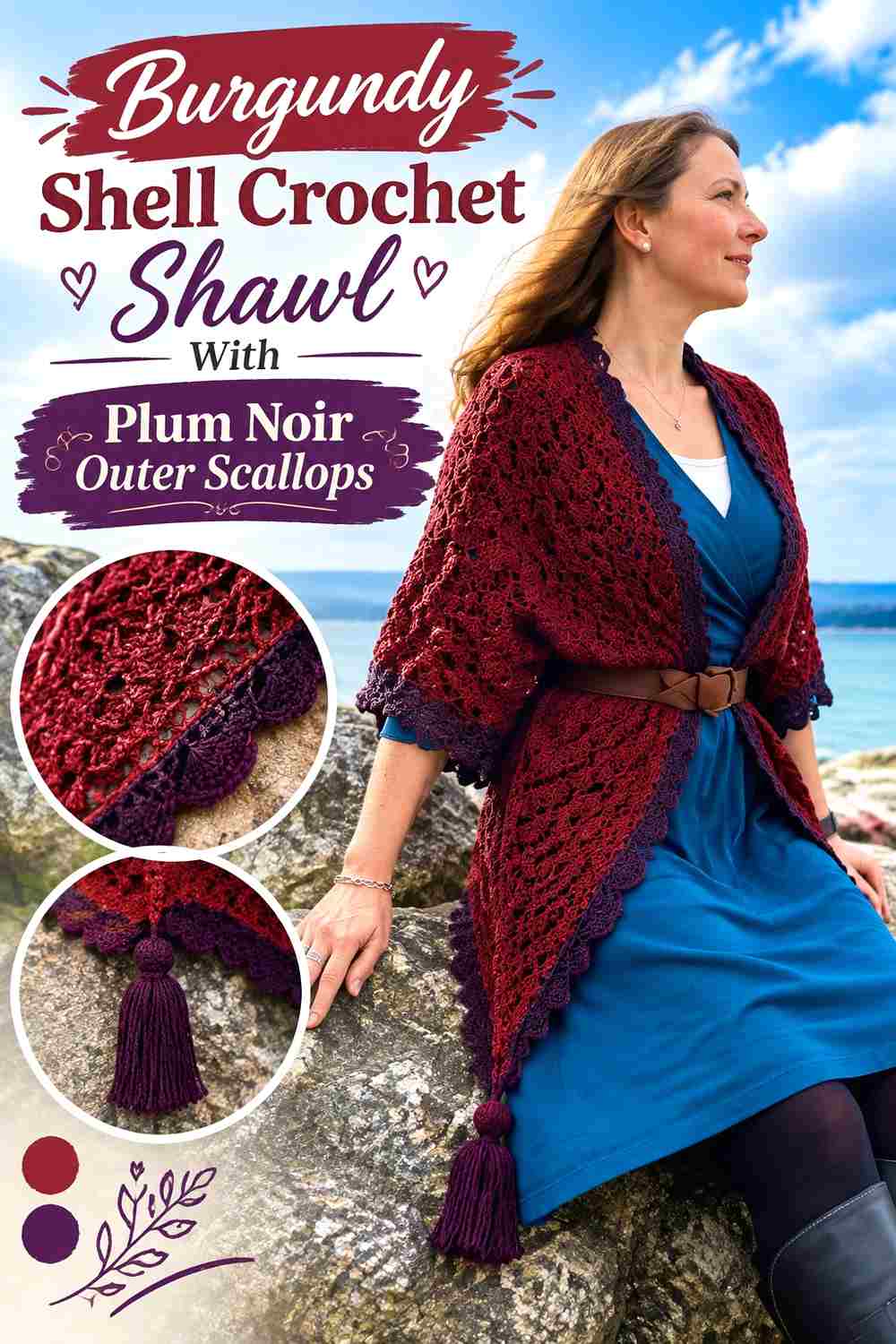
Shell texture is a natural fit for a two-color scalloped plan. Let Burgundy cover the interior shells and shift to Plum Noir only as the shawl reaches its broadest outer curves.
Burgundy Keeps the Crochet Shells Visible Across the Shawl Body
A consistent Burgundy field makes the repeated shell pattern easier to follow than frequent color changes inside each fan. If the yarn has a soft halo or deep saturation, examine a swatch to confirm the raised curves remain visible.
Plum Noir Can Sharpen the Burgundy Shell Silhouette
Work the darkest shade around the final shell edge to create a stronger outline. Plum Noir is most effective here when it traces the scalloped shape continuously instead of appearing in disconnected patches.
Creator Credit: Ophelia Talks Crochet
7. Plum Noir Crochet Triangle Shawl With A Burgundy Gradient Edge
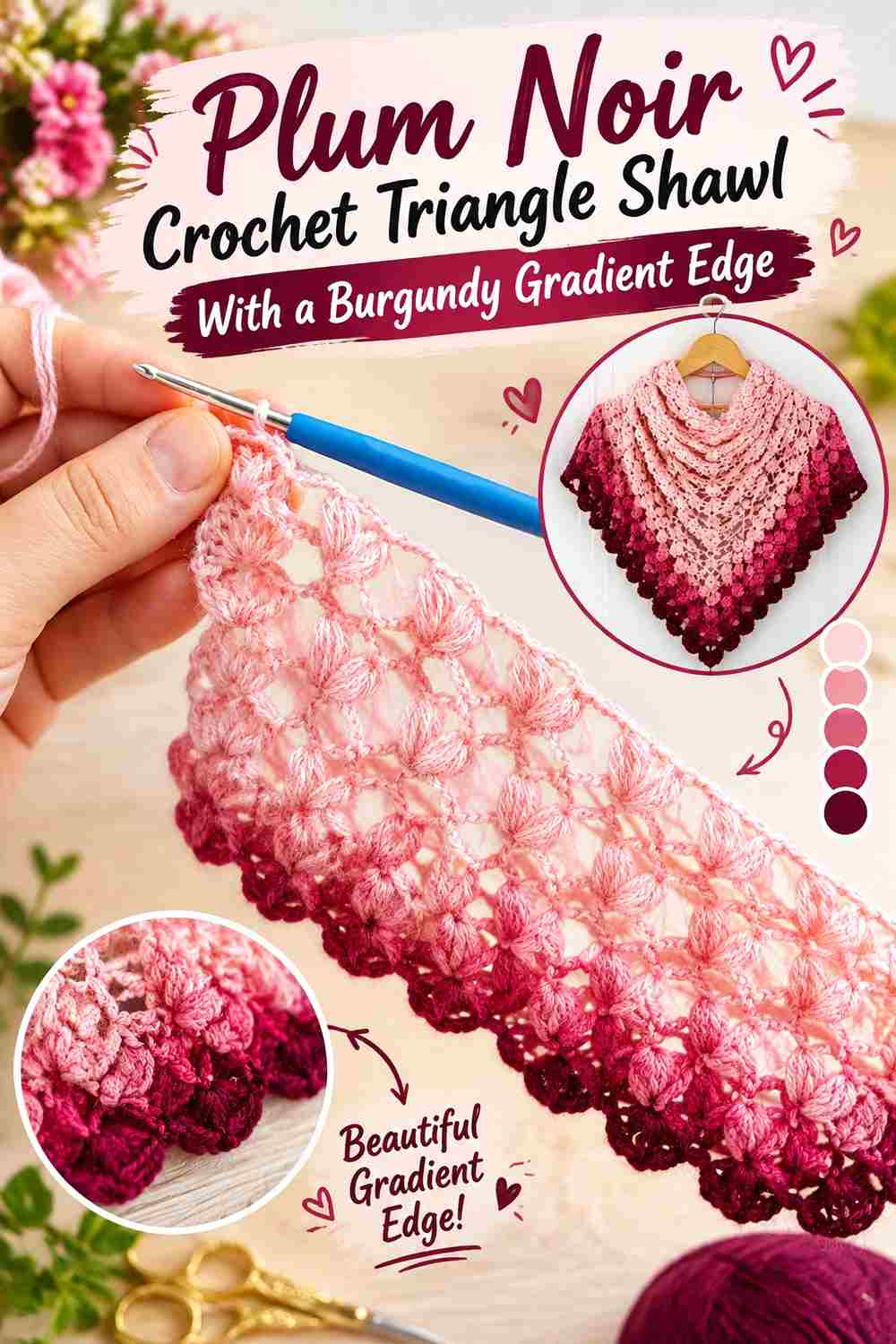
Keep most of the triangle Plum Noir, then gradually increase Burgundy’s visual share as the shawl approaches the hem. This does not require inventing many intermediate colors; the change can come from wider Burgundy sections and narrower Plum Noir returns.
Plum Noir Should Stay Dominant Through the Crochet Triangle Center
The darkest central field gives the shawl a strong focal base and prevents the two colors from competing immediately at the neckline. It also leaves more visual room for Burgundy to become increasingly noticeable below.
Burgundy Can Expand Toward the Plum Noir Scalloped Hem
Start with a narrow Burgundy appearance and allow later Burgundy sections to become more substantial. The progression makes the color change feel planned and pulls attention toward the scalloped bottom edge.
Creator Credit: Hobisever
8. Burgundy Lace Crochet Shawl With Plum Noir Framing

Use Burgundy through an airy triangle and place Plum Noir along the side edges as well as the lower scallops. Framing more than one edge makes the dark shade part of the full silhouette instead of treating it as a simple stripe.
Burgundy Needs Enough Open Space to Show the Crochet Lace
When Burgundy fills the lace body, avoid interrupting every repeat with Plum Noir. Large continuous areas allow the openwork pattern to remain visible and keep the shawl from looking overly segmented.
Plum Noir Can Outline the Burgundy Shawl on More Than One Edge
A Plum Noir side finish can connect naturally to the lower scalloped border. Check that the edge does not become visually heavier than the lace center; the goal is definition, not a frame so wide that it dominates the entire shawl.
Creator Credit: Sirin’s Crochet
9. Plum Noir Crochet Shawl With Narrow Burgundy Scalloped Bands
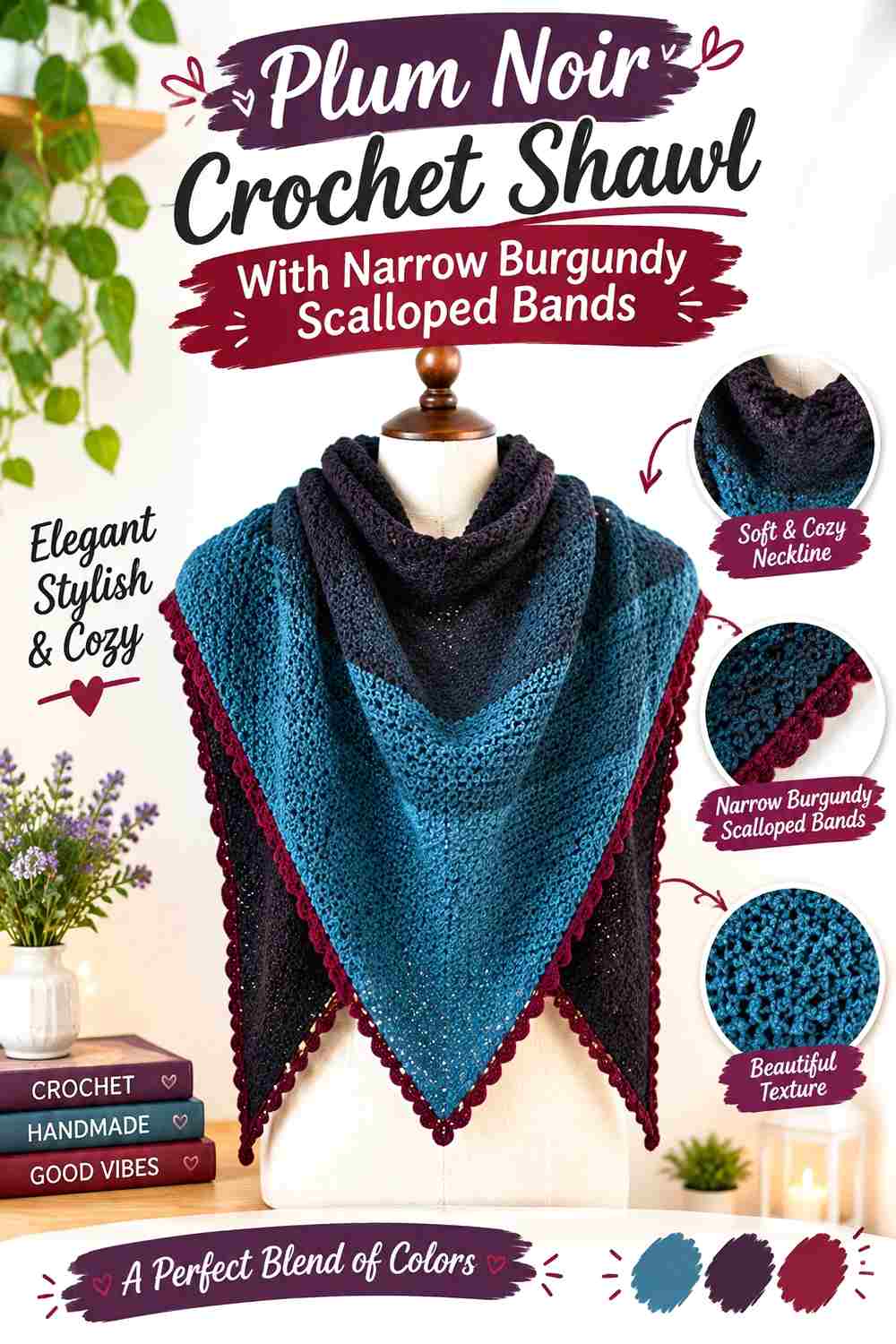
This version keeps the palette dark and subtle. Work most of the shawl in Plum Noir and add narrow Burgundy bands only where the fabric begins a shell, openwork, or decorative transition.
Plum Noir Makes Small Burgundy Crochet Bands More Noticeable
Because the main field remains consistently dark, even a relatively narrow Burgundy section has a purpose. Place those bands at visible structural changes so they do more than create arbitrary stripes.
Burgundy Should Repeat Before the Final Plum Noir Scallops
Use Burgundy at least twice before the final dark edge so the warmer shade feels integrated. One isolated Burgundy stripe can look accidental, while controlled repetition connects the middle of the shawl with its finishing section.
Creator Credit: Wilma Westenberg
10. Burgundy Shell Crochet Shawl With Plum Noir Shell Tips
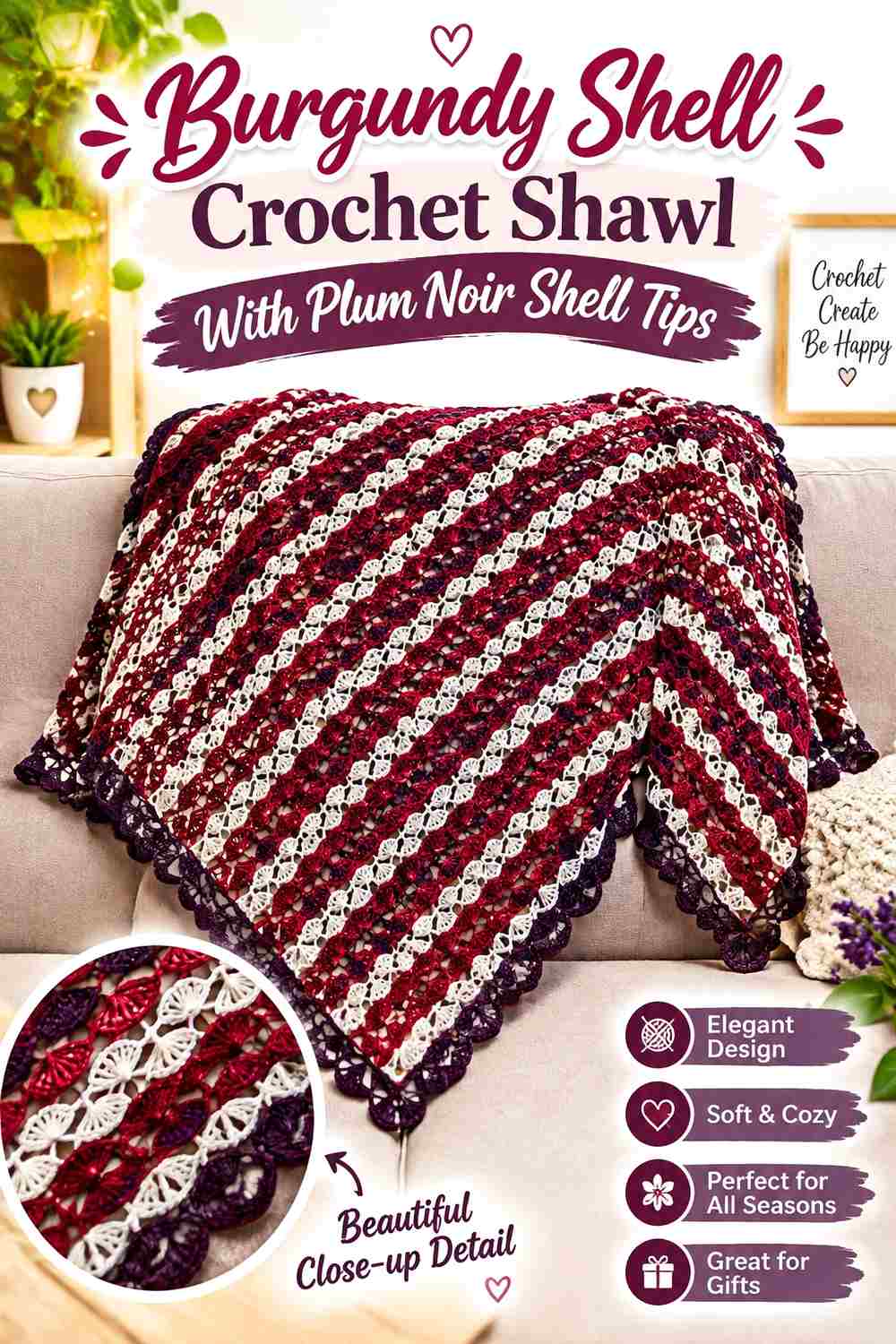
Instead of changing the entire border, keep Burgundy through most of each shell and add Plum Noir only to the outermost part of the scalloped design. This creates a finer level of contrast for readers who want the palette integrated into the stitch silhouette.
Burgundy Should Carry Most of Each Crochet Shell
Let Burgundy occupy the larger portion of the fan so the warm wine color remains the dominant visual field. Frequent Plum Noir changes too early inside every shell can make the texture look busier than necessary.
Plum Noir Can Trace the Burgundy Shell Tips
Use the deepest color as a finishing outline where the fans reach their outer edge. This works best when the Plum Noir line is consistent from scallop to scallop so the dark trim follows the geometry rather than interrupting it.
Creator Credit: Kedija idris
11. Plum Noir And Burgundy Picot Scallop Crochet Shawl
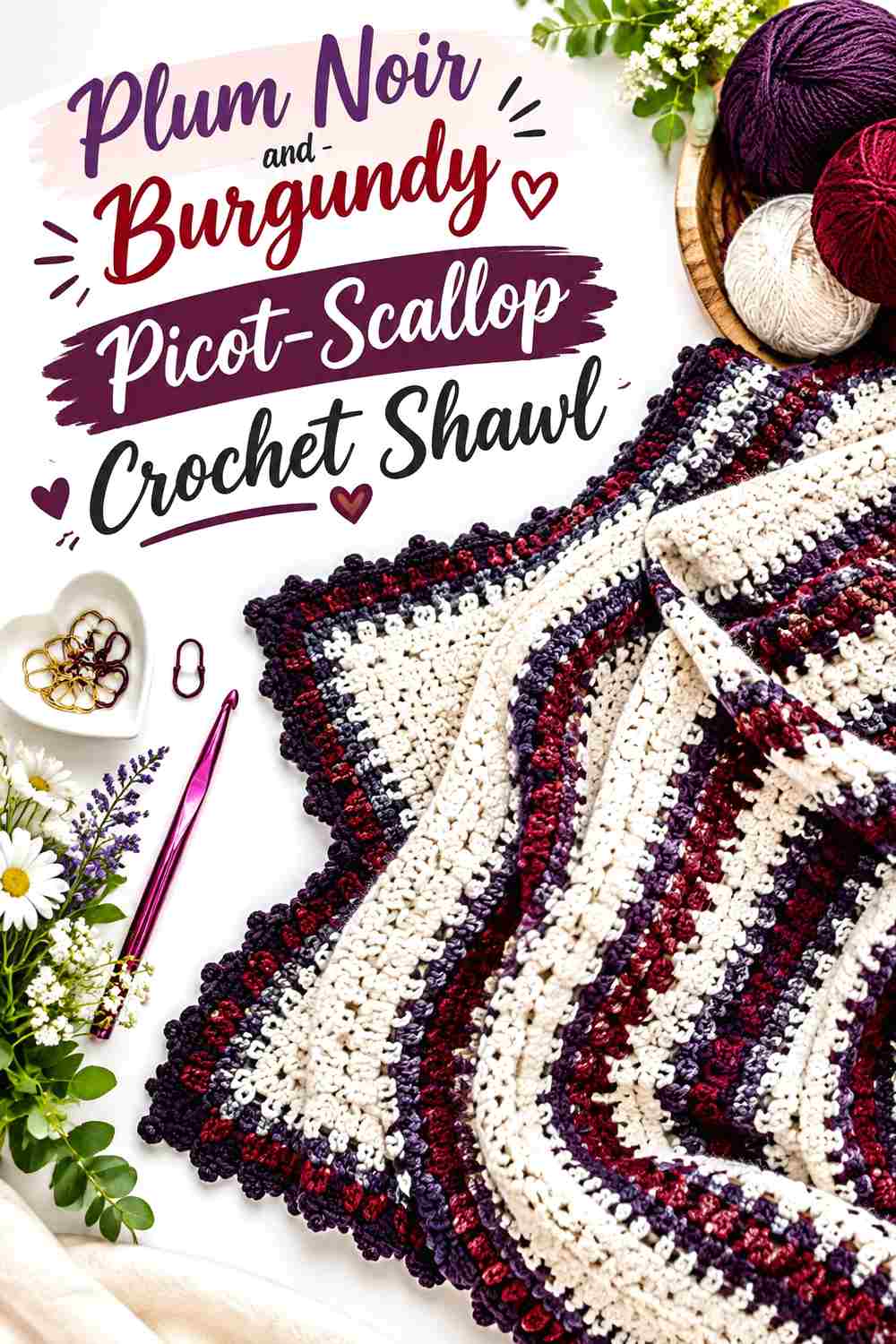
Combine a relatively solid two-color body with a more detailed edge in which picots or small points support the scalloped appearance. Plum Noir can carry the main triangle while Burgundy concentrates around the decorative perimeter.
Plum Noir Gives the Burgundy Picot Edge a Dark Background
A deep body makes the smaller Burgundy details easier to identify around the perimeter. Keep the interior color plan simpler so the eye is not asked to track small accents both inside the shawl and around its edge.
Burgundy Picots Need Clear Contrast Against Plum Noir
Tiny details are the first elements to disappear when two colors are too close in value. If your Burgundy and Plum Noir look almost identical from a distance, lighten the Burgundy slightly rather than adding more and more rows in an attempt to make the edge noticeable.
Creator Credit: crochetwellbeing
12. Burgundy Crochet Lace Shawl With A Plum Noir Edging
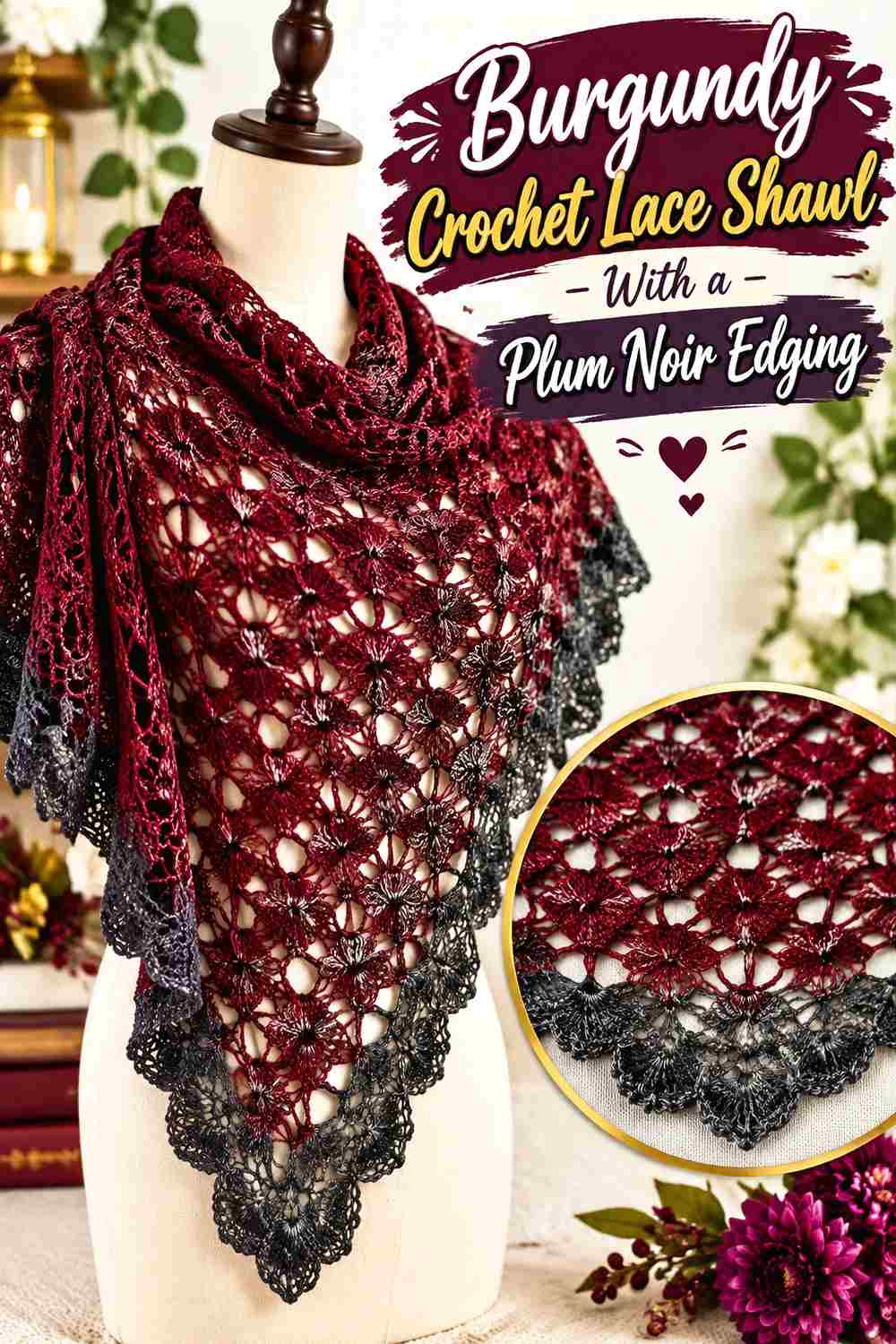
A dedicated edging gives you a clean place to separate the colors. Crochet the lace body in Burgundy, then use Plum Noir only when the main shawl is complete and the border begins.
Burgundy Keeps the Crochet Lace Body Visually Unified
A single Burgundy body is especially useful when the lace contains several stitch heights or open spaces. The consistent color lets those structural differences provide the pattern instead of layering additional color changes over them.
Plum Noir Makes the Burgundy Crochet Edging Read as a Finish
Because the darkest shade is reserved for the end, the viewer immediately sees where the main fabric stops. If the border is highly detailed, avoid adding extra Plum Noir stripes above it that might weaken that visual separation.
Creator Credit: Knit and Crochet Design
13. Plum Noir Crochet Triangle Shawl With Burgundy Corner Scallops
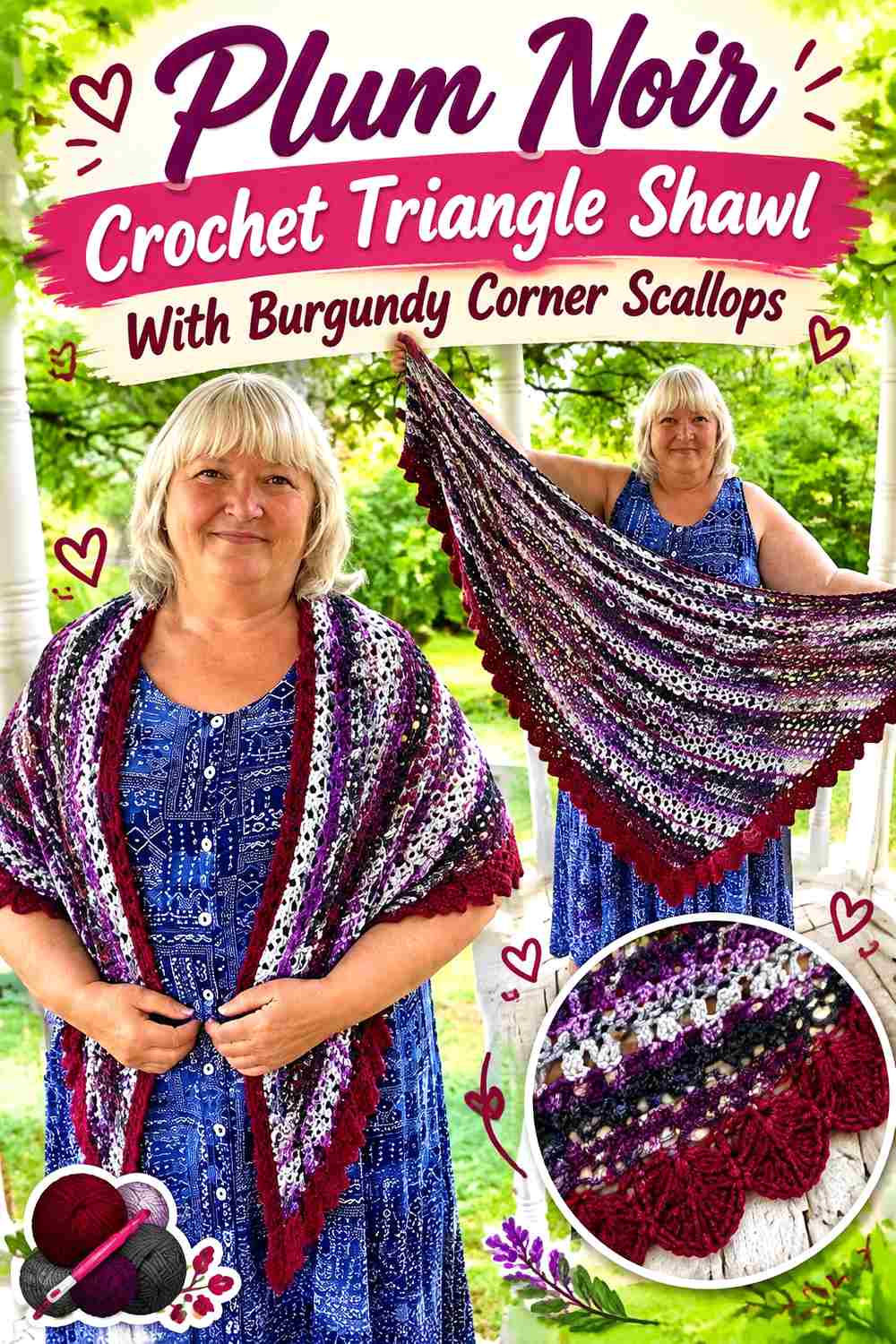
Keep the lower edge mostly Plum Noir but bring Burgundy into the center point and outer corners. This creates localized accents instead of a full-width contrasting border.
Plum Noir Preserves a Continuous Crochet Triangle Silhouette
Using Plum Noir through most of the perimeter keeps the shawl dark and unified. The border remains connected to the main body rather than looking like a separate color-block section.
Burgundy Can Emphasize the Plum Noir Shawl Corners
Use Burgundy where the eye naturally pauses—the central point and outer tips. Repeating the accent at these locations creates balance without requiring Burgundy across every scallop.
Creator Credit: Creative Grandma
14. Burgundy Crochet Lace Edge Shawl With Plum Noir Body Panels
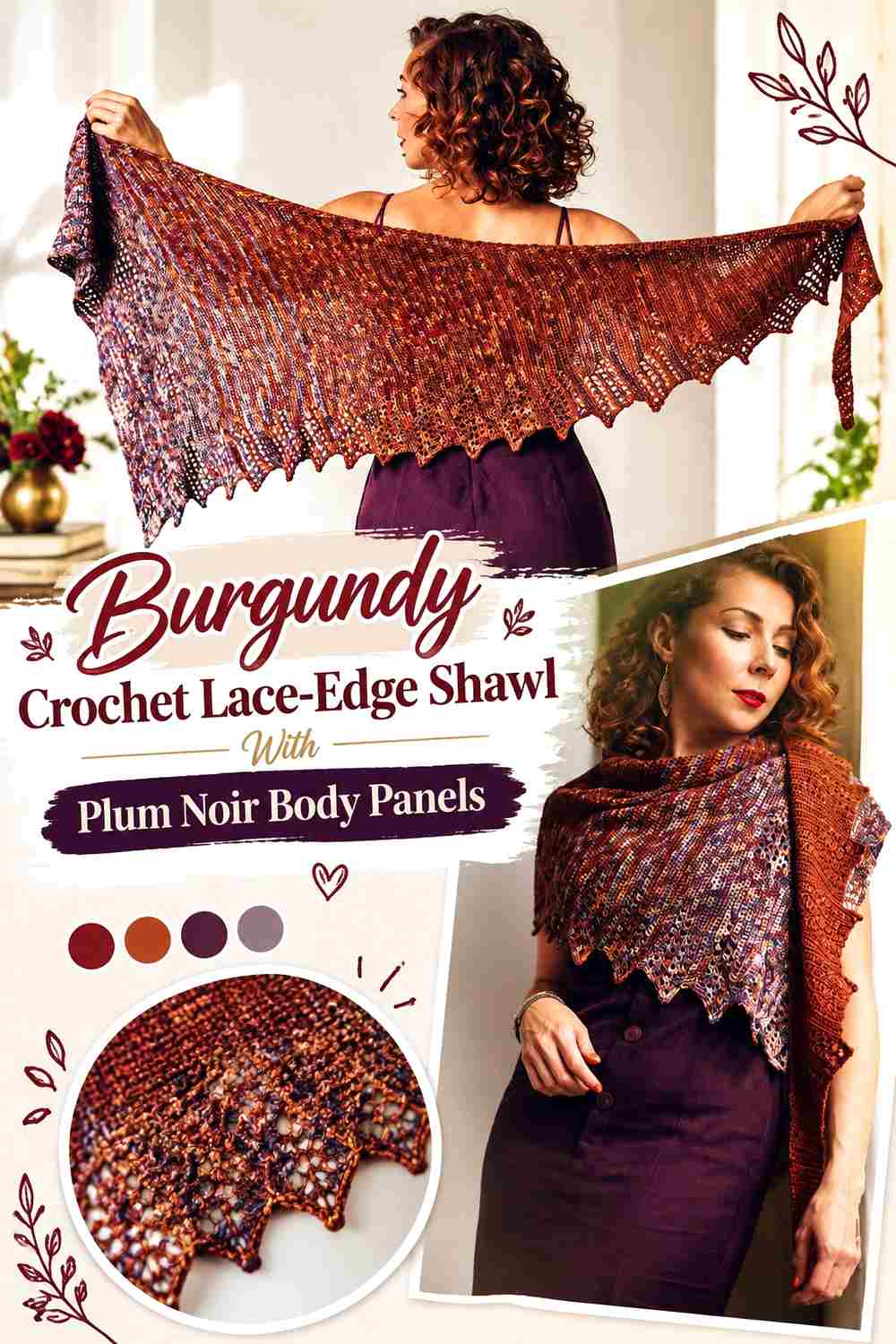
Let Plum Noir create denser body sections and use Burgundy wherever the design opens into lace. The result makes color and texture change together, which is more deliberate than alternating shades on arbitrary rows.
Plum Noir Works Well Through the Denser Crochet Shawl Sections
The deepest shade can make solid areas feel more substantial and visually separate them from open lace. Keep those Plum Noir blocks large enough to register as structural sections.
Burgundy Can Lighten the Plum Noir Lace Transition
Move into Burgundy as the fabric becomes more open or the decorative edging begins. A moderately lighter Burgundy helps the negative space and scalloped border remain visible instead of allowing the entire lower shawl to merge into one dark mass.
Creator Credit: Expression Fiber Arts
15. Plum Noir Crochet Triangle Shawl With Burgundy Openwork Scallops
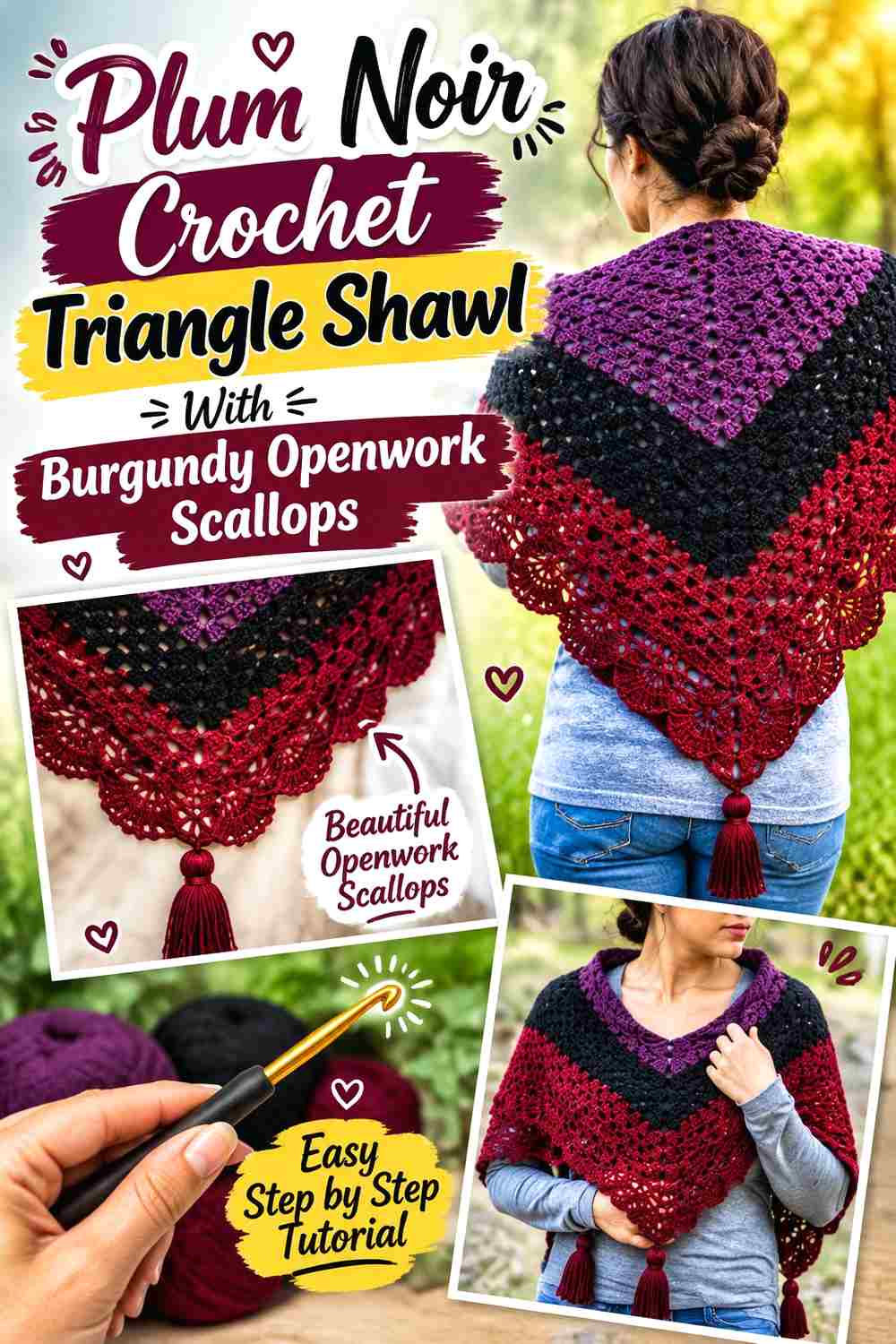
A simple triangle provides a relatively quiet base for a more elaborate edge. Use Plum Noir through most of the main shawl and let Burgundy introduce the openwork and scalloped finish.
Plum Noir Keeps the Crochet Triangle Body Understated
A consistent dark body gives the shawl enough visual calm to support a decorative lower section. This is useful when the edge contains both open spaces and curved elements that should remain the primary feature.
Burgundy Can Separate the Openwork From the Plum Noir Body
Begin Burgundy where the fabric visibly becomes more decorative rather than several rows earlier. Matching the color transition to the change in texture makes the border appear intentionally attached to the main field.
Creator Credit: Yay For Yarn
16. Burgundy Moss Stitch Crochet Shawl With Plum Noir Scalloped Trim
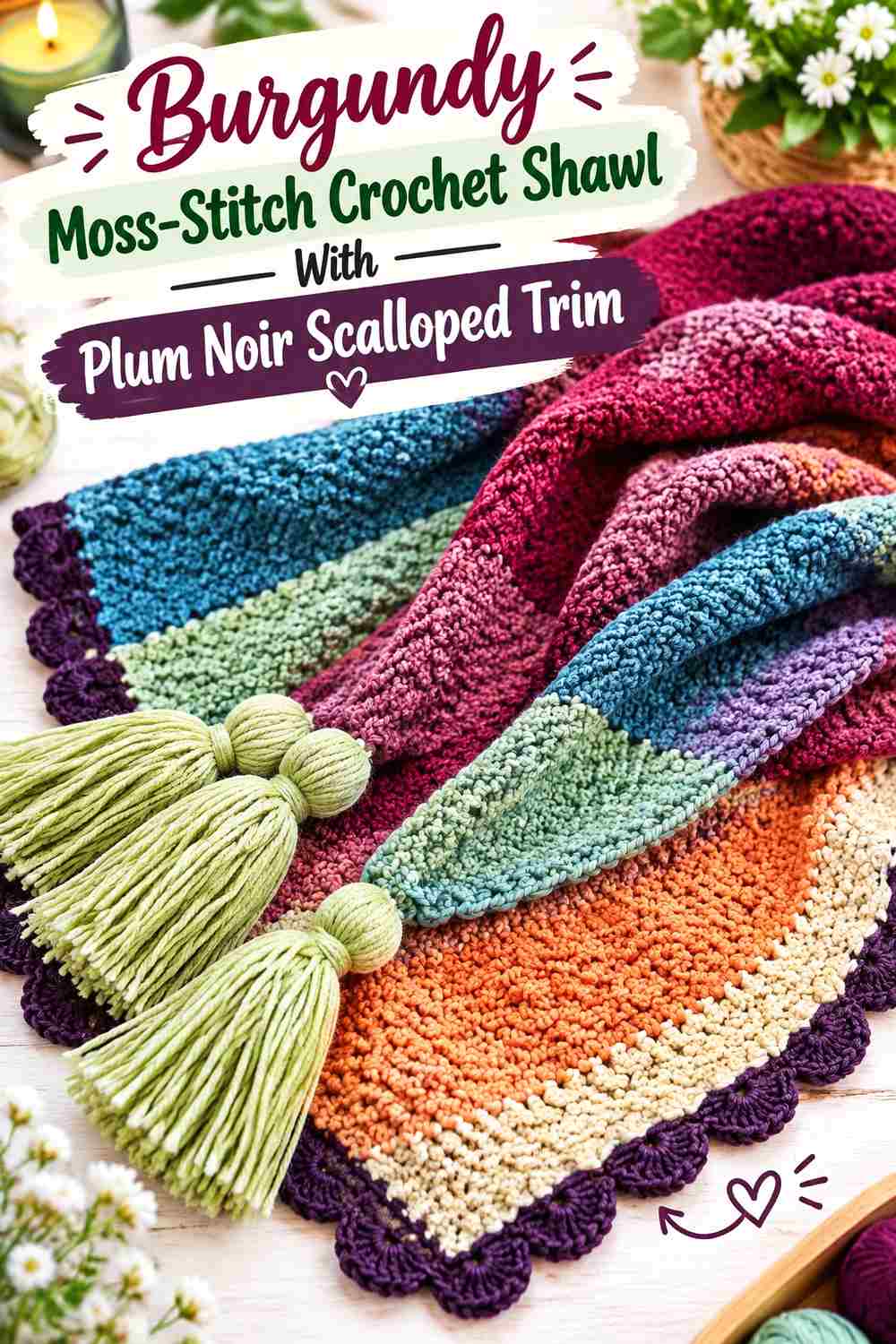
A tighter, quieter body texture creates a strong contrast with a more decorative lower edge. Let Burgundy cover the moss-stitch field and introduce Plum Noir only in the scalloped finish.
Burgundy Gives the Crochet Moss-Stitch Body an Even Color Field
Dense small-scale texture benefits from color restraint. Keeping Burgundy consistent lets the surface remain calm rather than forcing the viewer to interpret both frequent color changes and a compact stitch pattern.
Plum Noir Can Add a Strong Finish to the Burgundy Shawl
Because the main body is relatively uniform, a dark curved edge has more impact. Keep the Plum Noir scallops proportional to the body; an extremely deep border can visually shorten a wide triangle.
Creator Credit: Rich Textures Crochet
17. Plum Noir Spider Stitch Crochet Shawl With Burgundy Edge Fans

Spider-style openwork already produces a repeating lace rhythm, so use Plum Noir continuously through most of the body and let Burgundy appear only as the edge becomes more fan-like.
Plum Noir Lets the Crochet Spider Stitch Create Its Own Pattern
The internal negative space supplies visual movement without needing numerous color changes. A dark Plum Noir field also gives the shawl a consistent background when worn over lighter clothing.
Burgundy Fans Can Break Up the Plum Noir Lower Edge
Introduce Burgundy in the final decorative section to prevent the lower lace from disappearing into the same dark tone as the body. Wider Burgundy fans will usually show the color difference more effectively than isolated single-row accents.
Creator Credit: Fiber Spider
18. Burgundy Crescent Crochet Shawl With Plum Noir Curved Scallops
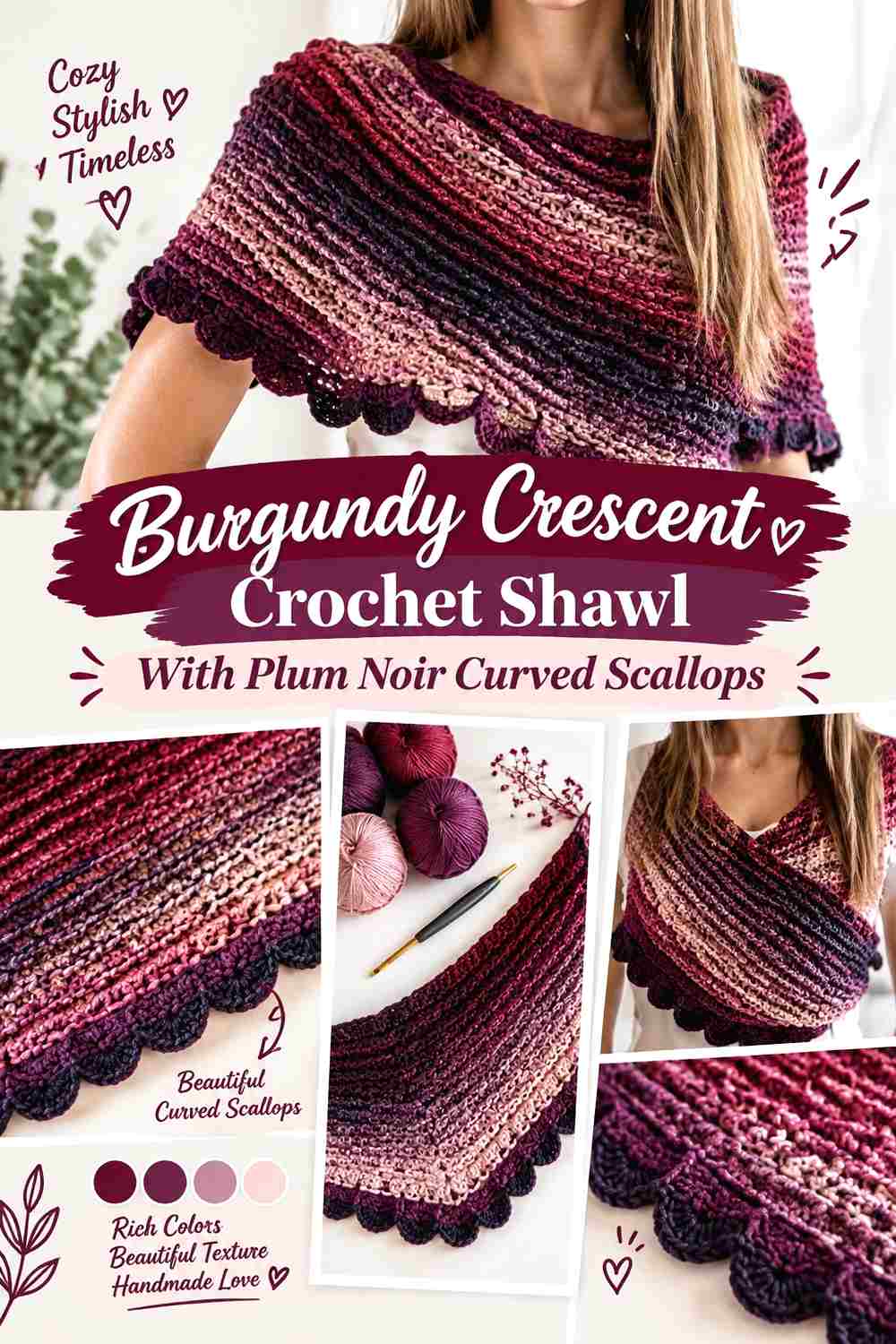
A curved shawl changes how the border is seen because the lower edge sweeps around the body rather than forming one central triangle point. Use Burgundy throughout the crescent and let Plum Noir follow that curved perimeter.
Burgundy Keeps the Crochet Crescent Shape Easy to Read
One dominant color allows the unusual curved silhouette to stay clear. Avoid breaking the body into too many equal Plum Noir sections, which can distract from the line created by the shaping.
Plum Noir Can Follow the Burgundy Crochet Curve
A continuous Plum Noir scalloped edge reinforces the direction of the crescent. If you add additional dark accents, keep them close to the perimeter so the color strategy continues to emphasize the shawl’s curved outline.
Creator Credit: B.Hooked Crochet
19. Plum Noir Rectangular Crochet Shawl With Burgundy Luxe Border
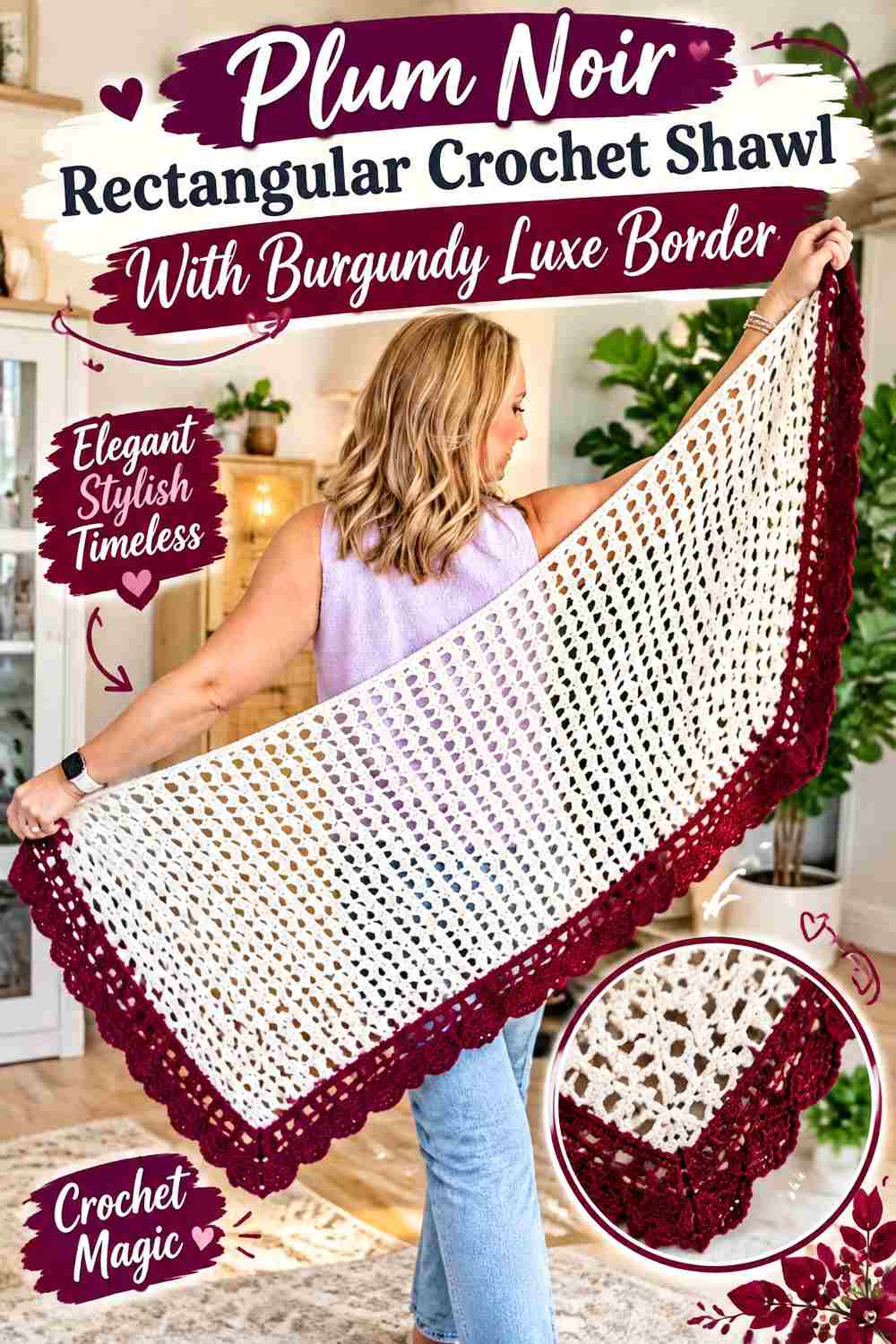
Finish the collection with a rectangular lace shawl where the border, rather than a triangle point, becomes the main color event. Plum Noir can cover the long central panel while Burgundy surrounds the piece with a repeated decorative finish.
Plum Noir Gives the Rectangular Crochet Shawl a Long Dark Center
Keeping one color through the full center helps maintain visual length and gives the repeated lace a consistent background. It also makes the later Burgundy border look clearly separate from the main panel.
Burgundy Can Surround the Plum Noir Shawl With a Scalloped Frame
Carry Burgundy around the ends and long edges when the construction supports a full border. This creates a stronger frame than coloring only the short ends and helps the warm shade remain visible regardless of how the shawl is draped.
Creator Credit: Bella Coco Crochet
Comparing the Plum Noir and Burgundy Shawl Directions
Choose a Plum Noir-led design when you want the shawl to remain predominantly dark and use Burgundy mainly to expose the scallops, lace transitions, or edge geometry. Ideas 1, 7, 9, 11, 15, 17, and 19 follow that direction particularly clearly.
A Burgundy-led shawl gives the warmer wine tone more surface area and uses Plum Noir as an outline, shell tip, border, or framing color. That approach works well when you want the scalloped edge to look visibly deeper than the main body.
The more intricate the lace, the less color switching you usually need. Large shells can support wider blocks of both shades, while small picots and delicate openwork often benefit from one dominant color and one clearly separated finishing color.
Conclusion
Plum Noir and Burgundy offer more range in a crochet scalloped shawl than a simple dark-purple-and-red combination might suggest. Their roles can be reversed, concentrated at the border, expanded through broad fan sections, or linked directly to changes between solid and openwork crochet.
For the darkest effect, keep Plum Noir across most of the body and allow Burgundy to reveal only the lower scallops. For a warmer shawl, let Burgundy dominate and use Plum Noir to trace the edge. If you want both colors to carry similar importance, give them substantial sections rather than alternating tiny rows that may visually merge.
Whichever direction you choose, check the two yarns together before committing to small lace details and use the original tutorial for the exact construction of the shawl.
Frequently Asked Questions
Do Plum Noir and Burgundy have enough contrast for a crochet scalloped shawl?
They can, but the answer depends on the actual yarn shades you choose. Two dark colors can be noticeably different in hue yet still have similar lightness. Compare them side by side and in grayscale if the scalloped edge needs strong visual definition.
Should Plum Noir or Burgundy be used for the crochet scalloped border?
Use Plum Noir when you want a deep outline around a warmer Burgundy body. Use Burgundy when the shawl is mostly Plum Noir and you want the scallops to be easier to distinguish from the main fabric. The border color should support the visual hierarchy you want rather than follow a fixed rule.
How can I stop Plum Noir and Burgundy crochet lace from looking too dark?
Increase the visual share of the lighter of your two shades and avoid placing the darkest color inside every small lace repeat. Reserving Plum Noir for the frame or selected bands can leave more Burgundy around the openwork.
Can I use several different Burgundy shades with Plum Noir?
Yes, but keep their roles clear. A darker Burgundy can bridge the transition into Plum Noir, while a moderately lighter Burgundy can improve visibility around scallops. Too many closely related wine shades can make the intended two-color hierarchy harder to see.
Where should Burgundy go on a mostly Plum Noir crochet shawl?
Useful locations include the outer scallops, a lower openwork section, selected shell bands, the center point, or the final border. Repeating Burgundy in more than one intentional location can help it feel integrated rather than added at the last moment.
Will Plum Noir hide crochet shell and scallop texture?
A very dark yarn can make subtle texture harder to see under some lighting, especially when the stitch surface is dense. If the shell shape is an important feature, place Burgundy around the most detailed areas or check a Plum Noir swatch before committing to the whole shawl.
Can I add a third color to a Plum Noir and Burgundy scalloped shawl?
You can, particularly if the two main colors need more separation. A small amount of muted rose, soft taupe, gray, or another restrained neutral can act as a divider, but keep it limited if you want the shawl to remain recognizably Plum Noir and Burgundy.