Turquoise and cranberry give a crochet head scarf enough contrast to make true color blocking visible without needing a neutral between them. Turquoise can make openwork and lighter-looking sections easier to notice, while cranberry provides a deeper visual anchor around the crown, lower point, or ties.
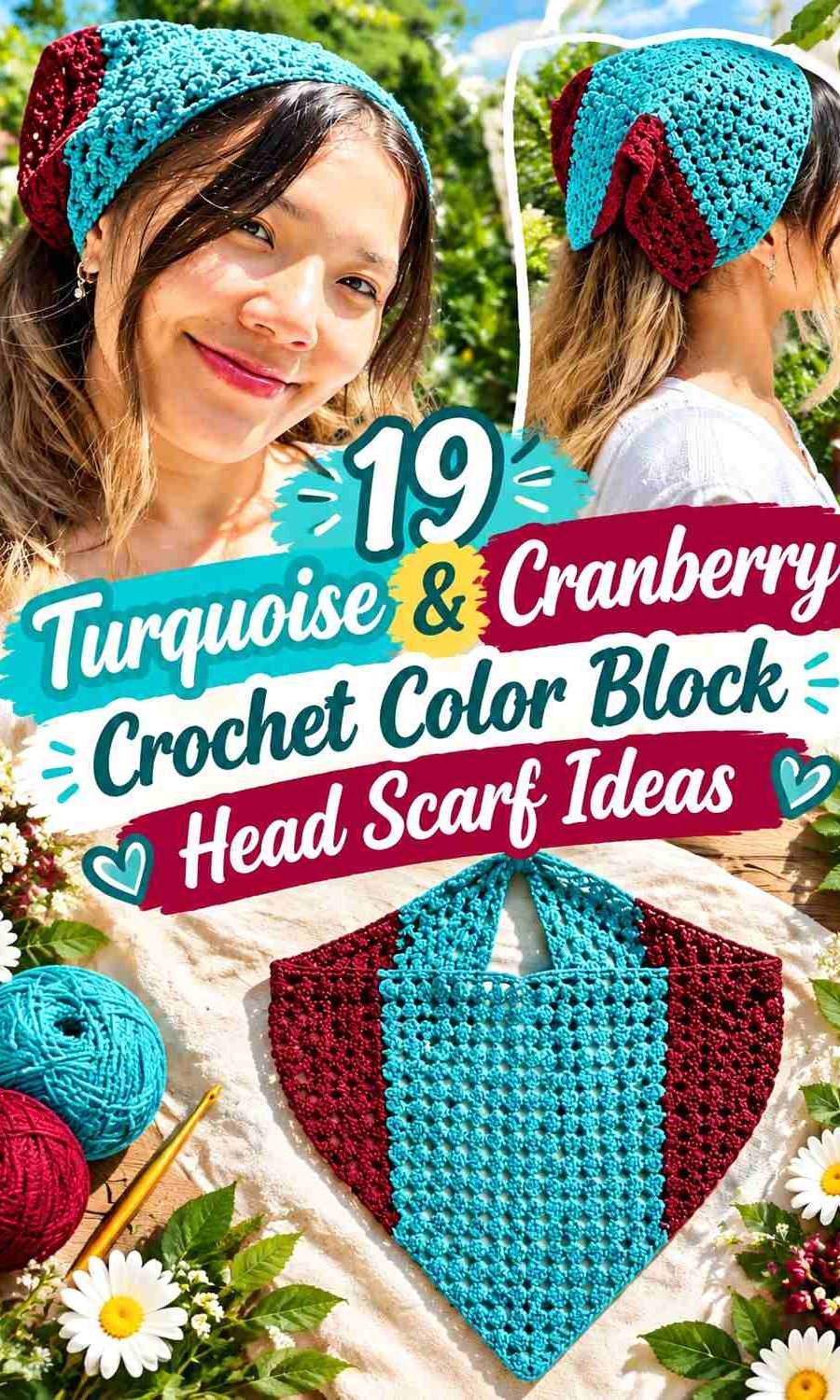
For a head scarf, the biggest color decision is block placement. A turquoise center with cranberry sides directs attention toward the middle of the triangle, while a cranberry crown and turquoise lower block changes what is most visible from behind. Broad side panels, diagonal sections, granny motifs, borders, and ties can all create color blocks without reconstructing the underlying crochet pattern.
These 19 ideas focus on how turquoise and cranberry can divide the actual head-scarf surface in useful, visibly different ways.
Quick List
- Turquoise Center And Cranberry Side Block Crochet Head Scarf
- Cranberry Crown And Turquoise Lower Block Crochet Head Scarf
- Turquoise And Cranberry Diagonal Crochet Head Scarf
- Turquoise Granny Crochet Head Scarf With Cranberry Border Blocks
- Cranberry Crochet Head Scarf With Turquoise Corner Blocks
- Turquoise Mesh Crochet Head Scarf With Cranberry Frame
- Turquoise And Cranberry Three Panel Crochet Head Scarf
- Cranberry Triangle Crochet Head Scarf With Turquoise Ties
- Turquoise Crochet Head Scarf With Cranberry Picot Block
- Cranberry And Turquoise Granny Square Crochet Head Scarf
- Turquoise Crochet Head Scarf With Cranberry Lower Point
- Cranberry Mesh Crochet Head Scarf With Turquoise Center Block
- Turquoise Daisy Crochet Head Scarf With Cranberry Connecting Blocks
- Cranberry Floral Crochet Head Scarf With Turquoise Side Panels
- Turquoise And Cranberry Narrow Stripe Color Block Crochet Head Scarf
- Turquoise Crochet Kerchief With Cranberry Wide Border
- Cranberry Crochet Head Scarf With Turquoise Upper Band
- Turquoise And Cranberry Split Triangle Crochet Head Scarf
- Turquoise Crown Crochet Head Scarf With Cranberry Deep Triangle Block
Give Turquoise and Cranberry Unequal Color-Block Roles
Color blocking becomes easier to read when one shade covers a noticeably larger area. A 60/40-style visual balance does not need to be measured mathematically; the goal is simply to avoid dividing every tiny stitch group equally between turquoise and cranberry.
For example, turquoise can cover most of the triangle while cranberry forms one strong side panel and the ties. The scarf still reads as a two-color design, but the eye can immediately tell which color leads.
Check Turquoise and Cranberry Blocks While the Scarf Is Worn
A triangular head scarf changes shape when it curves around the crown and ties at the back. A block that looks broad on a flat table may become a narrow strip once part of it wraps around the side of the head.
Pin or loosely position the developing scarf before committing to a large color transition. This is especially useful for side blocks, center wedges, and lower sections that may fold beneath the tied corners.
Use Borders to Connect Turquoise and Cranberry Blocks
A border can either unify the color blocks or make their separation stronger. Turquoise edging around a scarf with several cranberry sections pulls the design back toward turquoise, while a cranberry frame gives even relatively small dark sections more visual weight.
The ties can reinforce that decision. Matching the border and ties creates a continuous outer frame; using the dominant body color for the ties keeps the border from becoming too visually heavy.
1. Turquoise Center And Cranberry Side Block Crochet Head Scarf
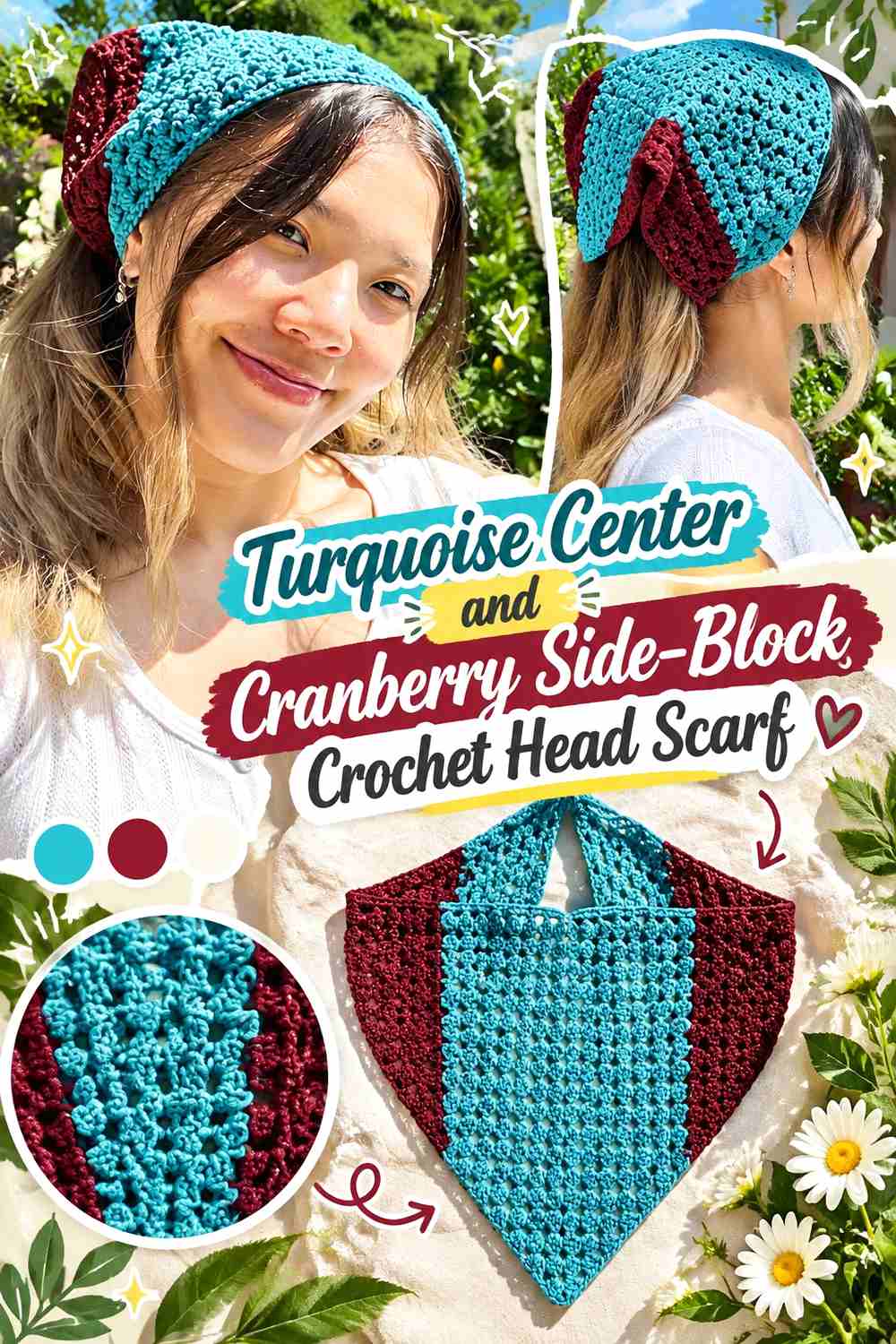
This arrangement gives turquoise the central visual position while cranberry occupies the two side sections. When worn, the turquoise block remains most visible from the back, while cranberry wraps toward the sides and ties.
Turquoise Should Stay Wide Enough Through the Crochet Center
Keep the turquoise section broad enough that it does not collapse into a narrow stripe once the scarf curves around the head.
A center block works best when it reads as a genuine panel rather than a few isolated rows surrounded by cranberry.
Cranberry Side Blocks Can Frame the Turquoise Head Scarf
Use cranberry symmetrically along both sides if you want a balanced color-block effect. The deeper shade creates a clear outer boundary around the brighter turquoise center.
Matching cranberry ties can extend those side blocks beyond the triangular scarf itself.
Creator Credit: VivCrochets
2. Cranberry Crown And Turquoise Lower Block Crochet Head Scarf
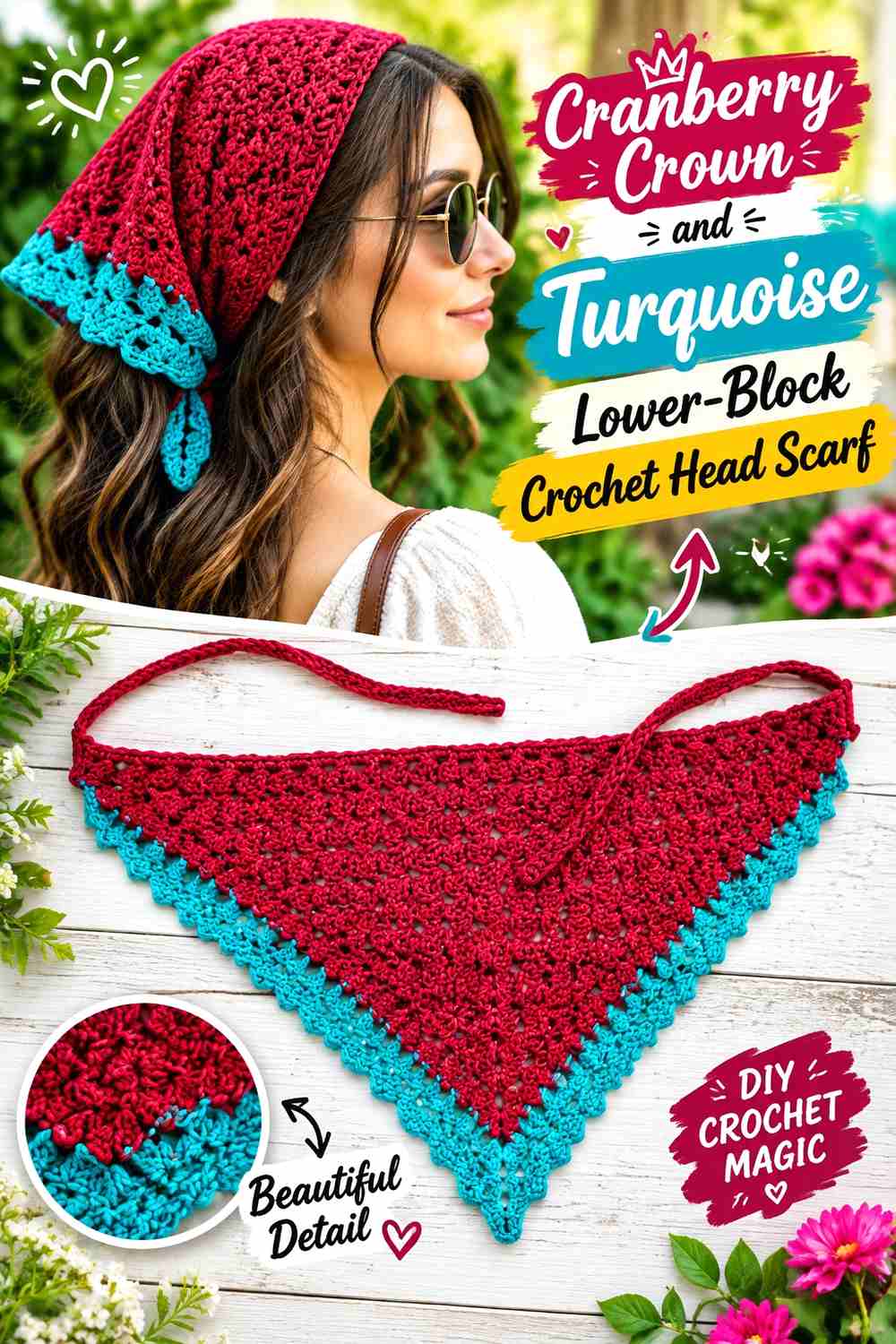
This idea changes colors horizontally. Cranberry occupies the upper portion closest to the crown, while turquoise takes over toward the lower point where it remains visible behind the head.
Cranberry Creates a Strong Crochet Crown Block
Keeping the upper rows cranberry gives the scarf a deeper visual line around the head and ties the two sides together.
Avoid switching to turquoise too early if you want cranberry to remain visible from the front and sides.
Turquoise Can Lighten the Lower Cranberry Triangle
A broad turquoise lower section makes the point of the scarf visually lighter and separates it clearly from the crown block.
Place the transition where the triangle has enough width for both shades to remain noticeable instead of waiting until only a tiny tip remains.
Creator Credit: Hopeful Turns
3. Turquoise And Cranberry Diagonal Crochet Head Scarf
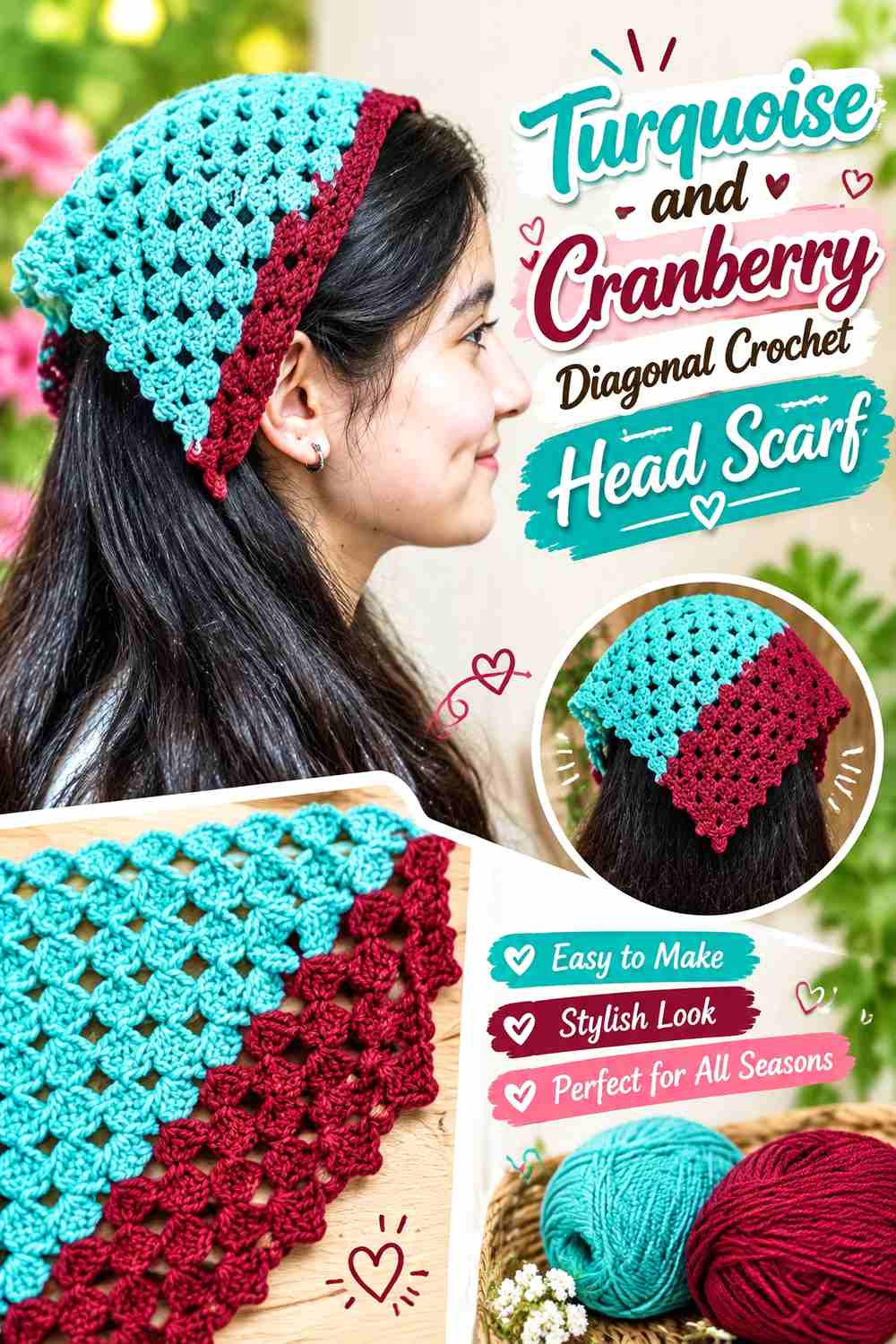
A diagonal block creates movement across the triangular shape instead of following its horizontal rows. Turquoise can run from one upper corner toward the opposite lower side, with cranberry filling the remaining area.
Turquoise Diagonal Placement Breaks Up a Cranberry Crochet Field
Use turquoise as a substantial diagonal section rather than a thin line. A larger block remains recognizable even after the scarf curves around the crown.
This arrangement is especially useful when you want asymmetry without introducing additional colors.
Cranberry Should Balance the Turquoise Diagonal From the Opposite Side
Give cranberry enough continuous area to counter the turquoise block. If one section becomes too small, the scarf may read as a mostly single-color piece with an incidental stripe.
Check the balance from behind because diagonal color placement can look quite different once worn.
Creator Credit: Crochet con Sole
4. Turquoise Granny Crochet Head Scarf With Cranberry Border Blocks
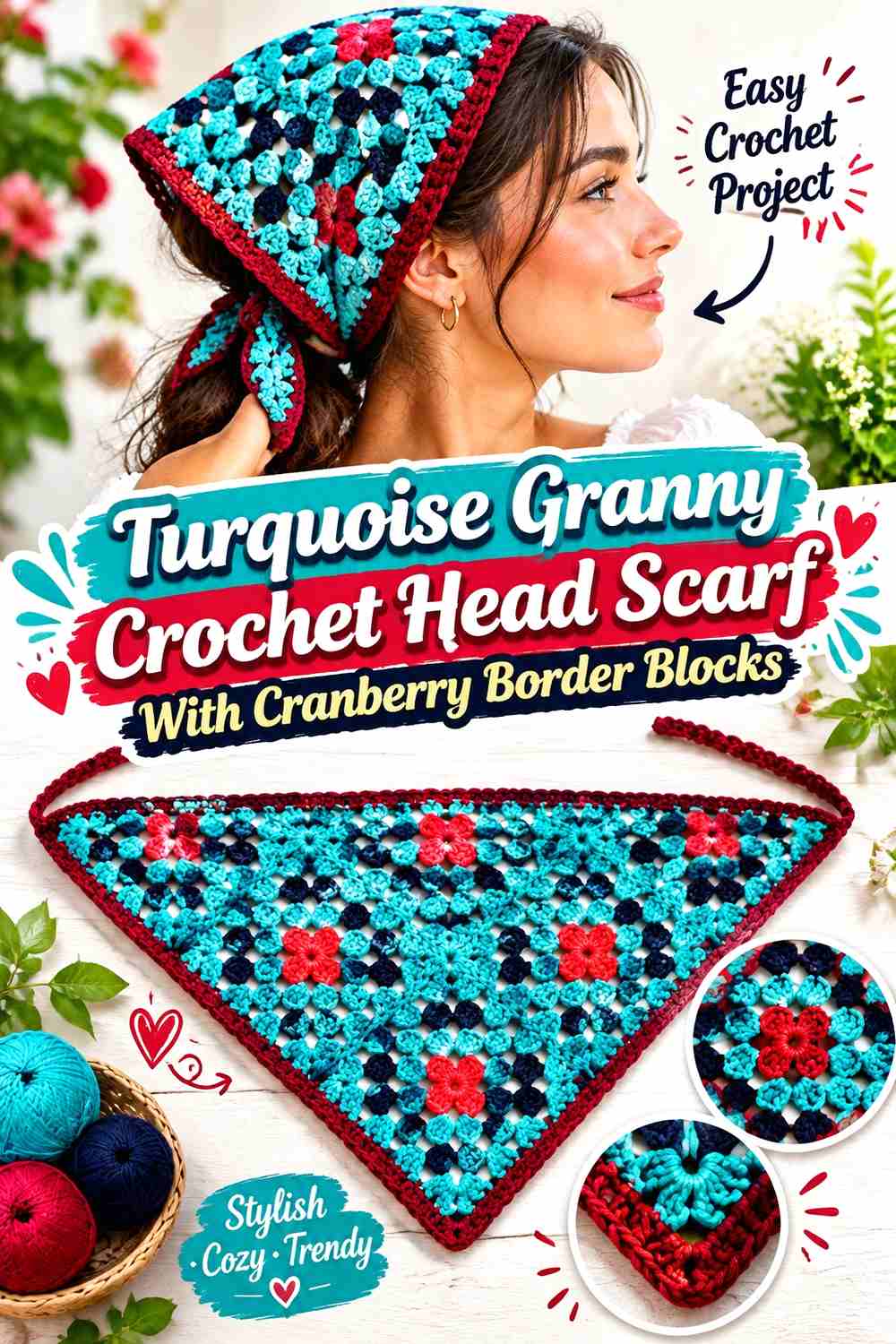
A granny-style triangle already contains clear grouped stitch sections. Turquoise can remain dominant through the main body while cranberry occupies a wide outer border instead of interrupting every cluster.
Turquoise Keeps the Granny Crochet Head Scarf Connected
Use turquoise through most of the granny triangle so its repeated spaces and clusters read as one continuous field.
Frequent turquoise-to-cranberry changes inside every small cluster would create more of a mixed-color effect than a true block layout.
Cranberry Border Blocks Can Strengthen the Turquoise Triangle
Introduce cranberry in the final broad section or outer border where it can create one clearly defined block around the turquoise center.
Continue cranberry through the ties if you want the darker shade to form a complete frame.
Creator Credit: Yarn Stash with Marching North
5. Cranberry Crochet Head Scarf With Turquoise Corner Blocks
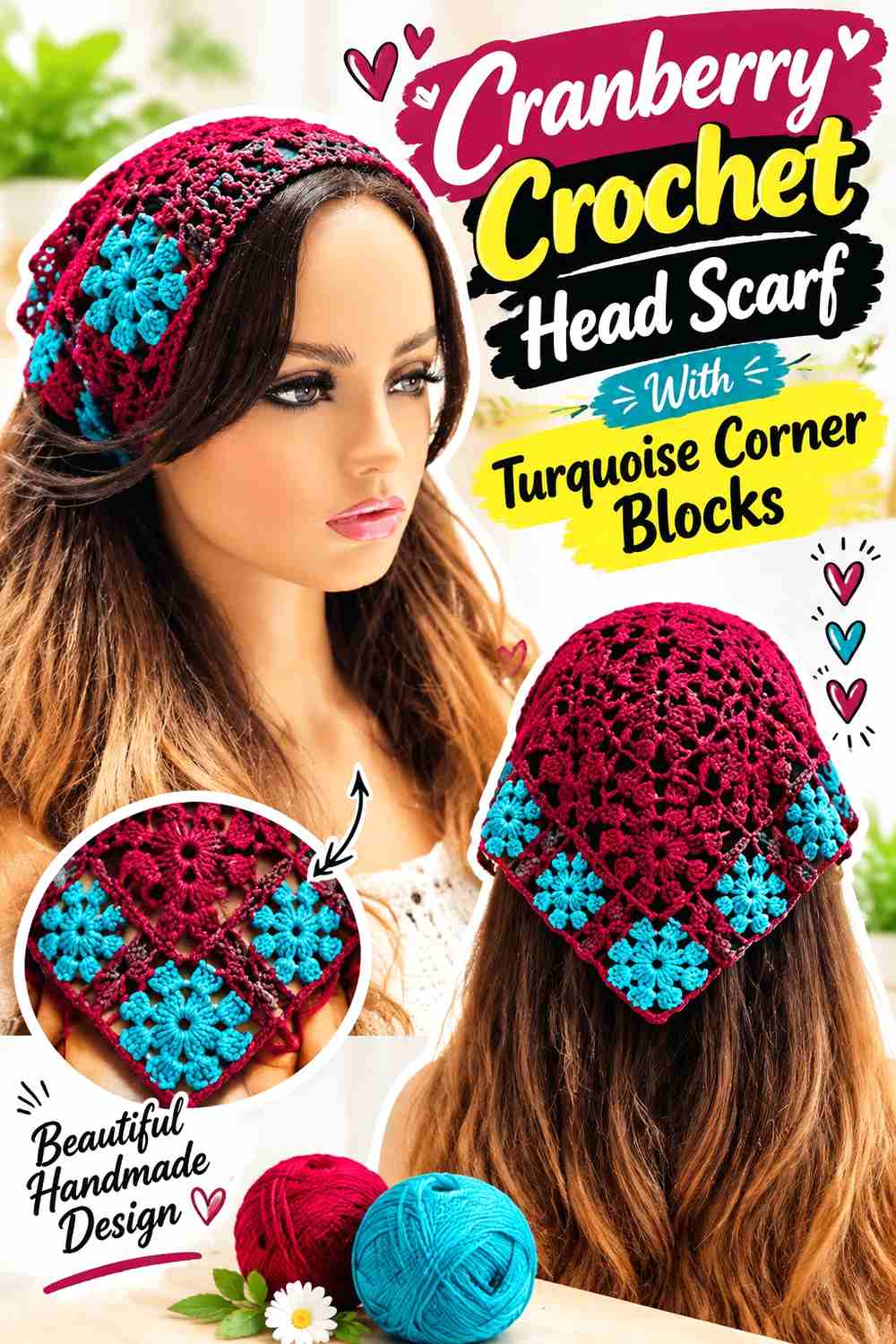
This color plan makes cranberry the main field and places turquoise specifically at the two upper corners near the ties. The result keeps the lower triangle dark while introducing blue-green color near the sides of the face.
Cranberry Should Dominate the Main Crochet Triangle
Keep the center and lower point cranberry so the dark shade gives the scarf a strong visual base.
This uninterrupted area also makes the small turquoise corner sections look intentional rather than scattered.
Turquoise Corner Blocks Can Connect to Cranberry Ties or Borders
If turquoise occupies only the upper corners, decide whether to continue it into the ties. Turquoise ties expand the corner blocks, while cranberry ties return attention to the main color.
Either choice can work; the important point is to repeat the decision consistently on both sides.
Creator Credit: Bag-O-Day Crochet
6. Turquoise Mesh Crochet Head Scarf With Cranberry Frame
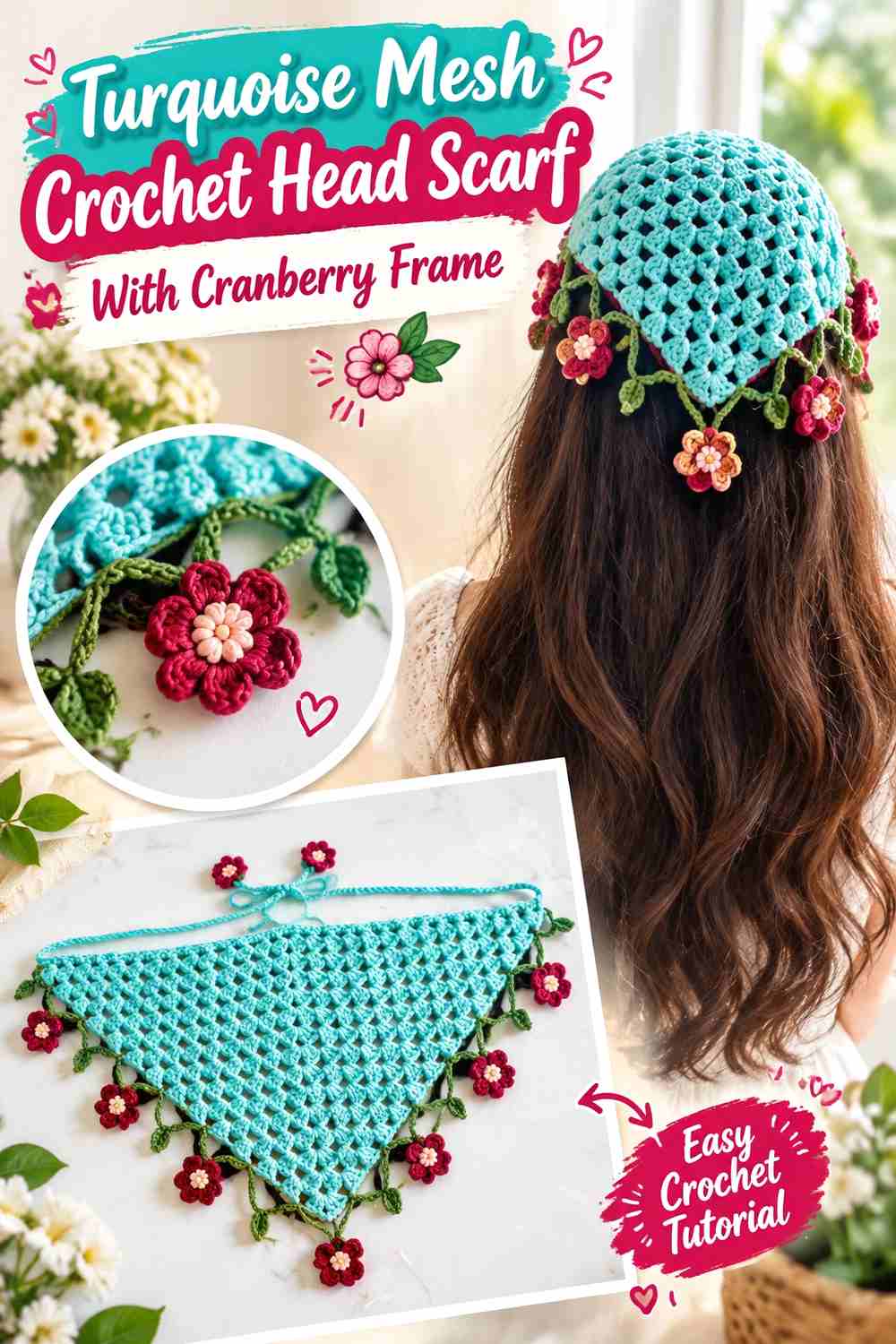
Mesh exposes the hair beneath the scarf, making the perimeter especially important. Turquoise can form the open center while cranberry creates a solid-looking border around it.
Turquoise Mesh Needs a Large Continuous Crochet Block
Keep the mesh body turquoise so its openings remain connected visually across the scarf.
Breaking the openwork into several narrow alternating blocks can make the grid look busier than the color scheme requires.
Cranberry Can Frame the Turquoise Crochet Mesh
Place cranberry along the two sloping edges, upper band, or both. The deeper outer color helps define the shape even when the turquoise center contains large open spaces.
Matching cranberry ties can complete the frame around the turquoise mesh.
Creator Credit: Plakshi Jain | Crochet
7. Turquoise And Cranberry Three Panel Crochet Head Scarf
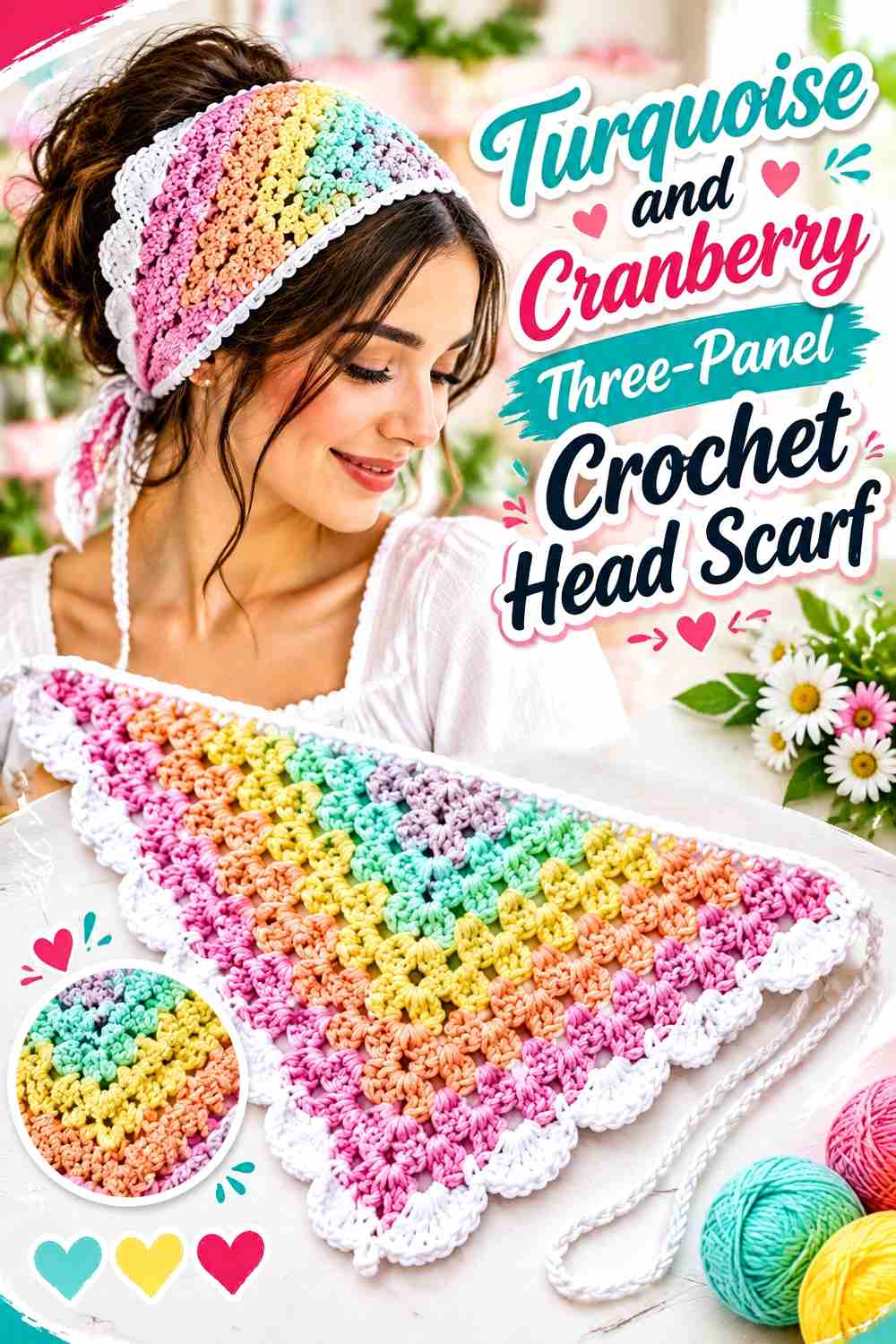
Divide the scarf visually into three broad sections: cranberry on one side, turquoise through the center, and cranberry again on the other. The result is more structured than horizontal striping and keeps the center color prominent.
Turquoise Should Form the Largest Central Crochet Panel
Make the turquoise center visibly wider than either cranberry side if turquoise is intended to lead.
A narrow center can disappear toward the lower triangle as the side edges converge.
Cranberry Panels Should Mirror Each Other Around Turquoise
Keep the cranberry side blocks similar in visual size so they create a deliberate frame.
If one side is substantially wider, the scarf shifts toward an asymmetrical composition, which may still work but produces a different color-block direction.
Creator Credit: Ashten Stitches
8. Cranberry Triangle Crochet Head Scarf With Turquoise Ties
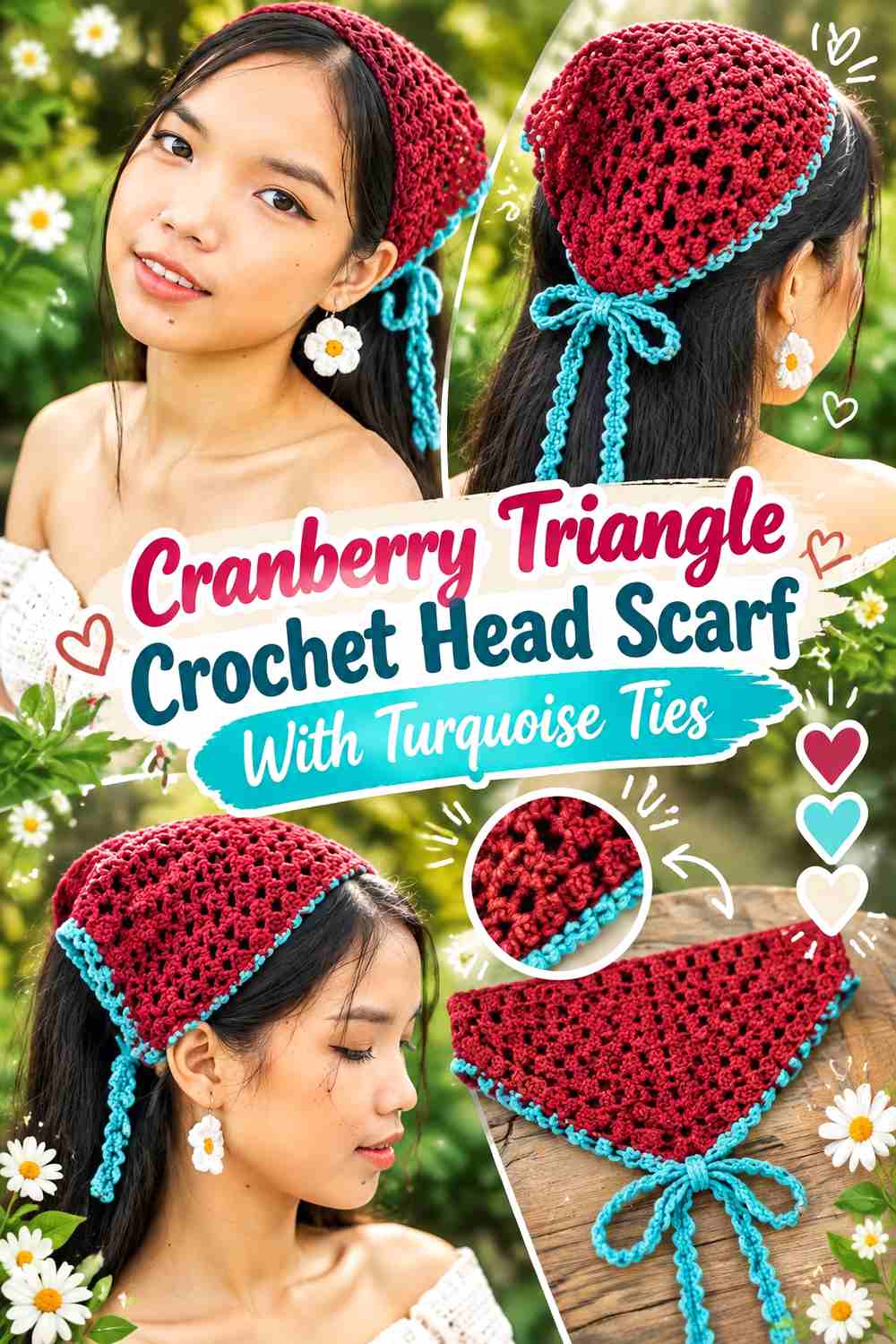
This is one of the most restrained color-block ideas. Cranberry covers the entire triangular scarf, while turquoise appears only in the two long fastening sections.
Cranberry Keeps the Crochet Triangle Visually Uninterrupted
Using one color across the complete triangle lets the stitch pattern remain the main feature of the scarf body.
This works particularly well when the tutorial’s fabric already contains noticeable texture or open spaces.
Turquoise Ties Create Side Blocks Beyond the Cranberry Triangle
Although the turquoise area is relatively small, long ties can remain highly visible beside or behind the head.
Consider adding a narrow turquoise top edge if the ties otherwise feel disconnected from the cranberry body.
Creator Credit: Chenda DIY
9. Turquoise Crochet Head Scarf With Cranberry Picot Block
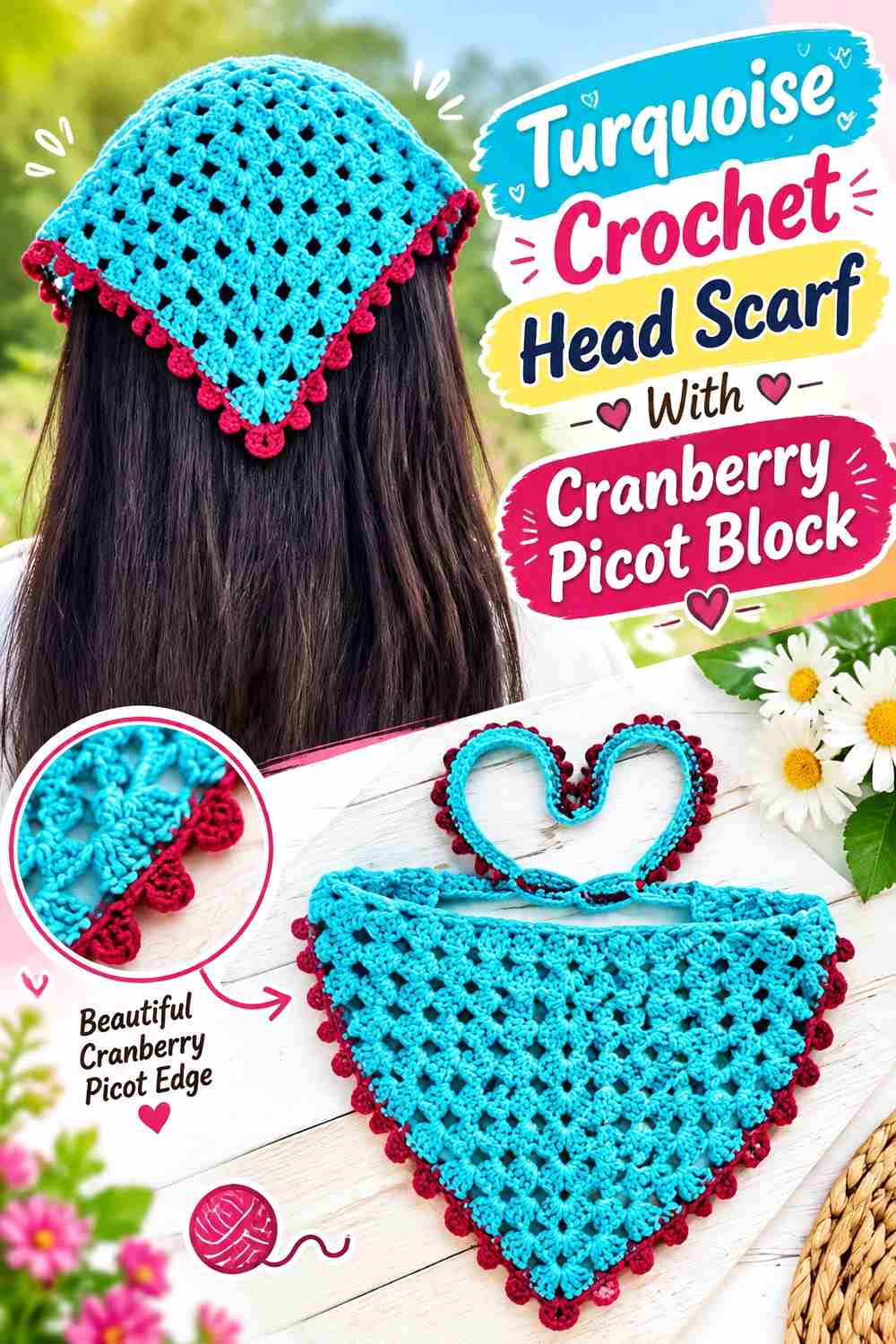
This arrangement uses turquoise across the principal triangle and cranberry through a broader decorative edge that includes picots or another pointed finish.
Turquoise Should Remain the Main Crochet Head Scarf Field
Keep the interior largely turquoise so the scarf has a clear dominant color before the decorative edge begins.
The broad turquoise area also gives the deeper cranberry border enough contrast to stand out.
Cranberry Picots Need Enough Width to Read as a Color Block
A single cranberry stitch line may appear as simple edging rather than color blocking. Extend the dark shade through a broader finishing section before the picots if you want it to act as a genuine block.
The decorative points then become the final cranberry detail rather than the entire cranberry area.
Creator Credit: ElyseCrochets 💌
10. Cranberry And Turquoise Granny Square Crochet Head Scarf
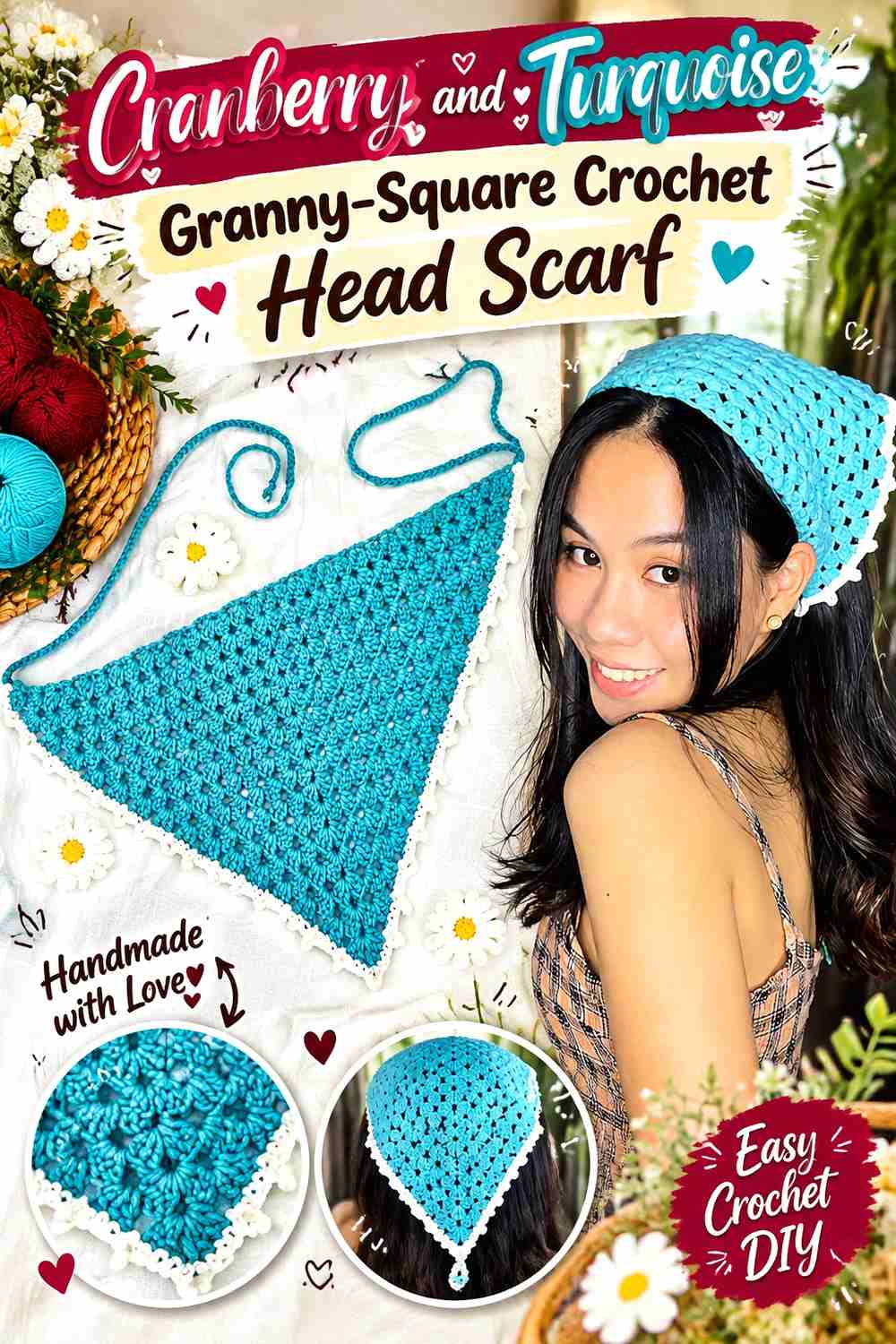
Joined granny motifs provide natural color-block units. Some squares can be predominantly cranberry while others are predominantly turquoise, creating larger repeated blocks across the head scarf.
Turquoise Granny Blocks Need Deliberate Repetition
Place turquoise motifs in a recognizable sequence rather than randomly between cranberry squares.
For example, a turquoise center grouping can establish one strong focal area while cranberry motifs form the sides.
Cranberry Joining Can Connect Turquoise Crochet Blocks
Using cranberry for the visible connecting areas or outer border can unify multiple turquoise motifs.
If both the motifs and joins change color frequently, the scarf may become multicolored in appearance rather than clearly color blocked.
Creator Credit: Molina DIY
11. Turquoise Crochet Head Scarf With Cranberry Lower Point
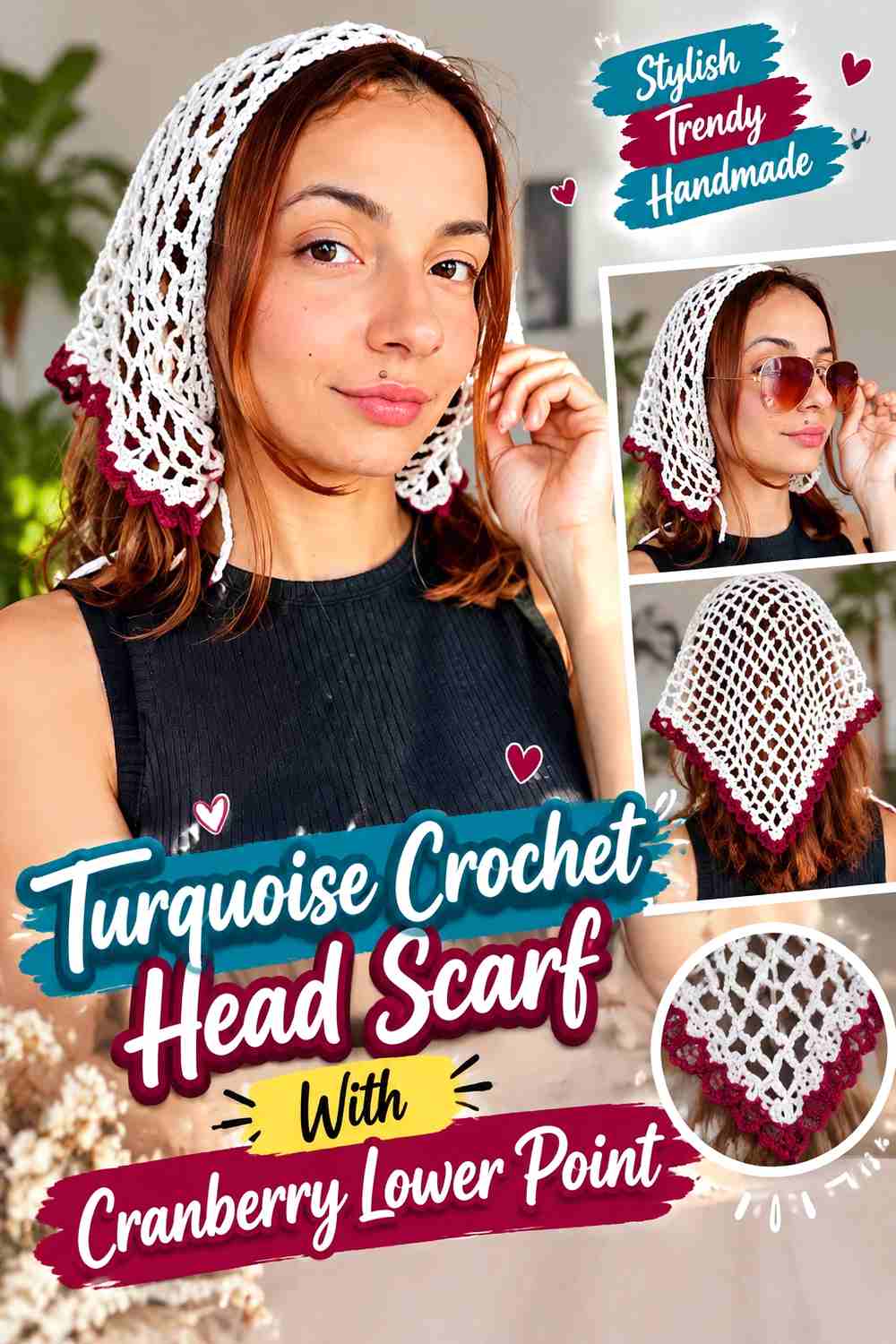
This design keeps nearly the entire crown turquoise and switches to cranberry only for a substantial lower triangular point.
Turquoise Should Cover Most of the Crochet Crown
The turquoise upper section establishes the scarf’s dominant color from the front, side, and back.
Keep the transition low enough that turquoise remains the larger visual field but high enough for cranberry to form more than a tiny tip.
Cranberry Can Turn the Turquoise Lower Point Into a Focal Block
A deep cranberry section at the bottom draws the eye toward the hanging point behind the head.
This placement works particularly well when the point remains exposed rather than being tucked under the ties.
Creator Credit: Fio e Arte
12. Cranberry Mesh Crochet Head Scarf With Turquoise Center Block
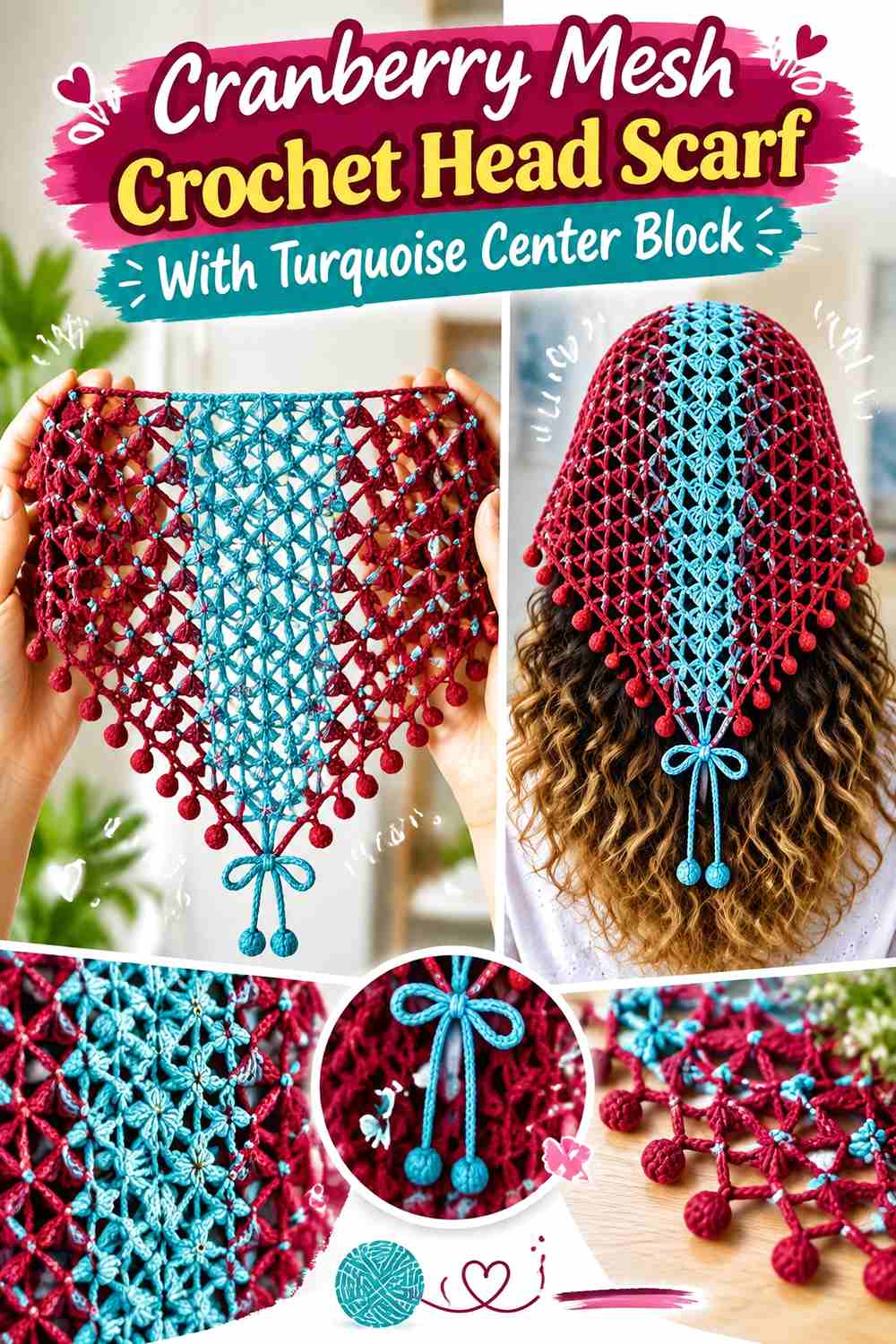
Here cranberry surrounds a turquoise center section. Because mesh allows the underlying hair to show, the larger cranberry field gives the brighter turquoise panel a stronger boundary.
Cranberry Mesh Can Anchor the Crochet Head Scarf Sides
Keep cranberry through both outer side sections so the triangle has a consistent dark frame.
The open mesh still provides variation without needing additional colors.
Turquoise Needs Enough Width Inside the Cranberry Mesh
Make the turquoise center block broad enough to survive the visual interruptions created by open spaces.
A very narrow turquoise section can look broken once hair shows through the mesh, while a wider panel remains recognizable.
Creator Credit: zhaia croche
13. Turquoise Daisy Crochet Head Scarf With Cranberry Connecting Blocks
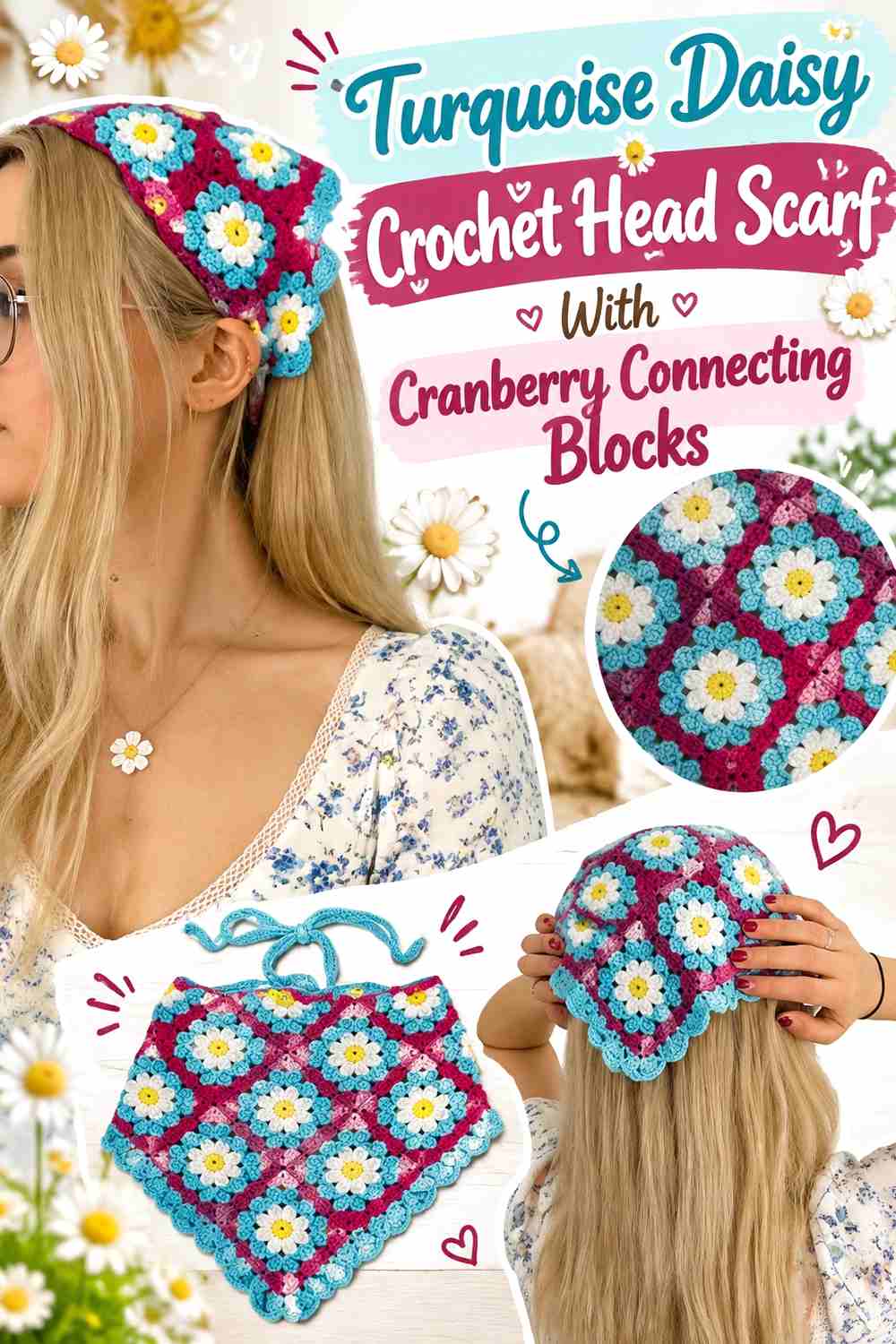
Floral granny construction allows the flowers and connecting areas to perform different color roles. Turquoise can dominate the flower motifs while cranberry separates and frames them.
Turquoise Daisy Blocks Should Remain Easy to Identify
Use turquoise consistently in the main visible area of each flower motif if you want the floral units to form the brighter part of the scarf.
Avoid changing every petal between cranberry and turquoise, which reduces the sense of larger color blocks.
Cranberry Can Separate Turquoise Crochet Flowers
Place cranberry through joining sections, side triangles, or an outer border.
The darker color creates negative space around the turquoise motifs and prevents neighboring flowers from merging into one large blue-green field.
Creator Credit: cosybearcrochet
14. Cranberry Floral Crochet Head Scarf With Turquoise Side Panels
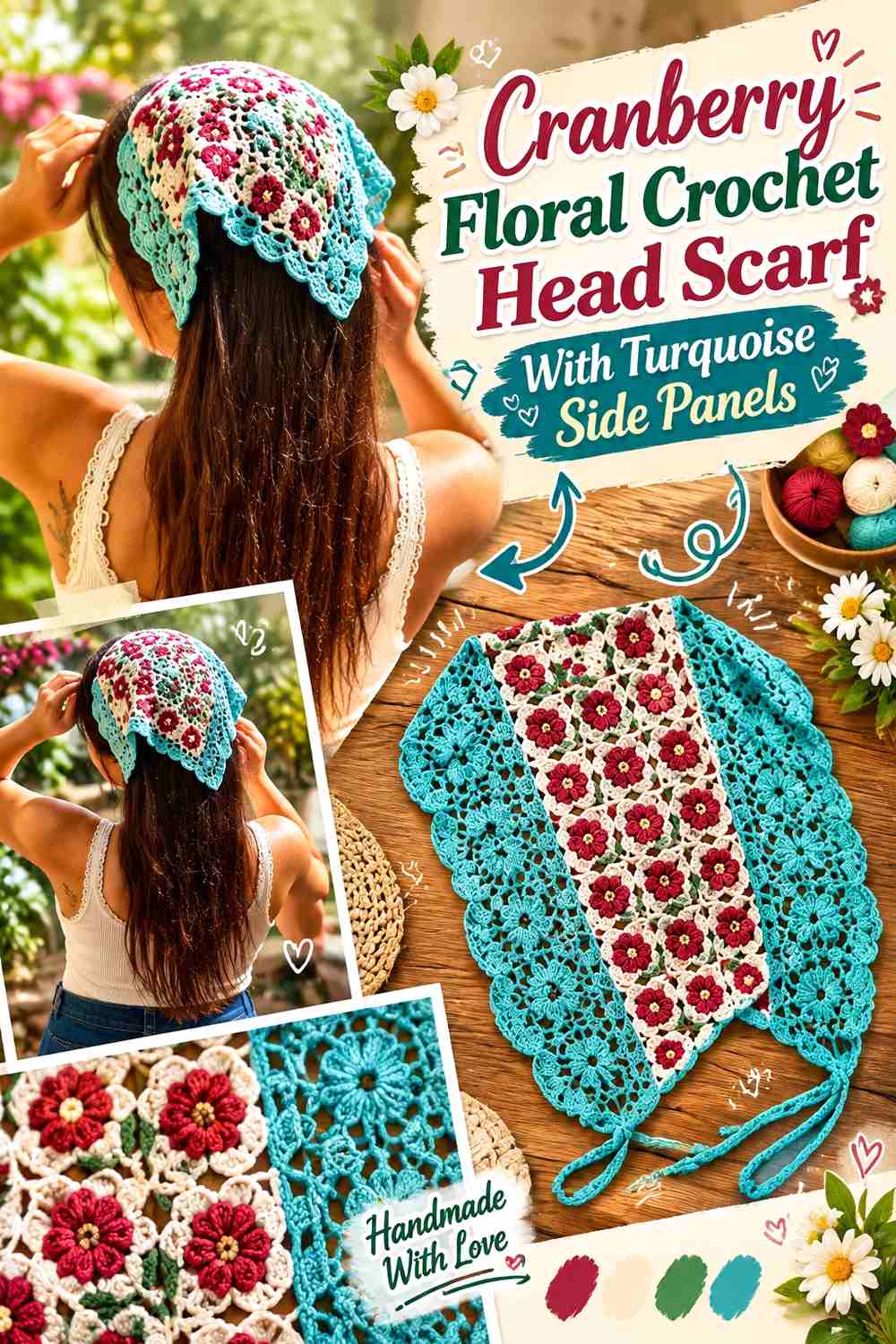
This floral version reverses the hierarchy. Cranberry carries the main flower area, while turquoise appears as two substantial side panels near the ties.
Cranberry Should Keep the Crochet Floral Center Unified
Use cranberry consistently through the main floral section so the motif remains readable from the back.
A concentrated central field also differentiates this arrangement from evenly alternating floral colors.
Turquoise Side Panels Can Frame the Cranberry Flowers
Place turquoise along the upper sides where it can remain visible near the temples or tie area.
Repeating turquoise on both sides makes the color blocking feel intentional without interrupting the cranberry floral center.
Creator Credit: Nora Moon – handmade clothes with love
15. Turquoise And Cranberry Narrow Stripe Color Block Crochet Head Scarf
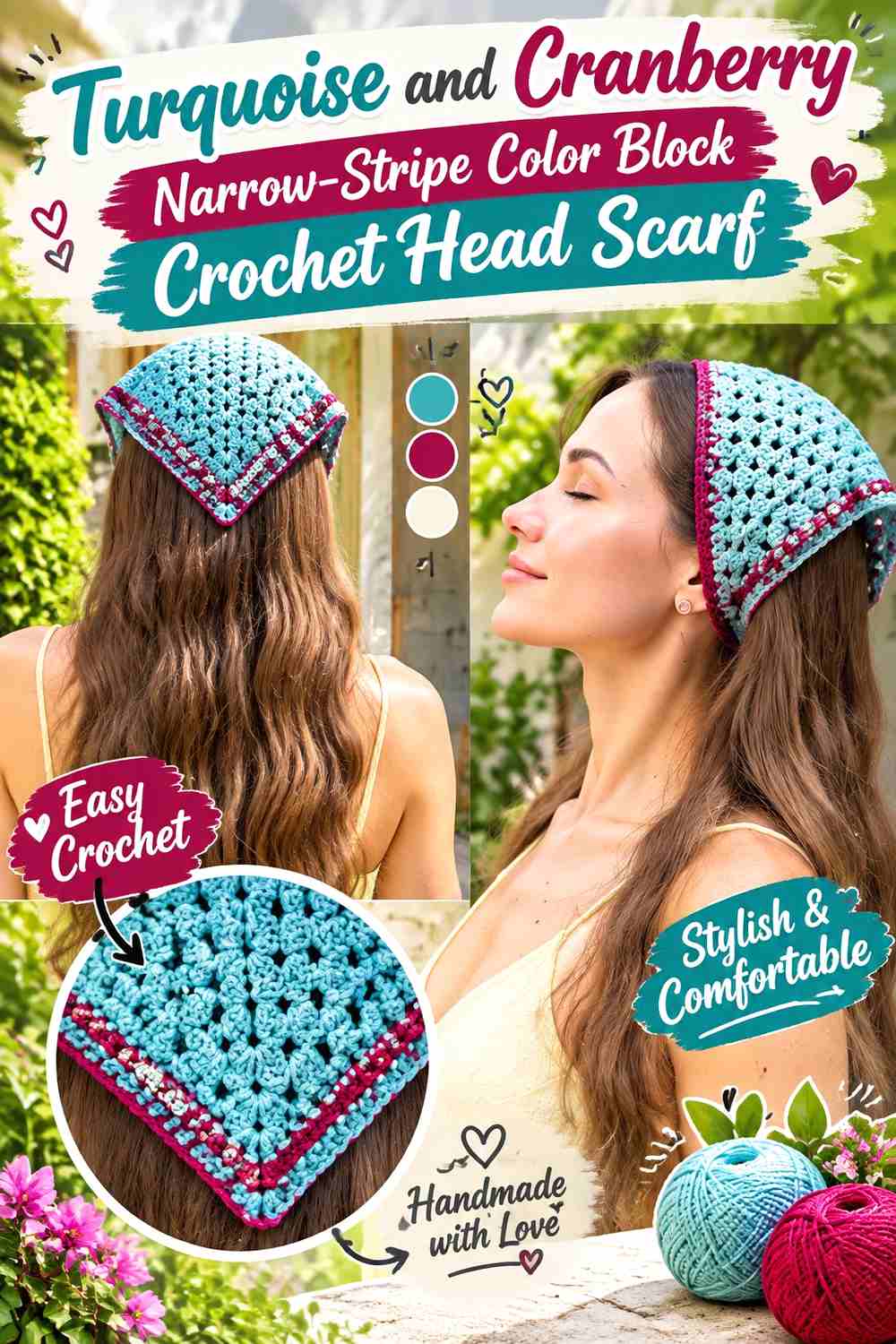
Although the article focuses on blocks, narrow stripes can still create a blocked composition when they are grouped into larger bands. Several turquoise rows can form one section followed by several cranberry rows rather than constant one-row alternation.
Turquoise Bands Should Be Grouped Into Visible Crochet Blocks
Keep multiple turquoise rows together so the color reads as one section.
Single-row alternation produces striping, while grouped rows preserve the stronger visual areas expected from color blocking.
Cranberry Bands Can Be Wider Near the Lower Turquoise Triangle
Gradually increasing the visual share of cranberry toward the lower point can shift the scarf from turquoise-led at the crown to cranberry-led at the back.
Make the transitions deliberate instead of changing band width randomly.
Creator Credit: dreampls
16. Turquoise Crochet Kerchief With Cranberry Wide Border
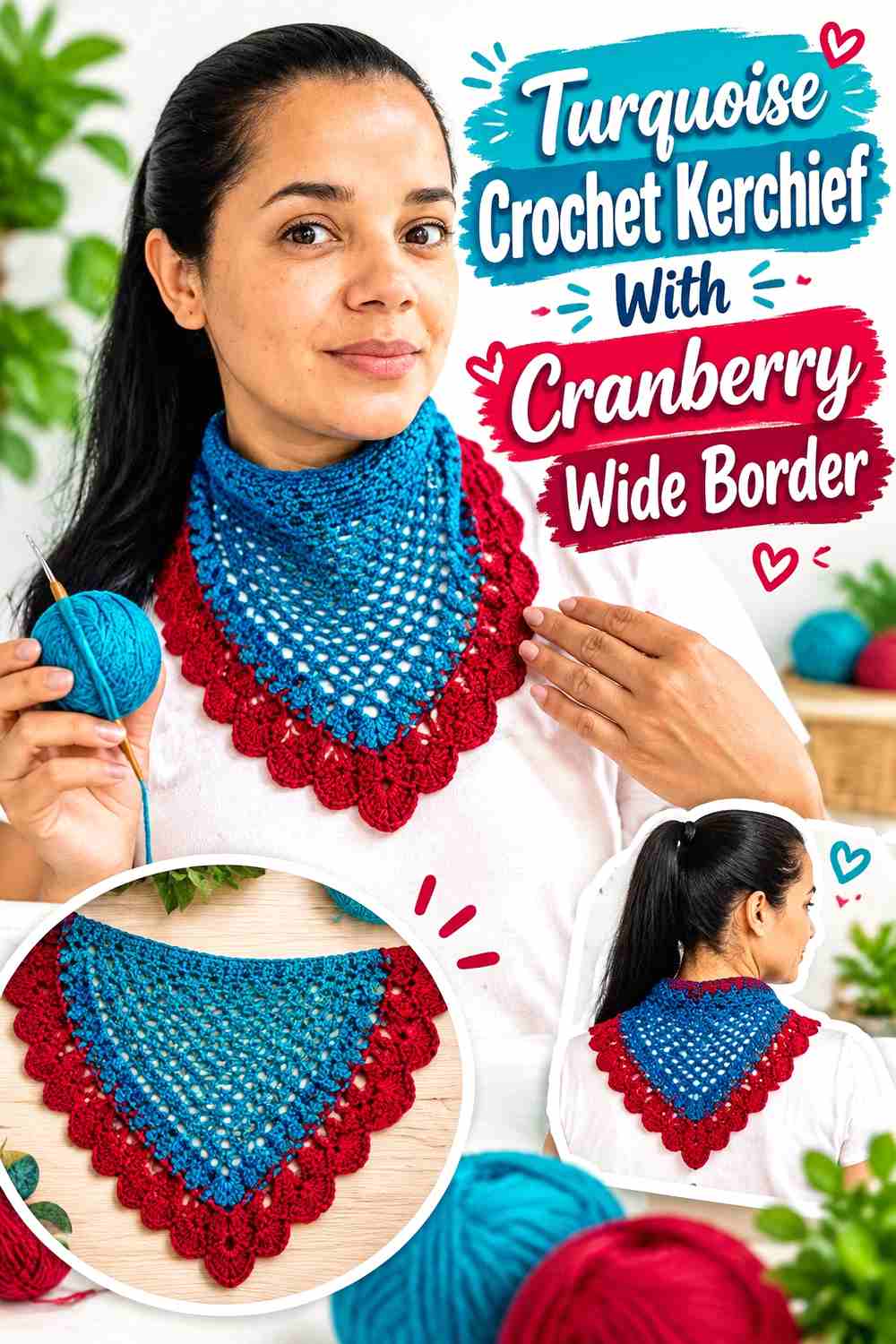
This version uses the border as a substantial color block rather than a finishing line. Turquoise fills the center, while cranberry wraps around the lower perimeter in a visibly wide band.
Turquoise Needs Enough Interior Space Inside the Cranberry Border
Keep the central turquoise field large enough that it remains the primary area of the kerchief.
As the cranberry border becomes wider, periodically lay the scarf flat to make sure it has not visually overtaken the center.
Cranberry Can Continue From the Border Into the Turquoise Ties
Matching cranberry ties makes the border feel structurally connected around the entire scarf.
If that creates too much dark color, switch the ties back to turquoise so cranberry remains concentrated only around the triangle.
Creator Credit: Meu mágico mundo
17. Cranberry Crochet Head Scarf With Turquoise Upper Band
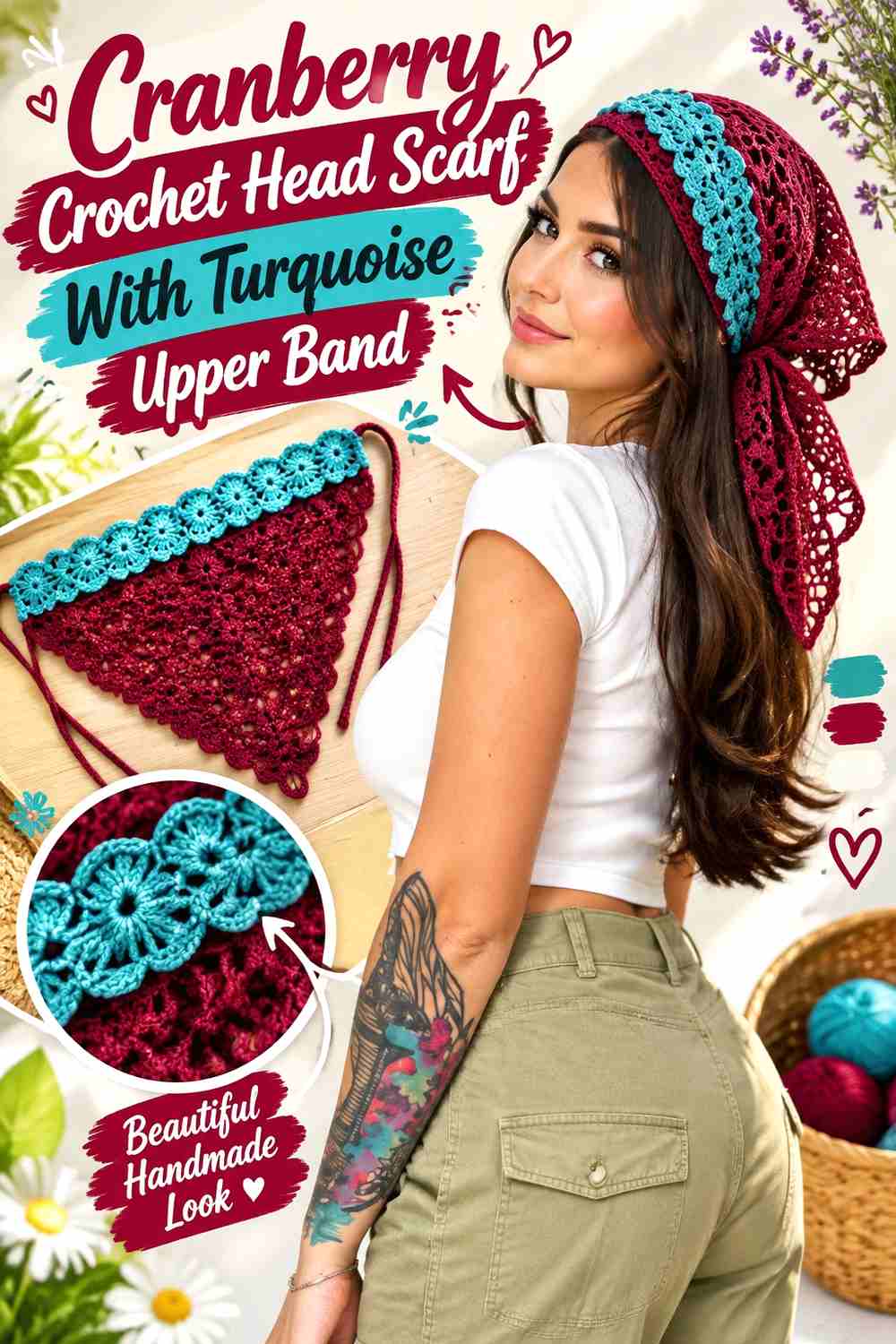
Instead of emphasizing the lower point, this design puts turquoise directly along the upper edge where the scarf sits across the crown. Cranberry fills everything below.
Turquoise Can Create a Visible Crown Band Above Cranberry
Make the turquoise upper section broad enough to remain visible after the scarf is tied.
A very thin turquoise row may roll or disappear near the hairline and lose its color-block effect.
Cranberry Should Stay Continuous Below the Turquoise Band
Keep the lower triangle solidly cranberry so the scarf has a clear two-part division.
This placement works particularly well when you want turquoise visible from the front while cranberry remains dominant from the back.
Creator Credit: Make by Masha
18. Turquoise And Cranberry Split Triangle Crochet Head Scarf
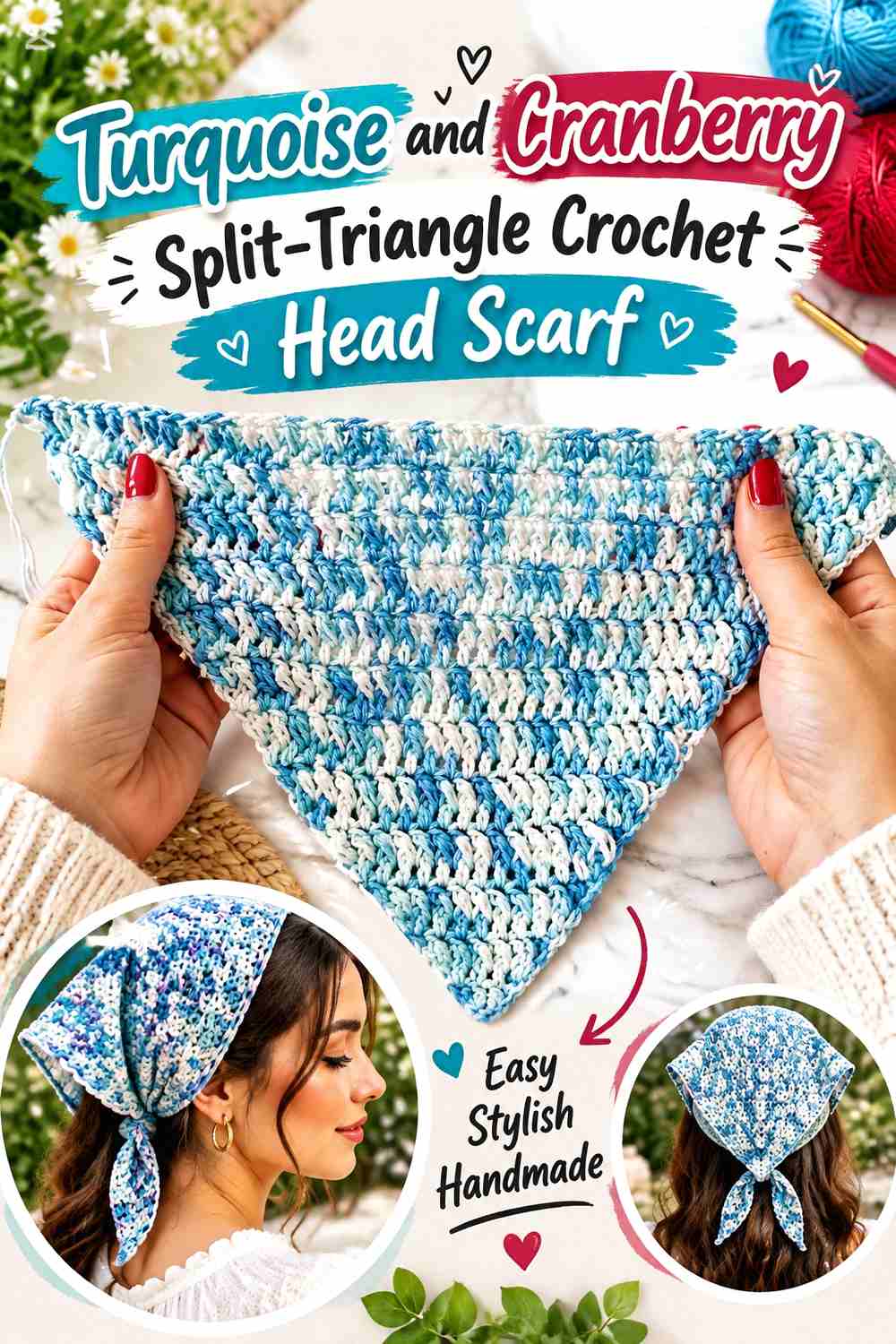
A vertical split creates the strongest two-sided color block in the collection. One half of the scarf appears turquoise and the other cranberry, meeting along the center line.
Turquoise Should Occupy One Clear Crochet Triangle Half
Keep the turquoise section continuous rather than introducing cranberry details inside it.
The clean division is what gives this layout its graphic character.
Cranberry Needs Comparable Visual Weight Beside Turquoise
The cranberry half should reach the same major boundaries as turquoise so the split looks purposeful.
Because the two colors differ strongly, small irregularities in where the division falls may be more noticeable than they would be in a tonal palette.
Turquoise and Cranberry Ties Can Continue the Split
Match each tie to the color on its own side for the clearest continuation of the center division.
Using two cranberry or two turquoise ties instead shifts the visual balance toward that color.
Creator Credit: M’AMI uncinetto
19. Turquoise Crown Crochet Head Scarf With Cranberry Deep Triangle Block
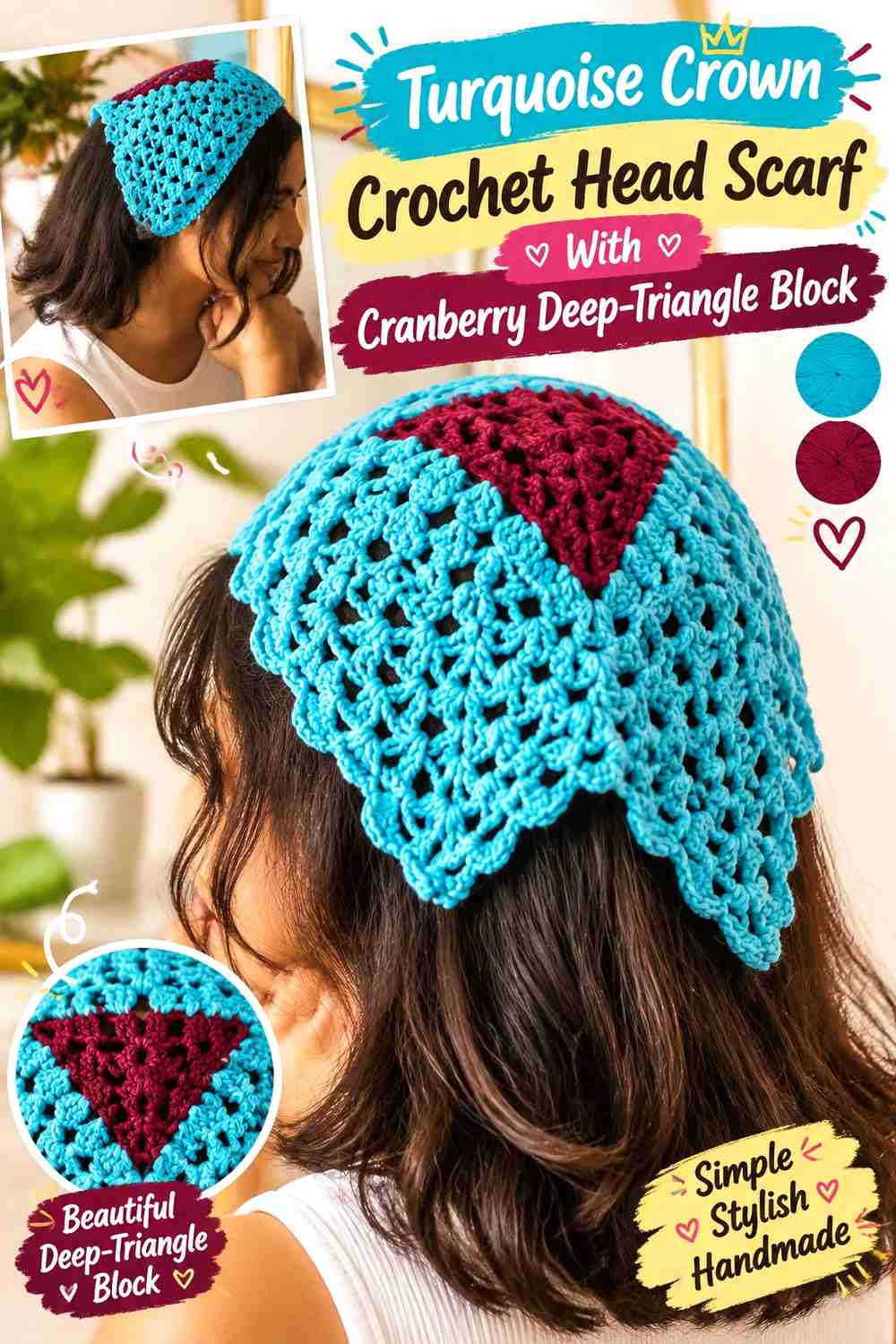
The final idea uses turquoise across the upper crown and gives cranberry most of the long hanging triangle below it. This produces two large blocks with a particularly visible transition from the back.
Turquoise Should Remain Broad Across the Crochet Crown
Use turquoise from one upper side to the other so it creates a complete band around the visible crown section.
This gives the brighter shade a clear role even though cranberry occupies more of the lower triangle.
Cranberry Can Carry the Deep Lower Crochet Triangle
Allow cranberry to extend across a substantial portion of the back point. The deeper color makes the lower section feel visually grounded and clearly different from turquoise.
Turquoise Ties Can Balance a Large Cranberry Block
Returning to turquoise for the ties can restore some of the upper color near the sides and prevent the cranberry lower section from visually dominating the entire scarf.
If you prefer cranberry to lead overall, keep the ties cranberry instead.
Creator Credit: Branda Crochet
Comparing the Turquoise and Cranberry Color Block Directions
For the clearest panel-based color blocking, Ideas 1, 3, 7, 12, and 18 divide the triangular scarf into obvious central or side sections. These arrangements make the turquoise-cranberry boundary part of the main design.
For a turquoise-dominant scarf, Ideas 4, 6, 9, 11, and 16 keep most of the visible fabric turquoise while cranberry frames, edges, or anchors it.
Ideas 2, 5, 8, 14, and 17 put cranberry in the stronger structural role, using turquoise for lower blocks, side sections, ties, or the crown band.
For crochet motifs, Ideas 10, 13, and 14 use individual squares or flowers as larger color units rather than changing shades constantly within each stitch repeat.
If you want the strongest two-color graphic effect, Idea 18’s split triangle gives each shade its own uninterrupted side. If you prefer color blocking that feels more integrated with the scarf’s shape, Ideas 2, 11, and 19 use the natural triangular point to control the transition.
Conclusion
Turquoise and cranberry make color blocking especially effective on crochet head scarves because the triangular surface offers several natural places to divide color: the crown, center, sides, border, lower point, and ties.
For a cleaner composition, use a few large blocks rather than changing color every row. A turquoise center with cranberry sides emphasizes the scarf’s width; a cranberry lower triangle draws attention toward the back point; and contrasting ties let you add a second color without interrupting the main crochet fabric.
Openwork and motif scarves need one extra check: evaluate the palette while the piece is actually worn. Hair showing through the crochet can change how large or distinct each color block appears.
Use the credited tutorials for their original construction guidance, then adapt turquoise and cranberry independently according to the block placement that gives you the balance you want.
Frequently Asked Questions
Which color should dominate a turquoise and cranberry crochet head scarf?
Either can lead. Turquoise creates a brighter overall field, while cranberry provides a deeper visual base. Give one shade noticeably more surface area if you want the color-block hierarchy to remain clear.
How large should turquoise and cranberry color blocks be?
There is no universal measurement. Each block should be large enough to remain recognizable after the scarf curves around the head. Very small sections may look like stripes or isolated accents rather than intentional color blocks.
Where is the best place to change from turquoise to cranberry?
Natural transition points include a broad row boundary, side-panel edge, motif join, border start, or the beginning of a lower triangular section. These locations make the color change look connected to the scarf’s overall shape.
Can turquoise and cranberry be used in granny-square head scarves?
Yes. Treat individual squares or groups of squares as blocks rather than changing colors randomly within every motif. A turquoise center group framed by cranberry motifs is one clear option.
Should the crochet head-scarf ties match turquoise or cranberry?
Match them to the color block you want to extend beyond the main triangle. Cranberry ties can strengthen dark side panels or borders, while turquoise ties can balance a large cranberry lower section.
How can I make a turquoise-and-cranberry scarf look less busy?
Increase the size of each color area and reduce the number of transitions. Two or three broad blocks generally produce a calmer result than many small alternating sections, especially when the crochet already contains mesh or decorative motifs.
Do turquoise and cranberry need a neutral color between them?
No. They can create sufficient visual separation on their own. A third color is optional rather than necessary, and adding one may weaken the direct two-color-block effect.
How do I check whether turquoise and cranberry blocks are balanced?
Lay the scarf flat first, then check it again while worn. Look from the front, sides, and back because some blocks will wrap around the head or disappear beneath the ties. Adjust the transition point if one shade becomes much less visible than expected.