A matching crochet dog sweater and beanie looks more intentional when the two pieces share a color plan rather than simply using leftover yarn from the same skeins. The sweater has much more surface area, so its dominant color naturally carries more visual weight. The beanie is smaller and usually works better when it repeats the sweater’s main shade plus one recognizable trim, stripe, or accent.
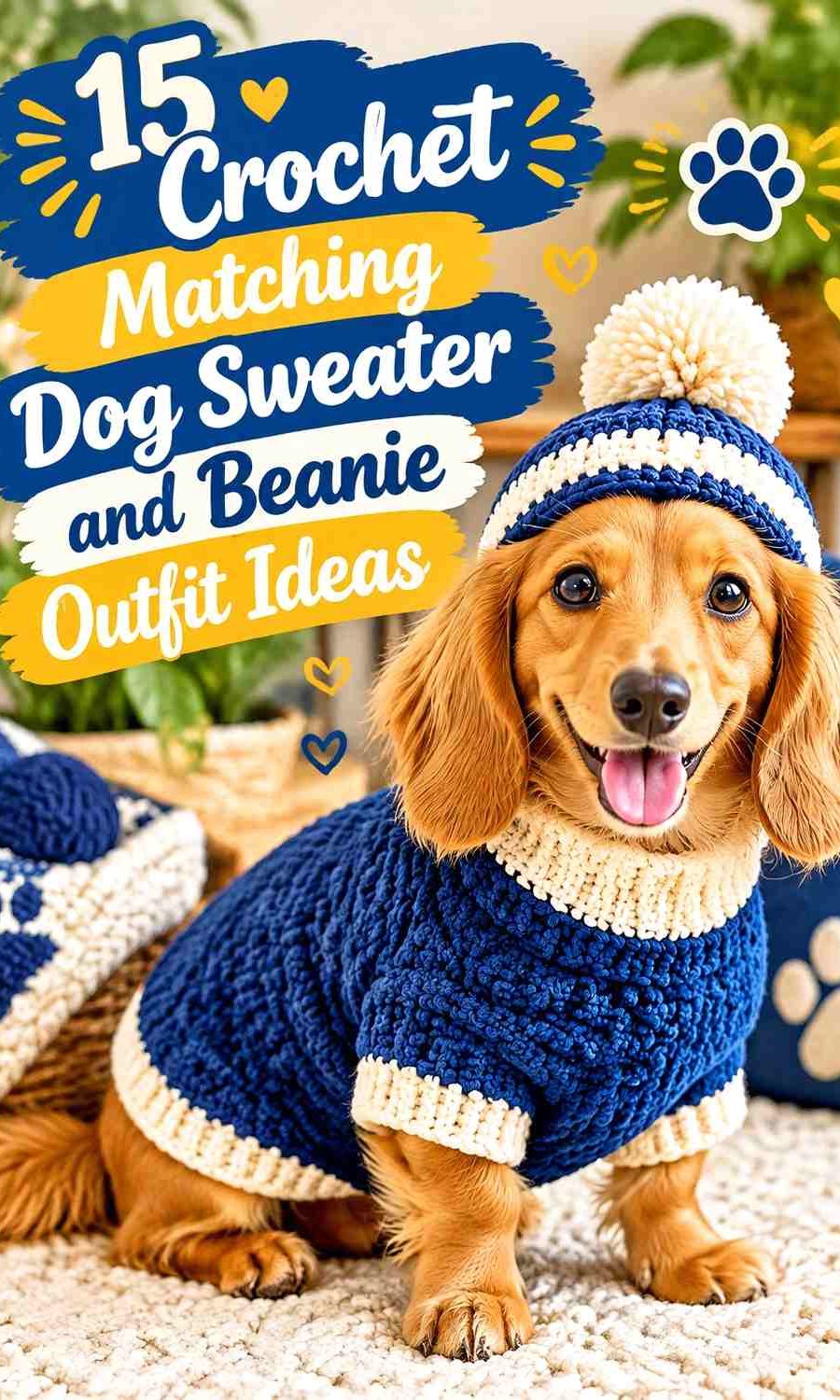
The key is coordination rather than exact duplication. A cream sweater with rust edging can pair with a rust beanie finished in cream. A striped sweater can coordinate with a mostly solid hat that repeats only one stripe near the edge. These small shifts keep the set connected without making the dog’s entire outfit look overly busy.
The tutorials credited throughout this article support dog-sweater or pet-headwear construction concepts. The palettes and matching outfit treatments below are independent color adaptations, not claims that the creators used these exact combinations. Check the original tutorial and your individual dog’s measurements before adapting either piece.
Quick List
- Navy and Cream Crochet Matching Dog Sweater and Beanie Outfit
- Mustard and Rust Crochet Matching Dog Sweater and Beanie Outfit
- Sage Green and Oatmeal Crochet Matching Dog Sweater and Beanie Outfit
- Burgundy and Blush Crochet Matching Dog Sweater and Beanie Outfit
- Teal and Camel Crochet Matching Dog Sweater and Beanie Outfit
- Lavender and Cream Crochet Matching Dog Sweater and Beanie Outfit
- Forest Green and Harvest Gold Crochet Matching Dog Sweater and Beanie Outfit
- Dusty Blue and Ivory Crochet Matching Dog Sweater and Beanie Outfit
- Raspberry and Soft Pink Crochet Matching Dog Sweater and Beanie Outfit
- Chocolate Brown and Mint Crochet Matching Dog Sweater and Beanie Outfit
- Terracotta and Cream Crochet Matching Dog Sweater and Beanie Outfit
- Plum and Mustard Crochet Matching Dog Sweater and Beanie Outfit
- Coral and Butter Yellow Crochet Matching Dog Sweater and Beanie Outfit
- Charcoal and Brick Red Crochet Matching Dog Sweater and Beanie Outfit
- Avocado and Burnt Orange Crochet Matching Dog Sweater and Beanie Outfit
Make the Sweater and Beanie Coordinate Without Copying Every Stripe
A matching set does not require identical color placement. In fact, shrinking a complicated sweater stripe sequence onto a small beanie can make the hat look cluttered. Instead, identify the sweater’s dominant color and one memorable accent, then repeat those roles on the hat.
You can also reverse the balance. If the sweater is mostly teal with camel trim, a camel beanie with a teal edge still belongs to the same outfit. Reversing the colors is especially useful when you want the beanie to remain visible rather than visually blending into the sweater.
Use Sweater Trim to Decide the Beanie Accent Color
Neckbands, leg openings, cuffs, belly edging, and lower borders are useful places to establish the color that will connect to the hat. If the sweater body is dusty blue but every edge is ivory, an ivory beanie with a dusty blue stripe will look coordinated immediately.
This approach also reduces unnecessary color changes. Instead of forcing three or four sweater colors onto the small hat, repeat the shade already used for the most visible garment trim.
Check Beanie Fit Before Adding Decorative Color Details
Color cannot correct a hat that interferes with the dog’s ears, eyes, or normal head movement. Establish the headwear shape first, then decide where contrast edging, a pom-pom, ear borders, or decorative motifs belong.
Keep ties and attached decorations secure and supervise a dog wearing crochet headwear. If the dog repeatedly paws at the hat, shakes its head, freezes, or tries to remove it, reconsider the fit or skip the beanie.
1. Navy and Cream Crochet Matching Dog Sweater and Beanie Outfit
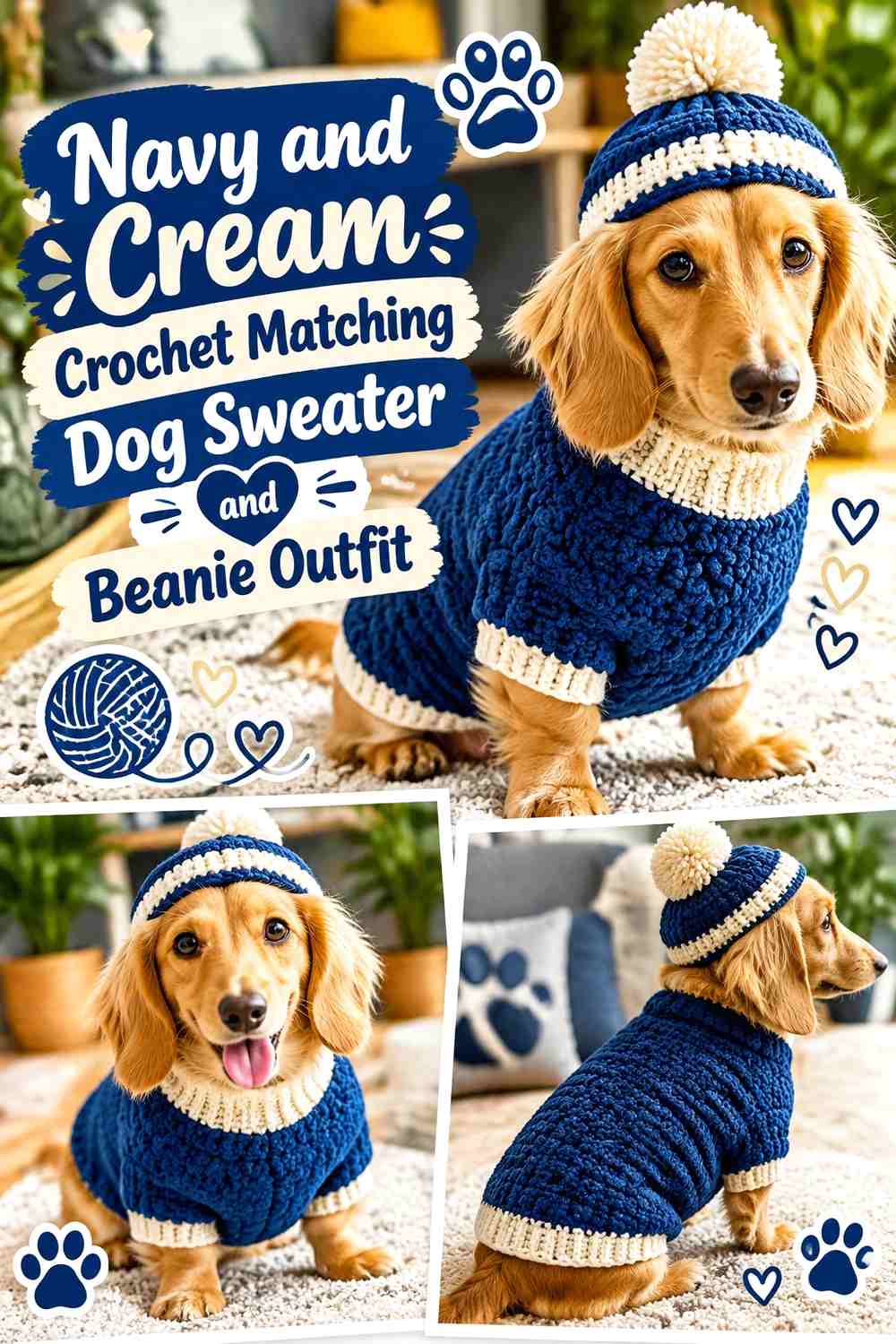
Navy and cream create a crisp two-color outfit that is easy to coordinate across pieces of very different sizes. Let navy cover most of the sweater body, then use cream around the neck, leg openings, or lower edge. On the beanie, reversing that arrangement can keep the smaller accessory noticeable: cream can lead while a navy band ties it back to the sweater.
Navy Should Carry Most of the Crochet Dog Sweater
Keeping navy across the broad back section prevents the sweater from looking chopped into too many small color areas. Cream is more useful where it outlines the garment shape, particularly around the neckline or openings.
If you add stripes, keep them concentrated rather than breaking every section of navy.
Cream Can Connect the Navy Beanie to the Sweater Trim
A cream beanie with a navy lower edge creates an obvious relationship without literally duplicating the sweater. If you prefer a navy hat, use cream only in the brim or pom-pom so the lighter accent still appears above the dog’s face.
Creator Credit: Crochet with Tiffany
2. Mustard and Rust Crochet Matching Dog Sweater and Beanie Outfit
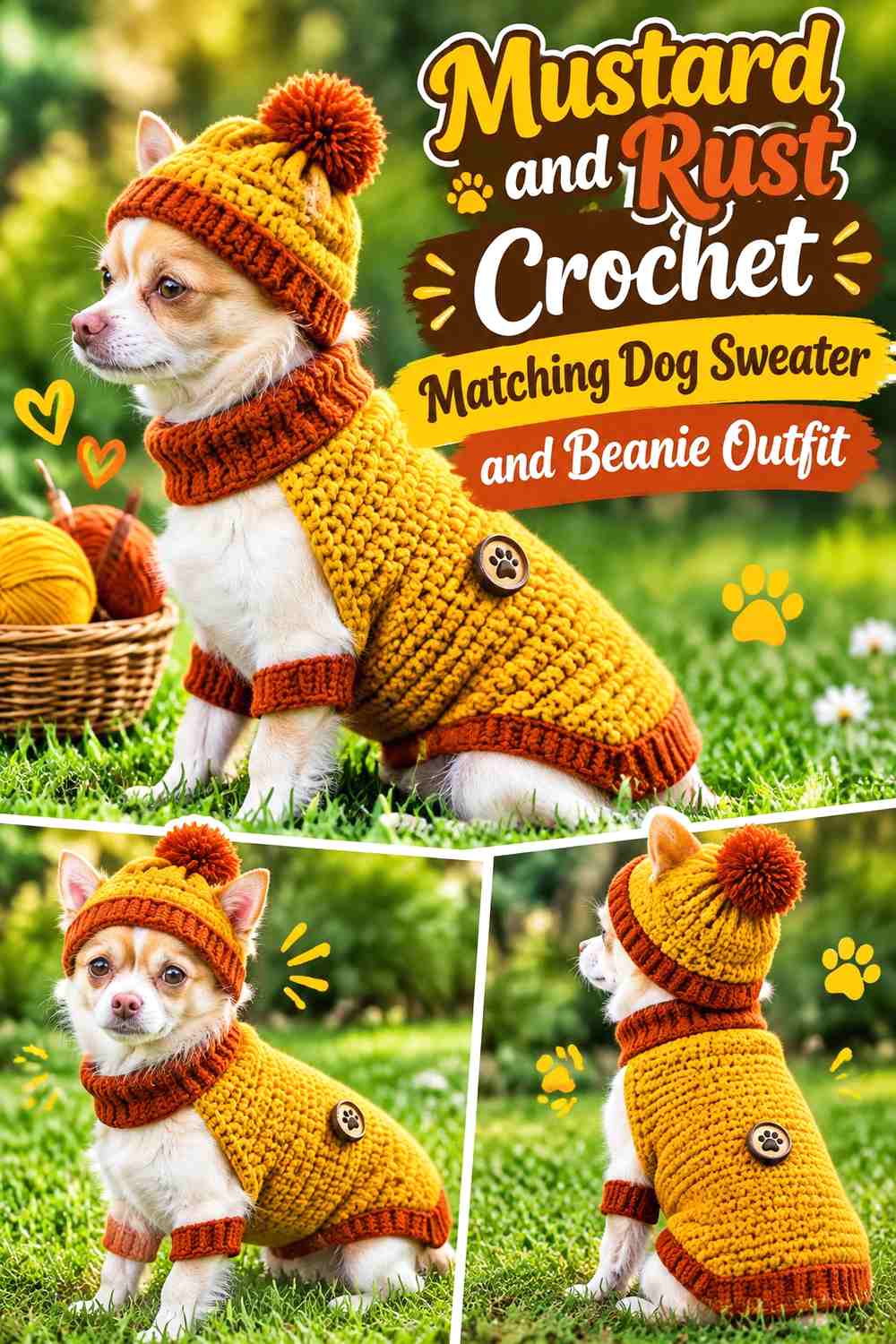
Mustard and rust produce a warmer outfit with less value contrast than navy and cream, so color placement needs more care. Let rust dominate the sweater and use mustard where it can remain clearly visible, such as the neckline, lower border, or a limited stripe. A mustard-led beanie can then make the accent more prominent without covering the entire dog in the brighter shade.
Rust Gives the Crochet Dog Sweater a Strong Warm Base
Use rust over the larger torso area so the sweater has one stable field. Mustard can interrupt it at the neck or in a narrow band instead of appearing in equal-width stripes throughout.
If the two yarns look similar in grayscale, consider a lighter mustard or deeper rust to preserve the distinction.
Mustard Can Lead the Beanie While Rust Repeats at the Edge
Because the hat is much smaller, switching mustard into the dominant role creates contrast between the two pieces while maintaining the same palette. A rust brim, tie, or narrow stripe is enough to pull the hat back into the outfit.
Creator Credit: Last Minute Laura
3. Sage Green and Oatmeal Crochet Matching Dog Sweater and Beanie Outfit
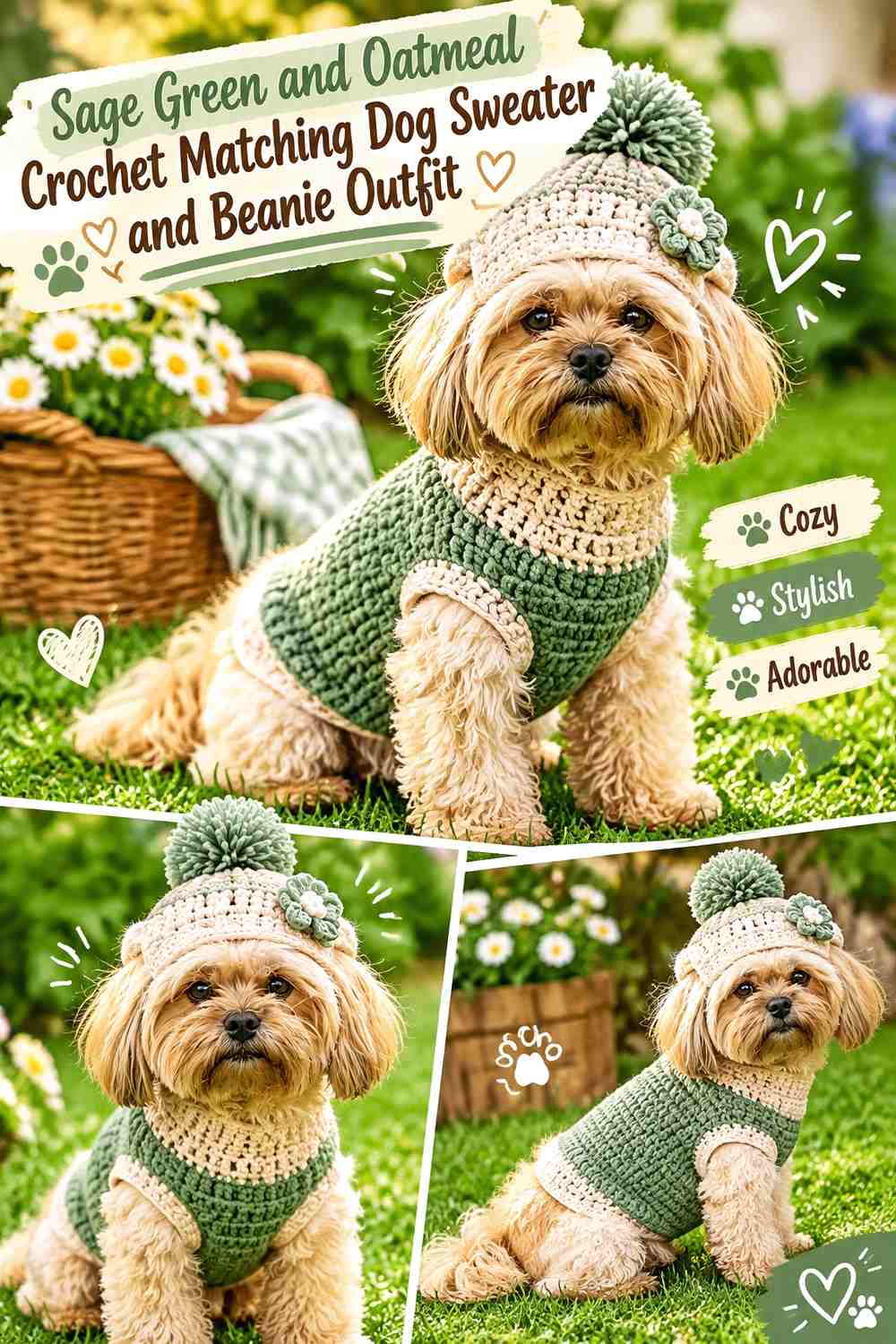
Sage green and oatmeal create a muted outfit where texture can remain important. Sage works well over the sweater body, while oatmeal can define ribbing, openings, and the beanie edge. Since both colors are relatively quiet, repeating the same hierarchy on both pieces will not usually make the set feel overloaded.
Sage Green Can Cover the Main Crochet Dog Sweater Panels
Keep sage uninterrupted across larger areas if the sweater contains noticeable stitch texture. Frequent oatmeal stripes can divide that texture visually and make a small garment appear busier.
Use oatmeal more selectively around garment boundaries.
Oatmeal Makes Sage Green Beanie Edging Easier to See
An oatmeal brim creates a light frame around a sage beanie and repeats the sweater trim where it is most visible. For a more neutral hat, reverse the colors and add only a narrow sage band.
When substituting oatmeal, preserve its lighter neutral role rather than searching for an exact beige.
Creator Credit: Crochet It
4. Burgundy and Blush Crochet Matching Dog Sweater and Beanie Outfit
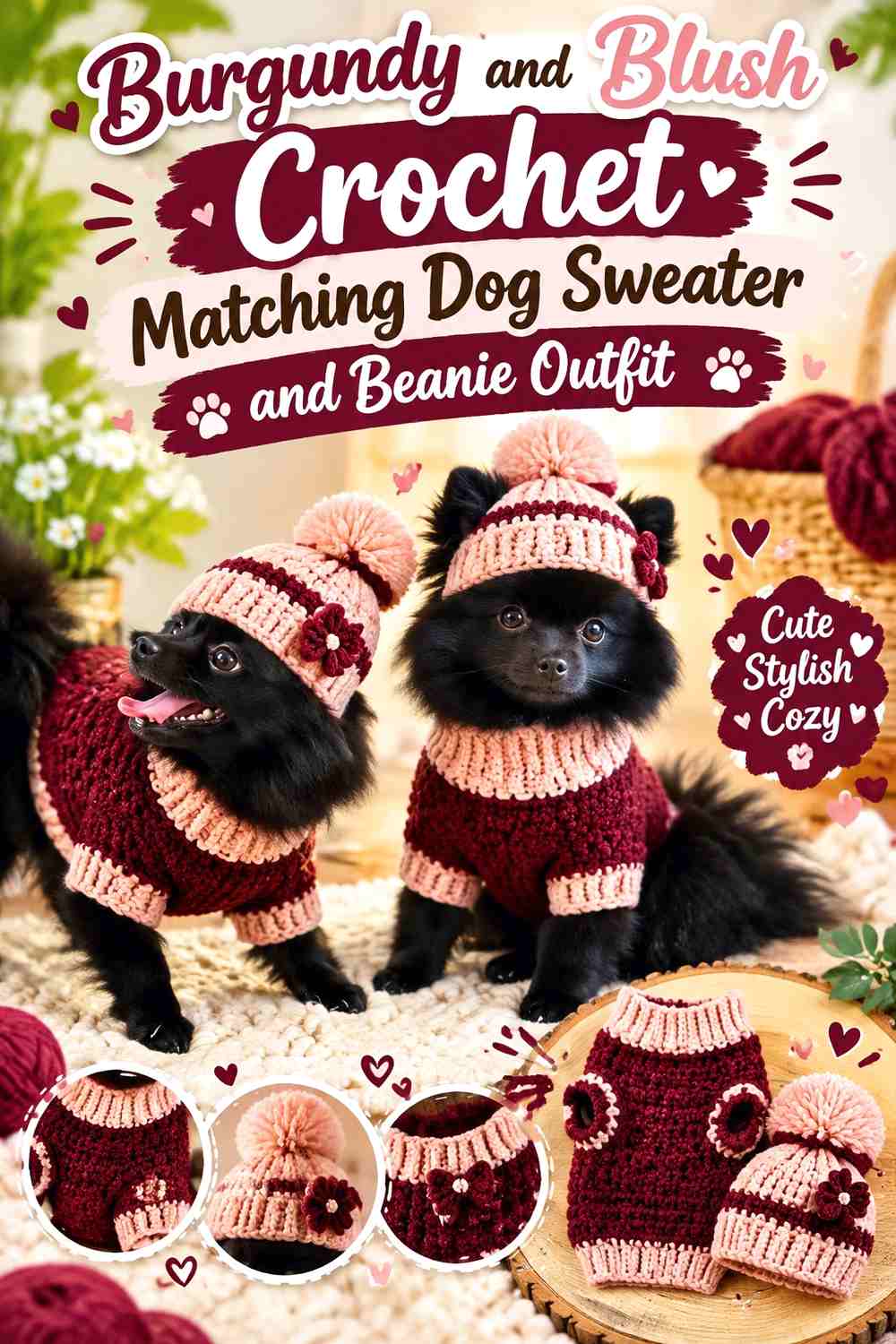
Burgundy creates a deep base while blush prevents the matching outfit from becoming uniformly dark. Use burgundy across most of the sweater, then bring blush into the collar, cuffs, or one decorative band. The beanie can afford a larger share of blush because its smaller surface keeps the pale accent controlled.
Burgundy Can Anchor the Crochet Dog Sweater Back
A solid burgundy back panel gives the outfit depth and makes small blush details more purposeful. If blush appears everywhere in narrow stripes, it may lose its role as a light accent.
Use the color where the sweater shape benefits from definition.
Blush Can Lighten the Burgundy Crochet Beanie Around the Face
A blush brim or lower band places the lightest shade near the dog’s face rather than high on the crown. You can keep the rest of the beanie burgundy or reverse the balance completely for a lighter headpiece.
Creator Credit: SheiLa Teré
5. Teal and Camel Crochet Matching Dog Sweater and Beanie Outfit
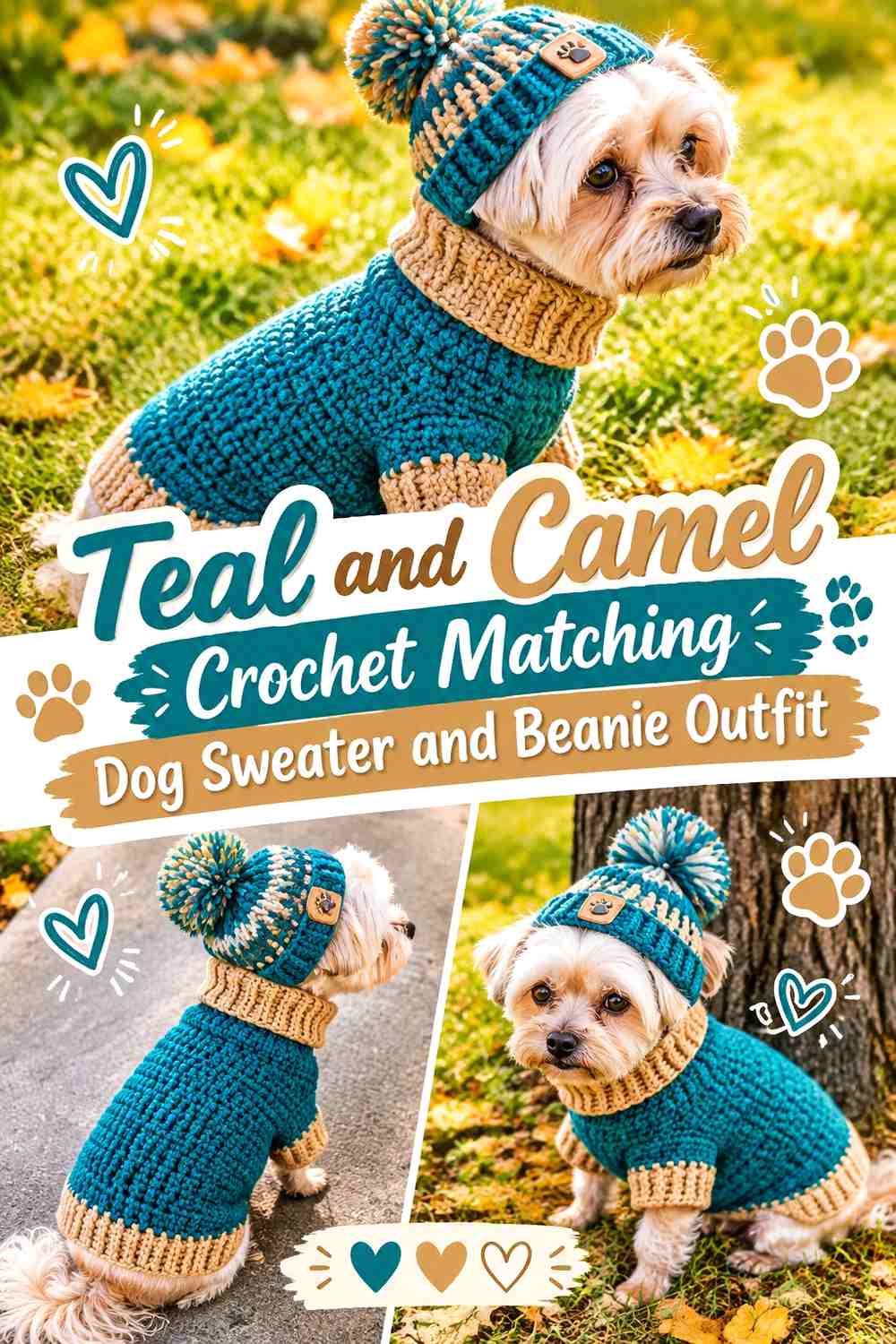
Teal and camel balance a cool saturated shade with a warm neutral. Teal can comfortably dominate the sweater because camel trim will still remain visible around the neck and legs. For the beanie, camel can take a larger role and prevent the outfit from becoming one continuous block of teal.
Teal Works Best Across the Larger Crochet Dog Sweater Area
Let teal cover the torso while camel appears at structural edges. That division gives the sweater a clear color hierarchy and allows the neutral to emphasize openings instead of competing with the main fabric.
Camel Can Turn the Teal Beanie Into a Coordinated Contrast Piece
A mostly camel beanie with teal edging coordinates without looking identical to the sweater. If you add a pom-pom, choose one of the existing two shades rather than introducing an unrelated third accent.
Creator Credit: Vibes with Dani
6. Lavender and Cream Crochet Matching Dog Sweater and Beanie Outfit
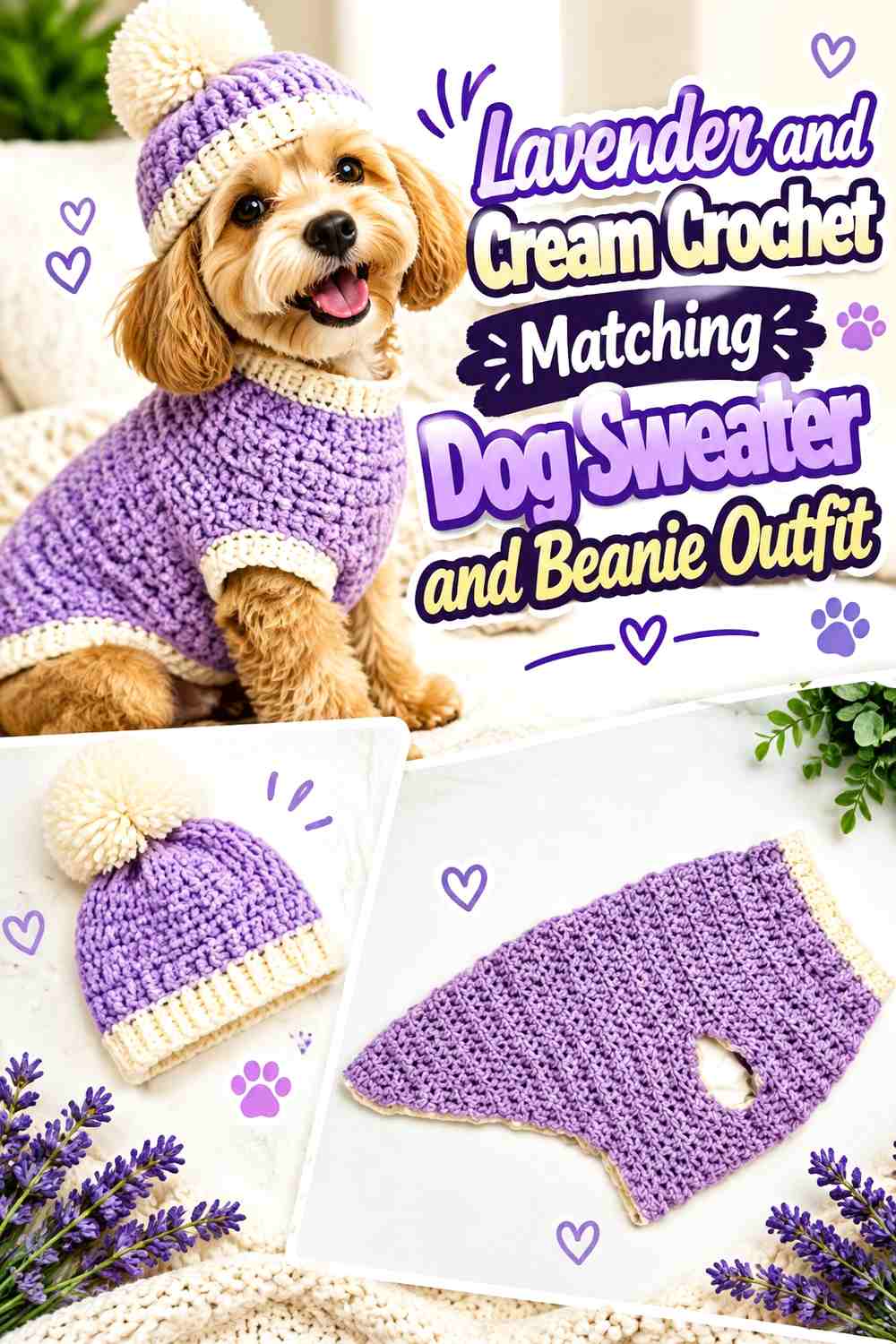
Lavender and cream suit an outfit where you want soft contrast rather than a sharp graphic effect. Lavender should remain sufficiently deeper than the cream for edging to show clearly. Use cream around the sweater neck and leg openings, then repeat it around the beanie brim.
Lavender Gives the Crochet Dog Sweater a Calm Main Field
Cover most of the sweater with lavender and avoid fragmenting the body with too many cream stripes. A simpler lavender surface also lets ribbing, puff texture, or other visible crochet detail remain readable.
Cream Keeps the Lavender Crochet Beanie Visually Separate
Cream around the lower hat edge prevents lavender from blending into the sweater when both pieces are seen together. A small cream top detail can repeat the accent, but avoid distributing cream so evenly that neither shade clearly leads.
Creator Credit: Loops Only Crochet
7. Forest Green and Harvest Gold Crochet Matching Dog Sweater and Beanie Outfit

Forest green gives this set a dark foundation, while harvest gold supplies a smaller, warmer focal color. The sweater can use gold in controlled bands or edging, but the beanie is a good place to give the accent slightly more space.
Forest Green Should Ground the Crochet Dog Sweater
Keep forest green across the back and belly sections if you want the sweater to remain the darkest part of the outfit. Harvest gold works better around the neckline or lower edge than as numerous narrow stripes.
Harvest Gold Can Become the Focal Color on the Forest Green Beanie
A harvest-gold crown with a forest-green brim reverses the garment hierarchy and prevents the matching set from feeling heavy. If you prefer a dark beanie, use gold only in a stripe or pom-pom.
Creator Credit: it’s erin b.
8. Dusty Blue and Ivory Crochet Matching Dog Sweater and Beanie Outfit

Dusty blue and ivory create a softer alternative to navy and white. Ivory can mark the sweater’s neckline and openings without producing an extremely sharp border, while the beanie can repeat the same two colors in broader bands.
Dusty Blue Can Lead Across the Crochet Dog Sweater
Use dusty blue over the back and side areas so the sweater has one recognizable main color. Keep ivory concentrated at edges or in a single stripe where it can brighten the garment without splitting it into many sections.
Ivory Can Give the Dusty Blue Beanie a Defined Lower Edge
An ivory brim helps separate the hat from the dog’s face and echoes the sweater trim. If the ivory and blue are close in value, deepen the blue rather than adding another accent simply to create contrast.
Creator Credit: Made by Phia
9. Raspberry and Soft Pink Crochet Matching Dog Sweater and Beanie Outfit
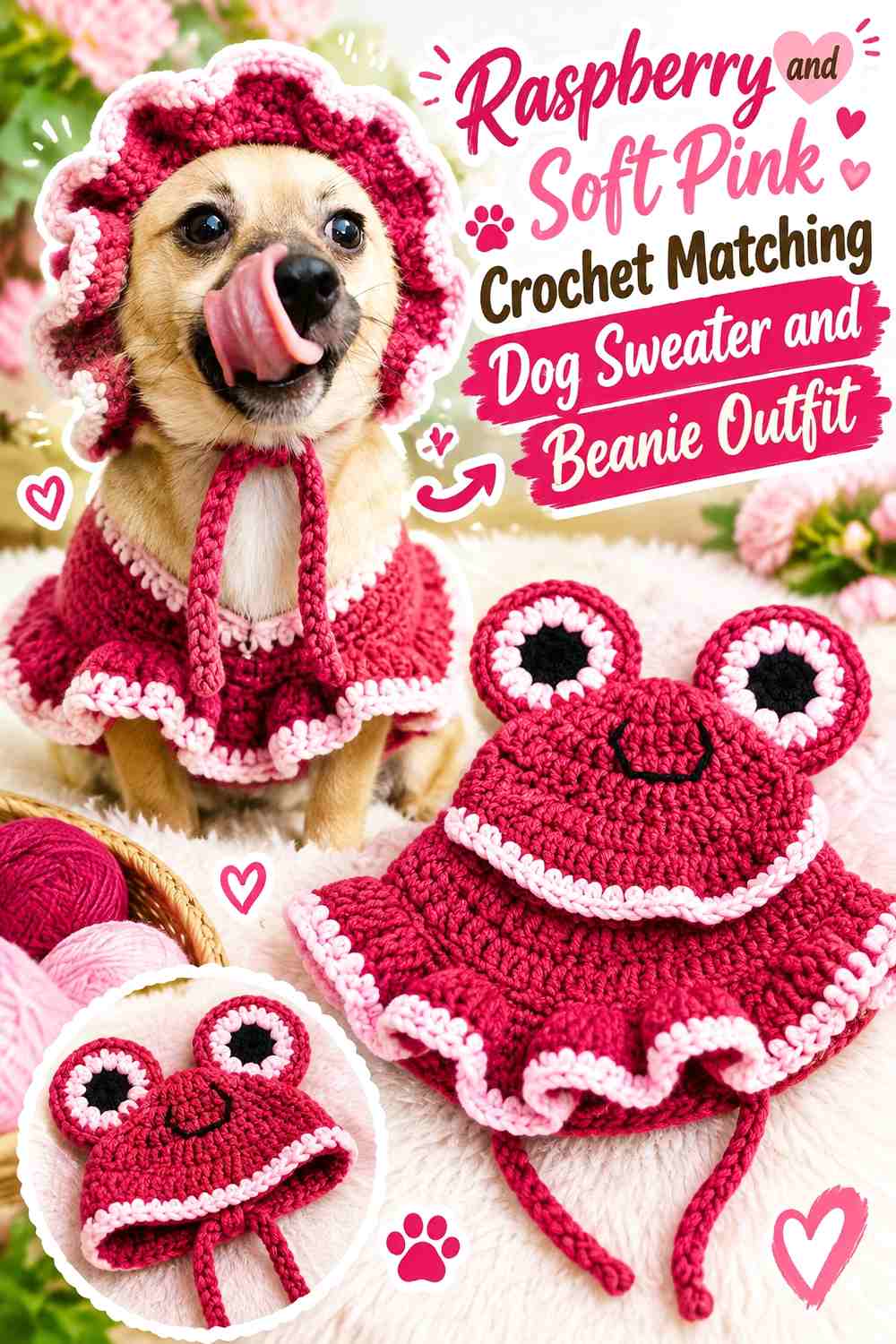
Raspberry and soft pink create a tonal set in which the relationship comes from one deeper and one lighter version of a similar color family. Because the hues are closely related, value contrast becomes more important than hue contrast.
Raspberry Can Keep the Crochet Dog Sweater From Looking Too Pale
Use raspberry across the main body and let soft pink highlight trim or a limited stripe. This keeps the sweater silhouette clear even when both yarns share similar undertones.
Soft Pink Can Make the Raspberry Crochet Beanie Feel Lighter
A soft-pink crown with a raspberry brim produces a coordinated tonal reversal. Compare the two yarns before crocheting; if they look almost identical in grayscale, the final stripes may be much subtler than expected.
Creator Credit: keepstylinlady
10. Chocolate Brown and Mint Crochet Matching Dog Sweater and Beanie Outfit
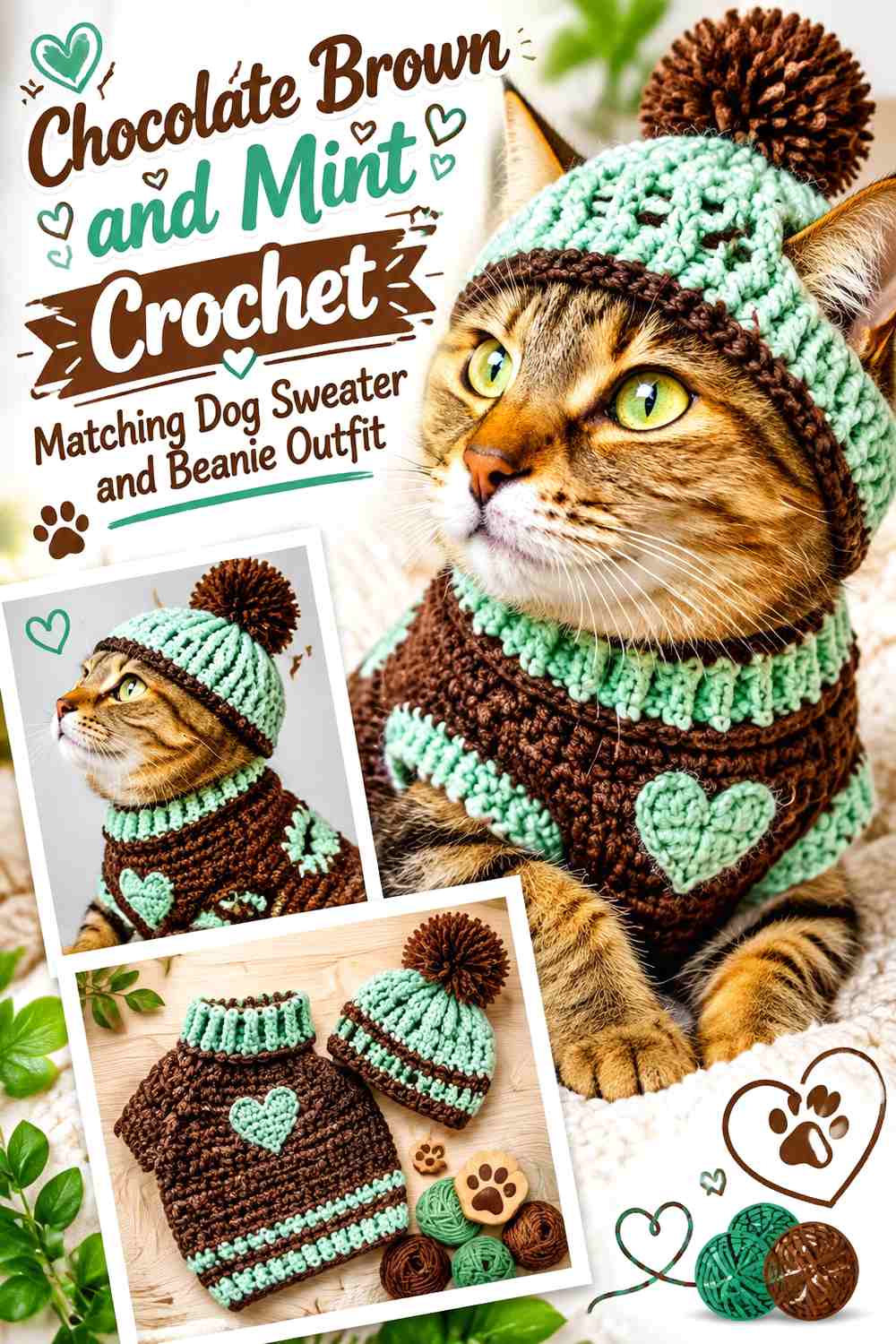
Chocolate brown and mint combine a strong dark neutral with a light cool accent. This contrast makes even a small amount of mint visible, so the sweater does not need wide mint sections to establish the palette.
Chocolate Brown Can Dominate the Crochet Dog Sweater Without Hiding Mint
Use chocolate across the torso and mint at the neck, leg openings, or one repeated band. The strong light-dark difference means those small mint areas will still read clearly.
Mint Can Cover More of the Chocolate Brown Beanie
The hat is a useful place to reverse the ratio. A mint crown with chocolate edging feels lighter while clearly belonging to the same outfit.
If you want a pom-pom, chocolate will usually provide more definition against the mint crown than adding a third color.
Creator Credit: Catventurous Crochet
11. Terracotta and Cream Crochet Matching Dog Sweater and Beanie Outfit
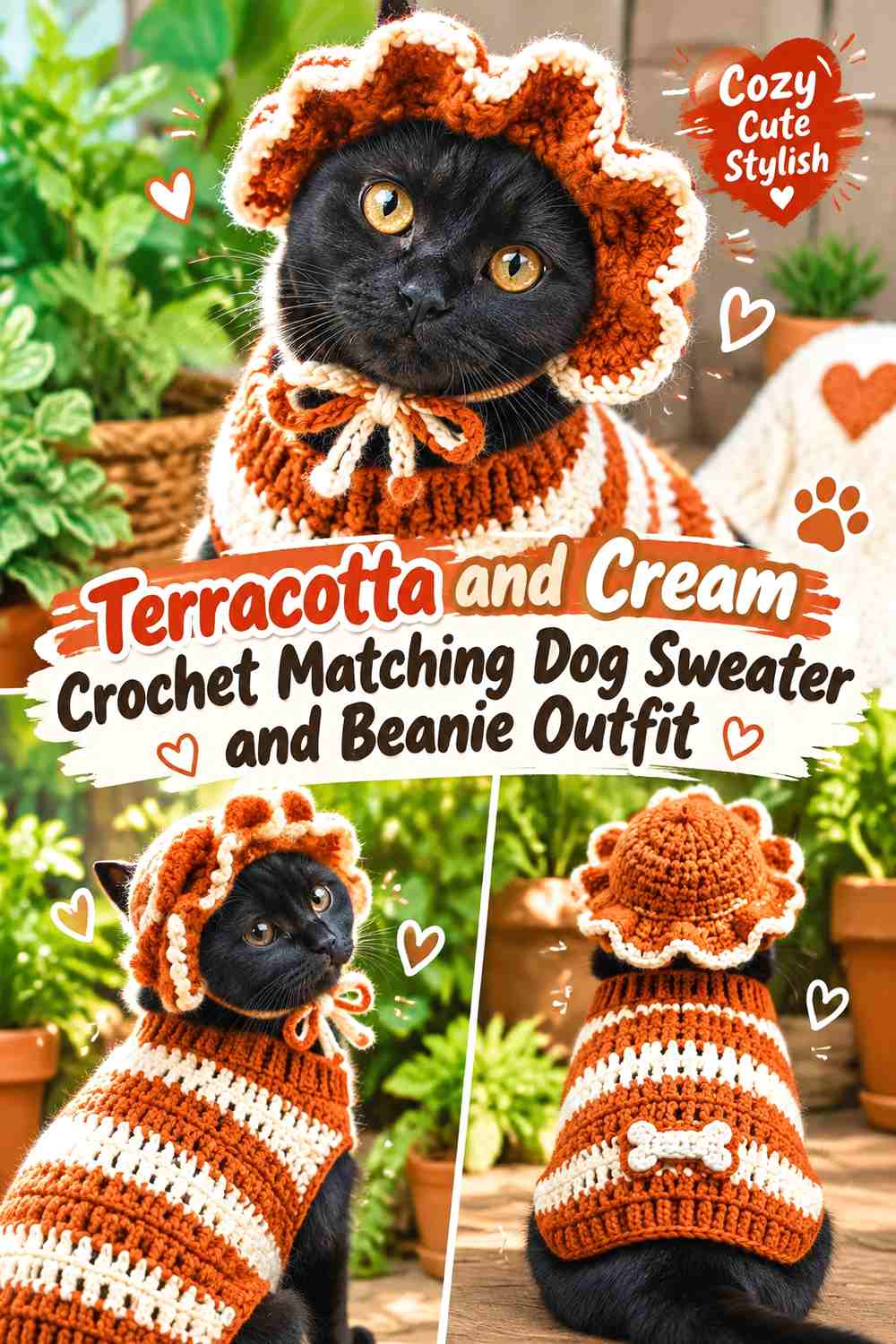
Terracotta makes a warm earthy main color, while cream gives the outfit enough value contrast to show sweater edges and beanie shaping. This is especially useful when the crochet texture itself is subtle.
Terracotta Should Remain the Largest Crochet Dog Sweater Color
Use terracotta continuously across the back, then add cream at the neckline or bottom edge. Keeping the warm color dominant makes a small amount of cream look deliberate rather than unfinished.
Cream Can Repeat Terracotta Details on the Crochet Beanie
A cream beanie with a terracotta brim is an easy way to reverse the proportions while maintaining the palette. You could also use terracotta for the crown and cream only at the edge when a darker hat suits the overall outfit better.
Creator Credit: Brunaticality
12. Plum and Mustard Crochet Matching Dog Sweater and Beanie Outfit

Plum and mustard create one of the strongest hue contrasts in the collection. Because both colors attract attention, the sweater benefits from a clear dominant shade rather than equal alternating sections.
Plum Can Control the Crochet Dog Sweater’s Visual Weight
Let plum cover most of the body and place mustard around smaller areas such as the collar or a single horizontal band. This keeps the warm accent from competing across every part of the garment.
Mustard Makes a Strong Plum Crochet Beanie Accent
A mustard brim, top detail, or narrow stripe will remain highly visible against plum. You can also make mustard the main hat color while keeping plum around the lower edge to connect directly with the sweater.
Creator Credit: Beidi Crochet
13. Coral and Butter Yellow Crochet Matching Dog Sweater and Beanie Outfit
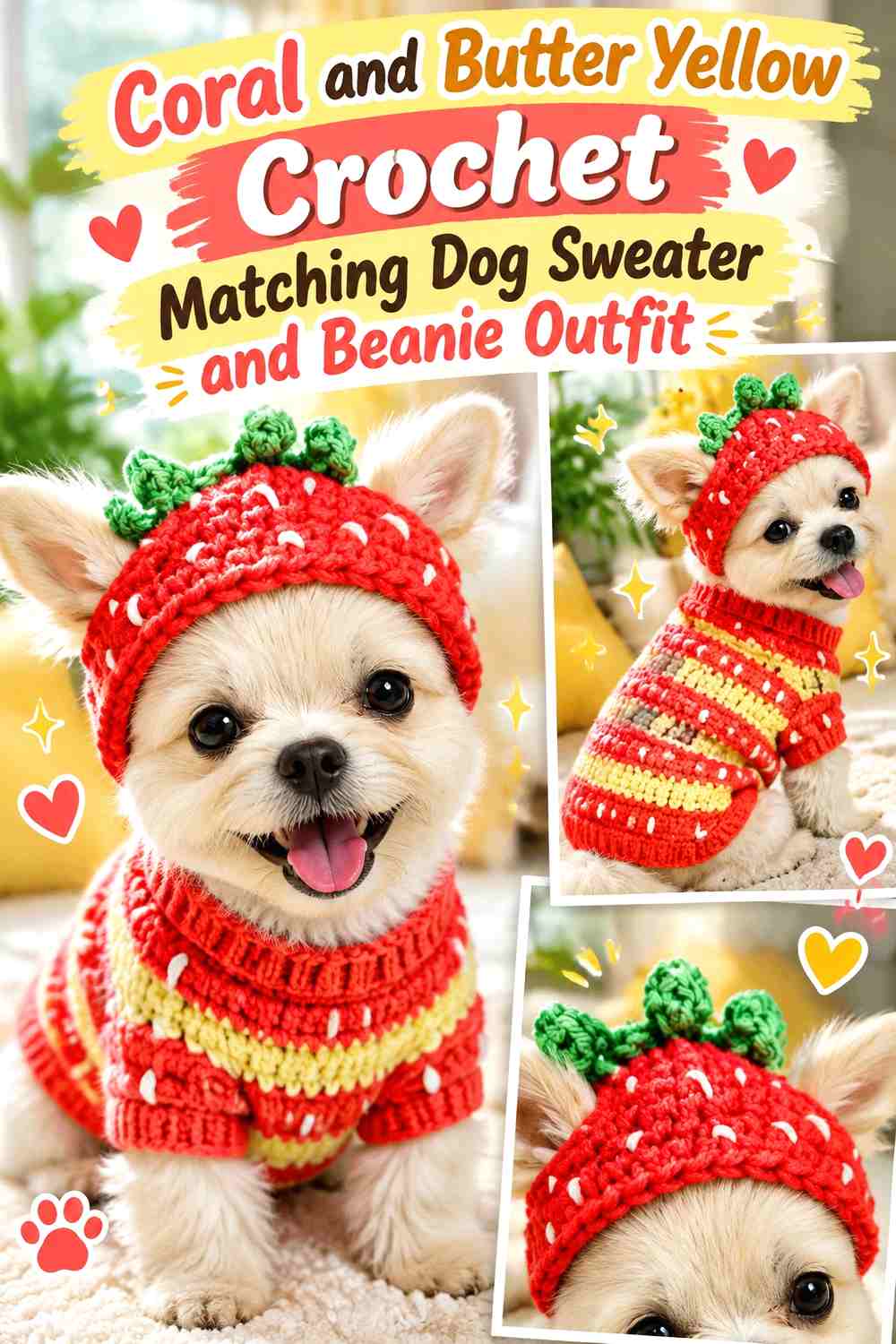
Coral and butter yellow create a warm, playful set with lower contrast than coral and white. Butter yellow can work as a supporting color, but it should be noticeably lighter than coral if you want the trim and stripes to remain distinct.
Coral Can Carry the Main Crochet Dog Sweater Surface
Use coral over the back and sides, then place butter yellow around the collar or in one broad accent band. Too many alternating warm stripes can make the sweater look busier than the small garment needs.
Butter Yellow Can Brighten the Coral Crochet Beanie
A butter-yellow beanie with coral edging creates a coordinated reversal and keeps the headpiece visually separate from the sweater. If both shades are quite bright, avoid introducing another saturated accent.
Creator Credit: CutecrochetbyAlly
14. Charcoal and Brick Red Crochet Matching Dog Sweater and Beanie Outfit
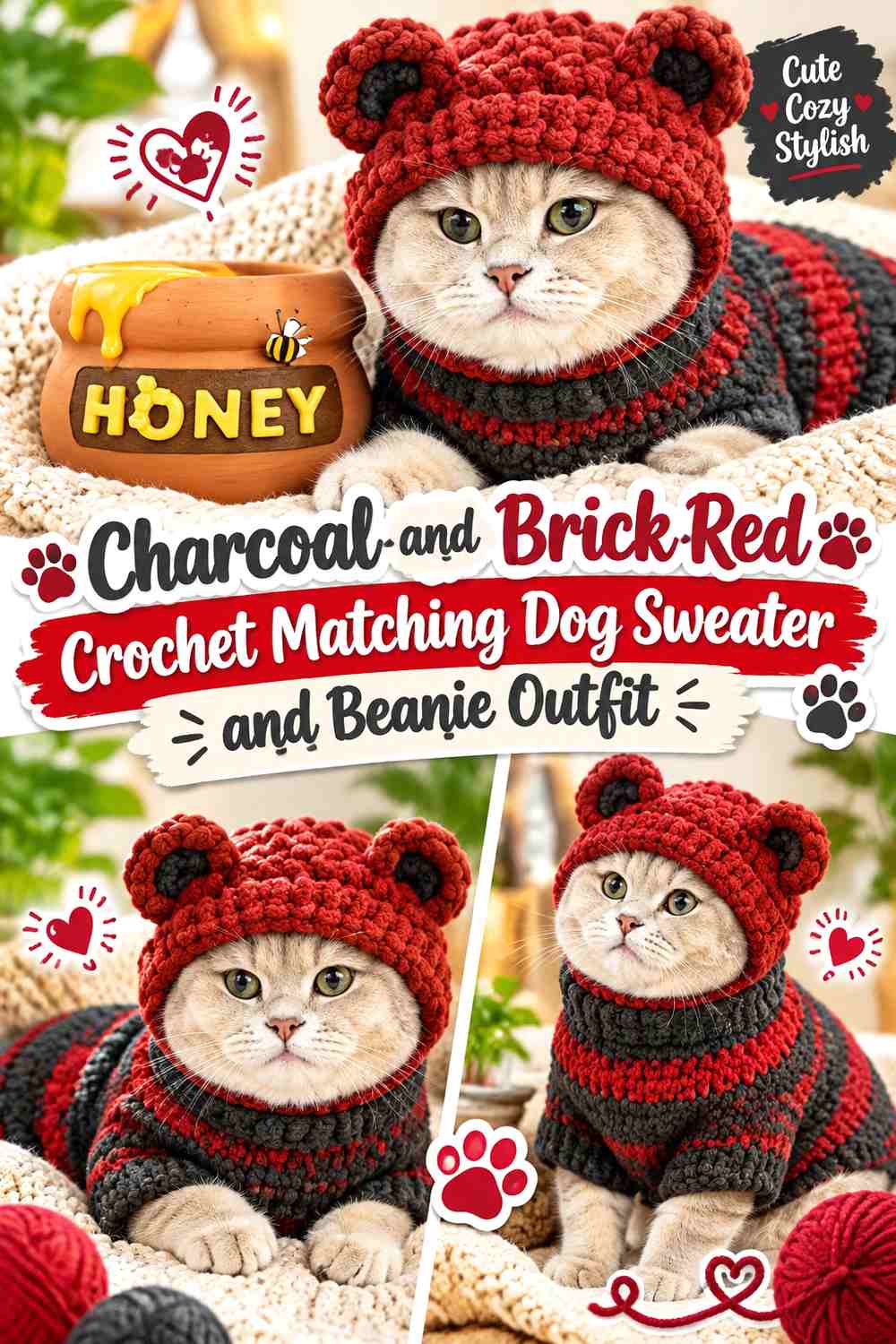
Charcoal creates a neutral framework that lets brick red carry the personality of the outfit. Unlike black, charcoal can create a slightly softer contrast while still giving the red a clearly defined boundary.
Charcoal Can Ground the Crochet Dog Sweater Body
Use charcoal across the largest areas and reserve brick red for the neck, cuffs, leg borders, or one noticeable stripe. That placement keeps red active without letting it divide every section of the sweater.
Brick Red Can Lead the Charcoal Crochet Beanie
Making the hat primarily brick red prevents the outfit from becoming too dark overall. A charcoal brim or small top detail will immediately connect it back to the sweater.
Creator Credit: Kirby.Happymeow
15. Avocado and Burnt Orange Crochet Matching Dog Sweater and Beanie Outfit
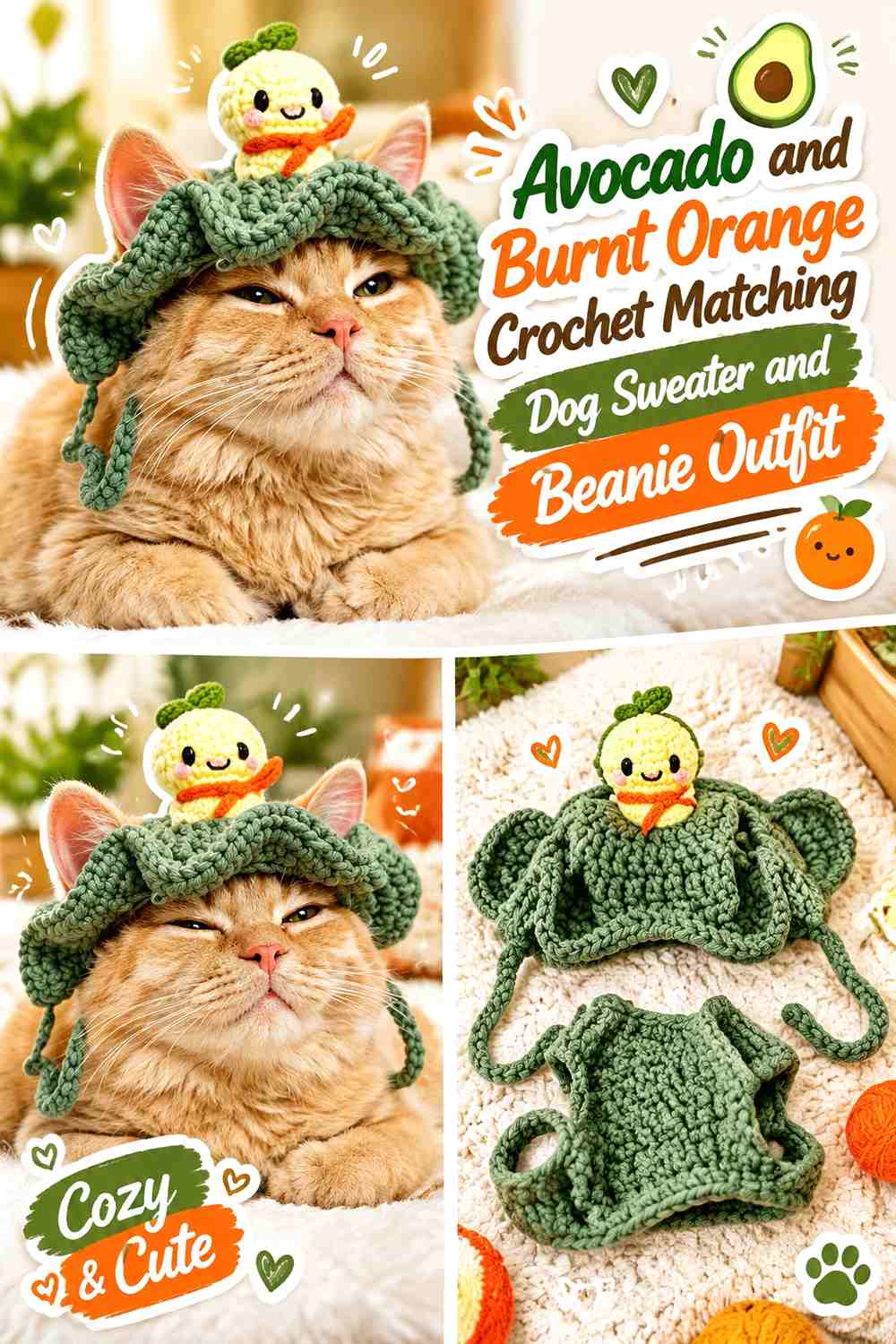
Avocado and burnt orange create the most distinctly retro palette in this group. Both are medium-to-deep colors, so their relationship depends more on hue than strong light-dark contrast. Giving each shade a different role prevents the sweater and hat from merging into one earthy block.
Avocado Can Anchor the Crochet Dog Sweater
Let avocado cover most of the torso and use burnt orange around selected edges or in one broad stripe. This makes green the garment’s foundation while preserving orange as the warmer focal color.
If the yarns look very similar in grayscale, that does not automatically make the palette unusable, but motif and stripe boundaries will appear softer.
Burnt Orange Can Make the Avocado Crochet Beanie Stand Out
Reverse the balance on the beanie by using burnt orange across the crown and avocado around the lower edge. That creates a clear pair rather than two pieces with identical color distribution.
Creator Credit: melhz crochet
Which Matching Crochet Dog Sweater and Beanie Palette Should You Choose?
For strong contrast, navy and cream, chocolate and mint, or forest green and harvest gold make garment edges and beanie details easier to distinguish. Burgundy and blush or charcoal and brick red provide a darker overall direction while retaining a visible accent.
For softer outfits, sage and oatmeal, lavender and cream, dusty blue and ivory, or raspberry and soft pink create gentler transitions. These combinations work particularly well when you want crochet texture to remain as important as the color changes.
Mustard and rust, terracotta and cream, or avocado and burnt orange move toward warmer earthy styling. Teal and camel gives a cooler alternative while still using a warm neutral.
Conclusion
A matching crochet dog sweater and beanie works best when the pieces repeat a color relationship, not necessarily an identical pattern. Let the sweater’s larger surface establish the dominant shade, then use the beanie to repeat, reverse, or concentrate the accent.
If you want the set to feel understated, keep the sweater mostly one color and transfer its trim color to the beanie crown. If you want stronger coordination, repeat one stripe or border placement across both pieces. In either case, limit extra colors until the dominant, supporting, and accent roles are clear.
Fit remains more important than coordination. Follow the original sweater or pet-headwear tutorial for construction, adjust it to the individual dog rather than relying on a generic size label, and keep headwear supervised and clear of the dog’s eyes and natural ear movement.
Frequently Asked Questions
Should the Crochet Dog Sweater and Beanie Be Exactly the Same Color?
No. Matching can come from repeating the same two-color palette even when the proportions are reversed. A teal sweater with camel trim can pair effectively with a camel beanie finished in teal.
How Many Colors Should I Use in a Matching Crochet Dog Outfit?
Two colors are enough for many sweater-and-beanie sets because they provide a main shade and a recognizable trim or accent. A third color can work when it has a clear purpose, but equal amounts of three strong shades may make a small outfit visually crowded.
Should the Crochet Beanie Repeat Every Sweater Stripe?
Usually not. A small beanie has less surface area, so reproducing a complicated stripe sequence can make it look busy. Repeating one important sweater stripe or the trim color often creates clearer coordination.
How Can I Check Whether Two Crochet Dog Outfit Colors Have Enough Contrast?
Place the yarns side by side and compare their lightness as well as their hue. Viewing a photo in grayscale can show whether the colors separate clearly. Strong contrast is especially useful around the sweater neckline, leg openings, beanie brim, and small decorative details.
Can I Reverse the Crochet Sweater Colors on the Beanie?
Yes. Reversing the dominant and accent colors is one of the easiest ways to make the pieces coordinate without becoming identical. A cream-trimmed navy sweater, for example, can pair with a cream beanie edged in navy.
Where Should the Accent Color Go on a Crochet Dog Sweater?
The neckline, leg openings, lower edge, cuffs, and a limited stripe are practical places to repeat an accent. Using the same accent around the beanie brim creates an immediate visual connection between the two pieces.
What Should I Check Before My Dog Wears a Crochet Beanie With the Sweater?
Make sure neither piece interferes with normal walking, head movement, sight, or ear position. Keep closures and embellishments secure, supervise the dog while headwear is being worn, and remove the beanie if the dog repeatedly paws at it or tries to shake it off.