Charcoal violet sits between smoky gray and deep purple, making it a useful foundation for crochet bat wing shawls where both silhouette and stitch texture matter. It is dark enough to support gothic styling without becoming as visually flat as pure black, and its violet undertone gives you several directions for secondary colors—from silver and icy lavender to wine, teal, moss, and antique gold.

Color placement matters particularly on wing-inspired shawls. A lighter shade can reveal ridges and lace openings, while a dark border can sharpen lower points. On symmetrical wings, repeating an accent on both sides keeps the spread balanced. On asymmetrical dragon-tail or crescent constructions, the accent can instead follow the long outer edge or final point.
The tutorials below include literal bat-inspired shawls as well as dragon-wing, butterfly-wing, web, skull-lace, fan-lace, and pointed shawl constructions that can support a bat-wing interpretation. The charcoal violet palettes are independent editorial adaptations; the credited creators are linked for the construction concepts rather than being presented as users of these exact color combinations.
Quick List
- Charcoal Violet And Silver Gray Crochet Bat Wing Shawl
- Charcoal Violet And Black Crochet Bat Wing Shawl
- Charcoal Violet And Moon Cream Crochet Bat Wing Shawl
- Charcoal Violet And Deep Plum Crochet Bat Wing Shawl
- Charcoal Violet And Burgundy Crochet Bat Wing Shawl
- Charcoal Violet And Dusty Mauve Crochet Bat Wing Shawl
- Charcoal Violet And Midnight Blue Crochet Bat Wing Shawl
- Charcoal Violet And Deep Teal Crochet Bat Wing Shawl
- Charcoal Violet And Forest Green Crochet Bat Wing Shawl
- Charcoal Violet And Moss Green Crochet Bat Wing Shawl
- Charcoal Violet And Rust Crochet Bat Wing Shawl
- Charcoal Violet And Antique Gold Crochet Bat Wing Shawl
- Charcoal Violet And Smoky Rose Crochet Bat Wing Shawl
- Charcoal Violet And Icy Lavender Crochet Bat Wing Shawl
- Charcoal Violet Ivory And Black Crochet Bat Wing Shawl
- Charcoal Violet And Pewter Crochet Bat Wing Shawl
- Charcoal Violet And Wine Red Crochet Bat Wing Shawl
- Charcoal Violet And Slate Blue Crochet Bat Wing Shawl
- Charcoal Violet And Muted Copper Crochet Bat Wing Shawl
Let Charcoal Violet Carry the Bat Wing Silhouette
Charcoal violet should normally occupy the largest visual area when it is the defining color of the shawl. On a spread-wing construction, that means using it through the central body and most of both wings rather than limiting it to a narrow border.
Supporting shades work more effectively when they have a clear job. A lighter color can emphasize ridges or lace openings, while a darker accent can sharpen outer points. Repeating a secondary shade at structurally important locations is usually clearer than scattering small color changes across every row.
Use Charcoal Violet Contrast to Protect Wing Texture
Very dark crochet can lose visible texture when neighboring colors are also dark. Compare the yarns in normal room light and from several feet away before committing to a low-contrast palette.
For raised wing ribs, choose a supporting shade that makes the ridges easier to distinguish if texture is the priority. For spiderweb, skull, fan, or open lace constructions, contrast between the shawl and the clothing underneath can matter just as much as contrast between two yarn colors.
Place Charcoal Violet Accents Along Points, Ridges, and Wing Edges
A bat wing shawl offers several natural places for color changes: the center spine, radiating ribs, lower points, outer wing tips, scalloped borders, or alternating lace sections. Use those locations to make the palette correspond to the construction.
If the shawl is already highly detailed, keep the palette restrained. Two colors can be more effective than four when the fabric contains strong ridges, web openings, skull motifs, or repeated points.
1. Charcoal Violet And Silver Gray Crochet Bat Wing Shawl
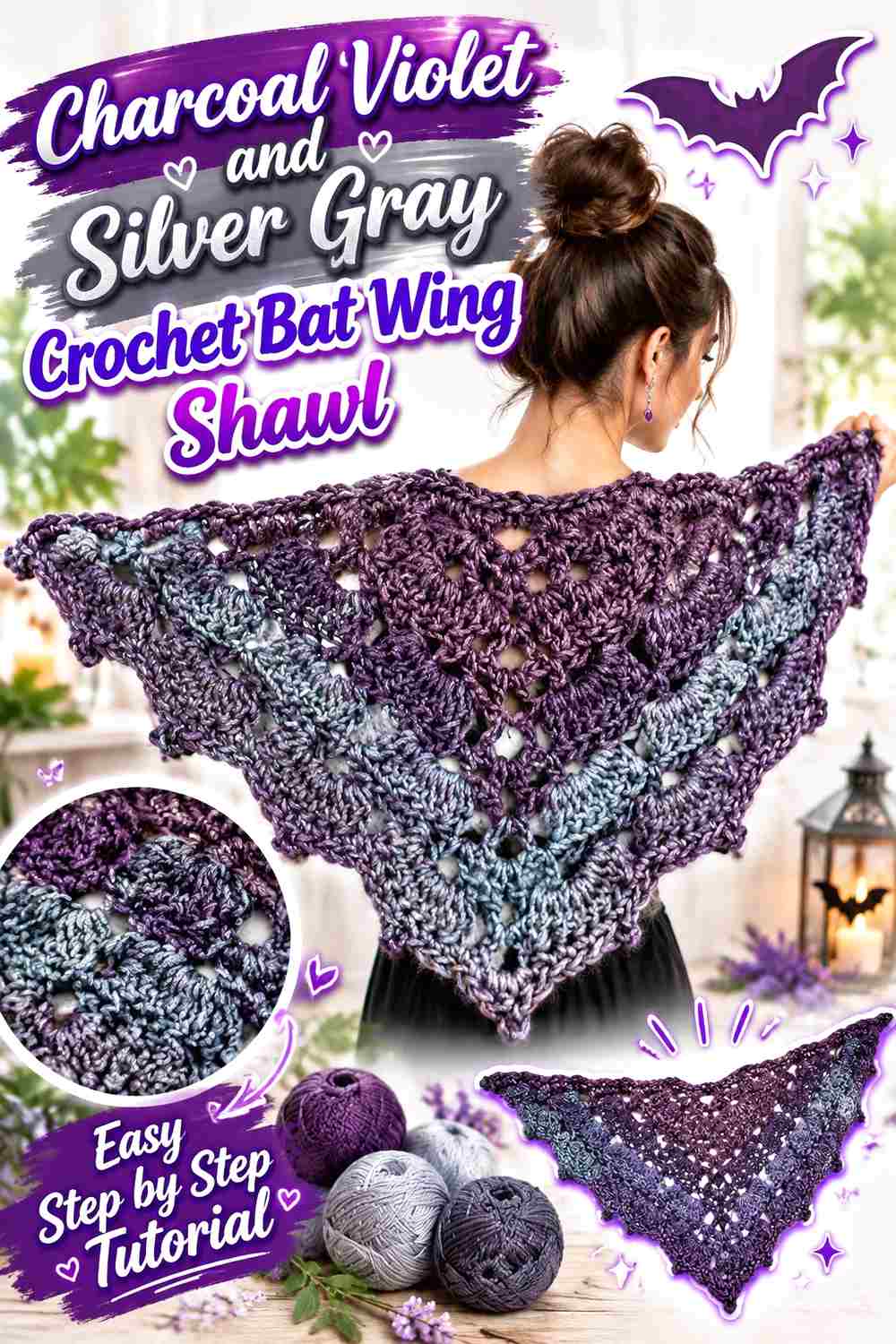
Silver gray creates crisp value separation from charcoal violet without introducing a strongly competing hue. On a literal bat-inspired shawl, let charcoal violet control the wing body and reserve silver for narrow lower points or a controlled outer border. The credited tutorial provides a direct bat-shawl construction reference.
Charcoal Violet Should Dominate the Silver Gray Bat Wing Surface
Keep most of both wings charcoal violet so the spread silhouette reads as one connected shape. If silver occupies every other section, the viewer may notice striping before the bat outline.
Charcoal Violet Looks Sharper With Silver Gray Outer Points
Silver can outline selected lower points where you want the serrated edge to remain visible against dark clothing. If the contrast feels too bright, substitute a medium gray while keeping it clearly lighter than charcoal violet.
Creator Credit: Magic Dina
2. Charcoal Violet And Black Crochet Bat Wing Shawl
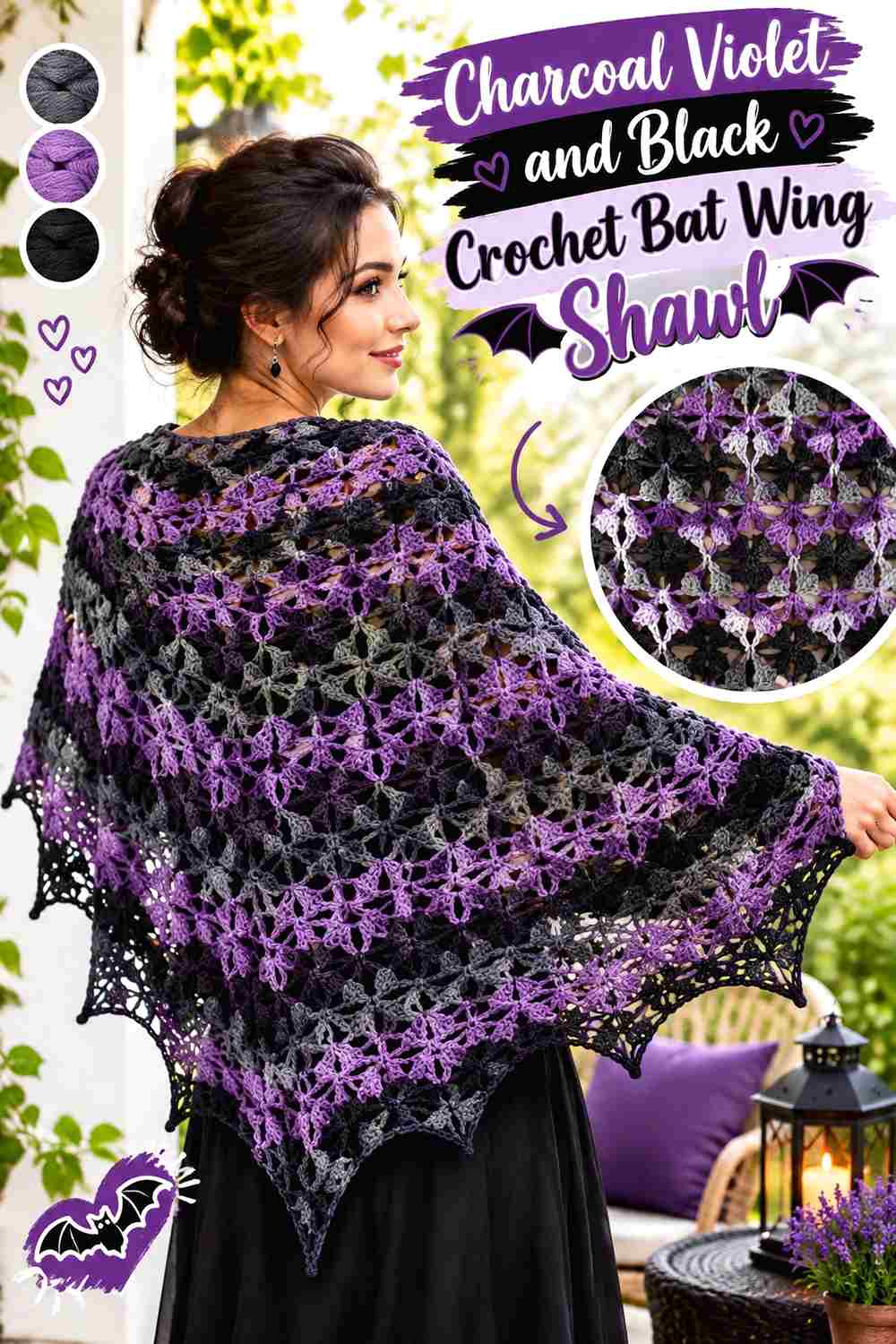
Black creates a tonal gothic palette rather than a bright contrast. A spider-stitch construction can give the two dark shades enough structural variation to remain interesting, especially if charcoal violet covers the open or textured body and black is limited to framing areas. The credited tutorial demonstrates a spider-stitch shawl construction.
Charcoal Violet Needs More Surface Area Than Black
Black has stronger visual weight, so using equal quantities can make charcoal violet disappear. Keep violet across the main field and place black along the edge or center line.
Charcoal Violet Texture Must Stay Visible Beside Black
Check the shawl under good lighting while working. If black and charcoal violet merge from a distance, use their placement rather than tiny stripes to distinguish them—large violet sections and a narrow black frame are clearer.
Creator Credit: Fiber Spider
3. Charcoal Violet And Moon Cream Crochet Bat Wing Shawl

Moon cream creates the strongest light-dark contrast in this collection. An open dragon-wing construction gives the light accent useful places to appear without overtaking the shawl: narrow ribs, a final border, or one repeated line between larger charcoal violet sections. The tutorial supports a wing-like crochet shawl built with open areas.
Charcoal Violet Can Make Moon Cream Wing Ribs More Obvious
Use cream sparingly along structural divisions if you want the segmented wing appearance to become easier to see. The lighter yarn can act like a visual highlight between broader violet sections.
Charcoal Violet Should Return Around a Moon Cream Border
If cream is used on the lower edge, bring charcoal violet back at the wing tips or another finishing area. This prevents the pale border from visually separating itself from the rest of the shawl.
Creator Credit: How to Crochet
4. Charcoal Violet And Deep Plum Crochet Bat Wing Shawl

Deep plum keeps the palette within the purple family while giving the wing a richer second tone. A softer, more textural dragon-wing construction suits this low-contrast combination because broad color areas are more useful than narrow stripes when two shades are closely related. The credited tutorial demonstrates a velvet-textured dragon-wing shawl concept.
Charcoal Violet Needs Broad Sections Beside Deep Plum
Keep charcoal violet across large wing areas and place plum in one or two substantial bands. Tiny alternations can make the two purples visually merge.
Charcoal Violet Can Ground Deep Plum Along the Wing Edge
Deep plum works well as an outer section when charcoal violet remains across the center and upper spread. That arrangement gives the purple shift a clear direction from center to edge.
Creator Credit: Kyle Crochet
5. Charcoal Violet And Burgundy Crochet Bat Wing Shawl
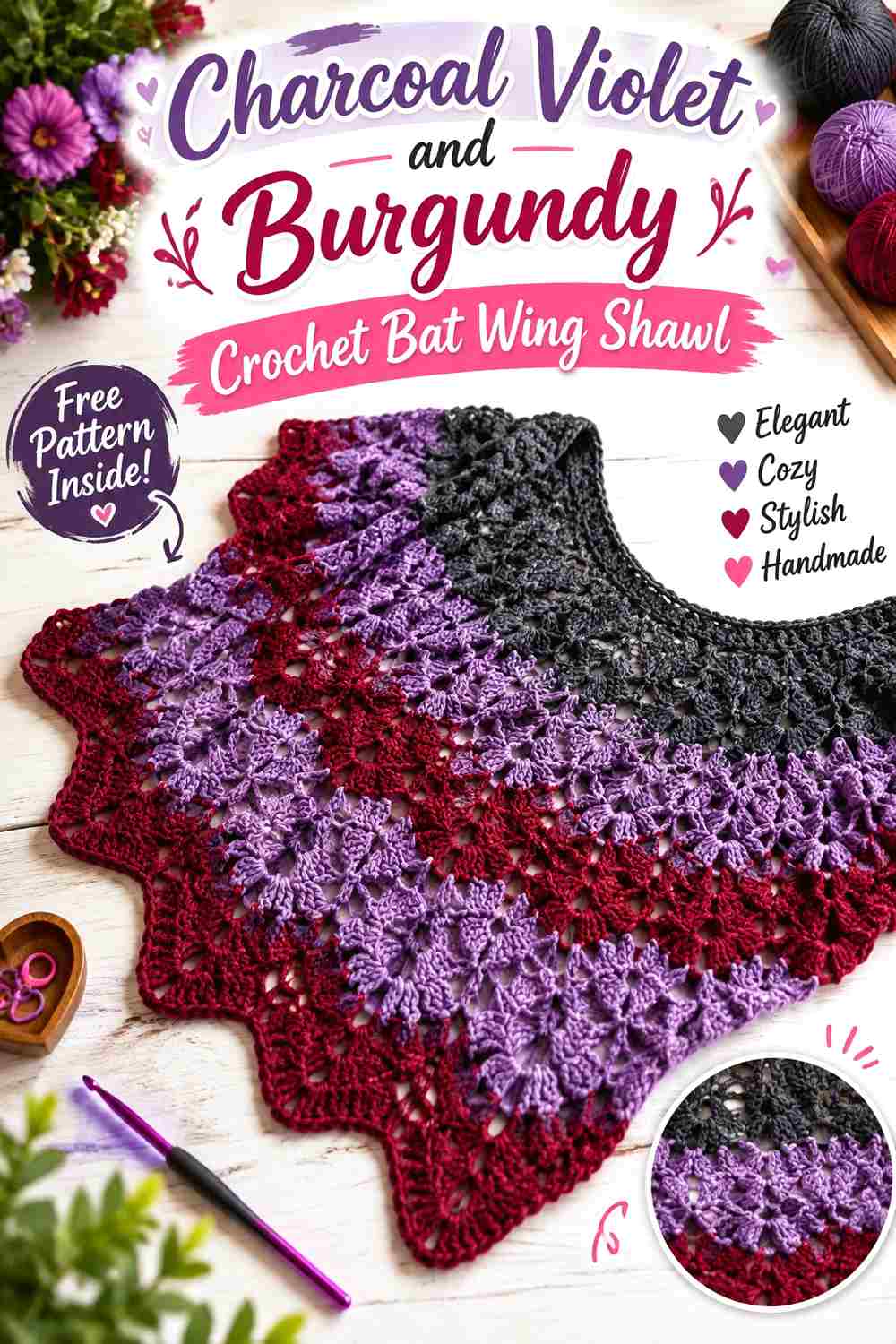
Burgundy adds a red-purple direction to charcoal violet while remaining suitably dark for a dramatic wing silhouette. A broad butterfly-wing construction gives both shades enough room to show without creating excessive striping. The credited source demonstrates a wide wing-style shawl.
Charcoal Violet Should Control the Burgundy Wing Center
Place charcoal violet across the central back so both wings appear connected. Burgundy can then expand toward the outer sections without becoming the dominant color.
Charcoal Violet and Burgundy Need a Value Check
These two shades can be different in hue but very similar in darkness. View the yarns in grayscale before starting; if they almost disappear into each other, choose a somewhat lighter burgundy or use wider color blocks.
Creator Credit: NATALYA ROGATOVSKAYA – вязание крючком
6. Charcoal Violet And Dusty Mauve Crochet Bat Wing Shawl

Dusty mauve provides a softened, lighter purple contrast. On a two-sided wing construction, mauve can highlight repeated divisions while charcoal violet maintains the shadowed bat-wing character. The credited tutorial demonstrates a pair-of-wings shawl concept.
Charcoal Violet Keeps Dusty Mauve From Taking Over the Wing Shape
Use mauve only where it supports the structure—perhaps selected raised sections or an outer edge. A mostly mauve body would shift the visual focus away from charcoal violet.
Charcoal Violet Can Separate Repeated Dusty Mauve Sections
Leave a substantial charcoal violet area between mauve accents. This repetition makes the lighter purple look deliberate while keeping the paired wings visually connected.
Creator Credit: YarnAndy
7. Charcoal Violet And Midnight Blue Crochet Bat Wing Shawl

Midnight blue keeps the shawl dark while shifting the supporting tone cooler. It suits an asymmetrical wing or dragon-tail form where color can follow the direction of the long edge rather than needing perfect left-right symmetry. The credited tutorial demonstrates an asymmetrical dragon-wing or dragon-tail shawl.
Charcoal Violet Should Start the Midnight Blue Color Direction
Begin the visual emphasis with charcoal violet across the broader body, then let midnight blue appear toward the elongated point. This makes the color movement follow the changing silhouette.
Charcoal Violet and Midnight Blue Need Distinct Placement
Because both shades can be very dark, avoid frequent narrow stripes. A large violet field followed by a defined blue section will be more readable.
Creator Credit: Hopeful Turns
8. Charcoal Violet And Deep Teal Crochet Bat Wing Shawl

Deep teal creates one of the strongest cool-color contrasts without becoming light. On a dragon-tail construction, teal can emphasize selected stepped sections while charcoal violet remains the main field. The credited tutorial specifically supports a dragon-tail shawl construction.
Charcoal Violet Should Lead the Deep Teal Dragon-Wing Sections
Use charcoal violet through most of the shawl and allow teal to appear in fewer, broader changes. This preserves the dark purple-gray identity while still making the stepped silhouette colorful.
Charcoal Violet Can Frame a Deep Teal Final Point
Returning to charcoal violet at the outermost point can visually contain the teal rather than letting the accent appear unfinished at the end of the shawl.
Creator Credit: Woolpedia
9. Charcoal Violet And Forest Green Crochet Bat Wing Shawl

Forest green gives charcoal violet an earthy, dark counterpart. A triangular dragon-tail construction can carry the green along selected angular sections while keeping the center violet. The credited tutorial demonstrates a triangular dragon-tail shawl.
Charcoal Violet Should Remain the Forest Green Shawl Anchor
Keep the main triangle or largest section charcoal violet. Forest green works better as a directional accent than an equal half when the article’s main color is meant to stay recognizable.
Charcoal Violet Can Separate Forest Green Bat Wing Points
If green is repeated along several points, leave violet between those sections. This prevents the edge from reading as one continuous green band.
Creator Credit: Lanas y Ovillos in English
10. Charcoal Violet And Moss Green Crochet Bat Wing Shawl

Moss green is softer and more muted than forest green, making it useful for a web-style shawl where negative space already creates strong visual pattern. Let charcoal violet dominate the web structure and use moss on a controlled border or selected outer arcs. The credited tutorial demonstrates a crochet spiderweb shawl.
Charcoal Violet Should Keep the Moss Green Web Easy to Read
Avoid changing colors inside every open section. Continuous charcoal violet web lines allow the geometry to remain clear, while moss can mark only a few structural bands.
Charcoal Violet Works Best With Moss Green at the Outer Web Edge
A moss final edge introduces an earthy contrast without interrupting the web pattern repeatedly. If the moss is too close in value, choose a lighter muted green.
Creator Credit: Stitches and Scribbles
11. Charcoal Violet And Rust Crochet Bat Wing Shawl
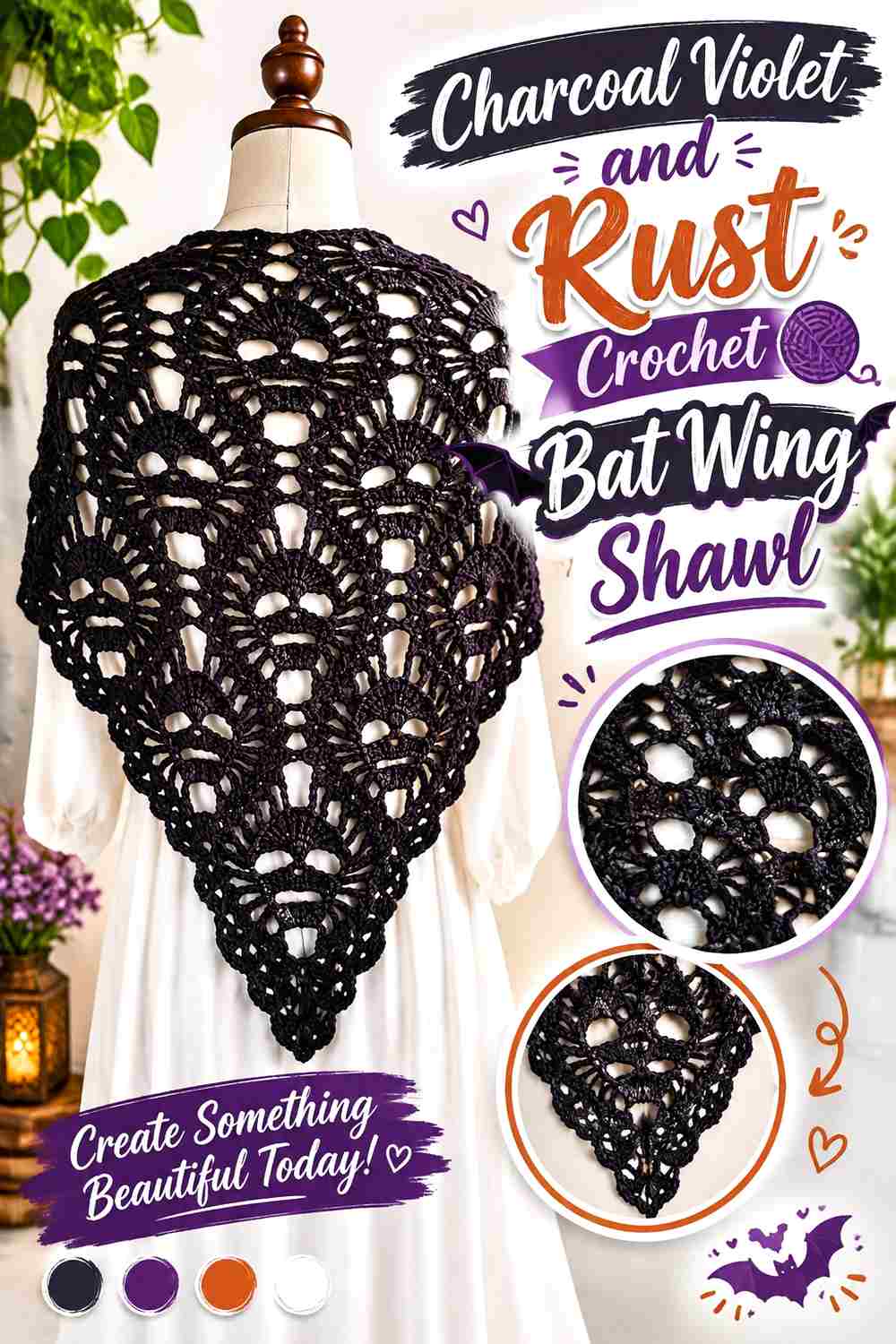
Rust adds a burnt-orange contrast that is warmer than the main violet and therefore noticeable even in small amounts. On a skull-lace or pointed gothic shawl, use rust strategically so it does not compete with the motifs. The credited source demonstrates a skull shawl construction.
Charcoal Violet Should Surround Rust Skull-Lace Accents
Keep the motif field charcoal violet if recognizable lace is important. Rust can be confined to edging or repeated framing areas rather than inserted through every motif.
Charcoal Violet Needs More Space Than Rust on the Bat Wing Edge
A little rust can have considerable visual impact beside dark violet. Use it sparingly along lower points if you want warmth without converting the shawl into an orange-led palette.
Creator Credit: Mamie Crochet
12. Charcoal Violet And Antique Gold Crochet Bat Wing Shawl

Antique gold creates a strong metallic-looking color direction without requiring actual metallic yarn. On a butterfly-motif shawl, a muted gold can identify raised details while charcoal violet turns the overall treatment toward a night-wing look. The credited tutorial demonstrates a butterfly-inspired triangular shawl.
Charcoal Violet Can Turn Antique Gold Motifs Into Controlled Highlights
Use gold only where you want specific stitch details or borders to stand out. Keeping most of the fabric violet prevents the accent from dominating the repeated surface pattern.
Charcoal Violet Needs a Muted Antique Gold Rather Than a Competing Bright Accent
If you want a subdued bat-wing direction, choose a softened gold-family shade rather than the brightest yellow available. Preserve the clear light-dark contrast while keeping the overall palette restrained.
Creator Credit: Wilma Westenberg
13. Charcoal Violet And Smoky Rose Crochet Bat Wing Shawl
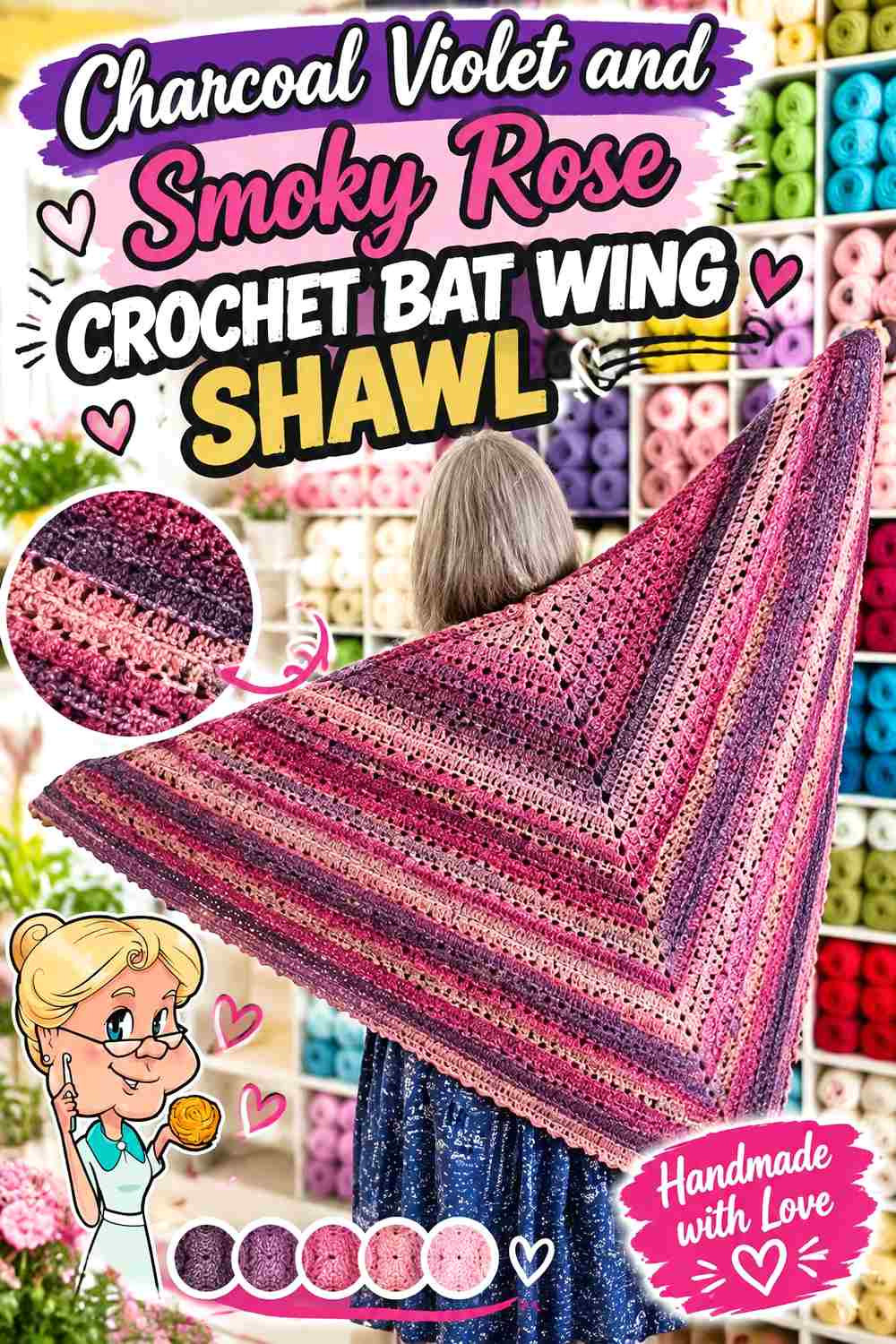
Smoky rose softens charcoal violet with a muted pink that works particularly well in broader expanding bands. A shawl with an established border allows the rose to become part of a controlled progression rather than appearing randomly. The credited tutorial demonstrates a complete expanding shawl with a defined border.
Charcoal Violet Should Begin and End the Smoky Rose Color Story
Use charcoal violet across the central area and consider returning to it for the final border. Smoky rose can then occupy the middle expansion without replacing the article’s main color.
Charcoal Violet Can Keep Smoky Rose Bands From Looking Too Soft
Place a violet section between repeated rose areas if you want stronger wing segmentation. The darker separator creates clearer directional movement across the shawl.
Creator Credit: Creative Grandma
14. Charcoal Violet And Icy Lavender Crochet Bat Wing Shawl
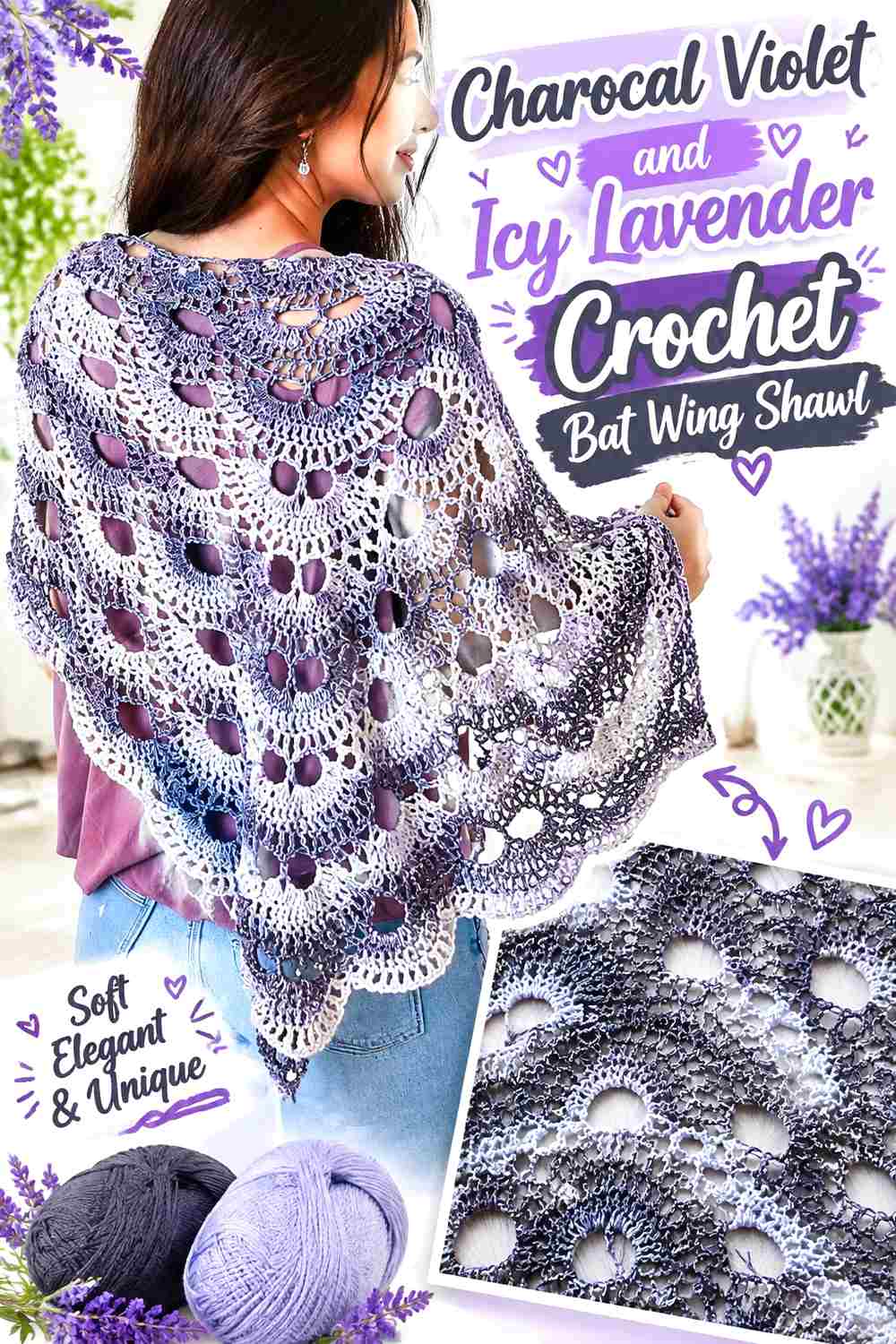
Icy lavender stays within the purple family but creates much stronger value contrast than plum or mauve. Fan-style lace gives the pale shade useful locations around expanding shells or the outer edge while charcoal violet keeps the overall shawl dark. The credited tutorial demonstrates an expanding fan-lace shawl construction.
Charcoal Violet Makes Icy Lavender Fan Sections More Visible
Use lavender around one or two lace transitions rather than throughout every repeat. The lighter purple will make those fan shapes stand apart from the charcoal violet field.
Charcoal Violet Should Return Before an Icy Lavender Bat Wing Edge Becomes Too Light
If several lavender sections already appear in the body, finish with charcoal violet. A darker final edge restores the bat-wing emphasis and frames the pale lace.
Creator Credit: The Snugglery
15. Charcoal Violet Ivory And Black Crochet Bat Wing Shawl
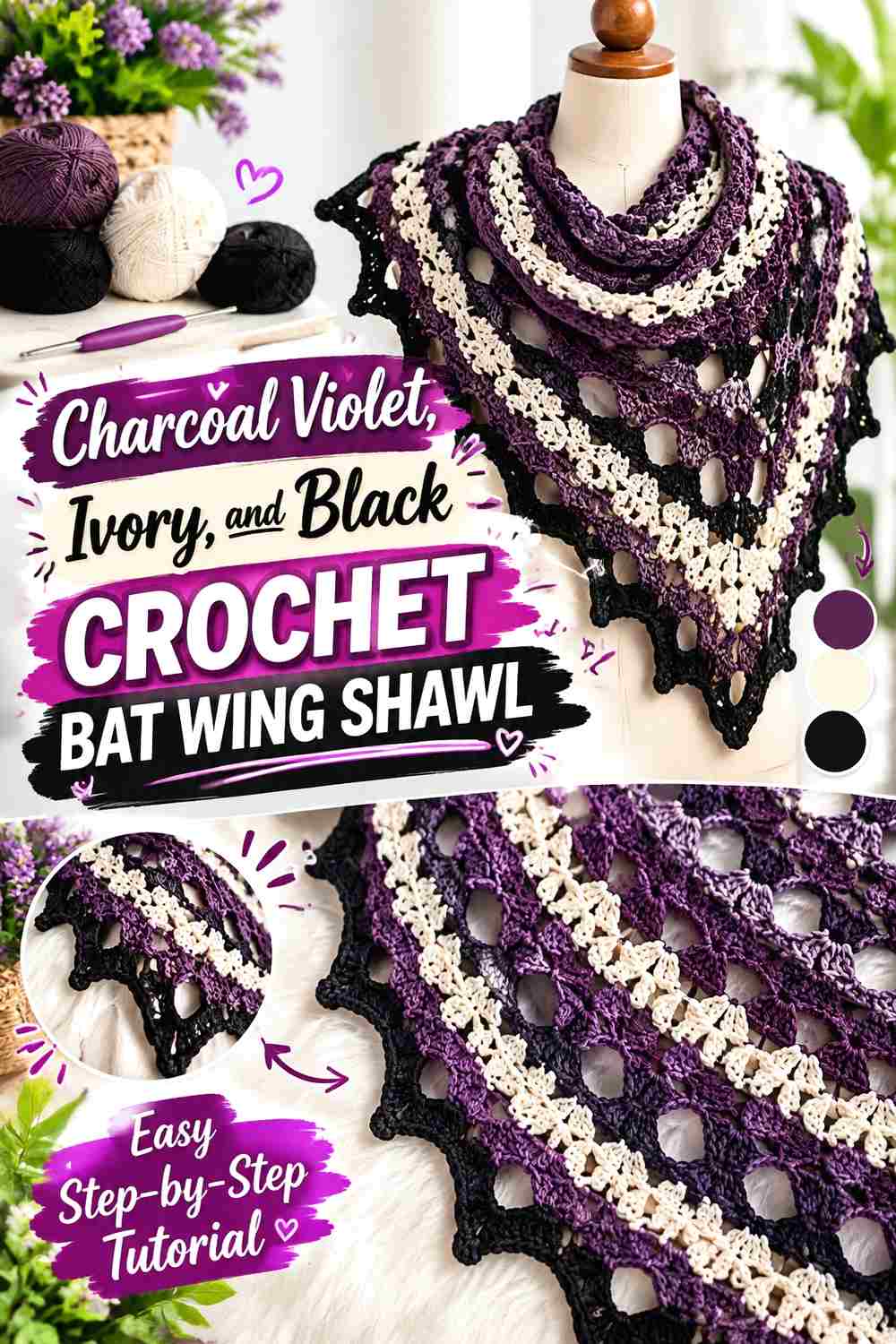
This three-color palette uses charcoal violet as the dominant field, ivory as a light separator, and black as the smallest defining accent. Fan-lace construction provides enough repeated structure to use all three colors without dividing the shawl into equal bands. The credited tutorial demonstrates the same broad family of expanding lace shawl construction.
Charcoal Violet Should Dominate Ivory and Black Bat Wing Sections
Give charcoal violet the largest continuous area. Ivory can highlight a lace transition, while black works best on selected outer points or the finishing edge.
Charcoal Violet and Ivory Can Keep Black From Flattening the Shawl
Placing ivory between violet and black creates clearer value steps. This prevents two dark shades from merging into one large block.
Charcoal Violet Should Reappear After Ivory Accents
If ivory is used in the middle of the shawl, bring violet back before the final black edge. Repetition keeps the three-color design connected.
Creator Credit: Bella Coco
16. Charcoal Violet And Pewter Crochet Bat Wing Shawl
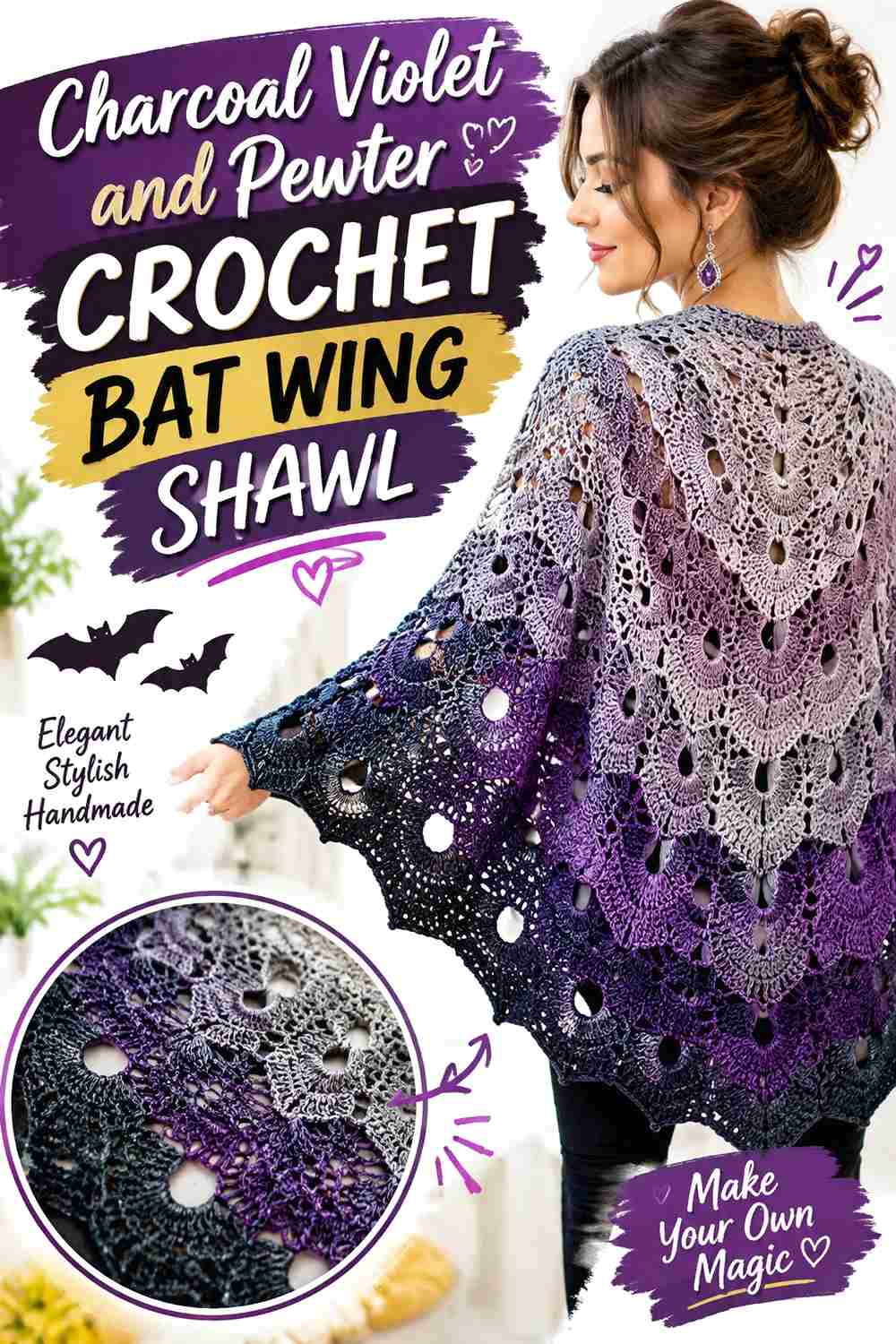
Pewter creates a cooler metallic-gray direction than silver and usually produces a more restrained transition. On repeating lace, use charcoal violet for the denser visual field and pewter at wider intervals so the pattern remains readable. The credited tutorial demonstrates a full lace-shawl construction in this family.
Charcoal Violet Can Keep Pewter Bat Wing Lace From Looking Flat
If both yarns are muted, use clear blocks instead of thin striping. Broad violet sections followed by a defined pewter repeat create more visible hierarchy.
Charcoal Violet Should Frame the Pewter Lower Edge
A pewter band can lighten the shawl near the bottom, but returning to charcoal violet for the final edge prevents the border from visually floating away from the darker body.
Creator Credit: Hobbii
17. Charcoal Violet And Wine Red Crochet Bat Wing Shawl
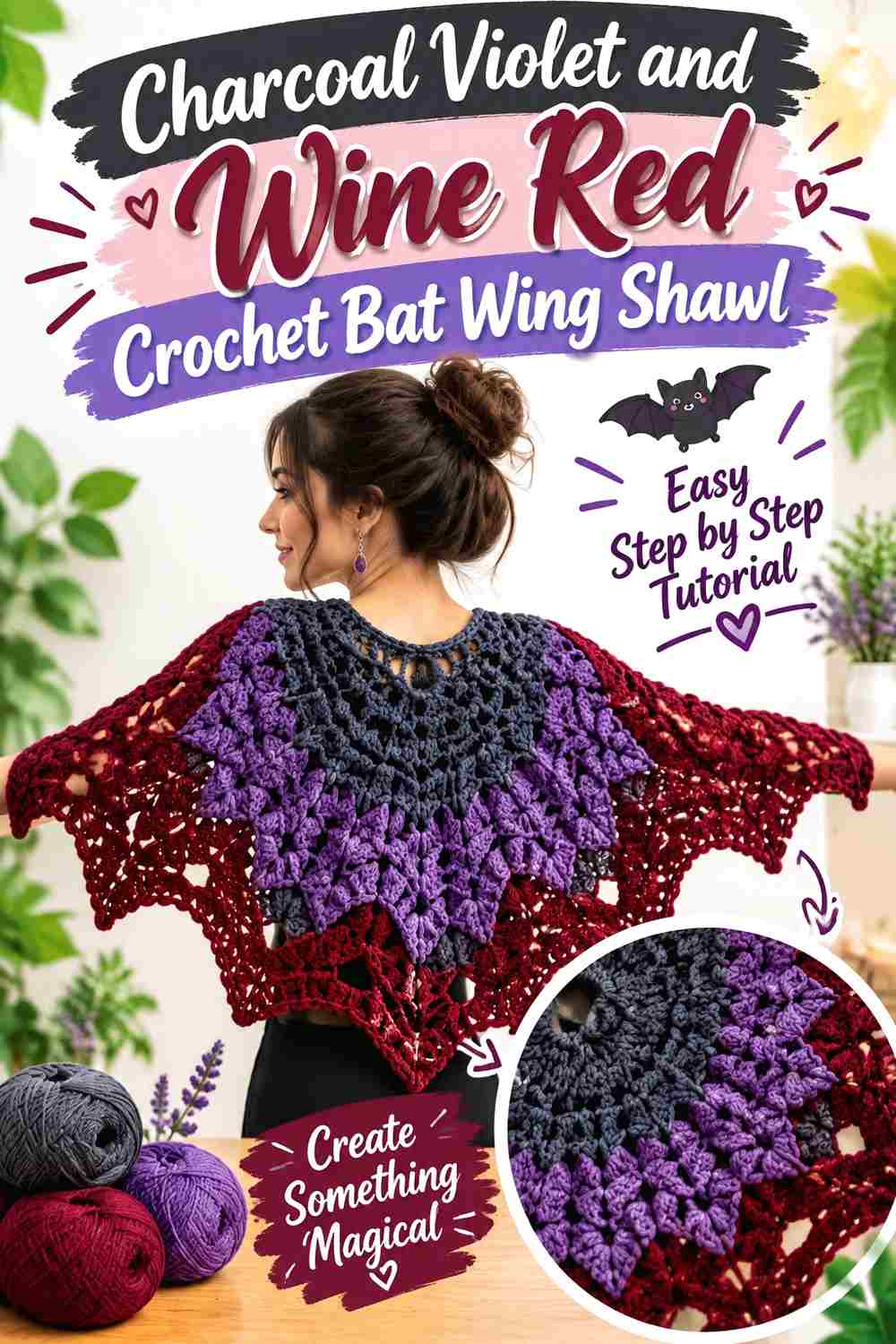
Wine red is deeper and more subdued than bright red, creating a dark romantic palette with charcoal violet. Since both shades carry substantial visual weight, use one as the clear leader. The credited tutorial demonstrates a repeating lace shawl suitable as a construction reference.
Charcoal Violet Should Cover More of the Wine Red Bat Wing Shawl
Keep wine red to selected expanding sections or the outer edge. Equal coverage can make it difficult to identify which shade is intended to control the design.
Charcoal Violet and Wine Red Need Visible Section Boundaries
Do not rely on tiny tonal differences. Use complete pattern sections for each color so the shift remains visible even when both yarns are dark.
Creator Credit: Girlybunches
18. Charcoal Violet And Slate Blue Crochet Bat Wing Shawl

Slate blue gives charcoal violet a muted blue-gray companion that suits skull or gothic lace without becoming as heavy as navy. The darker motifs can remain charcoal violet while slate is assigned to spacing bands or outer framing areas. The credited tutorial supports a Lost Souls skull-shawl construction.
Charcoal Violet Should Keep Slate Blue Skull Motifs Legible
If the skull or open lace motif is the main visual feature, avoid changing color in the middle of individual motifs. A continuous charcoal violet motif field preserves their outlines more clearly.
Charcoal Violet Can Separate Slate Blue Sections Along the Bat Wing Edge
Repeat slate blue in a few controlled border areas with violet between them. That gives the blue a deliberate rhythm without creating an uninterrupted contrasting edge.
Creator Credit: JMCrochet
19. Charcoal Violet And Muted Copper Crochet Bat Wing Shawl

Muted copper brings warm orange-brown contrast to the cool charcoal violet base. It works especially well on an angular dragon-tail or wing-inspired shawl where broad sections can display the color relationship without requiring many changes. The credited tutorial demonstrates a multi-part dragon-tail shawl construction.
Charcoal Violet Should Carry Most of the Muted Copper Wing
Use charcoal violet across the largest field and save copper for a stepped outer area, selected ridge, or final directional section. This keeps the warm color from overtaking the purple-gray foundation.
Charcoal Violet Can Make Muted Copper Points Easier to See
Place copper on a limited number of lower points if you want the changing edge to become more noticeable. The warm-cool contrast can define those shapes even when neither shade is especially light.
Charcoal Violet Should Finish a Busy Muted Copper Palette
If copper already appears repeatedly through the body, consider returning to charcoal violet on the final edge. Ending with the dominant shade visually gathers the sections back together.
Creator Credit: Caty Huertas
How the 19 Charcoal Violet Bat Wing Shawl Palettes Compare
For the strongest value contrast, moon cream, silver gray, icy lavender, ivory, and antique gold make charcoal violet details easiest to distinguish. These palettes are useful when wing ribs, lace openings, or lower points need more visual separation.
For a dark tonal direction, black, deep plum, midnight blue, wine red, and slate blue keep the shawl moody without introducing a very light accent. With these combinations, broad color placement is more important because neighboring shades can merge at a distance.
Forest green, moss, deep teal, rust, and muted copper push charcoal violet in more distinctive directions. Green and teal create cooler fantasy palettes, while rust and copper provide warmer contrast around points or edges.
Dusty mauve, smoky rose, and pewter sit between those extremes. They soften charcoal violet while preserving a restrained look that can work beyond explicitly seasonal or costume styling.
Conclusion
Start by deciding what part of the bat wing shawl should command attention. If the silhouette matters most, use charcoal violet across the full wing body and place silver, black, pewter, or another contrast shade only on the points and perimeter. If stitch texture matters more, a lighter supporting color can help reveal raised ribs, fans, web sections, or motif edges.
The strongest palettes also respect the construction. Symmetrical wings benefit from balanced color repetition, asymmetrical dragon tails can carry color progressively toward one point, and detailed skull or spiderweb lace generally needs fewer competing changes. Once you have chosen the color hierarchy, use the credited tutorial for the creator’s exact crochet construction and finishing details.
Frequently Asked Questions
What colors work well with charcoal violet on a crochet bat wing shawl?
Silver gray, black, pewter, cream, lavender, burgundy, wine, teal, forest green, moss, slate blue, rust, and muted copper can all create useful contrasts. Choose according to whether you want a tonal dark palette, a light-defined wing, or a warmer accent.
Should charcoal violet be the dominant color on a bat wing shawl?
For a project specifically centered on charcoal violet, giving it the largest visual area keeps the finished shawl aligned with the intended palette. Supporting colors can then define wing ribs, outer points, motifs, or borders.
How can I make charcoal violet bat wing points more visible?
Use a noticeably lighter or darker shade at selected points, or wear the finished shawl over a contrasting layer. If the edge itself is highly sculptural, keeping the body mostly one color can also make the silhouette easier to read.
Does black work with charcoal violet in crochet?
Yes, but the two shades may have relatively low value contrast. Use them in larger sections and check the combination under good lighting. A black border around a charcoal violet body is usually clearer than narrow alternating black-and-violet stripes.
How can I tell whether two colors have enough contrast for bat wing texture?
Place the yarns next to each other and view them from a distance. A grayscale photo can also help reveal whether their lightness is too similar. If they merge, choose a lighter or darker supporting shade or use larger color blocks.
Should the border of a charcoal violet bat wing shawl be lighter or darker?
Either can work. A lighter border emphasizes each lower point, while a darker border creates a stronger frame around the full silhouette. Choose based on whether you want the edge itself or the charcoal violet body to attract more attention.
Can charcoal violet work in a multicolor bat wing shawl?
Yes, but keep a clear hierarchy. Let charcoal violet dominate, assign a second shade to larger supporting sections, and keep a third color to small accents or edging. This prevents detailed wing construction from becoming visually crowded.