A crochet miniature snowy cabin scene becomes more convincing when the cabin, snow, trees, and tiny outdoor details have separate color roles. Chestnut or charcoal can establish the building, warm cream can brighten windows and snow, and forest or spruce green can frame the structure without competing with it.

Snow also changes how every other color reads. A dark cabin appears especially strong against a broad white roof, while an oatmeal or pale-gray cottage needs deeper doors, window frames, trees, or pathways to stop it from disappearing into the snowy base. Even a tiny cranberry wreath can become a focal point when the rest of the scene stays quiet.
These 17 ideas vary the cabin silhouette, snow placement, surrounding trees, wreaths, stars, snowflakes, pinecones, snowmen, and icy details. The credited tutorials support houses or individual scene components; the complete snowy-cabin compositions and color schemes are independent adaptations.
Quick List
- Chestnut, Snow White, and Pine Green Crochet Snow-Roof Cabin Scene
- Slate Blue, Cream, and Spruce Crochet Little Cottage Scene
- Cocoa, Frost White, and Cranberry Crochet Gingerbread-Style Cabin Scene
- Charcoal, Snow White, and Icy Blue Crochet Snowman Cabin Scene
- Warm Taupe, Cream, and Silver Gray Crochet Snowflake Cabin Scene
- Rust, Forest Green, and Snow White Crochet Pine-Grove Cabin Scene
- Deep Navy, Cream, and Muted Gold Crochet Starry Cabin Scene
- Weathered Brown, Fir Green, and Cranberry Crochet Wreath-Door Cabin Scene
- Bark Brown, Moss Green, and Frost White Crochet Pinecone Cabin Scene
- Burgundy, Oatmeal, and Forest Green Crochet Holiday Wreath Cabin Scene
- Deep Teal, Snow White, and Silver Gray Crochet Blizzard Cabin Scene
- Muted Red, Cream, and Pine Green Crochet Snowflake-Roof Cabin Scene
- Charcoal, Ivory, and Sage Crochet Quiet-Snow Cabin Scene
- Cocoa, Antique White, and Deep Green Crochet Lace-Snow Cabin Scene
- Faded Blue, Winter White, and Burgundy Crochet Frosted Cabin Scene
- Chestnut, Icy Blue, and Cream Crochet Icicle-Eave Cabin Scene
- Forest Green, Parchment, and Muted Gold Crochet Winterland Cabin Scene
Let Snow Stay the Lightest Major Color in the Cabin Scene
A snowy roof is usually easiest to read when it remains noticeably lighter than both the cabin walls and surrounding trees. White, winter cream, parchment, or very pale gray can all work, but avoid making the roof and cabin body nearly identical unless darker trim provides enough separation.
The amount of snow matters too. A narrow white roof edge creates a light accent, while a heavily snow-covered roof becomes one of the largest color fields in the entire miniature. Adjust the supporting palette accordingly.
Use Darker Trees and Doors to Give Pale Crochet Cabins Definition
Pine, fir, spruce, charcoal, and deep brown can establish depth behind snow-covered buildings. Place these deeper shades near pale walls or white roofs where their contrast actually clarifies a silhouette.
Do not surround every cabin with equally dark details. Leaving open snowy ground around one side can make a small building look more distinct than adding another tree, fence, or ornament simply to fill the scene.
1. Chestnut, Snow White, and Pine Green Crochet Snow-Roof Cabin Scene

Chestnut can establish the cabin walls, snow white can cover most of the roof, and pine green can create one or two trees beside the building. The strong brown-white separation makes this a useful starting palette when you want a miniature scene to read clearly even from across a mantel or shelf.
Chestnut Should Stay Visible Beneath the Snow White Crochet Cabin Roof
Keep enough chestnut wall area exposed below the roof so the building does not become one large white shape. A darker door can remain chestnut as well, allowing the roof snow to stay the brightest element.
Pine Green Should Frame the Chestnut and Snow White Crochet Cabin
Place pine trees beside or slightly behind the cabin instead of directly across its front. This gives the roof a dark background while preserving a clear view of the chestnut walls.
Creator Credit: Kristines Crochets
2. Slate Blue, Cream, and Spruce Crochet Little Cottage Scene

Slate blue gives the tiny cottage a colder winter character without making the building as dark as navy or charcoal. Cream can cover the roof snow and window trim, while spruce green belongs mainly on the surrounding trees.
Slate Blue Should Give the Crochet Cottage a Clear Wall Color
Use slate blue continuously across the building so the cream roof and windows do not divide the cottage into several unrelated pale shapes. The muted blue also gives snowy ground enough contrast to stay visible.
Spruce Should Separate the Cream Crochet Roof From the Winter Background
A spruce tree behind one roof edge can make cream snow easier to see, particularly if the scene sits against a light wall or white shelf.
Creator Credit: Jess Crafting
3. Cocoa, Frost White, and Cranberry Crochet Gingerbread-Style Cabin Scene

Cocoa can cover the miniature house, frost white can create heavy snow along the roof and eaves, and cranberry can appear in a door, wreath, or one small decorative detail. Keeping the palette restrained lets a more decorated house shape still fit a snowy woodland scene.
Cocoa Should Anchor the Frost White Crochet Cabin Snow
Let cocoa remain visible along the walls, chimney, or roof underside so the white edging always has a dark surface beneath it. Too much pale decoration can make the building lose its basic silhouette.
Cranberry Should Accent Cocoa and Frost White in One Crochet Cabin Area
Use cranberry around the door or another single focal point. Repeating strong red across every window and roof detail would shift attention away from the snowy structure.
Creator Credit: Crafters Autonomous
4. Charcoal, Snow White, and Icy Blue Crochet Snowman Cabin Scene

A small snowman gives the cabin scene a recognizable winter character in the foreground. Charcoal can cover the cabin, snow white can connect the roof and snowman, and icy blue can distinguish the snowman’s scarf or another tiny accessory.
Charcoal Should Give the Snow White Crochet Cabin and Snowman Strong Contrast
Keep charcoal on the building rather than extending it across the snowy ground. The dark wall becomes a useful backdrop for the white snowman without needing additional outlining.
Icy Blue Should Stay Small Against the Snow White Crochet Snowman
Use icy blue on one accessory so the snowman remains predominantly white. That small color repeat can also appear in a window or roof shadow to connect the character with the cabin.
Creator Credit: Lovable Loops
5. Warm Taupe, Cream, and Silver Gray Crochet Snowflake Cabin Scene

Warm taupe gives the cabin a quiet neutral body, cream can create the snow, and silver gray can carry flat snowflake motifs around the background or base. This palette works best when the snowflakes stay secondary to the building.
Warm Taupe Should Keep the Cream Crochet Cabin From Becoming Too Pale
Give the walls enough taupe surface area that cream roof snow has a visible boundary. On an especially pale base, deepen the door or window trim rather than adding more colors.
Silver Gray Snowflakes Should Support the Cream Crochet Snow Scene
Place gray snowflakes behind or around the cabin instead of covering the walls. This makes them read as weather and atmosphere rather than decorative patches on the building.
Creator Credit: Maria’s Blue Crayon
6. Rust, Forest Green, and Snow White Crochet Pine-Grove Cabin Scene

Rust creates a warm cabin focal point within a deeper forest-green setting. Snow white can settle on the roof and tree branches, while the trees occupy more visual height than in the simpler cabin scenes.
Rust Should Remain Visible Through the Forest Green Crochet Pine Grove
Leave a clear opening between the front trees so the cabin walls do not disappear. Forest green can frame both sides without becoming a solid curtain across the scene.
Snow White Should Repeat on the Rust Cabin and Forest Green Trees
Use the same snow color on the roof and selected tree edges. That repetition makes the separate cabin and tree components look as though they belong in the same weather.
Creator Credit: vvw.studio
7. Deep Navy, Cream, and Muted Gold Crochet Starry Cabin Scene

Deep navy gives the cabin or background a night-sky direction, cream can cover the snow, and muted gold can appear in one star above the roof or in a tiny window detail.
Deep Navy Should Keep the Cream Crochet Snow Visible at Night
Use navy across either the cabin walls or a simple backdrop so the pale roof line remains crisp. If the entire building is cream, reserve navy for the background and door.
Muted Gold Should Stay Focused Above the Deep Navy Crochet Cabin
One small star can provide enough warm contrast. Avoid scattering many gold-colored points across the snow, where they can compete with the cabin itself.
Creator Credit: Leticia Berniche – Lê Arts Crochê
8. Weathered Brown, Fir Green, and Cranberry Crochet Wreath-Door Cabin Scene

Weathered brown can dominate the cabin, fir green can form a small wreath, and cranberry can create a bow or center accent. The door becomes the focal zone while snow remains a supporting neutral around the roof and ground.
Fir Green Should Stay Concentrated on the Weathered Brown Crochet Cabin Door
Keep the wreath compact and allow brown door space around it. If the green ring nearly fills the door, the building can start to look disproportionately decorated.
Cranberry Should Accent the Fir Green Crochet Wreath Sparingly
A small cranberry bow or berry-like detail is enough to establish a holiday accent. Keep the rest of the scene quieter so the doorway remains the intentional focal point.
Creator Credit: janice s
9. Bark Brown, Moss Green, and Frost White Crochet Pinecone Cabin Scene

A few miniature pinecones can make the foreground feel woodland without requiring another building. Bark brown can connect the cabin and pinecones, moss green can appear in low foliage, and frost white should remain concentrated on the snow.
Bark Brown Should Connect the Crochet Pinecones to the Cabin
Use related browns rather than giving the pinecones a completely different dark color. The shared family creates continuity while texture distinguishes the separate objects.
Frost White Should Keep Moss Green and Bark Brown Crochet Details From Merging
Leave snowy gaps between pinecones, plants, and the cabin wall. These pale breaks help each small object maintain its own silhouette.
Creator Credit: Anchor Crafts
10. Burgundy, Oatmeal, and Forest Green Crochet Holiday Wreath Cabin Scene

This cabin uses a softer oatmeal body instead of brown, so burgundy and forest green need to provide more of the definition. A miniature wreath can sit on the door while burgundy repeats in one window or trim detail.
Forest Green Should Define the Oatmeal Crochet Cabin Door Area
Use green on the wreath and perhaps one nearby pine branch, but keep it away from most of the pale wall. The contrast will naturally draw attention to the entrance.
Burgundy Should Warm the Forest Green and Oatmeal Crochet Cabin
Repeat burgundy in one or two compact locations, such as a wreath bow and small window trim. Limiting it prevents the light cabin from becoming visually spotted.
Creator Credit: Heather Corinne Crochets
11. Deep Teal, Snow White, and Silver Gray Crochet Blizzard Cabin Scene
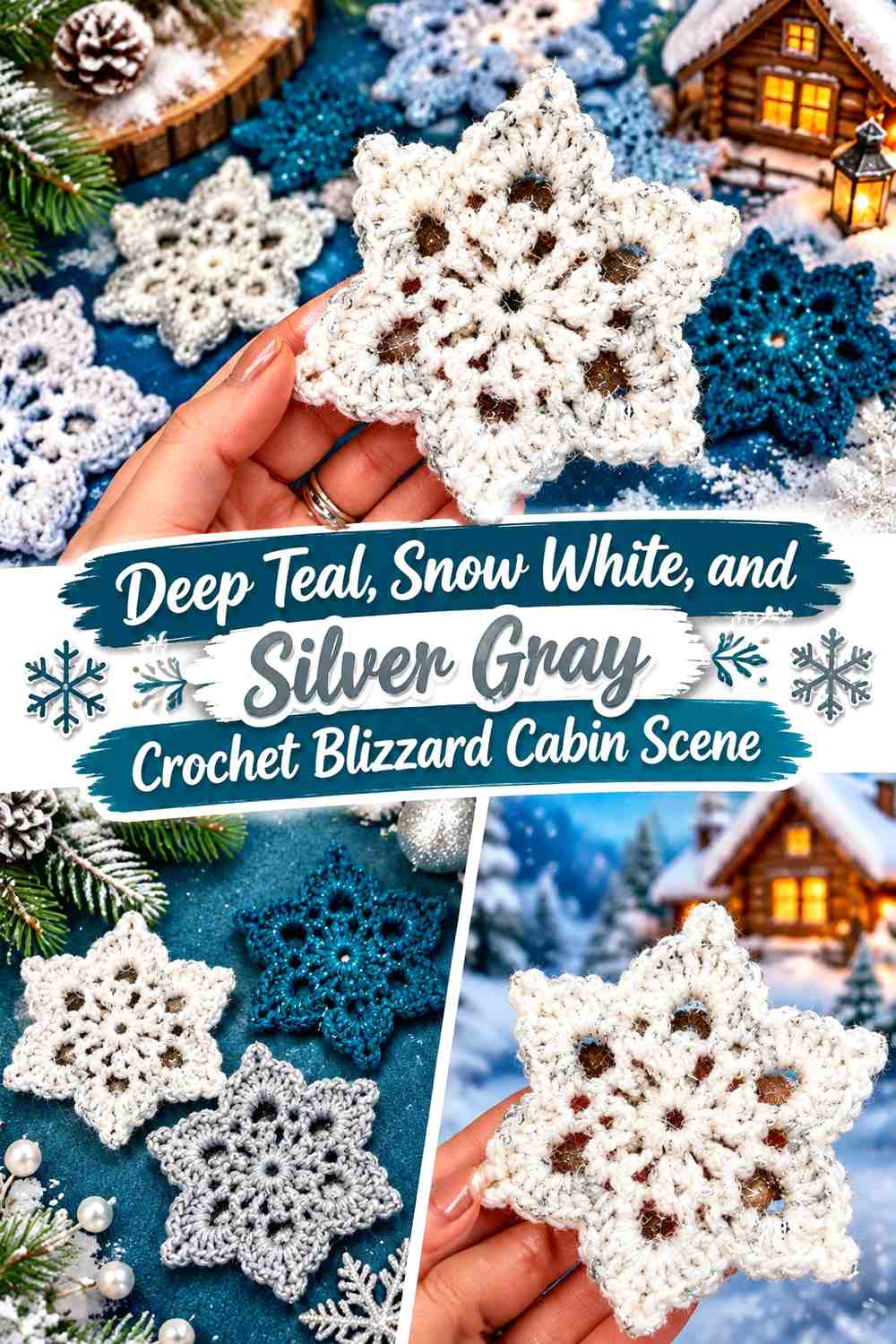
Deep teal gives a cool dark base, snow white can dominate the roof and ground, and silver gray snowflakes can create the impression of active snowfall around the building.
Deep Teal Should Keep the Snow White Crochet Cabin Roof Legible
Use teal on the cabin walls or the scene backing so the heavy snow does not disappear. The stronger dark-light relationship is especially useful when several white snowflakes surround the roof.
Silver Gray Should Separate Snowflakes From Snow White Crochet Ground
Use gray for some airborne snowflake motifs rather than making every winter detail pure white. This keeps the falling snow visible while reserving white for the deepest roof and ground coverage.
Creator Credit: Hooked by Robin
12. Muted Red, Cream, and Pine Green Crochet Snowflake-Roof Cabin Scene
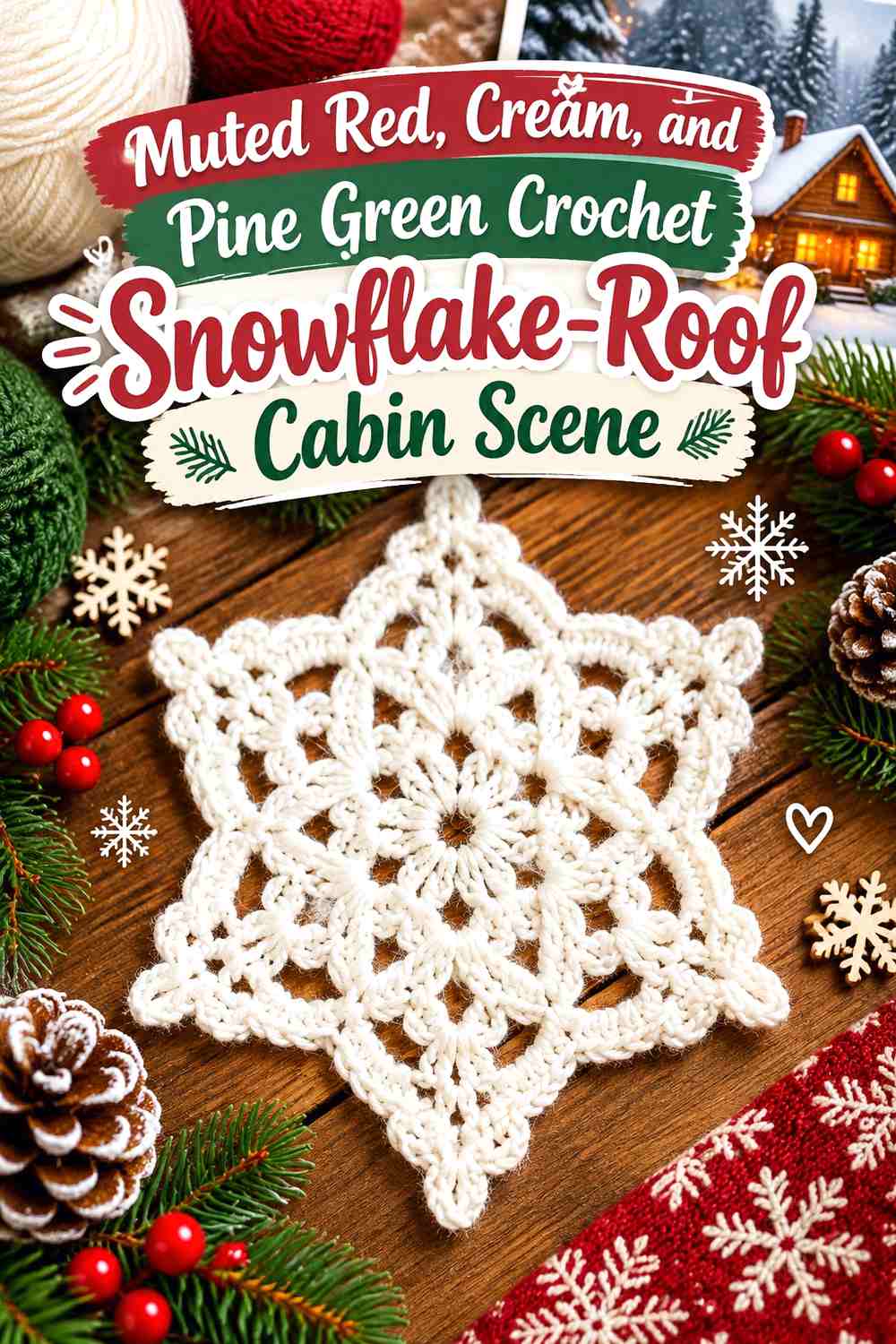
Muted red creates a traditional cabin color, cream can cover the snow, and pine green adds the necessary woodland element. A larger snowflake motif near the roofline can make the scene decorative without changing the actual cabin construction.
Muted Red Should Stay Visible Beneath the Cream Crochet Snowflake Roof
Avoid covering the full front wall with pale motifs. One snowflake above or beside the cabin is enough when the roof already contains substantial cream.
Pine Green Should Ground the Muted Red and Cream Crochet Cabin
Place a pine tree or small evergreen detail toward one side. The green provides a third color block without interrupting the strong red-and-cream building contrast.
Creator Credit: Bella Coco
13. Charcoal, Ivory, and Sage Crochet Quiet-Snow Cabin Scene

Charcoal can give a compact cabin strong definition, ivory can soften the roof snow, and sage can replace darker pine green for a quieter woodland scene.
Charcoal Should Give the Ivory Crochet Cabin a Strong Outline
Keep the wall mass mostly charcoal so ivory remains concentrated along the roof and snowy base. That simple division works especially well in a small minimalist display.
Sage Should Soften the Charcoal and Ivory Crochet Winter Palette
Use one or two sage trees rather than surrounding the cabin with dark evergreens. The softer green keeps this scene quieter than the higher-contrast forest versions.
Creator Credit: The Crochet Crowd
14. Cocoa, Antique White, and Deep Green Crochet Lace-Snow Cabin Scene
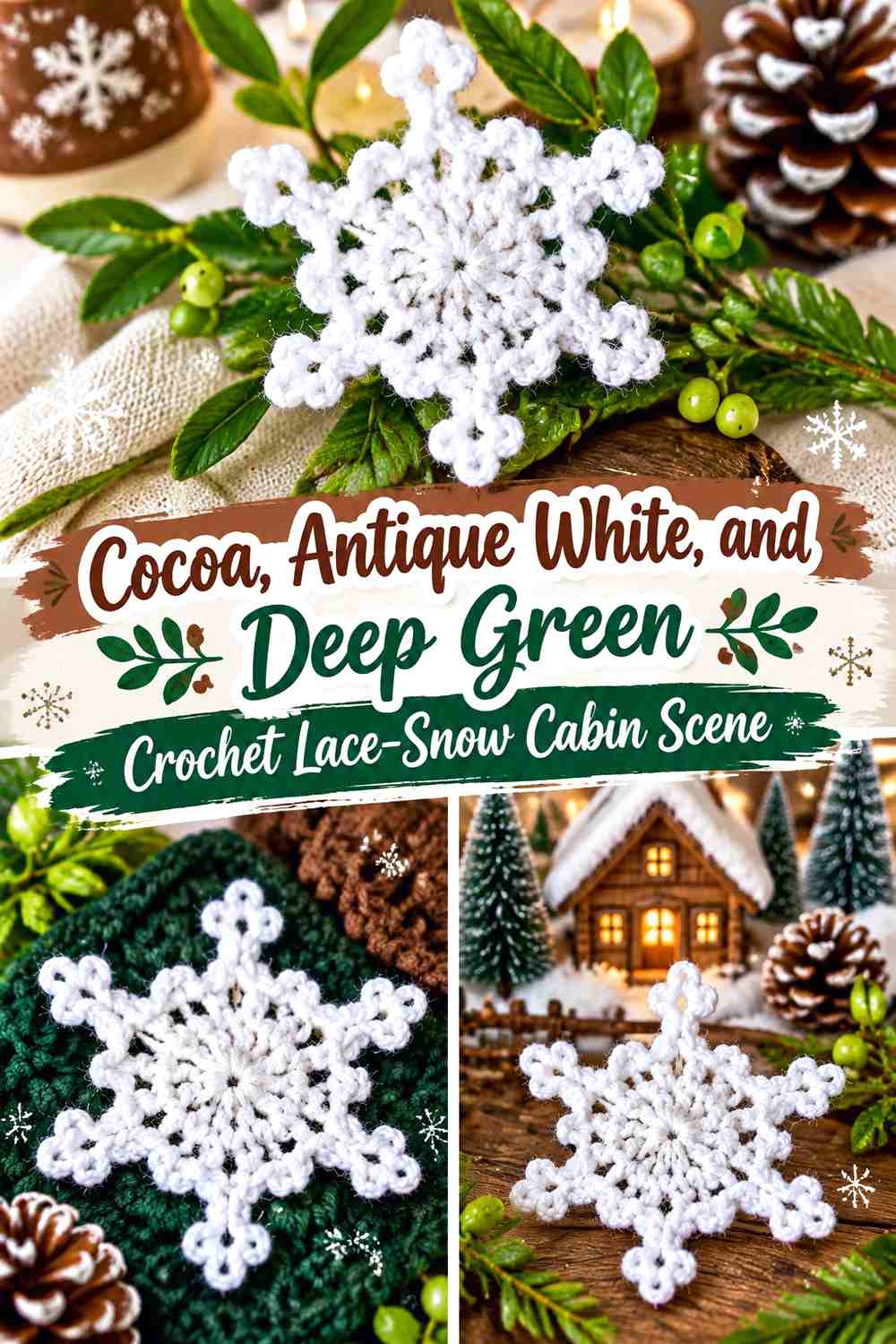
A more intricate snowflake motif can create decorative lace-like snow around a cocoa cabin. Antique white should remain the light floral-snow color, while deep green keeps the background firmly woodland.
Cocoa Should Stay Simple Beside Antique White Crochet Lace Snow
Avoid overdecorating the walls when the surrounding snowflake already contains substantial detail. Broad cocoa surfaces give intricate white crochet enough visual rest.
Deep Green Should Frame the Antique White Crochet Snowflake and Cocoa Cabin
Use dark trees or one background evergreen so both the white snow and brown house remain distinct. The green works best as framing rather than another detailed foreground texture.
Creator Credit: HappyBerry Crochet
15. Faded Blue, Winter White, and Burgundy Crochet Frosted Cabin Scene
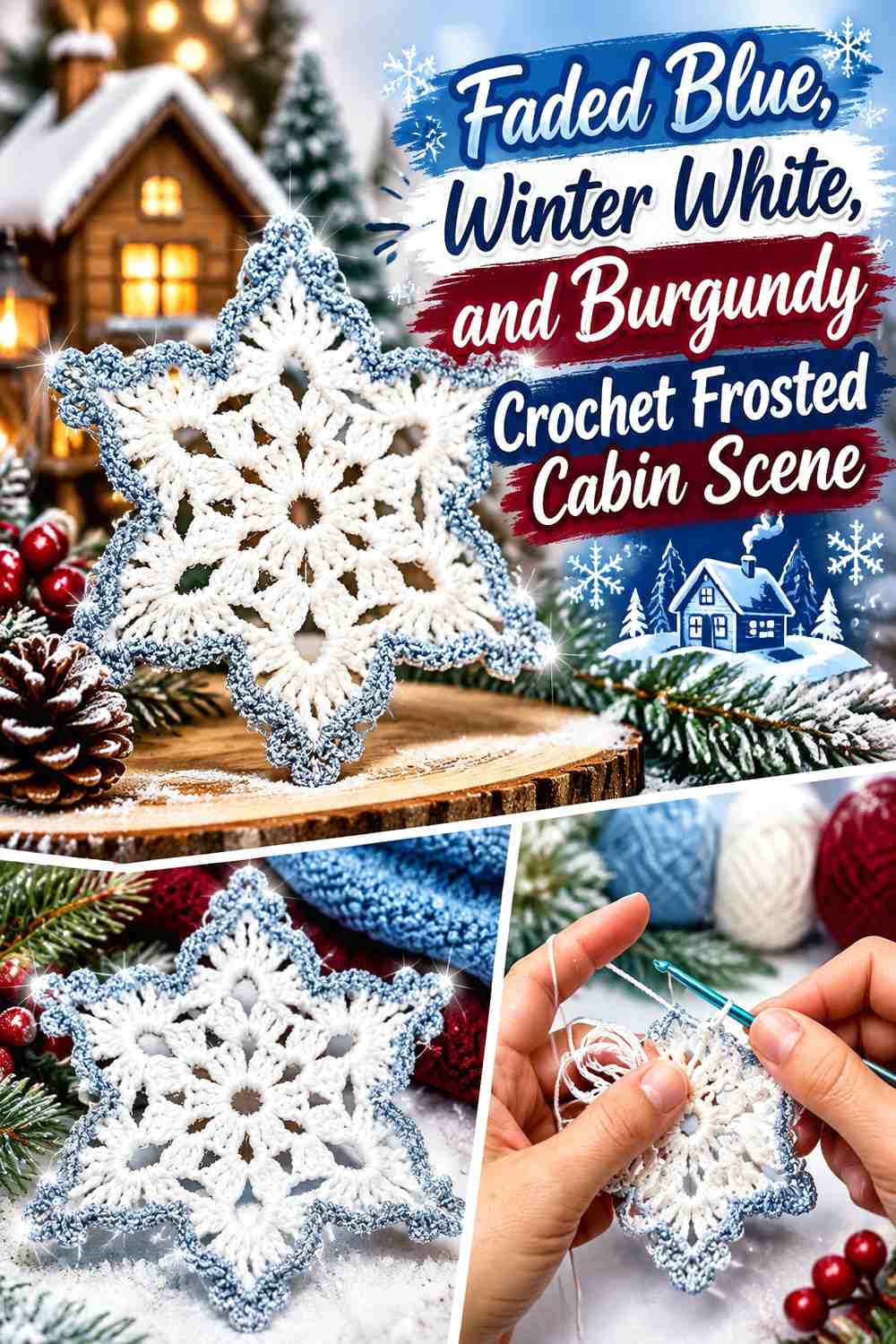
Faded blue creates a soft wintry wall color, winter white can cover the roof, and burgundy adds one warm accent around the door or window. This palette feels colder overall than the brown cabins while still retaining a visible warm focal point.
Faded Blue Should Stay Distinct From Winter White Crochet Snow
Choose a blue that remains noticeably darker than the roof. If the two colors are too similar, introduce burgundy around the window or door instead of outlining the entire building.
Burgundy Should Give the Faded Blue Crochet Cabin One Warm Focal Point
Use burgundy on a door, small wreath, or narrow trim detail. A single warm area can make a pale snowy scene feel intentional without turning it into a red-heavy holiday display.
Creator Credit: Crochet Craftsman
16. Chestnut, Icy Blue, and Cream Crochet Icicle-Eave Cabin Scene

Icicles make the roof edge the primary feature of this miniature. Chestnut can form the cabin, cream can create the main roof snow, and icy blue can appear along hanging icicles where it remains visibly separate from the warmer white.
Icy Blue Should Hang Below the Cream Crochet Cabin Snow
Keep blue concentrated on the icicle forms rather than mixing it throughout the roof. This makes the color placement explain the shape: cream reads as settled snow while blue reads as colder hanging ice.
Chestnut Should Provide a Dark Backdrop for Icy Blue Crochet Icicles
Let the icicles fall partly in front of chestnut wall or roof-edge areas. Against a pale snowy background alone, the light blue details may lose their outline.
Creator Credit: Hectanooga1
17. Forest Green, Parchment, and Muted Gold Crochet Winterland Cabin Scene
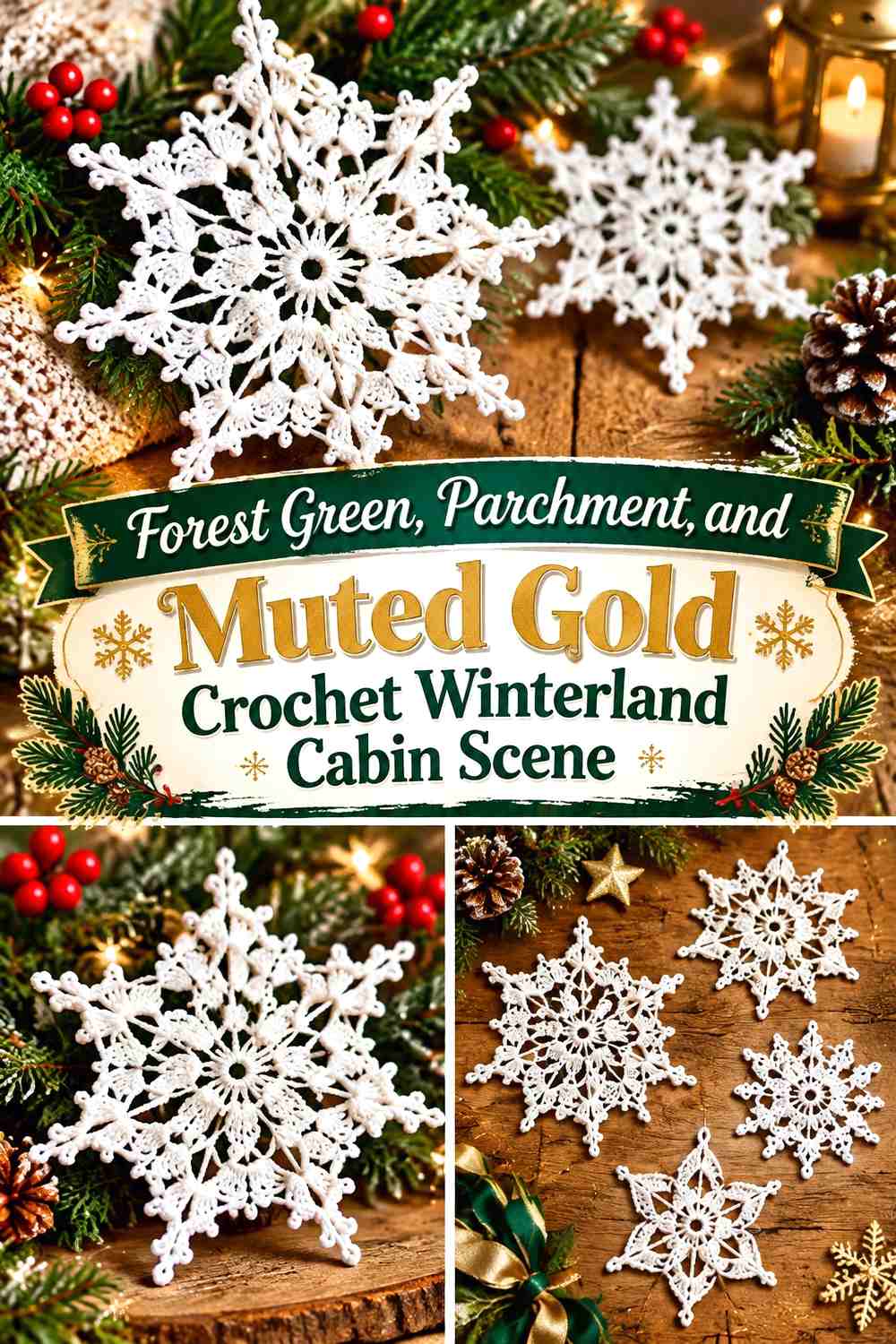
This final scene lets forest green dominate the surrounding landscape while parchment creates the snowy cabin and muted gold adds a small window glow or star detail. The cabin can stay pale because the trees provide enough surrounding darkness.
Parchment Should Keep the Crochet Cabin Warmer Than Pure White Snow
Use parchment on the walls or snowy roof when you want a softer final scene. Preserve a slight difference between the building and any brighter ground snow so the silhouette remains clear.
Muted Gold Should Highlight the Forest Green and Parchment Crochet Scene Sparingly
One star, window, or small upper accent is enough. The gold-colored detail should suggest warmth inside the winter setting rather than forming another large color field.
Creator Credit: Crochetpedia
Which Crochet Snowy Cabin Palette Should You Choose?
For a classic woodland cabin, start with chestnut, cocoa, bark brown, or rust and pair it with snow white plus pine or forest green. These palettes make the building easy to identify and leave plenty of room for wreaths, pinecones, or snowmen.
For a colder winter look, slate blue, faded blue, deep teal, charcoal, icy blue, and silver gray work well. Protect the cabin silhouette with enough cream or white snow contrast so the entire miniature does not become one medium-value blue-gray field.
For a warmer Christmas scene, introduce cranberry, burgundy, muted red, or muted gold in one small focal area. Doors, wreaths, stars, and window details are useful places because they concentrate the color without overwhelming the snow.
Conclusion
A successful crochet miniature snowy cabin scene needs more than a small house covered in white yarn. The cabin should have a clearly readable wall color, the roof snow should remain distinct, and the surrounding trees or decorations should help frame the building rather than hide it.
Once that basic color hierarchy is established, small details can change the mood considerably. A snowman makes the scene playful, pinecones make it more woodland-focused, icicles emphasize cold weather, and a tiny wreath or gold-colored star adds a stronger Christmas direction.
Use the credited tutorials for their house, snowman, tree, wreath, pinecone, star, snowflake, or icicle construction concepts, then adapt the scale, placement, and palette independently to build a coordinated miniature cabin scene.
Frequently Asked Questions
What colors work well for a crochet miniature snowy cabin?
Chestnut, cocoa, rust, charcoal, slate blue, faded blue, and muted red all work well for cabin walls. Pair them with snow white or cream and add pine, spruce, sage, or forest green around the scene.
How can I keep a white crochet roof visible in a snowy scene?
Give the cabin a darker wall color or place a deep green tree behind part of the roof. You can also use cream for the roof and a slightly brighter white for the ground so the two snowy surfaces remain distinct.
How many trees should I place around a miniature crochet cabin?
Use enough to frame the building without covering it. One taller tree and one smaller tree can often establish the woodland setting while leaving the front, door, and roof silhouette visible.
Can I mix snowflakes, a snowman, and a wreath in one crochet cabin scene?
Yes, but choose one as the primary decorative feature. A wreath can lead near the door while a small snowman supports the foreground and a few snowflakes remain in the background. Giving all three equal visual weight can make a tiny scene crowded.
How can I make a crochet cabin look cozy without using bright colors?
Use warm neutrals such as chestnut, cocoa, camel, oatmeal, parchment, or cream, then add one deeper shade such as burgundy or forest green. Contrast and placement can create warmth without saturated red or yellow.
Are flat appliqué tutorials useful for three-dimensional cabin scenes?
Yes. Flat trees, snowflakes, stars, and snowmen can work as background or surface details beside a dimensional cabin. Treat the tutorial as a construction reference and adjust placement independently rather than assuming the original motif was designed specifically for a miniature diorama.
How can I keep a miniature crochet cabin scene from looking overcrowded?
Leave visible snow between major objects. Empty ground around a tree, snowman, pinecone, or cabin door helps each silhouette stay recognizable and often makes the scene feel more convincing than filling every available gap.