Arabian Spice colors give a crochet shoulder wrap plenty of room for warm, layered combinations. Saffron, cinnamon, paprika, cardamom green, date brown, clove, sumac burgundy, and deep jewel tones can all work within the same broad direction, but the most successful palettes give those shades clear jobs rather than using every strong color in equal amounts.

For this roundup, “Arabian Spice” describes a spice-inspired color direction rather than one fixed traditional palette. Some ideas are warm and tonal, others use a pale neutral to reveal crochet texture, and a few bring in teal, indigo, aubergine, or charcoal for stronger contrast.
The tutorial credited under each idea supports a crochet shawl or wrap concept. The proposed palettes are independent color adaptations, so the creator is not being credited with using the exact colors suggested here.
Quick List
- Saffron And Cream Arabian Spice Crochet Textured Shoulder Wrap
- Paprika And Charcoal Arabian Spice Crochet Textured Shoulder Wrap
- Cardamom And Oatmeal Arabian Spice Crochet Textured Shoulder Wrap
- Turmeric And Date Brown Arabian Spice Crochet Textured Shoulder Wrap
- Sumac Burgundy And Dusty Rose Arabian Spice Crochet Textured Shoulder Wrap
- Cumin And Espresso Arabian Spice Crochet Textured Shoulder Wrap
- Clove Brown And Saffron Arabian Spice Crochet Textured Shoulder Wrap
- Olive Paprika And Cream Arabian Spice Crochet Textured Shoulder Wrap
- Aubergine Cinnamon And Sand Arabian Spice Crochet Textured Shoulder Wrap
- Desert Teal And Saffron Arabian Spice Crochet Textured Shoulder Wrap
- Indigo Turmeric And Cream Arabian Spice Crochet Textured Shoulder Wrap
- Copper Sand And Charcoal Arabian Spice Crochet Textured Shoulder Wrap
- Date Brown Rose And Cream Arabian Spice Crochet Textured Shoulder Wrap
- Cardamom Sumac Burgundy And Oatmeal Arabian Spice Crochet Textured Shoulder Wrap
- Saffron Aubergine And Oatmeal Arabian Spice Crochet Textured Shoulder Wrap
- Cinnamon Paprika Saffron And Clove Arabian Spice Crochet Textured Shoulder Wrap
How to Make Arabian Spice Colors Read Clearly in Crochet Texture
A textured shoulder wrap needs more than interesting hues. It also needs enough light-and-dark separation for ridges, clusters, openwork, or other surface changes to remain visible. Two yarns can look different in hue while still being close enough in value that their boundaries disappear once crocheted.
Before committing to a multicolor wrap, place the yarns next to one another and view them from a short distance. A grayscale photo can also help reveal whether a light accent is truly lighter than the dominant shade. This is especially useful when the accent will sit beside small textured sections rather than broad color blocks.
Texture also changes how much visual space a color seems to occupy. A strong accent repeated through raised sections can attract more attention than the same amount of yarn worked into a quieter background area. Give the most saturated shades deliberate locations instead of automatically dividing the wrap equally between colors.
Use Arabian Spice Borders and Shoulder Lines to Control Contrast
A shoulder wrap places color near the face, neckline, outer shoulder, and long lower edge, so placement affects the finished look as much as the palette itself. A very dark shade concentrated around the neck can make the upper portion visually heavier, while the same shade along the lower border can frame a lighter main field without dominating it.
Borders are particularly useful for connecting a multicolor Arabian Spice palette. If paprika or saffron appears only once in the center, repeating a small amount near an outer edge can make that accent feel intentional. Conversely, a wrap that already contains several strong shades may benefit from a quieter cream, oatmeal, sand, or brown edge.
For striped or paneled wraps, check the arrangement while the piece is still large enough to drape over the shoulders. A color distribution that looks balanced when laid flat can feel different once the ends hang vertically.
Substitute Arabian Spice Shades by Color Role
Exact yarn colors are less important than preserving the relationships that make a palette work. If saffron is meant to be the brightest warm accent, its replacement should still stand apart from the darker cinnamon or clove around it. If oatmeal is serving as the light separator, replacing it with another medium-dark beige could remove the contrast that gives the texture definition.
Think in terms of dominant, supporting, and accent roles. Also preserve relative lightness, warmth, and saturation where those qualities are doing important visual work. This makes it easier to adapt an Arabian Spice palette from yarn already on hand without accidentally turning a high-contrast wrap into a muddy tonal one.
1. Saffron And Cream Arabian Spice Crochet Textured Shoulder Wrap
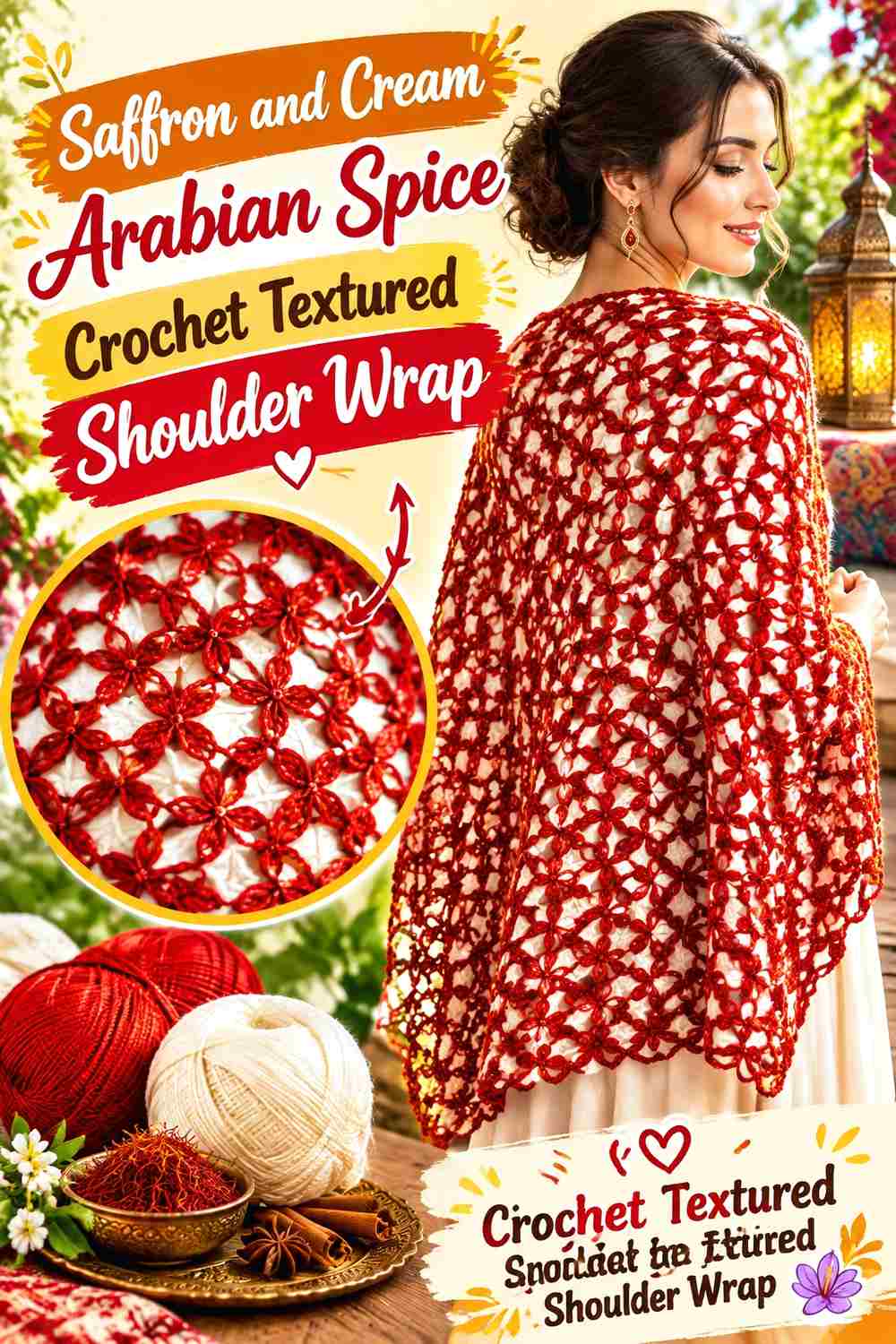
Saffron can carry most of this shoulder wrap, giving the broad surface a warm golden direction, while cream creates strategic interruptions around textured areas and the outer edge. The combination works especially well when the goal is to make the wrap feel strongly color-led without allowing the main shade to hide smaller stitch details.
Let Saffron Lead the Main Shoulder Wrap Field
Use saffron across the largest uninterrupted areas so the wrap reads clearly as a warm spice palette when worn. Keeping the dominant shade continuous across much of the back or central panel also prevents cream from breaking the design into too many small visual sections.
Use Cream to Separate Saffron Texture Near the Wrap Edge
Cream is most useful where texture needs definition, such as a narrow border, contrasting band, or repeated detail near the hanging ends. Because it is noticeably lighter than saffron, a restrained amount can reveal changes in stitch texture without taking over the whole wrap.
Creator Credit: Bag-O-Day Crochet
2. Paprika And Charcoal Arabian Spice Crochet Textured Shoulder Wrap
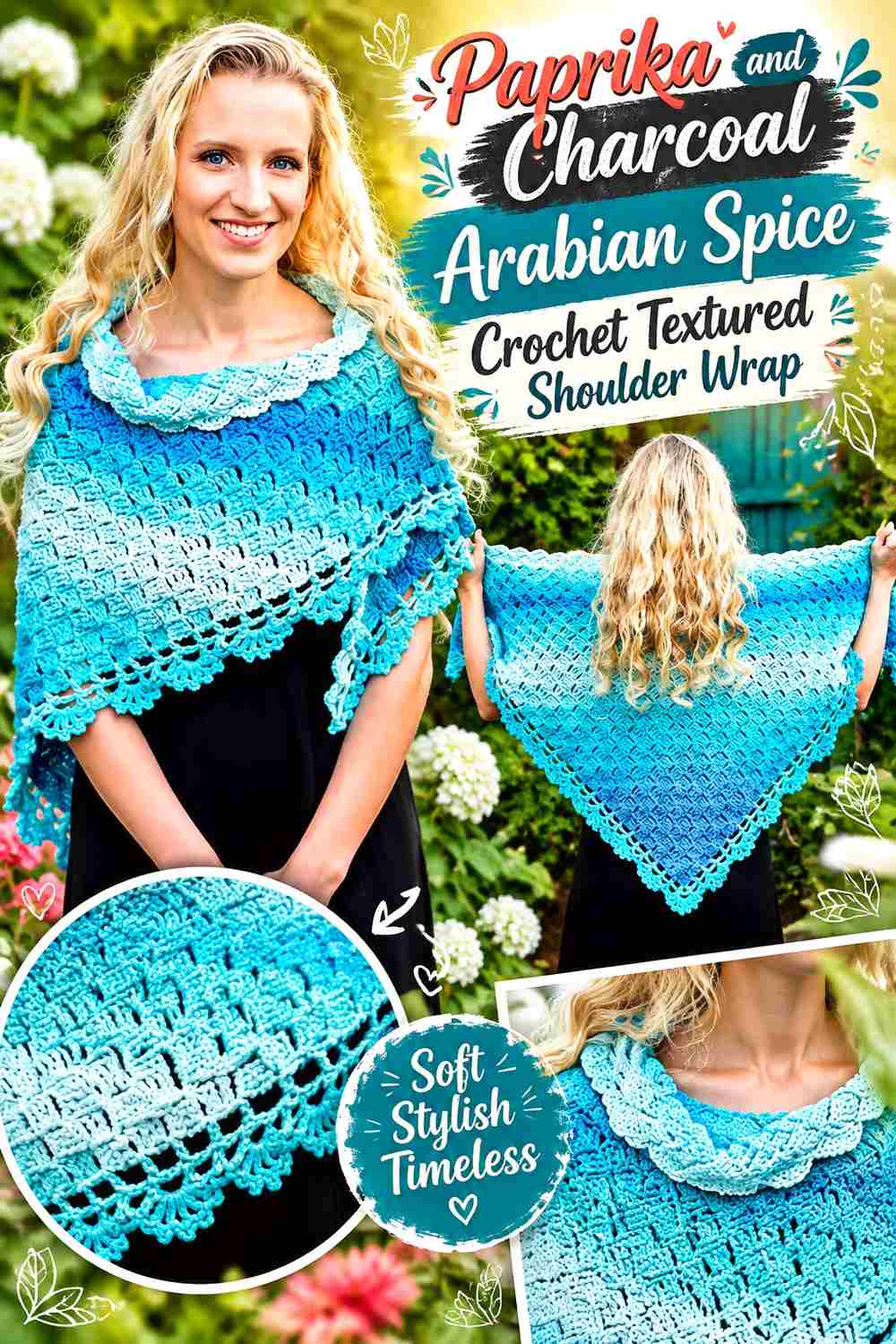
Paprika and charcoal create one of the sharper contrasts in this collection. Paprika can supply the saturated warmth across the wrap surface, while charcoal gives borders, geometric divisions, or selected textured lines a dark anchor. The main decision is how much charcoal to use: too much can overpower the paprika and make the wrap read primarily dark.
Give Paprika More Surface Area Than Charcoal
Let paprika occupy the central body and broad shoulder area if you want the spice tone to remain dominant. Charcoal is visually strong enough to define smaller sections without requiring an equal share of the wrap.
Keep Charcoal Around Paprika Edges for Stronger Definition
A charcoal border can sharpen the outline of a paprika wrap, especially along long lower edges or pointed sections. If charcoal also appears inside the wrap, repeat it selectively rather than outlining every textured band, which can fragment the larger paprika field.
Creator Credit: naztazia
3. Cardamom And Oatmeal Arabian Spice Crochet Textured Shoulder Wrap

Muted cardamom green shifts the Arabian Spice theme away from an all-warm palette, while oatmeal keeps the result earthy rather than stark. Cardamom can dominate the wrap body, with oatmeal placed around open or raised texture where a lighter yarn helps the construction remain visually distinct.
Let Cardamom Green Cover the Broad Shoulder Area
A large cardamom field gives this wrap a quieter visual direction than saffron or paprika. Keeping it uninterrupted across the shoulder section also gives textured stitches enough room to form a continuous surface rather than competing with frequent color changes.
Use Oatmeal to Reveal Cardamom Texture Without Harsh Contrast
Oatmeal can be used for edging, narrow bands, or selected textured details when bright white would feel too abrupt beside muted green. Preserve a noticeable value difference, however; a dark oatmeal next to medium cardamom may blend more than expected.
Creator Credit: Fiber Spider
4. Turmeric And Date Brown Arabian Spice Crochet Textured Shoulder Wrap
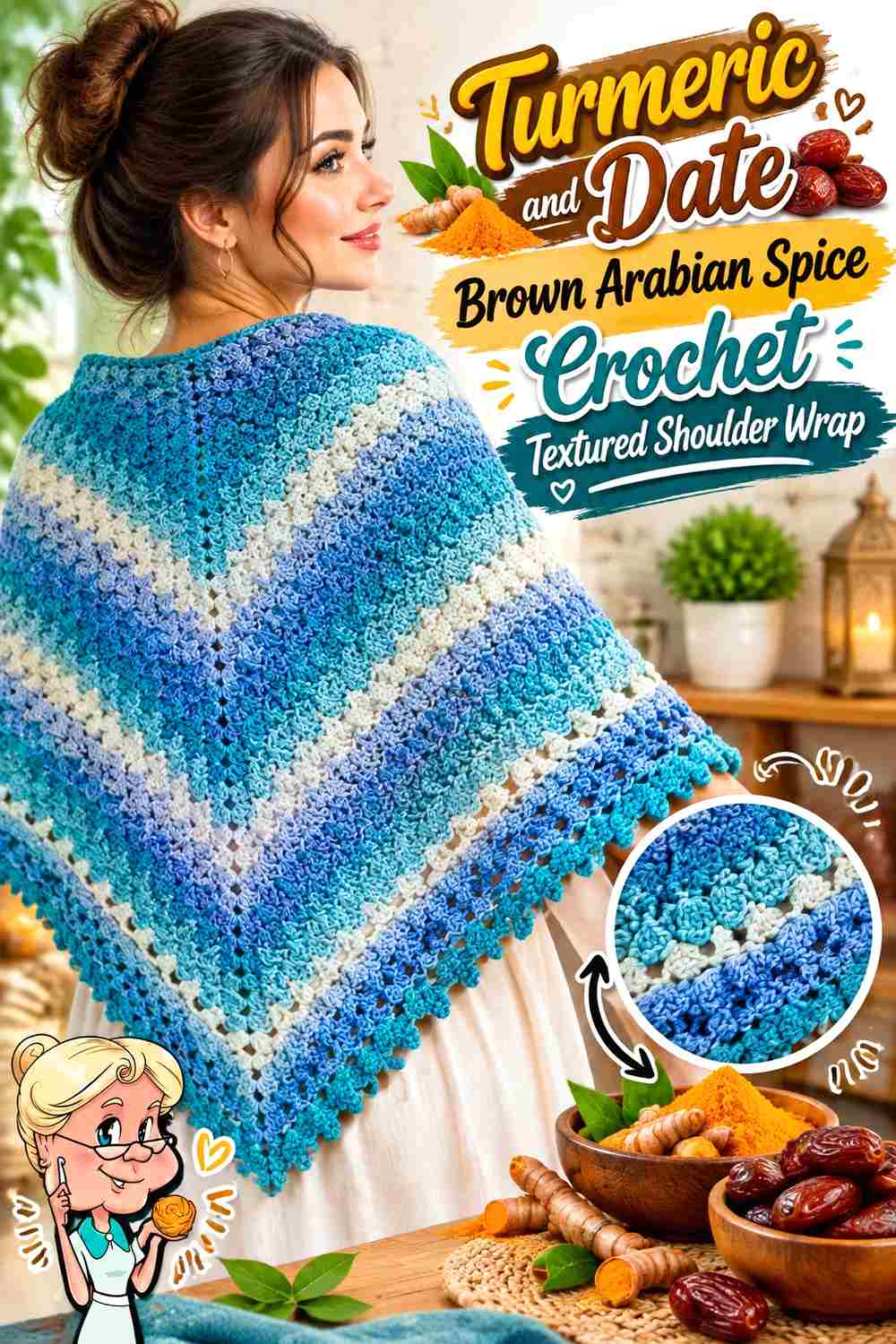
Turmeric brings a strong golden-yellow presence, while date brown supplies the deepest visual weight. This pairing works well when turmeric is given the larger area and brown is used to control the outline, because reversing that balance produces a much darker wrap with only small flashes of gold.
Keep Turmeric Dominant Across the Crochet Wrap Body
Use turmeric through the central field, shoulder line, or repeated broad sections. Its saturated appearance already creates plenty of visual activity, so the surrounding texture does not need frequent additional color changes to remain noticeable.
Use Date Brown to Frame Turmeric Instead of Dividing Every Section
Date brown is effective along an outer border, narrow lower band, or occasional internal line. Keeping the dark shade concentrated in a few locations lets it define the turmeric rather than chopping the wrap into many small golden blocks.
Creator Credit: Creative Grandma
5. Sumac Burgundy And Dusty Rose Arabian Spice Crochet Textured Shoulder Wrap

Sumac-inspired burgundy and dusty rose create a tonal red family with more depth than a single-color wrap. Burgundy works naturally as the visual anchor, while dusty rose can lift textured portions and soften the move from dark sections to the wrap edge.
Anchor the Shoulder Wrap With Sumac Burgundy
Give burgundy the back, central panel, or other broad section if you want the wrap to retain a rich dark base. Because the shade already carries substantial visual weight, smaller burgundy accents elsewhere can be enough to connect lighter areas.
Place Dusty Rose Beside Burgundy Raised Texture
Dusty rose can make a useful supporting shade around textured bands because it stays related to burgundy while creating more separation. Choose a rose that is visibly lighter if the purpose is to reveal detail; two similarly dark reddish shades will create a much more blended effect.
Creator Credit: Kristin Omdahl
6. Cumin And Espresso Arabian Spice Crochet Textured Shoulder Wrap
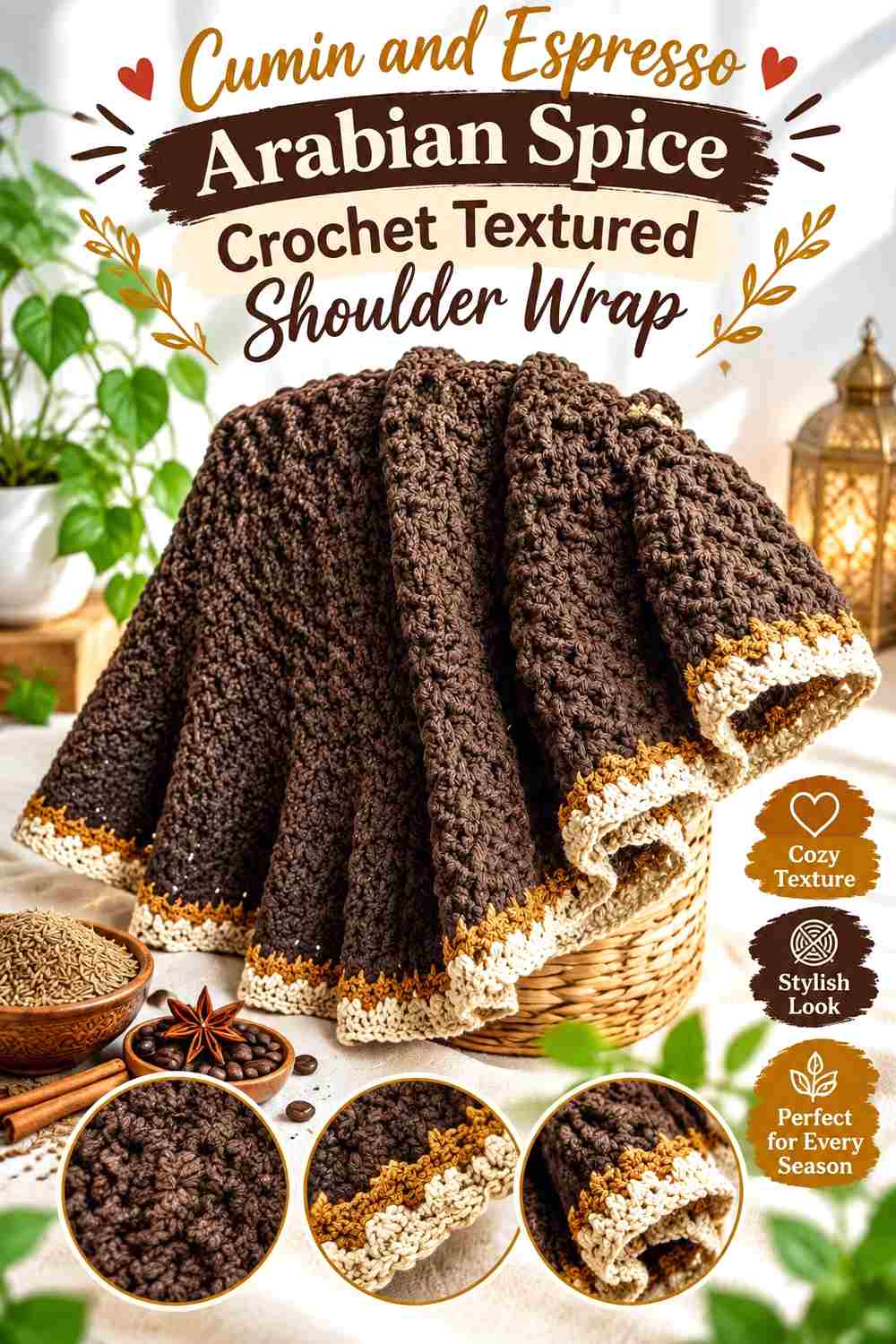
Cumin tan and espresso produce a restrained, neutral-heavy version of the Arabian Spice theme. Cumin can form the main wrap surface, while espresso provides narrow definition at the ends, edge, or selected structural lines. This puts more emphasis on crochet texture than on high-saturation color.
Let Cumin Tan Expose the Main Crochet Texture
Use cumin over broad textured areas where moderate lightness can make ridges and shadows easier to read. If the yarn itself has a highly textured appearance, keeping the color field relatively continuous can prevent the surface from becoming visually cluttered.
Reserve Espresso for Cumin Borders and Small Anchors
Espresso works well as a narrow edge because the strong dark contrast can visually finish a tan wrap without requiring another bright accent. Repeat a small amount elsewhere only when the border otherwise seems disconnected from the central field.
Creator Credit: Meladora’s Creations for Crochet
7. Clove Brown And Saffron Arabian Spice Crochet Textured Shoulder Wrap

This palette reverses the usual bright-dominant formula. Deep clove brown can cover most of the wrap, with saffron used in smaller quantities to illuminate selected bands, edges, or textured focal points. Because saffron attracts attention quickly against brown, it does not need equal coverage.
Use Clove Brown as the Deep Main Wrap Color
A continuous clove field gives textured crochet a shadow-rich, dark background. If the stitch surface is intricate, check it in your chosen yarn before committing to the entire wrap because very dark shades can make small relief changes less obvious.
Repeat Saffron Sparingly Across the Clove Wrap
Instead of one isolated saffron stripe, consider repeating small touches at widely separated points, such as a narrow shoulder detail and part of the lower edge. This distributes the bright accent without letting it compete with clove for dominance.
Creator Credit: Hooked by Robin
8. Olive Paprika And Cream Arabian Spice Crochet Textured Shoulder Wrap

Olive, paprika, and cream offer a three-color scheme with a clear hierarchy: olive as the main field, paprika as the warm accent, and cream as the separator. That separation matters because olive and paprika can both carry substantial visual weight when used in large areas.
Let Olive Control Most of the Crochet Wrap Surface
Keeping olive across the broad shoulder section provides a stable base for the two lighter or stronger additions. It also prevents the wrap from becoming a sequence of equally weighted multicolor stripes.
Place Cream Between Olive and Paprika When Texture Needs Clarity
A narrow cream area can keep paprika accents distinct from olive, especially around repeated motifs or textured bands. You do not need cream between every color change; use it where direct olive-paprika contact makes an important detail difficult to read.
Keep Paprika as a Repeated Accent Against Olive
Paprika can appear in small but recognizable intervals through the wrap. Repetition is more useful here than sheer quantity: several controlled appearances can connect the palette better than one oversized paprika block.
Creator Credit: B.Hooked Crochet
9. Aubergine Cinnamon And Sand Arabian Spice Crochet Textured Shoulder Wrap

Aubergine supplies a dark, cooler anchor, cinnamon provides the warm bridge, and sand gives the palette a pale resting point. This three-part arrangement is useful for wraps with several visible texture zones because each shade can take a different visual role without all three competing equally.
Keep Aubergine Around the Strongest Crochet Wrap Sections
Use aubergine where you want the most visual weight, such as a central band, lower section, or defined outer edge. Avoid distributing the dark purple-brown shade in tiny pieces everywhere, which can make the wrap look speckled rather than intentionally anchored.
Let Cinnamon Connect Aubergine With Sand
Cinnamon can sit between the darkest and palest shades to reduce the jump from aubergine to sand. This is particularly helpful in broad stripes or panels where an immediate dark-to-light change would become the main feature of the wrap.
Put Sand Near Detailed Aubergine or Cinnamon Texture
Use sand where small stitch relief needs to remain legible. A light border or textured band can also keep the combined aubergine and cinnamon sections from making the entire lower half of the wrap feel visually heavy.
Creator Credit: Fiber Flux
10. Desert Teal And Saffron Arabian Spice Crochet Textured Shoulder Wrap
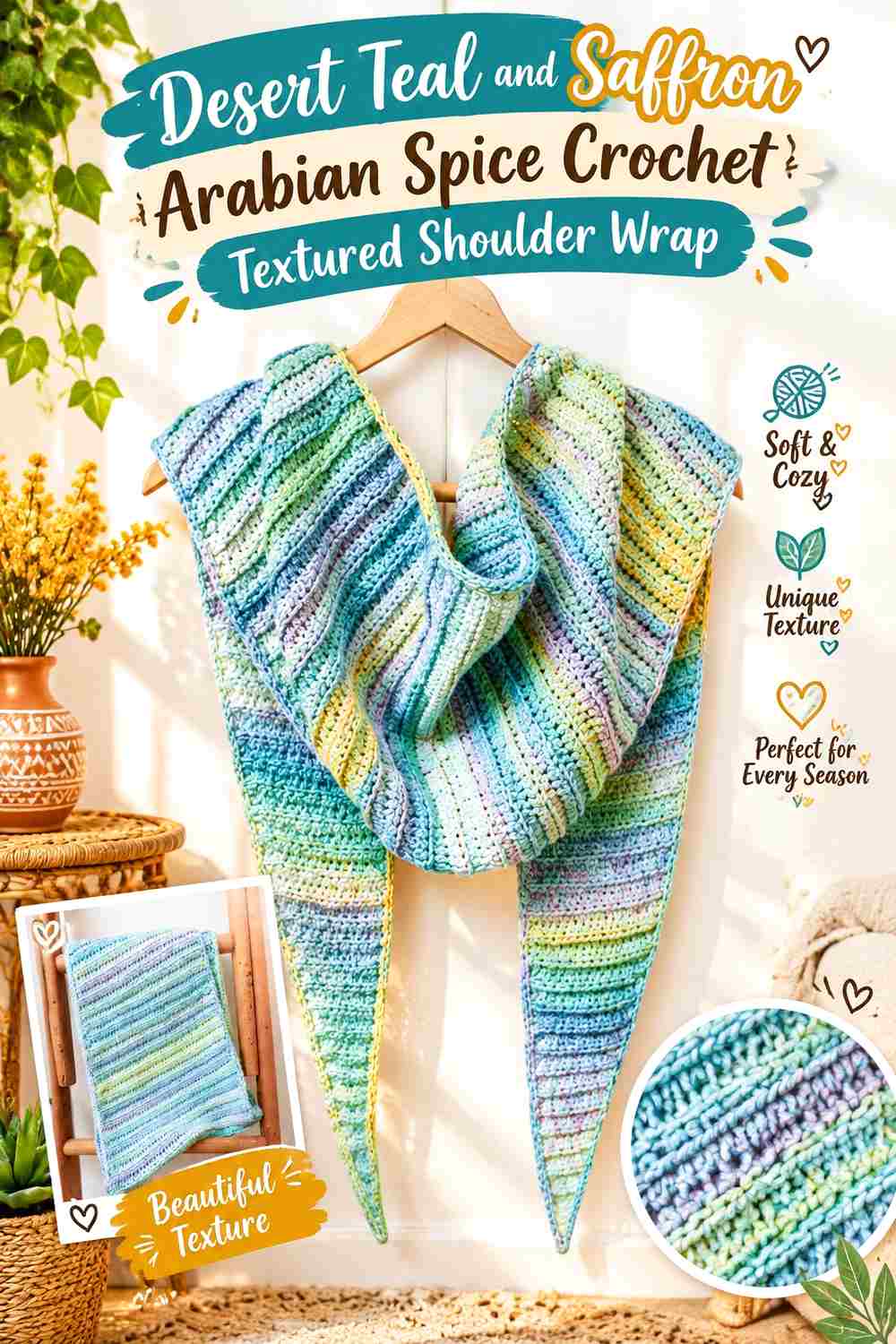
Desert teal and saffron move the Arabian Spice theme into a pronounced warm-cool contrast. Teal can serve as the larger, calmer field while saffron marks a few high-attention areas. The contrast is already strong, so elaborate equal-width color striping is unnecessary.
Give Desert Teal the Main Shoulder Wrap Field
Keeping teal continuous over the upper wrap helps textured stitches form a coherent surface. It also gives the smaller saffron sections enough surrounding space to remain accents rather than competing color blocks.
Use Saffron to Mark Desert Teal Edges or Texture Changes
Saffron can signal the transition into a border, a distinct textured band, or the hanging ends. If the accent starts to dominate, reduce its width rather than adding a third strong hue; the teal-saffron relationship already supplies plenty of contrast.
Creator Credit: Just Be Crafty
11. Indigo Turmeric And Cream Arabian Spice Crochet Textured Shoulder Wrap
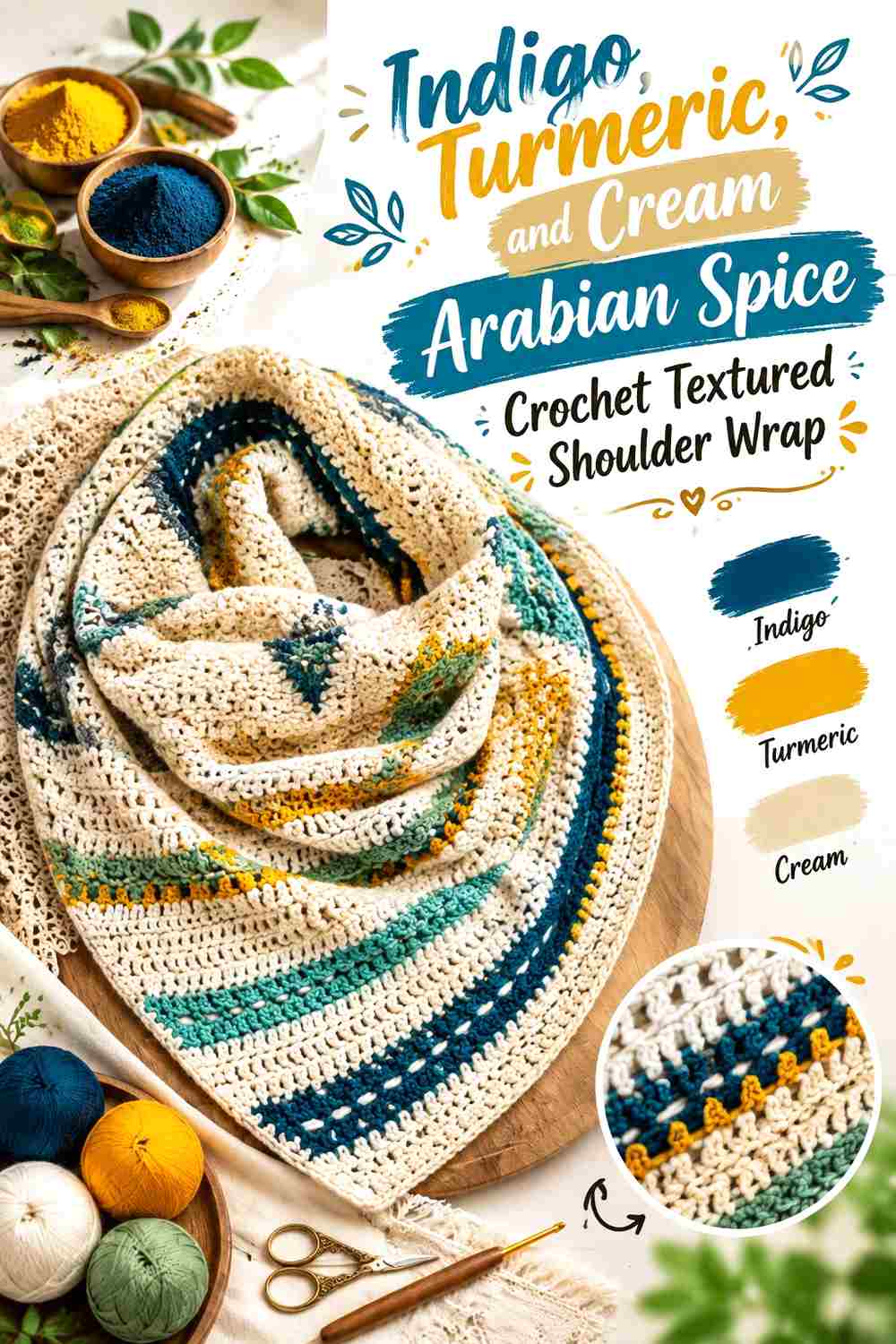
Indigo, turmeric, and cream create a layered hierarchy from very dark to bright warm to pale neutral. Indigo can hold the largest field, turmeric supplies controlled energy, and cream prevents the two saturated shades from colliding everywhere on the wrap.
Let Indigo Form the Dark Base of the Crochet Wrap
An indigo-dominant field gives the shoulder wrap considerable depth, but very dark yarn can reduce the visibility of subtle surface texture. Use broader or more clearly raised texture in the indigo areas if visual stitch definition is important to the overall design.
Use Cream to Separate Indigo From Turmeric Where Needed
Cream works especially well as a narrow spacer around smaller turmeric details. Without that pause, indigo and turmeric create a much stronger direct contrast that may pull attention away from the crochet texture itself.
Keep Turmeric Focused Against Indigo and Cream
Use turmeric at selected ends, bands, or focal details rather than matching indigo in area. This preserves the deep-blue identity of the wrap while letting the warm accent remain easy to notice.
Creator Credit: Tamara Kelly – Moogly
12. Copper Sand And Charcoal Arabian Spice Crochet Textured Shoulder Wrap

A copper-toned orange-brown can lead this palette, with sand revealing textured sections and charcoal providing the final dark frame. The three values create enough separation to make different areas of a shoulder wrap readable without requiring many unrelated hues.
Let Copper Carry the Warm Crochet Wrap Surface
Use copper across the largest area so the finished piece retains its warm spice character. A continuous copper section can also give raised crochet texture more visual importance than it would have inside frequent multicolor changes.
Put Sand Beside Copper Where Crochet Relief Needs Space
Sand can lighten selected bands or ends and provide a cleaner background for detailed texture. Keep enough copper around those sections to prevent the pale neutral from becoming the dominant impression when the wrap is folded over the shoulders.
Use Charcoal as a Narrow Copper and Sand Frame
Charcoal is strongest as a controlled outline here. A narrow lower edge can bring definition to both copper and sand, while a broad charcoal section would shift the entire palette toward a darker, less spice-led direction.
Creator Credit: Yarnspirations
13. Date Brown Rose And Cream Arabian Spice Crochet Textured Shoulder Wrap

Date brown creates the earthy base, rose introduces a softened color accent, and cream supplies the lightest value. This palette can handle more delicate color placement than the paprika-charcoal or teal-saffron options because neither rose nor cream needs to compete aggressively with the dark brown.
Keep Date Brown Across the Main Shoulder Wrap Body
Let date brown connect the back and shoulder area so the wrap feels grounded rather than divided into separate pink, brown, and cream zones. Its depth also creates a useful background for lighter crochet details.
Use Rose as a Soft Accent Against Date Brown
Rose can appear through a textured band or repeated detail without becoming overly dominant. If the rose is too close to brown in value, introduce cream next to the most important section rather than simply adding more rose.
Let Cream Clarify Date Brown and Rose Details
Cream is useful around the smallest texture or at a finishing edge where both darker colors need separation. Keep it controlled if you want the wrap to remain predominantly earthy rather than cream-led.
Creator Credit: The Secret Yarnery
14. Cardamom Sumac Burgundy And Oatmeal Arabian Spice Crochet Textured Shoulder Wrap

Cardamom green and sumac burgundy create a muted two-color contrast, while oatmeal keeps the combination from becoming visually dense. Let one muted color dominate instead of alternating green and burgundy in equal quantities throughout every section.
Make Cardamom the Main Crochet Wrap Color
A cardamom-dominant shoulder field provides a subdued base for burgundy accents. It also gives the wrap a different visual rhythm from palettes where the darkest shade automatically controls most of the surface.
Keep Sumac Burgundy Concentrated Against Cardamom
Place burgundy through a few repeated bands, edge details, or focal texture areas. Because it is darker than the cardamom, even relatively narrow sections can carry substantial visual weight.
Use Oatmeal Where Cardamom and Sumac Texture Needs Separation
Oatmeal can act as a deliberate pause between the two colored yarns. This is useful around intricate areas where the eye needs to distinguish the texture first and the color relationship second.
Creator Credit: Expression Fiber Arts
15. Saffron Aubergine And Oatmeal Arabian Spice Crochet Textured Shoulder Wrap

Saffron and aubergine make a dramatic light-dark and warm-cool pairing, while oatmeal provides a quieter intermediary. Instead of dividing all three equally, let saffron establish the spice-led identity, use aubergine as the anchor, and reserve oatmeal for breathing room around texture.
Let Saffron Establish the Main Crochet Wrap Color
Use saffron over the larger central or shoulder area so aubergine does not turn the wrap predominantly dark. This approach also allows the golden yarn to show more of the surface texture through natural light and shadow.
Place Aubergine at Saffron Edges for a Strong Frame
Aubergine can define the hanging ends or lower border without requiring a large amount of yarn visually. Keep the dark shade away from every internal texture line if you want the saffron field to stay broad and uninterrupted.
Use Oatmeal Between Saffron and Aubergine for Softer Transitions
Oatmeal can break up the strongest dark-light changes, especially near detailed sections. It also offers a practical substitution point: any pale, quiet neutral can serve a similar role if it remains noticeably lighter than aubergine.
Creator Credit: Bella Coco Crochet
16. Cinnamon Paprika Saffron And Clove Arabian Spice Crochet Textured Shoulder Wrap

This is the most layered spice palette in the collection. Cinnamon should provide the unifying midtone, paprika and saffron can create warmer changes through selected bands, and clove gives the darkest anchor. The important part is hierarchy: four colors become much easier to read when they are not used in equal proportions.
Let Cinnamon Connect Paprika and Saffron Across the Wrap
Use cinnamon more often than either brighter accent so the color transitions have a consistent middle ground. It can separate larger paprika and saffron sections while still keeping the entire wrap firmly within a warm spice family.
Keep Saffron Lighter and Paprika Deeper in the Textured Bands
Place saffron where you want the clearest light accent and paprika where a richer warm band can carry more weight. Check the two yarns side by side before starting; if they are surprisingly similar in value, their distinction may come more from hue than from visible light-dark contrast.
Use Clove to Anchor the Cinnamon, Paprika, and Saffron Palette
Clove works well at an outer edge or in a few narrow repetitions rather than as another equal-width stripe. The dark shade can visually contain the warmer colors and give the wrap a defined finish without disrupting the gradual spice progression.
Creator Credit: Briana K
Conclusion
The most useful way to choose among these Arabian Spice crochet textured shoulder wrap ideas is to decide how much contrast you want before choosing individual yarns. Saffron and cream, paprika and charcoal, desert teal and saffron, and indigo with turmeric provide stronger separation. Cinnamon and camel, sumac burgundy with dusty rose, and cumin with espresso keep the changes more restrained and tonal.
For a multicolor wrap, olive with paprika and cream or cardamom with sumac burgundy and oatmeal gives each shade a defined role without requiring a long color sequence. The four-color cinnamon, paprika, saffron, and clove option is better suited to a visibly layered spice palette, but it needs a clear dominant shade so the texture does not disappear behind competing color bands.
Whichever direction you use, check the yarns together before covering the entire shoulder wrap. Light-dark value, the amount of each color, and where the shades fall once the wrap is draped can matter more than finding an exact named shade. Use the credited tutorials for their original construction guidance, then apply the palette in a way that keeps the crochet texture and color hierarchy easy to read.
Frequently Asked Questions
Which Arabian Spice color works well as the dominant shade in a textured shoulder wrap?
Saffron, cinnamon, cardamom, olive, date brown, and even dark indigo can all work as dominant colors, depending on the visual direction you want. The more important decision is whether the supporting colors remain clearly subordinate in area or visual weight.
How can I tell whether saffron and cream have enough contrast for crochet texture?
Place the yarns side by side and check them from a short distance. You can also view a photo in grayscale. If cream remains noticeably lighter, it is more likely to provide useful value separation around saffron texture.
How do I keep paprika and charcoal from making a crochet shoulder wrap too dark?
Give paprika considerably more visible surface area and use charcoal mainly where definition is needed, such as an outer edge or narrow accent. A charcoal-dominant layout will naturally produce a much darker result even though the same two colors are present.
Can I replace cardamom green or sumac burgundy with different shades?
Yes. Preserve the color’s role rather than trying to find an exact name. For example, replace cardamom with another muted medium green, or choose a softened dark red in place of sumac burgundy while keeping the intended contrast with the surrounding yarn.
Where should the darkest Arabian Spice color go on a shoulder wrap?
A dark clove, espresso, aubergine, charcoal, or indigo shade can define the lower border, hanging ends, or selected bands. It does not always belong at the neckline; concentrating too much dark color across the upper edge can make that section visually heavier than the rest of the wrap.
How can I use four Arabian Spice colors without hiding the crochet texture?
Establish a hierarchy instead of using all four shades equally. Give one color most of the surface, one or two supporting roles, and the darkest or strongest shade a smaller accent role. When detailed texture matters, place a lighter color nearby or avoid switching colors in the middle of every textured section.