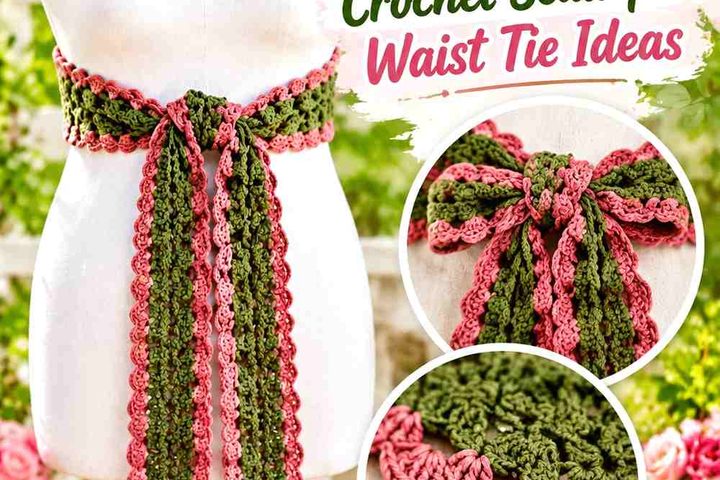
A tiny crochet greenhouse becomes more convincing when every plant has its own color identity while still looking like part of the same miniature collection. Deep greens can anchor broad leaves, sage and moss can distinguish trailing foliage, and terracotta, oatmeal, stone, or cream pots can keep several plants visually coordinated across a shelf.
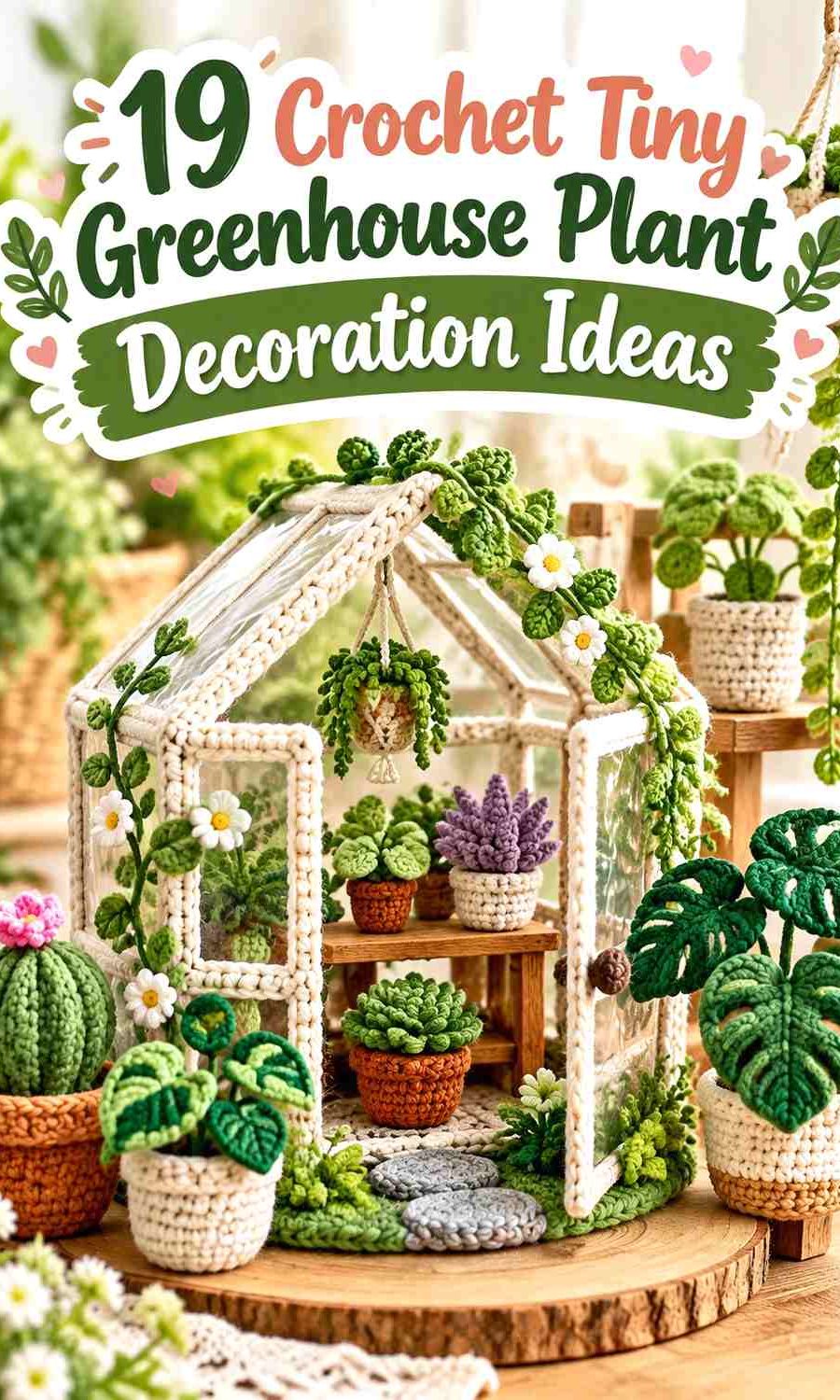
Color placement matters even more at miniature scale. A dark green leaf can disappear against chocolate-brown soil, while a pale flower may blend into an ivory pot. Give each plant one dominant foliage or flower color, then use the pot, soil, stem, or leaf edging to supply the contrast needed to keep its silhouette clear.
The tutorials below include complete potted plants and hanging plants as well as individual flowers, foliage, succulents, and plant-container constructions. When a tutorial teaches only one component, the greenhouse pot or shelf arrangement described here is an independent adaptation rather than a claim that the creator made the exact finished display.
Quick List
- Moss Green, Terracotta, and Blush Crochet Tiny Greenhouse Tulip Pot
- Golden Yellow, Cocoa, and Olive Crochet Tiny Greenhouse Sunflower Pot
- Ivory, Dusty Pink, and Sage Crochet Tiny Greenhouse Orchid Pot
- Cream, Butter Yellow, and Moss Crochet Tiny Greenhouse Daisy Pot
- Deep Green, Sage, and Terracotta Crochet Tiny Greenhouse Monstera Pot
- Sage, Oatmeal, and Cocoa Crochet Tiny Greenhouse String of Pearls Basket
- Blue-Green, Sage, and Stone Crochet Tiny Greenhouse Hen-and-Chicks Succulent
- Forest Green, Dusty Rose, and Terracotta Crochet Tiny Greenhouse Cactus
- Cranberry, Charcoal, and Moss Crochet Tiny Greenhouse Poppy Pot
- Ivory, Butter Yellow, and Olive Crochet Tiny Greenhouse Lily Pot
- Fern Green, Cream, and Clay Crochet Tiny Greenhouse Hanging Planter
- Moss, Lavender, and Oatmeal Crochet Tiny Greenhouse Flowering Hanging Plant
- Terracotta, Cream, and Moss Crochet Tiny Greenhouse Plant Pot Decoration
- Lavender, Sage, and Cream Crochet Tiny Greenhouse Potted Lavender
- Fern Green, Moss, and Oatmeal Crochet Tiny Greenhouse Fern Pot
- Deep Green, Lime, and Clay Crochet Tiny Greenhouse Snake Plant
- Dusty Green, Blush, and Cream Crochet Tiny Greenhouse String of Hearts
- Leaf Green, Beige, and White Crochet Tiny Greenhouse Leafy Plant
- Forest Green, Olive, and Antique Cream Crochet Tiny Greenhouse Ivy Trail
Coordinate the Pots Before the Tiny Greenhouse Plants
When many miniature plants share one greenhouse shelf, the pots can either organize the display or make it feel scattered. Repeating terracotta, oatmeal, cream, clay, or stone across several projects gives very different plants a common visual base.
You do not need every pot to match. A useful approach is to repeat one neutral family while changing the plant colors. Terracotta can support the tulip, cactus, and monstera, while cream or oatmeal containers lighten hanging plants and delicate flowers.
Use Green Value Changes to Separate Tiny Crochet Leaves
Several plants can all be green without looking identical. Deep forest green works well on upright leaves, sage can soften rounder foliage, moss suits woodland-style trailing plants, and lime can highlight markings or leaf centers.
Check the foliage against both the soil and the greenhouse background. If dark green leaves sit over cocoa soil and against a dark shelf, a lighter stem, pot rim, or leaf accent can restore the silhouette without introducing an unrelated bright color.
1. Moss Green, Terracotta, and Blush Crochet Tiny Greenhouse Tulip Pot
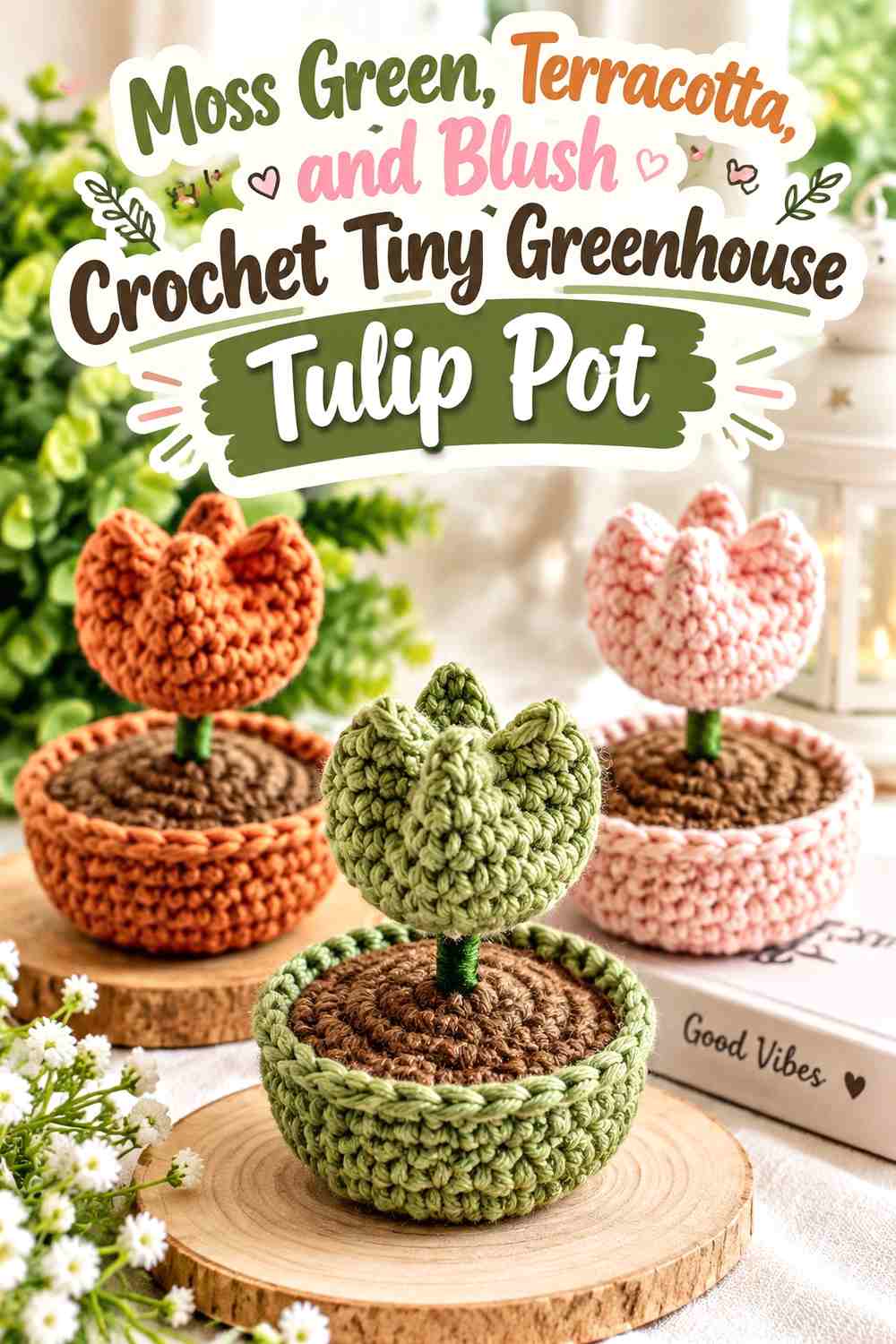
A miniature tulip gives the greenhouse an upright floral focal point without needing a large cluster of blooms. Moss green can lead the stem and leaves, terracotta can ground the plant in the pot, and blush can become the single flower color.
Keep the flower brighter than the foliage but smaller in total area. That balance lets the tulip remain recognizable while the pot still feels connected to the other greenery on the shelf.
Moss Green Should Keep the Blush Crochet Tulip Grounded
Use moss through the stem and leaves so the pink bloom does not look visually detached from the pot.
If the blush is very pale, keep a little green visible immediately below the flower rather than placing it directly above a cream detail.
Terracotta Should Stay Quieter Than the Blush Tulip
Use terracotta across the pot and let blush remain the flower’s focal color.
A highly decorated multicolor pot can compete with a single small bloom, so the container works better as a stable warm base.
Creator Credit: VivCrochets
2. Golden Yellow, Cocoa, and Olive Crochet Tiny Greenhouse Sunflower Pot
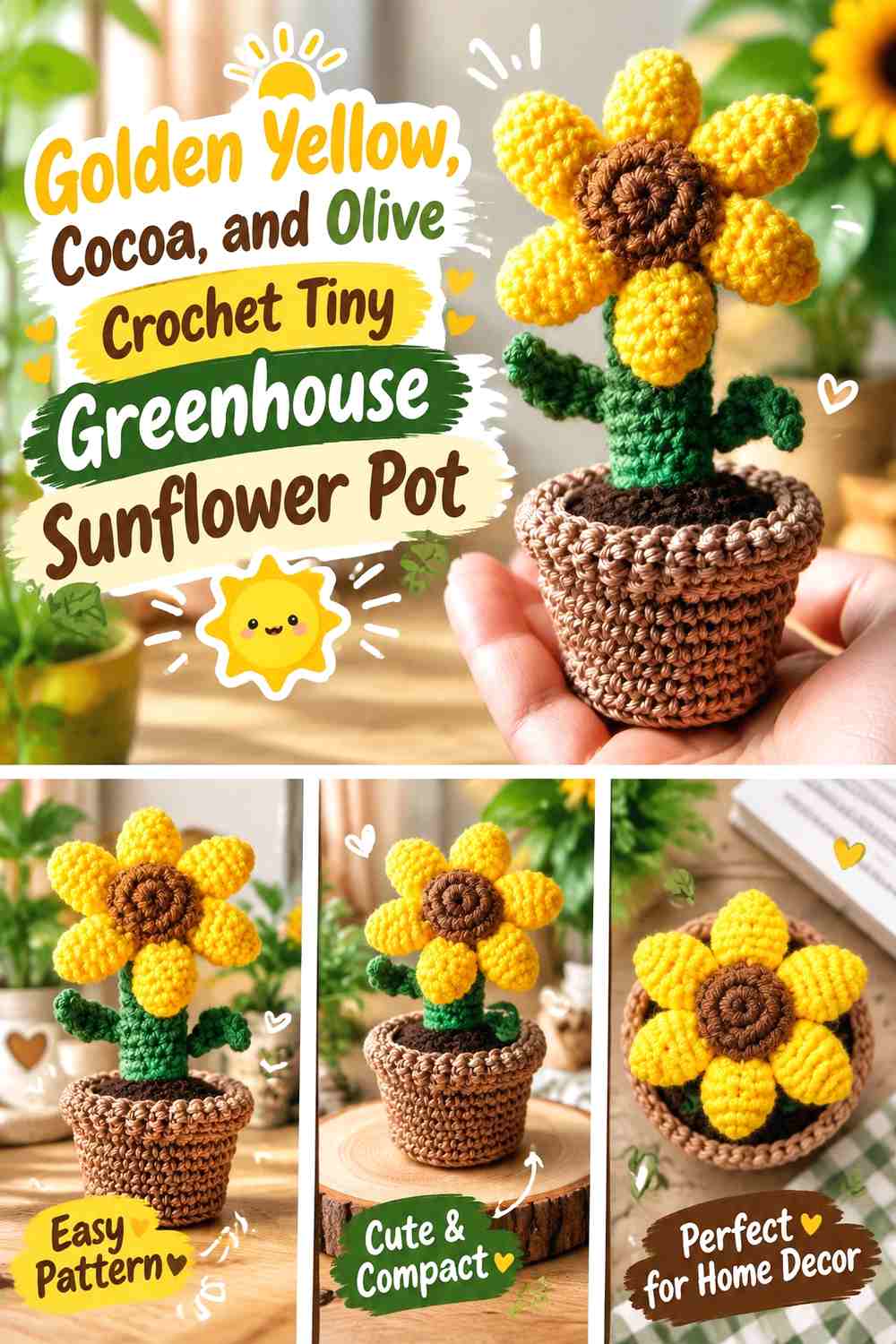
Golden yellow naturally belongs on the petals, cocoa can define the center and soil, and olive can carry the leaves and stem. Because both the flower center and soil are brown, keep enough green between them to stop the upper and lower dark areas from visually merging.
This plant can sit toward the back of a greenhouse display because the bright flower remains visible above lower succulents.
Golden Yellow Should Dominate the Crochet Sunflower Bloom
Keep most of the flower surface yellow and restrict cocoa to the center.
If the brown center becomes too large, the miniature flower can look heavier than its narrow stem and leaves.
Olive Should Separate Cocoa Soil From Golden Yellow Petals
Use olive consistently through the stem and foliage, creating a visual bridge between the flower and pot.
A brighter green may make the palette feel less vintage, while olive keeps the yellow warm and grounded.
Creator Credit: Neng Crochet
3. Ivory, Dusty Pink, and Sage Crochet Tiny Greenhouse Orchid Pot
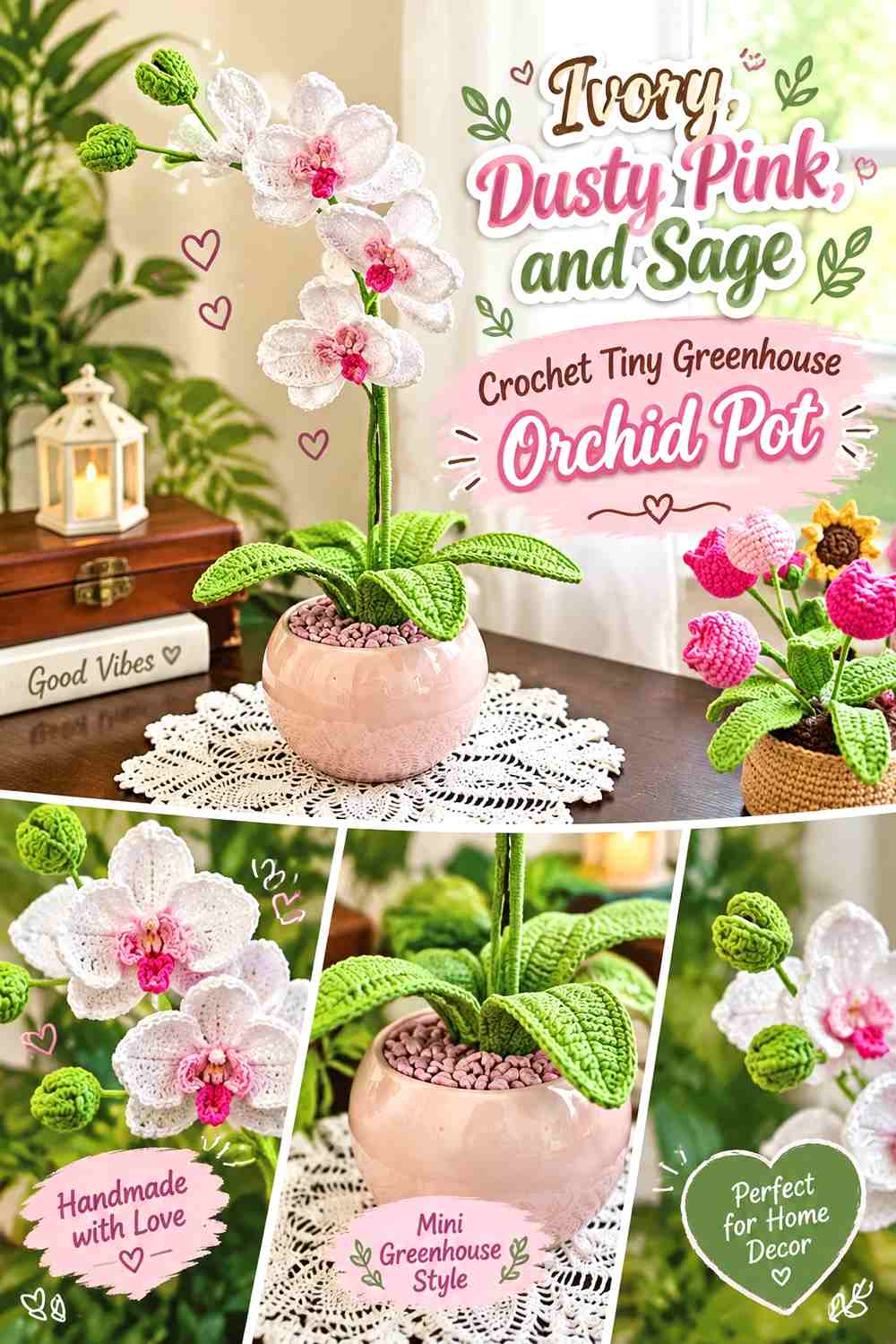
An orchid can provide a lighter, more delicate plant among darker succulents and foliage. Ivory can lead the petals, dusty pink can define the flower centers, and sage can carry the leaves and stems.
Use a subdued pot color so the branching flower shapes remain the main attraction. Cream, stone, or muted clay can work without adding another strong hue.
Ivory Should Stay Brighter Than Sage on the Crochet Orchid
Keep ivory concentrated in the petals so each bloom remains visible above the green base.
If the greenhouse backing is white, dusty pink should reach farther into the petals or the pot should be slightly darker.
Dusty Pink Should Accent Ivory Without Hiding the Orchid Shape
Use pink in the center or selected petal areas rather than dividing every bloom evenly into two colors.
The smaller pink sections give the flowers depth while ivory preserves their light overall appearance.
Creator Credit: Shelen Crochet
4. Cream, Butter Yellow, and Moss Crochet Tiny Greenhouse Daisy Pot
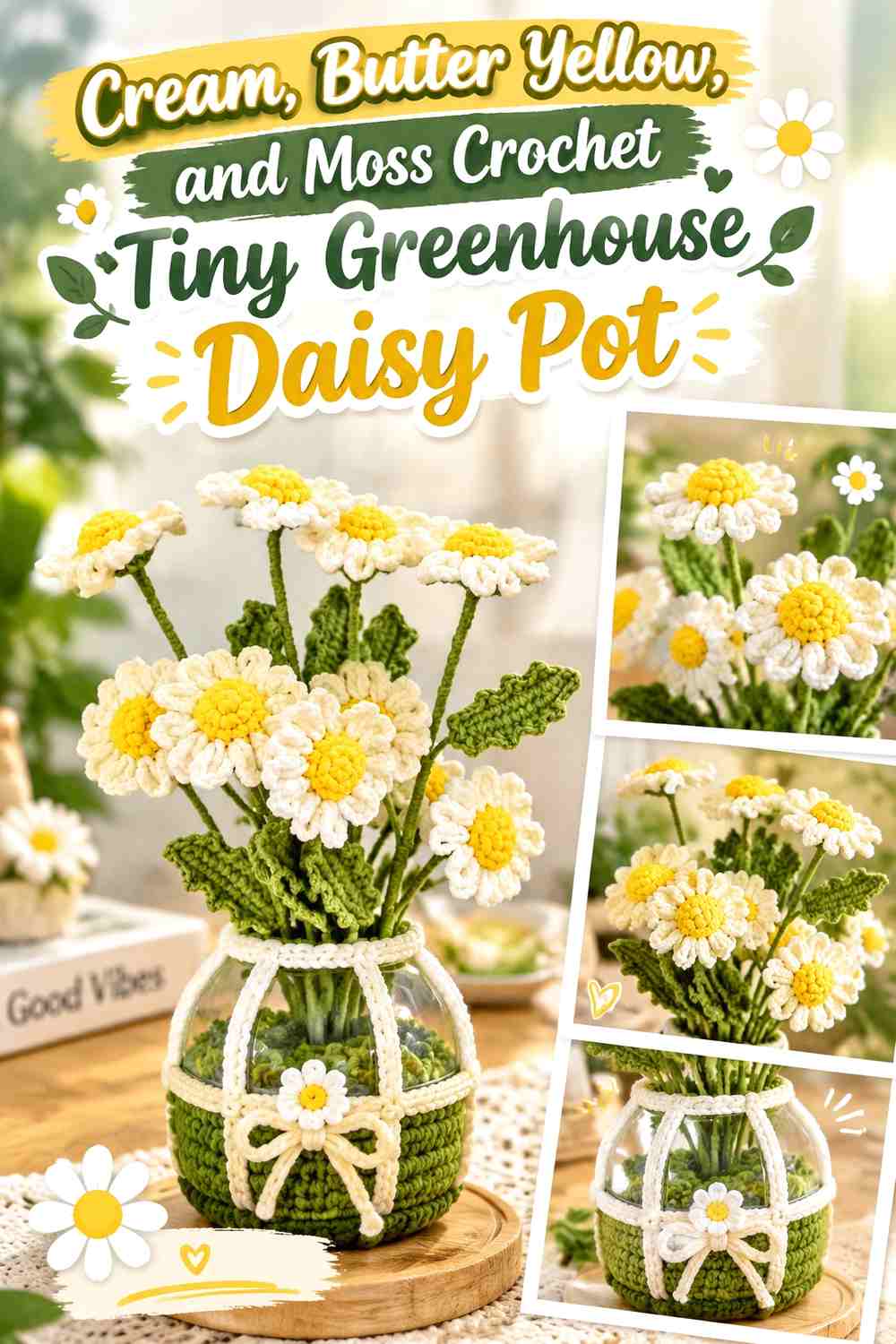
Cream petals, a butter-yellow center, and moss foliage create a soft miniature daisy that works well near darker plants. The flower itself contains plenty of light color, so choose a pot that provides contrast rather than another pale neutral if the greenhouse shelf is also cream.
A moss or muted terracotta pot rim can be enough to define the base without changing the floral palette.
Cream Petals Need Butter Yellow Definition on the Crochet Daisy
Let the yellow center remain clearly visible against the pale petals. That small warm area keeps the bloom readable at miniature scale.
Avoid adding yellow repeatedly around the petal edges, where it can weaken the simple daisy structure.
Moss Should Anchor the Cream Daisy Above the Greenhouse Pot
Use moss for the stem and leaves so the pale flower does not appear to float above the soil.
Keeping the foliage darker than cream also helps the daisy remain distinct on a light greenhouse shelf.
Creator Credit: Unithread Crochet
5. Deep Green, Sage, and Terracotta Crochet Tiny Greenhouse Monstera Pot
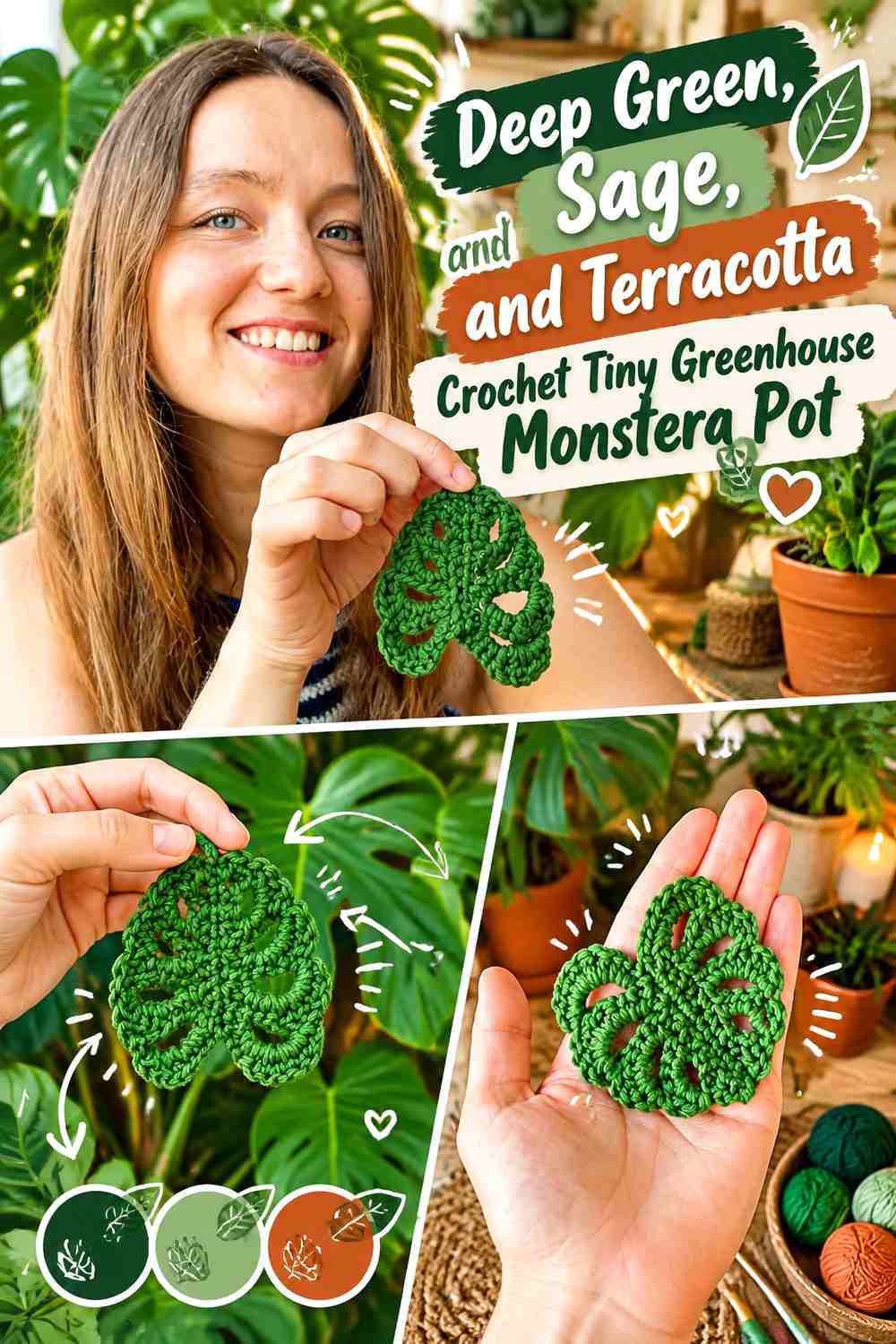
A monstera works well as a foliage-focused greenhouse plant because the leaf shape can carry most of the visual interest. Deep green should dominate the larger leaf surfaces, sage can highlight selected leaves or inner sections, and terracotta can ground the composition.
Avoid adding several flower colors to this plant. The contrast between two greens and the warm pot is enough.
Deep Green Should Define the Crochet Monstera Silhouette
Use the darkest green around enough of the outer leaf area that the recognizable split-leaf form remains easy to see.
If the plant sits against a dark greenhouse wall, place sage toward the outermost visible sections.
Sage Should Break Up Deep Green Without Fragmenting the Monstera
Use sage selectively on alternate leaves or defined leaf sections instead of changing shade repeatedly within every lobe.
That keeps the plant varied while preserving a strong botanical silhouette.
Creator Credit: by Kristine
6. Sage, Oatmeal, and Cocoa Crochet Tiny Greenhouse String of Pearls Basket

A trailing string-of-pearls plant gives the greenhouse vertical movement below a shelf or hanging rail. Sage can lead the strands, oatmeal can form the basket or pot, and cocoa can provide the soil.
Keep the pot visually quiet because the repeated round foliage already creates substantial texture.
Sage Should Remain Continuous Along the Crochet Pearl Strands
Use sage across most or all of the trailing foliage so the separate strands read as one plant.
Frequent color changes along the vines can make the tiny round forms look more like beads than leaves.
Oatmeal Should Separate Sage From Cocoa in the Greenhouse Basket
A light oatmeal container creates a visible boundary between green foliage and brown soil.
If the greenhouse background is also pale, add a narrow cocoa or sage rim instead of darkening the whole pot.
Creator Credit: A Crafty Concept
7. Blue-Green, Sage, and Stone Crochet Tiny Greenhouse Hen-and-Chicks Succulent
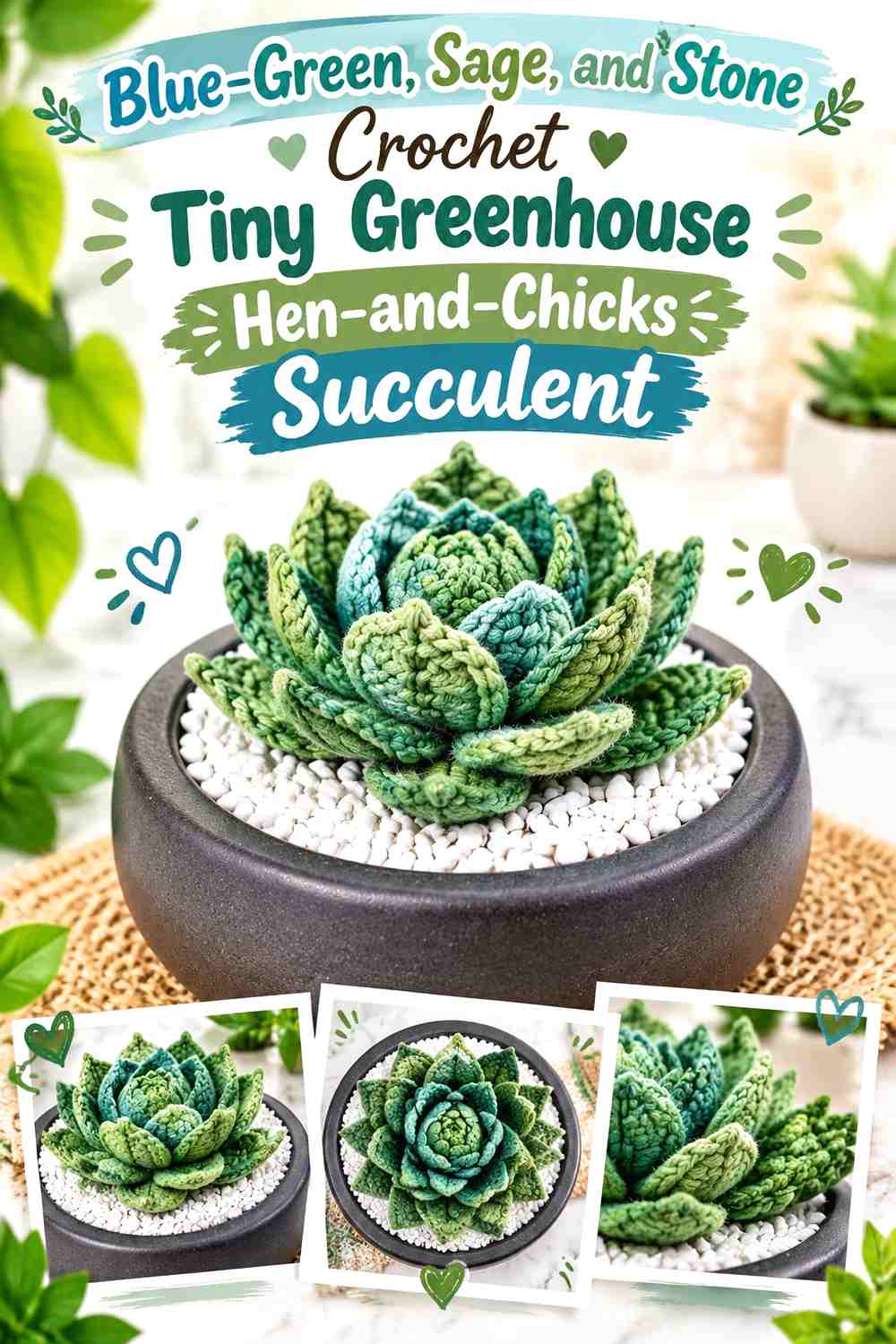
Hen-and-chicks foliage benefits from closely related greens because the layered leaves already provide strong texture. Let blue-green carry the largest outer leaves, sage lighten smaller inner growth, and stone keep the pot neutral.
The subtle palette helps this plant act as a quiet filler beside brighter flowers.
Blue-Green Should Lead the Crochet Succulent Rosette
Use blue-green across enough leaves that the plant reads as one cohesive rosette rather than several unrelated green layers.
Sage is most useful toward the center, where the value change can reveal smaller leaves.
Stone Should Stay Neutral Beside Blue-Green and Sage
A gray-beige or stone-colored pot gives the two foliage colors room to remain the focus.
Avoid introducing bright terracotta if the goal is a cool-toned greenhouse corner.
Creator Credit: Happy Patty Crochet
8. Forest Green, Dusty Rose, and Terracotta Crochet Tiny Greenhouse Cactus
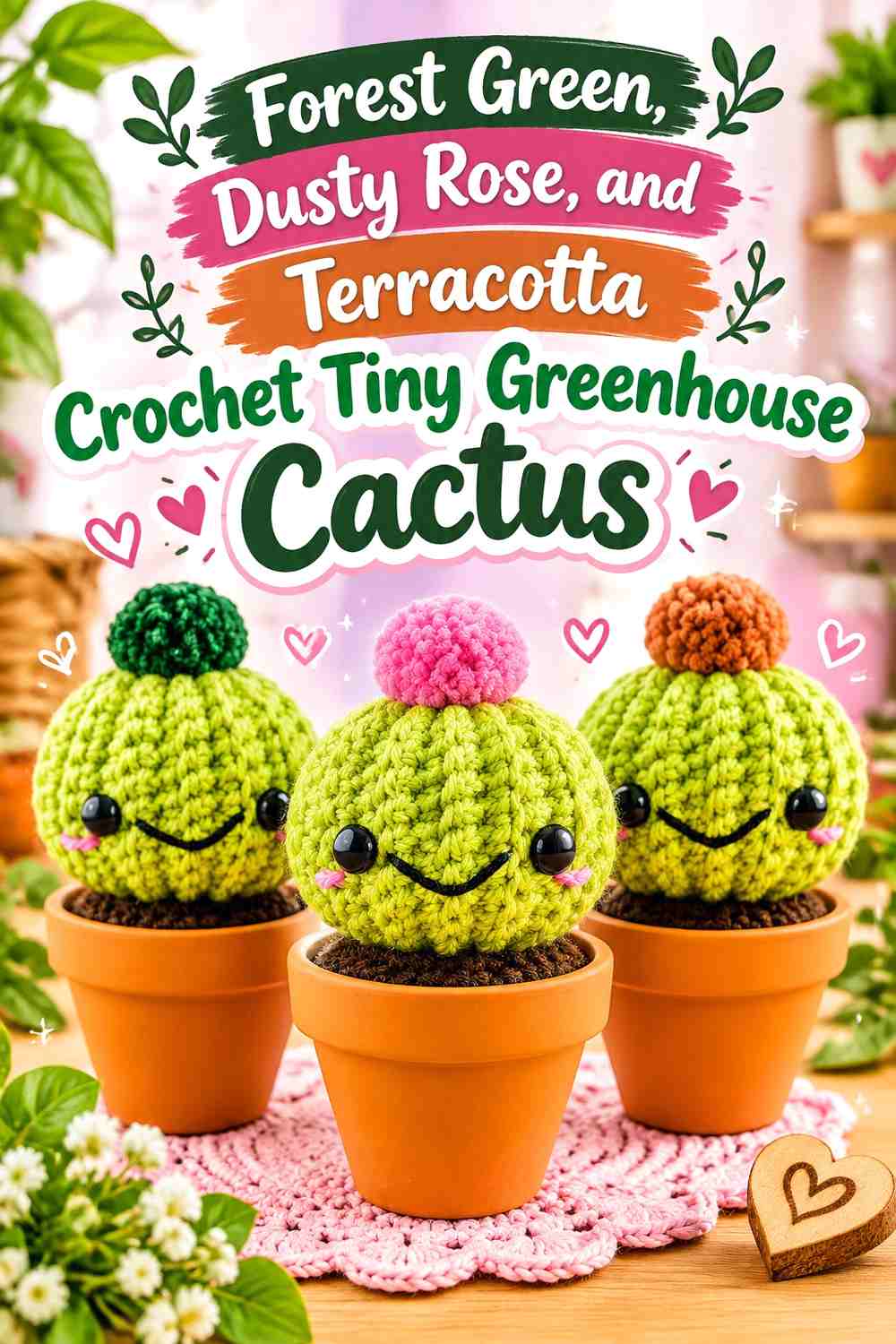
Forest green gives a small cactus enough visual weight to stand among broad-leaf plants, while dusty rose can become a restrained flower accent. Terracotta works naturally as the supporting pot color.
Keep dusty rose tiny. The flower should decorate the cactus rather than make the plant look pink-led.
Forest Green Should Carry Most of the Crochet Cactus Body
Use green continuously across the main cactus so any ribbed or shaped texture remains easy to see.
A multicolor cactus body would compete with the form and reduce the impact of the small flower.
Dusty Rose Should Stay Smaller Than the Terracotta Cactus Pot
Use dusty rose only where a bloom or small decorative detail needs attention.
The warm pot can occupy more area because it sits below the green body and does not compete directly with the flower.
Creator Credit: Hooked by Robin
9. Cranberry, Charcoal, and Moss Crochet Tiny Greenhouse Poppy Pot
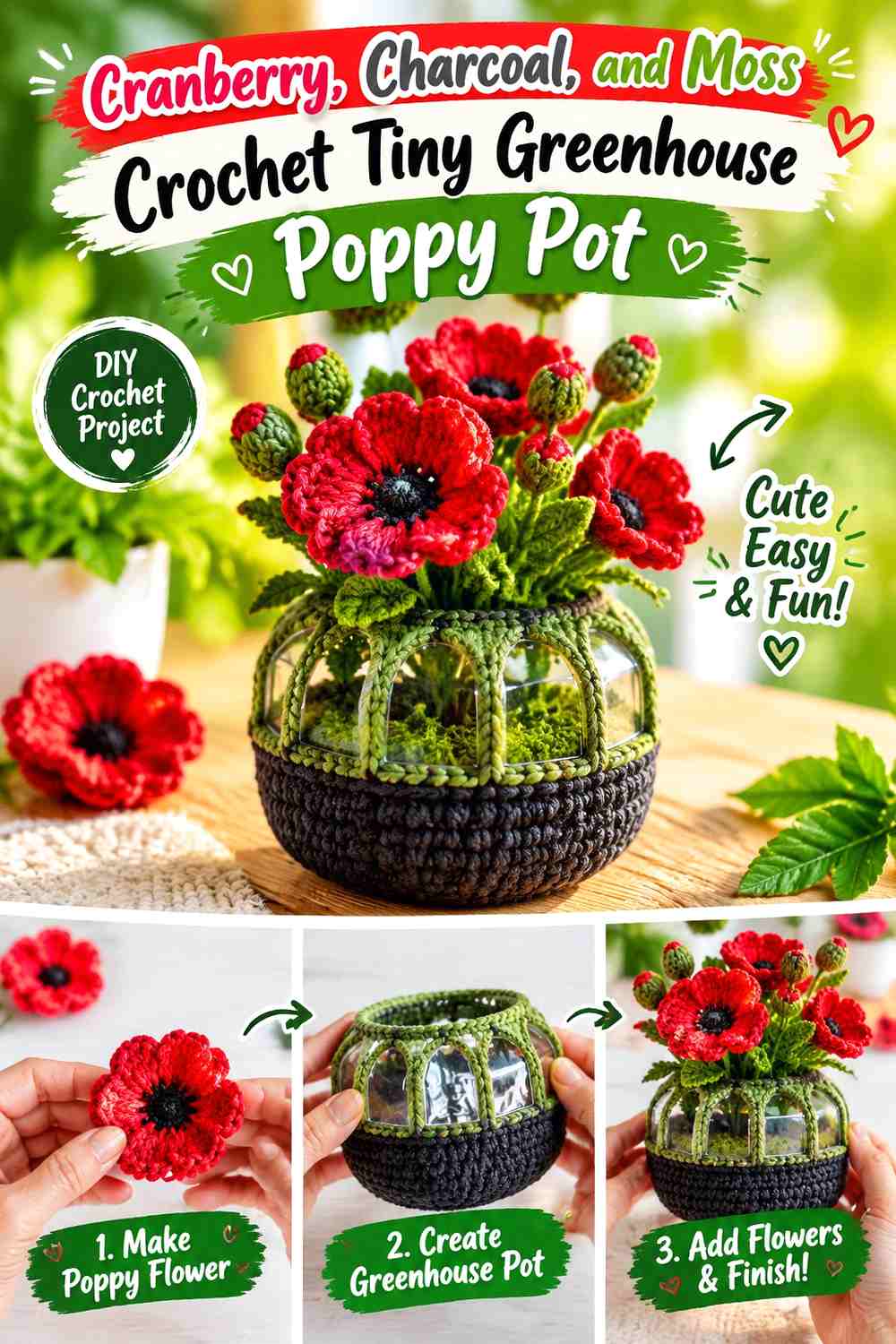
A cranberry poppy gives the greenhouse one darker floral accent. Charcoal can define the flower center, while moss keeps the stem and leaves subdued enough for the red to remain dominant.
Choose a quiet pot—oatmeal, clay, or muted stone—rather than repeating cranberry below the flower.
Cranberry Should Stay Broad Around the Charcoal Crochet Poppy Center
Keep most of the petal area cranberry so the black-gray center does not visually take over the miniature bloom.
If the center is particularly dark, moss foliage below it gives the eye a softer transition.
Moss Should Keep Cranberry Separate From the Greenhouse Pot
Use moss continuously through the stem and leaf areas instead of adding more dark charcoal around the base.
That prevents the plant from becoming top-heavy with multiple deep colors.
Creator Credit: Crochet Musings
10. Ivory, Butter Yellow, and Olive Crochet Tiny Greenhouse Lily Pot
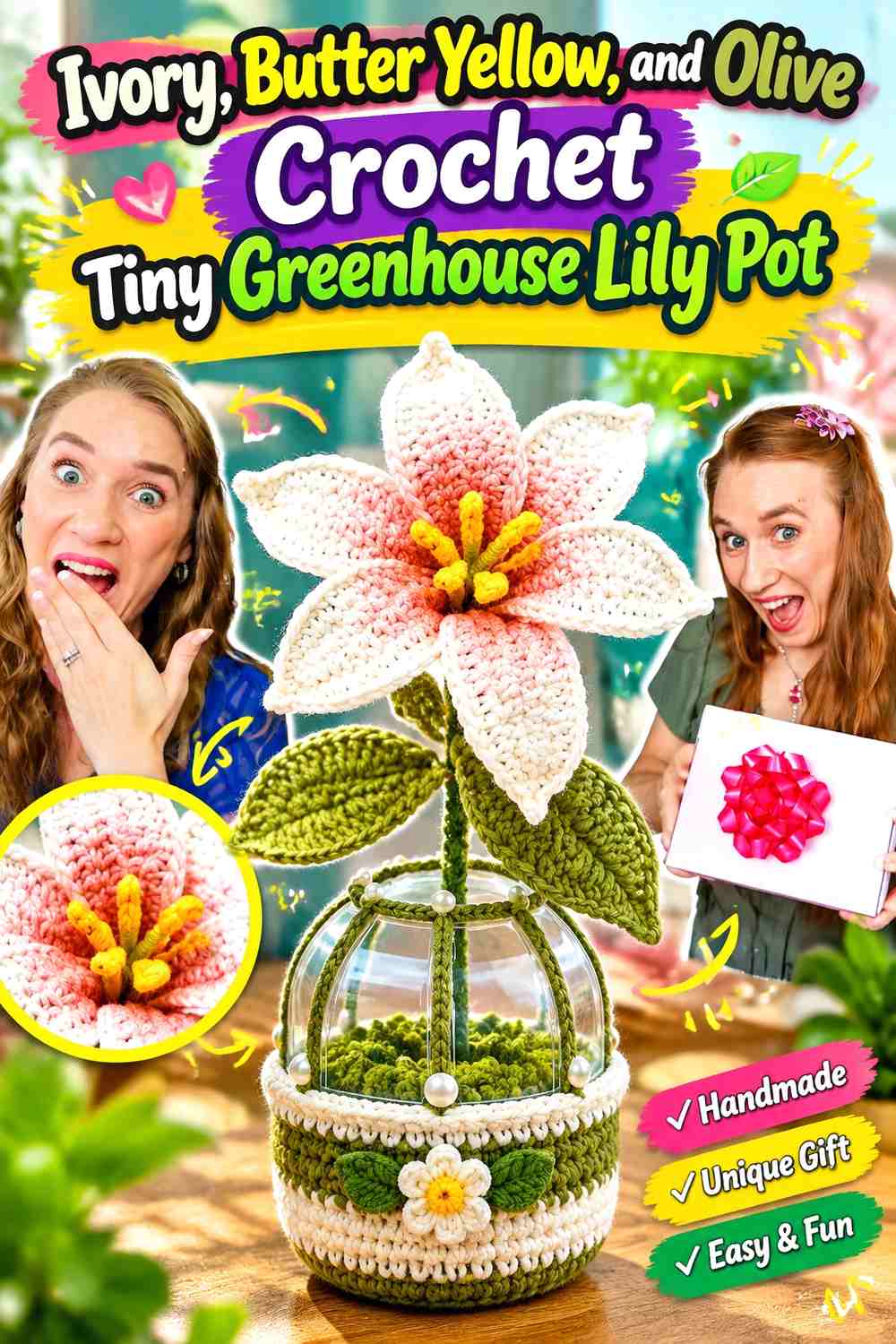
Ivory petals create a light lily that can sit among darker foliage, while butter yellow provides a warm center and olive gives the stems and leaves enough depth.
Because the bloom is visually open, keep the pot narrow and quiet so the lower portion does not feel heavier than the flower.
Ivory Should Remain the Main Crochet Lily Petal Color
Use ivory across the broad petals and reserve yellow for the center or small interior details.
Too much yellow can make the flower feel less delicate and compete with surrounding greenhouse blooms.
Olive Should Ground Ivory and Butter Yellow Above the Pot
A medium olive stem creates clearer separation than pale sage when the petals are already very light.
Repeat olive in the leaves rather than introducing a second green.
Creator Credit: Nicki’s Homemade Crafts
11. Fern Green, Cream, and Clay Crochet Tiny Greenhouse Hanging Planter

A hanging planter makes good use of greenhouse roof or rail space. Fern green can lead the foliage, cream can form the hanging basket, and clay can appear as a small soil or pot accent.
Keep the cords visually simple so they frame the foliage rather than becoming another decorative color pattern.
Fern Green Should Stay Stronger Than Cream in the Crochet Hanging Plant
Let the leaves occupy more visual area than the pale hanger so the piece still reads as a plant first.
If the cords are long, keeping them cream prevents a large green outline from competing with the foliage.
Clay Can Warm the Cream Greenhouse Planter Without Competing With Fern Green
Use clay only around the pot, soil edge, or one small lower detail.
That restrained warm accent prevents the hanging piece from becoming entirely green and cream.
Creator Credit: Skein Spider
12. Moss, Lavender, and Oatmeal Crochet Tiny Greenhouse Flowering Hanging Plant
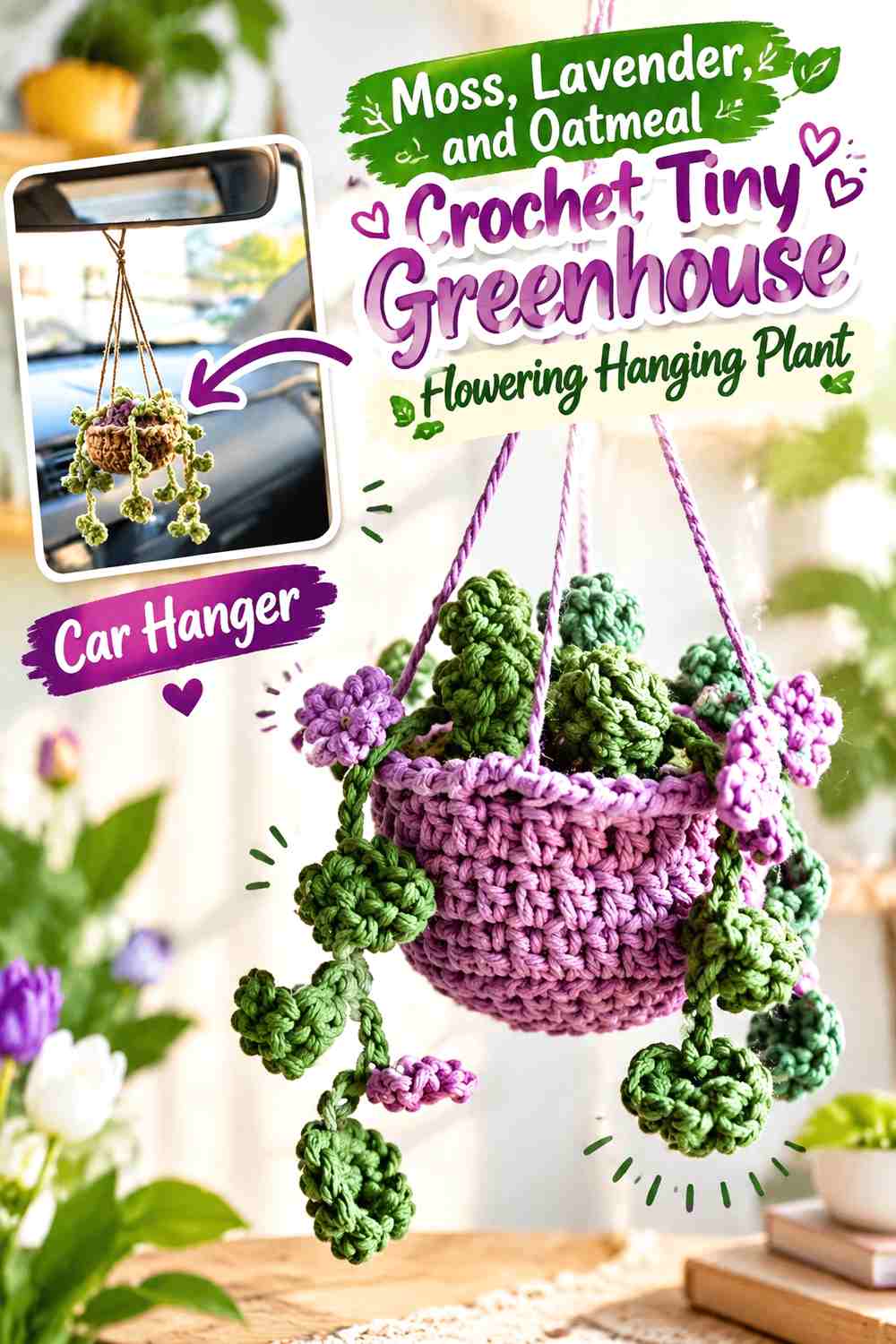
Moss trailing leaves with small lavender flowers create a hanging plant that adds color without taking up shelf space. Oatmeal can keep the pot and hanging cords visually light.
The flowers should repeat sparsely along the vines rather than covering every green section.
Moss Should Remain Visible Between Lavender Crochet Flowers
Leave enough uninterrupted green vine so the plant still reads as trailing foliage.
A flower on every short section can turn the hanging plant into a lavender garland rather than a potted plant.
Oatmeal Should Keep Lavender and Moss Clear at the Greenhouse Pot
Use oatmeal for the container and hanger, giving both plant colors a neutral base.
If the greenhouse wall is cream, add a moss rim around the pot rather than changing the whole container color.
Creator Credit: Bloodimaryart Crochet
13. Terracotta, Cream, and Moss Crochet Tiny Greenhouse Plant Pot Decoration
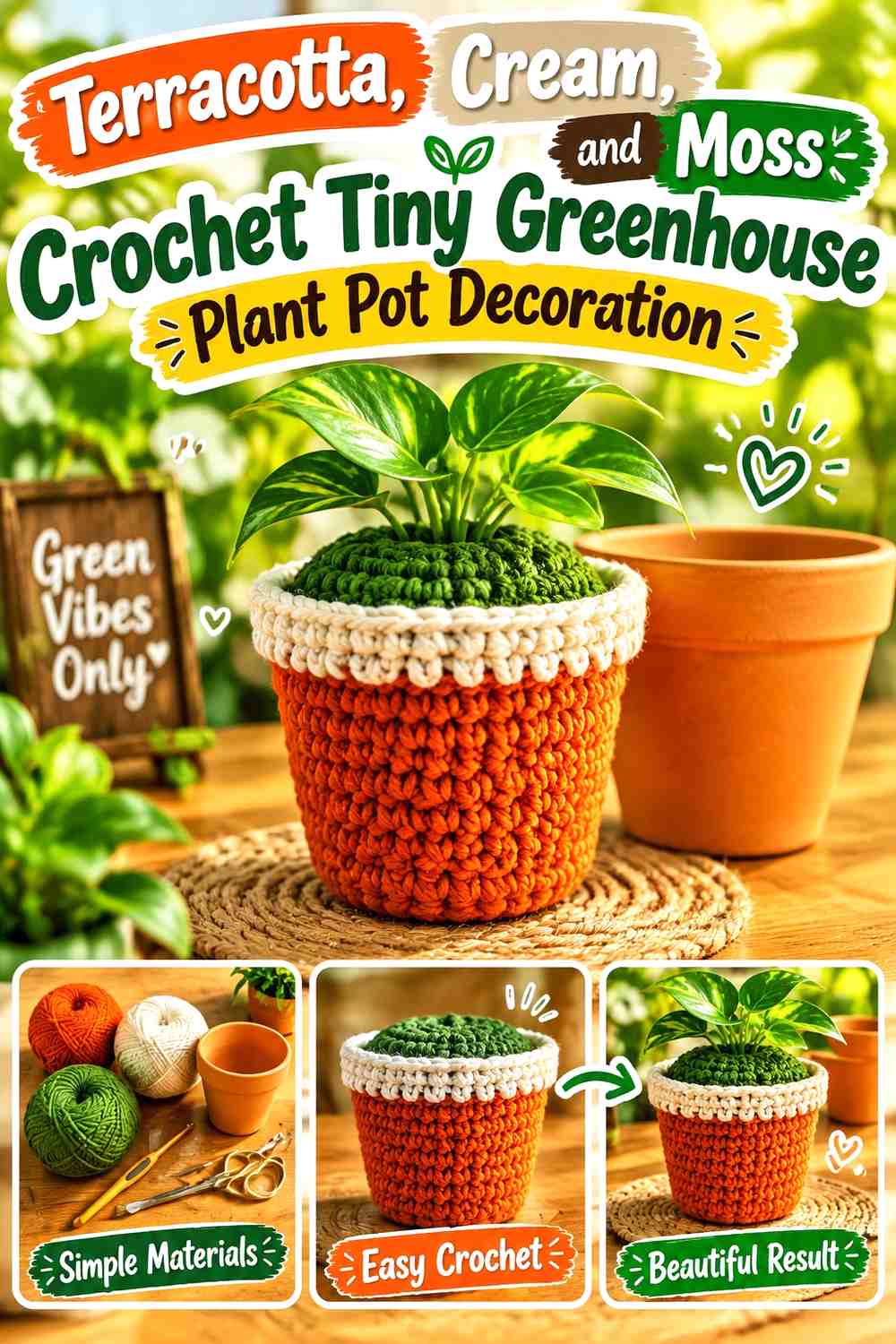
This idea makes the container itself part of the miniature greenhouse styling. Terracotta can form the main pot, cream can highlight the rim, and moss can appear as a tiny sprout or foliage accent placed into the soil.
It works well as a visual bridge between flowering pots and fully green plants because the warm container carries more of the color.
Terracotta Should Dominate the Crochet Greenhouse Plant Pot
Keep the broad pot surface terracotta so the shape remains visually simple and recognizable.
A cream rim can define the opening without making the small container look horizontally striped.
Moss Should Stay Smaller Than Cream on the Terracotta Plant Pot
Use moss only for a compact sprout or foliage detail.
The limited green keeps attention on the pot while still making it belong in the plant collection.
Creator Credit: MummaJ Crochet
14. Lavender, Sage, and Cream Crochet Tiny Greenhouse Potted Lavender
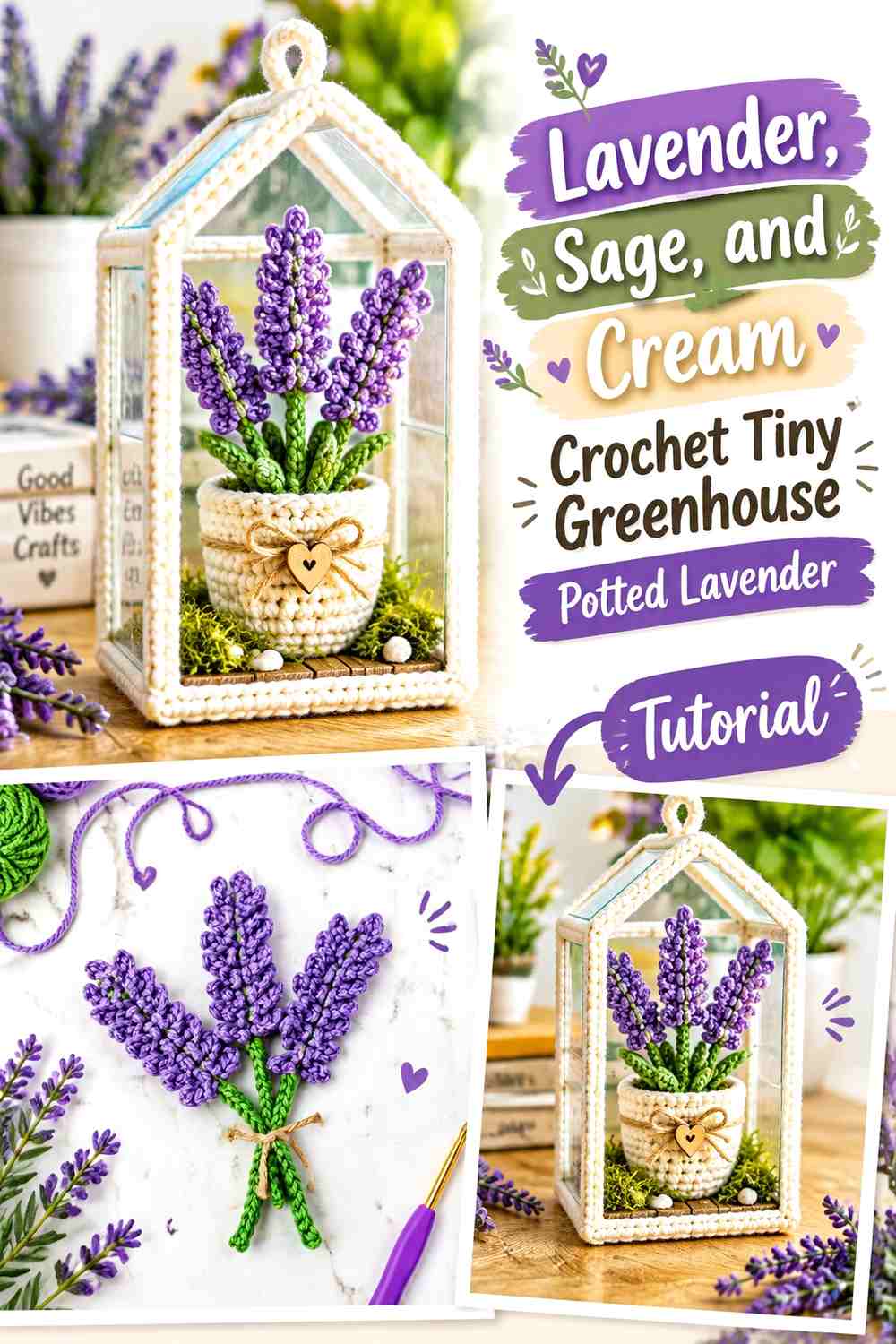
Lavender-colored flower spikes can provide repeated vertical detail while sage keeps the stems subdued. Cream works well for the pot because it does not compete with the closely spaced flower sections.
Group several stems together rather than distributing purple evenly across the whole pot surface.
Lavender Should Stay Concentrated Above Sage Crochet Stems
Keep the flower color toward the upper portion so the miniature plant maintains a recognizable vertical hierarchy.
Too much lavender down the stem can reduce the visual distinction between flowers and foliage.
Cream Should Give Lavender and Sage a Quiet Greenhouse Base
A cream pot lets both muted colors remain visible without introducing another earthy tone.
If the greenhouse shelf is white, add a sage pot rim or place the pot against a darker backing.
Creator Credit: GoldenLucyCrafts
15. Fern Green, Moss, and Oatmeal Crochet Tiny Greenhouse Fern Pot
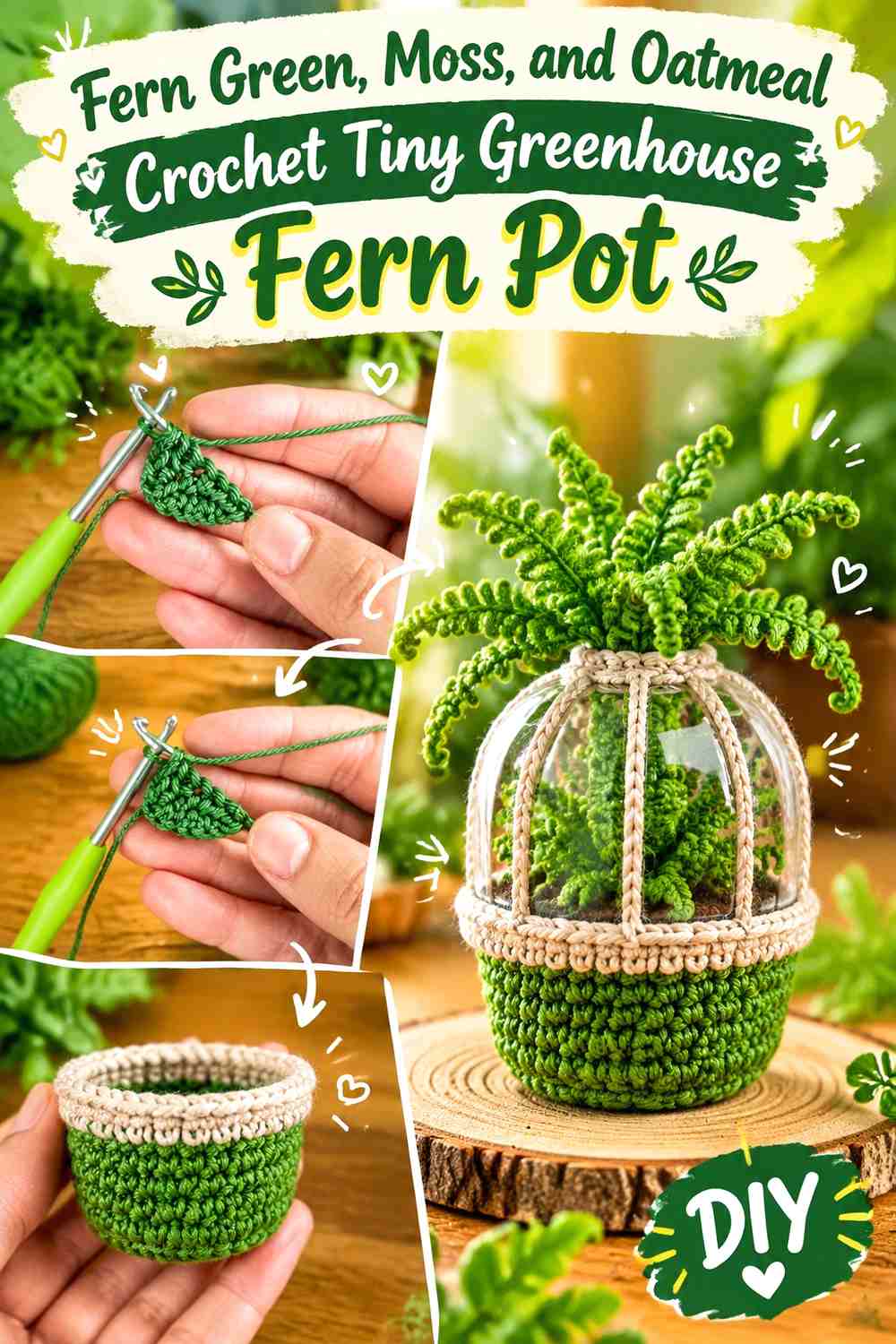
A fern relies on repeated leaflets rather than flowers, so tonal green variation becomes especially useful. Fern green can lead the fronds, moss can add depth among selected leaves, and oatmeal can lighten the pot.
Give the fronds enough space around one another so the two greens remain visible instead of becoming one dense mass.
Fern Green Should Lead the Crochet Greenhouse Fronds
Use fern green on most of the leaf structure and reserve moss for selected fronds or deeper interior sections.
That creates depth without forcing color changes through every small leaflet.
Oatmeal Should Keep Moss and Fern Green Visible at the Pot
A pale pot separates the green foliage from cocoa soil and dark shelving.
If the shelf itself is oatmeal, a thin moss rim can restore the pot outline.
Creator Credit: Mdays
16. Deep Green, Lime, and Clay Crochet Tiny Greenhouse Snake Plant
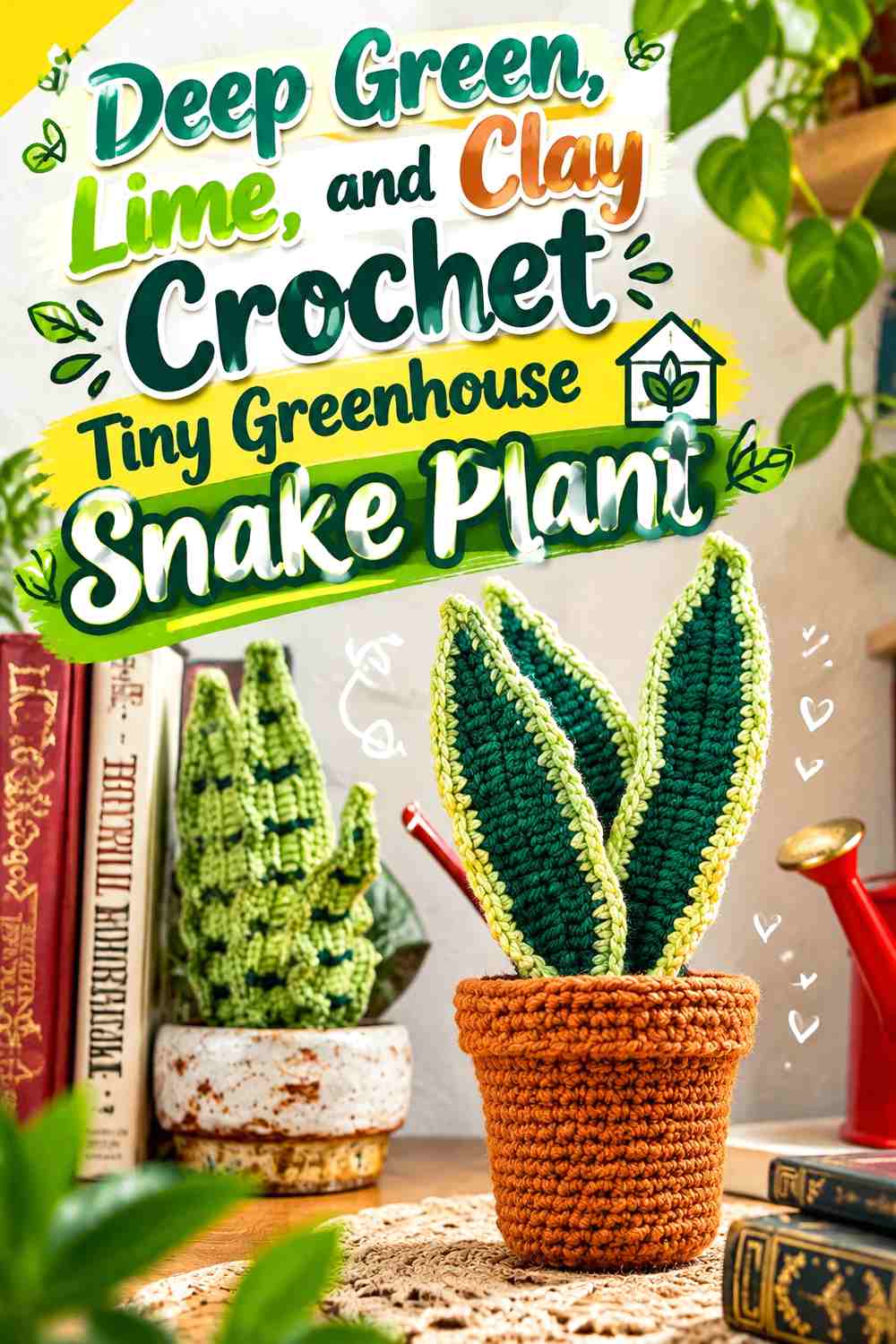
A snake plant offers an upright contrast to trailing vines and soft flowers. Deep green should define the main leaves, lime can highlight markings or selected sections, and clay can ground the plant in a warm pot.
Keep the lime controlled. Its strongest job is to reveal the leaf pattern rather than become the plant’s dominant color.
Deep Green Should Define the Crochet Snake Plant Silhouette
Use dark green on enough of the outer leaves that the upright shape remains obvious.
If the greenhouse background is very dark, move lime closer to the leaf edges for stronger separation.
Lime Should Stay Narrow Against Deep Green Snake Plant Leaves
Treat lime as a highlight or stripe rather than a second equal leaf color.
A large amount of bright green can make the foliage visually busy when several tall leaves overlap.
Creator Credit: Lizfaerie Crafts
17. Dusty Green, Blush, and Cream Crochet Tiny Greenhouse String of Hearts
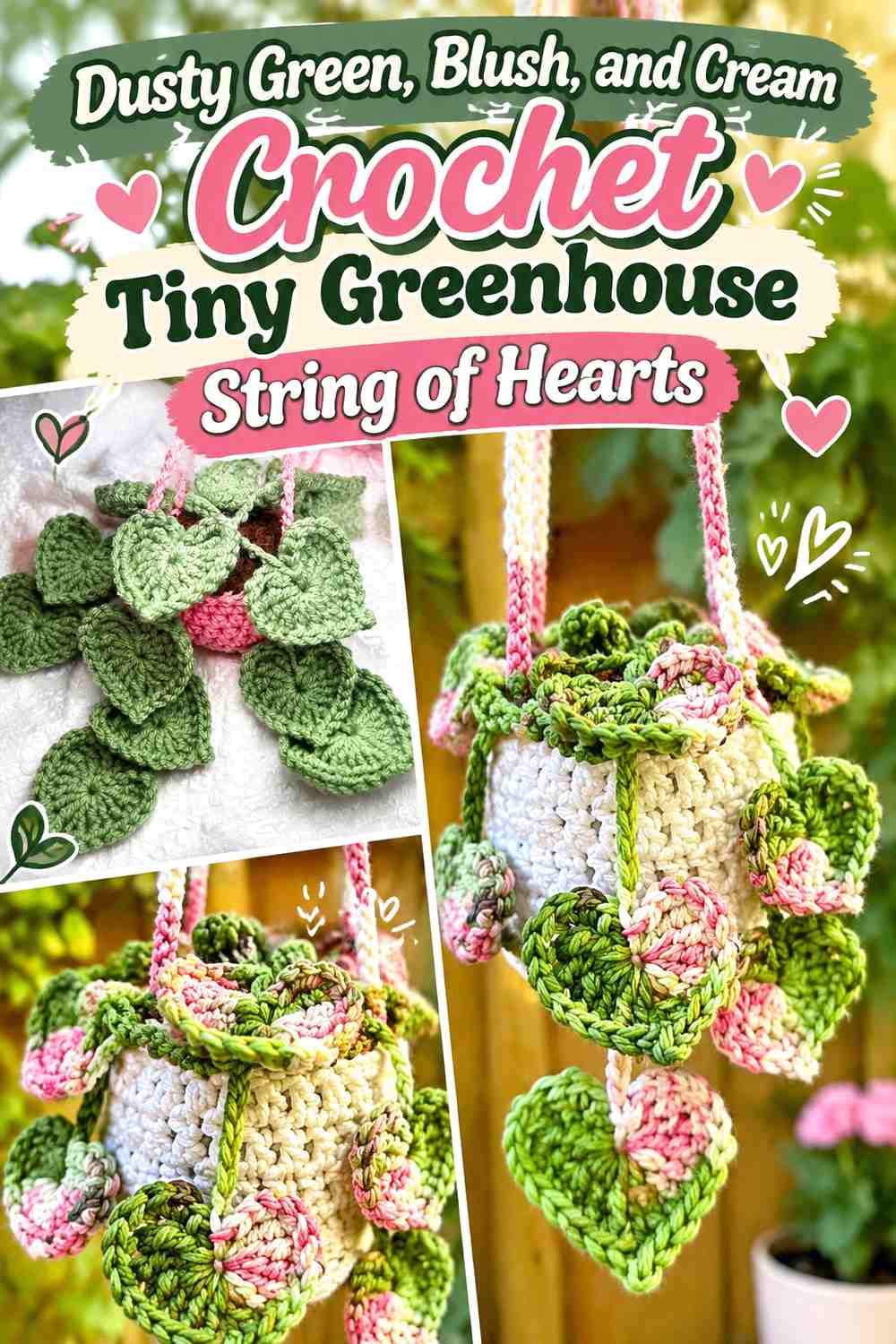
A string-of-hearts plant gives the greenhouse a softer trailing shape than round string-of-pearls foliage. Dusty green can form the vines and most leaves, blush can highlight selected hearts, and cream can carry the hanging pot.
Keep blush occasional so the foliage still reads as a plant rather than a decorative heart garland.
Dusty Green Should Lead the Crochet String of Hearts Vines
Use green through most stems and leaves to establish a clear botanical base.
If every heart becomes blush, the vine can lose the natural contrast that makes the colored accents noticeable.
Blush Should Repeat Sparingly Against the Cream Greenhouse Pot
Add blush to selected leaves or one small pot detail rather than distributing it equally across every strand.
Cream provides enough neutral space for those pink touches to remain noticeable.
Creator Credit: VibrantKnots
18. Leaf Green, Beige, and White Crochet Tiny Greenhouse Leafy Plant
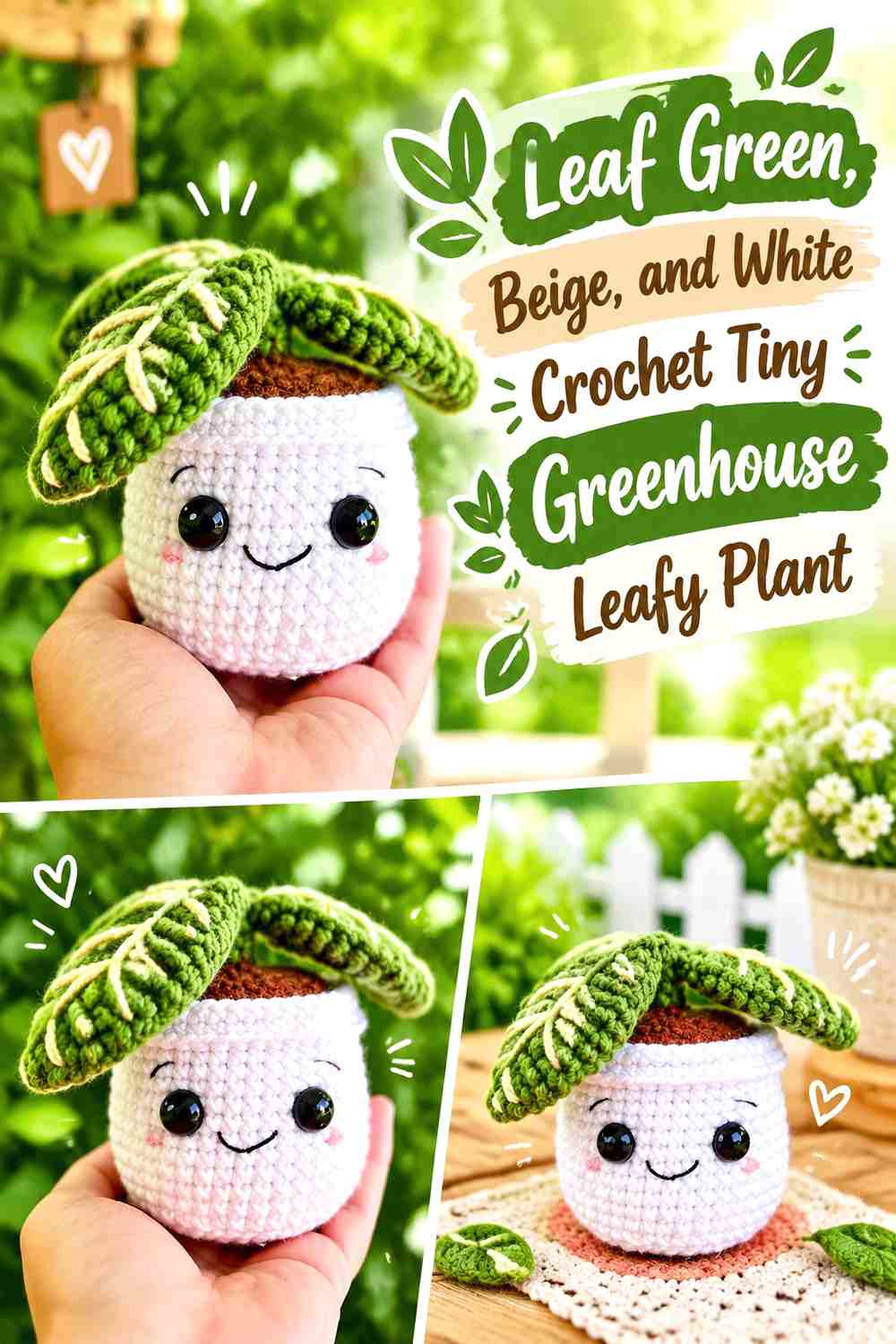
A compact leafy plant is useful for filling small spaces between taller flower pots. Leaf green can cover the plant itself, beige can represent soil or a warm neutral band, and white can form the pot.
Because this plant is simple, leaf shape and spacing should provide most of the variation rather than multiple foliage colors.
Leaf Green Should Stay Continuous Through the Crochet Plant
Use one green across the main leaves so the tiny plant remains visually coherent.
If extra definition is needed, add a slightly lighter green vein rather than recoloring entire leaves.
White Should Separate Leaf Green From Beige at the Greenhouse Base
A white pot creates a clear boundary between green foliage and warm soil.
If the greenhouse shelving is white, use beige at the rim so the container does not disappear.
Creator Credit: Squibble’s Crochet Corner
19. Forest Green, Olive, and Antique Cream Crochet Tiny Greenhouse Ivy Trail
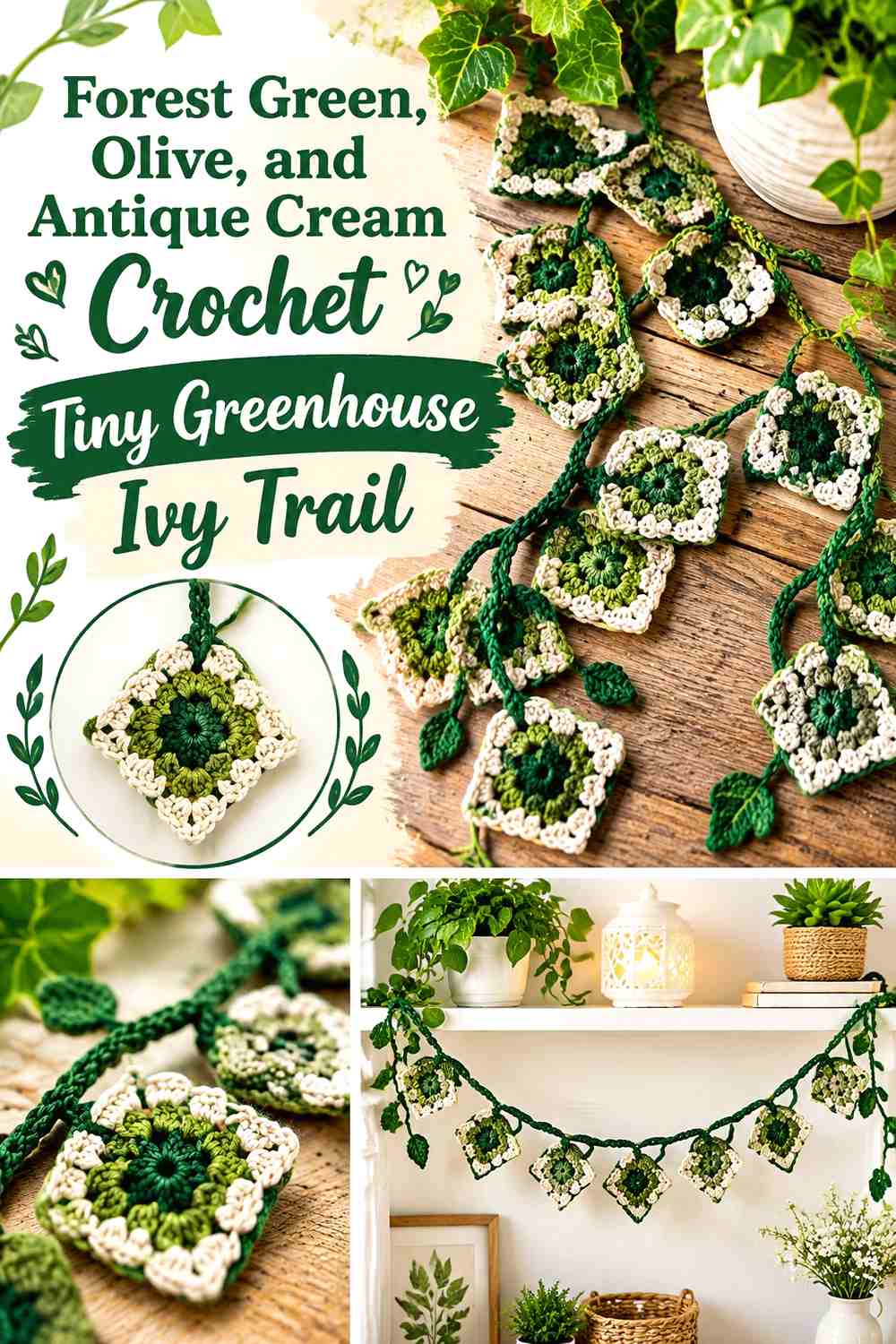
An ivy trail can run along a greenhouse shelf, frame, or upper rail to connect the separate potted plants visually. Forest green should lead the leaves, olive can vary selected sections, and antique cream can appear in a small hanging tie or support detail.
Keep the vine color continuous enough that the eye can follow it around the display.
Forest Green Should Carry Most of the Crochet Ivy Trail
Use forest green through the majority of the vine and leaves so the trail reads as one connected plant.
Olive works best as occasional variation rather than alternating on every leaf.
Antique Cream Should Stay Secondary to Forest Green and Olive Ivy
Use antique cream only where a tie, tiny hanger, or greenhouse attachment needs to remain visible.
Keeping the support neutral prevents it from competing with the trailing leaf shapes.
Creator Credit: Luna the Ladybird Crochet Designs
Which Tiny Greenhouse Plant Color Scheme Should You Choose?
For a natural greenhouse collection, start with several greens that differ in value rather than hue alone. Deep green, moss, sage, olive, fern green, and dusty green can all coexist when each plant has one clear dominant shade.
Then repeat two or three pot colors. Terracotta adds warmth beneath monstera, cactus, and flowering plants, while cream, oatmeal, stone, or clay works well under cooler succulents and trailing vines.
Flowers should function as accents across the whole greenhouse. Blush tulips, golden sunflowers, ivory orchids, lavender stems, and cranberry poppies can bring variety without requiring every pot to contain multiple bright colors.
Conclusion
A crochet tiny greenhouse works best as a collection rather than 19 unrelated miniatures. Repeating pot colors, varying the greens, and distributing flower colors across different shelf heights can make the complete display feel intentional.
Use upright snake plants, tulips, lilies, and orchids toward areas where you want height. Fill lower shelves with succulents and compact leafy pots, then use string of pearls, string of hearts, flowering vines, and ivy to introduce downward or sideways movement.
Before assembling the full display, arrange the finished plants together and check whether neighboring greens merge. Moving a cream pot, lighter leaf, or bright flower between two dark plants can solve the problem without recoloring either project. Follow each credited creator’s tutorial for the construction it actually teaches, then adapt the pot, scale relationship, and greenhouse palette independently.
Frequently Asked Questions
What colors work well in a crochet tiny greenhouse?
Moss, sage, forest green, olive, fern green, dusty green, terracotta, clay, cream, oatmeal, stone, blush, lavender, golden yellow, and cranberry all work well. Use several greens but repeat a smaller group of pot colors to keep the collection coordinated.
How can I make different crochet plants look like one greenhouse collection?
Repeat one or two neutral pot colors across several plants. For example, terracotta can connect the tulip, cactus, and monstera, while cream can repeat under lavender, string of hearts, and orchids.
How can I keep tiny green crochet leaves from disappearing?
Compare the leaves with the soil, pot, shelf, and greenhouse backing. Deep green foliage may need a cream pot or lighter leaf accent, while pale sage can benefit from cocoa soil or terracotta beneath it.
Should every miniature greenhouse plant use a different green?
No. Repeating greens can help the display feel connected. What matters is changing their role or pairing: sage may lead a trailing plant, appear only as an orchid leaf, or support deeper green monstera foliage.
Which crochet plants work well on higher greenhouse shelves?
Trailing plants such as string of pearls, string of hearts, flowering vines, and ivy can use higher positions because their foliage can extend downward or along a shelf edge. Keep enough space between them so separate vines remain visible.
How can I add flower colors without making the tiny greenhouse too busy?
Give each flowering plant one main bloom color. A blush tulip, golden sunflower, cream daisy, lavender plant, and cranberry poppy provide variety without putting several flower colors into every pot.
Do all the linked tutorials make the exact tiny greenhouse decorations described here?
No. Some demonstrate complete potted or hanging plants, while others teach flowers, leaves, succulents, plant pots, or trailing foliage that can be adapted into a miniature greenhouse display. Follow each creator’s original construction and use the greenhouse placement and color schemes here as independent adaptations.