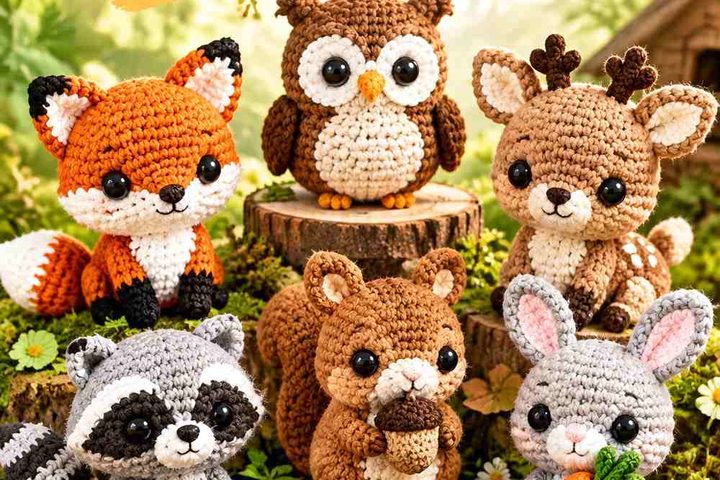
A tiny crochet bakery works best when the individual pastries look different but still belong behind the same miniature counter. Warm bread tones can create the visual foundation, while pink frosting, berry red, chocolate brown, pistachio green, and cream introduce smaller areas of color across cakes and sweets.

Color placement becomes especially important at miniature scale. A cream filling that is obvious on a large plush can nearly disappear inside a tiny macaron, while dark chocolate details may dominate a small pastry if they cover too much surface. Giving each item one main color and one or two supporting shades keeps the display detailed without becoming visually cluttered.
These 17 ideas build a fuller bakery assortment with breads, pastries, desserts, a drink, and a display basket. The credited tutorials support the individual crochet food or bakery concepts; the palettes and shop-display arrangements below are independent color adaptations.
Quick List
- Golden Tan and Cream Crochet Tiny Croissant Bakery Miniature
- Vanilla, Strawberry Pink, and Cherry Red Crochet Tiny Cupcake Bakery Miniature
- Caramel, Blush Pink, and Chocolate Crochet Tiny Donut Bakery Miniature
- Cinnamon Brown, Cream, and Caramel Crochet Tiny Cinnamon Roll Bakery Miniature
- Pistachio Green, Cream, and Raspberry Crochet Tiny Macaron Bakery Miniature
- Vanilla, Rose Pink, and Berry Red Crochet Tiny Cake Slice Bakery Miniature
- Golden Beige and Chocolate Brown Crochet Tiny Cookie Bakery Miniature
- Pastry Beige, Berry Red, and Cream Crochet Tiny Pie Bakery Miniature
- Mocha Brown, Cream, and Sage Crochet Tiny Coffee Cup Bakery Miniature
- Golden Pastry and Dark Chocolate Crochet Tiny Eclair Bakery Miniature
- Buttery Beige, Custard Cream, and Berry Red Crochet Tiny Tart Bakery Miniature
- Warm Camel and Oatmeal Crochet Tiny Bread Basket Bakery Display
- Golden Brown, Blueberry, and Cream Crochet Tiny Muffin Bakery Miniature
- Butter Yellow, Strawberry Red, and Cream Crochet Tiny Celebration Cake Bakery Miniature
- Pretzel Brown and Salt White Crochet Tiny Pretzel Bakery Miniature
- Pastry Cream, Vanilla, and Cocoa Crochet Tiny Cream Puff Bakery Miniature
- Toasted Brown and Soft Cream Crochet Tiny Bread Slice Bakery Miniature
Build the Tiny Bakery Around Warm Bread Colors
Start with several related bakery neutrals rather than giving every pastry a completely different brown. Golden tan, caramel, buttery beige, toasted brown, and cream can vary slightly while still creating a recognizable bread-and-pastry family across the display.
Use stronger colors more selectively. Berry red on a tart, pistachio on a macaron, and blush frosting on a donut become more noticeable when the surrounding bakery shelves contain plenty of warm neutrals.
Keep Tiny Crochet Frosting and Fillings Visually Separate
Small food details need enough light-dark difference to remain readable. Cream filling inside a pale beige pastry may need a darker crust around it, while dark chocolate frosting can benefit from a lighter cake base.
View several finished pieces together before making the entire set. If every sweet uses pink frosting, for example, change the supporting colors or reserve pink for only a few focal pastries so the miniature display has clearer variety.
Plan Color Repetition Across the Tiny Bakery Counter
A cohesive miniature shop does not require identical pastries. Instead, repeat selected shades in different roles. Cream might appear as cupcake frosting, macaron filling, pie detail, and coffee foam, while berry red moves from cake decoration to tart filling.
This repetition helps a crowded display feel intentional while still letting each baked item keep its own recognizable palette.
1. Golden Tan and Cream Crochet Tiny Croissant Bakery Miniature
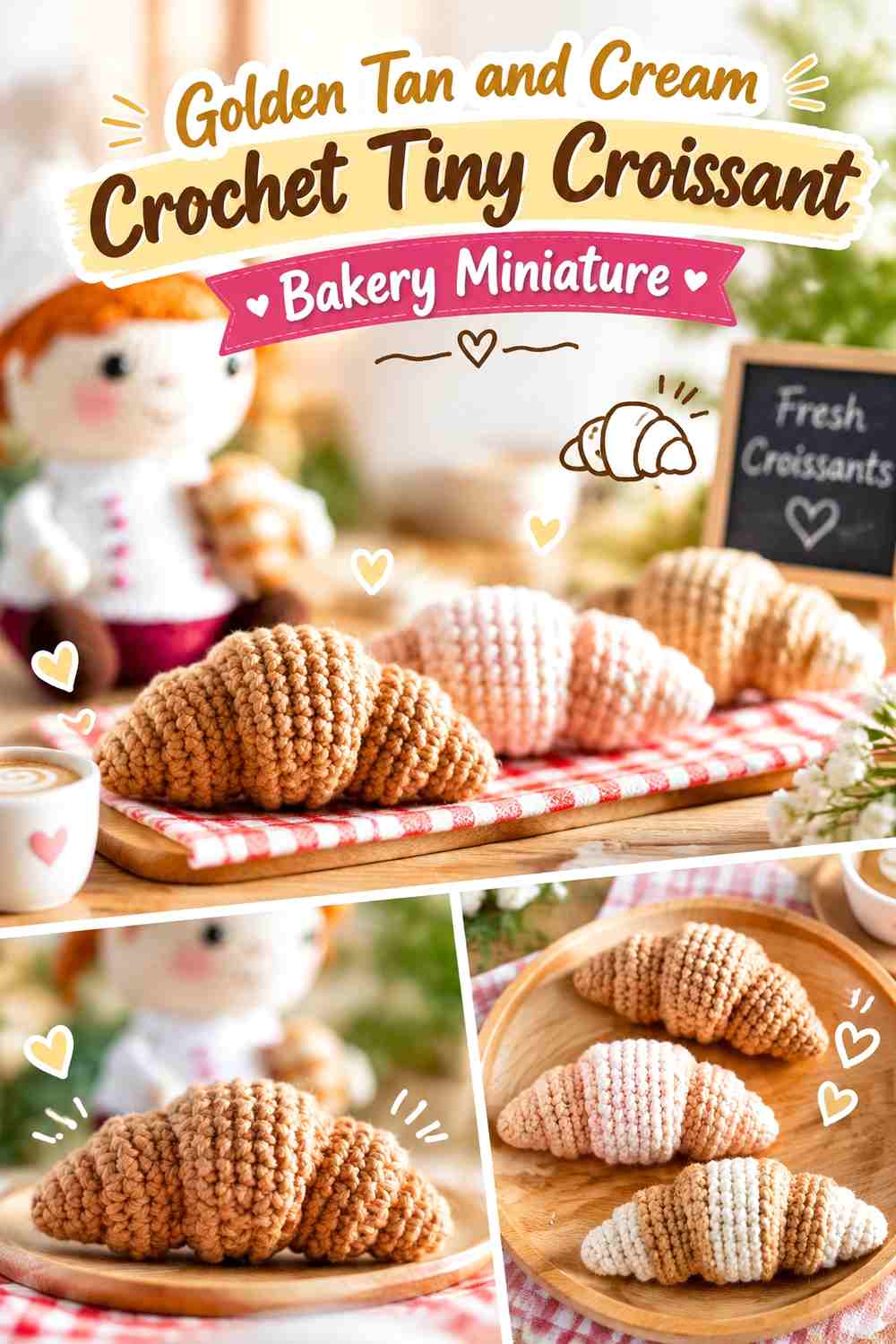
Golden tan should define most of this tiny crochet croissant so its curved pastry silhouette stays clear. Cream can appear as a very restrained highlight or nearby bakery-counter accent rather than breaking every curved section into different colors. The croissant works well near bread slices and pretzels because its warm color establishes the bakery’s neutral foundation.
Golden Tan Keeps the Crochet Tiny Croissant Visually Continuous
Use golden tan across the major curved sections so the pastry reads as one folded shape. At miniature scale, several abrupt color changes can make the croissant look segmented rather than layered.
If you want additional depth, choose a slightly darker warm brown for a small edge rather than introducing an unrelated color.
Cream Should Stay Secondary to Golden Tan on the Tiny Croissant
Cream can lighten a small accent or coordinate the croissant with cream details elsewhere in the bakery. Keep the amount limited so the golden pastry color remains the first thing the viewer notices.
Creator Credit: Fable Crochet Toys — Crochet croissant tutorial
2. Vanilla, Strawberry Pink, and Cherry Red Crochet Tiny Cupcake Bakery Miniature
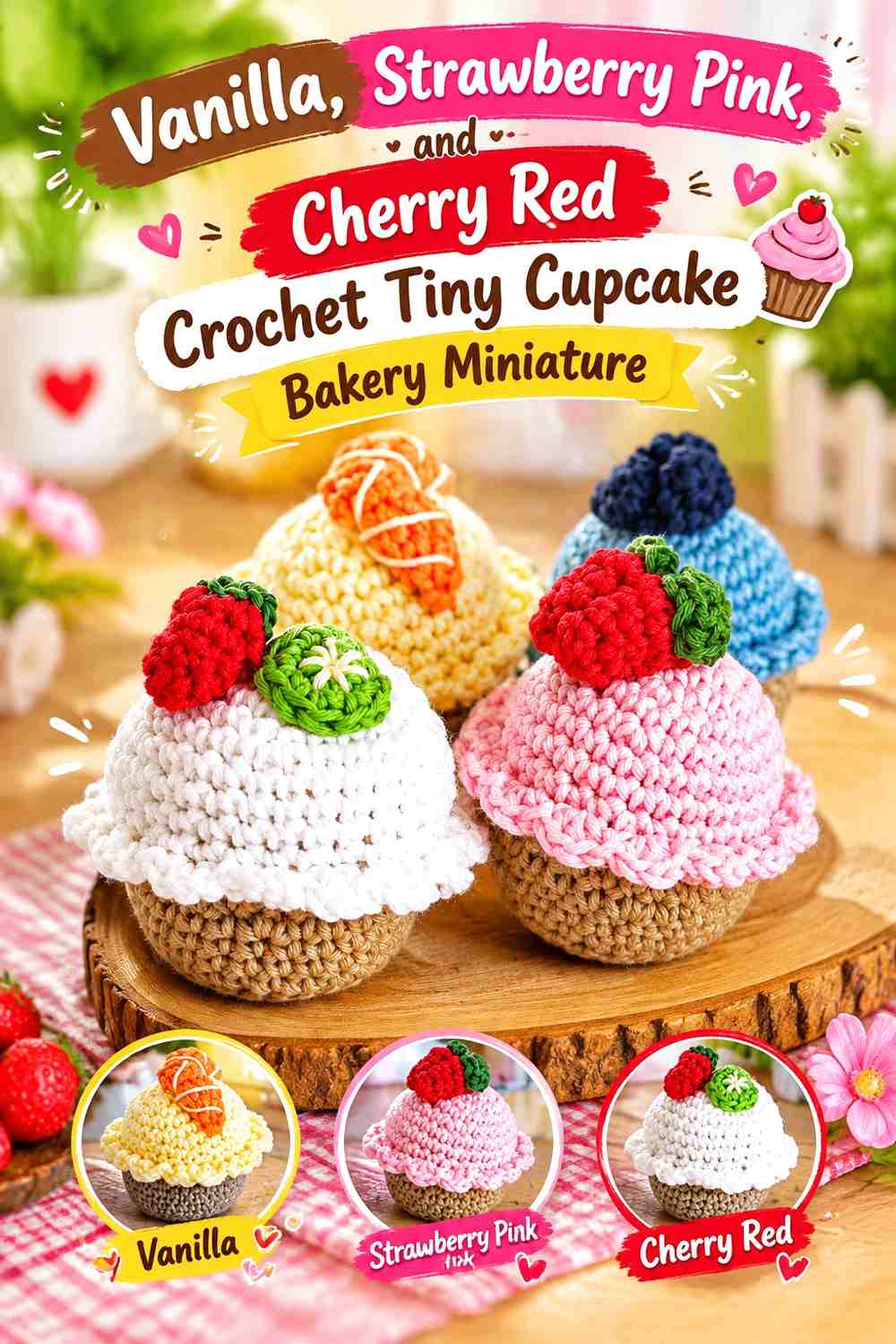
Vanilla can create the cake base while strawberry pink becomes the main frosting color. Cherry red works best as the smallest accent near the top. This three-level arrangement gives the cupcake enough contrast to stay recognizable when placed beside other miniature desserts.
Strawberry Pink Should Lead the Crochet Tiny Cupcake Frosting
Give pink enough uninterrupted space across the frosting so its rounded shape remains clear. Alternating several colors through a tiny frosting section can make the top visually merge with the cake base.
Cherry Red Should Punctuate Vanilla and Strawberry Pink Sparingly
Use cherry red as a small top accent rather than a second frosting field. Because it is stronger and darker than vanilla and pink, even a small amount can become a focal point.
Creator Credit: Lanas y ovillos — Mini Cupcakes Amigurumi tutorial
3. Caramel, Blush Pink, and Chocolate Crochet Tiny Donut Bakery Miniature

Caramel can form the baked donut base, blush pink can cover the frosting, and chocolate brown can handle sprinkles or another small topping detail. Keeping the base clearly darker than the frosting helps the donut opening and outer ring remain readable.
Blush Pink Needs Enough Space on the Caramel Crochet Tiny Donut
Cover a clear frosting area rather than scattering tiny pink sections around the entire ring. A recognizable frosting layer makes the miniature easier to read among cookies and bread.
Chocolate Should Accent the Blush Pink and Caramel Donut
Use chocolate in tiny repeated details if you want extra definition. Too much dark brown across a small donut can visually overpower the central opening and pink frosting.
Creator Credit: Mandi MOM OF 9 Channel — Mini Donut tutorial
4. Cinnamon Brown, Cream, and Caramel Crochet Tiny Cinnamon Roll Bakery Miniature

A cinnamon roll benefits from a visible spiral relationship. Cinnamon brown can define the swirl, caramel can form the baked surface, and cream can create the icing. Because the miniature is small, the cream should remain distinct from the caramel rather than becoming another similar beige.
Cinnamon Brown Should Clearly Define the Caramel Crochet Roll Spiral
Give the darker brown enough contrast to trace the circular shape. If cinnamon and caramel are too similar in value, the defining swirl may disappear when displayed on a shelf.
Cream Should Sit Clearly Above the Cinnamon Brown and Caramel Palette
Use cream where the icing needs to be immediately distinguishable from the pastry. A concentrated light area is more useful than spreading cream evenly through the roll.
Creator Credit: Kress Krochet — Cinnamon Roll Crochet Tutorial
5. Pistachio Green, Cream, and Raspberry Crochet Tiny Macaron Bakery Miniature
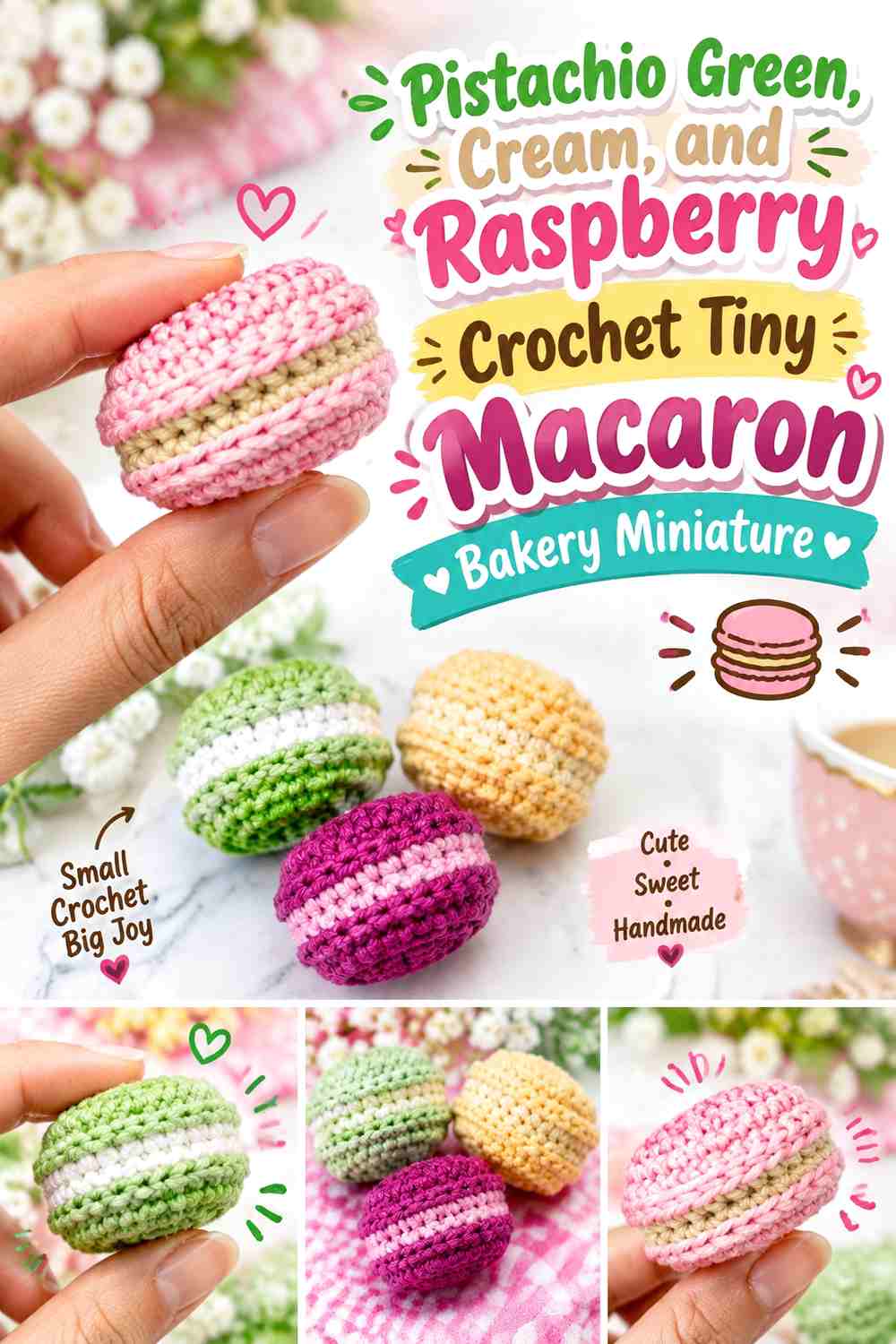
Pistachio green gives this macaron a clear color identity, cream defines the filling, and raspberry can appear as a tiny companion detail or second macaron in a display pair. The filling should remain visibly lighter than the shells.
Pistachio Green Should Dominate the Crochet Tiny Macaron Shells
Keep both shell sections the same pistachio shade so the cream filling creates a clean horizontal break. Using different shell colors on one tiny macaron can make the shape look unnecessarily complicated.
Cream Needs Strong Separation From Pistachio Green Macaron Shells
Choose a cream light enough to remain visible between the green sections. If the exact pistachio shade is unavailable, preserve this light-dark difference when choosing another muted green.
Creator Credit: Little Crochet Farm — Macaron Amigurumi tutorial
6. Vanilla, Rose Pink, and Berry Red Crochet Tiny Cake Slice Bakery Miniature
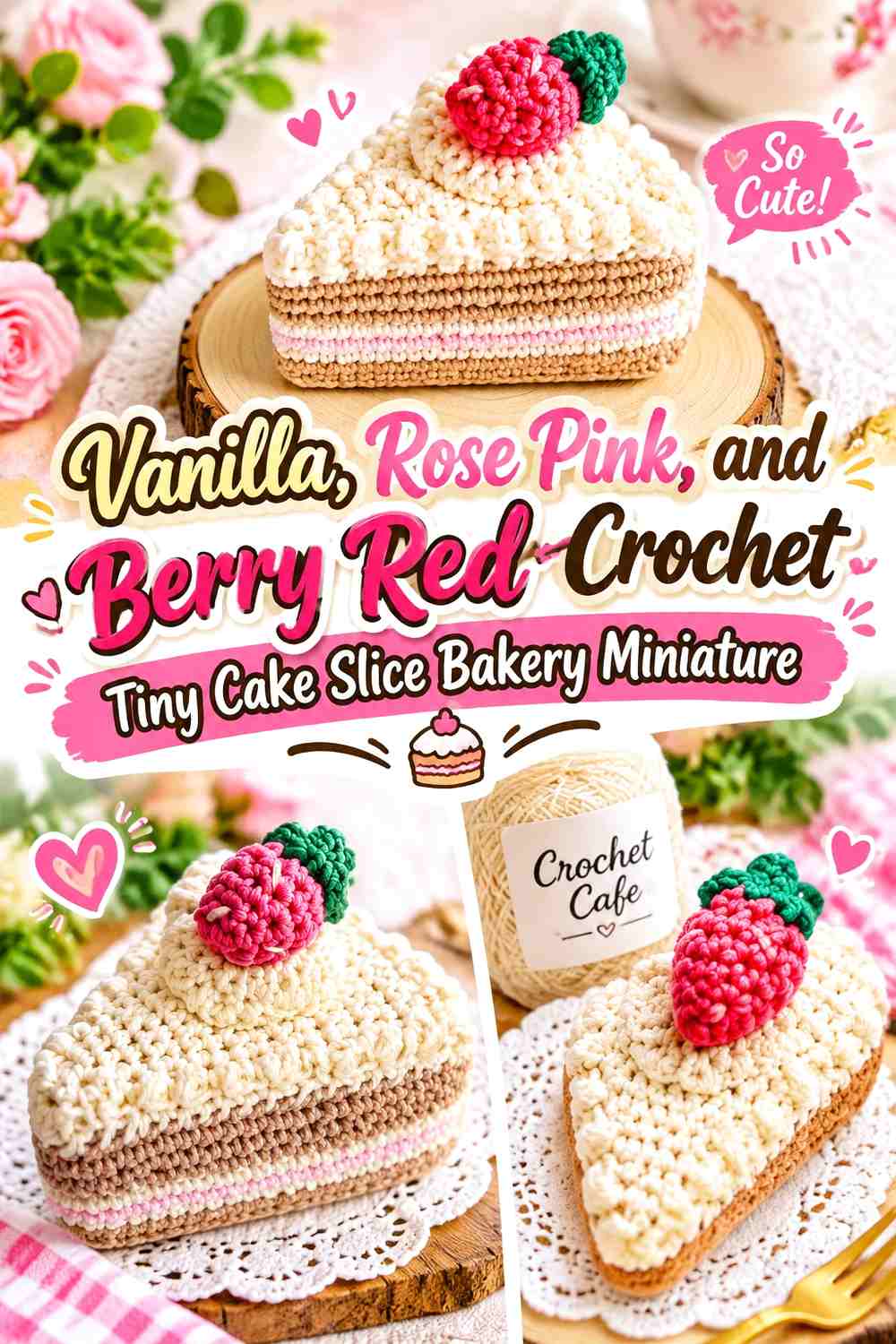
Vanilla can form the cake layers, rose pink can carry the main frosting, and berry red can become a concentrated fruit-style accent. The triangular slice gives you more visible surfaces than most tiny pastries, so use that extra area to establish clear layers rather than adding many extra colors.
Rose Pink Should Create a Clear Edge on the Vanilla Crochet Cake Slice
Keep the frosting visibly separate from the vanilla cake body so the top and sides remain easy to distinguish. This matters especially when the slice sits next to similarly pale pastries.
Berry Red Should Focus Attention on the Rose Pink and Vanilla Cake Top
Use berry red in one small decorative area rather than throughout every layer. A concentrated accent gives the cake a focal point without obscuring the layered shape.
Creator Credit: Citybrightknits — Amigurumi Cake Slice tutorial
7. Golden Beige and Chocolate Brown Crochet Tiny Cookie Bakery Miniature
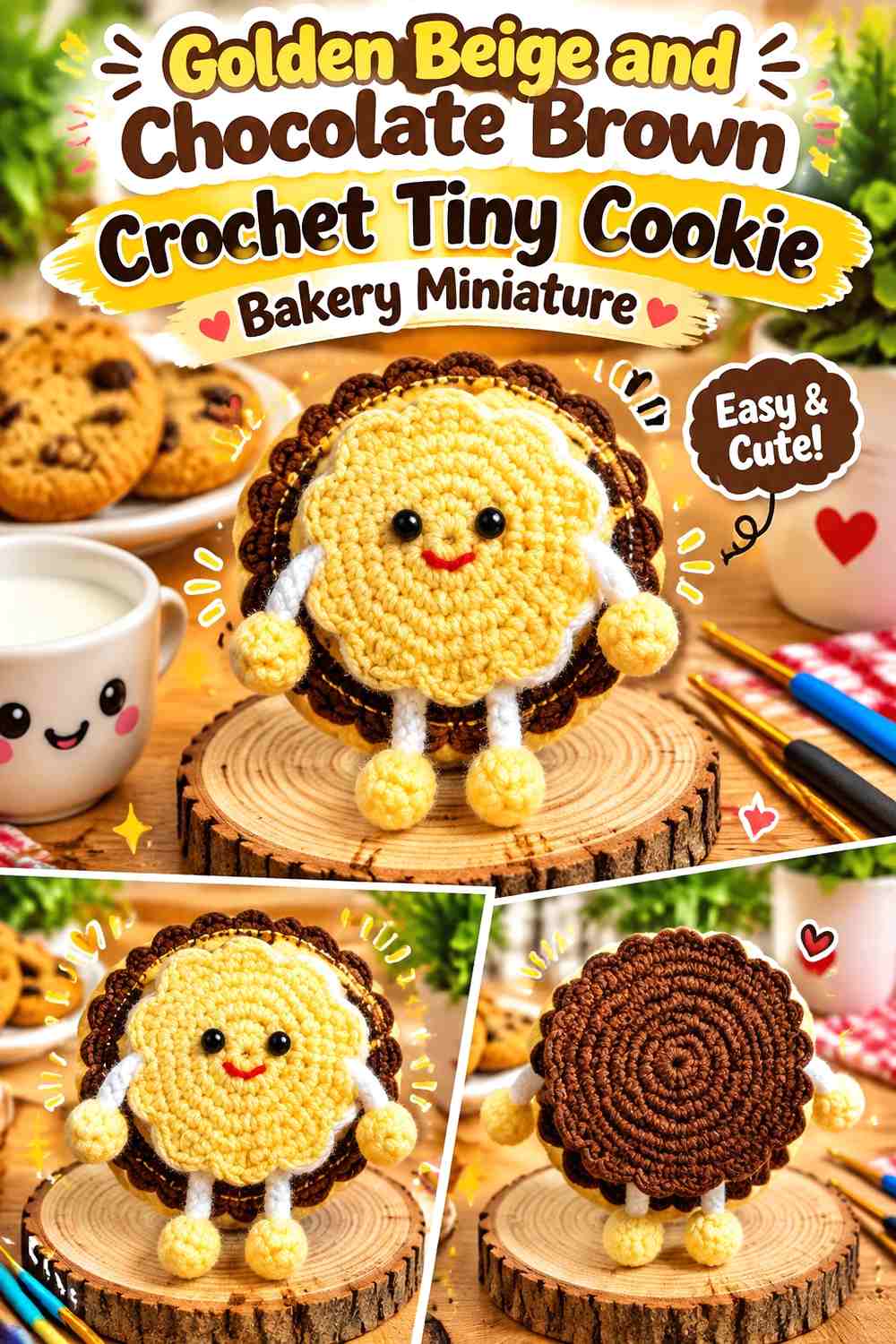
Golden beige gives the cookie its main surface, while chocolate brown creates the small contrast needed for chips or darker baked details. This simple two-color idea is useful in a bakery display already containing several pink or berry-colored desserts.
Golden Beige Should Cover Most of the Crochet Tiny Cookie
Keep the broad circular surface neutral so the small dark details remain easy to identify. If too much chocolate covers the front, the cookie can begin to resemble a darker pastry rather than a golden baked item.
Chocolate Brown Should Repeat Across the Golden Beige Cookie in Small Amounts
Space chocolate details so they read separately rather than becoming one dark cluster. At miniature scale, fewer well-separated accents can be clearer than many tiny additions.
Creator Credit: Hope Loops — Cute Crochet Cookie tutorial
8. Pastry Beige, Berry Red, and Cream Crochet Tiny Pie Bakery Miniature
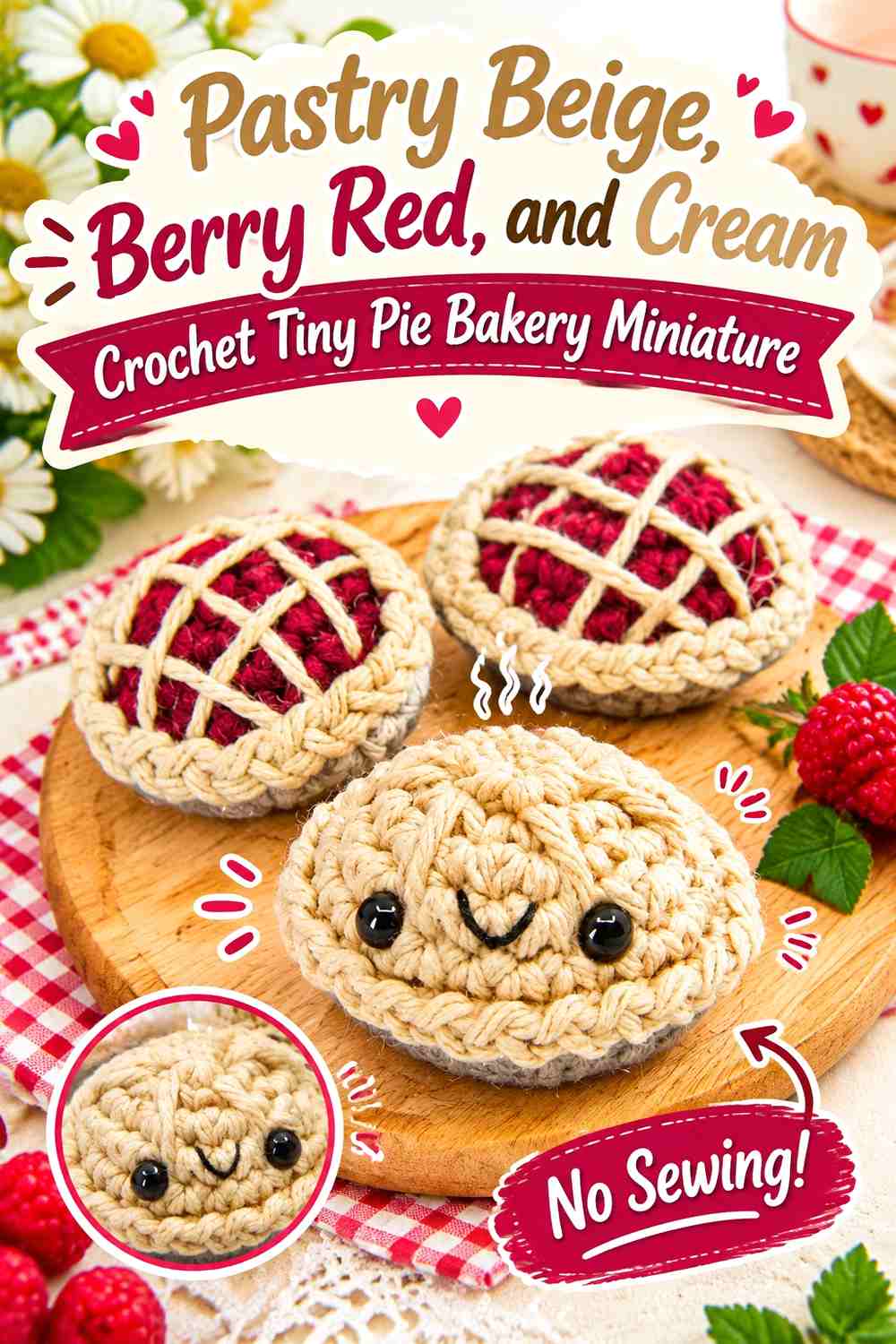
Pastry beige should carry the crust, berry red can define the filling, and cream can be reserved for a small decorative element. This palette creates strong internal contrast, making the tiny pie useful as a colorful focal piece in a bread-heavy shop display.
Pastry Beige Should Frame the Berry Red Crochet Tiny Pie Filling
Keep a visible beige boundary around the red area so the pie shape remains clear. If the filling reaches every edge, the miniature can lose the distinction between crust and center.
Cream Can Lighten the Berry Red and Pastry Beige Pie Selectively
Use cream sparingly if you need an additional highlight. Its job is to add separation, not turn the three colors into equal sections.
Creator Credit: Club Crochet — Tiny Pie Amigurumi tutorial
9. Mocha Brown, Cream, and Sage Crochet Tiny Coffee Cup Bakery Miniature
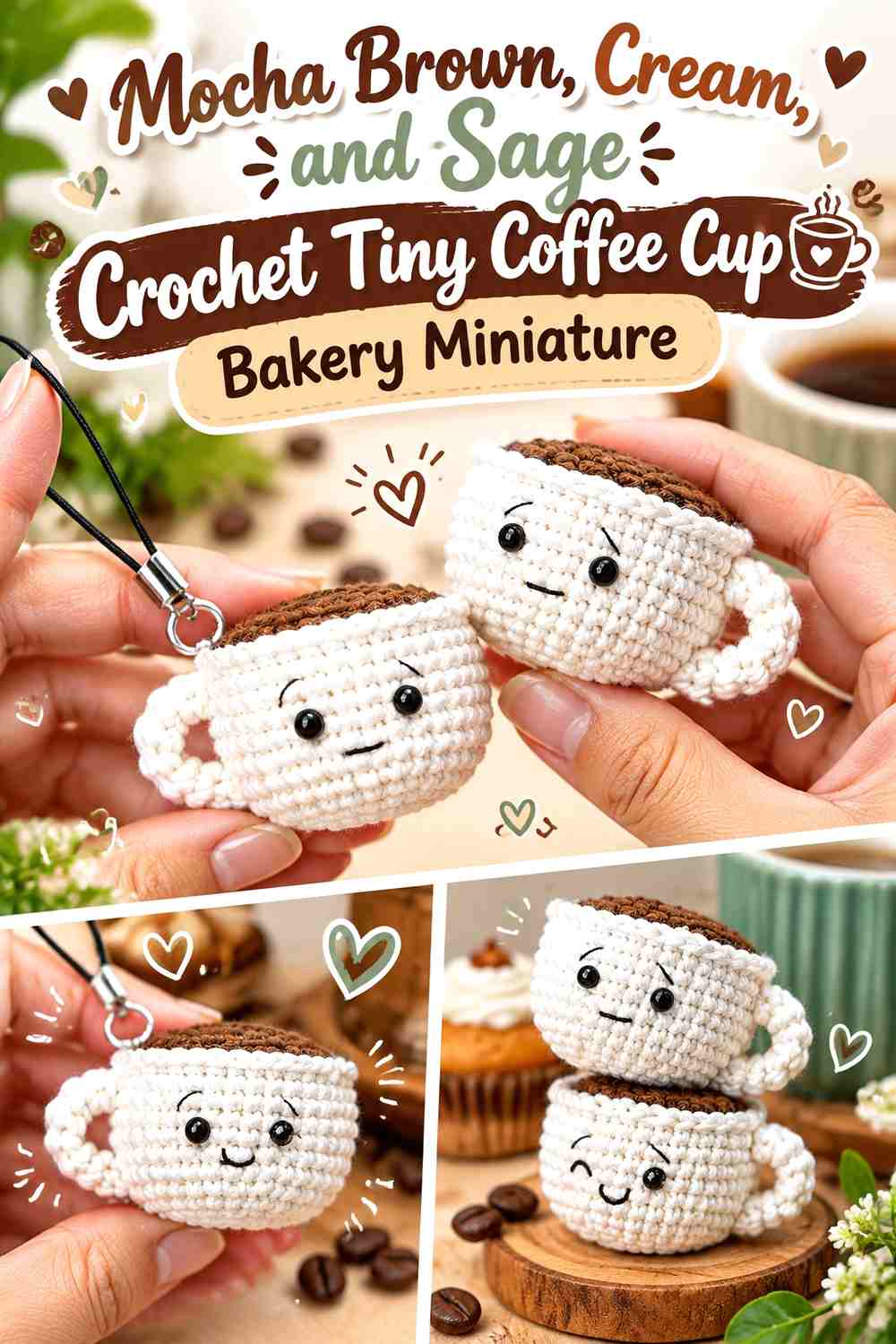
A coffee cup gives the bakery display an object that is not another pastry. Mocha brown can represent the drink or cup body, cream can lighten the rim or foam area, and sage can be used as a controlled cup color or small cafe-style accent.
Mocha Brown Should Stay Visible in the Crochet Tiny Coffee Cup
If the cup itself is sage, keep enough mocha visible at the top to make the drink recognizable. If the cup is mocha, use cream along the upper area so the rim does not disappear into the dark center.
Sage Can Separate the Mocha Brown and Cream Coffee Palette From the Pastries
A muted green cup adds a cooler color without competing with berry cakes or pink frosting. Repeat sage elsewhere only if you want it to become part of the bakery’s broader interior palette.
Creator Credit: DidyToys — Crochet Coffee Cup tutorial
10. Golden Pastry and Dark Chocolate Crochet Tiny Eclair Bakery Miniature

The eclair’s long shape benefits from a straightforward two-color split. Golden pastry can form the body while dark chocolate runs across the top, giving the miniature a strong horizontal contrast that distinguishes it from round donuts and cupcakes.
Golden Pastry Should Remain Visible Below the Chocolate Crochet Eclair Top
Keep enough golden color around the sides and ends so the pastry still reads as the base. An oversized dark topping can visually flatten the miniature into one brown shape.
Dark Chocolate Should Create One Clear Crochet Tiny Eclair Topping
A continuous dark top is easier to read than several separate chocolate spots. It also adds a useful darker item to a bakery display dominated by cream and golden beige.
Creator Credit: ToyfoxStore — Crochet Eclair Amigurumi tutorial
11. Buttery Beige, Custard Cream, and Berry Red Crochet Tiny Tart Bakery Miniature
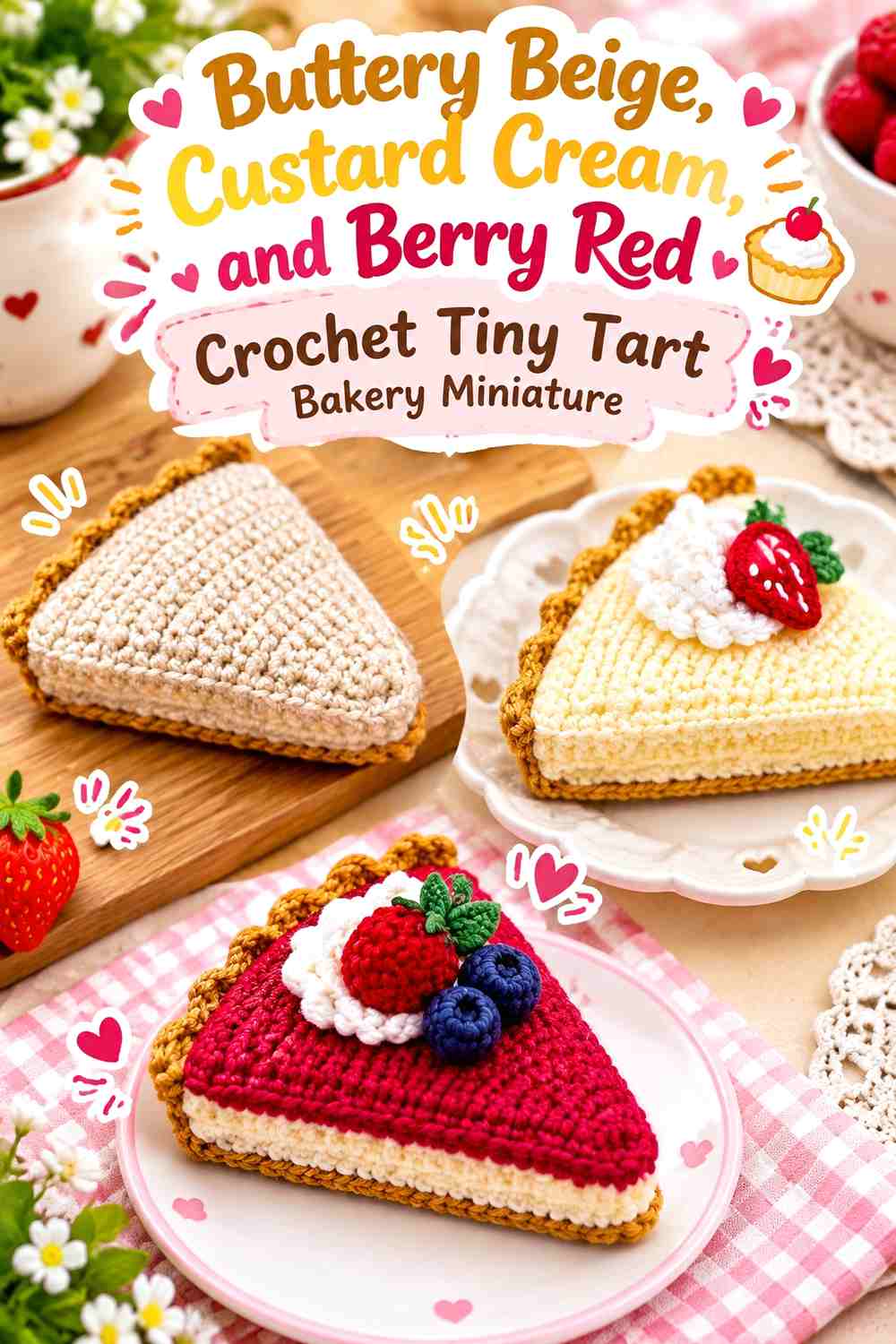
Buttery beige should form the tart shell, custard cream can fill the center, and berry red can provide a small top accent. Since the shell and custard are both pale, make sure their values are not so similar that the raised crust disappears.
Buttery Beige Needs Enough Depth Around the Custard Cream Crochet Tart
A slightly deeper beige shell creates a visible frame around the lighter center. That frame is especially important when the tart sits on a cream-colored counter or tray.
Berry Red Can Give the Custard Cream Tiny Tart a Clear Focal Point
One berry-colored center or small cluster can be enough. Adding several other fruit colors may make a miniature tart look crowded, so use red as a controlled accent.
Creator Credit: Crocheting channel — Basic Tart Amigurumi tutorial
12. Warm Camel and Oatmeal Crochet Tiny Bread Basket Bakery Display
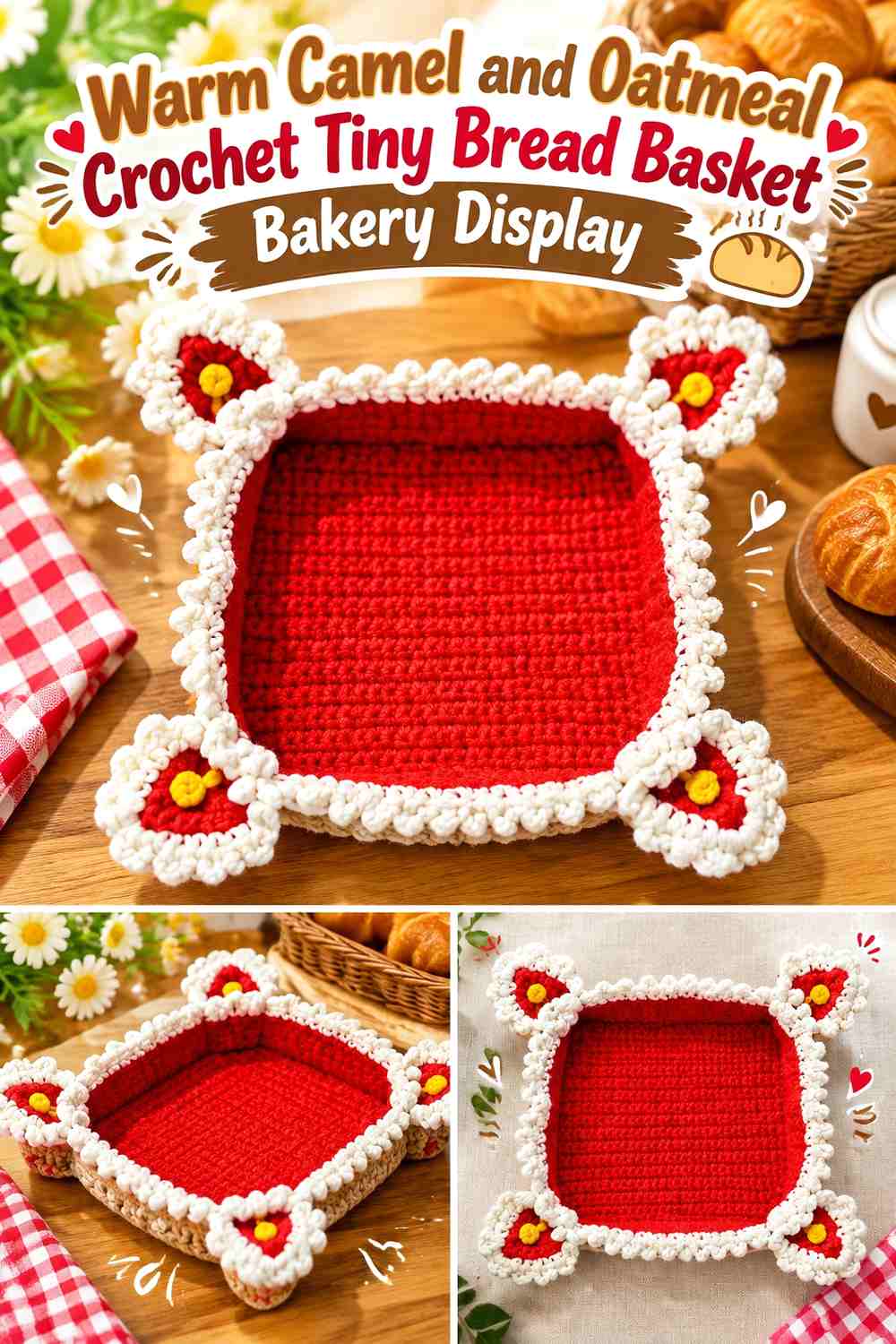
A crochet bread basket gives the miniature shop a useful container rather than another individual food. Warm camel can form the basket structure, while oatmeal can appear around the rim or inside as a lining-style visual accent. Fill it with neutral breads so brighter desserts remain concentrated elsewhere on the counter.
Warm Camel Should Ground the Crochet Tiny Bread Basket
Use camel across most of the basket so it visually supports whatever breads sit inside. A strongly multicolored basket would compete with the baked goods it is meant to display.
Oatmeal Can Separate Warm Camel From Golden Bakery Breads
A lighter rim or interior helps tan and brown bread pieces remain distinct from the container. This is particularly useful if several loaves use colors close to camel.
Creator Credit: L’angolo di Criss — Crochet Bread Basket tutorial
13. Golden Brown, Blueberry, and Cream Crochet Tiny Muffin Bakery Miniature
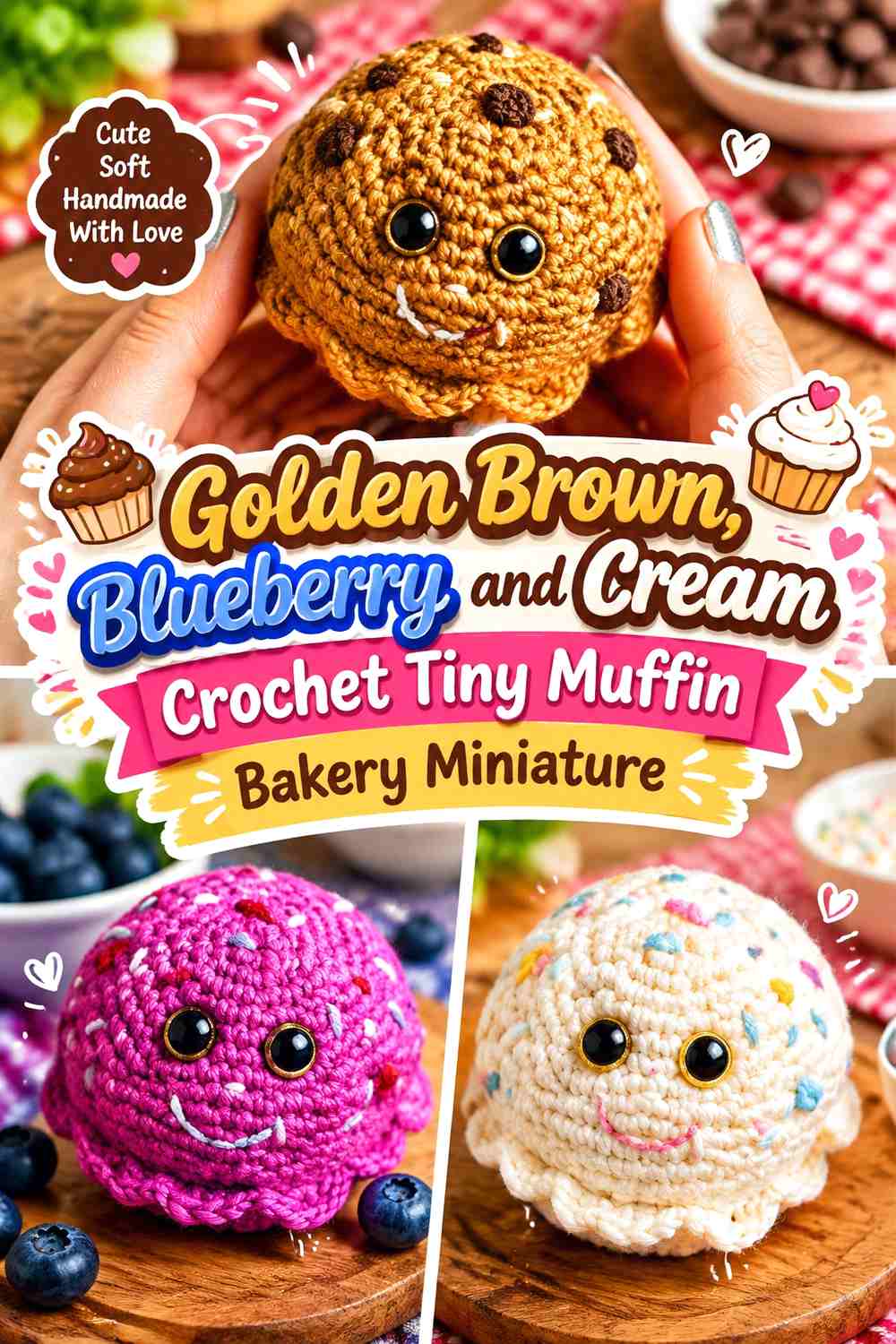
Golden brown can define the muffin base, while blueberry-colored yarn provides small fruit-style accents and cream lightens the top. The blue gives the bakery one cool color that still makes sense within a pastry display.
Golden Brown Should Carry the Crochet Tiny Muffin Base
Keep the lower section predominantly warm brown so it stays visually related to the croissants, bread, and cookies elsewhere in the shop.
Blueberry Should Accent the Golden Brown and Cream Crochet Muffin
Use blue in small repeated spots rather than a large solid top. Cream can provide breathing room around those accents and prevent the blue from becoming unexpectedly dominant.
Creator Credit: Maschenschäfchen — Crochet Muffin tutorial
14. Butter Yellow, Strawberry Red, and Cream Crochet Tiny Celebration Cake Bakery Miniature

A complete cake can act as the bakery’s display-counter centerpiece. Butter yellow can give the cake a warm base, cream can cover frosting areas, and strawberry red can create the strongest decorative accents.
Butter Yellow Should Keep the Crochet Tiny Cake Warm Beside Cream Frosting
Allow enough yellow to remain visible below the cream so the cake does not become one pale block. The warmer base also distinguishes it from the pink cake slice elsewhere in the display.
Strawberry Red Should Repeat Across the Cream Crochet Cake in Controlled Points
Place red where it creates clear focal details rather than covering the entire top. Several small repeated accents can connect the cake visually to berry-colored pie and tart pieces.
Creator Credit: vvw.studio — Crochet Strawberry Cake tutorial
15. Pretzel Brown and Salt White Crochet Tiny Pretzel Bakery Miniature
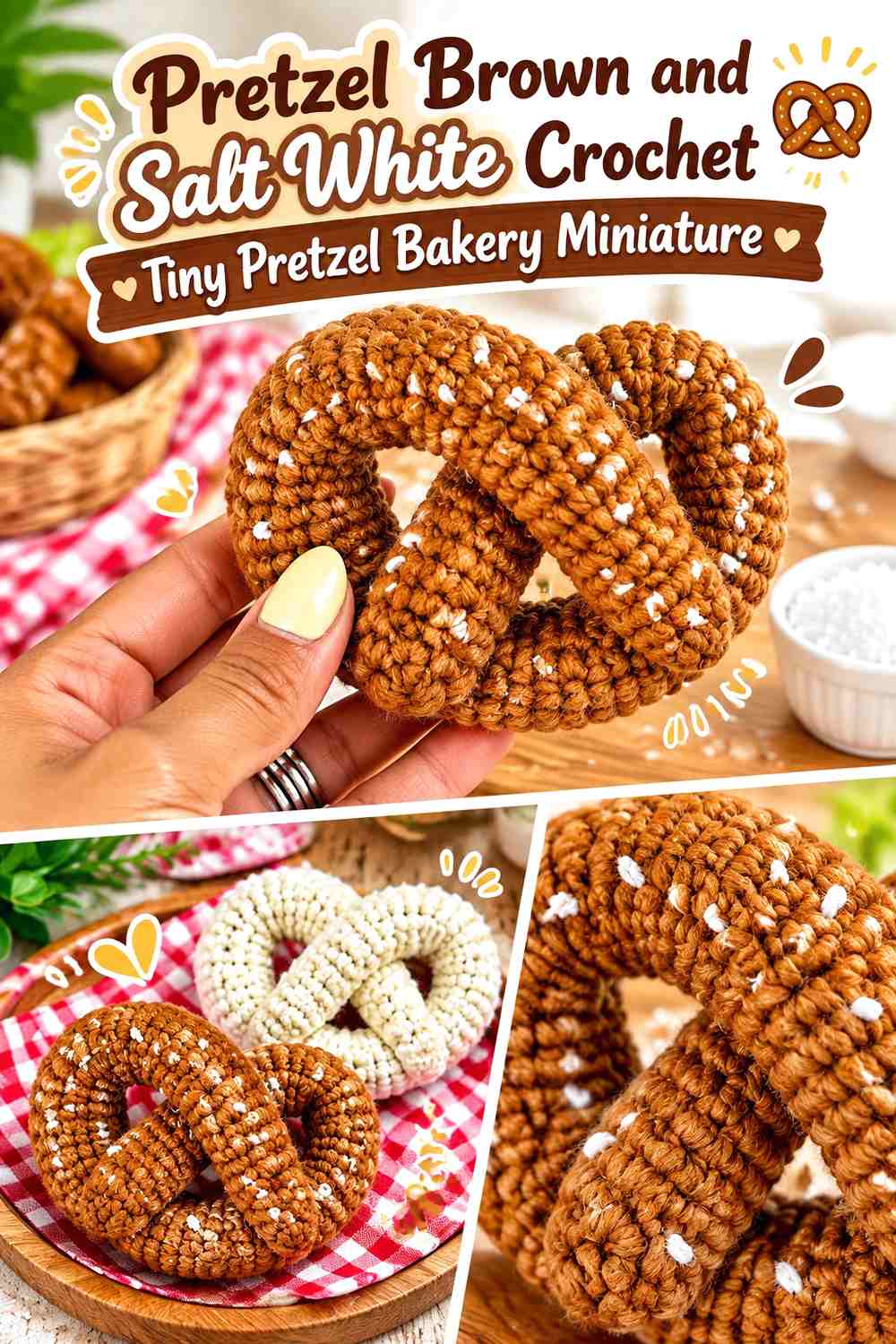
Pretzel brown can cover the entire twisted form while salt white appears only as small surface details. This simple palette is useful because the shape itself supplies most of the visual interest.
Pretzel Brown Should Keep the Crochet Tiny Pretzel Twist Continuous
Use one brown shade around the full twisted form so the viewer can follow its loops. Frequent color changes could interfere with the recognizable pretzel silhouette.
Salt White Should Stay Small Against the Pretzel Brown Crochet Surface
Use white as scattered accents rather than a continuous edging. Since white is much lighter than brown, even tiny details can remain visible on a miniature.
Creator Credit: Zumamiko — Crochet Pretzel tutorial
16. Pastry Cream, Vanilla, and Cocoa Crochet Tiny Cream Puff Bakery Miniature
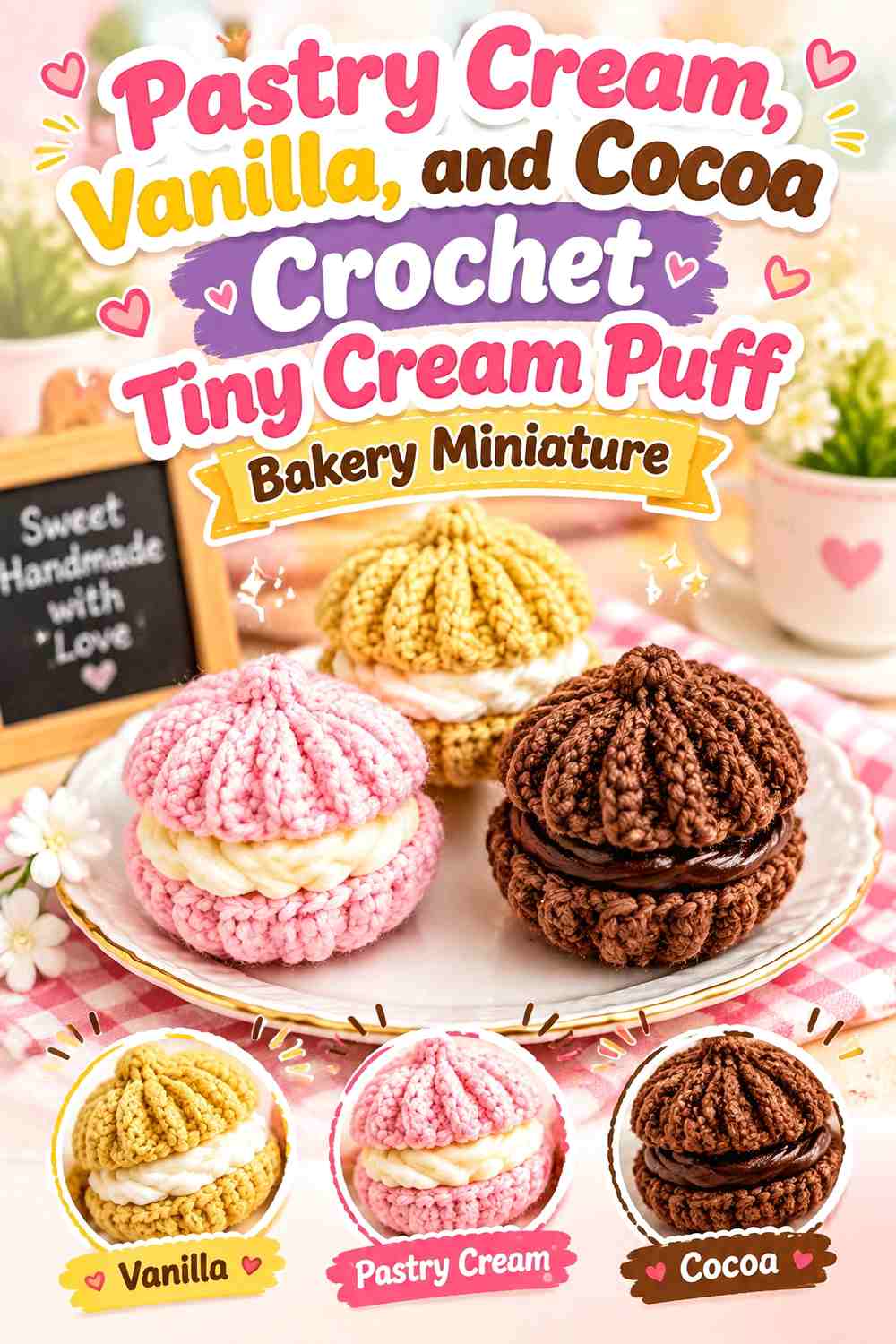
Pastry cream can define the outer shell while vanilla creates the visible filling. Cocoa offers an optional darker accent that helps the cream puff stand apart from other pale pastries in the display.
Pastry Cream Should Frame the Vanilla Crochet Tiny Cream Puff Filling
Keep the outer pastry shade noticeably warmer or darker than vanilla. If both colors are nearly identical, the split filling can disappear and the piece may look like one plain ball.
Cocoa Can Add Depth to Pastry Cream and Vanilla Without Taking Over
Use cocoa sparingly around a small topping or companion detail. The main appeal of the cream puff is the contrast between the warm shell and pale filling, so preserve that relationship.
Creator Credit: Rewind Crochet — Crochet Cream Puff tutorial
17. Toasted Brown and Soft Cream Crochet Tiny Bread Slice Bakery Miniature
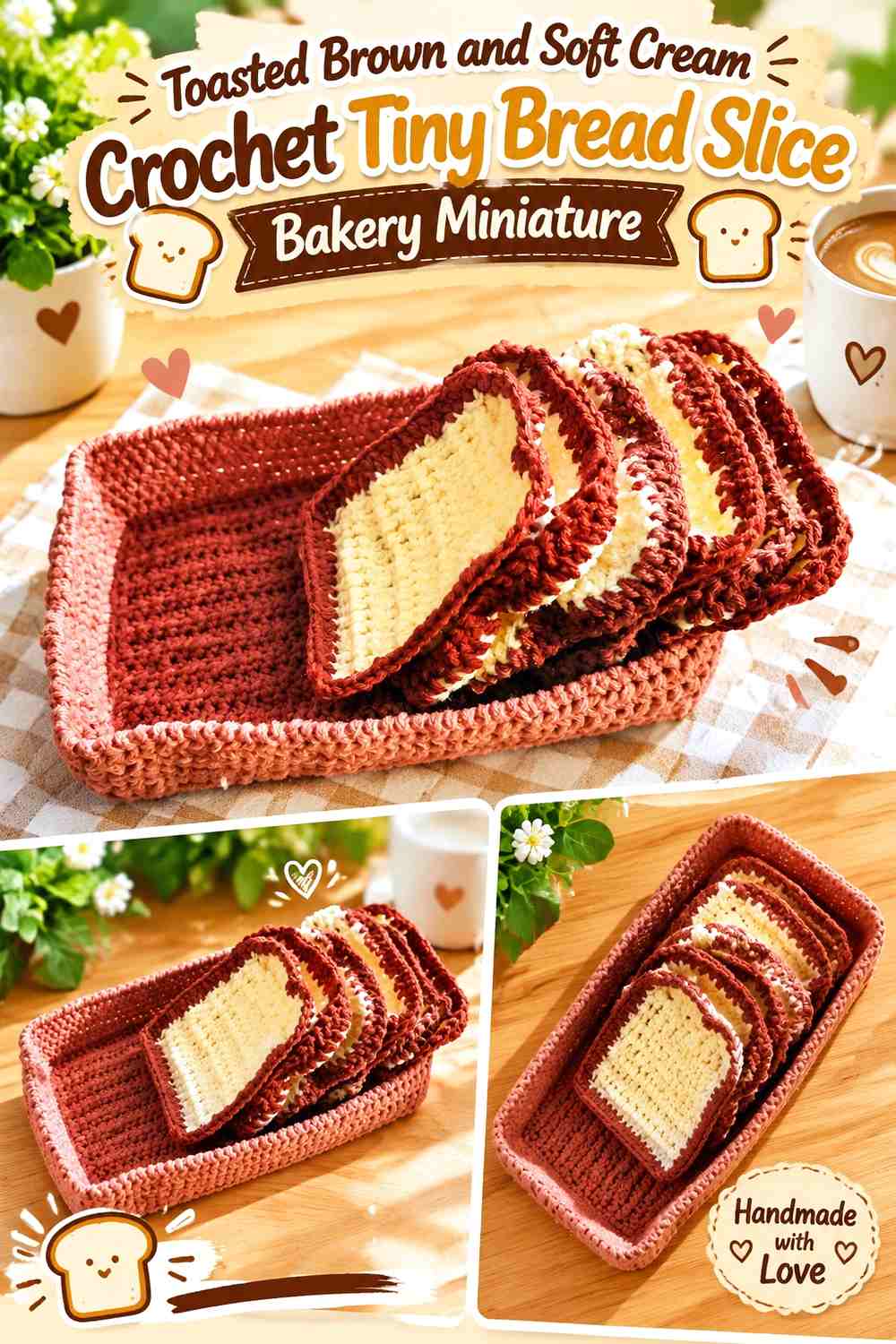
A bread slice gives the bakery another simple neutral piece that can be stacked, leaned against a basket, or placed near the coffee cup. Toasted brown should outline the crust while soft cream forms the interior, creating an immediately readable light-dark boundary.
Toasted Brown Should Clearly Outline the Soft Cream Crochet Bread Slice
Keep the crust continuous enough that the square or rounded bread shape remains visible. Irregular dark accents inside the cream area may weaken that clean bakery-bread silhouette.
Soft Cream Should Cover Most of the Toasted Brown Tiny Bread Interior
Give cream the larger visual area so the miniature does not resemble a solid brown cookie. When displayed beside the camel bread basket, the lighter center also prevents the two pieces from merging visually.
Creator Credit: Club Crafteria — Crochet Bread Slice tutorial
Which Colors Work Best Across a Tiny Crochet Bakery Shop?
For the bread section, keep a family of warm neutrals such as golden tan, toasted brown, caramel, pastry beige, and cream. These colors help croissants, bread slices, pretzels, and baskets look connected even when their shapes are very different.
Use stronger colors on the dessert counter. Strawberry red, blush pink, raspberry, blueberry, and pistachio work especially well when each belongs to a particular pastry instead of appearing on everything.
Chocolate brown is useful as the darkest repeating shade because it can appear naturally on donuts, eclairs, cookies, cinnamon rolls, and drinks. Cream can perform the opposite role, linking fillings, frosting, foam, and pale cake layers throughout the shop.
Conclusion
A convincing tiny crochet bakery is easier to build when color creates departments within the display. Warm beige and brown pieces can fill bread baskets and lower shelves, pink and berry desserts can provide focal color near the counter, and a few cooler accents such as pistachio, sage, or blueberry can keep the collection from becoming entirely tan and pink.
At miniature scale, avoid adding extra colors simply because an item seems plain. A croissant benefits from a continuous golden surface, a pretzel depends on its brown twist, and a cookie often needs little more than a warm base and dark chips. Save more complex palettes for cakes, cupcakes, tarts, and macarons where separate frosting, filling, and decoration areas can support them.
Use the credited tutorials for their individual crochet constructions, then adapt the colors and shop arrangement independently to create a coordinated miniature bakery.
Frequently Asked Questions
How many colors should I use for each tiny crochet bakery miniature?
Two or three are enough for most pieces. Give the baked base one dominant color, then use supporting shades for frosting, filling, fruit, chocolate, or another identifying detail.
How can I keep several brown crochet pastries from looking identical?
Vary both lightness and color placement. A croissant can be golden tan, a pretzel deeper brown, a cinnamon roll caramel with a dark swirl, and an eclair golden with a chocolate top. Their silhouettes will also help separate them.
Which crochet bakery colors should repeat throughout the whole shop?
Cream, golden beige, chocolate brown, and one berry color are useful recurring shades. They can appear in different roles while giving the separate pastries a shared visual language.
How do I make tiny crochet frosting stand out from the cake underneath?
Choose enough light-dark contrast between the two areas. Cream frosting over a butter-yellow cake, blush over caramel, or chocolate over golden pastry will usually read more clearly than two very similar pale shades.
Can I use pastel colors in a tiny crochet bakery shop?
Yes. Pastels work especially well on macarons, cupcakes, donuts, and cakes. Balance them with warm brown or cream breads so the entire bakery does not become one equally pale field.
How should I arrange the crochet miniatures in a tiny bakery display?
Group related shapes loosely: breads and pretzels can sit near the basket, smaller sweets can share a counter area, and a taller cake or coffee cup can provide variation in height. Leave enough space for individual silhouettes to remain visible.
Are tiny crochet bakery pieces suitable as children’s play food?
Consider the finished size and any small attached parts before giving miniature crochet pieces to children. For young children, avoid loose or detachable embellishments and use construction appropriate to the intended age and use.