Crochet mushroom and fern terrariums combine two very different kinds of color detail. Mushrooms create compact focal points through their caps and stems, while fern fronds spread color outward and fill the spaces around them. The most convincing arrangements give those elements different jobs instead of making every part equally bright.

A rust mushroom can stand clearly against moss-green foliage, for example, while a cream stem provides the lightest value. In a quieter terrarium, several greens can carry most of the display while mushroom caps introduce only small areas of burgundy, mustard, plum, or copper.
These 19 ideas vary the mushroom shape, fern placement, moss base, supporting foliage, and color hierarchy. Some credited tutorials teach complete terrarium or plant concepts, while others support the mushroom, fern, leaf, or planter component used as the basis for the editorial arrangement.
Quick List
- Moss Green, Rust, and Cream Crochet Mushroom Moss-Ball Terrarium
- Cranberry, Sage, and Oatmeal Crochet Toadstool Dome Terrarium
- Burnt Orange, Deep Olive, and Cream Crochet Mini Mushroom Cluster Terrarium
- Plum, Moss Green, and Stone Gray Crochet Twilight Mushroom Terrarium
- Terracotta, Fern Green, and Parchment Crochet Layered Mushroom Terrarium
- Mustard, Bark Brown, and Moss Green Crochet Flat-Back Mushroom Terrarium
- Brick Red, Olive, and Oatmeal Crochet Woodland Toadstool Terrarium
- Deep Teal, Fern Green, and Cream Crochet Hanging Mushroom Terrarium
- Burgundy, Sage, and Stone Crochet Tall Mushroom Terrarium
- Caramel, Moss Green, and Ivory Crochet Open-Bowl Mushroom Terrarium
- Forest Green, Terracotta, and Oatmeal Crochet Succulent Mushroom Terrarium
- Golden Ochre, Rust, and Deep Green Crochet Leafy Mushroom Terrarium
- Slate Blue, Sage, and Ivory Crochet Broad-Leaf Mushroom Terrarium
- Chestnut, Moss Green, and Parchment Crochet Fern Canopy Terrarium
- Brick Red, Deep Fern Green, and Warm White Crochet Fern Grove Terrarium
- Muted Coral, Olive, and Sand Crochet Mini Planter Terrarium
- Chocolate Brown, Mustard, and Sage Crochet Rustic Mushroom Terrarium
- Deep Olive, Copper, and Oatmeal Crochet Hanging Fern Terrarium
- Aubergine, Sage, and Cream Crochet Tiny Mushroom Pair Terrarium
Give Mushrooms and Ferns Different Color Roles
The mushroom cap is usually the easiest place to introduce the strongest color. Rust, cranberry, plum, mustard, or copper can create a small focal point without overwhelming a green-heavy terrarium. Keep stems and undersides quieter if the cap already carries substantial contrast.
Ferns work differently because they occupy more visual length. Using one dominant fern green through several fronds can unify mushrooms with different cap colors and stop a mixed terrarium from becoming a collection of unrelated miniatures.
Use Light and Dark Contrast to Separate the Terrarium Layers
A terrarium is viewed through overlapping foreground and background elements. Similar-value mushrooms, moss, and leaves can visually merge even when their hues are different.
Place yarn samples on top of one another before committing to the palette. If a dark-green fern disappears against brown moss, introduce a lighter moss patch behind it or reserve the darkest green for fronds that sit near cream stems. A grayscale photo can help reveal where stronger value separation is needed.
Plan the Moss Base as Part of the Crochet Color Scheme
The base should support the mushrooms rather than compete with them. Moss green is an obvious option, but oatmeal, brown, gray-green, and muted olive can provide useful alternatives when the mushrooms themselves already contain a lot of green.
Varying the base color is also an easy way to distinguish several terrariums without inventing unnecessary construction differences. A cranberry mushroom over dark moss feels richer than the same mushroom placed over pale oatmeal and sage.
1. Moss Green, Rust, and Cream Crochet Mushroom Moss-Ball Terrarium
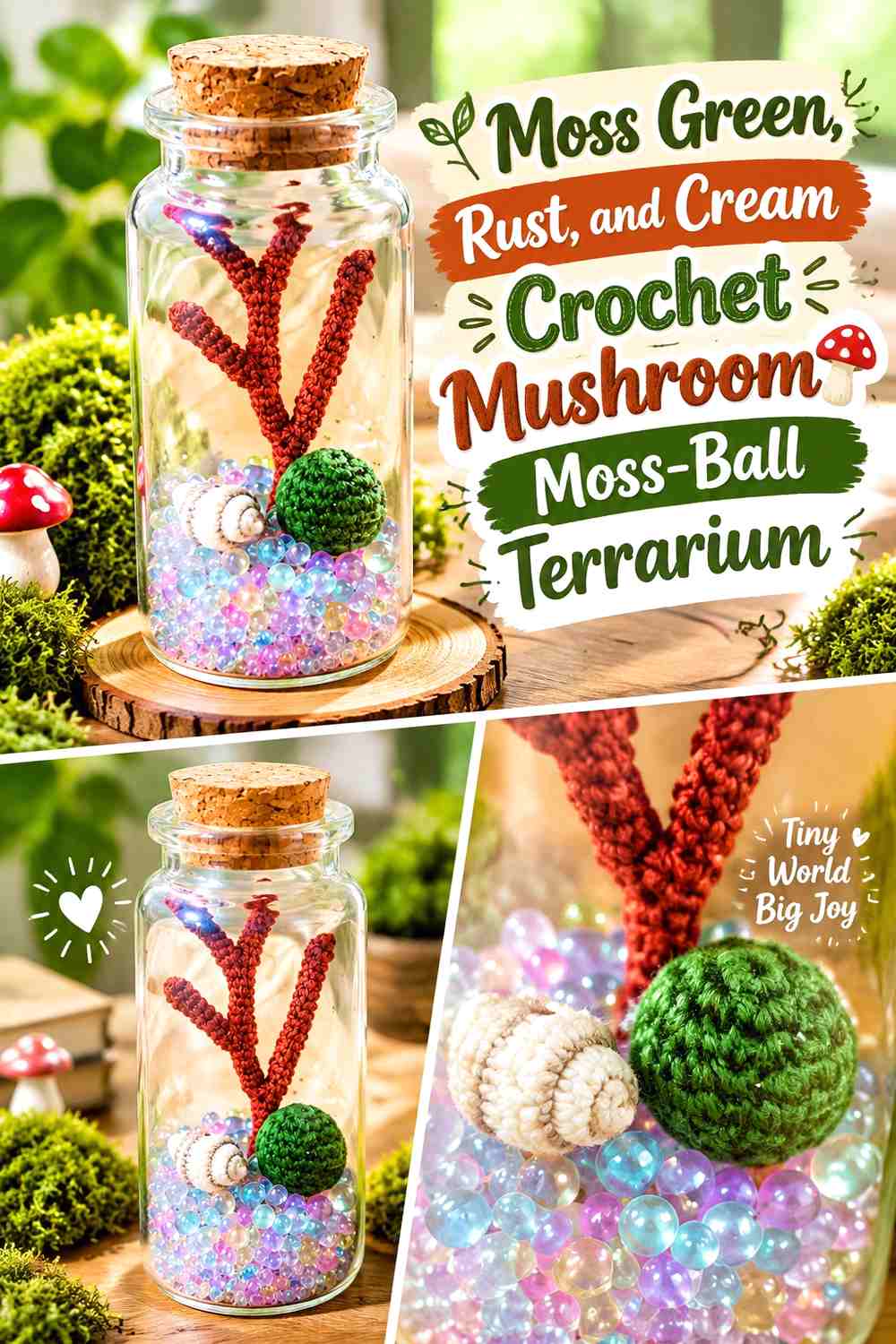
Moss green should dominate this compact crochet terrarium, especially through the rounded ground cover and supporting foliage. Rust can create one or two mushroom focal points, while cream keeps the stems distinct from both the green base and warm caps. This arrangement works particularly well when the terrarium is small enough that too many separate plants would make the interior feel crowded.
Moss Green Should Build the Crochet Terrarium Base Before Rust Is Added
Use moss green across most of the lower surface and repeat it in nearby foliage. The continuous green field gives the eye a clear ground plane, which makes even a small rust mushroom easier to recognize.
If several different greens are used, keep them relatively close in value and reserve the strongest contrast for the mushroom rather than turning the moss itself into the focal feature.
Rust and Cream Should Separate the Crochet Mushroom From Moss Green
Let rust cover the cap and cream define the stem so the mushroom has a clear top-to-bottom color hierarchy. If cream is used elsewhere, repeat it only in small details so the stem remains one of the lightest elements inside the terrarium.
Creator Credit: Crochet Dreamer
2. Cranberry, Sage, and Oatmeal Crochet Toadstool Dome Terrarium

Cranberry creates a classic spotted-toadstool focal color without requiring the entire terrarium to use bright red. Sage can dominate the fern and moss elements, while oatmeal softens the stem and cap spots. Keeping the red contained to one central mushroom gives the surrounding foliage room to remain visible.
Cranberry Should Stay Concentrated on the Crochet Toadstool Cap
Use cranberry across the complete cap rather than distributing red through the ferns and ground cover. Concentrated color makes the mushroom the intentional center of the dome.
If you add spots, oatmeal gives gentler contrast than bright white and keeps the terrarium within a muted woodland palette.
Sage Ferns Should Frame Cranberry Without Covering the Oatmeal Stem
Place sage fronds to the sides or slightly behind the mushroom so the creamier stem remains visible. Fern leaves crossing directly over the light stem can reduce the separation that makes the toadstool easy to read.
Creator Credit: A Menagerie of Stitches
3. Burnt Orange, Deep Olive, and Cream Crochet Mini Mushroom Cluster Terrarium
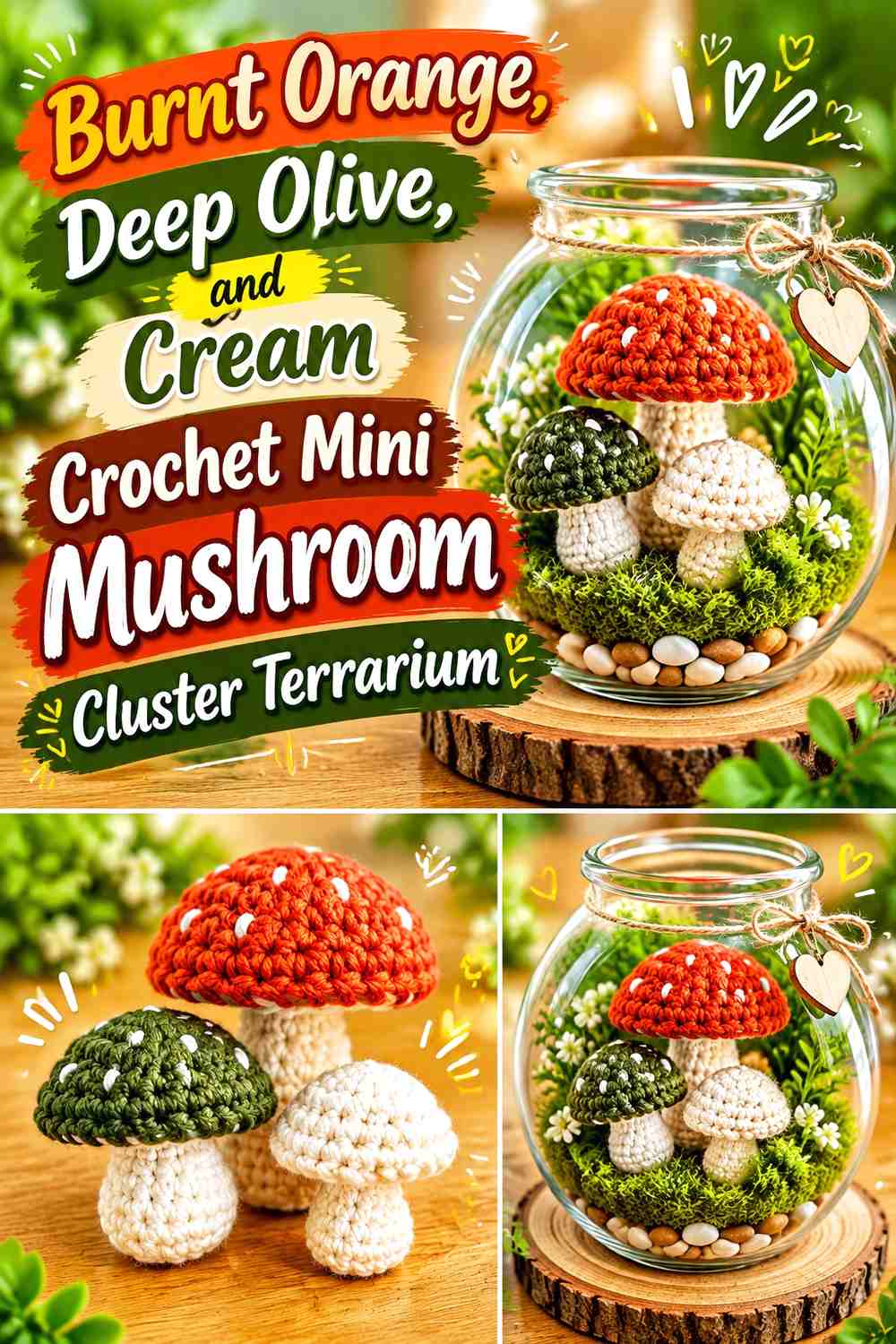
Burnt orange works well when several small mushrooms need one shared cap color. Deep olive can create a darker floor and fern framework, while cream keeps the individual stems separated. Vary the mushrooms through height and placement rather than giving every cap another new shade.
Burnt Orange Can Unify Several Crochet Mini Mushrooms
Repeat burnt orange across three or more caps if you want the cluster to look like one natural group rather than a collection of unrelated ornaments. The mushrooms can still differ in size or angle while color connects them.
Cream Stems Need Space Against Deep Olive Crochet Foliage
Leave visible gaps of darker olive around the cream stems. If every stem is surrounded by pale moss, the separate mushrooms can visually collapse into one light area beneath the orange caps.
Creator Credit: MummaJ Crochet
4. Plum, Moss Green, and Stone Gray Crochet Twilight Mushroom Terrarium

Plum gives the mushrooms a less literal woodland color while moss green keeps the foliage recognizable. Stone gray works as a useful base neutral, especially under dark fronds where brown might make the entire terrarium feel too warm. This palette is well suited to an evening or fantasy woodland direction without relying on neon color.
Plum Should Be the Dark Crochet Mushroom Focal Color
Keep plum on the cap and allow moss green to handle most of the surrounding plant structure. Two dark colors can coexist successfully when the mushroom stem or nearby base introduces enough lighter contrast.
Stone Gray Can Separate Plum Mushrooms From Moss Green Ferns
Use gray in the lower base, small stones, or a supporting patch immediately behind the mushroom. The neutral break keeps the purple and green from merging into one dark central mass.
Creator Credit: Amigurumi Forge
5. Terracotta, Fern Green, and Parchment Crochet Layered Mushroom Terrarium
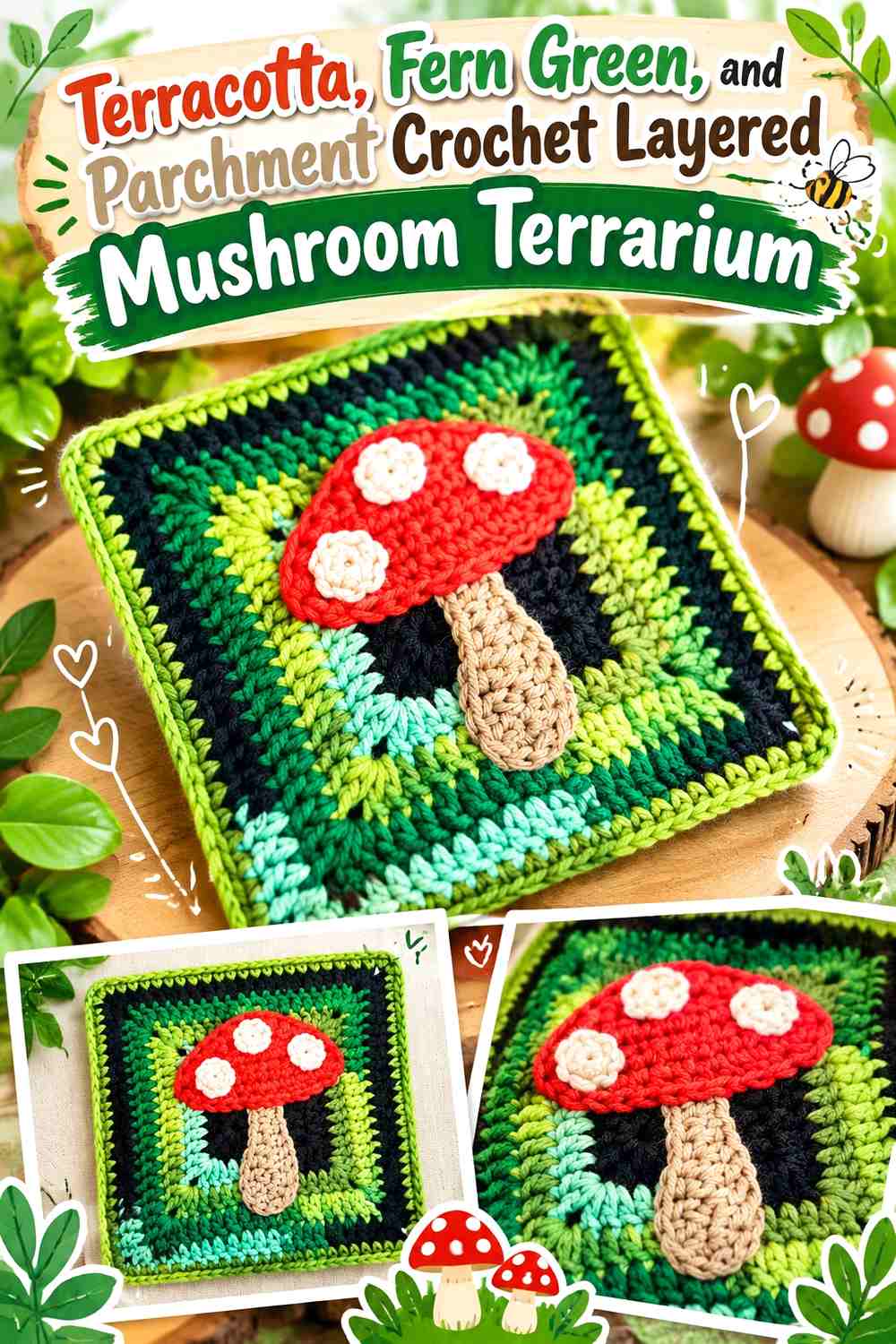
A flatter mushroom motif can be useful against the back or side of a shallow terrarium where a fully stuffed mushroom would take too much depth. Terracotta gives the cap warmth, fern green can continue through nearby foliage, and parchment keeps the stem light without introducing stark white.
Terracotta Can Create a Strong Crochet Mushroom Layer Behind Fern Green
Position the terracotta cap where green fronds overlap only part of it. Partial overlap creates depth, but too much foliage over a flat motif can hide the mushroom silhouette completely.
Parchment Should Keep the Terracotta Crochet Mushroom Stem Visible
Use parchment on the stem and preserve a darker green or brown area immediately around it. If the terrarium backing is also cream, introduce fern green behind the stem rather than outlining the entire mushroom with another color.
Creator Credit: Melody Yarn Tinka
6. Mustard, Bark Brown, and Moss Green Crochet Flat-Back Mushroom Terrarium

Mustard creates a warm mushroom cap that stands clearly against bark brown and moss green. This palette works especially well for a shallow display with flat botanical layers, where color must provide much of the visual depth.
Mustard Should Lead the Crochet Mushroom Against Bark Brown
Place the mustard cap over a brown backing or woodland floor so the lighter warm shade becomes immediately visible. Avoid surrounding the entire mushroom with mustard leaves or flowers, which would weaken the cap’s focal role.
Moss Green Can Connect Bark Brown and Mustard Crochet Layers
Use moss green around leaves and low foliage to create a bridge between the two warm colors. Because the green is supporting rather than dominant, keep it repeated across several small areas instead of one large patch.
Creator Credit: GoldenLucyCrafts
7. Brick Red, Olive, and Oatmeal Crochet Woodland Toadstool Terrarium
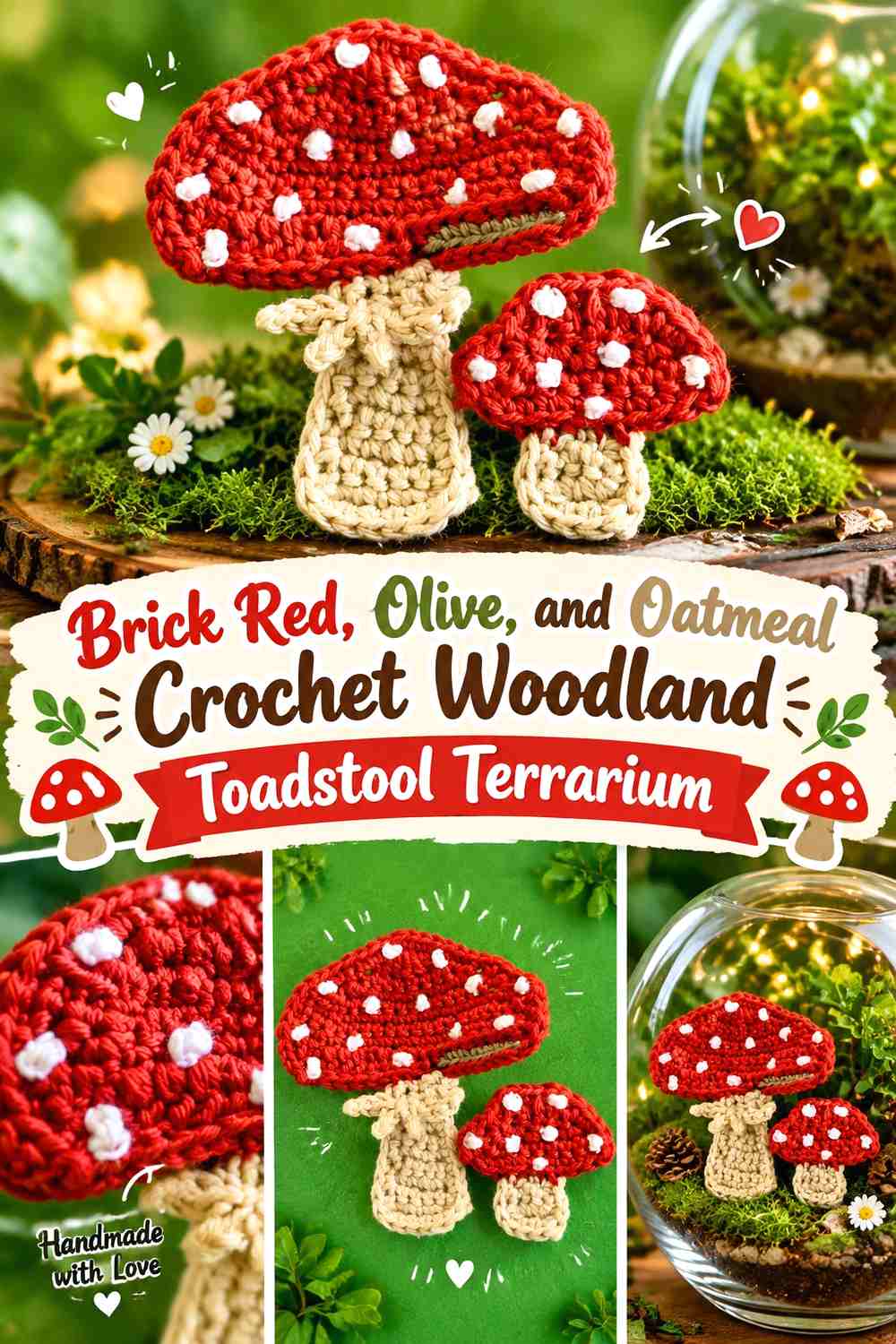
Brick red gives the toadstool a softened vintage look, while olive creates the main fern and moss color. Oatmeal belongs on the stem and restrained cap details, where it can provide sufficient contrast without making the mushroom look overly crisp.
Brick Red Should Carry the Crochet Toadstool Cap Without Extra Bright Colors
Use brick red as a complete cap color and resist adding multiple colorful spots. Oatmeal alone can provide enough detail while keeping the terrarium earthy.
Olive Ferns Should Leave the Oatmeal Crochet Stem Exposed
Arrange olive leaves around the mushroom base but leave part of the stem visible from the front. This maintains a useful dark-light-dark transition from foliage to stem to cap.
Creator Credit: Kerri’s Crochet
8. Deep Teal, Fern Green, and Cream Crochet Hanging Mushroom Terrarium

A hanging mushroom can occupy the upper part of a tall terrarium while fern green fills the lower section. Deep teal gives the suspended cap enough contrast to separate from conventional green foliage, and cream keeps the stem or hanging connection light.
Deep Teal Can Give the Crochet Mushroom a Distinct Upper Focal Point
Keep the teal mushroom above most of the fern fronds so its silhouette is not broken by the lower foliage. The color difference from fern green helps, but clear spatial separation makes the display stronger.
Cream Should Connect Deep Teal and Fern Green Without Becoming a Third Large Field
Use cream through the stem or small hanging detail. Avoid scattering large cream motifs across the base, because the mushroom should remain the primary light-dark focal structure.
Creator Credit: Concrete Gems Crochet
9. Burgundy, Sage, and Stone Crochet Tall Mushroom Terrarium

A taller mushroom gives you more stem area, so color balance shifts slightly. Burgundy can remain concentrated in the cap, sage can spread through several fronds, and stone gray can ground the base without competing with the cream or pale mushroom stem.
Burgundy Should Stay at the Top of the Crochet Mushroom Silhouette
Keeping the darkest warm color in the cap creates a clear visual endpoint. If burgundy also spreads into the base, the terrarium may develop two competing dark zones.
Sage Ferns Can Fill the Space Around a Burgundy Crochet Cap Carefully
Use the longest sage fronds beside the mushroom rather than directly in front of it. Leaving one clean side of the cap visible preserves the mushroom shape while still allowing the fern to create height.
Creator Credit: Hopeful Turns
10. Caramel, Moss Green, and Ivory Crochet Open-Bowl Mushroom Terrarium

An open bowl gives larger mushroom forms more breathing room than a narrow jar. Caramel can cover the main mushroom cap, moss green can build the lower landscape, and ivory can define stems and smaller fungi. Keep the surrounding decoration low enough that the rounded caps remain visible from the side.
Caramel Can Make the Crochet Mushroom Caps Feel Warm Without Bright Red
Use caramel on one large mushroom or repeat it across a pair of different sizes. This creates an earthy focal area that still separates from green foliage.
Ivory Should Keep Caramel Mushrooms Clear Above Moss Green
Reserve ivory for the stems and perhaps one small accent mushroom. The light neutral creates useful vertical contrast between the dark ground and warmer cap.
Creator Credit: NobleKnits
11. Forest Green, Terracotta, and Oatmeal Crochet Succulent Mushroom Terrarium
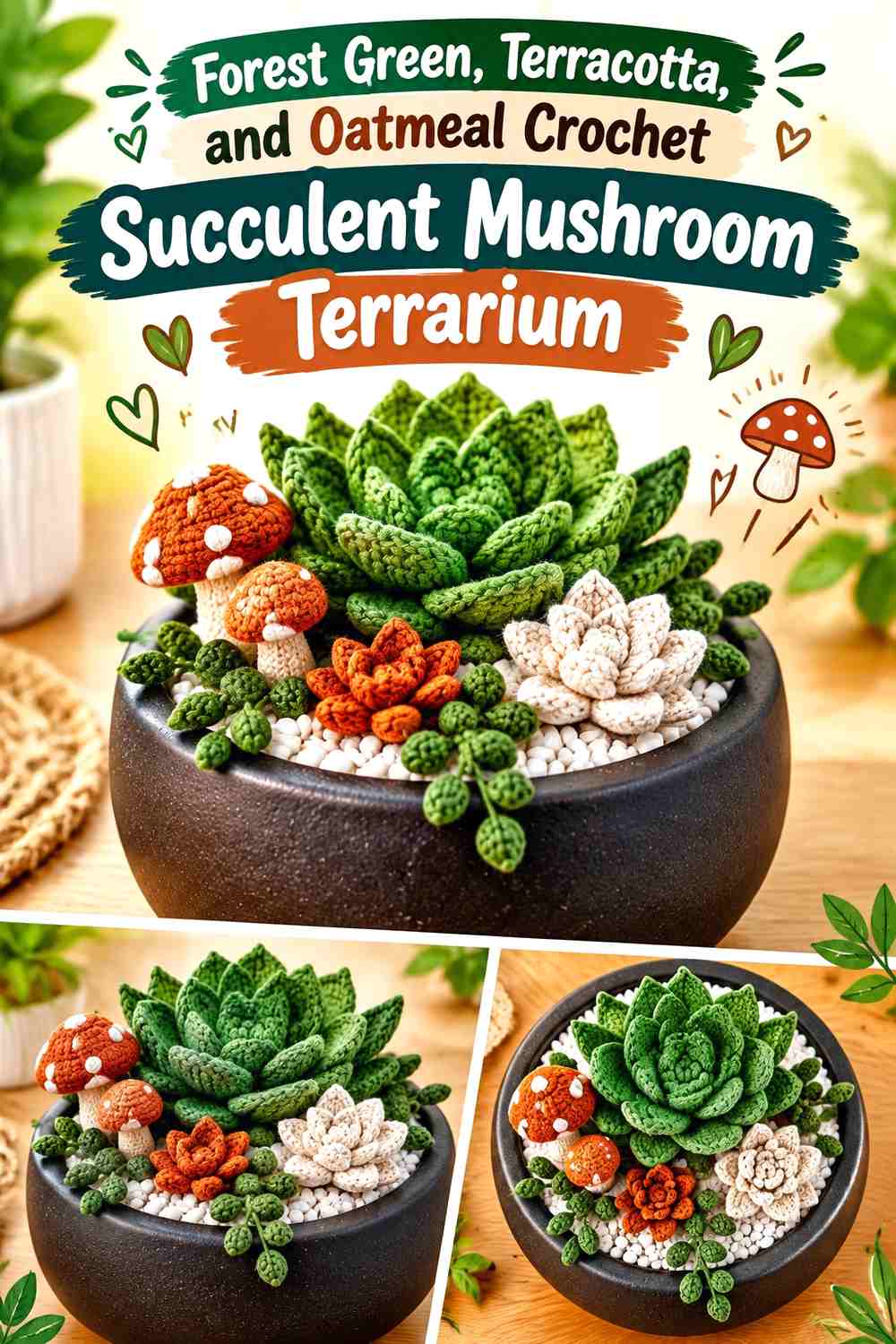
This idea introduces a compact succulent shape beside the mushrooms to create a denser forest-floor arrangement. Forest green should dominate the plant material, terracotta can lead on the mushroom caps, and oatmeal can separate stems and selected leaf tips.
Forest Green Should Unify the Crochet Succulent and Fern Elements
Use similar green values across the succulent and fern so the plants read as one supporting layer. Their different shapes already create enough variation; radically different greens are unnecessary unless you want stronger botanical contrast.
Terracotta Mushrooms Need Oatmeal Separation From Forest Green
Place oatmeal stems where green plant forms would otherwise touch directly beneath the terracotta caps. The lighter middle value prevents the warm mushroom heads from appearing to float on the foliage.
Creator Credit: Happy Patty Crochet
12. Golden Ochre, Rust, and Deep Green Crochet Leafy Mushroom Terrarium
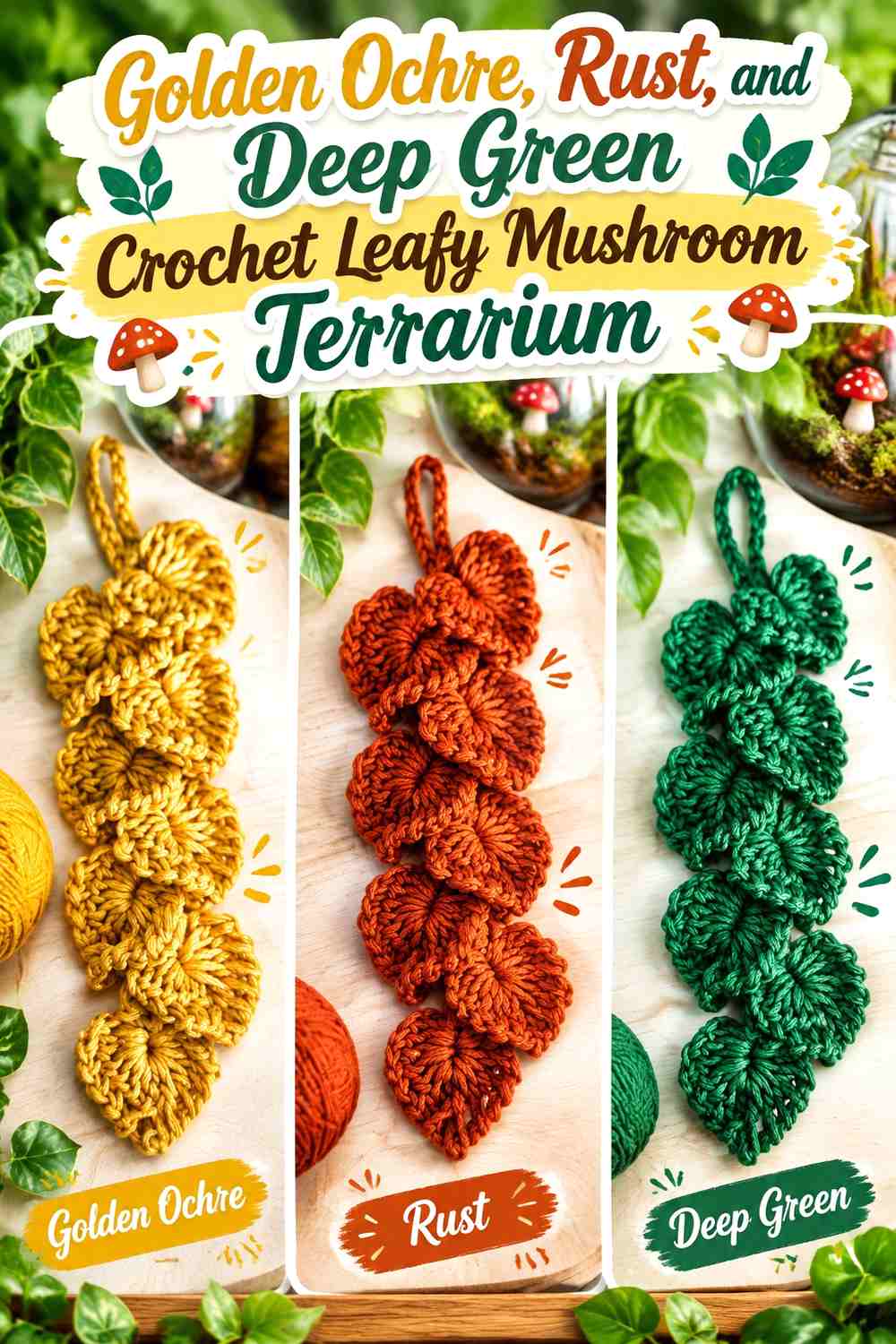
A leaf branch can create height behind a low mushroom grouping. Deep green should carry the longest foliage, golden ochre can define the main mushroom, and rust can appear on one smaller companion cap. This uses two related warm tones without forcing both onto the same mushroom.
Golden Ochre and Rust Should Belong to Separate Crochet Mushroom Focal Points
Give the larger mushroom golden ochre and the smaller one rust rather than alternating both colors around each cap. Separate color identities make the two mushrooms easier to distinguish within dense foliage.
Deep Green Should Connect the Ochre and Rust Crochet Mushrooms
Repeat deep green through a branch and lower base so the warm caps feel planted in the same environment. Keep the leaves behind rather than directly across the cap centers.
Creator Credit: Crochetwithsumi
13. Slate Blue, Sage, and Ivory Crochet Broad-Leaf Mushroom Terrarium
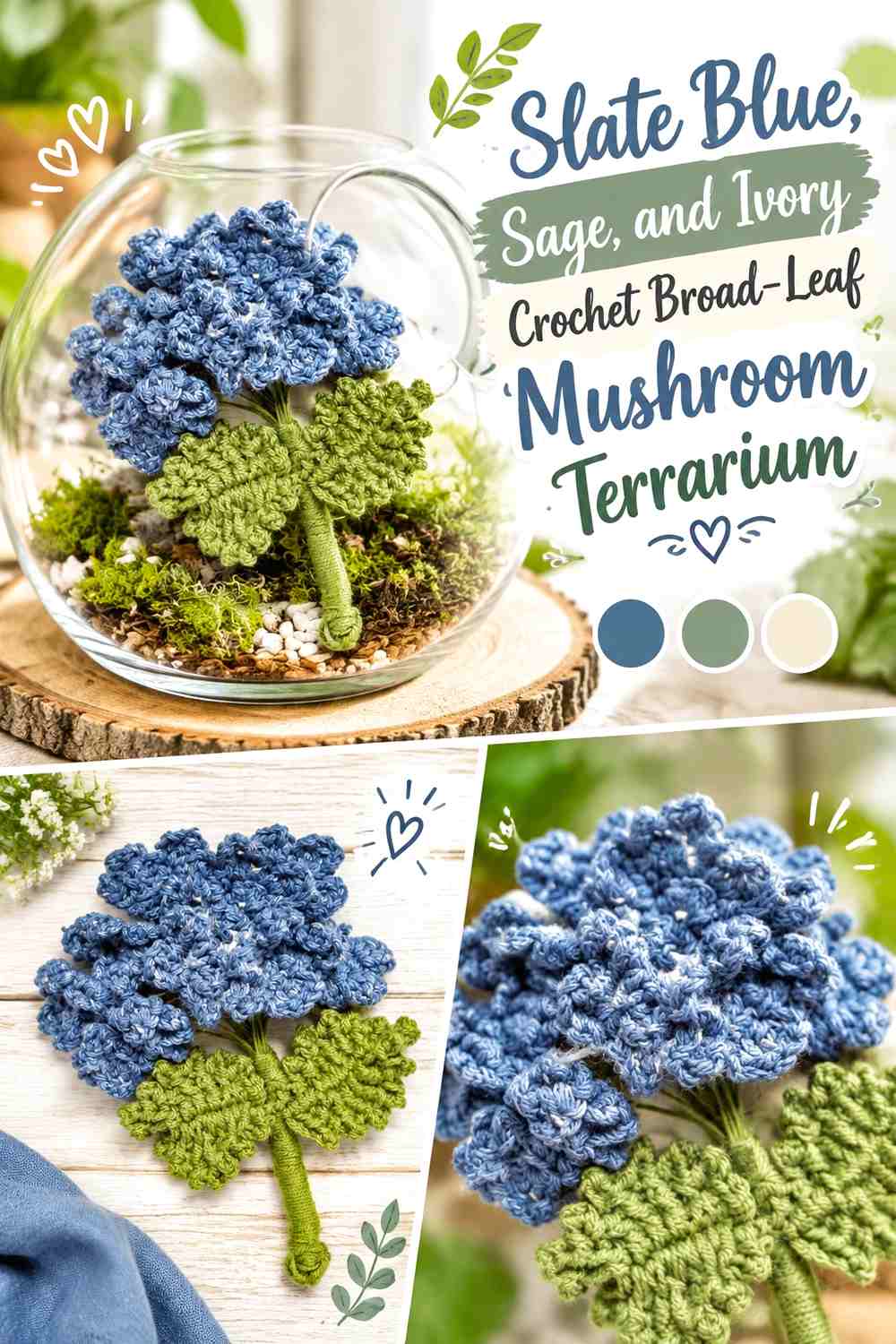
Slate blue creates a cooler mushroom cap, sage gives the foliage a muted botanical color, and ivory keeps the stems and leaf veins visible. Broader leaves are useful behind tiny mushrooms because they create large, quiet shapes instead of adding another layer of fine fern texture.
Slate Blue Should Remain the Cool Crochet Mushroom Accent
Use blue on one or two caps and avoid repeating it through the leaves. Concentrated placement keeps the unusual mushroom color intentional rather than making the entire terrarium look blue-green.
Sage and Ivory Can Keep Broad Crochet Leaves From Looking Flat
Let sage dominate the leaf body and use ivory only where a center vein or edge needs stronger separation. The lighter detail should support the leaf structure without competing with the ivory mushroom stems.
Creator Credit: Moara Crochet
14. Chestnut, Moss Green, and Parchment Crochet Fern Canopy Terrarium
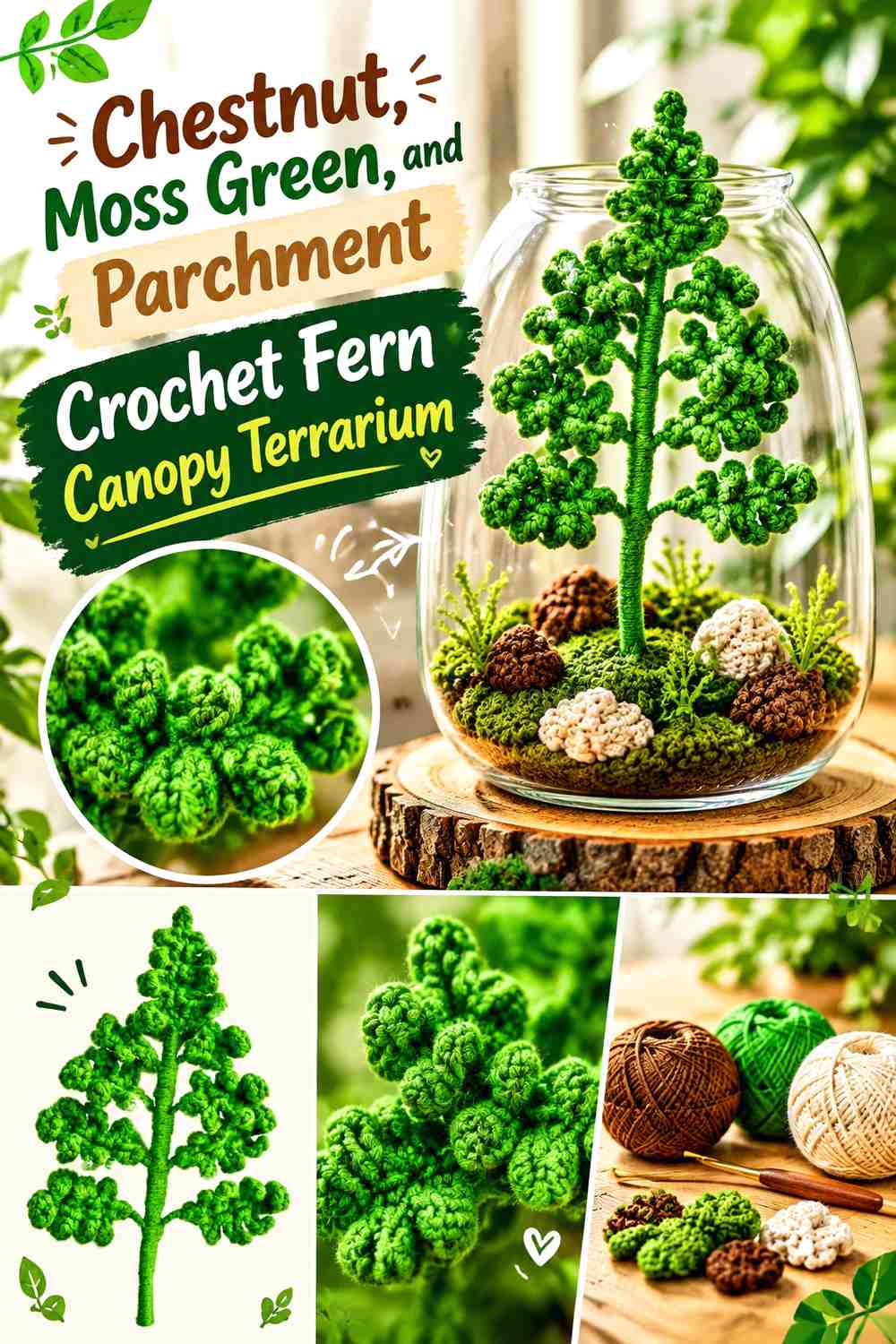
This terrarium gives the fern more visual importance than the mushrooms. Moss green can form an arching canopy, chestnut can ground the lower floor and mushroom caps, and parchment can pick out one stem or pale fungus near the front.
Moss Green Should Create the Main Crochet Fern Canopy
Arrange the longest fronds so they frame the top and sides while leaving an opening through the center. The negative space prevents the foliage from hiding every mushroom below.
Parchment Can Create a Light Focal Point Beneath Chestnut and Moss Green
A pale mushroom stem or small cap near the center gives the eye somewhere to rest among the darker green and brown. Keep parchment localized so it does not turn the canopy into a high-contrast striped arrangement.
Creator Credit: HuLoHuLa
15. Brick Red, Deep Fern Green, and Warm White Crochet Fern Grove Terrarium

A fern grove works well when several fronds share one rich green and the mushrooms appear in only a few openings. Brick red can create classic warm caps, while warm white distinguishes the stems without the starkness of pure white.
Deep Fern Green Should Cover Most of the Crochet Terrarium Height
Use green from the mossy floor upward through multiple fronds so the terrarium reads first as a fern environment. The red mushrooms then become small discoveries inside the greenery rather than equal blocks of color.
Brick Red Needs Warm White Crochet Stems Between Dense Ferns
Place a light stem beneath every important red cap. If the brick-red mushrooms connect directly to dark green, their lower shapes may become difficult to read inside a dense grove.
Creator Credit: CrochetObjet
16. Muted Coral, Olive, and Sand Crochet Mini Planter Terrarium
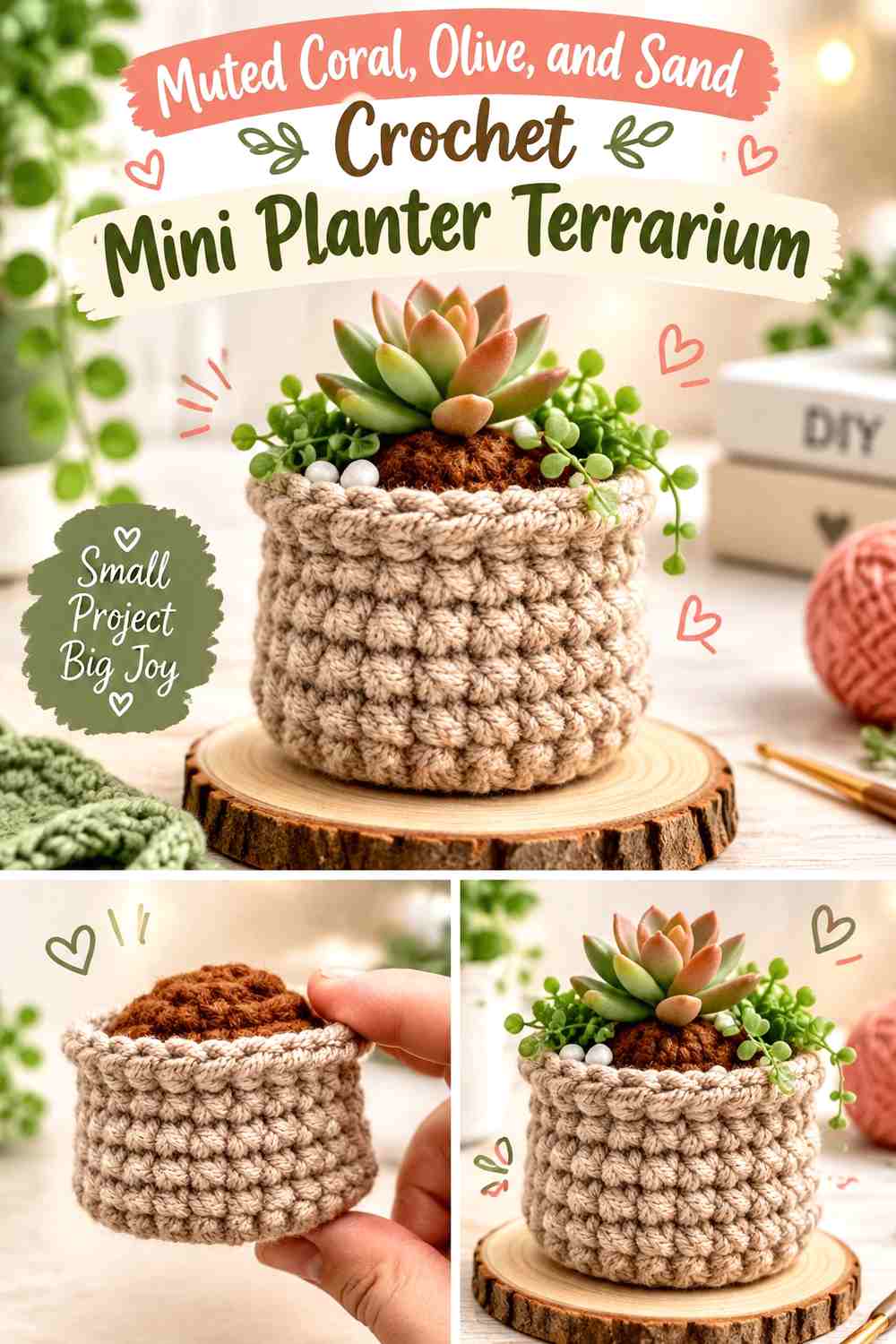
A tiny planter can sit inside an open terrarium or cloche as an intentionally constructed element within the woodland scene. Sand can form the pot, olive can cover the small plant or fern, and muted coral can introduce one nearby mushroom cap.
Sand Should Keep the Crochet Mini Planter Quieter Than the Coral Mushroom
Use sand or another warm pale neutral on the pot so the container does not compete with the mushroom focal point. A brightly colored pot would add another major visual block to an already detailed scene.
Olive Can Link the Sand Crochet Planter to the Muted Coral Mushroom
Repeat olive around the plant and terrarium floor so the separate pot feels integrated into the wider environment. The green continuity allows coral to stay concentrated in one cap.
Creator Credit: GratiaProject
17. Chocolate Brown, Mustard, and Sage Crochet Rustic Mushroom Terrarium
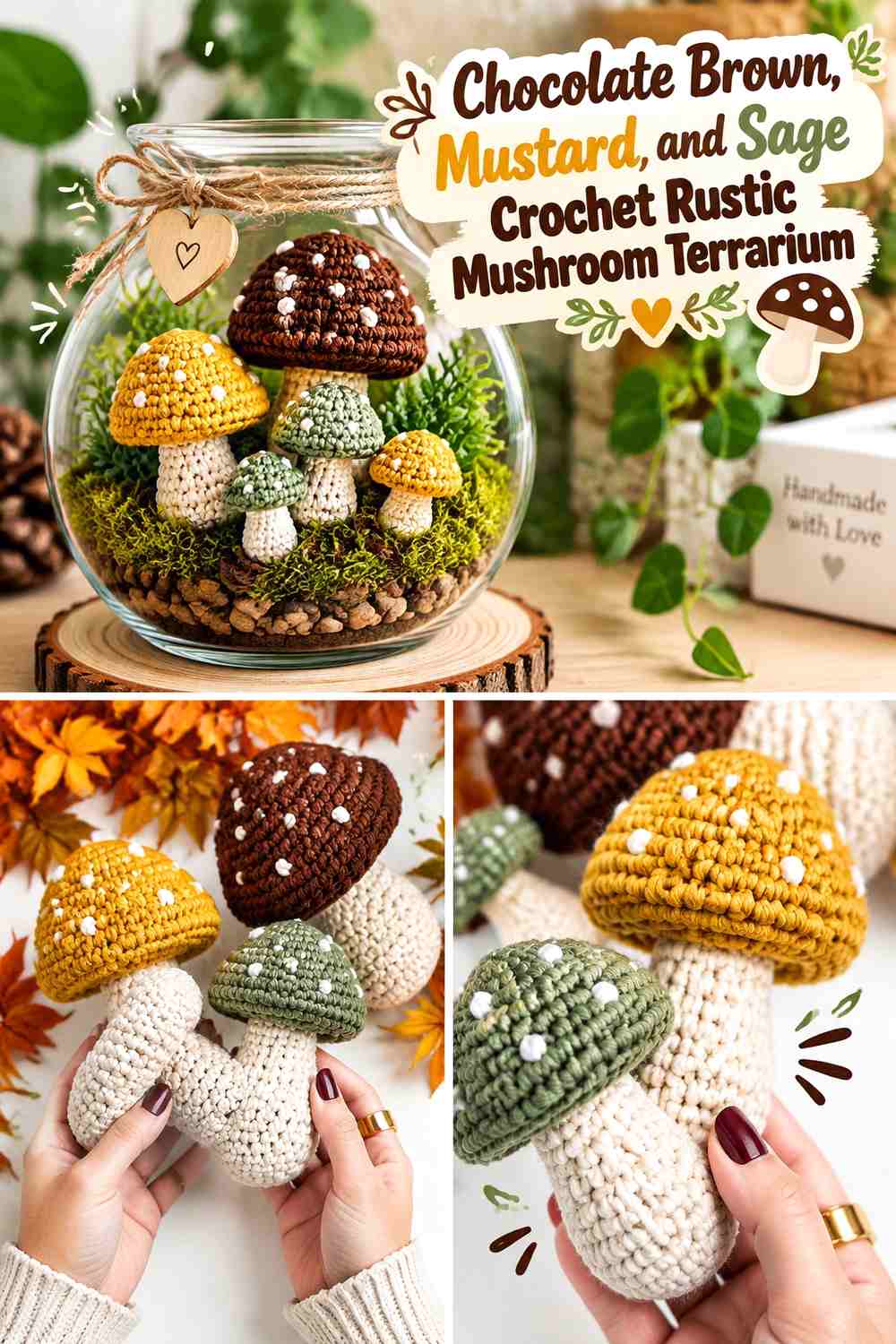
Chocolate brown creates the deepest earthy anchor in this collection, mustard gives the mushroom caps a warm focal color, and sage prevents the greens from becoming too dark. This combination works especially well in a wide, low display where several mushroom sizes can be arranged together.
Mustard Should Repeat Across the Rustic Crochet Mushroom Cluster
Use mustard on multiple caps rather than one isolated mushroom. Repetition creates a family resemblance even when the individual mushroom sizes differ.
Sage Can Keep Chocolate Brown From Making the Crochet Base Too Heavy
Use sage through moss and lower foliage so the dark brown appears in controlled patches rather than across the entire floor. The softer green also provides a middle value between mustard caps and brown ground.
Creator Credit: MJ’s Off The Hook Designs
18. Deep Olive, Copper, and Oatmeal Crochet Hanging Fern Terrarium
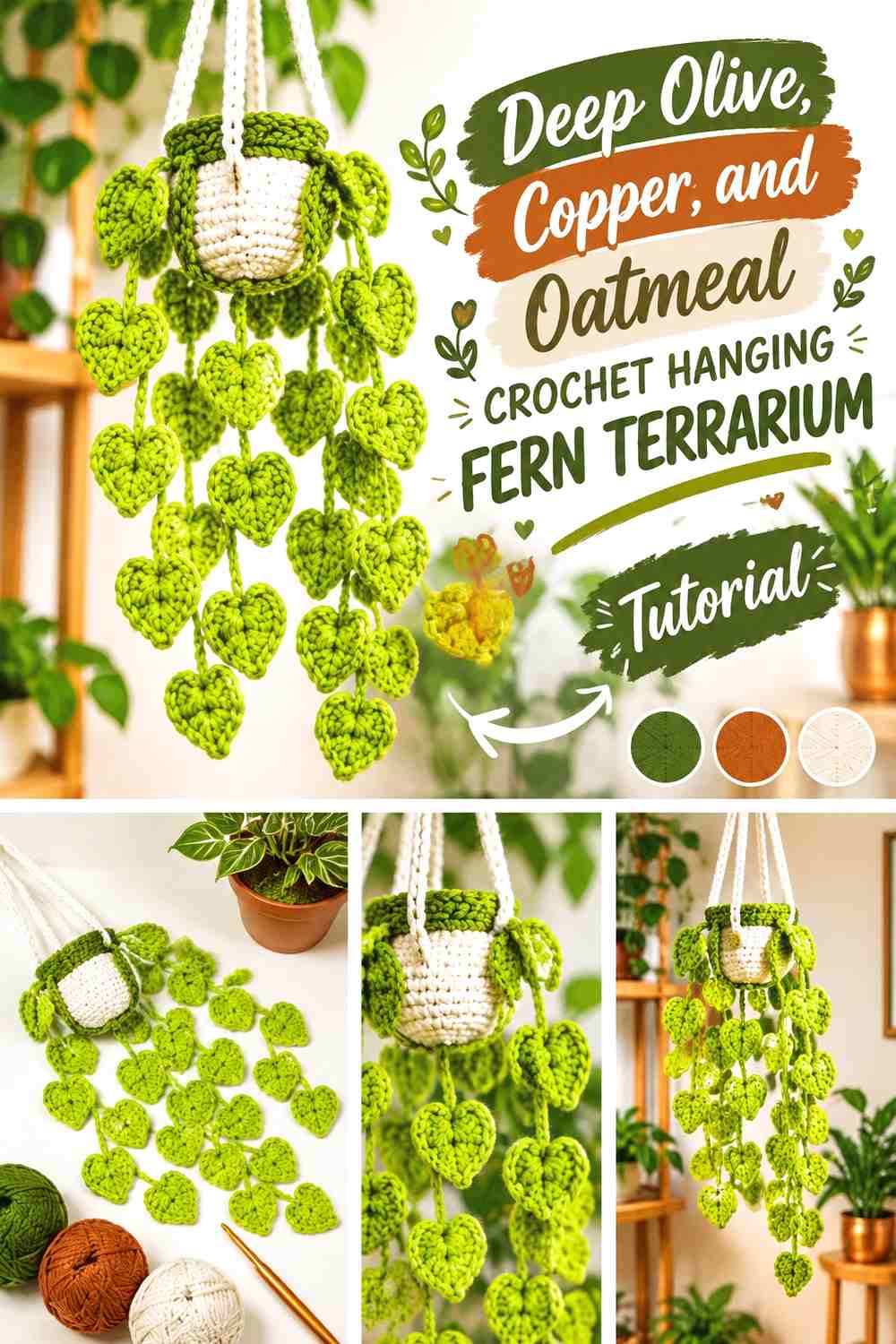
A hanging planter construction can inspire a suspended terrarium where the foliage drops below or around a contained mushroom scene. Deep olive can dominate the fern fronds, copper can appear on small mushroom caps, and oatmeal can lighten the hanging structure or selected stems.
Deep Olive Should Define the Crochet Hanging Fern Shape
Keep the long fronds consistently olive so the downward movement remains clear. Alternating several greens along the same trailing sections can make the hanging silhouette busier than necessary.
Copper Mushrooms Need Oatmeal Separation Beneath Deep Olive Ferns
Use oatmeal stems or nearby pale details where the copper mushrooms sit beneath the foliage. The light break prevents the warm caps and dark leaves from compressing into one shaded cluster.
Creator Credit: TheYarnBowl Crochet
19. Aubergine, Sage, and Cream Crochet Tiny Mushroom Pair Terrarium

Aubergine gives the final terrarium a moody mushroom color, while sage keeps the foliage muted and cream defines the two tiny stems. Using only a pair of mushrooms leaves more negative space for moss and fern details, which can make a compact jar feel less crowded.
Aubergine Should Give Both Crochet Mushroom Caps a Shared Identity
Repeat aubergine on both caps but vary the heights or positioning of the mushrooms. A shared color makes the pair feel naturally related without requiring identical shapes.
Cream Should Keep Aubergine Mushrooms Visible Against Sage Crochet Foliage
Use cream through both stems and leave a little sage-free space around them. This makes the two mushrooms readable as separate forms even when their caps sit close together.
Creator Credit: Crochet Everyday
Which Crochet Mushroom and Fern Terrarium Palette Should You Choose?
For a classic woodland direction, start with moss or fern green and combine it with rust, cranberry, brick red, or mustard mushroom caps. Cream, oatmeal, or parchment stems provide the light contrast that keeps small fungi visible.
For softer terrariums, use sage with caramel, slate blue, dusty neutrals, or muted coral. These palettes work particularly well when broad leaves, moss, and small mushrooms share the display rather than one bright toadstool dominating the center.
For darker fantasy woodland color, plum, aubergine, deep teal, burgundy, and charcoal-adjacent stone neutrals can create depth. In these palettes, protect the smallest stems and leaf edges with at least one noticeably lighter shade.
Conclusion
A strong crochet mushroom and fern terrarium depends on hierarchy more than the number of elements. Give the mushrooms a recognizable cap color, let one or two greens connect the plant material, and choose a base shade that does not compete with either.
Think about depth while arranging color. Dark fronds can sit behind cream stems, lighter moss can reveal burgundy caps, and one pale mushroom can give a dense green grove a visual resting point. If every element has equal saturation and contrast, the scene can become difficult to read inside a compact container.
Use the credited tutorials for their individual mushroom, fern, leaf, succulent, planter, or terrarium construction concepts, then adapt the palette and arrangement independently for your own woodland display.
Frequently Asked Questions
How many colors should I use in a crochet mushroom and fern terrarium?
Three or four are enough for many displays. One green can dominate the foliage, one color can lead on mushroom caps, a light neutral can define stems, and an optional brown or gray can ground the base.
Which greens work well for crochet fern terrariums?
Moss, fern, forest, olive, and sage greens can all work. Use deeper greens when you need strong foliage definition and softer sage or olive when the mushrooms already contain dark colors.
How can I make crochet mushrooms stand out from green ferns?
Use a cap color that differs clearly from the foliage and protect the stem with light-dark contrast. Rust, cranberry, mustard, plum, or copper caps paired with cream or oatmeal stems usually create more separation than green-on-green mushrooms.
Should every mushroom in a crochet terrarium use the same cap color?
No. A repeated cap color creates cohesion, but a second related shade can add variation. For example, rust and ochre can share one terrarium if the same green foliage and cream stems connect them.
How can I stop a crochet terrarium from looking overcrowded?
Leave intentional gaps between mushrooms and avoid placing every fern directly in front of a focal element. Negative space is particularly important in small jars and cloches because overlapping crochet textures can merge visually.
Can I mix fern, succulent, and broad-leaf crochet motifs in one terrarium?
Yes. Give them a connected green palette so their different silhouettes provide the variation. Using completely unrelated colors for every plant can make the terrarium feel more like a mixed motif display than one woodland environment.
What color should I use for the crochet terrarium floor?
Moss green, muted olive, oatmeal, bark brown, and stone gray are all useful choices. Pick the base according to the mushrooms above it: pale stems benefit from a darker ground, while very dark mushroom colors may show more clearly against softer moss or oatmeal.