A crochet fennec fox depends heavily on proportion and color placement. The oversized ears need to look intentionally larger than the head without becoming two unrelated blocks of color, while the muzzle, chest, paws, and tail need enough contrast to remain visible against a sandy body.

This makes a restrained palette particularly useful. Sand, biscuit, camel, oatmeal, ivory, taupe, and warm beige can create the main coat, while dusty peach or blush can define the inner ears. Espresso, charcoal, cocoa, or black can be reserved for the nose, eyes, paws, or tail tip rather than spreading across the whole toy.
The public tutorials below primarily demonstrate complete fox amigurumi constructions. The fennec-specific oversized ears and the proposed color schemes are editorial adaptations, so the creators are not being credited with those modifications.
Quick List
- Sand, Ivory, and Cocoa Crochet Fennec Fox Amigurumi
- Camel, Cream, and Dusty Peach Crochet Fennec Fox Amigurumi
- Biscuit, Oatmeal, and Espresso Crochet Fennec Fox Amigurumi
- Warm Beige, Ivory, and Charcoal Crochet Fennec Fox Amigurumi
- Golden Sand, Cream, and Chocolate Crochet Fennec Fox Amigurumi
- Taupe, Blush Beige, and Cocoa Crochet Fennec Fox Amigurumi
- Pale Sand, Dusty Rose, and Espresso Crochet Fennec Fox Amigurumi
- Caramel, Cream, and Warm Gray Crochet Fennec Fox Amigurumi
- Oatmeal, Camel, and Black Crochet Fennec Fox Amigurumi
- Desert Tan, Ivory, and Cinnamon Crochet Fennec Fox Amigurumi
- Soft Beige, Pale Peach, and Charcoal Crochet Fennec Fox Amigurumi
Let the Oversized Fennec Fox Ears Control the Palette
On this amigurumi, the ears occupy a large share of the visible silhouette. If both ears use a very dark inner color, they can visually overpower a pale head. If the inner and outer shades are nearly identical, the oversized shape may lose definition.
A useful approach is to repeat the body shade on the outer ears and introduce one lighter, warmer, or slightly pinker color inside. Reserve the darkest shade for very small details unless you deliberately want strongly graphic ears.
Keep Sandy Fennec Fox Colors From Looking Flat
A mostly beige animal does not need many colors, but it does need visible value changes. Cream or ivory can distinguish the muzzle and chest, while cocoa or charcoal can define the nose and selected extremities.
Before crocheting all the pieces, compare the body, muzzle, and inner-ear colors side by side. If they merge at a distance, change their lightness rather than adding several unrelated accent colors.
1. Sand, Ivory, and Cocoa Crochet Fennec Fox Amigurumi
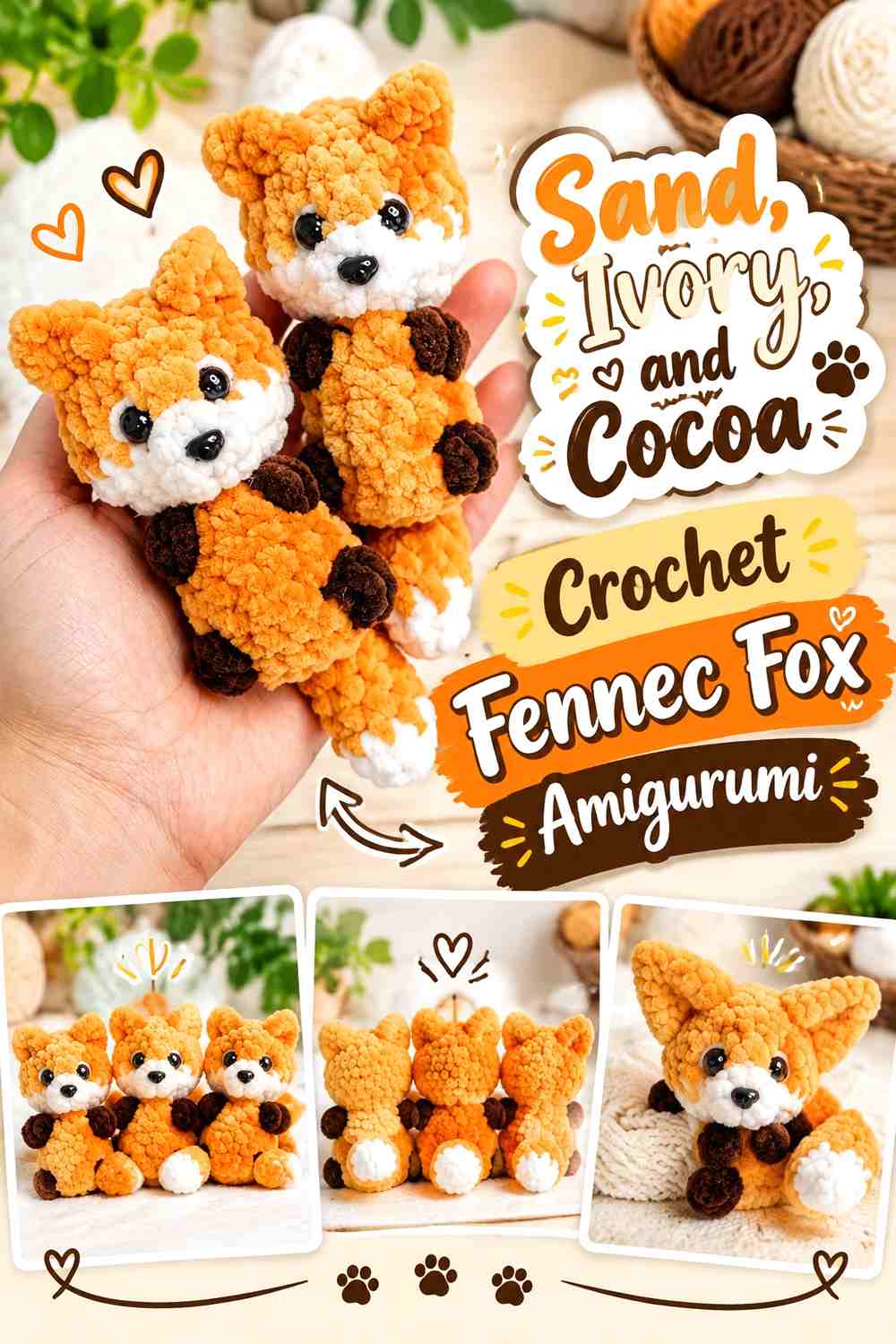
Sand gives this version the clearest desert-neutral base, ivory lightens the muzzle and chest, and cocoa provides a softer dark accent than black. Keep most of the head, body, tail, and outer ears sand so the large ears feel structurally connected to the animal rather than added afterward.
The supporting tutorial demonstrates a complete fox amigurumi including the tail, muzzle, body, head, and ears, making it useful as a general fox-construction reference for the oversized-ear adaptation. YouTube
Keep Sand Continuous From the Fennec Fox Head Into the Oversized Ears
Using the same sand shade on both the head and outer ears helps the exaggerated ear size feel intentional. The silhouette provides the drama, so the outer ear does not need another strong color.
Ivory can be placed inside the lower ear or repeated on the muzzle to connect the face and ears.
Use Cocoa Sparingly Against Sand and Ivory
Cocoa works well on the nose, selected paw details, or tail tip because these areas need definition without taking visual attention away from the ears.
If cocoa is also used inside the complete ear, the large dark area may become too dominant. Keep most of the oversized ear lighter when you want a softer fennec look.
Creator Credit: DidyToys Tutorial
2. Camel, Cream, and Dusty Peach Crochet Fennec Fox Amigurumi

Camel gives the coat more warmth than pale sand, while cream supplies the main light contrast. Dusty peach belongs primarily inside the ears, where a small temperature shift can emphasize their size without adding a completely separate bright accent.
The supporting HookArt tutorial covers a full fox construction with head, body, limbs, ears, tail, and assembly. YouTube
Let Camel Cover Most of the Oversized Fennec Fox Ears
Keep the outer ear camel so it connects directly to the head. Dusty peach can sit inside that larger shape, but it should not reach every edge if you want the camel outline to remain visible.
That border helps the oversized ear retain a clear silhouette.
Repeat Cream From the Camel Face to the Ear Base
Cream around the muzzle or cheeks can be echoed subtly near the base of the ears. This creates a visual connection between the lighter facial areas and the large ear structures.
Keep dusty peach more limited so it remains an ear-specific accent.
Creator Credit: HookArt Tutorial
3. Biscuit, Oatmeal, and Espresso Crochet Fennec Fox Amigurumi

Biscuit and oatmeal create a low-contrast neutral fennec, while espresso gives the facial details enough depth. This combination is useful when you want the oversized ears to stand out mainly through shape rather than bright inner-ear color.
The Rose and Lily Crochet source teaches a complete fox across its tutorial sequence, so use its fox construction as the base concept while enlarging and recoloring the ears separately. YouTube
Keep Oatmeal Lighter Than Biscuit on the Fennec Fox Muzzle
The two neutrals need enough value difference for the muzzle to remain visible. If your particular biscuit and oatmeal yarns look nearly identical in worked crochet, lighten the oatmeal rather than adding an extra facial color.
Reserve Espresso for Small Biscuit Ear and Face Details
Espresso has much more visual weight than the two body neutrals. A small nose, eye detail, or tail tip can provide all the contrast this soft palette needs.
Avoid filling the oversized ear interiors completely with espresso unless a highly graphic look is intentional.
Creator Credit: Rose and Lily Crochet Tutorial
4. Warm Beige, Ivory, and Charcoal Crochet Fennec Fox Amigurumi

Warm beige provides a quiet main coat, ivory keeps the muzzle and chest light, and charcoal introduces a cooler dark accent. This version is useful when you want stronger definition than a brown-on-beige palette without using solid black everywhere.
Happylen Crochet’s source demonstrates a complete baby fox amigurumi and can support the general animal construction before the ears are adapted to a larger fennec proportion. YouTube
Use Warm Beige Across the Full Fennec Fox Ear Outline
Large ears already create substantial visual emphasis. Keeping their outer surfaces warm beige ensures the head and ears read as one continuous animal shape.
Ivory can highlight the inner lower portion without breaking up the entire ear.
Let Charcoal Define Ivory and Warm Beige in Small Areas
Charcoal works best around the nose, eyes, or tail tip. Because warm beige and ivory are both light, even a small charcoal section creates strong contrast.
This allows the oversized ears to remain visually light instead of becoming the darkest part of the amigurumi.
Creator Credit: Happylen Crochet Tutorial
5. Golden Sand, Cream, and Chocolate Crochet Fennec Fox Amigurumi

Golden sand gives this fox a slightly richer body color. Cream can define the chest, muzzle, and selected ear areas, while chocolate keeps the paws and facial details warm rather than nearly black.
Marin Crochet’s tutorial demonstrates a complete fox plush with separate ears, tail, head, body, and assembly, providing a useful construction reference for a larger-ear adaptation. YouTube
Let Golden Sand Dominate the Oversized Crochet Fennec Fox Ears
Avoid splitting each ear equally between sand and cream. Keeping golden sand around most of the outside maintains the warm coat color and makes a smaller cream interior more noticeable.
Repeat Chocolate From Golden Sand Paws to the Tail Tip
If chocolate appears only on the face, it can look isolated against such a light animal. Repeating a controlled amount at the paws or tail tip gives the darkest shade a clearer role.
Cream should still remain the main contrast against golden sand.
Creator Credit: Marin Crochet Tutorial
6. Taupe, Blush Beige, and Cocoa Crochet Fennec Fox Amigurumi

Taupe creates a more muted body than camel or golden sand. Blush beige introduces gentle warmth inside the ears, while cocoa maintains enough definition for the nose and paws.
The Mini Dolly source teaches a fox amigurumi across a tutorial series and includes separate ears among the construction elements, making it suitable as a general fox base rather than an exact fennec project. YouTube
Place Blush Beige Inside Taupe Fennec Fox Ears
Blush beige should read as a soft inner-ear change rather than a completely separate pink feature. Keep a clear taupe edge visible around it so the large ear silhouette remains connected to the body.
Keep Cocoa Smaller Than Taupe on the Fennec Fox Face
Cocoa can define the nose and selected facial details, but spreading it too widely around the eyes can make the face visually heavier than the oversized ears.
Taupe and blush beige should still account for most of the visible head area.
Creator Credit: Mini Dolly Tutorial
7. Pale Sand, Dusty Rose, and Espresso Crochet Fennec Fox Amigurumi
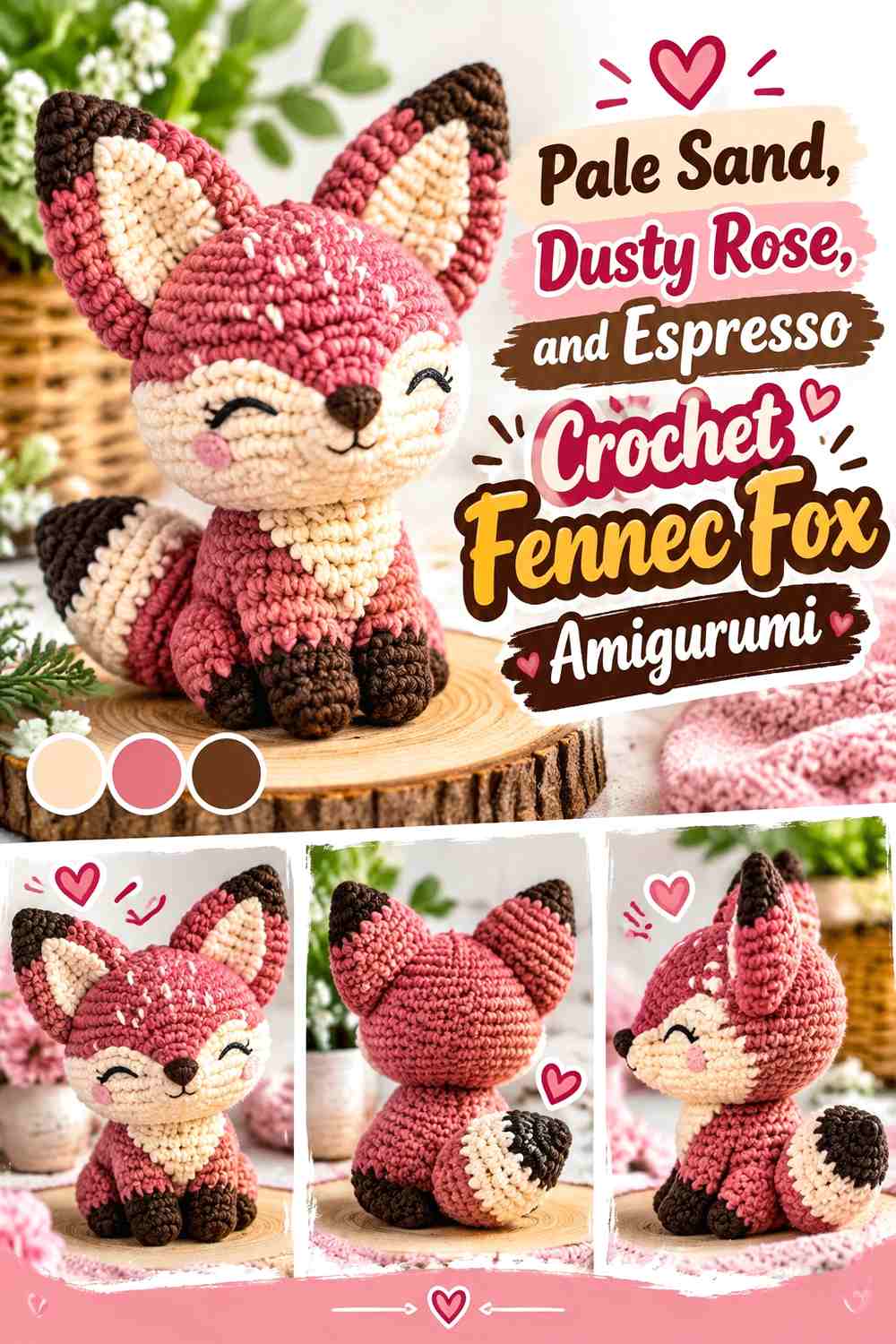
Pale sand creates the lightest body in the collection, which gives dusty rose more opportunity to stand out inside the ears. Espresso should remain minimal because the contrast against pale sand is already strong.
Little Crochet Farm’s fox tutorial is a general fox-amigurumi construction reference rather than a fennec tutorial. Crochet Scout
Keep Dusty Rose Inside the Pale Sand Oversized Ears
Dusty rose is strongest when it stays confined mostly to the ear interiors. Repeating it over the body would reduce the visual connection between the pale sandy coat and the enlarged ears.
A narrow pale-sand perimeter around each ear also keeps the shape crisp.
Use Espresso to Anchor the Pale Sand Fennec Fox Face
A very small espresso nose or eye detail is enough against such a light coat. If you also use espresso at the tail tip, the two dark areas can balance one another without requiring dark paws or ear interiors.
Creator Credit: Little Crochet Farm Tutorial
8. Caramel, Cream, and Warm Gray Crochet Fennec Fox Amigurumi

Caramel creates a stronger golden-brown body, cream provides the clearest light marking, and warm gray offers a softer alternative to deep brown for the smallest details.
Ami Saigon’s source teaches an amigurumi fox construction and can be used as a related fox reference before adapting ear proportion and fennec-specific color placement. Crochet Scout
Use Cream to Open Up the Caramel Fennec Fox Face
Caramel can cover the forehead and outer ears while cream occupies the muzzle and selected lower-face areas. The light break prevents the warm body color from forming one uninterrupted block beneath the oversized ears.
Keep Warm Gray Subtle Around Caramel Oversized Ears
Warm gray can work near the ear tips or as a tiny inner-ear shadow, but avoid making it the complete ear interior. The ears are already visually dominant because of their scale.
Creator Credit: Ami Saigon Tutorial
9. Oatmeal, Camel, and Black Crochet Fennec Fox Amigurumi
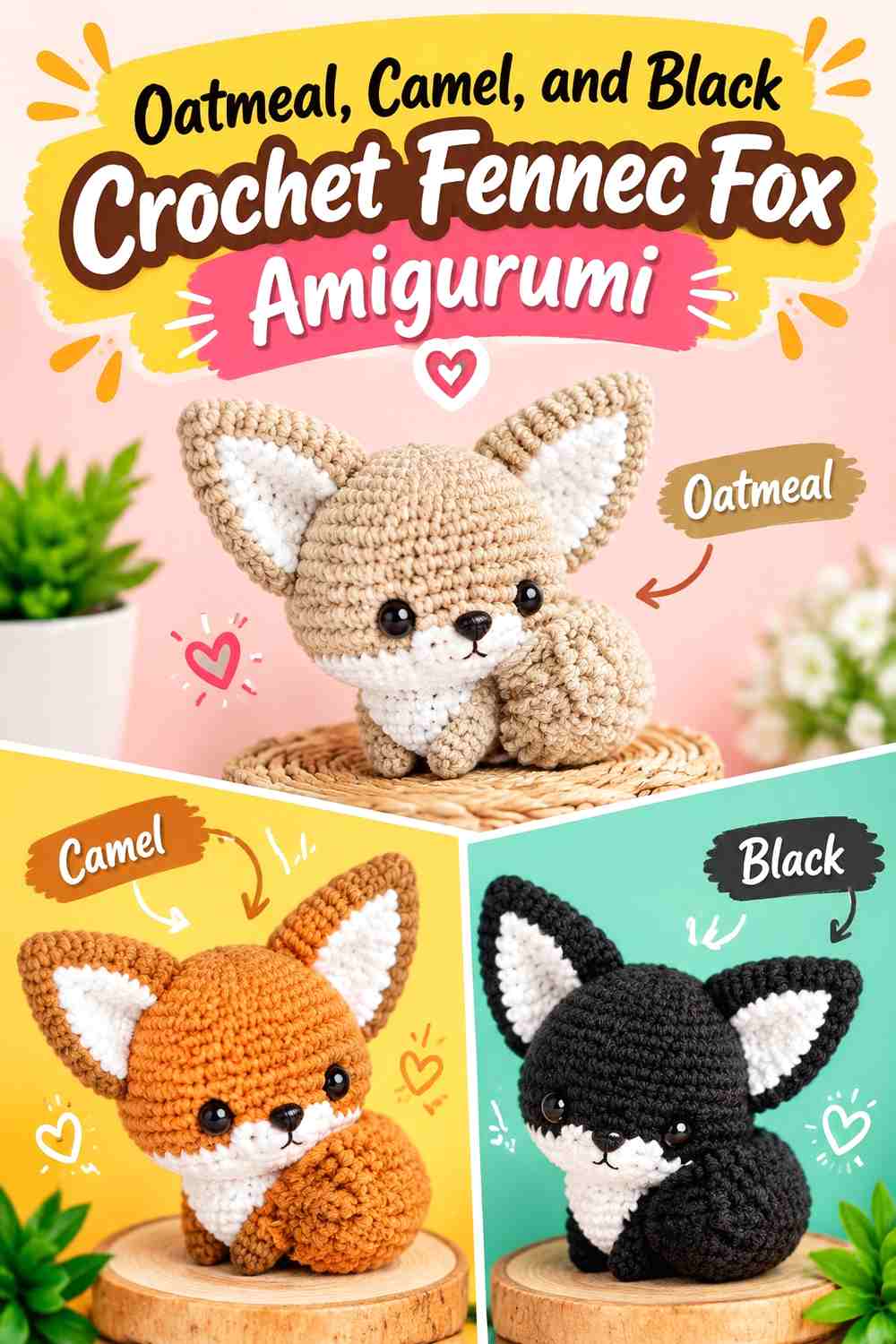
This version reverses the usual hierarchy by letting oatmeal cover much of the body while camel supplies warmer shading. Black becomes the smallest color and should be used only where sharp definition helps.
The Garnknuten source is a full fox-amigurumi tutorial and works as a related construction reference rather than an exact oversized-ear fennec design. Crochet Scout
Let Oatmeal Cover Most of the Crochet Fennec Fox Ears
Large oatmeal ears produce a light silhouette. Camel can be introduced inside the ears to add warmth without creating a strong pink or peach accent.
This tonal relationship is useful when you want the ears to be large but visually gentle.
Limit Black Against Oatmeal and Camel to Tiny Details
A small black nose or tail tip has enough contrast to anchor the palette. Broad black ear areas would pull attention away from the oatmeal-and-camel tonal relationship.
Creator Credit: garnknuten Tutorial
10. Desert Tan, Ivory, and Cinnamon Crochet Fennec Fox Amigurumi

Desert tan can dominate the coat while ivory lightens the muzzle and cinnamon creates a warmer alternative to dark brown. This gives the amigurumi definition without introducing a nearly black shade.
Green Frog Crochet’s baby fox tutorial covers the fox body, tail, ears, face color changes, and assembly concept, so it can support the general construction while the ears are enlarged for the fennec adaptation. Green Frog Crochet
Keep Ivory Clear Against Desert Tan on the Fennec Fox Muzzle
Desert tan and ivory can sit fairly close together, so check their values once crocheted. The muzzle should remain visibly lighter even when the head curves and casts small shadows.
Put Cinnamon at the Desert Tan Fennec Fox Tail Tip
Cinnamon can give the tail a defined finish without adding a harsh dark point. Repeating a little cinnamon around the paws or nose keeps the tail accent connected to the rest of the amigurumi.
Creator Credit: Green Frog Crochet Tutorial
11. Soft Beige, Pale Peach, and Charcoal Crochet Fennec Fox Amigurumi
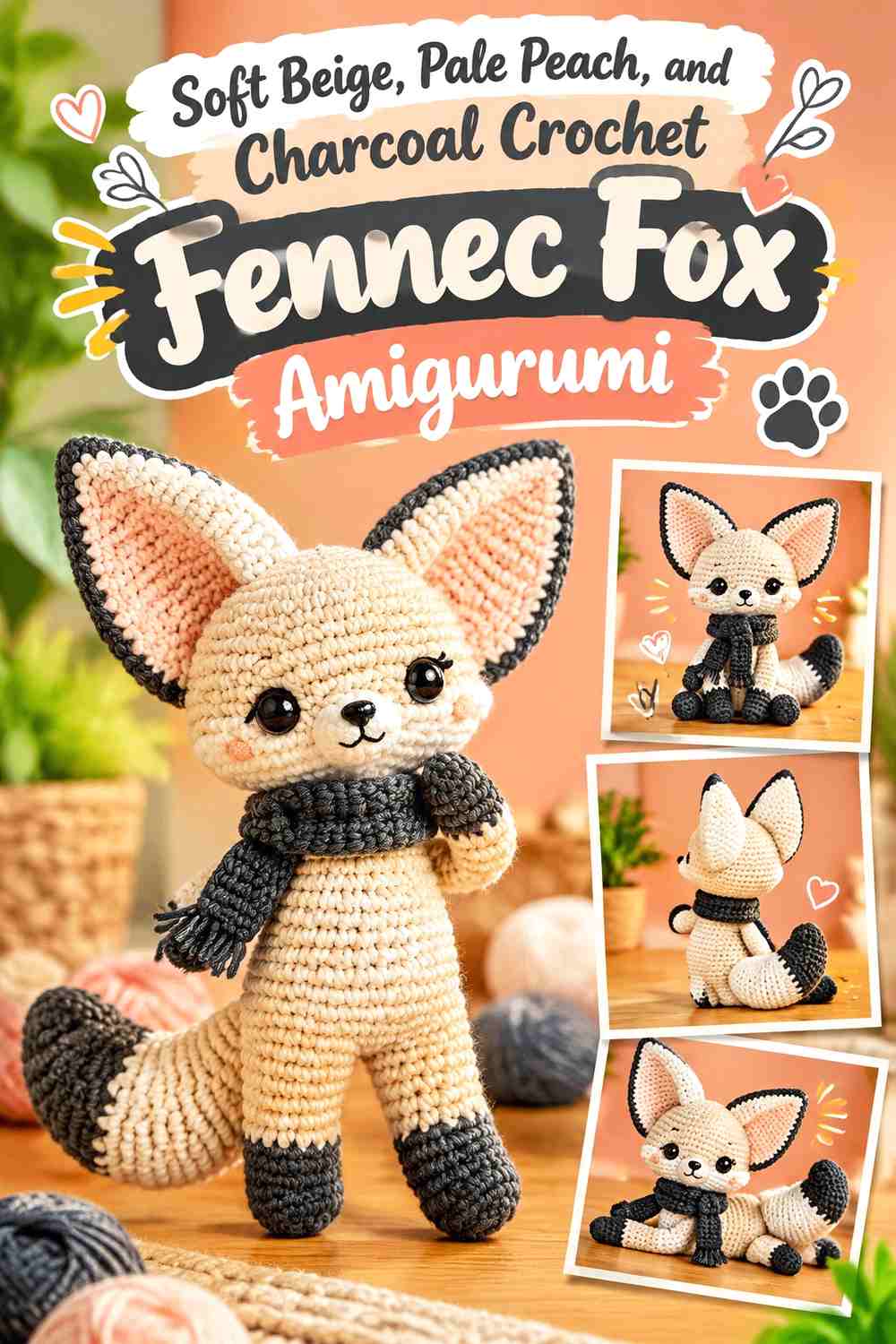
Soft beige creates an understated main coat, pale peach makes the oversized ear interiors the key color feature, and charcoal provides small areas of definition. This palette works particularly well when you want the ears to attract attention through both size and a gentle color shift.
Rania Crochet Guide’s full fox tutorial covers face and tail color changes plus ear and snout shaping, making it useful as a general fox construction reference for the fennec adaptation. YouTube
Let Pale Peach Fill Part of the Soft Beige Oversized Ears
Use pale peach generously enough to be visible, but leave a soft-beige outer border. That border keeps the ears integrated with the head while allowing their exaggerated scale to remain the defining feature.
Repeat Charcoal Below the Soft Beige Fennec Fox Ears
Keep charcoal on the nose, selected paw details, or tail tip rather than using it throughout the ears. This moves the darkest visual weight lower on the amigurumi and allows the large beige-and-peach ears to stay light.
Creator Credit: Rania Crochet Guide Tutorial
Which Fennec Fox Crochet Palette Works Best for Oversized Ears?
Sand with ivory and cocoa gives the clearest neutral starting point, while camel with cream and dusty peach makes the ear interiors more noticeable. Pale sand with dusty rose pushes the ear accent furthest toward a soft decorative treatment.
For a nearly monochromatic fennec, biscuit with oatmeal and espresso or oatmeal with camel and black keeps most of the toy inside one neutral family. Golden sand and caramel create warmer body colors, while taupe and soft beige produce quieter options.
If the ears are extremely large, lighter interiors such as cream, ivory, oatmeal, blush beige, or pale peach usually preserve their shape without giving them excessive visual weight. Darker colors are more effective when confined to the nose, paws, eyes, or tail tip.
Conclusion
The oversized ears should be the feature that immediately distinguishes a crochet fennec fox from a general fox amigurumi, but they do not need the strongest color in the project. In many cases, keeping the outer ears consistent with the body and changing only the inner-ear shade creates clearer, more balanced proportions.
Use sand, biscuit, camel, beige, taupe, or oatmeal for a restrained coat. Cream and ivory help the muzzle and chest remain visible, while peach or blush can give the ear interiors subtle warmth. Cocoa, espresso, charcoal, or black should generally have a defined purpose rather than spreading across every feature.
The linked tutorials provide fox-amigurumi construction references. Follow the creator for the project demonstrated, then treat the larger ear proportions and fennec color distribution as separate adaptations.
Frequently Asked Questions
What colors work well for a crochet fennec fox amigurumi?
Sand, beige, camel, oatmeal, biscuit, or pale tan can form the main coat. Cream or ivory can create lighter facial areas, while cocoa, espresso, charcoal, or black can define smaller details. Peach or blush beige works well when you want a separate inner-ear shade.
How can I make oversized crochet fennec fox ears stand out without using dark colors?
Use value and temperature changes rather than strong darkness. A sand outer ear with cream or dusty-peach interior can create enough separation while keeping the ears visually light.
Should the inner ears be pink on a crochet fennec fox?
They do not have to be. Dusty peach, blush beige, cream, ivory, taupe, or another softened neutral can all work. Choose an inner-ear color that remains distinguishable from the body without overpowering the face.
How can I stop oversized crochet ears from looking disconnected from the head?
Repeat the body color around the outer ear and reserve the accent for the interior. This creates a continuous color path from head to ear even when the ear proportions are deliberately exaggerated.
Should the darkest fennec fox color go inside the oversized ears?
Not necessarily. Because the ears occupy a large visual area, a dark interior can dominate the entire toy. Dark yarn is often more controlled when used for the nose, eyes, paws, or tail tip.
Can a regular crochet fox tutorial be adapted into a fennec fox?
A regular fox tutorial can provide a useful construction base, but the fennec identity needs to be planned separately. The most important visible adaptation is usually the much larger ear proportion, followed by a lighter sandy palette and controlled facial contrast.
How do I choose between cream and ivory for a sandy fennec fox?
Compare the actual yarns with the body shade. Choose the one that gives enough light/dark separation for the muzzle and ear details while still fitting the warm or neutral direction you want.