Crochet red panda amigurumi gives you several useful places to build color contrast: the warm body, lighter face markings, darker ears and paws, and especially the striped tail. The tail often carries almost as much visual weight as the body, so its stripe colors and proportions should feel connected to the face rather than looking like a separate accessory.

A recognizable palette does not require every red panda to use exactly the same orange, white, and dark brown. Rust can shift toward cinnamon, terracotta, copper, brick red, or softer burnt orange. Cream can move toward oatmeal, ivory, beige, or pale gray, while the darkest details can range from chocolate and espresso to charcoal or black.
For the fluffy-tail direction, preserve the stripe pattern even when you add more surface texture. A very fuzzy finish can soften color boundaries, so broad, clearly separated bands usually remain easier to read than many tiny color changes.
The first projects below use direct red panda tutorials. Later ideas also draw on raccoon, fox, and panda amigurumi tutorials when those sources offer useful related construction, facial-color, or tail concepts. Those related-animal sources are identified as adaptation references rather than being presented as red panda tutorials.
Quick List
- Rust Orange, Cream, and Espresso Crochet Red Panda Amigurumi
- Burnt Orange, Ivory, and Charcoal Crochet Red Panda Amigurumi
- Cinnamon, Oatmeal, and Cocoa Crochet Red Panda Amigurumi
- Terracotta, Cream, and Black Crochet Red Panda Amigurumi
- Copper, Warm White, and Walnut Crochet Red Panda Amigurumi
- Pumpkin Orange, Beige, and Dark Brown Crochet Red Panda Amigurumi
- Brick Red, Cream, and Espresso Crochet Red Panda Amigurumi
- Soft Rust, Blush Beige, and Charcoal Crochet Red Panda Amigurumi
- Burnt Sienna, Ivory, and Cocoa Crochet Red Panda Amigurumi
- Tangerine, Cream, and Deep Brown Crochet Red Panda Amigurumi
- Chestnut Orange, Oatmeal, and Black Crochet Red Panda Amigurumi
- Muted Coral, Cream, and Chocolate Crochet Red Panda Amigurumi
- Cinnamon Rust, Pale Gray, and Charcoal Crochet Red Panda Amigurumi
- Terracotta, Ivory, and Mocha Crochet Red Panda Amigurumi
- Amber Orange, Cream, and Espresso Crochet Red Panda Amigurumi
- Redwood, Oatmeal, and Dark Brown Crochet Red Panda Amigurumi
- Soft Rust, Warm Beige, and Charcoal Crochet Red Panda Amigurumi
Keep Light Face Colors Separate From the Red Panda Body
The face is one place where low contrast can become a problem quickly. If a soft oatmeal marking sits against a pale cinnamon body, the color change may be obvious in the yarn balls but much less noticeable once both shades are worked into dense crochet.
Before committing to the full amigurumi, compare the main body shade and facial neutral side by side. If they are too close in value, either lighten the face color or deepen the body color. The goal is not maximum contrast everywhere; it is enough separation for the cheeks, muzzle, brows, and ears to remain legible.
Plan the Fluffy Tail Palette as Carefully as the Face
A red panda’s tail is an excellent place for repetition. Bring at least two colors from the body into the tail so it feels connected to the rest of the amigurumi.
Broad warm-and-light bands produce the clearest striped effect. A darker third color can be useful at the tip or in selected rings, but giving all three shades equal space may make the tail busier than the face. Decide whether the tail should be the focal point or a supporting feature before distributing the colors.
Protect Tail Stripes When Adding Fluffy Crochet Texture
If you use a fuzzy yarn, surface texture, loop-like treatment, or another method to increase the visual fluff of the tail, make a small sample before changing the finished toy. Added texture can blur the line where one stripe meets the next.
Preserve larger color blocks when a very soft surface is planned. Also compare the tail with the body before attaching it: a highly textured tail can appear visually larger, so strong dark stripes may need less area than they would on a smoother version.
1. Rust Orange, Cream, and Espresso Crochet Red Panda Amigurumi

Rust orange can cover most of the head and torso in this classic direction, with cream concentrated on the muzzle, cheeks, brows, ear details, and broad tail bands. Espresso gives the paws, ear edges, nose area, and selected tail rings enough depth without making the entire toy look black-led.
The supporting Club Crochet source is a direct red panda amigurumi tutorial and includes the tail as part of the complete project. YouTube
Keep Cream Face Markings Clear Against Rust Orange
Give cream enough area around the muzzle and cheeks to remain visible from the front. Tiny cream details can disappear against rust once the face is stuffed and curved, so prioritize the larger characteristic markings before adding decorative accents.
Repeat Rust Orange and Cream Across the Fluffy Tail
The tail should visibly belong to the same animal. Repeat rust and cream in clear bands, then use espresso in a smaller role if extra definition is wanted. Keeping cream bands reasonably broad also helps the stripe pattern survive a fluffier surface.
Creator Credit: Club Crochet
2. Burnt Orange, Ivory, and Charcoal Crochet Red Panda Amigurumi

Burnt orange is slightly deeper than the first palette, while ivory gives the face a clean light contrast. Charcoal works well when you want dark paws and ears without using the starkest possible black.
The One Cent Crochet source directly teaches a red panda plushie; its tutorial is split into parts, so use the creator’s project sequence for the construction while treating this exact palette as your own adaptation. YouTube
Let Burnt Orange Dominate the Red Panda Head and Torso
Keep the largest surfaces burnt orange so ivory and charcoal stay clearly secondary. If too much ivory spreads onto the body, the distinctive warm coat color can lose its visual lead.
Use Charcoal to Frame Ivory Tail Stripes
Charcoal can define the tail through selected dark rings or a darker tip, but it does not need to match the width of every ivory band. Wider orange and ivory areas keep the tail bright enough to show its fluffy silhouette.
Creator Credit: One Cent Crochet
3. Cinnamon, Oatmeal, and Cocoa Crochet Red Panda Amigurumi
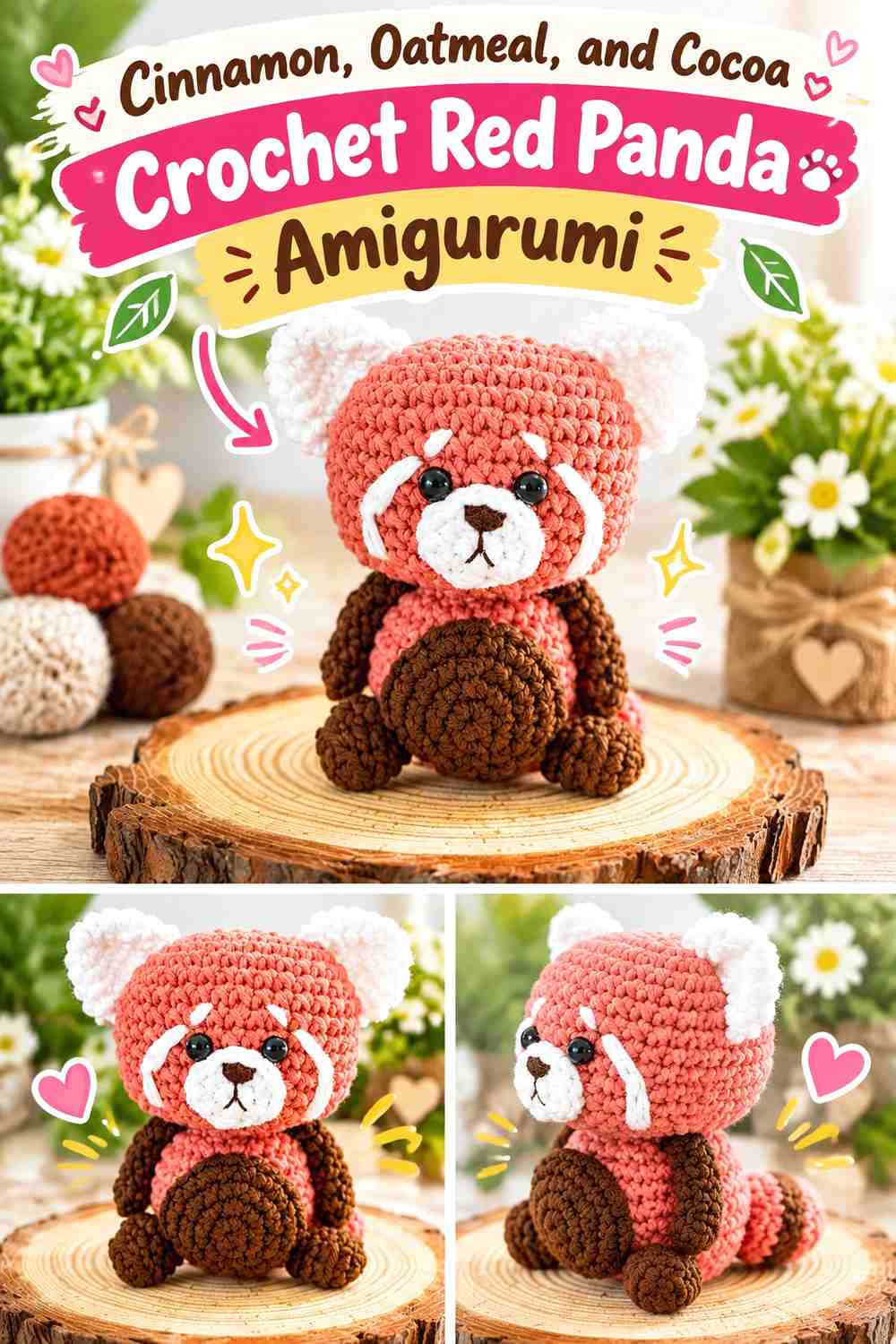
Cinnamon, oatmeal, and cocoa create a softer, lower-contrast interpretation. Cinnamon remains the main warm shade, oatmeal replaces brighter cream, and cocoa handles the darker limbs and tail definition.
The Patrigurumis tutorial is directly for a red panda amigurumi keychain and includes the body, ears, muzzle, tail, and assembly, making it a useful smaller-scale source for this adaptation. YouTube
Keep Oatmeal Noticeably Lighter Than Cinnamon on the Red Panda Face
This palette depends on subtlety, but the muzzle and cheek shapes still need to separate from the head. If the chosen oatmeal and cinnamon are too close, deepen the cinnamon rather than adding an unrelated fourth color.
Use Cocoa Sparingly Across the Cinnamon and Oatmeal Tail
Cocoa is the darkest shade, so narrow cocoa rings can have as much visual impact as wider oatmeal ones. Let cinnamon remain visible between them so the tail still connects to the body.
Creator Credit: Patrigurumis
4. Terracotta, Cream, and Black Crochet Red Panda Amigurumi
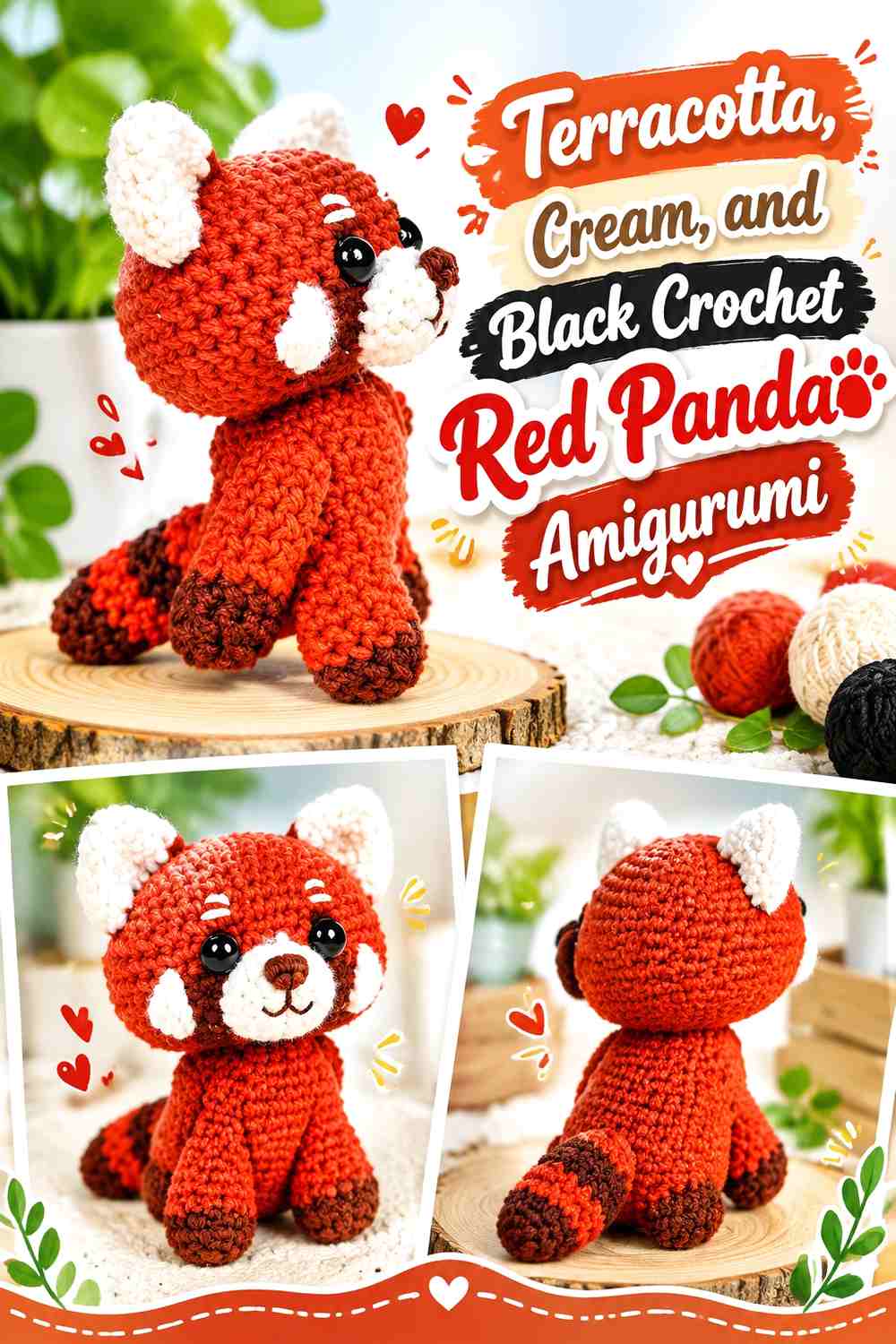
Terracotta creates an earthy body, while black gives this version a more graphic face and limb contrast. Cream should have enough surface area to stop the combination from becoming too dark, particularly around the cheeks and tail.
The Azu Xolotl source is a red panda amigurumi tutorial inspired by a red-panda character, so use its construction as a red-panda reference while keeping this terracotta palette editorially separate. YouTube
Put Cream Between Terracotta and Black on the Red Panda Face
Cream can act as a visual buffer around dark facial details. This is especially useful when black appears near the eyes or ears, where too much uninterrupted darkness can overwhelm smaller terracotta sections.
Keep Black Tail Rings Narrower Than Terracotta Bands
Black becomes prominent with relatively little area. Narrow dark rings between broader terracotta and cream sections create definition while preserving the warm overall appearance.
Creator Credit: Azu Xolotl
5. Copper, Warm White, and Walnut Crochet Red Panda Amigurumi
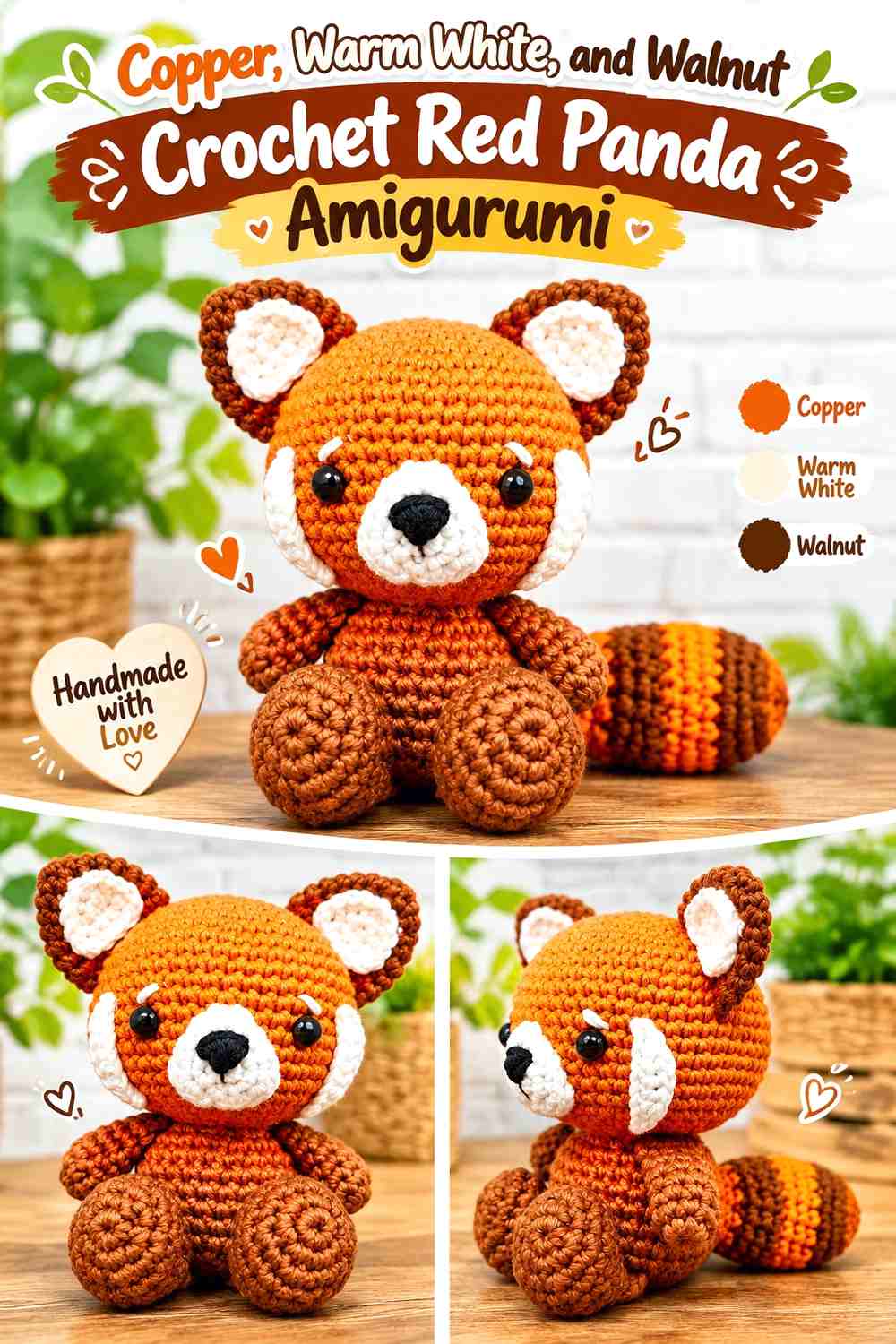
Copper gives the body a brighter warm metallic-like color direction without requiring an actual specialty yarn. Warm white lightens the face, while walnut creates softer dark details than black.
Odinka Wisanindhi’s source directly teaches a red panda amigurumi, so its animal construction is a close match even though the proposed copper, warm-white, and walnut balance is independent. YouTube
Use Warm White Generously Around the Copper Red Panda Muzzle
Copper can carry substantial visual strength, so a clear warm-white muzzle and cheek area keeps the face readable. Repeat a little warm white inside or around the ears if that helps the face feel balanced.
Repeat Walnut From the Copper Paws Into the Fluffy Tail
Using walnut both on the limbs and in selected tail bands makes the darkest shade feel intentional. Avoid introducing a completely separate tail-only dark color unless you want the tail to look more decorative than natural.
Creator Credit: Odinka Wisanindhi
6. Pumpkin Orange, Beige, and Dark Brown Crochet Red Panda Amigurumi

Pumpkin orange creates a softer autumnal body than a highly saturated red-orange. Beige gives the face lower contrast than white, and dark brown grounds the legs, ears, and tail.
The Creative Crochet tutorial directly demonstrates a red panda amigurumi character and is therefore another close construction reference for this color adaptation. YouTube
Keep Beige Large Enough Against Pumpkin Orange to Show the Face
Beige can become lost if the pumpkin shade is also very light. Compare the two after several stitches are worked, not just as loose yarn, because dense crochet can change how much separation you notice.
Give Dark Brown a Clear Job on the Pumpkin Orange Tail
Use dark brown consistently—such as on the tip and selected rings—rather than scattering tiny brown sections throughout every stripe. The tail will look more organized and its fluffy outline will remain easier to read.
Creator Credit: Creative Crochet
7. Brick Red, Cream, and Espresso Crochet Red Panda Amigurumi
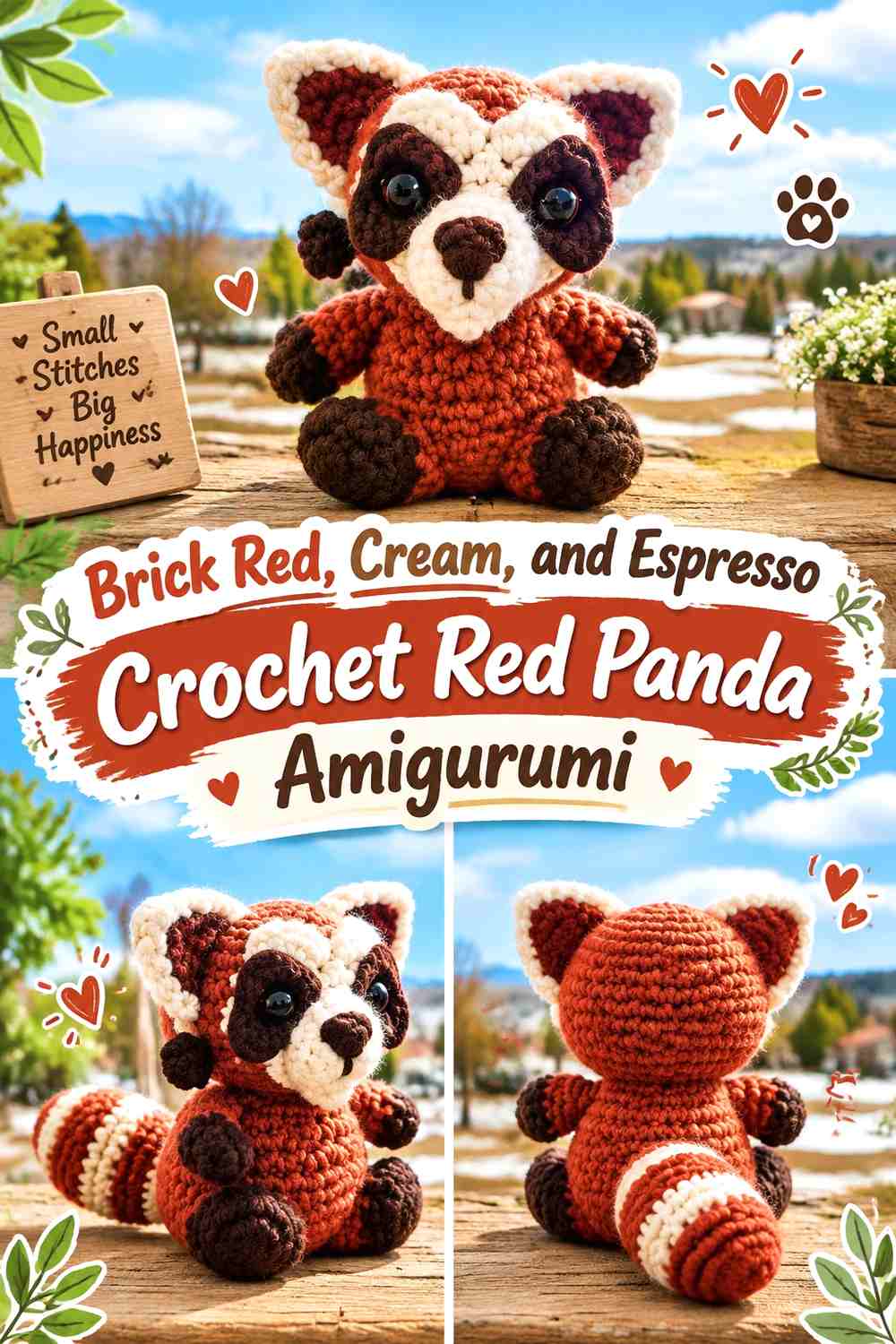
Brick red produces a deeper, more subdued red panda body. Cream becomes especially important here because the darker main shade can make facial details and tail stripes look more dramatic.
The supporting Acacia Copley tutorial is for a raccoon rather than a red panda. It is useful here as an adaptation reference because it includes a contrasting face and striped tail; keep the red-panda body colors and markings separate from the raccoon source. YouTube
Let Cream Brighten the Brick Red Red Panda Face
Use cream where you most need recognition: the muzzle, cheek patches, and selected eyebrow or ear details. Against deep brick red, those lighter shapes can carry more visual area without washing out the body color.
Alternate Brick Red and Cream Before Adding Espresso Tail Detail
Build the main tail rhythm with the two most recognizable colors first. Espresso can then define the tip or selected darker rings without turning the entire tail into a three-way stripe competition.
Creator Credit: Acacia Copley
8. Soft Rust, Blush Beige, and Charcoal Crochet Red Panda Amigurumi

Soft rust gives this red panda a muted body, while blush beige warms the light facial markings slightly. Charcoal provides cooler dark contrast on the paws and ear edges.
The Rania Crochet Guide source teaches a fox rather than a red panda, but it specifically covers color changes for a fox face and tail, making it useful as a related woodland-amigurumi adaptation reference. YouTube
Use Blush Beige to Soften the Soft Rust Red Panda Face
Keep blush beige visibly lighter than rust, but avoid letting it become so pink that the facial patches start to feel unrelated to the rest of the animal. Its role is a warm neutral, not a competing accent.
Let Charcoal Define the Soft Rust Fluffy Tail Tip
Charcoal works particularly well at the tail tip because it creates a strong finish without requiring many dark stripes throughout the tail. Repeat a smaller amount on the limbs or ears so the tip remains connected to the rest of the toy.
Creator Credit: Rania Crochet Guide
9. Burnt Sienna, Ivory, and Cocoa Crochet Red Panda Amigurumi
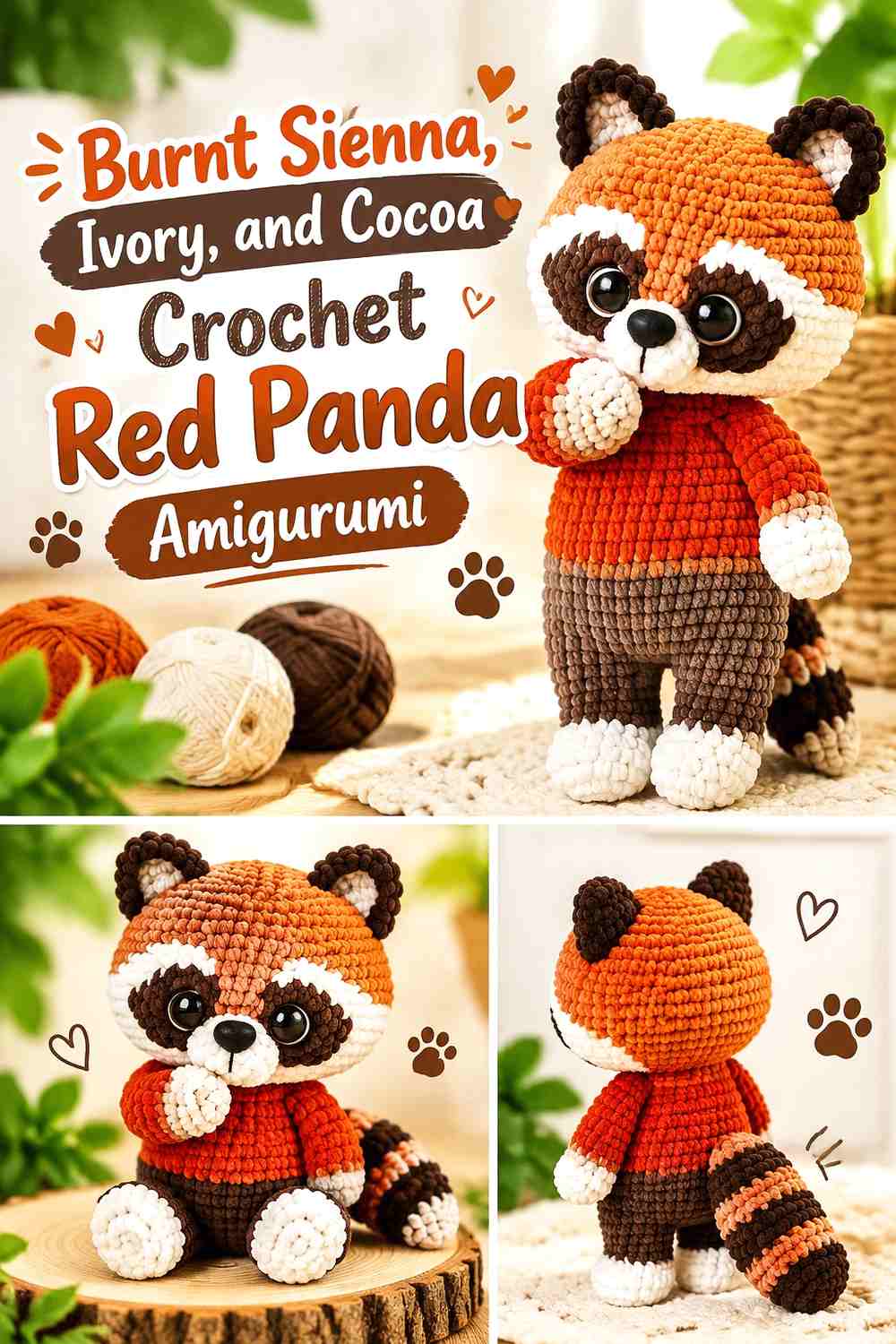
Burnt sienna sits between orange and brown, creating a more earthy red panda. Ivory should be the clearest light value, while cocoa can handle the legs, ear edging, and selected tail stripes.
The Baftani fantezi source is a raccoon plush tutorial rather than a red panda tutorial. It provides a related amigurumi reference for body shaping and contrasting animal markings, while the burnt-sienna red-panda palette remains an independent adaptation. YouTube
Keep Ivory Crisp Against Burnt Sienna on the Red Panda Cheeks
Burnt sienna can appear visually dense on a small head. Larger ivory cheek and muzzle areas keep the face from becoming one uninterrupted warm block.
Use Cocoa to Ground the Burnt Sienna Tail Without Hiding Ivory
Cocoa should reinforce the striped structure, not erase the lighter bands. Give ivory enough width that it can still be seen once the tail is stuffed or texturized.
Creator Credit: Baftani fantezi
10. Tangerine, Cream, and Deep Brown Crochet Red Panda Amigurumi

Tangerine produces the brightest body color in this collection. Cream should remain substantial enough to calm it, and deep brown gives the paws and tail a clear visual anchor.
Rose and Lily Crochet teaches a fox plush rather than a red panda, so use the source as a related plush-amigurumi construction reference. The creator’s tutorial also includes a safety note regarding plastic eyes for very young children. YouTube
Balance Bright Tangerine With Larger Cream Face Markings
A brighter orange can dominate a small amigurumi quickly. Expanding the visual share of cream around the face helps the eyes, muzzle, and ear shapes remain separated from the main coat.
Repeat Deep Brown From Tangerine Paws to the Tail
Use deep brown in more than one structural area so it does not appear as a tail-only color. Paws, ear edges, and a dark tail tip can create a consistent dark framework around the brighter body.
Creator Credit: Rose and Lily Crochet
11. Chestnut Orange, Oatmeal, and Black Crochet Red Panda Amigurumi

Chestnut orange creates a deeper warm body, oatmeal softens the pale details, and black supplies maximum definition. Because black has strong visual weight, this palette works best when oatmeal receives enough area to keep the face and tail from becoming too dark.
The Marin Crochet source teaches a fox plush with separate tail, ears, body, and assembly stages, so treat it as a related fox-amigurumi adaptation source rather than an exact red panda tutorial. YouTube
Keep Black Smaller Than Oatmeal on the Chestnut Orange Face
Use black for features that need definition, but allow oatmeal to do most of the light/dark separation. Broad black facial areas could shift the toy toward a raccoon-like mask.
Give Oatmeal Wider Tail Bands Beside Black and Chestnut Orange
A fluffy surface can make black rings appear even stronger. Wider oatmeal bands provide breathing room and keep the chestnut sections connected visually to the body.
Creator Credit: Marin Crochet
12. Muted Coral, Cream, and Chocolate Crochet Red Panda Amigurumi

Muted coral pushes the red panda toward a playful stylized palette while staying within the warm red-orange family. Cream keeps the characteristic face light, and chocolate provides a softer dark alternative to black.
The Little Crochet Farm tutorial is for a panda rather than a red panda. Its usefulness here is as an amigurumi reference for arranging strongly contrasting facial and limb colors on a compact animal form. YouTube
Keep Cream Face Areas Clear Against Muted Coral
Because muted coral is lighter than many rust shades, cream may need stronger value separation to remain visible. Compare the two colors before making every facial piece.
Use Chocolate to Make Muted Coral Tail Rings Look Softer
Chocolate creates less abrupt contrast than black. Pair it with cream bands when you want a tail that still reads as striped but does not overpower the pastel-leaning coral body.
Creator Credit: Little Crochet Farm
13. Cinnamon Rust, Pale Gray, and Charcoal Crochet Red Panda Amigurumi
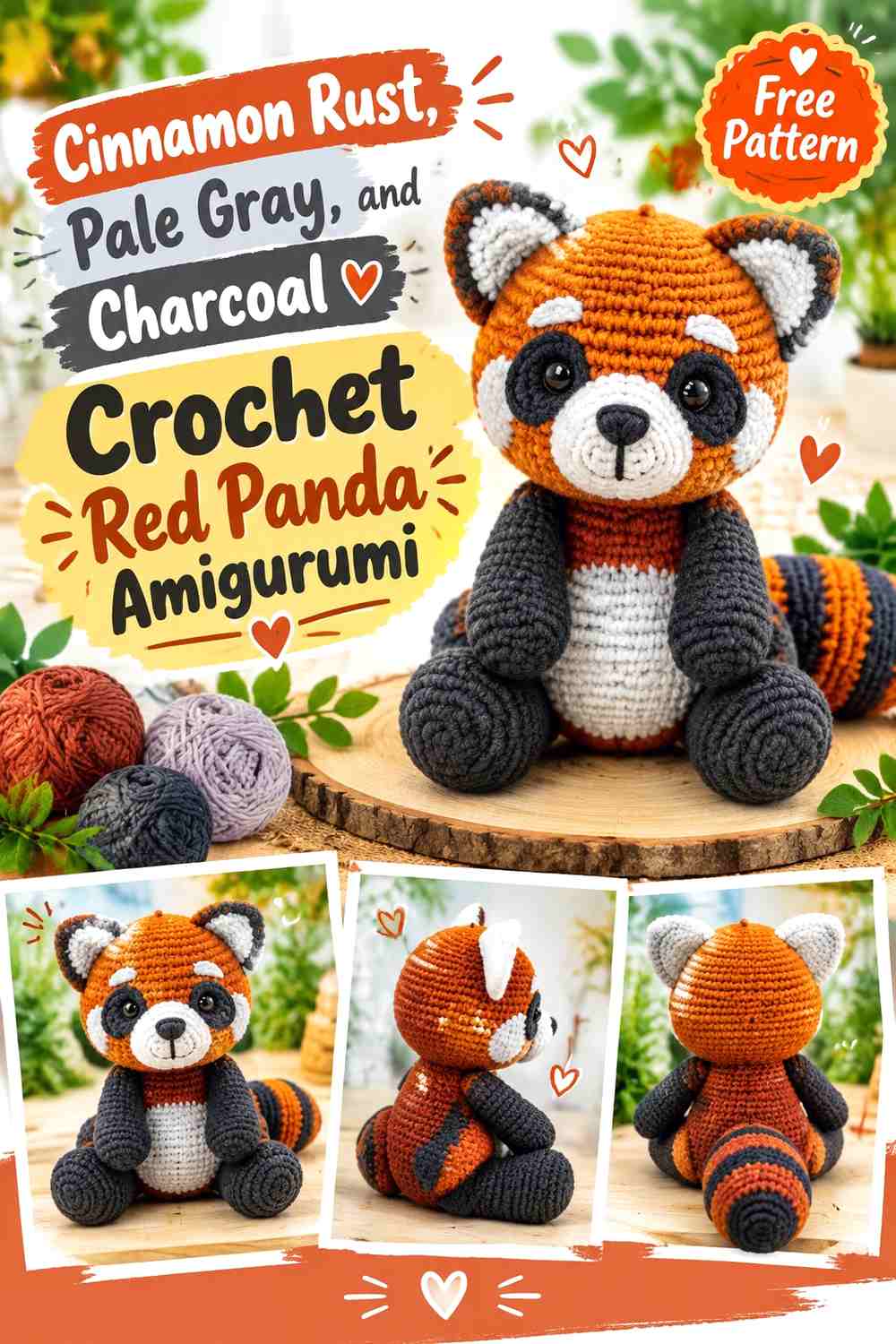
Pale gray gives this idea the coolest facial neutral in the collection. Cinnamon rust maintains the essential warm body, while charcoal keeps the paws and ear details connected to the gray rather than introducing a warm brown.
The Cuddly Stitches Craft source teaches a panda plushie rather than a red panda, so use it as a related black-and-light facial-contrast reference while adapting the animal colors and tail separately. YouTube
Check Pale Gray Against Cinnamon Rust Before Crocheting the Face
A very medium gray may not be light enough to define the face. Choose pale gray for its role as the lighter marking, not simply because it is different in hue from rust.
Alternate Cinnamon Rust and Pale Gray on the Charcoal-Tipped Tail
Cinnamon and pale gray can create the main stripe rhythm. Charcoal then works as a controlled final tip or occasional narrow band, echoing the limbs without dominating the tail.
Creator Credit: Cuddly Stitches Craft
14. Terracotta, Ivory, and Mocha Crochet Red Panda Amigurumi
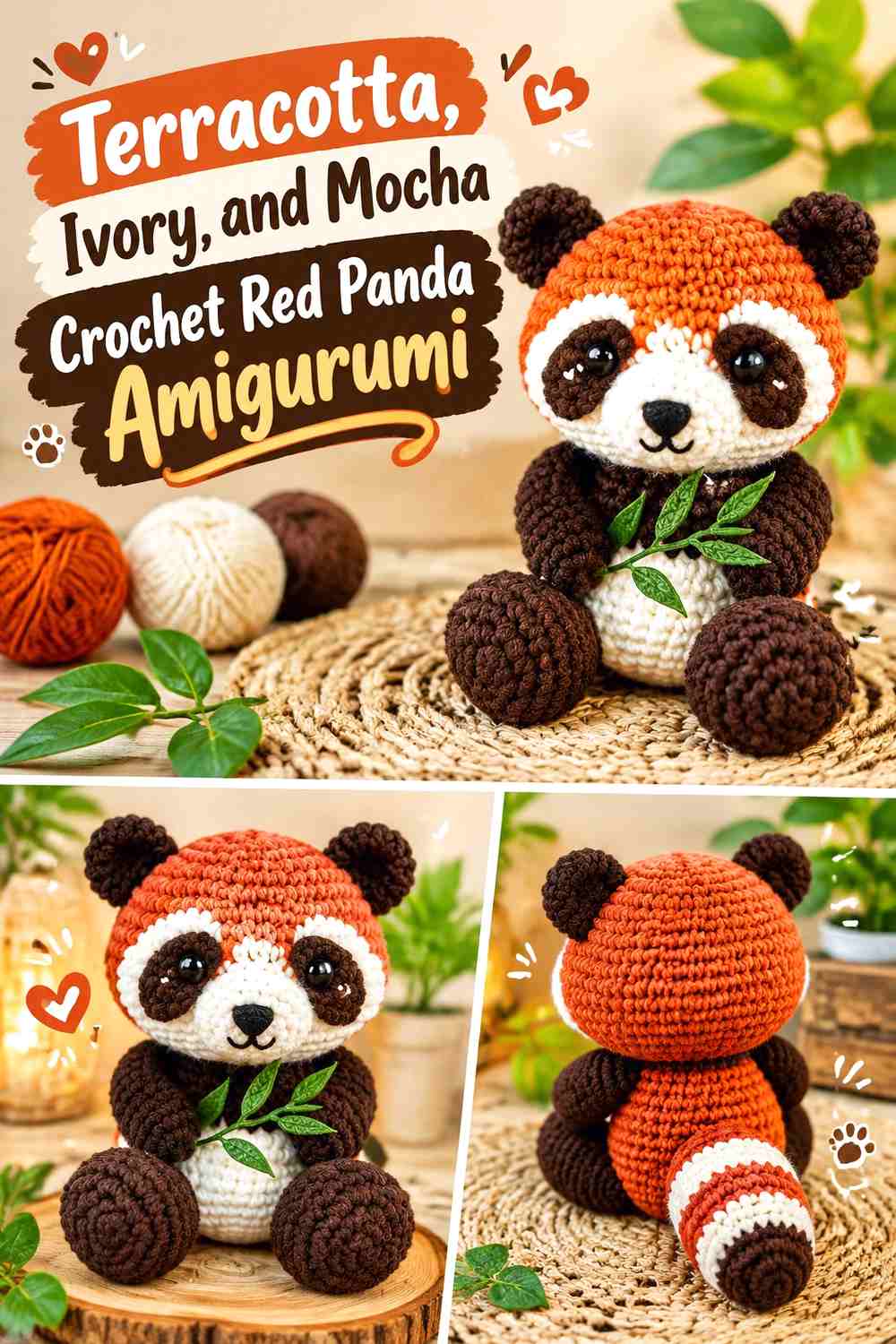
Terracotta and mocha form a warm tonal pair, while ivory provides the necessary lighter break. This palette is useful when you want the amigurumi to stay earthy rather than using a near-black dark shade.
The Stefy – Art source is a panda tutorial, not a red panda tutorial. It can serve as a related reference for separating dark and light amigurumi features, while the terracotta body and striped red-panda tail are separate adaptations. YouTube
Let Ivory Carry the Highest Contrast Against Terracotta
Because mocha and terracotta are both warm mid-to-dark shades, ivory should remain the clear light value. Use it consistently on the muzzle, cheeks, and the lightest tail bands.
Keep Mocha Tail Rings Distinct From Terracotta
If mocha and terracotta are too close in value, their tail bands may merge. Either deepen the mocha or place ivory between selected warm sections instead of relying only on subtle hue differences.
Creator Credit: Stefy – Art
15. Amber Orange, Cream, and Espresso Crochet Red Panda Amigurumi
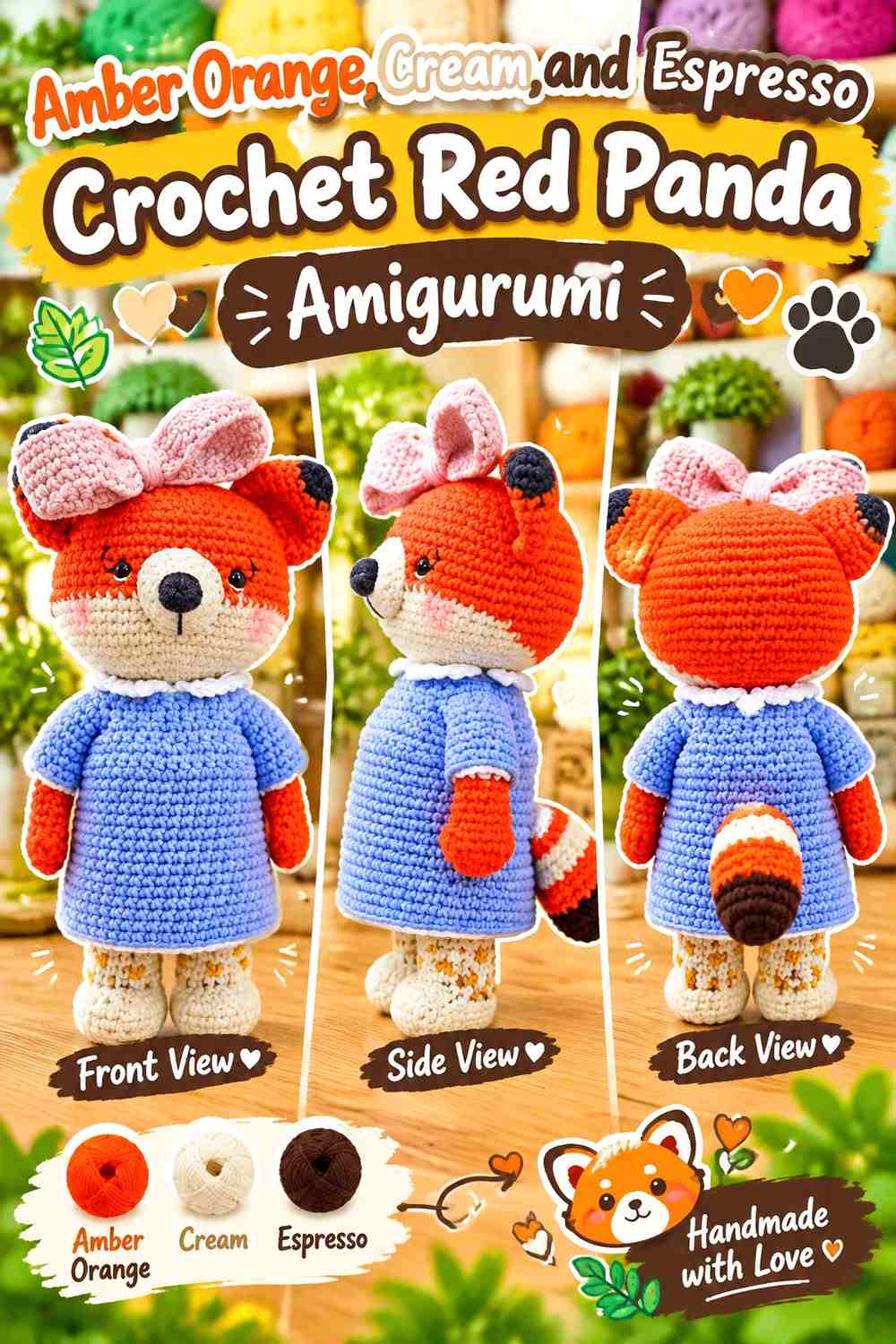
Amber orange creates a golden warm body, cream supplies the face and lighter tail rings, and espresso provides the deepest structural color. The brighter main shade makes this version particularly dependent on balanced dark details.
The Elise Rose Crochet source teaches a fox with a warm body, lighter facial sections, dark details, and a tail, so it works as a related woodland-amigurumi adaptation reference rather than an exact red panda source. YouTube
Keep Cream Large Enough Against Amber Orange Around the Muzzle
Amber can sit fairly close to cream in lightness depending on the yarns chosen. Check the contrast from normal viewing distance, especially around smaller eyebrow or cheek shapes.
Use Espresso to Anchor the Amber Orange Fluffy Tail
A dark espresso tip can balance the bright body and provide a visual stopping point. Repeat espresso on the paws or ear edges so the tail does not look heavier than the rest of the animal.
Creator Credit: Elise Rose Crochet
16. Redwood, Oatmeal, and Dark Brown Crochet Red Panda Amigurumi

Redwood creates the deepest red-led body in the list. Oatmeal gives the face softer contrast than bright white, while dark brown continues the warm palette through the paws, ears, and tail.
The Amigu World source teaches a baby fox amigurumi in warm, light, and dark colors, so it is best treated as a related fox-construction reference for this red-panda adaptation. YouTube
Use Oatmeal to Lift the Redwood Red Panda Face
Deep redwood needs a clearly lighter face color so the small facial forms do not disappear. Oatmeal can cover the larger muzzle and cheek sections while maintaining the muted woodland direction.
Keep Dark Brown Rings Broad Enough Against Redwood
If both dark shades are very close, tiny bands may be difficult to distinguish. Give dark brown enough width—or insert oatmeal between some bands—to make the striped tail obvious.
Creator Credit: Amigu World
17. Soft Rust, Warm Beige, and Charcoal Crochet Red Panda Amigurumi

Soft rust, warm beige, and charcoal create a balanced final palette: rust gives the body a muted warm lead, beige softens the face, and charcoal provides cooler dark definition. This combination suits a fluffy tail where the color transitions should remain visible without being extremely stark.
The MokotCrochet source teaches a fox plushie and includes a tail as part of the construction. Use it as a related animal-plush reference while keeping the red-panda face markings and striped tail treatment independent. YouTube
Let Warm Beige Soften the Soft Rust Red Panda Markings
Use beige on the face where bright white would create more contrast than you want. Keep the beige clearly lighter than rust so the cheek and muzzle shapes do not vanish into the head.
Finish the Soft Rust Fluffy Tail With Controlled Charcoal Bands
Charcoal can appear in narrow repeated bands or primarily at the tip. Keep the rust and beige portions wider if you are adding significant surface texture, since the darker color can become visually dominant once the tail looks fuller.
Creator Credit: MokotCrochet
Which Crochet Red Panda Palette Works Best for a Fluffy Tail?
For the clearest classic red-panda look, rust orange with cream and espresso, burnt orange with ivory and charcoal, or copper with warm white and walnut keeps the color hierarchy straightforward. These palettes provide a strong difference between the warm body, pale facial markings, and dark limbs.
For a softer result, cinnamon with oatmeal and cocoa, pumpkin with beige and dark brown, terracotta with ivory and mocha, or soft rust with warm beige and charcoal reduces the jump between the three colors.
Brick red, redwood, and chestnut make the deepest body colors. Tangerine and amber create the brightest. Pale gray introduces the coolest face treatment, while blush beige and oatmeal provide warmer alternatives to cream.
Whatever combination you choose, judge the tail independently before attaching it. A fluffy striped tail can become the most visually prominent part of the finished amigurumi, so its darkest shade may need less surface area than you first expect.
Conclusion
A successful crochet red panda color scheme should make three areas work together: the warm body, the contrasting face, and the striped fluffy tail. Changing only one of those relationships can give the same general amigurumi concept a noticeably different appearance.
Choose rust, cinnamon, copper, or terracotta when you want an earthy red panda. Tangerine or amber creates a brighter interpretation, while brick red and redwood make the body richer and deeper. Cream and ivory give the strongest light markings; oatmeal, beige, and pale gray create softer alternatives.
For the tail, start with the same warm and light colors already visible on the body, then decide how much espresso, cocoa, dark brown, charcoal, or black is actually needed. Follow each creator’s tutorial for the construction it demonstrates and treat the palette, stripe placement, and any added fluffy-tail treatment as separate adaptation decisions.
Frequently Asked Questions
What colors should I use for a crochet red panda amigurumi?
A warm rust, orange, cinnamon, copper, or terracotta body works well with a lighter cream, ivory, oatmeal, or beige face and darker brown, charcoal, or black details. The exact shades can vary as long as the face markings and tail stripes remain distinguishable.
How can I make a crochet red panda tail look fluffier without losing the stripes?
Keep the color bands broad enough to remain recognizable after texture is added. Test any fuzzy yarn, looped surface, or brushing technique on a sample first, because increased surface texture can soften the boundary between neighboring colors.
Should the darkest color cover every other red panda tail stripe?
Not necessarily. The tail can alternate mainly between the warm body color and the light face color, with the darkest shade used only for selected bands or the tip. This keeps dark paws and ears from competing with an equally dark tail.
How do I keep cream facial markings visible on a rust crochet red panda?
Compare the two yarn colors for light/dark value before making all the face pieces. If cream does not separate clearly enough from the rust, deepen the body shade or choose a lighter neutral rather than adding more decorative colors.
Can I use gray instead of brown on a crochet red panda?
Yes. Charcoal or pale gray can give the toy a cooler interpretation while still providing dark and light contrast. Keep the warm rust or orange body dominant so the overall red-panda color direction remains clear.
Should a fluffy red panda tail match the body exactly?
Repeating the body color makes the tail feel connected, but it does not need to use identical color proportions. The tail can carry more cream, darker rings, or a contrasting tip as long as at least one major body color repeats through it.
What should I check before adapting a fox, panda, or raccoon tutorial into a red panda?
Use the related tutorial only for the construction principles it actually demonstrates. Plan the red-panda-specific color placement separately, particularly the lighter facial markings and ringed tail, and avoid assuming a fox, raccoon, or panda tutorial already provides those features.