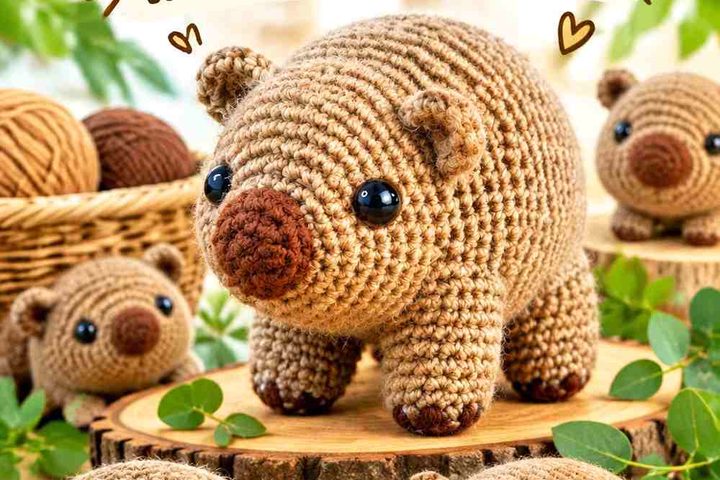
A chubby crochet hedgehog gives woodland colors two very different surfaces to work with. The rounded face and belly usually look clearer in a lighter, smoother shade, while the larger back can carry walnut, chestnut, moss, charcoal, rust, or another deeper color that emphasizes the hedgehog’s textured spines.

That light-dark relationship is more important than using realistic brown alone. A cream face against cocoa spines produces strong definition, while mushroom and walnut create a quieter tonal hedgehog. Moss, ochre, clay, and sage can push the same chubby shape toward a more stylized woodland palette without losing its forest-inspired character.
The tutorials below all support hedgehog amigurumi construction, including plush, textured, miniature, low-sew, bobble-spine, and ragdoll forms. The proposed palettes are independent adaptations; the credited creators are not being presented as the source of these exact color combinations.
Quick List
- Chestnut, Oatmeal, and Espresso Crochet Chubby Hedgehog Amigurumi
- Moss Green, Mushroom, and Cocoa Crochet Chubby Hedgehog Amigurumi
- Russet, Cream, and Walnut Crochet Chubby Hedgehog Amigurumi
- Taupe, Bark Brown, and Ivory Crochet Chubby Hedgehog Amigurumi
- Sage, Oatmeal, and Charcoal Crochet Chubby Hedgehog Amigurumi
- Ochre, Camel, and Espresso Crochet Chubby Hedgehog Amigurumi
- Clay, Sand, and Dark Brown Crochet Chubby Hedgehog Amigurumi
- Forest Green, Beige, and Cocoa Crochet Chubby Hedgehog Amigurumi
- Cinnamon, Linen, and Walnut Crochet Chubby Hedgehog Amigurumi
- Mushroom, Chestnut, and Ecru Crochet Chubby Hedgehog Amigurumi
- Olive, Warm Beige, and Espresso Crochet Chubby Hedgehog Amigurumi
- Cocoa, Cream, and Rust Crochet Baby Hedgehog Ragdoll Amigurumi
- Charcoal Brown, Oatmeal, and Muted Moss Crochet Chubby Hedgehog Amigurumi
Keep the Crochet Hedgehog Face Lighter Than the Woodland Spines
The face is where small details such as the eyes, nose, ears, and mouth need to remain easy to see. A lighter oatmeal, cream, sand, mushroom, or beige face gives those details more visual space than a body worked entirely in dark brown.
The textured back can then take the deeper shade. Chestnut, espresso, walnut, charcoal brown, moss, or forest green creates enough contrast to separate the spine area from the face and belly.
For a softer woodland result, reduce the difference rather than eliminating it. Mushroom with chestnut looks quieter than cream with espresso, but the two areas can still remain visibly distinct.
Use Woodland Colors to Protect the Chubby Crochet Hedgehog Shape
A chubby hedgehog works because the body reads as a compact rounded mass. Too many small color sections can interrupt that silhouette and make the toy look patchy rather than pleasantly plump.
Keep one body or spine color broad. Use a second shade for the face and belly, then reserve a third color for small places such as the paws, ear interiors, nose area, an accessory, or a restrained section of the spines.
Texture also changes how color appears. Loop stitches, fluffy yarn, bobbles, and raised spines naturally create shadows, so they often need fewer additional colors than a smooth crochet back.
Choose Woodland Accents That Do Not Compete With the Crochet Hedgehog Face
Rust, moss, ochre, clay, muted green, and deep red-brown can all add woodland character, but the accent should have a clear purpose.
A moss-green bow, rust scarf, ochre ear detail, or clay-colored paw can be enough. If the accent spreads across the face, feet, ears, and back at the same time, it can compete with the important face-versus-spine contrast.
When in doubt, keep the light face and dark back stable first. Add the woodland accent only after those two areas already read clearly.
1. Chestnut, Oatmeal, and Espresso Crochet Chubby Hedgehog Amigurumi

Chestnut is a natural choice for the broad textured back, while oatmeal gives the face and belly a softer light field. Espresso belongs in the smallest details, where it can define the nose, paws, or selected spine accents without making the entire hedgehog too dark.
This palette suits a very rounded plush because the chestnut back creates visual weight while the oatmeal face keeps the front open and expressive.
Let Chestnut Cover Most of the Oatmeal Crochet Hedgehog Spines
Keep chestnut broad across the back rather than interrupting it with repeated oatmeal stripes. The uninterrupted dark field allows looped, bobbled, or fluffy spine texture to remain the main feature.
Oatmeal should begin around the face transition so the front of the toy looks clearly separate from the textured back.
Use Espresso Sparingly Around the Oatmeal Crochet Hedgehog Face
Espresso works best on the nose and other tiny dark details. Because oatmeal is already light, only a small amount is needed to create definition.
If espresso also appears on the feet, keep those areas compact so they do not visually pull attention away from the rounded chestnut body.
Creator Credit: Rose and Lily Crochet
2. Moss Green, Mushroom, and Cocoa Crochet Chubby Hedgehog Amigurumi
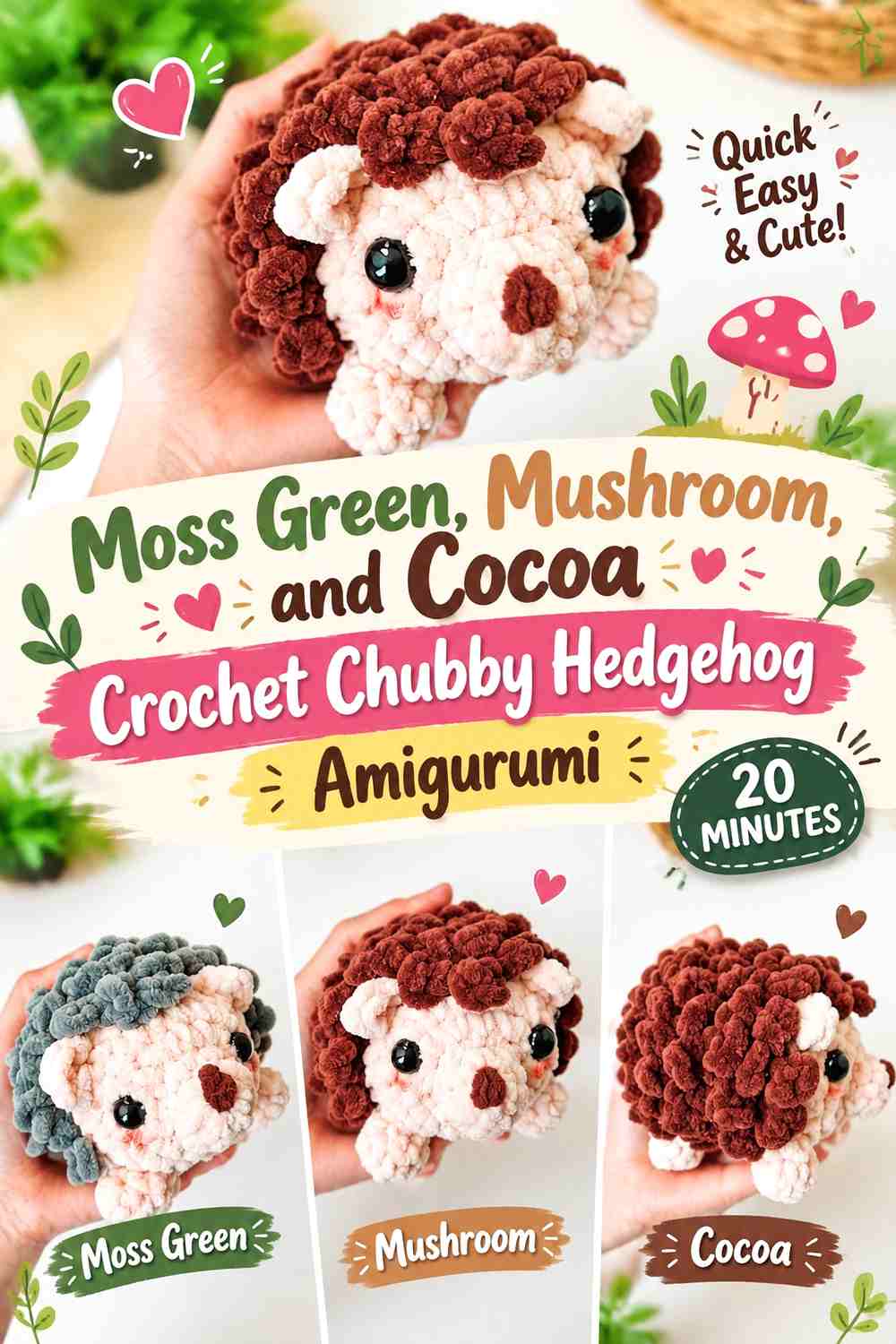
Moss gives the textured back a more stylized forest direction, while mushroom creates a neutral face and belly. Cocoa provides a warmer dark detail color so the finished hedgehog does not rely entirely on green.
The palette works particularly well when you want woodland color without making the animal look like a literal brown hedgehog.
Keep Moss Green Broad Across the Mushroom Crochet Hedgehog Back
Use moss as a large uninterrupted spine field. The green already creates a distinctive direction, so it does not need several extra colors mixed into the texture.
If the hedgehog will sit among green nursery or shelf decor, make sure mushroom reaches enough of the front and sides to keep the silhouette visible.
Let Cocoa Ground the Moss Green Crochet Hedgehog Details
Cocoa can define the nose, feet, or a small ear edge while remaining warmer than black. This keeps the forest palette connected to bark and earth tones.
Avoid adding cocoa across large patches of the moss back, where it could compete with the primary spine color.
Creator Credit: Amigurumi Forge
3. Russet, Cream, and Walnut Crochet Chubby Hedgehog Amigurumi
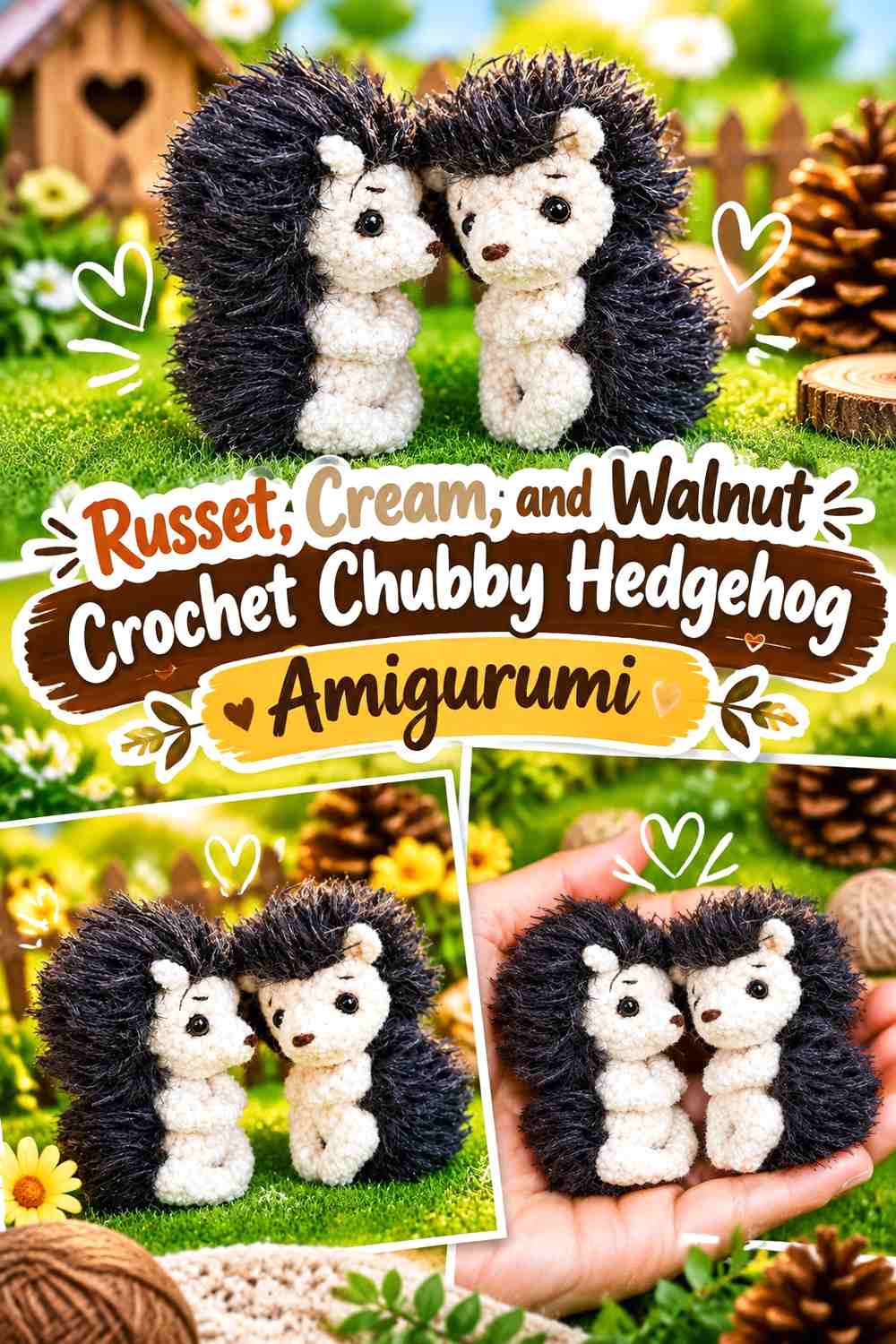
Russet gives the spines a red-brown autumn direction, cream keeps the face bright, and walnut adds a darker finishing shade. The contrast is strong enough for a compact miniature hedgehog, where small facial areas need to stay clear.
Use russet as the obvious lead color rather than dividing the back equally between russet and walnut.
Let Russet Make the Cream Crochet Hedgehog Back Look Fuller
A single broad russet spine area visually reinforces the rounded body. Cream at the front creates a clean break where the face begins.
For a smaller hedgehog, avoid very narrow alternating bands because the color changes can visually crowd the already compact shape.
Use Walnut to Define the Cream Crochet Hedgehog Muzzle
Walnut gives the nose and small facial accents enough depth without the harsher effect of pure black. It also relates naturally to the warmer russet back.
If you repeat walnut on the paws, keep cream visible between those dark areas and the russet body.
Creator Credit: Miniature Crochet by Microtoysby
4. Taupe, Bark Brown, and Ivory Crochet Chubby Hedgehog Amigurumi
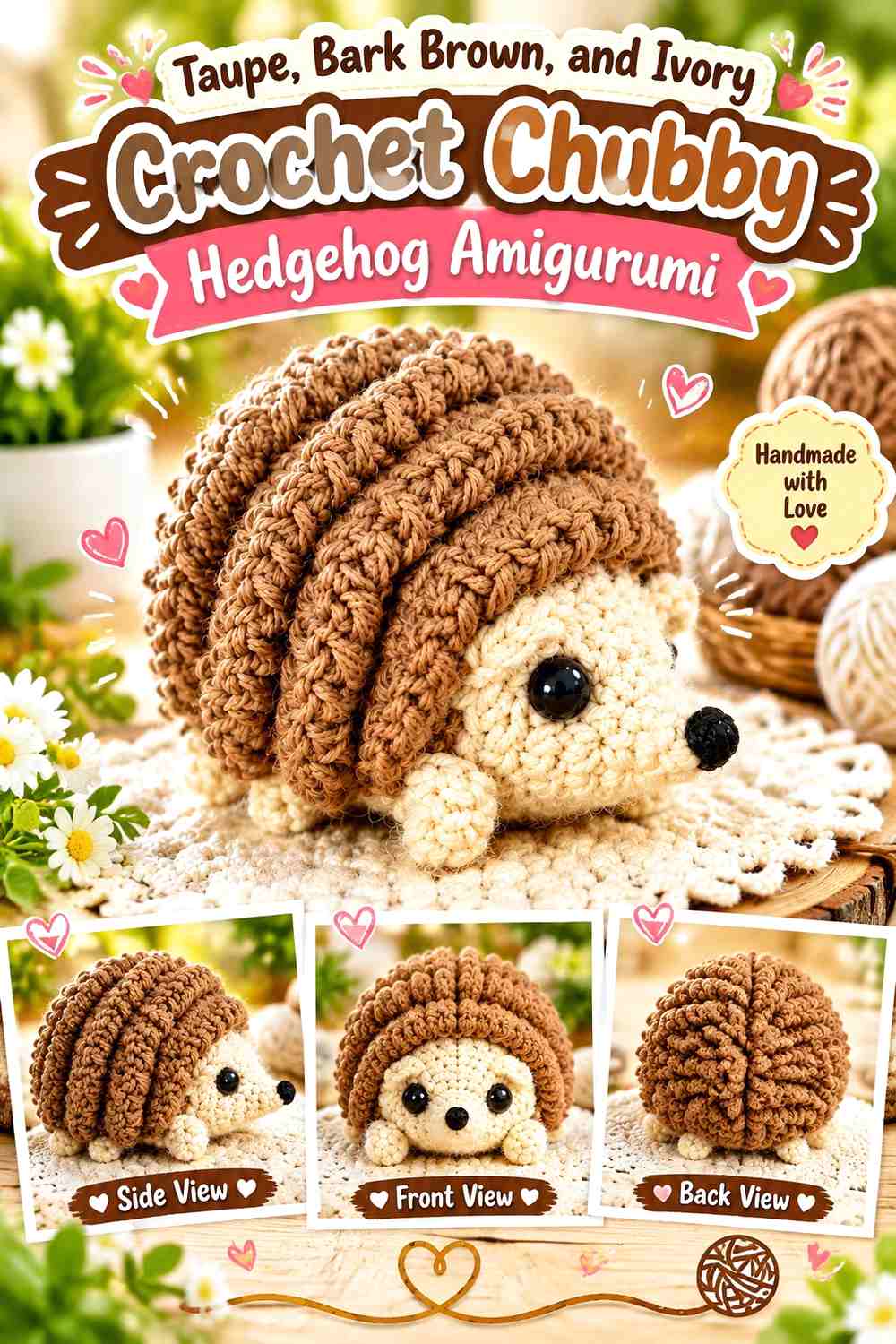
Taupe and bark brown create a softer tonal woodland palette, while ivory prevents the face from becoming visually flat. Bark brown should carry the textured spine section, taupe can bridge the transition, and ivory can remain concentrated around the muzzle and belly.
This combination suits a hedgehog where raised or fluffy spines already provide plenty of surface interest.
Use Bark Brown to Deepen the Taupe Crochet Hedgehog Spines
Bark brown can cover the main textured back while taupe appears near the transition into the smoother body. The two related browns create less dramatic contrast than espresso and cream.
If the spine texture starts looking indistinct, deepen the bark brown rather than introducing another hue.
Keep Ivory Focused on the Taupe Crochet Hedgehog Face
Ivory is most useful where eyes, nose, and mouth details need visual separation. Extending it too far across the body can reduce taupe to a narrow transitional strip.
A warmer ivory keeps the whole palette woodland-focused instead of pushing it toward stark monochrome.
Creator Credit: Les Mignonneries de Steph au crochet
5. Sage, Oatmeal, and Charcoal Crochet Chubby Hedgehog Amigurumi

Sage turns the spine area into a muted botanical feature, oatmeal keeps the face neutral, and charcoal supplies the darkest accents. Because sage and oatmeal are both quiet colors, charcoal is valuable in very small amounts around the face.
Keep sage on the back rather than scattering it over the feet and muzzle as well.
Let Sage Lead the Oatmeal Crochet Hedgehog Spine Area
A large sage spine section creates a recognizable forest-inspired palette while preserving the chubby silhouette. Oatmeal should remain smooth and uninterrupted through most of the face.
If the sage is very pale, compare it with oatmeal before starting; the two shades still need enough separation for the back-to-face transition to show.
Reserve Charcoal for the Oatmeal Crochet Hedgehog Features
Charcoal works well for a nose or tiny embroidered details because it gives the light face a clear focal point.
Keep charcoal away from broad spine areas unless the sage needs a deliberately darker accent; otherwise the three-color hierarchy becomes less clear.
Creator Credit: atolye_masal
6. Ochre, Camel, and Espresso Crochet Chubby Hedgehog Amigurumi

Ochre brings a golden woodland tone to the back, camel keeps the face warm, and espresso adds the deepest detail color. The palette feels more autumnal than classic gray-brown without becoming overly bright.
Give ochre enough uninterrupted space for the back to remain the visual anchor.
Keep Ochre Across the Main Camel Crochet Hedgehog Back
Use ochre broadly rather than alternating it with camel through every textured round. The stronger golden shade will already attract attention, so simple placement works better.
Camel can take over at the forehead, muzzle, belly, and other smooth front areas.
Let Espresso Sharpen the Camel Crochet Hedgehog Face
Espresso can define the nose and tiny facial details while also appearing in restrained paw accents. Its darkness provides the contrast that the similar warm hues of ochre and camel do not.
If espresso starts dominating, reduce it to the face and let the body return to the two warmer colors.
Creator Credit: Crochet Stitch Witch
7. Clay, Sand, and Dark Brown Crochet Chubby Hedgehog Amigurumi

Clay gives the spines a muted earth-red direction, sand opens the face, and dark brown supplies a familiar woodland anchor. This combination works especially well on a soft, squishy hedgehog where broad color areas help preserve the rounded form.
Sand should remain noticeably lighter than clay so the face does not disappear into the back.
Let Clay Emphasize the Sand Crochet Hedgehog’s Rounded Back
A solid clay back creates one large warm shape behind the lighter face. The transition itself becomes part of the hedgehog’s design without needing extra stripes.
If clay is close in value to sand, choose a slightly deeper clay rather than brightening the sand to pure white.
Use Dark Brown Around the Sand Crochet Hedgehog Nose and Paws
Dark brown gives the front enough definition while remaining warmer than black. The paws can repeat that color in small amounts to connect the face and lower body.
Keep the ear area mostly sand or clay so too many dark points do not crowd the head.
Creator Credit: The Design Hub
8. Forest Green, Beige, and Cocoa Crochet Chubby Hedgehog Amigurumi

Forest green creates the deepest botanical palette in the collection. Beige keeps the face light enough to balance it, while cocoa gives the nose and small body details a warm neutral connection.
Because forest green is visually heavy, it should remain mostly behind the face rather than wrapping around every part of the toy.
Keep Forest Green Behind the Beige Crochet Hedgehog Face
Use forest green across the spine-covered back and let beige claim the full muzzle and front body area. That placement keeps the toy recognizable even with a stylized dark-green coat.
A narrow green intrusion around the forehead can connect the two sections without overwhelming the face.
Let Cocoa Warm the Beige and Forest Green Crochet Hedgehog
Cocoa is useful when black would create too sharp a contrast against beige. It can handle the nose, feet, or small ear details.
If the body already includes substantial dark green, avoid making every paw cocoa; enough beige should remain visible around the lower silhouette.
Creator Credit: Heavenly Crochet Amigurumi
9. Cinnamon, Linen, and Walnut Crochet Chubby Hedgehog Amigurumi

Cinnamon provides a rich but softened warm spine color, linen gives the face an understated light neutral, and walnut creates depth in the smallest details.
This palette is useful for a small hedgehog because the three shades have clearly different roles without requiring a large number of color changes.
Let Cinnamon Dominate the Linen Crochet Hedgehog Body
Keep cinnamon across most of the textured back so the chubby shape remains visually continuous. Linen can create the smoother front and underside.
If you want a darker autumn direction, deepen cinnamon toward rust while keeping linen unchanged.
Use Walnut to Frame the Linen Crochet Hedgehog Features
Walnut works well at the nose and can repeat in tiny feet or ear accents. Its warmth makes the transition from cinnamon to linen feel more connected than black might.
Avoid broad walnut patches along the spine area, where they could turn the simple woodland palette into a busier brown mix.
Creator Credit: Let’s Crochet
10. Mushroom, Chestnut, and Ecru Crochet Chubby Hedgehog Amigurumi

Mushroom provides the medium neutral, chestnut supplies the dark spines, and ecru creates the lightest face highlights. The result is a layered brown-neutral palette that relies on value rather than strong hue differences.
Chestnut should remain behind the smoother front, while ecru can be used only where the face needs extra light.
Keep Chestnut Distinct From the Mushroom Crochet Hedgehog Front
Use chestnut across the textured spine region and mushroom for the broader face and belly. The two shades should be different enough that the transition remains obvious even under warm indoor lighting.
If they merge, shift chestnut darker rather than adding another spine color.
Use Ecru Only Where the Mushroom Crochet Hedgehog Needs More Light
A small ecru muzzle or lower-face area can help dark features remain visible. Keeping it limited preserves mushroom as the main front-body color.
If the toy already has a very light mushroom shade, ecru may not be necessary everywhere—use it only where it improves definition.
Creator Credit: Double Dutch Crochet
11. Olive, Warm Beige, and Espresso Crochet Chubby Hedgehog Amigurumi
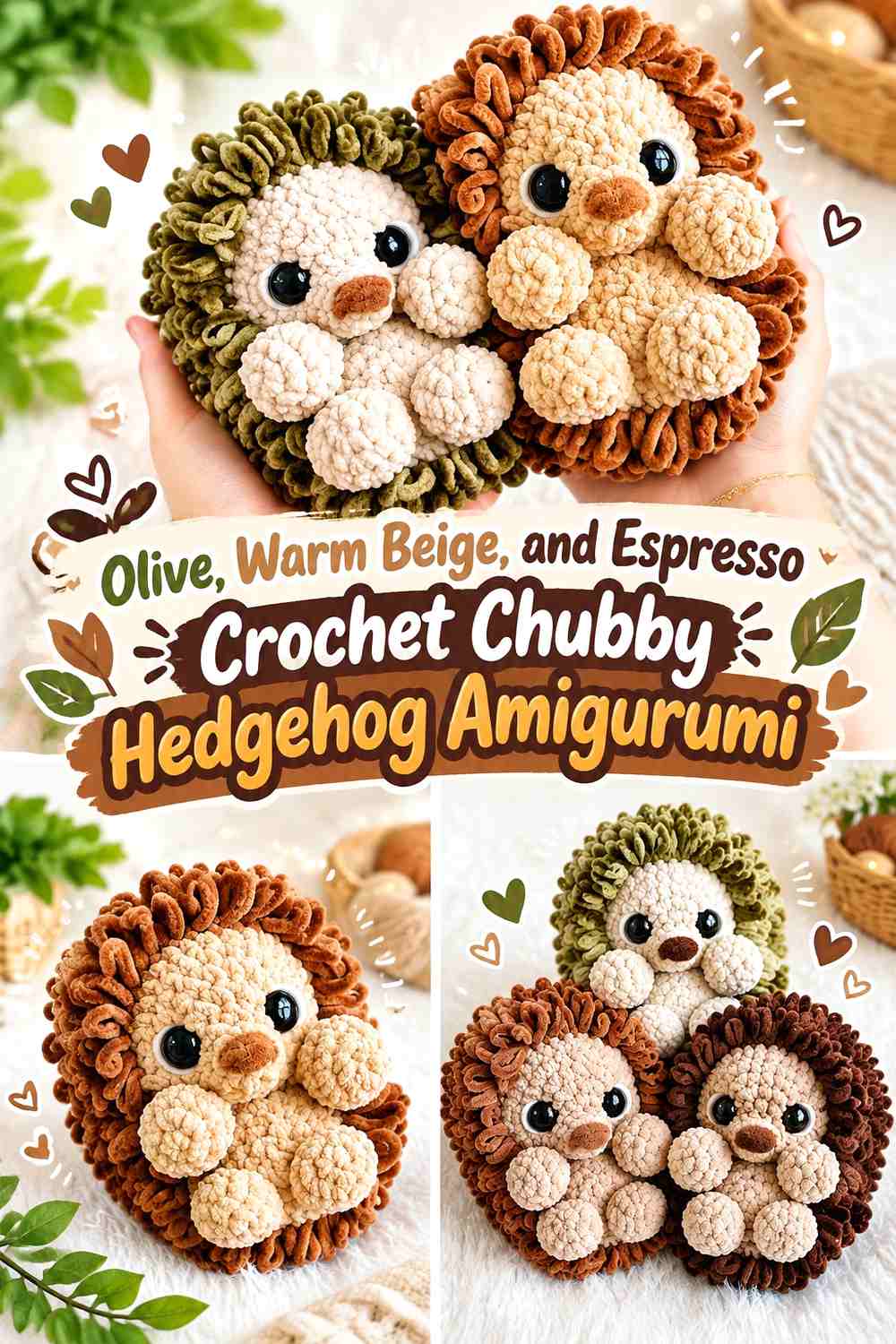
Olive gives the rounded hedgehog a strong woodland character, while warm beige keeps the face familiar and soft. Espresso provides the deepest accent without introducing a cold black.
This palette is especially effective on a low-sew plush because large uninterrupted body sections let the colors do more work.
Let Olive Cover the Broad Warm Beige Crochet Hedgehog Back
Use olive over the main spine area and avoid breaking it into several greens. One consistent olive creates a stronger forest direction and keeps the plush silhouette clean.
Warm beige can continue through the face, belly, and small limbs for a clear two-zone body.
Use Espresso to Define the Warm Beige Crochet Hedgehog Face
Espresso can give the nose and facial embroidery enough contrast while staying related to the earthy palette.
If you want a softer face, choose a deep cocoa instead, but keep it noticeably darker than warm beige.
Creator Credit: Crochet with Kyra
12. Cocoa, Cream, and Rust Crochet Baby Hedgehog Ragdoll Amigurumi
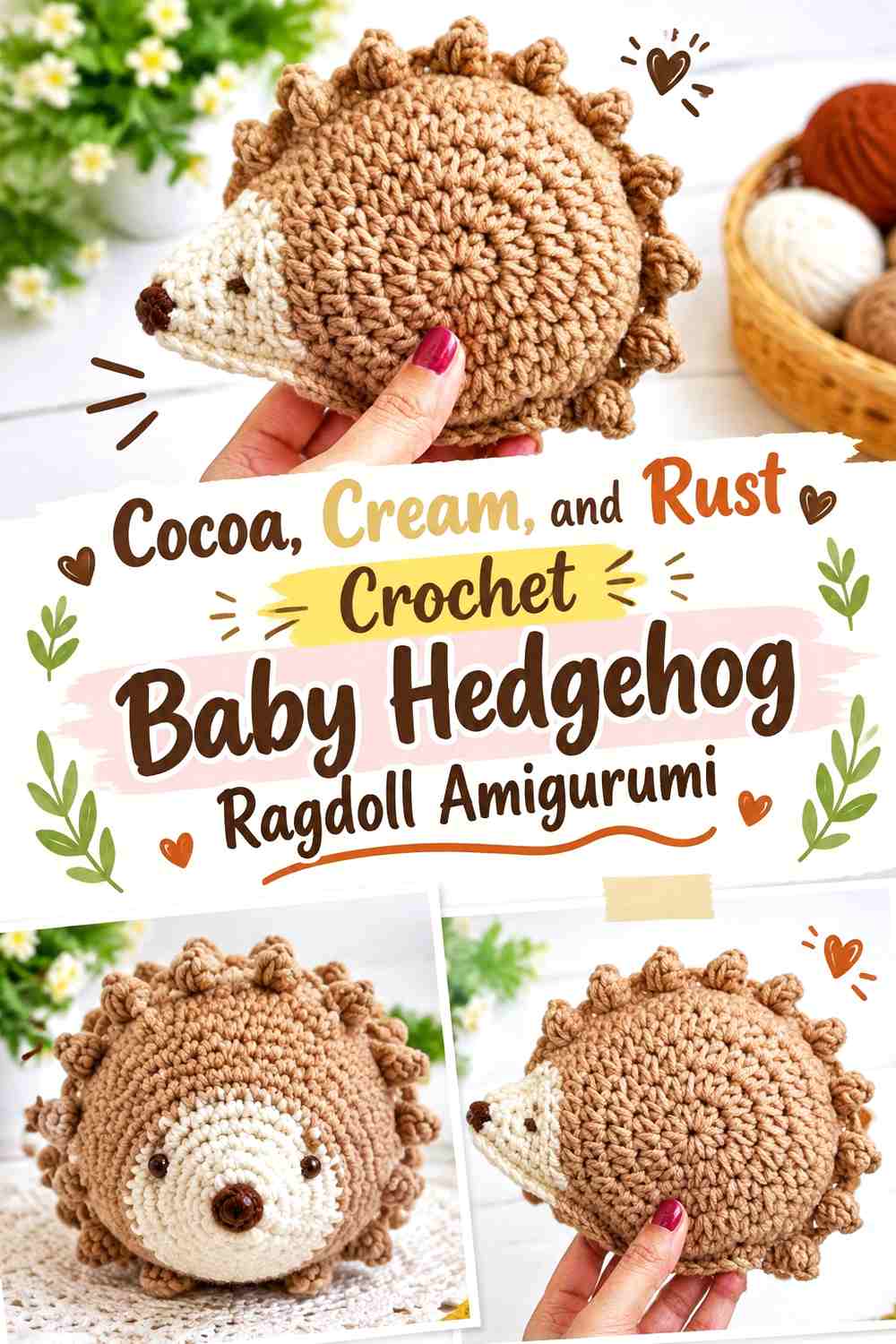
A ragdoll-style hedgehog has a flatter silhouette than a round plush, so color boundaries become especially important. Cocoa can form the broad body, cream can define the pointed face, and rust can provide a small woodland accent.
Keep rust away from the entire perimeter so the characteristic cocoa-and-cream division remains easy to read.
Let Cocoa Form the Main Cream Crochet Baby Hedgehog Ragdoll Body
Use cocoa broadly across the body and spine area while keeping cream concentrated at the face. On a flatter amigurumi, this clear boundary helps the hedgehog shape remain obvious.
A medium cocoa can also keep the project from looking too heavy if the finished ragdoll is small.
Keep Rust Small Beside the Cream Crochet Hedgehog Face
Rust can appear as a bow, tiny cheek detail, or another small decorative accent if desired. It should not compete with the cream face or turn into a third major body section.
If you prefer a more natural woodland palette, simply leave rust out and keep the cocoa-and-cream contrast.
Creator Credit: Crochet For You
13. Charcoal Brown, Oatmeal, and Muted Moss Crochet Chubby Hedgehog Amigurumi

Charcoal brown creates the deepest spine coat in this collection, oatmeal keeps the face and belly light, and muted moss supplies a small forest accent. This palette suits a hedgehog where the textured back should feel particularly substantial.
The contrast between charcoal brown and oatmeal is already strong, so moss needs only a minor role.
Let Charcoal Brown Frame the Oatmeal Crochet Hedgehog Face
Use charcoal brown broadly across the spine area so it forms a dark visual frame behind the pale front. This makes the rounded cheeks and muzzle especially easy to distinguish.
If the back texture is very raised, a single dark color is usually enough; the shadows will add further variation on their own.
Use Muted Moss Sparingly With the Oatmeal Crochet Hedgehog
Muted moss can appear in a tiny woodland accessory or another limited detail rather than taking over the paws and ears. That keeps the face clean while introducing a subtle forest note.
If the extra green makes the toy look busy, return to charcoal brown and oatmeal—the two-color foundation is already strong.
Creator Credit: Canal crochet
Which Woodland Crochet Hedgehog Palette Should You Choose?
For a more natural brown hedgehog, chestnut and oatmeal, taupe and bark brown, cinnamon and linen, or mushroom and chestnut keeps the palette close to bark, leaves, soil, and dry woodland grasses.
If you want stronger autumn color, russet and cream, ochre and camel, or clay and sand gives the spine coat more warmth without losing the important dark-back/light-face relationship.
For a botanical woodland direction, moss and mushroom, sage and oatmeal, forest green and beige, or olive and warm beige brings muted green into the spine area. These palettes work best when green stays dominant on the back and the face remains neutral.
For the strongest contrast, choose charcoal brown and oatmeal. The dramatic value difference makes the face and chubby body division especially clear, while a small muted-moss accent can keep the color scheme connected to the woodland theme.
Conclusion
A chubby crochet hedgehog does not need a complicated palette. The most useful color plan is usually built around one broad spine color, one lighter face and belly color, and an optional third shade for very small details.
Deep browns create the clearest traditional woodland effect, while moss, sage, olive, rust, ochre, and clay can shift the same amigurumi toward a more stylized forest or autumn direction. Whatever palette you choose, preserve enough contrast at the face so the eyes, nose, ears, and rounded muzzle do not disappear into the textured back.
Use the credited tutorials for their exact constructions, and adapt the color roles according to whether you want the spine texture, chubby silhouette, or facial expression to attract attention first.
Frequently Asked Questions
What woodland colors work well for a crochet chubby hedgehog?
Chestnut, walnut, cocoa, espresso, mushroom, oatmeal, cream, camel, moss, sage, olive, rust, ochre, and clay all fit a woodland direction. Start with one dark or medium spine color and one lighter face color before adding accents.
Should crochet hedgehog spines be darker than the face?
They do not have to be, but darker spines make the transition to the face easier to see. A light oatmeal or beige face against chestnut, moss, espresso, or charcoal brown creates particularly clear separation.
How can I make textured crochet hedgehog spines stand out?
Let texture and shadow do some of the work. A broad solid spine color often shows loop stitches, bobbles, or fluffy yarn better than frequent color changes. If the texture still looks flat, increase the contrast between the spine area and face.
Can I make a green crochet hedgehog and still keep a woodland look?
Yes. Muted moss, sage, olive, or forest green can work well on the spine area, especially when paired with oatmeal, mushroom, beige, camel, or cream. Keeping the green softened rather than very bright preserves the earthy direction.
Where should I put a third color on a crochet hedgehog?
Use it where it adds useful definition or character: small paws, ear interiors, a bow, scarf, nose detail, or a limited spine accent. The third shade usually works better in a smaller role than the body and face colors.
Why do two brown crochet hedgehog colors sometimes look like one color?
They may differ in hue but have nearly the same light-dark value. View the yarns side by side from a distance or check them in grayscale. If they merge, choose a lighter face shade or deeper spine shade.
What should I consider if a crochet hedgehog is intended for a baby or very young child?
Avoid relying on detachable small features for the face and consider embroidered details instead. Any toy intended for a young child should also be finished securely and assessed for its intended use before gifting.