A crochet Arctic fox works especially well with winter color because its recognizable shape already gives you several natural places for contrast: pointed ears, a pale muzzle, small paws, and a full tail. Snow white can dominate the body while ice gray, slate, charcoal, dusty blue, or taupe adds enough depth to keep those shapes visible.
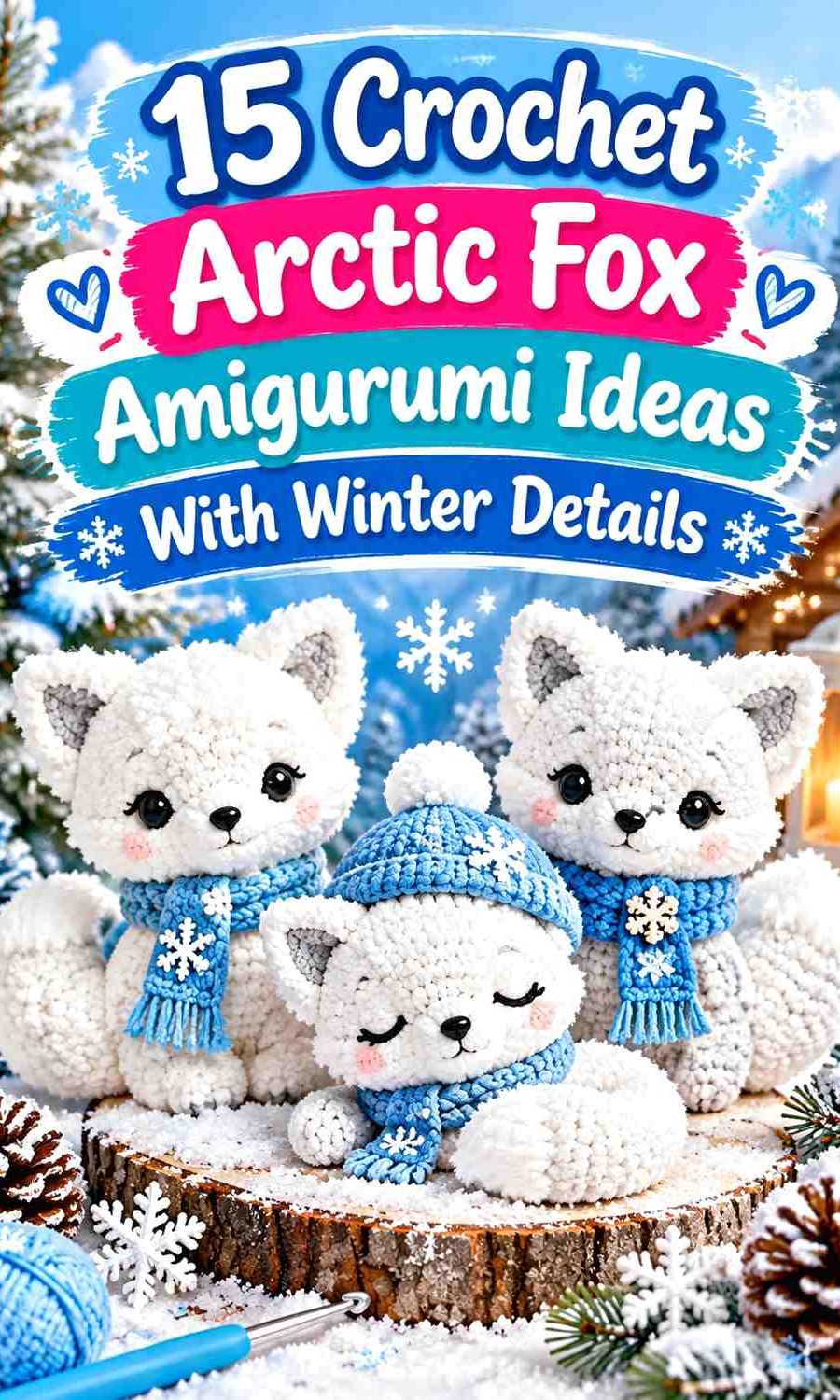
Winter details create another layer of color. A scarf can carry the strongest accent without changing the fox itself, a hat can introduce blue or plum above an otherwise neutral body, and a darker tail tip can keep an all-white fox from visually flattening into one pale shape.
One tutorial below is specifically for an Arctic fox, while the others teach fox amigurumi constructions that can be recolored and accessorized for an Arctic-winter direction. The proposed palettes and winter details are editorial adaptations unless they are part of the linked tutorial itself.
Quick List
- Snow White, Ice Gray, and Charcoal Crochet Arctic Fox With Frost-Blue Scarf
- Pearl White, Silver Gray, and Dusty Blue Crochet Arctic Fox With Winter Hat
- Cream, Dove Gray, and Deep Teal Crochet Arctic Fox With Neck Scarf
- Soft White, Taupe, and Cocoa Crochet Arctic Fox With Frosted Ear Tips
- Blue Gray, Snow White, and Navy Crochet Arctic Fox With Snowflake Detail
- Oatmeal, Pale Gray, and Forest Green Crochet Arctic Fox With Winter Cowl
- Frost White, Lavender Gray, and Plum Crochet Arctic Fox With Pom-Pom Hat
- Silver Gray, Warm White, and Muted Gold Crochet Arctic Fox With Star Accent
- Pearl Gray, Cream, and Rust Crochet Arctic Fox With Striped Scarf
- Soft White, Charcoal, and Sage Crochet Arctic Fox With Dark Paws
- Ice Blue, White, and Slate Crochet Sleeping Arctic Fox Amigurumi
- Cloud White, Mushroom, and Espresso Crochet Arctic Fox With Winter Vest
- Arctic White, Black, and Powder Blue Crochet Arctic Fox With Scarf
- Warm White, Dusty Rose, and Burgundy Crochet Vintage Winter Arctic Fox
- Snow Gray, White, and Deep Indigo Crochet Tiny Arctic Fox Amigurumi
Keep the Crochet Arctic Fox Body Lighter Than the Winter Details
A mostly light body preserves the snowy character of an Arctic fox while giving winter accessories room to stand out. White does not need to be the only body color; pearl gray, ice blue-gray, oatmeal, and pale taupe can all provide enough softness while improving stitch visibility.
Use the deepest colors in smaller areas. Charcoal ear tips, slate paws, an indigo scarf, or an espresso accessory can create definition without turning the entire fox dark.
If you are using plush yarn, slightly stronger contrast can help. Fuzzy texture softens color boundaries, so two nearly identical pale grays may merge more than expected.
Use the Crochet Tail to Repeat the Winter Palette
The fox tail occupies enough visual area to help connect the palette. If the face uses ice gray around the ears, that gray can reappear at the tail tip. If a navy scarf is the strongest accent, a tiny amount of navy elsewhere may make the accessory feel less isolated.
Avoid treating the tail like a separate rainbow element. One body color plus one tip or band color is usually enough for an Arctic-inspired toy.
A curled or sleeping fox can need even more separation because the tail may sit directly against the body. A slightly darker tail tip helps the two shapes remain distinct.
Give Crochet Hats and Scarves an Accent Role, Not the Whole Palette
Winter accessories are useful because they can carry colors that would look too strong across the fox itself. Deep teal, forest green, plum, rust, burgundy, and indigo can all work in a scarf or hat while the body stays pale.
Keep the accessory color clearly different from the face. A pale blue scarf on an ice-blue body may disappear unless another darker shade defines the edge.
For a calmer amigurumi, repeat the accessory color only once elsewhere. Ear interiors, a small tail band, or embroidered winter detail can be enough.
1. Snow White, Ice Gray, and Charcoal Crochet Arctic Fox With Frost-Blue Scarf

Snow white should dominate this Arctic fox, while ice gray creates quiet definition at the ears, muzzle transition, and tail. Charcoal can remain limited to the smallest facial or paw details, and a frost-blue scarf provides the only stronger cool accent.
This is one of the clearest ways to keep the fox recognizably snowy without losing its shape.
Let Snow White Dominate the Ice Gray Crochet Arctic Fox Body
Use snow white across the head, torso, legs, and most of the tail. Ice gray works better in controlled areas than as frequent striping because the broad white field is what gives the plush its Arctic direction.
If the muzzle disappears into the face, use ice gray around the transition rather than outlining every feature in charcoal.
Keep Charcoal Smaller Than Ice Gray on the Snow White Crochet Arctic Fox
Charcoal can define the nose, embroidered eyes, or compact paw accents. Its darkness attracts attention quickly, so small placements are enough.
A frost-blue scarf can then become the strongest non-neutral color without competing with a large amount of charcoal.
Creator Credit: amikara
2. Pearl White, Silver Gray, and Dusty Blue Crochet Arctic Fox With Winter Hat
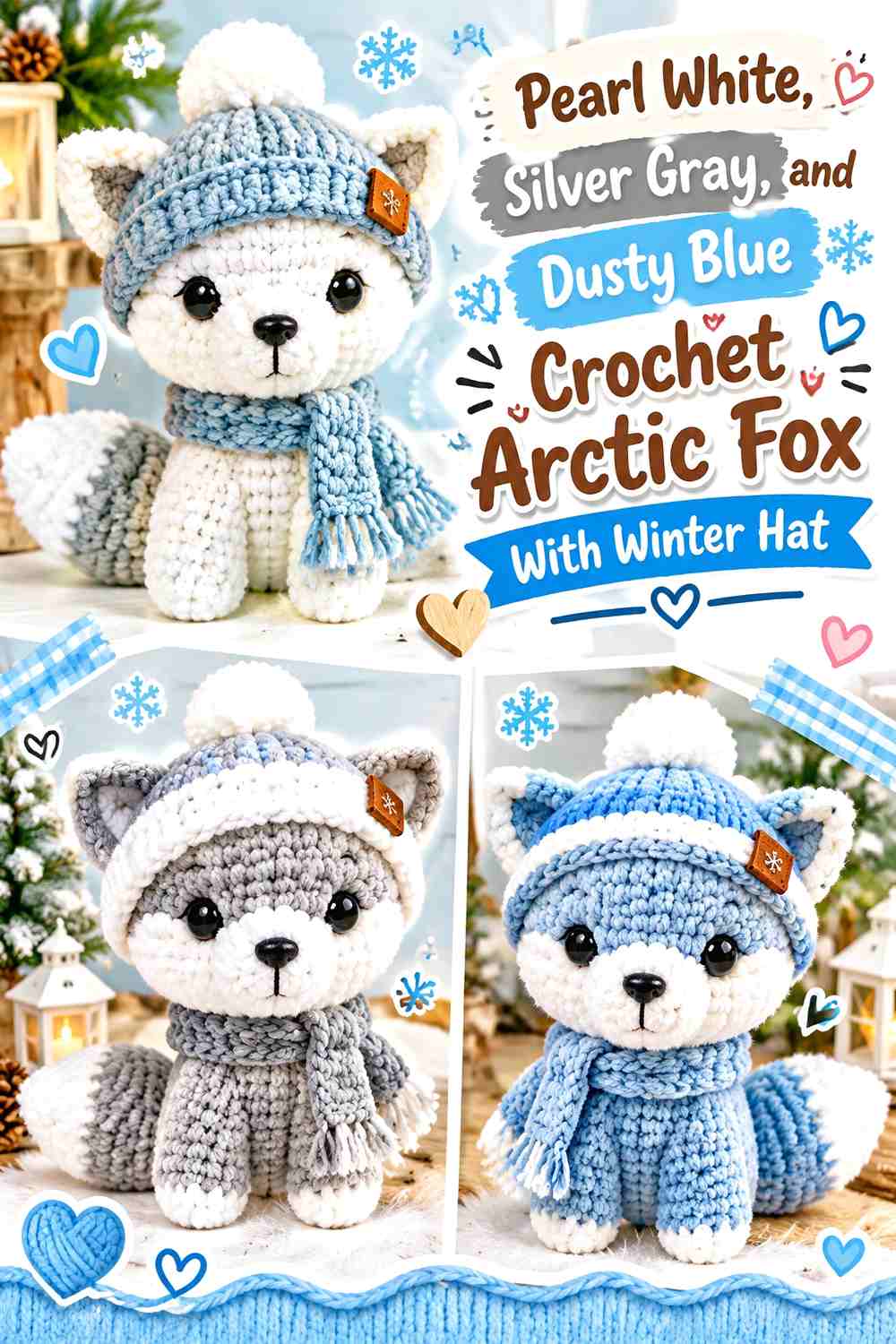
Pearl white creates a softer snowy body than brilliant white, silver gray gives the fox subtle structure, and dusty blue can carry a small winter hat. Keep the blue mostly above the face so the body remains light.
This palette works particularly well when you want the hat to be noticeable without making the entire amigurumi colorful.
Use Pearl White Across the Silver Gray Crochet Arctic Fox Face
Keep pearl white broad across the forehead, cheeks, and muzzle. Silver gray can move into the outer ears or paws where a little shadow-like definition helps.
If the body is very pale, avoid adding several more gray values; one support gray is usually enough.
Let Dusty Blue Sit Clearly Above the Pearl White Crochet Arctic Fox
A dusty-blue hat creates a distinct upper accent. Keep the hat noticeably darker or more saturated than the body so it does not visually blend into pearl white and silver gray.
A small white or gray hat detail can tie it back to the fox without introducing another strong shade.
Creator Credit: Rose and Lily Crochet
3. Cream, Dove Gray, and Deep Teal Crochet Arctic Fox With Neck Scarf
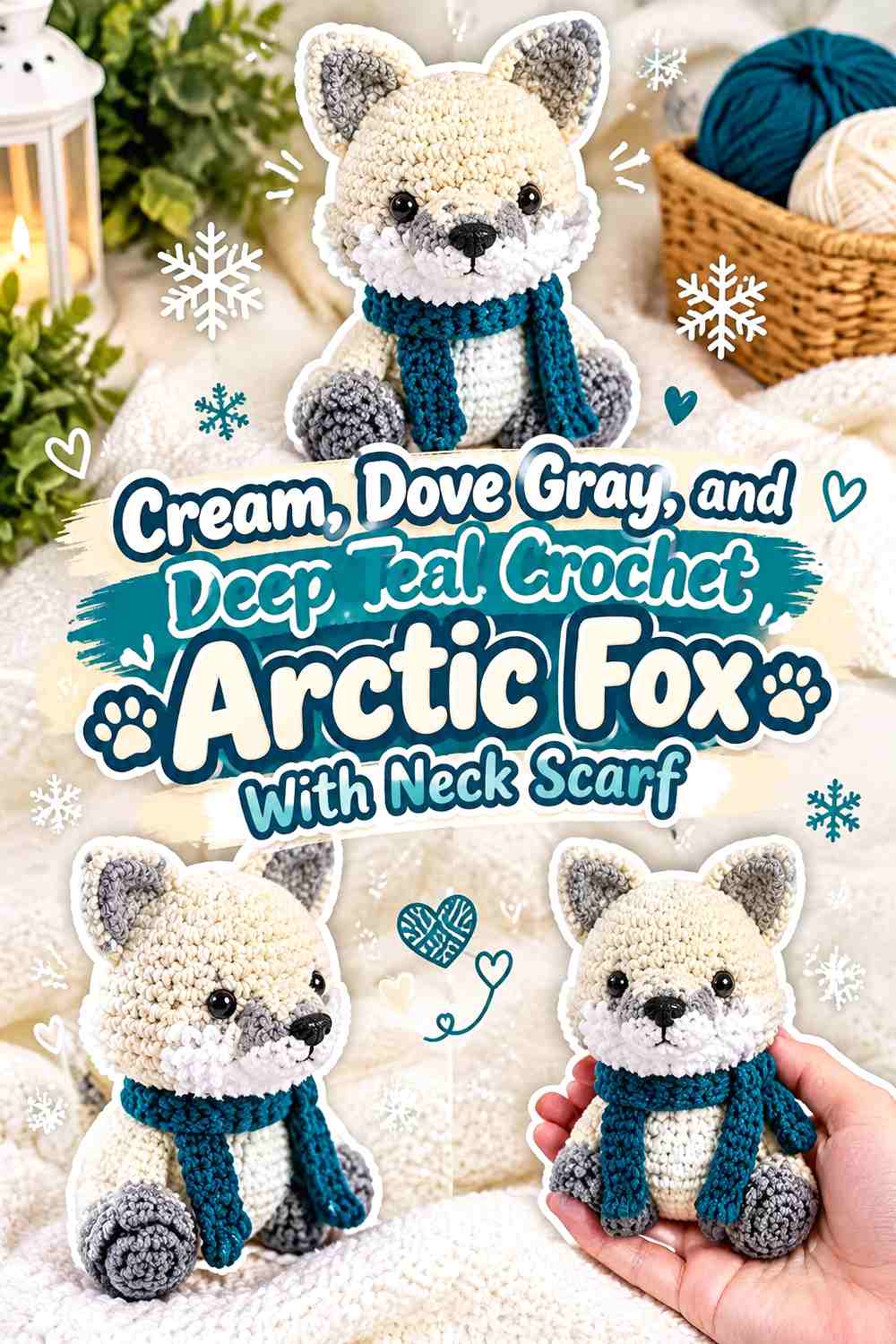
Cream gives the fox a slightly warmer snow color, dove gray supports the ears and tail, and deep teal creates a strong winter scarf. The dark cool accent makes this idea feel different from all-neutral Arctic foxes.
Keep teal on the accessory rather than spreading it through the coat.
Let Cream Cover Most of the Dove Gray Crochet Arctic Fox
A broad cream body makes dove-gray details visible without creating harsh contrast. Use gray where the pointed ears, paws, or tail need more separation.
For an even softer result, choose a dove gray only moderately darker than cream.
Keep Deep Teal Focused on the Cream Crochet Arctic Fox Scarf
Deep teal should have one obvious job: defining the neck accessory. This keeps the fox itself snowy while giving the finished toy a strong winter focal point.
If you repeat teal, a very small ear or tail detail is enough; avoid turning the limbs into additional teal blocks.
Creator Credit: simplyaish 🙂
4. Soft White, Taupe, and Cocoa Crochet Arctic Fox With Frosted Ear Tips

Soft white and taupe create a warmer Arctic palette, while cocoa adds the deepest small details. This is useful if cool silver and blue grays do not fit the rest of your amigurumi collection.
Use taupe primarily at the ears and tail, allowing the body to stay soft white.
Use Taupe to Define the Soft White Crochet Arctic Fox Ears
The pointed ears are small enough that they benefit from noticeable separation. Taupe can occupy the outer or inner ear area without making the full head dark.
Keep enough soft white around the ear bases so they remain connected to the body.
Reserve Cocoa for the Soft White Crochet Arctic Fox Face
Cocoa can replace black for the nose or other tiny facial details. It keeps the palette warm while still providing enough contrast.
Because taupe already handles the larger supporting role, cocoa should stay compact.
Creator Credit: Kitcroet Arts, Crafts & Sewing
5. Blue Gray, Snow White, and Navy Crochet Arctic Fox With Snowflake Detail

Blue gray can lead the body, snow white can lighten the muzzle and tail tip, and navy can provide a small winter accent. This palette creates a stronger icy-blue interpretation while remaining clearly fox-shaped.
A snowflake-inspired embroidered or appliqué-style accent can carry navy without requiring navy body sections.
Let Blue Gray Cover the Main Snow White Crochet Arctic Fox Body
Use blue gray across the head and torso so white can function as a clear secondary color. A white muzzle and tail tip then become easier to notice.
If the body becomes too dark, increase white around the chest or face rather than adding a fourth shade.
Use Navy as a Small Accent on the Blue Gray Crochet Arctic Fox
Navy can define a compact snowflake, scarf edge, or other winter detail. Its darkness is useful precisely because the rest of the palette is pale.
Do not scatter navy spots across the body; that changes the visual direction from snowy fox to patterned plush.
Creator Credit: Cuddly Stitches Craft
6. Oatmeal, Pale Gray, and Forest Green Crochet Arctic Fox With Winter Cowl

Oatmeal gives this fox a natural off-white body, pale gray creates subtle separation, and forest green introduces a woodland-winter accent at the neck.
The cowl can provide enough dark color on its own, so the face and body should remain restrained.
Keep Oatmeal Broad Across the Pale Gray Crochet Arctic Fox
Use oatmeal on the large surfaces and pale gray only where the body needs shape definition. This preserves the light winter character while avoiding a stark pure-white finish.
The tail can repeat pale gray at the tip to connect the support color from front to back.
Let Forest Green Anchor the Oatmeal Crochet Arctic Fox Cowl
Forest green provides strong contrast against oatmeal and can visually frame the face. Keep the cowl compact so the dark accessory does not make the body look smaller.
A muted dark green works better than several different greens competing around the neck.
Creator Credit: Rania Crochet Guide
7. Frost White, Lavender Gray, and Plum Crochet Arctic Fox With Pom-Pom Hat

Lavender gray gives this Arctic fox a subtle cool tint, while plum makes a more expressive hat color. Frost white remains the main coat and keeps the finished toy connected to the winter theme.
This palette is useful when you want something more colorful than blue-gray without moving into bright rainbow shades.
Let Frost White Separate the Lavender Gray Crochet Arctic Fox Features
Use frost white on most of the body and lavender gray on selected ear, paw, or tail areas. The purple undertone should be subtle enough to function as a shadow color.
If the two shades are almost identical, move lavender gray slightly darker.
Use Plum Above the Frost White Crochet Arctic Fox Face
A plum hat creates a clear upper focal point and pairs naturally with lavender-gray support details. Keep the plum largely on the accessory rather than extending it through the coat.
A frost-white pom-pom or trim can reconnect the hat with the main body.
Creator Credit: Ambros Crochet
8. Silver Gray, Warm White, and Muted Gold Crochet Arctic Fox With Star Accent

Silver gray can become the main coat, warm white can lighten the muzzle and tail, and muted gold can provide a tiny winter-star accent. This is a neutral-heavy palette with one carefully controlled warm detail.
The gold should remain much smaller than both body shades.
Keep Silver Gray Broader Than Warm White on the Crochet Arctic Fox
Let silver gray carry most of the head and torso while warm white defines the face and tail tip. This creates enough contrast for the white sections to remain visible.
If the gray is very pale, keep facial details darker so the expression does not disappear.
Use Muted Gold Sparingly on the Silver Gray Crochet Arctic Fox
A small star, scarf detail, or tiny accessory can introduce warmth without changing the fox’s snowy color direction.
Avoid adding gold to ears, paws, and tail simultaneously. One or two repeated placements are enough.
Creator Credit: ComplicatedKnots
9. Pearl Gray, Cream, and Rust Crochet Arctic Fox With Striped Scarf
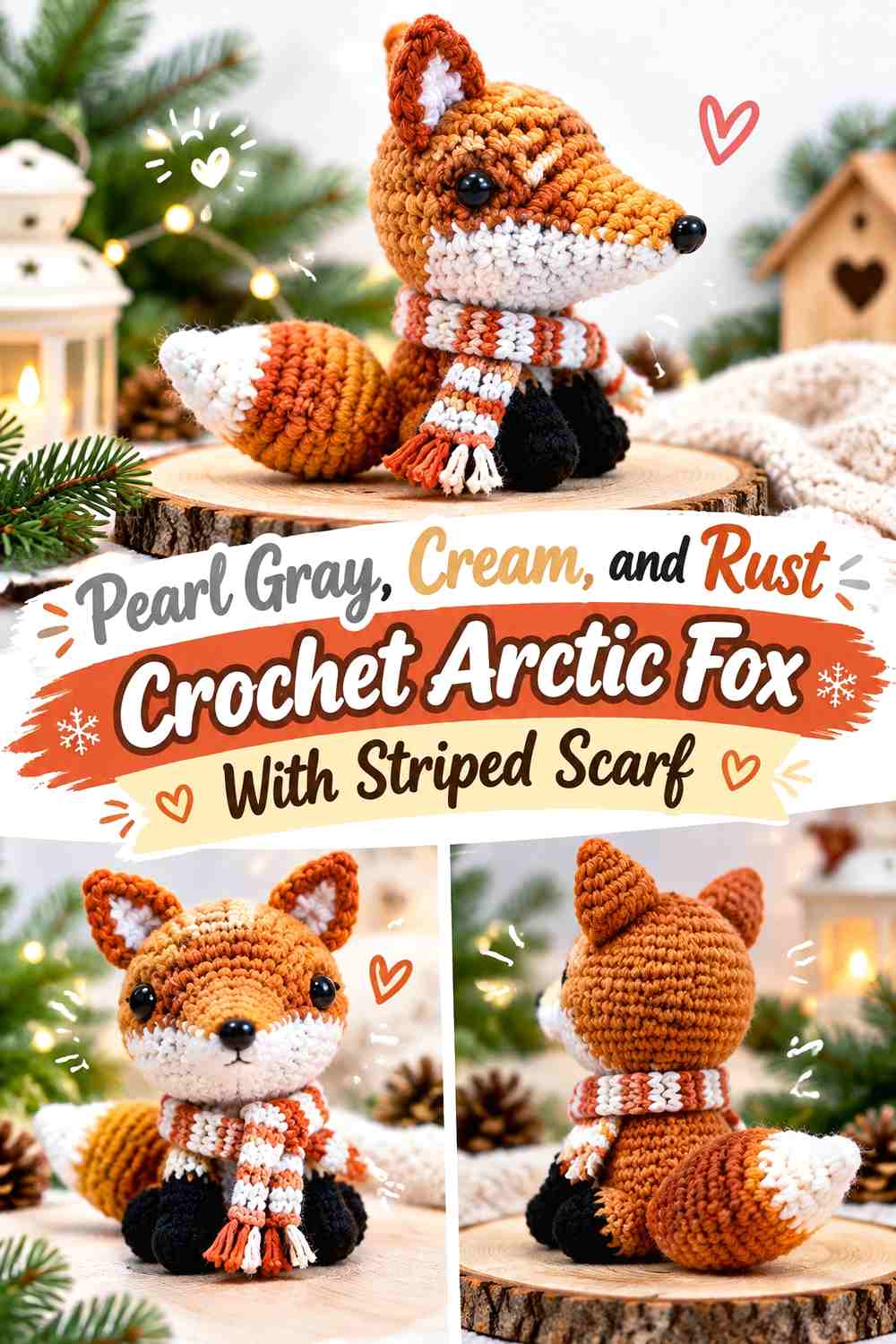
Pearl gray creates a pale neutral body, cream brightens the muzzle, and rust introduces a warmer scarf that stands apart from the cooler fox.
This is a useful choice when you want winter character without relying only on blues and greens.
Let Pearl Gray Carry the Cream Crochet Arctic Fox Body
Use pearl gray across most of the body and keep cream concentrated around the muzzle, chest, and tail tip. The two light values should remain distinct enough that those areas do not merge.
A grayscale check can help if both yarns look nearly identical.
Keep Rust on the Pearl Gray Crochet Arctic Fox Scarf
Rust is visually much warmer than the body, so it works best as a contained accessory color. A striped scarf can combine rust with cream rather than adding another new yarn shade.
Avoid repeating rust across the paws unless you specifically want a more colorful fox.
Creator Credit: Canal crochet
10. Soft White, Charcoal, and Sage Crochet Arctic Fox With Dark Paws
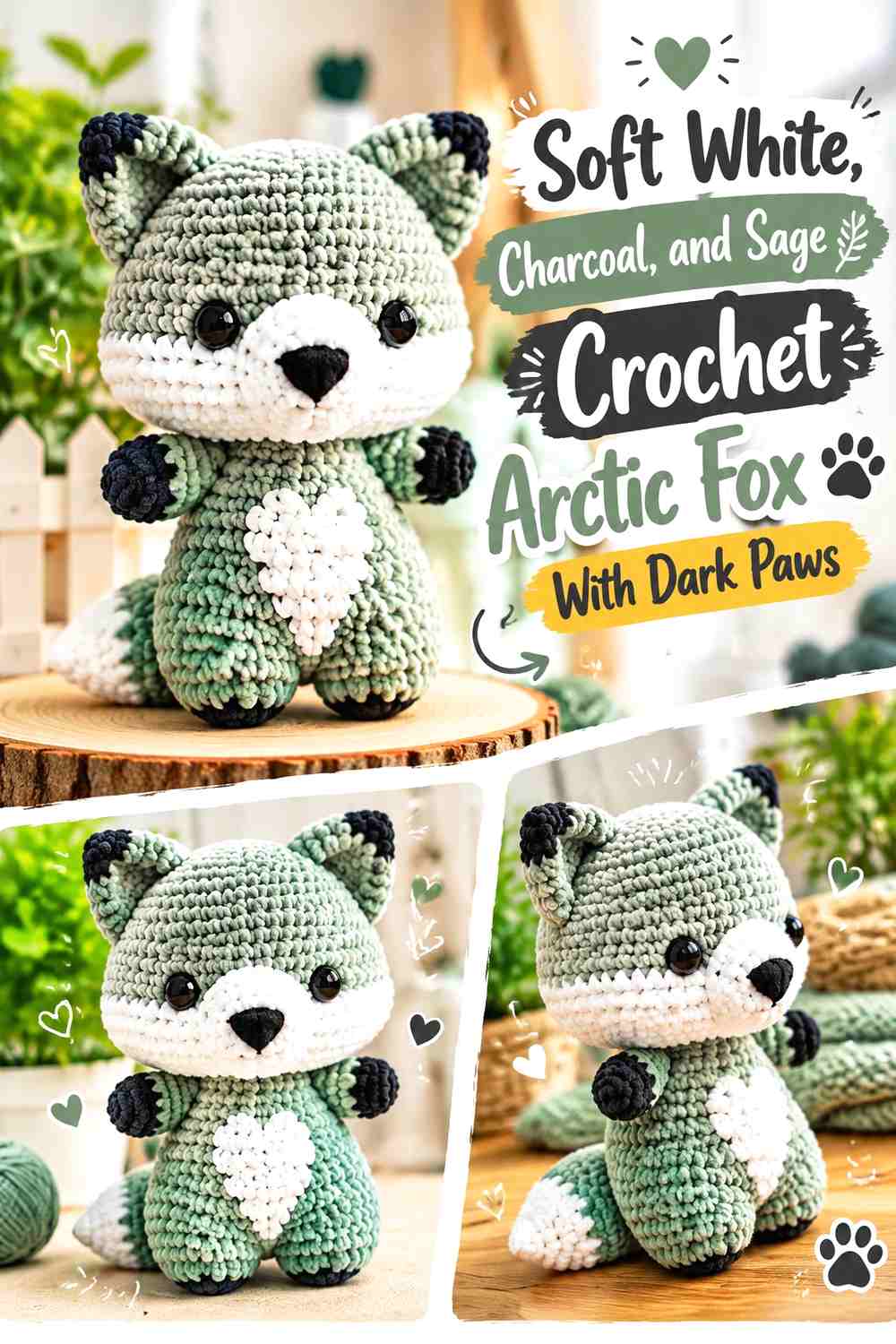
Soft white keeps the coat bright, charcoal gives the paws and tiny facial details stronger definition, and sage can introduce a restrained winter accessory or accent.
This palette uses darker contrast lower on the body rather than concentrating everything at the face.
Keep Charcoal Small on the Soft White Crochet Arctic Fox Paws
Dark paws can visually ground a mostly white fox, but keep them compact. Extending charcoal too far up the legs can make the limbs look disconnected from the body.
Repeat charcoal at the nose to create a simple visual connection.
Use Sage to Soften the Soft White and Charcoal Crochet Arctic Fox
Sage can work as a small scarf, neck detail, or accessory where it provides color between the white and very dark neutral.
Choose a muted sage rather than a bright green if you want the palette to remain wintery and calm.
Creator Credit: Ami Saigon
11. Ice Blue, White, and Slate Crochet Sleeping Arctic Fox Amigurumi
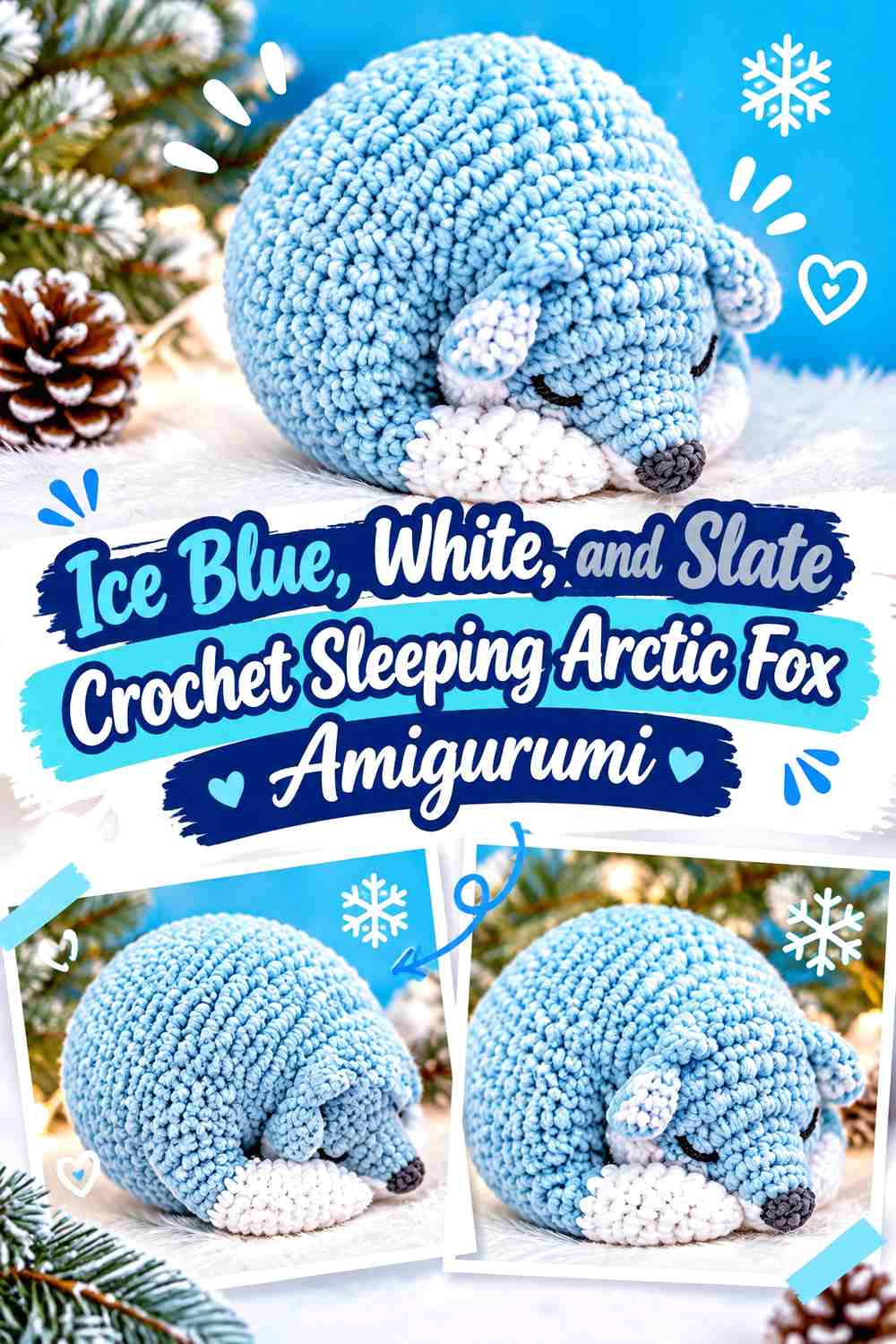
A sleeping fox construction already has a quiet winter feel because the body and tail create one curled shape. Ice blue can cover the main form, white can brighten the face and tail tip, and slate can define small details.
The tail needs particular attention because it may rest directly against the body.
Let Ice Blue Dominate the White Crochet Sleeping Arctic Fox
Keep the curled torso and most of the tail in ice blue so the sleeping silhouette reads as one connected form. White can mark the muzzle or tail end.
If the white tip touches white bedding or display fabric, move more ice blue toward its outer edge.
Use Slate to Separate the Ice Blue Crochet Arctic Fox Features
Slate can define tiny ears, nose details, or selected paws without creating the starkness of black.
Keep slate out of large tail sections so the sleeping curl remains visually soft.
Creator Credit: Garnknuten
12. Cloud White, Mushroom, and Espresso Crochet Arctic Fox With Winter Vest
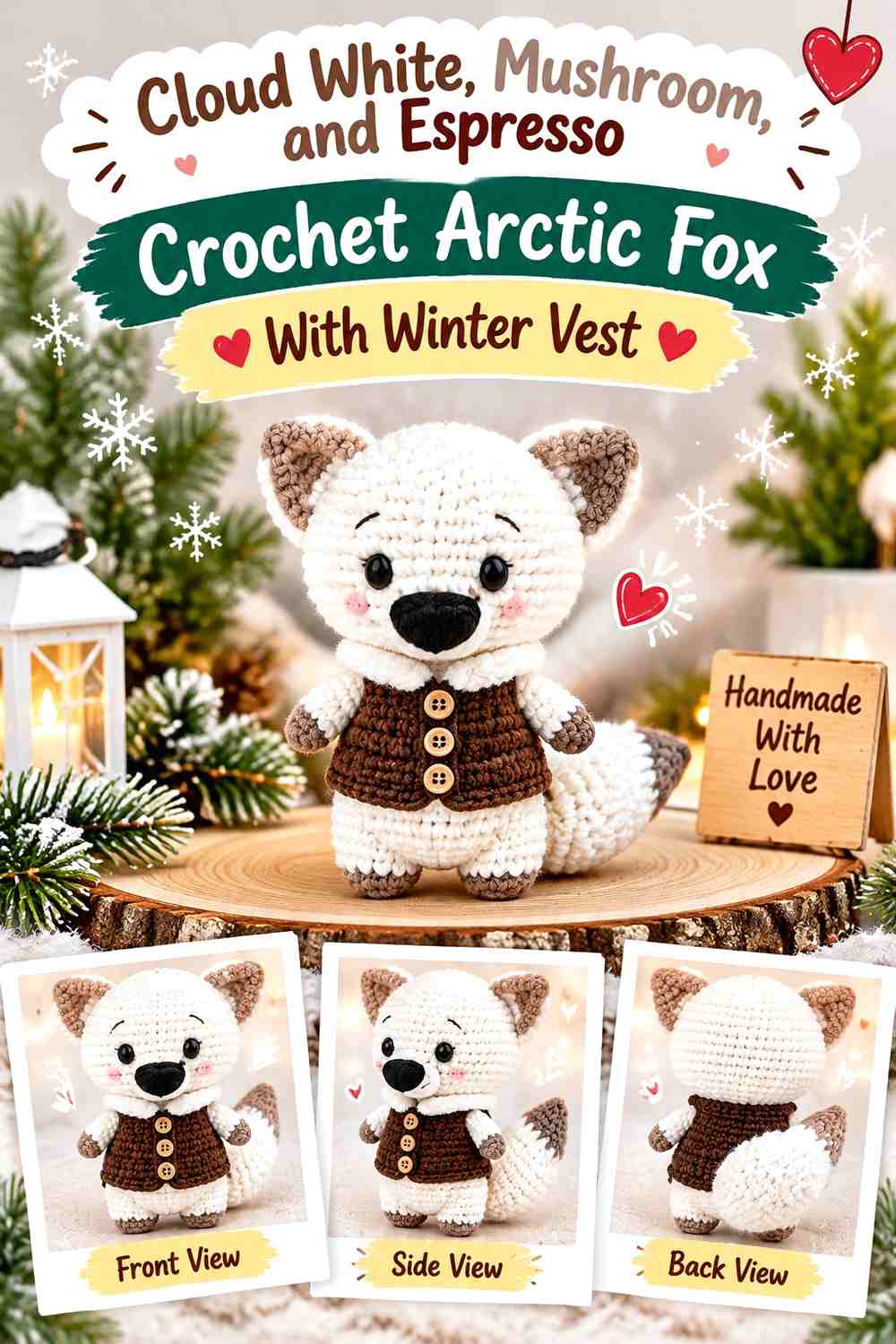
Cloud white creates a snowy body, mushroom gives the fox a warmer shadow neutral, and espresso can define a compact vest or other winter garment detail. This palette is useful when you prefer brown-based neutrals over icy blue.
The darker garment should stay separate from the muzzle so the face remains open.
Keep Cloud White Visible Around the Mushroom Crochet Arctic Fox Body
Use cloud white across the broad face and torso while mushroom stays around selected ears, feet, or tail areas. The body should still read as predominantly light.
Mushroom can also soften the transition between white and espresso.
Let Espresso Define the Cloud White Crochet Arctic Fox Vest
A deep espresso vest creates a strong middle-body contrast. Keep it compact enough that the fox’s light torso and limbs remain visible around it.
If espresso feels too heavy, use walnut brown while preserving the same dark accessory role.
Creator Credit: Katkarmela Handmade
13. Arctic White, Black, and Powder Blue Crochet Arctic Fox With Scarf
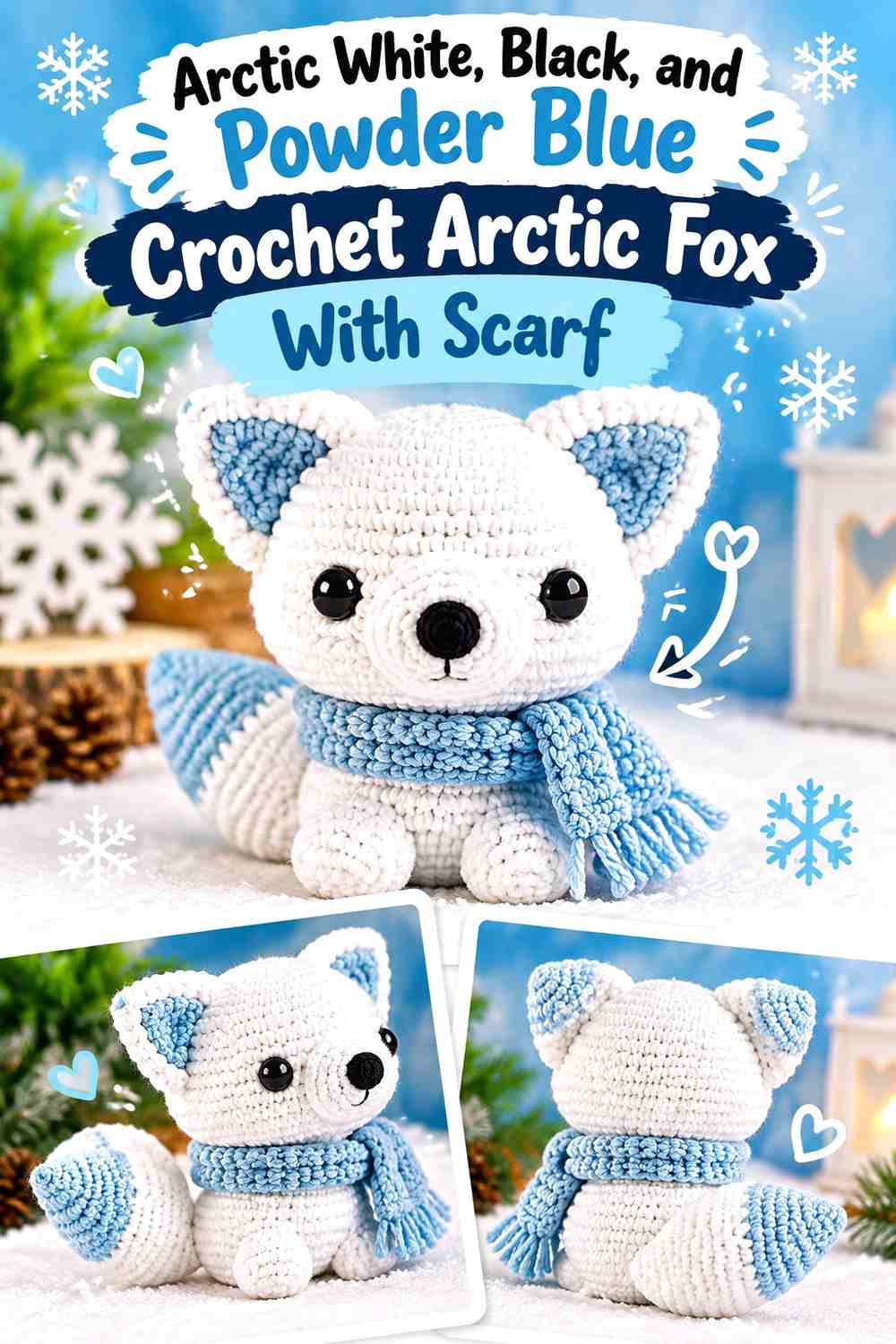
Arctic white creates the brightest body in the collection, black gives the smallest details crisp definition, and powder blue brings a classic winter accessory color.
Because white and black are already high contrast, powder blue should remain a soft middle note rather than another dark accent.
Let Arctic White Cover Almost the Entire Black Crochet Fox Body
Keep black limited to the nose, eyes, or tiny paw details. Large black ear tips can work, but they will become strong focal points against pure white.
If you want a gentler face, substitute charcoal for black.
Use Powder Blue to Break Up the Arctic White Crochet Fox Scarf Area
Powder blue works well close to the face because it remains visibly different without overpowering the white body. A darker blue trim can be added only if the scarf needs more definition.
Avoid using powder blue across large body panels; the scarf already gives it a clear job.
Creator Credit: DIY Fluffies
14. Warm White, Dusty Rose, and Burgundy Crochet Vintage Winter Arctic Fox

Warm white can replace the usual orange coat in a character-style fox, while dusty rose and burgundy transform clothing or accessories into a winter palette. Burgundy provides the deepest accent and dusty rose softens the transition.
This idea is intentionally less naturalistic and suits a storybook-style amigurumi.
Keep Warm White as the Main Dusty Rose Crochet Arctic Fox Coat
Even when the outfit becomes colorful, keep the head, tail, and visible animal areas mostly warm white. That preserves the Arctic fox identity beneath the character styling.
Dusty rose works better on clothing or a bow than as large body patches.
Use Burgundy to Ground the Dusty Rose Crochet Arctic Fox Outfit
Burgundy can define shoes, trim, a scarf, or another small clothing detail. Its deeper value prevents the dusty rose from blending into the warm-white fox.
Keep burgundy repeated in only a few places so it looks intentional rather than scattered.
Creator Credit: Elise Rose Crochet
15. Snow Gray, White, and Deep Indigo Crochet Tiny Arctic Fox Amigurumi
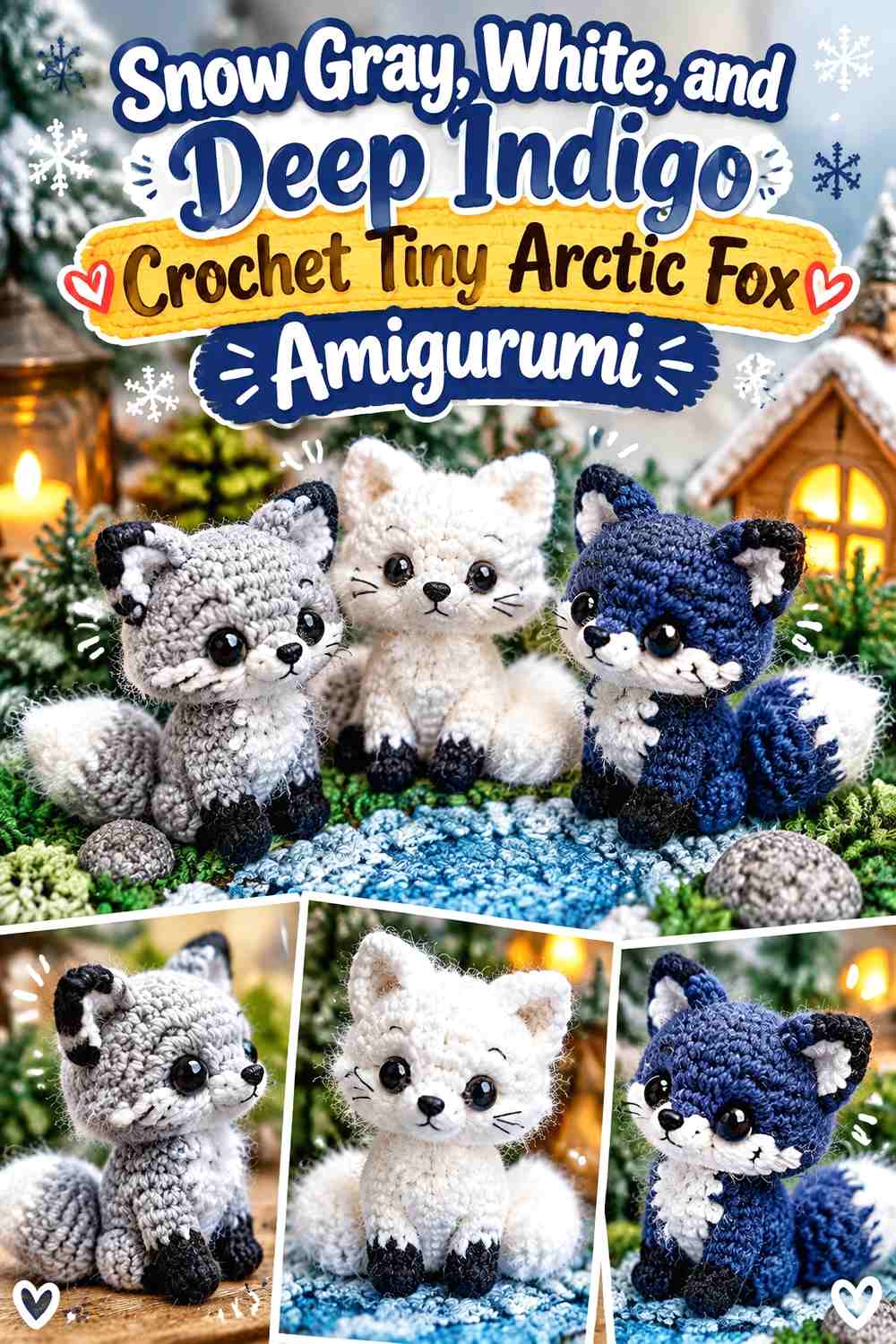
A tiny fox needs stronger color discipline because there is less surface area for each shade. Snow gray can cover most of the body, white can brighten the muzzle and tail tip, and deep indigo can provide the smallest winter accent.
The limited palette keeps the miniature shape readable instead of turning it into several tiny color blocks.
Let Snow Gray Lead the White Crochet Tiny Arctic Fox
Use snow gray across most of the head and body. White should stay concentrated in recognizable fox areas such as the muzzle or tail tip.
On a small amigurumi, broad color sections are easier to read than several narrow transitions.
Keep Deep Indigo Tiny on the Snow Gray Crochet Arctic Fox
A small indigo scarf, hat band, or other accent is enough to create winter character. The dark shade will appear visually larger on a miniature fox than the same amount would on a big plush.
If the indigo begins competing with the face, reduce it rather than adding more white.
Creator Credit: Lizfaerie Crafts
Which Crochet Arctic Fox Winter Palette Should You Choose?
For the most recognizable snowy direction, choose snow white with ice gray, pearl white with silver gray, or Arctic white with black. These combinations keep the body very pale and use contrast mainly to define the fox’s shape.
For a softer neutral toy, cream and dove gray, soft white and taupe, or cloud white and mushroom warms the palette without losing the winter theme.
If you want more color, keep it concentrated in the winter detail. Deep teal, forest green, plum, rust, sage, powder blue, and deep indigo can all work effectively on scarves, hats, cowls, or tiny accents while the fox itself stays light.
Conclusion
A convincing crochet Arctic fox does not require an all-white body. In fact, a little ice gray, taupe, silver, mushroom, or slate can make the ears, paws, muzzle, and tail easier to distinguish.
Start with the coat. Decide which light shade will dominate, then choose one darker neutral for structure and one optional winter accent for the scarf, hat, vest, or another small detail. Keeping those roles separate prevents a tiny amigurumi from becoming visually crowded.
Use the credited tutorials for their actual fox constructions. Where a tutorial shows a regular fox rather than an Arctic fox, treat the white coat, winter palette, and seasonal accessories as your own adaptation rather than part of the creator’s original design.
Frequently Asked Questions
What colors work well for a crochet Arctic fox amigurumi?
Snow white, warm white, cream, pearl gray, silver, ice blue-gray, and pale taupe all work well for the main coat. Charcoal, slate, brown, navy, or espresso can define smaller details, while blue, green, plum, rust, or burgundy can carry winter accessories.
Does a crochet Arctic fox have to be pure white?
No. Using pale gray, cream, silver, or blue-gray can improve stitch and shape visibility while still keeping a snowy visual direction. White can then be reserved for the muzzle, chest, or tail tip.
Which color should I use for a crochet Arctic fox scarf?
Choose a shade that clearly differs from the body. Deep teal, forest green, dusty blue, plum, rust, burgundy, or indigo can all provide useful contrast against a pale fox.
How do I keep a white crochet Arctic fox from looking flat?
Add controlled value contrast. Ice-gray ears, a slightly darker tail tip, charcoal facial details, or a colored scarf can define separate parts without taking away from the mostly white coat.
Should the crochet Arctic fox tail tip be white or gray?
Either can work. A white tip looks clearest on a gray body, while an ice-gray or slate tip can make more sense on a white body because it prevents the tail from blending into the torso.
Can I add a winter hat to any crochet fox tutorial?
Usually as a separate adaptation, but the hat must be sized to the finished head rather than assumed to fit from another pattern. Complete the fox first, then plan the accessory around its actual proportions.
What should I consider if the crochet Arctic fox is intended for a young child?
Consider embroidered facial features instead of detachable small components, and secure all attached parts carefully. Decorative pom-poms, buttons, or other small winter embellishments should be evaluated for the intended use before gifting.