Crochet Highland alpaca amigurumi works especially well with a natural, woolly palette because the curly surface can provide as much visual interest as the color itself. Cream, oatmeal, camel, taupe, cinnamon, chestnut, and warm gray can all support the rustic look, while darker browns are useful for the muzzle, hooves, ears, or other small areas that need definition.

Curly fur changes how those colors behave. Bobbles, loops, berry-like stitches, plush yarn, and fuzzy fibers create shadows that can make a medium shade appear darker and can blur small color changes. For that reason, a strong alpaca palette does not need many shades. One dominant fleece color, a clearly separated face color, and a controlled dark accent are often enough.
The tutorials below include alpaca and llama amigurumi sources plus selected sheep and lamb tutorials that demonstrate useful fluffy or raised-fleece concepts. Sheep-based sources are texture references for adapting curly fur; they are not presented as Highland alpaca tutorials.
Quick List
- Oatmeal, Camel, and Cocoa Curly-Fur Crochet Highland Alpaca Amigurumi
- Cream, Cinnamon, and Espresso Curly-Fur Crochet Highland Alpaca Amigurumi
- Warm White, Taupe, and Chocolate Crochet Highland Alpaca Amigurumi
- Flax, Chestnut, and Cream Curly-Fur Crochet Highland Alpaca Amigurumi
- Caramel, Oatmeal, and Walnut Crochet Highland Alpaca Amigurumi
- Ivory, Warm Gray, and Charcoal Curly-Fur Crochet Highland Alpaca Amigurumi
- Biscuit, Cream, and Cocoa Crochet Highland Alpaca Amigurumi
- Natural Cream, Camel, and Dark Brown Fur-Stitch Crochet Highland Alpaca Amigurumi
- Oatmeal, Mushroom, and Espresso Fuzzy Crochet Highland Alpaca Amigurumi
- Cream, Toffee, and Cocoa Fluffy Crochet Highland Alpaca Amigurumi
- Warm Beige, Ivory, and Chocolate Cloud-Fur Crochet Highland Alpaca Amigurumi
- Ecru, Taupe, and Espresso Popcorn-Fur Crochet Highland Alpaca Amigurumi
- Cream, Mocha, and Cinnamon Bobble-Fur Crochet Highland Alpaca Amigurumi
- Camel, Ivory, and Espresso Compact Crochet Highland Alpaca Amigurumi
- Oatmeal, Rust Brown, and Cream Rustic Crochet Highland Alpaca Amigurumi
- Soft Cream, Sand, and Cocoa Curly-Fleece Crochet Highland Alpaca Amigurumi
Keep Curly Alpaca Fur From Hiding the Face
Raised fur is most effective when it surrounds rather than overwhelms the facial features. If curls continue across the muzzle in the same color and density as the head, the nose and mouth can become difficult to distinguish.
A practical color plan is to use the dominant fleece shade across the head and body, then interrupt it with a smoother cream, beige, taupe, or camel muzzle. A darker nose color can stay very small because it already has strong contrast against the smoother face.
Use Natural Alpaca Colors in Clear Roles
Several natural neutrals can look appealing together in loose yarn but become indistinguishable once they are worked into thick curls. Oatmeal, camel, taupe, and beige are especially likely to merge when their light/dark values are close.
Give each shade a defined location instead. One can cover the fleece, another can handle the smooth face and inner ears, and the darkest color can be restricted to hooves or facial details. Larger color areas preserve the understated palette without making the animal look flat.
Let Curly Texture Create Variation Before Adding More Colors
Texture itself creates light and shadow. A cream bobble surface can look much more varied than a smooth cream muzzle, even when both use similar yarn colors.
Before adding a fourth or fifth shade, check whether smooth-versus-curly contrast already gives the alpaca enough definition. This is particularly useful on the head, neck, chest, and body, where too many small color changes can compete with the fleece effect.
1. Oatmeal, Camel, and Cocoa Curly-Fur Crochet Highland Alpaca Amigurumi

Oatmeal can carry most of the curly fleece, while camel creates a smoother face, ears, and lower legs. Cocoa works best as the smallest color, giving the nose and selected hoof details enough definition. The combination stays close to natural neutrals while still providing three clearly different visual roles.
The supporting tutorial directly demonstrates an alpaca amigurumi and includes options for different yarn textures, making it a strong construction reference for this adaptation.
Let Oatmeal Curly Fur Cover the Highland Alpaca Body
Keep most of the raised texture oatmeal so the curls create their own variation through shadow. Interrupting every textured section with camel would make the body more patchwork-like and reduce the impact of the fleece.
Camel is more useful on smoother areas where the change in both texture and color can be clearly seen.
Use Camel and Cocoa to Define the Oatmeal Alpaca Face
A camel muzzle provides a softer transition than jumping directly from oatmeal to cocoa. Reserve cocoa for the nose or other very small details so the face remains warm rather than dark.
Creator Credit: DIY Fluffies
2. Cream, Cinnamon, and Espresso Curly-Fur Crochet Highland Alpaca Amigurumi

Cream gives this alpaca the lightest fleece direction, cinnamon warms the face and legs, and espresso provides the deepest accents. Because the cream curls already create strong shadows, the body does not need additional stripes or spots to stay visually interesting.
Keep Cream Continuous Across the Curly Alpaca Neck and Body
A continuous cream fleece makes the neck and torso read as one soft mass. This is particularly useful on an alpaca silhouette, where a contrasting neck color could visually divide the animal into separate sections.
Use Cinnamon Between Cream Fur and Espresso Details
Cinnamon can handle the muzzle, ears, and lower legs, giving espresso a lighter surrounding color. This keeps small dark details visible without making the face look heavily outlined.
Creator Credit: Canal crochet
3. Warm White, Taupe, and Chocolate Crochet Highland Alpaca Amigurumi

Warm white provides a bright fleece without the cooler appearance of stark white, while taupe gives the smooth facial areas a quiet contrast. Chocolate can be reserved for the darkest structural details. This restrained palette is useful when the curly texture should attract more attention than the color scheme.
Let Warm White Curly Fur Create the Main Alpaca Silhouette
Use warm white over the head fleece, neck, and body so the raised surface remains easy to see. A light color allows the shadows between curls to define the texture naturally.
Keep Chocolate Smaller Than Taupe on the Warm White Alpaca
Taupe should handle more of the face and legs, while chocolate remains limited to the nose, hooves, or tiny accents. Too much chocolate would shift the balance away from the soft neutral fleece.
Creator Credit: Knitoys & Crafts
4. Flax, Chestnut, and Cream Curly-Fur Crochet Highland Alpaca Amigurumi
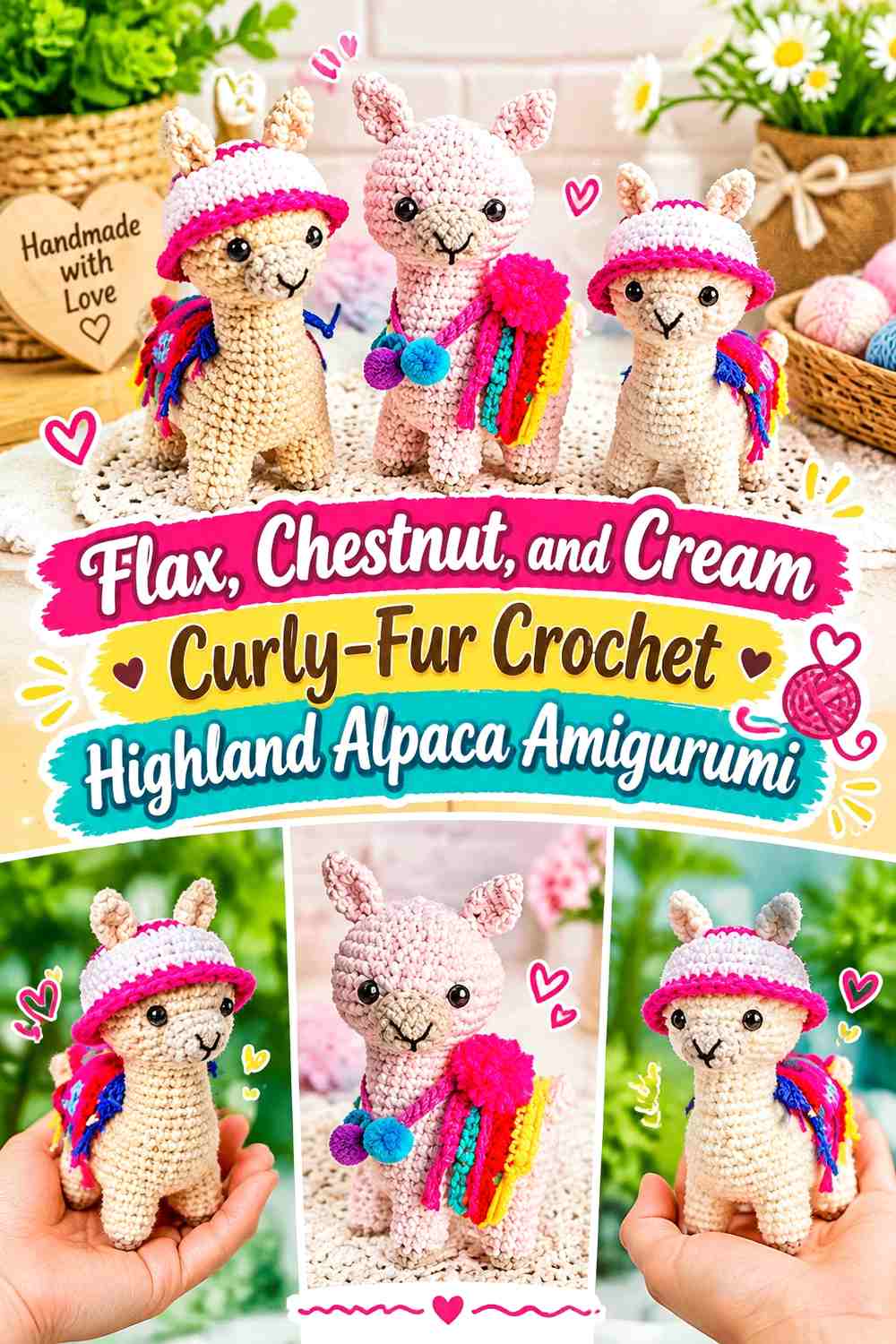
Flax creates a warmer fleece than cream, chestnut supplies a rich earthy contrast, and cream can highlight the muzzle or inner ears. Let flax dominate the curls so chestnut does not make the compact amigurumi visually heavy.
Give Flax the Largest Curly-Fur Area on the Crochet Alpaca
Broad flax coverage keeps the raised stitch surface cohesive. Chestnut can then appear lower on the animal or around the face without dividing the fleece into many competing sections.
Put Cream Between Flax and Chestnut on the Alpaca Face
Cream can lighten the muzzle where the two warmer shades would otherwise sit close together. It also gives the facial center enough contrast to remain visible inside a heavily textured head.
Creator Credit: coconetl
5. Caramel, Oatmeal, and Walnut Crochet Highland Alpaca Amigurumi
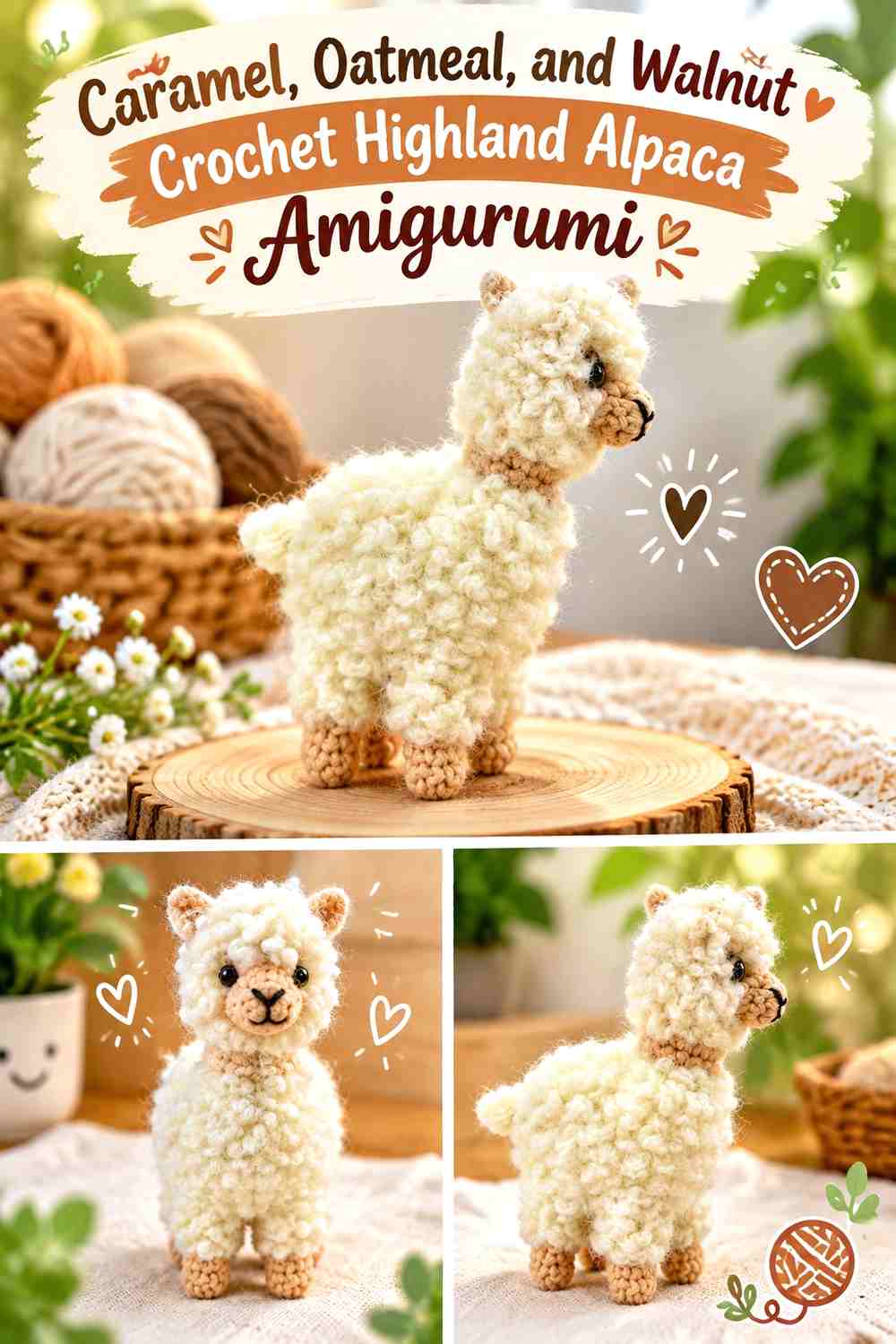
Caramel makes this one of the warmer alpaca palettes. Oatmeal can soften the face and selected fleece areas, while walnut defines the darkest details. Use caramel as the body color if you want a stronger golden-brown result without moving all the way to dark chestnut.
Keep Caramel Dominant Through the Highland Alpaca Fleece
Caramel works well in substantial textured areas because the curl shadows provide enough tonal variation to prevent the single color from appearing flat.
If oatmeal is added to the fleece, keep it in one deliberate patch or head tuft rather than scattering tiny pale sections throughout the body.
Let Oatmeal Separate Caramel From Walnut Features
An oatmeal muzzle makes a useful transition between the medium caramel coat and dark walnut nose. Repeat oatmeal inside the ears if you want the light color to feel connected rather than face-only.
Creator Credit: Rewind Crochet
6. Ivory, Warm Gray, and Charcoal Curly-Fur Crochet Highland Alpaca Amigurumi
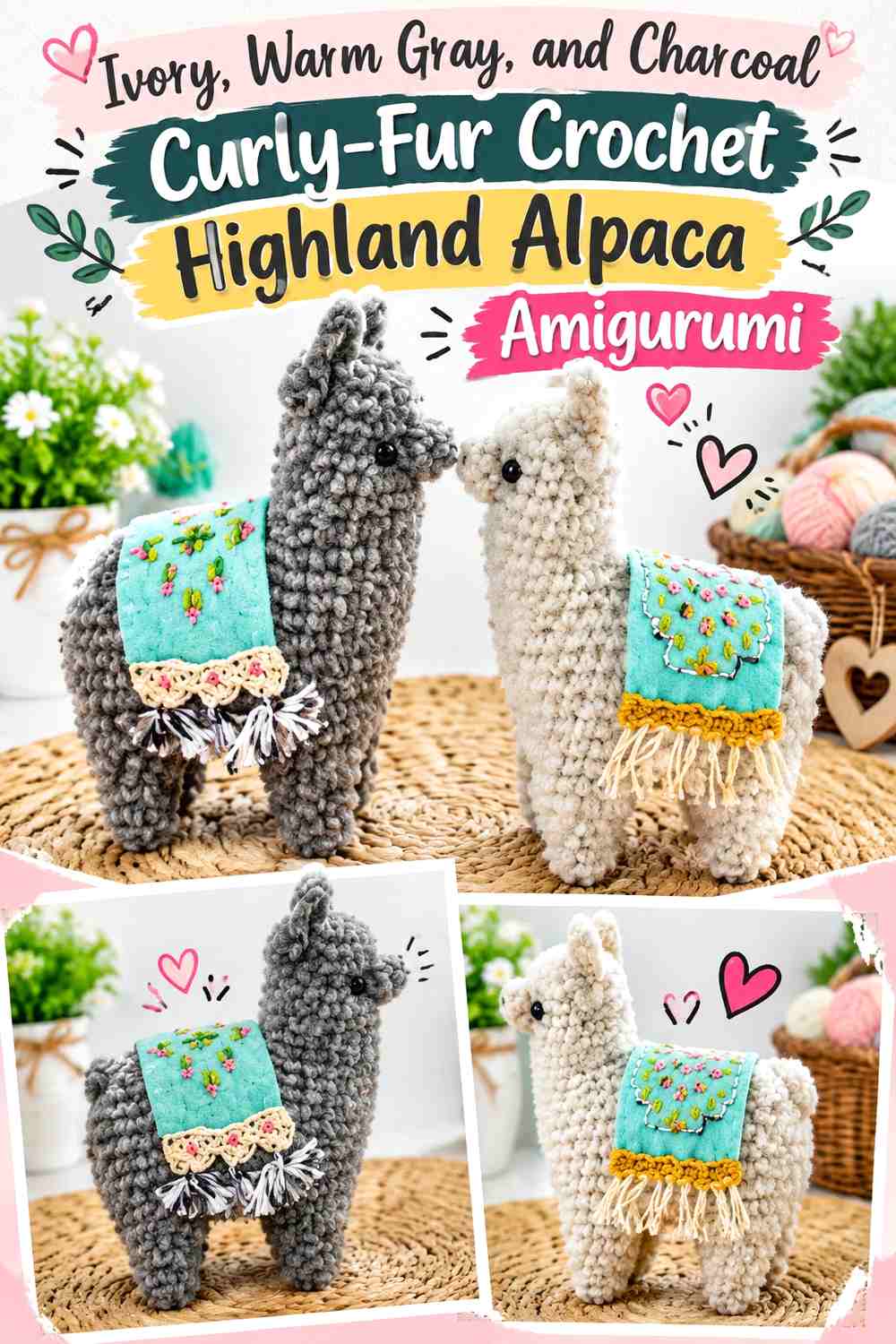
Ivory and warm gray move away from the usual brown-led alpaca palette while remaining neutral. Ivory should dominate the fleece, warm gray can define the face and legs, and charcoal can provide tiny high-contrast details.
Use Ivory Curly Fur to Keep the Highland Alpaca Light
Ivory works especially well on dimensional fleece because the texture remains visible without another color. Keep the head tuft and neck in the same ivory family to maintain continuity.
Place Charcoal Sparingly Against Warm Gray and Ivory
Charcoal is strongest at the nose, hoof tips, or a small embroidered mouth. Large charcoal areas would compete with the subtle warm-gray face and make the animal substantially more graphic.
Creator Credit: Inessa Medina
7. Biscuit, Cream, and Cocoa Crochet Highland Alpaca Amigurumi
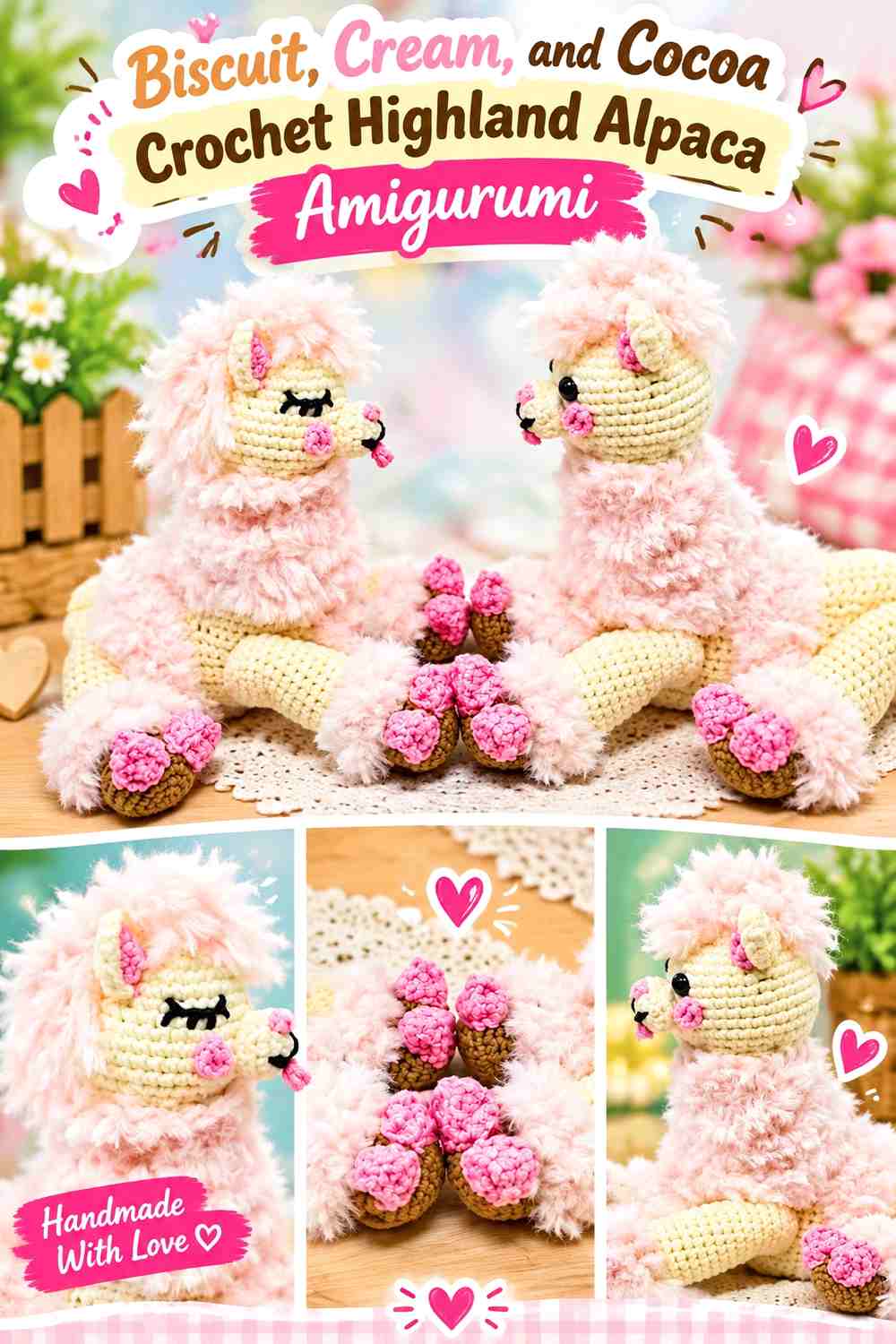
Biscuit creates a soft tan fleece, while cream lightens the face and cocoa grounds the smaller details. This palette works well when you want color separation without the dramatic jump produced by white and black.
Let Biscuit Carry the Curly Alpaca Head and Neck
Using the same biscuit shade through the head tuft and neck creates a continuous woolly outline. The smooth cream muzzle can then interrupt that texture exactly where facial clarity is most useful.
Repeat Cocoa Below the Cream and Biscuit Alpaca Face
Cocoa can appear on the nose and lower legs so the darkest color is not concentrated only in the center of the face. Keep its total area modest to preserve the gentle biscuit-led palette.
Creator Credit: HelenMay Crochet
8. Natural Cream, Camel, and Dark Brown Fur-Stitch Crochet Highland Alpaca Amigurumi

Natural cream and camel create a familiar fiber-inspired palette, while dark brown provides definition. This idea is particularly suited to a pronounced fur-stitch treatment because the main cream shade can remain visually interesting without frequent color changes.
The supporting llama stitch-along specifically includes a fur-stitch construction concept, making it particularly relevant for adapting a more dimensional Highland-alpaca coat.
Let Natural Cream Fur Stitch Cover the Alpaca Body
Use the fur texture as the main decorative feature. Keeping it cream gives each raised strand enough light and shadow to remain noticeable.
Camel is more effective when reserved for the smooth face, ears, or lower limbs.
Keep Dark Brown Away From Large Natural Cream Fur Areas
A small dark-brown nose or hoof can create all the definition needed. Large dark patches inside a heavily textured cream body can interrupt the fleece rhythm and become more visually prominent than the curls.
Creator Credit: The Crochet Crowd
9. Oatmeal, Mushroom, and Espresso Fuzzy Crochet Highland Alpaca Amigurumi

Oatmeal and mushroom create a deliberately close neutral relationship, so texture needs to help distinguish them. Use fuzzy oatmeal over the body and smoother mushroom yarn around the face and limbs. Espresso should remain limited to details that need a clear edge.
The supporting sheep tutorial demonstrates working with fuzzy yarn alongside smoother amigurumi sections, so it is a texture reference rather than an alpaca construction source.
Contrast Fuzzy Oatmeal With Smooth Mushroom on the Alpaca Face
Even when oatmeal and mushroom are close in value, the change from fuzzy to smooth can help separate the muzzle from the fleece. Keep the facial shape broad enough that the texture difference remains visible.
Use Espresso to Clarify Oatmeal and Mushroom Features
Espresso at the nose or hoof edge provides a strong reference point within the soft neutral palette. Avoid using it as a large body patch because that would compete with the fuzzy fleece.
Creator Credit: Craft Passion
10. Cream, Toffee, and Cocoa Fluffy Crochet Highland Alpaca Amigurumi
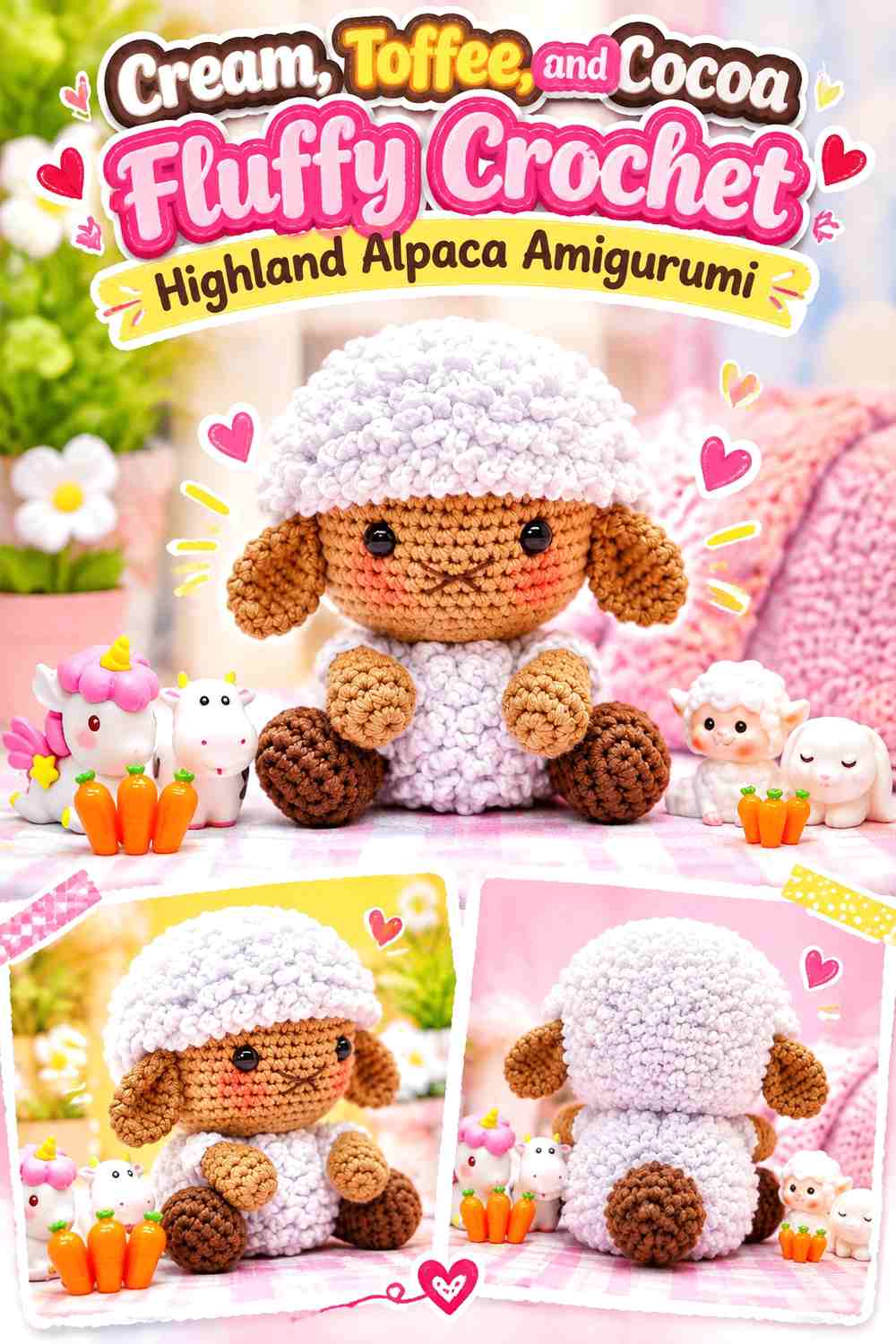
Cream fleece with a toffee-colored face creates more warmth than a gray or taupe treatment. Cocoa then supplies the darkest details without the sharpness of black. Keep the fluff concentrated over the upper body and head so the smoother toffee features remain easy to read.
The source demonstrates a complete fluffy sheep amigurumi, making it useful specifically for studying a pronounced fleece effect.
Give Cream Fluffy Fur Enough Space Around the Alpaca Head
A thick cream head covering can frame the face effectively, but stop the fluff before it hides the toffee muzzle. The visual boundary between fur and face is more important than adding another shade.
Repeat Toffee Beside Cocoa on the Cream Alpaca Legs
Toffee lower legs with small cocoa details create a gradual transition away from the cream torso. This keeps the darkest shade controlled and gives the warm supporting color a second purpose beyond the face.
Creator Credit: Odinka Wisanindhi
11. Warm Beige, Ivory, and Chocolate Cloud-Fur Crochet Highland Alpaca Amigurumi
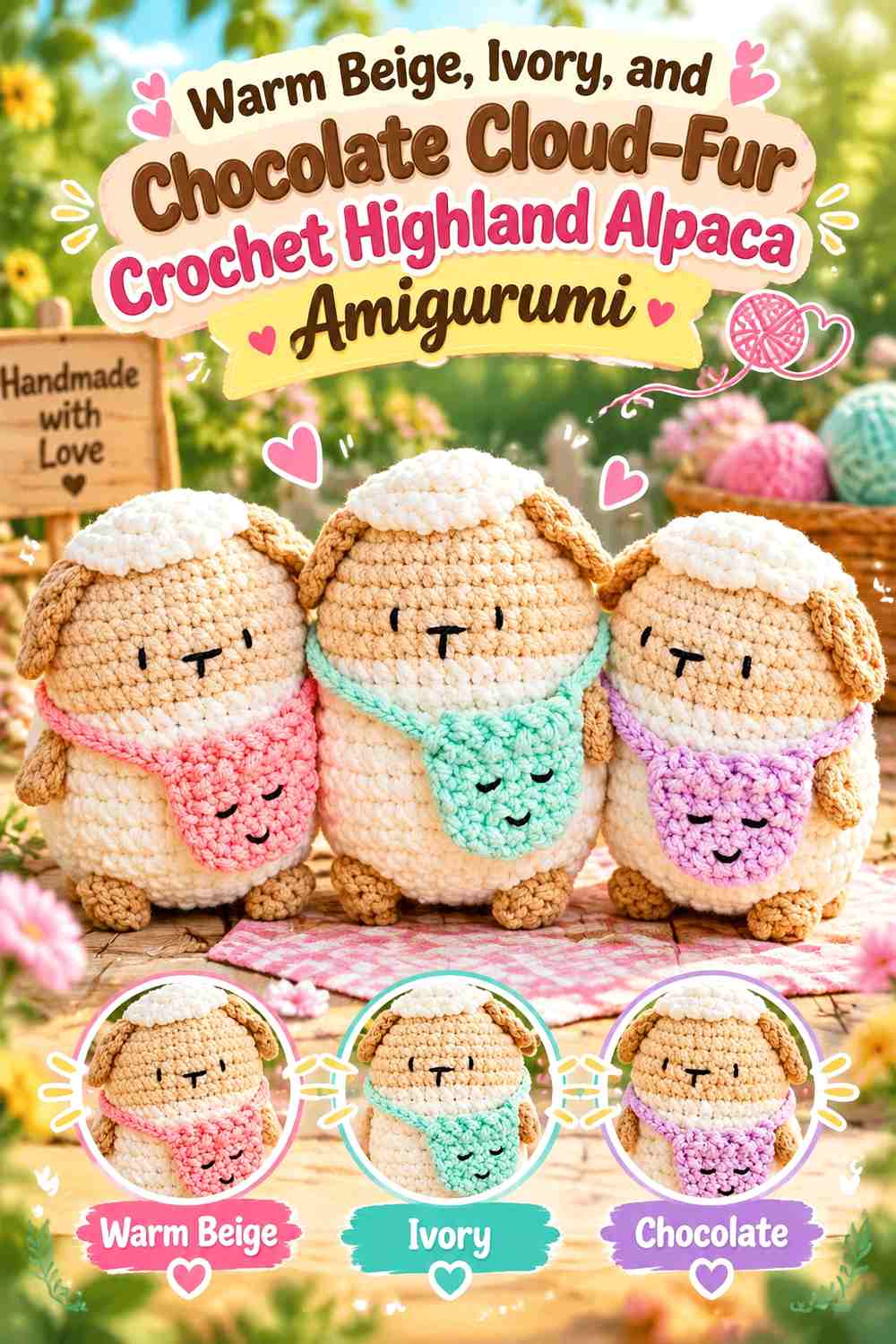
Warm beige creates a slightly deeper fleece than cream, ivory lightens the muzzle, and chocolate provides an earthy anchor. The palette is especially useful for a rounded, cloud-like fur effect where the texture already makes the body appear visually full.
The supporting fluffy-sheep tutorial is a curly-surface reference rather than an alpaca tutorial.
Keep Warm Beige Cloud Fur Consistent Across the Alpaca Body
Avoid introducing ivory throughout every raised section. A consistent beige fleece makes the curls easier to read collectively and keeps the body from looking spotted.
Use Ivory and Chocolate to Build a Clear Warm Beige Alpaca Face
Ivory should carry the larger facial area, with chocolate limited to the nose and similarly small details. This keeps the eye drawn to the expression rather than a dark central patch.
Creator Credit: puffy hook
12. Ecru, Taupe, and Espresso Popcorn-Fur Crochet Highland Alpaca Amigurumi

Ecru creates a calm light base for raised popcorn-like fleece. Taupe can cover the smoother face and ears, while espresso defines the smallest features. Because popcorn texture is visually substantial, this palette should remain simple.
The supporting sheep tutorial uses popcorn-style texturing, making it useful as a raised-fleece adaptation reference.
Let Ecru Popcorn Texture Lead the Highland Alpaca Body
Keeping the dimensional stitches ecru lets the texture create the shadows. Alternating several colors within individual raised sections would make the surface more difficult to read.
Use Taupe Around the Ecru Alpaca Muzzle Before Adding Espresso
Taupe provides a middle value between the pale fleece and darkest details. This makes espresso effective in very small amounts and stops the face from becoming stark.
Creator Credit: Ambros Crochet
13. Cream, Mocha, and Cinnamon Bobble-Fur Crochet Highland Alpaca Amigurumi

Cream can dominate a bobble-textured coat while mocha creates a deeper face and cinnamon adds a warmer secondary note. Unlike a simple two-neutral palette, this version works best when cinnamon is assigned one limited feature rather than scattered across the whole body.
The supporting sheep source demonstrates raised popcorn or bobble-like fleece construction, making it relevant to the curly-fur treatment rather than the alpaca body shape.
Keep Cream Bobble Fur Separate From the Mocha Alpaca Face
Stop the raised cream texture clearly where the smooth mocha face begins. That change in both surface and value makes the alpaca’s expression easier to see.
Use Cinnamon as a Small Accent Against Cream and Mocha
Cinnamon can work inside the ears or on selected lower-leg areas. Giving it a defined location preserves the three-color hierarchy and prevents the natural palette from becoming unnecessarily patchy.
Creator Credit: Tejiendo Perú
14. Camel, Ivory, and Espresso Compact Crochet Highland Alpaca Amigurumi
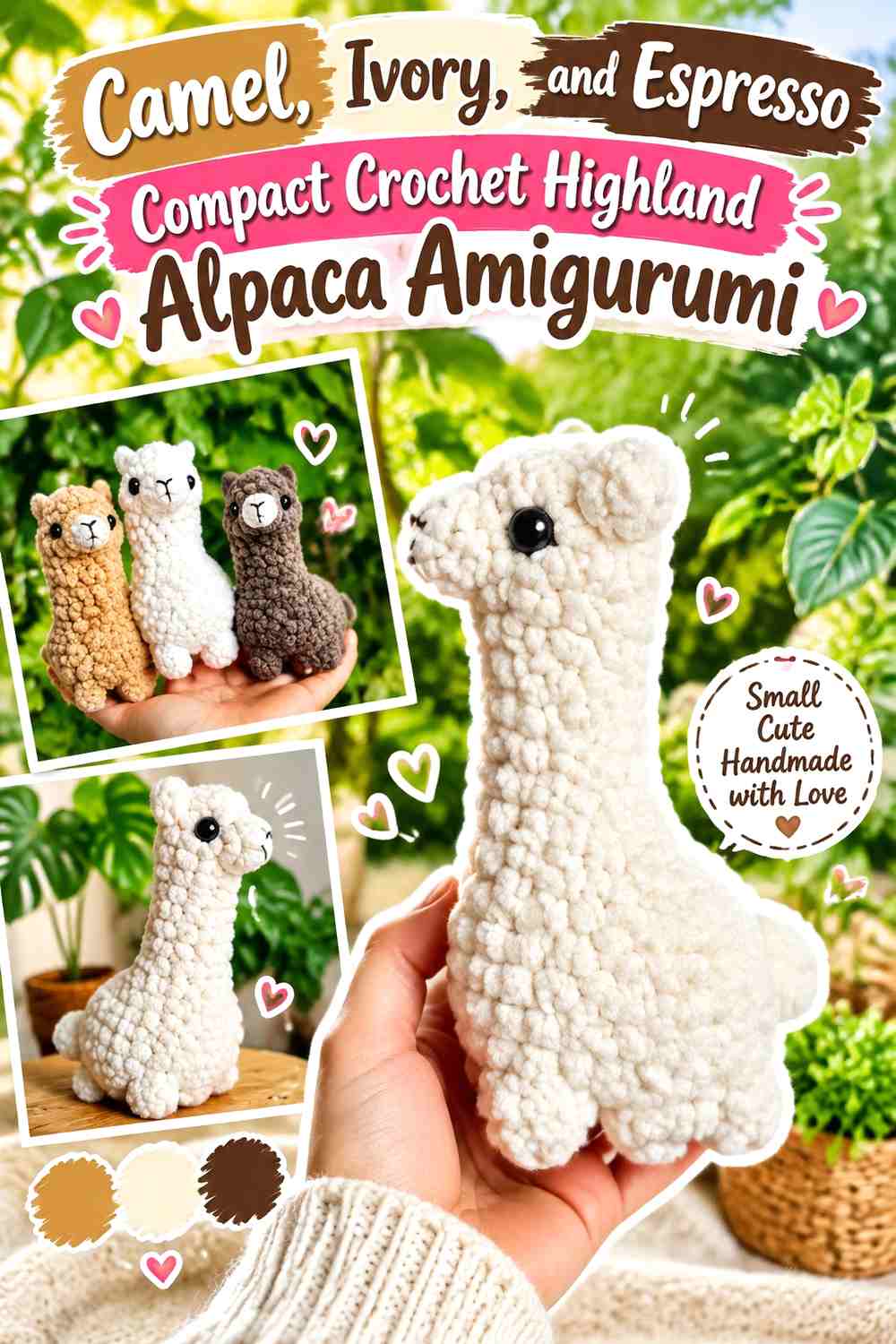
Camel gives a compact amigurumi a strong warm identity, while ivory opens up the face and espresso defines the smallest features. On a smaller alpaca, avoid dividing the body into too many tiny color sections because the curly treatment already introduces visual detail.
Let Camel Cover Most of the Compact Alpaca Body
A single camel body field keeps the small silhouette clear. Curly surface embellishment can then provide the Highland character without relying on extra color changes.
Keep Ivory Broader Than Espresso on the Camel Alpaca Face
Ivory can cover the muzzle or face patch, while espresso remains limited to the nose and similarly tiny details. The larger pale area prevents the expression from disappearing against the camel coat.
Creator Credit: Crochet with Sahar
15. Oatmeal, Rust Brown, and Cream Rustic Crochet Highland Alpaca Amigurumi
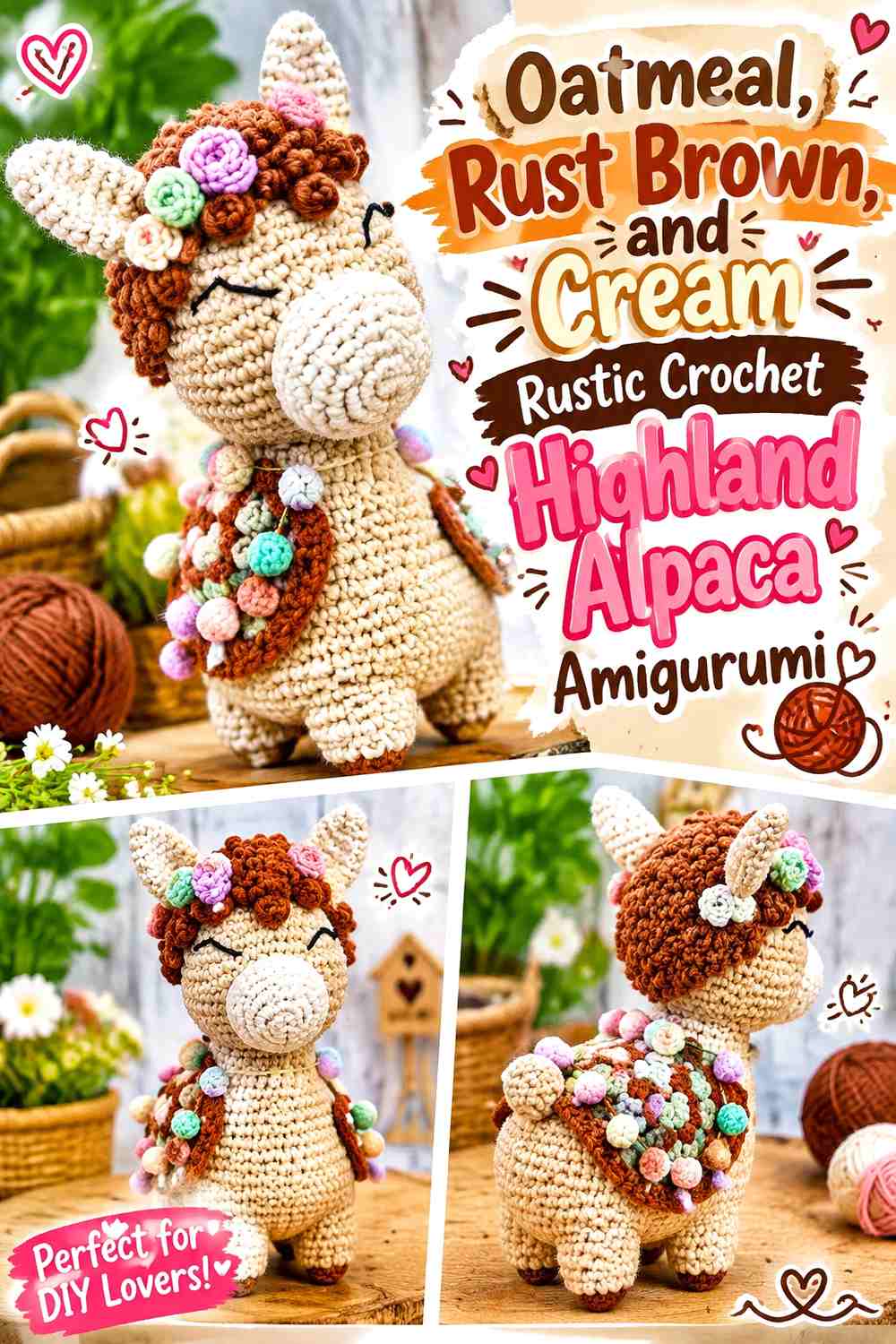
Rust brown gives this alpaca the strongest reddish earthy accent in the collection. Oatmeal should still lead through most of the fleece, while cream can lighten the muzzle and rust brown can concentrate on the face, ears, or lower limbs.
The linked tutorial teaches a complete llama amigurumi, providing a related long-necked animal construction reference for the Highland-alpaca adaptation.
Keep Oatmeal Dominant Over Rust Brown in the Curly Fleece
Rust brown is visually strong enough that it does not need equal coverage. Give oatmeal most of the curly body so the finished alpaca remains light and woolly.
Use Cream to Separate Oatmeal From Rust Brown on the Alpaca Face
A cream muzzle provides a lighter break between the neutral fleece and warm brown facial areas. If oatmeal and cream are too similar in your chosen yarns, keep cream only on the smoothest facial section so texture helps reinforce the difference.
Creator Credit: Mundo Heras
16. Soft Cream, Sand, and Cocoa Curly-Fleece Crochet Highland Alpaca Amigurumi
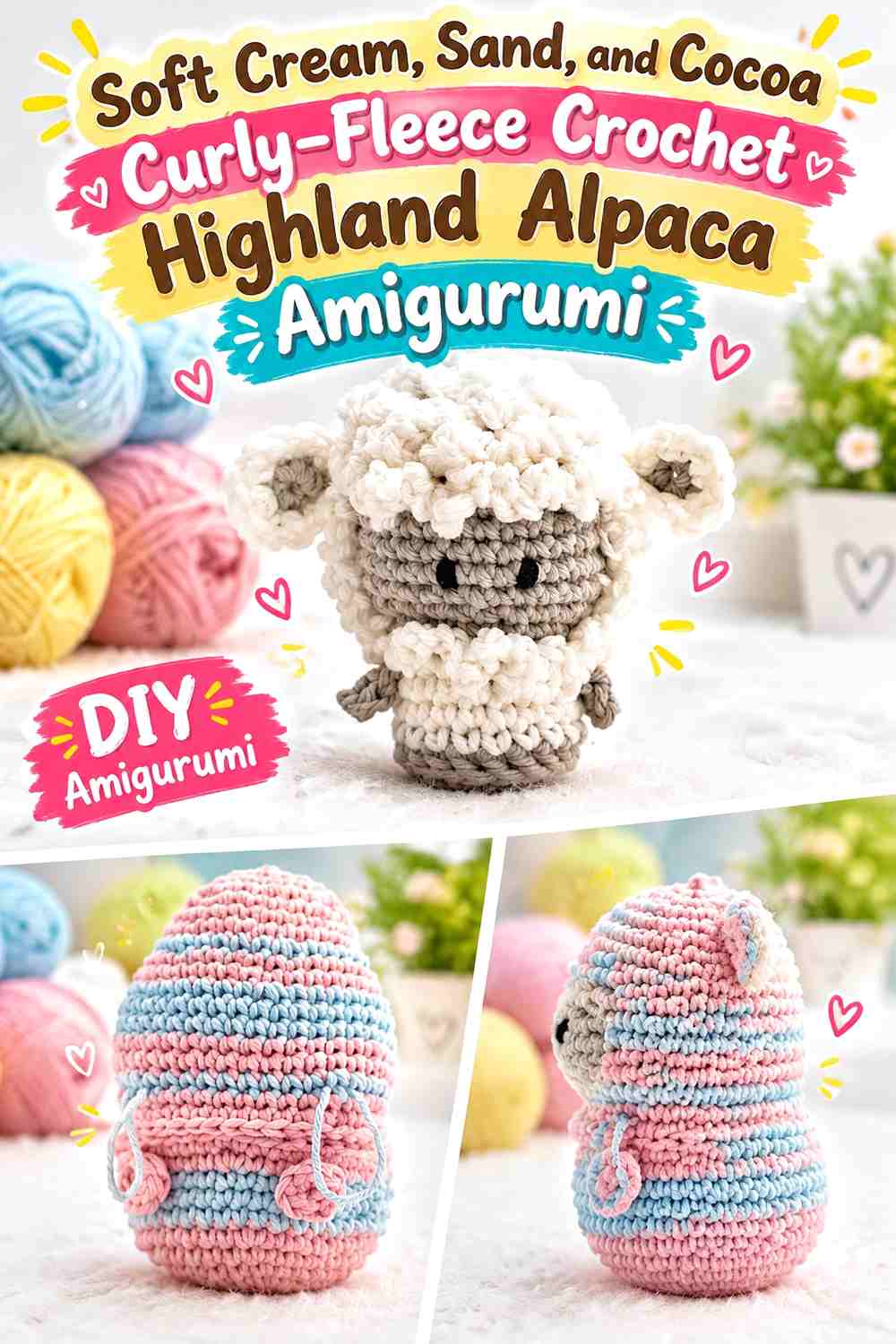
Soft cream, sand, and cocoa create the gentlest palette in the collection. Cream can form the curly fleece, sand can handle the face and ears, and cocoa can define the nose and feet. This combination is useful when you want the fleece texture to be clearly visible without strong color blocking.
The supporting lamb tutorial includes a distinct fur stage, so it is useful for adapting a textured fleece concept to a separate alpaca construction.
Let Soft Cream Curly Fleece Surround the Sand Alpaca Face
Keep the cream texture fuller around the forehead and neck but allow a clean boundary around the smooth sand muzzle. That contrast in surface treatment keeps two light neutrals distinguishable.
Use Cocoa as the Smallest Color Against Soft Cream and Sand
Cocoa needs very little area to anchor this pale palette. A nose, selected hoof details, or another small repeated feature is enough; large cocoa patches would change the calm cream-and-sand balance.
Creator Credit: Little Crochet Farm
Which Curly-Fur Highland Alpaca Palette Should You Choose?
For the lightest woolly look, choose cream with cinnamon and espresso, natural cream with camel and dark brown, or soft cream with sand and cocoa. The pale fleece makes raised loops, bobbles, and curls easier to see because their shadows do much of the visual work.
Oatmeal with camel and cocoa, biscuit with cream and cocoa, or warm beige with ivory and chocolate gives the alpaca a slightly deeper natural palette without making the coat dark.
For a richer animal, caramel with oatmeal and walnut or oatmeal with rust brown and cream introduces stronger warmth. Ivory with warm gray and charcoal is the coolest neutral option, while ecru with taupe and espresso gives a restrained tonal result that puts the raised texture first.
Conclusion
The strongest crochet Highland alpaca amigurumi ideas treat curly fur as part of the color plan rather than an extra embellishment. Raised texture creates its own lights and shadows, so a simple three-color palette can carry much more visual depth than it would on completely smooth amigurumi.
Use cream, oatmeal, ecru, or warm beige when you want the curls to remain especially visible. Camel, cinnamon, toffee, taupe, or rust brown can distinguish the muzzle, ears, and legs, while cocoa, espresso, charcoal, or chocolate should usually stay confined to smaller defining details.
For the closest alpaca construction, follow one of the alpaca or llama tutorial references. When using a sheep or lamb source, take only the relevant fluffy-fleece concept and apply it to an appropriate alpaca construction rather than treating the source as an exact Highland alpaca project.
Frequently Asked Questions
What colors work well for a crochet Highland alpaca with curly fur?
Cream, oatmeal, ecru, beige, camel, taupe, cinnamon, and natural brown shades are useful starting points. Give the fleece one dominant color, then choose a smoother face shade with enough light/dark separation to remain visible inside the curls.
Which color shows crochet curly fur most clearly?
Light and medium-light colors such as cream, ivory, oatmeal, ecru, and beige tend to make the shadows between raised stitches easier to see. Dark fleece can still work, but very fine texture may be less obvious from a distance.
Should the Highland alpaca face use the same color as the curly fleece?
It can, but using a slightly different face shade often makes the muzzle easier to distinguish. You can also create separation through texture by keeping the face smooth while the surrounding head and neck are curly.
How many colors should I use on a curly-fur alpaca amigurumi?
Three roles are usually sufficient: a dominant fleece shade, a supporting face or leg color, and a small dark accent. Adding more colors is most useful when each one has a specific location rather than simply increasing variety.
Can I use a sheep texture tutorial for crochet alpaca fur?
Yes, as a texture reference. Bobble, popcorn, fuzzy-yarn, or other fleece techniques shown on sheep can inspire an alpaca surface, but follow an alpaca or llama construction for the animal’s body shape rather than assuming the sheep pattern produces an alpaca.
How do I stop curly crochet fur from hiding the alpaca’s face?
Keep the muzzle and important facial areas smoother and limit raised texture close to small features. A contrasting face color also helps, especially when the surrounding curls are dense.
Should the ears and legs match the Highland alpaca’s face color?
They can, and doing so is an effective way to repeat the supporting shade. Matching the muzzle, inner ears, and lower legs can make a three-color palette feel connected while leaving the main curly-fleece shade dominant.