Crochet baby sea turtles offer more color-planning space than their small size suggests. The domed shell can carry the darkest or most decorative shade, while the head, belly, and broad flippers can stay lighter so the turtle silhouette remains easy to recognize.
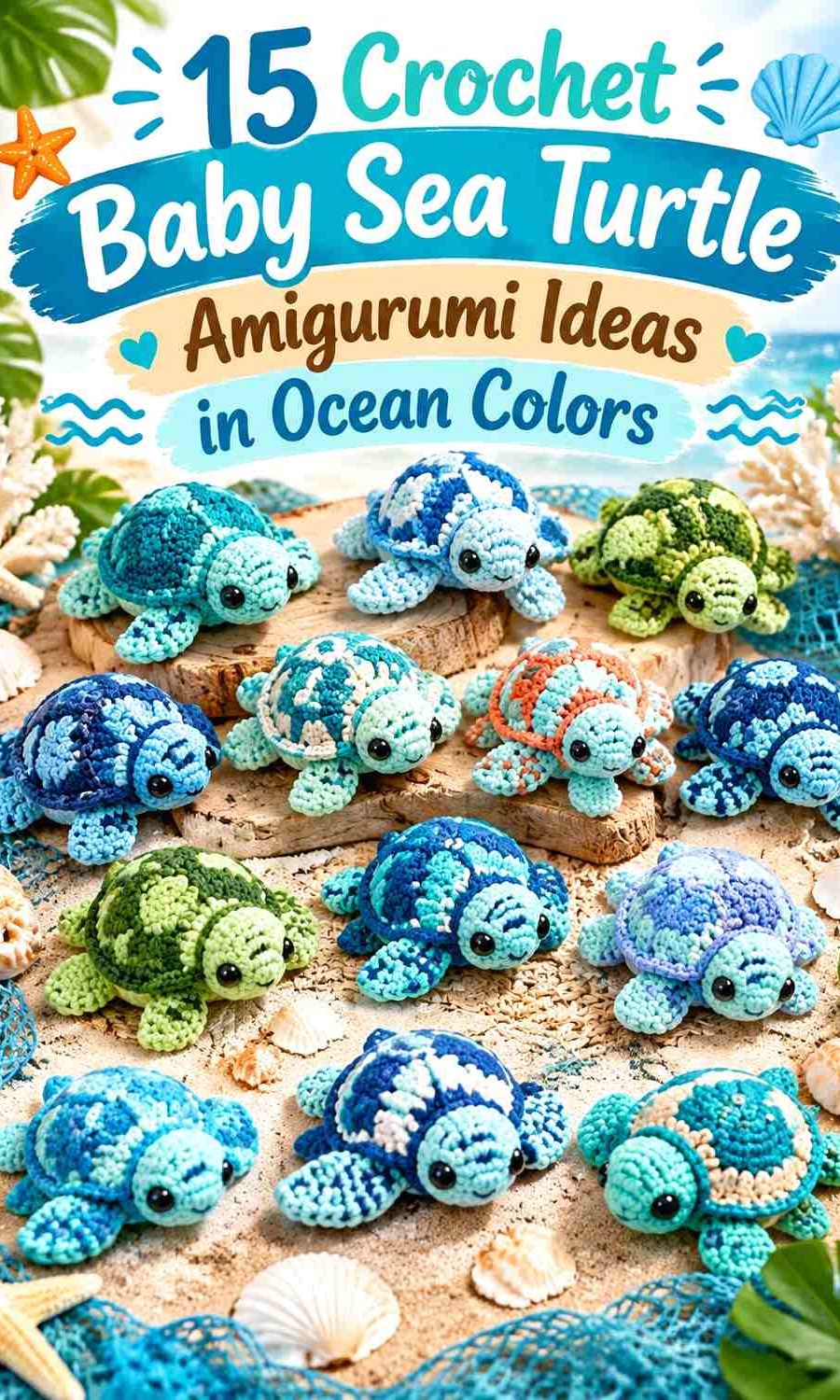
Ocean colors do not have to mean using one green body with one blue shell every time. Lagoon teal can be paired with seafoam and sand, turquoise can sit beside coral, deep ocean blue can frame pale mint, and muted sage can create a quieter coastal version. The important part is deciding which color leads and making sure the shell remains distinct from the body.
The tutorials below support sea turtle, baby turtle, mini turtle, or related turtle amigurumi construction. The ocean-inspired palettes are editorial adaptations rather than claims about the colors used by each creator.
Quick List
- Lagoon Teal, Seafoam, and Sand Crochet Baby Sea Turtle Amigurumi
- Aqua, Coral, and Cream Crochet Baby Sea Turtle Amigurumi
- Deep Teal, Turquoise, and Oatmeal Crochet Baby Sea Turtle Amigurumi
- Sea Glass Green, Ivory, and Ocean Blue Crochet Baby Sea Turtle Amigurumi
- Navy, Aqua, and Pale Sand Crochet Baby Sea Turtle Amigurumi
- Mint, Dusty Blue, and Cream Crochet Baby Sea Turtle Amigurumi
- Turquoise, Coral, and Beige Crochet Baby Sea Turtle Amigurumi
- Seafoam, Shell Pink, and Cream Crochet Baby Sea Turtle Amigurumi
- Cobalt, Teal, and Warm White Crochet Baby Sea Turtle Amigurumi
- Eucalyptus Green, Lagoon Blue, and Oatmeal Crochet Baby Sea Turtle Amigurumi
- Reef Green, Coral, and Ivory Crochet Baby Sea Turtle Amigurumi
- Denim Blue, Seafoam, and Sand Crochet Baby Sea Turtle Amigurumi
- Deep Ocean Blue, Mint, and Pearl Cream Crochet Baby Sea Turtle Amigurumi
- Turquoise, Dusty Rose, and Oatmeal Crochet Baby Sea Turtle Amigurumi
- Teal, Sage, and Sandy Beige Crochet Baby Sea Turtle Amigurumi
Give the Crochet Sea Turtle Shell Its Own Color Role
The shell occupies a concentrated area in the middle of the amigurumi, so it can handle a deeper or more saturated shade than the head and flippers. A teal shell against a seafoam body, for example, gives the turtle definition without introducing extra outlining.
If the shell and body are close in value, use an edging color, lighter belly, or small shell markings to restore separation. Avoid relying only on different hue names; turquoise and green can still merge visually when their lightness is very similar.
Keep Ocean-Colored Flippers Easy to See
The flippers create the characteristic sea-turtle silhouette. When they are the same dark color as the shell, their edges can disappear where the pieces meet.
A lighter body shade such as seafoam, mint, cream, ivory, or pale sand can help. Another option is to keep the flippers medium-toned and reserve the darkest ocean color for the shell alone.
Use Coral and Sand as Controlled Ocean Accents
Coral, shell pink, warm beige, and sandy neutrals can keep blue-and-green palettes from feeling repetitive. They are most effective when given specific locations such as shell markings, edging, the belly, or a small repeating detail.
If the turtle already uses two saturated ocean blues or greens, let the third color be quieter. Three equally strong shades can make a small amigurumi shell look busier than intended.
1. Lagoon Teal, Seafoam, and Sand Crochet Baby Sea Turtle Amigurumi
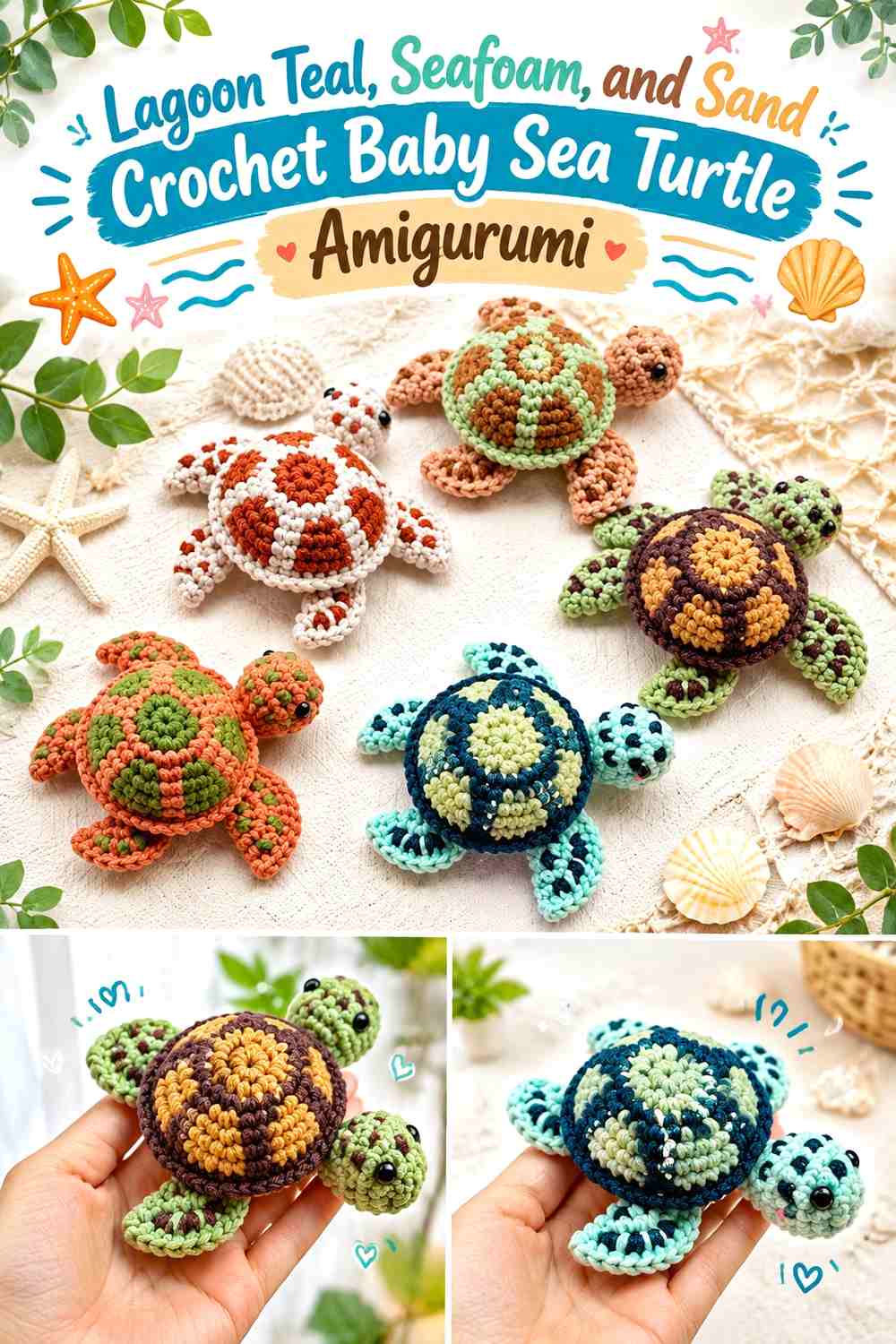
Lagoon teal can lead across the shell, while seafoam covers the head and flippers and sand creates a quiet belly or shell accent. This gives the turtle an immediately aquatic direction without making every surface the same blue-green.
The supporting Chubby Cheeks tutorial is a full sea-turtle amigurumi project with separate shell, belly, fins, head, assembly, and shell detailing. YouTube
Let Lagoon Teal Dominate the Crochet Baby Sea Turtle Shell
Keep lagoon teal across most of the domed shell so it becomes the visual anchor. If shell texture or markings are part of your chosen construction, use seafoam or sand in smaller amounts rather than splitting all three colors equally.
Keep Seafoam Flippers Lighter Than Lagoon Teal
Seafoam gives the head and flippers enough contrast to remain visible beside the darker shell. Repeating the same seafoam on all four flippers also keeps the small turtle from becoming overly color-blocked.
Use Sand to Calm Lagoon Teal and Seafoam
Sand works well on the underside or selected shell details. Its warmer neutral character gives the two cool colors a break without creating a bright third focal point.
Creator Credit: Chubby Cheeks
2. Aqua, Coral, and Cream Crochet Baby Sea Turtle Amigurumi
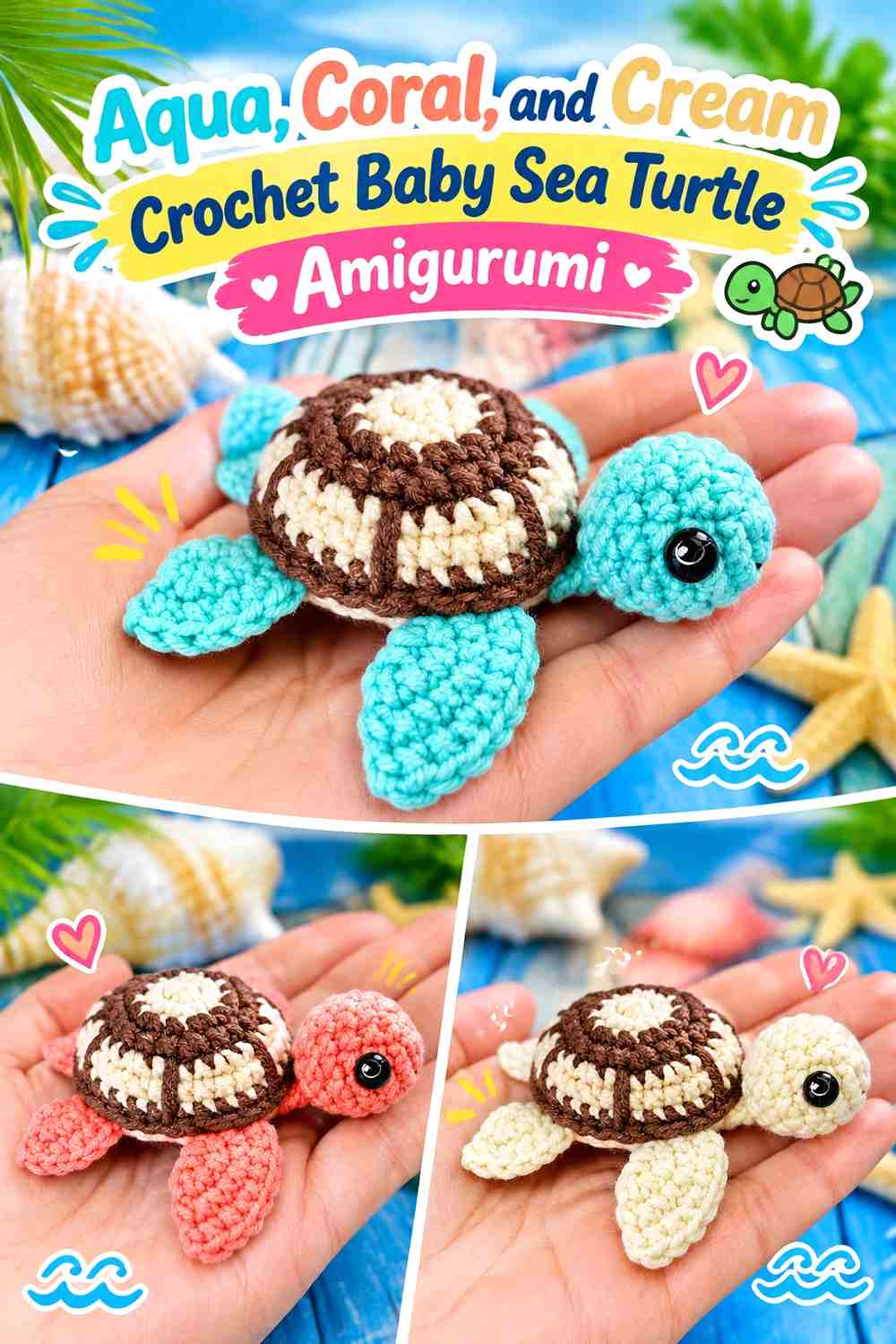
Aqua makes a light ocean-colored body, coral provides a warm reef-inspired shell accent, and cream keeps the two stronger hues separated. Let aqua cover the head and flippers, while coral occupies the shell or selected shell sections.
Pattern4Craft’s source specifically demonstrates a baby sea turtle amigurumi with head, front and hind legs, tail, shell, belly, assembly, and embroidery. YouTube
Let Aqua Carry the Crochet Baby Sea Turtle Flippers
Broad aqua flippers keep the silhouette light and watery. Avoid interrupting each flipper with coral because small warm sections may make the limbs look visually fragmented.
Use Coral Mainly on the Aqua Sea Turtle Shell
Coral becomes more convincing as a focal color when concentrated on the shell. Cream edging or details can stop the warm shell from sitting too abruptly against the cooler aqua body.
Repeat Cream Around Aqua and Coral Where Details Need Definition
Cream can work on the belly, shell border, or a limited embroidered feature. Keep enough cream visible to create separation without allowing it to replace aqua as the main body color.
Creator Credit: Pattern4Craft
3. Deep Teal, Turquoise, and Oatmeal Crochet Baby Sea Turtle Amigurumi
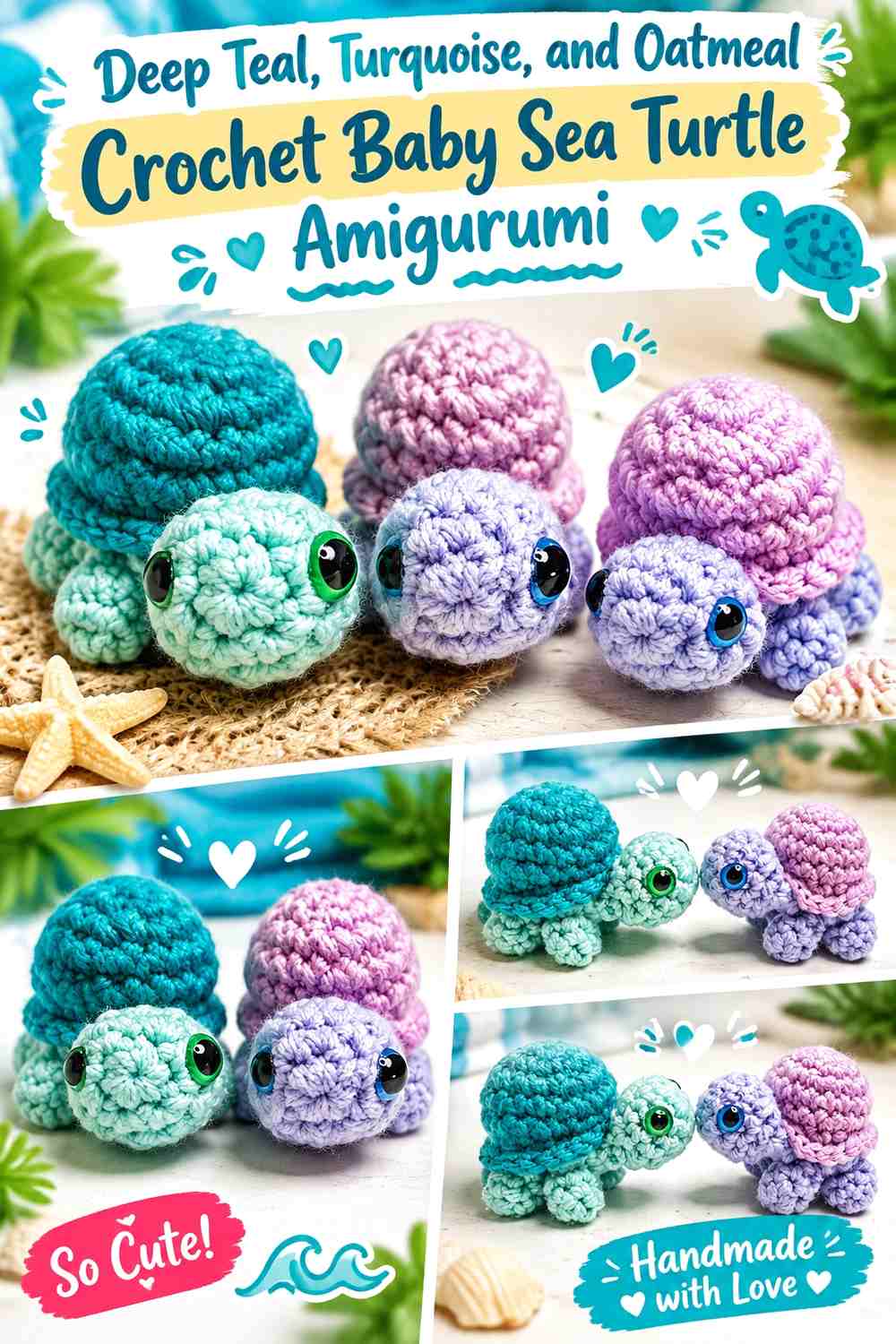
Deep teal and turquoise provide a tonal ocean palette, so oatmeal has an important contrast role. Let deep teal carry the shell and turquoise cover the head and limbs, then use oatmeal where those neighboring blue-greens need a clearer boundary.
Heather Corinne’s source is directly for a baby turtle amigurumi and uses separately made shell, belly, head, arms, and legs.
Keep Deep Teal on the Crochet Baby Sea Turtle Shell
A deep-teal shell gives the small turtle enough visual weight in the center. Turquoise can then remain brighter and more visible around the outside through the head and flippers.
Put Oatmeal Between Deep Teal and Turquoise Details
If shell edging or small markings disappear where teal meets turquoise, oatmeal can create a useful neutral break. It is especially suitable on the belly because it lightens the underside without adding another saturated shade.
Creator Credit: Heather Corinne
4. Sea Glass Green, Ivory, and Ocean Blue Crochet Baby Sea Turtle Amigurumi

Sea glass green gives the turtle a soft body color, ocean blue adds depth to the shell, and ivory provides the lightest visual point. This palette works particularly well when you want the amigurumi to feel coastal rather than brightly tropical.
Rose and Lily Crochet’s tutorial demonstrates a complete turtle amigurumi including the shell, body, head, legs, tail, and final assembly.
Let Sea Glass Green Cover the Crochet Turtle Head and Flippers
Using the same softened green from the head through all four flippers keeps the animal shape cohesive. The shell can then carry the stronger ocean blue without making the turtle feel visually divided.
Use Ivory to Outline Ocean Blue Against Sea Glass Green
A small ivory edge or underside can separate the blue shell from the green body. Avoid scattering ivory through every shell section if the aim is a calm three-color palette.
Creator Credit: Rose and Lily Crochet
5. Navy, Aqua, and Pale Sand Crochet Baby Sea Turtle Amigurumi
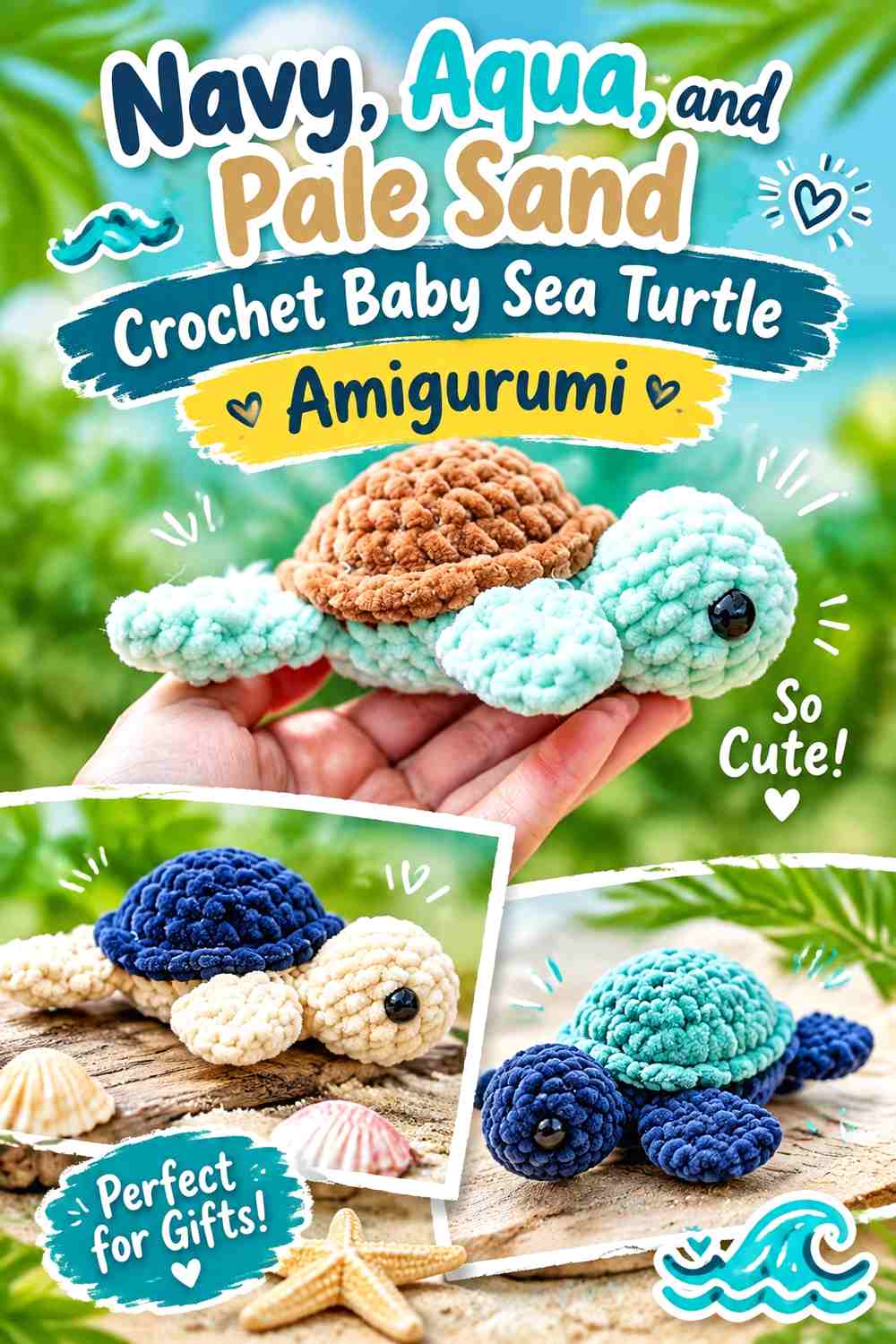
Navy gives this turtle the darkest shell in the collection. Aqua should therefore have enough area across the head and flippers to keep the amigurumi from becoming visually heavy, while pale sand can soften the underside or shell markings.
One Cent Crochet’s source is a full no-sew turtle tutorial covering the head, fins, and shell construction.
Reserve Navy for the Crochet Baby Sea Turtle Shell
Navy needs little help becoming dominant. Keeping it mainly on the shell allows aqua flippers to remain clearly visible around all sides.
If you add navy to the limbs as well, use it only in very small details so the shell retains a distinct role.
Let Pale Sand Lighten the Navy and Aqua Palette
Pale sand works well underneath the turtle or around selected shell details. It is especially useful if your particular navy and aqua yarns are both dark enough to merge in shadow.
Creator Credit: One Cent Crochet
6. Mint, Dusty Blue, and Cream Crochet Baby Sea Turtle Amigurumi
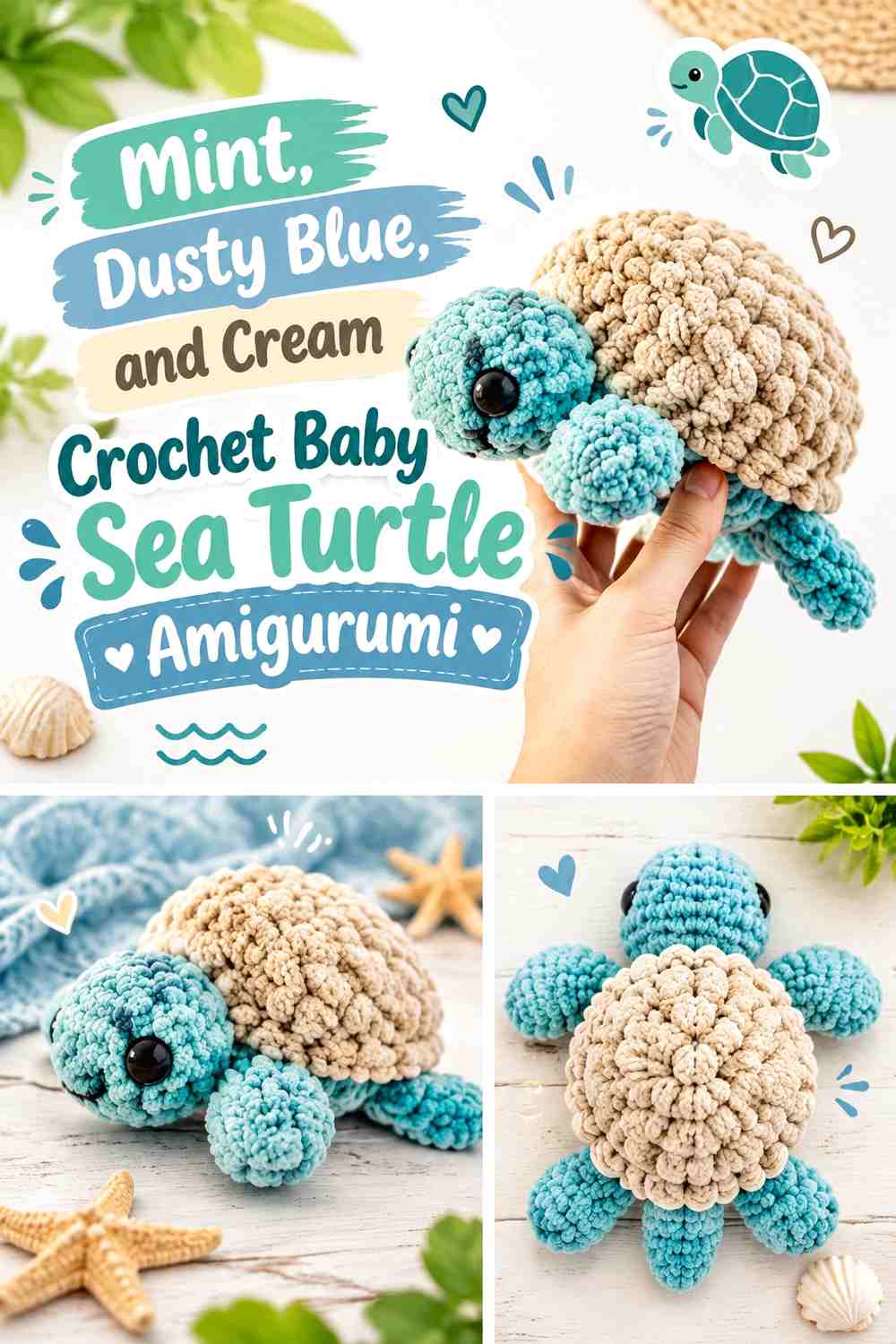
Mint and dusty blue create a softer ocean palette, while cream keeps the small turtle from becoming one continuous pale block. Use dusty blue on the shell, mint on the head and flippers, and cream on the underside or selected shell detailing.
The Mary Jay’s tutorial covers a complete amigurumi turtle with shell/body, head, tail, legs, and assembly.
Keep Mint Flippers Distinct From the Dusty Blue Shell
Mint should remain noticeably lighter or greener than the shell. If the shades are too close, the flippers can visually disappear where they meet the body.
Use Cream to Protect Mint and Dusty Blue Contrast
Cream is helpful along the underside or as a controlled shell detail. It creates definition without introducing a color that feels unrelated to the gentle ocean palette.
Creator Credit: The Mary Jay
7. Turquoise, Coral, and Beige Crochet Baby Sea Turtle Amigurumi
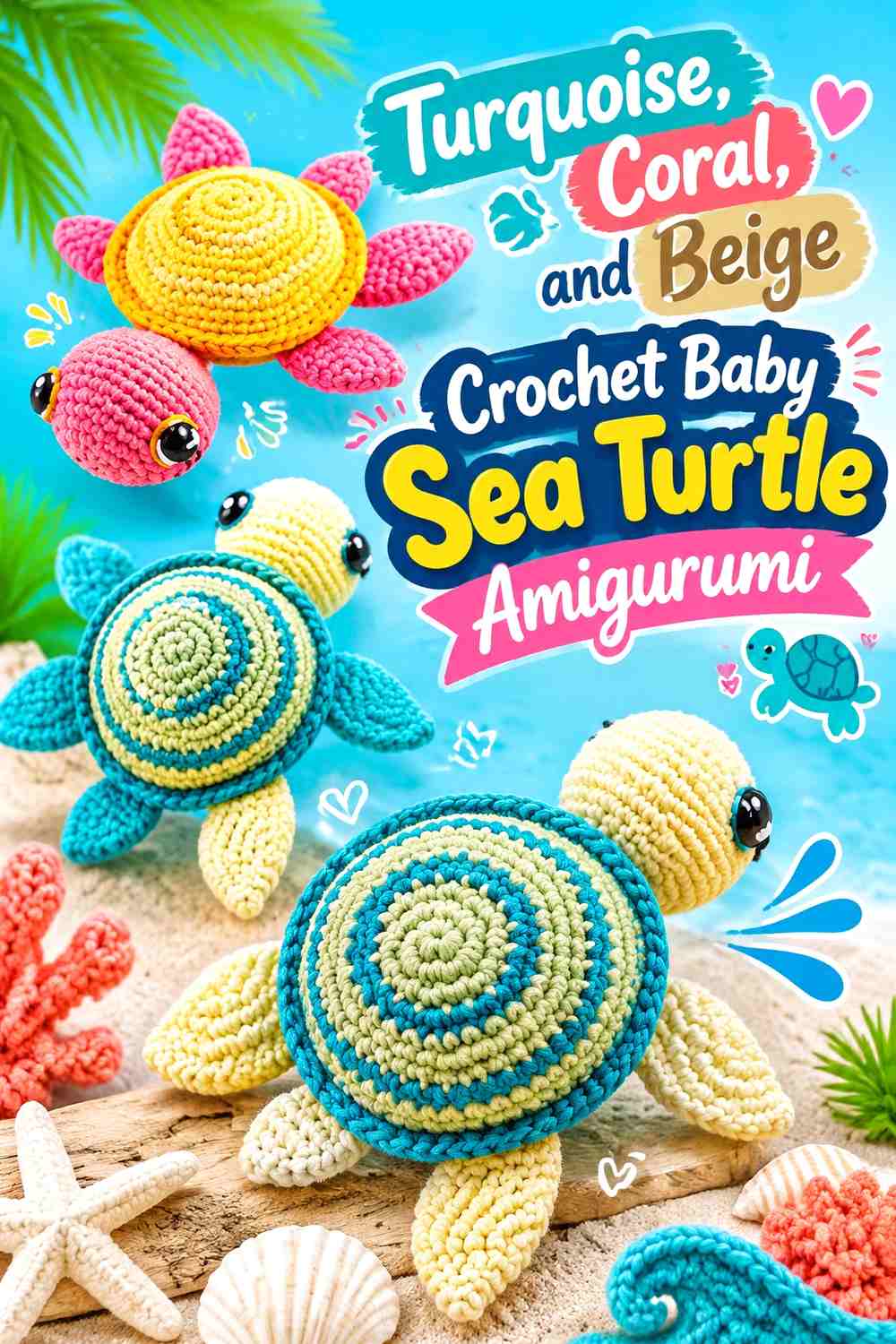
Turquoise and coral create one of the strongest warm-cool relationships here. Beige keeps that contrast from becoming overly sharp and can serve as the belly or a quieter shell border.
Little Crochet Farm’s tutorial demonstrates a turtle amigurumi with the head, flippers, tail, and shell incorporated into a low-sew construction.
Let Turquoise Lead the Crochet Baby Sea Turtle Body
Keep turquoise consistent across the head and limbs so coral remains a deliberate shell color rather than a competing body shade.
Keep Coral Concentrated on the Turquoise Sea Turtle Shell
Coral can cover the whole top shell or selected larger sections. Avoid placing many tiny coral marks across turquoise flippers, where the warm accent could distract from their shape.
Use Beige Beneath Turquoise and Coral
A beige belly gives both stronger colors a neutral foundation. If beige also appears in shell edging, repeat it sparingly so the warm neutral does not become the main impression.
Creator Credit: Little Crochet Farm
8. Seafoam, Shell Pink, and Cream Crochet Baby Sea Turtle Amigurumi

Seafoam provides the aquatic base, shell pink adds a soft decorative direction, and cream prevents the palette from becoming too pastel and blended. Let seafoam dominate the body and give pink a clearly defined shell role.
HoneyCookie Crochet’s turtle plushie tutorial covers front and hind fins, head, upper and lower shell, shell patterning, assembly, and facial placement.
Keep Seafoam Dominant Around the Shell Pink Crochet Turtle
Use seafoam on the head and all four flippers so the turtle still reads primarily as an ocean-colored animal. Shell pink can then provide a noticeable but contained decorative shift.
Put Cream Between Seafoam and Shell Pink Where Values Are Similar
If the chosen pink and seafoam are both very pale, cream may not automatically create stronger value contrast. Compare all three together and use cream where it is visibly distinct, such as the belly or a border against a slightly deeper shell.
Creator Credit: HoneyCookie Crochet
9. Cobalt, Teal, and Warm White Crochet Baby Sea Turtle Amigurumi

Cobalt creates a strong shell focal point, teal gives the body a related but distinctly greener color, and warm white provides high-value separation. Keep the cobalt concentrated so the turtle does not become uniformly dark.
justMiko’s source demonstrates a complete one-piece no-sew turtle concept with fins, head, shell, and joining construction.
Let Cobalt Define the Crochet Baby Sea Turtle Shell
Cobalt can cover most of the shell because teal already gives the surrounding limbs their own strong identity. A warm-white shell detail can make the dome easier to read without adding another blue.
Use Warm White Sparingly Beside Cobalt and Teal
Warm white has enough contrast to work in small amounts. A belly, edging detail, or limited shell marking can provide all the light separation this deeper ocean palette needs.
Creator Credit: justMiko
10. Eucalyptus Green, Lagoon Blue, and Oatmeal Crochet Baby Sea Turtle Amigurumi
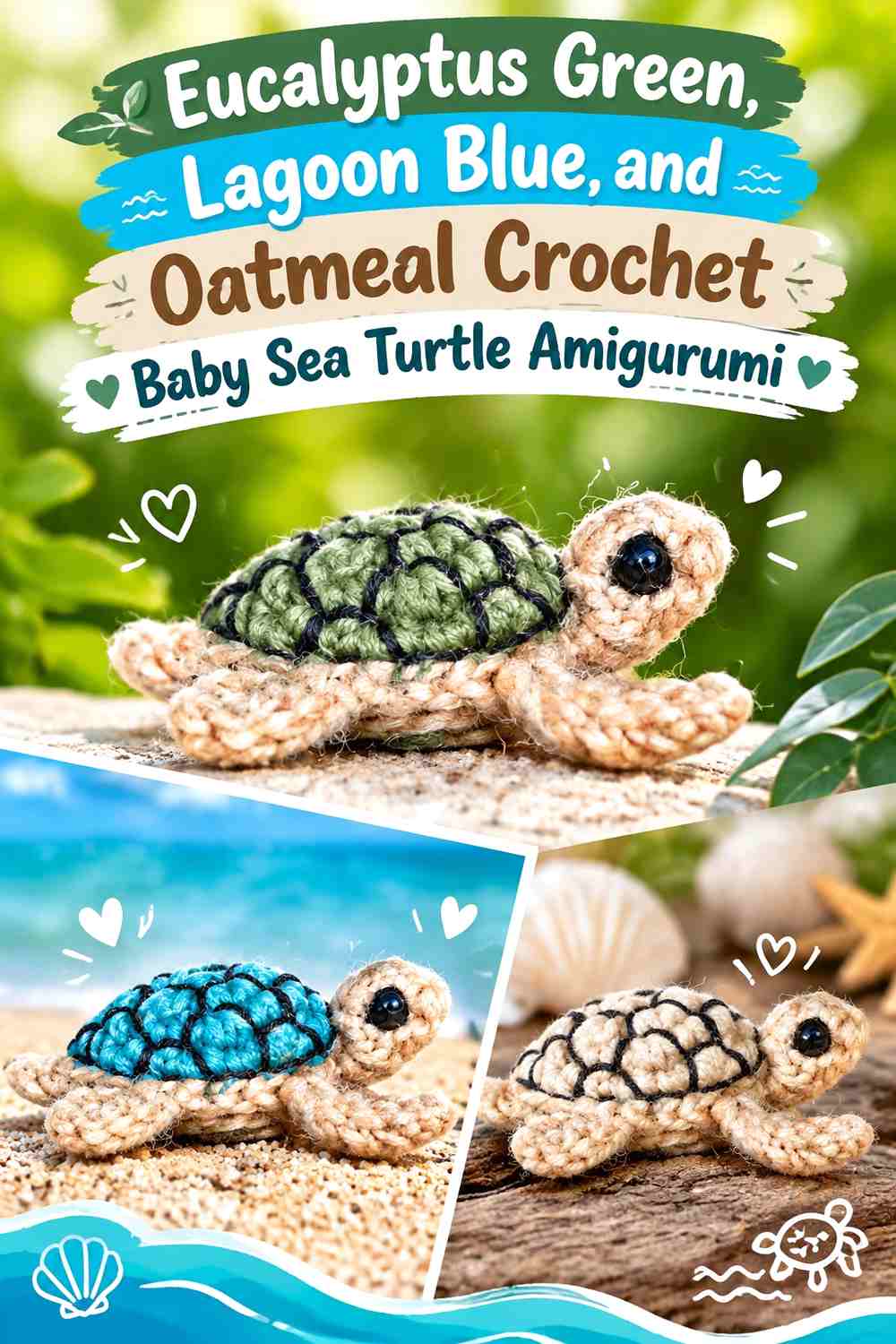
Eucalyptus green gives the body a muted botanical-ocean color, while lagoon blue adds more saturation to the shell. Oatmeal should remain neutral and light, helping the shell and body stay distinct on a very small turtle.
One Funny Moose’s source is a mini turtle amigurumi video tutorial, making it a useful compact-turtle construction reference for this baby sea-turtle palette.
Use Eucalyptus Green Across the Crochet Baby Sea Turtle Body
Keeping eucalyptus green consistent through the head and limbs gives the tiny turtle continuity. The color is muted enough to allow a stronger lagoon-blue shell to lead without competing.
Let Oatmeal Separate Lagoon Blue From Eucalyptus Green
Oatmeal can form a belly or a small edge around the shell. On a miniature turtle, avoid turning it into numerous tiny markings because small neutral details may be lost at normal viewing distance.
Creator Credit: One Funny Moose
11. Reef Green, Coral, and Ivory Crochet Baby Sea Turtle Amigurumi

Reef green creates the main aquatic color, coral warms the shell, and ivory supplies the light contrast needed to keep the two saturated colors balanced. This palette can create a playful reef-inspired turtle without adding several unrelated brights.
The Knit Grit source demonstrates a themed turtle amigurumi rather than a naturalistic sea turtle, so use its turtle construction as the reference while applying the reef-green palette independently.
Keep Reef Green Continuous Across the Crochet Sea Turtle Flippers
The wide flippers are easier to recognize when they remain one clear body color. Let the coral decoration stay mostly on the shell instead of extending it across every limb.
Use Ivory to Calm Coral Beside Reef Green
Ivory can outline or interrupt stronger shell areas and can also carry the belly. A little repetition is enough to connect the neutral shade across the amigurumi.
Creator Credit: Knit Grit
12. Denim Blue, Seafoam, and Sand Crochet Baby Sea Turtle Amigurumi

Denim blue creates a muted shell that is darker than seafoam without approaching navy. Sand introduces a warm neutral that gives the palette a shoreline influence.
The Lanas y Ovillos source is a full turtle amigurumi tutorial and provides a related turtle construction reference for this sea-turtle color adaptation.
Let Denim Blue Cover the Crochet Baby Sea Turtle Shell
A broad denim-blue shell gives the turtle a distinct center without looking as dramatic as navy. Seafoam can then surround it through the flippers and head.
Put Sand Beneath Denim Blue and Seafoam
Sand is most useful as the belly or a limited shell detail. Keeping it below the turtle preserves the blue-green ocean impression from above while still adding a warmer supporting shade.
Creator Credit: Lanas y Ovillos
13. Deep Ocean Blue, Mint, and Pearl Cream Crochet Baby Sea Turtle Amigurumi

Deep ocean blue gives the shell substantial visual weight, mint brightens the flippers and head, and pearl cream supplies the lightest accents. This is a good palette when you want a clear dark-shell/light-body division.
Sweet Softies’ sea-turtle design is a no-sew amigurumi with curved flippers and a defined shell, making it a close construction reference for this idea.
Keep Deep Ocean Blue Centered on the Crochet Turtle Shell
Avoid extending deep blue over most of the head or flippers. Its concentration at the center makes the mint silhouette much easier to see.
Use Pearl Cream to Define Mint Against Deep Ocean Blue
Pearl cream can appear on the belly or a restrained shell edge. If the deep-blue shell is already highly textured, keep the cream accents simple so color and texture do not compete.
Creator Credit: Sweet Softies
14. Turquoise, Dusty Rose, and Oatmeal Crochet Baby Sea Turtle Amigurumi

Turquoise keeps the palette clearly ocean-inspired, while dusty rose provides a muted shell variation instead of a bright coral. Oatmeal acts as the neutral that keeps the combination soft.
Nicki’s Homemade Crafts provides a complete no-sew baby turtle tutorial, so the construction is a strong match even though this turquoise-and-dusty-rose palette is an independent adaptation.
Let Turquoise Carry the Crochet Baby Sea Turtle Body
Use turquoise continuously on the head and limbs. Dusty rose should remain mostly on top of the shell so the turtle retains a clear ocean-color foundation.
Keep Oatmeal Between Turquoise and Dusty Rose Where Needed
Oatmeal works well as an underside color and can be repeated subtly in shell edging. Because the pink is muted, avoid choosing an oatmeal so similar in value that the two colors visually merge.
Creator Credit: Nicki’s Homemade Crafts
15. Teal, Sage, and Sandy Beige Crochet Baby Sea Turtle Amigurumi
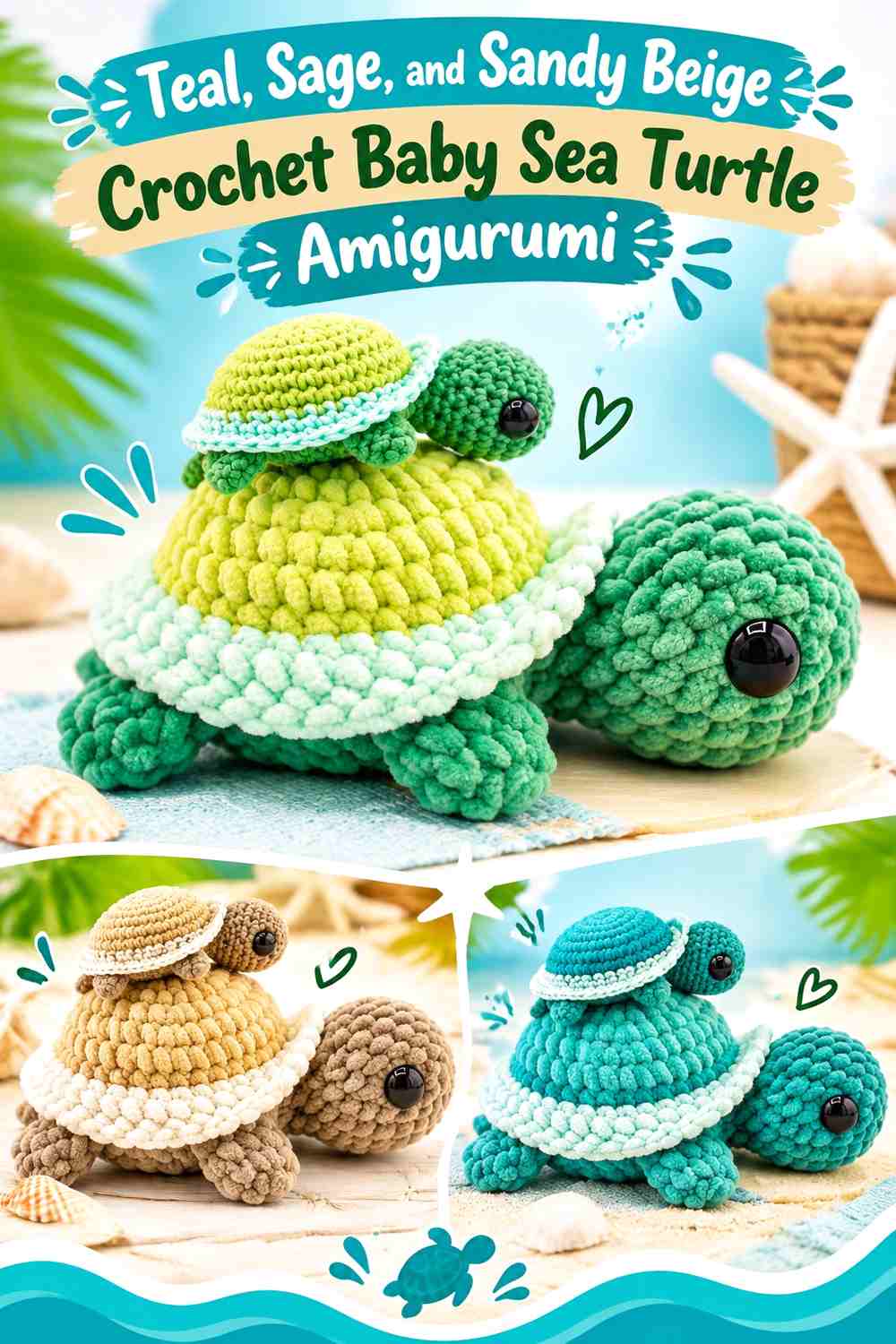
Teal, sage, and sandy beige create the quietest natural-ocean palette in the collection. Teal can lead on the shell, sage can cover the flippers and head, and sandy beige can remain underneath or appear in controlled shell details.
DIY Fluffies’ full mini-turtle tutorial demonstrates the complete amigurumi and includes both smaller cotton and larger plush-yarn possibilities, making it a useful construction reference for a baby sea-turtle adaptation.
Let Teal Stay Darker Than Sage on the Crochet Turtle Shell
The distinction between shell and body is the main source of structure in this subtle palette. If teal and sage are too close, deepen the teal or lighten the sage rather than adding a fourth color.
Use Sandy Beige to Warm the Teal and Sage Sea Turtle
Sandy beige gives the belly a shoreline-neutral effect and provides a useful contrast against cooler greens. Small beige shell details can work too, but keep the majority of the visible top surface teal.
Creator Credit: DIY Fluffies
Which Ocean Palette Works Best for a Crochet Baby Sea Turtle?
For the clearest classic ocean direction, lagoon teal with seafoam and sand, deep teal with turquoise and oatmeal, or teal with sage and sandy beige keeps blue-green shades in the leading roles.
If you want more contrast, navy with aqua, cobalt with teal, or deep ocean blue with mint creates a distinct dark-shell/light-body relationship. These palettes are particularly useful when you want the flippers to remain clearly visible around the shell.
For softer baby sea turtles, mint with dusty blue, seafoam with shell pink, or eucalyptus with lagoon blue reduces saturation. Aqua with coral, turquoise with coral, and reef green with coral gives the warmest reef-inspired options.
Conclusion
A strong crochet baby sea turtle palette should make the shell, head, and flippers readable as separate forms without turning a small amigurumi into a collection of tiny competing color blocks.
Use teal, navy, cobalt, denim, or lagoon blue when the shell should lead. Seafoam, mint, sage, eucalyptus, or aqua works well across the head and broad flippers, while cream, oatmeal, ivory, sand, or beige can lighten the underside and create separation.
Coral, dusty rose, and shell pink are most effective as controlled accents rather than automatically receiving the same amount of space as the ocean blues and greens. Follow each linked creator for the turtle construction demonstrated, then apply the proposed shell and body colors as your own adaptation.
Frequently Asked Questions
What colors work well for a crochet baby sea turtle?
Teal, aqua, turquoise, seafoam, sage, mint, navy, and ocean blue all suit the theme. Sand, cream, oatmeal, ivory, coral, or shell pink can provide contrast around the shell, belly, or smaller details.
Should the crochet sea turtle shell be darker than the flippers?
It can be, and that arrangement often makes the silhouette easier to read. A deeper teal, navy, or blue shell against lighter seafoam or mint flippers creates clear separation. A lighter shell can also work if the body provides enough contrast.
How can I make shell details visible on a small crochet turtle?
Keep the number of shell colors controlled and compare their light/dark values. Small markings need more separation than large color blocks. If two shell shades merge, use a lighter neutral or darker accent rather than adding more similar hues.
Can coral or pink work on a baby sea turtle amigurumi?
Yes. Coral, dusty rose, and shell pink can create reef-inspired or playful versions. Keeping teal, aqua, seafoam, or another ocean shade dominant helps the overall palette retain its marine direction.
Should the belly match the crochet sea turtle’s body?
It can, but a lighter belly in cream, ivory, oatmeal, or sand can create useful separation from the shell. This is particularly helpful when the shell and upper body already contain two similar blue-green shades.
Can I combine different turtle tutorials with these ocean palettes?
Use one tutorial for the construction you want rather than combining protected stitch sequences from multiple creators. The easiest adaptation is usually to keep the chosen tutorial’s construction intact and change only the color roles for the shell, body, belly, and details.
What should I consider if the crochet baby sea turtle is intended for a small child?
Avoid assuming plastic safety eyes or other small attached pieces are suitable for every age. Consider embroidered facial details and secure finishing appropriate to the intended recipient, and check the materials you are using before gifting the amigurumi.