Sleepy corgi amigurumi combines two features that deserve careful planning: the recognizable corgi coat pattern and a relaxed body position. A warm tan or ginger back can establish the breed-inspired look, cream can open up the muzzle, chest, and paws, and a darker brown or charcoal detail can keep the ears and face defined even when the head is resting close to the body.
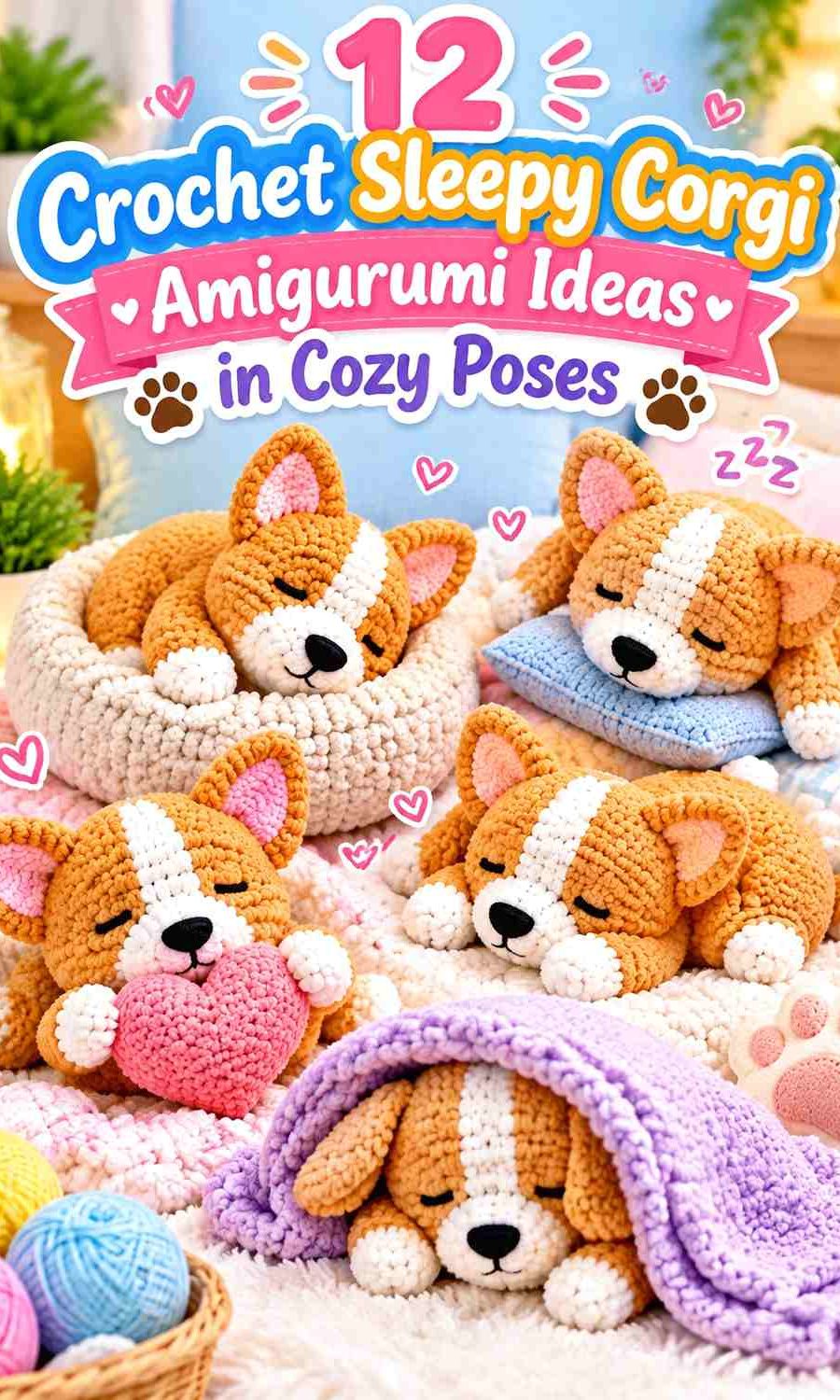
Pose also changes how those colors are seen. In a curled sleeping corgi, the back and rump may occupy most of the visible surface. A belly-down puppy exposes more cream around the muzzle and front paws. In a side-sleeping pose, the distinction between the upper coat and lighter belly can become part of the silhouette.
Several tutorials below specifically teach corgi amigurumi, while the sleeping-dog tutorials provide especially useful relaxed body concepts. Where a tutorial is not itself a corgi, the corgi ears, coat distribution, and coloring described here are independent adaptations rather than features attributed to the creator.
Quick List
- Caramel, Cream, and Cocoa Crochet Curled Sleepy Corgi Amigurumi
- Honey Gold, Ivory, and Espresso Crochet Belly-Down Sleepy Corgi Amigurumi
- Cinnamon, Oatmeal, and Chocolate Crochet Side-Sleeping Corgi Amigurumi
- Warm Beige, Cream, and Chestnut Crochet Tucked-Paw Sleepy Corgi Amigurumi
- Burnt Orange, Soft White, and Walnut Crochet Chunky Resting Corgi Amigurumi
- Golden Tan, Cream, and Charcoal Crochet Chin-Down Corgi Amigurumi
- Rust, Oatmeal, and Espresso Crochet Corgi Loaf Amigurumi
- Camel, Ivory, and Cocoa Crochet Cozy Puppy Corgi Amigurumi
- Muted Ginger, Cream, and Dark Brown Crochet Curled-Tail Corgi Amigurumi
- Mushroom Tan, Warm White, and Espresso Crochet No-Sew Resting Corgi Amigurumi
- Terracotta, Oatmeal, and Walnut Crochet Mini Sleepy Corgi Amigurumi
- Butterscotch, Cream, and Cocoa Crochet Mochi-Style Sleepy Corgi Amigurumi
Keep the Crochet Corgi Face Clear in a Sleeping Pose
A corgi’s pale muzzle and facial blaze can become especially useful when the head is lowered onto the paws. Without enough value difference, the muzzle, paws, and chest may visually merge with the darker upper coat.
Cream, ivory, oatmeal, and soft white give those areas more separation from caramel, ginger, rust, or tan. The contrast does not have to be stark, but check the face from normal viewing distance before committing to the whole plush.
Use the darkest brown or charcoal in much smaller amounts. The nose, tiny facial details, and selected ear areas usually need less dark yarn than the broad ginger-and-cream coat.
Use the Crochet Corgi Back Color to Explain the Cozy Pose
The upper coat becomes especially important when the corgi curls, lies on its side, or rests belly-down. A continuous caramel, tan, rust, or ginger section can help the viewer follow the back from the shoulders through the rounded rump.
Avoid unnecessary color changes across that area. Corgis already have recognizable white-and-colored coat divisions, and a sleepy pose adds another layer of visual information.
If the body is heavily curled, use cream strategically around the muzzle, underside, or paws to keep overlapping sections from visually merging.
Let Cozy Crochet Details Support the Corgi Instead of Hiding It
A tiny blanket, scarf, sleeping cap, or pillow can reinforce the cozy theme, but it should not cover the features that make the plush read as a corgi.
Keep upright or triangular ears visible when possible, preserve the contrast around the muzzle, and leave enough of the colored back exposed. A muted accessory color such as sage, dusty blue, burgundy, or oatmeal can add atmosphere without becoming another major coat color.
1. Caramel, Cream, and Cocoa Crochet Curled Sleepy Corgi Amigurumi
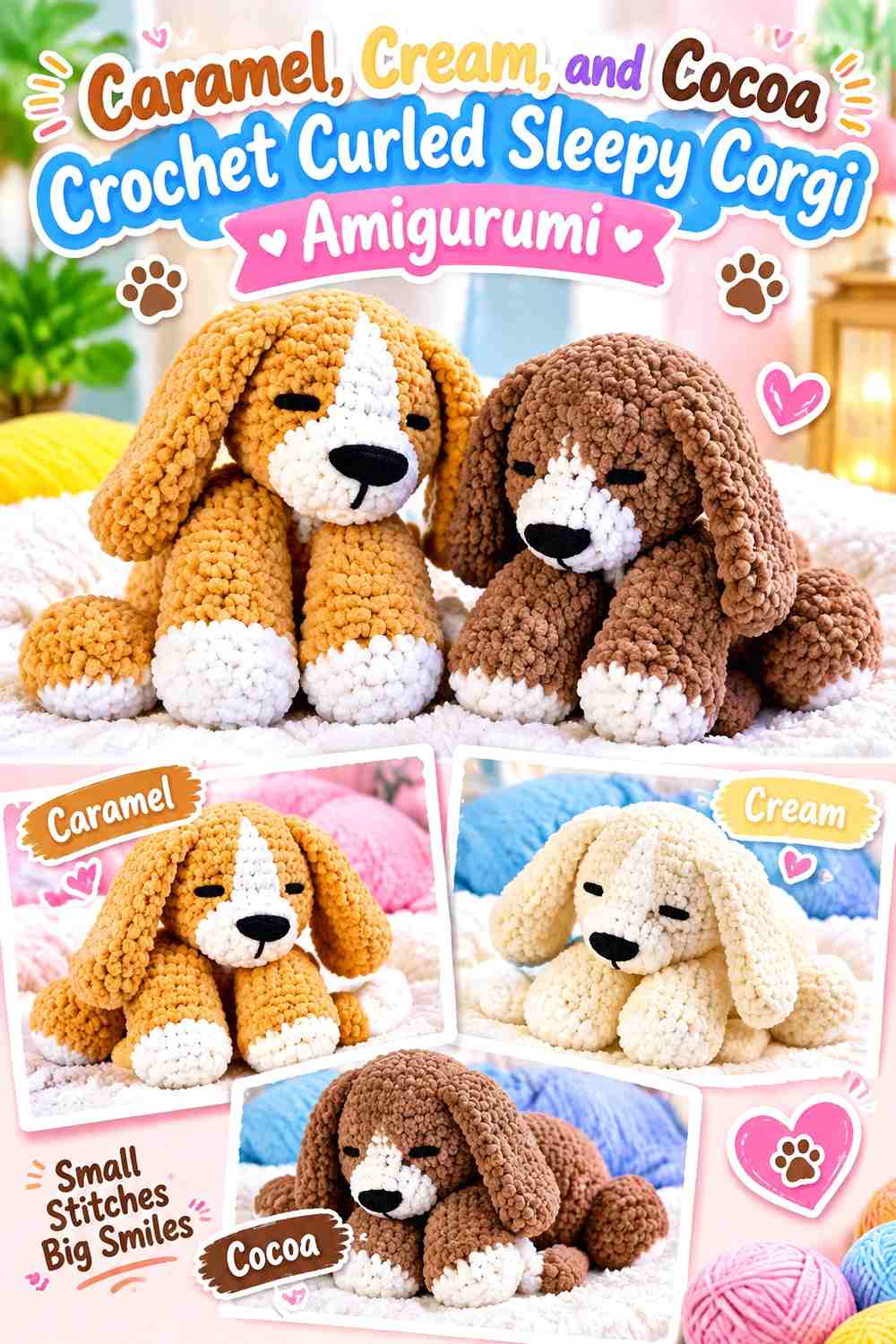
Caramel makes a useful dominant coat color for a curled corgi because the rounded back becomes one of the largest visible areas. Cream can define the muzzle, chest, and tucked paws, while cocoa provides the smallest dark details.
The supporting tutorial teaches a genuinely sleepy puppy form. The corgi-specific coat division and pointed-ear direction are adaptations, so use the tutorial for its relaxed dog construction rather than assuming its original puppy is a corgi.
Let Caramel Follow the Crochet Corgi’s Curled Back
Keep caramel continuous from the shoulders across the rounded outer body. This helps the curved sleeping position read as one relaxed form instead of several disconnected colored sections.
Cream is most useful toward the inside of the curl, where paws and muzzle may sit close together.
Use Cream to Separate Cocoa Details on the Caramel Crochet Corgi Face
A cream muzzle gives the nose and closed-eye details a lighter field. Cocoa should stay concentrated around those tiny features rather than expanding into the cheeks.
That balance keeps the sleeping expression readable while caramel remains the obvious main coat.
Creator Credit: CrochetByEmpanada
2. Honey Gold, Ivory, and Espresso Crochet Belly-Down Sleepy Corgi Amigurumi

Honey gold suits a belly-down corgi because the broad back remains fully visible while the lighter chest and front paws can peek out below the head. Ivory creates that lower contrast, while espresso handles the nose and restrained ear details.
The supporting tutorial demonstrates a sleeping dog, making its relaxed body concept useful for this adaptation.
Keep Honey Gold Broad Across the Crochet Corgi’s Resting Back
Avoid breaking the back into several small shades. A long honey-gold field emphasizes the corgi’s elongated body while keeping attention on the sleeping position.
If the plush rests on a similarly colored blanket or shelf, let ivory reach slightly farther around the sides.
Put Ivory Around the Espresso Crochet Corgi Muzzle and Paws
Because the head rests low, the muzzle and front paws can visually overlap. Ivory helps each pale shape remain distinguishable against the honey-gold body.
Keep espresso small so the nose does not become disproportionately dominant on the resting face.
Creator Credit: Nancy Magno
3. Cinnamon, Oatmeal, and Chocolate Crochet Side-Sleeping Corgi Amigurumi

Cinnamon gives the exposed upper side of a sleeping corgi a rich warm color, while oatmeal can define the lower muzzle, belly edge, and paws. Chocolate creates the deepest face and ear details.
A side-sleeping pose is useful for showing the coat division because the upper and lower body colors can be visible simultaneously.
Let Cinnamon Define the Upper Crochet Corgi Silhouette
Use cinnamon continuously across the visible shoulder, flank, and rump. That uninterrupted color makes the reclining body’s outline easier to understand.
Oatmeal can remain concentrated underneath rather than appearing in stripes across the back.
Keep Chocolate Smaller Than Oatmeal on the Cinnamon Crochet Corgi
The darkest shade belongs mainly at the nose and small ear areas. Oatmeal needs more space because it separates the sleeping face from the body.
If chocolate covers too much of the head, the soft sleepy expression can become visually heavy.
Creator Credit: Crochet by Ruby
4. Warm Beige, Cream, and Chestnut Crochet Tucked-Paw Sleepy Corgi Amigurumi
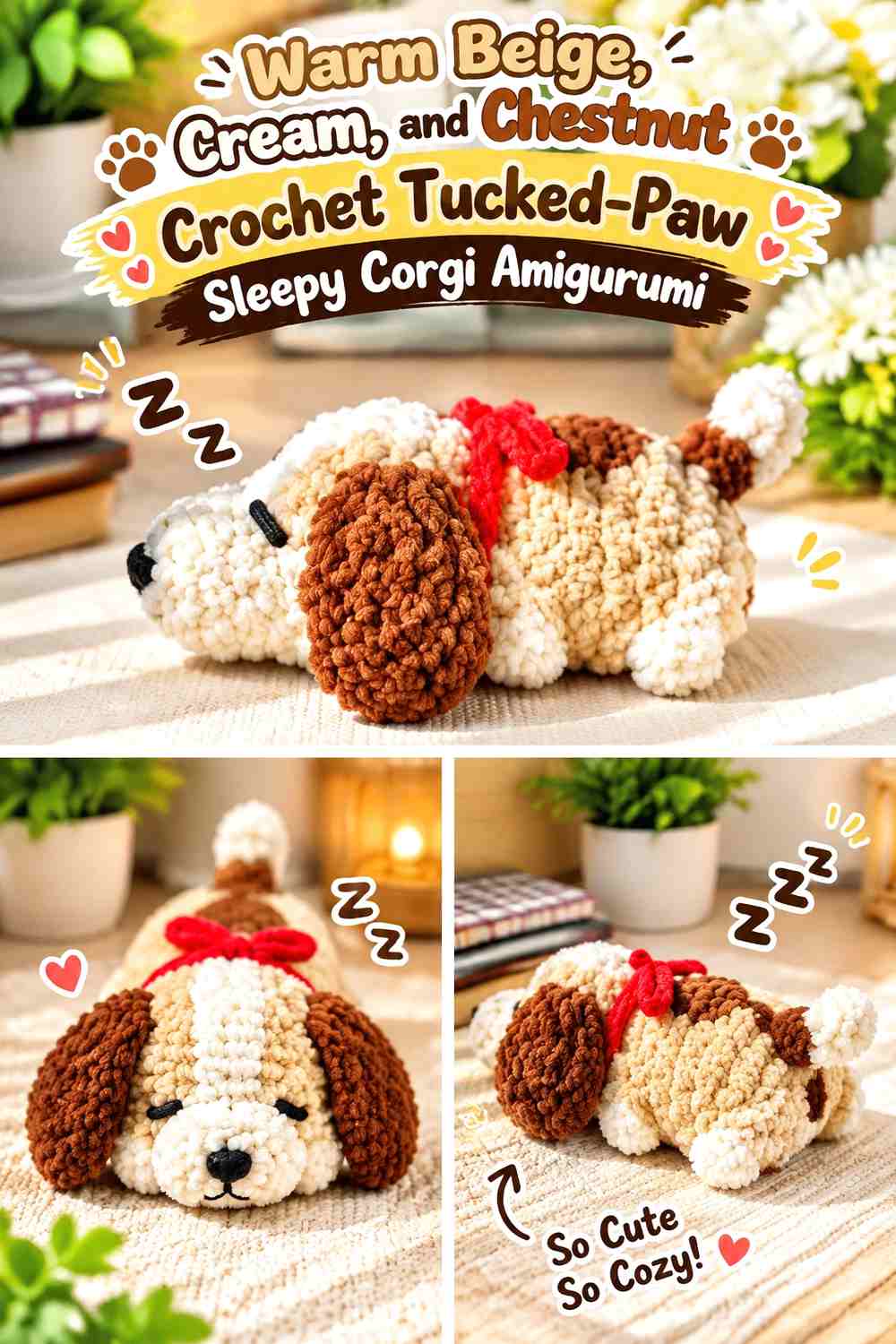
Warm beige creates one of the quietest corgi palettes in the collection. Cream can highlight the tucked paws and muzzle, while chestnut adds deeper definition without the severity of black.
The linked sleepy-dog tutorial provides a compact resting form; the pointed corgi ears and beige-and-cream coat are independent adaptations.
Use Cream to Expose the Warm Beige Crochet Corgi’s Tucked Paws
When both paws sit beneath the muzzle, pale cream can prevent the three shapes from merging into a single light blob. Leave a little warm beige visible between adjoining cream areas where possible.
That makes the tucked position easier to read from the front.
Let Chestnut Define the Cream Crochet Corgi Face
Use chestnut sparingly for the nose and restrained facial features. A warm dark brown keeps the whole palette softer than black would.
If chestnut is repeated on the ears, keep the outer head mostly warm beige so the ear triangles remain connected to the coat.
Creator Credit: amikara
5. Burnt Orange, Soft White, and Walnut Crochet Chunky Resting Corgi Amigurumi

A chunky corgi body works particularly well with burnt orange because the broad color field emphasizes the compact back and rounded rump. Soft white can mark the face, chest, and paws, while walnut keeps small details warm and grounded.
The credited tutorial is specifically a chunky corgi construction. Turning that form into a more visibly sleepy display—such as positioning it beside a small crochet pillow—is an editorial styling adaptation.
Keep Burnt Orange Broad on the Crochet Chunky Corgi Body
The plush shape already creates plenty of visual interest, so frequent color changes are unnecessary. Let burnt orange cover most of the upper head and body.
Soft white should have specific jobs rather than being scattered across unrelated patches.
Use Soft White to Brighten the Walnut Crochet Corgi Face
The pale muzzle and blaze can keep the chunky head from becoming one large orange form. Walnut is then needed only for the nose or other tiny deep accents.
Against an orange or rust-colored display surface, increase the visible soft-white chest area.
Creator Credit: Annyeong Its April
6. Golden Tan, Cream, and Charcoal Crochet Chin-Down Corgi Amigurumi
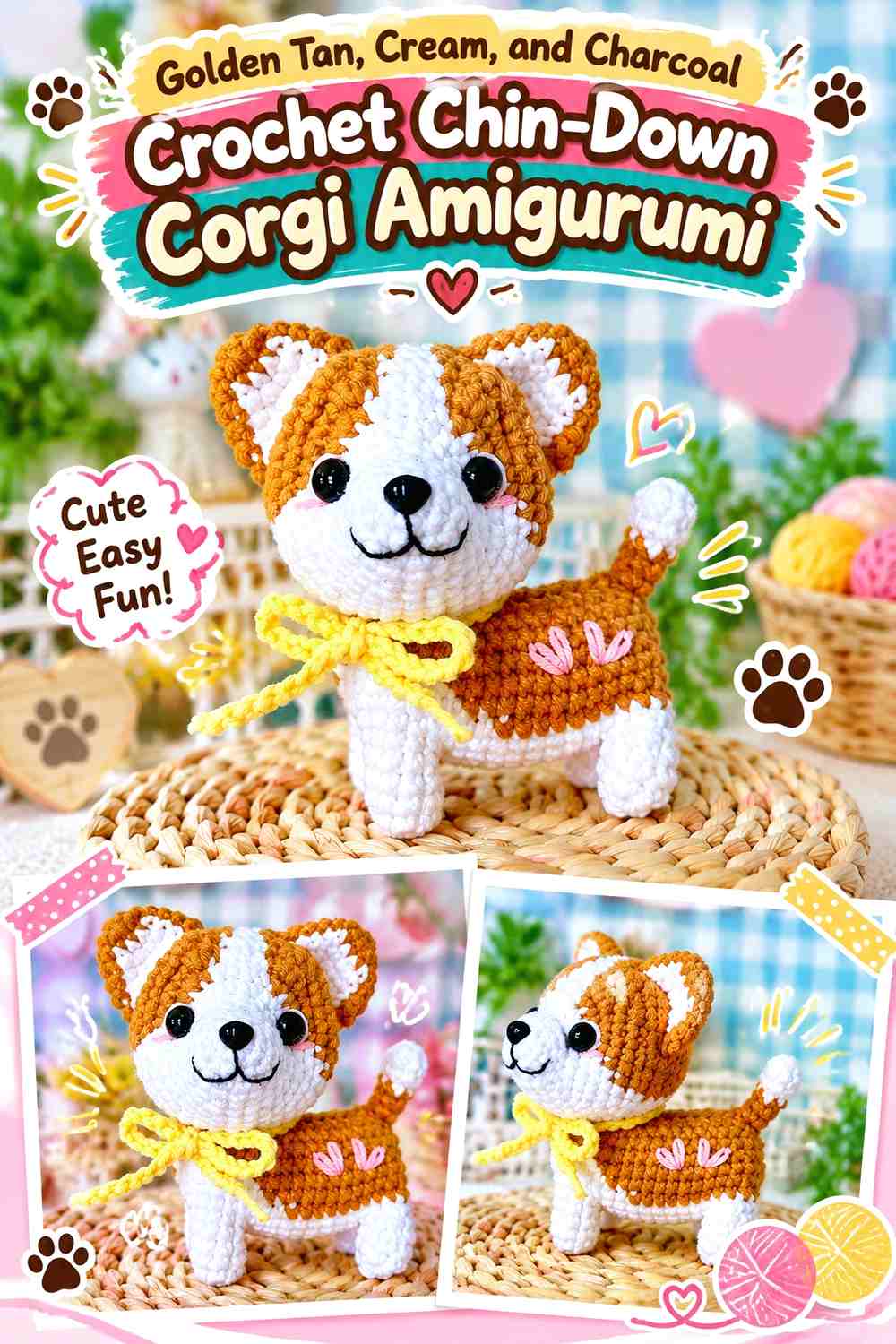
Golden tan gives this corgi a familiar warm coat, while cream helps a chin-down face remain open. Charcoal creates the darkest nose and small feature contrast.
The corgi tutorial supports the animal construction itself. The chin-down sleepy styling is an adaptation, so plan any change in head orientation around the finished form rather than assuming the creator teaches that exact sleeping pose.
Let Cream Surround the Golden Tan Crochet Corgi’s Lower Face
A head lowered toward the paws benefits from a pale muzzle and chest because those areas otherwise sit close to the floor or body.
Keep golden tan visible across the forehead and around the outer cheeks so the face retains its corgi coloring.
Reserve Charcoal for the Cream Crochet Corgi’s Smallest Details
Charcoal is strongest at the nose and selected facial embroidery. It should not compete with the golden-tan coat by spreading through the full muzzle.
A softer dark gray can replace charcoal when the overall palette needs less contrast.
Creator Credit: Crochet with Aybi
7. Rust, Oatmeal, and Espresso Crochet Corgi Loaf Amigurumi

A loaf-like corgi keeps the legs visually tucked close to the body, which makes the back and face the most important color areas. Rust can dominate the compact upper form, oatmeal can lighten the chest and muzzle, and espresso can handle the smallest dark features.
The linked tutorial provides a corgi construction to adapt; the loaf-style resting presentation is the editorial direction here.
Let Rust Unify the Crochet Corgi Loaf Body
Use rust continuously across the back and sides so the tucked posture reads as one rounded shape. Breaking the body into several warm colors can make the hidden-leg effect harder to understand.
Oatmeal near the front can indicate where the chest and paws gather beneath the head.
Keep Oatmeal Visible Around Espresso on the Rust Crochet Corgi Face
Oatmeal provides enough light area for a compact muzzle even when the body is small and tightly shaped. Espresso should remain the deepest detail rather than another large coat section.
If the ears use espresso, keep their bases rust so they remain visually attached to the head.
Creator Credit: pitachan
8. Camel, Ivory, and Cocoa Crochet Cozy Puppy Corgi Amigurumi
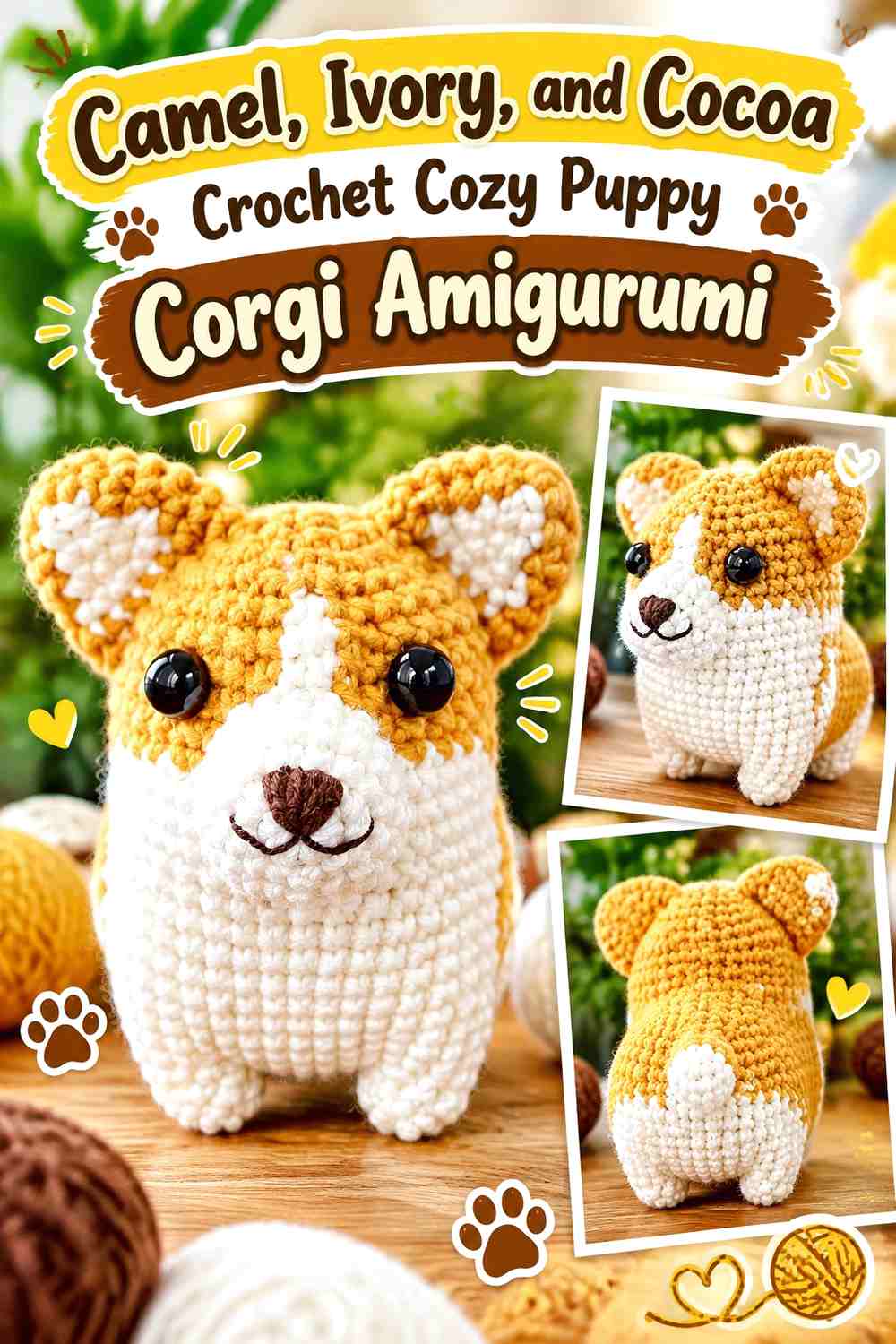
Camel creates a softer coat than orange or rust, making it useful for a sleepy corgi intended to look quiet and neutral. Ivory can define the familiar corgi face and belly markings, while cocoa keeps the features warm.
The linked tutorial teaches a corgi puppy construction. Cozy resting placement is an adaptation rather than a claim about the tutorial’s original pose.
Give Camel Most of the Ivory Crochet Corgi’s Back and Head
A broad camel field keeps the puppy visually unified. Let ivory appear in larger recognizable coat areas such as the muzzle, chest, and selected paws rather than in many small patches.
This creates a calmer sleepy color balance.
Use Cocoa to Ground the Camel and Ivory Crochet Corgi
Cocoa can define the nose, small ear details, or restrained paw accents. Because both camel and ivory are relatively light, a single deep neutral is enough.
Do not add another dark shade unless the facial details genuinely need more separation.
Creator Credit: Crochelah
9. Muted Ginger, Cream, and Dark Brown Crochet Curled-Tail Corgi Amigurumi
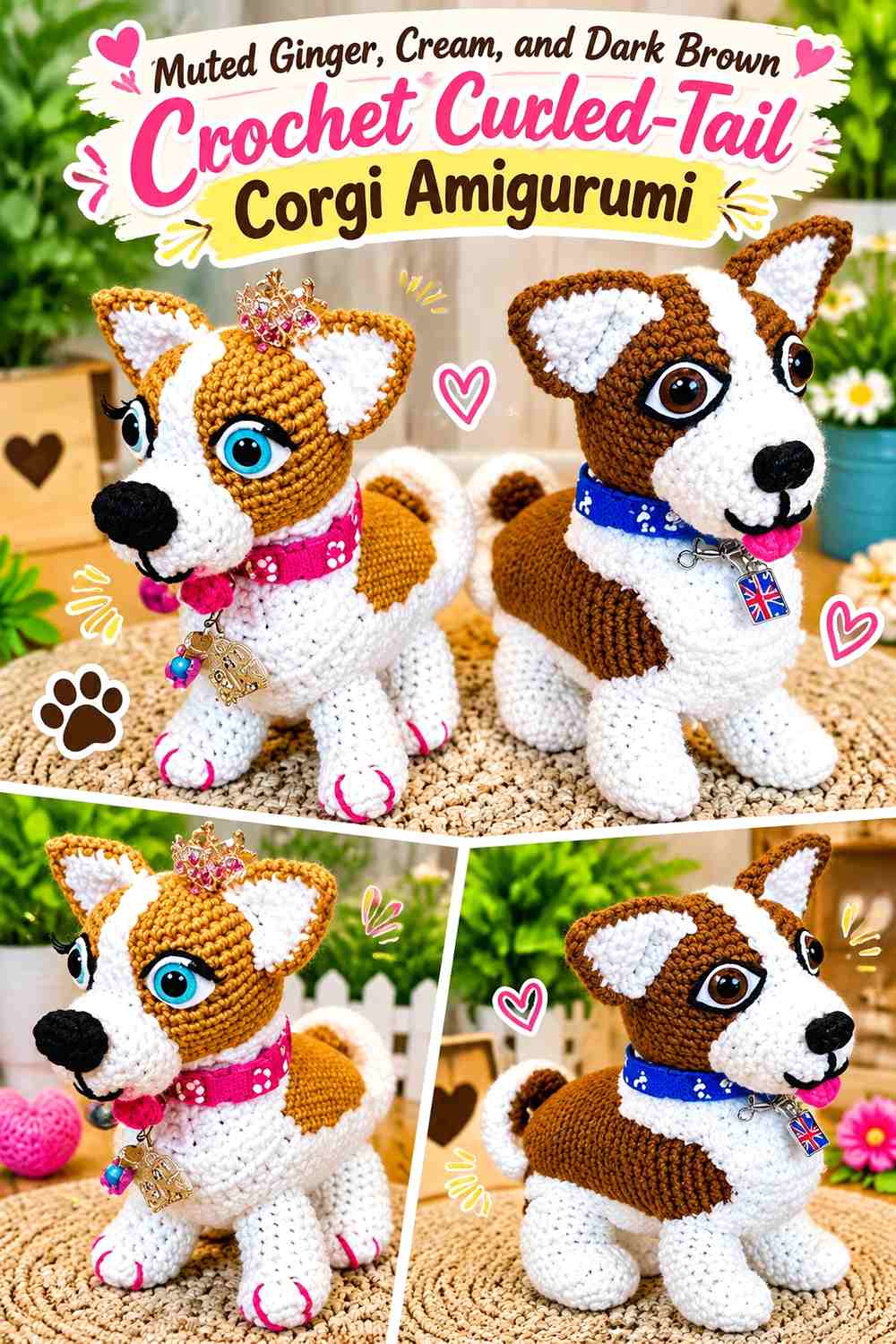
Muted ginger gives this puppy a recognizable warm coat without creating as much saturation as bright orange. Cream can occupy the facial blaze, chest, and paws, while dark brown anchors the features.
The corgi puppy tutorial provides the construction foundation. For a sleepy presentation, the tail can be positioned visually close to the body only where the construction permits without distorting the finished shape.
Let Muted Ginger Lead the Cream Crochet Corgi Body
Use muted ginger through most of the torso and upper head. Cream should remain concentrated in the breed-inspired lighter areas so the color division stays recognizable.
On a beige display surface, make sure the ginger outer silhouette remains distinct.
Keep Dark Brown Compact Around the Cream Crochet Corgi Face
Dark brown works well for the nose and the deepest small details. It can also repeat sparingly near the tail or ears to connect the palette.
Avoid letting it become a third broad body color, which would make the sleepy puppy visually busier.
Creator Credit: HelenMay Crochet
10. Mushroom Tan, Warm White, and Espresso Crochet No-Sew Resting Corgi Amigurumi

Mushroom tan produces a neutral, slightly muted coat that suits a compact resting corgi. Warm white can create the facial and chest markings, while espresso supplies the tiny dark details.
The supporting tutorial teaches a no-sew corgi construction, so the value here is the compact corgi form. Any added sleepy styling should preserve that construction rather than reconstructing the pattern.
Keep Mushroom Tan Continuous Across the Warm White Crochet Corgi Back
A neutral body benefits from large uninterrupted surfaces because the difference between mushroom and warm white is softer than orange and white.
Let warm white become more prominent toward the face and underside, where it has a clear visual purpose.
Use Espresso to Define the Mushroom Tan Crochet Corgi Without Overloading It
Espresso can mark the nose and selected small features. The muted coat already has a quiet visual direction, so there is little benefit in adding several additional dark patches.
For softer contrast, choose cocoa while preserving a noticeable difference from mushroom tan.
Creator Credit: AnDesign_Craft
11. Terracotta, Oatmeal, and Walnut Crochet Mini Sleepy Corgi Amigurumi
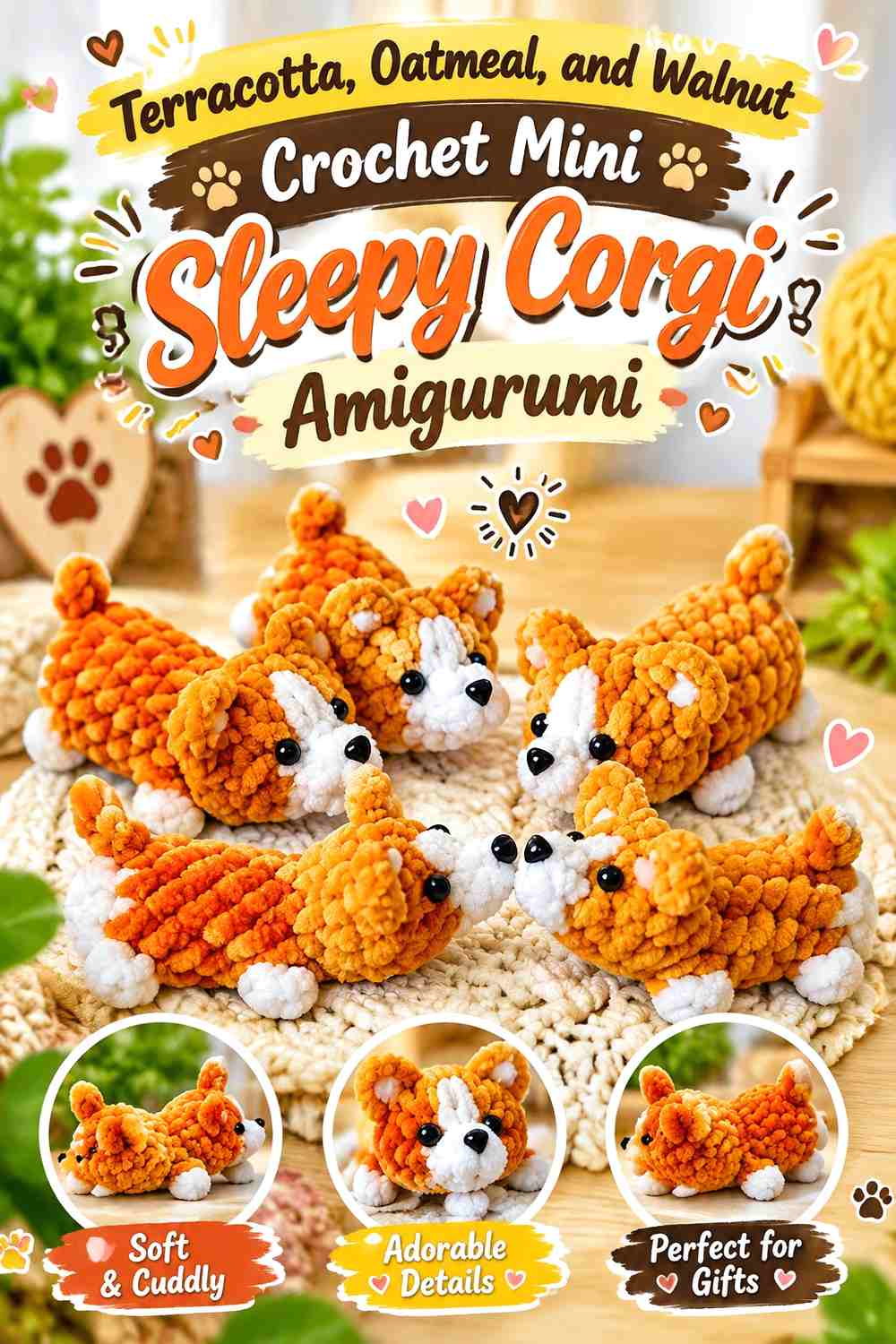
Terracotta gives a mini corgi enough color to remain visible despite its smaller form. Oatmeal can open the muzzle and chest, and walnut can provide compact nose and ear details.
The supporting tutorial teaches a miniature corgi. A tiny pillow, tucked display position, or other sleepy presentation can be added independently without claiming that the tutorial teaches those accessories.
Let Terracotta Stay Broad on the Oatmeal Crochet Mini Corgi
Small amigurumi benefits from fewer, larger color zones. Use terracotta over most of the body rather than trying to reproduce every possible coat marking.
Oatmeal should focus on the most recognizable pale areas.
Keep Walnut Tiny on the Terracotta Crochet Corgi Face
On a miniature head, even a little dark yarn has substantial visual weight. Keep walnut concentrated at the nose and only the most necessary accents.
If the ears need definition, use terracotta and oatmeal first before adding more walnut.
Creator Credit: Ольга Мирос. Вяжу с любовью
12. Butterscotch, Cream, and Cocoa Crochet Mochi-Style Sleepy Corgi Amigurumi
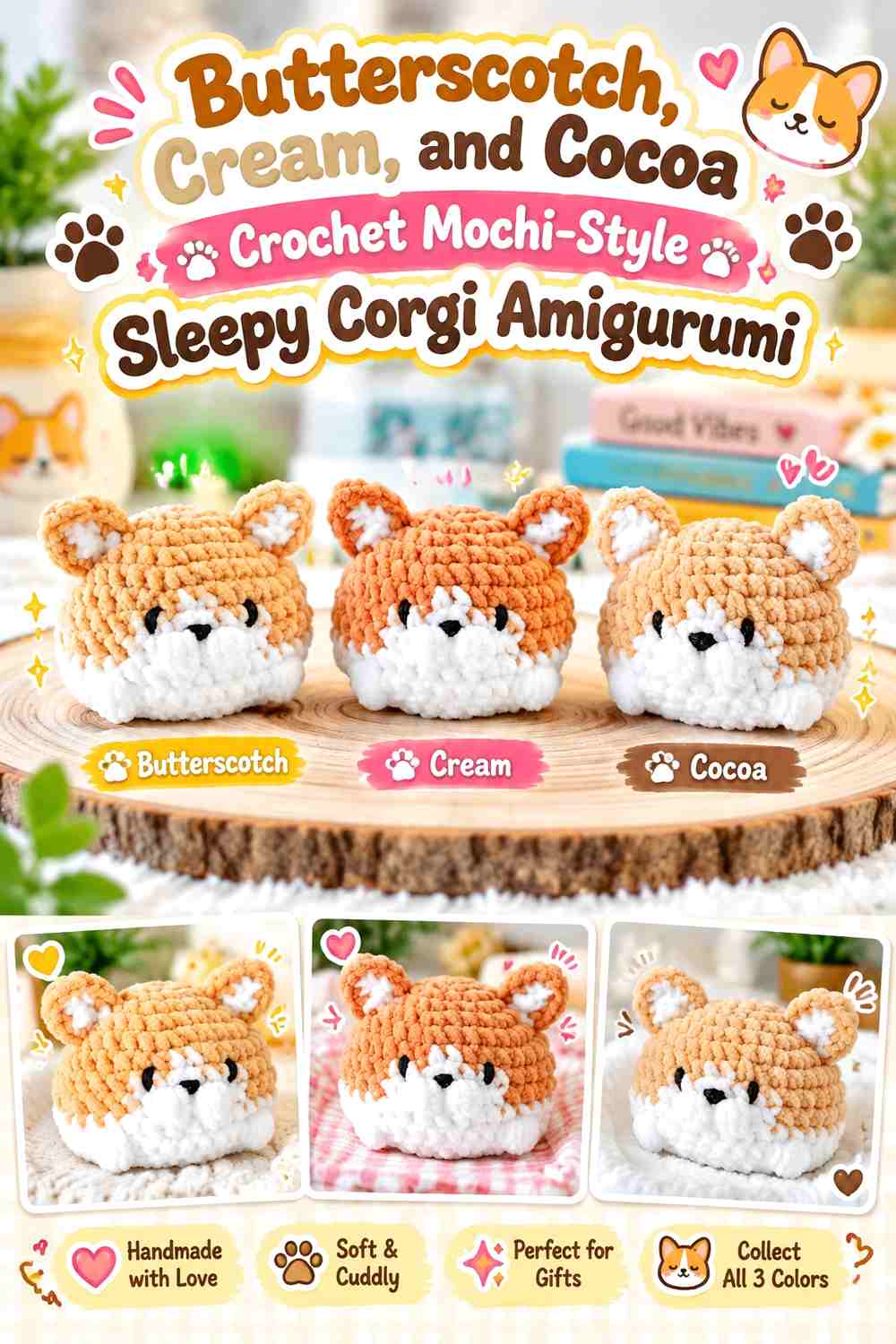
A mochi-like compact corgi works well with a very simple palette because its rounded shape is already the main feature. Butterscotch can lead the body, cream can identify the muzzle and underside, and cocoa can handle the smallest dark details.
The tutorial provides a tiny rounded corgi construction. Treat the sleepy expression, closed eyes, or bedside display as your own adaptation rather than part of the source unless you follow only what the creator actually demonstrates.
Keep Butterscotch Broad Across the Cream Crochet Mochi Corgi
Avoid dividing such a small rounded body into too many coat sections. Butterscotch should remain the first color visible, with cream forming only the recognizable pale areas.
This preserves the compact silhouette that makes the mochi-style form work.
Use Cocoa to Keep the Butterscotch Crochet Corgi Expression Simple
For a sleepy adaptation, a small amount of dark embroidery can suggest a closed-eye expression without surrounding it with additional dark color.
Keep cream beneath the face so the cocoa details remain clear even on a very small plush.
Creator Credit: KumoAmu
Which Sleepy Crochet Corgi Palette Fits Each Cozy Pose?
For a classic corgi look, caramel and cream, honey gold and ivory, golden tan and cream, or muted ginger and cream keeps the familiar warm-upper-coat and pale-lower-face relationship.
For softer bedroom or nursery styling, warm beige and cream, camel and ivory, mushroom tan and warm white, or butterscotch and cream reduces saturation and allows the sleepy body shape to attract more attention.
The darker cinnamon, rust, burnt orange, and terracotta options work particularly well when the plush will rest on cream or oatmeal bedding. Their outer silhouettes stay visible while the lighter muzzle and paws identify the cozy tucked areas.
For the pose itself, curled and side-sleeping corgis benefit from clear back-versus-belly contrast. Belly-down and chin-down puppies need particularly careful muzzle and paw separation because several pale sections gather in the same visual area.
Conclusion
A sleepy crochet corgi looks most convincing when color helps explain the pose rather than simply decorating it. Keep the warm coat broad over the back and rounded rump, use cream or oatmeal where the muzzle, chest, and tucked paws need separation, and reserve the darkest shade for small features.
The pose can then provide the variety: curled, belly-down, side-sleeping, tucked-paw, loaf-like, or compact mochi-style forms all show the same corgi palette differently.
Use each credited tutorial for the construction it actually demonstrates. When adapting a general sleeping-dog tutorial, introduce corgi coloring and breed-inspired features independently. When adapting an upright or standard corgi tutorial into a sleepy display, work from the finished construction rather than assuming its assembly can simply be repositioned.
Frequently Asked Questions
Which colors work well for a crochet sleepy corgi amigurumi?
Caramel, ginger, tan, rust, cinnamon, terracotta, camel, and butterscotch all work as warm upper-coat colors. Cream, ivory, oatmeal, and soft white can define the muzzle, chest, and paws, while cocoa, walnut, espresso, or charcoal can handle small dark details.
How can I make a crochet corgi look sleepy without changing the entire pattern?
Color and facial expression can help even when the underlying corgi construction remains unchanged. A restrained closed-eye treatment and a calm cream-and-tan palette can suggest sleepiness, while the finished toy can be displayed against a small pillow or blanket. Do not alter a creator’s assembly method unless you know the construction can support the change.
Which colors should I use for tucked crochet corgi paws?
Using the same cream, ivory, or oatmeal found on the muzzle and chest can connect the light coat markings. Make sure there is enough darker body color between nearby pale paws and muzzle areas so they do not merge visually.
Should a sleepy crochet corgi’s ears be dark?
They do not have to be. The ears can stay in the main tan or ginger body color with a small darker or lighter inner section. Heavy dark ear tips may draw too much attention away from the sleeping face.
How can I keep a curled crochet corgi from looking like one round ball?
Use color boundaries to explain the body. Let the warm upper-coat shade follow the outer curve, while cream or oatmeal marks the face, underside, or tucked paws inside the curl.
Can I add a crochet blanket or pillow to a sleepy corgi amigurumi?
Yes as an independent accessory, but size it to the completed toy rather than assuming dimensions from another project. Keep its color different enough from the corgi’s outer coat that the plush silhouette remains visible.
What should I consider if a sleepy crochet corgi is intended for a young child?
Consider embroidered facial features instead of detachable small parts, and secure ears, limbs, tails, and any accessories appropriately. Decorative buttons, pom-poms, or other small embellishments should be evaluated for the intended use before gifting.