A crochet mushroom house already has a strong fairytale silhouette, so color becomes one of the easiest ways to change its character. A cherry-red cap with cream spots reads as a classic woodland cottage, while lavender and dusty pink make the same basic idea feel more dreamy. Charcoal, plum, and burgundy can move the design toward a darker enchanted-forest direction without changing the fundamental house concept.
The most successful palettes give each architectural element a clear color role. The cap can carry the dominant shade, the house walls can provide a quieter supporting color, and smaller contrasts can define doors, windows, spots, vines, chimneys, flowers, and paths. Because these details are tiny, light/dark contrast is often more important than adding more colors.
The tutorials below support mushroom houses, fairy houses, cottage structures, house containers, or closely related whimsical home construction. The proposed palettes and adaptations are independent editorial ideas; they do not imply that the creators used these exact colors or decorative arrangements.
Quick List
- Cherry Red, Cream, and Moss Crochet Fairytale Mushroom Cottage
- Terracotta, Sage, and Oatmeal Crochet Woodland Mushroom House
- Dusty Rose, Ivory, and Sage Crochet Flower-Covered Mushroom House
- Plum, Lavender, and Charcoal Crochet Moonlit Mushroom Cottage
- Teal, Mint, and Cream Crochet Enchanted Mushroom House
- Mustard, Rust, and Olive Crochet Autumn Mushroom Cottage
- Burgundy, Blush, and Cream Crochet Romantic Mushroom House
- Sky Blue, White, and Sage Crochet Cloud-Cap Mushroom Cottage
- Coral, Peach, and Mint Crochet Candy-Fairytale Mushroom House
- Forest Green, Camel, and Cream Crochet Mossy Mushroom House
- Black, Purple, and Ivory Crochet Gothic Mushroom Cottage
- Golden Yellow, Brown, and Moss Crochet Storybook Mushroom House
- Cobalt, Turquoise, and White Crochet Jewel-Tone Mushroom Cottage
- Pumpkin Orange, Chocolate, and Oatmeal Crochet Harvest Mushroom House
- Faded Blue, Dusty Pink, and Cream Crochet Vintage Mushroom Cottage
- Apple Red, Leaf Green, and Beige Crochet Orchard Mushroom House
- Rust, Teal, and Cream Crochet Mushroom House Backpack Cottage
- Hot Pink, Lilac, and Aqua Crochet Kawaii Mushroom House
- Taupe, Mushroom Brown, and Dusty Green Crochet Neutral Fairy Cottage
Give the Mushroom Cap the Strongest Color Role
The cap is usually the largest feature separating a mushroom house from an ordinary crochet cottage. Giving it the strongest red, teal, plum, yellow, or pink keeps that silhouette immediately recognizable.
Walls generally work better in a quieter supporting shade. Cream, oatmeal, beige, dusty green, or pale gray can give doors and windows enough visual space while allowing the mushroom roof to remain dominant.
Keep Doors and Windows Visible Against the House Walls
Tiny architectural details can disappear quickly when their values are too similar. A brown door on deep burgundy walls may need cream trim, while an ivory door on oatmeal walls may require a darker outline.
Before attaching the small pieces, arrange them against the finished walls. If you cannot distinguish the door or windows from normal viewing distance, change their border color rather than automatically adding another shade throughout the whole house.
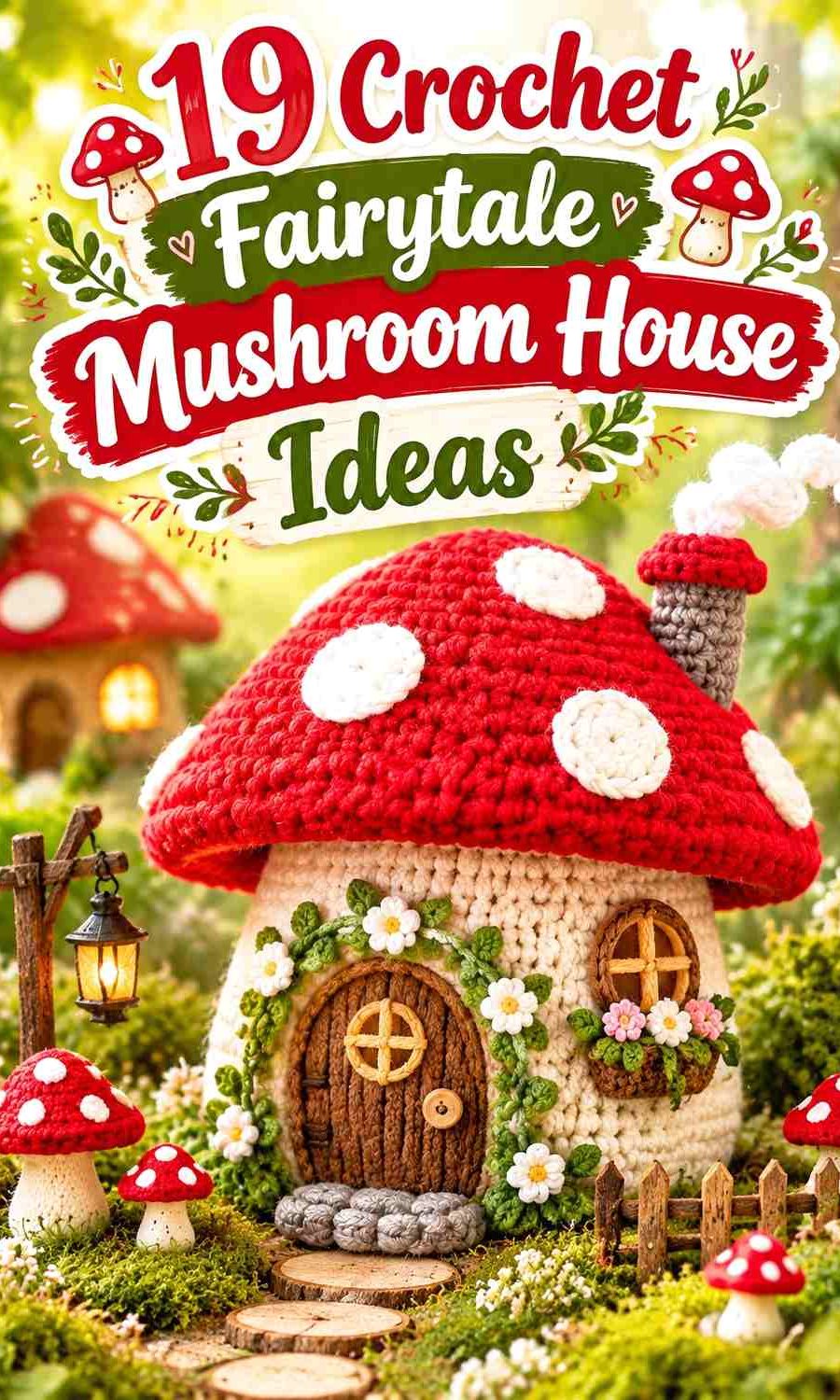
1. Cherry Red, Cream, and Moss Crochet Fairytale Mushroom Cottage
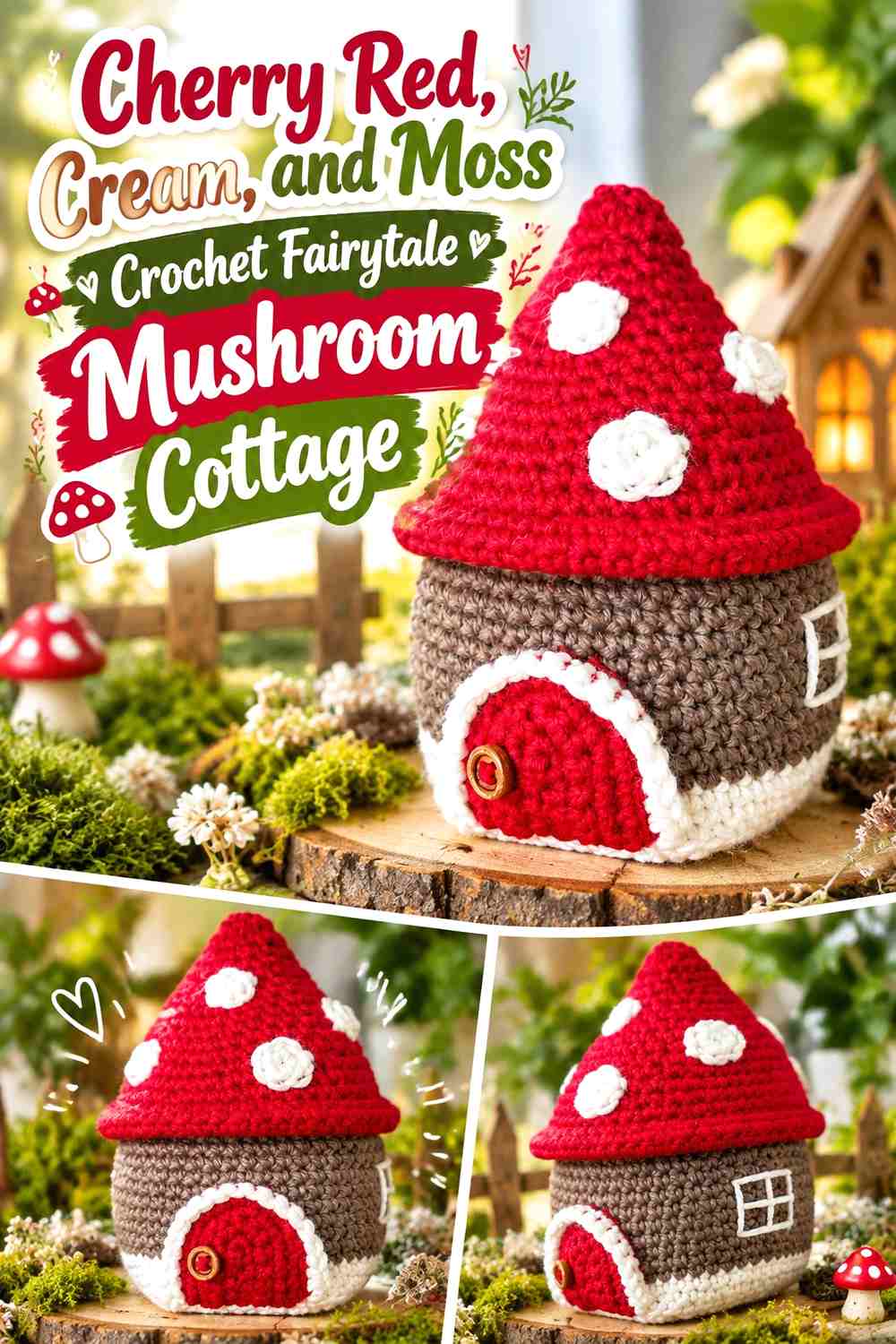
Cherry red, cream, and moss give the mushroom cottage its most recognizable woodland direction. Let cherry red dominate the cap, use cream for the walls and roof spots, and reserve moss for grass, vines, leaves, or a small base. A brown door can remain a quiet architectural accent rather than becoming another major palette color.
This combination works because each color has a separate job. Red defines the mushroom, cream exposes the cottage details, and moss gives the lower edge enough contrast to keep the pale walls from blending into the display base.
Cherry Red Should Dominate the Crochet Mushroom Cap
Keep most of the cap red instead of dividing it evenly between red and cream. White or cream spots read more clearly when they interrupt a broad red surface.
If you want several spot sizes, vary their scale while keeping the cream consistent. That preserves the classic mushroom appearance without making the roof visually chaotic.
Moss Green Should Stay Below the Cream Mushroom Walls
Use moss around the cottage base, tiny vines, or a few leaves near the door. Keeping green concentrated low on the house gives the cream walls a clean middle section where windows remain easy to see.
Too much raised moss around the windows can compete with the small architectural details, so leave some cream visible.
Creator Credit: Darya CrochetLife
2. Terracotta, Sage, and Oatmeal Crochet Woodland Mushroom House
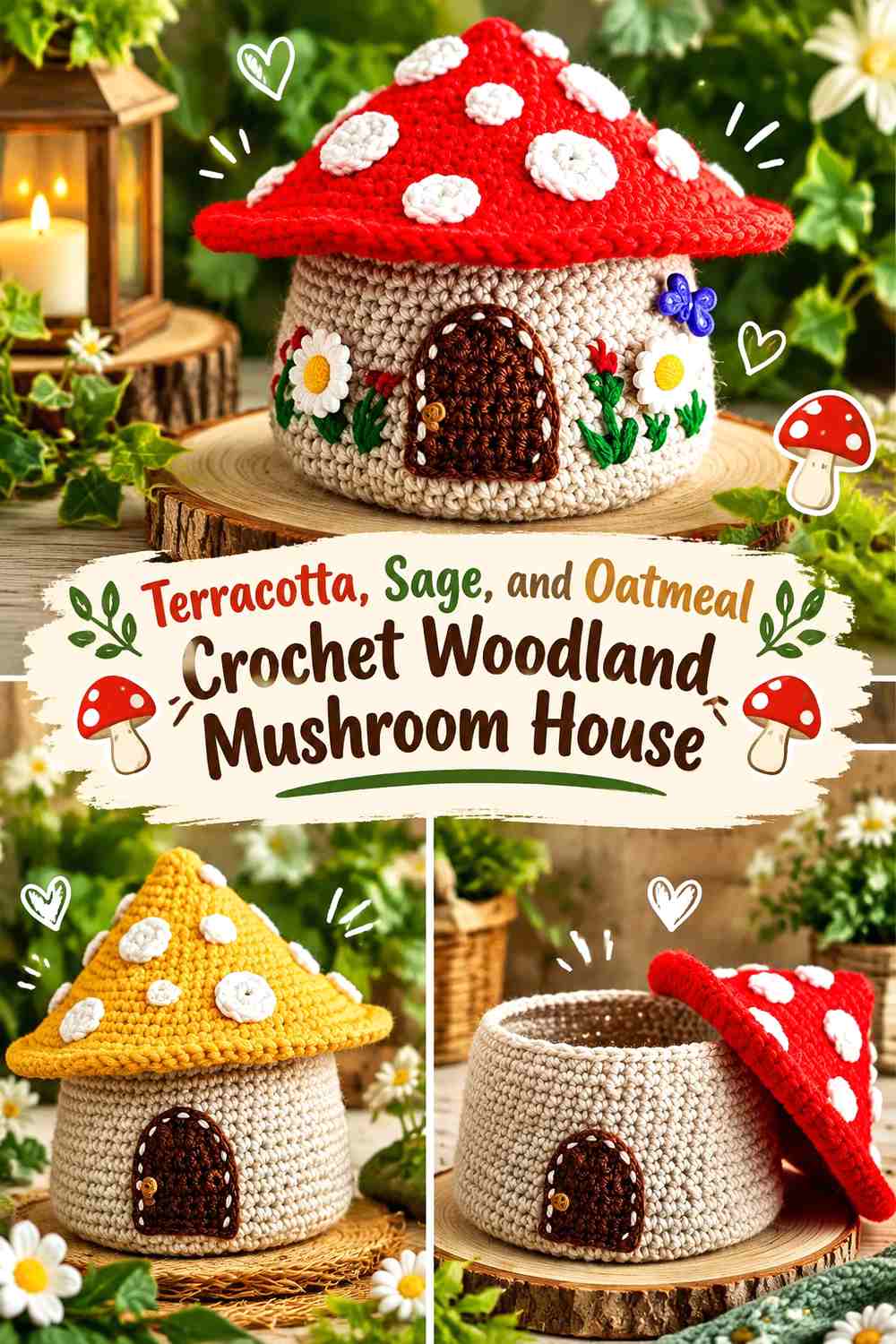
Terracotta gives this mushroom cap a warmer, earthier alternative to bright red. Sage can cover a small grass base or climbing leaves, while oatmeal creates softer walls than crisp white. A deeper brown door can anchor the front without disturbing the muted palette.
Keep the terracotta concentrated overhead so the cottage does not become one continuous orange-brown object. Oatmeal between the roof and ground gives the house structure a clearer middle layer.
Terracotta Should Stay Strongest on the Crochet Mushroom Roof
Let terracotta occupy the broad cap and repeat it only in tiny accents elsewhere. Using the same shade heavily on the door, windows, and base can flatten the cottage into one warm block.
If your terracotta is dark, lighter oatmeal spots can make the roof pattern easier to distinguish.
Sage Gives Oatmeal Mushroom Walls a Woodland Edge
Use sage around the lower wall, tiny leaves, or ground cover rather than replacing large sections of oatmeal.
The cooler green balances the warm terracotta without competing for dominance. It also helps pale walls remain separate from a neutral display surface.
Creator Credit: TLH Patterns
3. Dusty Rose, Ivory, and Sage Crochet Flower-Covered Mushroom House
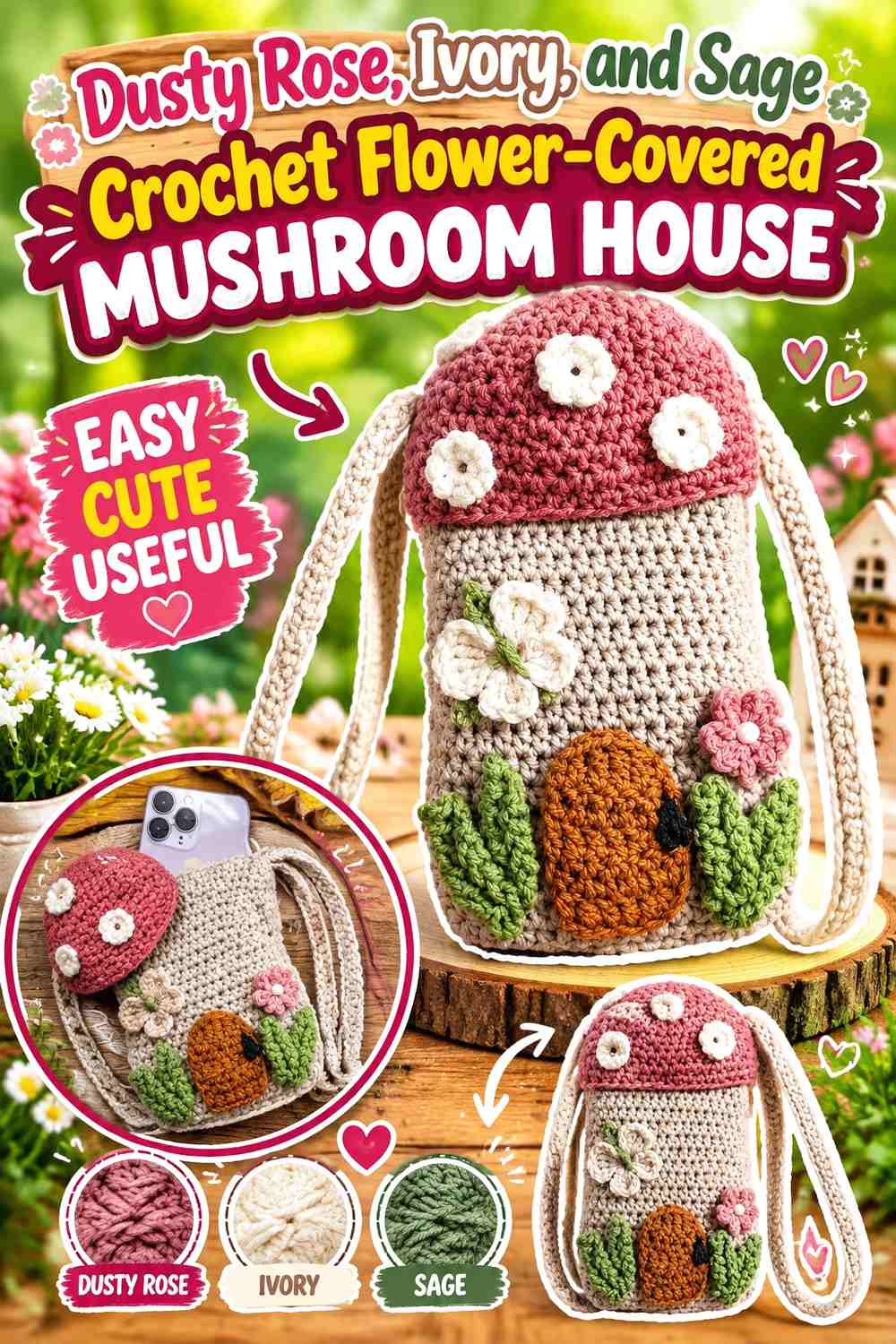
Dusty rose gives a flower-covered mushroom cottage a gentle storybook direction. Let the cap remain predominantly rose, use ivory for the walls and selected spots, and bring sage into miniature vines, leaves, and flower stems.
Flowers should support the house rather than hide it. Concentrate the largest floral cluster near the door or around one side of the cap and leave enough plain wall area for the cottage shape to remain readable.
Dusty Rose Needs Ivory Space Around the Mushroom Flowers
If pink flowers sit directly against a dusty-rose cap, give them ivory centers or tiny sage leaves so the individual blossoms do not disappear.
On the ivory walls, reverse the contrast: use dusty rose petals and keep ivory out of the largest flower areas.
Sage Should Connect the Dusty Rose Cap to the Ivory Walls
A few sage vines crossing the transition between cap and wall can visually connect the two main colors.
Keep the vines narrow. Broad green sections can interrupt the fairytale-cottage details and make windows harder to spot.
Creator Credit: The Crochet Nest | Yarn and Hook Studio
4. Plum, Lavender, and Charcoal Crochet Moonlit Mushroom Cottage
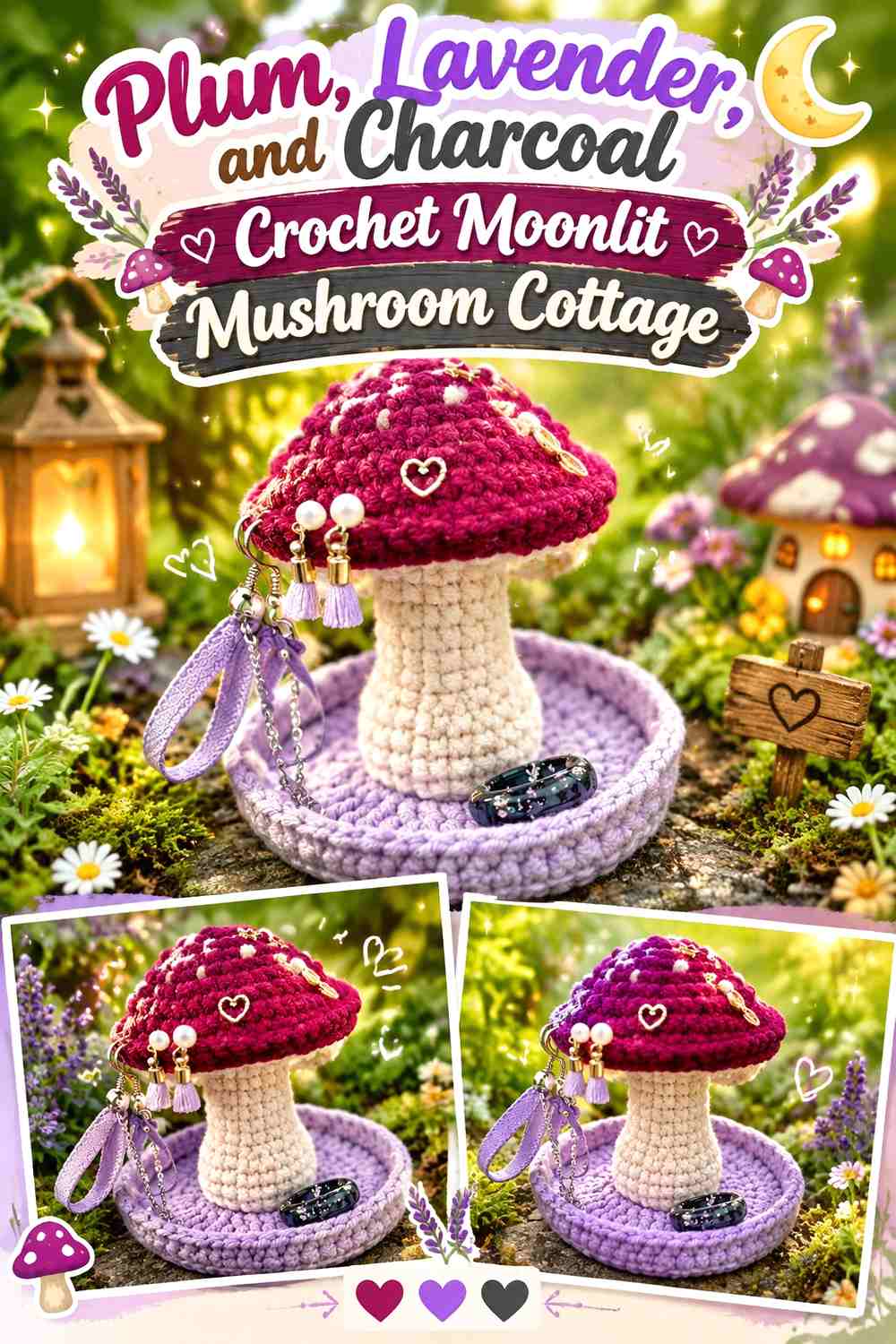
Plum and lavender create a darker fantasy palette without making every element black. Plum can lead the cap, lavender can appear in roof spots or window trim, and charcoal can define the door, chimney, or garden base.
Use a pale wall color such as softened gray or ivory if the front becomes too dark. Fairytale details still need enough value contrast to remain visible.
Plum Should Carry the Darkest Crochet Mushroom Roof Area
Concentrate plum across the cap and let lavender interrupt it in smaller sections. This establishes a clear dark-to-light hierarchy instead of distributing both purples equally.
If the cottage will sit against a dark shelf or wall, choose a lighter outer cap edge so the silhouette does not disappear.
Lavender Can Keep Charcoal Mushroom Details Visible
Place lavender near charcoal windows, doors, or roof edging when those elements need a lighter break.
Avoid outlining every charcoal element with lavender. One or two deliberate contrasts are usually enough on a miniature cottage.
Creator Credit: Let’s Do Do Studio
5. Teal, Mint, and Cream Crochet Enchanted Mushroom House

Teal gives a mushroom house a cool jewel-like roof, while mint makes a lighter supporting green and cream protects the cottage walls from becoming too saturated. Use teal across most of the cap and mint in smaller spots, leaves, or trim.
A cream body is especially useful here because teal and mint can become visually close when both appear in equal amounts.
Teal Should Anchor the Crochet Mushroom Cap
Keep teal uninterrupted across enough of the roof that it remains the first color the viewer notices. Mint spots can provide variation without breaking the basic mushroom shape.
If you want a striped or scalloped roof edge, repeat teal there instead of introducing a fourth color.
Cream Gives Teal and Mint Fairytale Details More Separation
Use cream around the doorway and window areas so teal frames or mint vines remain distinct.
If the house stands on a cream shelf, make the base mint or medium teal rather than allowing the cream walls to disappear into the background.
Creator Credit: Handmade by DEP
6. Mustard, Rust, and Olive Crochet Autumn Mushroom Cottage

Mustard and rust create a warm cap combination that feels more autumnal than classic red. Let rust provide the deepest roof area, mustard brighten spots or selected sections, and olive stay concentrated around foliage and ground details.
Oatmeal or beige walls can prevent all three earthy colors from becoming too visually dense.
Rust Should Ground the Mustard Crochet Mushroom Cap
Use rust as the main roof color and mustard as a smaller accent. The darker rust gives the cap weight, while mustard keeps the top from looking uniformly brown.
If mustard and rust are close in value, add oatmeal spots rather than introducing another orange.
Olive Should Stay Secondary to the Rust Mushroom Roof
Keep olive near the cottage base, small leaves, or a vine around the doorway. Giving olive too much roof space can make the mushroom silhouette less immediate.
Repeat olive in two or three locations so it still feels intentional within the palette.
Creator Credit: Club Crochet
7. Burgundy, Blush, and Cream Crochet Romantic Mushroom House
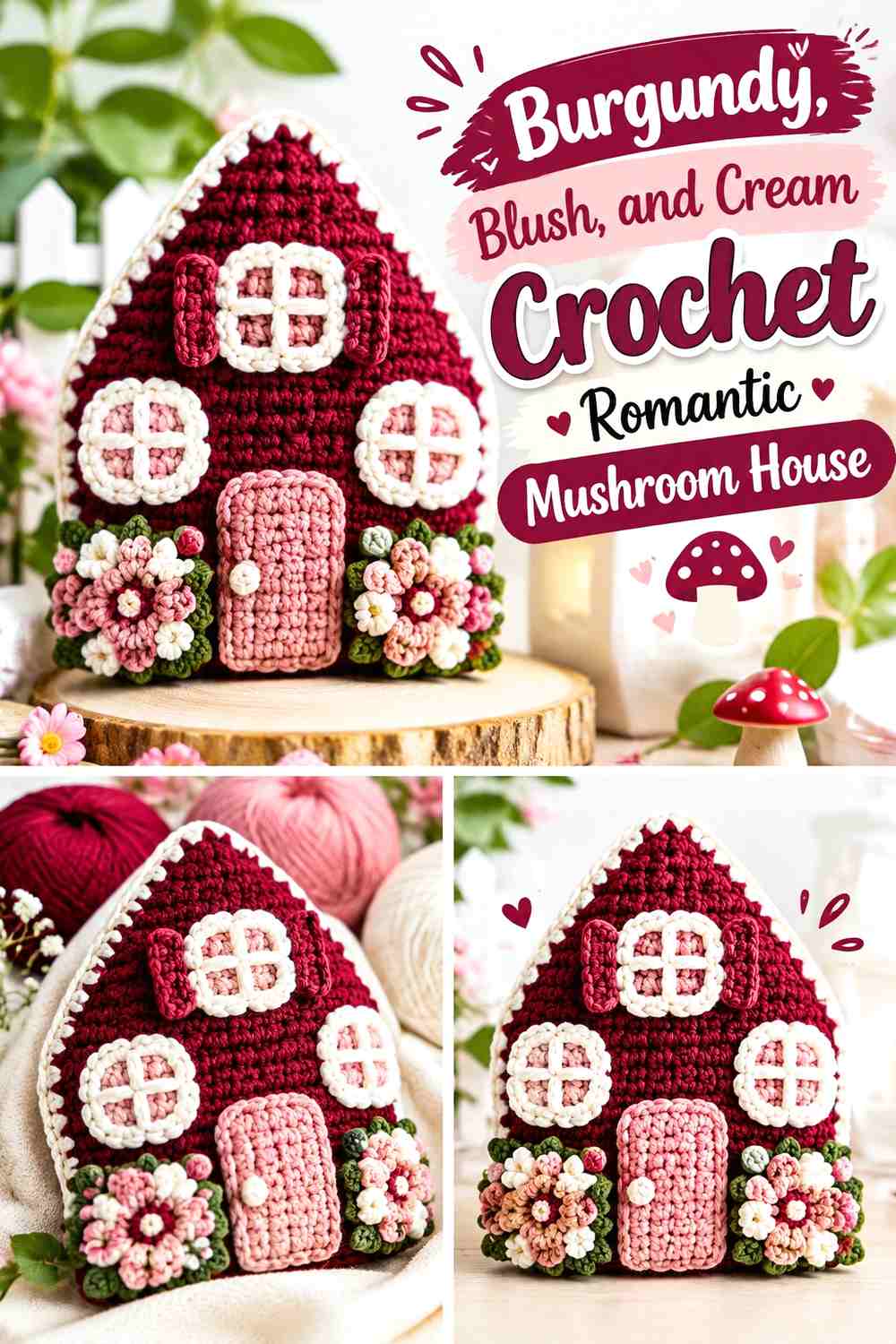
Burgundy creates a rich cap color, while blush softens the fairytale details and cream keeps the walls light. This is a useful palette when you want a romantic cottage without relying on bright candy pink.
Let burgundy carry the roof, use blush in flowers, curtains, or spots, and preserve cream around the windows.
Burgundy Needs Cream Under the Crochet Mushroom Cap
The darker the roof becomes, the more useful a pale house body is. Cream walls produce a clear division between the mushroom cap and the cottage itself.
A burgundy door on cream walls can work, but add a blush or lighter knob detail if the entrance needs more definition.
Blush Should Remain Smaller Than Burgundy on the Mushroom House
Use blush as an accent rather than dividing the cap equally. Small blush flowers, spots, or window trim soften burgundy without weakening it as the dominant color.
For a more tonal result, choose dusty blush rather than very pale pink.
Creator Credit: Crochet by Colleen
8. Sky Blue, White, and Sage Crochet Cloud-Cap Mushroom Cottage

Sky blue produces a light fantasy cap that can look almost cloud-like when paired with white spots. Sage grounds the bottom of the house and keeps the pale roof from making the entire cottage feel washed out.
Use a warmer off-white for the walls if pure white makes the cap and house merge too much.
Sky Blue Needs White Spots With Clear Mushroom Spacing
Keep enough blue between the white spots for the roof color to remain visible. Closely packed pale spots can make the cap appear mostly white from a distance.
A slightly deeper blue outer edge can define the roof without changing the soft palette.
Sage Should Ground the Sky Blue Crochet Mushroom House
Place sage on the base, door-side vines, or tiny shrubs. The medium green adds needed depth beneath the pale roof.
Avoid using sage for all window frames if the ground is already green-heavy. A darker neutral can provide more architectural definition.
Creator Credit: thisfairymade
9. Coral, Peach, and Mint Crochet Candy-Fairytale Mushroom House

Coral and peach make this mushroom cottage warmer and sweeter than a red-cap design, while mint brings a cool supporting accent. Cream walls keep the palette controlled and give the door and windows somewhere quiet to sit.
Because coral and peach are closely related, they need distinct roles rather than random alternation.
Coral Should Lead the Peach Crochet Mushroom Roof
Use coral across the main cap and reserve peach for spots, scallops, or smaller roof details.
If the two shades merge from a distance, move cream between them rather than adding another warm color.
Mint Can Cool the Coral Mushroom Cottage at the Base
Mint works well in tiny leaves, flower stems, and garden accents. Its contrast against coral gives the house a playful candy-fairytale appearance.
Keep mint away from most of the cap so the roof remains clearly coral-led.
Creator Credit: Otakulandia Crochet
10. Forest Green, Camel, and Cream Crochet Mossy Mushroom House
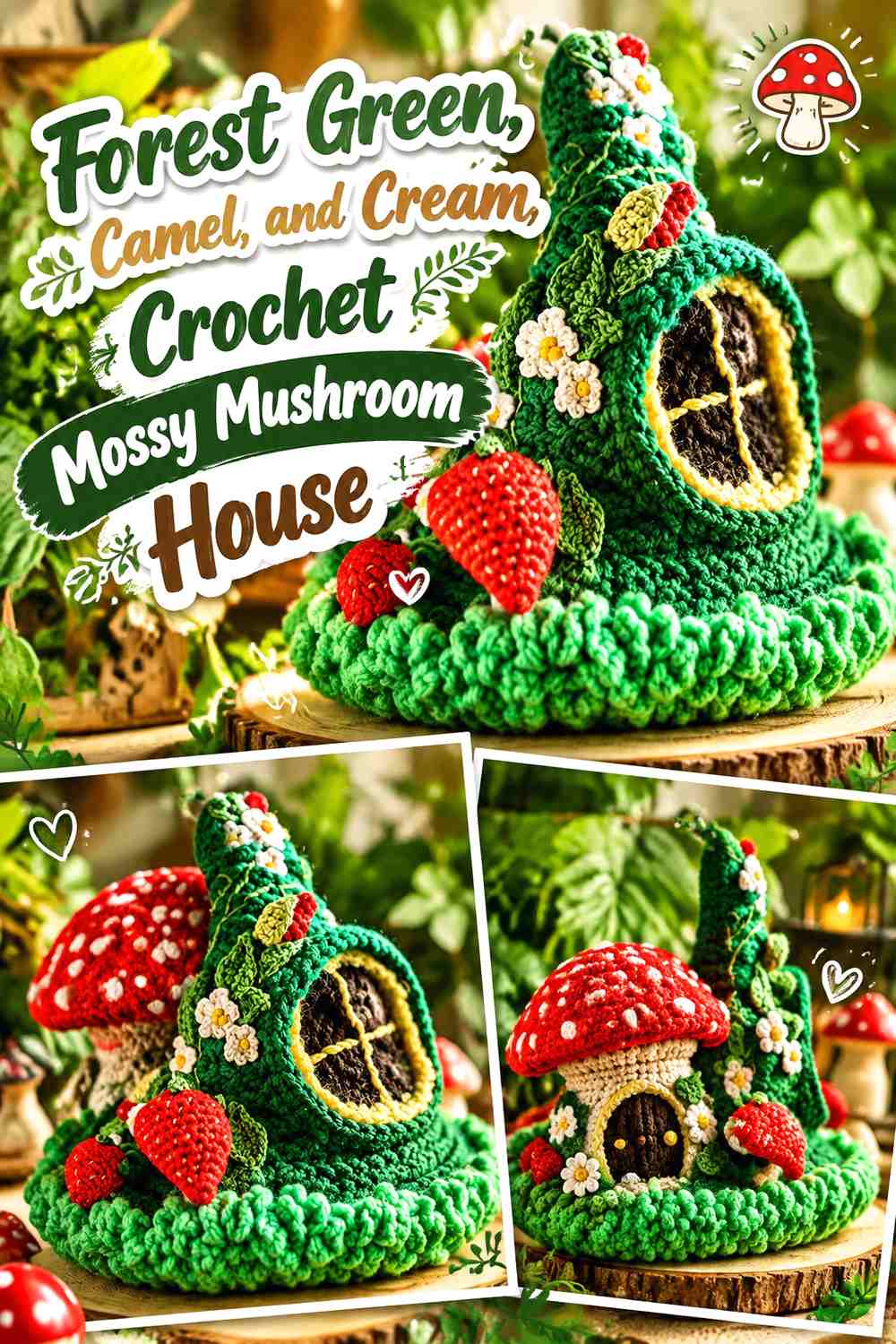
A forest-green mushroom cap creates a cottage that looks more moss-covered than toadstool-like. Camel can define the door and woody details, while cream gives the walls and spots enough brightness.
This palette works best when the green cap remains darker than any foliage around the base.
Forest Green Should Be Darker Than the Crochet Moss Details
Use the deepest green across the mushroom roof and lighter greens only for vines or grass. That prevents the cap from blending directly into the garden below.
Cream spots can break up the dark surface without introducing a bright hue.
Camel Gives Cream Mushroom Walls a Warmer Door Detail
Camel works naturally on the door, window trim, or chimney. It offers enough contrast against cream while staying softer than black.
If camel and cream appear too similar, add a thin forest-green outline around the doorway.
Creator Credit: Notes of a needlewoman🧺
11. Black, Purple, and Ivory Crochet Gothic Mushroom Cottage

Black and purple push the mushroom cottage toward a darker fairytale aesthetic. Use black on the cap or its outer edge, purple through the major roof sections, and ivory for walls, windows, or tiny roof spots.
The lightest color is critical here because miniature architectural details can disappear quickly in an all-dark palette.
Purple Should Break Up the Black Crochet Mushroom Cap
Avoid making the roof completely black if you want its crochet shaping to remain visible. Purple sections or spots give the cap surface variation while preserving the gothic direction.
Choose a purple noticeably lighter than black rather than an equally deep near-black violet.
Ivory Keeps Black Mushroom Doors and Windows Readable
Use ivory walls or window centers around the darkest architectural details.
A small amount of ivory repeated on the roof can connect the top and bottom of the cottage without making the finished house suddenly feel light.
Creator Credit: Elfriede Van Geffen
12. Golden Yellow, Brown, and Moss Crochet Storybook Mushroom House

Golden yellow makes the cap bright without using traditional red. Chocolate or medium brown can form the door and chimney, while moss green stays near the base.
Cream or oatmeal walls create a neutral bridge between those stronger colors.
Golden Yellow Should Stay Concentrated on the Crochet Mushroom Roof
Give yellow the cap rather than scattering it equally through windows, doors, grass, and flowers. Concentrated color makes the mushroom silhouette more convincing.
Brown spots or a brown roof edge can give yellow extra definition if cream would create too little contrast.
Moss Green Should Support the Golden Yellow Mushroom Cottage
Keep moss at the lower edge and around small plants. Yellow will remain the clear focal point when green occupies less visual area.
If you add flowers, repeat cream or yellow rather than introducing several new flower colors.
Creator Credit: Made by Andrada
13. Cobalt, Turquoise, and White Crochet Jewel-Tone Mushroom Cottage
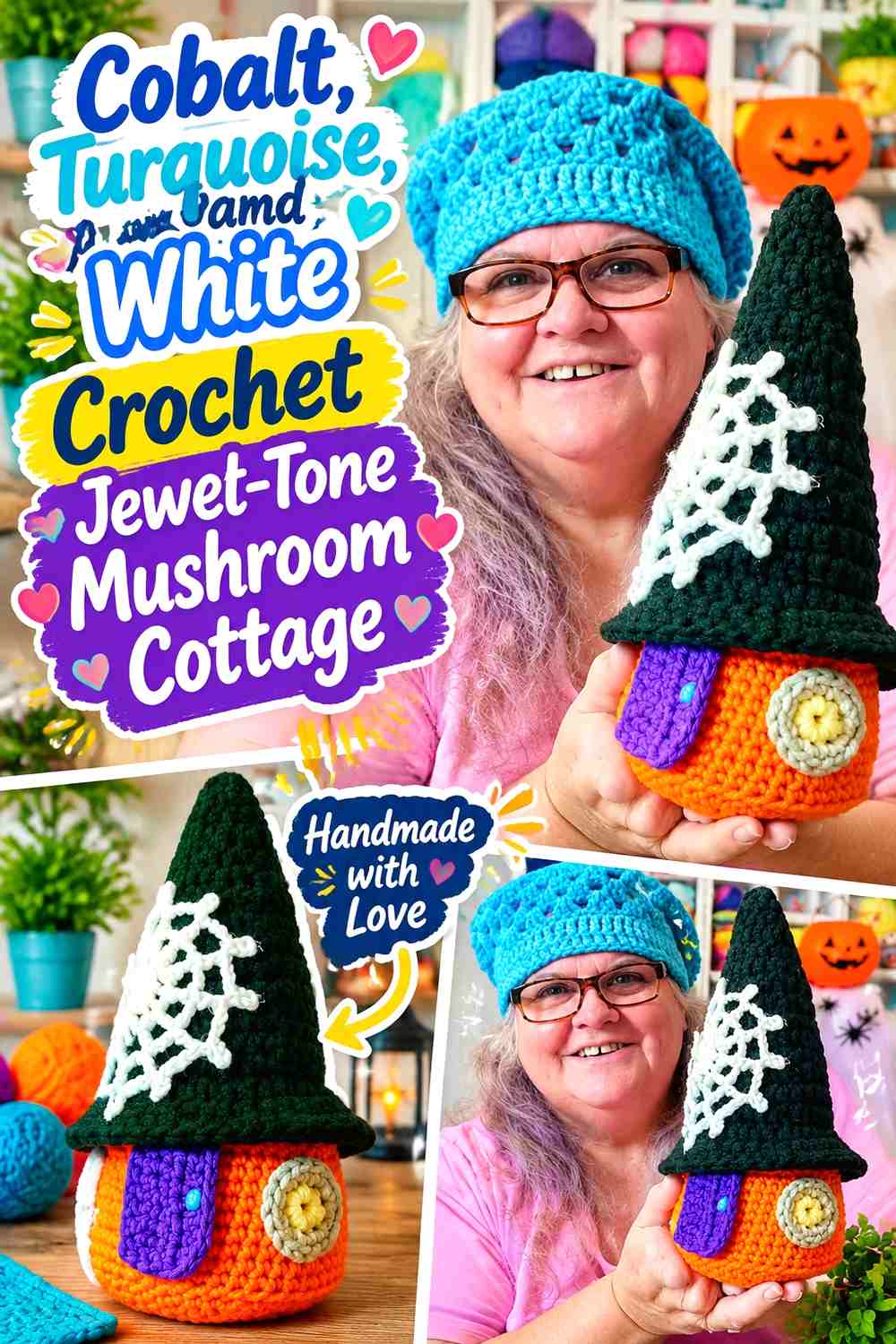
Cobalt gives the cap a deep blue base, turquoise adds a brighter secondary color, and white keeps the walls crisp. This palette suits a fantasy house that feels more magical than woodland-natural.
Use the darker blue around the broadest cap area and turquoise in controlled details.
Cobalt Should Carry More of the Crochet Mushroom Cap Than Turquoise
Cobalt can anchor the roof while turquoise appears in spots, scalloped edges, or selected cap sections.
Equal quantities can create a striped appearance that distracts from the mushroom silhouette, so let one blue clearly lead.
White Should Separate Cobalt and Turquoise Cottage Details
White walls and window interiors give both blues enough surrounding space. This is especially useful around small doors or decorative arches.
If the display background is white, add a turquoise base so the cottage body remains outlined.
Creator Credit: Llama Mama Kayla
14. Pumpkin Orange, Chocolate, and Oatmeal Crochet Harvest Mushroom House
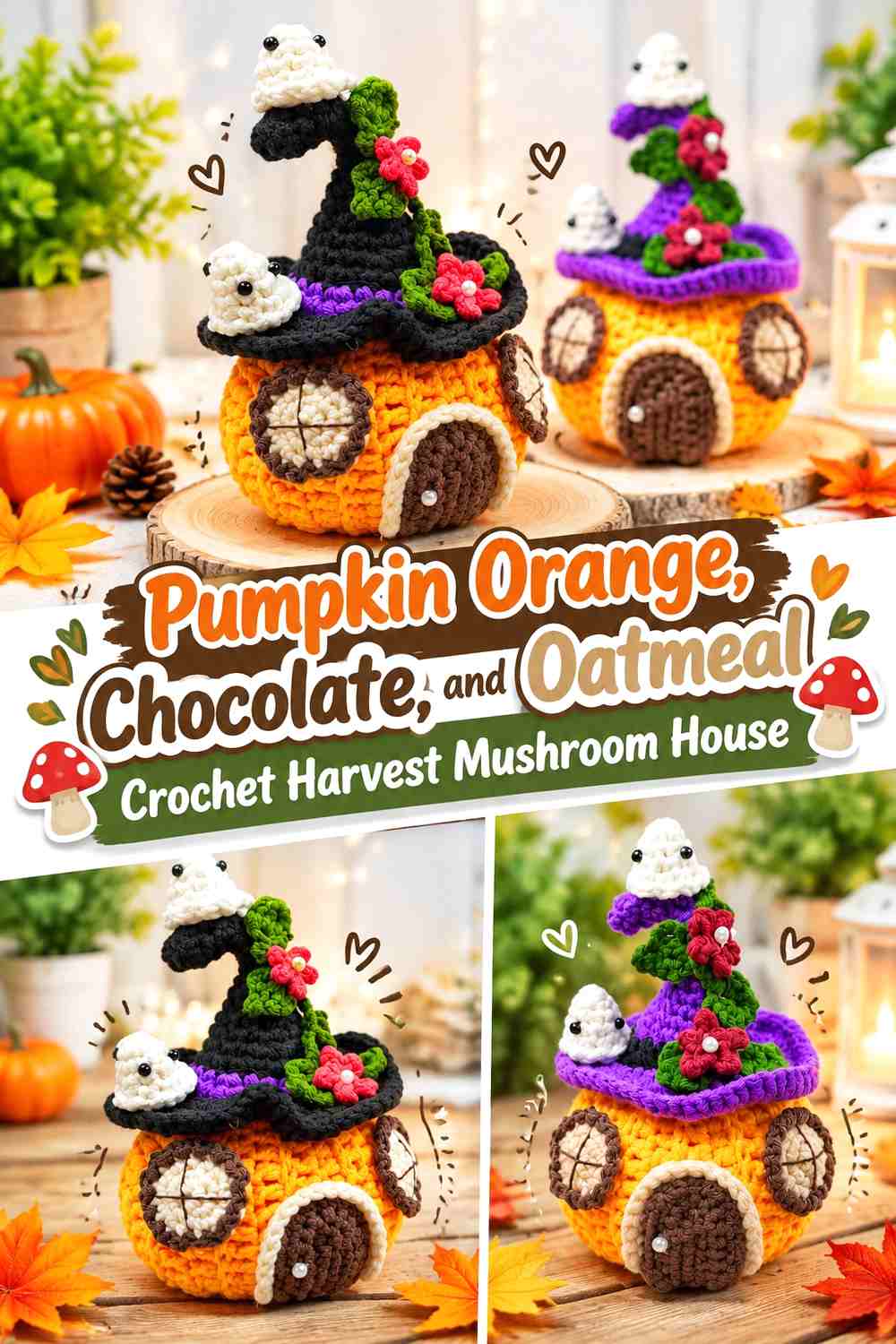
Pumpkin orange gives a mushroom cottage a harvest-season appearance while preserving the broad rounded cap. Chocolate can define the door and roof accents, and oatmeal can soften the walls.
The palette works well when you want autumn color without turning the entire piece into a literal pumpkin.
Pumpkin Orange Should Stay Above the Oatmeal Crochet Walls
Keeping orange mostly on the roof preserves the mushroom-house division. If the walls become heavily orange too, the cottage begins to look like one continuous seasonal object.
Use chocolate around the cap edge when stronger separation is needed.
Chocolate Can Define the Oatmeal Mushroom Door
A chocolate door stands out clearly against oatmeal without requiring black. Repeat the brown in a tiny chimney, window outline, or stepping-stone detail to connect it to the rest of the house.
Keep those brown areas small enough that orange remains dominant.
Creator Credit: Zan Crochet
15. Faded Blue, Dusty Pink, and Cream Crochet Vintage Mushroom Cottage
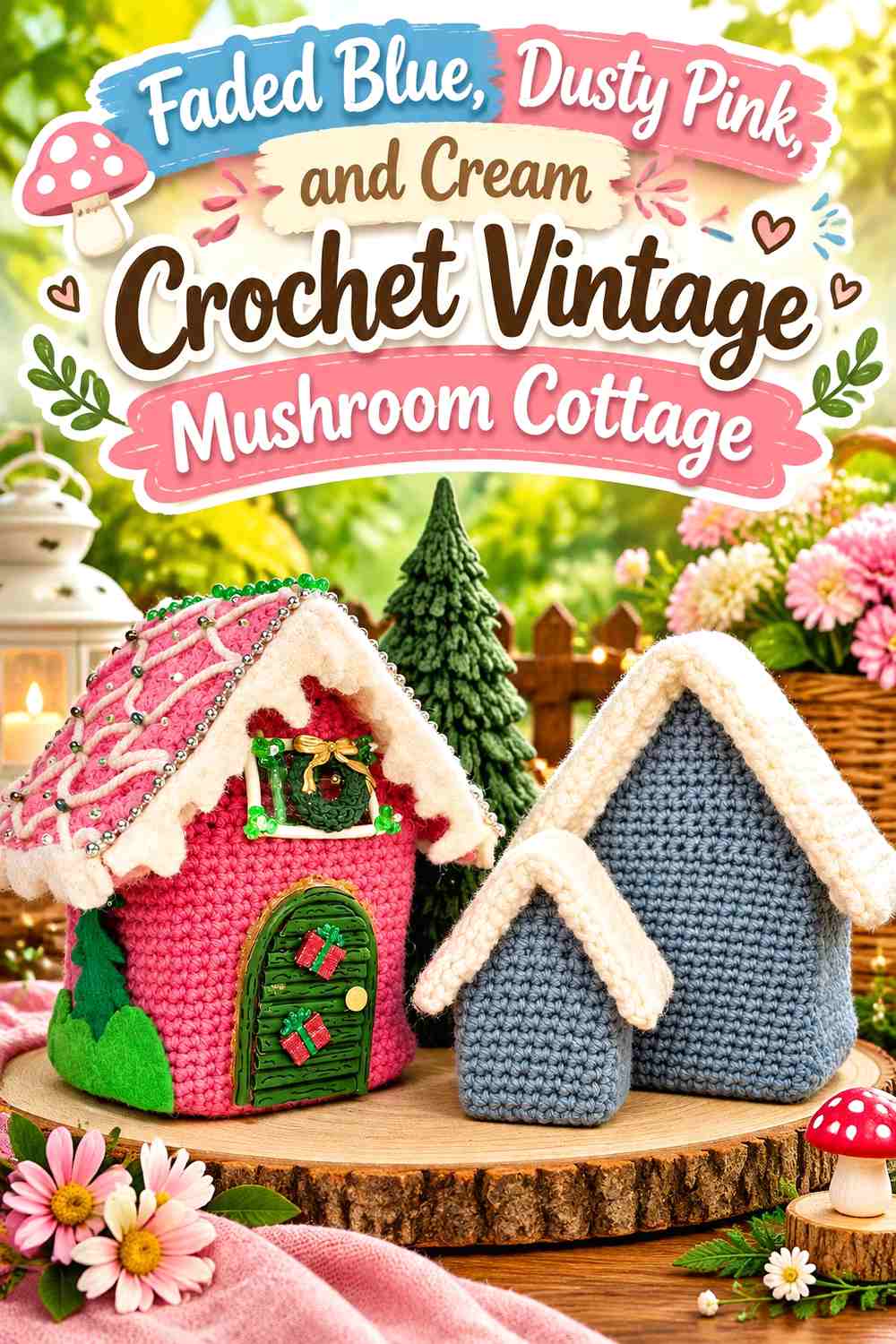
Faded blue and dusty pink produce a softer, slightly vintage fairytale palette. Let faded blue cover the cap, dusty pink appear in flowers and spots, and cream form the walls.
This direction benefits from muted shades rather than very bright versions of either color.
Faded Blue Should Give the Crochet Mushroom Roof a Quiet Base
Use faded blue uninterrupted through most of the cap so the pink details have a consistent background.
If the blue is extremely pale, place dusty pink near the cap edge to ensure the roof remains separate from cream walls.
Dusty Pink Can Accent Cream Mushroom Windows and Flowers
Repeat the pink in two areas, such as flower centers and window trim, so it does not look isolated on the roof.
Avoid covering every cream architectural detail with pink. The quiet wall color is part of what makes the muted cap noticeable.
Creator Credit: Crafters Autonomous
16. Apple Red, Leaf Green, and Beige Crochet Orchard Mushroom House

Apple red and leaf green create an orchard-like fairytale palette that still translates easily to a mushroom cottage. Let red dominate the cap, beige form the walls, and green appear around leaves, vines, or the ground.
A brown stem-like chimney or door can reinforce the natural direction without becoming another strong color.
Apple Red Should Remain the Crochet Mushroom Cap Focal Point
Use red across most of the roof and keep green away from large cap sections. The mushroom house stays easier to recognize when red and green have separate vertical zones.
Cream or beige spots can interrupt the red without changing the palette.
Leaf Green Should Stay Around the Beige Mushroom House Base
Green vines and leaves can climb part of the wall, but leave enough beige visible around windows and doors.
This creates the impression of an overgrown fairytale house without allowing the foliage color to cover the architecture.
Creator Credit: Yarn Creation Ideas
17. Rust, Teal, and Cream Crochet Mushroom House Backpack Cottage
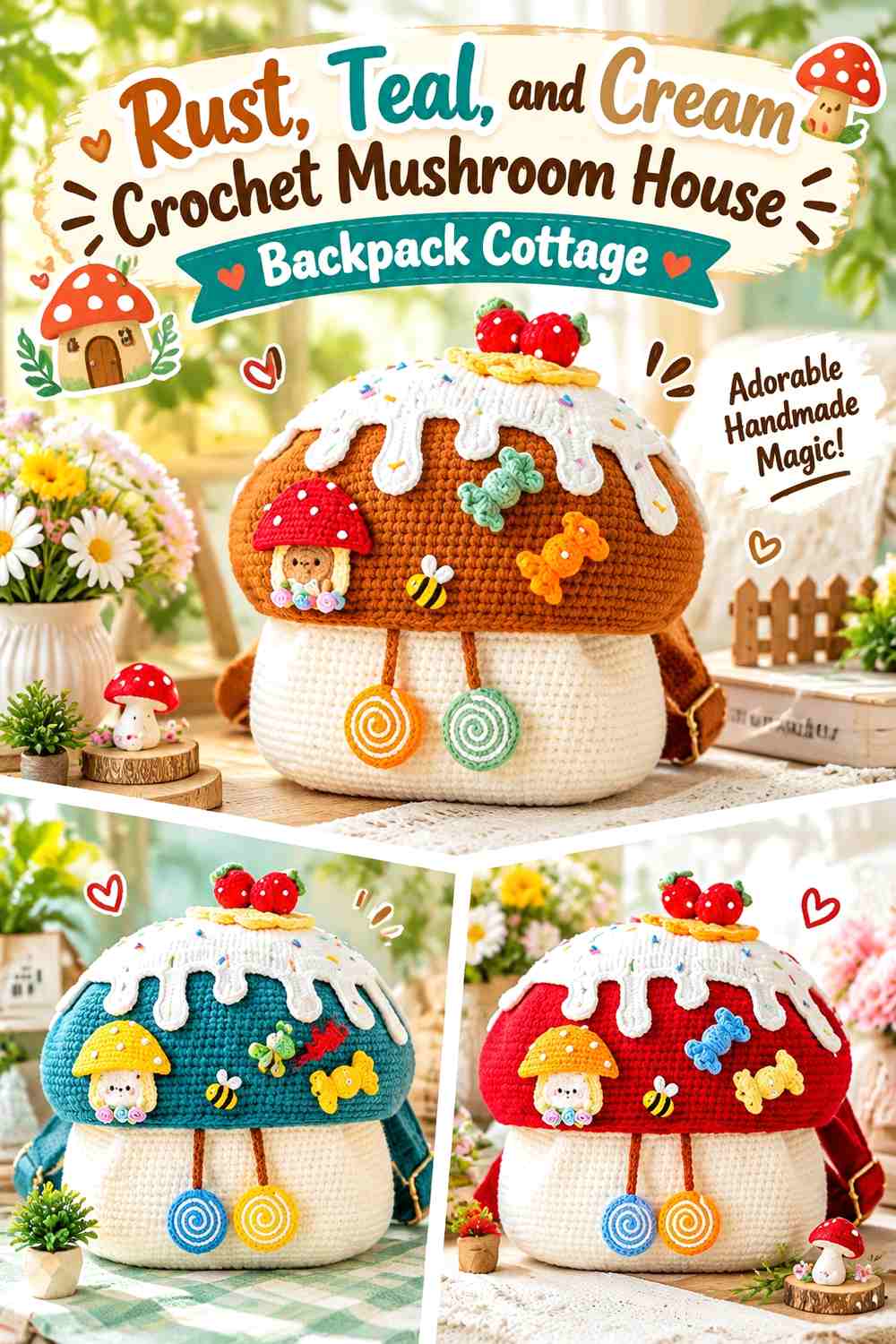
A mushroom-house backpack format gives the fairytale cottage a functional silhouette while keeping the same cap-and-house color logic. Rust can lead the roof, cream can form the cottage body, and teal can define doors, windows, or selected foliage details.
Because a backpack is viewed while moving, keep the front color hierarchy particularly clear.
Rust Should Make the Crochet Mushroom Backpack Roof Easy to Recognize
Use rust across enough of the top that the mushroom-house concept remains visible from a distance.
Small cream spots or trim can emphasize the cap edge without filling it with too many competing details.
Teal Should Accent the Cream Mushroom Backpack Front
Use teal around the door, windows, or one decorative vine. It creates a noticeable cool contrast against rust without taking over the whole front panel.
Repeating teal once near the lower edge can keep the accent from looking isolated.
Creator Credit: Susan’s family
18. Hot Pink, Lilac, and Aqua Crochet Kawaii Mushroom House

Hot pink makes a very different mushroom house from the earthy or woodland palettes. Use it for the cap, lilac for roof spots or small flower accents, and aqua for the door, windows, or base details.
Cream walls can keep the three saturated colors from occupying the same small surface at once.
Hot Pink Should Stay Dominant on the Crochet Mushroom Roof
Give hot pink most of the cap and restrict lilac to smaller sections. The strong roof becomes the defining feature rather than one color among many.
If the pink is extremely bright, use cream spots instead of aqua so the cap still has visual breathing room.
Aqua Can Separate Hot Pink and Lilac Fairytale Details
A small aqua door or lower border creates a cool contrast without competing with the roof.
Avoid repeating aqua across every window and flower. One or two areas are enough to establish the accent.
Creator Credit: Coc Tips & Tricks
19. Taupe, Mushroom Brown, and Dusty Green Crochet Neutral Fairy Cottage

Taupe and mushroom brown create a restrained fairytale house where texture and tiny architecture matter more than bright cap color. Use mushroom brown for the roof, taupe on the walls, and dusty green at the base or in sparse vines.
Cream can be introduced only where a window or tiny roof spot needs stronger visibility.
Mushroom Brown Should Be Darker Than the Taupe Crochet Walls
Keeping the cap noticeably deeper than the body preserves the mushroom silhouette even within an all-neutral palette.
If the two yarns look nearly identical in grayscale, lighten the taupe rather than adding a large bright accent.
Dusty Green Can Give Taupe Mushroom Walls a Quiet Woodland Border
Use muted green along the ground and in a few leaves around the door. It gives the neutrals a natural setting without pulling attention away from the roof.
Leave plenty of taupe wall visible so small brown windows and cream details remain readable.
Creator Credit: Girlybunches
Which Fairytale Mushroom House Palette Should You Choose?
For a classic woodland house, cherry red with cream and moss gives the clearest traditional toadstool direction. Rust, terracotta, mustard, pumpkin orange, and olive work better when you want a warmer autumn cottage.
Pastel fairytale houses can use dusty rose, faded blue, lavender, mint, coral, or peach, but keep a medium or dark accent around tiny doors and windows. Without enough value contrast, pale architectural details can disappear into equally pale walls.
For darker fantasy decor, plum, burgundy, charcoal, black, and ivory create stronger drama. If you prefer understated cottagecore, mushroom brown, oatmeal, dusty green, camel, and taupe let stitch texture and miniature details carry more of the design.
Conclusion
Crochet fairytale mushroom houses can change character dramatically through palette alone. A red cap and cream walls create an instantly recognizable woodland cottage, while teal, pink, plum, or golden yellow can turn the same basic concept into something more fantastical.
Start by deciding which color owns the mushroom cap. Then choose a quieter wall color and reserve the highest-contrast shades for the tiny details readers actually need to see: doors, windows, spots, chimneys, flowers, vines, and pathways.
Before attaching those small pieces, position everything on the finished house and check it from normal viewing distance. If a window or doorway disappears, changing its border usually improves the design more effectively than adding another color throughout the entire cottage. Follow each linked creator tutorial for its original construction and use these palettes as independent adaptation ideas.
Frequently Asked Questions
What colors make a crochet mushroom house look most traditional?
Red or deep rust caps with cream walls and green woodland details create the clearest traditional toadstool-cottage direction. Brown doors and cream roof spots can add definition without expanding the palette too far.
Can I make a pastel crochet mushroom house without losing the mushroom shape?
Yes. Give the cap one clearly dominant pastel and make the wall or cap edge noticeably different in value. For example, dusty pink can sit above cream walls with sage details, while sky blue can work over an oatmeal or medium-sage base.
How many colors should I use in one fairytale mushroom house?
Three main colors are usually enough to establish the cap, walls, and supporting details. A neutral door or tiny accent can be added when needed, but several equally strong colors can make miniature doors, windows, flowers, and spots difficult to distinguish.
Should the crochet mushroom-house door be darker than the walls?
It often helps, but it is not required. What matters is visible light/dark separation. A chocolate door on cream walls is easy to read, while a cream door can work just as well on burgundy or forest-green walls.
How can I keep flowers and vines from covering the mushroom-house details?
Concentrate them around one side of the doorway, the lower wall, or selected roof areas. Leave visible wall space around windows and keep the largest floral elements smaller than the architectural features you want to emphasize.
Can I use black in a crochet fairytale mushroom house?
Yes. Black works particularly well in gothic palettes as a cap, door, window, or base color. Pair it with ivory, lavender, gray, or another noticeably lighter shade so the small crochet details do not disappear.
How can I coordinate several crochet mushroom houses as a fairy village?
Repeat one connecting color while changing the dominant cap shade. For example, every cottage might use cream walls and moss-green bases while the roofs rotate through red, rust, teal, plum, and mustard. This keeps the village connected without making every house identical.