A baby quokka amigurumi becomes especially expressive when the color scheme supports its broad muzzle and cheerful face. Warm brown can cover most of the head and rounded body, a lighter cream or oatmeal area can create space around the mouth, and a deeper espresso or cocoa shade can define the nose, paws, and ear details without making the face visually heavy.

The smile deserves particular attention. When the muzzle and main coat are almost identical in value, small embroidered facial details can disappear. A slightly lighter muzzle creates a cleaner area around the mouth, while the darkest shade should remain concentrated enough that the eyes and nose do not overpower the expression.
The first four tutorials below are quokka or Han Quokka amigurumi constructions. The remaining tutorials teach closely related rounded-mammal forms that can serve as construction references for a baby-quokka adaptation. In those projects, the quokka ears, muzzle proportions, smile, and color placement are independent adaptations rather than features attributed to the original creator.
Quick List
- Warm Caramel, Cream, and Espresso Crochet Smiling Baby Quokka Amigurumi
- Mushroom Brown, Oatmeal, and Cocoa Crochet Heart-Holding Baby Quokka Amigurumi
- Honey Brown, Ivory, and Walnut Crochet Round Baby Quokka Amigurumi
- Cinnamon, Cream, and Dark Brown Crochet Compact Baby Quokka Amigurumi
- Taupe Brown, Ecru, and Espresso Crochet Chubby Baby Quokka Amigurumi
- Cocoa Brown, Sand, and Chestnut Crochet Plush Baby Quokka Amigurumi
- Soft Chestnut, Beige, and Charcoal Crochet Low-Sew Baby Quokka Amigurumi
- Greige Brown, Cream, and Dark Cocoa Crochet Round Baby Quokka Amigurumi
- Rust Brown, Oatmeal, and Espresso Crochet Woodland Baby Quokka Amigurumi
- Cool Brown, Pearl Gray, and Cocoa Crochet Soft-Face Baby Quokka Amigurumi
- Natural Brown, Butterscotch, and Espresso Crochet Baby Quokka Amigurumi
Keep the Crochet Baby Quokka Muzzle Lighter Around the Smile
The mouth occupies a very small area, so the yarn surrounding it needs enough contrast for the expression to remain visible. Cream, ivory, oatmeal, sand, and ecru can all work as muzzle colors against a medium or deep brown coat.
The muzzle does not need to become a large pale oval. Keeping it compact allows the brown cheeks to remain broad, which helps preserve the round baby-quokka face.
If you prefer a nearly monochromatic quokka, use a lighter version of the main brown rather than introducing white. A caramel body with beige muzzle, for example, can stay tonal while still giving the smile room to show.
Use Dark Brown Carefully Around the Crochet Quokka Eyes and Nose
A black or espresso nose can become the strongest visual point on a small amigurumi. That can be useful, but too much dark color around the eyes, nose, mouth, and ears at once can close up the entire face.
Choose where the darkest shade matters most. The nose usually needs clear definition, while ear interiors can often use a softer cocoa or walnut. Tiny paws can repeat the dark color if you want the palette to feel connected from face to body.
Let Rounded Crochet Cheeks Carry the Main Quokka Color
The cheeks and side of the head are excellent places to preserve the dominant brown. Leaving these areas uninterrupted creates a wider-looking face and keeps the lighter muzzle from taking over the expression.
For a baby-style result, avoid dividing both cheeks into several dark and light patches. One broad main coat color, one muzzle shade, and one compact dark detail color usually provide enough variation.
1. Warm Caramel, Cream, and Espresso Crochet Smiling Baby Quokka Amigurumi

Warm caramel can dominate the head and rounded body, while cream creates a lighter muzzle where the smile remains easy to see. Espresso is best reserved for the nose and a few small details so the center of the face stays open.
The supporting tutorial is a direct quokka amigurumi project, making it a strong construction match for this first idea. YouTube
Let Warm Caramel Frame the Cream Crochet Quokka Smile
Keep caramel across the forehead and broad cheeks rather than extending cream too far toward the eyes. The darker outer face visually frames the lighter muzzle and makes the smile area easier to locate.
If your caramel is very pale, choose cream that is still visibly lighter rather than relying on hue difference alone.
Keep Espresso Small on the Warm Caramel Crochet Baby Quokka Face
Use espresso primarily where strong definition helps, such as the nose and the deepest tiny facial details. Large espresso sections around the mouth can compete with the smile.
Repeating espresso on very small paw ends can connect the face and body without creating another major color block.
Creator Credit: Crochet with Aybi
2. Mushroom Brown, Oatmeal, and Cocoa Crochet Heart-Holding Baby Quokka Amigurumi

Mushroom brown gives the quokka a softer neutral coat, while oatmeal brightens the muzzle and cocoa supplies deeper facial definition. This combination works especially well when you want the expression to feel gentle rather than highly graphic.
The linked tutorial is specifically a Quokka in Love amigurumi, so its quokka construction and held-heart concept directly support this idea. YouTube
Use Oatmeal to Open the Mushroom Brown Crochet Quokka Muzzle
Oatmeal can stay around the mouth and lower face, where it gives the smile enough contrast without introducing stark white.
Keep mushroom brown visible on both cheeks so the quokka retains a broad, rounded face.
Let Cocoa Ground the Mushroom Brown Crochet Quokka Features
Cocoa is softer than black but still deep enough for the nose and selected ear details. That makes it useful in a palette where all three colors remain warm and muted.
If a heart accessory is added, choose a separate accent only if it does not distract from the face.
Creator Credit: Gurumi Crochet Studio
3. Honey Brown, Ivory, and Walnut Crochet Round Baby Quokka Amigurumi

Honey brown gives this baby quokka a lighter golden-brown direction. Ivory can sit around the muzzle and belly, while walnut provides enough depth for the nose, ears, and restrained paw details.
The supporting Han Quokka tutorial provides a direct quokka-character construction with a rounded body and recognizable face. YouTube
Keep Honey Brown Broad Around the Ivory Crochet Quokka Face
Use honey brown across the cheeks, forehead, and most of the ears. Ivory should remain concentrated below the nose so the lighter section supports the smile instead of becoming the main face color.
This unequal balance also keeps the head visibly connected to the brown body.
Use Walnut to Define the Honey Brown Crochet Quokka Without Hiding the Smile
Walnut works well as the darkest warm neutral. Keep it above or around the muzzle in compact details rather than extending it across the mouth area.
If the eyes and nose already provide enough dark contrast, use walnut less heavily in the ears.
Creator Credit: Amis Tejiendo Momentos
4. Cinnamon, Cream, and Dark Brown Crochet Compact Baby Quokka Amigurumi

Cinnamon gives the body a richer reddish-brown tone, while cream softens the central face. Dark brown creates the strongest small details and prevents the warm palette from looking flat.
AmiSaigon’s supporting tutorial is a multi-part Han Quokka amigurumi construction, so it offers another direct quokka-character base for color adaptation. Ami Saigon
Let Cinnamon Carry Most of the Cream Crochet Baby Quokka Head
Use cinnamon continuously across the top and sides of the head. A compact cream muzzle then reads as a deliberate facial highlight instead of splitting the face into equal brown and pale sections.
This is especially useful on a smaller amigurumi where every color area appears proportionally larger.
Keep Dark Brown Away From the Center of the Cream Crochet Quokka Smile
The nose needs contrast, but the mouth area itself benefits from breathing room. Concentrate dark brown at the upper muzzle and tiny details instead of building one large dark patch.
Cream should remain visible around the smile from normal viewing distance.
Creator Credit: AmiSaigon
5. Taupe Brown, Ecru, and Espresso Crochet Chubby Baby Quokka Amigurumi
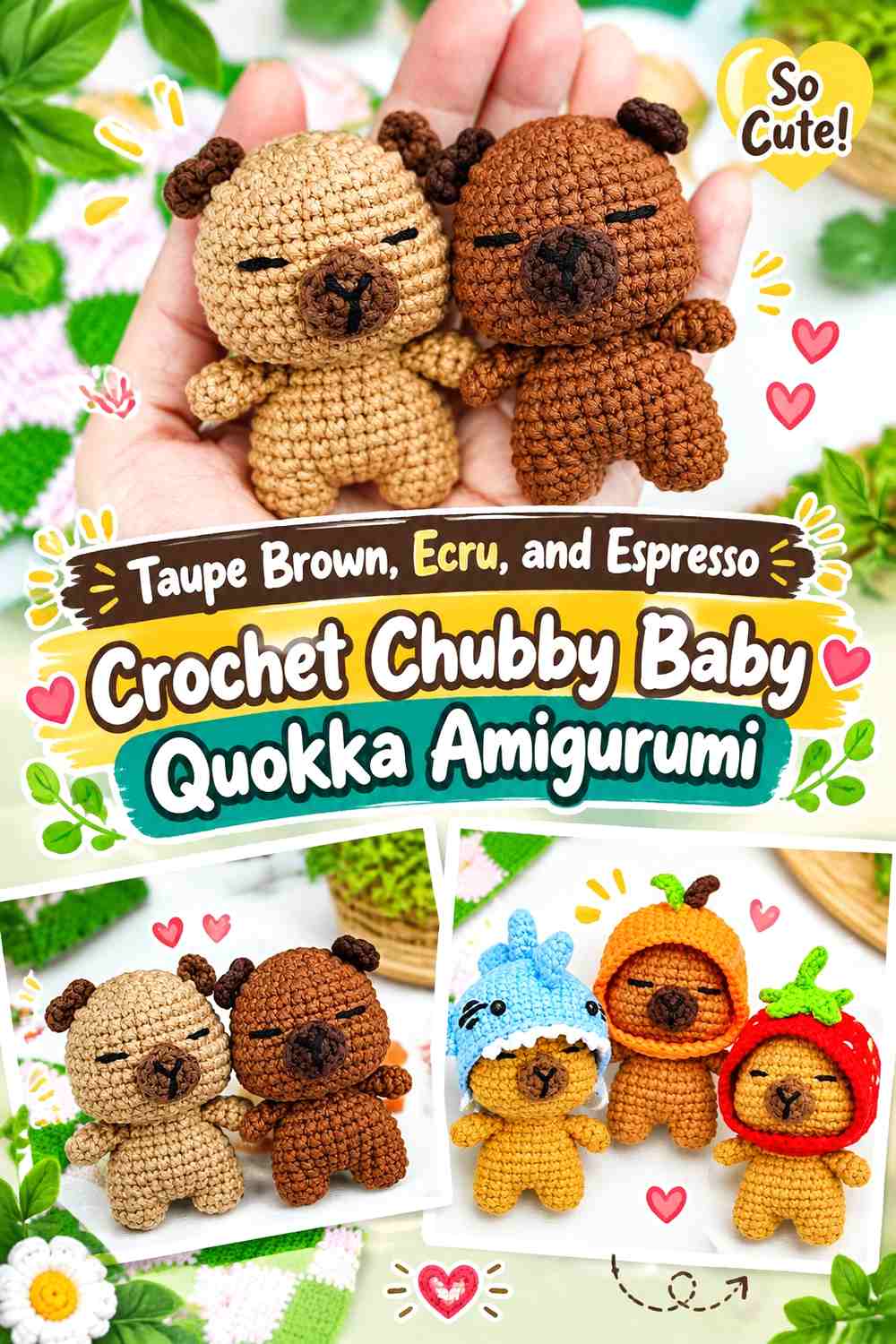
Taupe brown gives this quokka a quiet neutral body, ecru lightens the muzzle, and espresso adds a compact dark anchor. The result is less golden than caramel and less reddish than cinnamon, making it suitable for a softer natural palette.
The supporting tutorial is a capybara rather than a quokka, but its rounded mammal construction includes the head, body, ears, nose, and limbs and can serve as a structural adaptation base. YouTube
Let Taupe Brown Preserve the Chubby Ecru Crochet Quokka Cheeks
Keep taupe visible across both sides of the muzzle. A wide area of main coat color helps the face remain broad even when the ecru section is prominent.
For a baby-quokka adaptation, treat the rounded cheeks as more important than adding extra coat markings.
Use Espresso to Give the Taupe Brown Crochet Quokka Nose a Clear Center
Espresso provides the deepest value in an otherwise muted scheme. A small amount is enough to define the nose against ecru.
If the ears need additional definition, use taupe and espresso selectively rather than making the whole ear dark.
Creator Credit: AnDesign_Craft
6. Cocoa Brown, Sand, and Chestnut Crochet Plush Baby Quokka Amigurumi

Cocoa brown can cover the plush body, sand can lighten the smiling muzzle, and chestnut can provide a warmer dark accent around the nose and paws. Because all three shades are brown-based, the finished toy stays cohesive even with visible contrast.
The linked tutorial teaches a soft capybara amigurumi with a separate snout and rounded form, which can serve as a related construction base rather than an exact quokka pattern. YouTube
Give Sand Enough Space on the Cocoa Brown Crochet Quokka Muzzle
Plush yarn can soften the edge between colors, so the sand muzzle should be large enough to remain recognizable but not so large that it replaces the cheeks.
A clearly lighter sand usually works better here than two almost-identical browns.
Keep Chestnut Darker Than Cocoa on the Crochet Baby Quokka Nose
If cocoa and chestnut are close in value, the nose can disappear. Choose the chestnut role for the noticeably deeper shade and preserve cocoa as the main coat.
That same chestnut can repeat in tiny paw details to connect the palette.
Creator Credit: LANARUMI
7. Soft Chestnut, Beige, and Charcoal Crochet Low-Sew Baby Quokka Amigurumi

Soft chestnut provides the main warm coat, beige gives the smiling face a lighter center, and charcoal supplies the sharpest contrast. This palette is slightly more graphic because charcoal is darker than the brown accents used in the previous ideas.
The supporting capybara tutorial demonstrates a compact amigurumi body and ears, making it useful as a related base for a baby-quokka adaptation. YouTube
Let Beige Separate Charcoal From the Soft Chestnut Crochet Quokka Face
A beige muzzle creates a buffer between the dark nose and medium chestnut cheeks. This three-step value arrangement helps the facial features remain clear without surrounding the whole muzzle in dark yarn.
Keep beige warmer than bright white for a softer result.
Use Charcoal Sparingly on the Soft Chestnut Crochet Baby Quokka
Charcoal will attract attention quickly. Limit it to the nose, tiny eye details, or another compact feature.
If the ears become charcoal as well, reduce the dark area elsewhere so the smiling muzzle stays the focal point.
Creator Credit: Betty’s.Crochi
8. Greige Brown, Cream, and Dark Cocoa Crochet Round Baby Quokka Amigurumi

Greige brown sits between beige and gray, creating a cooler neutral coat. Cream can brighten the muzzle, while dark cocoa warms the deepest details so the finished amigurumi does not become entirely cool-toned.
The supporting tutorial teaches a rounded capybara amigurumi with a compact mammal shape that can be used as construction inspiration for the quokka concept. YouTube
Keep Greige Brown Visible Above the Cream Crochet Quokka Smile
Leave a broad greige forehead and cheek area so the cream muzzle remains clearly subordinate to the main coat.
If cream spreads too high toward the eyes, the face can begin to look divided into top and bottom halves.
Let Dark Cocoa Warm the Greige Brown Crochet Quokka Details
Dark cocoa works well for the nose because it contrasts against both greige and cream while staying connected to the natural-brown theme.
Repeat it only where needed; the cooler greige body is what makes this palette distinct.
Creator Credit: Crochet Everyday
9. Rust Brown, Oatmeal, and Espresso Crochet Woodland Baby Quokka Amigurumi
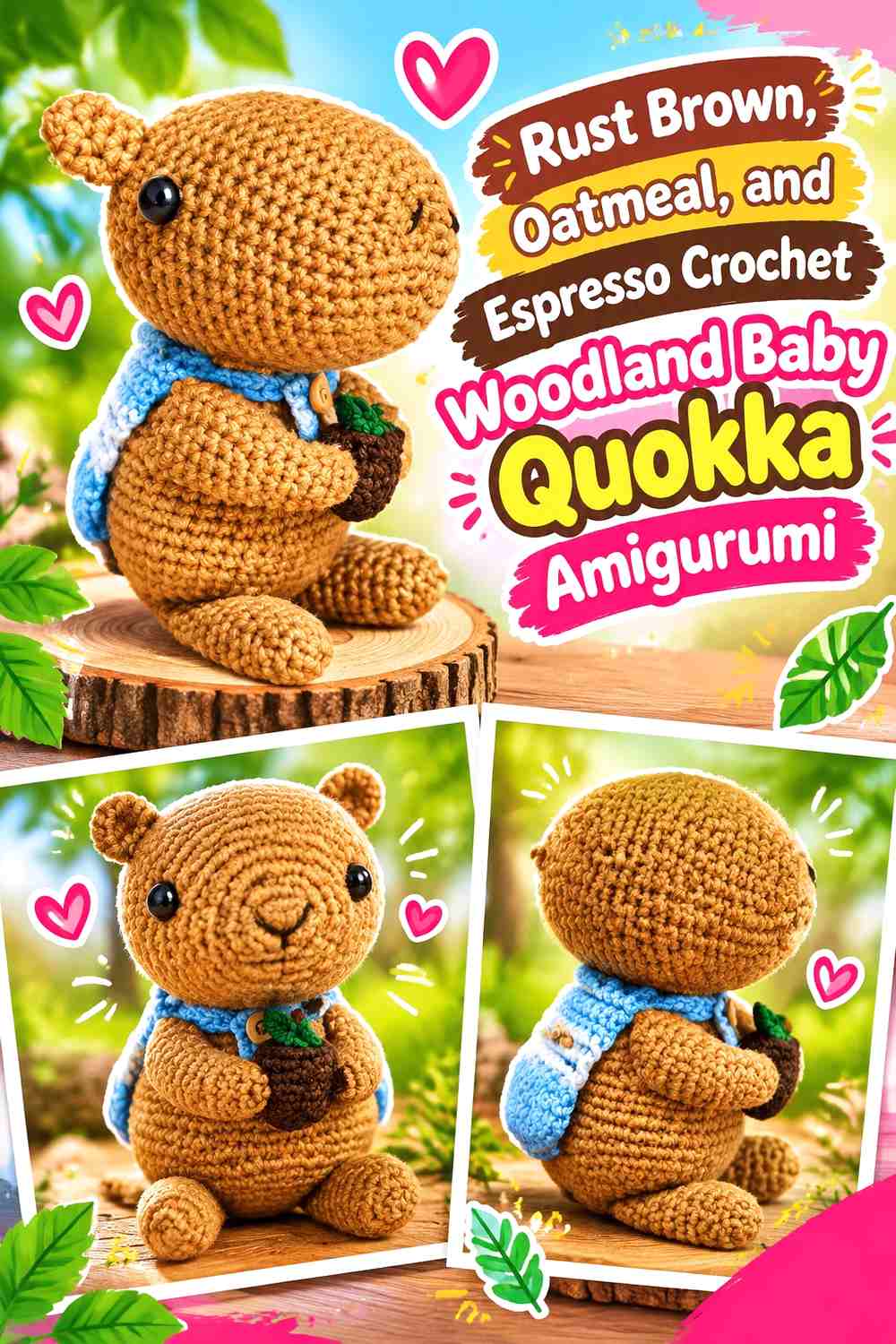
Rust brown introduces a stronger autumn direction, oatmeal creates a soft muzzle and belly, and espresso provides the dark facial anchor. The warm body can make the quokka look more woodland-inspired without changing the basic face hierarchy.
The supporting tutorial is a capybara amigurumi rather than a quokka, but its small rounded mammal form can be adapted as a construction reference. YouTube
Let Rust Brown Surround the Oatmeal Crochet Quokka Smile
Use rust continuously across the cheeks so the pale muzzle has a distinct outline. This produces stronger warmth than taupe or mushroom without requiring any extra accent color.
Oatmeal can repeat on a small belly area if you want the face and body to connect.
Keep Espresso Compact on the Rust Brown Crochet Quokka Face
Espresso should stay near the nose and smallest dark details. Because rust is already a deep warm color, excessive espresso can make the whole front of the toy too heavy.
If you need more ear contrast, choose a deeper rust before adding more espresso.
Creator Credit: hakuna matata crochet
10. Cool Brown, Pearl Gray, and Cocoa Crochet Soft-Face Baby Quokka Amigurumi
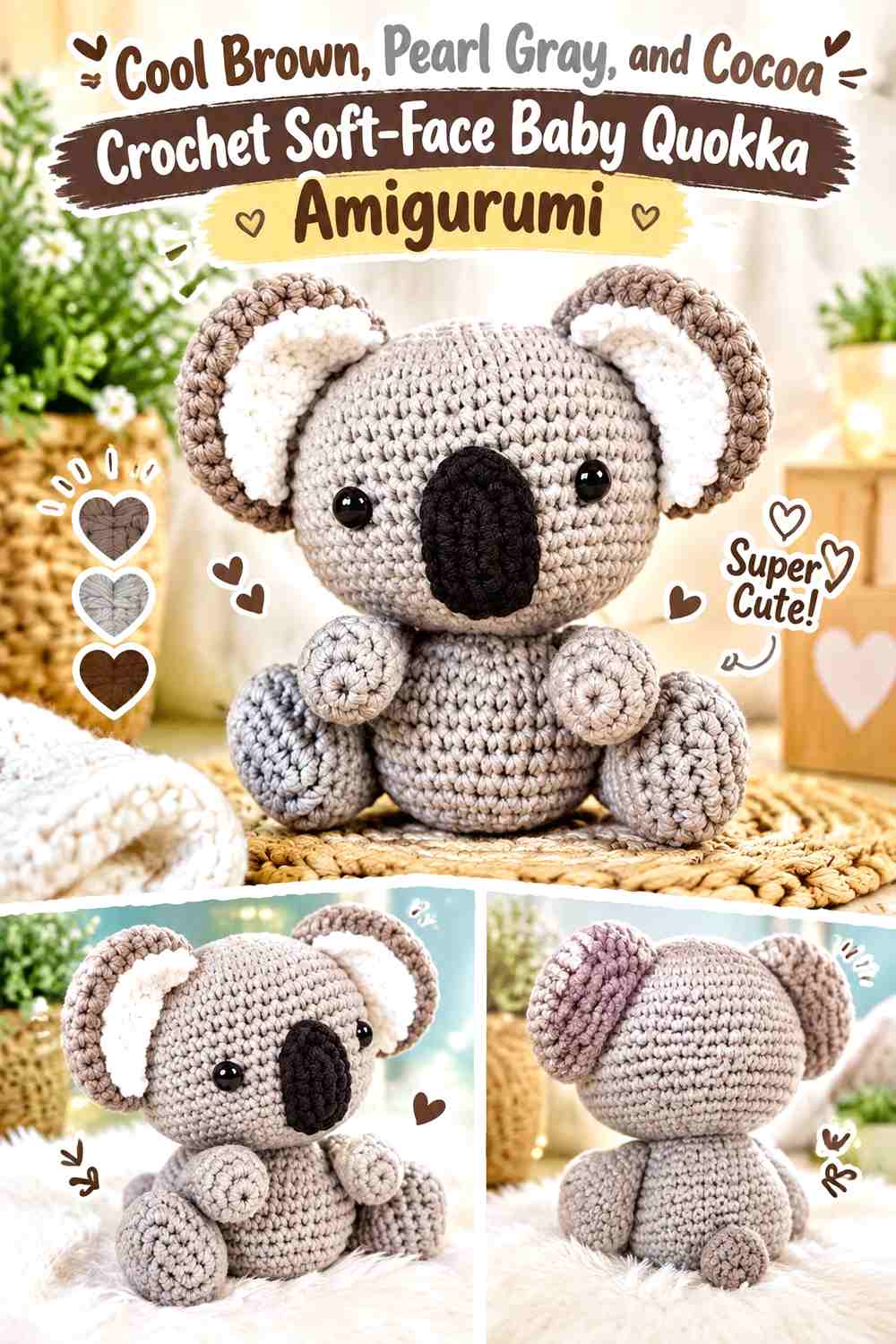
Cool brown gives the body an understated earthy-gray direction, pearl gray can form a very soft muzzle, and cocoa introduces warmth at the nose. This is one of the least conventional quokka palettes, but the dominant-medium, lighter-muzzle, darker-detail hierarchy keeps the face coherent.
The supporting tutorial is a koala rather than a quokka. Its rounded amigurumi head and body can provide general shaping inspiration, but the smaller quokka ears, broad smiling muzzle, and facial proportions are independent adaptations. Crochet Scout
Use Pearl Gray to Lighten the Cool Brown Crochet Quokka Muzzle
Pearl gray should remain clearly lighter than the body even though both colors are muted. A gentle value difference can keep the face soft while still protecting the smile.
If the two shades merge under indoor lighting, move the muzzle toward a warmer light gray or ecru.
Keep Cocoa Warmer Than the Cool Brown Crochet Quokka Body
A warm cocoa nose prevents the palette from becoming entirely gray. Because the contrast is both temperature and value based, only a small amount is necessary.
Avoid spreading cocoa through large ear sections; it is more useful as a compact facial anchor.
Creator Credit: Odinka Wisanindhi
11. Natural Brown, Butterscotch, and Espresso Crochet Baby Quokka Amigurumi

Natural brown creates the broad coat, butterscotch gives the muzzle a warmer light area, and espresso keeps the face defined. Compared with cream-based palettes, butterscotch produces a more tonal smiling face that remains visibly brown overall.
The supporting tutorial is a koala amigurumi rather than an exact quokka. Its rounded animal construction can serve as a base reference, while the baby-quokka ears, muzzle, cheeks, and smiling expression must be adapted independently. YouTube
Let Butterscotch Warm the Natural Brown Crochet Quokka Smile
Use butterscotch primarily around the muzzle rather than across the whole belly and paws. The warm light area can make the smile distinct while preserving an all-brown overall impression.
If butterscotch is very close to natural brown, increase the value difference slightly instead of adding white.
Use Espresso to Anchor the Butterscotch and Natural Brown Crochet Quokka Face
Espresso can define the nose and smallest facial features without requiring black. Its warmth keeps all three yarn colors in the same natural family.
Keep espresso especially controlled near the mouth so the smiling expression does not become visually crowded.
Creator Credit: Amiguchos Arte em Crochê
Which Crochet Baby Quokka Palette Makes the Smile Most Visible?
For the clearest facial contrast, warm caramel with cream and espresso, honey brown with ivory and walnut, or soft chestnut with beige and charcoal gives the muzzle a noticeable light break from the cheeks.
For a softer expression, mushroom brown with oatmeal, taupe with ecru, cocoa with sand, or natural brown with butterscotch reduces the contrast while still separating the mouth area.
If you want a less traditional brown, greige with cream or cool brown with pearl gray creates a quieter neutral direction. In these palettes, check the yarns from several feet away because similar muted values can merge more easily than cream against caramel.
Conclusion
A smiling crochet baby quokka does not need many colors. The most useful palette usually contains one broad brown for the rounded head and body, one lighter shade around the muzzle, and one deeper neutral for the nose and small details.
The lighter muzzle is especially important because it gives the smile visual space. Keep the brown cheeks broad, avoid surrounding every facial feature with the darkest yarn, and choose enough value contrast that the expression remains visible from normal viewing distance.
Use the first four credited tutorials for their quokka-based constructions. The remaining tutorials are related rounded-mammal references rather than quokka patterns, so adapt the smaller rounded ears, broad muzzle, baby proportions, and smiling face independently.
Frequently Asked Questions
What colors work best for a crochet baby quokka amigurumi?
Caramel, natural brown, mushroom, chestnut, taupe, cocoa, cinnamon, and rust all work well as main coat colors. Cream, oatmeal, ecru, sand, beige, or butterscotch can lighten the muzzle, while espresso, walnut, cocoa, charcoal, or dark brown can define smaller features.
How can I make the crochet quokka’s smile easier to see?
Give the mouth a lighter or cleaner surrounding area. A cream, oatmeal, or beige muzzle against medium brown cheeks usually gives small embroidered details more separation than working the whole face in one shade.
Should the crochet baby quokka muzzle be white?
No. White can create strong contrast, but cream, oatmeal, sand, beige, caramel, and butterscotch can make the transition softer. Choose the muzzle shade according to how much contrast you want around the smile.
How can I keep a crochet quokka face looking round?
Leave plenty of the main brown color across both cheeks and the forehead. If the pale muzzle or dark ear areas become too large, they can visually narrow the main face.
Should crochet quokka ears be darker than the body?
They can be, but they do not need to be. A darker inner-ear section can add definition, while keeping most of the ear in the body color creates a softer baby look. Avoid making the ears so dark that they compete with the smiling face.
Can I adapt a capybara or koala amigurumi tutorial into a baby quokka?
A related rounded-animal tutorial can provide construction inspiration, but it is not automatically a quokka pattern. The quokka’s ear scale, muzzle, facial expression, and overall proportions need to be treated as separate adaptations.
What should I consider if the crochet baby quokka is intended for a young child?
Consider embroidered facial features instead of detachable small components, and secure ears, limbs, and any accessories appropriately. Decorative buttons, beads, or other small additions should be assessed for the intended use before gifting.