Crochet dragonfly earrings can range from airy flat motifs to pearl-bodied drops, bead-accented charms, and tiny three-dimensional designs. The biggest differences are not simply color. Wing width, body thickness, bead weight, hanging direction, and attachment method all change how a finished pair looks and feels when worn.

Some tutorials in this collection are specifically for earrings, while others demonstrate small dragonfly appliqués, pendants, or keychains that can serve as construction references for jewelry-scale adaptations. A keychain should not be copied at full size and assumed to work comfortably as an earring; finer materials, lighter findings, and a single test motif can help you judge the result first. The emphasis here is on comparing finished forms and making sensible adaptation decisions without replacing the creators’ original instructions.
Quick List
- Pearl-Body Crochet Dragonfly Drop Earrings
- Multi-Use Crochet Dragonfly Dangle Earrings
- Two-Size Wing Crochet Dragonfly Earrings
- Bead-Accent Crochet Dragonfly Hook Earrings
- Layered-Wing Crochet Dragonfly Dangles
- Two-Color Crochet Dragonfly Appliqué Earrings
- Broad-Wing Crochet Dragonfly Statement Earrings
- Graphic Long-Wing Crochet Dragonfly Earrings
- Petite Flat Crochet Dragonfly Earrings
- Bold-Silhouette Crochet Dragonfly Earrings
- Loop-Top Crochet Dragonfly Dangle Earrings
- Seed-Bead Crochet Dragonfly Charm Earrings
- Compact Amigurumi Crochet Dragonfly Earrings
- Tapered Crochet Dragonfly Drop Earrings
- Minimal Crochet Dragonfly Keychain-to-Earring Dangles
- Yarn-Wing Crochet Dragonfly Earrings
- Spanish Appliqué Crochet Dragonfly Earrings
- Bead-Pendant Crochet Dragonfly Earrings
- Tassel-Style Crochet Dragonfly Dangle Earrings
- Italian Charm Crochet Dragonfly Earrings
- Compact Keychain-Shape Crochet Dragonfly Earrings
- Mini Amigurumi Crochet Dragonfly Drop Earrings
What Makes a Crochet Dragonfly Motif Work as an Earring
For earrings, finished scale is only part of the decision. A wide dragonfly may brush the neck even when its body is short, while a narrow vertical design can appear longer without occupying as much space. Beads, dense crochet, stuffing, and oversized findings also add weight that is less noticeable on a keychain than on an ear.
When adapting an appliqué or keychain tutorial, make one dragonfly before committing to the pair. Hang it from the intended finding and check its weight, balance, wing spread, and orientation. Switching to finer yarn or crochet thread can reduce bulk, but it does not guarantee a particular finished measurement because hook choice, tension, stitch structure, and fiber all contribute to scale.
Plan the Hanging Point Before Making the Pair
Dragonflies naturally have a horizontal element—the wings—connected to a narrow vertical body. That makes the suspension point particularly important. A connector placed too far off-center can leave the motif leaning to one side instead of hanging beneath the ear.
Look at whether the source design already provides a top loop, bead stack, keyring loop, or pendant attachment. A built-in loop can make jewelry conversion straightforward, while a flat appliqué may need a carefully chosen attachment point near the head or upper body. Before permanently closing jewelry hardware, hang the first motif and see how it settles. If you have sensitivities to particular metals, verify the composition of the earwires and findings you plan to use rather than judging them by color alone.
Symmetry and Finishing Matter More at Jewelry Scale
Small differences become noticeable when two dragonflies hang beside the face. Compare both bodies and all four wing pairs before adding the final hooks. Matching tension and working from the same material can help, while gentle blocking may improve a flat motif if the fiber and care instructions permit it.
Lay both dragonflies beside each other during finishing rather than evaluating them separately. Check wing angle, body direction, bead placement, and the length added by connectors. Stiffening is optional rather than automatic: it can make wings hold a defined shape, but it may also alter flexibility, texture, or appearance. Test any finishing product on spare crocheted material first. Beads and other detachable small components also require secure attachment and are not suitable as play items for young children.
Pearl Body Crochet Dragonfly Drop Earrings
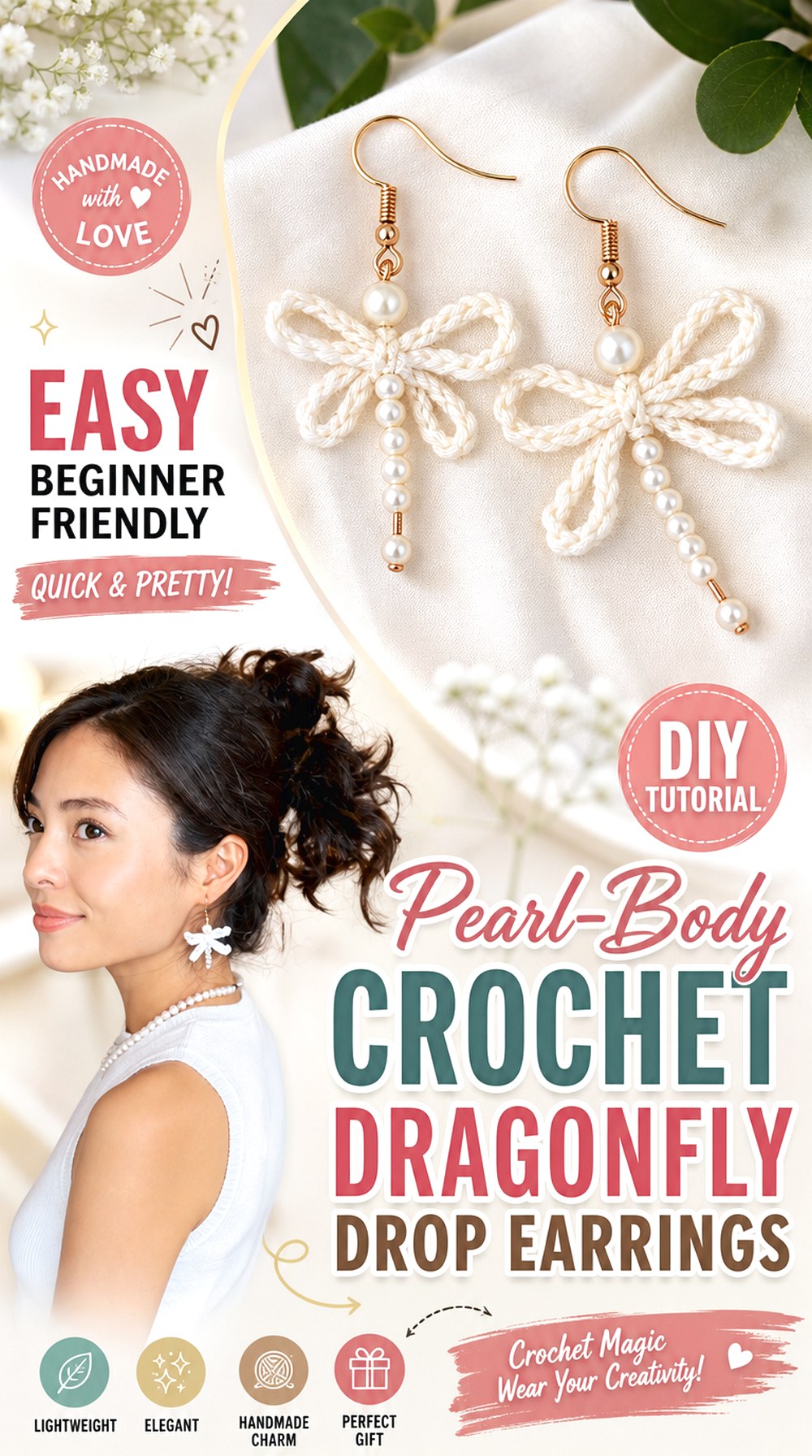
This design is the closest direct match to the search because petpetcrochets demonstrates an actual pair of crochet dragonfly earrings. Crocheted wings sit around a vertical pearl-bead body, creating an obvious jewelry finish rather than a motif that still needs to be reinterpreted.
The contrast between soft yarn wings and smooth round beads gives the dragonfly a defined centerline and a polished dangle shape. It is a particularly useful reference if you want to understand how crochet can meet conventional earring hardware without turning the finished piece into a bulky charm. The tutorial shows the wings, bead-and-headpin assembly, earring hook, and finished result.
Pearls Pull the Eye Toward the Body
The bead stack is more visually substantial than a completely crocheted abdomen, so color and bead finish can strongly affect the overall style. A subtle bead color keeps the wings prominent; higher contrast turns the center into the focal point. When choosing alternative beads, consider weight as well as appearance. A bead that seems small in a craft tray may feel more significant once several are suspended from an earwire.
Match the Hardware to the Finished Bead Stack
Because this construction includes a head pin and earring hook, the metal components contribute to the overall hanging length. Assemble one complete earring before duplicating it so you can evaluate the combined length of wings, pearls, connectors, and earwire. If you change bead sizes or hardware, do not assume the original proportions will remain unchanged.
Multi Use Crochet Dragonfly Dangle Earrings
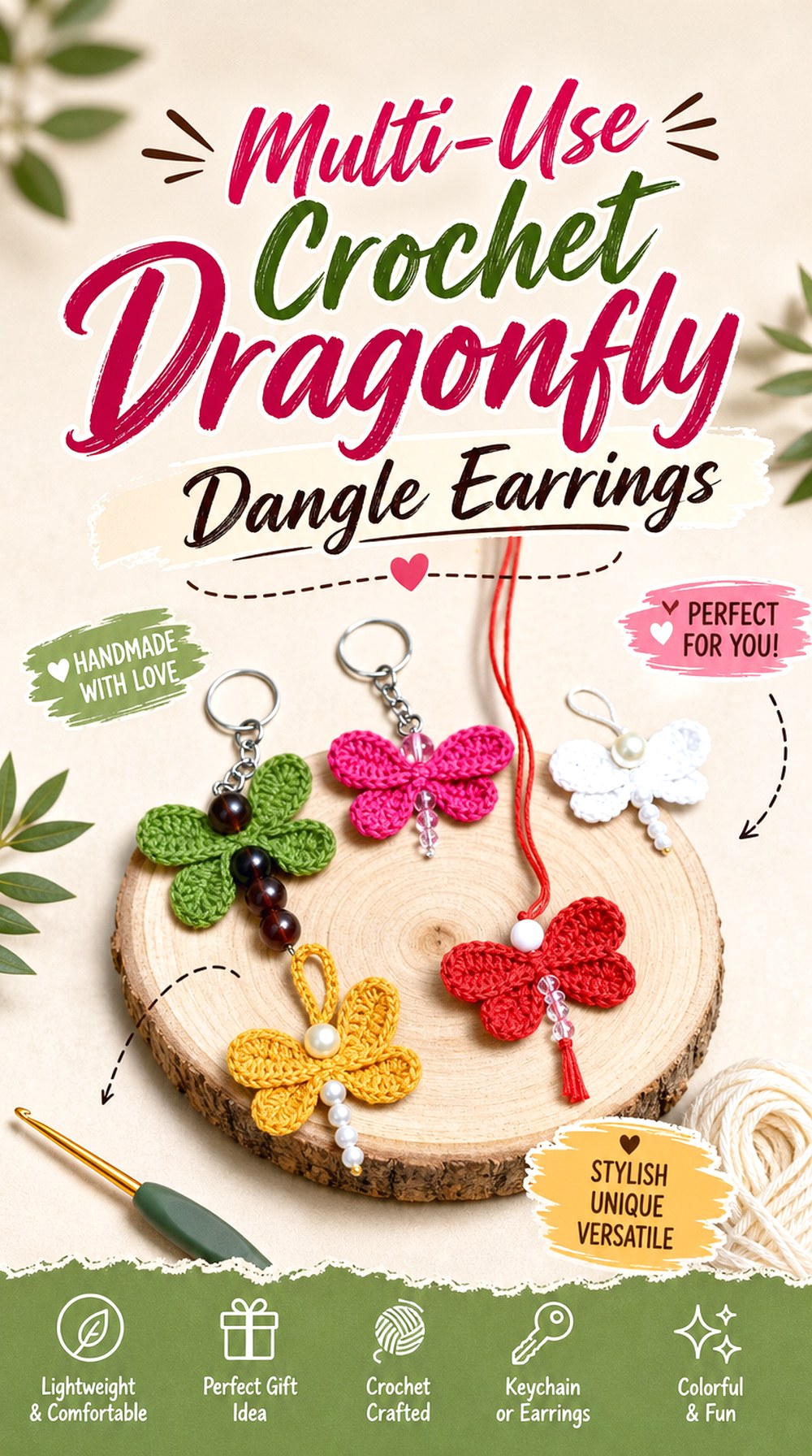
DOKUMA GUATEMALA presents a crochet dragonfly concept whose video title specifically includes earrings alongside keychains, necklaces, and pendants. That makes this a useful option if you like one recognizable dragonfly motif that can be adapted across several kinds of accessories rather than reserved for a single application.
For earrings, concentrate on the smallest, lightest version that still preserves the wing-and-body silhouette. Multi-use designs can tempt you to treat all applications as interchangeable, but earrings have different comfort and hanging requirements from a necklace pendant or bag charm. Confirm the finished proportions shown in the video before selecting your findings.
Give the Earring Version Its Own Scale
A motif that looks appropriately substantial as a pendant may dominate when moved beside the face. Instead of deciding from the flat motif alone, temporarily suspend your first dragonfly from an earwire or similar connector. This reveals both its real visual length and how widely the wings project once the piece is hanging vertically.
Keep Both Suspension Points Consistent
With a symmetrical insect motif, even a slight difference in where the two earrings are attached can make one dragonfly tilt while the other hangs straight. Mark or visually compare the attachment area before securing the second finding. This matters especially when a design was originally intended to accept several kinds of hardware.
Original Tutorial and Creator Credit
Creator: DOKUMA GUATEMALA
Two Size Wing Crochet Dragonfly Earrings
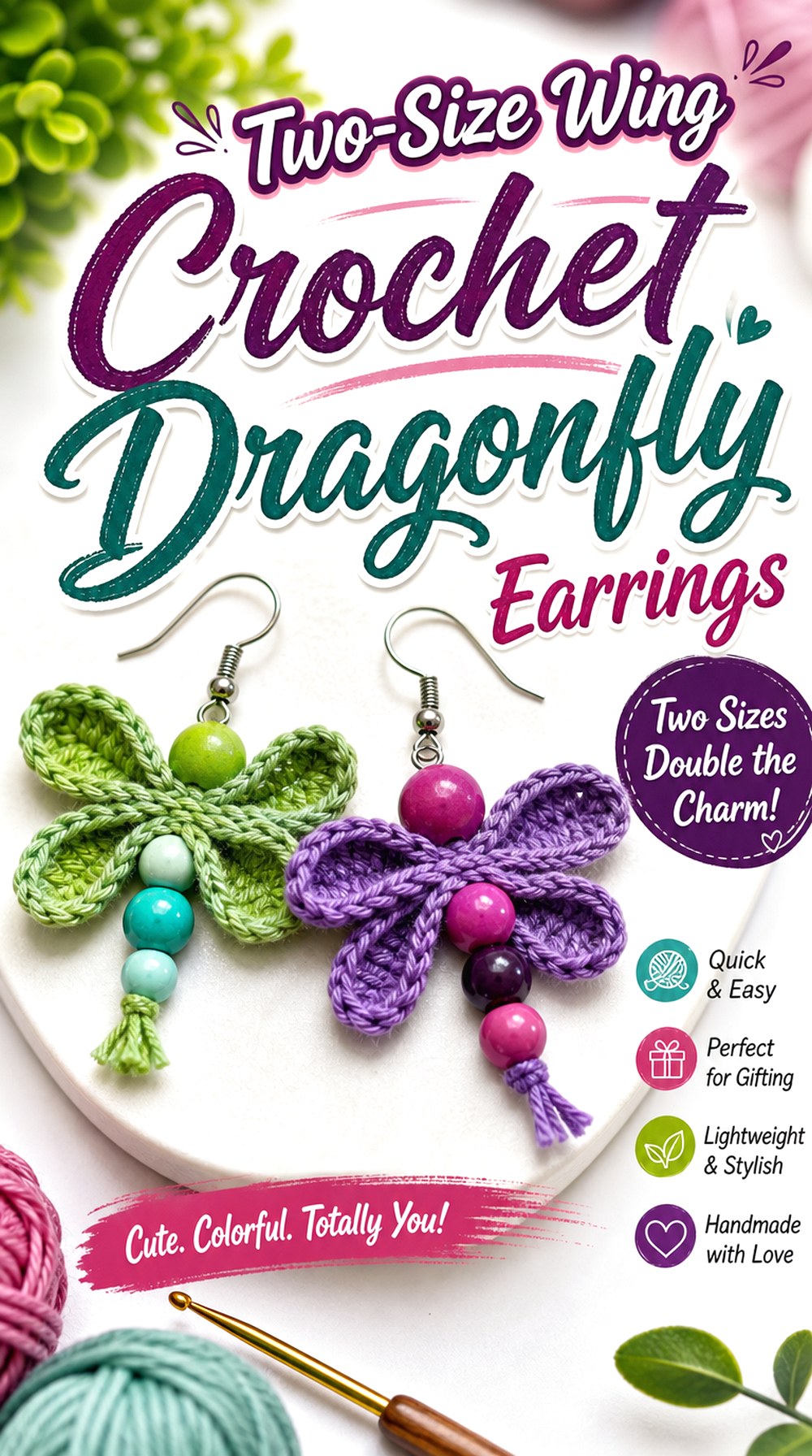
The Hook & Loop Crochet Tutorials source is a keychain tutorial rather than an earring pattern, but its construction separates the dragonfly into larger and smaller wings before the bead-and-keyring finishing. That visible distinction between upper and lower wings makes it an interesting reference for a more anatomically readable pair of earrings.
For jewelry adaptation, the goal is not to reproduce the keychain at its original scale. Preserve the difference between the two wing sizes while reducing overall bulk with a suitable finer material. Make one sample and judge the span beside the neck before starting its mate.
Upper and Lower Wings Control the Silhouette
When both pairs of wings are identical, a tiny dragonfly can begin to resemble a bow or butterfly. Maintaining a deliberate size difference between the wing sections can help the insect form remain readable after rescaling. Compare the first finished wing set with the second before assembly so small tension differences do not compound.
Replace Keyring Bulk With Jewelry-Scale Hardware
A keyring is meant to be easy to handle, while earring hardware should visually recede behind the motif. Removing the keyring from the concept changes the top of the finished piece, so decide how the dragonfly will connect to a jump ring or earwire before trimming or concealing the upper finishing area.
Original Tutorial and Creator Credit
Creator: Hook & Loop Crochet Tutorials
Bead Accent Crochet Dragonfly Hook Earrings
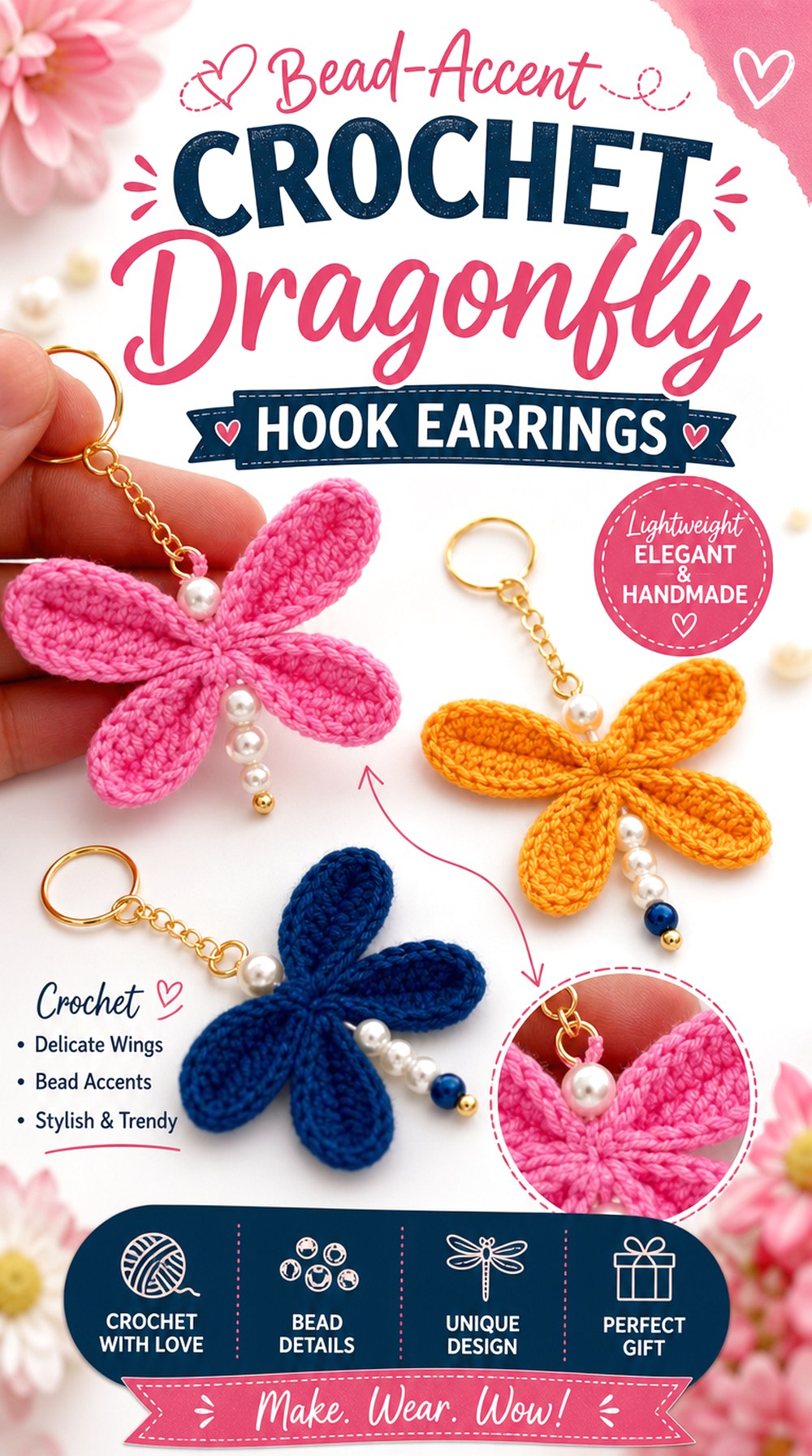
Crochet Decor combines a simple crocheted dragonfly shape with beads before attaching keychain hardware. For an earring version, that bead-and-crochet relationship is more useful than the original keyring itself. The concept can translate into a compact dangle if the yarn, beads, and findings are scaled for wearable jewelry rather than copied directly from the keychain.
This option suits readers who want more sparkle than an all-thread appliqué but less of a formal pearl-jewelry effect than Idea 1. The beads can define the center while the crochet provides the recognizable wings.
Let Beads Define the Center Without Overloading It
Every added bead contributes both visual emphasis and physical weight. Before selecting beads solely for color, place the planned group together and consider how much of the tiny dragonfly they will occupy. A balanced centerline helps the wings remain visible instead of making them look like decoration around a large bead cluster.
Finish One Complete Dangle Before Making Its Mate
With mixed-media earrings, matching just the crochet pieces is not enough. The bead arrangement and metal connectors also affect length and balance. Finish the first earring—including hardware—then use it as the comparison reference for the second. This is more reliable than waiting until both motifs are fully assembled to discover a mismatch.
Original Tutorial and Creator Credit
Creator: Crochet Decor
Layered Wing Crochet Dragonfly Dangles
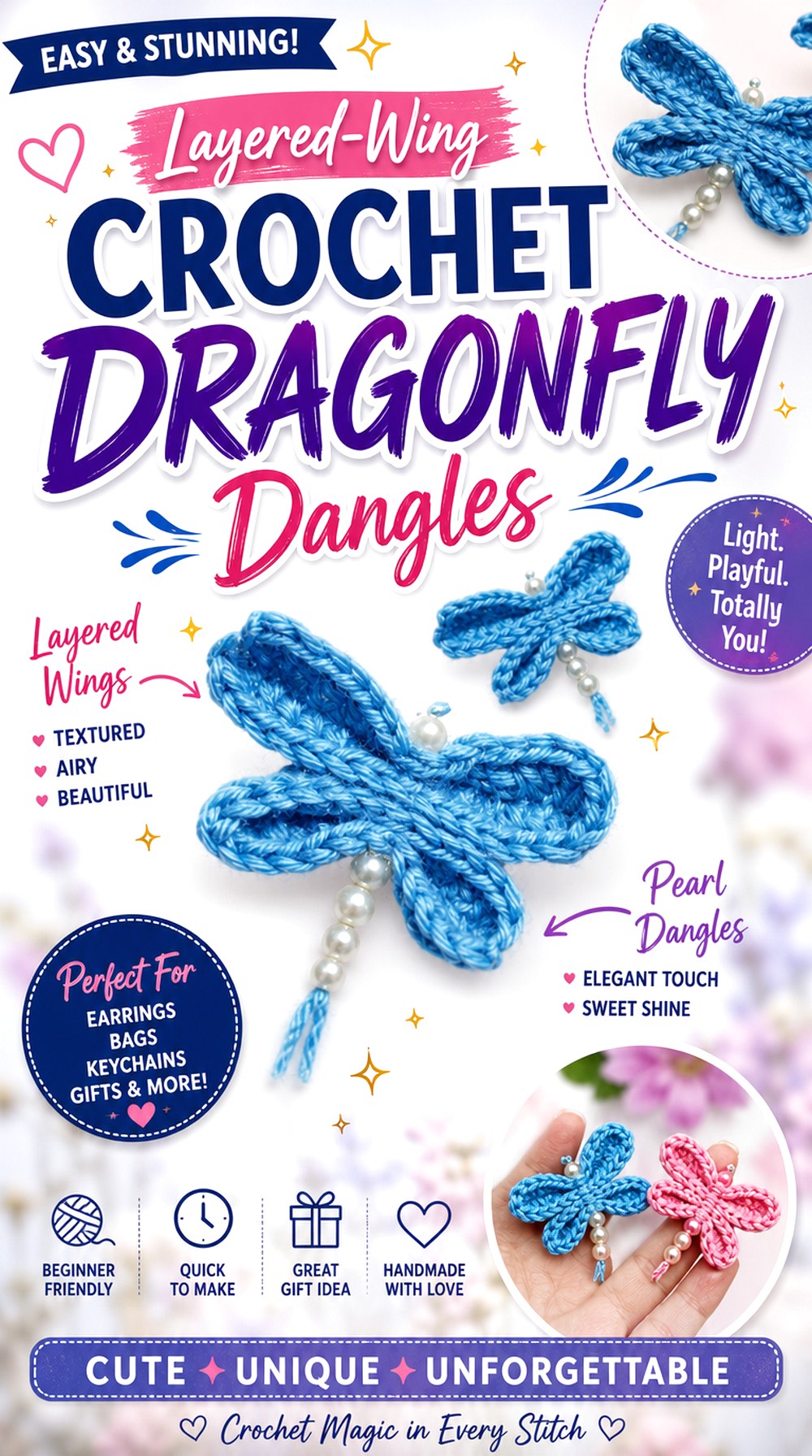
The dragonfly keychain from tara crochet ☆ separates its wing work into top-wing and bottom-wing stages before assembly. For earrings, that layered construction offers a way to retain a recognizable four-wing profile even when the whole motif is made smaller.
This could work well for a pair where the wings provide most of the visual interest and the body stays relatively restrained. Because the tutorial is for a keychain, treat the source as a construction reference rather than a promised jewelry size. Test your finer-material version for width and weight before creating two.
Separate Wing Sections Make Pair Matching Easier
Before the dragonflies are assembled, compare corresponding upper wings with each other and then the lower wings. Catching a size difference at this stage is easier than trying to reshape an already completed earring. Side-by-side comparison is particularly useful when you are deliberately working at a smaller gauge than the source project.
Watch the Center Where Four Wings Meet
Reducing the overall dimensions does not always reduce thickness at the same rate. Multiple wing sections joining near one point can create a noticeably bulky center even when the wings look delicate. Check that area on the first sample before deciding whether the chosen yarn or thread is fine enough for the effect you want.
Original Tutorial and Creator Credit
Creator: tara crochet ☆
Two Color Crochet Dragonfly Appliqué Earrings
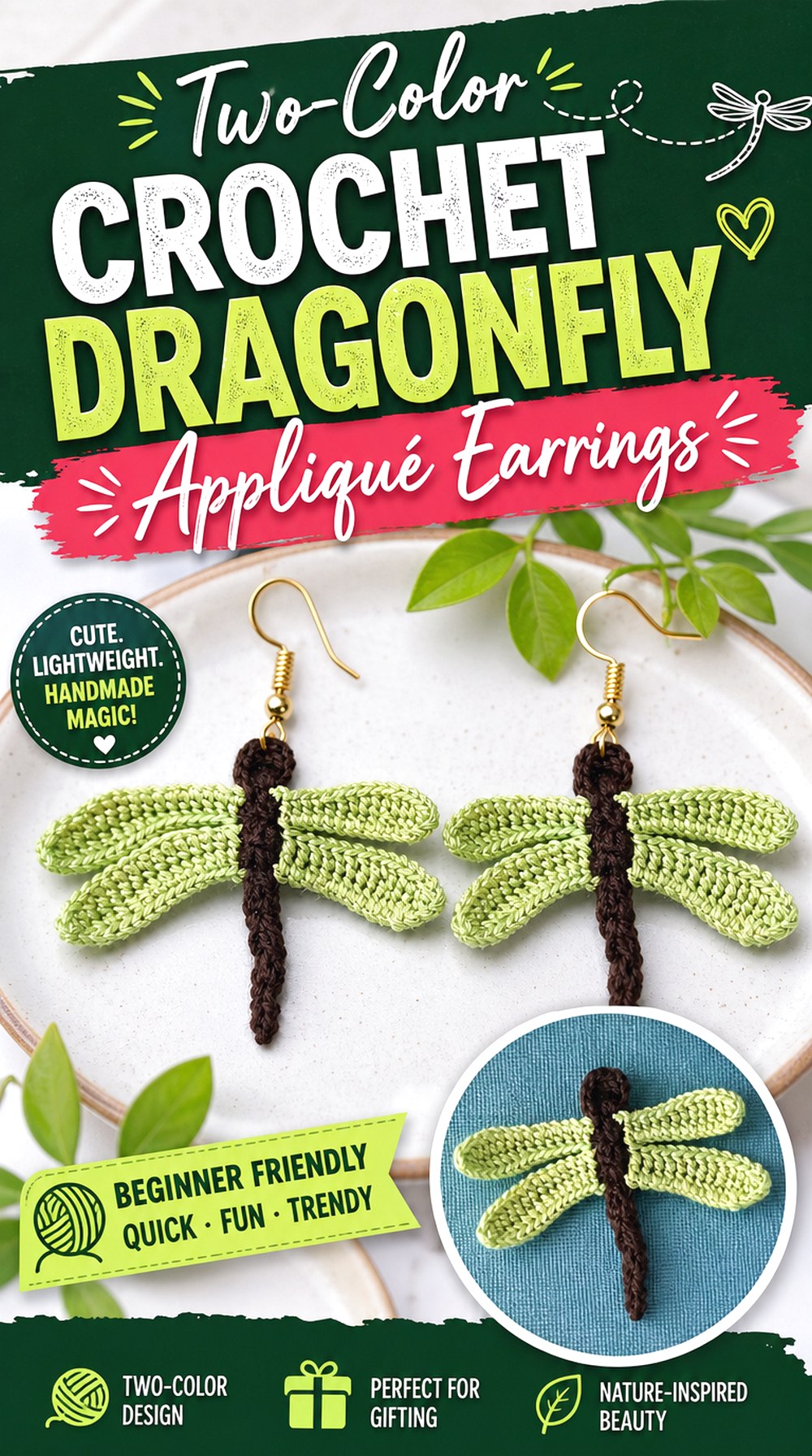
Kerri’s Crochet demonstrates a flat dragonfly appliqué using two colors, making this a useful starting shape for earrings that should remain flatter than bead-bodied or amigurumi versions. The tutorial lists a small amount of yarn and basic crochet finishing tools, but the source is an appliqué project, not an earring-specific design.
For a jewelry adaptation, the key decision is scale. A finer material may produce a more delicate motif while preserving the contrast between body and wings. Flat construction also leaves you free to choose a very simple attachment rather than accommodating a stuffed body or bead stack.
Flat Construction Is a Strong Low-Bulk Starting Point
An appliqué does not require stuffing or a central row of heavy beads, which removes two common sources of bulk. That does not automatically guarantee a lightweight earring—the fiber, size, and hardware still matter—but it gives you a simpler baseline for testing comfort and wing spread.
Two Colors Can Clarify the Tiny Silhouette
At a small scale, low contrast between body and wings can make details visually merge. Using separate colors offers one way to keep the long body distinct from the horizontal wings. Lay several possible yarn combinations together before crocheting rather than assuming they will read the same once reduced to jewelry scale.
Original Tutorial and Creator Credit
Creator: Kerri’s Crochet
Broad Wing Crochet Dragonfly Statement Earrings
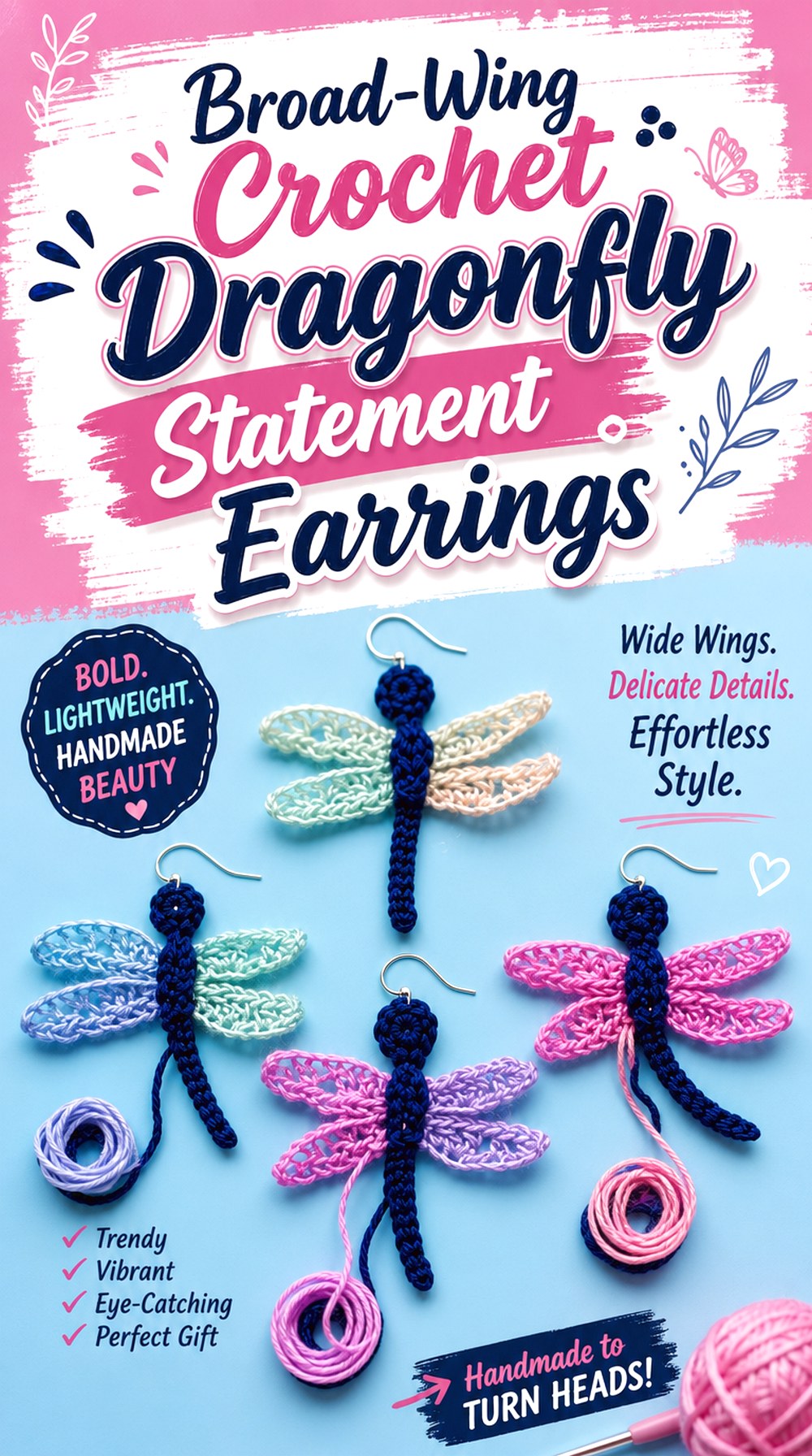
Jayda InStitches teaches a dragonfly appliqué in a live workshop format. Its broader flat shape can inspire earrings where the wings are intentionally the dominant feature rather than compressed into a narrow dangle.
This direction makes sense for statement jewelry, but width deserves more attention than with a vertical pendant shape. A motif can be light yet still be uncomfortable if it repeatedly brushes the neck. Use the first completed dragonfly as a real-world fitting sample before committing to the second one.
Wide Wings Need Clearance Beside the Neck
Measure nothing by eye from a screen alone. Once your sample is attached to its planned hook, wear or hold it at earring height and see where the wing tips fall. If they continually touch the neck, a smaller gauge or narrower adaptation may be preferable even if the original silhouette looks appealing.
Blocking Has More Visual Impact on a Wide Motif
A slightly curled tip is more noticeable when the wing creates a long horizontal line. If your chosen fiber tolerates blocking, arrange both finished motifs side by side so corresponding wings dry in similar positions. Follow the care requirements of your actual yarn rather than assuming one blocking method works for every fiber.
Original Tutorial and Creator Credit
Creator: Jayda InStitches
Graphic Long Wing Crochet Dragonfly Earrings
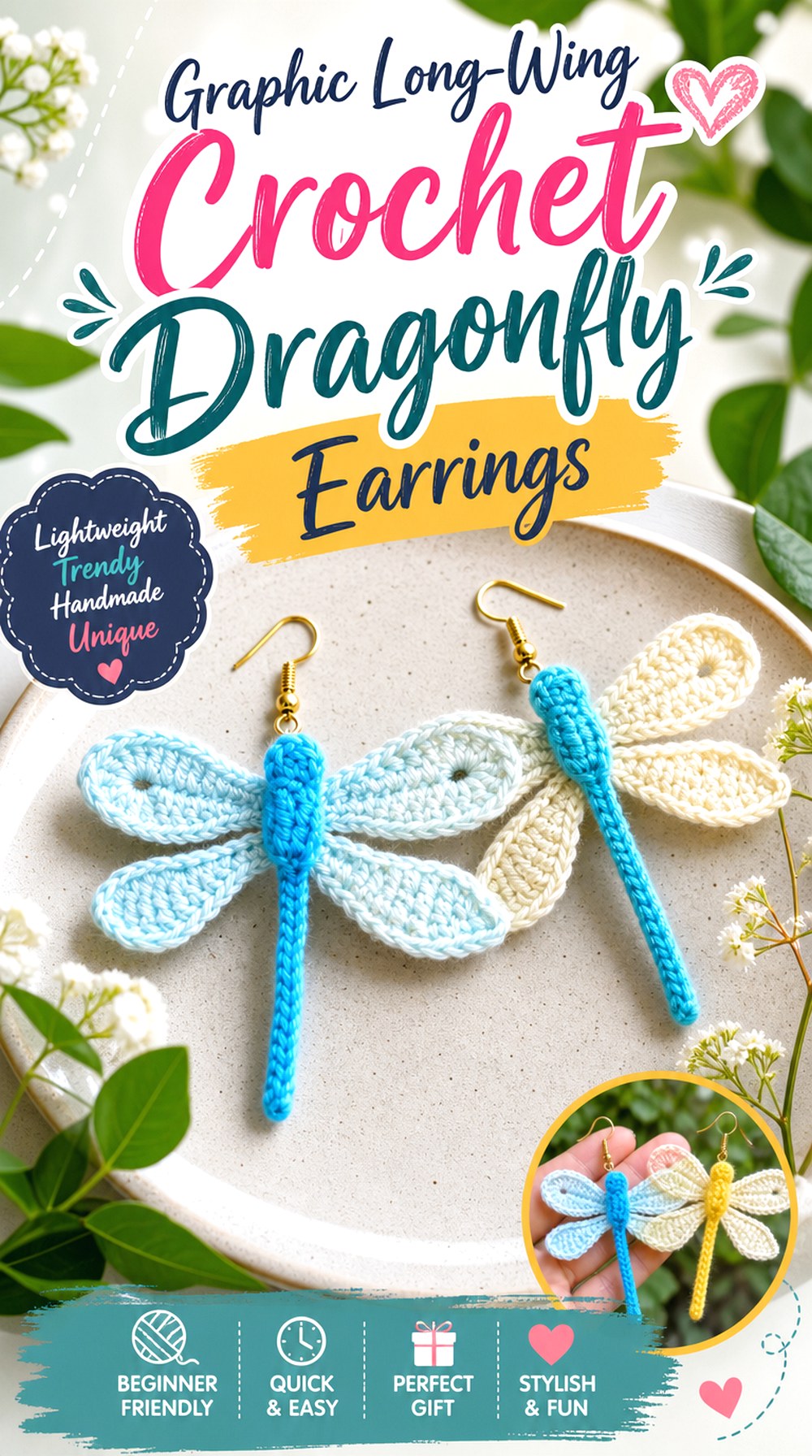
Pora Pora Crochet’s dragonfly appliqué demonstration uses medium-weight yarn in the source, giving the finished motif a clearly visible, graphic outline. That visibility is useful for learning the shape, but the demonstrated material should not be treated as a required earring specification.
For jewelry, this design is better approached as a silhouette to rescale. A finer smooth yarn or thread can make the motif less bulky, provided the wing definition remains clear. Work one experimental dragonfly and decide whether the outline still reads well before producing a matched pair.
Demonstration Yarn Should Not Dictate Jewelry Scale
Tutorials often use materials that make stitches easy to see on camera. Earrings have a different priority: they need an appropriate finished size and comfortable weight. If you depart from the source yarn, expect the result to change and evaluate the actual sample rather than relying on a predicted measurement.
Preserve the Outline Before Chasing Tiny Size
Shrinking a motif too aggressively can cause openings and wing edges to visually merge. If your first sample no longer reads immediately as a dragonfly, increasing the scale slightly may produce a better earring than forcing the smallest possible version. Recognition and proportion matter as much as delicacy.
Original Tutorial and Creator Credit
Creator: Pora Pora Crochet
Petite Flat Crochet Dragonfly Earrings
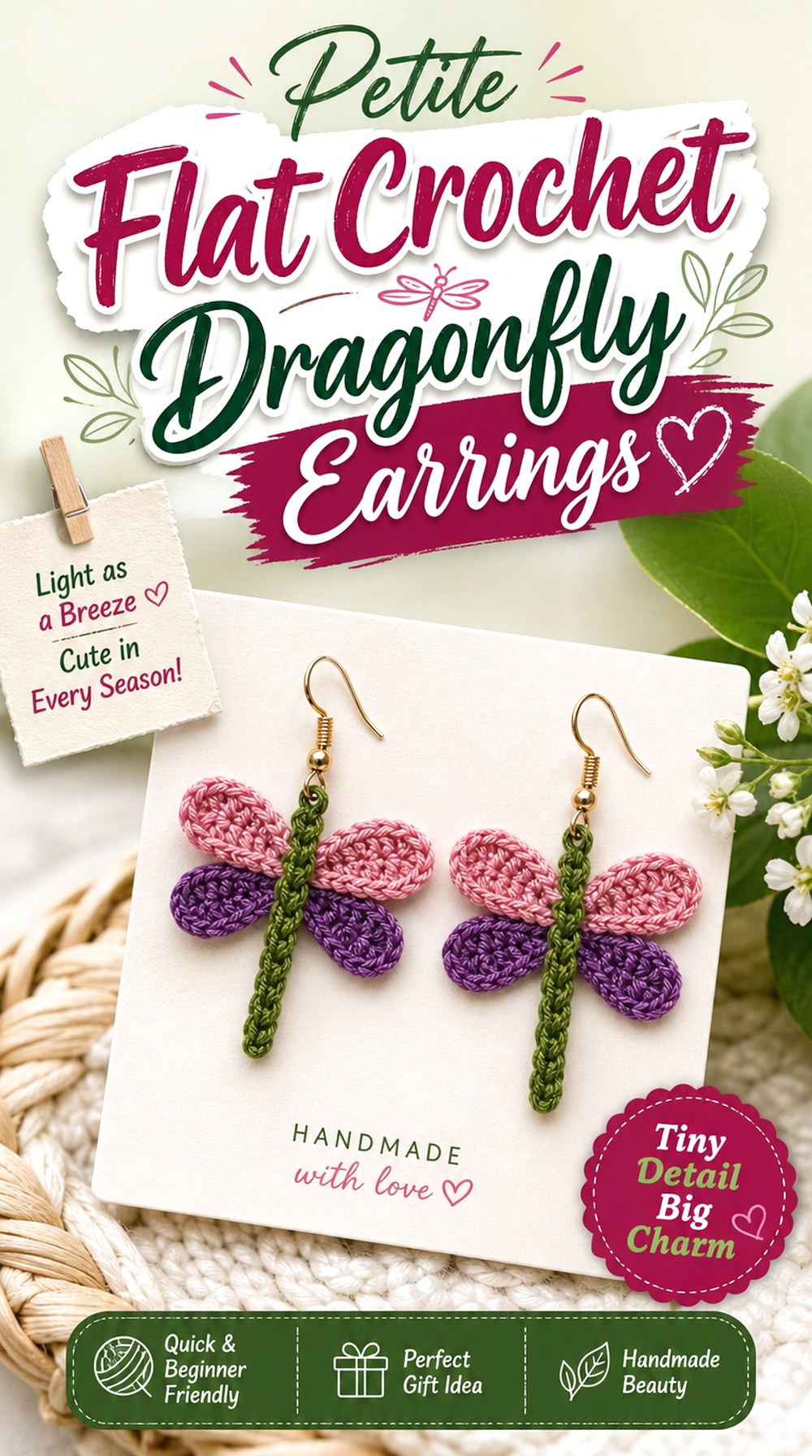
arizka pitta offers another flat dragonfly appliqué construction, giving you an alternative to broader or more dimensional versions. The appeal for earrings is its uncomplicated flat format: no stuffed body is required, and jewelry hardware can be chosen after you know how the crocheted motif behaves.
This is a useful route if you want the crochet itself—not beads or tassels—to remain the primary visual element. Because the original tutorial is not specifically sized for earrings, make scale and comfort decisions from your own finished sample instead of assuming the source dimensions will suit jewelry.
A Flat Shape Keeps Attachment Options Open
Without a bead stack or keyring structure dictating the top connection, you can inspect the completed motif and choose an attachment location that keeps it upright. Temporarily thread a connector through the intended area and let the dragonfly hang freely. Move the point if the body rotates or the wings sit noticeably crooked.
Check Four Wing Tips Before Finishing the Pair
Tiny tension differences can make one side appear shorter. Lay the motif flat and compare opposite wing tips before weaving in every finishing end or adding hardware. Then place the second dragonfly directly beside the first. A small correction is easier before metal findings turn the pieces into finished earrings.
Original Tutorial and Creator Credit
Creator: arizka pitta
Bold Silhouette Crochet Dragonfly Earrings

VZ crochê demonstrates a dragonfly keychain made with fio de malha, a much more substantial material than you would normally choose for lightweight earrings. That makes this idea useful as a shape reference rather than a direct material substitution. The creator’s site identifies the dragonfly keychain tutorial among the channel’s crochet lessons.
The interesting challenge is to preserve the bold dragonfly outline while translating it into a dramatically finer material. This is one of the ideas where making an experimental motif is essential, because changing material scale can affect both shape and stitch definition.
Fabric Yarn Is a Poor Direct Match for Ear Jewelry
The source project’s thick material suits a visible keychain, but carrying that same bulk directly to an earring would create a very different object. Instead, treat the tutorial as a reference for arrangement and silhouette. Select a jewelry-appropriate yarn or thread independently, then judge the resulting dragonfly rather than expecting an exact miniature copy.
Borrow the Strong Shape, Not the Keychain Presence
One advantage of a bold source motif is that its main lines are easy to identify. When rescaling, prioritize the recognizable body-and-wing relationship rather than every aspect of the original visual weight. If the first fine-thread sample becomes indistinct, adjust your material choice before making its mate.
Original Tutorial and Creator Credit
Creator: VZ crochê
Loop Top Crochet Dragonfly Dangle Earrings
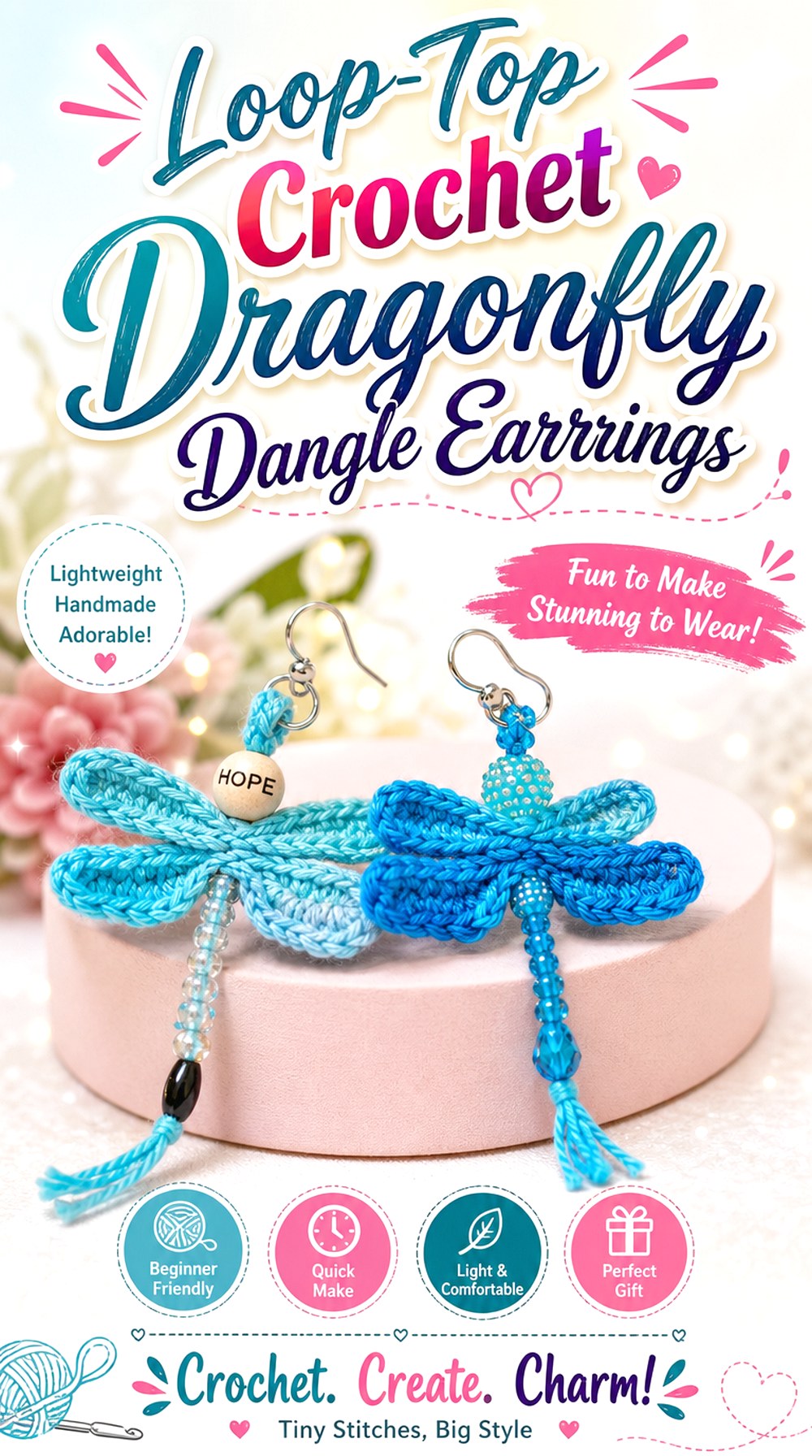
Crocheting Around My Kitchen Table, LLC. has a revised small dragonfly keychain tutorial that specifically updates the keychain loop along with simplifying the earlier design. For earrings, that defined top attachment is the most transferable feature because it gives jewelry hardware an obvious place to connect.
The source also uses beads, so a jewelry adaptation can retain a mixed-media character while replacing the keyring with smaller findings. Before making two, check whether the crocheted loop remains neat and proportionate when you change to finer yarn.
An Intentional Top Loop Simplifies Conversion
A built-in loop can reduce guesswork about where an earring connector should sit. It also concentrates stress in one known area instead of asking you to pierce an arbitrary stitch after the motif is finished. When rescaling, check that the loop remains large enough for your chosen connector without becoming oversized compared with the dragonfly.
Bead Placement Needs Both Security and Balance
Small parts should be firmly attached, especially on jewelry that moves while worn. Once the beads are in place, suspend the first dragonfly and see whether their weight keeps the body centered or encourages it to twist. Correcting that balance before making the second piece is easier than trying to match two poorly hanging earrings.
Original Tutorial and Creator Credit
Creator: Crocheting Around My Kitchen Table, LLC.
Seed Bead Crochet Dragonfly Charm Earrings
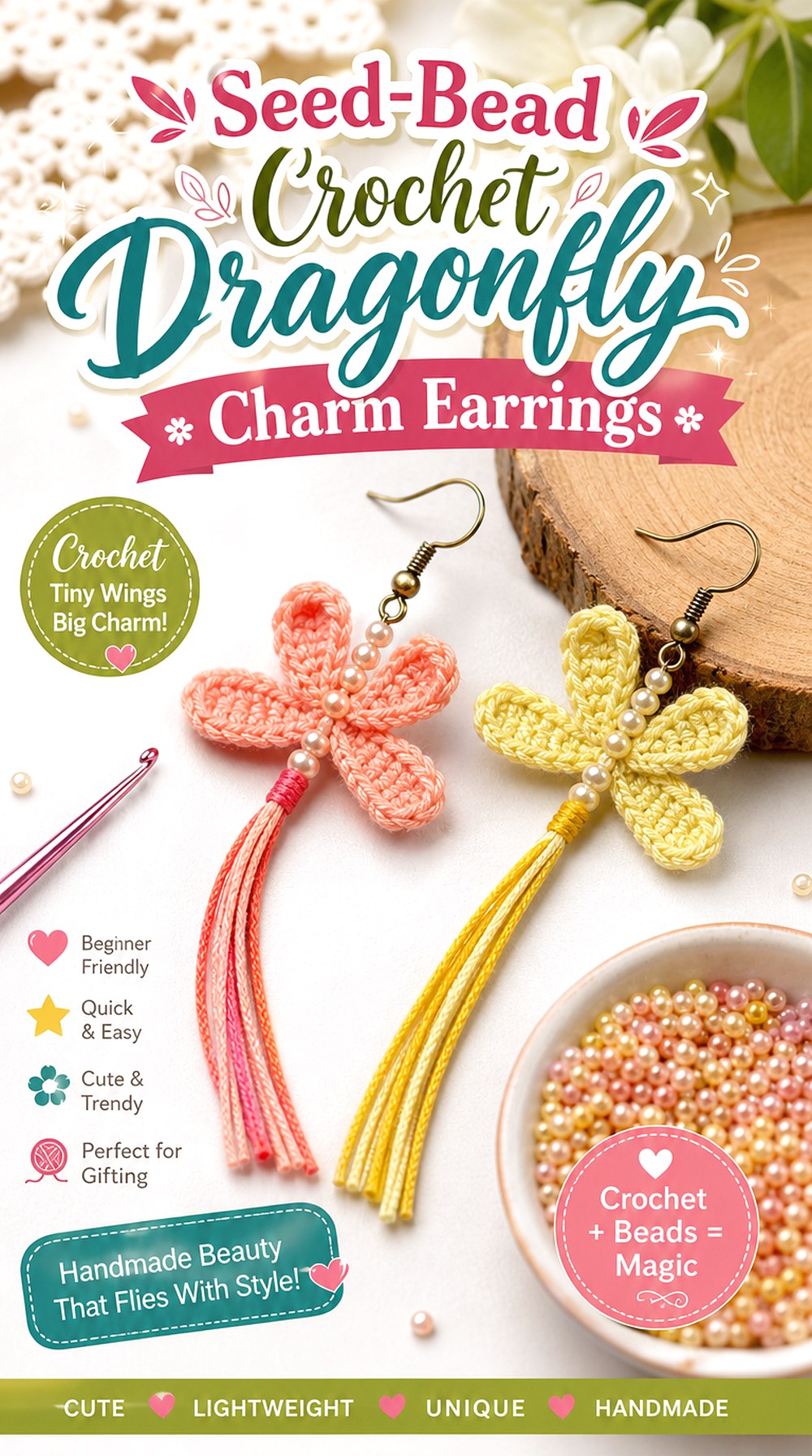
Annie Ahmed 🧸 demonstrates a dragonfly keychain or bag charm that combines crochet wings with seed beads. The source separates forewings, hindwings, tail, and assembly, which gives readers clear visual components to think about when converting the charm into earrings.
This version is attractive when you want the beads to add detail without turning the entire body into large pearl elements. Since the original is a keychain, change the hardware and scale thoughtfully rather than assuming the shown yarn and hook will produce a wearable earring.
Tiny Beads Add Detail Without Replacing the Crochet
Seed beads can create points of light while leaving the crocheted wings as the dominant feature. Still, their placement matters more on a small earring than on a bag charm. Before securing a full arrangement, consider whether the beads enhance the narrow body or begin to crowd the space between the wings.
Separate Forewings and Hindwings Help the Insect Read
Four clearly differentiated wings are useful when a motif is miniaturized because they preserve the dragonfly identity. Compare both forewing sections first, then both hindwings. Matching corresponding pieces rather than only comparing the finished earrings can catch scale differences earlier in the process.
Original Tutorial and Creator Credit
Creator: Annie Ahmed 🧸
Compact Amigurumi Crochet Dragonfly Earrings
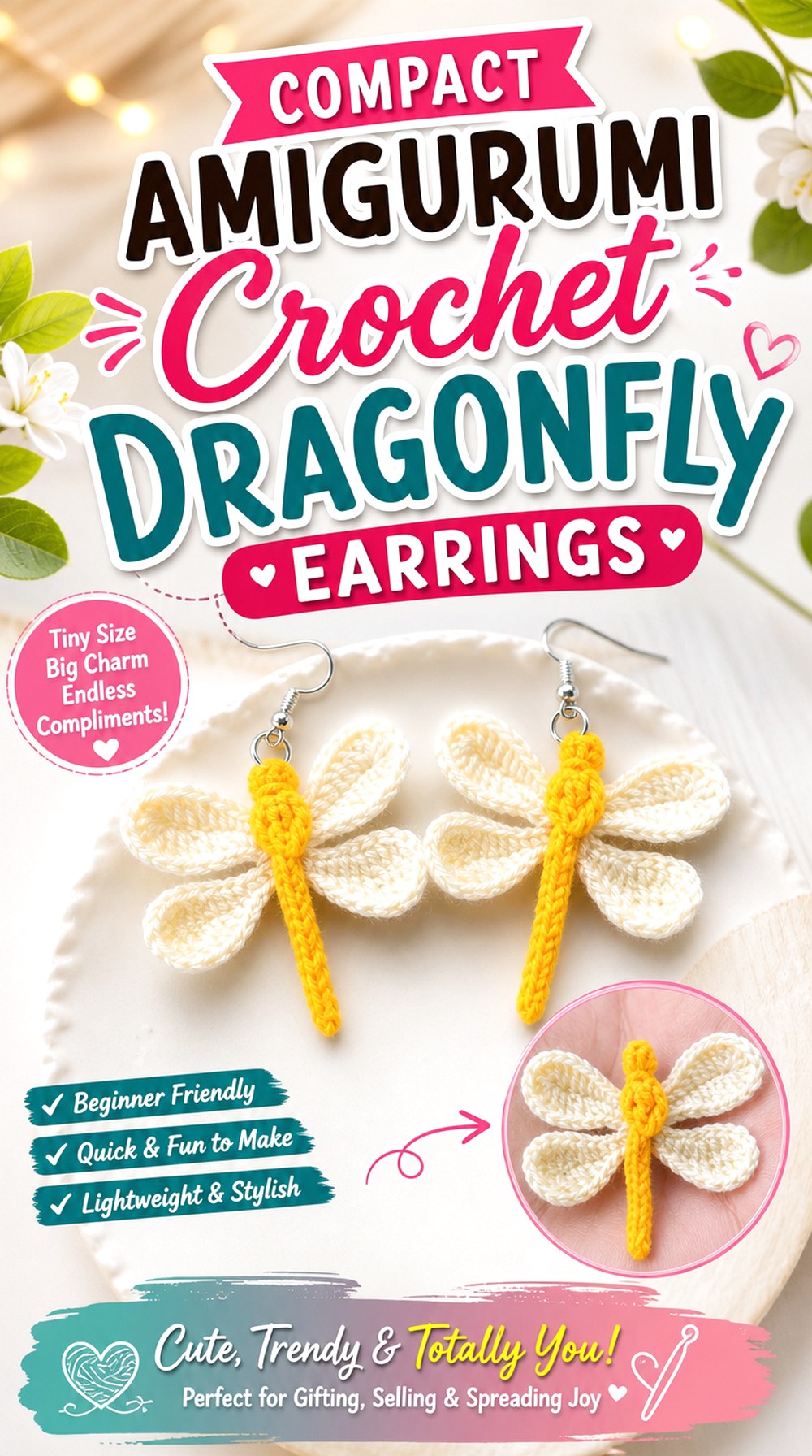
Indu’s Creation presents a dimensional crochet dragonfly that the source associates with amigurumi, keychain, and appliqué uses. Compared with the flat earrings above, this option adds a body with more depth and therefore more visible presence from the side.
That dimension can create playful statement earrings, but it also makes weight and thickness more important. A miniature version should be treated as an experiment: use the tutorial for the dragonfly form, then determine whether your scaled result is genuinely comfortable enough for earrings. If not, it remains better suited to a charm.
Three-Dimensional Bodies Need a Wear Test
A motif can seem small in your hand yet feel much more substantial after hanging from an earwire. Finish one complete sample and wear it briefly under normal movement before committing to the pair. If it pulls noticeably or bumps the neck, reducing scale—or choosing a flat idea instead—is the more practical decision.
Dense Fabric Matters When Filling Is Involved
For a dimensional crochet body, gaps that are harmless in an open appliqué can expose filling. If your adaptation uses stuffing, inspect the fabric under gentle pressure before finishing. Changing to a finer material may also change how tightly the fabric closes, so do not assume the same feel as the source project.
Keep the Wings Visually Lighter Than the Body
A tiny amigurumi dragonfly already has more mass through its center. Keeping the wings relatively flat can prevent the whole earring from becoming a dense cluster. Evaluate the side view as well as the front; earrings are seen in motion, so thickness that is invisible in a flat photograph can still affect the finished look.
Original Tutorial and Creator Credit
Creator: Indu’s Creation
Tapered Crochet Dragonfly Drop Earrings
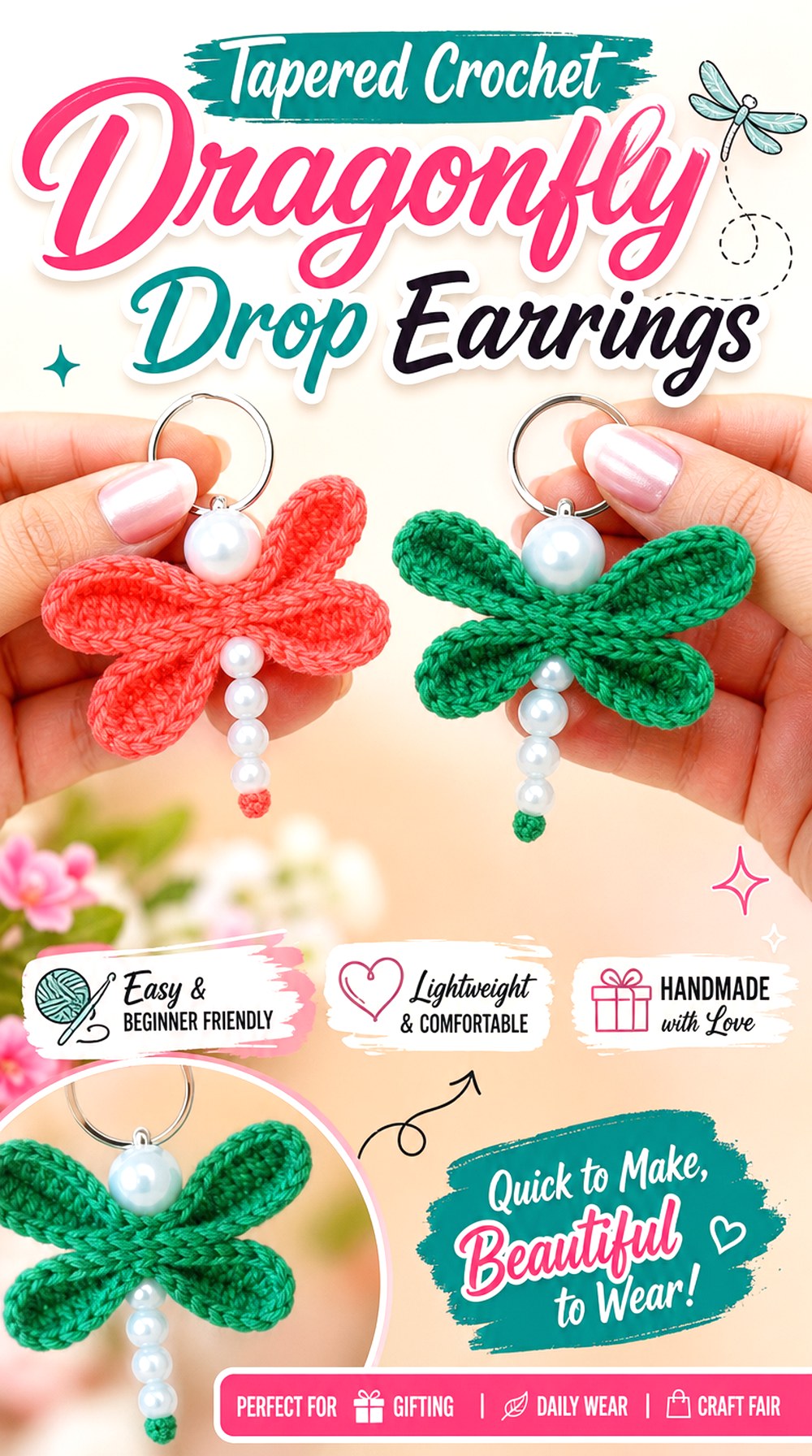
sayourim art teaches a crochet dragonfly keychain with a clear elongated insect shape. That vertical profile can translate well to a drop-earring concept because the body supplies length while the wings create a comparatively short horizontal break.
This makes the design worth considering if very broad statement wings are not appealing. The original tutorial is still for a keychain, so the finished source scale should not be treated as an earring measurement. Rework the concept in lighter materials and check how far the body extends once suspended from an earwire.
A Vertical Silhouette Can Feel Less Visually Wide
Long earrings do not necessarily need large wing spans. A tapered body directs the eye downward, which can make the dragonfly read as a drop rather than a wide appliqué. Compare the horizontal wing width with the full hanging length when deciding whether the proportions suit your preferred jewelry style.
Translation Does Not Remove the Need to Check the Visuals
The tutorial title includes Arabic and English, but crochet demonstrations can still be useful visually across languages. Before adapting it, watch enough of the source to confirm that its finished dragonfly, attachment, and assembly style are clear to you. Do not guess at any detail that depends on spoken explanation alone.
Original Tutorial and Creator Credit
Creator: sayourim art
Minimal Crochet Dragonfly Keychain to Earring Dangles
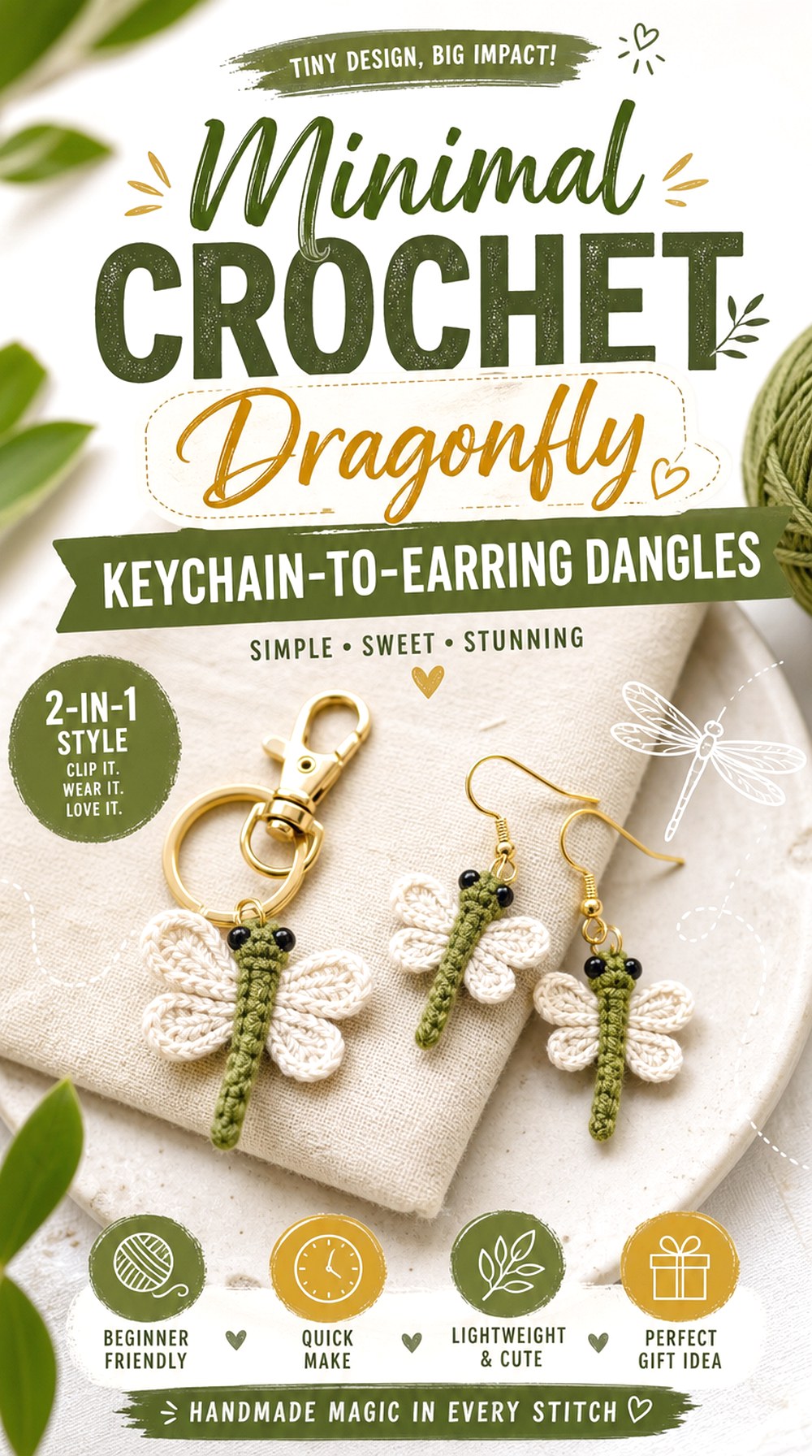
Momo’s creative world offers a dragonfly keychain tutorial with a compact accessory focus. The source title emphasizes quick construction, but for this roundup the useful point is the small keychain format—not a promise that your earring adaptation will take the same amount of time.
This concept can work for straightforward paired dangles where you want a recognizable dragonfly without additional amigurumi volume. Change the top hardware for an earring application and make the first sample your size reference rather than assuming the keychain proportions automatically translate.
A Compact Motif Makes Pair Comparison More Manageable
Simple small shapes give you fewer components to match than highly layered or stuffed versions. Once the first dragonfly is complete, place the second over or directly beside it and compare the body length and wing extension. Catching a discrepancy before adding hardware keeps the final pair more visually consistent.
Center the Body Directly Under the Earwire
A narrow vertical body makes a tilt especially obvious. Before permanently securing the top connector, suspend the dragonfly and confirm that the body’s centerline falls beneath the earring hook. If it leans, shift the attachment rather than expecting the added weight of hardware to correct the problem.
Original Tutorial and Creator Credit
Creator: Momo’s creative world
Yarn Wing Crochet Dragonfly Earrings
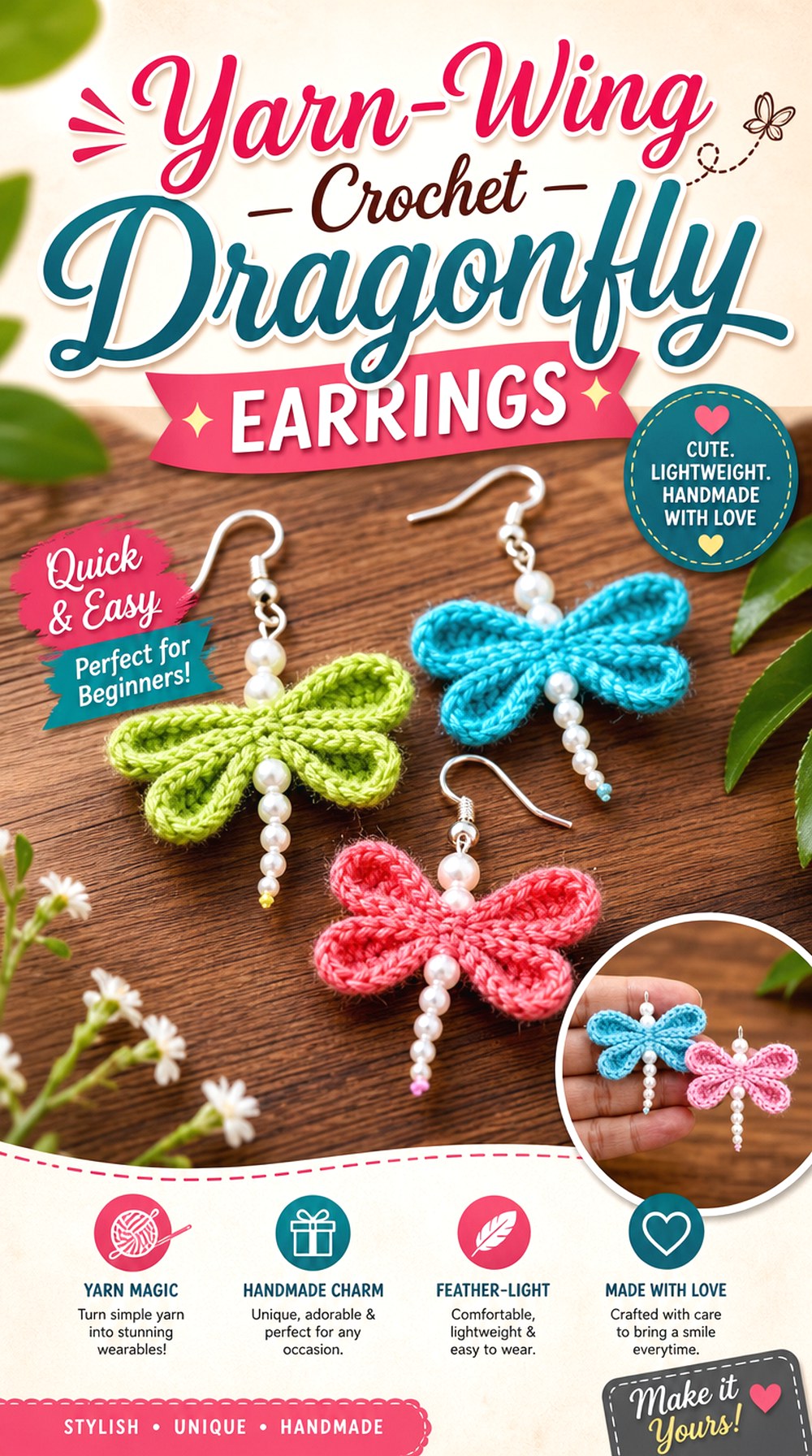
Knitting Crochet Art presents a yarn-based dragonfly keychain concept with the wings providing much of the recognizable insect shape. For earrings, this offers another alternative to bead-heavy bodies and stuffed amigurumi.
The adaptation works best as a silhouette exercise: choose a lighter scale, preserve the distinction between body and wings, and let the earring hardware stay visually secondary. Because the source is a keychain tutorial, judge your own sample for comfort and overall size before repeating it.
Crisp Edges Matter on a Simple Yarn Shape
The fewer embellishments an earring has, the more noticeable the crochet outline becomes. Loose or uneven wing edges can change the whole impression. Check the first motif from a normal viewing distance rather than only up close; if the dragonfly shape disappears, improving definition may matter more than making it smaller.
Use the Connector to Fine-Tune Final Drop Length
A jump ring or short connector can change how far the dragonfly sits below the earlobe without changing the crochet itself. Once you know the motif’s dimensions, compare a direct attachment with a slightly articulated connection. Choose based on movement and balance rather than adding metal simply for decoration.
Original Tutorial and Creator Credit
Creator: Knitting Crochet Art
Spanish Appliqué Crochet Dragonfly Earrings
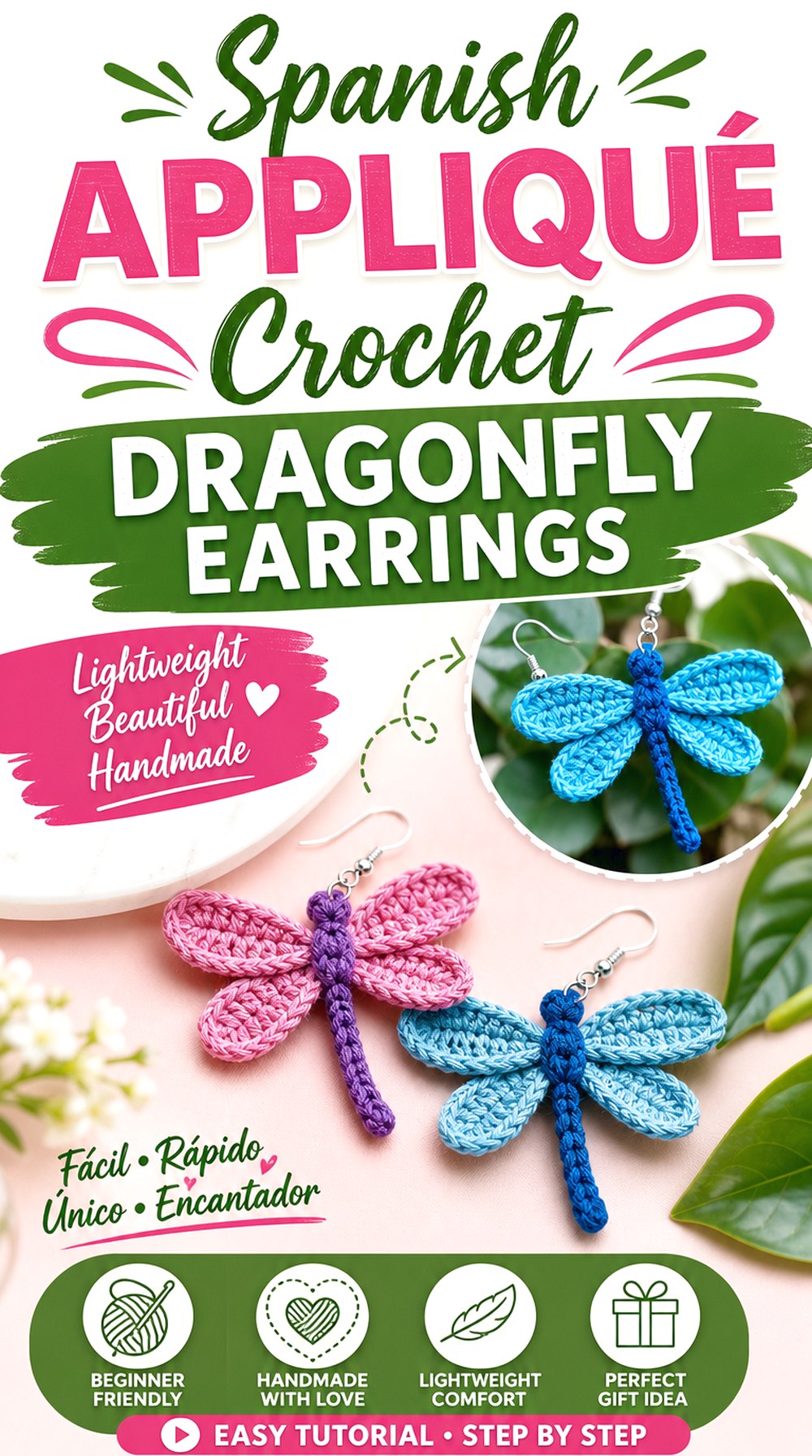
Nina Alba’s bilingual-titled dragonfly appliqué tutorial gives another flat construction option, useful for earrings where thread and color carry the design rather than a dimensional body. The source specifically identifies the project as a dragonfly appliqué.
For a pair, consider treating the wings almost like miniature lace elements. Fine material can reduce bulk, while contrasting body and wing colors can emphasize the insect structure. Because changing gauge also changes the way spaces and edges behave, test the actual material instead of assuming that finer always means better.
Flat Appliqué Leaves Room for Deliberate Color Blocking
Separate wing and body colors can make an especially small motif easier to read. You could keep the wings neutral and make the body the accent, or reverse the emphasis. Compare the yarns side by side under the light in which the earrings are likely to be worn; very close values can merge once the motif is small.
Fine Thread Can Make Wing Openings More Delicate
Reducing material size may give the open areas a more jewelry-like appearance, but only if the motif maintains its structure. If wing openings collapse or edges become difficult to distinguish, move back toward a slightly more substantial thread rather than forcing the adaptation beyond what looks clean.
Original Tutorial and Creator Credit
Creator: Nina Alba
Bead Pendant Crochet Dragonfly Earrings

Natasha toys demonstrates a crocheted dragonfly pendant, making this source especially interesting for earrings because the finished object is already intended to hang rather than sit flat as an appliqué. The available source information also indicates bead use in the pendant construction.
Compared with adapting a keychain, a pendant gives you a useful reference for hanging orientation. The remaining question is scale and weight: a necklace can carry more visual and physical substance than an ear comfortably can, so prototype a reduced version before creating the pair.
Pendant Construction Already Establishes a Hanging Direction
A pendant has to face correctly while suspended, so its top-to-bottom balance is more relevant to earrings than that of a loose appliqué. Watch how the dragonfly hangs in the source and preserve that relationship when replacing the pendant connection with jewelry-scale findings.
Beads Add Weight Along the Centerline
Central beads can help the body hang vertically, but increasing their size or number changes the earring’s feel. If substituting beads, compare alternatives by actual weight and proportion rather than visual color alone. Finish one earring completely before buying or assembling an entire matched set of components.
Original Tutorial and Creator Credit
Creator: Natasha toys
Tassel Style Crochet Dragonfly Dangle Earrings
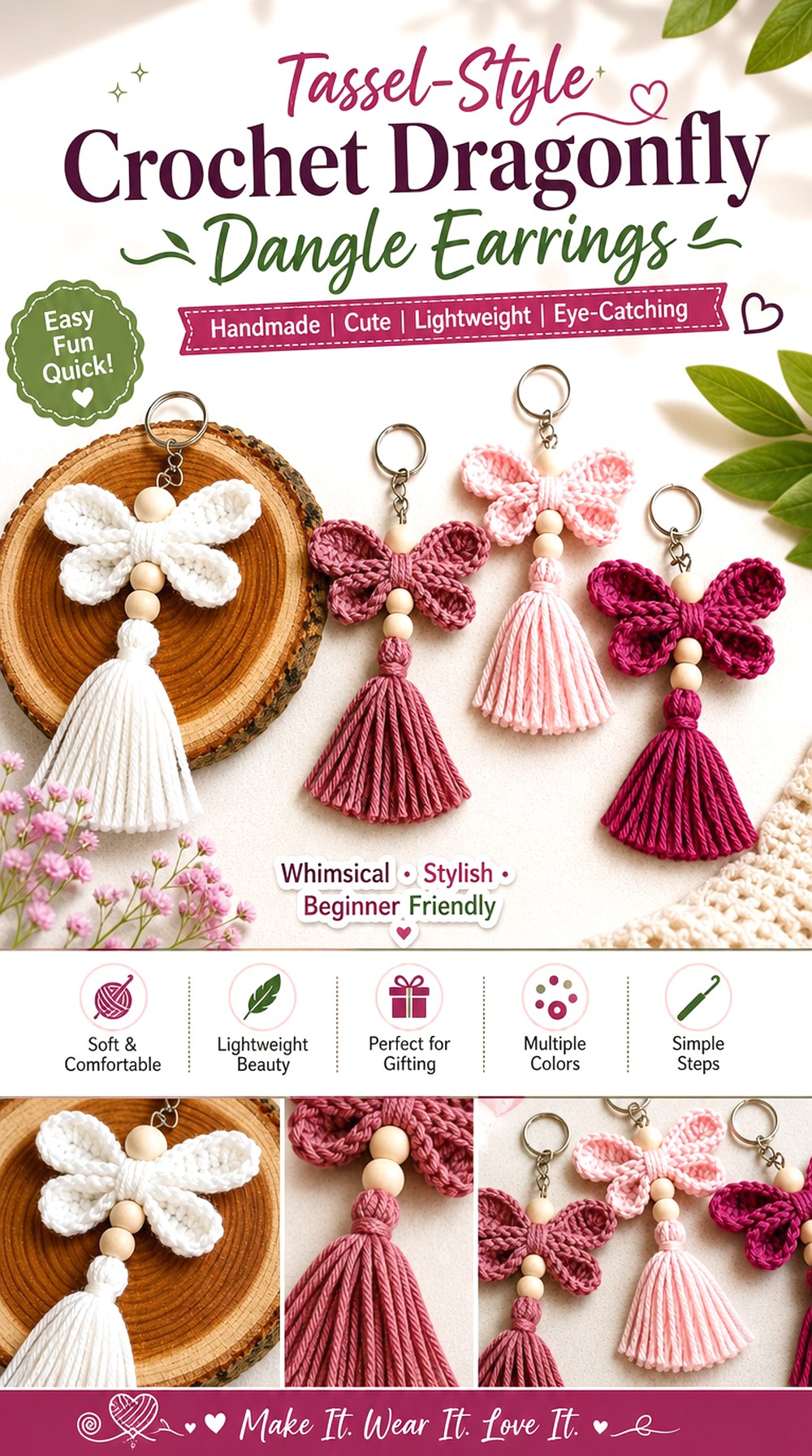
Poplar Crochet’s dragonfly keychain appears in search results as a tassel-style dragonfly concept, making it one of the more vertically expressive options in this collection. The source video title itself describes the project as a dragonfly keychain.
For earrings, a tassel-like lower section introduces more movement than a rigid crocheted abdomen. That can be attractive for a bohemian dangle, but free fibers also make matching the finished pair more important. Scale the keychain concept down first, then decide whether the movement suits earrings.
A Tassel Tail Adds Motion Below the Wings
Unlike a solid body, loose or fringe-like elements shift independently as the wearer moves. That changes the visual emphasis from a static insect motif to a more fluid dangle. Check whether the tail remains separated and tidy after normal movement rather than judging it only when perfectly arranged on a table.
Compare Both Earrings Before the Final Trim
If your adaptation includes loose tail ends, do not finalize each earring in isolation. Hang both at the same height and compare the visual endpoint before making finishing adjustments. The goal is not mathematical perfection but a pair that appears intentional when moving side by side.
Original Tutorial and Creator Credit
Creator: Poplar Crochet
Italian Charm Crochet Dragonfly Earrings
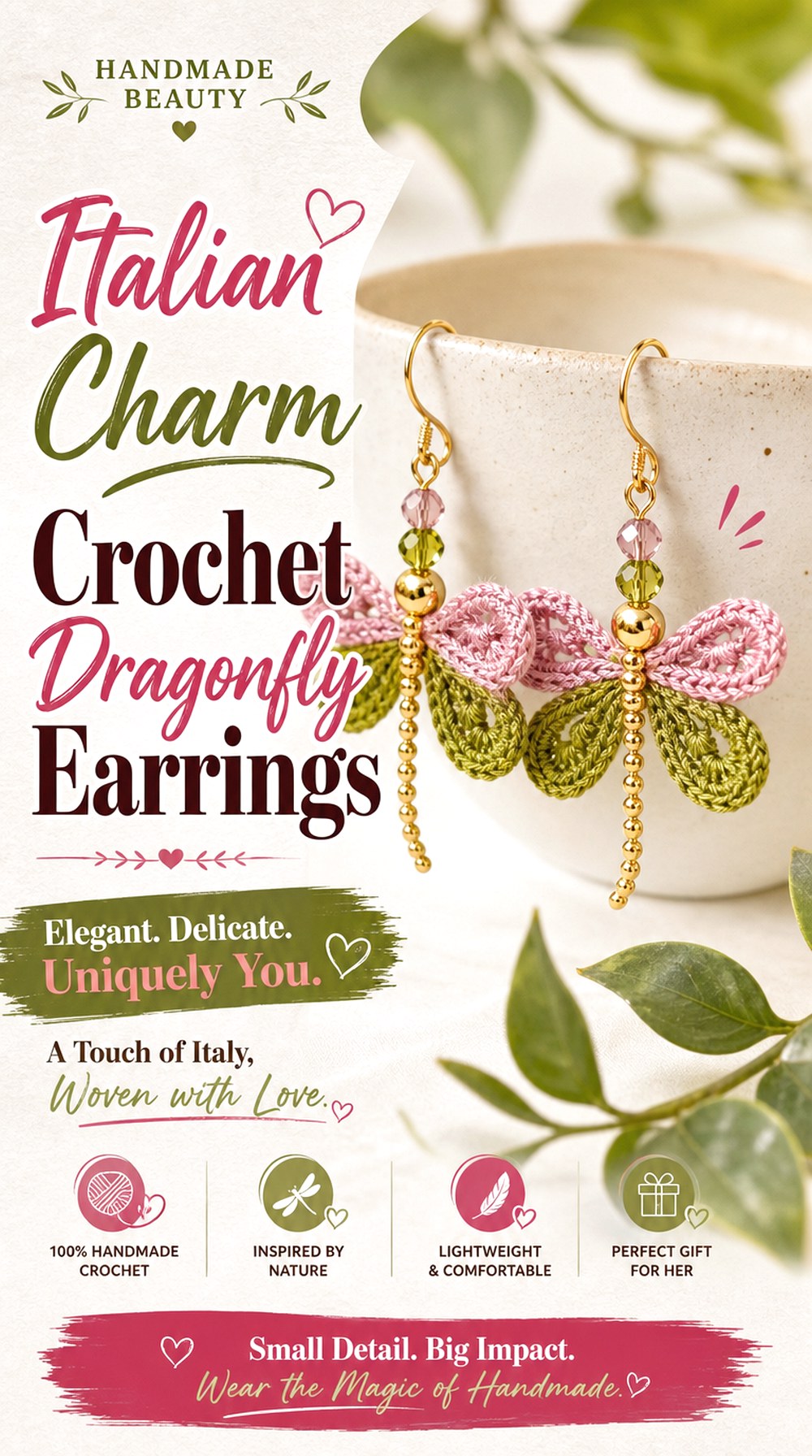
Checa Bijoux’s portachiavi libellula tutorial presents a crochet dragonfly as a keychain charm. Because the channel itself is jewelry-adjacent in name and the project is already a small hanging accessory, it offers a useful bridge between crochet charm construction and earring adaptation.
Rather than preserving keychain hardware, focus on the actual crocheted dragonfly and how cleanly its top can connect to a smaller finding. This option suits a charm-style earring where the motif stays visually compact and the metalwork remains simple.
Remove Keychain Hardware Without Losing the Motif’s Balance
A large ring may contribute more weight and spacing than it appears to in the source. When replacing it, first identify the point from which the dragonfly naturally hangs straight. A smaller connector should preserve that orientation without pulling the upper crochet out of shape.
Choose Between Direct and Articulated Attachment
A dragonfly connected directly to an earwire will move differently from one suspended by an extra ring or short connector. Test both arrangements with the finished sample. The better choice is the one that allows the motif to face forward consistently without creating unnecessary additional length.
Compact Keychain Shape Crochet Dragonfly Earrings
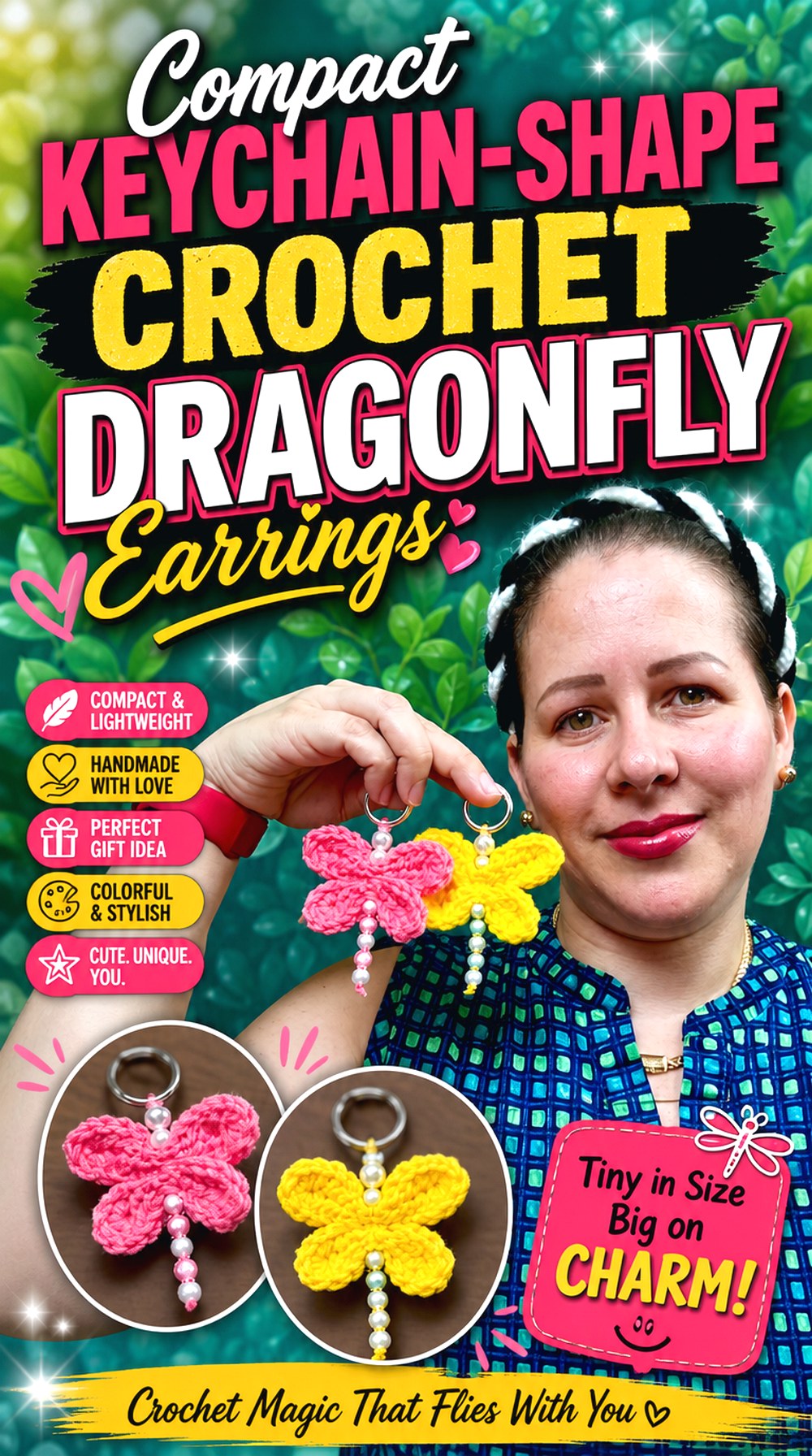
Yanet pupo crochet demonstrates an easy crochet dragonfly keychain in a dedicated step-by-step video. For this roundup, the useful feature is its compact accessory format rather than the video’s difficulty label. The finished source is a keychain, so an earring version still requires a smaller, lighter material choice and replacement hardware.
This is a practical candidate if you want a straightforward dragonfly shape without the pearl body of Idea 1 or the dimensional amigurumi structure of Ideas 13 and 22. Keep your first motif as the reference for the entire second earring.
Compact Outlines Are Easier to Compare as a Pair
When the design does not depend on many separate embellishments, you can focus on three visible checkpoints: overall body direction, wing span, and attachment position. Compare those before adding the earwires. Even if the two motifs are not absolutely identical, similar proportions will make the pair feel coordinated.
Choose Findings After Seeing the Crocheted Sample
It is tempting to buy hooks, connectors, and decorative beads first, but the actual motif should determine how much additional metalwork it needs. Once the reduced dragonfly is complete, hold several finding options beside it. Hardware that looks subtle next to a keychain can overwhelm a small earring adaptation.
Original Tutorial and Creator Credit
Creator: Yanet pupo crochet
Mini Amigurumi Crochet Dragonfly Drop Earrings
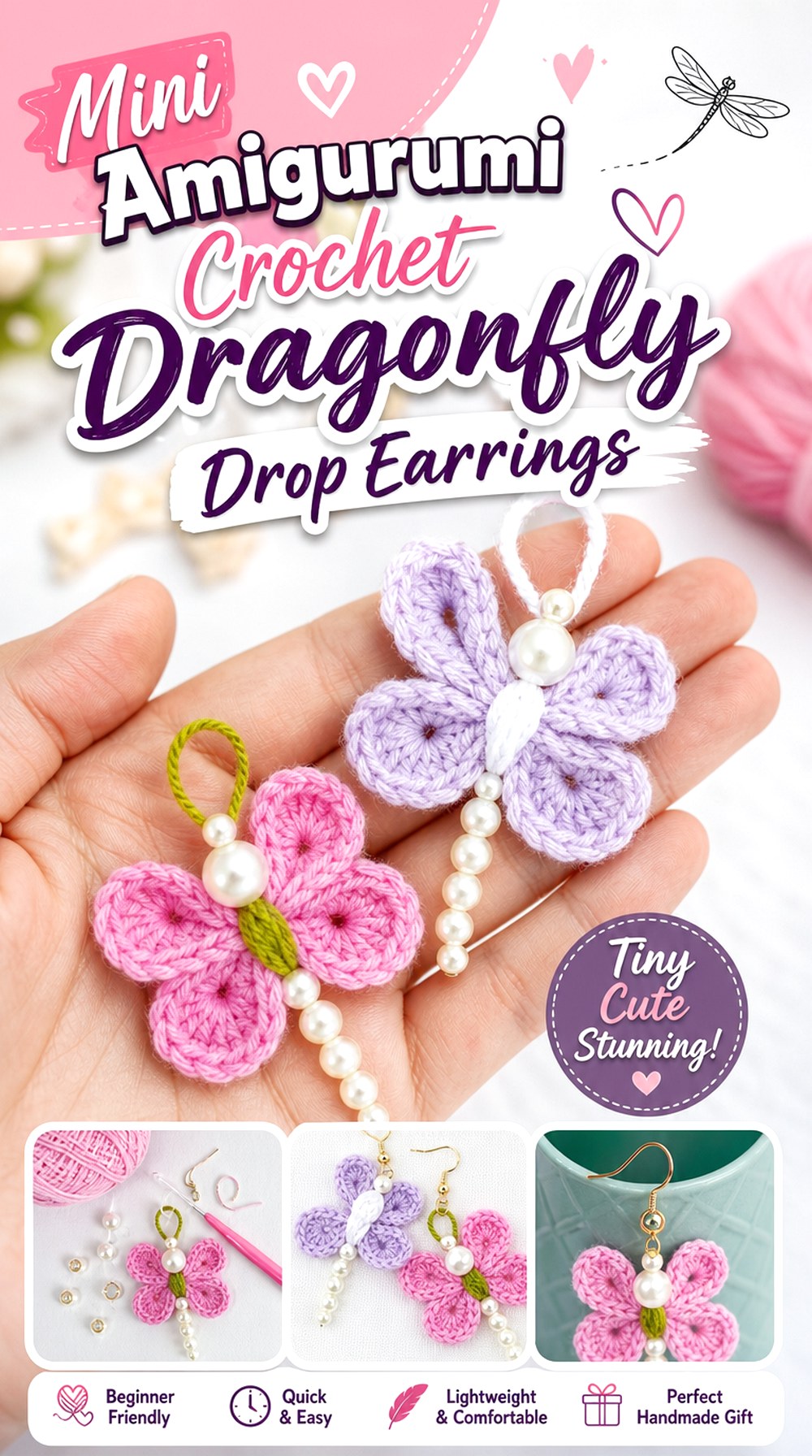
Magic Uncinetto demonstrates a crochet dragonfly amigurumi intended for use as a keychain or gift idea. This is the most dimensional direction in the list and therefore the one that needs the most cautious jewelry adaptation.
Instead of assuming the original project can simply receive an earwire, treat its three-dimensional form as inspiration for a miniature statement earring. Work at a reduced scale with lightweight materials, then assess one finished piece carefully. If the body remains too substantial for comfortable wear, the design is better kept as the keychain or charm the creator intended.
Three-Dimensional Keychains Need Aggressive Rescaling
The change from a hand-held charm to an earring is larger than the change from a flat appliqué. Both diameter and overall mass matter. Make a single prototype and judge it while hanging, not just while resting in your palm. If substantial downsizing makes the crochet difficult to control, another flat design in this collection may be more suitable.
Wings and Body Do Not Need Equal Firmness
A dimensional body benefits from enough structure to preserve its shape, while wings often look better when they remain comparatively thin. When experimenting with a miniature adaptation, inspect both parts separately. A material combination that creates a neat body may make the wings look too heavy, so one overall scale decision may not solve every proportion issue.
A Charm Is the Better Backup When Weight Wins
Not every attractive mini amigurumi needs to become an earring. If your completed prototype pulls on the ear, rotates heavily, or feels awkward beside the neck, stop the conversion there. Adding more hardware will not make it lighter. The same piece can still function well in the keychain or charm role demonstrated by the creator.
How to Choose Among These Crochet Dragonfly Earring Styles
| If you want… | Ideas worth comparing | Main checkpoint |
|---|---|---|
| A tutorial already closely related to earrings | 1, 2 | Check bead and hardware weight |
| A flatter, lower-bulk starting point | 6, 7, 8, 9, 17 | Check wing span and blocking |
| Beads as a visible design feature | 1, 4, 11, 12, 18 | Compare total weight after assembly |
| A compact keychain shape to rescale | 3, 4, 5, 14, 15, 16, 20, 21 | Make one reduced prototype first |
| More movement or vertical drama | 14, 18, 19 | Check finished hanging length |
| A dimensional statement dragonfly | 13, 22 | Wear-test one before making the pair |
| A source that needs major material rescaling | 10 | Preserve silhouette while reducing bulk |
Conclusion
For the most direct route to crochet dragonfly earrings, the pearl-bodied design in Idea 1 provides a complete jewelry example, while the flat appliqué options in Ideas 6–9 and 17 give you more freedom to experiment with fine thread and lightweight hardware. Bead lovers can compare Ideas 4, 11, 12, and 18, while Idea 19 adds more movement through its tassel-like direction.
The keychain adaptations are most useful when treated as construction inspiration rather than ready-made earring specifications. Make one motif, test its balance and comfort, and only then produce the matching piece. Use the original tutorials for each creator’s exact construction details and adjust only after you understand the finished form.
Frequently Asked Questions
Can a crochet dragonfly keychain tutorial really be adapted into earrings?
Yes, when the crocheted dragonfly can be reduced to a comfortable scale without losing its recognizable shape. The important point is that a keychain tutorial does not guarantee an appropriate earring size or weight. Make one motif using your intended finer material, attach temporary jewelry hardware, and test its balance and wing clearance before making a second piece.
What yarn or thread works well for crochet dragonfly earrings?
A fine, smooth yarn or crochet thread can help produce less bulky wings and clearer small-scale detail, but there is no universal material that suits all 22 designs. The correct choice depends on the construction, desired stiffness, beads, and your tension. When adapting a tutorial that demonstrates thicker yarn, create a sample rather than assuming a particular thread will produce a specific final measurement.
How can I make two crochet dragonfly earrings look more symmetrical?
Use the first finished dragonfly as a physical reference while making the second. Compare body length, corresponding wings, bead placement, and attachment position before installing both earwires. If the fiber permits blocking, arranging the two motifs side by side can help align flat wings. Hardware length matters too, so compare the completely assembled earrings rather than only the crocheted portions.
Should crochet dragonfly wings be stiffened?
Only if the finished motif needs more shape retention and your chosen fiber is compatible with the finishing product. Some flat earrings may look cleaner with extra firmness, while others benefit from natural movement. Test any stiffener on spare crocheted material first because it can change texture, flexibility, or appearance. Blocking alone may provide enough improvement for some fibers and designs.
Where should an earring hook attach to a crochet dragonfly?
The best point is generally one that allows the body to hang vertically without forcing the wings to tilt, but the exact location depends on the construction. A tutorial with a top loop, bead headpin, or pendant connection gives you an obvious starting point. For a flat appliqué, temporarily attach a connector near the upper body and hang-test it before closing the hardware permanently.
What should I check when crochet dragonfly earrings include beads?
Look at both attachment security and total weight. Several small beads can noticeably change the balance of a tiny crocheted motif, particularly when combined with metal connectors. Finish one complete earring and check how it hangs before duplicating the arrangement. Also remember that beads and other detachable small parts make these jewelry projects inappropriate as toys for young children.