Miniature puffin amigurumi gets much of its character from a few small but important color areas. A dark head and back establish the main silhouette, a lighter belly and face patch keep the tiny bird readable, and a warm beak adds the strongest accent. Because the finished figure is small, every additional color needs a clear purpose.
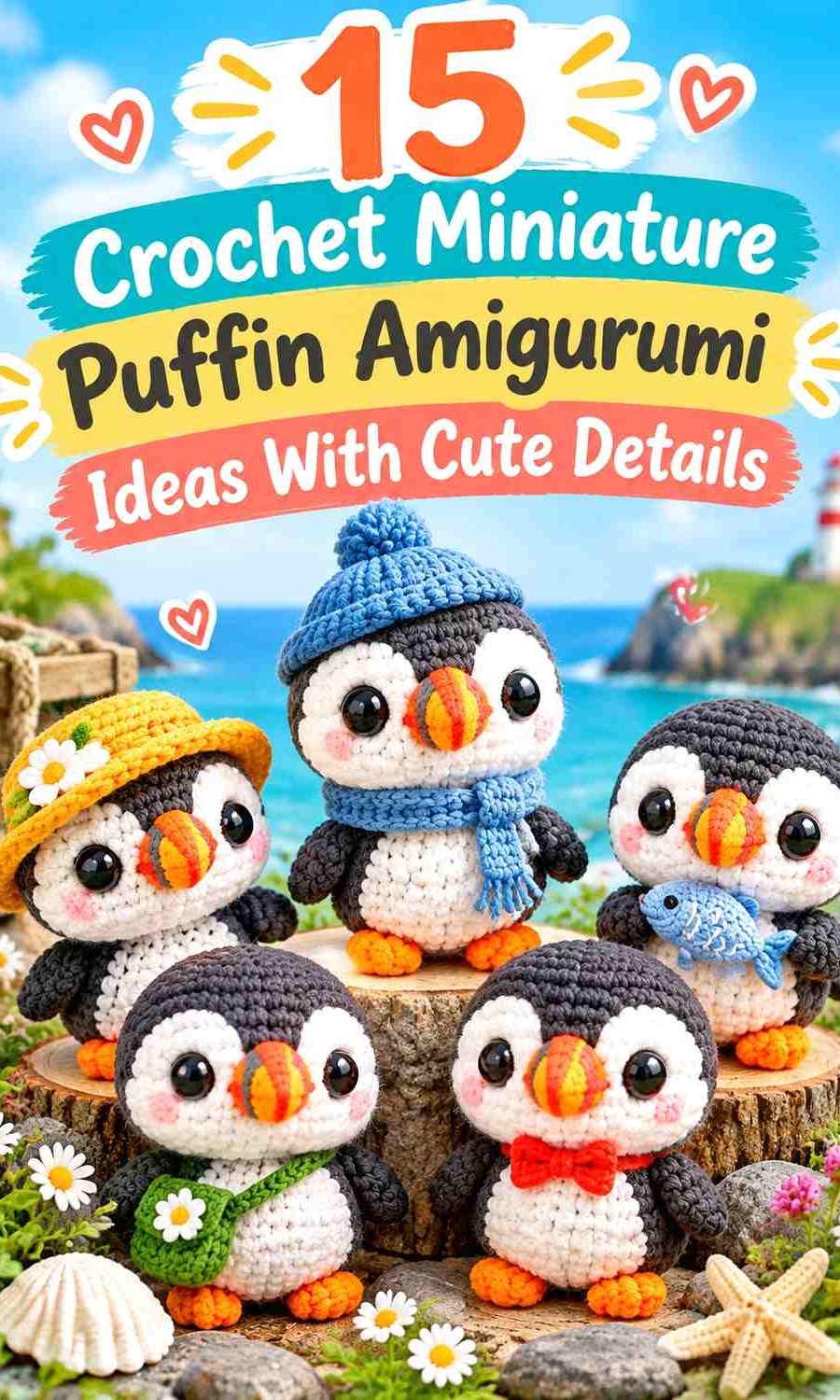
The beak is where the palette can vary most. Coral, tangerine, mustard, rust, peach, and muted red can all change the character of the same compact bird. Charcoal or navy can also replace very dark black when you want crochet stitches and tiny wings to remain easier to see.
Most of the linked public tutorials below demonstrate miniature penguins or other compact bird amigurumi rather than exact puffins. They are used transparently as construction references for small bird bodies, wings, feet, and color changes; the puffin face patches, broader colorful beaks, and palettes are separate adaptations.
Quick List
- Charcoal, Cream, and Coral Orange Crochet Miniature Puffin Amigurumi
- Black, Warm White, and Mustard Crochet Miniature Puffin Amigurumi
- Slate Gray, Ivory, and Tangerine Crochet Miniature Puffin Amigurumi
- Deep Navy, Cream, and Coral Red Crochet Miniature Puffin Amigurumi
- Espresso, Oatmeal, and Burnt Orange Crochet Miniature Puffin Amigurumi
- Soft Black, Pearl Cream, and Peach Crochet Miniature Puffin Amigurumi
- Charcoal, Pale Gray, and Pumpkin Orange Crochet Miniature Puffin Amigurumi
- Deep Teal, Cream, and Terracotta Crochet Miniature Puffin Amigurumi
- Cobalt, Warm White, and Coral Crochet Miniature Puffin Amigurumi
- Graphite, Ivory, and Golden Orange Crochet Miniature Puffin Amigurumi
- Black, Cream, and Coral-Mustard Crochet Miniature Puffin Amigurumi
- Navy, Oatmeal, and Rust Crochet Miniature Puffin Amigurumi
- Slate, Seafoam, and Orange Crochet Miniature Puffin Amigurumi
- Charcoal, Blush Cream, and Tangerine Crochet Miniature Puffin Amigurumi
- Soft Black, Ivory, and Muted Coral Crochet Miniature Puffin Amigurumi
Keep Miniature Puffin Colors in Large, Readable Blocks
A full-size plush has room for small markings, but a miniature puffin does not. Tiny patches of cream, orange, red, and yellow can quickly disappear into the surrounding stitches or make the face look crowded.
Give the dark body, pale belly, and warm beak clearly defined areas first. Add another beak color or eye marking only when it remains visible at the finished scale. On a very small puffin, two bold beak colors usually communicate more clearly than several narrow bands.
Use the Puffin Beak as the Main Accent
The beak is a useful place for the brightest yarn because it occupies relatively little space. A coral or orange beak can become a focal point without competing with the larger dark back and pale belly.
When using two warm shades, give one the larger share. Tangerine with a smaller mustard section, for example, remains easier to read than several equally narrow orange, yellow, and red stripes.
Keep Tiny Wings Visible Against the Puffin Body
Dark wings can disappear when they sit on an equally dark body. Charcoal against black, slate against navy, or a slightly lighter wing edge can preserve the shape without turning the wing into a contrasting patch.
This matters especially on miniature amigurumi because the wings contribute to the bird silhouette. Before attaching them, place the pieces against the body and check their edges from a normal viewing distance.
1. Charcoal, Cream, and Coral Orange Crochet Miniature Puffin Amigurumi

Charcoal creates a softer dark body than solid black, making the stitches on a miniature bird easier to distinguish. Cream can cover the belly and characteristic light face areas, while coral orange gives the beak and feet a controlled warm focal point. Keep the coral concentrated so the pale face still frames the beak clearly.
The linked DIY Fluffies tutorial demonstrates a complete compact penguin amigurumi with body color changes, wings, beak, and feet, so it works as a related small-bird construction reference rather than an exact puffin tutorial. YouTube
Keep Cream Face Markings Clear Against Charcoal
On a tiny puffin head, make the cream marking broad enough to survive the curve of the stuffed piece. A very narrow pale patch can visually shrink once it wraps toward the side of the head.
Keeping charcoal around the outer head preserves a strong border and makes the lighter face immediately readable.
Repeat Coral Orange From the Puffin Beak to the Feet
Using coral on both the beak and feet connects two very small accent areas. Keep the feet simpler than the beak so they support rather than compete with the face.
Creator Credit: DIY Fluffies
2. Black, Warm White, and Mustard Crochet Miniature Puffin Amigurumi

Black and warm white give this miniature puffin the clearest graphic contrast, while mustard makes the beak warmer and slightly quieter than bright yellow. Let black dominate the back, crown, and wings, with warm white covering enough of the front to prevent the figure from looking like one dark oval.
The Little Crochet Farm source demonstrates a small chubby penguin construction, making it useful for adapting a compact bird silhouette. YouTube
Give Warm White Enough Space Against the Black Puffin Body
On a very small body, the pale belly should be wide enough to remain visible when viewed from the front. If black wraps too far around the sides, the warm-white section can appear narrower than expected after stuffing.
Keep Mustard Concentrated on the Black and Warm White Puffin Face
Mustard can carry the beak without needing another bright facial detail. If you add a second warm shade, keep it to a tiny beak section rather than expanding the palette across the body.
Creator Credit: Little Crochet Farm
3. Slate Gray, Ivory, and Tangerine Crochet Miniature Puffin Amigurumi
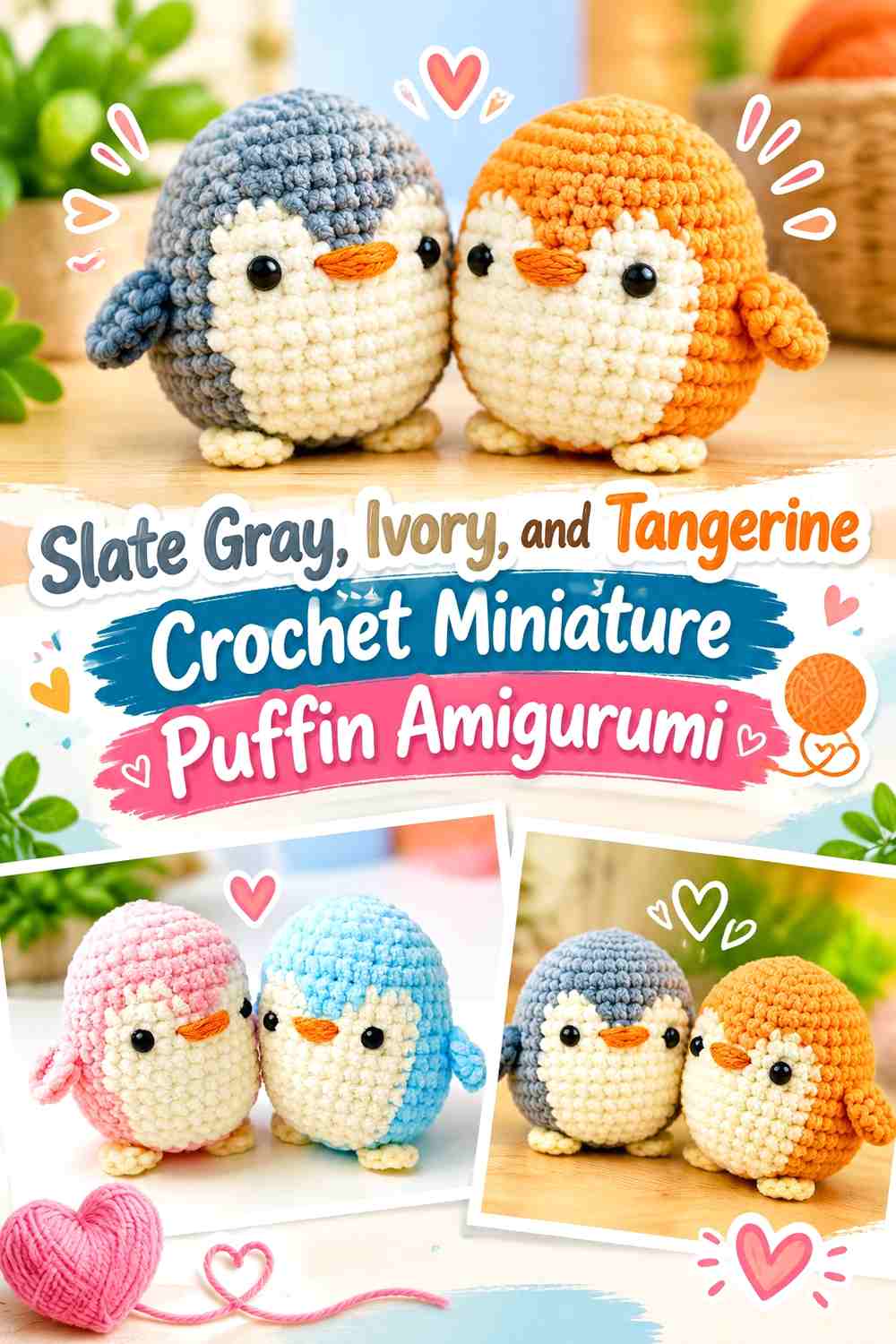
Slate gray gives the dark areas more visible stitch definition than black, while ivory creates a softer pale front. Tangerine is bright enough to make a miniature beak obvious without requiring many separate colors.
The Rose and Lily Crochet source demonstrates a chubby penguin amigurumi and provides a useful compact-bird construction reference for this puffin adaptation. YouTube
Let Slate Gray Define the Tiny Puffin Wings
Keep the body slate and consider making the wings the same shade so the bird remains cohesive. Their three-dimensional edges can provide enough separation without changing color.
If the wings disappear visually, use a slightly deeper slate rather than adding an unrelated accent.
Use Tangerine to Focus Attention on the Ivory Puffin Face
Tangerine becomes particularly noticeable against ivory, so it can remain limited to the beak and feet. Avoid adding orange patches elsewhere simply to repeat the accent; the small scale already makes the beak visually important.
Creator Credit: Rose and Lily Crochet
4. Deep Navy, Cream, and Coral Red Crochet Miniature Puffin Amigurumi
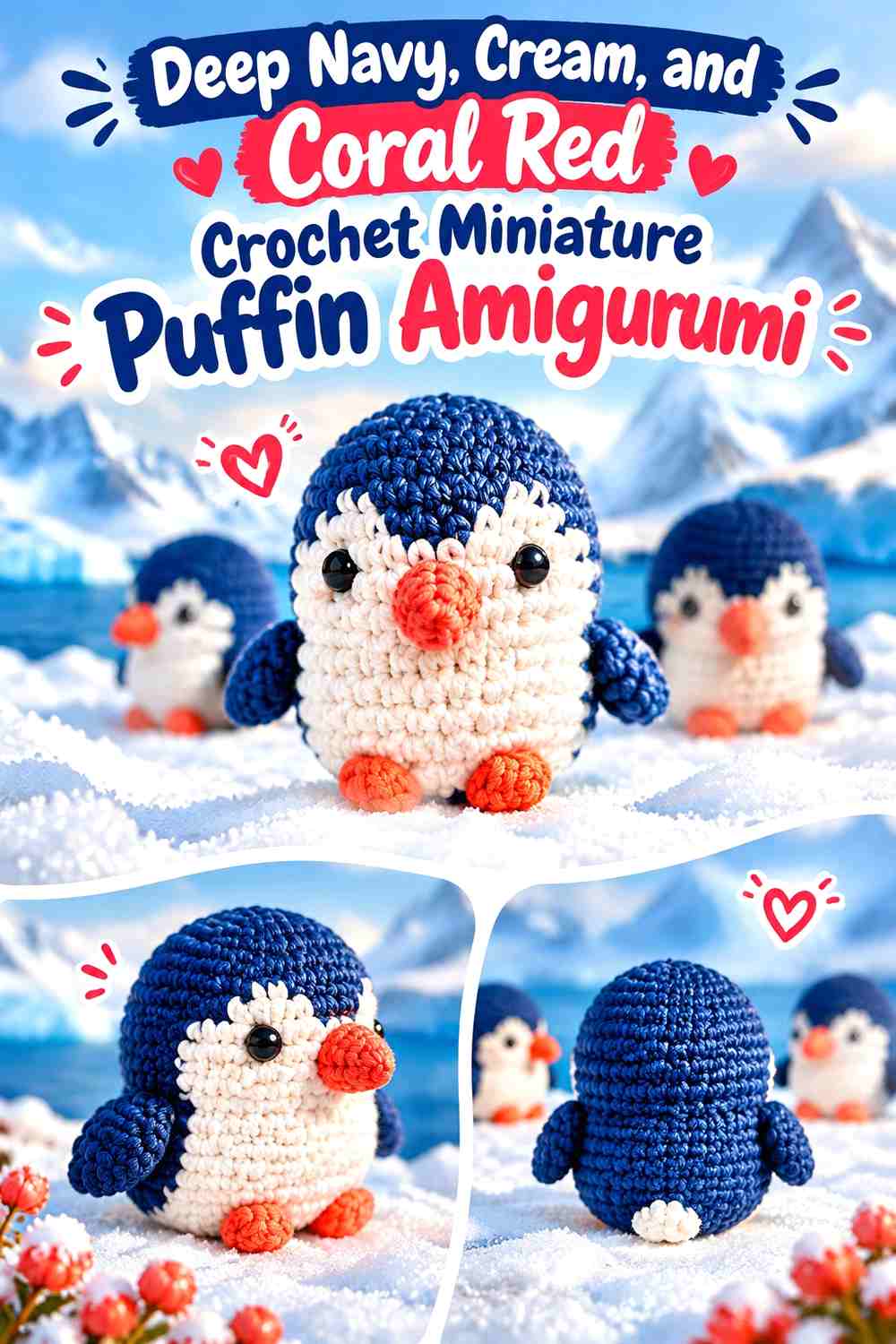
Deep navy gives the puffin a cool coastal variation while still functioning as the darkest structural color. Cream keeps the front bright, and coral red creates a compact but noticeable beak accent.
Hilandonubes demonstrates a mini penguin amigurumi suitable as a small-bird reference for this adaptation. YouTube
Keep Deep Navy Continuous Across the Puffin Crown and Wings
Using one dark color across the crown, back, and wings keeps the miniature silhouette clean. Cream can then interrupt that field only where the belly and face need definition.
Place Coral Red Mainly Beside Cream on the Puffin Beak
Coral red will show more clearly beside cream than against navy. Positioning the warm beak within the lighter facial area keeps all three palette roles easy to distinguish despite the small scale.
Creator Credit: Hilandonubes
5. Espresso, Oatmeal, and Burnt Orange Crochet Miniature Puffin Amigurumi

Espresso turns the usual black body into a warmer dark neutral. Oatmeal keeps the belly soft rather than stark, while burnt orange gives the beak a muted coastal warmth. This palette suits a puffin that should feel earthy instead of highly graphic.
The Ngochan Crochet source demonstrates a miniature penguin amigurumi and is useful for the compact body and bird proportions rather than for exact puffin markings. YouTube
Keep Oatmeal Noticeably Lighter Than Espresso on the Puffin Face
Because both shades are neutrals, their value difference matters. If oatmeal becomes too beige or dark, the characteristic light facial section may blend into the espresso head.
Use Burnt Orange to Warm the Espresso Puffin Beak
Burnt orange works well as one substantial beak color instead of several tiny bands. For a second beak accent, choose a lighter related shade and keep it smaller than the orange area.
Creator Credit: Ngochan Crochet
6. Soft Black, Pearl Cream, and Peach Crochet Miniature Puffin Amigurumi

Soft black maintains a recognizable dark puffin silhouette, while pearl cream gives the face and belly a clean but not overly stark contrast. Peach makes the beak gentler than coral or tangerine, giving this version a softer miniature character.
Mini Dolly’s source teaches a tiny bird amigurumi rather than a puffin, so it is useful for miniature bird scale and component placement while the puffin markings are adapted separately. YouTube
Use Pearl Cream to Open Up the Soft Black Puffin Face
Keep the cream patch broad around the beak and eye area. This gives the tiny eye enough light surrounding space and stops the black head from overwhelming the expression.
Keep Peach Visible but Simple on the Pearl Cream Beak Area
A single peach beak can be more effective at miniature scale than several narrow colors. If you want a banded look, add only one small darker warm section and protect the larger peach area.
Creator Credit: Mini Dolly
7. Charcoal, Pale Gray, and Pumpkin Orange Crochet Miniature Puffin Amigurumi
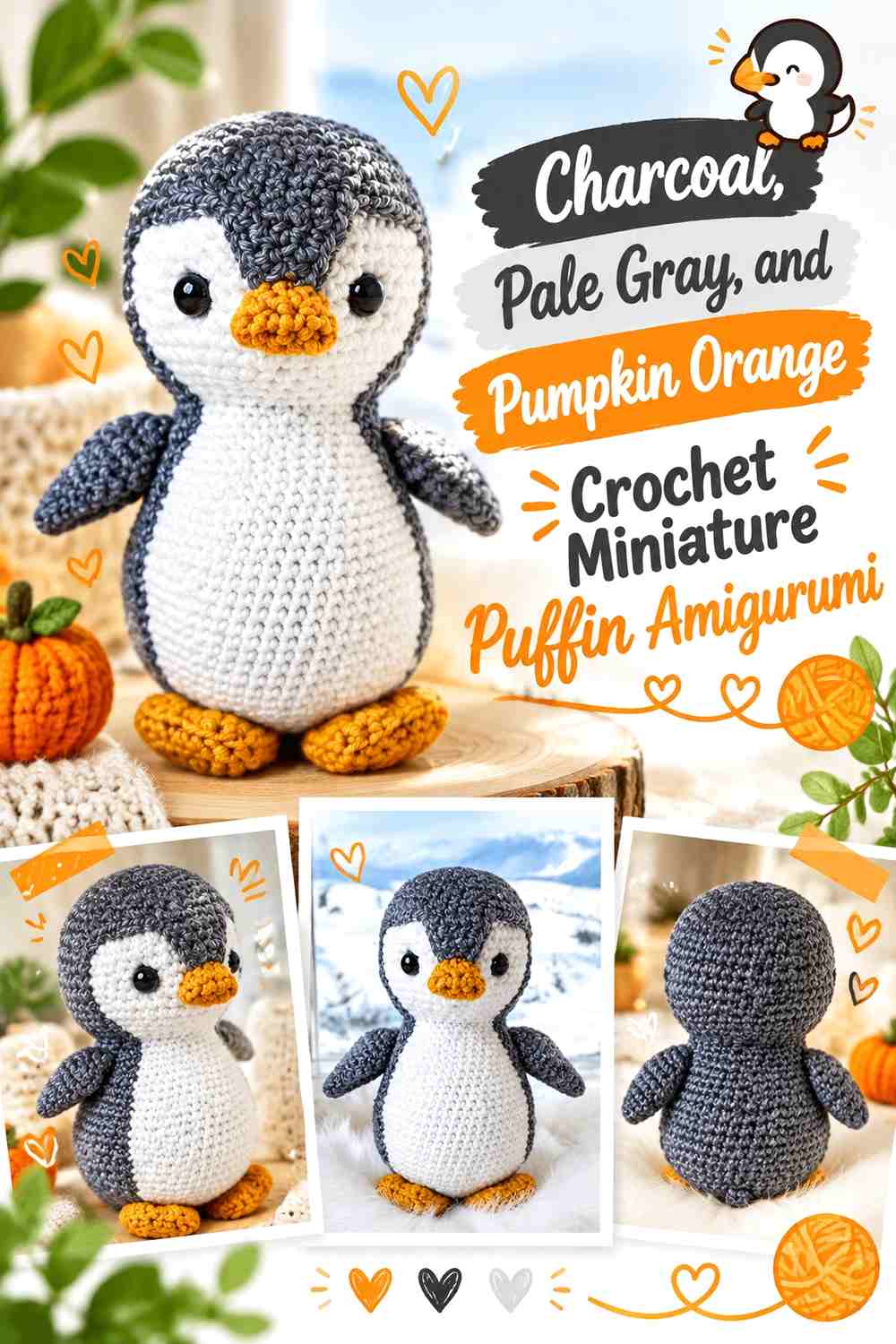
This is the most tonal dark-and-light palette in the collection. Charcoal covers the back and wings, pale gray replaces bright cream, and pumpkin orange gives the beak enough warmth to prevent the miniature bird from looking monochromatic.
Matianacrochet’s source demonstrates a complete crochet penguin plush and works as a related bird-amigurumi construction reference. YouTube
Keep Pale Gray Clearly Separate From Charcoal on the Puffin Belly
Choose a pale gray that remains light enough to read as a distinct front panel. A medium gray may disappear against charcoal once both colors curve around a stuffed miniature body.
Let Pumpkin Orange Carry the Strongest Puffin Accent
Because the two body shades are subdued, pumpkin orange can be slightly stronger without making the palette busy. Keep it concentrated around the beak and feet so the eye moves naturally toward the face.
Creator Credit: Matianacrochet
8. Deep Teal, Cream, and Terracotta Crochet Miniature Puffin Amigurumi

Deep teal creates the most stylized dark body in the list while still retaining a coastal direction. Cream protects the recognizable pale front, and terracotta supplies the warm beak accent.
Keep Calm and Crochet demonstrates a complete penguin amigurumi, providing a general compact black-and-light bird construction that can be recolored and adapted for a puffin. YouTube
Keep Cream Central Against Deep Teal on the Puffin Body
A strong cream chest is important when replacing black with a colored dark shade. It maintains a clear two-tone bird structure and prevents teal from covering the complete miniature.
Use Terracotta to Warm the Deep Teal Puffin Face
Terracotta creates a clear warm-cool contrast against teal. Keep the beak shape simple and let cream sit around it so the orange-brown accent does not merge into the darker head.
Creator Credit: Keep Calm and Crochet
9. Cobalt, Warm White, and Coral Crochet Miniature Puffin Amigurumi
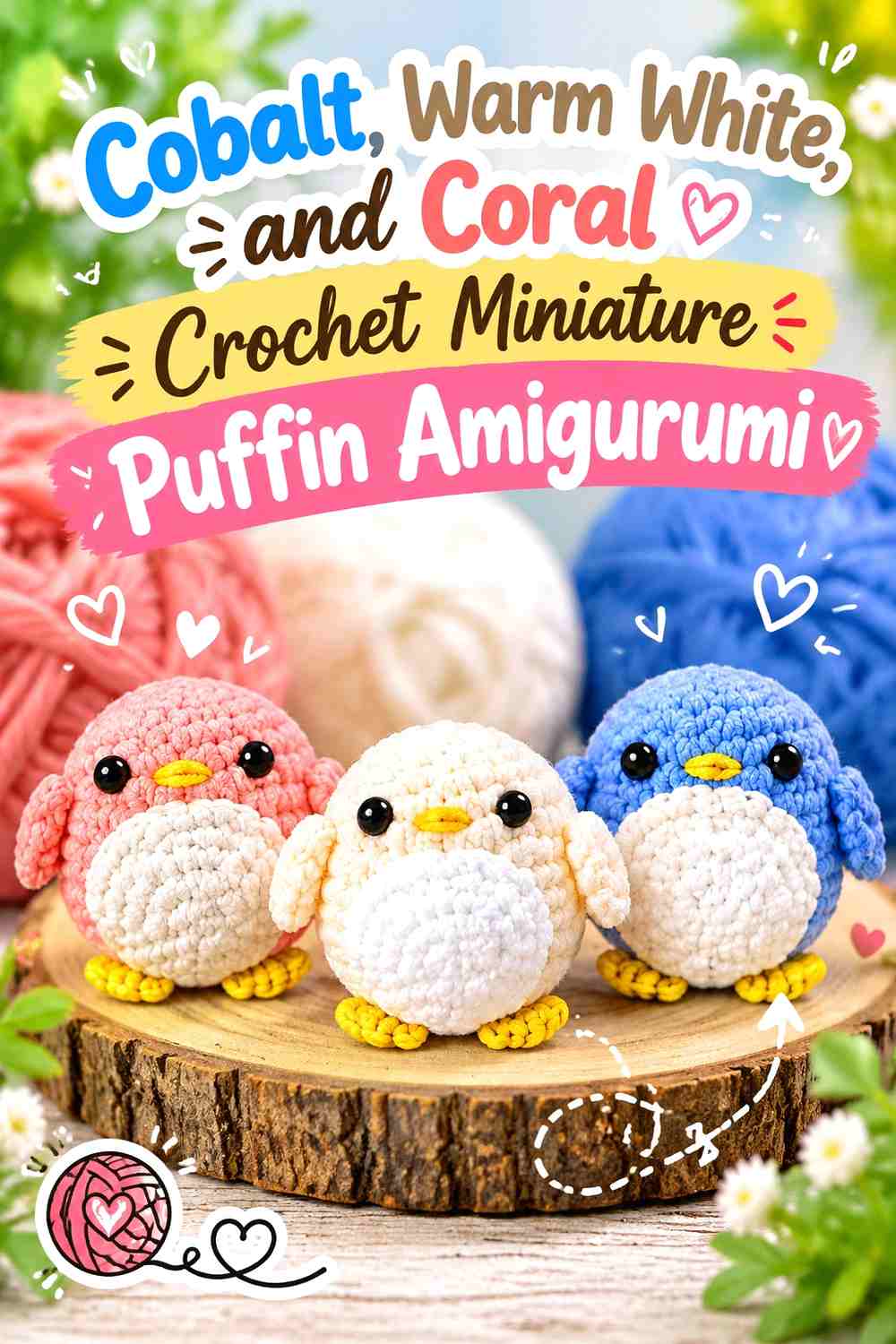
Cobalt makes this puffin brighter and more graphic than navy. Warm white provides strong value separation, while coral gives the small beak a warm focal point without adding yellow.
The crochet by sisters source demonstrates a miniature penguin plush, making it a useful small-scale bird-amigurumi reference for the puffin adaptation. YouTube
Let Cobalt Cover the Puffin Back Without Taking Over the Belly
Keep cobalt concentrated on the upper and rear surfaces. A generous warm-white belly ensures that the brighter blue still behaves as the dark structural shade.
Repeat Coral Carefully Against Cobalt and Warm White
Coral can be used on the beak and feet, but the beak should remain the stronger accent. Smaller feet keep the miniature face as the main point of attention.
Creator Credit: crochet by sisters
10. Graphite, Ivory, and Golden Orange Crochet Miniature Puffin Amigurumi

Graphite gives the body strong definition while preserving slightly more visible stitch texture than pure black. Ivory creates a warm pale contrast, and golden orange makes the beak bright without moving toward red.
The Anutha – The Crochet World tutorial demonstrates a complete penguin amigurumi with wings, feet, and small accessories, so use its bird construction as the reference and adapt the puffin face separately. YouTube
Use Graphite to Keep the Miniature Puffin Wings Defined
Graphite can cover both the body and wings, but check the attached wing edge before finishing. If the wing disappears, a slightly lighter graphite wing can reveal the shape without changing the palette.
Put Golden Orange Where Ivory Frames the Puffin Beak
The warm beak shows most clearly inside the pale face area. Avoid spreading golden orange into the body, where it would compete with the simple graphite-and-ivory color blocking.
Creator Credit: Anutha – The Crochet World
11. Black, Cream, and Coral-Mustard Crochet Miniature Puffin Amigurumi
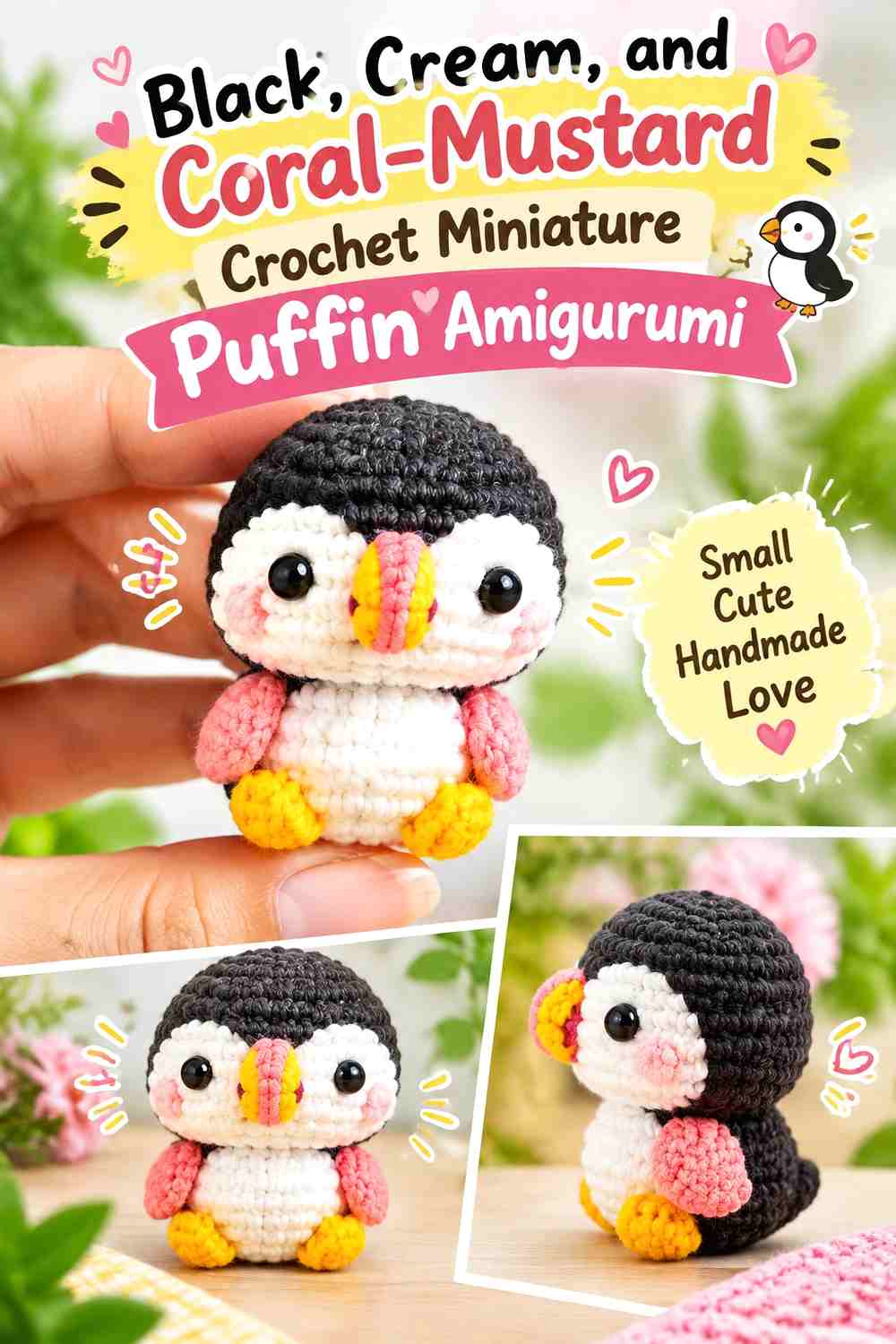
This palette reserves extra complexity for the beak. Black and cream keep the body extremely simple, while coral and mustard create a two-tone warm accent. Because the puffin is miniature, use one beak color for the larger section and the other for a much smaller band.
The AmiVui Studio source demonstrates a tiny low-sew penguin amigurumi, so its compact bird form is useful as an adaptation base. Ravelry
Keep Black and Cream Simple Around the Two-Color Puffin Beak
Avoid adding several extra body accents when the beak already has two warm colors. A clean black back and cream front keep the face from becoming visually crowded.
Let Coral Lead and Mustard Accent the Puffin Beak
Give coral the larger area and mustard one controlled section. At miniature scale, this hierarchy preserves the impression of a multicolored beak without requiring several tiny stripes.
Creator Credit: AmiVui Studio
12. Navy, Oatmeal, and Rust Crochet Miniature Puffin Amigurumi
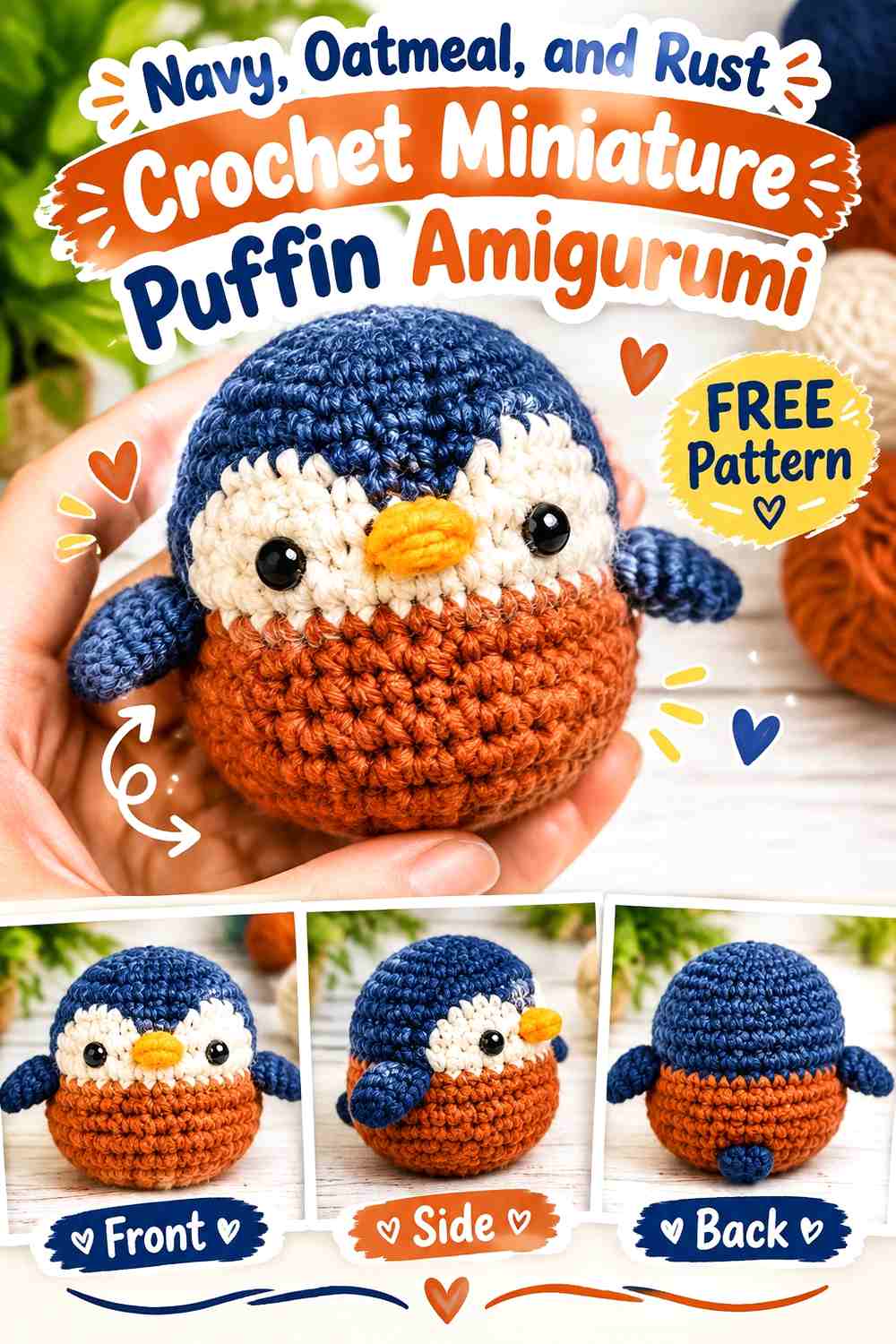
Navy, oatmeal, and rust create a muted maritime palette. Navy provides the darkest area, oatmeal softens the front, and rust gives the beak an earthy accent that is less saturated than bright orange.
Crochet Musings publishes a complete penguin video tutorial, making it a related bird-amigurumi construction reference for this puffin version. Ravelry
Let Oatmeal Break Up the Navy Puffin Head and Body
Use oatmeal generously enough around the face and belly to prevent navy from closing in on the tiny features. A pale front also makes a very small eye easier to distinguish.
Keep Rust Focused on the Navy and Oatmeal Puffin Beak
Rust can be the only warm accent if you want a restrained result. Repeating a smaller amount on the feet connects the palette without creating another major focal point.
Creator Credit: Crochet Musings
13. Slate, Seafoam, and Orange Crochet Miniature Puffin Amigurumi

Slate provides the dark body, seafoam gives the pale areas a subtle coastal tint, and orange keeps the beak recognizable as the brightest feature. This palette is more stylized than a neutral black-and-white version but retains a strong dark/light/warm hierarchy.
The Cuddly Stitches Craft source demonstrates a complete penguin amigurumi and works as a related construction reference for the miniature puffin concept. YouTube
Keep Seafoam Light Enough Against Slate on the Puffin Face
Seafoam should behave as the pale color, not another midtone. If the chosen yarn is too dark or saturated, the face may lose the crisp separation that makes the tiny beak and eye readable.
Use Orange to Connect the Seafoam Puffin Beak and Feet
Orange can repeat across both areas, but scale the feet back visually. The beak sits inside the pale face and should remain the stronger of the two warm details.
Creator Credit: Cuddly Stitches Craft
14. Charcoal, Blush Cream, and Tangerine Crochet Miniature Puffin Amigurumi
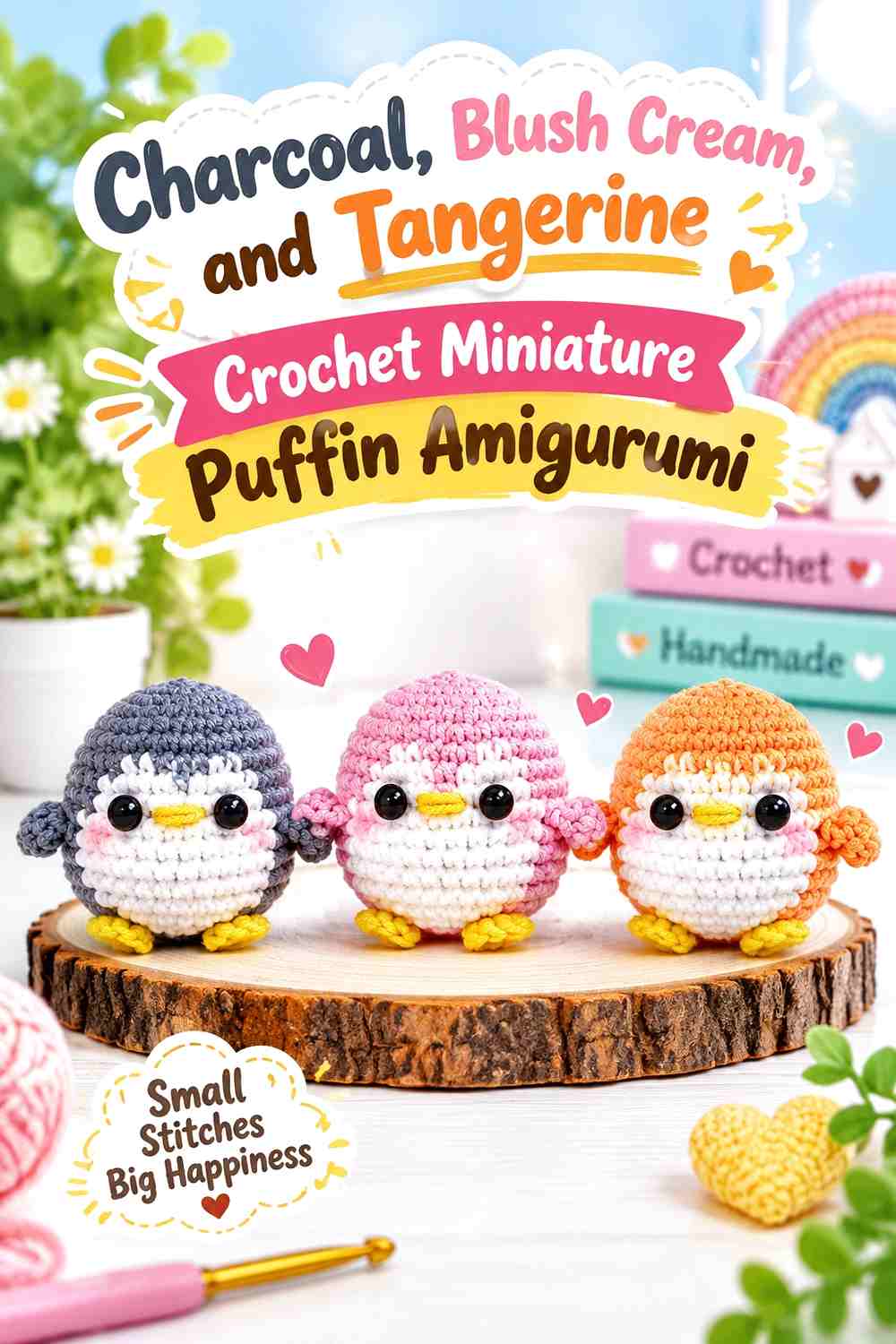
Blush cream introduces a warmer pale section than ivory, giving the puffin a softer appearance against charcoal. Tangerine creates a crisp beak accent and can be paired with a tiny darker-orange detail if the scale allows.
HoneyCookie Crochet’s tutorial demonstrates a compact round penguin with body, wings, feet, and facial finishing, so it serves as a related miniature-bird construction reference. YouTube
Use Blush Cream to Soften the Charcoal Puffin Front
Keep blush cream concentrated on the belly and face rather than scattering it through the wings. Its warm undertone already adds variation, so the body does not need another neutral.
Keep Tangerine Broad Enough to Read Against Blush Cream
A tiny beak can lose complicated color changes. Give tangerine most of the visible beak area and, if desired, use only one smaller contrasting band instead of several micro-stripes.
Creator Credit: HoneyCookie Crochet
15. Soft Black, Ivory, and Muted Coral Crochet Miniature Puffin Amigurumi

Soft black and ivory create a classic high-contrast structure, while muted coral gives the beak warmth without making the miniature toy excessively bright. This final palette is useful when you want the bird to remain recognizable but prefer softened colors.
Knitra’s tutorial demonstrates a complete no-sew penguin amigurumi with body color changes, wings, beak, and feet. The creator also provides a correction in the video description, so follow the current tutorial notes when using that construction reference. YouTube
Let Ivory Create a Clear Shape Inside the Soft Black Puffin Body
Keep the ivory belly broad and carry enough of the light shade into the face to frame the eye and beak. On a miniature body, this prevents the dark yarn from visually compressing the front.
Use Muted Coral as the Main Soft Black Puffin Accent
Muted coral can cover the beak and repeat more subtly on the feet. If you want another warm beak tone, choose one that is clearly lighter or darker rather than adding a nearly identical orange.
Creator Credit: Knitra
Which Miniature Puffin Color Palette Should You Choose?
For the clearest traditional-looking contrast, charcoal with cream and coral orange, black with warm white and mustard, or soft black with ivory and muted coral gives the tiny bird a straightforward dark-body, light-front, warm-beak hierarchy.
Slate gray, graphite, espresso, and navy are useful when you want an alternative to pure black while preserving strong definition. Deep teal and cobalt create the most stylized coastal versions, while seafoam or blush cream can replace an ordinary white front for a softer result.
If the beak is the feature you most want to emphasize, start with a simple two-color body and spend your extra color on the face. Coral plus mustard, tangerine plus a darker orange, or orange plus muted red can create more detail without turning the miniature body into a patchwork of colors.
Conclusion
A miniature crochet puffin benefits from editing. The dark back, light face and belly, compact wings, and warm beak already provide several visual areas, so each additional color should make one of those features easier to understand.
Choose charcoal or slate when you want dark stitches to remain more visible, black for the strongest graphic contrast, or navy and deep teal for a stylized coastal direction. Cream, ivory, oatmeal, seafoam, and pale gray can all serve as the lighter body color as long as they remain clearly separated from the back.
Save the brightest yarn for the beak. Coral, tangerine, mustard, orange, rust, or peach can change the personality of the same miniature bird while leaving its construction largely unchanged. Follow each linked creator for the bird construction actually demonstrated, then adapt the face patch and beak treatment for your puffin concept.
Frequently Asked Questions
What colors make a crochet miniature puffin recognizable?
A clear dark/light division does most of the work: use a dark shade for the back, crown, and wings and a noticeably lighter shade for the belly and facial area. A warm orange, coral, mustard, rust, or tangerine beak then provides a distinctive focal point.
How many colors should I use on a tiny crochet puffin beak?
Two clearly separated warm colors are usually easier to read than several narrow bands at miniature scale. You can use one main beak color and one smaller accent if you want more detail without making the face crowded.
Can navy or charcoal replace black on a crochet puffin?
Yes. Navy, charcoal, graphite, slate, or deep teal can all serve as the darkest structural shade. Check them against the pale belly color to make sure the dark/light division remains obvious.
How can I keep tiny puffin wings visible against a dark body?
Check the wing edges against the finished body before attaching them. If they disappear, use a slightly lighter version of the same dark color or let the dimensional edge provide the contrast rather than introducing a completely new hue.
Should the puffin feet match the beak?
They can. Repeating the main beak shade on the feet is an efficient way to connect two small warm accents. Keep the feet visually quieter if you want the face to remain the main focal point.
How do I keep the pale puffin face visible on miniature amigurumi?
Use a light shade with clear value contrast against the head and give the patch enough surface area to survive the curvature of the stuffed piece. Tiny light markings tend to look smaller once they wrap around the head.
Can I use a miniature penguin tutorial to make a crochet puffin?
A penguin tutorial can provide a useful small-bird construction base, but the puffin-specific appearance needs separate adaptation. Keep the construction source intact where appropriate, then plan the broader warm beak, light facial markings, and puffin color distribution independently rather than claiming the original tutorial makes a puffin.